The Science of Krsna Consciousness

…This Bhagavad-gītā is the science of Kṛṣṇa consciousness. No one can become Kṛṣṇa conscious simply by mundane scholarship. One must be fortunate enough to associate with a person who is in pure consciousness. A Kṛṣṇa conscious person has realized knowledge, by the grace of Kṛṣṇa, because he is satisfied with pure devotional service. By realized knowledge, one becomes perfect. By transcendental knowledge one can remain steady in his convictions, but by mere academic knowledge one can be easily deluded and confused by apparent contradictions. It is the realized soul who is actually self-controlled because he is surrendered to Kṛṣṇa. He is transcendental because he has nothing to do with mundane scholarship. For him mundane scholarship and mental speculation, which may be as good as gold to others, are of no greater value than pebbles or stones. (Srila Prabhupada Purport, Bhagavad-gita 6.8)

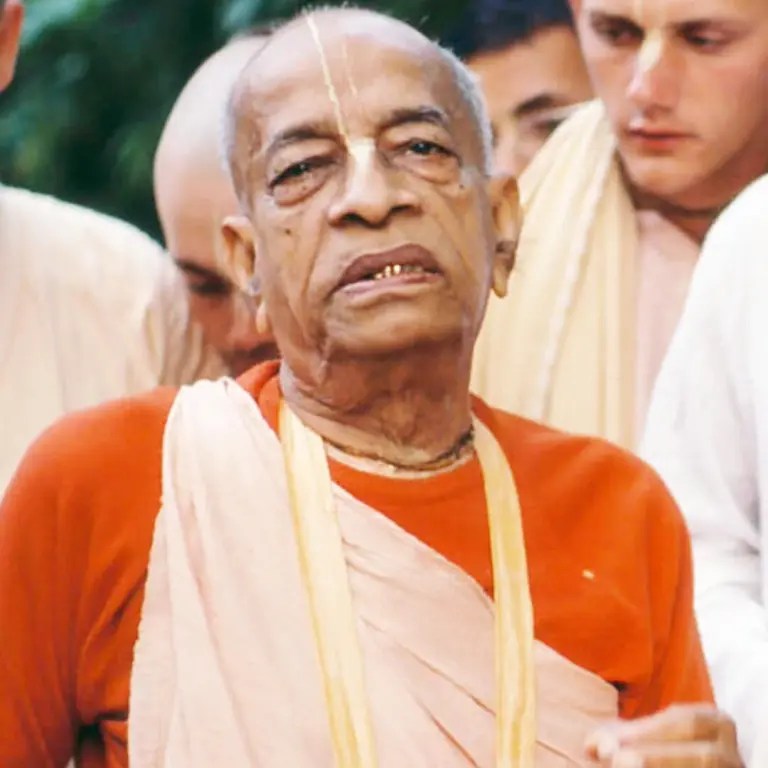
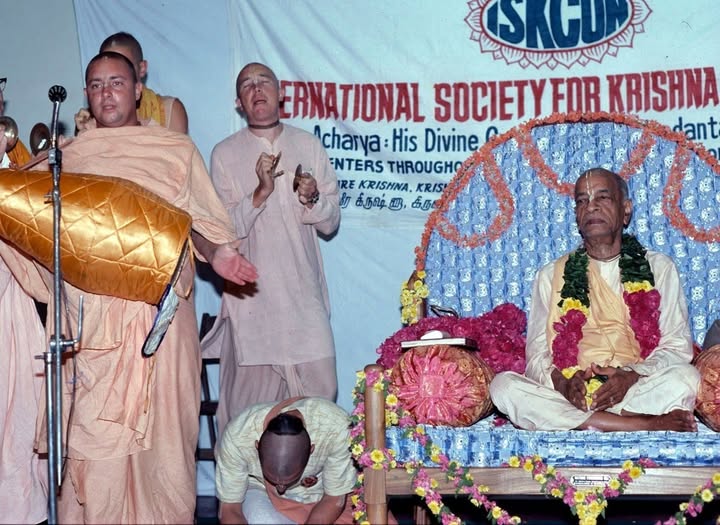
When I read this purport, I thought how fortunate we are to have the association of a Krsna conscious person, our Srila Prabhupada, who is available to everyone, who reads his original books, or hears his lectures, and bhajans.

full text and purport

More

Traveling Emissary

Pan Am 747, 1975

The following is from a “Back to Godhead” magazine article, published October, 1975. The article was entitled “Summer Sessions with Srila Prabhupada”, by Vishakha devi dasi.

In five cities and on a transcontinental jet,
His Divine Grace spends a typical month at
his favorite pastime teaching Krsna Consciousness

He’s probably logged as much flight time in the past ten years as any other traveling emissary. His Divine Grace A.C. Bhaktivedanta Swami Prabhupada has gone around the world twelve times visiting his ISKCON centers, lecturing and insuring a high standard of spiritual life among his disciples. The author traveled with him this past summer as he shuttled from West to East coast and back again, holding informal meetings and having dialogues with those who came to ask questions no one else could answer.

More

Sri Bhagavan

I still remember very clearly when I opened the book Raja-Vida by His Divine Grace A. C. Bhaktivedanta Swami Prabhupada, back in the early 70’s and read the first page…and Srila Prabhupada described very simply the definition of God…

śrī bhagavān uvāca

idaṁ tu te guhyatamaṁ
pravakṣyāmy anasūyave
jñānaṁ vijñāna-sahitaṁ
yaj jñātvā mokṣyase ’śubhāt

“The Supreme Lord said: My dear Arjuna, because you are never envious of Me, I shall impart to you this most secret wisdom, knowing which you shall be relieved of the miseries of material existence.” (Bg. 9.1)

The opening words of the Ninth Chapter of Bhagavad-gītā indicate that the Supreme Godhead is speaking. Here Śrī Kṛṣṇa is referred to as Bhagavān. Bhaga means opulences, and vān means one who possesses. We have some conception of God, but in the Vedic literature there are definite descriptions and definitions of what is meant by God, and what is meant is described in one word—Bhagavān. Bhagavān possesses all opulences, the totality of knowledge, wealth, power, beauty, fame and renunciation. When we find someone who possesses these opulences in full, we are to know that he is God. There are many rich, wise, famous, beautiful and powerful men, but no one man can claim to possess all of these opulences. Only Kṛṣṇa claims to possess them in totality. (Raja-Vidya, Chapter One)

This was my first real introduction to Krishna Consciousness, and it was enough to convince me that Krishna was God. And that Srila Prabhupada was my spiritual master.

Dissapearance day of His Divine Grace A C Bhaktivedanta Swami Prabhupada

Dear Srila Prabhupada

Please accept my humble obeisances, and kindly forgive my offenses.

Please accept my obeisances, and my love, on this auspicious day of your disappearance. With your arrival on the shores of America, you brought with you the shining lamp of knowledge; the wisdom of India and the Supreme Absolute Truth. You appeared on the shores of America the way the sun appears on the Eastern Horizon. Slowly revealing itself at first, then dominating the sky with its blazing effulgence, illuminating the entire world with its golden light. Where there is light there is no darkness. And wherever your words are being sung and repeated, there is a glimmer of hope for the materially conditioned souls.

But it is not just the big things that you brought, the transcendental knowledge of the Absolute, that I appreciate most, but it’s all the little things that I relish daily.  The music, the art, the food stuff, (prasadam) that we offer daily, the prayers we say daily, the hope we have in the afterlife, and the more meaningful life you have given us all.

When I think of how you have changed my life, from a mundane existence in the material world, to a hopeful existence in the spiritual world with Krsna, I am moved to tears. How that hopeful future has changed my everyday life.

Your words and instructions are the very life and soul of a genuine disciple. It is said that the best process of understanding Krishna is to hear about Him, either from Krishna Himself as given in statements from the Bhagavad-Gita As It Is, or from the self realized pure devotee. One does not even need to change his worldly position; he simply has to hear the message of Krishna.

It is from you only, Srila Prabhupada, that I know anything at all about Krishna or the spiritual world. By your grace only, the knowledge is revealed, and you become revealed to your disciples and listeners. Anyone who submissively hears from you, either by reading your books, or hearing your lectures, and following your instructions, can attain the highest perfectional platform. Just as there is the sun and the sunshine, so, there is Krishna and Krishna’s pure representative.

Yes, I am grateful for all the daily mercy, of a life with a more meaningful existence, and a more hopeful future.

With profound love and gratitude

Your insignificant disciple

Vyasasan das

Indignities of Old Age

I guess you could say I have reached old age. I am 72 now and am semi-retired. It is nice to have more free time, where I don’t need to drive to work every morning, where I’m not under the control of some boss, and can pretty much decide what I want to do every day. But this so called free time in old age is not really freedom. Every day I look at the calendar, to check my appointments. One day it is the dentist to get my lose teeth pulled and fitted for dentures, or to again see the doctor about my different medical conditions, and believe me none of this is free.

Then there is the pain and suffering. There is a tiredness and weakness and in some, a loss of memory. These are what I refer to as the indignities of old age.

But in reality we are not this body. We are Spirit soul.

“For the soul there is never birth or death. Nor, having once been, does he ever cease to be. He is unborn, eternal, ever-existing, undying and primeval. He is not slain when the body is slain.” (Bg 2.20)

As the embodied soul continually passes, in this body, from boyhood to youth to old age, the soul similarly passes into another body at death. The self-realized soul is not bewildered by such a change. (Bg 2.13)

One should try to understand the distress of accepting birth, death, old age and disease. There are descriptions in various Vedic literatures of birth. In the Srimad Bhagavatam the world of the unborn, the child’s stay in the womb of the mother, its suffering, etc., are all very graphically described. It should be thoroughly understood that birth is distressful. Because we forget how much distress we have suffered within the womb of the mother, we do not make any solution to the repetition of birth and death. Similarly at the time of death, there are all kinds of sufferings, and they are also mentioned in the authoritative scriptures. These should be discussed. And as far as disease and old age are concerned, everyone gets practical experience. No one wants to be diseased, and no one wants to become old, but there is no avoiding these. Unless we have a pessimistic view of this material life, considering the distresses of birth, death, old age and disease, there is no impetus for our making advancement in spiritual life. (from purport to Bg 13. 8-12)

Intelligent persons who are endeavoring for liberation from old age and death take refuge in Me in devotional service. They are actually Brahman because they entirely know everything about transcendental and fruitive activities. (Bg 7.29)

Purport

Birth, death, oldage and diseases affect this material body, but not the spiritual body. There is no birth, death, old age and disease for the spiritual body, so one who attains a spiritual body, becomes one of the associates of the Supreme Personality of Godhead and engages in eternal devotional service, is really liberated. Aham brahmāsmi: I am spirit. It is said that one should understand that he is Braham—spirit soul. This Brahman conception of life is also in devotional service, as described in this verse. The pure devotees are transcendentally situated on the Brahman platform, and they know everything about transcendental and material activities.

When the embodied being is able to transcend these three modes, he can become free from birth, death, oldage and their distresses and can enjoy nectar even in this life. (Bg 14.20)

Purport

How one can stay in the transcendental position, even in this body, in full Krsna consciousness, is explained in this verse. The Sanskrit word dehi means embodied. Although one is within this material body, by his advancement in spiritual knowledge he can be free from the influence of the modes of nature. He can enjoy the happiness of spiritual life even in this body because, after leaving this body, he is certainly going to the spiritual sky. But even in this body he can enjoy spiritual happiness. In other words, devotional service in Kṛṣṇa consciousness is the sign of liberation from this material entanglement, and this will be explained in the Eighteenth Chapter. When one is freed from the influence of the modes of material nature, he enters into devotional service.

One who is intelligent should be eager to solve these four principal problems—birth, death, old age and disease. No one wants to die, but there is no remedy. Everyone has to die… . There is no stoppage of death, and there is no stoppage of birth. Nor can diseases be stopped, nor can old age, despite all of the latest inventions in medicine.

…where is the solution to these four problems of birth, death, old age and disease? That solution is Krsna consciousness.

“One who knows the transcendental nature of My appearance and activities does not, upon leaving the body, take his birth again in this material world, but attains My eternal abode, O Arjuna.” (Bg. 4.9)

Lord Kṛṣṇa, Impregnated the Heart of Rūpa Gosvāmī with Spiritual Potency

Before the creation of this cosmic manifestation, the Lord enlightened the heart of Lord Brahmā with the details of the creation and manifested the Vedic knowledge. In exactly the same way, the Lord, being anxious to revive the Vṛndāvana pastimes of Lord Kṛṣṇa, impregnated the heart of Rūpa Gosvāmī with spiritual potency. By this potency, Śrīla Rūpa Gosvāmī could revive the activities of Kṛṣṇa in Vṛndāvana, activities almost lost to memory. In this way, He spread Kṛṣṇa consciousness throughout the world. (Cc. Madhya 19.1)

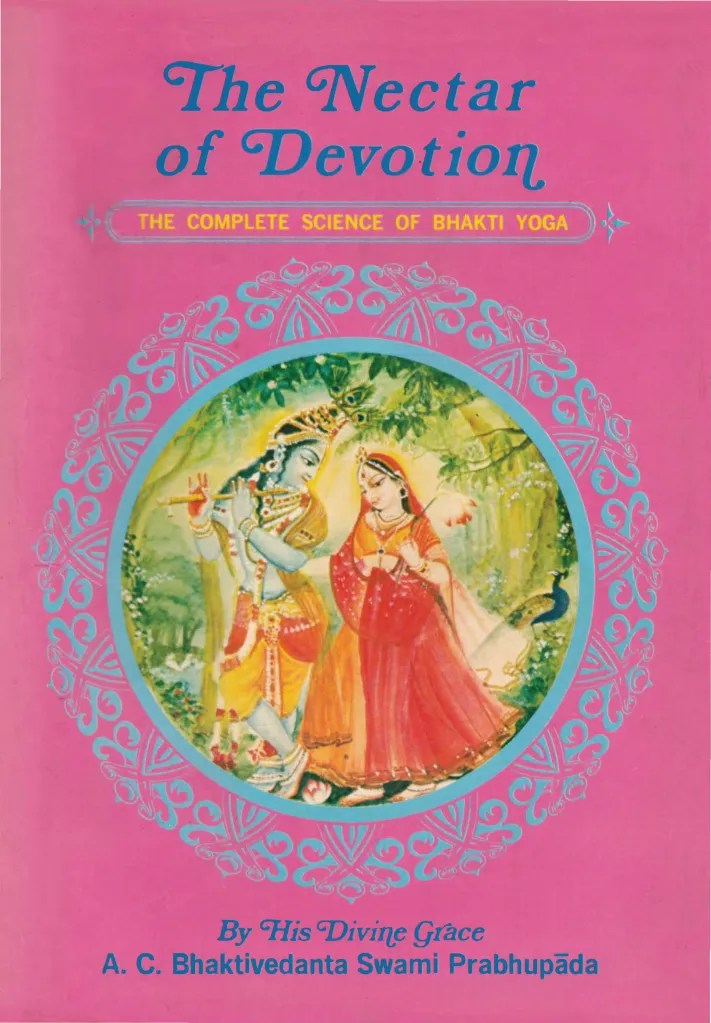
The Nectar of Devotion is a unique spiritual text that explains the devotional science of bhakti-yoga, or Krsna consciousness. Astonishingly intimate in its detailed descriptions of the loving relationships between Lord Sri Kṛṣṇa and His devotees, it is at the same time practical, authoritative and philosophically substantial. It is a summary study of Bhakti-rasamrta-sindhu, which was written in Sanskrit over 400 years ago by the great philosopher-devotee Srila Rupa Gosvāmī Prabhupāda, and it contains hundreds of quotes from such important Vedic literatures as Bhagavad-gita, Srimad-Bhagavatam, the Upaniṣads, Mahābhāraya and the Purāṇas.

The Nectar of Devotion has been called the “lawbook of Krsna consciousness,” for it is the text which guides the devotees of the Hare Kṛṣṇa movement in the details of their daily lives. It elaborately explains the philosophical background behind the many rules and regulations that devotees of Kṛṣṇa voluntarily follow, and it probes deeply into the thoughts and emotions that motivate a Kṛṣṇa conscious devotee.

Most importantly, The Nectar of Devotion goes beyond the limitations of both empty religious sentiment and dry, impersonal philosophy. It brings the reader to a factual understanding of the eternal activities of the spiritual world and offers practical step-by-step instructions which can enable the serious student to actually enter into these pastimes, in a personal, face-to-face loving relationship with Kṛṣṇa, the Supreme Personality of Godhead.

THE NECTAR OF DEVOTION
A Summary Study of Srila Pupa Gosvāmī’s
Bhakti-rasamrta-sindhu

A.C. Bhaktivedanta Swami
Ācārya of the International Society for Krishna Consciousness

ISKCON PRESS
38 North Beacon Street
Boston, Massachusetts 02134

Copyright © 1970 by ISKCONPRESS
Library of Congress Catalogue Card Number: 78-118082
All Rights Reserved
Printed in the United States of America by ISKCON PRESS
Boston, Massachusetts

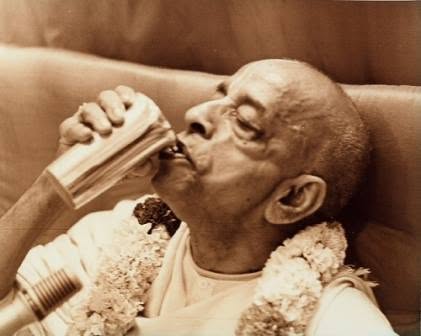
I Am the Taste of Water

O son of Kuntī [Arjuna], I am the taste of water, the light of the sun and the moon, the syllable om in the Vedic mantras; I am the sound in ether and ability in man. (Bhagavad-gita 7.8)

“So every time, if you drink water and remember Kṛṣṇa, then you are on the devotional service. Where is the difficulty? But the rascals will not take it. Where is the difficulty? Everyone drinks water, and as soon as you drink water when you are thirsty, and the taste of the water appeases your thirst, so if you simply remember that ‘In the Bhagavad-gītā it is stated that this taste is Kṛṣṇa,’ then immediately you remember Kṛṣṇa. And as soon as you remember Kṛṣṇa, it is devotional service, smaraṇam. Where is the difficulty? Where is the difficulty for becoming Kṛṣṇa conscious? Raso ‘ham apsu kaunteya prabhāsmi śaśi-sūryayoḥ: ‘I am the illumination of the moon and the sun.’ So who does not see the moonshine and the sunshine? In daytime you see the sunshine and at night you see the moonshine. So if you see the sunshine and moonshine and if you remember Kṛṣṇa’s instructions that ‘This sunshine, moonshine, I am,’ so where is the difficulty?” (Srila Prabhupada lecture, Mayapur, March 16, 1976)

full text and purport

More

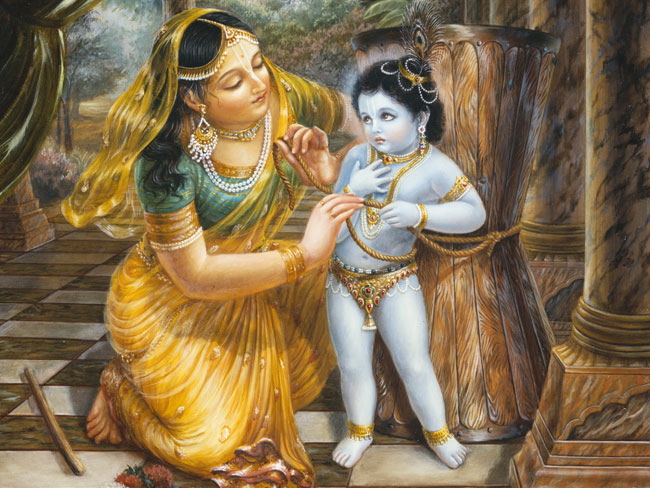
Mother Yasoda Binds Lord Krsna

Mother Yashoda Tying Krishna to a Wooden Mortar

We are still in the month of Damodara (Kartika). In honor and in celebration of the month of Damodara, we will be focusing our attention on the pastimes of Krishna in Vrndavan. Especially Krishna’s childhood pastimes.

Upon seeing His mothers whipping stick, He cried and rubbed His eyes again and again with His two lotus hands. His eyes were fearful and His breathing quick, and as Mother Yasoda bound His belly with ropes, He shivered in fright and His pearl necklace shook. To this Supreme Lord, Sri Damodara, who is bound with His devotee’s love, I offer my humble obeisances. (Damodarastakam verse 2)

The following is the summary of Chapter 9 of the Tenth Canto of the Srimad Bhagavatam, entitled “Mother Yasoda Binds Lord Krsna.“

And following that, is a nice purport by Visnujana Swami describing the verse in more detail.

More

Devotional Service (bhakti-yoga) is Simple and Sublime

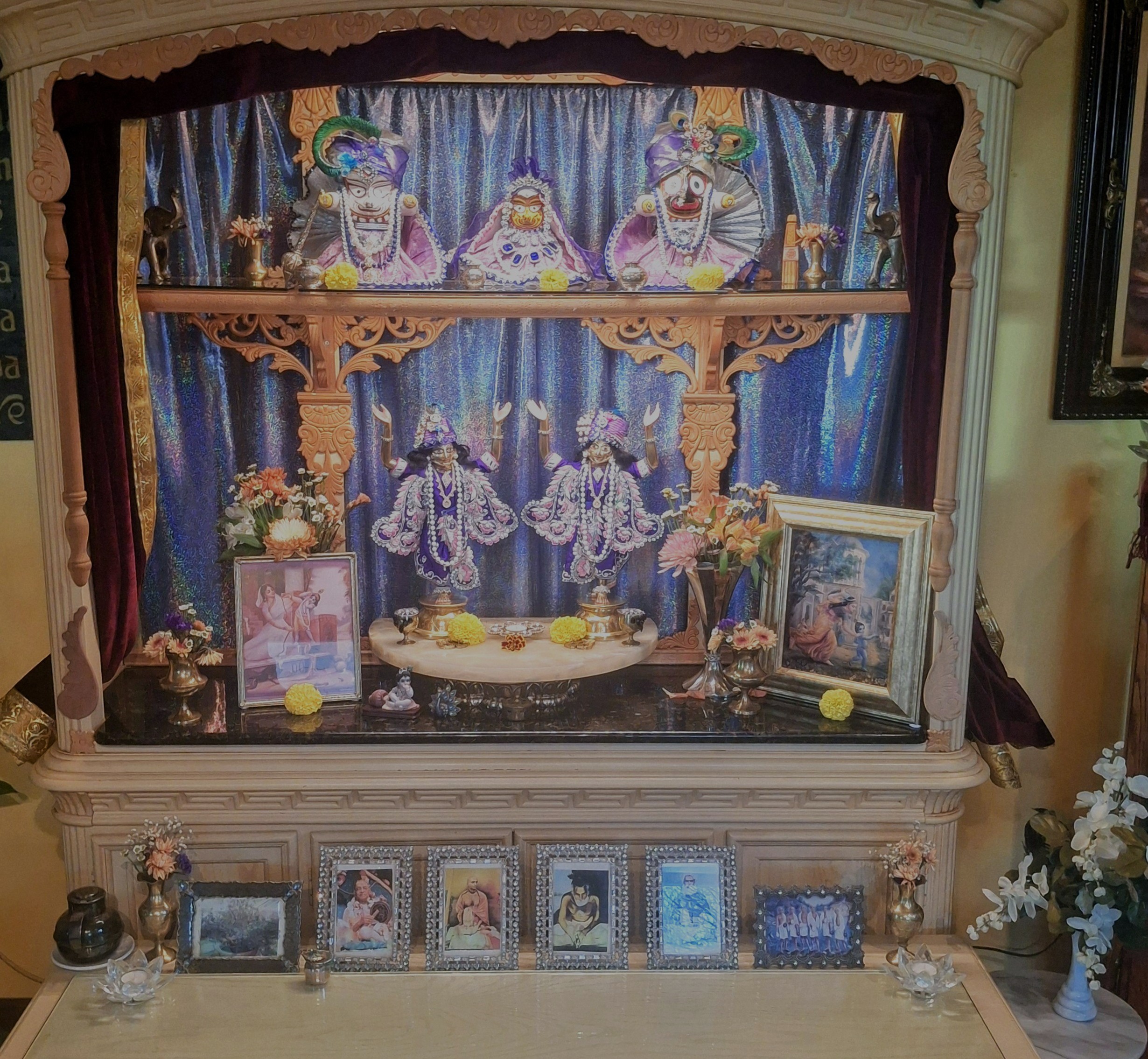
Every day I preform some simple devotional service, that somehow gives me great pleasure. Its such a little thing really, I refill Srila Prabhupadas water cup on our home altar. It is a tiny cup really, not a big service, but I relish this simple task.

My favorite verse from the Bhagavad-gita, and also the first verse I memorized was:

patraṁ puṣpaṁ phalaṁ toyaṁ
yo me bhaktyā prayacchati
tad ahaṁ bhakty-upahṛtam
aśnāmi prayatātmanaḥ

TRANSLATION

If one offers Me with love and devotion a leaf, a flower, fruit or water, I will accept it. (Bg 9.26)

So every day as part of my devotional practice, I offer Srila Prabhupada and Krishna a little leaf, a flower, fruit and water. Such a simple thing really, but it gives me great joy.

Padmapani Prabhu years ago on his famous web page Prabhupada Connection posted a fine article entitled Practicing Krishna Consciousness at Home.

“Anyone can adopt this simple method. There is no expenditure, there is no tax, nor is there any need to build a very big church or temple. Anyone, anywhere, can sit down on the road or beneath a tree and chant the Hare Krishna mantra and worship God.” (Srila Prabhupada lecture, London’s Conway Hall, November, 1969)

I don’t make it to the temple very often, I chose to worship the Lord in the comfort of our own home, but with the right attitude, and a spirit of devotion, it is non-different. Hare Krishna -V

full text and purport

More

What More Can I Describe Than This?

I love this month of Damodara (Kartik). Every evening we sing the Damodarastakam Prayers and offer a candle to the Lord. I am sure everyone has a favorite verse. The verse that melts my heart is verse 5.

idaḿ te mukhāmbhojam atyanta-nīlair
vṛtaḿ kuntalaiḥ snigdha-raktaiś ca gopyā
muhuś cumbitaḿ bimba-raktādharaḿ me
manasy āvirāstām alaḿ lakṣa-lābhaiḥ

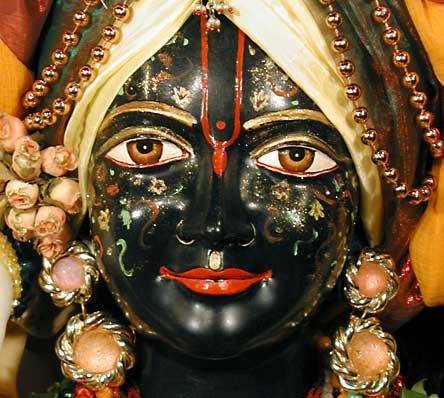
O Lord, the cheeks of Your blackish lotus face, which is encircled by locks of curling hair, have become reddened like bimba fruit due to Mother Yasoda’s kisses. What more can I describe than this? Millions of opulences are of no use to me, but may this vision constantly remain in my mind.

I remember singing this song with Visnujana Swami, and he has given a nice purport to the verse I found on KKSongs.

The poet demonstrates in this verse that longing for the association of the Lord in the heart is the best means to achieve Him. The longing to see the beautiful lotus face of the Lord, which is supremely enchanting, is stated first (idam te mukhambhojam). The indescribably sweet face of Sri Krishna resembles a lotus flower in full bloom. Simply by seeing His face, which is the treasure house of supreme bliss, all anxiety and distress disappear. Therefore, may that lotus face (mukhambhojam) manifest within the mind even just once (manasy avirastam), or again and again (muhuh), or constantly (sada). The concept of sada is carried over from the previous verse to give its definitive conclusion in this verse. All three meanings are intended.

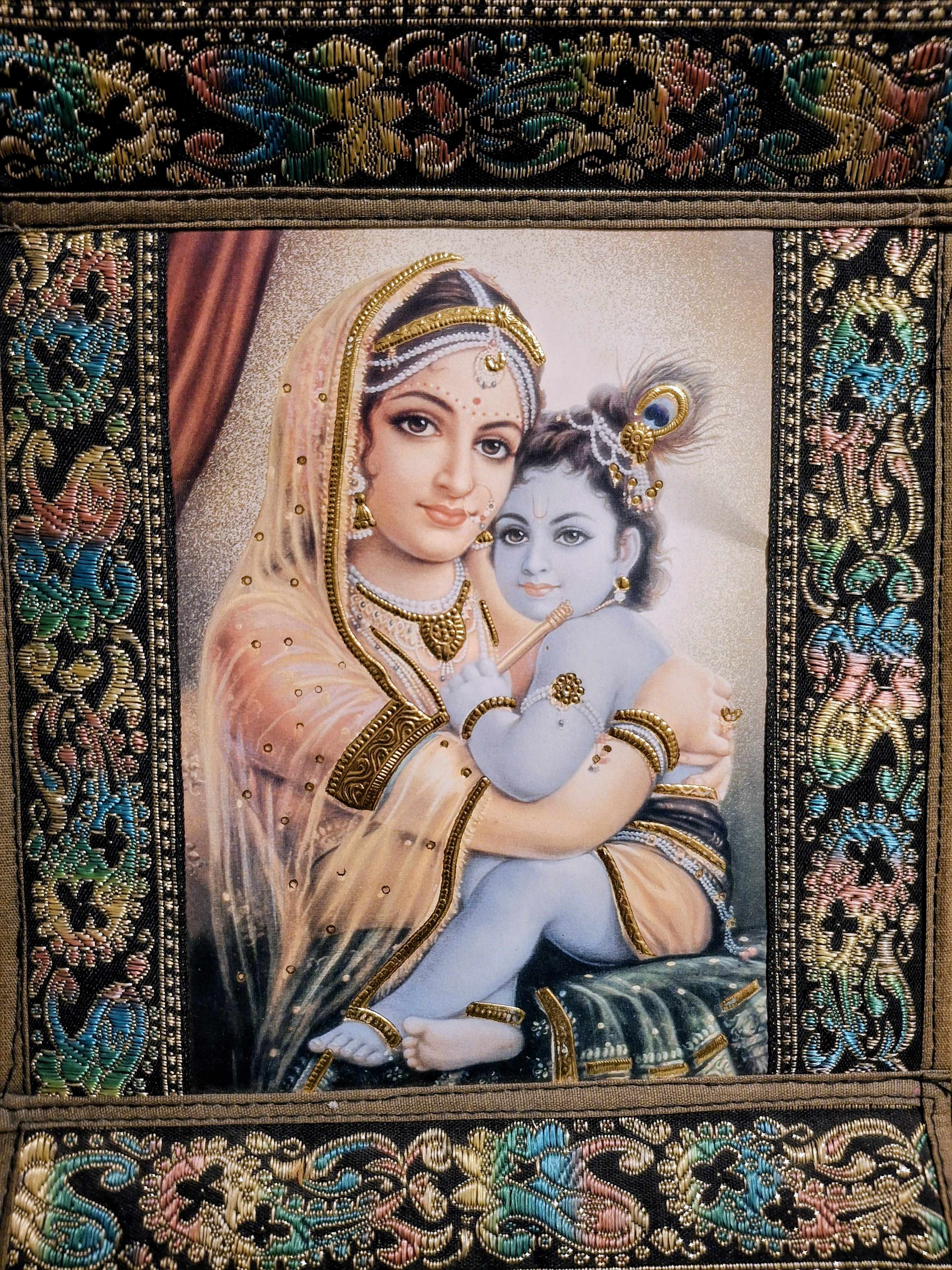
That lotus face is always surrounded (vrtam) by curling hair (kuntalaih) which is a very dark blue color (atyanta-nilair). It is tinged with a reddish hue (raktaih) and is shining (snigdha). The curly locks encircling Krishna’s face bounce as He moves here and there, just as a lotus flower is surrounded by hovering honey bees. This is the meaning suggested by vrtan. His lotus face is kissed again and again by Mother Yasoda (gopya). The word muhuh (again and again), defines the supremely fortunate gopi (gopya) who repeatedly kisses that divine lotus face (muhus cumbitam).

Furthermore, Krishna’s lotus face is adorned with crimson red lips like the bimba fruit (bimba-raktadharam). That form is so completely enchanting and satisfying that millions of other attainments (laksa-labhaih) are simply useless (alam). They have no value. This is the meaning of the verse. (Visnujana Swami)

The Advent of Kali-yuga

We are a little over 5,000 years into the fourth yuga of time known as Kali-yuga. At the present moment we have just passed through a little over five thousand years of the Kali-yuga, which lasts (432,000 years). Before this there was Dvapara-yuga (800,000 years), and before that there was Treta-yuga (1,200,000 years) and previous to that age there was Satya-yuga (1,728,000 years).

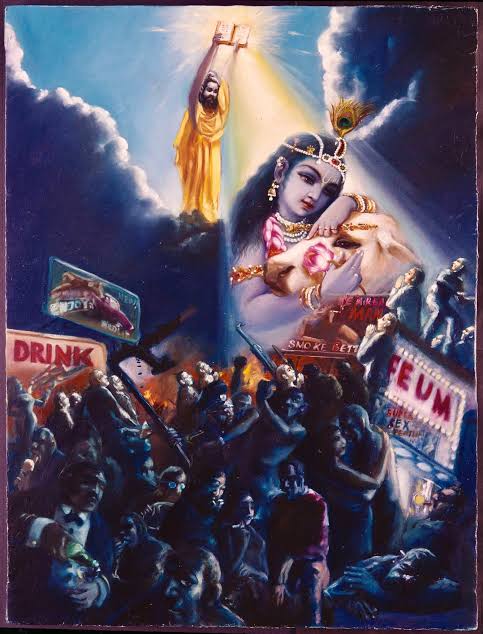
For anyone who has been watching the News, we can see just by watching the Weather that there are seasonal changes taking place around the world. We are witnessing flooding where previously it was dry, forest fires are burning up large areas of land across the globe, earthquakes, mud slides, tsunami type waves, and practically every day we are hearing about airplane crashes, and near cataclysmic events. There is violent social and political upheaval, wars and mass genocide taking place around the world. These are some of the inauspicious omens that were foretold in the Srimad Bhagavatam at the very beginning of this Kali-yuga, over 5,000 years ago.

We share with you some of these predictions that were observed by Maharaja Yudhisthira at the beginning of this age of Kali.

A few months passed, and Arjuna did not return. Maharaja Yudhisthira then began to observe some inauspicious omens, which were fearful in themselves. (SB 1.14.2)

PURPORT

Lord Sri Krsna the Supreme Personality of Godhead is ad infinitum, more powerful than the most powerful sun of our experience. Millions and billions of suns are created by Him and annihilated by Him within His one breathing period. In the material world the sun is considered to be the source of all productivity and material energy, and due to the sun only we can have the necessities of life. Therefore, during the personal presence of the Lord on the earth, all paraphernalia of our peace and prosperity, especially religion and knowledge, were in full display because of the Lord’s presence, just as there is a full flood of light in the presence of the glowing sun. Maharaja Yudhisthira observed some discrepancies in his kingdom, and therefore he became very anxious about Arjuna, who was long absent, and there was also no news about Dvarka’s well-being. He suspected the disappearance of Lord Kṛṣṇa, otherwise there would have been no possibility of fearful omens.

He saw that the direction of eternal time had changed, and this was very fearful. There were disruptions in the seasonal regularities. The people in general had become very greedy, angry and deceitful. And he saw that they were adopting foul means of livelihood. (SB 1.14.3)

PURPORT

When civilization is disconnected from the loving relation of the Supreme Personality of Godhead, symptoms like changes of seasonal regulations, foul means of livelihood, greed, anger and fraudulence become rampant. The change of seasonal regulations refers to the atmosphere of one season becoming manifest in another season, for example the rainy season being transferred to autumn, or the fruits and flowers of one season fructifying in another season. A godless man is invariably greedy, angry and fraudulent. Such a man can earn his livelihood by any means, black or white. During the reign of Maharaja Yudhisthira, all the above symptoms were conspicuous by their absence. But Mahārāja Yudhiṣṭhira was astonished to experience even a slight change in the godly atmosphere of his kingdom, and at once he suspected the disappearance of the Lord. Foul means of livelihood implies deviation from one’s occupational duty. There are prescribed duties for everyone, such as the brahmana, kstriya, vaisya, and sudra, but any one of them who deviates from his prescribed duty and declares another’s duty to be his own is following a foul and improper duty. A man becomes too greedy for wealth and power when he has no higher objective in life and when he thinks that this earthly life of a few years is all in all. Ignorance is the cause for all these anomalies in human society, and to remove this ignorance, especially in this age of degradation, the powerful sun is there to distribute light in the shape of Srimad Bhagavatam.

All ordinary transactions and dealings became polluted with cheating, even between friends. And in familial affairs, there was always misunderstanding between fathers and mothers and sons, and between well-wishers and between brothers. Even between husband and wife there was always strain and quarrel. (SB 1.14.4)

PURPORT

A conditioned living being is endowed with four principles of malpractice, namely errors, insanity, inability and cheating. These are signs of imperfection, and out of the four the propensity to cheat others is most prominent. And this cheating practice is there in the conditioned souls because the conditioned souls are primarily in the material world imbued with an unnatural desire to lord it over the material world. A living being in his pure state is not conditioned by the laws because in his pure state he is conscious that a living being is eternally subservient to the Supreme Being, and thus it is always good for him to remain subservient, instead of falsely trying to lord it over the property of the Supreme Lord. In the conditioned state the living being is not satisfied even if he actually becomes the lord of all that he surveys, which he never becomes, and therefore he becomes the victim of all kinds of cheating, even with his nearest and most intimate, relations. In such an unsatisfactory state of affairs, there is no harmony, even between father and sons or between husband and wife. But all these contending difficulties can be mitigated by one process, and that is devotional service of the Lord. The world of hypocrisy can be checked only by counteraction of devotional service of the Lord and nothing else. Maharaja Yudhisthira, having observed the disparities, conjectured the disappearance of the Lord from the earth.

In course of time it came to pass that people in general became accustomed to greed, anger, pride, etc. Maharaja Yudhisthira, observing all these omens, spoke to his younger brother. (SB 1.14.5)

PURPORT

A pious king like Maharaja Yudhisthira at once became perturbed when there were such inhuman symptoms as greed, anger, irreligiosity and hypocrisy rampant in society. And it appears from this statement that all these symptoms of degraded society were unknown to the people of the time, and it was astonishing for them to have experienced them with the advent of the Kali-yuga or the age of quarrel.

More
108 Imporant Slokas from the 1972 Bhagavad-gita As It Is

Click on image to go to Post

Click on image to go to Post

The Hare Krishna Cookbook

Songs of the Vaisnava Acaryas

Bhagavad-gita As It Is 1972 Edition “Online”

click on image

click on image to visit site

Srimad Bhagavatam Online

click on image

Raja-Vidya the King of Knowledge

click on image

click on image

Blog Stats

  • 4,915,683 hits

Enter your email address to subscribe to this blog and receive notifications of new posts by email.

Join 3,888 other subscribers

Important Slokas from the Brahma-samhita

click on image

click on image

Slokas from the Sri Isopanisad

click on image

click on image

Prayers By Queen Kunti (Slokas)

click on image

Gajendra’s Prayers of Surrender (Slokas)

click on image

A Short Statement of the Philosophy of Krishna Consciousness

click on image

click on image

July 9th Letter

click on image

click on image

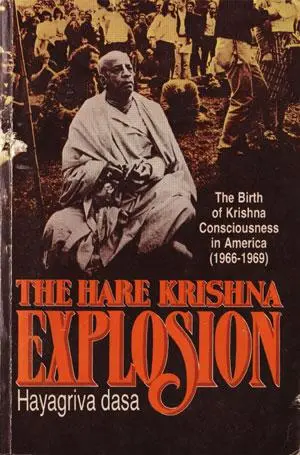
The Hare Krishna Explosion

Reference Material/Study Guide

click on image

click on image

  • LINKS