As I was reading from the Srimad Bhagavatam this morning about the passing of Bhīṣmadeva it was being described how “The perfect yogīs or mystics can leave the material body at their own sweet will at a suitable time and go to a suitable planet desired by them.” And how it is possiable to go beyond Saṁsāra, and go back to Godhead without any doubt?
…In the momentous hour of leaving his material body, Bhīṣmadeva set the glorious example concerning the important function of the human form of life. The subject matter which attracts the dying man becomes the beginning of his next life. Therefore, if one is absorbed in thoughts of the Supreme Lord Śrī Kṛṣṇa, he is sure to go back to Godhead without any doubt.
And what is Samsara?
Saṁsāra means material existence. That is called saṁsāra. Bhūtvā bhūtvā pralīyate (BG 8.19). You take your birth once in some form of body. You live for some time. Then you have to give up this body. Then you have to accept another body. Then again live for some time. Then give up that body. Again accept another body. In this way, it is going on. That is called saṁsāra, rotating within this material world. (Lecture on Gurvastakam at Upsala University by His Divine Grace -Stockholm, September 9, 1973)
The saṁsāra means repetition of different bodies. That is called saṁsāra. (Lecture on SB 1.2.4 -Rome, May 28, 1974)
Saṁsāra means this material entanglement. This is called saṁsāra. (Lecture on CC Madhya-lila 25.40-50 – San Francisco, January 24, 1967)
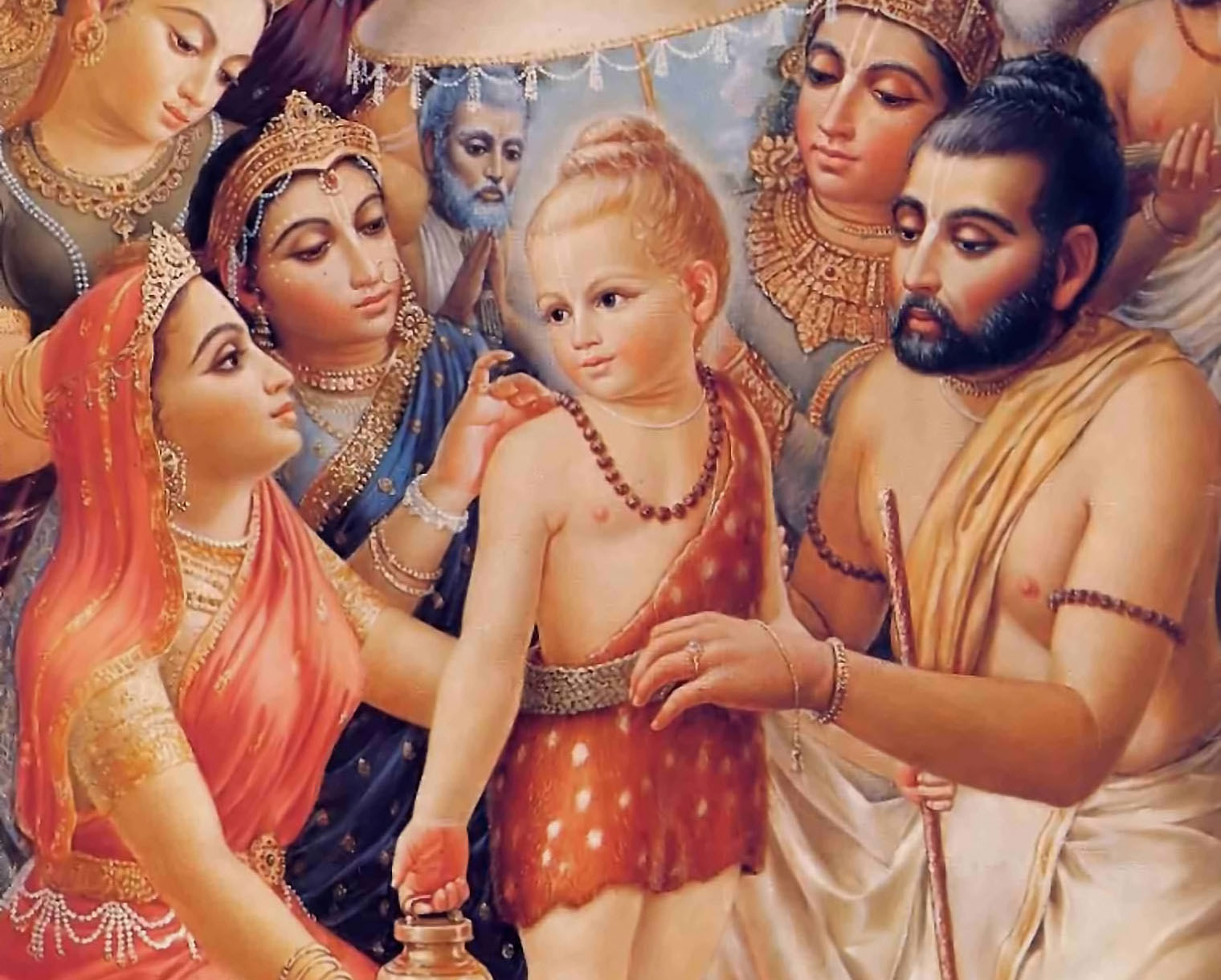
Today we celebrate the Appearance of Lord Vamanadeva, the fifteenth Incarnation, wherin Krsna assumed the form of a dwarf brahmana.
“In the fifteenth incarnation, the Lord assumed the form of a dwarf-brāhmaṇa [Vāmana]…” (SB 1.19.19)
The following is a chapter summary from Srimad Bhagavatam, eight canto, chapter 18, entitled “Lord Vāmanadeva, the Dwarf Incarnation”, describing the Lord’s appearance and activities, and a verse from the First Canto.
Srimad-Bhagavatam By His Divine Grace A. C. Bhaktivedanta Swami Prabhupada Canto One, Chapter 19, Text 19
pañcadaśam—the fifteenth in the line; vāmanakam—the dwarf brāhmaṇa; kṛtvā—by assumption of; agāt—went; adhvaram—arena of sacrifice; baleḥ—of King Bali; pada-trayam—three steps only; yācamānaḥ—begging; pratyāditsuḥ—willing at heart to return; tri-piṣṭapam—the kingdom of the three planetary systems.
TRANSLATION
In the fifteenth incarnation, the Lord assumed the form of a dwarf-brāhmaṇa [Vāmana] and visited the arena of sacrifice arranged by Mahārāja Bali. Although at heart He was willing to regain the kingdom of the three planetary systems, He simply asked for a donation of three steps of land.
PURPORT
The Almighty God can bestow upon anyone the kingdom of the universe from a very small beginning, and similarly, He can take away the kingdom of the universe on the plea of begging a small piece of land.
Śrīmad-Bhāgavatam by His Divine Grace A. C. Bhaktivedanta Swami Prabhupāda Canto 8, Chapter 18
Lord Vāmanadeva, the Dwarf Incarnation
This chapter describes how Lord Vāmanadeva appeared and how He went to the sacrificial arena of Mahārāja Bali, who received Him well and fulfilled His desire by offering Him benedictions.
Yesterday my wife read me this verse and purport from the Sri Caitanya-caritamrta (Cc. Madya-lila 16.186). It reminded me of the potency of the Holy Name of the Lord.
” ‘To say nothing of the spiritual advancement of persons who see the Supreme Person face to face, even a person born in a family of dog-eaters becomes immediately eligible to perform Vedic sacrifices if he once utters the holy name of the Supreme Personality of Godhead, or chants about Him, hears about His pastimes, offers Him obeisances or even remembers Him.’ “
PURPORT
This is a quotation from Śrīmad-Bhāgavatam (3.33.6). According to this verse, it doesn’t matter what position a person holds. One may be the lowest of the low—a caṇḍāla, or dog-eater—but if he takes to chanting and hearing the holy name of the Lord, he is immediately eligible to perform Vedic sacrifices. This is especially true in this age of Kali.
harer nāma harer nāma harer nāmaiva kevalam kalau nāsty eva nāsty eva nāsty eva gatir anyathā
(Bṛhan-nāradīya Purāṇa, 38.126)
A person born in a brāhmaṇa family cannot perform Vedic sacrifices until he is properly purified and has attained his sacred thread. However, according to this verse, it is understood that even a lowborn person can immediately perform sacrifices if he sincerely chants and hears the holy name of the Lord. Sometimes envious people ask how Europeans and Americans in this Kṛṣṇa consciousness movement can become brāhmaṇas and perform sacrifices. They do not know that the Europeans and Americans have already been purified by chanting the holy name of the Lord—Hare Kṛṣṇa, Hare Kṛṣṇa, Kṛṣṇa Kṛṣṇa, Hare Hare Hare Rāma, Hare Rāma, Rāma Rāma, Hare Hare. This is the proof. Śvādo ‘pi sadyaḥ savanāya kalpate. One may be born in a family of dog-eaters, but he can perform sacrifices simply by chanting the mahā-mantra.
Those who find fault in the Western Vaiṣṇavas should consider this statement from Śrīmad-Bhāgavatam and the commentary on this verse by Śrīla Jīva Gosvāmī. In this regard, Śrīla Jīva Gosvāmī has stated that to become a brāhmaṇa, one has to wait for purification and undergo the sacred thread ceremony, but a chanter of the holy name does not have to wait for the sacred thread ceremony. We do not allow devotees to perform sacrifices until they are properly initiated in the sacred thread ceremony. Yet according to this verse, an offenseless chanter of the holy name is already fit to perform a fire ceremony, even though he is not doubly initiated by the sacred thread ceremony. This is the verdict given by Lord Kapiladeva in His instructions to His mother, Devahūti. It was Lord Kapiladeva who instructed Devahūti in pure Sāṅkhya philosophy.
And from the Srimad Bhagavatam full text and purport
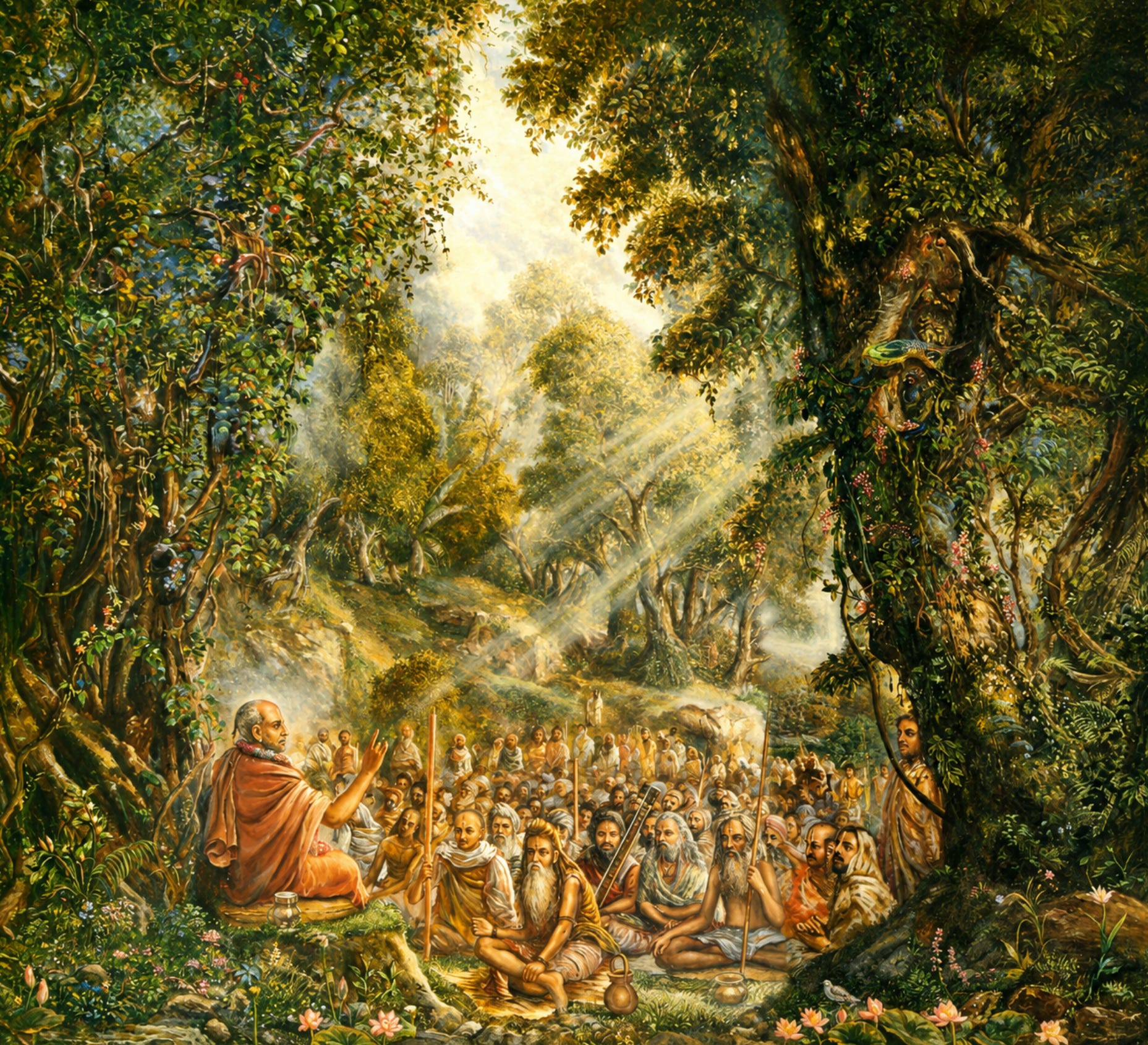
The sages at Naimisaranya: Were an assembly of 88,000 spiritual teachers, led by the prominent sage Shaunaka Rishi. who gathered in the sacred Naimisaranya forest in modern-day Uttar Pradesh, India.
Once, in a holy place in the forest of Naimiṣāraṇya, great sages headed by the sage Śaunaka assembled to perform a great thousand-year sacrifice for the satisfaction of the Lord and His devotees. (SB 1.1.4 )
The Arrival of Suta Goswami: While conducting their rituals, the storyteller and sage Suta Goswami arrived at the assembly and was warmly welcomed and given a high seat of honor (Vyasasana).
O expert and thoughtful men, relish Śrīmad-Bhāgavatam, the mature fruit of the desire tree of Vedic literatures. It emanated from the lips of Śrī Śukadeva Gosvāmī. Therefore this fruit has become even more tasteful, although its nectarean juice was already relishable for all, including liberated souls. (SB. 1. 1. 3 )
The Six Questions: Recognizing Suta Goswami’s pure character and deep scriptural knowledge, the sages asked him six fundamental questions regarding spiritual truth, which form the foundational framework of the
What is the absolute, ultimate benefit for all mankind?
What is the core essence hidden within all Vedic scriptures?
Why did the Supreme Lord take birth from Mother Devaki?
How do the secondary forms of the Lord (like Brahma and Rudra) create, maintain, and destroy the universe?
What are the complete activities and pastimes of Lord Hari’s various incarnations?
Where has true religion or spiritual shelter gone now that Lord Krishna has departed?
In the first chapter of the Śrīmad Bhagavatam, the sages ask Suta Goswami six questions. These questions are not only asked for the sage’s own sake. They are concerned about the situation of people who will be living in the age of Kali, and they want to get from Suta Goswami some knowledge that can help them find their way out of all the darkness and illusion of this age.
( Note; These six questions are asked in chapter one, and the answers are given in chapters two and three. These chapters are thus intimately connected.)
The Following is an excerpt from “Our Family Business”
By His Grace Vaisesika Dasa,
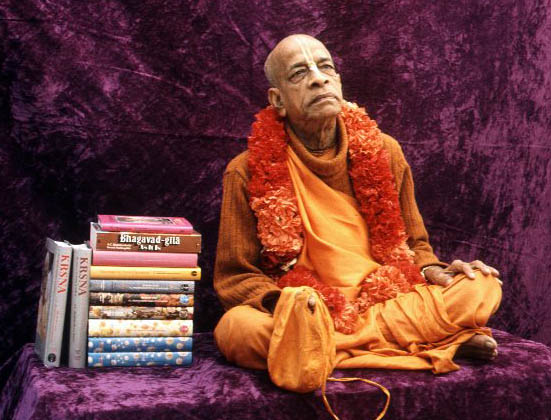
In ISKCON we hear devotees say “Books are the basis.” Śrīla Prabhupāda himself used this phrase in a letter to Maṇḍali Bhadra Dāsa dated January 20, 1972: “My first concern is that my books shall be published and distributed profusely all over the world. Practically, books are the basis of our movement. Without them our preaching has no effect.” He uses it again in a letter to Tuṣṭa Kṛṣṇa Swami (January 9, 1976): “Books are the basis of our movement. Whatever appreciation we are getting on account of our books, it is because we are following the path chalked out by exalted devotees.”
So what does it mean that Śrīla Prabhupāda’s books are the foundation – the basis – of ISKCON? We can begin to understand by reading the letter Śrīla Prabhupāda wrote to Dāmodara Dāsa on December 3, 1971:
I’m especially pleased to hear that your distribution of our books and magazines has increased. Go on in this way, increasing more and more. Each time someone reads some solid information about Kṛṣṇa his life becomes changed in some way. These literatures are the solid ground upon which our preaching stands, so I want that they should be available to everyone, as many as possible. So please try for this.
Yesterday we shared with you the first printing of Srila Prabhupada’s epic translations of the Srimad Bhagavatam, and today we share with you his last.
For a Free PDF download of this special volume click on following link; SB-10-03-1980
Śrīmad-Bhāgavatam By His Divine Grace A.C. Bhaktivedanta Swami Prabhupada Tenth Canto, Part Three
Foward
This is the final Śrīmad-Bhāgavatam volume translated by His Divine Grace A. C. Bhaktivedanta Swami Prabhupada, founder-acarya of the International Society for Krishna Consciousness. It is smaller than the earlier volumes because it ends where the renowned author stopped translating just before his departure from this mortal world on November 14, 1977, at the Krsna-Balarama Mandira in Vrndavana, India.
The first part of this volume was produced in the usual fashion. Srila Prabhupada would sit and read silently from the Sanskrit text and then speak the translation and commentary into his dictaphone. Later, due to illness, it became necessary for his disciples to assist him personally.
In these last days Srila Prabhupada was gravely ill. Unable to eat for weeks, his health had deteriorated, making even the slightest movement excruciatingly painful.
As he lay still, a devotee would softly read the Sanskrit to him. Another disciple, sitting on his bed, held the microphone to him, nearly touching his mouth. And then Srila Prabhupada would speak, voice sometimes barely audible.
These recordings, made in his quarters at the temple, constitute the balance of this book.
In these final moments, the physician attending His Divine Grace confided that an ordinary man in such critical condition would have been crying out from the intense pain. Srila Prabhupada’s disciples were awestruck as they watched their spiritual master work quietly, undisturbed.
In the last part of the book we find Srila Prabhupada’s usual clarity of thought, constant scriptural references, scrupulous attention to detail, and rigorous philosophical exposition fully intact, just as they were in the preceding twenty-nine volumes of the Śrīmad-Bhāgavatam.
Srila Prabhpada’s last days and this translation will stands an inspiring reminder that even the severest material circumstances cannot impede the activities of a pure devotee of the Supreme Personality of Godhead.
Yesterday I was reading from the Srimad Bhagavatam, and there was something from the purport that caught my attention, and had me read and re-read the purport many times.
As a cow, bound through the nose by a long rope, is conditioned, so also human beings are bound by different Vedic injunctions and are conditioned to obey the orders of the Supreme. (SB 1.13.42)
Every living being, whether a man or an animal or a bird, thinks that he is free by himself, but actually no one is free from the severe laws of the Lord. The laws of the Lord are severe because they cannot be disobeyed in any circumstance. The man-made laws may be evaded by cunning outlaws, but in the codes of the supreme lawmaker there is not the slightest possibility of neglecting the laws…
… The statutory laws of the state are imperfect imitation replicas of religious codes. The secular state, or the godless state, allows the citizens to break the laws of God, but restricts them from disobeying the laws of the state; the result is that the people in general suffer more by breaking the laws of God than by obeying the imperfect laws made by man…
…The factual position of the living being is, however, that he is the eternal servitor of the Supreme Lord…
…But in the conditioned material world, every living being wants to be the Lord of other living beings, and thus by the illusion of māyā this mentality of lording it over becomes a cause of further extension of conditional life. (from Purport)
I think of the sad state of the world today, where Gods laws are being broken. There are slaughter houses for animals, where billions of living creatures are cruelly murdered every day, there is mass genocide taking place in the Middle East and other parts of the world where humans are killed or left homeless. Where people are controlled by dictators, warlords, and unscrupulous leaders. Again I am reminded of “Mans inhumanity to man and beast”. Breaking the laws of God, can only result in more suffering for the living conditioned souls.
The very first verse in the Introduction to the Bhagavad-git As It, is this this very important prayer:
om ajñāna-timirāndhasya jñānāñjana-śalākayā cakṣur unmīlitaṁ yena tasmai śrī-gurave namaḥ
“I was born in the darkest ignorance, and my spiritual master opened my eyes with the torch of knowledge. I offer my respectful obeisances unto him.“
I have always liked the simplicity of this verse, because that is exactly what Srila Prabhupada did when I read my first book. He opened my eyes with Knowledge.
…The Lord is the supreme spiritual master, and the bona fide representative of the Supreme Lord is also a spiritual master. The Lord from within enlightens the devotees by the effulgence of the nails of His lotus feet, and His representative, the spiritual master, enlightens from without. Only by thinking of the lotus feet of the Lord and always taking the spiritual master’s advice can one advance in spiritual life and understand Vedic knowledge.
yasya deve parā bhaktir yathā deve tathā gurau tasyaite kathitā hy arthāḥ prakāśante mahātmanaḥ (Śvetāśvatara Upaniṣad 6.23)
Thus the Vedas enjoin that for one who has unflinching faith in the lotus feet of the Lord, as well as in the spiritual master, the real import of Vedic knowledge can be revealed. (from purport SB 4.24.52)
“I was born in the darkest ignorance, and my spiritual master opened my eyes with the torch of knowledge. I offer my respectful obeisances unto him.” This gives the definition of the guru. Everyone is in the darkness of ignorance. Therefore everyone needs to be enlightened with transcendental knowledge. One who enlightens his disciple and saves him from rotting in the darkness of ignorance in this material world is a true guru.
Bhakti yoga is loosely defined as the yoga of Love and Devotion, and sometimes referred to as the “Yoga of the Heart”. But how do we practice it?
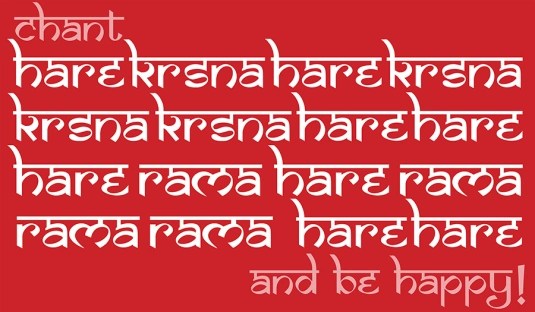
Actually it is very easy, and can be practiced anywhere 24/7, and doesn’t require a silent place or yoga mat. There are nine methods and they begin with hearing. When we hear or read about the Lord, we can simply think about the transcendental holy name, form, qualities, paraphernalia and pastimes of Lord Viṣṇu, We can chant the maha-mantra; Hare Krsna, Hare Krsna, Krsna Krsna, Hare Hare, Hare Rama, Hare Rama, Rama Rama, Hare Hare, anytime, any place, silently or out loud. (I like to softly chant with my breath). Just remembering the Lord in our daily activities is another way of practicing Bhakti yoga. There are nine processes in all, of practicing, and any one or all can lead to the path of perfection.
The Nine Processes of Devotional Service are described by Prahlada Maharaja in the 7th Canto of the Srimad Bhagavatam, chapter 5, text 24-25.
Prahlāda Mahārāja said: Hearing and chanting about the transcendental holy name, form, qualities, paraphernalia and pastimes of Lord Viṣṇu, remembering them, serving the lotus feet of the Lord, offering the Lord respectful worship with sixteen types of paraphernalia, offering prayers to the Lord, becoming His servant, considering the Lord one’s best friend, and surrendering everything unto Him (in other words, serving Him with the body, mind and words)—these nine processes are accepted as pure devotional service. One who has dedicated his life to the service of Kṛṣṇa through these nine methods should be understood to be the most learned person, for he has acquired complete knowledge. (SB 7.5.24-25)
The great personalities who attained perfection by practice of the nine processes are listed below
In honor of the appearance day of Lord Nrsimha, we are fasting untill Sunset and posting a beautiful verse and purport from the Srimad Bhagavatam 5.18.8 glorifying the Lord and his devotees.
I offer my respectful obeisances unto Lord Nṛsiṁhadeva, the source of all power. O my Lord who possesses nails and teeth just like thunderbolts, kindly vanquish our demon like desires for fruitive activity in this material world. Please appear in our hearts and drive away our ignorance so that by Your mercy we may become fearless in the struggle for existence in this material world.
PURPORT
In Śrīmad-Bhāgavatam (SB 4.22.39) Sanat-kumāra speaks the following words to Mahārāja Pṛthu:
yat-pāda-paṅkaja-palāśa-vilāsa-bhaktyā karmāśayaṁ grathitam udgrathayanti santaḥ tadvan na rikta-matayo yatayo ‘pi ruddha- srotogaṇās tam araṇaṁ bhaja vāsudevam
“Devotees always engaged in the service of the toes of the Lord’s lotus feet can very easily become free from hard-knotted desires for fruitive activities. Because this is very difficult, the nondevotees—the jñānīs and yogīs—cannot stop the waves of sense gratification, although they try to do so. Therefore you are advised to engage in the devotional service of Kṛṣṇa, the son of Vasudeva.”
Every living being within this material world has a strong desire to enjoy matter to his fullest satisfaction. For this purpose, the conditioned soul must accept one body after another, and thus his strongly fixed fruitive desires continue. One cannot stop the repetition of birth and death without being completely desireless. Therefore Śrīla Rūpa Gosvāmī describes pure bhakti (devotional service) as follows:
“One should render transcendental loving service to the Supreme Lord Kṛṣṇa favorably and without desire for material profit or gain through fruitive activities or philosophical speculation. That is called pure devotional service.”
Unless one is completely freed of all material desires, which are caused by the dense darkness of ignorance, one cannot fully engage in the devotional service of the Lord. Therefore we should always offer our prayers to Lord Nṛsiṁhadeva, who killed Hiraṇyakaśipu, the personification of material desire. Hiraṇya means “gold,” and kaśipu means “a soft cushion or bed.” Materialistic persons always desire to make the body comfortable, and for this they require huge amounts of gold. Thus Hiraṇyakaśipu was the perfect representative of materialistic life. He was therefore the cause of great disturbance to the topmost devotee, Prahlāda Mahārāja, until Lord Nṛsiṁhadeva killed him. Any devotee aspiring to be free of material desires should offer his respectful prayers to Nṛsiṁhadeva as Prahlāda Mahārāja did in this verse.
His Divine Grace A.C. Bhaktivedanta Swami Prabhupada
I have been carrying around a little piece of paper in my wallet, with the words yare dekha, tare kaha on it. I finally went to Vaniquotes to see what these words implied.
yāre dekha, tāre kaha ‘kṛṣṇa’-upadeśa āmāra ājñāya guru hañā tāra’ ei deśa (Cc Madhya 7.128)
“Instruct everyone to follow the orders of Lord Śrī Kṛṣṇa as they are given in the Bhagavad-gītā and Śrīmad-Bhāgavatam. In this way become a spiritual master and try to liberate everyone in this land.”
…the sublime mission of the International Society for Krishna Consciousness. Many people come and inquire whether they have to give up family life to join the Society, but that is not our mission. One can remain comfortably in his residence. We simply request everyone to chant the mahā-mantra: Hare Kṛṣṇa, Hare Kṛṣṇa, Kṛṣṇa Kṛṣṇa, Hare Hare/ Hare Rāma, Hare Rāma, Rāma Rāma, Hare Hare.
…The real purpose of human life is to attain the spiritual platform and return to Godhead. That is the summum bonum of spiritual realization. The Kṛṣṇa consciousness movement is trying to elevate human society to the perfection of life by pursuing the method described by Śrī Caitanya Mahāprabhu in His advice to the brāhmaṇa Kūrma. That is, one should stay at home, chant the Hare Kṛṣṇa mantra and preach the instructions of Kṛṣṇa as they are given in the Bhagavad-gita and Srimad Bhagavatam. (from purport)
“Whomever you meet, simply talk with him about the instructions given by Kṛṣṇa or tell him of narrations about Kṛṣṇa.” (SB 4.23.38)
When I first began reading this verse from the Srimad Bhagavatam this morning, I thought it was just about hearing, but as I read and re read the purport, it was also about love.
“Simply by giving aural reception to this Vedic literature, the feeling for loving devotional service to Lord Kṛṣṇa, the Supreme Personality of Godhead, sprouts up at once to extinguish the fire of lamentation, illusion and fearfulness.” (Srimad Bhagavatam 1.7.7.)
There are various senses, of which the ear is the most effective. This sense works even when a man is deep asleep. One can protect himself from the hands of an enemy while awake, but while asleep one is protected by the ear only. The importance of hearing is mentioned here in connection with attaining the highest perfection of life, namely, getting free from three material pangs…
…And it is definitely suggested herein that simply by hearing the message of Śrīmad-Bhāgavatam one gets attachment for the Supreme Personality of Godhead Śrī Kṛṣṇa, and as soon as this is effected the symptoms of the material diseases disappear. Śrīla Vyāsadeva saw the all-perfect Personality of Godhead, and in this statement the all-perfect Personality of Godhead Śrī Kṛṣṇa is clearly confirmed.
The ultimate result of devotional service is to develop genuine love for the Supreme Personality. Love is a word which is often used in relation with man and woman. And love is the only word that can be properly used to indicate the relation between Lord Kṛṣṇa and the living entities.
Loving devotional service to the Lord begins with hearing about the Lord. (from purport)
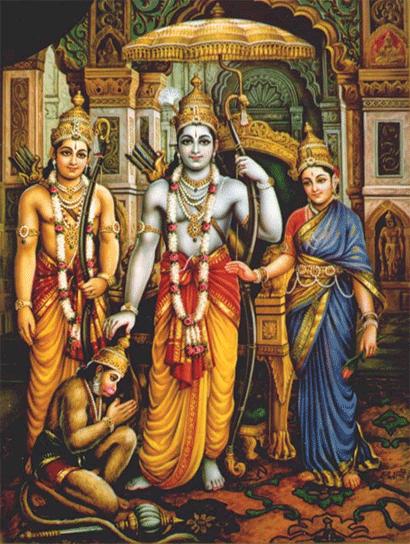
So today marks the appearance day of Lord Ramacandra, otherwise known as Rama-Navami. We honor it with a full day fast, followed by an nice vegetarian feast. It is nice to remember the Lord by extra chanting of His holy names, and with readings throughout the day of the glorious pastimes of the Lord.
Ramachandra, or Lord Rama, is one of Krishna’s many avatars on earth. He appeared during a previous age, Treta-yuga, and ruled as emperor of the world. A chronicle of His activities is presented extensively in the epic Ramayana, and concisely in the ninth canto of the Srimad-Bhagavatam, a biography of Krishna’s many incarnations.
Ramachandra’s life is considered to be exemplary in every way. Followers of India’s Vedic culture see Him as the ideal king, the most powerful warrior, and the most faithful husband. It is said that He ruled His kingdom just as a loving father cares for his children. Lord Rama’s nobility, integrity, decency, and virtue are spoken of with reverence even today.
He appeared as the eldest son of Maharaja Dasarath, along with brothers Bharata, Lakshmana, and Shatrughna—also incarnations of the Supreme Person. He married Sita devi, daughter of King Janaka, after breaking the bow of Siva in the contest for Sita’s hand. On the day of Ramachandra’s coronation, however, due to royal intrigue, He was banished to the forest for fourteen years, and Lakshmana and Sita accompanied Him there.
Ravana, king of Lanka, kidnapped Sita when Rama was absent from Their forest home. Subsequently, Rama and Lakshmana organized an army of forest-dwelling simians, vanaras—including the great devotee Hanuman— to attack Lanka. He then killed Ravana, rescued Sita, and triumphantly returned to His capital city, Ayodhya.
“In the eighteenth incarnation, the Lord appeared as King Rāma. In order to perform some pleasing work for the demigods, He exhibited superhuman powers by controlling the Indian Ocean and then killing the atheist King Rāvaṇa, who was on the other side of the sea.” (Srimad Bhagavatam 1.3.22)
The following are the prayers by Gajendra, the King of the elephants, offered to the Supreme Personality of Godhead, during his difficult struggle with the crocodile. It appears that the King of the elephants was formerly a human being known as Indradyumna and that he learned a prayer to the Supreme Lord. Fortunately he remembered that prayer and began to chant it. First he offered his respectful obeisances to the Supreme Personality of Godhead, and because of his awkward position in having been attacked by the crocodile, he expressed his inability to recite prayers nicely. Nonetheless, he tried to chant the mantra and expressed himself in the prayers that follow.
…It is imperative that all devotees in Kṛṣṇa consciousness practice chanting some mantra. Certainly one should chant the Hare Kṛṣṇa mantra, which is the mahā-mantra, or great mantra, and also one should practice chanting cintāmaṇi-prakara-sadmasu or the Nṛsiṁha strotra (ito nṛsiṁhaḥ parato nṛsiṁho yato yato yāmi tato nṛsiṁhaḥ). Every devotee should practice in order to chant some mantra perfectly so that even though he may be imperfect in spiritual consciousness in this life, in his next life he will not forget Kṛṣṇa consciousness, even if he becomes an animal. Of course, a devotee should try to perfect his Kṛṣṇa consciousness in this life, for simply by understanding Kṛṣṇa and His instructions, after giving up this body one can return home, back to Godhead. Even if there is some falldown, practice of Kṛṣṇa consciousness never goes in vain. For example, Ajāmila, in his boyhood, practiced chanting the name of Nārāyaṇa under the direction of his father, but later, in his youth, he fell down and became a drunkard, woman-hunter, rogue and thief. Nonetheless, because of chanting the name of Nārāyaṇa for the purpose of calling his son, whom he had named Nārāyaṇa, he became advanced, even though he was involved in sinful activities. Therefore, we should not forget the chanting of the Hare Kṛṣṇa mantra under any circumstances. It will help us in the greatest danger, as we find in the life of Gajendra.(From Purport to text 1)
Śrīmad-Bhāgavatam By His Divine Grace A. C. Bhaktivedanta Swami Prabhupāda Canto 8, Chapter Three, Text 1-29
This morning as I was finishing the Tenth Chapter of the Second Canto, the following verse and purport jumped out at me from the pages. And I realized for the thousandth time, what great good fortune we have in that we can hear directly from the pure devotee of the Lord, about the eternal pastimes of the Lord, through the pages of the Srimad Bhagavatam.
Of the three types of Transcendentalist’s, namely the jñānī, the yogī and the bhakta, or the impersonalist, the meditator and the devotee. It is only the devotee who can factually know the Lord as He is and thus be trained in the bona fide service of the Lord and be allowed to enter into the direct association of the Lord in so many capacities. The highest glorious association with the Lord is made possible in the planet of Goloka Vṛndāvana, where Lord Kṛṣṇa enjoys Himself with the gopīs and His favorite animals, the surabhi cows.
… The impersonalist is satisfied simply by understanding the all-pervasive influence of the Lord. This is called Brahman realization. Greater than the impersonalist is the mystic who sees the Lord situated in his heart as Paramātmā, the partial representation of the Lord. But there are pure devotees who take part in the direct pleasure (ānanda) potency of the Lord by factual reciprocation of loving service. The Lord in His abode called the Vaikuṇṭha planets, which are eternal manifestations, always remains with His associates and enjoys transcendental loving services by His pure devotees in different transcendental humors.
So we are pleased to present the following Texts and Purports
Today we celebrate the appearance day of Sri Caitanya Mahaprabhu. We honor His appearance with a full day fast (until moon rise), followed by a special vegetarian feast. Also to honor the Lord’s appearance day, we have selected a few verses from the Sri Caitanya-caritmra.
Sri Caitanya-caritamrta 1975 Edition By His Divine Grace A. C. Bhaktivedanta Swami Madhya-lila,Chapter 19, Text 53 & 54
“O most munificent incarnation! You are Kṛṣṇa Himself appearing as Śrī Kṛṣṇa Caitanya Mahāprabhu. You have assumed the golden color of Śrīmatī Rādhārāṇī, and You are widely distributing pure love of Kṛṣṇa. We offer our respectful obeisances unto You.
“We offer our respectful obeisances unto that merciful Supreme Personality of Godhead who has converted all three worlds, which were maddened by ignorance, and saved them from their diseased condition by making them mad with the nectar from the treasure-house of love of God. Let us take full shelter of that Personality of Godhead, Śrī Kṛṣṇa Caitanya, whose activities are wonderful.”
Chanting the Maha Mantra, or the great “chant for deliverance”, is very easy, and can be preformed anywhere, anytime. Srila Prabhupada has said “from your lips to your ears”, it is that easy. It is the kind of yoga (union), or meditation, one can easily practice anywhere, anytime.
Chanting of the Hare Kṛṣṇa mantra is the easiest process of meditation. (from purport to Srimad Bhagavatam 4.8.53)
No other means of spiritual realization is as effective in this age of quarrel and hypocrisy as the chanting of the mahā-mantra: Hare Kṛṣṇa, Hare Kṛṣṇa, Kṛṣṇa Kṛṣṇa, Hare Hare / Hare Rāma, Hare Rāma, Rāma Rāma, Hare Hare. (BTG #30 1970)
Chanting the Hare Kṛṣṇa Mantra
(appeared as a separate pamphlet in 1967 and reproduced from the article “On Chanting the Hare Krishna Mantra” published in the 1970 Back to Godhead Magazine number 34)
“This simplest method of meditation is recommended for this age. By practical experience also, one can perceive that by chanting this mahā-mantra, or the Great Chanting for Deliverance, one can feel a transcendental ecstasy coming through from the spiritual stratum.”
“One has to qualify himself to see and understand God, and that process of qualification is called Kṛṣṇa consciousness. By engaging ourselves in God’s service, we become qualified to see God. Otherwise it is not possible.“
“One cannot understand the form, name, quality, or paraphernalia of God with one’s material senses.” (Cc Madya 17.136)
Just as God is eternal, we are also eternal, and when we establish our eternal relationship with the supreme, complete eternal, we realize our eternality.
God is the supreme living entity among all living entities, the supreme eternal among all eternals. By Kṛṣṇa consciousness, by purification of the senses, this knowledge will be realized, and we will come to see God.
The following post is Chapter 3 from the book “The Path to Perfection”which gives some instruction on Seeing God (Krsna) and on the yoga system.
Ever since I was a small child, I have been attracted to the statue of Buddha. Don’t know why, but I had a statue of Buddha in my bedroom, and it was a Christian home. I didn’t really know about Krishna then or who the Buddha was…but I was so attracted to everything Eastern. As I learned latter in life Buddha was actually an incarnation of Krsna. “From the Bhāgavatam we understand that Lord Buddha is the incarnation of Kṛṣṇa who appeared when materialism was rampant and materialists were using the pretext of the authority of the Vedas.” (from purport Bg 4.7)
The Four Noble Truths & The Eightfold Path
The Four Noble Truths
The Buddha’s first sermon after his Enlightenment centered on the Four Noble Truths, which are the foundation of Buddhism. The truths are:
The truth of suffering (dukkha) The truth of the cause of suffering (samudaya) The truth of the end of suffering (nirhodha) The truth of the path that frees us from suffering (magga)
I have been reading the Krsna Book lately, and just yesterday we were reading chapter 14 “Prayers Offered by Lord Brahma to Lord Krsna”, and I was reminded this was the last chapter Srila Prabhupada was working on in the Srimad Bhagavatam series before his passing. So I had another look at the Tenth Canto, part 3, and thought it a good idea to share it with all our readers.
This is the final Śrīmad-Bhāgavatam volume translated by His Divine Grace A. C. Bhaktivedanta Swami Prabhupada, Founder-Acarya of the International Society for Krishna Consciousness, before his untimely departure. We share it with you as a free PDF download. You can click on the above link to view the complete volume or save it to your computer.
Foward
This is the final Śrīmad-Bhāgavatam volume translated by His Divine Grace A. C. Bhaktivedanta Swami Prabhupada, founder-acarya of the International Society for Krishna Consciousness. It is smaller than the earlier volumes because it ends where the renowned author stopped translating just before his departure from this mortal world on November 14, 1977, at the Krsna-Balarama Mandira in Vrndavana, India.
The first part of this volume was produced in the usual fashion. Srila Prabhupada would sit and read silently from the Sanskrit text and then speak the translation and commentary into his dictaphone. Later, due to illness, it became necessary for his disciples to assist him personally.
In these last days Srila Prabhupada was gravely ill. Unable to eat for weeks, his health had deteriorated, making even the slightest movement excruciatingly painful.
As he lay still, a devotee would softly read the Sanskrit to him. Another disciple, sitting on his bed, held the microphone to him, nearly touching his mouth. And then Srila Prabhupada would speak, voice sometimes barely audible.
These recordings, made in his quarters at the temple, constitute the balance of this book.
In these final moments, the physician attending His Divine Grace confided that an ordinary man in such critical condition would have been crying out from the intense pain. Srila Prabhupada’s disciples were awestruck as they watched their spiritual master work quietly, undisturbed.
In the last part of the book we find Srila Prabhupada’s usual clarity of thought, constant scriptural references, scrupulous attention to detail, and rigorous philosophical exposition fully intact, just as they were in the preceding twenty-nine volumes of the Śrīmad-Bhāgavatam.
Srila Prabhpada’s last days and this translation will stands an inspiring reminder that even the severest material circumstances cannot impede the activities of a pure devotee of the Supreme Personality of Godhead.