What is Bhakti Yoga

What is Bhakti Yoga?

Bhakti yoga is loosely defined as the yoga of Love and Devotion, and sometimes referred to as the “Yoga of the Heart”. But how do we practice it?

Actually it is very easy, and can be practiced anywhere 24/7, and doesn’t require a silent place or yoga mat. There are nine methods and they begin with hearing. When we hear or read about the Lord, we can simply think about the transcendental holy name, form, qualities, paraphernalia and pastimes of Lord Viṣṇu, We can chant the maha-mantra; Hare Krsna, Hare Krsna, Krsna Krsna, Hare Hare, Hare Rama, Hare Rama, Rama Rama, Hare Hare, anytime, any place, silently or out loud. (I like to softly chant with my breath). Just remembering the Lord in our daily activities is another way of practicing Bhakti yoga. There are nine processes in all, of practicing, and any one or all can lead to the path of perfection.

The Nine Processes of Devotional Service are described by Prahlada Maharaja in the 7th Canto of the Srimad Bhagavatam, chapter 5, text 24-25.

Prahlāda Mahārāja said: Hearing and chanting about the transcendental holy name, form, qualities, paraphernalia and pastimes of Lord Viṣṇu, remembering them, serving the lotus feet of the Lord, offering the Lord respectful worship with sixteen types of paraphernalia, offering prayers to the Lord, becoming His servant, considering the Lord one’s best friend, and surrendering everything unto Him (in other words, serving Him with the body, mind and words)—these nine processes are accepted as pure devotional service. One who has dedicated his life to the service of Kṛṣṇa through these nine methods should be understood to be the most learned person, for he has acquired complete knowledge. (SB 7.5.24-25)

The great personalities who attained perfection by practice of the nine processes are listed below

More
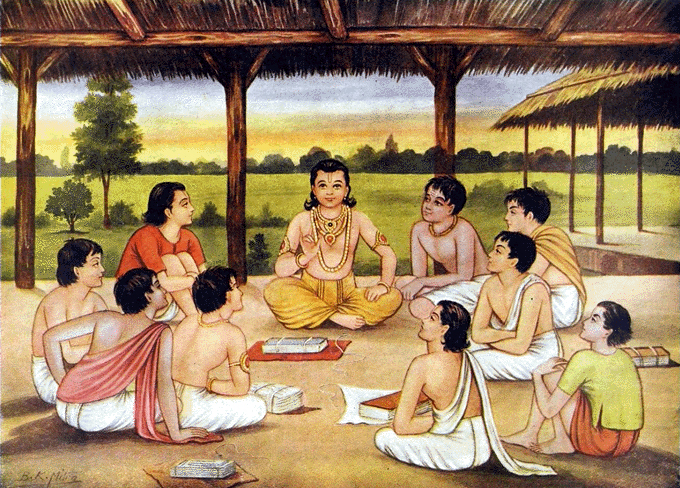
The Dearmost Person

The Dearmost Person

Srila Prabhupada Lecture on Srimad Bhagavatam, Canto 7, Chapter 6, 1968

Today I shall speak to you of the history of a boy devotee named Prahlāda Mahārāja. He was born in a family that was stubbornly atheistic. There are two kinds of men in this world: the demons and the demigods. What is the difference between them? The main difference is that the demigods, or godly persons, are devoted to the Supreme Lord, whereas the demons are atheistic. They do not believe in God because they are materialists. These two classes of men always exist in this world. At the present moment, due to the Age of Kali (Age of Quarrel), the number of demons has increased, but the classification has existed since the beginning of creation. The incident I am narrating to you occurred very, very long ago, a few million years after the time of creation.

Prahlāda Mahārāja was the son of the most atheistic person and the most materially powerful as well. Because the society was materialistic, this boy had no opportunity to glorify the Supreme Lord. The characteristic of a great soul is that he is very eager to broadcast glorification of the Supreme Lord. Lord Jesus Christ, for example, was very eager to broadcast the glorification of God, but demoniac people misunderstood him and crucified him.

More

Om Namo Bhagavate Narasimhaya

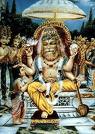
In honor of the appearance day of Lord Nrsimha, we are posting a beautiful verse and purport from the Srimad Bhagavatam 5.18.8 glorifying the Lord and his devotees.

Om Namo Bhagavate Narasimhaya

oṁ namo bhagavate narasiṁhāya namas tejas-tejase āvir-āvirbhava
vajra-nakha vajra-daṁṣṭra karmāśayān randhaya randhaya tamo grasa
grasa oṁ svāhā; abhayam abhayam ātmani bhūyiṣṭhā oṁ kṣraum

TRANSLATION

I offer my respectful obeisances unto Lord Nṛsiṁhadeva, the source of all power. O my Lord who possesses nails and teeth just like thunderbolts, kindly vanquish our demonlike desires for fruitive activity in this material world. Please appear in our hearts and drive away our ignorance so that by Your mercy we may become fearless in the struggle for existence in this material world.

More

Prahlāda Mahārāja, the Saintly Son of Hiraṇyakaśipu

pralad-hiranyakashipu

Prahlāda Mahārāja, the Saintly Son of Hiraṇyakaśipu

Yesterday was the appearance day of Lord Nṛsiṁhadeva, and at the evening darshana with the Lord, I was reminded of the whole story of Prahlada Maharaja and his demonic father Hiranyakasipu. So I went to the 7th Canto of the Srimad Bhagavatam this morning and began to read this wonderful pastime of the Lord and his devotee. I have included in this post, the entire scanned copy of Canto 7, Vol. 1. You can download by following the link below (it will take a few moments to open).

Śrīmad-Bhāgavatam
Canto 7, Vol.1 “The Science of God”
by His Divine Grace A. C. Bhaktivedanta Swami Prabhupāda

click the following link to veiw or save the entire scanned copy of SB-07-01-1976

Cover 7.1

More

“I Love Kṛṣṇa More Than Anything!”


Transcendental Teachings of Prahlada Maharaja
By His Divine Grace A.C. Bhaktivedanta Swami Prabhupada
Chapter 4

I Love Kṛṣṇa More Than Anything!

Now Prahlāda Mahārāja makes a further statement about the complications of material life. He compares the attached householder to the silkworm. The silkworm wraps itself in a cocoon made of its own saliva, until he is in a prison from which he cannot escape. In the same way, a materialistic householder’s entanglement becomes so tight that he cannot come out of the cocoon of family attraction. Even though there are so many miseries in materialistic family life, he cannot break free. Why? He thinks that sex life and eating palatable dishes are most important. Therefore, in spite of so many miserable conditions, he cannot give them up.

More

Transcendental Teachings of Prahlāda Mahārāja

Transcendental Teachings of Prahlāda Mahārāja
by His Divine Grace A. C. Bhaktivedanta Swami Prabhupāda

The Dearmost Person

Today I shall speak to you of the history of a boy devotee named Prahlāda Mahārāja. He was born in a family that was stubbornly atheistic. There are two kinds of men in this world: the demons and the demigods. What is the difference between them? The main difference is that the demigods, or godly persons, are devoted to the Supreme Lord, whereas the demons are atheistic. They do not believe in God because they are materialists. These two classes of men always exist in this world. At the present moment, due to the Age of Kali (Age of Quarrel), the number of demons has increased, but the classification has existed since the beginning of creation. The incident I am narrating to you occurred very, very long ago, a few million years after the time of creation.

Prahlāda Mahārāja was the son of the most atheistic person and the most materially powerful as well. Because the society was materialistic, this boy had no opportunity to glorify the Supreme Lord. The characteristic of a great soul is that he is very eager to broadcast glorification of the Supreme Lord. Lord Jesus Christ, for example, was very eager to broadcast the glorification of God, but demoniac people misunderstood him and crucified him.

More

108 Imporant Slokas from the 1972 Bhagavad-gita As It Is

Click on image to go to Post

Click on image to go to Post

The Hare Krishna Cookbook

Songs of the Vaisnava Acaryas

Bhagavad-gita As It Is 1972 Edition “Online”

click on image

click on image to visit site

Srimad Bhagavatam Online

click on image

Raja-Vidya the King of Knowledge

click on image

click on image

Blog Stats

  • 4,737,139 hits

Enter your email address to subscribe to this blog and receive notifications of new posts by email.

Join 3,895 other subscribers

Important Slokas from the Brahma-samhita

click on image

click on image

Slokas from the Sri Isopanisad

click on image

click on image

Prayers By Queen Kunti (Slokas)

click on image

Gajendra’s Prayers of Surrender (Slokas)

click on image

A Short Statement of the Philosophy of Krishna Consciousness

click on image

click on image

July 9th Letter

click on image

click on image

The Hare Krishna Explosion

Reference Material/Study Guide

click on image

click on image

  • LINKS