Six Questions Asked By the Sages of Naimisaranya

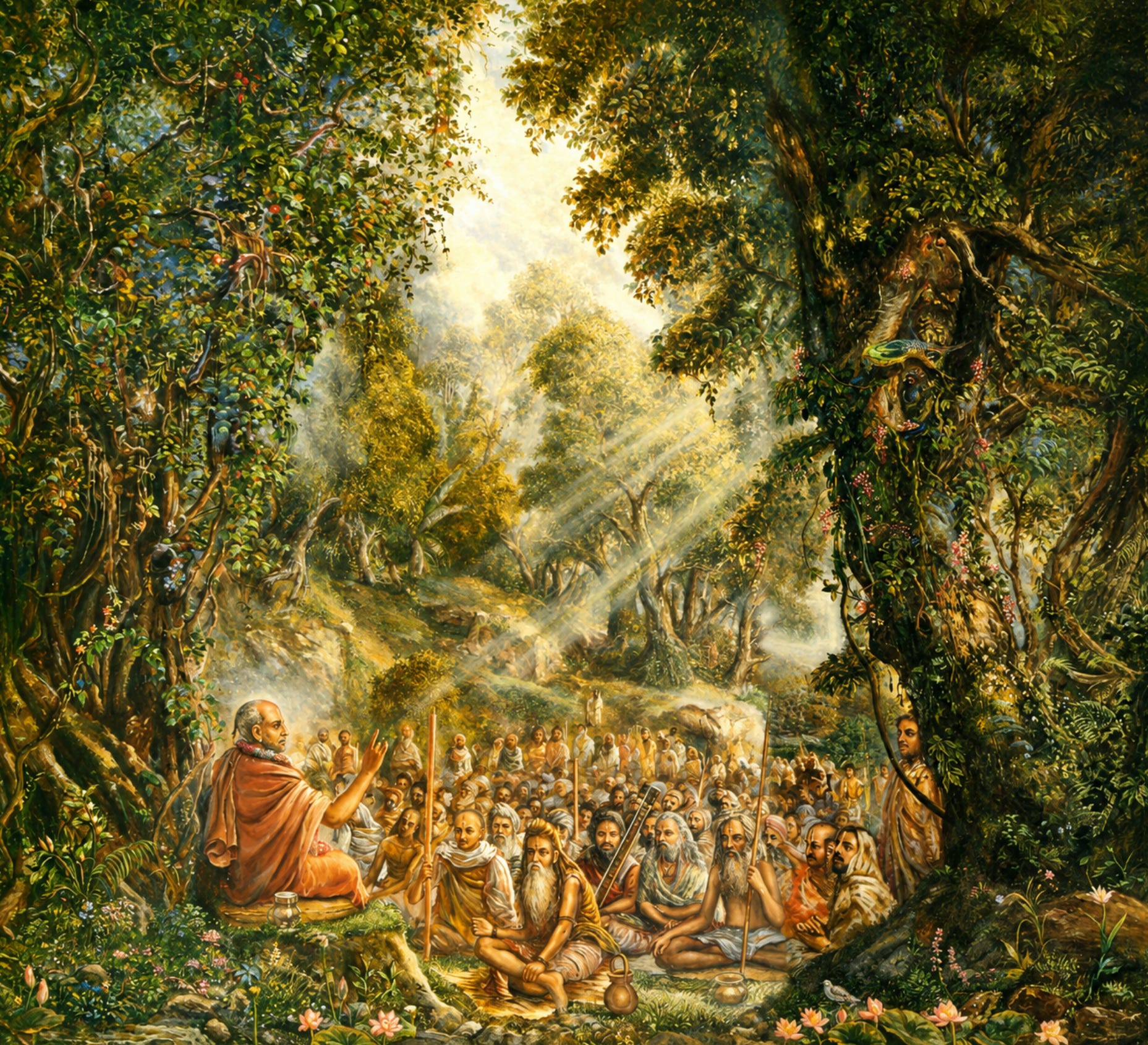
The sages at Naimisaranya: Were an assembly of 88,000 spiritual teachers, led by the prominent sage Shaunaka Rishi. who gathered in the sacred Naimisaranya forest in modern-day Uttar Pradesh, India.

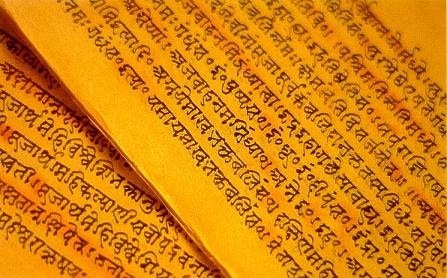
Once, in a holy place in the forest of Naimiṣāraṇya, great sages headed by the sage Śaunaka assembled to perform a great thousand-year sacrifice for the satisfaction of the Lord and His devotees. (SB 1.1.4 )

The Arrival of Suta Goswami: While conducting their rituals, the storyteller and sage Suta Goswami arrived at the assembly and was warmly welcomed and given a high seat of honor (Vyasasana).

O expert and thoughtful men, relish Śrīmad-Bhāgavatam, the mature fruit of the desire tree of Vedic literatures. It emanated from the lips of Śrī Śukadeva Gosvāmī. Therefore this fruit has become even more tasteful, although its nectarean juice was already relishable for all, including liberated souls. (SB. 1. 1. 3 )

The Six Questions: Recognizing Suta Goswami’s pure character and deep scriptural knowledge, the sages asked him six fundamental questions regarding spiritual truth, which form the foundational framework of the

What is the absolute, ultimate benefit for all mankind?


What is the core essence hidden within all Vedic scriptures?

Why did the Supreme Lord take birth from Mother Devaki?


How do the secondary forms of the Lord (like Brahma and Rudra) create, maintain, and destroy the universe?

What are the complete activities and pastimes of Lord Hari’s various incarnations?


Where has true religion or spiritual shelter gone now that Lord Krishna has departed?

In the first chapter of the Śrīmad Bhagavatam, the sages ask Suta Goswami six questions. These questions are not only asked for the sage’s own sake. They are concerned about the situation of people who will be living in the age of Kali, and they want to get from Suta Goswami some knowledge that can help them find their way out of all the darkness and illusion of this age.

( Note; These six questions are asked in chapter one, and the answers are given in chapters two and three. These chapters are thus intimately connected.)

More

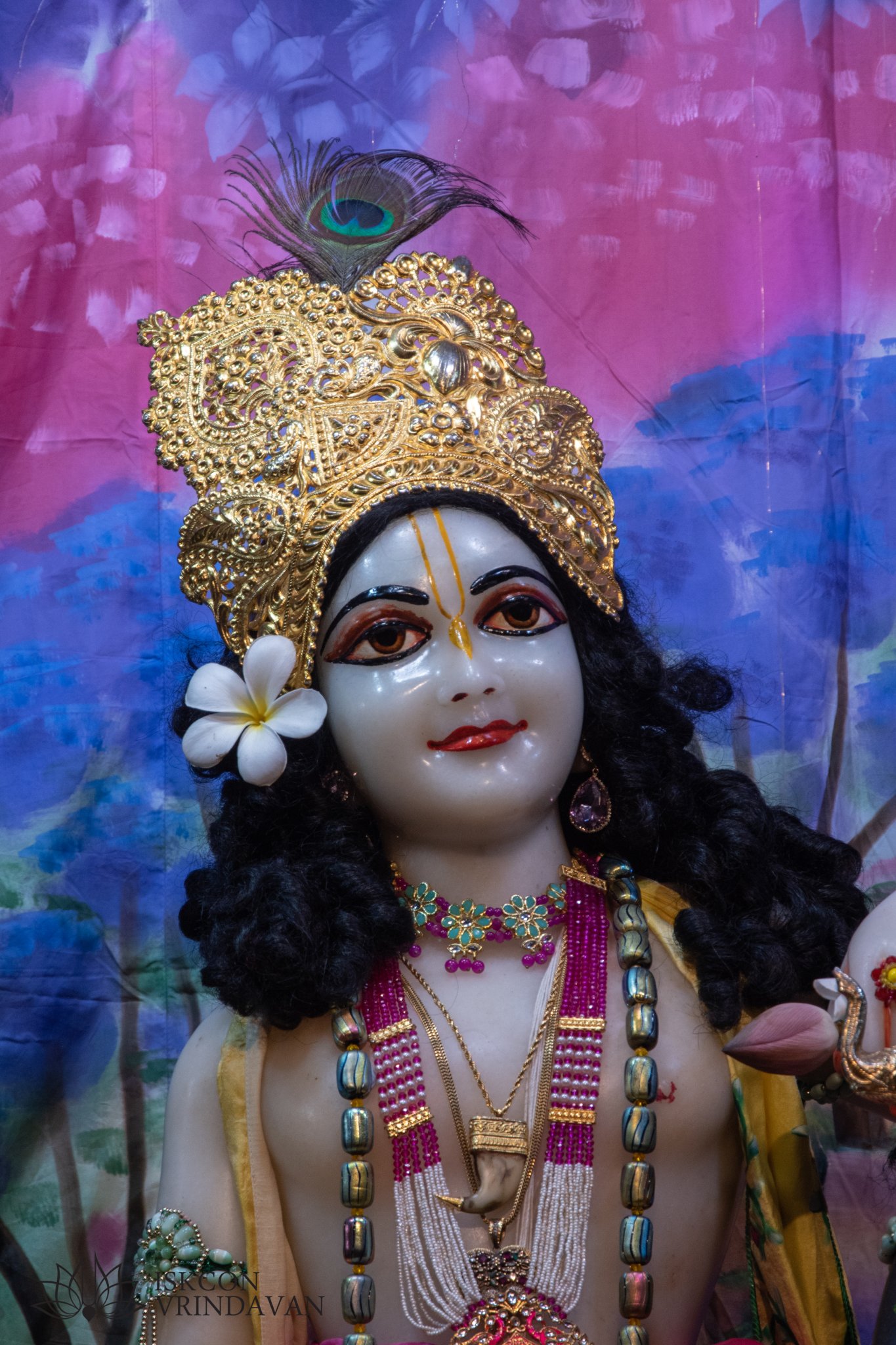
Krishna’s Childhood Pastimes

OLYMPUS DIGITAL CAMERA

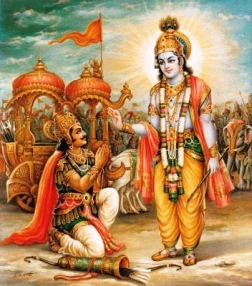
One who knows the transcendental nature of My appearance and activities does not, upon leaving the body, take his birth again in this material world, but attains My eternal abode, O Arjuna.” (Bhagavad-gita 4.9.)

The above verse from the Bhagavad-gita is a very important instruction for aspiring devotees. Just hearing about Krishna, His appearance and activities is so beneficial to our advancement, and liberation, from this temporary material world.

The following verse from the Srimad Bhagavatam, describes some of Krishna’s pastimes in Vrindavan.

…There is no parallel to His childhood pastimes as exhibited at Vrajabhūmi, which are the prototypes of His eternal affairs in the original Kṛṣṇaloka described as the cintāmaṇi-dhāma in the Brahma-saṁhitā [Bs. 5.29]. Lord Śrī Kṛṣṇa descended Himself at Vrajabhūmi with all His transcendental entourage and paraphernalia. Śrī Caitanya Mahāprabhu therefore confirmed that no one is as fortunate as the residents of Vrajabhūmi, and specifically the cowherd girls, who dedicated their everything for the satisfaction of the Lord. His pastimes with Nanda and Yaśodā and His pastimes with the cowherd men and especially with the cowherd boys and the cows have caused Him to be known as Govinda. (from purport to SB 1.8.21)

Full Text and Purport

More

Study Guide

Harinam Diksha Reference

Some time back I found this nice download of reference material and study guide for aspiring devotees. I printed it out, which took 80 pieces of paper, punched holes, and put it in a ring folder. It is arranged very professionally, and is broken down into eight basic areas of study.

1) Spiritual Master

2) Disciple

3) Deity Worship

4) Devotional Service

5) Chanting

6) Demigod Worship

7) Prasadam

8) General Information

For a free pdf download to view or save follow link; Harinam_Diksha_Reference_Material_for_Written_Test_new

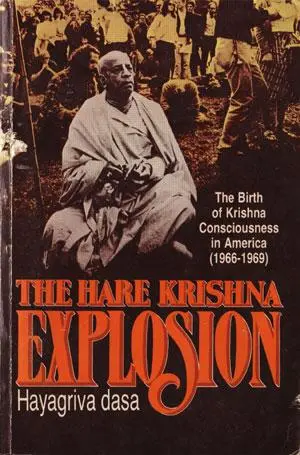
The Hare Krishna Explosion

June 14, 1969: New Vrindavan.

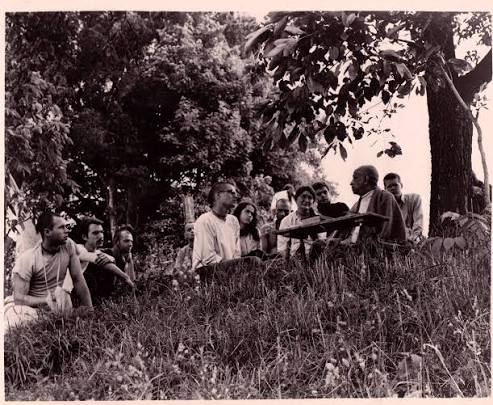
Hayagriva: We are entering Prabhupada’s fourth week at New Vrindavan. He is looking robust and is enjoying himself immensely. In the early morning, he walks down Aghasura Road to the spring and takes a little fresh water in his hand and sips it. He comments on everything: the birds, flowers, fence, pasture, buildings. Nothing is too insignificant to escape his attention. He even inquires about a stray dog.

Prabhupada: “Does he have a name?”

Hayagriva: “We call him Hare Rama,” I say.

Prabhupada: “And how’s that?”

Hayagriva: “Because he chants. He can’t say Hare Krishna, but he can say Hare Rama.”

When I coax Hare Rama by chanting “Hare Rama,” he responds, as always, by lowering his head between his paws and making a strange sound that very closely resembles “Hare Ramaramarama.”

“Oh, very good!” Prabhupada laughs. “Even the stray dogs are making nice progress here. That is the potency of a holy dham. In Vrindavan, you will see many dogs running loose in the streets, but when they die, they are liberated. That is a special benediction for those who have committed offenses in Vrindavan. They receive one life as a dog or hog in Vrindavan. Then liberation.”

Reference: The Hare Krishna Explosion – Hayagriva Dasa

English Translations

Everyday when I offer my obeisances and prayers,I recite them in Sanskrit. However, I don’t dream in Sanskrit, and I don’t think in Sanskrit. I think or contemplate, meditate in English. So I often say the prayers or obeisances in English in my mind, while I recite the Sanskrit.

I offer my respectful obeisances unto my spiritual master, who has opened my eyes, which were blinded by the darkness of ignorance, with the torchlight of knowledge.

I offer my respectful obeisances unto His Divine Grace A.C. Bhaktivedanta Swami Prabhupalda, who is very dear to Lord Krsna, having taken shelter at His lotus feet.

Our respectful obeisances are unto you, O spiritual master, servant of Sarasvati Gosvami. You are kindly preaching the message of Lord Caitanyadeva and delivering the Western countries, which are filled with impersonalism and voidism.

“I offer me respectful obeisances unto the Supreme Lord Sri Krsna Caitanya, who is more magnanimous than any other incarnation, even Krsna Himself, because He is bestowing freely what no one else has ever given – pure love of Krsna”

“I offer my respectful obeisances to the Supreme Absolute Truth, Krsna, who is the well-wisher of the cows and brahmanas, as well as the living entities in general. I offer my repeated obeisances to Govinda, who is the pleasure reservoir for all the senses”

I offer my respectful obeisances unto all the Vaisnava devotees of the Lord. They are just like desire trees who can fulfill the desires of everyone, and they are full of compassion for the fallen conditioned souls.

O my dear Krsna, You are the friend of the distressed and the source of creation. You are the master of the cowherdsmen and the lover of the gopis, especially Radharani. I offer my respectful obeisances unto You”.

“I offer my respects unto Srimati Radharani, whose bodily complexion is like molten gold and who is the Queen of Vrndavana. You are the daughter of King Vrsabhanu, and You are very dear to Lord Krsna”.

All Glories to Lord Sri Krishna Chaitanya, Lord Nityananda, Sri Advaita, Sri Gadadhara, Sri Srivas, and all the vaisnava devotes of the Lord

O Srimati Radharani, O all attractive reservoir of pleasure, Lord Sri Krsna, please engage me in your loving devotional service

Hare Krishna
Hare Krishna
Krishna Krishna
Hare Hare
Hare Rama
Hare Rama
Rama Rama
Hare Hare

These are some of the prayers I ‘try’ to say daily, for the full prayers with the full Roman Transliteration please go to:

Pranams

Books Are the Basis

The Following is an excerpt from “Our Family Business”

By His Grace Vaisesika Dasa, 

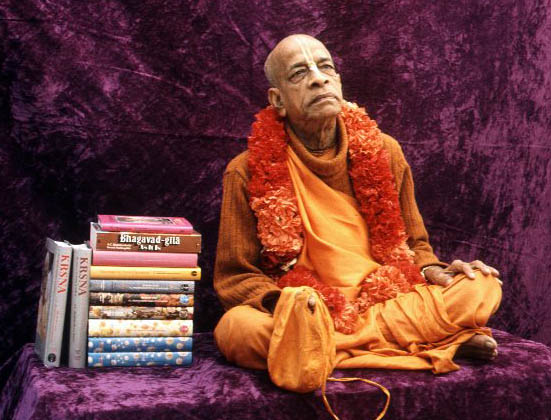
In ISKCON we hear devotees say “Books are the basis.” Śrīla Prabhupāda himself used this phrase in a letter to Maṇḍali Bhadra Dāsa dated January 20, 1972: “My first concern is that my books shall be published and distributed profusely all over the world. Practically, books are the basis of our movement. Without them our preaching has no effect.” He uses it again in a letter to Tuṣṭa Kṛṣṇa Swami (January 9, 1976): “Books are the basis of our movement. Whatever appreciation we are getting on account of our books, it is because we are following the path chalked out by exalted devotees.”

So what does it mean that Śrīla Prabhupāda’s books are the foundation – the basis – of ISKCON? We can begin to understand by reading the letter Śrīla Prabhupāda wrote to Dāmodara Dāsa on December 3, 1971:

I’m especially pleased to hear that your distribution of our books and magazines has increased. Go on in this way, increasing more and more. Each time someone reads some solid information about Kṛṣṇa his life becomes changed in some way. These literatures are the solid ground upon which our preaching stands, so I want that they should be available to everyone, as many as possible. So please try for this.

More

Happy Birthday

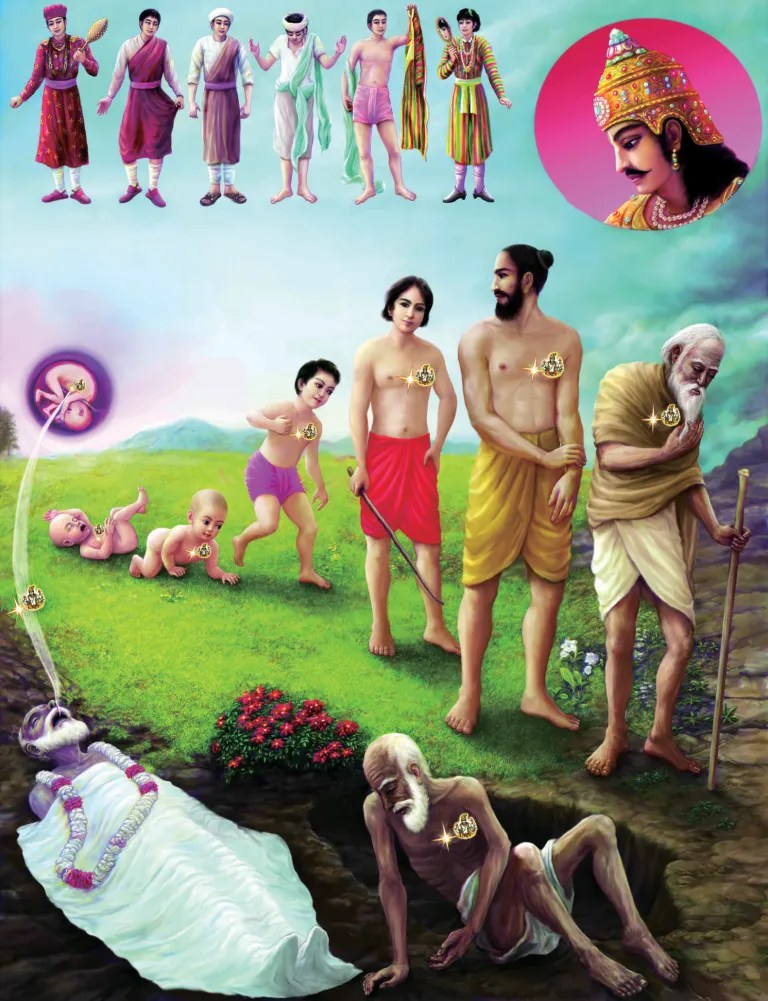
Well today is my birthday. 72 years ago on this day I was in a small baby’s body, but today I am in an old man’s body. But I’m still the same person, although it seems like I have lived many different lives, as a child, as a student, as a devotee, as a husband and father, grandfather, and retired woodworker. Lived and traveled to so many places, had so many different life experiences, and so it seems, I have lived many lives.

I am reminded of some of the famous important verses from the Bhagavad-gita:

As the embodied soul continually passes, in this body, from boyhood to youth to old age, the soul similarly passes into another body at death. The self-realized soul is not bewildered by such a change. (Bg 2.13)

For the soul there is never birth nor death. Nor, having once been, does he ever cease to be. He is unborn, eternal, ever-existing, undying and primeval. He is not slain when the body is slain. (Bg 2.20)

Full texts and purports will follow at end of post, but I wanted to mention some well known persons who I share a birthday with.

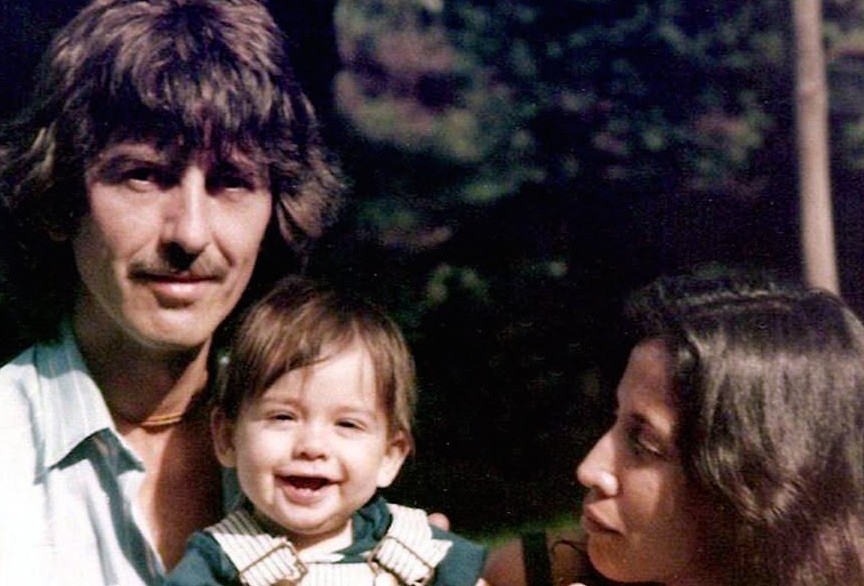
On this day in 1978, Dhani Harrison appeared, who we all know as the son of George and Olivia Harrison, turns 48 today.

This image has an empty alt attribute; its file name is dani-harrison.jpg

And one of my favorite musicians Jerry Garcia was born on August 1, 1942, in San Francisco, California. He was the co-founder, lead guitarist, and vocalist of the Grateful Dead.

Jerry Garcia and Srila Prabhupada intersected through 1960’s counterculture, notably via the Grateful Dead playing at the 1967 Mantra-Rock concert. The Grateful Dead performed alongside Big Brother and the Holding Company and Allen Ginsberg at the historic San Francisco Avalon Ballroom benefit concert, which helped introduce A. C. Bhaktivedanta Swami and the Hare Krishna Movement to the West coast.

More

108 Imporant Slokas from the 1972 Bhagavad-gita As It Is

Click on image to go to Post

Click on image to go to Post

The Hare Krishna Cookbook

Songs of the Vaisnava Acaryas

Bhagavad-gita As It Is 1972 Edition “Online”

click on image

click on image to visit site

Srimad Bhagavatam Online

click on image

Raja-Vidya the King of Knowledge

click on image

click on image

Blog Stats

  • 4,799,273 hits

Enter your email address to subscribe to this blog and receive notifications of new posts by email.

Join 3,895 other subscribers

Important Slokas from the Brahma-samhita

click on image

click on image

Slokas from the Sri Isopanisad

click on image

click on image

Prayers By Queen Kunti (Slokas)

click on image

Gajendra’s Prayers of Surrender (Slokas)

click on image

A Short Statement of the Philosophy of Krishna Consciousness

click on image

click on image

July 9th Letter

click on image

click on image

The Hare Krishna Explosion

Reference Material/Study Guide

click on image

click on image

  • LINKS