Yesterday my wife read me this verse and purport from the Sri Caitanya-caritamrta (Cc. Madya-lila 16.186). It reminded me of the potency of the Holy Name of the Lord.
” ‘To say nothing of the spiritual advancement of persons who see the Supreme Person face to face, even a person born in a family of dog-eaters becomes immediately eligible to perform Vedic sacrifices if he once utters the holy name of the Supreme Personality of Godhead, or chants about Him, hears about His pastimes, offers Him obeisances or even remembers Him.’ “
This is a quotation from Śrīmad-Bhāgavatam (3.33.6). According to this verse, it doesn’t matter what position a person holds. One may be the lowest of the low—a caṇḍāla, or dog-eater—but if he takes to chanting and hearing the holy name of the Lord, he is immediately eligible to perform Vedic sacrifices. This is especially true in this age of Kali.
harer nāma harer nāma
harer nāmaiva kevalam
kalau nāsty eva nāsty eva
nāsty eva gatir anyathā
(Bṛhan-nāradīya Purāṇa, 38.126)
A person born in a brāhmaṇa family cannot perform Vedic sacrifices until he is properly purified and has attained his sacred thread. However, according to this verse, it is understood that even a lowborn person can immediately perform sacrifices if he sincerely chants and hears the holy name of the Lord. Sometimes envious people ask how Europeans and Americans in this Kṛṣṇa consciousness movement can become brāhmaṇas and perform sacrifices. They do not know that the Europeans and Americans have already been purified by chanting the holy name of the Lord—Hare Kṛṣṇa, Hare Kṛṣṇa, Kṛṣṇa Kṛṣṇa, Hare Hare Hare Rāma, Hare Rāma, Rāma Rāma, Hare Hare. This is the proof. Śvādo ‘pi sadyaḥ savanāya kalpate. One may be born in a family of dog-eaters, but he can perform sacrifices simply by chanting the mahā-mantra.
Those who find fault in the Western Vaiṣṇavas should consider this statement from Śrīmad-Bhāgavatam and the commentary on this verse by Śrīla Jīva Gosvāmī. In this regard, Śrīla Jīva Gosvāmī has stated that to become a brāhmaṇa, one has to wait for purification and undergo the sacred thread ceremony, but a chanter of the holy name does not have to wait for the sacred thread ceremony. We do not allow devotees to perform sacrifices until they are properly initiated in the sacred thread ceremony. Yet according to this verse, an offenseless chanter of the holy name is already fit to perform a fire ceremony, even though he is not doubly initiated by the sacred thread ceremony. This is the verdict given by Lord Kapiladeva in His instructions to His mother, Devahūti. It was Lord Kapiladeva who instructed Devahūti in pure Sāṅkhya philosophy.
And from the Srimad Bhagavatam full text and purport
yan-nāmadheya-śravaṇānukīrtanād
yat-prahvaṇād yat-smaraṇād api kvacit
śvādo ‘pi sadyaḥ savanāya kalpate
kutaḥ punas te bhagavan nu darśanāt
yat—of whom (the Supreme Personality of Godhead); nāmadheya—the name; śravaṇa—hearing; anukīrtanāt—by chanting; yat—to whom; prahvaṇāt—by offering obeisances; yat—whom; smaraṇāt—by remembering; api—even; kvacit—at any time; śva-adaḥ—a dog-eater; api—even; sadyaḥ—immediately; savanāya—for performing Vedic sacrifices; kalpate—becomes eligible; kutaḥ—what to speak of; punaḥ—again; te—You; bhagavan—O Supreme Personality of Godhead; nu—then; darśanāt—by seeing eye to eye.
To say nothing of the spiritual advancement of persons who see the Supreme Person eye to eye, even a person born in the family of dog-eaters immediately becomes eligible to perform Vedic sacrifices if he once utters the holy name of the Supreme Personality of Godhead, or chants about Him, hears about His pastimes, offers Him obeisances or even remembers Him.
PURPORT
Herein the spiritual potency of chanting, hearing or remembering the holy name of the Supreme Lord is greatly stressed. Rūpa Gosvāmī has discussed the sequence of sinful activities of the conditioned soul, and he has established, in Bhakti-rasāmṛta-sindhu, that those who engage in devotional service become freed from the reactions of all sinful activities. This is also confirmed in Bhagavad-gītā. The Lord says that He takes charge of one who surrenders unto Him, and He makes him immune to all reactions to sinful activities. If by chanting the holy name of the Supreme Personality of Godhead one becomes so swiftly cleared of all reactions to sinful activities, then what is to be said of those persons who see Him face to face?
Another consideration here is that persons who are purified by the process of chanting and hearing become immediately eligible to perform Vedic sacrifices. Generally, only a person who is born in a family of brāhmaṇas, who has been reformed by the ten kinds of purificatory processes, and who is learned in Vedic literature is allowed to perform the Vedic sacrifices. But here the word sadyaḥ, “immediately,” is used, and Śrīdhara Svāmī also remarks that one can immediately become eligible to perform Vedic sacrifices. A person born in a family of the low caste which is accustomed to eat dogs is so positioned due to his past sinful activities, but by chanting or hearing once in pureness or in an offenseless manner, he is immediately relieved of the sinful reaction. Not only is he relieved of the sinful reaction, but immediately he achieves the result of all purificatory processes. Taking birth in the family of a brāhmaṇa is certainly due to pious activities in one’s past life. But still a child who is born in a family of a brāhmaṇa depends for his further reformation upon initiation into acceptance of a sacred thread and many other reformatory processes. But a person who chants the holy name of the Lord, even if born in a family of caṇḍālas, dog-eaters, does not need reformation. Simply by chanting Hare Kṛṣṇa, he immediately becomes purified and becomes as good as the most learned brāhmaṇa.
Śrīdhara Svāmī especially remarks in this connection, anena pūjyatvaṁ lakṣyate. Some caste brāhmaṇas remark that by chanting Hare Kṛṣṇa, purification begins. Of course that depends on the individual process of chanting, but this remark of Śrīdhara Svāmī’s is completely applicable if one chants the holy name of the Lord without offense, for he immediately becomes more than a brāhmaṇa. As Śrīdhara Svāmī says, pūjyatvam: he immediately becomes as respectable as a most learned brāhmaṇa and can be allowed to perform Vedic sacrifices. If by simply chanting the holy name of the Lord one becomes sanctified instantly, then what can be said of those persons who see the Supreme Lord face to face and who understand the descent of the Lord as Devahūti understands Kapiladeva.
Usually, initiation depends on the bona fide spiritual master, who directs the disciple. If he sees that a disciple has become competent and purified by the process of chanting, then he offers the sacred thread to the disciple just so that he will be recognized as one hundred percent equal with a brāhmaṇa. This is also confirmed in the Hari-bhakti-vilāsa by Śrī Sanātana Gosvāmī: “As a base metal like bell metal can be changed into gold by a chemical process, similarly any person can be changed into a brāhmaṇa by dīkṣā-vidhāna, the initiation process.”
It is sometimes remarked that by the chanting process one begins to purify himself and can take birth in his next life in a brāhmaṇa family and then be reformed. But at this present moment, even those who are born in the best brāhmaṇa families are not reformed, nor is there any certainty that they are actually born of brāhmaṇa fathers. Formerly the garbhādhāna reformatory system was prevalent, but at the present moment there is no such garbhādhāna, or seed-giving ceremony. Under these circumstances no one knows if a man is factually born of a brāhmaṇa father. Whether one has acquired the qualification of a brāhmaṇa depends on the judgement of the bona fide spiritual master. He bestows upon the disciple the position of a brāhmaṇa by his own judgement. When one is accepted as a brāhmaṇa in the sacred thread ceremony, under the pāñcarātric system, then he is dvija, twice-born. That is confirmed by Sanātana Gosvāmī: dvijatvaṁ jāyate. By the process of initiation by the spiritual master, a person is accepted as a brāhmaṇa in his purified state of chanting the holy name of the Lord. He then makes further progress to become a qualified Vaiṣṇava, which means that the brahminical qualification is already acquired.


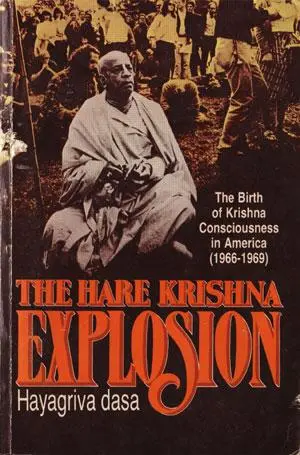

 The Hare Krishna Movement