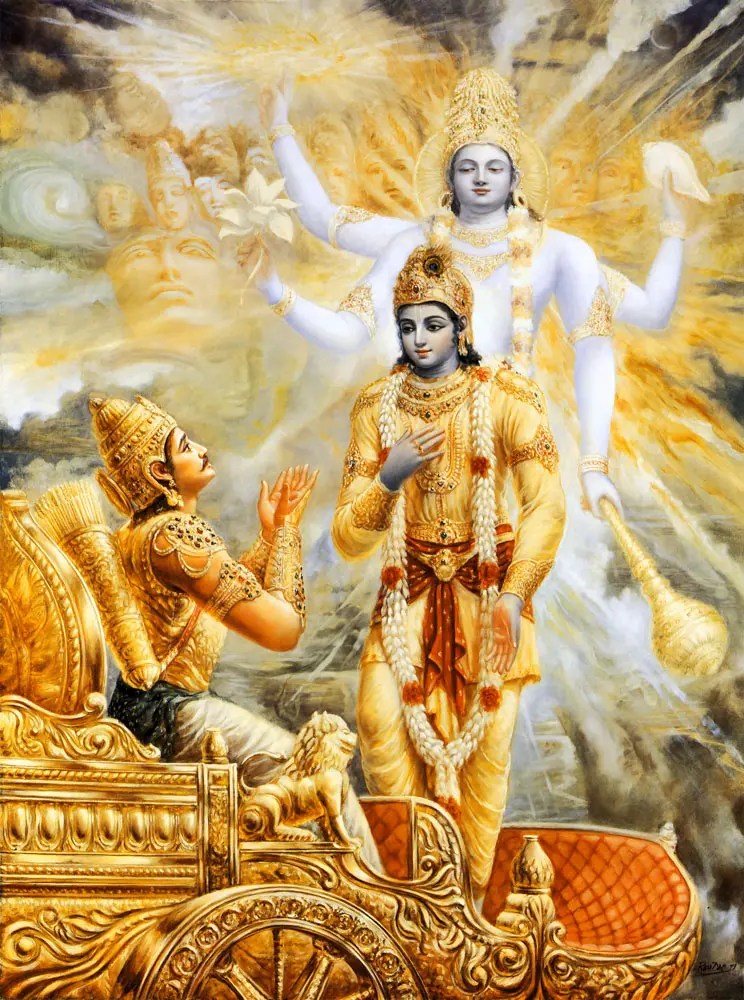
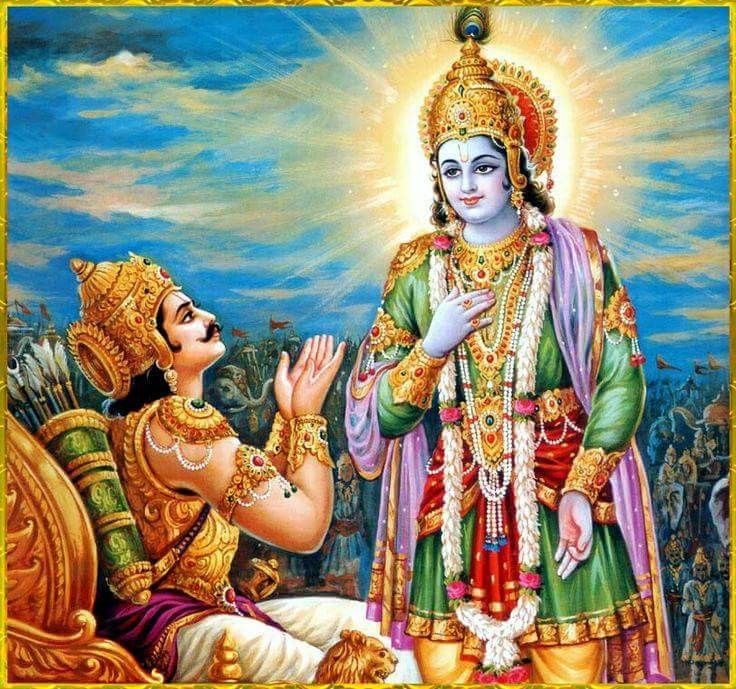
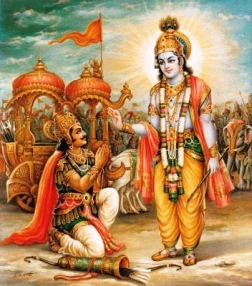
Last night I woke in the middle of the night , and couldn’t fall back asleep. While laying there, my mind just kinda went to thoughts of Krishna and Arjuna. Arjuna accepted Krishna as his spiritual master with these famous words from the Bhagavad-gita:
O Kṛṣṇa, I totally accept as truth all that You have told me. Neither the gods nor demons, O Lord, know Thy personality. (Bg 10.14)
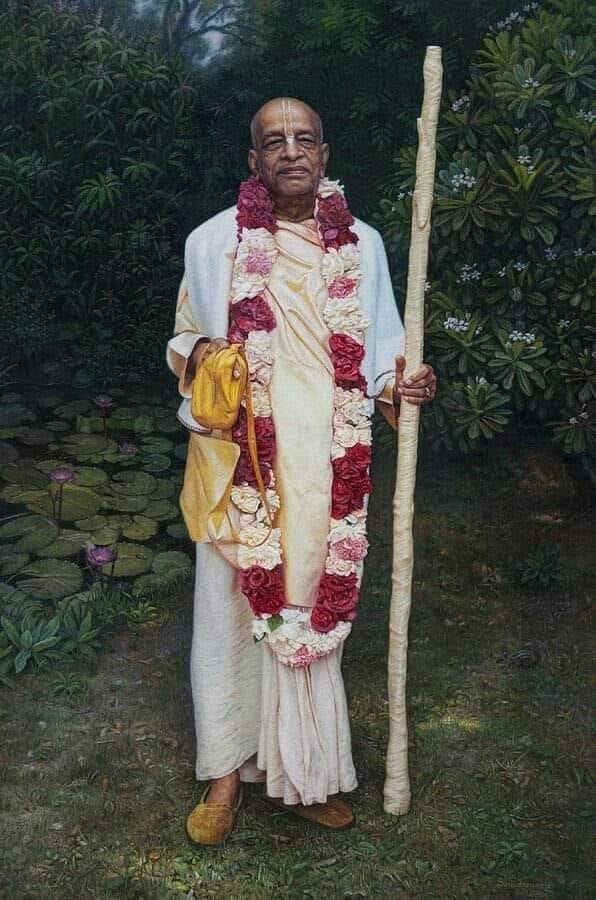
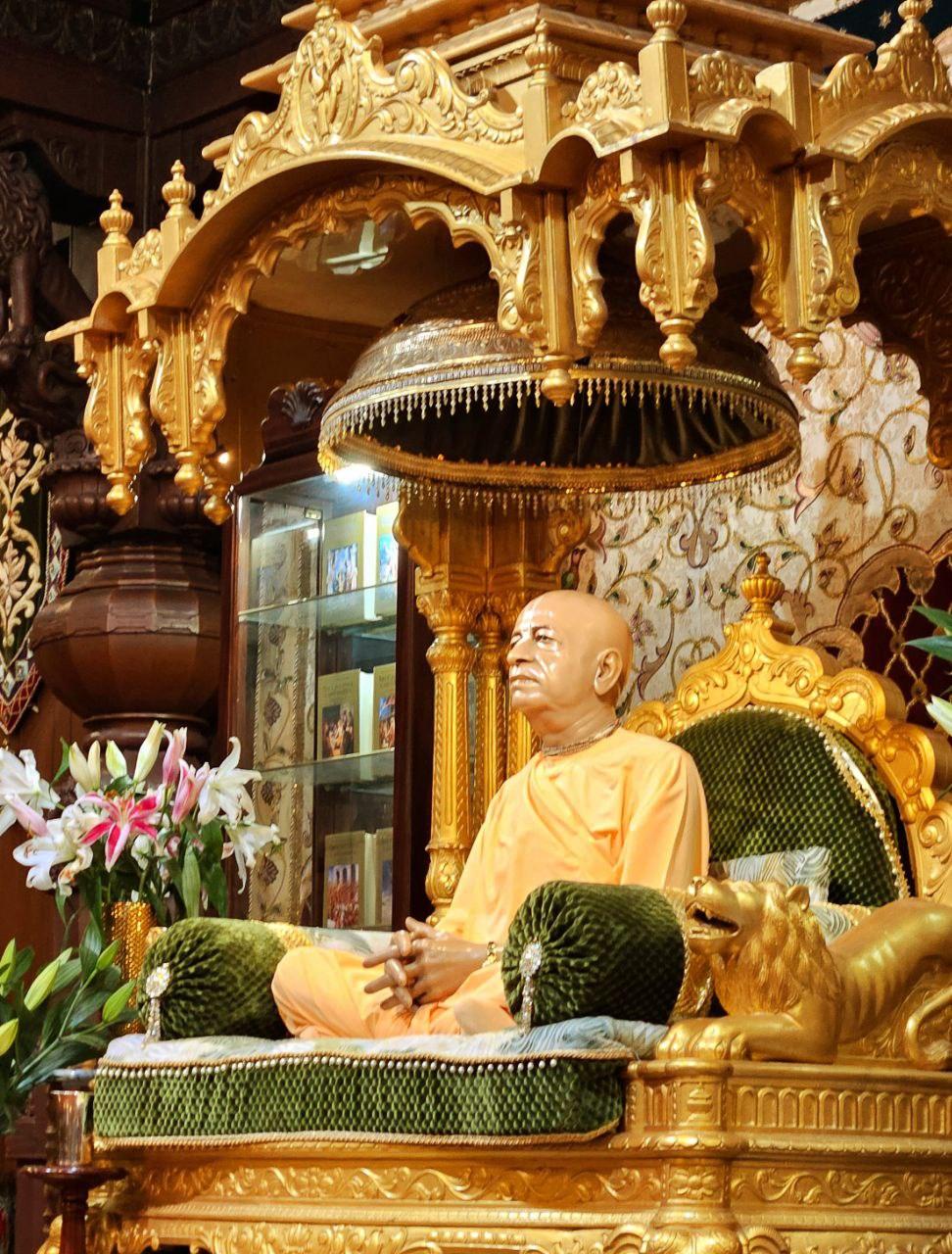
This lead me to think of our relationship with our spiritual master His Divine Grace A. C. Bhaktivedanta Swami Prabhupada. And I came to the same conclusion as Arjuna. “I totally accept as truth all that You have told me“.
So I was thinking of our unique relationship with Srila Prabhupada. “Neither the gods nor demons, O Lord, know Thy personality”.Maybe the whole world outside of the circle of disciples and followers of His Divine Grace, cannot know his greatness and divine personality, but as disciples and followers, we can began to understand. Our relationship with Srila Prabhupada is much like that relationship between Krishna and Arjuna.
With that last thought, I fell back asleep, reflecting on Srila Prabhupada. -V
The Following is an excerpt from “Our Family Business”
By His Grace Vaisesika Dasa,
In ISKCON we hear devotees say “Books are the basis.” Śrīla Prabhupāda himself used this phrase in a letter to Maṇḍali Bhadra Dāsa dated January 20, 1972: “My first concern is that my books shall be published and distributed profusely all over the world. Practically, books are the basis of our movement. Without them our preaching has no effect.” He uses it again in a letter to Tuṣṭa Kṛṣṇa Swami (January 9, 1976): “Books are the basis of our movement. Whatever appreciation we are getting on account of our books, it is because we are following the path chalked out by exalted devotees.”
So what does it mean that Śrīla Prabhupāda’s books are the foundation – the basis – of ISKCON? We can begin to understand by reading the letter Śrīla Prabhupāda wrote to Dāmodara Dāsa on December 3, 1971:
I’m especially pleased to hear that your distribution of our books and magazines has increased. Go on in this way, increasing more and more. Each time someone reads some solid information about Kṛṣṇa his life becomes changed in some way. These literatures are the solid ground upon which our preaching stands, so I want that they should be available to everyone, as many as possible. So please try for this.
I saw this posted on Facebook, and thought we would share it here with all of you. In this article by Locan Ananda Prabhu, he again makes the argument for Arsa-prayoga, or no change.
Srila Prabhupada was recognized as a great Sanskrit scholar. His depth of knowledge was unfathomable. Not a single word of his should have been changed. That policy is called arsa-prayoga, and it guarantees that the spiritual head of our institution should never be dishonored by changing his words.
THE ROD OF CHASTISEMENT IS GONE!!!
by Locan Ananda Dasa
One of my favorite verses in the Bhagavad-Gita As It Is
was once found in Chapter 10, verse 38:
“Among punishments I am the rod of chastisement, and of those who seek victory, I am morality. Of secret things I am silence, and of the wise I am wisdom.” (B.g. 10.38, original)
Chapter 10 is entitled, “The Opulence of the Absolute” wherein Krishna enumerates some of His extraordinarily splendorous manifestations. On August 12, 1976, Srila Prabhupada was having an evening darshan in Tehran, the capital and largest city in Iran. He was talking about how ordinary people know little about the greatness of God. “They say, ‘God is great,’ but how great? That they do not know.” Srila Prabhupada then asked his secretary at the time, Harikesa dasa, to read selected verses from the Bhagavad-Gita, beginning with Chapter 10, verse 20:
“I am the Self, O Gudakesa, seated in the hearts of all creatures. I am the beginning, the middle and the end of all beings.” (B.g. 10.20)
Harikesa prabhu continued to read through the verses that followed, the chapter ending with verse 42:
“But what need is there, Arjuna, for all this detailed knowledge. With a single fragment of Myself I pervade and support this entire universe.” (B.g. 10.42)
When he finished the reading, Srila Prabhupada said, “That’s it. This is greatness. So we should not simply be satisfied ‘God is great.’ We must try to know how great He is. Then our God consciousness will be fixed up. It’s all right?”
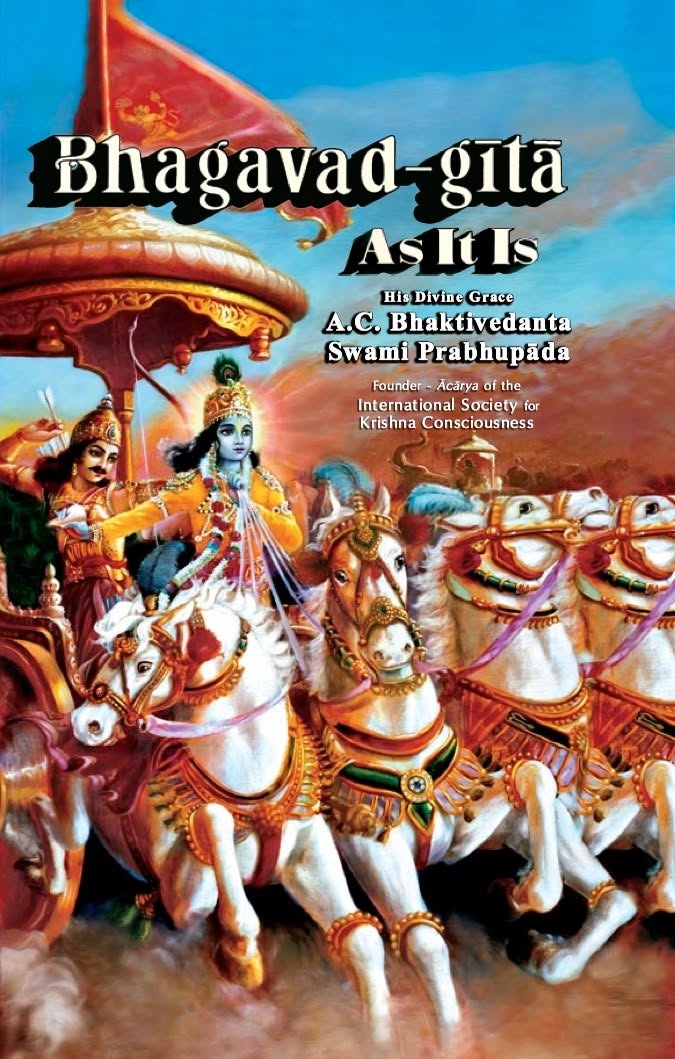
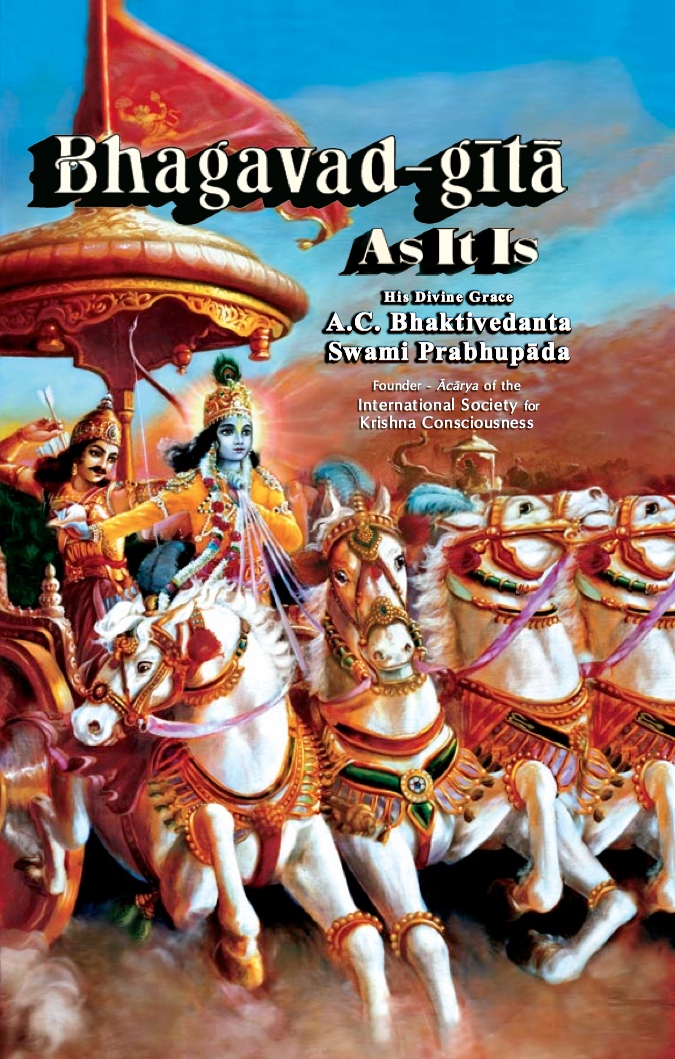
…One issue that many find shocking is the extent to which Srila Prabhupada’s Bhagavad-gita As It Is was edited without having been authorized by His Divine Grace, Srila Prabhupada. He was never a fan of extensive editing of any of his published works. What’s more, the over-edited edition published in 1983 removed thirty-two color pages that Srila Prabhupada insisted be included in his great opus. Three of those eliminated color pages were of the predecessor acaryas, namely Srila Bhaktisiddhanta Saraswati Thakur, Srila Gaura Kishora Das Babaji Maharaja and Srila Thakur Bhaktivinode.
Even the pocket Gita printed in India included all of the color plates found in the Macmillan edition.
If you are just hearing about this for the first time, please contact the GBC representative in your area and humbly request that this offense be rectified with the next printing. Doing so will attract Srila Prabhupada’s blessings. Do not fear when the cause is just.
A CRISIS IN LEADERSHIP
by Locan Ananda dasa
Many followers of Srila Prabhupada’s teachings have been calling for the worldwide reformation of the leadership of the International Society for Krishna Consciousness. The charge being made is that leaders and managers need to adhere more closely to the specific instructions of our Founder Acarya. There should be greater vigilance and the immediate correction of inappropriate behavior on the part of errant leaders.
I have often pondered this question that Arjuna asks Krishna:
Arjuna said: O descendant of Vṛṣṇi, by what is one impelled to sinful acts, even unwillingly, as if engaged by force? (Bg. 3.36)
And Krishna answers:
The Blessed Lord said: It is lust only, Arjuna, which is born of contact with the material modes of passion and later transformed into wrath, and which is the all-devouring, sinful enemy of this world. (Bg. 3.37)
A living entity, as part and parcel of the Supreme, is originally spiritual, pure, and free from all material contaminations. Therefore, by nature he is not subjected to the sins of the material world. But when he is in contact with the material nature, he acts in many sinful ways without hesitation, and sometimes even against his will. As such, Arjuna’s question to Kṛṣṇa is very sanguine, as to the perverted nature of the living entities. Although the living entity sometimes does not want to act in sin, he is still forced to act. Sinful actions are not, however, impelled by the Supersoul within, but are due to another cause, as the Lord explains in the next verse. (from purport)
further explained:
…When a living entity comes in contact with the material creation, his eternal love for Kṛṣṇa is transformed into lust, in association with the mode of passion.
…Therefore, lust is the greatest enemy of the living entity, and it is lust only which induces the pure living entity to remain entangled in the material world.
sarva-bhūta-stham—situated in all beings; ātmānam—the Supersoul; sarva—all; bhūtāni—entities; ca—also; ātmani—in the Self; īkṣate—does see; yoga-yukta-ātmā—one who is dovetailed in Kṛṣṇa consciousness; sarvatra—everywhere; sama-darśanaḥ—seeing equally.
TRANSLATION A true yogī observes Me in all beings, and also sees every being in Me. Indeed, the self-realized man sees Me everywhere.
PURPORT
A Kṛṣṇa conscious yogī is the perfect seer because he sees Kṛṣṇa, the Supreme, situated in everyone’s heart as Supersoul (Paramātmā).
Īśvaraḥ sarva-bhūtānāṁ hṛd-deśe ’rjuna tiṣṭhati.
The Supreme Lord is situated in everyone’s heart, O Arjuna, and is directing the wanderings of all living entities.
This is a nice Study Guide on the Bhagavad-gita As It Is. It begins with the Introduction to the Bhagavad-gita, some notes on the Original Edition, the significance of the Bhagavad-gita, a philosophical synopsis, chapter by chapter summary, Q & A, and a suguested teaching syllabus. All in all ,a very nice presentation prepared by disciples and followers of His Divine Grace A. C. Bhaktivedanta Swami Prabhupada.
We are offing it here as a free pdf download that you can view, save or print, by clicking on the following link:
Some years ago I put the complete Original 1972 Bhagavad-gita “As It Is” by His Divine Grace A. C. Bhaktivedanta Swami online. You can click on link prabhupada.gita to visit. I find it is a quick and easy site for reference to all your favorite chapters and slokas.
This morning I was reminded of something that I heard Srila Prabhupada say in a lecture. He was describing that Krishna Consciousness is very simple, you just need to do four things. Always think of Krishna, become His devotee, offer obeisances, and worship Him.
Engage your mind always in thinking of Me, offer obeisances and worship Me. Being completely absorbed in Me, surely you will come to Me. (Bhagavad-gita 9.34)
This verse is also repeated in the 16th Chapter:
man-manā bhava mad-bhakto mad-yājī māṁ namaskuru mām evaiṣyasi satyaṁ te pratijāne priyo ’si me
Always think of Me and become My devotee. Worship Me and offer your homage unto Me. Thus you will come to Me without fail. I promise you this because you are My very dear friend.
In this verse it is clearly indicated that Kṛṣṇa consciousness is the only means of being delivered from the clutches of this contaminated material world…Pure devotional service is the highest achievement of human society. (from purport)
This morning I was thinking about the different relationships one can have with the Lord. In “The Nectar of Devotion”, Srila Prabhupada describes the five primary kinds of devotional service-namely, neutrality, servitude, fraternity, parenthood and conjugal love.Over the course of the next five posts, I want to explore these five primary relationships.
But for today, I want to start with this nice verse from the Bhagavad-gita, where these five types of relationships are mentioned in purport.
For one who remembers Me without deviation, I am easy to obtain, O son of Pṛthā, because of his constant engagement in devotional service. (Bg 8.14)
…Bhakti-yoga is very simple and pure and easy to perform. One can begin by simply chanting Hare Kṛṣṇa. Kṛṣṇa is very merciful to those who engage in His service, and He helps in various ways that devotee who is fully surrendered to Him so he can understand Him as He is. The Lord gives such a devotee sufficient intelligence so that ultimately the devotee can attain Him in His spiritual kingdom.
…Generally, the bhakti-yogīs are engaged in five different ways: 1) śānta-bhakta, engaged in devotional service in neutrality; 2) dāsya-bhakta, engaged in devotional service as servant; 3) sākhya-bhakta, engaged as friend; 4) vātsalya-bhakta, engaged as parent; and 5) mādhurya-bhakta, engaged as conjugal lover of the Supreme Lord. (from purport)
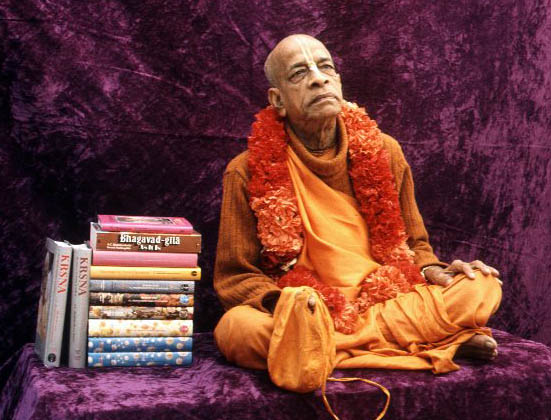
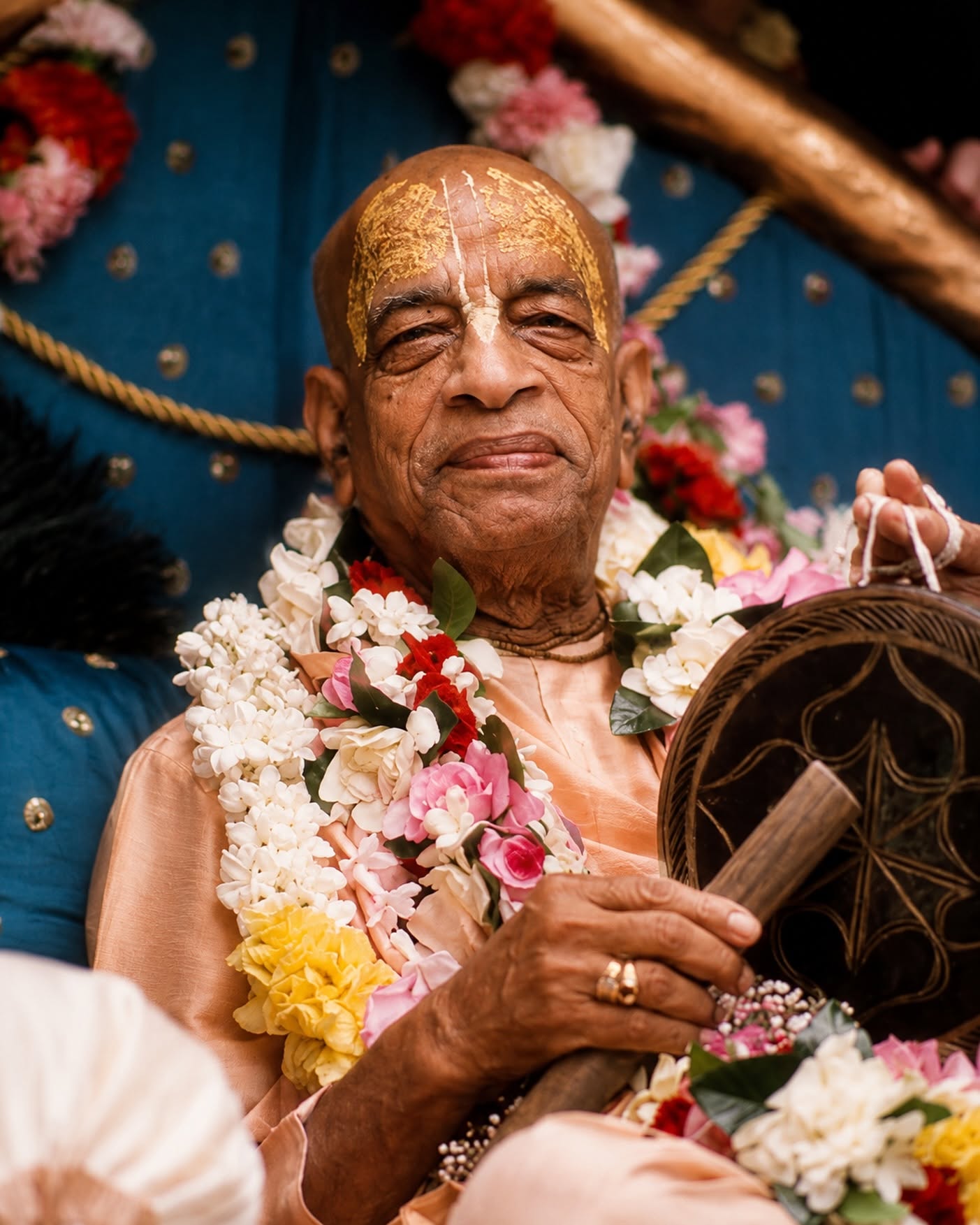
This morning as I was looking at a picture of Srila Prabhupada, this verse from the Bhagavad-gita just came into my mind:
O Kṛṣṇa, I totally accept as truth all that You have told me. Neither the gods nor demons, O Lord, know Thy personality. (Bg 10.14)
And I was thinking, that is exactly how I think of Srila Prabhupada’s instructions, to us. “I totally accept as truth all that You have told me“. Ever since I picked up my first book by Srila Prabhupada, I have just accepted every thing he has written as truth. I didn’t always believe my school teachers, or the nuns, or my parents for that matter. Sure they knew some things, and much of it true, but they didn’t know everything.
For some reason I just accepted as truth everything Prabhupada told us. He told us who was God (Krsna), then he told us what God looked like, what God was doing, where God lived, who’s Gods friends were, and much much more. There wasn’t a question he couldn’t answer, and he backed it up with sastric evidence.These were questions I asked of the nuns and priests, of parents and college professors, but I never got a reasonable answer from anyone when I asked; ‘Who is God, who am I, what is my relationship with Him?’
I am sure that many of you have your favorite Bhagavad-gita slokas, and I was thinking about it this morning. I was trying to recall my top 8 slokas, (which is hard to select only 8). But I have listed them below, in no particular order.
For the list the 108 most important Bhagavad-gita slokas click on following link:1972 Bhagavad-gita
patraṁ puṣpaṁ phalaṁ toyaṁ yo me bhaktyā prayacchati tad ahaṁ bhakty-upahṛtam aśnāmi prayatātmanaḥ
If one offers Me with love and devotion a leaf, a flower, fruit or water, I will accept it.
I was thinking about it this morning, how in the Material world everything is temporary and limited, whereas is the Spiritual world everything is eternal and unlimited. For instance:
…In the Caitanya-caritāmṛta it is said that when Kṛṣṇa comes before Rādhārāṇī, She becomes so much engladdened by seeing the beauty of Kṛṣṇa that She becomes more beautiful, and as soon as Rādhārāṇī becomes beautiful, Kṛṣṇa becomes engladdened and He becomes more beautiful. So unlimitedly there is competition of becoming more beautiful. That is the state. Competition. Because in the spiritual world everything is unlimited. So unlimitedly both of them becoming more beautiful and both of them enjoying unlimitedly. ((Lecture on SB 1.2.8 New Vrindaban, September 6, 1972)
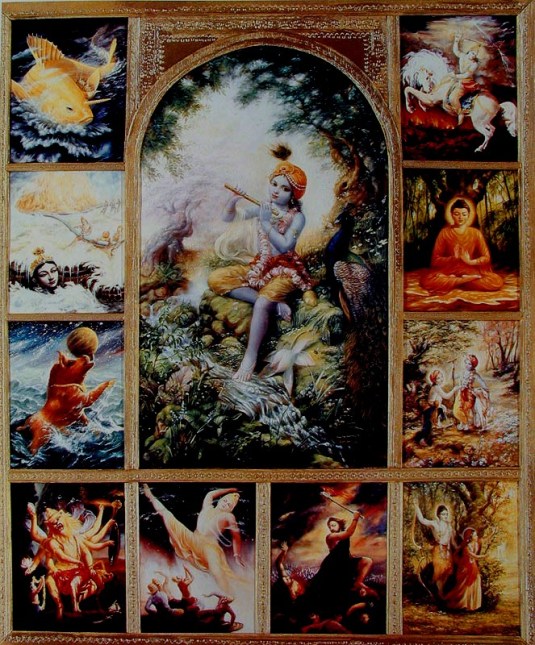
Lord Krsna appears in every millennium, in various incarnations, to annihilate the demons, protect the devotees and reestablish the principles of religion. From upper left-hand corner: Lord Matsya, the fish incarnation; Lord Kurma, the tortoise incarnation; Lord Varaha, the boar incarnation; Lord Nrsimhadeva, the man-lion incarnation; Lord Vamana, the dwarf-brahmana incarnation; Lord Parasurama, the warrior incarnation; Lord Ramacandra; Lord Krishna and Lord Balarama; Lord Buddha; and Lord Kalki, who destroys all demons at the end of the millennium.
In order to deliver the pious and to annihilate the miscreants, as well as to reestablish the principles of religion, I advent Myself millennium after millennium. (Bhagavada-gita As It Is 4.8)
Last night was the Full Moon (Purnima), and as I saw it appear over the Eastern Horizon, I was reminded of the chapter of the Bhagavad-gita entitled: “The Opulence of the Absolute”. And this verse came to mind.
“Know that all beautiful, glorious, and mighty creations spring from but a spark of My splendor.”
PURPORT
Any glorious or beautiful existence should be understood to be but a fragmental manifestation of Kṛṣṇa’s opulence, whether it be in the spiritual or material world. Anything extraordinarily opulent should be considered to represent Kṛṣṇa’s opulence.” (Bg. 10.41)
In another verse Krishna states: “…of lights I am the radiant sun, … and among the stars I am the moon.” (Bg. 10.21)
So really Krishna Consciousness is not so difficult. Every time we see the sun, or moon, we can be reminded of Krishna.
“I am the source of all spiritual and material worlds. Everything emanates from Me. The wise who know this perfectly engage in My devotional service and worship Me with all their hearts.” (Bg. 10.8)
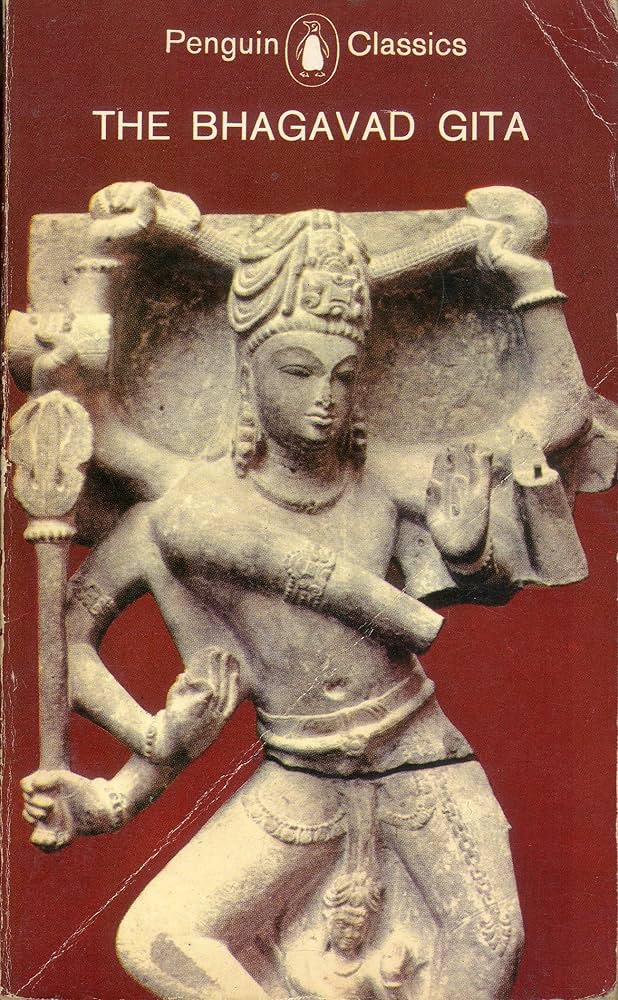
I remember back in my younger years, before I became a devotee, I decided to spend my summer off from college, hiking the Appalachian trail. I took with me some small books with me to read along the way. I was becoming interested in Eastern philosophy, and was asking myself questions like who is God, who am I, and what is my relationship with Him. I carried with me a small paperback book by Hermann Hesse entitled Siddhartha, a book by Henry David Thoreau; “Walden”, and the Penguin Classic; “The Bhagavad-gita.
From the book “Siddhartha” I became interested in meditation and the journey to self discovery. From “Walden”, I became interested is self- sufficiency, or as I later describe it as simple living and high thinking, and from the Bhagavad-gita, I discovered who God is. Really. For some reason, as soon as I began reading, I immediately accepted that Krishna was God. This book was the song of God. This was God speaking to His friend Arjuna, instructing him. And I thought how wonderful to be a friend of God, to become Gods friend.
Even though I was raised as a Christian, went to church on Sunday, was taught by nuns and priests, I never got satisfactory answers to my question, Who is God? But this book the Bhagavad-gita, This was God Himself speaking to his friend. Now I knew, there is a God, and His name was Krishna.
About a year later I meet a Hare Krishna devotee at the Chicago O’Hare airport, and I got from him the Krsna Book, then later I went back there and found a deserted copy of the Bhagavad-gita As It Is, on a neglected bench seat, by His Divine Grace A. C. Bhaktivedanta Swami. It wasn’t just the translations that the penguin classic offered, but it was the complete edition, with original Sanskrit text, Roman transliterations, English equivalents, translation and elaborate purports.
This morning as I went out to feed the birds, I saw a dead bird on the patio who must have crashed into the window, and it just got to thinking about what is the difference between a dead body and a live body? Consciousness. So I did a little research on that word. The simple definition of the word is:
“Consciousness is the state of being aware of oneself, one’s body, and the outside world.”
OK that is the simple definition. But in the Bhagavad-gita As It Is, Srila Prabhupada gives us a more advanced understanding:
“Know that which pervades the entire body is indestructible. No one is able to destroy the imperishable soul.” (Bg. 2.17)
PURPORT
This verse more clearly explains the real nature of the soul, which is spread all over the body. Anyone can understand what is spread all over the body: it is consciousness. Everyone is conscious of the pains and pleasures of the body in part or as a whole. This spreading of consciousness is limited within one’s own body. The pains and pleasures of one body are unknown to another. Therefore, each and every body is the embodiment of an individual soul, and the symptom of the soul’s presence is perceived as individual consciousness…
…This very small spiritual spark is the basic principle of the material body, and the influence of such a spiritual spark is spread all over the body as the influence of the active principle of some medicine spreads throughout the body. This current of the spirit soul is felt all over the body as consciousness, and that is the proof of the presence of the soul. Any layman can understand that the material body minus consciousness is a dead body, and this consciousness cannot be revived in the body by any means of material administration. Therefore, consciousness is not due to any amount of material combination, but to the spirit soul. . Neither Vedic knowledge nor modern science denies the existence of the spirit soul in the body, and the science of the soul is explicitly described in the Bhagavad-gita by the Personality of Godhead Himself.
So we can conclude, that that consciousness is the presence of the soul.
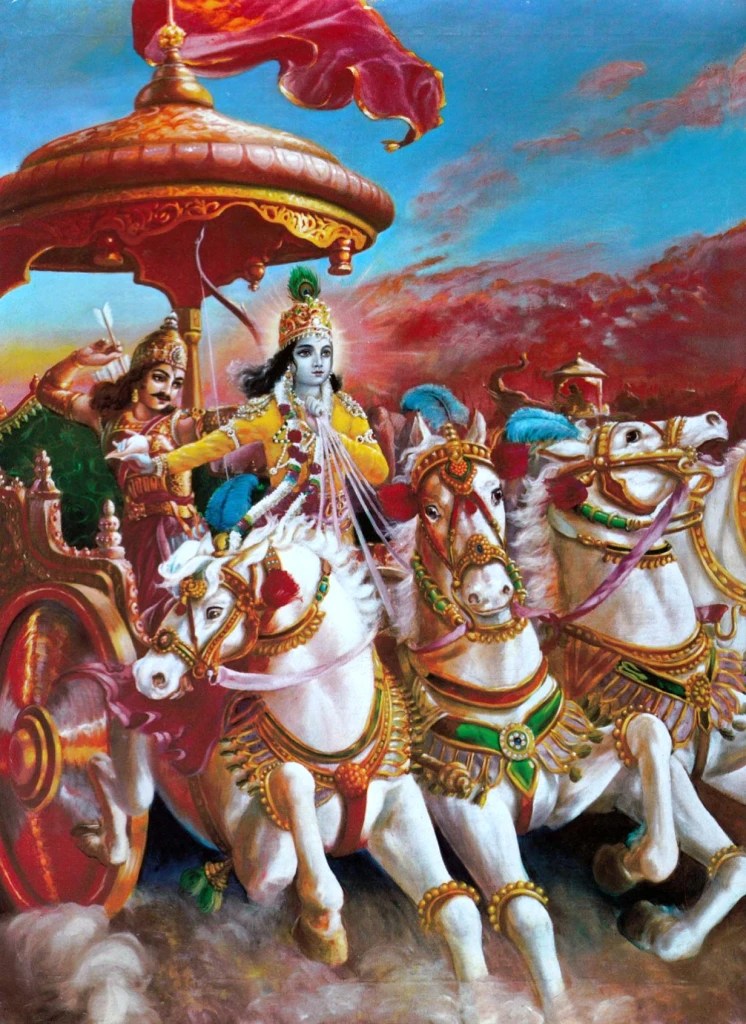
Yesterday was Gita Jayanti, or the Advent of Srimad Bhagavad-gita,which is an annual celebration to commemorate the day when Lord Krishna spoke the Bhagavad-gita to Arjuna on the first day of the battle of Kurukshetra. Recital of the Bhagavad Gita is performed throughout the day in most ISKCON centers throughout the world.
In honor of this day, Gita Jayntia, we present the Complete 1972 Edition of the Bhagavad-gita As It Is, by His Divine Grace A.C. Bhaktivedanta Swami in a link to our other page Prabhupadagita Where you can read the entire book online a chapter at a time with the original illustrations.
Bhagavad-gītā As It Is by His Divine Grace A. C. Bhaktivedanta Swami Prabhupada
PICTURE INDEX
The illustrations of Bhagavad-gītā As It Is were painted by members of the International Society for Krishna Consciousness working under the personal direction of the author, their spiritual master, In the following descriptive index, the numbers in boldface type which follow each plate number refer to the chapter and verse of the Gītā that the picture illustrates.
Naga Sadhus or holy man of Niranjani Akhara take a holy dip in Ganges River on the occasion of first royal bath of Shivratri festival during Maha Kumbh Festival , in Haridwar on March 11, 2021 . (Photo by Ritesh Shukla/NurPhoto via Getty Images)
Srila Prabhupada:…”One cleanses himself daily by taking a bath in water, but one who takes his bath only once in the sacred Ganges water of the Bhagavad-gita cleanses away all the dirt of material life. Because Bhagavad-gita is spoken by the Supreme Personality of Godhead, one need not read any other Vedic literature. One need only attentively and regularly hear and read Bhagavad-gita.
In the present age, mankind is so absorbed with mundane activities that it is not possible to read all of the Vedic literatures. But this is not necessary. This one book, Bhagavad-gita, will suffice because it is the essence of all Vedic literatures and because it is spoken by the Supreme Personality of Godhead.
It is said that one who drinks the water of the Ganges certainly gets salvation, but what to speak of one who drinks the waters of Bhagavad-gita? Gita is the very nectar of the Mahabharata spoken by Visnu Himself, for Lord Krsna is the original Visnu. It is nectar emanating from the mouth of the Supreme Personality of Godhead, and the Ganges is said to be emanating from the lotus feet of the Lord. Of course there is no difference between the mouth and the feet of the Supreme Lord, but in our position we can appreciate that the Bhagavad-gita is even more important than the Ganges.
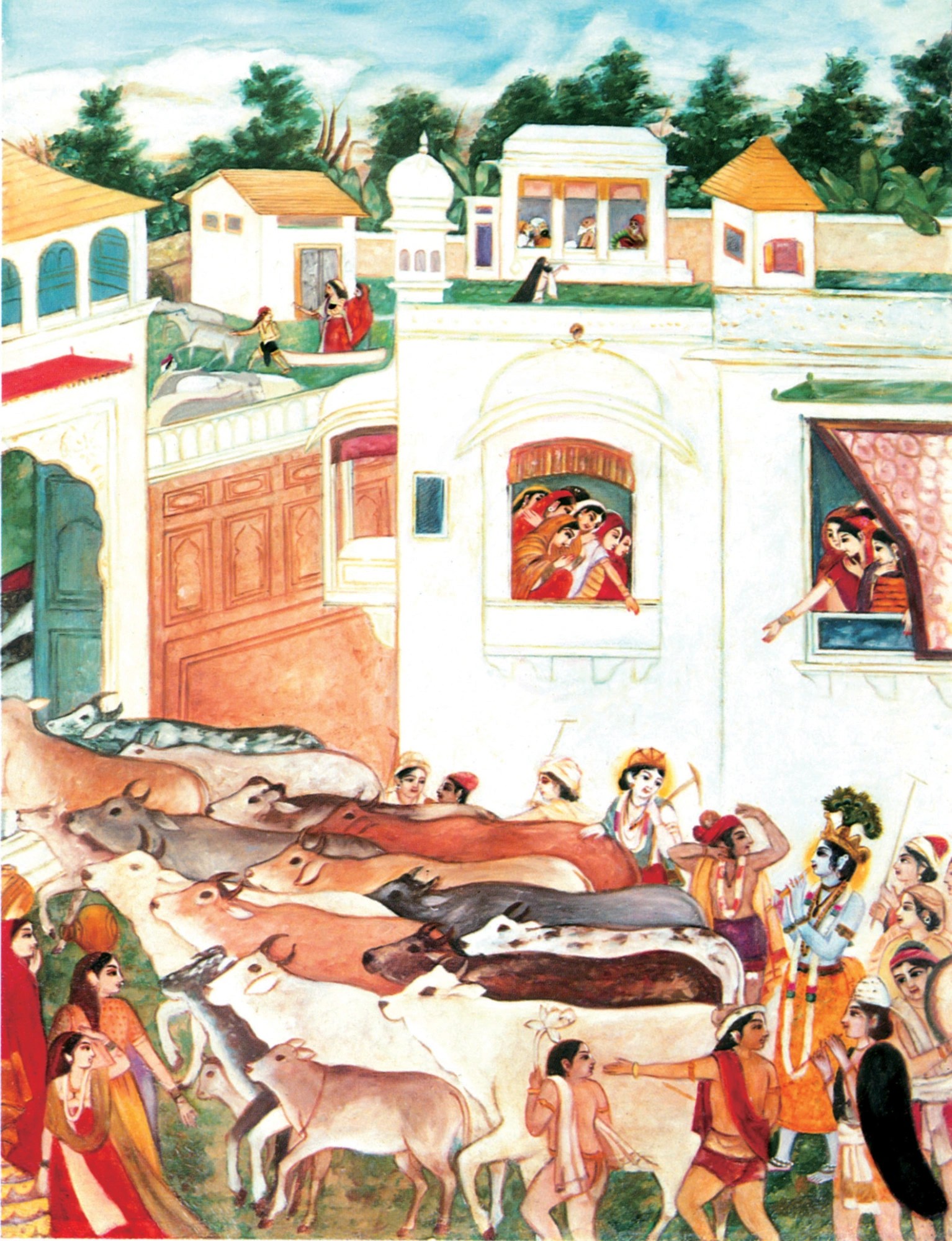
The Bhagavad-gita is just like a cow, and Lord Krsna, who is a cowherd boy, is milking this cow. The milk is the essence of the Vedas, and Arjuna is just like a calf. The wise men, the great sages and pure devotees, are to drink the nectarean milk of Bhagavad-gita.
In this present day, man is very eager to have one scripture, one God, one religion, and one occupation. So let there be one common scripture for the whole world–Bhagavad-gita. And let there be one God only for the whole world–Sri Krsna. And one mantra only–Hare Krsna, Hare Krsna, Krsna Krsna, Hare Hare/ Hare Rama, Hare Rama, Rama Rama, Hare Hare. And let there be one work only–the service of the Supreme Personality of Godhead.”
Bhagavad-gītā Introduction
—
New York, February 19-20, 1966 660219-20BG.NY
Introduction to Gītopaniṣad
(Earliest Recording of Śrīla Prabhupāda in the Bhaktivedanta Archives)