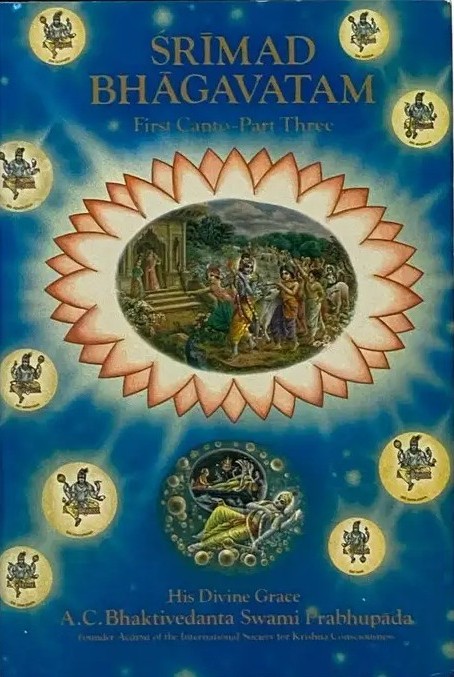
Although the book “Life Comes From Life” has been on our bookshelf for many years, I never really opened it until today. Mostly because my mind was not so scientifically inclined.But when I opened it, and began reading from the Introduction, I could see, even though it was originally published by the BBT back in 1979, it is very relevant to today’s current events.
When I read these following words from the Introduction, to “Life Comes From Life” by Srila Prabhupada, I came to realize just how prophetic, his words were. -V
“…a veil of fantasy and deception can be created with such unprecedented expertise that it can become impossible for us to distinguish between substance and simulation, reality and illusion.…”
Life Comes From Life
Introduction
Once upon a time (as in a fairy tale), most of us believed that the food we ate was basically wholesome, nutritious and free from dangerous chemicals, that advertising may have been believable, and that product labels truly described the qualities and contents of what we fed ourselves and our families. Once upon a time, most of the world believed in the integrity of our heads of state, high-ranking political officials and local leaders. Once upon a time, we thought our children were getting a solid education in the public school system. Once upon a time, many of us believed atomic energy had “peacetime uses” that were perfectly safe and completely congruous with a happy and healthy society.
Yet in recent times our illusions have been shattered. Repeated exposes of widespread consumer fraud and grand political collusion and bribery have all but destroyed our former innocence. We now know that through mass marketing and the media, a veil of fantasy and deception can be created with such unprecedented expertise that it can become impossible for us to distinguish between substance and simulation, reality and illusion.
Today many scientists are propagating the doctrine that life originates from matter. However, they cannot provide proof, either experimentally or theoretically. In fact, they hold their stance essentially on faith, in the face of all sorts of scientific objections. Śrīla Prabhupāda points out that this groundless dogma has done great damage to moral and spiritual standards worldwide and has thus caused incalculable suffering.
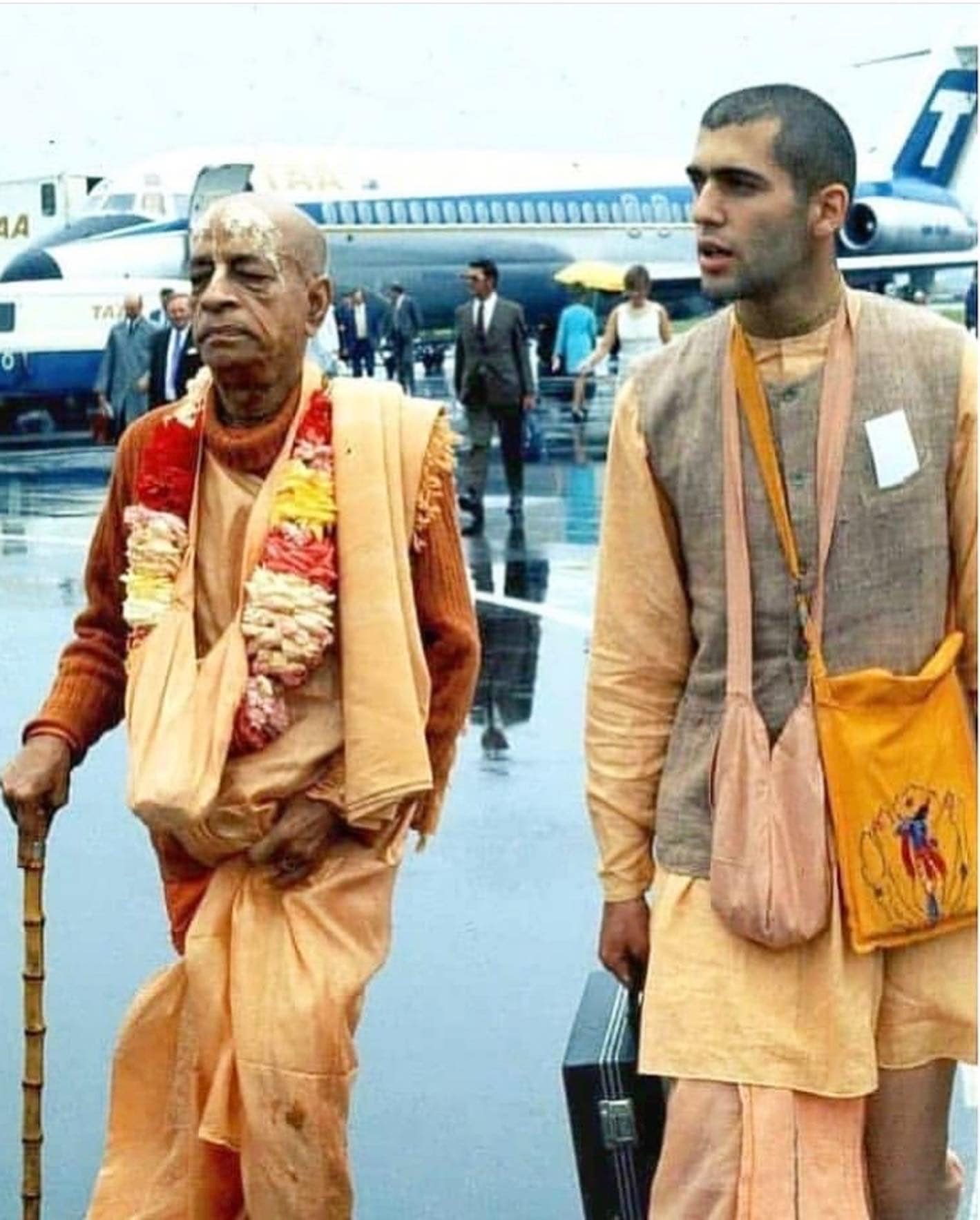
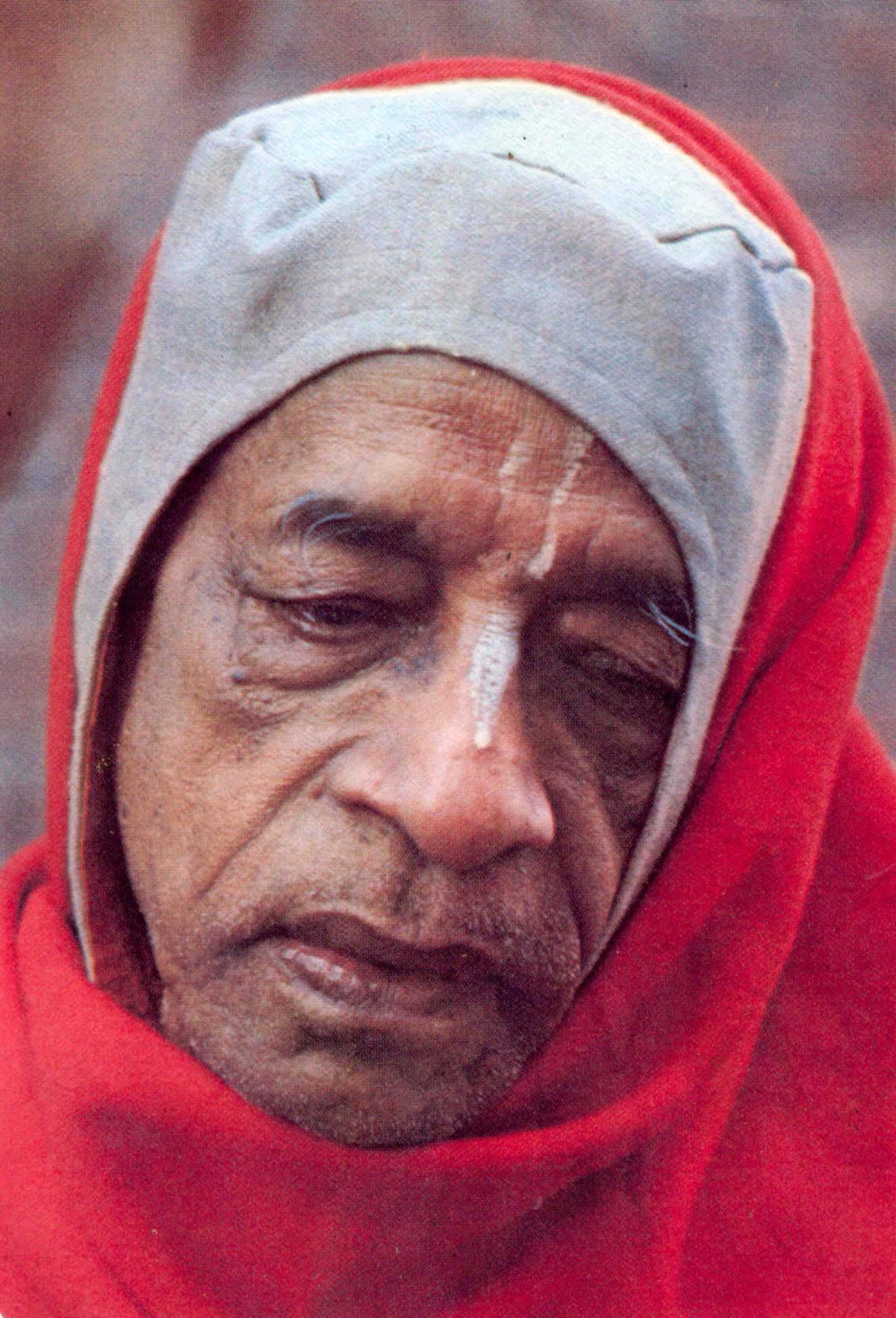
It has been suggested that we do a post on Srutakirti Prabhu, a prominent disciple, and personal servant of His Divine Grace Srila Prabhupada. He has recently been traveling and speaking on his memories of Srila Prabhupada, and enlivening listeners with his personal remembrances.
Srutakirti Prabhu stands as one of the most revered personalities in the International Society for Krishna Consciousness (ISKCON), primarily known for his intimate service as Srila Prabhupada’s personal attendant. His unique position allowed him unprecedented access to the daily life and teachings of ISKCON’s founder, experiences he has generously shared through his writings, lectures, and personal interactions with devotees worldwide. His humility, dedication, and deep spiritual insights continue to inspire thousands of devotees as he maintains his service attitude into his senior years at the Krishna Balaram Mandir in Vrindavan.
Its funny how you can read Bhagavad-gita for years, and everytime you read from it, something new jumps out at you. For instance this morning, I happened upon a word I must have seen before, but never noticed: Kṛṣṇa-karma. I have seen karma-kāṇḍa before, and jñāna-kāṇḍa but never have I noticed the word Krsna-karma. I like this word.
I ran across this word Krsna-karma while reading from the purport to text 55 in the eleventh chapter of Bhagavad-gita. We share with you this very important text and purport.
Anyone who wants to approach the Supreme of all the Personalities of Godhead, on the Kṛṣṇaloka planet in the spiritual sky, and be intimately connected with the Supreme Personality, Kṛṣṇa, must take this formula, as is stated by the Supreme Himself. Therefore, this verse is considered to be the essence of Bhagavad-gītā. The Bhagavad-gītā is a book directed to the conditioned souls, who are engaged in the material world with the purpose of lording it over nature and who do not know of the real, spiritual life. The Bhagavad-gītā is meant to show how one can understand his spiritual existence and his eternal relationship with the Supreme Spiritual Personality and to teach one how to go back home, back to Godhead. Now here is the verse which clearly explains the process by which one can attain success in his spiritual activity: devotional service. As far as work is concerned, one should transfer his energy entirely to Kṛṣṇa conscious activities. No work should be done by any man except in relationship to Kṛṣṇa. This called Kṛṣṇa-karma. (from purport to Bg. 11.55)
As I was reading from the Srimad Bhagavatam this morning about the passing of Bhīṣmadeva it was being described how “The perfect yogīs or mystics can leave the material body at their own sweet will at a suitable time and go to a suitable planet desired by them.” And how it is possiable to go beyond Saṁsāra, and go back to Godhead without any doubt?
…In the momentous hour of leaving his material body, Bhīṣmadeva set the glorious example concerning the important function of the human form of life. The subject matter which attracts the dying man becomes the beginning of his next life. Therefore, if one is absorbed in thoughts of the Supreme Lord Śrī Kṛṣṇa, he is sure to go back to Godhead without any doubt.
And what is Samsara?
Saṁsāra means material existence. That is called saṁsāra. Bhūtvā bhūtvā pralīyate (BG 8.19). You take your birth once in some form of body. You live for some time. Then you have to give up this body. Then you have to accept another body. Then again live for some time. Then give up that body. Again accept another body. In this way, it is going on. That is called saṁsāra, rotating within this material world. (Lecture on Gurvastakam at Upsala University by His Divine Grace -Stockholm, September 9, 1973)
The saṁsāra means repetition of different bodies. That is called saṁsāra. (Lecture on SB 1.2.4 -Rome, May 28, 1974)
Saṁsāra means this material entanglement. This is called saṁsāra. (Lecture on CC Madhya-lila 25.40-50 – San Francisco, January 24, 1967)
Today we honor the disappearance day of Haridas Thakur.
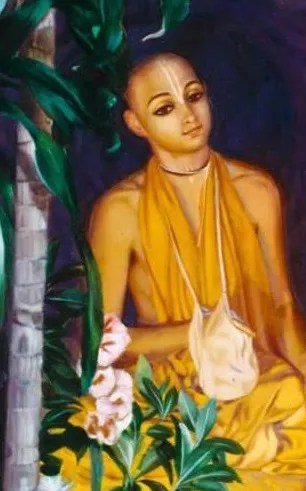
Haridas Thakur is considered to be the namacarya, the spiritual master in chanting the holy name of Krsna. Though he was born in a low class, Muslim family, Lord Caitanya’s devotees respected him as being better than the best of brahmanas. He would not eat or sleep until he finished his daily quota of chanting the name of Krsna 300,000 times. Along with Lord Nityananda, Haridas Thakur spread the chanting of Krsna’s name throughout Bengal. In Jagannatha Puri, where Haridas Thakur spent his later days, Lord Caitanya would regularly send him prasadam and discuss with him topics of Krsna. Haridas Thakur died chanting Krsna’s name in the presence of Sri Caitanya Mahaprabhu. After Haridas Thakur’s death, Lord Caitanya carried his body to the sea and with His own hands buried him in the sand.
Sri Caitanya-caritamrta – 1975 Edition
The Glories of Srila Haridasa Thakura
Śrī Caitanya Mahāprabhu derives great pleasure from glorifying His devotees, and among the devotees, Haridāsa Ṭhākura is the foremost.
The transcendental qualities of Haridāsa Ṭhākura are innumerable and unfathomable. One may describe a portion of them, but to count them all is impossible.
In Caitanya-maṅgala, Śrīla Vṛndāvana dāsa Ṭhākura has described the attributes of Haridāsa Ṭhākura to some extent.
No one can describe all the qualities of Haridāsa Ṭhākura. One may say something about them just to purify himself.
O devotees of Śrī Caitanya Mahāprabhu, please hear something about the qualities of Haridāsa Ṭhākura that Śrīla Vṛndāvana dāsa Ṭhākura has not described in detail.
After leaving his home, Haridāsa Ṭhākura stayed for some time in the forest of Benāpola.
Haridāsa Ṭhākura constructed a cottage in a solitary forest. There he planted a tulasī plant, and in front of the tulasī he would chant the holy name of the Lord 300,000 times daily. He chanted throughout the entire day and night.
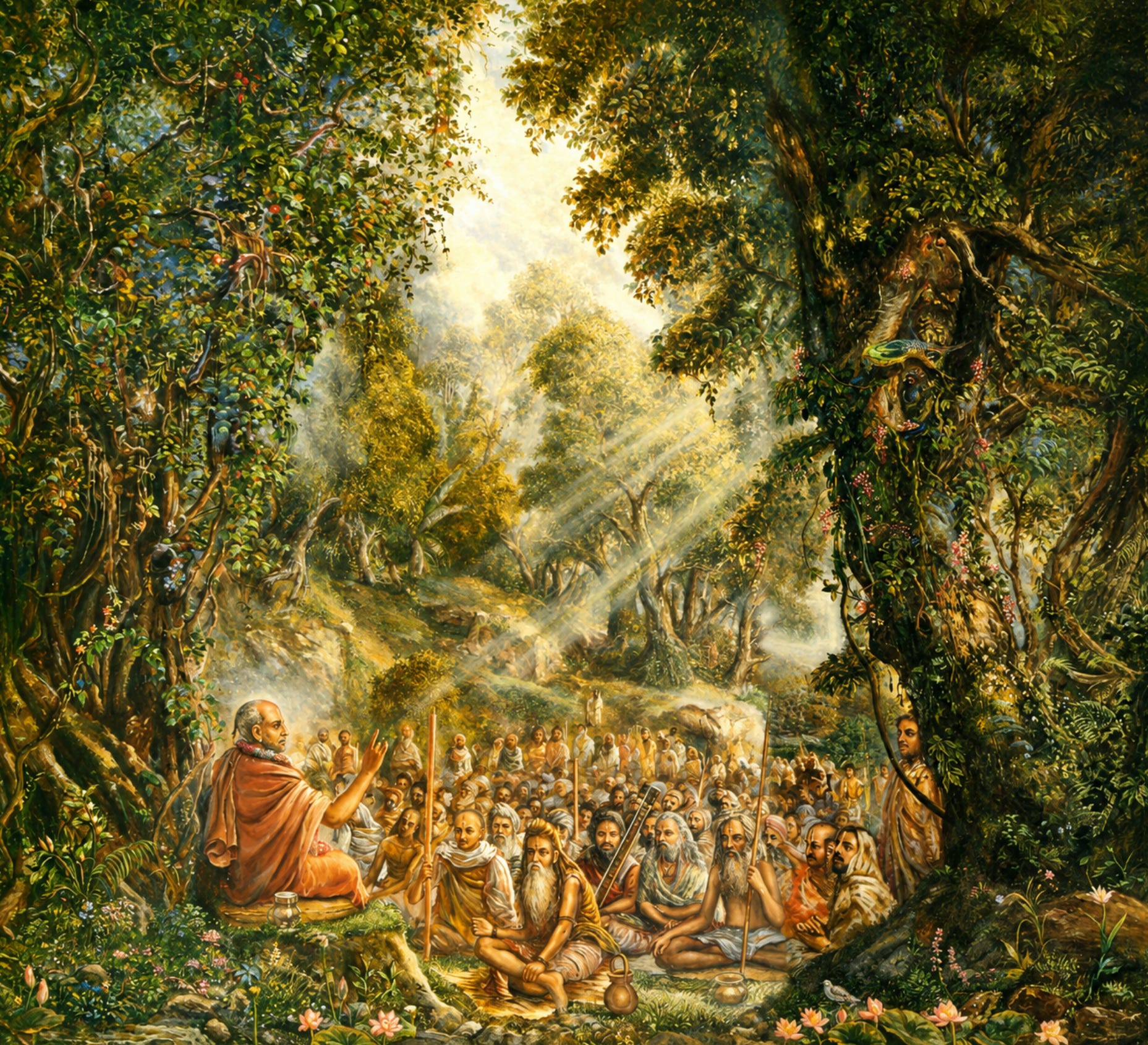
The sages at Naimisaranya: Were an assembly of 88,000 spiritual teachers, led by the prominent sage Shaunaka Rishi. who gathered in the sacred Naimisaranya forest in modern-day Uttar Pradesh, India.
Once, in a holy place in the forest of Naimiṣāraṇya, great sages headed by the sage Śaunaka assembled to perform a great thousand-year sacrifice for the satisfaction of the Lord and His devotees. (SB 1.1.4 )
The Arrival of Suta Goswami: While conducting their rituals, the storyteller and sage Suta Goswami arrived at the assembly and was warmly welcomed and given a high seat of honor (Vyasasana).
O expert and thoughtful men, relish Śrīmad-Bhāgavatam, the mature fruit of the desire tree of Vedic literatures. It emanated from the lips of Śrī Śukadeva Gosvāmī. Therefore this fruit has become even more tasteful, although its nectarean juice was already relishable for all, including liberated souls. (SB. 1. 1. 3 )
The Six Questions: Recognizing Suta Goswami’s pure character and deep scriptural knowledge, the sages asked him six fundamental questions regarding spiritual truth, which form the foundational framework of the
What is the absolute, ultimate benefit for all mankind?
What is the core essence hidden within all Vedic scriptures?
Why did the Supreme Lord take birth from Mother Devaki?
How do the secondary forms of the Lord (like Brahma and Rudra) create, maintain, and destroy the universe?
What are the complete activities and pastimes of Lord Hari’s various incarnations?
Where has true religion or spiritual shelter gone now that Lord Krishna has departed?
In the first chapter of the Śrīmad Bhagavatam, the sages ask Suta Goswami six questions. These questions are not only asked for the sage’s own sake. They are concerned about the situation of people who will be living in the age of Kali, and they want to get from Suta Goswami some knowledge that can help them find their way out of all the darkness and illusion of this age.
( Note; These six questions are asked in chapter one, and the answers are given in chapters two and three. These chapters are thus intimately connected.)
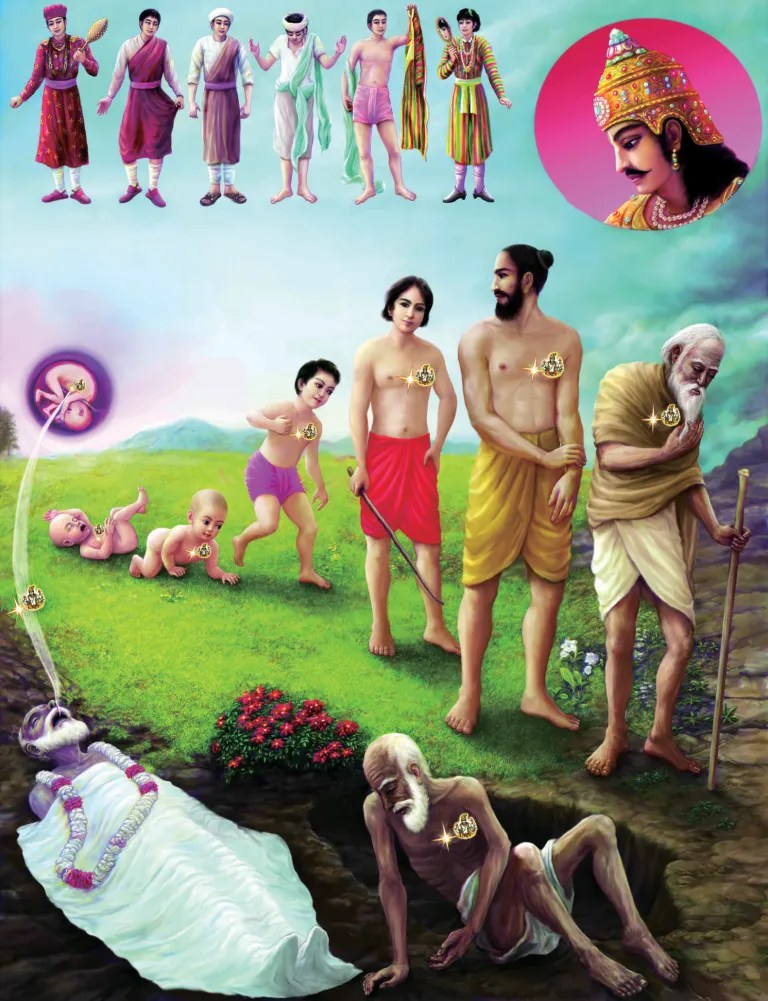
Well today is my birthday. 72 years ago on this day I was in a small baby’s body, but today I am in an old man’s body. But I’m still the same person, although it seems like I have lived many different lives, as a child, as a student, as a devotee, as a husband and father, grandfather, and retired woodworker. Lived and traveled to so many places, had so many different life experiences, and so it seems, I have lived many lives.
I am reminded of some of the famous important verses from the Bhagavad-gita:
As the embodied soul continually passes, in this body, from boyhood to youth to old age, the soul similarly passes into another body at death. The self-realized soul is not bewildered by such a change. (Bg 2.13)
For the soul there is never birth nor death. Nor, having once been, does he ever cease to be. He is unborn, eternal, ever-existing, undying and primeval. He is not slain when the body is slain. (Bg 2.20)
Full texts and purports will follow at end of post, but I wanted to mention some well known persons who I share a birthday with.
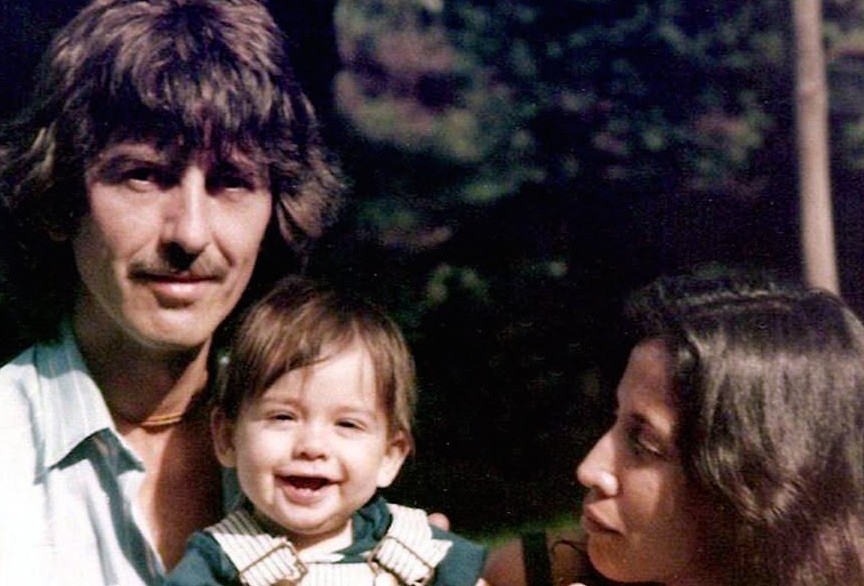
On this day in 1978, Dhani Harrison appeared, who we all know as the son of George and Olivia Harrison, turns 48 today.
And one of my favorite musicians Jerry Garcia was born on August 1, 1942, in San Francisco, California. He was the co-founder, lead guitarist, and vocalist of the Grateful Dead.
Jerry Garcia and Srila Prabhupada intersected through 1960’s counterculture, notably via the Grateful Dead playing at the 1967 Mantra-Rock concert. The Grateful Dead performed alongside Big Brother and the Holding Company and Allen Ginsberg at the historic San Francisco Avalon Ballroom benefit concert, which helped introduce A. C. Bhaktivedanta Swami and the Hare Krishna Movement to the West coast.
‘Beyond Birth and Death’ is one of my favorite small books written by His Divine Grace A. C. Bhaktivedanta Swami. The first chapter is a good introduction to the philosophy of Krishna Consciousness. We have included the entire first chapter for those interested.
We Are Not These Bodies
(Chapter One from Beyond Birth & Death)
The very first step in self-realization is realizing one’s identity as separate from the body. “I am not this body but am spirit soul” is an essential realization for anyone who wants to transcend death and enter into the spiritual world beyond. It is not simply a matter of saying “I am not this body,” but of actually realizing it. This is not as simple as it may seem at first. Although we are not these bodies but are pure consciousness, somehow or other we have become encased within the bodily dress. If we actually want the happiness and independence that transcend death, we have to establish ourselves and remain in our constitutional position as pure consciousness.
“O descendant of Bharata, he who dwells in the body is eternal and can never be slain. Therefore you need not grieve for any creature.” (Bhagavad-gita 2.30)
Living in the bodily conception, our idea of happiness is like that of a man in delirium. Some philosophers claim that this delirious condition of bodily identification should be cured by abstaining from all action. Because these material activities have been a source of distress for us, they claim that we should actually stop these activities. Their culmination of perfection is in a kind of Buddhistic nirvāṇa, in which no activities are performed. Buddha maintained that due to a combination of material elements, this body has come into existence, and that somehow or other if these material elements are separated or dismantled, the cause of suffering is removed. If the tax collectors give us too much difficulty because we happen to possess a large house, one simple solution is to destroy the house. However, Bhagavad-gītā indicates that this material body is not all in all. Beyond this combination of material elements, there is spirit, and the symptom of that spirit is consciousness.
…One issue that many find shocking is the extent to which Srila Prabhupada’s Bhagavad-gita As It Is was edited without having been authorized by His Divine Grace, Srila Prabhupada. He was never a fan of extensive editing of any of his published works. What’s more, the over-edited edition published in 1983 removed thirty-two color pages that Srila Prabhupada insisted be included in his great opus. Three of those eliminated color pages were of the predecessor acaryas, namely Srila Bhaktisiddhanta Saraswati Thakur, Srila Gaura Kishora Das Babaji Maharaja and Srila Thakur Bhaktivinode.
Even the pocket Gita printed in India included all of the color plates found in the Macmillan edition.
If you are just hearing about this for the first time, please contact the GBC representative in your area and humbly request that this offense be rectified with the next printing. Doing so will attract Srila Prabhupada’s blessings. Do not fear when the cause is just.
A CRISIS IN LEADERSHIP
by Locan Ananda dasa
Many followers of Srila Prabhupada’s teachings have been calling for the worldwide reformation of the leadership of the International Society for Krishna Consciousness. The charge being made is that leaders and managers need to adhere more closely to the specific instructions of our Founder Acarya. There should be greater vigilance and the immediate correction of inappropriate behavior on the part of errant leaders.
Everyone wants Happiness and wants to avoid Distress, this is a fact. This Krishna Consciousness Movement is meant to deliver all of suffering humanity from the threefold miseries of material existence.
The attempt in this material world to maximize happiness and minimize distress is called the struggle for existence.
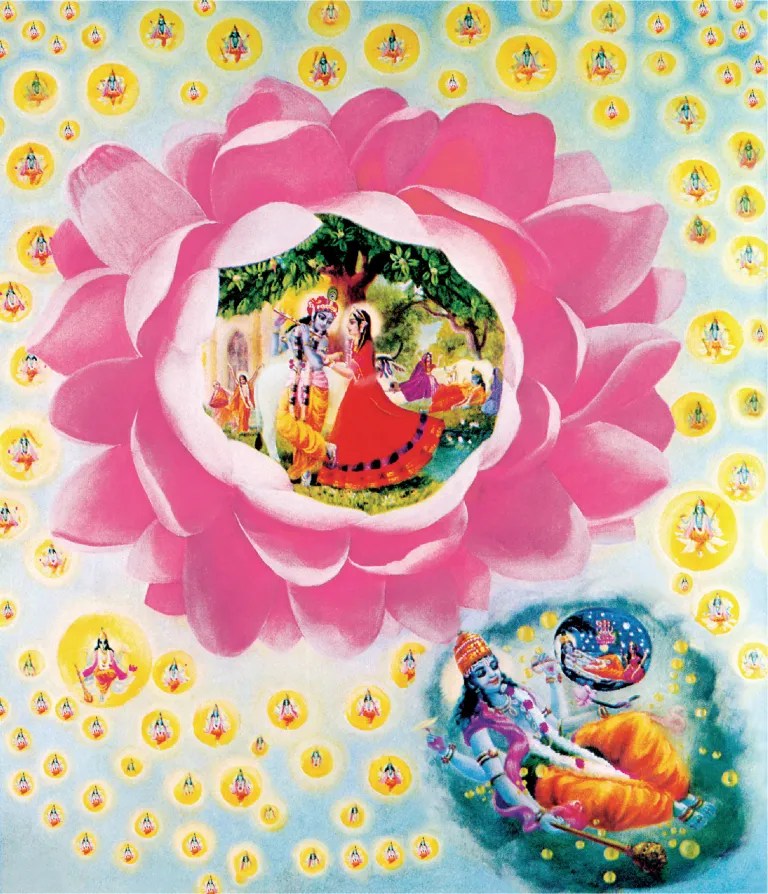
…This material world is the world of duality, and we cannot understand happiness without distress or distress without happiness. This is therefore called the relative world. Spiritual happiness is above these dualities, and that spiritual happiness is the perfection of yoga. Yoga ādhyātmikaḥ. Yoga is the happiness of the soul, and the individual soul can be happy when it is with the Supersoul, the Supreme Soul.Nityo nityānāṁ cetanaś cetanānām (Kaṭha Upaniṣad 2.2.13). There is the Supreme Soul, or the supreme living being, and there are many individual souls, individual beings. We are many, but the principal living being is one, Kṛṣṇa. He is the fire, and we are the sparks from that fire. The sparks are illuminated when they are with the original fire, but if the sparks no longer associate with the original fire, they are extinguished. Similarly, our real happiness is in enjoying with the Supreme Being. Happiness is being in His company. Kṛṣṇa is not alone, but is always with His friends, either the gopīs or the cowherd boys, or with His mother and father. We never find Kṛṣṇa alone. He may be with Rādhārāṇī or with His devotees. He is like a king or president. When one says that the king or president is coming, it is understood that he is not coming alone. He comes with His secretaries, ministers and many others. (Teachings of Lord Kapila)
…Everyone is trying to get out of material distress and gain some happiness. In any case, when something is material, there is only so-called happiness and so-called distress. For instance, there may be fireworks going on, and this may be happiness for someone but distress for us. Some people are thinking that these fireworks are very enjoyable, and we are thinking that they are very inconvenient. That is the material world. On one side there is happiness, and on the other side there is distress. Both happiness and distress are actually illusions. In summer, water is happiness, but in winter it is distress. The water is the same, but at one time it brings happiness and at another time it brings distress. When a son is born, he brings happiness, but when he dies, he brings distress. In either case, the son is the same. (Teachings of Lord Kapila)
The great mistake of modern civilization is to encroach upon others’ property as though it were one’s own and thereby create an unnecessary disturbance of the laws of nature.
We are witnessing a world in turmoil right now, with nations at war with each other. And I am reminded of the peace formula that Srila Prabhupada has given us. He first presented the peace formula in an early edition of Back to Godhead Magazine, then in the Bhagavad-gita, and it appeared in many small books and pamphlets. We share with you today, a sampling of the peace formula in some of the early small books.
“A person in full consciousness of Me, knowing Me to be the ultimate beneficiary of all sacrifices and austerities, the Supreme Lord of all planets and demigods, and the benefactor and well-wisher of all living entities, attains peace from the pangs of material miseries.” (Bhagavad-gita 5.29)
The politicians and diplomats are trying to establish peace in the world. We have the United Nations and many other organizations. They are working to establish real peace and tranquillity, to eliminate misunderstanding between man and man and nation and nation. But that is not happening. The defect is that the root is wrong. Everyone is thinking, “It is my country,” “It is my family,” “It is my society,” “It is my property.” This “my” is illusion. This “I-and-my” philosophy is māyā-illusion.
I was looking through my notebooks the other day, and I happened to find my very first devotee journal. I had written that there are six principles favorable to the execution of pure devotional service. And six activities that can spoil ones devotional service.This was a good reminder.
There are six principles favorable to the execution of pure devotional service:
(1) being enthusiastic,
(2) endeavoring with confidence,
(3) being patient,
(4) acting according to regulative principles [such as śravaṇaṁ kīrtanaṁ viṣṇoḥ smaraṇam (SB 7.5.23) — hearing, chanting and remembering Kṛṣṇa],
(5) abandoning the association of nondevotees, and
(6) following in the footsteps of the previous ācāryas.
These six principles undoubtedly assure the complete success of pure devotional service.
And the six activities that can spoil ones devotional service:
(1) Overeating or collecting more than needed
(2) Over endeavoring for mundane things
(3) talking unnecessarily about mundane subject matters
(4) Practicing the spiritual rules and regulations only for the sake of following them, or rejecting them and acting whimsically
(5) Associating with worldly minded persons who are not interested in Krsna consciousness
(6) Being greedy for mundane achievements
These were taken from The Nectar of Instruction and The Narada Bhakti Sutra
I find it interesting, how one morning, I will wake up and find it very easy and pleasing to chant Hare Krishna and preform my devotional activities, and the next day I find it difficult? I realized that it due to the influence of the three modes of material nature.
…Everyone should know that a living entity is eternally a servant and that unless one serves Krsna one has to serve illusion in different varieties of the three modes of material nature. (from Preface to Bhagavad-gita As It Is)
…In the Bhagavad-gita it is clearly explained that there are three kinds of activities according to the different modes of nature: the activities of goodness, of passion and of ignorance. (from Introduction to Bhagavad-gita As It Is)
The three modes of material nature is an important topic, so much so , that there is an entire chapter dedicated to it in the Bhagavad-gita.
Material nature consists of the three modes—goodness, passion and ignorance. When the living entity comes in contact with nature, he becomes conditioned by these modes. (Bg. 14.5)
PURPORT
The living entity, because he is transcendental, has nothing to do with this material nature. Still, because he has become conditioned by the material world, he is acting under the spell of the three modes of material nature. Because living entities have different kinds of bodies, in terms of the different aspects of nature, they are induced to act according to that nature. This is the cause of the varieties of happiness and distress.
This tells me, that I am not yet transcendental to the three modes, and I still have plenty of work to do.
We share with you a description of the three modes as outlined in chapter 14 of the Bhagavad-gita.
Srila Prabhupada warns about the danger of personal motivation compiled by: Yasodanandana Dasa
But the question may be raised as to why is it that we have seen so many devotees, even senior devotees with many years of direct physical association with the acarya, Srila Prabhupada, were [and are] seemingly incapable of clearly understanding Krishna Consciousness philosophy, with so many examples of distortion, blatant philosophical deviations, concoctions, misrepresentations etc. What is the reason for this? The acarya, Srila Prabhupada, explains:
In my books I have tried to explain clearly this simultaneously one and different philosophy acinta beda beda tattva propounded by Lord Caitanya Mahaprabhu. But sometimes it happens that this philosophy is given a self-interested interpretation. As soon as personal motivation comes in it is not possible for one to understand our Krishna Consciousness philosophy. (Srila Prabhupada letter, September 21, 1970)
Srila Prabhupada describes the key of success for the mission of Lord Caitanya
“…Hundreds of people join in our Sankirtana Party daily in downtown Calcutta, and I am confident that this mission of Lord Caitanya’s will be successful if only we continue to push on this great movement, without any personal motivation. Hope this finds you and your good wife and child in good health…” (Srila Prabhupada letter, September 19, 1970)
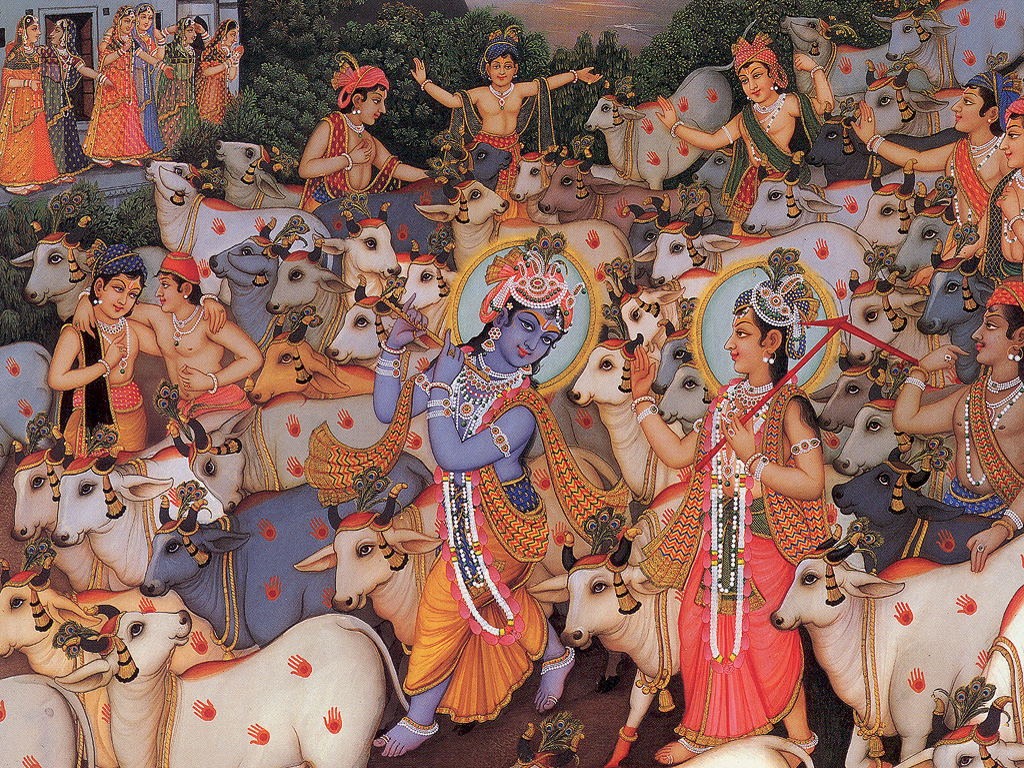
…While Kṛṣṇa was engaged in tending the cows in the forest of Vṛndāvana or on Govardhana Hill, the gopīs in the village were always absorbed in thinking of Him and discussing His different pastimes. This is the perfect example of Kṛṣṇa consciousness: to somehow or other remain always engrossed in thoughts of Kṛṣṇa. The vivid example is always present in the behavior of the gopīs; therefore Lord Caitanya declared that no one can worship the Supreme Lord by any method which is better than the method of the gopīs. The gopīs were not born in very high brāhmaṇa or kṣatriya families; they were born in the families of vaiśyas, and not in big mercantile communities but in the families of cowherd men. They were not very well educated, although they heard all sorts of knowledge from the brāhmaṇas, the authorities of Vedic knowledge. The gopīs’ only purpose was to remain always absorbed in thoughts of Kṛṣṇa.
Kṛṣṇa was very pleased with the atmosphere of the forest where flowers bloomed and bees and drones hummed very jubilantly. While the birds, trees and branches were all looking very happy, Kṛṣṇa, tending the cows, accompanied by Śrī Balarāma and the cowherd boys, began to vibrate His transcendental flute. After hearing the vibration of the flute of Kṛṣṇa, the gopīs in Vṛndāvana remembered Him and began to talk amongst themselves about how nicely Kṛṣṇa was playing His flute. When the gopīs were describing the sweet vibration of Kṛṣṇa’s flute, they also remembered their pastimes with Him; thus their minds became disturbed, and they were unable to describe completely the beautiful vibrations. While discussing the transcendental vibration, they remembered also how Kṛṣṇa dressed, decorated with a peacock feather on His head, just like a dancing actor, and with blue flowers pushed over His ear. His garment glowed yellow-gold, and He was garlanded with a vaijayantī necklace. Dressed in such an attractive way, Kṛṣṇa filled up the holes of His flute with the nectar emanating from His lips. So they remembered Him, entering the forest of Vṛndāvana, which is always glorified by the footprints of Kṛṣṇa and His companions. Kṛṣṇa was very expert in playing the flute, and the gopīs were captivated by the sound vibration, which was not only attractive to them, but to all living creatures who heard it. One of the gopīs told her friends, “The highest perfection of the eyes is to see Kṛṣṇa and Balarāma entering the forest and playing Their flutes and tending the cows with Their friends.”
Persons who are constantly engaged in the transcendental meditation of seeing Kṛṣṇa, internally and externally, by thinking of Him playing the flute and entering the Vṛndāvana forest, have really attained the perfection of samādhi. Samādhi (trance) means absorption of all the activities of the senses on a particular object, and the gopīs indicate that the pastimes of Kṛṣṇa are the perfection of all meditation and samādhi. It is also confirmed in the Bhagavad-gītā that anyone who is always absorbed in the thought of Kṛṣṇa is the topmost of all yogīs. (KRSNA The Supreme Personality of Godhead, Vol 1, Chapter 21)
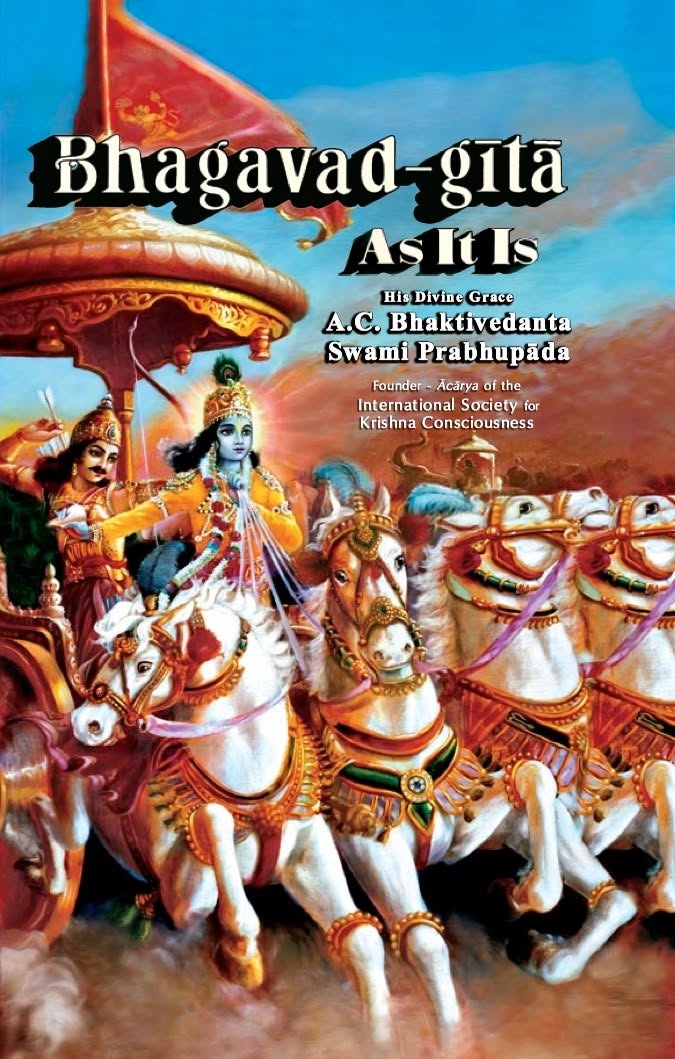
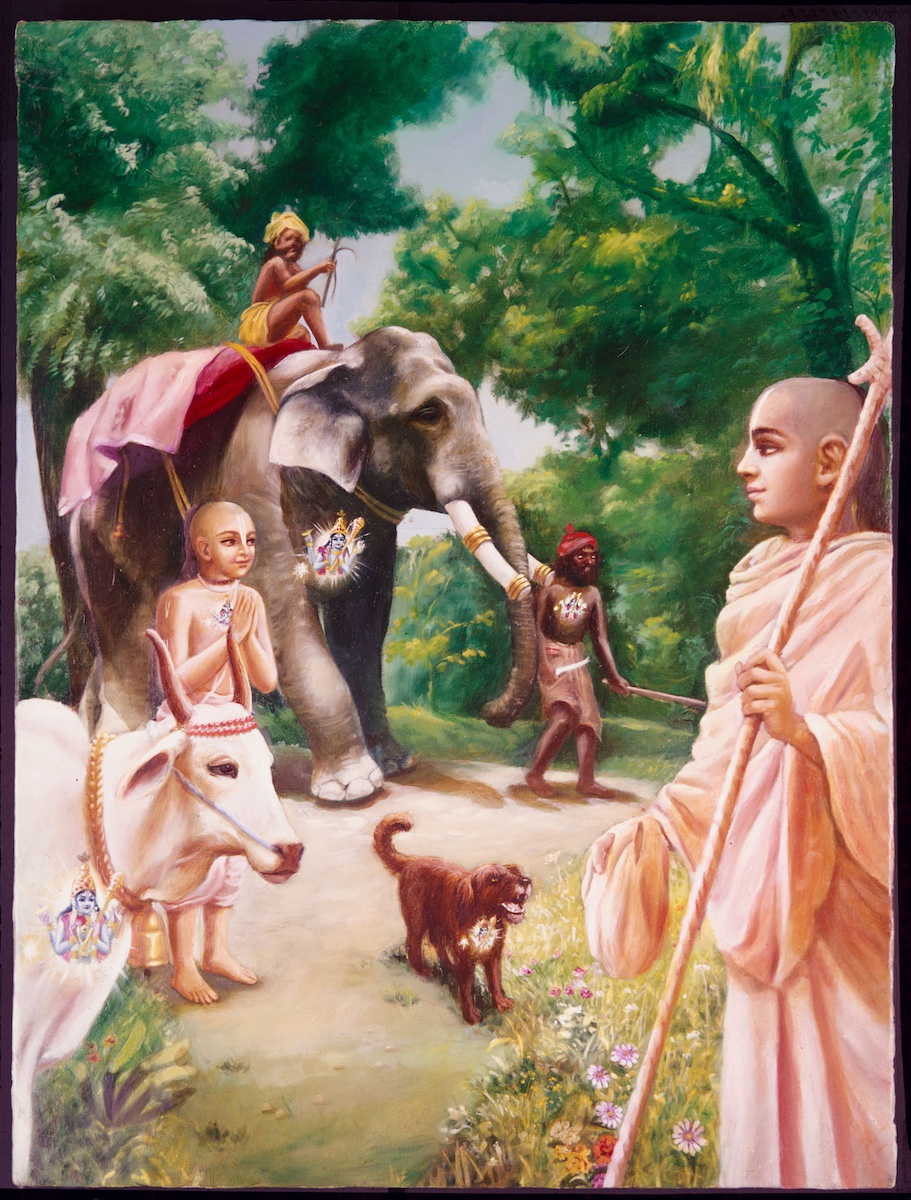
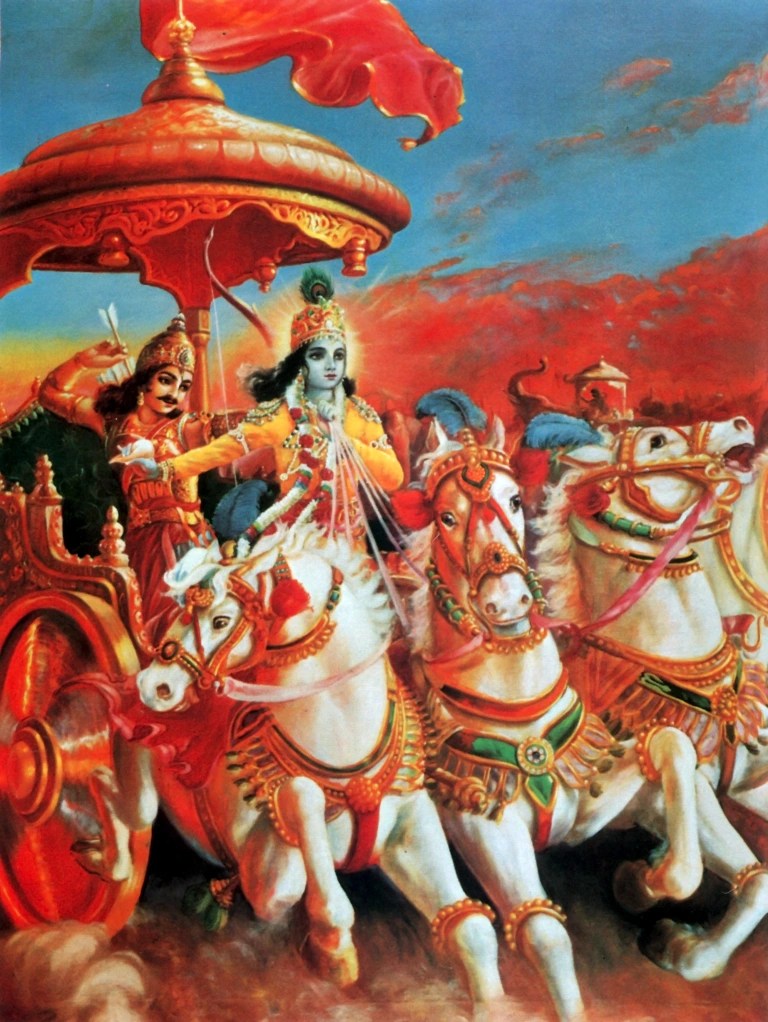
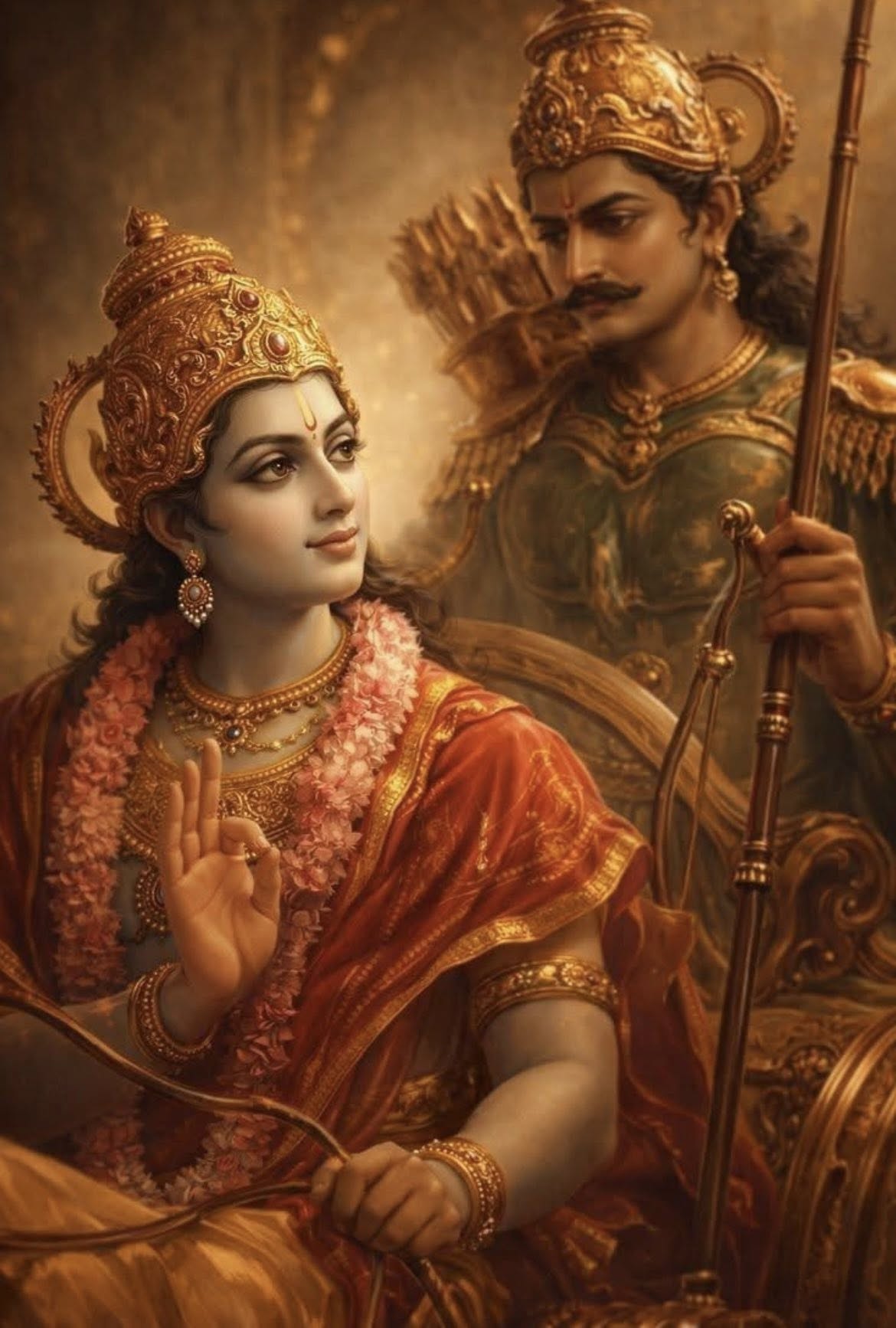
I remember the very first time I opened the Bhagavad-gita, I focused on the pictures and captions. I wasn’t really ready to read it yet, it seemed way above my level of intelligence, and there were words I couldn’t pronounce or understand, but the pictures spoke to me. I thought this image, as simplistic as it was, spoke a very profound and powerful message.
Bhagavad-gita As It Is
by A. C. Bhaktivedanta Swami Prabhupada
vidyā-vinaya-sampanne brāhmaṇe gavi hastini śuni caiva śva-pāke ca paṇḍitāḥ sama-darśinaḥ
vidyā—education; vinaya—gentleness; sampanne—fully equipped; brāhmaṇe—in the brāhmaṇa; gavi—in the cow; hastini—in the elephant; śuni—in the dog; ca—and; eva—certainly; śvapāke—in the dog-eater (the outcaste); ca—respectively; paṇḍitāḥ—those who are so wise; sama-darśinaḥ—do see with equal vision.
TRANSLATION
The humble sage, by virtue of true knowledge, sees with equal vision a learned and gentle brāhmaṇa, a cow, an elephant, a dog and a dog-eater [outcaste]. (Bg 5.18)
PURPORT
A Kṛṣṇa conscious person does not make any distinction between species or castes. The brāhmaṇa and the outcaste may be different from the social point of view, or a dog, a cow, or an elephant may be different from the point of view of species, but these differences of body are meaningless from the viewpoint of a learned transcendentalist. This is due to their relationship to the Supreme, for the Supreme Lord, by His plenary portion as Paramātmā, is present in everyone’s heart. Such an understanding of the Supreme is real knowledge. As far as the bodies are concerned in different castes or different species of life, the Lord is equally kind to everyone because He treats every living being as a friend yet maintains Himself as Paramātmā regardless of the circumstances of the living entities. The Lord as Paramātmā is present both in the outcaste and in the brāhmaṇa, although the body of a brāhmaṇa and that of an outcaste are not the same. The bodies are material productions of different modes of material nature, but the soul and the Supersoul within the body are of the same spiritual quality. The similarity in the quality of the soul and the Supersoul, however, does not make them equal in quantity, for the individual soul is present only in that particular body, whereas the Paramātmā is present in each and every body. A Kṛṣṇa conscious person has full knowledge of this, and therefore he is truly learned and has equal vision. The similar characteristics of the soul and Supersoul are that they are both conscious, eternal and blissful. But the difference is that the individual soul is conscious within the limited jurisdiction of the body, whereas the Supersoul is conscious of all bodies. The Supersoul is present in all bodies without distinction.
This is a very important verse, and often quoted by Srila Prabhupada in Lectures.
“One who knows the transcendental nature of My appearance and activities does not, upon leaving the body, take his birth again in this material world, but attains My eternal abode, O Arjuna.” (Bg 4.9)
…“The one Supreme Personality of Godhead is eternally engaged in many, many transcendental forms in relationships with His unalloyed devotees.”
…the devotee, simply by understanding the transcendental nature of the body and activities of the Lord, attains the abode of the Lord after ending this body and does not run the risk of returning again to this material world.
…One can attain the perfect stage of liberation from birth and death simply by knowing the Lord, the Supreme Personality of Godhead. (from purport)
I am often of two minds. As a practicing devotee, I know that I should focus my mind on spiritual matters, but I am also living in this material world in a material body. Therefore much of my time and energy is engaged in material activities, like watching world news for example. It is like driving by a roadside accident and wanting to look at the damage, but knowing I should keep my eyes on the road.
I try to understand that “I am not this body, I am Spirit soul” and yet every day I feel the pains of ageing. I try to focus on the teachings of the Bhagavad-gita and the Srimad Bhagavatam, but my mind is drawn to events of this world. My heart aches for the suffering of others, and my only solace is the teachings of the Bhagavad-gita and Srimad Bhagavatam.
In Bhagavad-gītā it is stated that one who is advanced in spiritual knowledge is not disturbed by the pains and pleasures of the material body. The material body is completely separate from the spirit soul, and the pains and pleasures of the body are superfluous. The practice of austerity and penance is meant for understanding the distinction between the body and the soul and how the soul can be unaffected by the pleasures and pains of the body…” (from purport SB 5.10.9)
Everyone in this material world is distressed by miserable conditions, but Śrīla Prabodhānanda Sarasvatī says that this world is full of happiness. How is this possible? He answers, yat-kāruṇya-katākṣa-vaibhavavatāṁ taṁ gauram eva stumaḥ. A devotee accepts the distress of this material world as happiness only due to the causeless mercy of Śrī Caitanya Mahāprabhu. By His personal behavior, Śrī Caitanya Mahāprabhu showed that He was never distressed but always happy in chanting the Hare Kṛṣṇa mahā-mantra. One should follow in the footsteps of Śrī Caitanya Mahāprabhu and engage constantly in chanting the mahā-mantra—Hare Kṛṣṇa, Hare Kṛṣṇa, Kṛṣṇa Kṛṣṇa, Hare Hare/ Hare Rāma, Hare Rāma, Rāma Rāma, Hare Hare. Then he will never feel the distresses of the world of duality. In any condition of life one will be happy if he chants the holy name of the Lord. (from purport SB 6.17.30)
One should live in the material world very expertly. The material world is known as the world of duality because one sometimes has to act impiously and sometimes has to act piously. Although one does not want to act impiously, the world is so fashioned that there is always danger (padaṁ padaṁ yad vipadām [SB 10.14.58]). Thus even when performing devotional service a devotee has to create many enemies. Prahlāda Mahārāja himself had experience of this, for even his father became his enemy. A devotee should expertly manage to think always of the Supreme Lord so that the reactions of suffering cannot touch him (from purport SB 7.10.13)
Trying to advance in spiritual life outside the association of fellow devotees can be difficult. the Sanskrit word Smṛtyā means remembering Kṛṣṇa always. Life should be molded in such a way that one cannot remain alone without thinking of Kṛṣṇa. We should live in Kṛṣṇa so that while eating, sleeping, walking and working we remain only in Kṛṣṇa. Our Kṛṣṇa consciousness society recommends that we arrange our living so that we can remember Kṛṣṇa. (from purport SB 4.22.24)
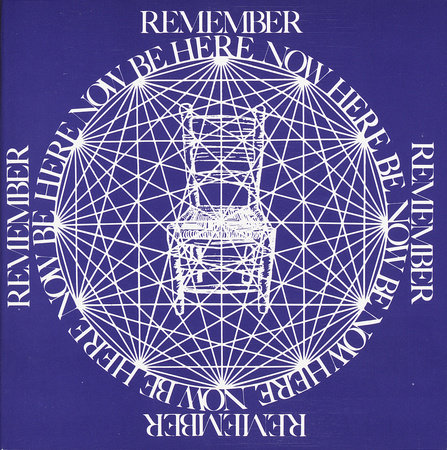
Today most people have heard of yoga and meditation, but I remember when I first took up yoga back in 1972, it was not so widely known. I was first introduced to it from the book “Be Here Now”. It was a very simplistic book, but it was full of ideas, quotes and images, that opened my mind to a world of spiritual thought. It introduced me to yoga, meditation, the concept of vegetarianism, spirituality, and the need of a Guru or Spiritual Master. I began to take seriously ideas that were introduced, such as self realization, living a more pure life, developing our relationship with God, finding out who is God, and finding my spiritual master (guru). So for me, the book was the beginning of my journey, as it was for many, so indeed it was a huge success, it that regard.
Maybe I was sincere, or maybe just lucky, but I soon found my eternal Spiritual Master, His Divine Grace A.C. Bhaktivedanta Swami Prabhupada, and he answered all my questions. He told me who is God (Krsna), what my relationship with him is (sanatan-dharma), the process for self realization (bhakti-yoga), and how to get out of this temporary material world and return home back to Godhead.
When I first began my practice of Yoga, it was purely as a spiritual Practice. Nowadays, people will take it up for many different reasons, such as weight loss, fitness, relaxation, or social acceptance and community. But I still see it as a spiritual practice. The daily asanas, which are good for my ageing body, are an offering, and the breathing is a mindful prayer.
The word Yoga means “Union”. To link our consciousness with a Higher Consciousness.
Yoga means “linking” with the Supreme. The Bhagavad-gītā describes several systems—karma-yoga (work), jñāna-yoga (knowledge), dhyāna-yoga (meditation), and aṣṭāṅga-yoga (eightfold path)—but ultimately declares bhakti-yoga, devotional service, to be the highest.
“Of all yogīs, he who always abides in Me with great faith, worshiping Me in transcendental loving service, is most intimately united with Me in yoga, and is the highest of all.” (Bg. 6.47) So one who thinks of the Supreme Lord always is the greatest yogi, the supermost jnani, and the greatest devotee at the same time.
I remember some years ago (1979), Bob Dylan released this song entitled “Gotta Serve Somebody”. I’m sure many of you remember it.
[Chorus] But you’re going to have to serve somebody, yes indeed You’re going to have to serve somebody Well, it may be the devil or it may be the Lord But you’re going to have to serve somebody
I chose to serve the Lord, Krishna. Service ts our eternal nature, our dharma. And like Bob says “You’re going to have to serve somebody”
The following are some quotes from the Srimad Bhagavatam, ant the Bhagavad-gita, on our eternal relationship (sanātana-dharma) with the Lord.
At the last stage of one’s life, one should be bold enough not to be afraid of death. But one must cut off all attachment to the material body and everything pertaining to it and all desires thereof. (SB 2.1.15)
The foolishness of gross materialism is that people think of making a permanent settlement in this world, although it is a settled fact that one has to give up everything here that has been created by valuable human energy. Great statesmen, scientists, philosophers, etc., who are foolish, without any information of the spirit soul, think that this life of a few years only is all in all and that there is nothing more after death. This poor fund of knowledge, even in the so-called learned circles of the world, is killing the vitality of human energy, and the awful result is being keenly felt. And yet the foolish materialistic men do not care about what is going to happen in the next life. The preliminary instruction in the Bhagavad-gītā is that one should know that the identity of the individual living entity is not lost even after the end of this present body, which is nothing but an outward dress only. As one changes an old garment, so the individual living being also changes his body, and this change of body is called death. Death is therefore a process of changing the body at the end of the duration of the present life. An intelligent person must be prepared for this and must try to have the best type of body in the next life. The best type of body is a spiritual body, which is obtained by those who go back to the kingdom of God or enter the realm of Brahman. (from purport)