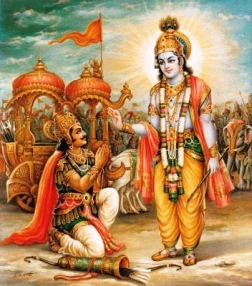
Kartik, also known as the month of Damodara, is a month for deepening one’s love for Krishna. It is proclaimed in the Purana’s to be the holiest month of the year.
“Among all twelve months, the month of Kartik is dear to Lord Krishna. If somebody performs a little worship of Lord Sri Hari in this month, that devotee is offered His own abode.” – Padma Purana
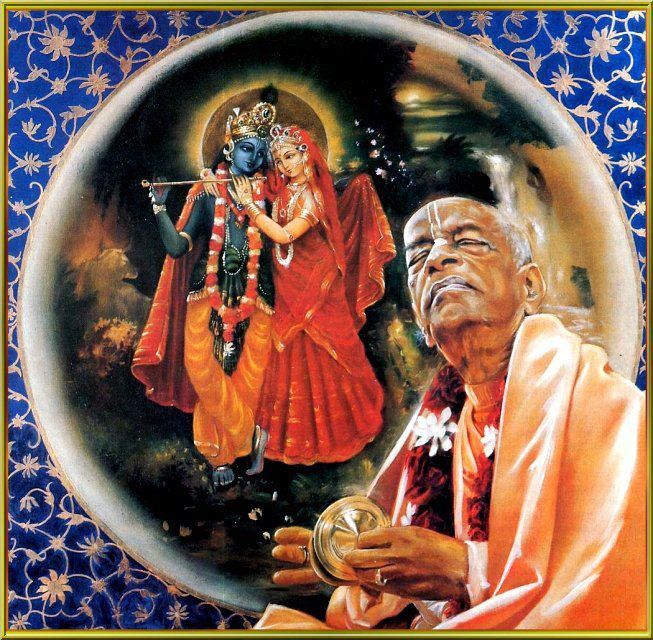
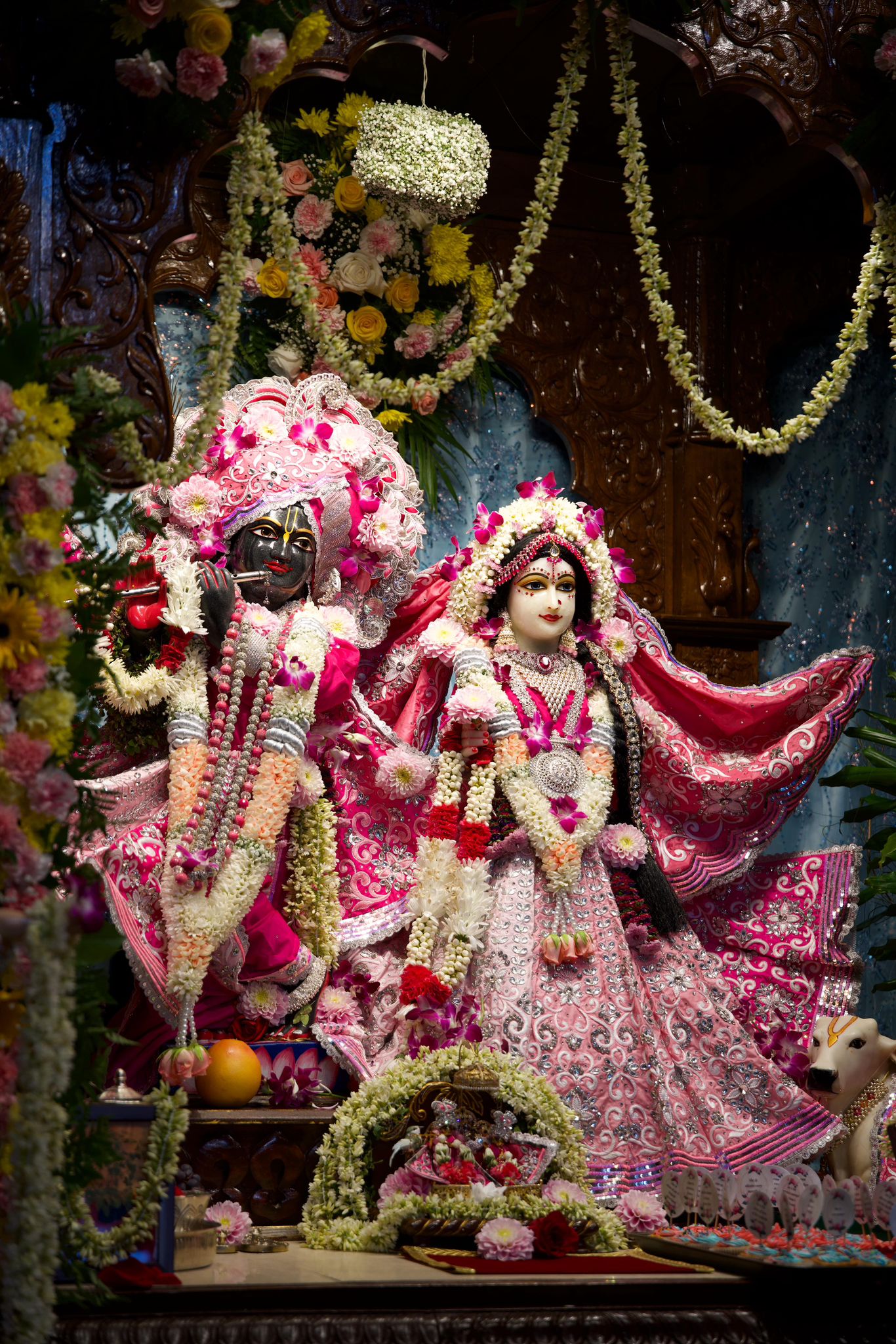
We are now in the month of Damodara (Kartika). In honor and in celebration of the month of Damodara, we will be focusing our attention on the pastimes of Krishna in Vrndavan. Especially Krishna’s childhood pastimes. The following is the first verse from the Damodarastkam prayer which is sung morning and evening, and it is customary to offer a candle or gee lamp as well to a picture of Lord Krsna and Mother Yasoda.
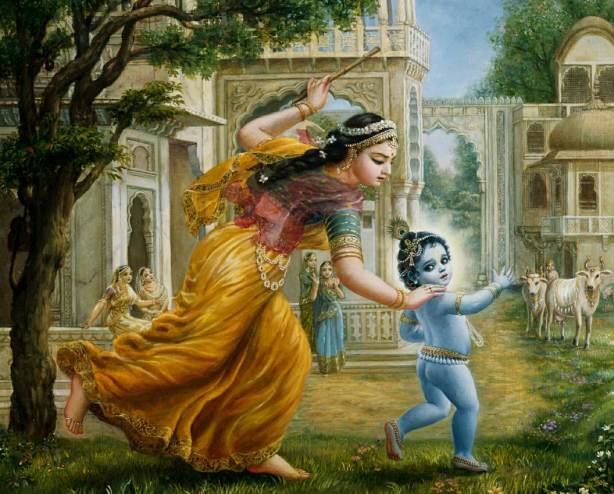
“To the supreme controller who possesses an eternal form of blissful knowledge, whose glistening earrings swing to and fro, who manifested Himself in Gokula, who stole the butter that the gopis kept hanging from the rafters of their storerooms and who then quickly jumped up and ran in retreat in fear of Mother Yasoda, but was ultimately caught-to that Supreme Lord, Sri Damodara, I offer my humble obeisances.“ (Sri Damodarastakam verse 1)
Once, seeing that her maidservant was engaged in different household work, mother Yashoda personally churned butter. While she churned butter, she sang the wonderful childhood pastimes of her son Krishna and relished thinking of Him. At that time Krishna appeared there and was hungry. He wanted her to stop churning the butter and feed Him first.
Mother Yashoda took her son on her lap and started feeding Him. While Krishna was sucking the milk, mother Yashoda smiled and enjoyed the beauty of Her child Krishna. Suddenly, the milk which was on the stove began to boil over. Just to stop the milk from spilling, mother Yashoda at once put Krishna aside and went to the stove. Left in that state by His mother, Krishna became very angry, and His lips and eyes became red in rage. He pressed His teeth and lips, and taking up a piece of stone, He immediately broke the butter pot. He took butter out of it, and with false tears in His eyes, He began to eat the butter in a secluded place.
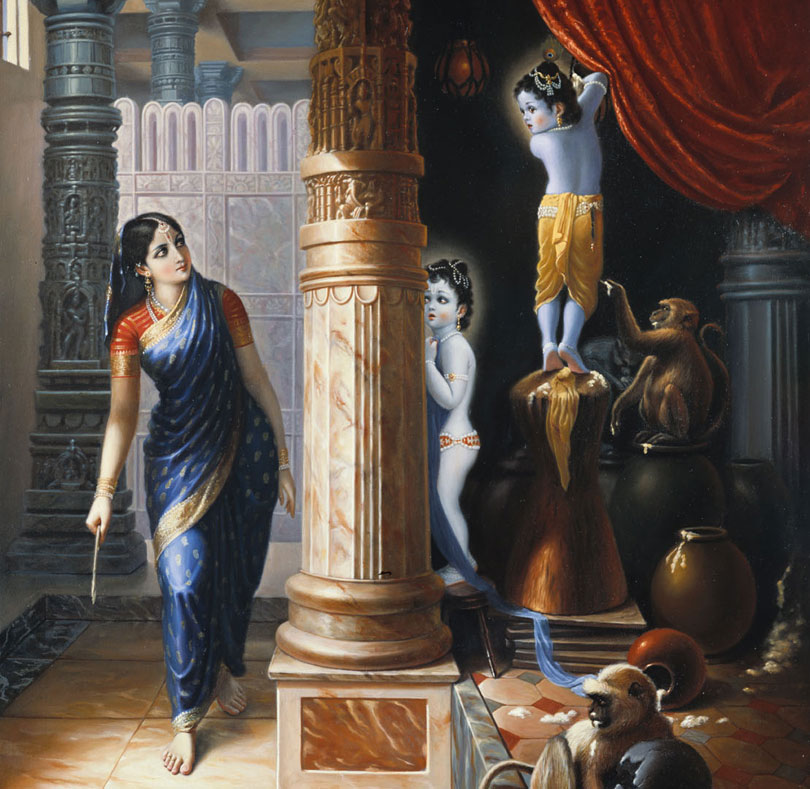
In the meantime, mother Yashoda returned to the churning place after setting the overflowing milk pan in order. She saw the broken pot, in which the churned yogurt had been kept. Since she could not find her boy, she concluded that the broken pot was His work. She smiled as she thought, “The child is very clever. After breaking the pot He has left this place, fearing punishment.” After she sought all over, she found her son sitting on a big wooden grinding mortar, which was kept upside down. He was taking butter from a pot which was hanging from the ceiling on a swing, and He was feeding it to the monkeys.
She saw Krishna looking this way and that way in fear of her because He was conscious of His naughty behavior. After seeing her son so engaged, she very silently approached Him from behind. Krishna, however, saw her coming toward Him with a stick in her hand, and He immediately got down from the grinding mortar and began to flee in fear. Mother Yashoda chased Him to all corners, trying to capture the Supreme Personality of Godhead, who is never approached even by the meditations of great yogis. In other words, the Supreme Personality of Godhead, Krishna, who is never caught by the yogis and speculators, was playing just like a little child for such a great devotee as mother Yashoda. Mother Yashoda, however, could not easily catch the fast-running child because of her thin waist and heavy body. Still she tried to follow Him as fast as possible. Her hair loosened, and the flowers in her hair fell to the ground. Although she was tired, she somehow reached her naughty child and captured Him. When He was caught, Krishna was almost on the point of crying. He smeared His hands over His eyes, which were anointed with black eye cosmetics. The child saw His mother’s face while she stood over Him, and His eyes became restless from fear. (from Krsna Book Chapter 9)
Recently, I ran across this song “Gopi Gita”, which is a 19-verse devotional song Composed by Sage Vyasa as part of the Bhagavata Purana. Turns out it is basically verses 1-19 from the Srimad Bhagavatam Canto 10, chapter 31. I don’t know if it is a bonafide song, as it is not in our “Songs of the Vaisnava Acaryas” songbook. And Srila Prabhupada didn’t get to Canto 10, Chapter 31, in his translations before his passing. He did however Give us “KRSNA The Supreme Personality of Godhead“, sowe have the entire song in one beautiful chapter.
KRSNA The Supreme Personality of Godhead – 1970 Edition
by His Divine Grace A. C. Bhaktivedanta Swami Prabhupada
Songs by the Gopis
Chapter 31
One gopī said, “My dear Kṛṣṇa, ever since You took Your birth in this land of Vrajabhūmi, everything appears to be glorious. The land of Vṛndāvana has become glorious, and it is as if the goddess of fortune is personally always existing here. But it is only we who are very unhappy, because we are searching for You, but cannot see You with our greatest effort. Our life is completely dependent upon You; therefore we request that You again come to us.”
I have been thinking about this for some time now, that we mostly think of ‘Lust’, in sexual terms. But, there are many forms of lust. Lust for money, lust for power, lust for violence and hatered, lust for material possessions, etc. But in all these forms of Lust, Love is missing.
Srila Prabhupada uses this word ‘lust’ in many references, through out his lectures, conversations, letters, and his many books.
Just out of curiosity, I went toVanipediaand typed in the word lust in search bar, and 1,532 records came up.
In the Bhagavad-gita Arjuna asked this very important question of Krishna:
Arjuna said: O descendant of Vrsni, by what is one impelled to sinful acts, even unwillingly, as if engaged by force? (Bg 3.36)
And Krishna replied:
The Blessed Lord said: It is lust only, Arjuna, which is born of contact with the material modes of passion and later transformed into wrath, and which is the all-devouring, sinful enemy of this world. (Bg 3.37)
Srila Prabhupada referred to lust as “the disease of the heart”.
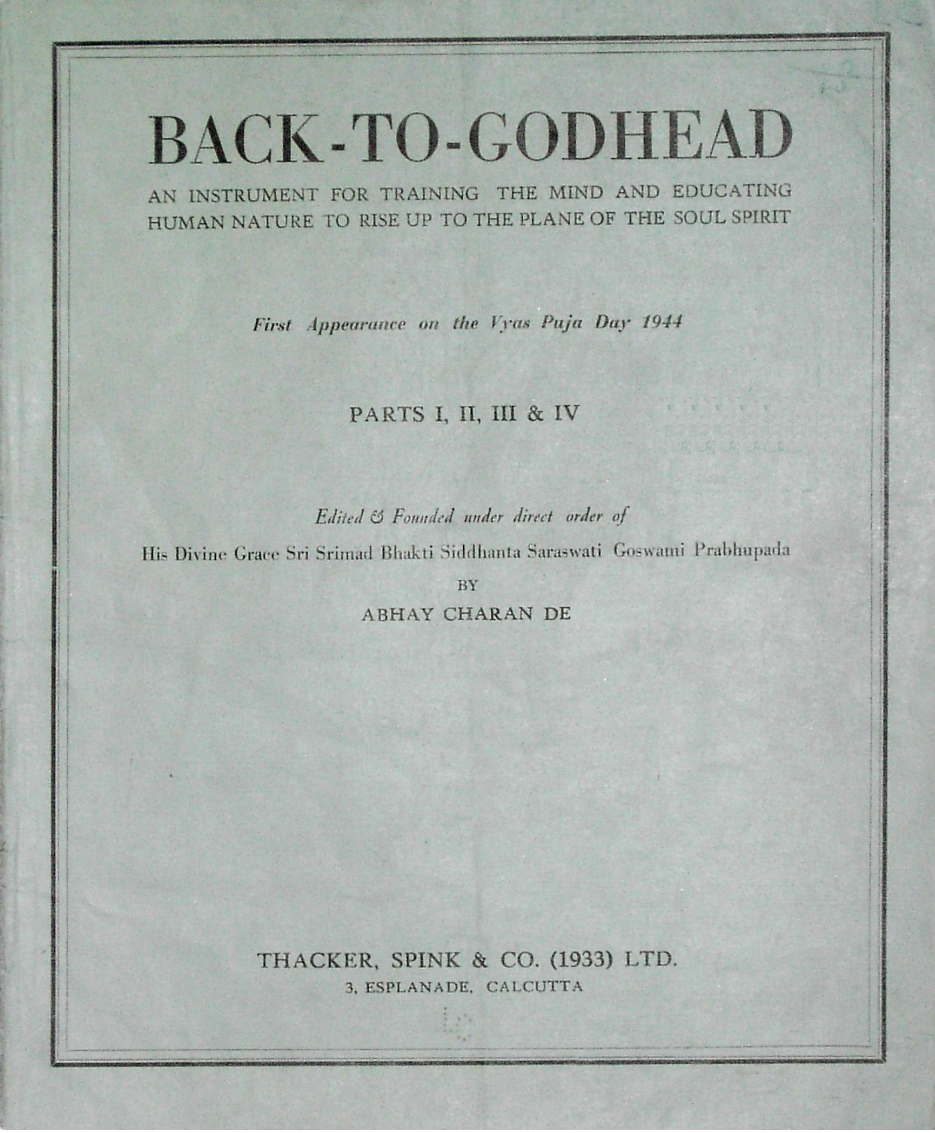
I found this interesting. This is the very first issue of “Back to Godhead” magazine published in 1944, India. Srila Prabhupada is explaining the purpose and mission of this publicationwith the following words:
…I wish that every one who is enlightened and educated of all nationality, may take active interest in this periodical publication for wide circulation as this paper will contain only the transcendental messages of the great savants of India and specially of Lord Chaitanya, the Godhead Incarnate Who descended for the deliverance of all fallen souls in the present age. My duty will be simply to repeat in the “BACK TO GODHEAD” just like an interpreter what I have heard from and what I have been ordered to deliver by my great spiritual master H.D.G. Bhakti Siddhanta Saraswati Goswami Prabhupada. Nothing will be manufactured by me by my mental concoction. Such words will descend as Sound Transcendental and when they are given proper serving reception by the aural channel, surely they will act like medicine to carry all back to home and “BACK TO GODHEAD.”
…The subject matters delineated in the pages of “Back to Godhead” may seem to be very dry in the beginning as the messages are from a different sphere altogether but still we have to give attention to the messages if we really mean to cure the disease of Nescience and go “BACK TO GODHEAD.”
…Godhead is One without a second and all living entities are His eternal subordinate transcendental servitors. Realization of this transcendental relation, will be the attempt of this paper and therefore there is no bar for any one in the world irrespective of colour, creed and nationality, to go back to Godhead.
Abhay Charan De, Editor and Founder.
You can view or download the scanned pages of this issue ofBack to Godheadby clinking on link
Or read the text of entire copy of this historic first issue that we have posted below
Prayer to the Lotus Feet of Krsna By: His Divine Grace A.C. Bhaktivedanta Swami Prabhupada Founder-Acarya of the International Society for Krsna Consciousness
On September 13, 1965, Srila Prabhupada wrote the following prayer on board the Jaladuta steamship bound for America.
I emphatically say to you, O brothers, you will obtain your good fortune from the Supreme Lord Krsna only when Srimati Radharani becomes pleased with you.
Sri Srimad Bhaktisiddhanta Sarasvati Thakur, who is very dear to Lord Gauranga, the son of mother Saci, is unparalleled in his service to the Supreme Lord Sri Krsna. He is that great saintly spiritual master who bestows intense devotion to Krsna at different places throughout the world.
By his strong desire, the holy name of Lord Gauranga will spread throughout all the countries of the Western world. In all the cities, towns and villages on the earth, from all the oceans, seas, rivers and streams, everyone will chant the holy name of Krsna.
As the vast mercy of Sri Caitanya Mahaprabhu conquers all directions, a flood of transcendental ecstacy will certainly cover the land. When all the sinful, miserable living entities become happy, the Vaisnava’s desire is then fulfilled.
Although my Guru Maharaja ordered me to accomplish this mission, I am not worthy or fit to do it. I am very fallen and insignificant. Therefore, O Lord, now I am begging for Your mercy so that I may become worthy, for You are the wisest and most experienced of all.
If You bestow Your power, by serving the spiritual master one attains the Absolute Truth — one’s life becomes successful. If that service is obtained, then one becomes happy and gets Your association due to good fortune.
evam janam nipatitam prabhavahikupe kamabhikamam anu yah prapatan prasangat krtvatmasat surarsina bhagavan grhitah so ‘ham katham nu visrje tava bhrtya-sevam
“My dear Lord, O Supreme Personality of Godhead, because of my association with material desires, one after another, I was gradually falling into a blind well of snakes, following the general populace. But Your servant Narada Muni kindly accepted me as his disciple and instucted me how to achieve this transcendental position. Therefore, my first duty is to serve him. How could I leave his service?” (Prahlada Maharaja to Lord Nrsimhadeva, Srimad-Bhagavatam, 7.9.28)
O Lord Krsna, You are my eternal companion. Forgetting You, I have suffered the kicks of maya birth after birth. If today the chance to meet You occurs again, then I will surely be able to rejoin You.
O dear friend, in Your company I will experience great joy once again. In the early morning I will wander about the cowherd pastures and fields. Running and frolicking in the many forests of Vraja, I will roll on the ground in spiritual ecstacy. O when will that day be mine?
Today that remembrance of You came to me in a very nice way. Because I have a great longing I called to You. I am Your eternal servant and therefore I desire Your association so much. O Lord Krsna, except for You there is no other means of success.
Golden Avatar Productions was a 1970’s recording studio and music/media enterprise started by the International Society for Krishna Consciousness (ISKCON) in Los Angeles, California. It was operated as a dedicated recording ministry studio, producing spiritual music, kirtans, lectures, and films. The KT Series produced the famous cassette and audio collection featuring spiritual music, bhajans, and recordings of Srila Prabhupada, Visnujana Swami, Acyutananda Swami, and other early Hare Krishna devotees.
I am sure many of the older devotees, still have a collection of these cassette tapes, I know I do, although many have worn out do to constant playing.
So here we have a listing of these early recordings from tapes distributed under the label of Golden Avatar Productions! These are classic (vintage) Hare Krishna kirtans and bhajans. They don’t make ’em like this any more!
I don’t know how they will work on your phone or computer, or if they will play unless you download, but either way this is the list of all these Golden Recordings. You can also try Krsna Tunes if they don’t work here. (On my computer they download to my Media Player and I can listen from there.)
This is one of my favorite tapes that I played into extinction.
KT-05 – Visnujana Swami – Hansadutta – Los Angeles Temple Studio Recording
One time a devotee asked Srila Prabhupada, “‘”what is the most important sloka” and Srila Prabhupada replied:
yasya deve parā bhaktir yathā deve tathā gurau. tasyaite kathitā hy arthāḥ prakāśante mahātmanaḥ.
“Only unto those great souls who have implicit faith in both the Lord and the spiritual master are all the imports of Vedic knowledge automatically revealed.” ((Śvetāśvatara Upanisad 6.23)
I was reading one letter Srila Prabhupada wrote to Jaya Govinda back in 1969, wherein Jaya Govinda was expressing some weakness in his faith, and Srila Prabhupada replied with such compassion, patience, and kind understanding.
…Of course, weakness in Krishna Consciousness we should always feel. That is a good symptom. We should never think that we are strong enough. But the source of strength is Krishna and His manifest representative, the Spiritual Master. We get this instruction from Caitanya-caritmrta that we receive the seed of Krishna Consciousness through the Spiritual Master and Krishna. Therefore, we should serve both simultaneously for continuous supply of spiritual vitality.
…When you came from India to Germany you told me that you felt complete satisfaction being in Germany, having a good engagement for serving Krishna. But at present you express that you may not be feeling that satisfaction intact. If you would explain to me why you are feeling like that, then I can help you.
… But in all circumstances we should have our staunch faith in Krishna and the Spiritual Master. Then we will never be shaken off. (Letter to Jaya Govinda October 15, 1969)
There is one nice verse in the Caitanya-caritmrta which describes this sentiment of faith:
“I firmly believe in these words of My spiritual master, and therefore I always chant the holy name of the Lord, alone and in the association of devotees. That holy name of Lord Krsna sometimes causes Me to chant and dance, and therefore I chant and dance. Please do not think that I intentionally do it. I do it automatically“. (Cc. Ādi 7.95-96)
Purport
A person who cannot keep his faith in the words of his spiritual master but acts independently never receives the authority to chant the holy name of the Lord. It is said in the Vedas:
yasya deve parā bhaktir yathā deve tathā gurau tasyaite kathitā hy arthāḥ prakāśante mahātmanaḥ
“Only unto those great souls who have implicit faith in both the Lord and the spiritual master are all the imports of Vedic knowledge automatically revealed.” This Vedic injunction is very important, and Sri Caitanya Mahaprabhu supported it by His personal behavior. Believing in the words of His spiritual master, He introduced the sankirtan movement, just as the present Krsna consciousness movement was started with belief in the words of our spiritual master. He wanted to preach, we believed in his words and tried somehow or other to fulfill them, and now this movement has become successful all over the world. Therefore faith in the words of the spiritual master and in the Supreme Personality of Godhead is the secret of success. Śrī Caitanya Mahāprabhu never disobeyed the orders of His spiritua master and stopped propagating the saṅkīrtana movement. Śrī Bhaktisiddhānta Sarasvati Gosvāmī, at the time of his passing away, ordered all his disciples to work conjointly to preach the mission of Caitanya Mahāprabhu all over the world. Later, however, some self-interested, foolish disciples disobeyed his orders. Each one of them wanted to become head of the mission, and they fought in the courts, neglecting the order of the spiritual master, and the entire mission was defeated. We are not proud of this; however, the truth must be explained. We believed in the words of our spiritual master and started in a humble way—in a helpless way—but due to the spiritual force of the order of the supreme authority, this movement has become successful.
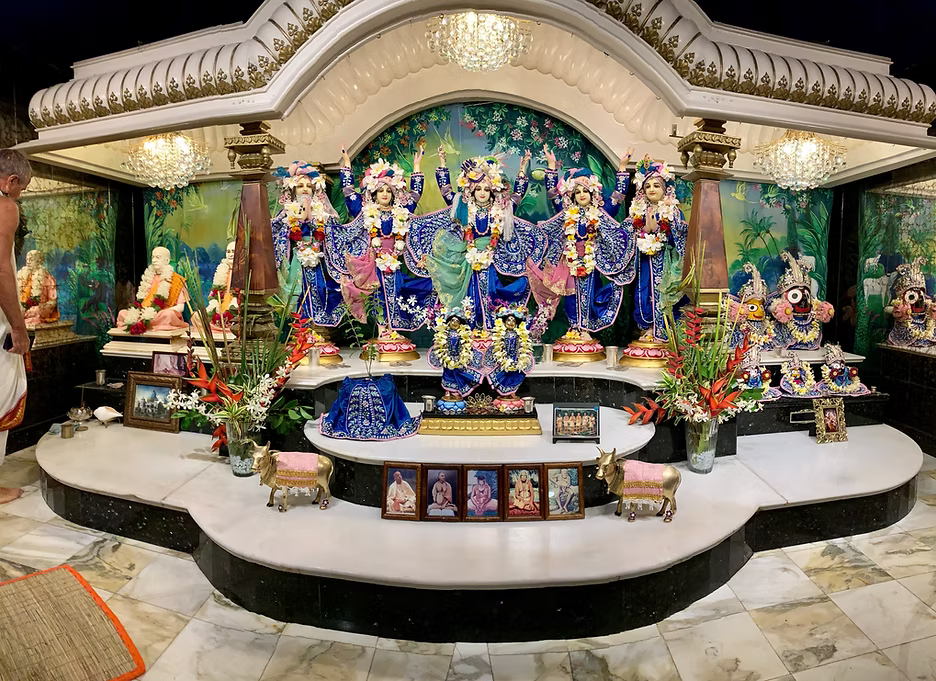
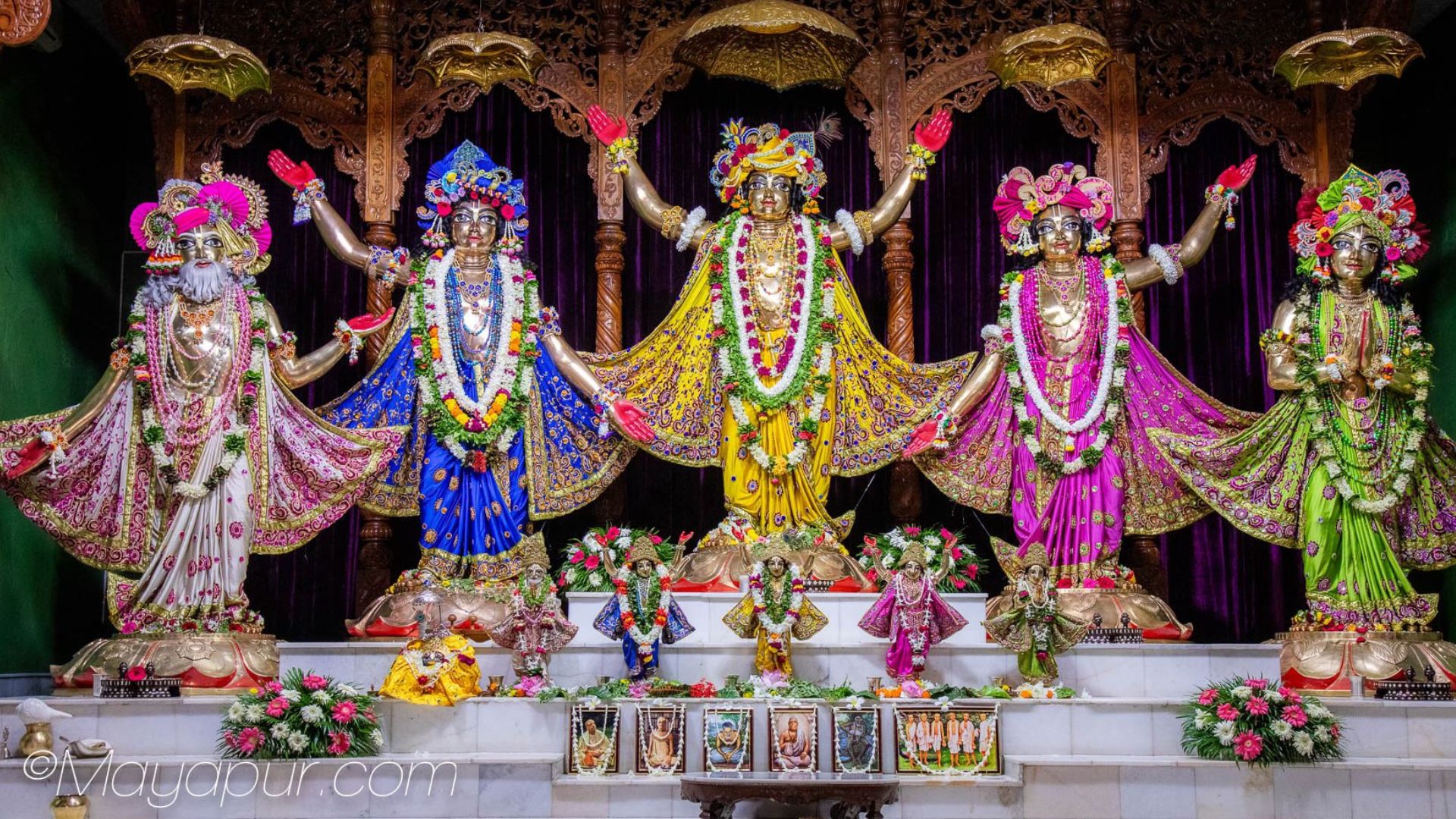
Altough I have been to Hawaii a few times, I never got the chance to visit the Hawaii Iskcon Temple. But I have always heard about the beautiful Pancha Tattva Deities, and that they were the first Pancha Tattva Deities Installed by Srila Prabhupada in all of ISKCON.
The ISKCON Hawaii Temple is a nonsectarian community dedicated to spiritual education and promoting unity and peace in the world through chanting of the mahã mãntra, distributing sanctified vegetarian food and propagating spiritual knowledge and practices based on the ancient Vedic teachings of Bhakti Yoga, as presented by His Divine Grace A.C.Bhaktivedanta Swami Prabhupada.
The first Pancha Tattva deities in Iskcon were installed in Honolulu, Hawaii in May 1972 by Iskcon Founder and Acarya: A. C. Bhaktivedanta Swami Prabhupada.
Home of the Pancha Tattva
The Pancha Tattva represent five divine aspects, each manifesting to share the profound blessing of love for God. These personalities appeared with unique roles in the sacred mission of distributing God’s love.
The Pancha Tattva represent five divine aspects, each manifesting to share the profound blessing of love for God. These personalities appeared with unique roles in the sacred mission of distributing God’s love.
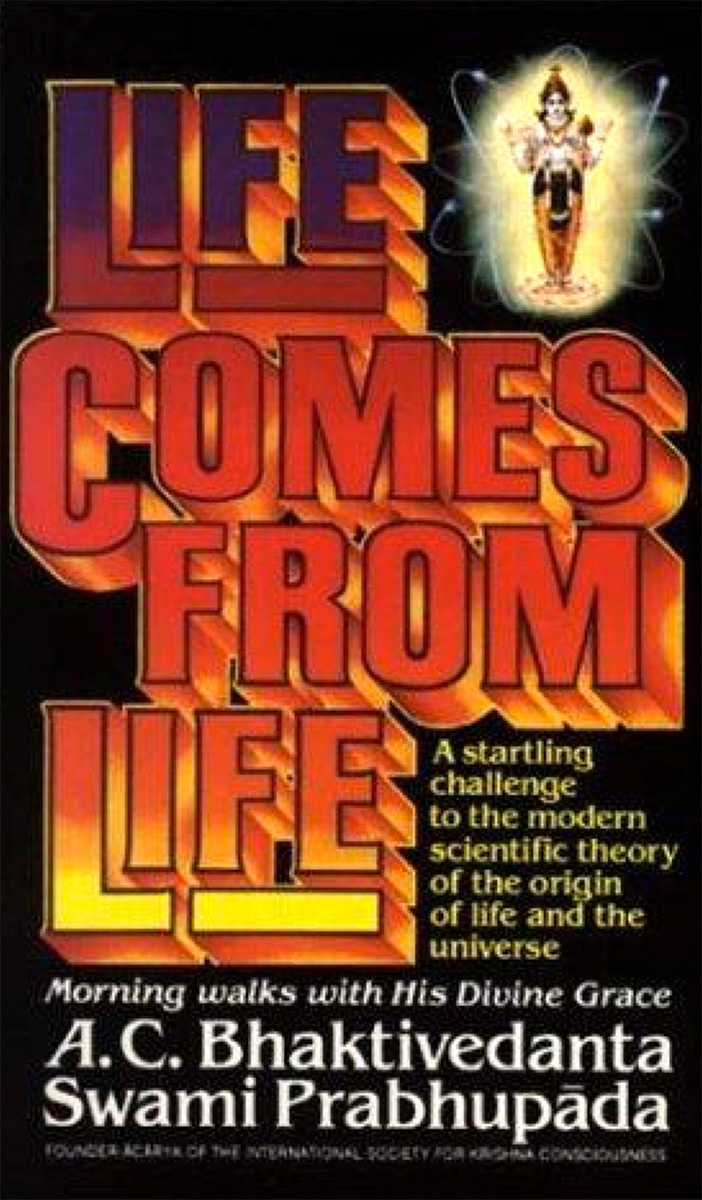
Although the book “Life Comes From Life” has been on our bookshelf for many years, I never really opened it until today. Mostly because my mind was not so scientifically inclined.But when I opened it, and began reading from the Introduction, I could see, even though it was originally published by the BBT back in 1979, it is very relevant to today’s current events.
When I read these following words from the Introduction, to “Life Comes From Life” by Srila Prabhupada, I came to realize just how prophetic, his words were. -V
“…a veil of fantasy and deception can be created with such unprecedented expertise that it can become impossible for us to distinguish between substance and simulation, reality and illusion.…”
Life Comes From Life
Introduction
Once upon a time (as in a fairy tale), most of us believed that the food we ate was basically wholesome, nutritious and free from dangerous chemicals, that advertising may have been believable, and that product labels truly described the qualities and contents of what we fed ourselves and our families. Once upon a time, most of the world believed in the integrity of our heads of state, high-ranking political officials and local leaders. Once upon a time, we thought our children were getting a solid education in the public school system. Once upon a time, many of us believed atomic energy had “peacetime uses” that were perfectly safe and completely congruous with a happy and healthy society.
Yet in recent times our illusions have been shattered. Repeated exposes of widespread consumer fraud and grand political collusion and bribery have all but destroyed our former innocence. We now know that through mass marketing and the media, a veil of fantasy and deception can be created with such unprecedented expertise that it can become impossible for us to distinguish between substance and simulation, reality and illusion.
Today many scientists are propagating the doctrine that life originates from matter. However, they cannot provide proof, either experimentally or theoretically. In fact, they hold their stance essentially on faith, in the face of all sorts of scientific objections. Śrīla Prabhupāda points out that this groundless dogma has done great damage to moral and spiritual standards worldwide and has thus caused incalculable suffering.
Today as I was driving home from the hospital, (I had some blood drawn), this question popped into my mind: “What is life?”. I saw some patients there, which appeared on the verge of death. I thought of my own mortality, we are born, live for sometime, and eventually die. So what is this life?
Just for fun I asked Google this question ‘what is life’ and got this ridiculous answer: “Life is the quality or condition that distinguishes living organisms (plants, animals, humans, and microorganisms) from inorganic matter and dead bodies. (Google search) I almost laughed out loud. Oh ya, that really tells me everything.
Then I remembered a book “Life comes from Life” that was published by the BBT back in 1979, based on morning walks by Srila Prabhupada.
“…This book is based on taped morning-walk conversations that Śrīla Prabhupāda had with some of his disciples during 1973, in the Los Angeles area. On those mornings when he focused on science, Śrīla Prabhupāda spoke mainly with his disciple Thoudam D. Singh, Ph.D. An organic chemist, Dr. Singh had directed the Bhaktivedanta Institute, an international center for advanced study and research in science, philosophy and theology.” (from forward)
I never really read that book, because my mind was not scientifically inclined. But from the Bhagavad-gita I learned these verses:
As the embodied soul continually passes, in this body, from boyhood to youth to old age, the soul similarly passes into another body at death. The self-realized soul is not bewildered by such a change. (Bg. 2.13)
For the soul there is never birth nor death. Nor, having once been, does he ever cease to be. He is unborn, eternal, ever-existing, undying and primeval. He is not slain when the body is slain. (Bg. 2.20)
It has been suggested that we do a post on Srutakirti Prabhu, a prominent disciple, and personal servant of His Divine Grace Srila Prabhupada. He has recently been traveling and speaking on his memories of Srila Prabhupada, and enlivening listeners with his personal remembrances.
Srutakirti Prabhu stands as one of the most revered personalities in the International Society for Krishna Consciousness (ISKCON), primarily known for his intimate service as Srila Prabhupada’s personal attendant. His unique position allowed him unprecedented access to the daily life and teachings of ISKCON’s founder, experiences he has generously shared through his writings, lectures, and personal interactions with devotees worldwide. His humility, dedication, and deep spiritual insights continue to inspire thousands of devotees as he maintains his service attitude into his senior years at the Krishna Balaram Mandir in Vrindavan.
Its funny how you can read Bhagavad-gita for years, and everytime you read from it, something new jumps out at you. For instance this morning, I happened upon a word I must have seen before, but never noticed: Kṛṣṇa-karma. I have seen karma-kāṇḍa before, and jñāna-kāṇḍa but never have I noticed the word Krsna-karma. I like this word.
I ran across this word Krsna-karma while reading from the purport to text 55 in the eleventh chapter of Bhagavad-gita. We share with you this very important text and purport.
Anyone who wants to approach the Supreme of all the Personalities of Godhead, on the Kṛṣṇaloka planet in the spiritual sky, and be intimately connected with the Supreme Personality, Kṛṣṇa, must take this formula, as is stated by the Supreme Himself. Therefore, this verse is considered to be the essence of Bhagavad-gītā. The Bhagavad-gītā is a book directed to the conditioned souls, who are engaged in the material world with the purpose of lording it over nature and who do not know of the real, spiritual life. The Bhagavad-gītā is meant to show how one can understand his spiritual existence and his eternal relationship with the Supreme Spiritual Personality and to teach one how to go back home, back to Godhead. Now here is the verse which clearly explains the process by which one can attain success in his spiritual activity: devotional service. As far as work is concerned, one should transfer his energy entirely to Kṛṣṇa conscious activities. No work should be done by any man except in relationship to Kṛṣṇa. This called Kṛṣṇa-karma. (from purport to Bg. 11.55)
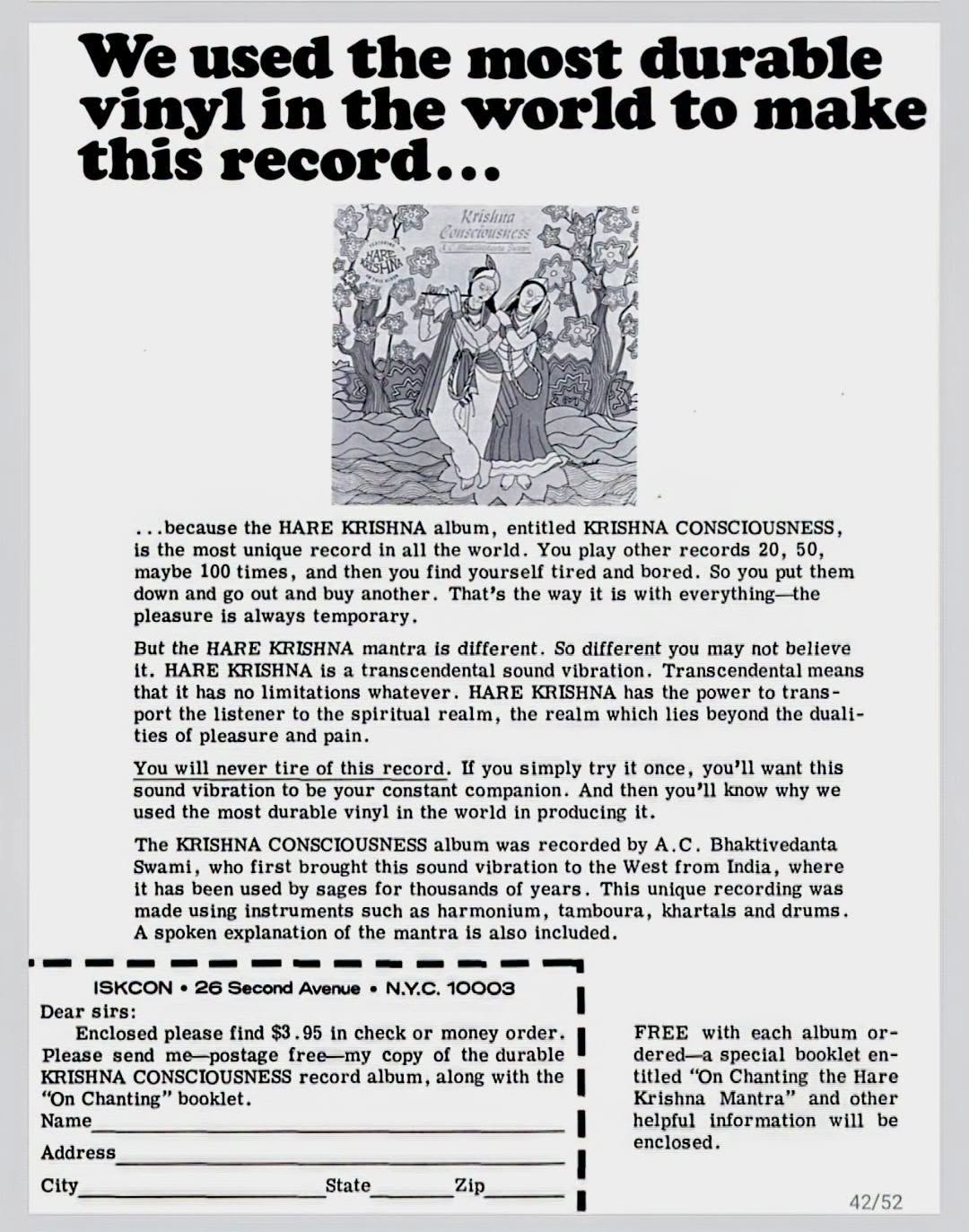
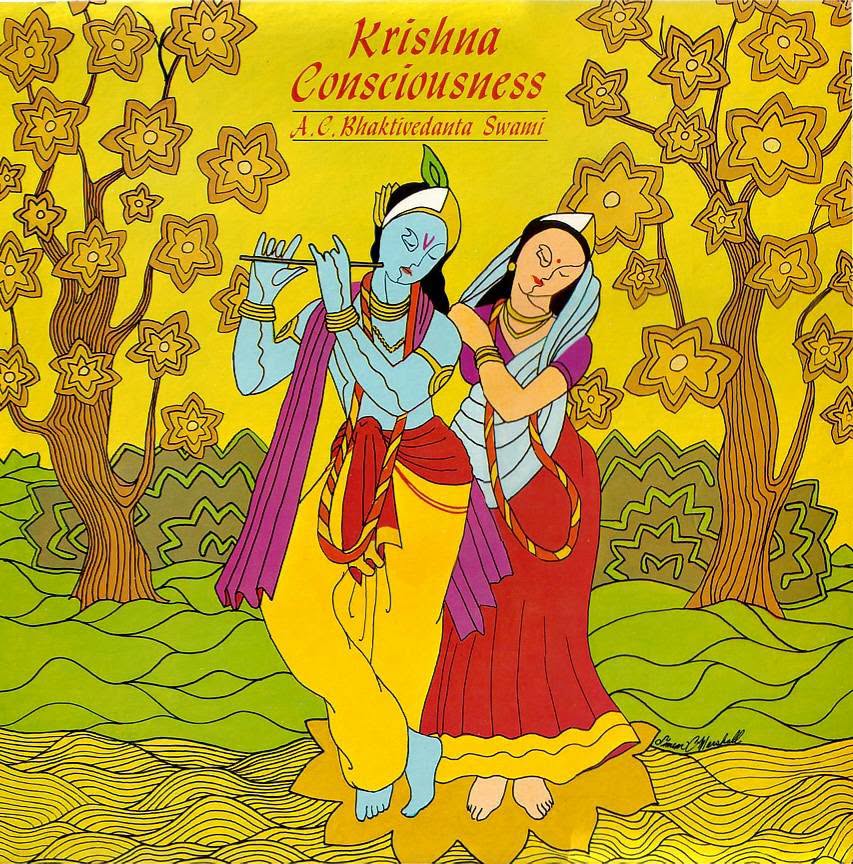
I found this Advertisement most amusing. Most durable vinyl, because you will never tire of playing this record. That is an actual fact! I have probably listened to this album thousands of times, almost every day for many years. A friend jokingly asked me one time when we were discussing all our musical interests, “If your were banished to a remote island and could only take one record album to listen to for the rest of your life, what would you take?” My answer was immediate, I would take the ‘Krishna Consciousness LP”. So ya, It was a good idea back then to put it on the most durable vinyl in the world.
“Simply by chanting the holy name of Lord Kṛṣṇa, one can be freed from all undesirable habits. This is the means of awakening all good fortune and initiating the flow of waves of love for Kṛṣṇa. (Cc Antya 20.11)
Sri Caitanya Mahaprabhu is the most recent incarnation of Krsna. He appeared 500 years ago in Bengal, in the form of Krsna’s devotee, in the mood of Srimati Radharani. He left only eight slokas (verses) of His instructions in writing. They describe the glories of the holy names of the Lord and the mood one must have to chant and to be a devotee.
The Sri Siksastakam is a collection of eight sanskrit verses written by Sri Caitanya Mahaprabhu (1486–1535), the founder of the Gaudiya Vaishnava tradition. In Sanskrit, śikṣā means “instruction” and aṣṭaka means “consisting of eight parts”.
These verses represent the primary written teachings left by Chaitanya Mahaprabhu and focus heavily on the practice, philosophy, and spiritual effects of the congregational chanting (sankirtana) of the Hare Krishna maha-mantra.
What I found interesting, when reading these verses from the Caitanya-caritamrta, is how the wording is different from the way we all learned it from “The Songs of the Vaisnava Acharya” songbook. The same but different.
“Let there be all victory for the chanting of the holy name of Lord Kṛṣṇa, which can cleanse the mirror of the heart and stop the miseries of the blazing fire of material existence. That chanting is the waxing moon that spreads the white lotus of good fortune for all living entities. It is the life and soul of all education. The chanting of the holy name of Kṛṣṇa expands the blissful ocean of transcendental life. It gives a cooling effect to everyone and enables one to taste full nectar at every step. (Cc Antya 20.12)
Purport
This is the first verse of Śrī Caitanya Mahāprabhu’s Śikṣāṣṭaka. The other seven verses are found in texts 16, 21, 29, 32, 36, 39 and 47.
“My Lord, O Supreme Personality of Godhead, in Your holy name there is all good fortune for the living entity, and therefore You have many names, such as Kṛṣṇa and Govinda, by which You expand Yourself. You have invested all Your potencies in those names, and there are no hard and fast rules for remembering them. My dear Lord, although You bestow such mercy upon the fallen, conditioned souls by liberally teaching Your holy names, I am so unfortunate that I commit offenses while chanting the holy name, and therefore I do not achieve attachment for chanting. (Cc Antya 20.16)
“One who thinks himself lower than the grass, who is more tolerant than a tree, and who does not expect personal honor but is always prepared to give all respect to others can very easily always chant the holy name of the Lord. (Cc Antya 20.21)
“One who thinks himself lower than the grass, who is more tolerant than a tree, and who does not expect personal honor but is always prepared to give all respect to others can very easily always chant the holy name of the Lord. (Cc Antya 20.29)
“Oh, My Lord, O Kṛṣṇa, son of Mahārāja Nanda, I am Your eternal servant, but because of My own fruitive acts, I have fallen in this horrible ocean of nescience. Now please be causelessly merciful to Me. Consider Me a particle of dust at Your lotus feet. (Cc Antya 20.32)
“My dear Lord, when will My eyes be beautified by filling with tears that constantly glide down as I chant Your holy name? When will My voice falter and all the hairs on My body stand erect in transcendental happiness as I chant Your holy name? (Cc Antya 20.36)
“My Lord Govinda, because of separation from You, I consider even a moment a great millennium. Tears flow from My eyes like torrents of rain, and I see the entire world as void. (Cc Antya 20.39)
“Let Kṛṣṇa tightly embrace this maidservant, who has fallen at His lotus feet. Let Him trample Me or break My heart by never being visible to Me. He is a debauchee, after all, and can do whatever He likes, but He is still no one other than the worshipable Lord of My heart. (Cc Antya 20.47)
Commentary by A.C. Bhaktivedānta Swāmī Prabhupāda: Lecture Excerpt — Bombay, November 7, 1970
I was thinking about the following verse the other day:
“The supreme occupation [dharma] for all humanity is that by which men can attain to loving devotional service unto the transcendent Lord. Such devotional service must be unmotivated and uninterrupted to completely satisfy the self.” ( SB 1.2.6)
And in some small way, I was feeling very fortunate. Over the years Srila Prabhupada has kept me engaged in devotional service to Krishna, as a wood worker building different pujari rooms for the Lords paraphernalia, construction projects, maintaining various web pages, gardening, offering food and water to the Lord, worshiping the Lord in our temple room, and washing the Lord’s plates and cups.
Sometimes I think I am just an insignificant servant of my spiritual master, but then I remember what Srila Prabhupada once said about devotional service:“If you had any idea of what you were doing, you would be fainting in ecstasy”. Not to often am I fainting in ecstasy, but I am nonetheless grateful every day, to perform some minimal devotional service.
…Everyone should engage himself in that transcendental loving service of the Lord, even in the present conditional state of material existence. That will gradually give one the clue to actual life and please him to complete satisfaction.” (Bg Introduction)
I was reading from the introduction to the Bhagavad-gita As It is…
the whole purpose of Bhagavad-gita is to revive our sanātana occupation, or sanātana-dharma, which is the eternal occupation of the living entity. We are temporarily engaged in different activities, but all of these activities can be purified when we give up all these temporary activities and take up the activities which are prescribed by the Supreme Lord. That is called our pure life.
The Lord is very kind to the living entities because they are His sons. Lord Krsna declares in Bhagavad-gita 14.4, “sarva-yonisu…aham bija-pradah pita pitā.” “I am the father of all.” Of course there are all types of living entities according to their various karmas, but here the Lord claims that He is the father of all of them. Therefore the Lord descends to reclaim all of these fallen, conditioned souls to call them back to the sanātana eternal sky so that the sanātana living entities may regain their eternal sanātana positions in eternal association with the Lord. The Lord comes Himself in different incarnations, or He sends His confidential servants as sons or His associates or ācāryas to reclaim the conditioned souls.
Therefore, sanatana-dharma does not refer to any sectarian process of religion. It is the eternal function of the eternal living entities in relationship with the eternal Supreme Lord. Sanātana-dharma refers, as stated previously, to the eternal occupation of the living entity. Rāmānujācārya has explained the word sanātana as “that which has neither beginning nor end,” so when we speak of sanātana-dharma, we must take it for granted on the authority of Sri Rāmānujācārya that it has neither beginning nor end.
So in some small way, I am feeling very fortunate.
“Love of Godhead is the ultimate benediction for all human beings.”
…The laws of material nature are so strong that none of our material possessions can save us from the cruel hands of death.
…one who is actually advancing must always consider the four principles of miserable life, namely, birth, death, old age and disease. One cannot be saved from all these miseries unless he takes shelter of the lotus feet of the Lord. Śrī Caitanya Mahāprabhu is therefore the only shelter for all conditioned souls. An intelligent person, therefore, does not put his faith in any material possessions, but completely takes shelter of the lotus feet of the Lord. (from purport Adi-lila 7.1)
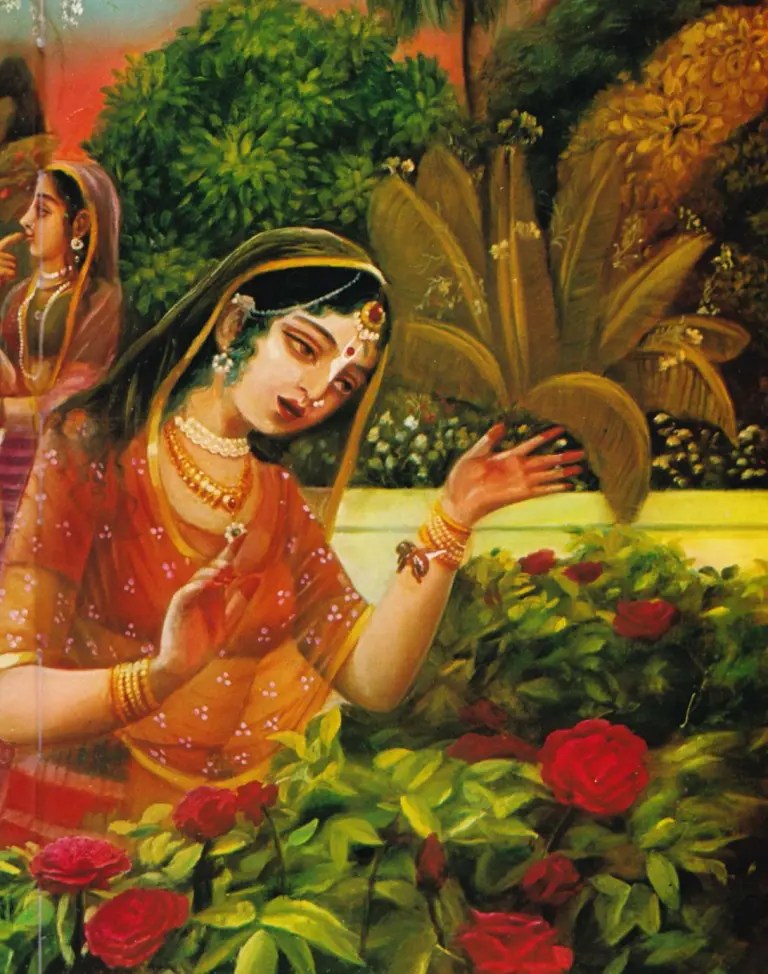
I have always enjoyed this pastime of Srimati Radharani’s talks with the Bumblebee. Every time I see a bumblebee in my garden I am reminded of these talks.
The pastimes of Lord Kṛṣṇa are uncommonly full of transcendental potency. It is a characteristic of such pastimes that they do not fall within the jurisdiction of experimental logic and arguments. (Cc. Antya 19.103)
When transcendental love of Kṛṣṇa awakens in one’s heart, even a learned scholar cannot comprehend one’s activities. (Cc. Antya 19.104)
“The activities and symptoms of that exalted personality in whose heart love of Godhead has awakened cannot be understood even by the most learned scholar.” (Cc. Antya 19.105)
The evidence of the truth of these talks is found in Śrīmad-Bhāgavatam. There, in the section of the Tenth Canto known as the Bhramara-gītā, “the Song to the Bumblebee,” Śrīmatī Rādhārāṇī speaks insanely in ecstatic love for Kṛṣṇa. (Cc. Antya 19.107)
Just try to hear these topics with faith, for there is great pleasure even in hearing them. That hearing will destroy all miseries pertaining to the body, mind and other living entities, and the unhappiness of false arguments as well. (Cc. Antya 19.110)
The Song to the Bumblebee
When Uddhava arrived from Mathurā carrying a message for the gopīs, the gopīs began talking about Kṛṣṇa and crying. Then one important gopī saw a bumblebee and began speaking to it like someone mad, thinking that the bee was a messenger of Uddhava’s or was someone very dear to him and Kṛṣṇa. The verses are as follows:
“My dear bumblebee, you are a very cunning friend of Uddhava and Kṛṣṇa. You are very expert in touching people’s feet, but I am not going to be misled by this. You appear to have sat on the breasts of one of Kṛṣṇa’s friends, for I see that you have kuṅkuma dust on your mustache. Kṛṣṇa is now engaged in flattering all His young girl friends in Mathurā. Therefore, now that He can be called a friend of the residents of Mathurā, He does not need the help of the residents of Vṛndāvana. He has no reason to satisfy us gopīs. Since you are the messenger of such a person as He, what is the use of your presence here? Certainly Kṛṣṇa would be ashamed of your presence in this assembly.”
How has Kṛṣṇa offended the gopīs so that they want to reject Him from their minds? The answer is given as follows:
As I was reading from the Srimad Bhagavatam this morning about the passing of Bhīṣmadeva it was being described how “The perfect yogīs or mystics can leave the material body at their own sweet will at a suitable time and go to a suitable planet desired by them.” And how it is possiable to go beyond Saṁsāra, and go back to Godhead without any doubt?
…In the momentous hour of leaving his material body, Bhīṣmadeva set the glorious example concerning the important function of the human form of life. The subject matter which attracts the dying man becomes the beginning of his next life. Therefore, if one is absorbed in thoughts of the Supreme Lord Śrī Kṛṣṇa, he is sure to go back to Godhead without any doubt.
And what is Samsara?
Saṁsāra means material existence. That is called saṁsāra. Bhūtvā bhūtvā pralīyate (BG 8.19). You take your birth once in some form of body. You live for some time. Then you have to give up this body. Then you have to accept another body. Then again live for some time. Then give up that body. Again accept another body. In this way, it is going on. That is called saṁsāra, rotating within this material world. (Lecture on Gurvastakam at Upsala University by His Divine Grace -Stockholm, September 9, 1973)
The saṁsāra means repetition of different bodies. That is called saṁsāra. (Lecture on SB 1.2.4 -Rome, May 28, 1974)
Saṁsāra means this material entanglement. This is called saṁsāra. (Lecture on CC Madhya-lila 25.40-50 – San Francisco, January 24, 1967)
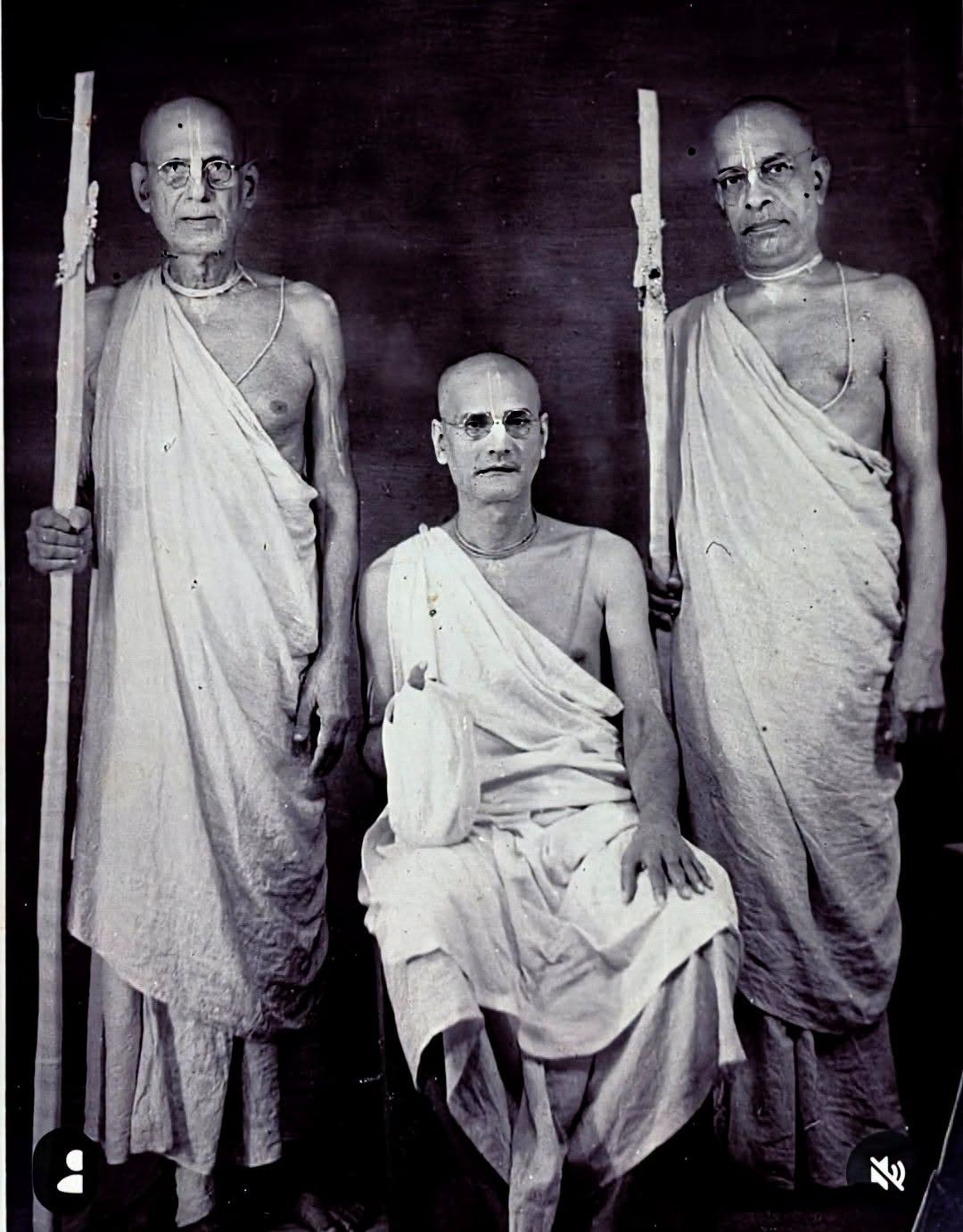
Photo: September 17th, 1959, Mathura. (Muni Maharaja, Bhakti Prajnana Kesava Maharaja, A.C. Bhaktivedanta Swami)
So today, we honor the acceptance of the Sannyasa order of Srila Prabhupada in 1959. We share with you, this post from Facebook by Abhinanda das.
The Sannyasa Order
·
Satsvarupa: One night Srila Prabhupada had a striking dream, the same dream he had had several times before, during his days as a householder. Srila Bhaktisiddhanta Sarasvati appeared, just as Srila Prabhupada had known him, the tall, scholarly sannyasi, coming directly from the spiritual world, from Krishna’s personal entourage. He was asking Srila Prabhupada to take sannyasa.
Srila Prabhupada first had to approach one of his Godbrothers for permission. He decided to turn to Bhaktivilasa Tirtha Maharaja (formerly Kunja Vihari), the leader of the Chaitanya Math in Calcutta. In April 1959, Srila Prabhupada wrote to Tirtha Maharaja, inquiring about sannyasa as well as about the Chaitanya Math’s printing some of his manuscripts. Without printing books and going to the West, sannyasa did not have meaning for Srila Prabhupada. He wanted to go to the West right away, and he had thought the Chaitanya Math would welcome his offer. He thought that with the world’s crying need for Krishna consciousness staring them in the face, they might see that Srila Prabhupada was convinced and enthusiastic and so should be sent right away with whatever he required. But they had other priorities.
Srila Prabhupada next turned to Kesava Maharaja in Mathura, and Kesava Maharaja told Srila Prabhupada to take sannyasa immediately. On the morning of September 17, 1959, in the fifty-by-twenty-five-foot Deity room on the second floor of the Kesavaji Math, a group of devotees sat before the Deities of Radha-Krishna and Lord Chaitanya. Srila Prabhupada sat on a mat of kusa grass beside ninety-year-old Sanatana, also to receive sannyasa that day. Then, to everyone’s surprise, Kesava Maharaja asked Srila Prabhupada to speak. After Srila Prabhupada’s speech, each initiate received his sannyasa-danda, the traditional head-high staff made of four bamboo rods bound together and completely enwrapped in saffron cloth. Kesava Maharaja said that Srila Prabhupada would now be known as Bhaktivedanta Swami Maharaja.
After the ceremony, the two new sannyasis posed for a photo, standing on either side of their sannyasa-guru, who sat in a chair. Yet Srila Prabhupada knew that to become A. C. Bhaktivedanta Swami did not mean merely that he was giving up family, home comforts, and business. Changing from white cloth to saffron cloth, from Abhay Babu to Bhaktivedanta Swami Maharaja, had a special significance: it was the mandate he had required, the irrevocable commitment. Now it was only a matter of time before Bhaktivedanta Swami would travel to the West as Bhaktisiddhanta Sarasvati had ordained.
Today we honor the disappearance day of Haridas Thakur.
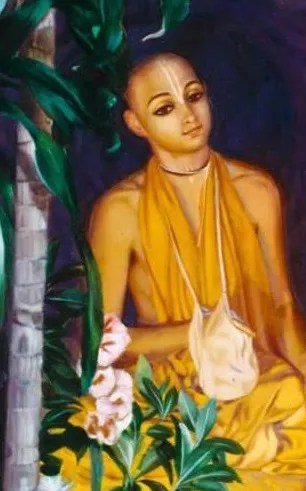
Haridas Thakur is considered to be the namacarya, the spiritual master in chanting the holy name of Krsna. Though he was born in a low class, Muslim family, Lord Caitanya’s devotees respected him as being better than the best of brahmanas. He would not eat or sleep until he finished his daily quota of chanting the name of Krsna 300,000 times. Along with Lord Nityananda, Haridas Thakur spread the chanting of Krsna’s name throughout Bengal. In Jagannatha Puri, where Haridas Thakur spent his later days, Lord Caitanya would regularly send him prasadam and discuss with him topics of Krsna. Haridas Thakur died chanting Krsna’s name in the presence of Sri Caitanya Mahaprabhu. After Haridas Thakur’s death, Lord Caitanya carried his body to the sea and with His own hands buried him in the sand.
Sri Caitanya-caritamrta – 1975 Edition
The Glories of Srila Haridasa Thakura
Śrī Caitanya Mahāprabhu derives great pleasure from glorifying His devotees, and among the devotees, Haridāsa Ṭhākura is the foremost.
The transcendental qualities of Haridāsa Ṭhākura are innumerable and unfathomable. One may describe a portion of them, but to count them all is impossible.
In Caitanya-maṅgala, Śrīla Vṛndāvana dāsa Ṭhākura has described the attributes of Haridāsa Ṭhākura to some extent.
No one can describe all the qualities of Haridāsa Ṭhākura. One may say something about them just to purify himself.
O devotees of Śrī Caitanya Mahāprabhu, please hear something about the qualities of Haridāsa Ṭhākura that Śrīla Vṛndāvana dāsa Ṭhākura has not described in detail.
After leaving his home, Haridāsa Ṭhākura stayed for some time in the forest of Benāpola.
Haridāsa Ṭhākura constructed a cottage in a solitary forest. There he planted a tulasī plant, and in front of the tulasī he would chant the holy name of the Lord 300,000 times daily. He chanted throughout the entire day and night.