ISKCON Hawaii: Your Spiritual Oasis

click on image to enlarge

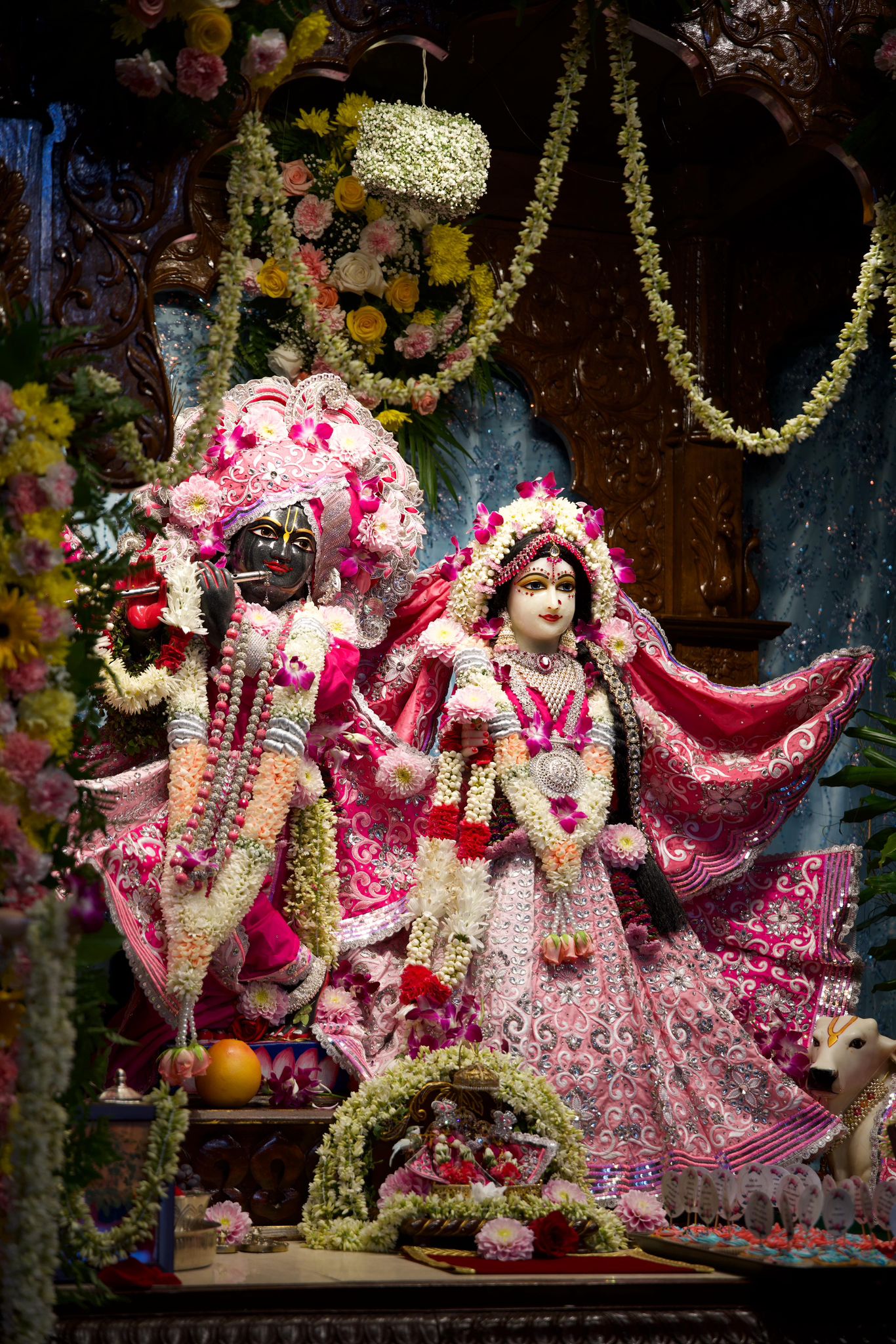
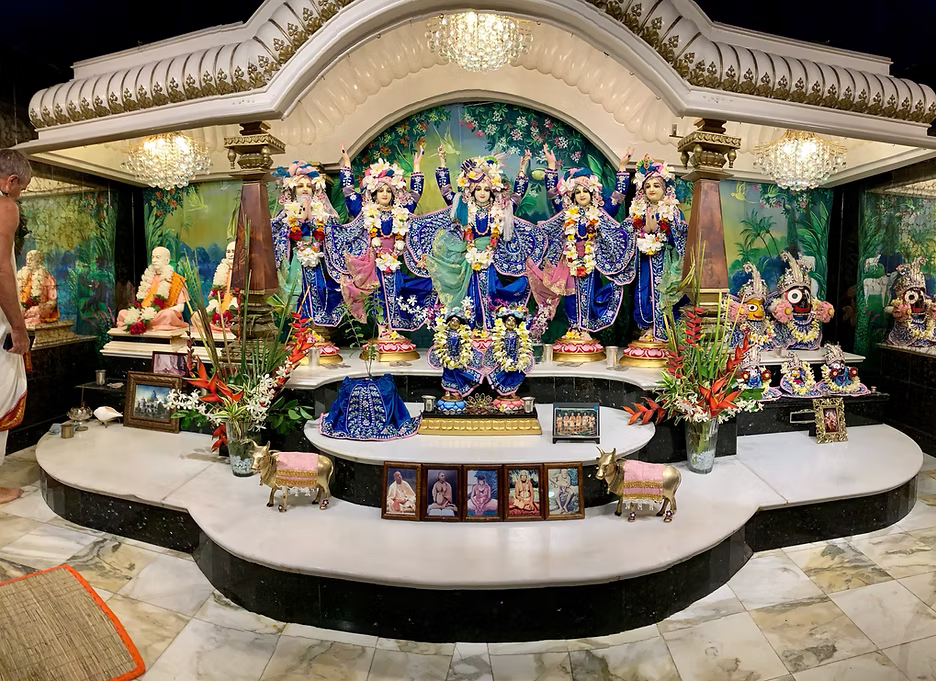
Altough I have been to Hawaii a few times, I never got the chance to visit the Hawaii Iskcon Temple. But I have always heard about the beautiful Pancha Tattva Deities, and that they were the first Pancha Tattva Deities Installed by Srila Prabhupada in all of ISKCON.

The ISKCON Hawaii Temple is a nonsectarian community dedicated to spiritual education and promoting unity and peace in the world through chanting of the mahã mãntra, distributing sanctified vegetarian food and propagating spiritual knowledge and practices based on the ancient Vedic teachings of Bhakti Yoga, as presented by His Divine Grace A.C.Bhaktivedanta Swami Prabhupada.​

The first Pancha Tattva deities in Iskcon were installed in Honolulu, Hawaii in May 1972 by Iskcon Founder and Acarya: A. C. Bhaktivedanta Swami Prabhupada.

Home of the Pancha Tattva

The Pancha Tattva represent five divine aspects, each manifesting to share the profound blessing of love for God. These personalities appeared with unique roles in the sacred mission of distributing God’s love.

The Pancha Tattva represent five divine aspects, each manifesting to share the profound blessing of love for God. These personalities appeared with unique roles in the sacred mission of distributing God’s love.

More

What is Life?

Today as I was driving home from the hospital, (I had some blood drawn), this question popped into my mind: “What is life?”. I saw some patients there, which appeared on the verge of death. I thought of my own mortality, we are born, live for sometime, and eventually die. So what is this life?

Just for fun I asked Google this question ‘what is life’ and got this ridiculous answer: “Life is the quality or condition that distinguishes living organisms (plants, animals, humans, and microorganisms) from inorganic matter and dead bodies. (Google search) I almost laughed out loud. Oh ya, that really tells me everything.

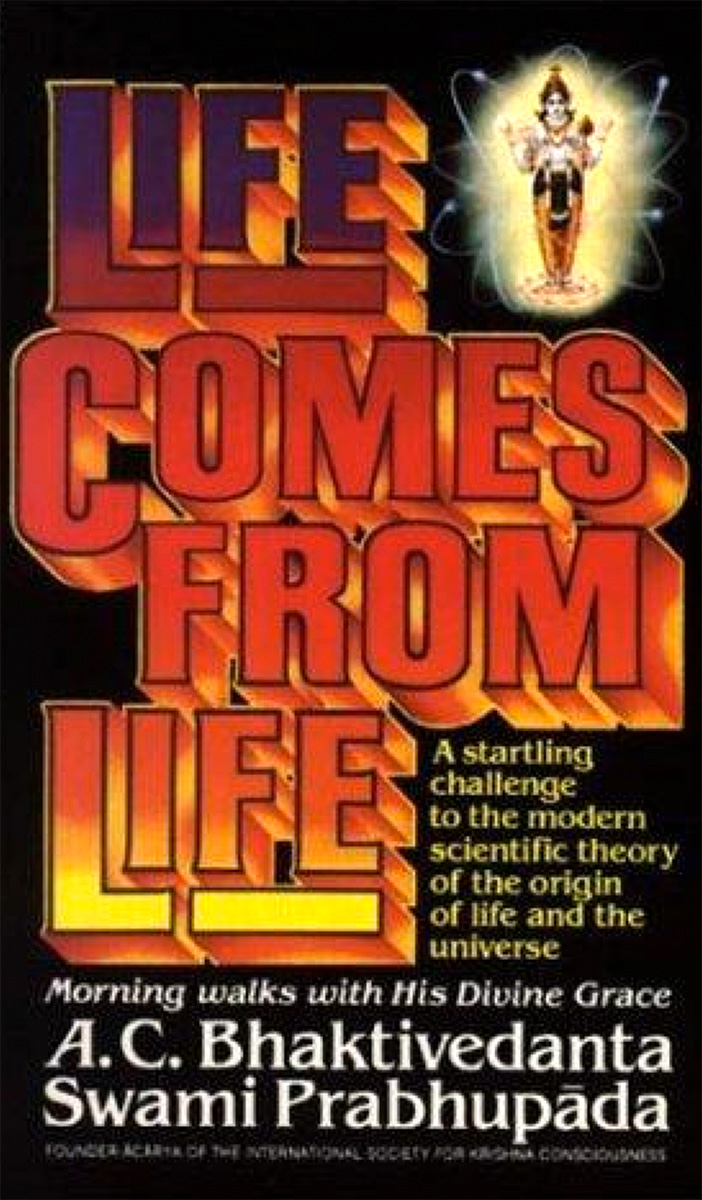
Then I remembered a book “Life comes from Life” that was published by the BBT back in 1979, based on morning walks by Srila Prabhupada.

“…This book is based on taped morning-walk conversations that Śrīla Prabhupāda had with some of his disciples during 1973, in the Los Angeles area. On those mornings when he focused on science, Śrīla Prabhupāda spoke mainly with his disciple Thoudam D. Singh, Ph.D. An organic chemist, Dr. Singh had directed the Bhaktivedanta Institute, an international center for advanced study and research in science, philosophy and theology.” (from forward)

I never really read that book, because my mind was not scientifically inclined. But from the Bhagavad-gita I learned these verses:

As the embodied soul continually passes, in this body, from boyhood to youth to old age, the soul similarly passes into another body at death. The self-realized soul is not bewildered by such a change. (Bg. 2.13)

For the soul there is never birth nor death. Nor, having once been, does he ever cease to be. He is unborn, eternal, ever-existing, undying and primeval. He is not slain when the body is slain. (Bg. 2.20)

I you would be interested in reading this small book the link is: http://prabhupada.io/books/lcfl

We have included in today’s post the forward from this important book.

More

Srutakirti Prabhu: A Life of Dedicated Service in Krishna Consciousness

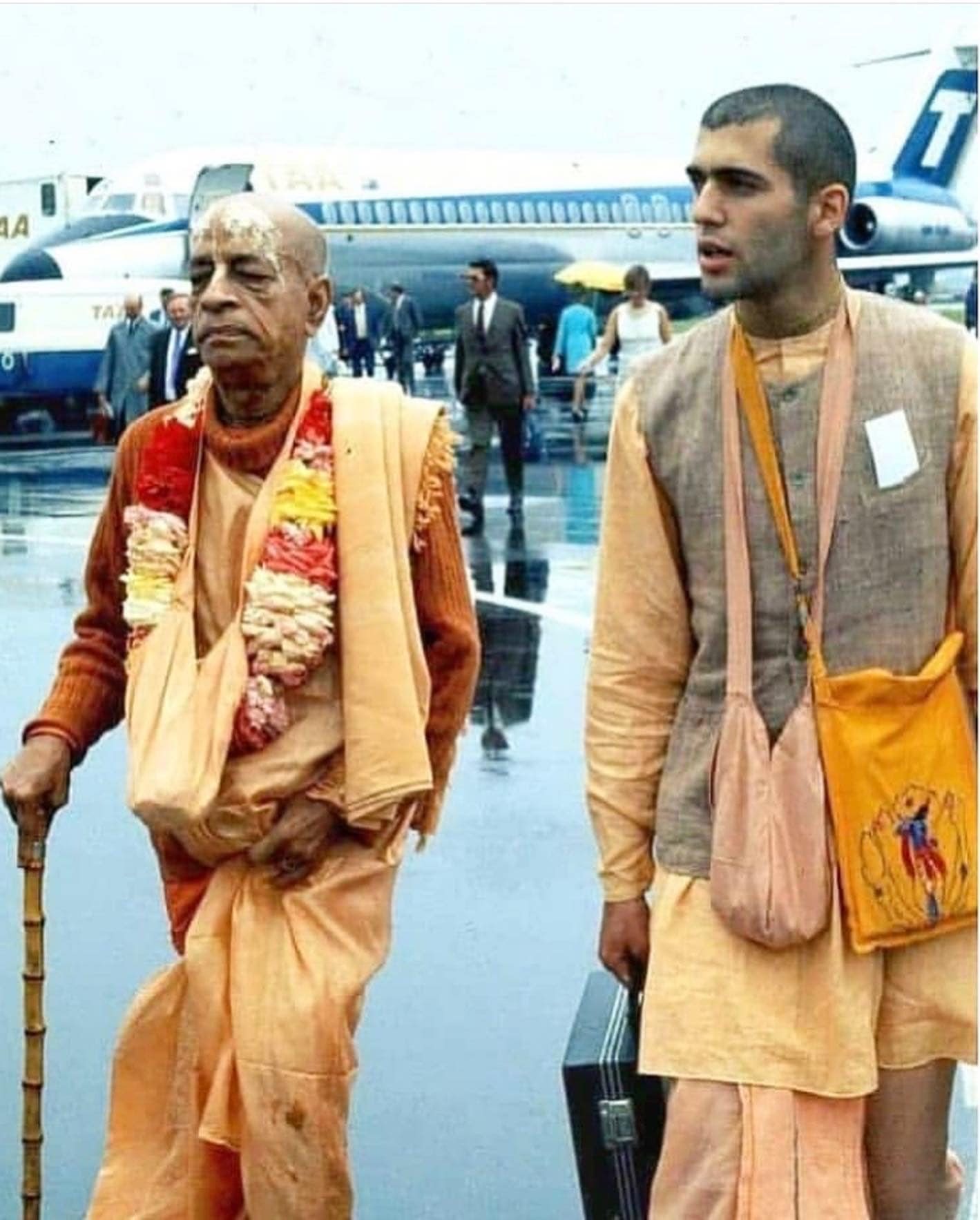
It has been suggested that we do a post on Srutakirti Prabhu, a prominent disciple, and personal servant of His Divine Grace Srila Prabhupada. He has recently been traveling and speaking on his memories of Srila Prabhupada, and enlivening listeners with his personal remembrances.

Srutakirti Prabhu stands as one of the most revered personalities in the International Society for Krishna Consciousness (ISKCON), primarily known for his intimate service as Srila Prabhupada’s personal attendant. His unique position allowed him unprecedented access to the daily life and teachings of ISKCON’s founder, experiences he has generously shared through his writings, lectures, and personal interactions with devotees worldwide. His humility, dedication, and deep spiritual insights continue to inspire thousands of devotees as he maintains his service attitude into his senior years at the Krishna Balaram Mandir in Vrindavan.

More

The Supreme Occupation [sanātana-dharma]

I was thinking about the following verse the other day:

“The supreme occupation [dharma] for all humanity is that by which men can attain to loving devotional service unto the transcendent Lord. Such devotional service must be unmotivated and uninterrupted to completely satisfy the self.” ( SB 1.2.6)

And in some small way, I was feeling very fortunate. Over the years Srila Prabhupada has kept me engaged in devotional service to Krishna, as a wood worker building different pujari rooms for the Lords paraphernalia, construction projects, maintaining various web pages, gardening, offering food and water to the Lord, worshiping the Lord in our temple room, and washing the Lord’s plates and cups.

Sometimes I think I am just an insignificant servant of my spiritual master, but then I remember what Srila Prabhupada once said about devotional service: “If you had any idea of what you were doing, you would be fainting in ecstasy”. Not to often am I fainting in ecstasy, but I am nonetheless grateful every day, to perform some minimal devotional service.

…Everyone should engage himself in that transcendental loving service of the Lord, even in the present conditional state of material existence. That will gradually give one the clue to actual life and please him to complete satisfaction.” (Bg Introduction)

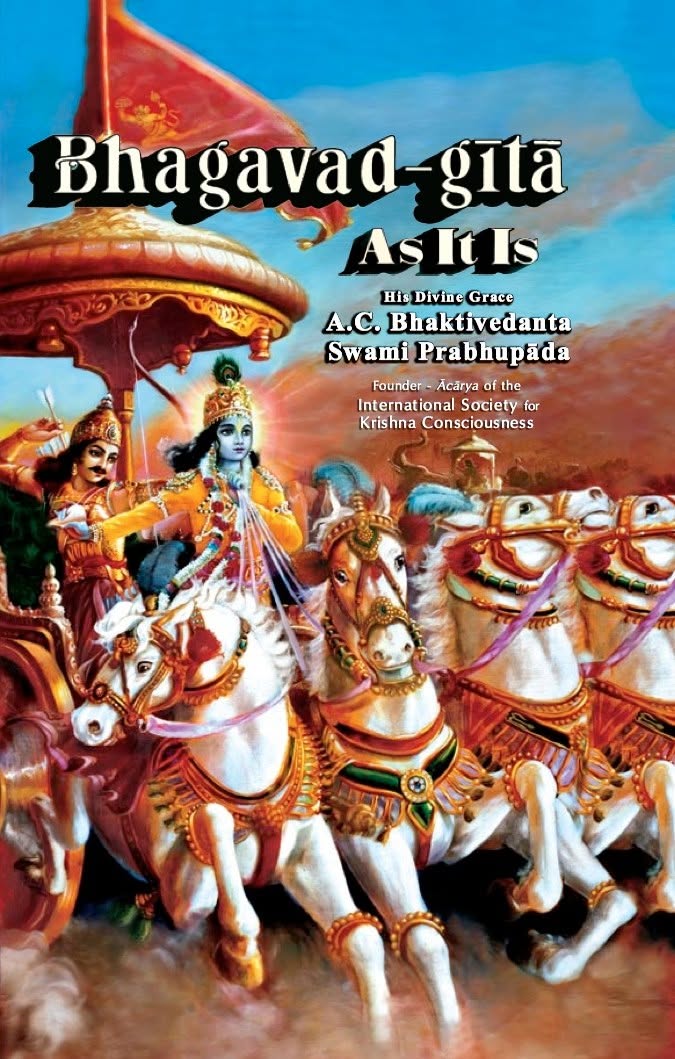
I was reading from the introduction to the Bhagavad-gita As It is…

the whole purpose of Bhagavad-gita is to revive our sanātana occupation, or sanātana-dharma, which is the eternal occupation of the living entity. We are temporarily engaged in different activities, but all of these activities can be purified when we give up all these temporary activities and take up the activities which are prescribed by the Supreme Lord. That is called our pure life.

The Lord is very kind to the living entities because they are His sons. Lord Krsna declares in Bhagavad-gita 14.4, “sarva-yonisu…aham bija-pradah pita pitā.” “I am the father of all.” Of course there are all types of living entities according to their various karmas, but here the Lord claims that He is the father of all of them. Therefore the Lord descends to reclaim all of these fallen, conditioned souls to call them back to the sanātana eternal sky so that the sanātana living entities may regain their eternal sanātana positions in eternal association with the Lord. The Lord comes Himself in different incarnations, or He sends His confidential servants as sons or His associates or ācāryas to reclaim the conditioned souls.

Therefore, sanatana-dharma does not refer to any sectarian process of religion. It is the eternal function of the eternal living entities in relationship with the eternal Supreme Lord. Sanātana-dharma refers, as stated previously, to the eternal occupation of the living entity. Rāmānujācārya has explained the word sanātana as “that which has neither beginning nor end,” so when we speak of sanātana-dharma, we must take it for granted on the authority of Sri Rāmānujācārya that it has neither beginning nor end.

So in some small way, I am feeling very fortunate.

full text and purport SB 1.2.6

More

Acceptance of the Sannyasa Order

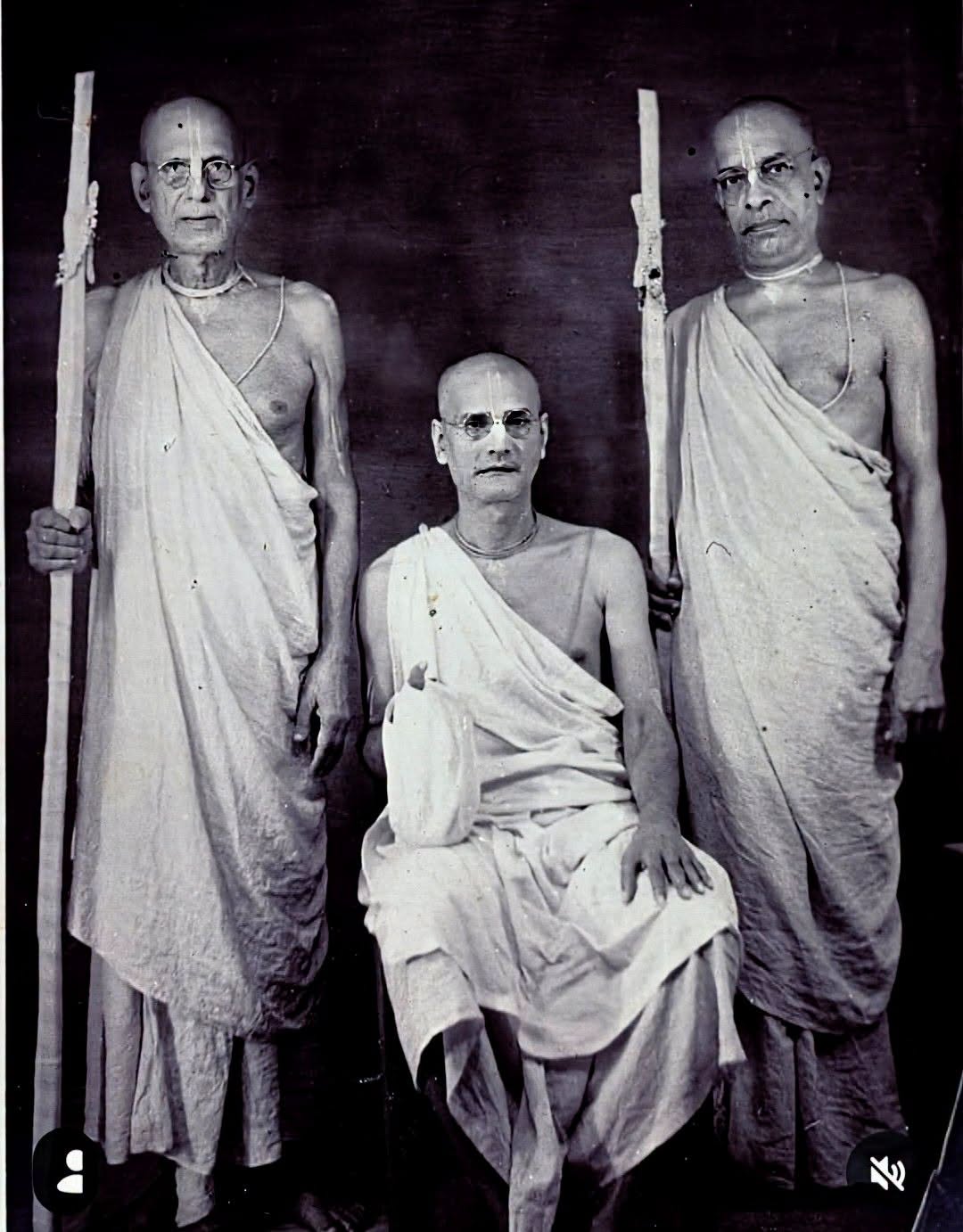
Photo: September 17th, 1959, Mathura. (Muni Maharaja, Bhakti Prajnana Kesava Maharaja, A.C. Bhaktivedanta Swami)

So today, we honor the acceptance of the Sannyasa order of Srila Prabhupada in 1959. We share with you, this post from Facebook by Abhinanda das.

The Sannyasa Order

·

Satsvarupa: One night Srila Prabhupada had a striking dream, the same dream he had had several times before, during his days as a householder. Srila Bhaktisiddhanta Sarasvati appeared, just as Srila Prabhupada had known him, the tall, scholarly sannyasi, coming directly from the spiritual world, from Krishna’s personal entourage. He was asking Srila Prabhupada to take sannyasa.

Srila Prabhupada first had to approach one of his Godbrothers for permission. He decided to turn to Bhaktivilasa Tirtha Maharaja (formerly Kunja Vihari), the leader of the Chaitanya Math in Calcutta. In April 1959, Srila Prabhupada wrote to Tirtha Maharaja, inquiring about sannyasa as well as about the Chaitanya Math’s printing some of his manuscripts. Without printing books and going to the West, sannyasa did not have meaning for Srila Prabhupada. He wanted to go to the West right away, and he had thought the Chaitanya Math would welcome his offer. He thought that with the world’s crying need for Krishna consciousness staring them in the face, they might see that Srila Prabhupada was convinced and enthusiastic and so should be sent right away with whatever he required. But they had other priorities.

Srila Prabhupada next turned to Kesava Maharaja in Mathura, and Kesava Maharaja told Srila Prabhupada to take sannyasa immediately. On the morning of September 17, 1959, in the fifty-by-twenty-five-foot Deity room on the second floor of the Kesavaji Math, a group of devotees sat before the Deities of Radha-Krishna and Lord Chaitanya. Srila Prabhupada sat on a mat of kusa grass beside ninety-year-old Sanatana, also to receive sannyasa that day. Then, to everyone’s surprise, Kesava Maharaja asked Srila Prabhupada to speak. After Srila Prabhupada’s speech, each initiate received his sannyasa-danda, the traditional head-high staff made of four bamboo rods bound together and completely enwrapped in saffron cloth. Kesava Maharaja said that Srila Prabhupada would now be known as Bhaktivedanta Swami Maharaja.

After the ceremony, the two new sannyasis posed for a photo, standing on either side of their sannyasa-guru, who sat in a chair. Yet Srila Prabhupada knew that to become A. C. Bhaktivedanta Swami did not mean merely that he was giving up family, home comforts, and business. Changing from white cloth to saffron cloth, from Abhay Babu to Bhaktivedanta Swami Maharaja, had a special significance: it was the mandate he had required, the irrevocable commitment. Now it was only a matter of time before Bhaktivedanta Swami would travel to the West as Bhaktisiddhanta Sarasvati had ordained.

Reference: Srila Prabhupada Lilamrta Volume 1 – Satsvarupa Dasa Goswami

I Totally Accept as Truth All that You have Told Me

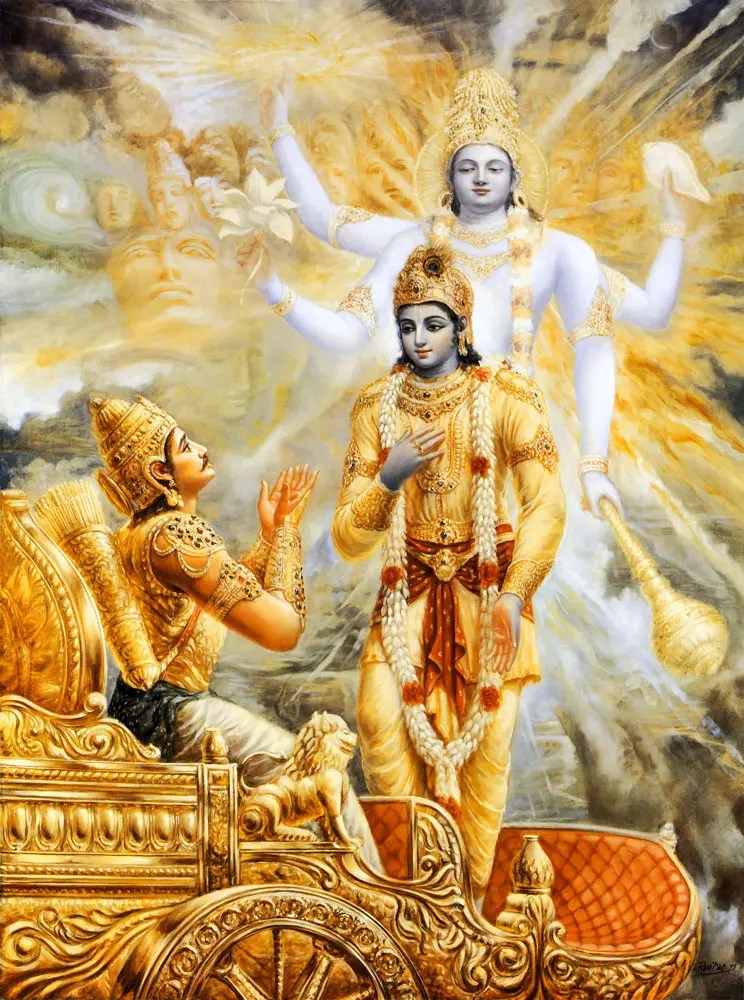
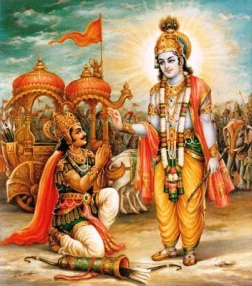
Last night I woke in the middle of the night , and couldn’t fall back asleep. While laying there, my mind just kinda went to thoughts of Krishna and Arjuna. Arjuna accepted Krishna as his spiritual master with these famous words from the Bhagavad-gita:

O Kṛṣṇa, I totally accept as truth all that You have told me. Neither the gods nor demons, O Lord, know Thy personality. (Bg 10.14)

This lead me to think of our relationship with our spiritual master His Divine Grace A. C. Bhaktivedanta Swami Prabhupada. And I came to the same conclusion as Arjuna. “I totally accept as truth all that You have told me“.

So I was thinking of our unique relationship with Srila Prabhupada. “Neither the gods nor demons, O Lord, know Thy personality”. Maybe the whole world outside of the circle of disciples and followers of His Divine Grace, cannot know his greatness and divine personality, but as disciples and followers, we can began to understand. Our relationship with Srila Prabhupada is much like that relationship between Krishna and Arjuna.

With that last thought, I fell back asleep, reflecting on Srila Prabhupada. -V

More

Sri Vyasa-Puja

Dear Srila Prabhupada,

Please accept my humble obeisances at your lotus feet.

Srila Prabhupada you are not a mundane philanthropist or welfare worker.

You are not interested on merging into the brahman effulgence, nor interested in material honor or reputation.

You are the most exalted personality who wants to show mercy upon the conditioned souls

You are very much aggrieved to see the suffering of others.

By your presence the whole world has benefited and your heart is always filled with compassion for the conditioned souls.

You were prepared to risk everything to rescue the condition souls from the material existence and the medicine you gave is to chant Hare Krsna,Hare Krsna, Krsna Krsna, Hare Hare, Hare Rama, Hare Rama, Rama Rama Hare Hare.

The entire world is purified by the APPEARANCE of such a great devotee.

“One who is brought under the lotus feet of the Lord by the endeavor of the Lord’s servant, the spiritual master is certainly immediately purified, however lowborn he may be. He becomes eligible to return home, back to Godhead.” (SB. 2. 14-18)

Thank you,Srila Prabhuapada for coming to save us.

Now it is up to me to take the medicine you have given seriously.

I pray for your mercy always,

You insignificant servant,

Lokadrsti devi dasi

Books Are the Basis

The Following is an excerpt from “Our Family Business”

By His Grace Vaisesika Dasa, 

In ISKCON we hear devotees say “Books are the basis.” Śrīla Prabhupāda himself used this phrase in a letter to Maṇḍali Bhadra Dāsa dated January 20, 1972: “My first concern is that my books shall be published and distributed profusely all over the world. Practically, books are the basis of our movement. Without them our preaching has no effect.” He uses it again in a letter to Tuṣṭa Kṛṣṇa Swami (January 9, 1976): “Books are the basis of our movement. Whatever appreciation we are getting on account of our books, it is because we are following the path chalked out by exalted devotees.”

So what does it mean that Śrīla Prabhupāda’s books are the foundation – the basis – of ISKCON? We can begin to understand by reading the letter Śrīla Prabhupāda wrote to Dāmodara Dāsa on December 3, 1971:

I’m especially pleased to hear that your distribution of our books and magazines has increased. Go on in this way, increasing more and more. Each time someone reads some solid information about Kṛṣṇa his life becomes changed in some way. These literatures are the solid ground upon which our preaching stands, so I want that they should be available to everyone, as many as possible. So please try for this.

More

The Rod of Chastisement

I saw this posted on Facebook, and thought we would share it here with all of you. In this article by Locan Ananda Prabhu, he again makes the argument for Arsa-prayoga, or no change.

Srila Prabhupada was recognized as a great Sanskrit scholar. His depth of knowledge was unfathomable. Not a single word of his should have been changed. That policy is called arsa-prayoga, and it guarantees that the spiritual head of our institution should never be dishonored by changing his words.

THE ROD OF CHASTISEMENT IS GONE!!!

by Locan Ananda Dasa

One of my favorite verses in the Bhagavad-Gita As It Is

was once found in Chapter 10, verse 38:

“Among punishments I am the rod of chastisement, and of those who seek victory, I am morality. Of secret things I am silence, and of the wise I am wisdom.” (B.g. 10.38, original)

Chapter 10 is entitled, “The Opulence of the Absolute” wherein Krishna enumerates some of His extraordinarily splendorous manifestations. On August 12, 1976, Srila Prabhupada was having an evening darshan in Tehran, the capital and largest city in Iran. He was talking about how ordinary people know little about the greatness of God. “They say, ‘God is great,’ but how great? That they do not know.” Srila Prabhupada then asked his secretary at the time, Harikesa dasa, to read selected verses from the Bhagavad-Gita, beginning with Chapter 10, verse 20:

“I am the Self, O Gudakesa, seated in the hearts of all creatures. I am the beginning, the middle and the end of all beings.” (B.g. 10.20)

Harikesa prabhu continued to read through the verses that followed, the chapter ending with verse 42:

“But what need is there, Arjuna, for all this detailed knowledge. With a single fragment of Myself I pervade and support this entire universe.” (B.g. 10.42)

When he finished the reading, Srila Prabhupada said, “That’s it. This is greatness. So we should not simply be satisfied ‘God is great.’ We must try to know how great He is. Then our God consciousness will be fixed up. It’s all right?”

More

A Crisis in Leadership

…One issue that many find shocking is the extent to which Srila Prabhupada’s Bhagavad-gita As It Is was edited without having been authorized by His Divine Grace, Srila Prabhupada. He was never a fan of extensive editing of any of his published works. What’s more, the over-edited edition published in 1983 removed thirty-two color pages that Srila Prabhupada insisted be included in his great opus. Three of those eliminated color pages were of the predecessor acaryas, namely Srila Bhaktisiddhanta Saraswati Thakur, Srila Gaura Kishora Das Babaji Maharaja and Srila Thakur Bhaktivinode.

Even the pocket Gita printed in India included all of the color plates found in the Macmillan edition.

If you are just hearing about this for the first time, please contact the GBC representative in your area and humbly request that this offense be rectified with the next printing. Doing so will attract Srila Prabhupada’s blessings. Do not fear when the cause is just.

A CRISIS IN LEADERSHIP

by Locan Ananda dasa

Many followers of Srila Prabhupada’s teachings have been calling for the worldwide reformation of the leadership of the International Society for Krishna Consciousness. The charge being made is that leaders and managers need to adhere more closely to the specific instructions of our Founder Acarya. There should be greater vigilance and the immediate correction of inappropriate behavior on the part of errant leaders.

More

New York Rathayatra Festival 2026

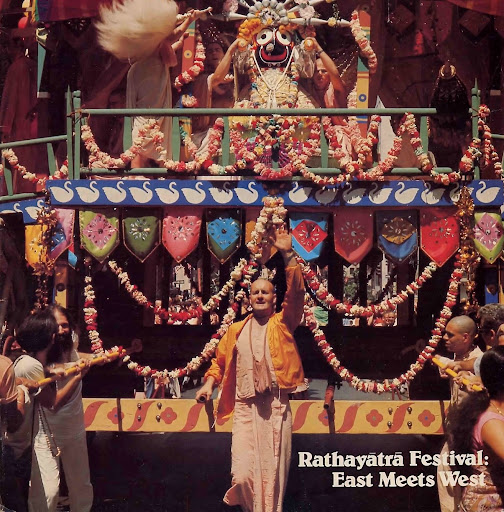
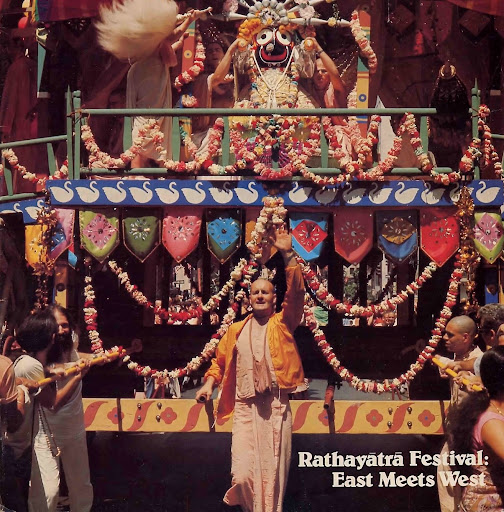
Today we are in New York City to celebrate the Rathayatra Festival. I am very excited because I last attended the NY festival 50 years ago in 1976 when the legendary Jayananda Thakur built the carts and Srila Prabhupada was carried down 5th Ave on Lady Subadra’s cart. It was a glorious day with ecstatic chanting, prasadam distribution, and a short lecture given by His Divine Grace at Washington Square park.

Interview with Jayananda Prabhu

(Back to Godhead magazine, June 1977)

BTG: Jayananda, how did you first get involved in Krishna consciousness?

Jayananda: I heard Srila Prabhupada speaking in San Francisco, and somehow I knew he didn’t want to cheat me. So I just wanted to work for him.

BTG: And now for ten years you’ve worked on the Ratha-yatra carts.

Jayananda: Yes.

BTG: What were the first Ratha-yatras like?

Jayananda: The first year, 1967, we just rented a flatbed truck and started out in the Haight-Ashbury district of San Francisco. We decorated the truck with flowers and put the Deities on the back, and the girls passed out fruit. A good crowd walked along with us at the beginning, and when we turned off Haight Street a smaller group of maybe fifty people came with us and we went all the way to the beach.

The second year (1968) we made our own cart, with saffron silk canopies, small ones. And we had the parade through Golden Gate Park to the beach. By that time the San Francisco temple had grown a little—we had maybe 30 devotees—and about 100 people came with us through the park. The chanting was very nice that year.

Then in 1969 we built a much bigger cart, with a tall silk canopy, like the ones they build in Jagannath Puri in India. But in 1970 we worked for two months straight and built the three big carts, basically the same ones we use now. Also, we had all kinds of publicity—TV, billboards, posters. And Srila Prabhupada came to that Ratha-yatra. So a lot of people came, maybe 12,000 people. It was big—a tremendous success. We had a few mishaps, though. One cart broke down in the middle of the parade. And it was a bitter cold day. But even though it was so cold at the beach, thousands of people stayed there with us and ate a lot of Krsna prasad (spiritual food offered to Krishna). We brought 20 50-gallon barrels of prasad, and they ate it all.

Later that year, the auditorium we used at the beach was torn down. So in 1971 we decided to end the parade in the park, at Lindley Meadow. That year and in 1972 and 1973, the parade was a little smaller than in 1970.

In 1974 Bhakta Das came to San Francisco to be temple president, and he decided to expand the Ratha-yatra. He spent more money on it than before, and maybe 20,000 people attended that year. The police remarked that we were the only group that could get such a large gathering together without creating a problem for them.

Srila Prabhupada came that year and gave a speech at the Meadow. He was sitting beneath the Jagannath Deities on Their opulent three-tiered stage. Even without much understanding everyone could appreciate that here was a majestic, awe-inspiring celebration. Another wonderful thing we started that year was the fairground-type booths at the Meadow. You could see the unlimited scope of the Vedic culture. We had a Deity worship booth, a transcendental art booth, a literature booth, and of course many booths selling food. Now that’s become a regular feature of the festival.

In 1975 I tried out making steel wheels, but the chariots were so heavy they flattened the steel and made the ride very bumpy for the Deities. So now we’re back to the standard wooden wheels.

BTG: What instructions has Srila Prabhupada given you about Ratha-yatra?

Jayananda: I never got much personal instruction. He just told me to make everything strong. I’m not a real visionary about it—I just built the carts.

BTG: Which Ratha-yatra do you think has been the best so far?

Jayananda: In New York last year (1976)—that was the most festive. Not until then had I experienced so many of the transcendental qualities of Ratha-yatra. You know—for a parade there’s nothing like Fifth Avenue; it’s the most important street in the world. And when we went to Washington Square Park to pull the carts home, hours after the parade had finished, thousands of people were still there chanting. They were everywhere. People were coming out of their apartments and coming out of bars shouting “Hare Krishna!” Only in New York could you get such a response.

BTG: Tell us, from your own experience, what the public gets out of Ratha-yatra.

Jayananda: The impact is so powerful that everyone’s affected. In New York there were thousands of people out on the streets, and they were astounded. It’s not that I’m claiming it; the people were interviewed on TV and that’s what they said. Also I remember one man with his girl friend (she didn’t like us at all) who told me some time after the festival that when he saw the carts coming down the street he felt a parade had just come down from heaven, and that he often remembers the carts and the chanting with pleasure.

So people are hit by it. It’s so far beyond their usual experience. You can’t measure the impact. All year long they do more or less the same things. Maybe they catch a few parades, like the Thanksgiving Day parade. They stand and watch some big balloons go by. But it’s all the same. Then, when you have a whole troupe of devotees singing and dancing around these lofty, transcendental chariots—then the people are transformed. They used to be mundane creatures, but when they see the Ratha-yatra, they’re angels. It brings out the best in people to see Lord Jagannath smiling at them. I tell you, at first their faces looked like they hadn’t changed in 25 years, and then all of a sudden it was like glass cracking, and you’d see the whole face transformed just by a few moment’s association.

And what to speak of those who take part?! Ratha-yatra encourages everybody to take part. “Come on, walk with us, dance, grab a rope and pull!” We don’t say, “Don’t touch.” No—”Join in, have fun.” By our nature we all want to participate. Nobody wants to be a bystander. And those who take part are purified of all their sinful karmic reactions just by chanting Hare Krishna and seeing Lord Jagannath.

BTG: Are there people who regard it as idol worship?

Jayananda: Yes—they may feel that before, but the impact of the festival is so strong that after it they feel otherwise. They see Lord Jagannath, and they see how merciful He is, and they can feel that it’s not idol worship. And if they read Srila Prabhupada’s books, then they’ll understand logically how Lord Jagannath is not an idol. Of course, at the festival there are always a few fault-finders. Last year in New York one of them had a bullhorn and was shouting, so one of our men poured water down it and that stopped him.

BTG: What is your understanding of the purpose of Ratha-yatra?

Jayananda: To celebrate the pastimes of Krishna. Krishna’s so kind; He comes to earth and displays so many wonderful pastimes. Ratha-yatra celebrates His going to Kuru-kshetra with Balaram and Subhadra, and His meeting there with the residents of Vrindavan, where He was born. The expressions of love shared between the Lord and His devotees make that one of the sweetest pastimes. Ratha-yatra offers a chance for so many people to be engaged in Krishna consciousness. People don’t come to our temples much, but millions are out on the streets. Now here’s a chance for them to advance in spiritual life—here comes Lord Jagannath’s festival! They’re touched—they become part of the transcendental vibration, and they’re purified.

Also, for the devotees it’s very beneficial—maybe more for me. Ratha-yatra is the service that’s given me so many of my realizations, the flowering of whatever Krishna consciousness I have. It’s not a long-term occupation. It happens all at once, like a big explosion, in the summer. It brings together so many devotees all working together under the spiritual master with one plan. And all the transcendental paraphernalia is there—the Deities, the prasad, the chanting, the booths, the theater—it’s such a surcharged atmosphere. You never forget it.

For a devotee to be able to participate in Ratha-yatra is very good for his Krishna consciousness. When you have these festivals, it gives you a big, powerful event to look forward to, and to work towards. It helps your devotion.

BTG: How about the future growth of Ratha-yatra?

Jayananda: One thing that’s important is that all the temples should celebrate this wonderful festival. But it isn’t practical for each center to construct three carts. So now in Los Angeles we’re putting together a traveling party that can go from city to city, with displays and carts that you can assemble and take apart. Then the great expense will be eliminated. Also, we’ll have year-round Ratha-yatras—the South in the winter, the North in the summer. It can be expanded so people will be hearing about Ratha-yatra all year round—and that will be the perfection of their lives!

BTG: It sounds wonderful! Thank you very much, Jayananda.

Jayananda: Thank you. Hare Krishna.

More
Prayers and Songs

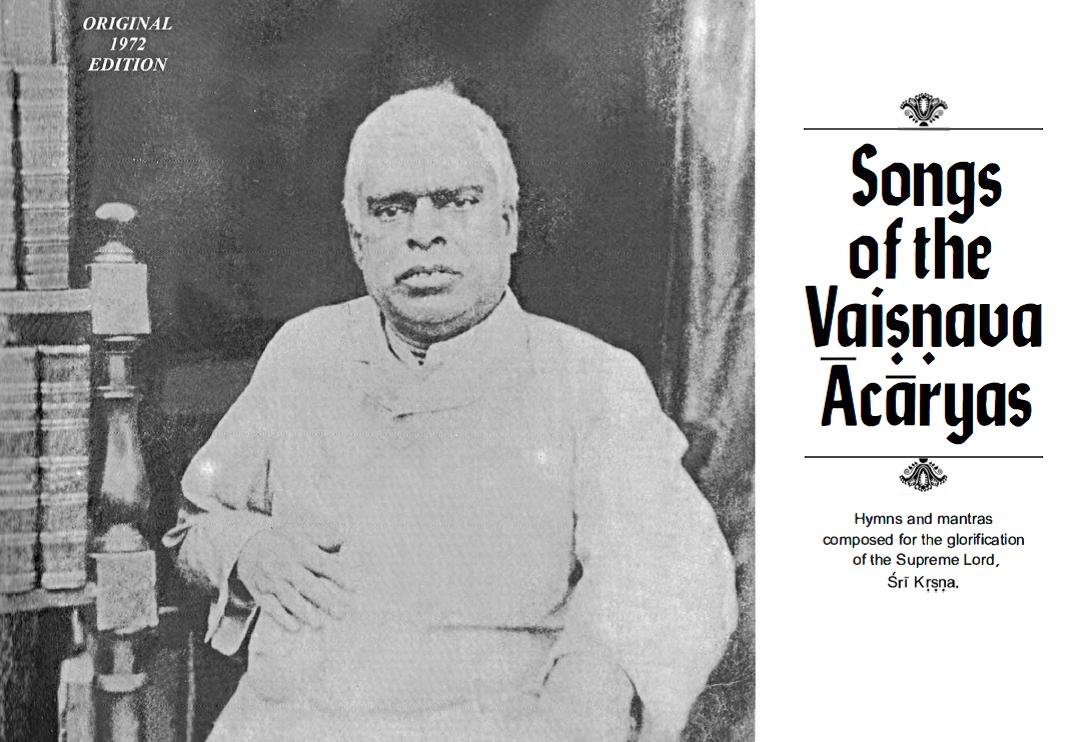
I find it interesting that the older I get, the easier it is to pray. Its not hard, and I kinda enjoy it. It tones down my passionate nature, calms my mind, and makes me feel safe. It is one of my favorite books in our temple room, “The Songs of the Vaisnava Acaryas”. (click on link to download)

Foward to The Songs of the Vaisnava Acaryas

by His Divine Grace A C Bhaktivedanta Swami Prabhupada

The International Society for Krishna Consciousness was established in New York in the year 1966. After my arrival in the United States in September of 1965, I personally underwent a difficult struggle, and in 1966 I rented a storefront and apartment at 26 Second Avenue. When ISKCON was incorporated, a boy named Chuck Barnett joined me, along with a few others, to form the nucleus for the institution’s future development. At this time I used to chant the Hare Kṛṣṇa mahā-mantra underneath a tree in Tompkin’s Square Park in New York. Śrīmān Barnett and another boy, Bruce, were the first to begin dancing in front of me, and others in the audience joined them. The New York Times published a report of this, with our picture and a headline declaring that I was attracting the younger generation to the Hare Kṛṣṇa movement.

Later both Chuck and Bruce, along with others, became my initiated disciples, and still later, in 1970, both took sannyāsa, receiving the names Acyutānanda Svāmī and Brahmānanda Svāmī. Now Brahmānanda is preaching in Africa, and Acyutānanda is preaching in India.

When I became sick in 1967, I left the United States and returned to India. Śrīmān Acyutānanda could not remain separated from me, and therefore he joined me in Vṛndāvana when I was staying there. Since then, Acyutānanda Svāmī has worked very hard in India. He has preached extensively in Calcutta and other parts of Bengal, he has learned how to sing in Bengali and play mṛdaṅga like an expert professional, and now he has compiled this book of Bengali songs with English explanations.

I am greatly pleased to see this collection of songs composed by Ṭhākura Bhaktivinoda, Narottama dāsa, and other great ācāryas of the Gauḍīya Vaiṣṇava community (sampradāya). Songs composed by the ācāryas are not ordinary songs. When chanted by pure Vaiṣṇavas who follow the rules and regulations of Vaiṣṇava character, they are actually effective in awakening the Kṛṣṇa consciousness dormant in every living entity. I have advised Srīmān Acyutānanda Svāmī to sing more songs of the Vaiṣṇava padāvalī and record them in books so that my disciples and others in the Western countries may take advantage of this chanting and thus advance in Krsṇa consciousness more and more.

I confer all my blessings upon Acyutānanda Svāmī for his genuine attempt to advance in Krsṇa consciousness. I hope he will thus advance more and more and never be hampered by māyā. We should always remember the danger of māyā’s influence and endeavor to save ourselves from her great power. We must therefore always merge in the transcendental mellow of kīrtana-rasa, for kīrtana-rasa is the safest situation within this material world. Hare Kṛṣṇa.

A.C. Bhaktivedanta Swami
1974

Bringing People to Srila Prabhupada

Srila Prabhupada on Vyasasana

Recently I was staying at a friends house, and in the room where I was spending the night there was one book by Giriraj Swami entitled “Watering the Seed”. I happened to open it and began reading from the Preface:

…from that first meeting with Srila Prabhupada, my whole life’s purpose became to bring people to meet Srila Prabhupada. And I was able to do that for many years. But when he passed away, I wondered ‘what will be my service now?’. My whole service had been to bring people to Srila Prabhupada.

Now I understand that Srila Prabhupada is always present, and that by speaking of him, hearing about him, remembering him, and, most significantly, by studying his books and following his instructions, we can experience his presence. So I can continue doing what I was doing when he was personally present-introducing soul’s to Srila Prabhupada-and that is what I feel most natural doing. Because I know that somehow or other, if someone comes in touch with Srila Prabhupada, his life will become successful. (Watering the Seed, Preface)

Now, I am always encouraged when I hear my Godbrothers speaking in this way, because this is how I have always felt, and continue to feel. That my main purpose, as a disciple, is to bring people to Srila Prabhupada, and there-by bringing them to Krishna.

The Vaisnava Journal


Our dear departed friend Padmapani Prabhu, is gone but not forgotten, as he has left us with the beautiful web page The Prabhupada Connection, but he has also, as some of the earlier devotees might remember, left us with this fine publication The Vaisnava Journal. I feel it is an important part of our history, and I wanted to be sure it available to all our readers, so we share all 5 issuses as PDF that you can view or save, by clicking on the links. Hare Krishna!


The Vaisnava Journal

by Padmapani Das


Shortly after Srila Prabhupada physically departed from this world, I joined the Middle East program. Since there were no temples in that part of the world, we simply carried on as we had always done—chanting Hare Krishna and worshiping Srila Prabhupada as our guru and the founder-acarya of ISKCON. But while visiting temples in India and Europe for short breaks, I noticed things were becoming increasingly difficult for devotees and the movement. So when the Middle East program had finished its course after five years, I humbly tried to make a positive contribution towards keeping our movement and the devotees together with Srila Prabhupada in the center. The Vaisnava Journal was created and distributed to ISKCON leaders and devotees worldwide with that objective in mind.

At the time we had Back to Godhead magazine and the ISKCON World Review, but neither of these publications addressed the topical issues of the day which were affecting the stability of Srila Prabhupada’s movement. I saw a great need for open and respectful communication in our society, and by Krishna’s grace, devotees of all persuasions and positions responded favorably. We openly discussed vital issues of concern to our movement and many spirited exchanges resulted. Unfortunately after five issues I was no longer able to support the rising publication and mailing costs on my own, so I had to stop work on the journal. However we now have a record of those discussions and our readers can research the contents online. Please click on the links below to access each issue in PDF format.

More

Book Signing Disciples of Srila Prabhupada,,

From the Library of Gargamuni das 1966…

I would like to share a very Special Photo of Srila Prabhupada in the San Francisco temple 1968 signing His name to a set of India published, first canto, Srimad Bhagavatam consisting of three volumes.

There is a backstory that bring back exciting memories to me. When Srila Prabhupada arrived in the USA, He carried with Him 200 sets of these books, which most were sold. The remaining books (assorted volumes) in India were shipped and arrived in the winter of 1966.

In Srila Prabhupada’s Apt. it was me and Brahmananda that unpacked these volumes. They were shipped in thin steel painted black trunks. There were three or four of them and pretty banged-up during shipment. But the books were undamaged. There were only a small number of full sets left, most were 2nd and 3rd volumes of the set. The front-covers were packed separately. And it was my service to carefully put the front jackets on all the books right in front of Srila Prabhupada.

More
Beautiful Reunion

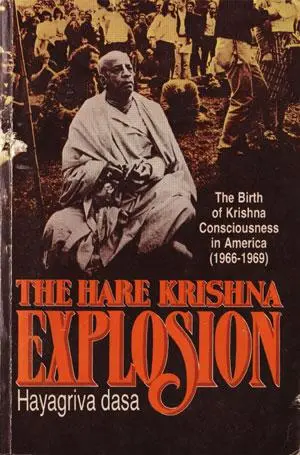
My wife shared this with me, it was a post on Facebook, put up by Govinda dasi. Although I have never personally met Hayagriva Prabhu, I have enjoyed reading his books and articles in Back to Godhead Magizine.

…Srila Prabhupada named him Hayagriva, and used to jokingly say that Hayagriva is like the horse incarnation, and is sent by Krishna to make my books very beautiful and eloquent in English language.

Hari Sauri: There was an emotional reunion this afternoon between Srila Prabhupada and Hayagriva Prabhu. Although he was one of Srila Prabhupada’s first disciples, he has been away from devotional service for some years. He has come now to finish the philosophy book project and to be with Prabhupada for some time. He walked slowly into Prabhupada’s room, his face flushed and his deep voice trembling. “It’s your old Hayagriva, Prabhupada,” he choked out, and fell sobbing to the floor in full length dandavats. Prabhupada sat behind his desk, silent, but clearly moved by the sight of his sometimes – wayward son.

When Hayagriva got up Prabhupada gave him a garland, and remarked to Radhaballabha Dasa and me how Hayagriva had been sent by Krishna to help him spread Krishna consciousness all over the world. In reply, Hayagriva said that he had never forgotten Prabhupada, not even for a day. Prabhupada was deeply affected by this and said that he also had never forgotten Hayagriva. “I was thinking, has Hayagriva gone away? I was thinking like that.” His voice broke and he was unable to speak for a few seconds. Although he tried to check his tears, still some trickled from the corners of his eyes. Then he tipped his head from side to side. “All right,” he said, and we all left.

Prabhupada has so much affection for his disciples – no one can estimate how much. It was very apparent that he never forgets any devotional service that has been rendered to him.

Reference: A Transcendental Diary Volume 2 – Hari Sauri Dasa

New York City Rathayatra Festival

We are planning to go to the New York City Ratha-yatra this year. It will be held on June 14. It has been 49 years since I last attended the Rathayatra in New York City. But that day is still fresh in my memory, for two main reasons. First is that Srila Prabhupada was there Riding on Lady Subadhra’s cart, and the second is I took my first initiation the next day, and was given the name Vyasasan das.

It was also memorable because my dear friend and God brother Jayananda das brahmacari, was there. The following is an interview with Jayananda published in the Back to Godhead Magazine Vol. 12, 6, 1977

.
Interview with Jayananda Prabhu

(Back to Godhead magazine, June 1977)

BTG: Jayananda, how did you first get involved in Krishna consciousness?

Jayananda: I heard Srila Prabhupada speaking in San Francisco, and somehow I knew he didn’t want to cheat me. So I just wanted to work for him.

BTG: And now for ten years you’ve worked on the Ratha-yatra carts.

Jayananda: Yes.

BTG: What were the first Ratha-yatras like?

Jayananda: The first year, 1967, we just rented a flatbed truck and started out in the Haight-Ashbury district of San Francisco. We decorated the truck with flowers and put the Deities on the back, and the girls passed out fruit. A good crowd walked along with us at the beginning, and when we turned off Haight Street a smaller group of maybe fifty people came with us and we went all the way to the beach.

The second year (1968) we made our own cart, with saffron silk canopies, small ones. And we had the parade through Golden Gate Park to the beach. By that time the San Francisco temple had grown a little—we had maybe 30 devotees—and about 100 people came with us through the park. The chanting was very nice that year.

Then in 1969 we built a much bigger cart, with a tall silk canopy, like the ones they build in Jagannath Puri in India. But in 1970 we worked for two months straight and built the three big carts, basically the same ones we use now. Also, we had all kinds of publicity—TV, billboards, posters. And Srila Prabhupada came to that Ratha-yatra. So a lot of people came, maybe 12,000 people. It was big—a tremendous success. We had a few mishaps, though. One cart broke down in the middle of the parade. And it was a bitter cold day. But even though it was so cold at the beach, thousands of people stayed there with us and ate a lot of Krsna prasad (spiritual food offered to Krishna). We brought 20 50-gallon barrels of prasad, and they ate it all.

More

Passing of a Vaisnava

Padmapani Prabhu was a very dear friend, and a dear disciple of Srila Prabhupada who is well known as the web master of the page Prabhupada Connection. He will be greatly missed.

Please join us in prayers for a very special Godbrother, Padmapani Prabhu who just left us in Canada. I never knew him personally, but loved to hear of his daring exploits in the mideast when it was quite a dangerous area! Then I knew him from the marvellous website he managed, The Prabhupada Connection. He’s on the left with Tribhuvanath in Sri Radha Rasabihari Mandir ( Deena Bandhu Das )

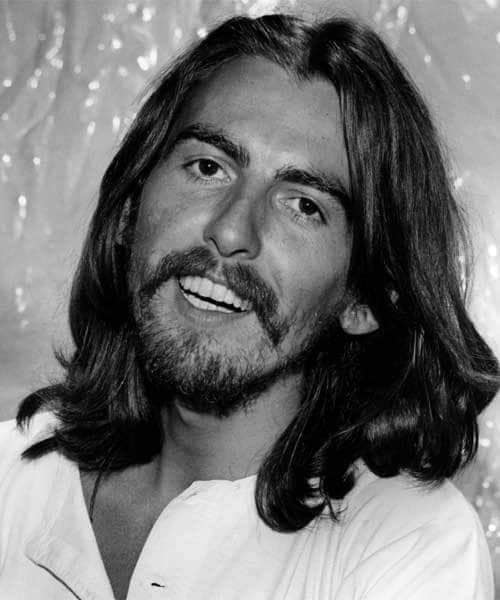
George Harrison Speaks About Srila Prabhupada

George Harrison:

“I liked Prabhupada’s humbleness. I always liked his humility and his simplicity. The servant of the servant of the servant is really what it is, you know. None of us are God—just His servants. He just made me feel so comfortable. I always felt very relaxed with him, and I felt more like a friend. I felt that he was a good friend. Even though he was at the time seventy-nine years old, working practically all through the night, day after day, with very little sleep, he still didn’t come through to me as though he was a very highly educated intellectual being, because he had a sort of childlike simplicity. Which is great, fantastic. Even though he was the greatest Sanskrit scholar and a saint, I appreciated the fact that he never made me feel uncomfortable. In fact, he always went out of his way to make me feel comfortable. I always thought of him as sort of a lovely friend, really, and now he’s still a lovely friend.

“That was the thing about Prabhupada, you see. He didn’t just talk about loving Krishna and getting out of this place, but he was the perfect example. He talked about always chanting, and he was always chanting. I think that that in itself was perhaps the most encouraging thing for me. It was enough to make me try harder, to be just a little bit better. He was a perfect example of everything he preached.

More

Remembering Jayananda


Remembering Jayananda
by Vyasasan das
__________________

There are some things about becoming a devotee I will never forget, for instance; receiving my first book, relishing my first plate of prasadam, seeing the deities in the temple for the first time, meeting Srila Prabhupada, Visnujhana Swami and Jayananda das bramachari.

The first time I meet Jayananda, was in 1975 in San Diego. I had been traveling with the RDTSKP for the last few months, since I joined. I was very much enjoying being a devotee, and traveling and putting on festivals, distributing prasadam, books and the Holy Name. By this time I had meet a number of Sannyasis; including Tamal Krsna Goswami, Gurudas Swami, Tripuari Swami, Vishnujana Swami, etc. and was very impressed by their character, and position.

One morning after Bhagavatam class we were all sitting down on the floor taking our breakfast. I was looking over at all the assembled sannyasis; there must have been seven of them eating together. They all had on nice orange clothing, and were eating off beautiful silver plates, and I was thinking, “Ya, that’s what I want. I want to be a Hare Krishna Sannyasa. Devotees will offer me respectful obeisances when they see me, and I will always get the best accommodations and best prasadam”. So I was thinking like this… when in walks in this guy in a greasy hooded sweatshirt, ripped doti, hands and face covered with dirt and grease, (it turns out he just changed the oil in 6 sankirtan vans), and he walks over to the prasadam table and starts filling a plate.

So I ask the devotee sitting next to me, “Who is that guy, is he supposed to be here?” I thought it was some bum wearing a dhoti. But the devotee replied; “Oh, that’s Jayananda Prabhu, he’s a really advanced devotee”. Well I was looking at Jayananda who was eagerly feasting on the morning prasadam, and I was looking over at the sannyasis who were carefully moving the prasadam around the silver plates, and I just wasn’t that sure?

More

Previous Older Entries

108 Imporant Slokas from the 1972 Bhagavad-gita As It Is

Click on image to go to Post

Click on image to go to Post

The Hare Krishna Cookbook

Songs of the Vaisnava Acaryas

Bhagavad-gita As It Is 1972 Edition “Online”

click on image

click on image to visit site

Srimad Bhagavatam Online

click on image

Raja-Vidya the King of Knowledge

click on image

click on image

Blog Stats

  • 4,880,290 hits

Enter your email address to subscribe to this blog and receive notifications of new posts by email.

Join 3,887 other subscribers

Important Slokas from the Brahma-samhita

click on image

click on image

Slokas from the Sri Isopanisad

click on image

click on image

Prayers By Queen Kunti (Slokas)

click on image

Gajendra’s Prayers of Surrender (Slokas)

click on image

A Short Statement of the Philosophy of Krishna Consciousness

click on image

click on image

July 9th Letter

click on image

click on image

The Hare Krishna Explosion

Reference Material/Study Guide

click on image

click on image

  • LINKS