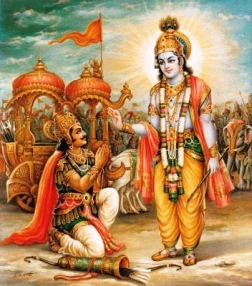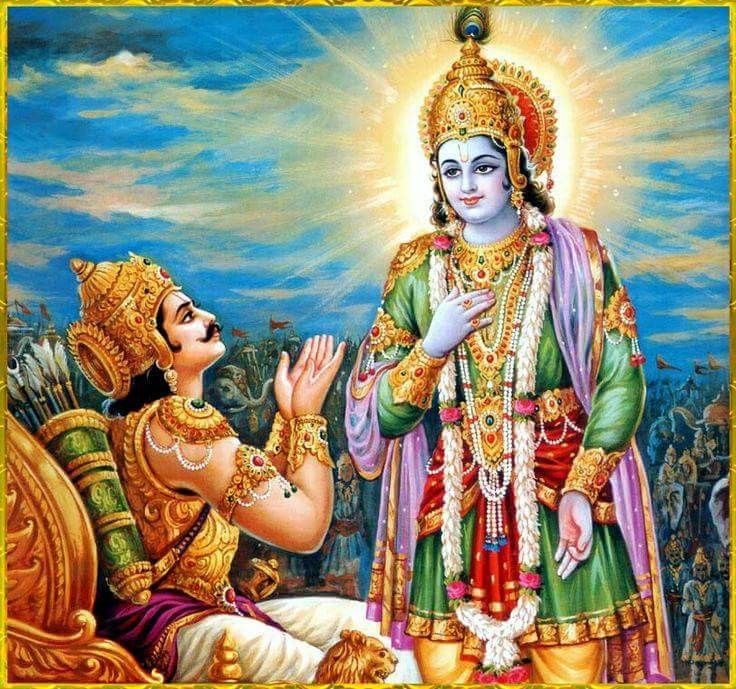
I have often pondered this question that Arjuna asks Krishna:
Arjuna said: O descendant of Vṛṣṇi, by what is one impelled to sinful acts, even unwillingly, as if engaged by force? (Bg. 3.36)
And Krishna answers:
The Blessed Lord said: It is lust only, Arjuna, which is born of contact with the material modes of passion and later transformed into wrath, and which is the all-devouring, sinful enemy of this world. (Bg. 3.37)
A living entity, as part and parcel of the Supreme, is originally spiritual, pure, and free from all material contaminations. Therefore, by nature he is not subjected to the sins of the material world. But when he is in contact with the material nature, he acts in many sinful ways without hesitation, and sometimes even against his will. As such, Arjuna’s question to Kṛṣṇa is very sanguine, as to the perverted nature of the living entities. Although the living entity sometimes does not want to act in sin, he is still forced to act. Sinful actions are not, however, impelled by the Supersoul within, but are due to another cause, as the Lord explains in the next verse. (from purport)
further explained:
…When a living entity comes in contact with the material creation, his eternal love for Kṛṣṇa is transformed into lust, in association with the mode of passion.
…Therefore, lust is the greatest enemy of the living entity, and it is lust only which induces the pure living entity to remain entangled in the material world.
TEXT 36
arjuna uvāca
atha kena prayukto ‘yaṁ
pāpaṁ carati pūruṣaḥ
anicchann api vārṣṇeya
balād iva niyojitaḥ
arjunaḥ uvāca—Arjuna said; atha—hereafter; kena—by what; prayuktaḥ—impelled; ayam—one; pāpam—sins; carati—acts; pūruṣaḥ—a man; anicchan—without desiring; api—although; vārṣṇeya—O descendant of Vṛṣṇi; balāt—by force; iva—as if; niyojitaḥ—engaged.
TRANSLATION
Arjuna said: O descendant of Vṛṣṇi, by what is one impelled to sinful acts, even unwillingly, as if engaged by force?
PURPORT
A living entity, as part and parcel of the Supreme, is originally spiritual, pure, and free from all material contaminations. Therefore, by nature he is not subjected to the sins of the material world. But when he is in contact with the material nature, he acts in many sinful ways without hesitation, and sometimes even against his will. As such, Arjuna’s question to Kṛṣṇa is very sanguine, as to the perverted nature of the living entities. Although the living entity sometimes does not want to act in sin, he is still forced to act. Sinful actions are not, however, impelled by the Supersoul within, but are due to another cause, as the Lord explains in the next verse.
TEXT 37
śrī-bhagavān uvāca
kāma eṣa krodha eṣa
rajo-guṇa-samudbhavaḥ
mahāśano mahā-pāpmā
viddhy enam iha vairiṇam
śrī bhagavān uvāca—the Personality of Godhead said; kāmaḥ—lust; eṣaḥ—all these; krodhaḥ—wrath; eṣaḥ—all these; rajo-guṇa—the mode of passion; samudbhavaḥ—born of; mahā-śanaḥ—all-devouring; mahā-pāpmā—greatly sinful; viddhi—know; enam—this; iha—in the material world; vairiṇam—greatest enemy.
TRANSLATION
The Blessed Lord said: It is lust only, Arjuna, which is born of contact with the material modes of passion and later transformed into wrath, and which is the all-devouring, sinful enemy of this world.
PURPORT
When a living entity comes in contact with the material creation, his eternal love for Kṛṣṇa is transformed into lust, in association with the mode of passion. Or, in other words, the sense of love of God becomes transformed into lust, as milk in contact with sour tamarind is transformed into yogurt. Then again, when lust is unsatisfied, it turns into wrath; wrath is transformed into illusion, and illusion continues the material existence. Therefore, lust is the greatest enemy of the living entity, and it is lust only which induces the pure living entity to remain entangled in the material world. Wrath is the manifestation of the mode of ignorance; these modes exhibit themselves as wrath and other corollaries. If, therefore, the modes of passion, instead of being degraded into the modes of ignorance, are elevated to the modes of goodness by the prescribed method of Iiving and acting, then one can be saved from the degradation of wrath by spiritual attachment.
The Supreme Personality of Godhead expanded Himself into many for His ever-increasing spiritual bliss, and the living entities are parts and parcels of this spiritual bliss. They also have partial independence, but by misuse of their independence, when the service attitude is transformed into the propensity for sense enjoyment, they come under the sway of lust. This material creation is created by the Lord to give a facility to the conditioned souls to fulfill these lustful propensities, and when they are completely baffled by prolonged lustful activities, the living entities begin to inquire about their real position.
This inquiry is the beginning of the Vedānta-sūtras, wherein it is said, athāto brahma-jijñāsā: one should inquire into the Supreme. And the Supreme is defined in Śrīmad-Bhāgavatam as janmādyasya yato ‘nvayād itarataś ca, or, “The origin of everything is the Supreme Brahman.” Therefore, the origin of lust is also in the Supreme. If, therefore, lust is transformed into love for the Supreme, or transformed into Kṛṣṇa consciousness-or, in other words, desiring everything for Kṛṣṇa-then both lust and wrath can be spiritualized. Hanumān, the great servitor of Lord Rama, engaged his wrath upon his enemies for the satisfaction of the Lord. Therefore, lust and wrath, when they are employed in Kṛṣṇa consciousness, become our friends instead of our enemies.
TEXT 38
dhūmenāvriyate vahnir
yathādarśo malena ca
yatholbenāvṛto garbhas
tathā tenedam āvṛtam
dhūmena—by smoke; āvriyate—covered; vahniḥ—fire; yathā—just as; ādarśaḥ—mirror; malena—by dust; ca—also; yathā—just as; ulbena—by the womb; āvṛtaḥ—is covered; garbhaḥ—embryo; tathā-so; tena—by that lust; idam—this; āvṛtam—is covered.
TRANSLATION
As fire is covered by smoke, as a mirror is covered by dust, or as the embryo is covered by the womb, similarly, the living entity is covered by different degrees of this lust.
PURPORT
There are three degrees of covering of the living entity by which his pure consciousness is obscured. This covering is but lust under different manifestations like smoke in the fire, dust on the mirror, and the womb about the embryo. When lust is compared to smoke, it is understood that the fire of the living spark can be a little perceived. In other words, when the living entity exhibits his Kṛṣṇa consciousness slightly, he may be likened to the fire covered by smoke. Although fire is necessary where there is smoke, there is no overt manifestation of fire in the early stage. This stage is like the beginning of Kṛṣṇa consciousness. The dust on the mirror refers to a cleansing process of the mirror of the mind by so many spiritual methods. The best process is to chant the holy names of the Lord. The embryo covered by the womb is an analogy illustrating a helpless position, for the child in the womb is so helpless that he cannot even move. This stage of living condition can be compared to that of the trees. The trees are also living entities, but they have been put in such a condition of life by such a great exhibition of lust that they are almost void of all consciousness. The covered mirror is compared to the birds and beasts, and the smoke covered fire is compared to the human being. In the form of a human being, the living entity may revive a little Kṛṣṇa consciousness, and, if he makes further development, the fire of spiritual life can be kindled in the human form of life. By careful handling of the smoke in the fire, the fire can be made to blaze. Therefore the human form of life is a chance for the living entity to escape the entanglement of material existence. In the human form of life, one can conquer the enemy, lust, by cultivation of Kṛṣṇa consciousness under able guidance.
TEXT 39
āvṛtaṁ jñānam etena
jñānino nitya-vairiṇā
kāma-rūpeṇa kaunteya
duṣpūreṇānalena ca
āvṛtam—covered; jñānam—pure consciousness; etena—by this; jñāninaḥ—of the knower; nitya-vairiṇā—eternal enemy; kāma-rūpeṇa—in the form of lust; kaunteya—O son of Kuntī; duṣpūreṇa—never to be satisfied; analena—by the fire; ca—also.
TRANSLATION
Thus, a man’s pure consciousness is covered by his eternal enemy in the form of lust, which is never satisfied and which burns like fire.
PURPORT
It is said in the Manu-smṛti that lust cannot be satisfied by any amount of sense enjoyment, just as fire is never extinguished by a constant supply of fuel. In the material world, the center of all activities is sex, and thus this material world is called maithuṇya-āgāra, or the shackles of sex life. In the ordinary prison house, criminals are kept within bars; similarly, the criminals who are disobedient to the laws of the Lord are shackled by sex life. Advancement of material civilization on the basis of sense gratification means increasing the duration of the material existence of a living entity. Therefore, this lust is the symbol of ignorance by which the living entity is kept within the material world. While one enjoys sense gratification, it may be that there is some feeling of happiness, but actually that so-called feeling of happiness is the ultimate enemy of the sense enjoyer.
TEXT 40
indriyāṇi mano buddhir
asyādhiṣṭhānam ucyate
etair vimohayaty eṣa
jñānam āvṛtya dehinam
indriyāṇi—the senses; manaḥ—the mind; buddhiḥ—the intelligence; asya—of the lust; adhiṣṭhānam—sitting place; ucyate—called; etaiḥ—by all these; vimohayati—bewilders; eṣaḥ—of this; jñānam—knowledge; āvṛtya—covering; dehinam—the embodied.
TRANSLATION
The senses, the mind and the intelligence are the sitting places of this lust, which veils the real knowledge of the living entity and bewilders him.
PURPORT
The enemy has captured different strategic positions in the body of the conditioned soul, and therefore Lord Kṛṣṇa is giving hints of those places, so that one who wants to conquer the enemy may know where he can be found. Mind is the center of all the activities of the senses, and thus the mind is the reservoir of all ideas of sense gratification; and, as a result, the mind and the senses become the repositories of lust. Next, the intelligence department becomes the capital of such lustful propensities. Intelligence is the immediate next-door neighbor of the spirit soul. Lusty intelligence influences the spirit soul to acquire the false ego and identify itself with matter, and thus with the mind and senses. The spirit soul becomes addicted to enjoying the material senses and mistakes this as true happiness. This false identification of the spirit soul is very nicely explained in the Śrīmad-Bhāgavatam:
yasyātma-buddhiḥ kuṇāpe tri-dhātuke
sva-dhīḥ kalatrādiṣu bhauma idyadhīḥ
yat-tīrtha-buddhiḥ salite na karhicij
janeṣv abhijñeṣu sa eva gokharaḥ.
“A human being who identifies this body made of three elements with his self, who considers the by-products of the body to be his kinsmen, who considers the land of birth as worshipable, and who goes to the place of pilgrimage simply to take a bath rather than meet men of transcendental knowledge there, is to be considered as an ass or a cow.”
TEXT 41
tasmāt tvam indriyāṇy ādau
niyamya bharatarṣabha
pāpmānaṁ prajahi hy enaṁ
jñāna-vijñāna-nāśanam
tasmāt—therefore; tvam-you; indriyāṇi—senses; ādau—in the beginning; niyamya—by regulating; bharatarṣabha—O chief amongst the descendants of Bharata; pāpmānam—the great symbol of sin; prajahi—curb; hi—certainly; enam—this; jñāna—knowledge; vijñāna—scientific knowledge of the pure soul; nāśanam—destroyer.
TRANSLATION
Therefore, O Arjuna, best of the Bhāratas, in the very beginning curb this great symbol of sin [lust] by regulating the senses, and slay this destroyer of knowledge and self-realization.
PURPORT
The Lord advised Arjuna to regulate the senses from the very beginning so that he could curb the greatest sinful enemy, lust, which destroys the urge for self-realization, and specifically, knowledge of the self. Jñānam refers to knowledge of self as distinguished from non-self, or, in other words, knowledge that the spirit soul is not the body. Vijñānam refers to specific knowledge of the spirit soul and knowledge of one’s constitutional position and his relationship to the Supreme Soul. It is explained thus in the Śrīmad-Bhāgavatam: jñānaṁ parama-guhyaṁ me yad-vijñāna-samanvitam / sarahasyaṁ tad-aṅgaṁ ca gṛhāna gaditaṁ mayā: “The knowledge of the self and the Supreme Self is very confidential and mysterious, being veiled by māyā, but such knowledge and specific realization can be understood if it is explained by the Lord Himself.” Bhagavad-gītā gives us that knowledge, specifically knowledge of the self. The living entities are parts and parcels of the Lord, and therefore they are simply meant to serve the Lord. This consciousness is called Kṛṣṇa consciousness. So, from the very beginning of life one has to learn this Kṛṣṇa consciousness, and thereby one may become fully Kṛṣṇa conscious and act accordingly.
Lust is only the perverted reflection of the love of God which is natural for every living entity. But if one is educated in Kṛṣṇa consciousness from the very beginning, that natural love of God cannot deteriorate into lust. When love of God deteriorates into lust, it is very difficult to return to the normal condition. Nonetheless, Kṛṣṇa consciousness is so powerful that even a late beginner can become a lover of God by following the regulative principles of devotional service. So, from any stage of life, or from the time of understanding its urgency, one can begin regulating the senses in Kṛṣṇa consciousness, devotional service of the Lord, and turn the lust into love of Godhead-the highest perfectional stage of human life.