Well today is my birthday. 72 years ago on this day I was in a small baby’s body, but today I am in an old man’s body. But I’m still the same person, although it seems like I have lived many different lives, as a child, as a student, as a devotee, as a husband and father, grandfather, and retired woodworker. Lived and traveled to so many places, had so many different life experiences, and so it seems, I have lived many lives.
I am reminded of some of the famous important verses from the Bhagavad-gita:
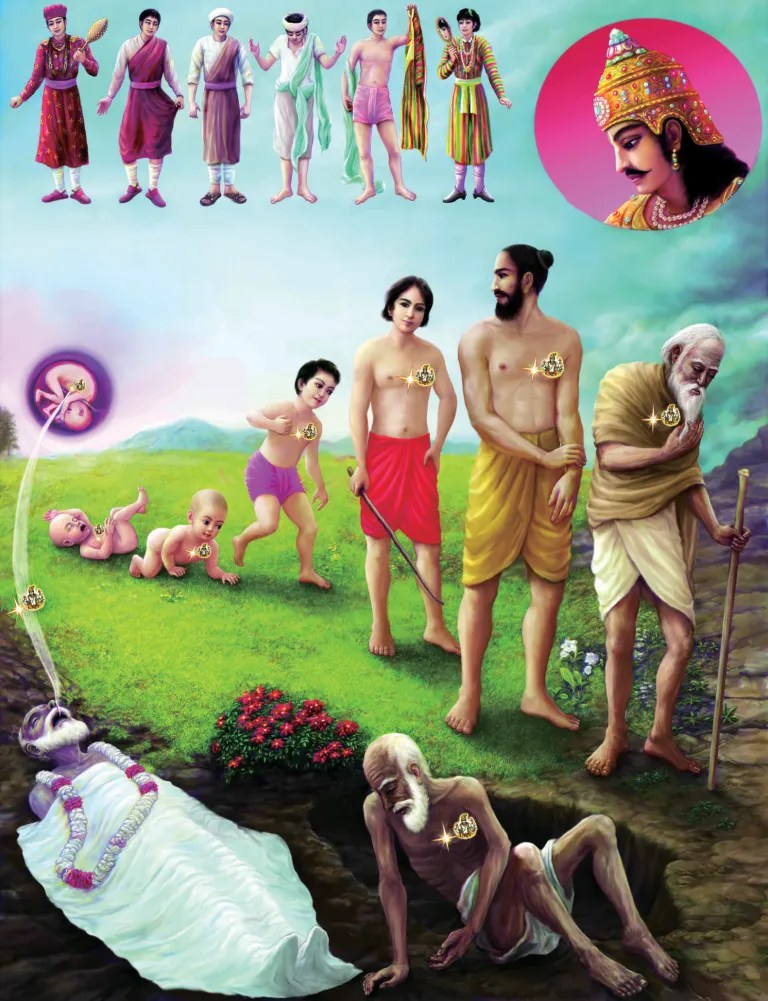
As the embodied soul continually passes, in this body, from boyhood to youth to old age, the soul similarly passes into another body at death. The self-realized soul is not bewildered by such a change. (Bg 2.13)
For the soul there is never birth nor death. Nor, having once been, does he ever cease to be. He is unborn, eternal, ever-existing, undying and primeval. He is not slain when the body is slain. (Bg 2.20)
Full texts and purports will follow at end of post, but I wanted to mention some well known persons who I share a birthday with.
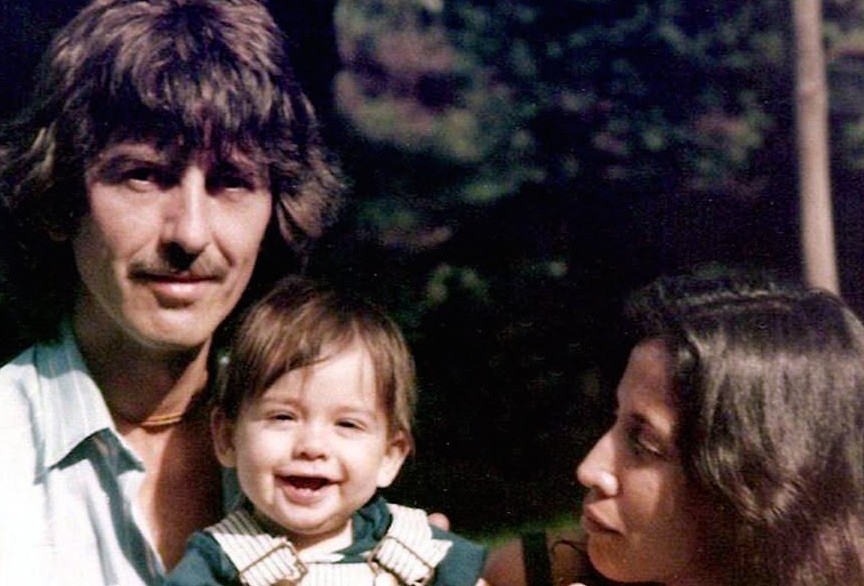
On this day in 1978, Dhani Harrison appeared, who we all know as the son of George and Olivia Harrison, turns 48 today.
And one of my favorite musicians Jerry Garcia was born on August 1, 1942, in San Francisco, California. He was the co-founder, lead guitarist, and vocalist of the Grateful Dead.

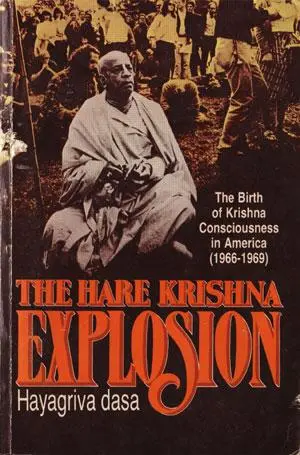
Jerry Garcia and Srila Prabhupada intersected through 1960’s counterculture, notably via the Grateful Dead playing at the 1967 Mantra-Rock concert. The Grateful Dead performed alongside Big Brother and the Holding Company and Allen Ginsberg at the historic San Francisco Avalon Ballroom benefit concert, which helped introduce A. C. Bhaktivedanta Swami and the Hare Krishna Movement to the West coast.
Bhagavad-gita As It Is
by His Divine Grace A. C. Bhaktivedanta Swami
dehino ‘smin yathā dehe
kaumāraṁ yauvanaṁ jarā
tathā dehāntara-prāptir
dhīras tatra na muhyati
dehinaḥ—of the embodied; asmin—in this; yathā—as; dehe—in the body; kaumāram—boyhood; yauvanam—youth; jarā—old age; tathā—similarly; dehāntara—transference of the body; prāptiḥ—achievement; dhīraḥ—the sober; tatra—thereupon; na—never; muhyati—deluded.
TRANSLATION
As the embodied soul continually passes, in this body, from boyhood to youth to old age, the soul similarly passes into another body at death. The self-realized soul is not bewildered by such a change. (Bg. 2.13)
PURPORT
Since every living entity is an individual soul, each is changing his body every moment, manifesting sometimes as a child, sometimes as a youth, and sometimes as an old man. Yet the same spirit soul is there and does not undergo any change. This individual soul finally changes the body at death and transmigrates to another body; and since it is sure to have another body in the next birth-either material or spiritual-there was no cause for lamentation by Arjuna on account of death, neither for Bhīṣma nor for Droṇa, for whom he was so much concerned. Rather, he should rejoice for their changing bodies from old to new ones, thereby rejuvenating their energy. Such changes of body account for varieties of enjoyment or suffering, according to one’s work in life. So Bhīṣma and Droṇa, being noble souls, were surely going to have either spiritual bodies in the next life, or at least life in heavenly bodies for superior enjoyment of material existence. So, in either case, there was no cause of lamentation.
Any man who has perfect knowledge of the constitution of the individual soul, the Supersoul, and nature-both material and spiritual-is called a dhīra or a most sober man. Such a man is never deluded by the change of bodies. The Māyāvādī theory of oneness of the spirit soul cannot be entertained on the ground that spirit soul cannot be cut into pieces as a fragmental portion. Such cutting into different individual souls would make the Supreme cleavable or changeable, against the principle of the Supreme Soul being unchangeable.
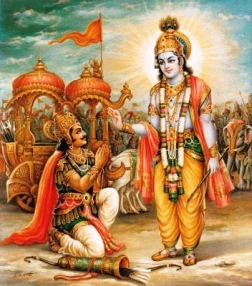
As confirmed in the Gītā, the fragmental portions of the Supreme exist eternally (sanātana) and are called kṣara; that is, they have a tendency to fall down into material nature. These fragmental portions are eternally so, and even after liberation, the individual soul remains the same-fragmental. But once liberated, he lives an eternal life in bliss and knowledge with the Personality of Godhead. The theory of reflection can be applied to the Supersoul who is present in each and every individual body and is known as the Paramātmā, who is different from the individual living entity. When the sky is reflected in water, the reflections represent both the sun and the moon and the stars also. The stars can be compared to the living entities and the sun or the moon to the Supreme Lord. The individual fragmental spirit soul is represented by Arjuna, and the Supreme Soul is the Personality of Godhead Śrī Kṛṣṇa. They are not on the same level, as it will be apparent in the beginning of the Fourth Chapter. If Arjuna is on the same level with Kṛṣṇa, and Kṛṣṇa is not superior to Arjuna, then their relationship of instructor and instructed becomes meaningless. If both of them are deluded by the illusory energy (māyā), then there is no need of one being the instructor and the other the instructed. Such instruction would be useless because, in the clutches of māyā, no one can be an authoritative instructor. Under the circumstances, it is admitted that Lord Kṛṣṇa is the Supreme Lord, superior in position to the living entity, Arjuna, who is a forgotten soul deluded by māyā.
na jāyate mriyate vā kadācin
nāyaṁ bhūtvā bhavitā vā na bhūyaḥ
ajo nityaḥ śāśvato ‘yaṁ purāṇo
na hanyate hanyamāne śarīre
na—never; jāyate—takes birth; mriyate—never dies; vā—either; kadācit—at any time (past, present or future); na—never; ayam—this; bhūtvā—came into being; bhavitā—will come to be; vā—or; na—not; bhūyaḥ—or has come to be; ajaḥ—unborn; nityaḥ—eternal; śāśvataḥ—permanent; ayam—this; purāṇaḥ—the oldest; na—never; hanyate—is killed; hanyamāne—being killed; śarīre—by the body.
TRANSLATION
For the soul there is never birth nor death. Nor, having once been, does he ever cease to be. He is unborn, eternal, ever-existing, undying and primeval. He is not slain when the body is slain. (Bg. 2.20)
PURPORT
Qualitatively, the small atomic fragmental part of the Supreme Spirit is one with the Supreme. He undergoes no changes like the body. Sometimes the soul is called the steady, or kūṭastha. The body is subject to six kinds of transformations. It takes its birth in the womb of the mother’s body, remains for some time, grows, produces some effects, gradually dwindles, and at last vanishes into oblivion. The soul, however, does not go through such changes. The soul is not born, but, because he takes on a material body, the body takes its birth. The soul does not take birth there, and the soul does not die. Anything which has birth also has death. And because the soul has no birth, he therefore has no past, present or future. He is eternal, ever-existing, and primeval-that is, there is no trace in history of his coming into being. Under the impression of the body, we seek the history of birth, etc., of the soul. The soul does not at any time become old, as the body does. The so-called old man, therefore, feels himself to be in the same spirit as in his childhood or youth. The changes of the body do not affect the soul. The soul does not deteriorate like a tree, nor anything material. The soul has no by-product either. The by-products of the body, namely children, are also different individual souls; and, owing to the body, they appear as children of a particular man. The body develops because of the soul’s presence, but the soul has neither offshoots nor change. Therefore, the soul is free from the six changes of the body.
In the Kaṭha Upaniṣad also we find a similar passage which reads:
na jāyate mriyate vā vipaścin
nāyaṁ kutaścin na vibhūva kaścit
ajo nityaḥ śāśvato ‘yaṁ purāṇo
na hanyate hanyamāne śarīre.
(Kaṭha 1.2.18)
The meaning and purport of this verse is the same as in the Bhagavad-gītā, but here in this verse there is one special word, vipaścit, which means learned or with knowledge.
The soul is full of knowledge, or full always with consciousness. Therefore, consciousness is the symptom of the soul. Even if one does not find the soul within the heart, where he is situated, one can still understand the presence of the soul simply by the presence of consciousness. Sometimes we do not find the sun in the sky owing to clouds, or for some other reason, but the light of the sun is always there, and we are convinced that it is therefore daytime. As soon as there is a little light in the sky early in the morning, we can understand that the sun is in the sky. Similarly, since there is some consciousness in all bodies-whether man or animal-we can understand the presence of the soul. This consciousness of the soul is, however, different from the consciousness of the Supreme because the supreme consciousness is all-knowledge-past, present and future. The consciousness of the individual soul is prone to be forgetful. When he is forgetful of his real nature, he obtains education and enlightenment from the superior lessons of Kṛṣṇa. But Kṛṣṇa is not like the forgetful soul. If so, Kṛṣṇa’s teachings of Bhagavad-gītā would be useless.
There are two kinds of souls-namely the minute particle soul (aṇu-ātmā) and the Supersoul (the vibhu-ātmā). This is also confirmed in the Kaṭha Upaniṣad in this way:
aṇor aṇīyān mahato mahīyān
ātmāsya jantor nihito guhāyām
tam akratuḥ paśyati vīta-śoko
dhātuḥ prasādān mahimānam ātmanaḥ
(Kaṭha 1.2.20)
“Both the Supersoul [Paramātmā] and the atomic soul [jīvātmā] are situated on the same tree of the body within the same heart of the living being, and only one who has become free from all material desires as well as lamentations can, by the grace of the Supreme, understand the glories of the soul.” Kṛṣṇa is the fountainhead of the Supersoul also, as it will be disclosed in the following chapters, and Arjuna is the atomic soul, forgetful of his real nature; therefore he requires to be enlightened by Kṛṣṇa, or by His bona fide representative (the spiritual master).