I guess you could say I have reached old age. I am 72 now and am semi-retired. It is nice to have more free time, where I don’t need to drive to work every morning, where I’m not under the control of some boss, and can pretty much decide what I want to do every day. But this so called free time in old age is not really freedom. Every day I look at the calendar, to check my appointments. One day it is the dentist to get my lose teeth pulled and fitted for dentures, or to again see the doctor about my different medical conditions, and believe me none of this is free.
Then there is the pain and suffering. There is a tiredness and weakness and in some, a loss of memory. These are what I refer to as the indignities of old age.
But in reality we are not this body. We are Spirit soul.
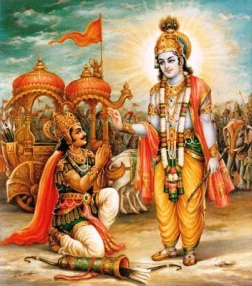
“For the soul there is never birth or death. Nor, having once been, does he ever cease to be. He is unborn, eternal, ever-existing, undying and primeval. He is not slain when the body is slain.” (Bg 2.20)
As the embodied soul continually passes, in this body, from boyhood to youth to old age, the soul similarly passes into another body at death. The self-realized soul is not bewildered by such a change. (Bg 2.13)
One should try to understand the distress of accepting birth, death, old age and disease. There are descriptions in various Vedic literatures of birth. In the Srimad Bhagavatam the world of the unborn, the child’s stay in the womb of the mother, its suffering, etc., are all very graphically described. It should be thoroughly understood that birth is distressful. Because we forget how much distress we have suffered within the womb of the mother, we do not make any solution to the repetition of birth and death. Similarly at the time of death, there are all kinds of sufferings, and they are also mentioned in the authoritative scriptures. These should be discussed. And as far as disease and old age are concerned, everyone gets practical experience. No one wants to be diseased, and no one wants to become old, but there is no avoiding these. Unless we have a pessimistic view of this material life, considering the distresses of birth, death, old age and disease, there is no impetus for our making advancement in spiritual life. (from purport to Bg 13. 8-12)
Intelligent persons who are endeavoring for liberation from old age and death take refuge in Me in devotional service. They are actually Brahman because they entirely know everything about transcendental and fruitive activities. (Bg 7.29)
Purport
Birth, death, oldage and diseases affect this material body, but not the spiritual body. There is no birth, death, old age and disease for the spiritual body, so one who attains a spiritual body, becomes one of the associates of the Supreme Personality of Godhead and engages in eternal devotional service, is really liberated. Aham brahmāsmi: I am spirit. It is said that one should understand that he is Braham—spirit soul. This Brahman conception of life is also in devotional service, as described in this verse. The pure devotees are transcendentally situated on the Brahman platform, and they know everything about transcendental and material activities.
When the embodied being is able to transcend these three modes, he can become free from birth, death, oldage and their distresses and can enjoy nectar even in this life. (Bg 14.20)
Purport
How one can stay in the transcendental position, even in this body, in full Krsna consciousness, is explained in this verse. The Sanskrit word dehi means embodied. Although one is within this material body, by his advancement in spiritual knowledge he can be free from the influence of the modes of nature. He can enjoy the happiness of spiritual life even in this body because, after leaving this body, he is certainly going to the spiritual sky. But even in this body he can enjoy spiritual happiness. In other words, devotional service in Kṛṣṇa consciousness is the sign of liberation from this material entanglement, and this will be explained in the Eighteenth Chapter. When one is freed from the influence of the modes of material nature, he enters into devotional service.
One who is intelligent should be eager to solve these four principal problems—birth, death, old age and disease. No one wants to die, but there is no remedy. Everyone has to die… . There is no stoppage of death, and there is no stoppage of birth. Nor can diseases be stopped, nor can old age, despite all of the latest inventions in medicine.
…where is the solution to these four problems of birth, death, old age and disease? That solution is Krsna consciousness.
“One who knows the transcendental nature of My appearance and activities does not, upon leaving the body, take his birth again in this material world, but attains My eternal abode, O Arjuna.” (Bg. 4.9)