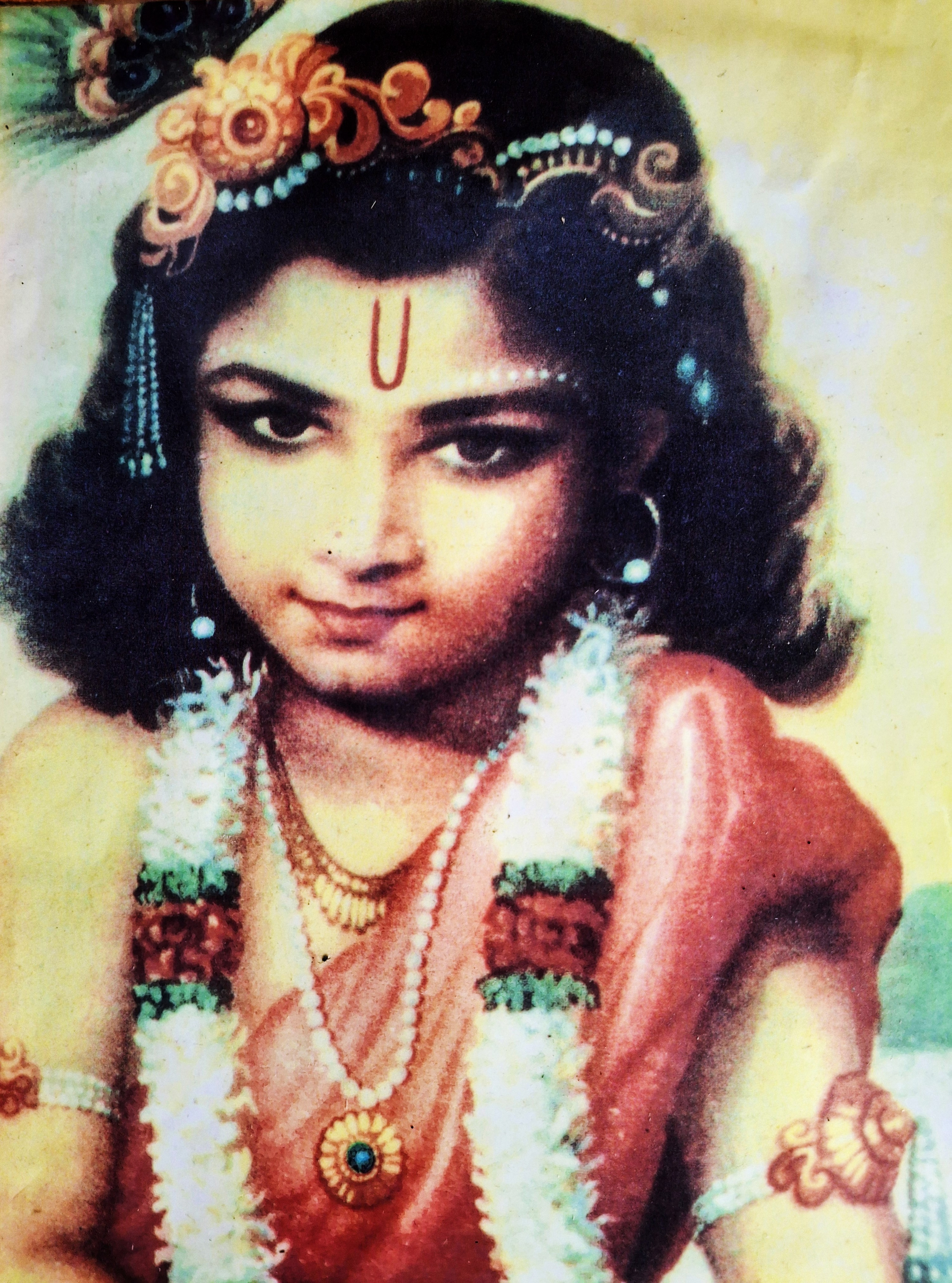
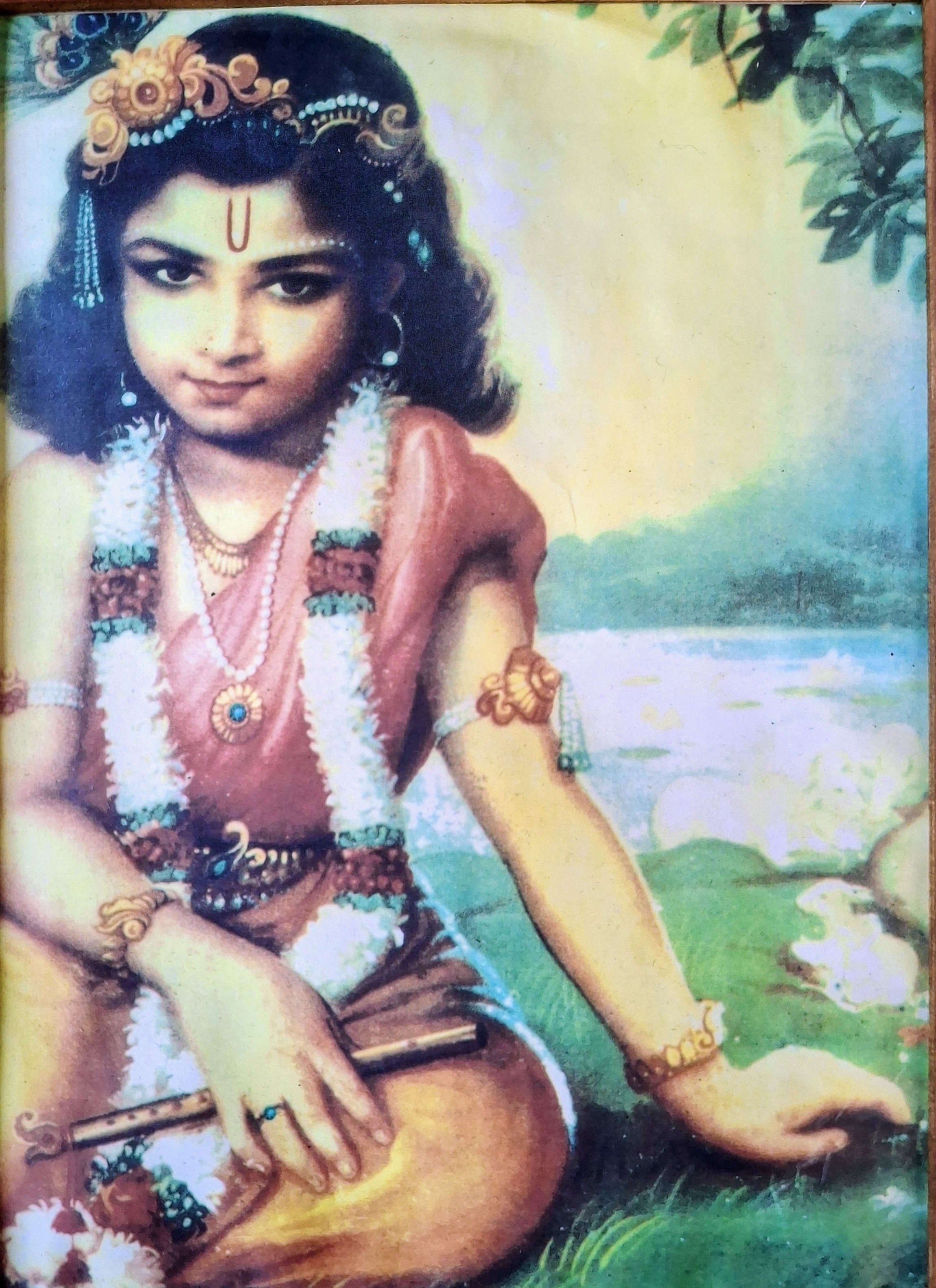
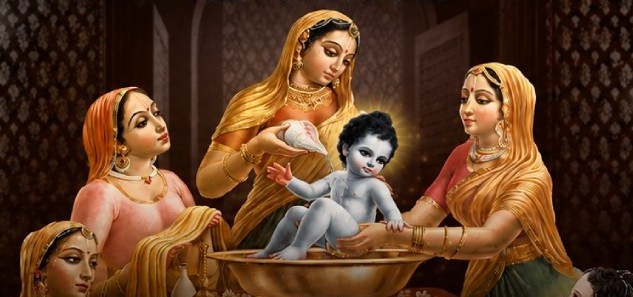
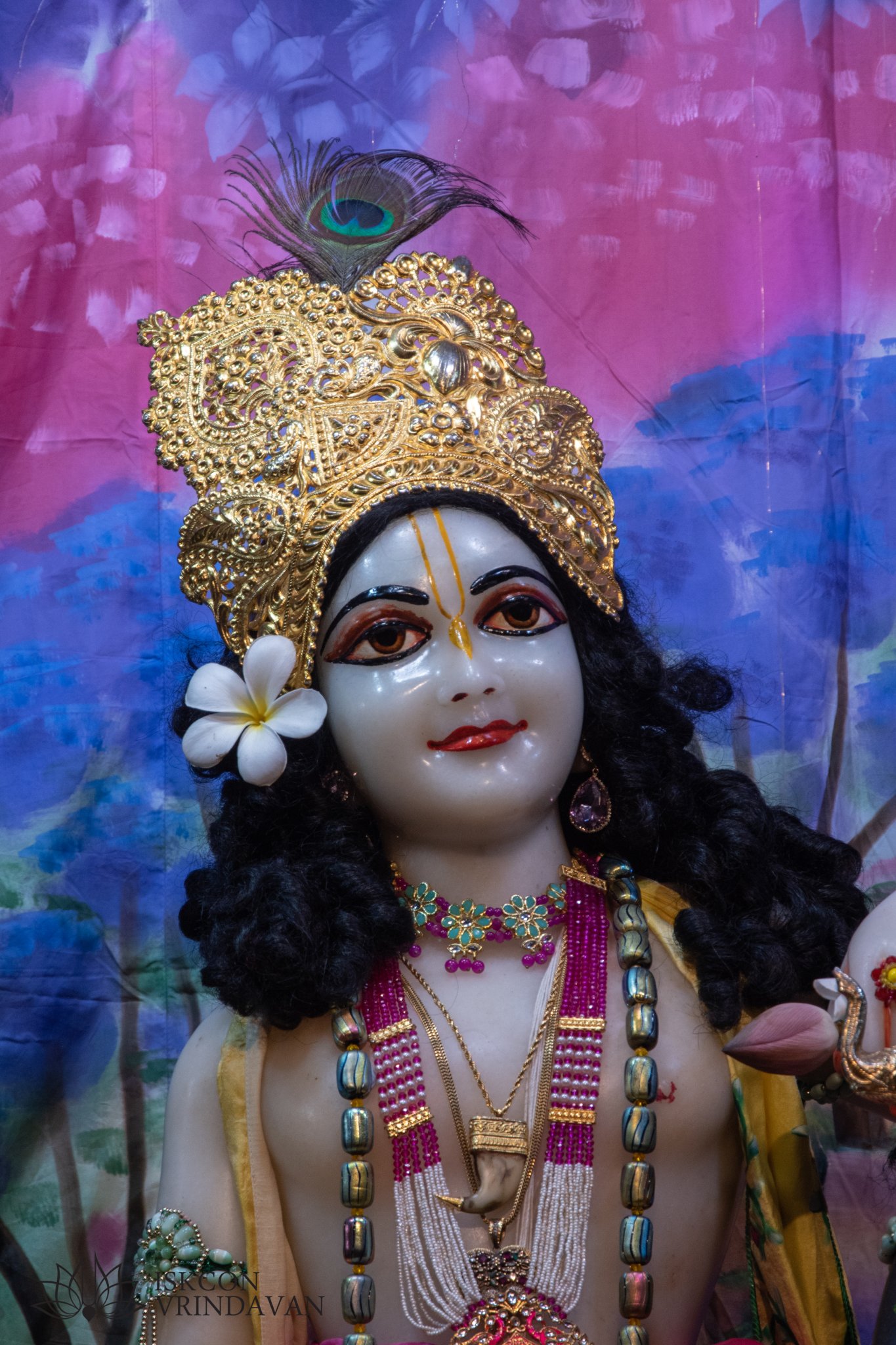
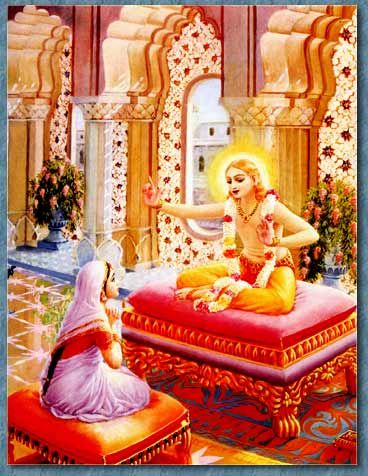
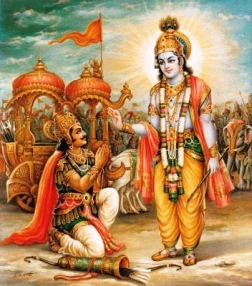
This is probably my favorite picture in our temple room. I don’t know much about the history of it, where it came from or how it appeared in our home, but it has always been hanging in our temple room. My wife Lokadrsti devi dasi, told me that this is a picture of Lord Caitanya in his childhood mood as Nimai. That’s about all I know, but I am enchanted by this painting, it is so beautiful!
The early pastimes of Lord Caitanya can be found in Adi-lila Volume 3, Chapter 13 of the Sri Caitanya-caritamrta. You can click on the following link to read the entire chapter.
Sri Caitanya-caritamrta
By His Divine Grace A. C. Bhaktivedanta Swami Prabhupada
The Advent of Lord Śrī Caitanya MahāprabhuCc. Ādi 13
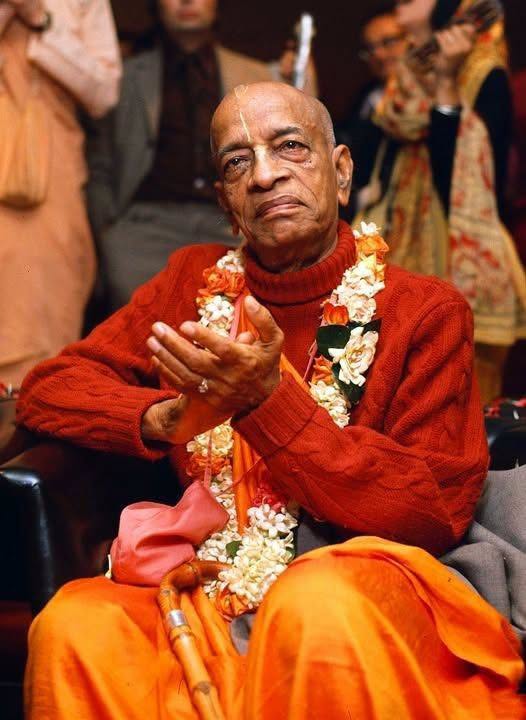
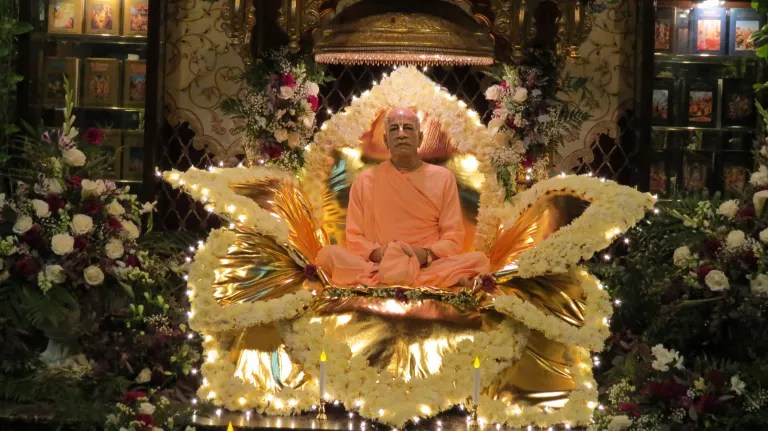
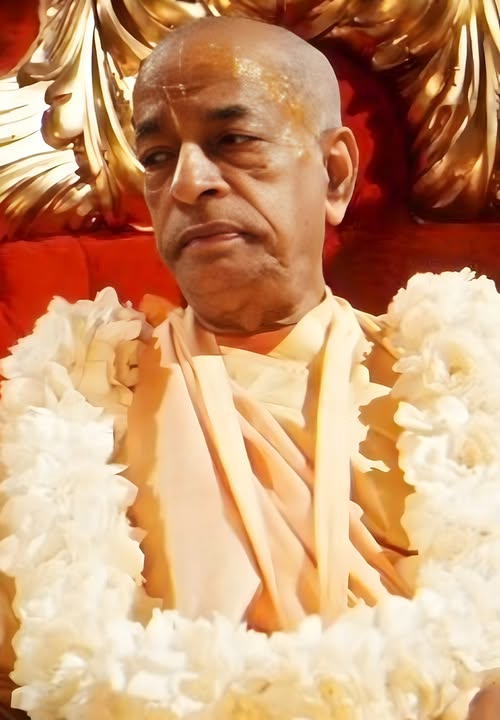
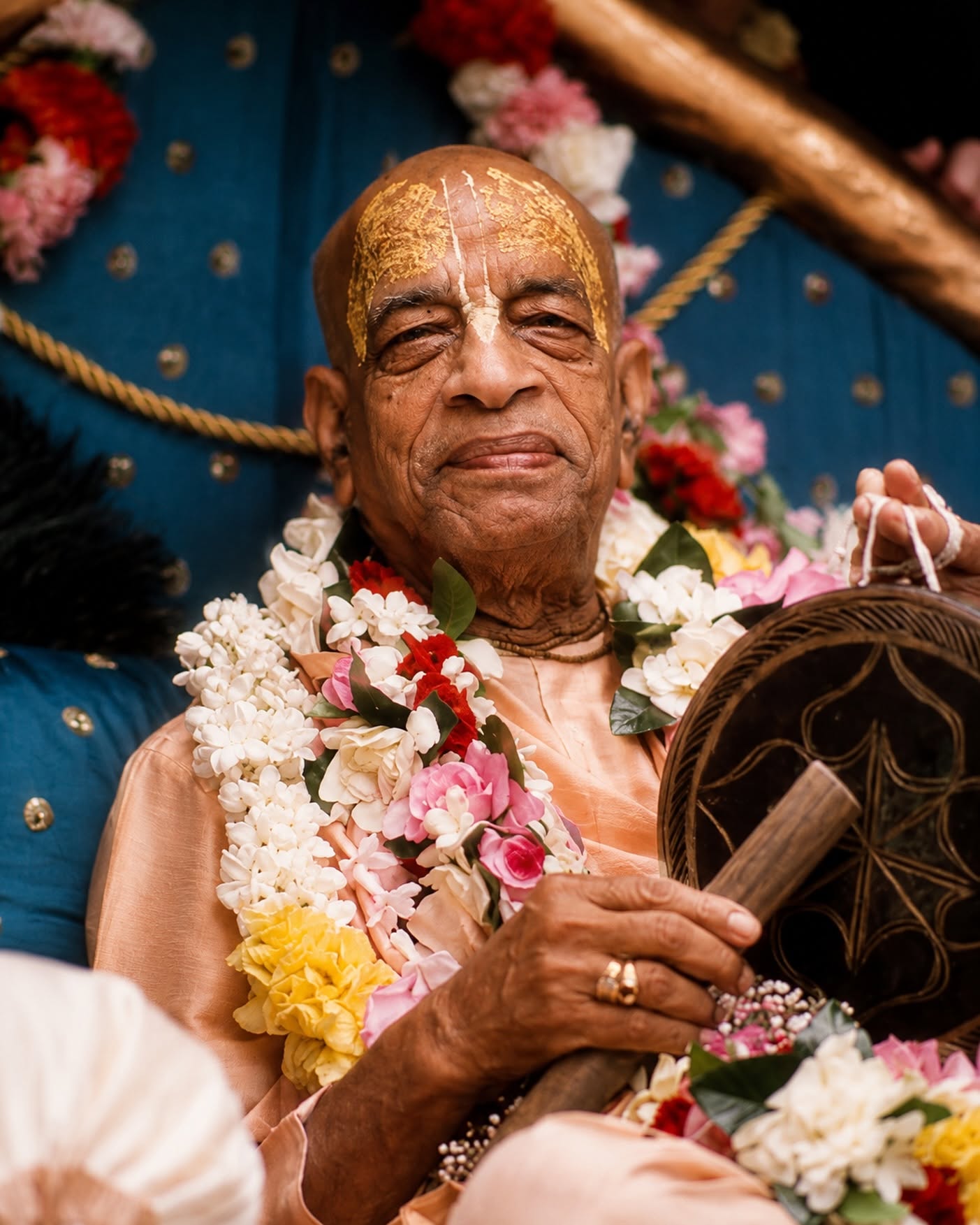
Today is the Apperancee Day of Our Beloved Spiritual Master, His Divine Grace A.C. Bhaktivedanta Swami Prabhupada. The Founder-Acarya of the International Society for Krishna Consciousness. We offer our profound gratitude and respectful obeisances. All Glories to Srila Prabhupada!
Vyasa-Puja: The Most Blessed Event
Dear Srila Prabhupada
So today, on this Most Blessed day, Your Appearance day celebration, Please accept my humble obeisances again and again, and kindly forgive my offenses.
On this auspicious day I have come with this offering just to worship you. On this day, and every day, I am filled with a sense of gratitude and wonder. I cannot even imagine where my life would be today, if you had not appeared and blessed us all with your divine mercy.
The fact that you have always resided in my heart, and have been my most constant friend and ever well-wisher, even without your physical presence, proves our eternal relationship with you. So many friends and family have come and gone, but you Srila Prabhupada, have remained in my life as the one constant in my life, I could always turn to.
You are present in your vani; your books and instructions. You are present still in your pictures and murti’s. You live in the hearts of your sincere devotees. You have touched us all so deeply; we cannot help but remember you. Srila Prabhupa, I am most unworthy to have received your mercy, and because of knowing my insignificance, it has caused me to be even more grateful and appreciative of your blessings.
“Indeed, I am just like a dwarf who wants to capture the moon. Although I am completely unfit, a desire to receive Your mercy is awakening within my mind.”
In writing this homage, I am reminded of a dream I had recently. In my dream you were reclining on your right side, propped up on your elbow and I was kneeling down in front of you. I said “Srila Prabhupada, my Krsna Consciousness is still very child-like”. Your face lit up and your Lotus eyes became very large.“Oh!” You said. “Sometimes when I see your picture, I began to cry” I replied. You leaned forward and very gravely but kindly said, “Yes, it is alright to have love and affection for your Spiritual Master”. I awoke from the dream and offered my obeisances thinking of your extraordinary magnanimity and kindness and your ability to ease our suffering and allow us to love you even more.
So on this Most Blessed day, Your Appearance day celebration, Please accept my humble obeisance again and again, kindly forgive my offenses, and continue to guide me as my captain with your books as maps, to steer me through the rough waters of this dangerous age of Kali
Begging to remain your eternal servant Vyasasan das
Please accept my humble obeisances at your lotus feet.
Srila Prabhupada you are not a mundane philanthropist or welfare worker.
You are not interested on merging into the brahman effulgence, nor interested in material honor or reputation.
You are the most exalted personality who wants to show mercy upon the conditioned souls
You are very much aggrieved to see the suffering of others.
By your presence the whole world has benefited and your heart is always filled with compassion for the conditioned souls.
You were prepared to risk everything to rescue the condition souls from the material existence and the medicine you gave is to chant Hare Krsna,Hare Krsna, Krsna Krsna, Hare Hare, Hare Rama, Hare Rama, Rama Rama Hare Hare.
The entire world is purified by the APPEARANCE of such a great devotee.
“One who is brought under the lotus feet of the Lord by the endeavor of the Lord’s servant, the spiritual master is certainly immediately purified, however lowborn he may be. He becomes eligible to return home, back to Godhead.” (SB. 2. 14-18)
Thank you,Srila Prabhuapada for coming to save us.
Now it is up to me to take the medicine you have given seriously.
Today we celebrate the Appearance of Lord Krishna (Janmastami) with a full day fast, untill midnight.Lord Krishna’s birth is commemorated at midnight with devotional songs (bhajans), followed bya small ekadasi vegetarian feast.
Janmashtami means the celebration of the birth of Lord Krishna, derived from the Sanskrit words “janma” (birth) and “ashtami” (the eighth day)
On this day we like to read from the Krsna Book, so we have included an excerpt from the Krsna book, chapter 5 entitled “Meeting of Nanda and Vasudeva”.
KRSNA The Supreme Personality of Godhead
By His Divne Grace A. C. Bhaktivedanta Swami Prabhupada
Although Kṛṣṇa was the real son of Vasudeva and Devakī, because of Kaṁsa’s atrocious activities Vasudeva could not enjoy the birth ceremony of his son. But Nanda Mahārāja, the foster father, celebrated the birth ceremony of Kṛṣṇa very joyfully. The next day, it was declared that a male child was born of Yaśodā. According to Vedic custom, Nanda Mahārāja called for learned astrologers and brāhmaṇas to perform the birth ceremony. After the birth of a child, the astrologers calculate the moment of the birth and make a horoscope of the child’s future life. Another ceremony takes place after the birth of the child: the family members take baths, cleanse themselves and decorate themselves with ornaments and garlands; then they come before the child and the astrologer to hear of the future life of the child. Nanda Mahārāja and other members of the family dressed and sat down in front of the birth place. All the brāhmaṇas who were assembled there on this occasion chanted auspicious mantras, according to the rituals, while the astrologers performed the birth ceremony. All the demigods are also worshiped on this occasion, as well as the forefathers of the family. Nanda Mahārāja distributed 200,000 well decorated, dressed and ornamented cows to the brāhmaṇas. He not only gave cows in charity, but hills of grains, decorated with golden-bordered garments and many ornaments.
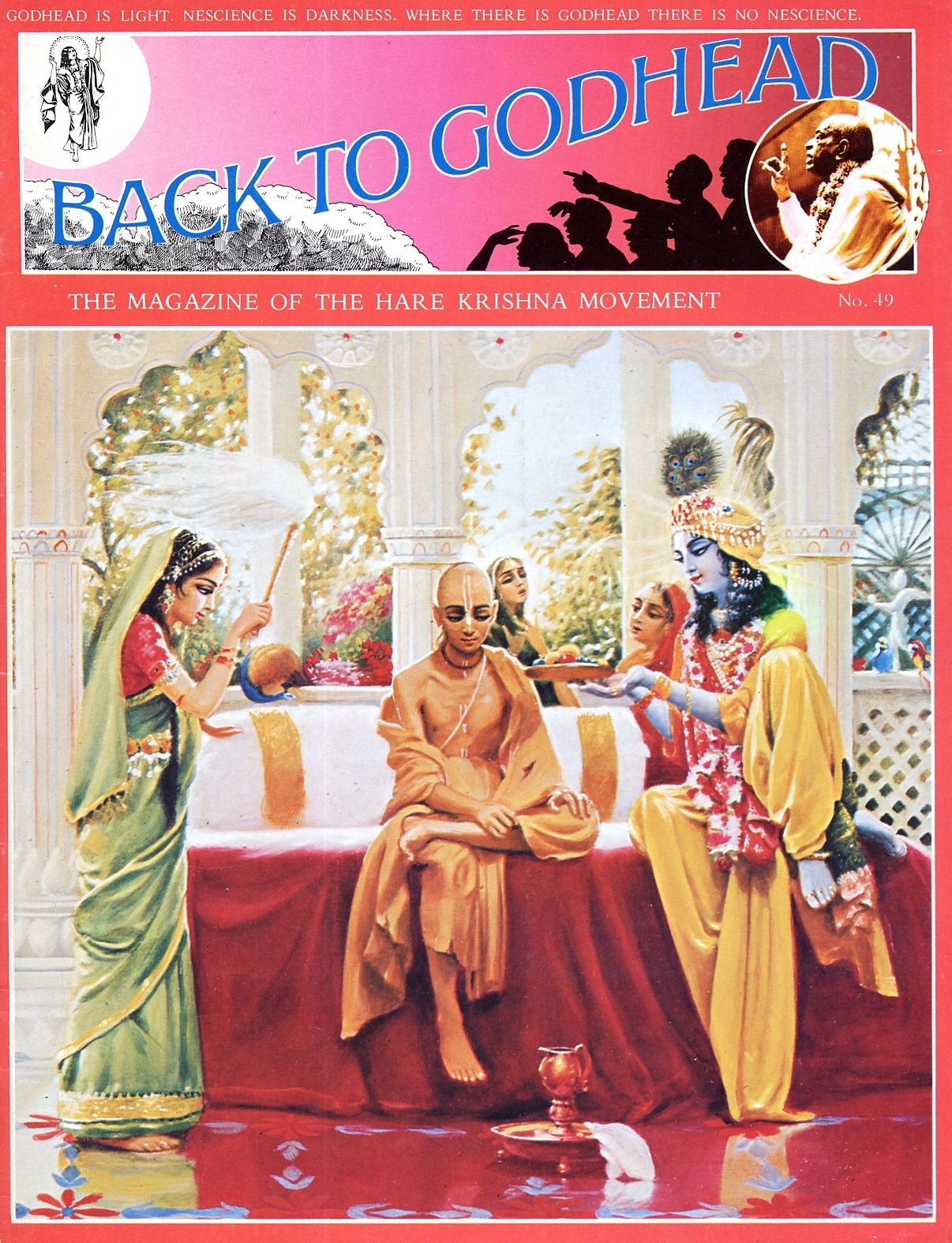
It is interesting how the “Back to Godhead Magazine”, has changed and evolved over the years, since its early conception to the present day. We are going to explore some of these changes.
Back to Godhead
The Magazine of The Hare Krishna Movement
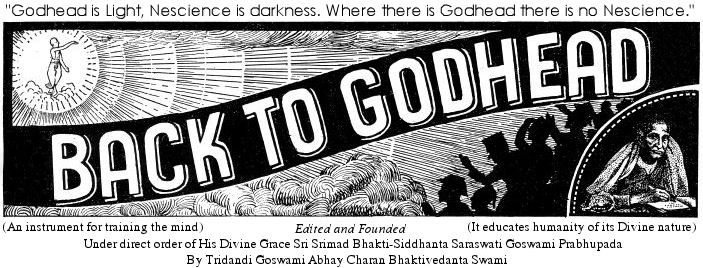
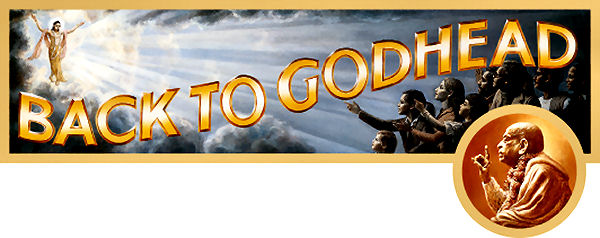
Back to Godhead magazine (BTG) was Srila Prabhupada’s first step towards fulfilling his Guru’s (Bhaktisiddhanta) order to preach Krishna consciousness in English. In February 1944 His Divine Grace A.C. Bhaktivedanta Swami Prabhupada published the first issue of BACK TO GODHEAD magazine. At his home in Calcutta, he wrote the articles, typed the manuscripts, and designed a logo essentially the same logo used on the covers of BACK TO GODHEAD today: an effulgent Lord Caitanya, shining light upon the souls of this world.
“From his front room at 6 Sita Kanta Banerjee, Abhay (as Srila Prabhupada was known) conceived, wrote, edited, and typed the manuscript for His magazine. He designed a logo, arranged in the style of a banner across the top of the page. In the upper left-hand corner was Lord Chaitanya, effulgent with rays of light, like rays from the sun. In the lower right were silhouettes of a crowd of people, in darkness but groping to receive light from Lord Chaitanya. And between Lord Chaitanya and the people, the title “BACK TO GODHEAD” appeared. In the lower right corner was a picture of Srila Bhaktisiddhanta Saraswati seated at his writing, looking up thoughtfully as he composed. Above the logo ran the motto ‘Godhead is Light, Nescience is darkness. Where there is Godhead there is no Nescience.'”
Srila Prabhupada’s design for his Back to Godhead magazine
Although the logo went through several changes over the years, today it still matches Srila Prabhupada’s original idea. New color artwork of Lord Chaitanya and the people facing him replaced the original black and white design. The only difference is that by the desire of his disciples Srila Prabhupada, rather than his spiritual master (Srila Bhaktisiddhanta Saraswati), now sits across from Lord Chaitanya.
Today marks the auspicious appearance of Lord Balaram. We honor it with a half day fast and followed by a nice vegetarian feast.
Lord Balarama is Krishna’s elder brother and His appearance day takes place on the full moon day (purnima), two weeks before Krishna Janmashtami. Krishna and Balarama were the darlings of Vrindavan/ Vraja. Together They would spend the day enjoying the company of the cowherd boys in the forests of Vraja. Their wonderful pastimes are related in the tenth canto of Srimad-Bhagavatam, which Srila Prabhupada also translated as The Krishna Book. Lord Balarama is also considered the original spiritual master and His worship is therefore most important for Vaishnavas.
Lord Śrī Kṛṣṇa, the Personality of Godhead, along with Balarāma, played like a human being, and so masked He performed many superhuman acts. (Srimad Bhagavatam Canto One, Chapter 1, Text 20)
Balarāma means guru-tattva. Balarāma represents guru. Yasya prasādād bhagavat-prasādaḥ. If we want to understand Caitanya Mahāprabhu, if we want to understand Kṛṣṇa, then we must take shelter of Balarāma. Nāyam ātmā bala-hinena labhyaḥ. This bala-hinena labhyaḥ, this Vedic injunction, means “Without the mercy of Balarāma you cannot understand, you cannot realize your spiritual identification. So that Balarāma comes as Nityānanda Prabhu. Balarāma hailā nitāi. Therefore we must take shelter of Balarāma. (Lecture given by His Divine Grace A.C. Bhaktivedanta Swami Prabhupada Bhuvaneśvara, February 2, 1977)
Yesterday my wife read me this verse and purport from the Sri Caitanya-caritamrta (Cc. Madya-lila 16.186). It reminded me of the potency of the Holy Name of the Lord.
” ‘To say nothing of the spiritual advancement of persons who see the Supreme Person face to face, even a person born in a family of dog-eaters becomes immediately eligible to perform Vedic sacrifices if he once utters the holy name of the Supreme Personality of Godhead, or chants about Him, hears about His pastimes, offers Him obeisances or even remembers Him.’ “
PURPORT
This is a quotation from Śrīmad-Bhāgavatam (3.33.6). According to this verse, it doesn’t matter what position a person holds. One may be the lowest of the low—a caṇḍāla, or dog-eater—but if he takes to chanting and hearing the holy name of the Lord, he is immediately eligible to perform Vedic sacrifices. This is especially true in this age of Kali.
harer nāma harer nāma harer nāmaiva kevalam kalau nāsty eva nāsty eva nāsty eva gatir anyathā
(Bṛhan-nāradīya Purāṇa, 38.126)
A person born in a brāhmaṇa family cannot perform Vedic sacrifices until he is properly purified and has attained his sacred thread. However, according to this verse, it is understood that even a lowborn person can immediately perform sacrifices if he sincerely chants and hears the holy name of the Lord. Sometimes envious people ask how Europeans and Americans in this Kṛṣṇa consciousness movement can become brāhmaṇas and perform sacrifices. They do not know that the Europeans and Americans have already been purified by chanting the holy name of the Lord—Hare Kṛṣṇa, Hare Kṛṣṇa, Kṛṣṇa Kṛṣṇa, Hare Hare Hare Rāma, Hare Rāma, Rāma Rāma, Hare Hare. This is the proof. Śvādo ‘pi sadyaḥ savanāya kalpate. One may be born in a family of dog-eaters, but he can perform sacrifices simply by chanting the mahā-mantra.
Those who find fault in the Western Vaiṣṇavas should consider this statement from Śrīmad-Bhāgavatam and the commentary on this verse by Śrīla Jīva Gosvāmī. In this regard, Śrīla Jīva Gosvāmī has stated that to become a brāhmaṇa, one has to wait for purification and undergo the sacred thread ceremony, but a chanter of the holy name does not have to wait for the sacred thread ceremony. We do not allow devotees to perform sacrifices until they are properly initiated in the sacred thread ceremony. Yet according to this verse, an offenseless chanter of the holy name is already fit to perform a fire ceremony, even though he is not doubly initiated by the sacred thread ceremony. This is the verdict given by Lord Kapiladeva in His instructions to His mother, Devahūti. It was Lord Kapiladeva who instructed Devahūti in pure Sāṅkhya philosophy.
And from the Srimad Bhagavatam full text and purport
We often say “Chant and be Happy”, but there are offences to be considered. If we want to feel the full ecastscy derived from chanting the Holy names, we need to avoid them.
Remember that even if one feels they are being offensive, there is no need to stop chanting. By trying to chant sincerely and serving the spiritual master, we may be purified of our offenses and may be able to chant purely.
There are offenses to be considered while chanting the Hare Krishna mantra. Therefore simply by chanting Hare Krsna one does not become ecstatic. ( Cc. Adi-lila 8.24) 1) To blaspheme the devotees who have dedicated their lives for propagating the holy name of the Lord. 2) To consider the names of demigods like Lord Shiva or Lord Brahma to be equal to or independent of the name of the Lord Vishnu. 3) To disobey the orders of the spiritual master. 4) To blaspheme the vedic scriptures or scriptures in pursuance to the vedic version. 5) To consider the glories of chanting Hare Krishna to be an imagination. 6) To give some interpretations to the holy name of the Lord. 7) To commit sinful activities on the strength of the holy name. 8) To consider the chanting of Hare Krishna as one of the auspicious ritualistic activities which are offered in the Vedas as frutive activities (Karma kanda). 9) To instruct a faithless person about the glories of the holy name
10) To not have complete faith in the chanting of the holy name and to maintain material attachments, even after understanding so many instructions on this matter. It is also an offense to be inattentive while chanting.
Every devotee who claims to be Vaishnava must guard against these offenses in order to quickly achieve the desired success Krishna Prema!!!
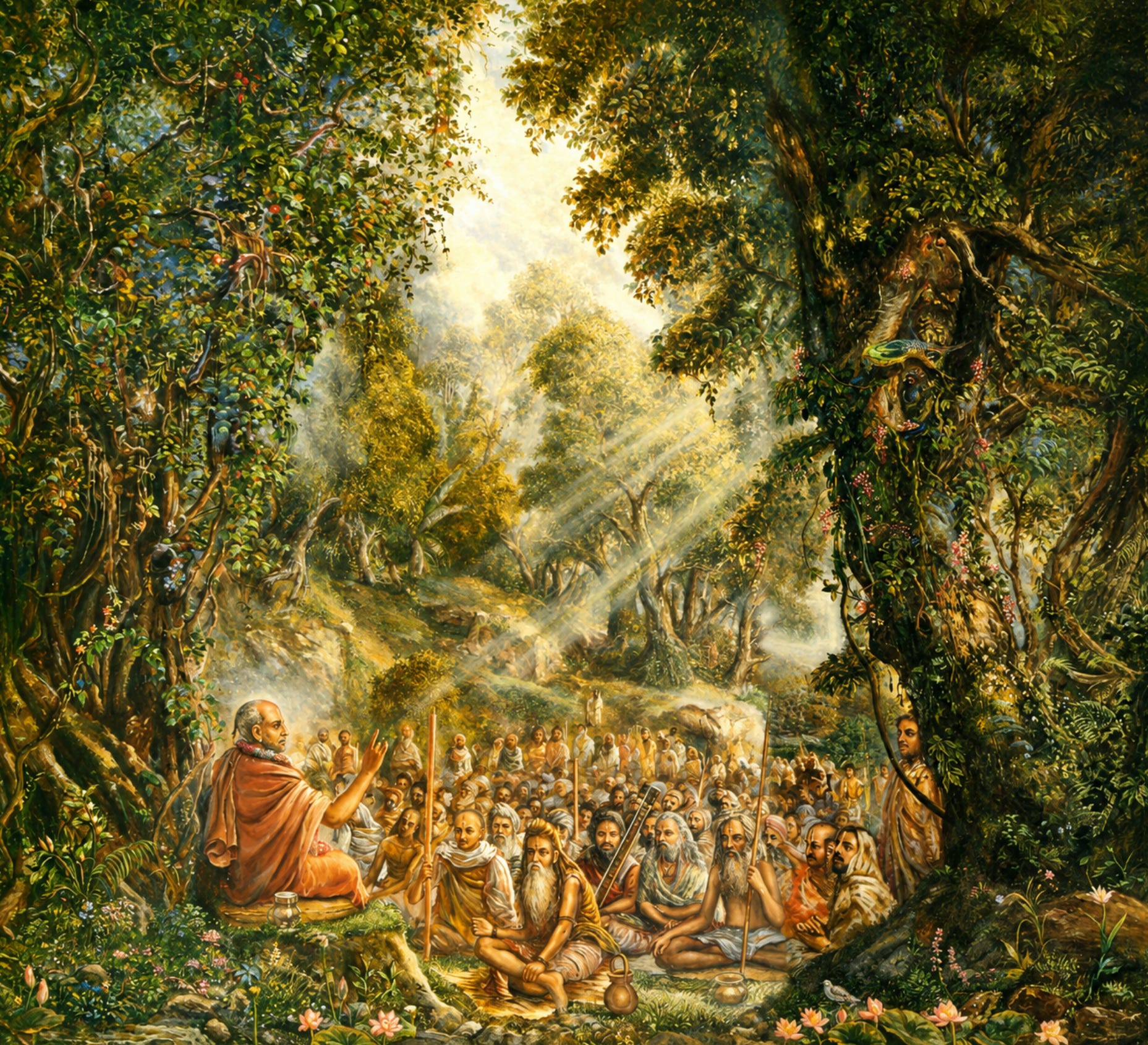
The sages at Naimisaranya: Were an assembly of 88,000 spiritual teachers, led by the prominent sage Shaunaka Rishi. who gathered in the sacred Naimisaranya forest in modern-day Uttar Pradesh, India.
Once, in a holy place in the forest of Naimiṣāraṇya, great sages headed by the sage Śaunaka assembled to perform a great thousand-year sacrifice for the satisfaction of the Lord and His devotees. (SB 1.1.4 )
The Arrival of Suta Goswami: While conducting their rituals, the storyteller and sage Suta Goswami arrived at the assembly and was warmly welcomed and given a high seat of honor (Vyasasana).
O expert and thoughtful men, relish Śrīmad-Bhāgavatam, the mature fruit of the desire tree of Vedic literatures. It emanated from the lips of Śrī Śukadeva Gosvāmī. Therefore this fruit has become even more tasteful, although its nectarean juice was already relishable for all, including liberated souls. (SB. 1. 1. 3 )
The Six Questions: Recognizing Suta Goswami’s pure character and deep scriptural knowledge, the sages asked him six fundamental questions regarding spiritual truth, which form the foundational framework of the
What is the absolute, ultimate benefit for all mankind?
What is the core essence hidden within all Vedic scriptures?
Why did the Supreme Lord take birth from Mother Devaki?
How do the secondary forms of the Lord (like Brahma and Rudra) create, maintain, and destroy the universe?
What are the complete activities and pastimes of Lord Hari’s various incarnations?
Where has true religion or spiritual shelter gone now that Lord Krishna has departed?
In the first chapter of the Śrīmad Bhagavatam, the sages ask Suta Goswami six questions. These questions are not only asked for the sage’s own sake. They are concerned about the situation of people who will be living in the age of Kali, and they want to get from Suta Goswami some knowledge that can help them find their way out of all the darkness and illusion of this age.
( Note; These six questions are asked in chapter one, and the answers are given in chapters two and three. These chapters are thus intimately connected.)
Everyday when I offer my obeisances and prayers,I recite them in Sanskrit. However, I don’t dream in Sanskrit, and I don’t think in Sanskrit. I think or contemplate, meditate in English. So I often say the prayers or obeisances in English in my mind, while I recite the Sanskrit.
I offer my respectful obeisances unto my spiritual master, who has opened my eyes, which were blinded by the darkness of ignorance, with the torchlight of knowledge.
I offer my respectful obeisances unto His Divine Grace A.C. Bhaktivedanta Swami Prabhupalda, who is very dear to Lord Krsna, having taken shelter at His lotus feet.
Our respectful obeisances are unto you, O spiritual master, servant of Sarasvati Gosvami. You are kindly preaching the message of Lord Caitanyadeva and delivering the Western countries, which are filled with impersonalism and voidism.
“I offer me respectful obeisances unto the Supreme Lord Sri Krsna Caitanya, who is more magnanimous than any other incarnation, even Krsna Himself, because He is bestowing freely what no one else has ever given – pure love of Krsna”
“I offer my respectful obeisances to the Supreme Absolute Truth, Krsna, who is the well-wisher of the cows and brahmanas, as well as the living entities in general. I offer my repeated obeisances to Govinda, who is the pleasure reservoir for all the senses”
I offer my respectful obeisances unto all the Vaisnava devotees of the Lord. They are just like desire trees who can fulfill the desires of everyone, and they are full of compassion for the fallen conditioned souls.
O my dear Krsna, You are the friend of the distressed and the source of creation. You are the master of the cowherdsmen and the lover of the gopis, especially Radharani. I offer my respectful obeisances unto You”.
“I offer my respects unto Srimati Radharani, whose bodily complexion is like molten gold and who is the Queen of Vrndavana. You are the daughter of King Vrsabhanu, and You are very dear to Lord Krsna”.
“All Glories to LordSri Krishna Chaitanya,Lord Nityananda, Sri Advaita, Sri Gadadhara, Sri Srivas, and all the vaisnava devotes of the Lord“
“O Srimati Radharani, O all attractive reservoir of pleasure, Lord Sri Krsna, please engage me in your loving devotional service “
Hare Krishna Hare Krishna Krishna Krishna Hare Hare Hare Rama Hare Rama Rama Rama Hare Hare
These are some of the prayers I ‘try’ to say daily, for the full prayers with the full Roman Transliteration please go to:
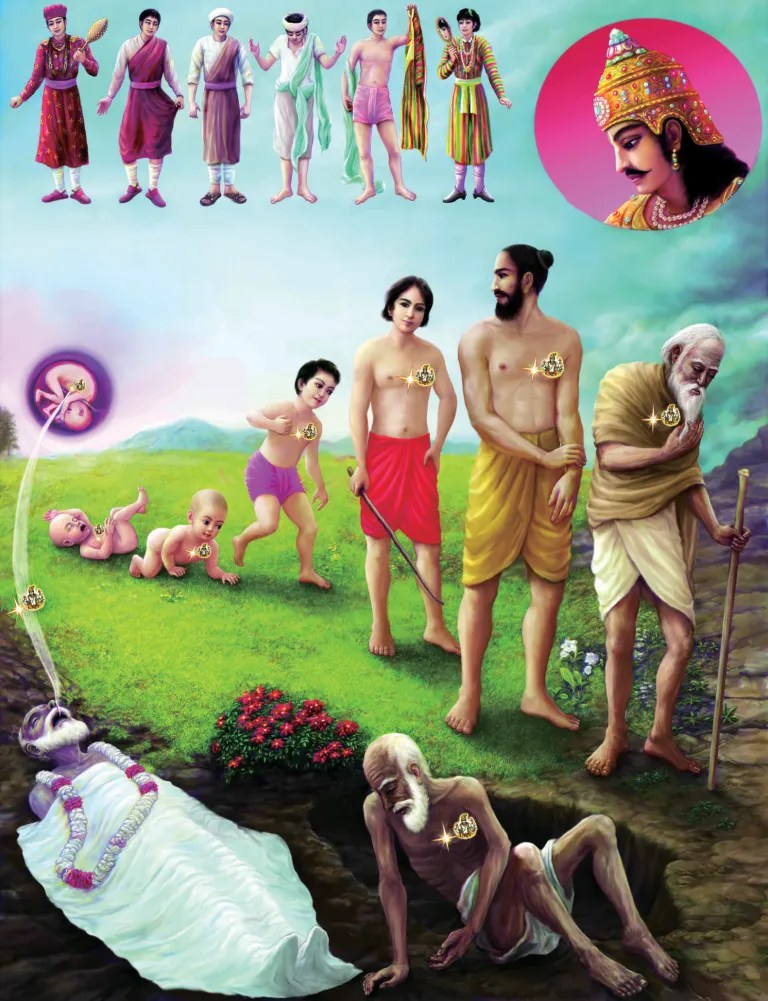
Well today is my birthday. 72 years ago on this day I was in a small baby’s body, but today I am in an old man’s body. But I’m still the same person, although it seems like I have lived many different lives, as a child, as a student, as a devotee, as a husband and father, grandfather, and retired woodworker. Lived and traveled to so many places, had so many different life experiences, and so it seems, I have lived many lives.
I am reminded of some of the famous important verses from the Bhagavad-gita:
As the embodied soul continually passes, in this body, from boyhood to youth to old age, the soul similarly passes into another body at death. The self-realized soul is not bewildered by such a change. (Bg 2.13)
For the soul there is never birth nor death. Nor, having once been, does he ever cease to be. He is unborn, eternal, ever-existing, undying and primeval. He is not slain when the body is slain. (Bg 2.20)
Full texts and purports will follow at end of post, but I wanted to mention some well known persons who I share a birthday with.
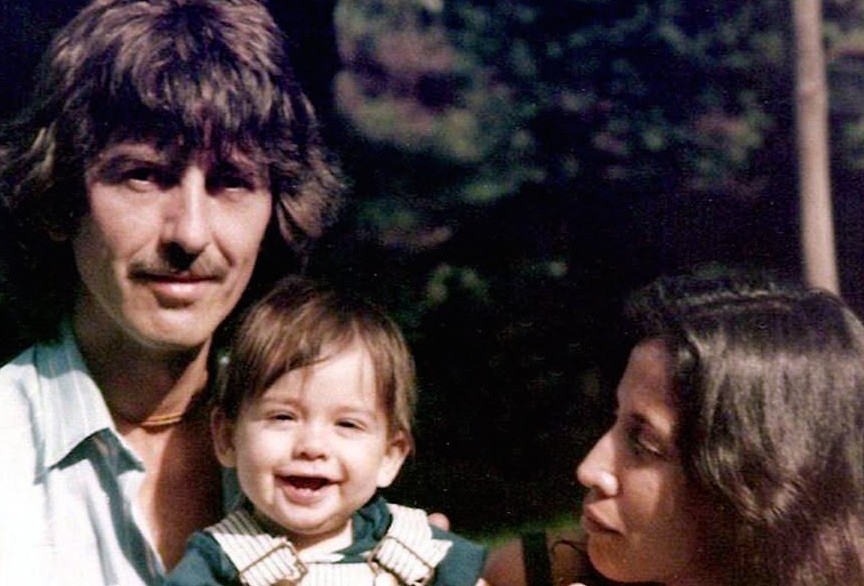
On this day in 1978, Dhani Harrison appeared, who we all know as the son of George and Olivia Harrison, turns 48 today.
And one of my favorite musicians Jerry Garcia was born on August 1, 1942, in San Francisco, California. He was the co-founder, lead guitarist, and vocalist of the Grateful Dead.
Jerry Garcia and Srila Prabhupada intersected through 1960’s counterculture, notably via the Grateful Dead playing at the 1967 Mantra-Rock concert. The Grateful Dead performed alongside Big Brother and the Holding Company and Allen Ginsberg at the historic San Francisco Avalon Ballroom benefit concert, which helped introduce A. C. Bhaktivedanta Swami and the Hare Krishna Movement to the West coast.
I saw this posted on Facebook, and thought we would share it here with all of you. In this article by Locan Ananda Prabhu, he again makes the argument for Arsa-prayoga, or no change.
Srila Prabhupada was recognized as a great Sanskrit scholar. His depth of knowledge was unfathomable. Not a single word of his should have been changed. That policy is called arsa-prayoga, and it guarantees that the spiritual head of our institution should never be dishonored by changing his words.
THE ROD OF CHASTISEMENT IS GONE!!!
by Locan Ananda Dasa
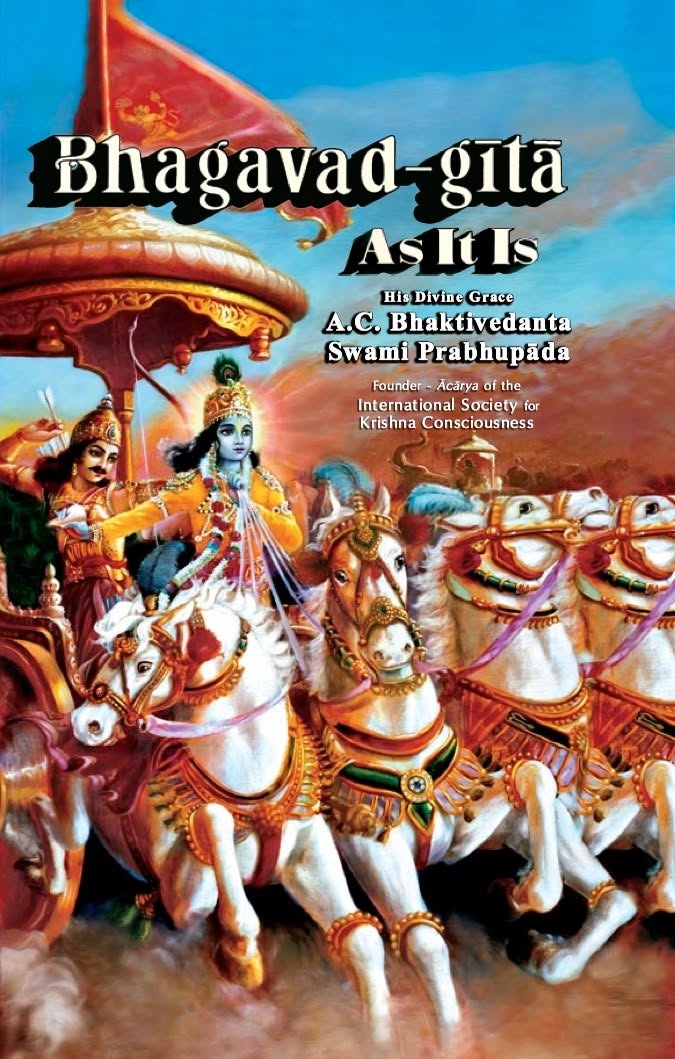
One of my favorite verses in the Bhagavad-Gita As It Is
was once found in Chapter 10, verse 38:
“Among punishments I am the rod of chastisement, and of those who seek victory, I am morality. Of secret things I am silence, and of the wise I am wisdom.” (B.g. 10.38, original)
Chapter 10 is entitled, “The Opulence of the Absolute” wherein Krishna enumerates some of His extraordinarily splendorous manifestations. On August 12, 1976, Srila Prabhupada was having an evening darshan in Tehran, the capital and largest city in Iran. He was talking about how ordinary people know little about the greatness of God. “They say, ‘God is great,’ but how great? That they do not know.” Srila Prabhupada then asked his secretary at the time, Harikesa dasa, to read selected verses from the Bhagavad-Gita, beginning with Chapter 10, verse 20:
“I am the Self, O Gudakesa, seated in the hearts of all creatures. I am the beginning, the middle and the end of all beings.” (B.g. 10.20)
Harikesa prabhu continued to read through the verses that followed, the chapter ending with verse 42:
“But what need is there, Arjuna, for all this detailed knowledge. With a single fragment of Myself I pervade and support this entire universe.” (B.g. 10.42)
When he finished the reading, Srila Prabhupada said, “That’s it. This is greatness. So we should not simply be satisfied ‘God is great.’ We must try to know how great He is. Then our God consciousness will be fixed up. It’s all right?”
‘Beyond Birth and Death’ is one of my favorite small books written by His Divine Grace A. C. Bhaktivedanta Swami. The first chapter is a good introduction to the philosophy of Krishna Consciousness. We have included the entire first chapter for those interested.
We Are Not These Bodies
(Chapter One from Beyond Birth & Death)
The very first step in self-realization is realizing one’s identity as separate from the body. “I am not this body but am spirit soul” is an essential realization for anyone who wants to transcend death and enter into the spiritual world beyond. It is not simply a matter of saying “I am not this body,” but of actually realizing it. This is not as simple as it may seem at first. Although we are not these bodies but are pure consciousness, somehow or other we have become encased within the bodily dress. If we actually want the happiness and independence that transcend death, we have to establish ourselves and remain in our constitutional position as pure consciousness.
“O descendant of Bharata, he who dwells in the body is eternal and can never be slain. Therefore you need not grieve for any creature.” (Bhagavad-gita 2.30)
Living in the bodily conception, our idea of happiness is like that of a man in delirium. Some philosophers claim that this delirious condition of bodily identification should be cured by abstaining from all action. Because these material activities have been a source of distress for us, they claim that we should actually stop these activities. Their culmination of perfection is in a kind of Buddhistic nirvāṇa, in which no activities are performed. Buddha maintained that due to a combination of material elements, this body has come into existence, and that somehow or other if these material elements are separated or dismantled, the cause of suffering is removed. If the tax collectors give us too much difficulty because we happen to possess a large house, one simple solution is to destroy the house. However, Bhagavad-gītā indicates that this material body is not all in all. Beyond this combination of material elements, there is spirit, and the symptom of that spirit is consciousness.
…One issue that many find shocking is the extent to which Srila Prabhupada’s Bhagavad-gita As It Is was edited without having been authorized by His Divine Grace, Srila Prabhupada. He was never a fan of extensive editing of any of his published works. What’s more, the over-edited edition published in 1983 removed thirty-two color pages that Srila Prabhupada insisted be included in his great opus. Three of those eliminated color pages were of the predecessor acaryas, namely Srila Bhaktisiddhanta Saraswati Thakur, Srila Gaura Kishora Das Babaji Maharaja and Srila Thakur Bhaktivinode.
Even the pocket Gita printed in India included all of the color plates found in the Macmillan edition.
If you are just hearing about this for the first time, please contact the GBC representative in your area and humbly request that this offense be rectified with the next printing. Doing so will attract Srila Prabhupada’s blessings. Do not fear when the cause is just.
A CRISIS IN LEADERSHIP
by Locan Ananda dasa
Many followers of Srila Prabhupada’s teachings have been calling for the worldwide reformation of the leadership of the International Society for Krishna Consciousness. The charge being made is that leaders and managers need to adhere more closely to the specific instructions of our Founder Acarya. There should be greater vigilance and the immediate correction of inappropriate behavior on the part of errant leaders.
Everyone wants Happiness and wants to avoid Distress, this is a fact. This Krishna Consciousness Movement is meant to deliver all of suffering humanity from the threefold miseries of material existence.
The attempt in this material world to maximize happiness and minimize distress is called the struggle for existence.
…This material world is the world of duality, and we cannot understand happiness without distress or distress without happiness. This is therefore called the relative world. Spiritual happiness is above these dualities, and that spiritual happiness is the perfection of yoga. Yoga ādhyātmikaḥ. Yoga is the happiness of the soul, and the individual soul can be happy when it is with the Supersoul, the Supreme Soul.Nityo nityānāṁ cetanaś cetanānām (Kaṭha Upaniṣad 2.2.13). There is the Supreme Soul, or the supreme living being, and there are many individual souls, individual beings. We are many, but the principal living being is one, Kṛṣṇa. He is the fire, and we are the sparks from that fire. The sparks are illuminated when they are with the original fire, but if the sparks no longer associate with the original fire, they are extinguished. Similarly, our real happiness is in enjoying with the Supreme Being. Happiness is being in His company. Kṛṣṇa is not alone, but is always with His friends, either the gopīs or the cowherd boys, or with His mother and father. We never find Kṛṣṇa alone. He may be with Rādhārāṇī or with His devotees. He is like a king or president. When one says that the king or president is coming, it is understood that he is not coming alone. He comes with His secretaries, ministers and many others. (Teachings of Lord Kapila)
…Everyone is trying to get out of material distress and gain some happiness. In any case, when something is material, there is only so-called happiness and so-called distress. For instance, there may be fireworks going on, and this may be happiness for someone but distress for us. Some people are thinking that these fireworks are very enjoyable, and we are thinking that they are very inconvenient. That is the material world. On one side there is happiness, and on the other side there is distress. Both happiness and distress are actually illusions. In summer, water is happiness, but in winter it is distress. The water is the same, but at one time it brings happiness and at another time it brings distress. When a son is born, he brings happiness, but when he dies, he brings distress. In either case, the son is the same. (Teachings of Lord Kapila)
The great mistake of modern civilization is to encroach upon others’ property as though it were one’s own and thereby create an unnecessary disturbance of the laws of nature.
We are witnessing a world in turmoil right now, with nations at war with each other. And I am reminded of the peace formula that Srila Prabhupada has given us. He first presented the peace formula in an early edition of Back to Godhead Magazine, then in the Bhagavad-gita, and it appeared in many small books and pamphlets. We share with you today, a sampling of the peace formula in some of the early small books.
“A person in full consciousness of Me, knowing Me to be the ultimate beneficiary of all sacrifices and austerities, the Supreme Lord of all planets and demigods, and the benefactor and well-wisher of all living entities, attains peace from the pangs of material miseries.” (Bhagavad-gita 5.29)
The politicians and diplomats are trying to establish peace in the world. We have the United Nations and many other organizations. They are working to establish real peace and tranquillity, to eliminate misunderstanding between man and man and nation and nation. But that is not happening. The defect is that the root is wrong. Everyone is thinking, “It is my country,” “It is my family,” “It is my society,” “It is my property.” This “my” is illusion. This “I-and-my” philosophy is māyā-illusion.
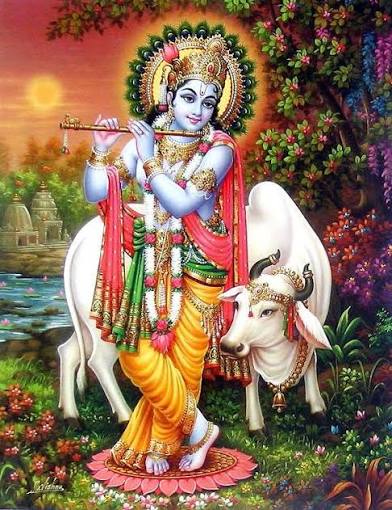
“My dear friend, there is one boy – His name is Govinda. He is standing on the bank of the Yamunā near the Keśi-ghāṭa, and He is playing on His flute. He is so beautiful, especially during this full-moon night. If you have any intentions to enjoy in this material world with your children, husband, or other family members, then please do not go there.”
The Vedic literature is unique among all the world’s scriptures because it details a practical process by which anyone can purify his or her consciousness and see God face to face. In a lecture, delivered in Los Angeles on August 15, 1972, Śrīla Prabhupāda explains, “One must actually be very eager to see God…. One must be very serious and think, ‘Yes, I have been informed about God. So if there is a God, I must see Him.'”
Excerpts from Lecture Los Angeles on August 15, 1972
jaya–all glories to: rādhā-mādhava–Rādhā and the Lord of sweetness; kuñja-bihārī–He who enjoys loving pastimes in the groves of Vṛndāvana; gopī-jana-vallabha–the lover of the cowherd maidens of Vraja; giri-vara-dhārī–the holder of the great hill named Govardhana;
Krsna is the lover of Radha. He displays many amorous pastimes in the groves of Vrndavana, He is the lover of the cowherd maidens of Vraja, and the holder of the great hill named Govardhana.
yaśodā-nandana–the beloved son of mother Yaśodā; vraja-jana-rañjana–the delighter of the inhabitants of Vraja; yāmuna-tīra-vana-cārī–who wanders in the forests along the banks of the river Yamunā
He is the beloved son of mother Yasoda, the delighter of the inhabitants of Vraja, and He wanders in the forests along the banks of the River Yamuna!
Purport to Jaya Rādhā-Mādhava New York, July 20, 1971
Prabhupāda: So you know this song Jaya Rādhā-Mādhava?
Devotees: Jaya!
Prabhupāda: So you can follow me?
Devotees: Jaya! Haribol! (Śrīla Prabhupāda leads singing of Jaya Rādhā-Mādhava)
Prabhupāda: So this is the original nature of Kṛṣṇa, original nature of Kṛṣṇa. He is Rādhā-Mādhava. He is the lover of Śrīmatī Rādhārāṇī. And kuñja-vihārī, always enjoying the company of the gopīs within the bushes of Vrndavana forest. Rādhā-mādhava kuñja-vihārī. So He’s not only lover of Rādhārāṇī, but braja-jana-vallabha. The whole residents of Vṛndāvana, they love Kṛṣṇa. They do not know anything else. They do not know whether Kṛṣṇa is God, or not; neither they are very much harassed, that “I shall love Kṛṣṇa if He is God.” “He may be God or He may be whatever He is. It doesn’t matter, but we love God, Kṛṣṇa.” That’s all. That is called unalloyed love.
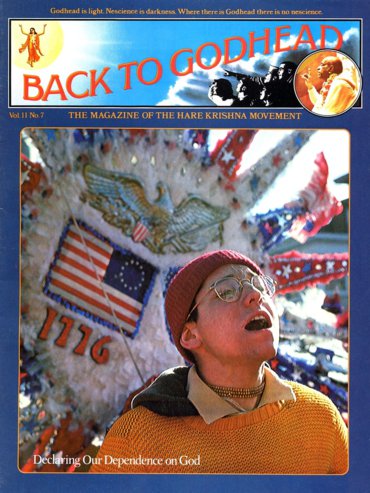
Two hundred years ago, Americans fought the War of Independence to assure life, liberty, and happiness in a fledgling nation. In a conversation with the BACK TO GODHEAD staff, His Divine Grace A.C. Bhaktivedanta Swami Prabhupada explains that Americans can actually achieve these things only by maintaining a God conscious society, with God conscious leaders.
BTG: Thomas Jefferson put the basic philosophy of the American Revolution into the Declaration of Independence. The important men of the day who signed this document agreed that there are certain very obvious or self-evident truths; the first of which is that all men are created equal. By this they meant that all men are equal before the law and have an equal opportunity to be protected by the law.
Srila Prabhupada: Yes, in that sense men are, as you say, created equal.
BTG: Another point in the Declaration of Independence is that all men are endowed by God with certain natural rights that cannot be taken away from them. These are the rights of life, liberty, and
Srila Prabhupada: But animals also have the right to life. Why don’t animals also have the right to live? The rabbits, for instance, are living in their own way in the forest. Why does the government allow hunters to go and shoot them?
Yesterday we shared with you the first printing of Srila Prabhupada’s epic translations of the Srimad Bhagavatam, and today we share with you his last.
For a Free PDF download of this special volume click on following link; SB-10-03-1980
Śrīmad-Bhāgavatam By His Divine Grace A.C. Bhaktivedanta Swami Prabhupada Tenth Canto, Part Three
Foward
This is the final Śrīmad-Bhāgavatam volume translated by His Divine Grace A. C. Bhaktivedanta Swami Prabhupada, founder-acarya of the International Society for Krishna Consciousness. It is smaller than the earlier volumes because it ends where the renowned author stopped translating just before his departure from this mortal world on November 14, 1977, at the Krsna-Balarama Mandira in Vrndavana, India.
The first part of this volume was produced in the usual fashion. Srila Prabhupada would sit and read silently from the Sanskrit text and then speak the translation and commentary into his dictaphone. Later, due to illness, it became necessary for his disciples to assist him personally.
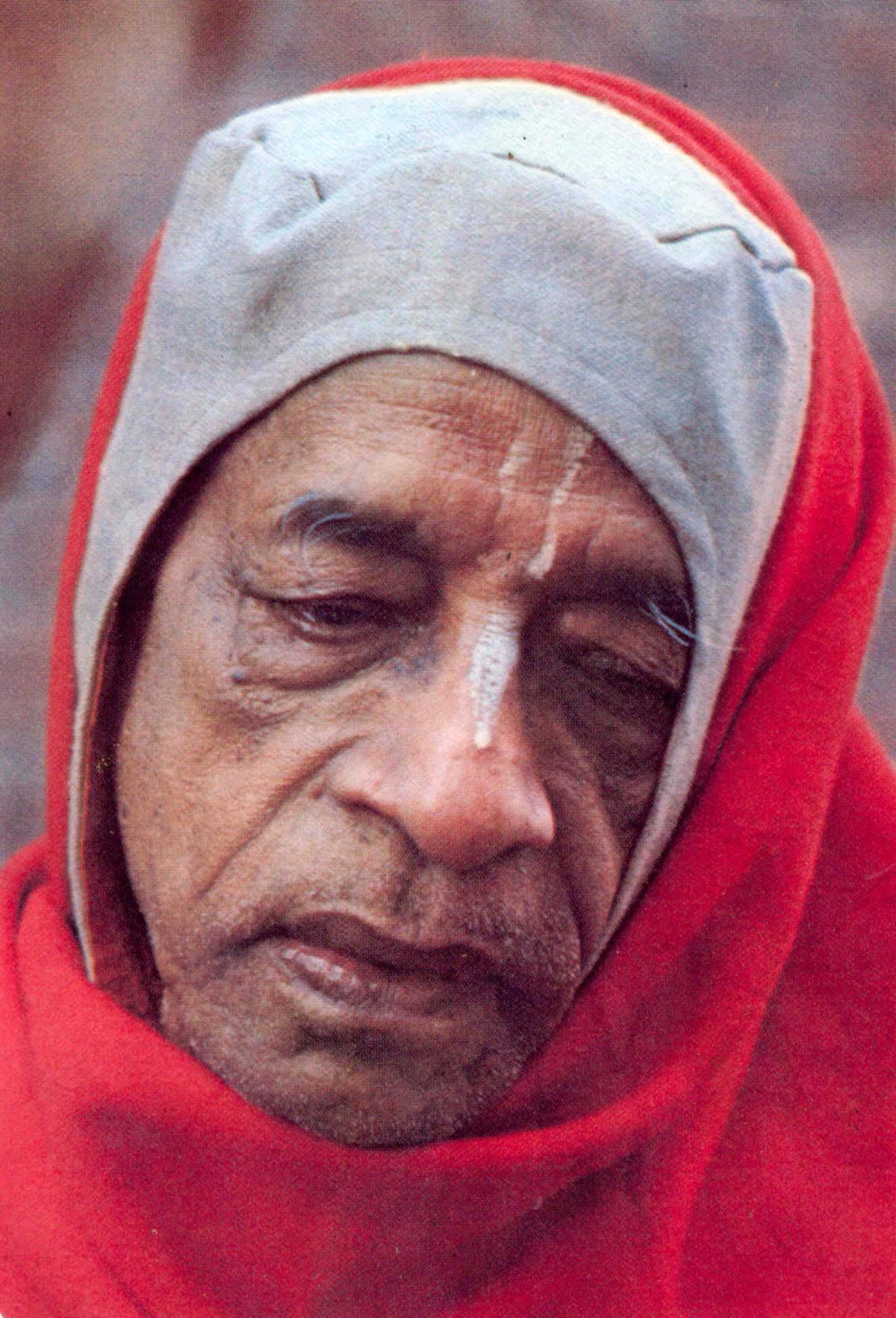
In these last days Srila Prabhupada was gravely ill. Unable to eat for weeks, his health had deteriorated, making even the slightest movement excruciatingly painful.
As he lay still, a devotee would softly read the Sanskrit to him. Another disciple, sitting on his bed, held the microphone to him, nearly touching his mouth. And then Srila Prabhupada would speak, voice sometimes barely audible.
These recordings, made in his quarters at the temple, constitute the balance of this book.
In these final moments, the physician attending His Divine Grace confided that an ordinary man in such critical condition would have been crying out from the intense pain. Srila Prabhupada’s disciples were awestruck as they watched their spiritual master work quietly, undisturbed.
In the last part of the book we find Srila Prabhupada’s usual clarity of thought, constant scriptural references, scrupulous attention to detail, and rigorous philosophical exposition fully intact, just as they were in the preceding twenty-nine volumes of the Śrīmad-Bhāgavatam.
Srila Prabhpada’s last days and this translation will stands an inspiring reminder that even the severest material circumstances cannot impede the activities of a pure devotee of the Supreme Personality of Godhead.