“Love of Godhead is the ultimate benediction for all human beings.”
…The laws of material nature are so strong that none of our material possessions can save us from the cruel hands of death.
…one who is actually advancing must always consider the four principles of miserable life, namely, birth, death, old age and disease. One cannot be saved from all these miseries unless he takes shelter of the lotus feet of the Lord. Śrī Caitanya Mahāprabhu is therefore the only shelter for all conditioned souls. An intelligent person, therefore, does not put his faith in any material possessions, but completely takes shelter of the lotus feet of the Lord. (from purport Adi-lila 7.1)
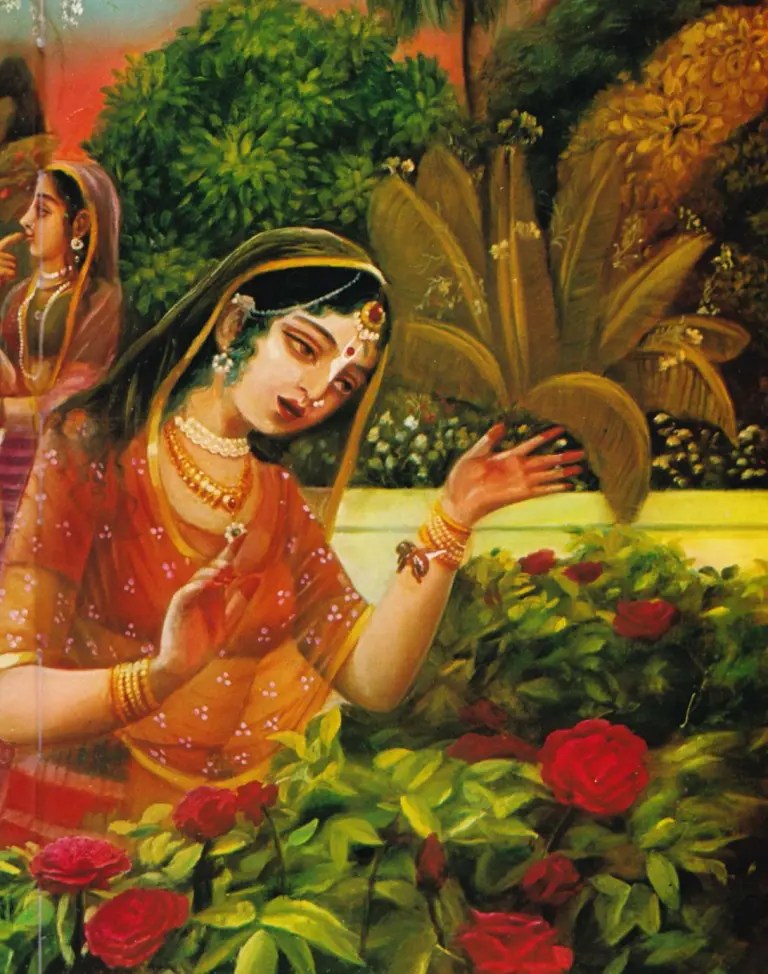
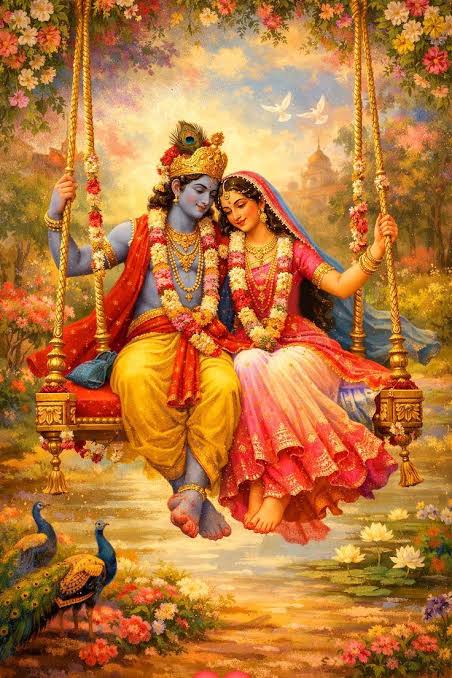
I have always enjoyed this pastime of Srimati Radharani’s talks with the Bumblebee. Every time I see a bumblebee in my garden I am reminded of these talks.
The pastimes of Lord Kṛṣṇa are uncommonly full of transcendental potency. It is a characteristic of such pastimes that they do not fall within the jurisdiction of experimental logic and arguments. (Cc. Antya 19.103)
When transcendental love of Kṛṣṇa awakens in one’s heart, even a learned scholar cannot comprehend one’s activities. (Cc. Antya 19.104)
“The activities and symptoms of that exalted personality in whose heart love of Godhead has awakened cannot be understood even by the most learned scholar.” (Cc. Antya 19.105)
The evidence of the truth of these talks is found in Śrīmad-Bhāgavatam. There, in the section of the Tenth Canto known as the Bhramara-gītā, “the Song to the Bumblebee,” Śrīmatī Rādhārāṇī speaks insanely in ecstatic love for Kṛṣṇa. (Cc. Antya 19.107)
Just try to hear these topics with faith, for there is great pleasure even in hearing them. That hearing will destroy all miseries pertaining to the body, mind and other living entities, and the unhappiness of false arguments as well. (Cc. Antya 19.110)
The Song to the Bumblebee
When Uddhava arrived from Mathurā carrying a message for the gopīs, the gopīs began talking about Kṛṣṇa and crying. Then one important gopī saw a bumblebee and began speaking to it like someone mad, thinking that the bee was a messenger of Uddhava’s or was someone very dear to him and Kṛṣṇa. The verses are as follows:
“My dear bumblebee, you are a very cunning friend of Uddhava and Kṛṣṇa. You are very expert in touching people’s feet, but I am not going to be misled by this. You appear to have sat on the breasts of one of Kṛṣṇa’s friends, for I see that you have kuṅkuma dust on your mustache. Kṛṣṇa is now engaged in flattering all His young girl friends in Mathurā. Therefore, now that He can be called a friend of the residents of Mathurā, He does not need the help of the residents of Vṛndāvana. He has no reason to satisfy us gopīs. Since you are the messenger of such a person as He, what is the use of your presence here? Certainly Kṛṣṇa would be ashamed of your presence in this assembly.”
How has Kṛṣṇa offended the gopīs so that they want to reject Him from their minds? The answer is given as follows:
As I was reading from the Srimad Bhagavatam this morning about the passing of Bhīṣmadeva it was being described how “The perfect yogīs or mystics can leave the material body at their own sweet will at a suitable time and go to a suitable planet desired by them.” And how it is possiable to go beyond Saṁsāra, and go back to Godhead without any doubt?
…In the momentous hour of leaving his material body, Bhīṣmadeva set the glorious example concerning the important function of the human form of life. The subject matter which attracts the dying man becomes the beginning of his next life. Therefore, if one is absorbed in thoughts of the Supreme Lord Śrī Kṛṣṇa, he is sure to go back to Godhead without any doubt.
And what is Samsara?
Saṁsāra means material existence. That is called saṁsāra. Bhūtvā bhūtvā pralīyate (BG 8.19). You take your birth once in some form of body. You live for some time. Then you have to give up this body. Then you have to accept another body. Then again live for some time. Then give up that body. Again accept another body. In this way, it is going on. That is called saṁsāra, rotating within this material world. (Lecture on Gurvastakam at Upsala University by His Divine Grace -Stockholm, September 9, 1973)
The saṁsāra means repetition of different bodies. That is called saṁsāra. (Lecture on SB 1.2.4 -Rome, May 28, 1974)
Saṁsāra means this material entanglement. This is called saṁsāra. (Lecture on CC Madhya-lila 25.40-50 – San Francisco, January 24, 1967)
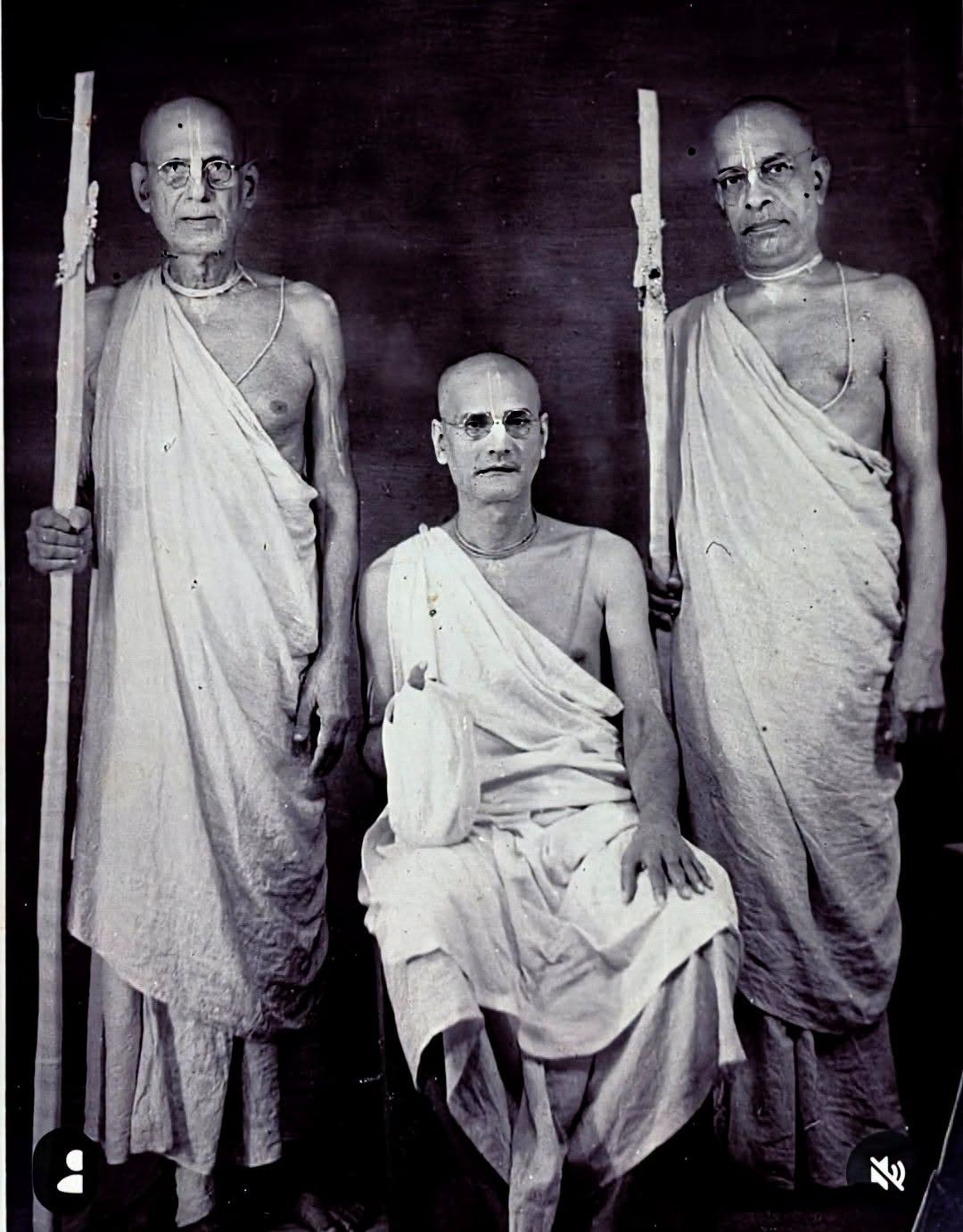
Photo: September 17th, 1959, Mathura. (Muni Maharaja, Bhakti Prajnana Kesava Maharaja, A.C. Bhaktivedanta Swami)
So today, we honor the acceptance of the Sannyasa order of Srila Prabhupada in 1959. We share with you, this post from Facebook by Abhinanda das.
The Sannyasa Order
·
Satsvarupa: One night Srila Prabhupada had a striking dream, the same dream he had had several times before, during his days as a householder. Srila Bhaktisiddhanta Sarasvati appeared, just as Srila Prabhupada had known him, the tall, scholarly sannyasi, coming directly from the spiritual world, from Krishna’s personal entourage. He was asking Srila Prabhupada to take sannyasa.
Srila Prabhupada first had to approach one of his Godbrothers for permission. He decided to turn to Bhaktivilasa Tirtha Maharaja (formerly Kunja Vihari), the leader of the Chaitanya Math in Calcutta. In April 1959, Srila Prabhupada wrote to Tirtha Maharaja, inquiring about sannyasa as well as about the Chaitanya Math’s printing some of his manuscripts. Without printing books and going to the West, sannyasa did not have meaning for Srila Prabhupada. He wanted to go to the West right away, and he had thought the Chaitanya Math would welcome his offer. He thought that with the world’s crying need for Krishna consciousness staring them in the face, they might see that Srila Prabhupada was convinced and enthusiastic and so should be sent right away with whatever he required. But they had other priorities.
Srila Prabhupada next turned to Kesava Maharaja in Mathura, and Kesava Maharaja told Srila Prabhupada to take sannyasa immediately. On the morning of September 17, 1959, in the fifty-by-twenty-five-foot Deity room on the second floor of the Kesavaji Math, a group of devotees sat before the Deities of Radha-Krishna and Lord Chaitanya. Srila Prabhupada sat on a mat of kusa grass beside ninety-year-old Sanatana, also to receive sannyasa that day. Then, to everyone’s surprise, Kesava Maharaja asked Srila Prabhupada to speak. After Srila Prabhupada’s speech, each initiate received his sannyasa-danda, the traditional head-high staff made of four bamboo rods bound together and completely enwrapped in saffron cloth. Kesava Maharaja said that Srila Prabhupada would now be known as Bhaktivedanta Swami Maharaja.
After the ceremony, the two new sannyasis posed for a photo, standing on either side of their sannyasa-guru, who sat in a chair. Yet Srila Prabhupada knew that to become A. C. Bhaktivedanta Swami did not mean merely that he was giving up family, home comforts, and business. Changing from white cloth to saffron cloth, from Abhay Babu to Bhaktivedanta Swami Maharaja, had a special significance: it was the mandate he had required, the irrevocable commitment. Now it was only a matter of time before Bhaktivedanta Swami would travel to the West as Bhaktisiddhanta Sarasvati had ordained.
Today we honor the disappearance day of Haridas Thakur.
Haridas Thakur is considered to be the namacarya, the spiritual master in chanting the holy name of Krsna. Though he was born in a low class, Muslim family, Lord Caitanya’s devotees respected him as being better than the best of brahmanas. He would not eat or sleep until he finished his daily quota of chanting the name of Krsna 300,000 times. Along with Lord Nityananda, Haridas Thakur spread the chanting of Krsna’s name throughout Bengal. In Jagannatha Puri, where Haridas Thakur spent his later days, Lord Caitanya would regularly send him prasadam and discuss with him topics of Krsna. Haridas Thakur died chanting Krsna’s name in the presence of Sri Caitanya Mahaprabhu. After Haridas Thakur’s death, Lord Caitanya carried his body to the sea and with His own hands buried him in the sand.
Sri Caitanya-caritamrta – 1975 Edition
The Glories of Srila Haridasa Thakura
Śrī Caitanya Mahāprabhu derives great pleasure from glorifying His devotees, and among the devotees, Haridāsa Ṭhākura is the foremost.
The transcendental qualities of Haridāsa Ṭhākura are innumerable and unfathomable. One may describe a portion of them, but to count them all is impossible.
In Caitanya-maṅgala, Śrīla Vṛndāvana dāsa Ṭhākura has described the attributes of Haridāsa Ṭhākura to some extent.
No one can describe all the qualities of Haridāsa Ṭhākura. One may say something about them just to purify himself.
O devotees of Śrī Caitanya Mahāprabhu, please hear something about the qualities of Haridāsa Ṭhākura that Śrīla Vṛndāvana dāsa Ṭhākura has not described in detail.
After leaving his home, Haridāsa Ṭhākura stayed for some time in the forest of Benāpola.
Haridāsa Ṭhākura constructed a cottage in a solitary forest. There he planted a tulasī plant, and in front of the tulasī he would chant the holy name of the Lord 300,000 times daily. He chanted throughout the entire day and night.
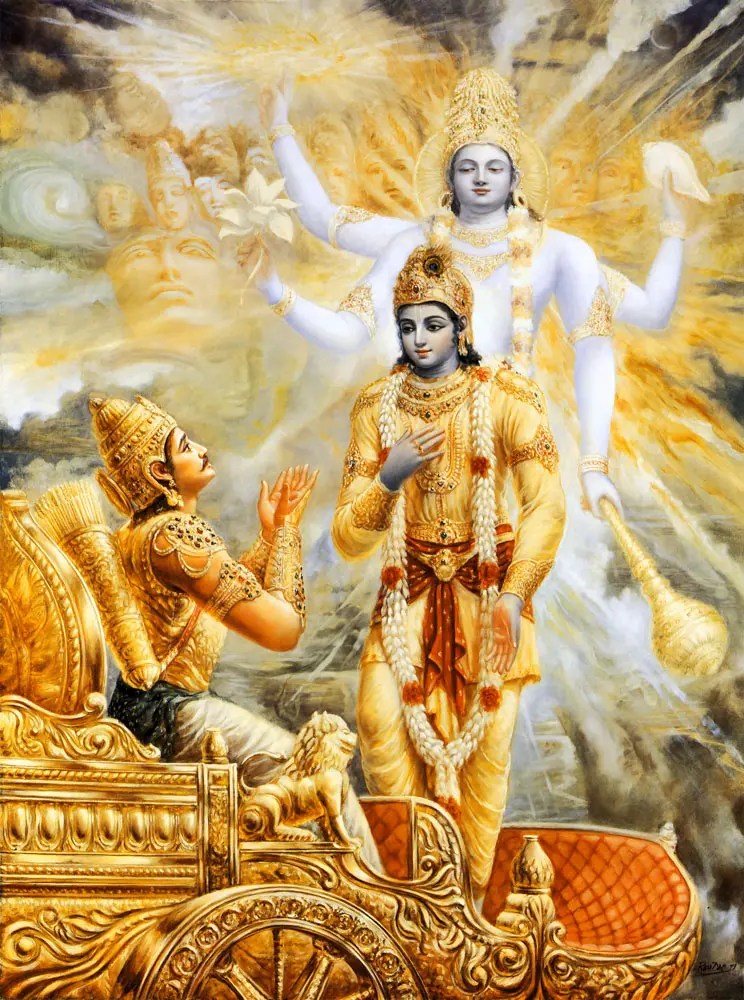
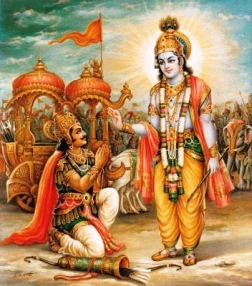
Last night I woke in the middle of the night , and couldn’t fall back asleep. While laying there, my mind just kinda went to thoughts of Krishna and Arjuna. Arjuna accepted Krishna as his spiritual master with these famous words from the Bhagavad-gita:
O Kṛṣṇa, I totally accept as truth all that You have told me. Neither the gods nor demons, O Lord, know Thy personality. (Bg 10.14)
This lead me to think of our relationship with our spiritual master His Divine Grace A. C. Bhaktivedanta Swami Prabhupada. And I came to the same conclusion as Arjuna. “I totally accept as truth all that You have told me“.
So I was thinking of our unique relationship with Srila Prabhupada. “Neither the gods nor demons, O Lord, know Thy personality”.Maybe the whole world outside of the circle of disciples and followers of His Divine Grace, cannot know his greatness and divine personality, but as disciples and followers, we can began to understand. Our relationship with Srila Prabhupada is much like that relationship between Krishna and Arjuna.
With that last thought, I fell back asleep, reflecting on Srila Prabhupada. -V
Today marks the appearance day of Srila Bhaktivinoda Thakura. To honor this day, we are posting a very nice song written by Srila Bhaktivinoda entitled “Suddha-bhakta”, and are observing a 1/2 day fast.
The dust of the lotus feet of pure devotees, enthusiastic devotional service, and service to the pure devotees of the highest order are the roots of the creeper of devotion.
When I hear the sound of the mrdanga in my heart I always desire to join in kirtana; and when I hear the bonafide songs describing Lord Caitanya’s pastimes, my heart dances in ecstasy.
Bhaktivinoda concludes by saying: “Whosoever attains the stage of enthusiasm for these devotional practices will be supremely blissful wherever he may be.”
Today we celebrate the Appearance of Lord Vamanadeva, the fifteenth Incarnation, wherin Krsna assumed the form of a dwarf brahmana.
“In the fifteenth incarnation, the Lord assumed the form of a dwarf-brāhmaṇa [Vāmana]…” (SB 1.19.19)
The following is a chapter summary from Srimad Bhagavatam, eight canto, chapter 18, entitled “Lord Vāmanadeva, the Dwarf Incarnation”, describing the Lord’s appearance and activities, and a verse from the First Canto.
Srimad-Bhagavatam By His Divine Grace A. C. Bhaktivedanta Swami Prabhupada Canto One, Chapter 19, Text 19
pañcadaśam—the fifteenth in the line; vāmanakam—the dwarf brāhmaṇa; kṛtvā—by assumption of; agāt—went; adhvaram—arena of sacrifice; baleḥ—of King Bali; pada-trayam—three steps only; yācamānaḥ—begging; pratyāditsuḥ—willing at heart to return; tri-piṣṭapam—the kingdom of the three planetary systems.
TRANSLATION
In the fifteenth incarnation, the Lord assumed the form of a dwarf-brāhmaṇa [Vāmana] and visited the arena of sacrifice arranged by Mahārāja Bali. Although at heart He was willing to regain the kingdom of the three planetary systems, He simply asked for a donation of three steps of land.
PURPORT
The Almighty God can bestow upon anyone the kingdom of the universe from a very small beginning, and similarly, He can take away the kingdom of the universe on the plea of begging a small piece of land.
Śrīmad-Bhāgavatam by His Divine Grace A. C. Bhaktivedanta Swami Prabhupāda Canto 8, Chapter 18
Lord Vāmanadeva, the Dwarf Incarnation
This chapter describes how Lord Vāmanadeva appeared and how He went to the sacrificial arena of Mahārāja Bali, who received Him well and fulfilled His desire by offering Him benedictions.
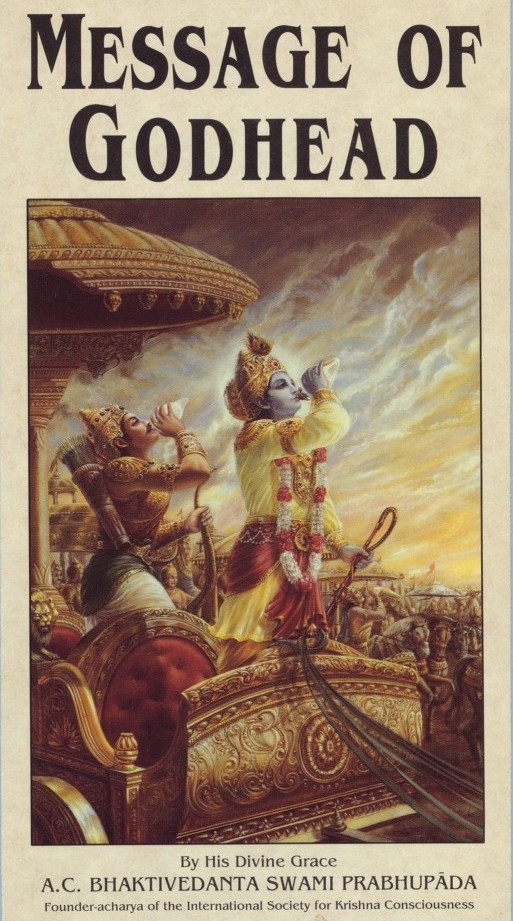
I thought I knew about all of Srila Prabhupada’s books, but this one has somehow escaped my attention until this morning. I am looking forward to reading it, and we thought I should share it with all of you. So we have included the entire book in this post. Hare Krishna!
” Message of Godhead” is a short introductory book on Krishna consciousness written by His Divine Grace in the 1950’s and first published by the BBT in 1990.
Message of Godhead
by His Divine Grace A. C. Bhaktivedanta Swami Prabhupada
Introduction
At present, we are concerned primarily with two things: one, ourselves; and the other, the place where we live. In other words, we are concerned with two objects: namely, everything that is related to our gross and subtle bodies; and the world at large, with all its paraphernalia. But there are others above us, the transcendentalists, who are concerned not only with their body and mind and the world at large, but also with the transcendental subject that is above the body and mind and the world at large. The transcendentalists are very much concerned with the Absolute Truth, and much less with relative truths.
These transcendentalists (ordinarily known as saints, philosophers, reformers, messengers, and so forth) appear in various places in the world at various times. They render transcendental service to the Absolute Truth and to humanity, also, by preaching the message of the transcendental world. According to these transcendentalists, even lower animals like cats and dogs are also concerned primarily with two things, namely, themselves and the world at large. Living entities other than human beings have no capacity to understand transcendental subjects. The human being is therefore considered to be the highest of all creations, and we must understand the nature of this higher standing.
When man, who is the highest of all created beings, is fully developed in consciousness, he concerns himself not only with his own self and the world where he lives, but he tries to understand the Absolute Truth. The Absolute Truth regulates man as well as the world, and knowing Him, the transcendentalist regulates his activities on the right path. This regulating process is commonly known as a system of faith or religion. All over the civilized world we find some process or form of religion – when man is devoid of any such religion or of transcendental traits, he is nothing but a beast. This subject matter, which the religionists delineate according to different countries, times, and people, is more or less aimed at the objective of the Absolute Truth.
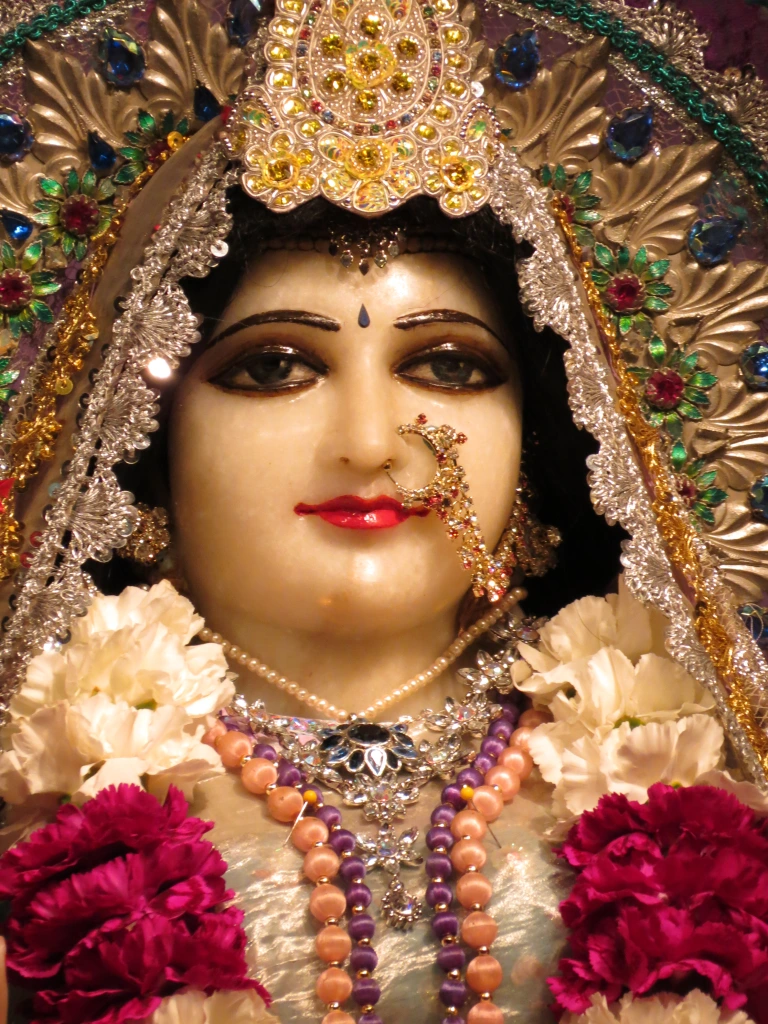
Today marks the Appearance of Srimati Radharani. We honor it with a half day fast, discussion on the glories of Srimati Radharani,, followed by a nice vegetarian feast.
The following are just a few of the many quotes from Srila Prabhupada which encourage us to approach Krishna through the mercy of Srimati Radharani, Krishna’s eternal consort. For those of us who feel that there is no hope of making spiritual progress in this lifetime, Srimati Radharani, Who is compassion personified, kindly comes to our rescue if we can humbly invoke Her divine blessings.
“I offer my respects to Radharani whose bodily complexion is like molten gold and who is the Queen of Vrndavana. You are the daughter of King Vrsabhanu, and You are very dear to Lord Krishna.” (Sri Radha Pranama)
“So this is our philosophy, to please Krishna through Radharani, and just today is the auspicious day of Radharani appearance. So we should offer puspanjali and pray to Radharani that ‘Radharani, kindly be merciful and tell about me to Your Krishna. To Your Krishna. Krishna is Yours.’ Krishna, Radha-Krishna. Krishna is not independent. Krishna is Radharani’s property. So you have to approach Krishna through Radharani. That is, today is the auspicious day. Worship Radharani very nicely and be happy.” (Srila Prabhupada Lecture, September 5, 1973)
“The beauty of Srimati Radharani’s eyes forcibly devours the beauty of newly grown blue lotus flowers, and the beauty of Her face surpasses that of an entire forest of fully blossomed lotuses. Her bodily luster seems to place even gold into a painful situation. Thus the wonderful, unprecedented beauty of Srimati Radharani is awakening in Vrindavana.” (Caitanya-caritamrita Antya 1.169)
“I emphatically say to you, O brothers, you will obtain your good fortune from the Supreme Lord Krishna only when Srimati Radharani becomes pleased with you.”(Prayer to the Lotus Feet of Krishna, September 13, 1965)
“Actually, because Krishna is the Supreme Personality of Godhead, it is very difficult to approach Him. But the devotees, taking advantage of His compassionate nature, which is represented by Radharani, always pray to Radharani for Krishna’s compassion.” (Nectar of Devotion, Chapter 22)
Srimati Radharani has twenty-five transcendental qualities. Her transcendental qualities are as follows:
1. She is sweetness personified2. She is a fresh young girl 3. Her eyes are always moving 4. She is always brightly smiling 5. She possesses all auspicious marks on her body 6. She can agitate Krishna by the flavor of Her person 7. She is expert in the art of singing 8. She can speak very nicely and sweetly 9. She is expert in presenting feminine attractions 10. She is modest and gentle 11. She is always very merciful 12. She is transcendentally cunning 13. She knows how to dress nicely 14. She is always shy 15. She is always respectful 16. She is always patient 17. She is very grave 18. She is enjoyed by Krishna 19. She is situated on the highest devotional platform 20. She is the abode of love of the residents of Gokula 21. She can give shelter to all kinds of devotees 22. She is always affectionate to superiors and inferiors 23. She is always obliged by the dealings of Her associates 24. She is the greatest amongst Krishna’s girlfriends 25. She always keeps Krishna under Her control
I was reading from the Caitanya-caritamrta, and these three verses and purports by His Divine Grace A. C Bhaktivedanta Swami explains much about the division we find in our ISKCON society today.
At first all the followers of Advaita Ācārya shared a single opinion. But later they followed two different opinions, as ordained by providence. (Cc Adi-lila 12.8)
Some of the disciples strictly accepted the orders of the ācārya, and others deviated, independently concocting their own opinions under the spell of daivī-māyā. (Cc Adi-lila 12.9)
The order of the spiritual master is the active principle in spiritual life. Anyone who disobeys the order of the spiritual master immediately becomes useless. (Cc Adi-lila 12.10)
Chant, chant “Radha-Krsna!” Everyone chant! When Lord Caitanya and Lord Nityananda came dancing through Nadia, They gave these teachings: Chant, chant “Radha-Krsna!” Everyone chant! You are caught up in a whirlpool of senseless action and are sinking lower and lower. Chant, chant “Radha-Krsna!” Everyone chant!
If you just understand that the spirit soul is the eternal servant of Krsna, you will never have any more sorrows. Chant Hare Krsna and your eyes will fill with tears and your body will feel transcendental shivering. Chant, chant “Radha-Krsna!” Everyone chant!
Simply chant “Radha-Krsna” and join with us. Those are the only alms we beg. Chant, chant “Radha-Krsna!” Everyone chant! “All dangers will be gone when that Name is chanted,” says Bhaktivinoda Thakura. Chant, chant “Radha-Krsna!” Everyone chant!
Yesterday we attended the Memorial Celebration here at New Vrindaban for a very special devotee; Vani devi dasi. There were many moving eulogies by Family and Friends. There was one very nice poem delivered by Nityodita Prabhu we would like to share with you:
“May We Always Be Grateful for Great Devotees in our Mist”
by Nityodita Prabhu
When we think of the beloved devotee, our Mother Vani We are reminded of the qualities of Srimati Radharani Out of all the mothers you could possibly meet Vani like Radharani was very very sweet.
Her gentle words and her beautiful smile Would stay in your heart for a very long while. She cooked for the Deities, she served with such grace Bringing a touch of Goloka to this temporary place.
She lived for the service of Guru and Gauranga Always choosing the shelter of the pure sadhu-sanga. Though she has left us and gone back to her home Her memory reminds us we are never alone.
So let us be grateful for the time she was here And hold her example remarkably dear. O Mother Vani, please cast your kind glance And help us onward in this divine dance.
The strangest thing happened this morning. While I was chanting my japa, I guess I was a little distracted because I was thinking about work, and the following verse from the Srimad Bhagavatam just popped into my head. I was trying to remember where this verse was…I was pretty sure it was in the First Canto…so I took the first canto off the shelf and just randomly opened it. And to my great surprise, it opened to the exact verse I was thinking about.
The supreme occupation [dharma] for all humanity is that by which men can attain to loving devotional service unto the transcendent Lord. Such devotional service must be unmotivated and uninterrupted to completely satisfy the self. (Srimad Bhagavatam 1.2.6)
These original books by Srila Prabhupada are definitely transcendental.
“The Spiritual Master is present wherever his sincere disciple is trying to serve his instructions. This is possible by the mercy of Krishna.
In your attempts to serve me, and in all your sincere devotional sentiments I am with you, as my Guru Maharaja is with me. Remember this always…I shall never leave you. You are my disciple and I am your Spiritual Master, so there is no question, as long as you follow my instructions, that I shall never leave you” (Srila Prabhupada)
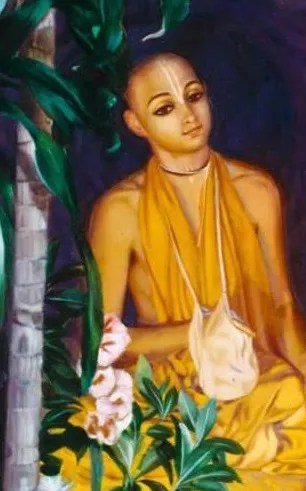
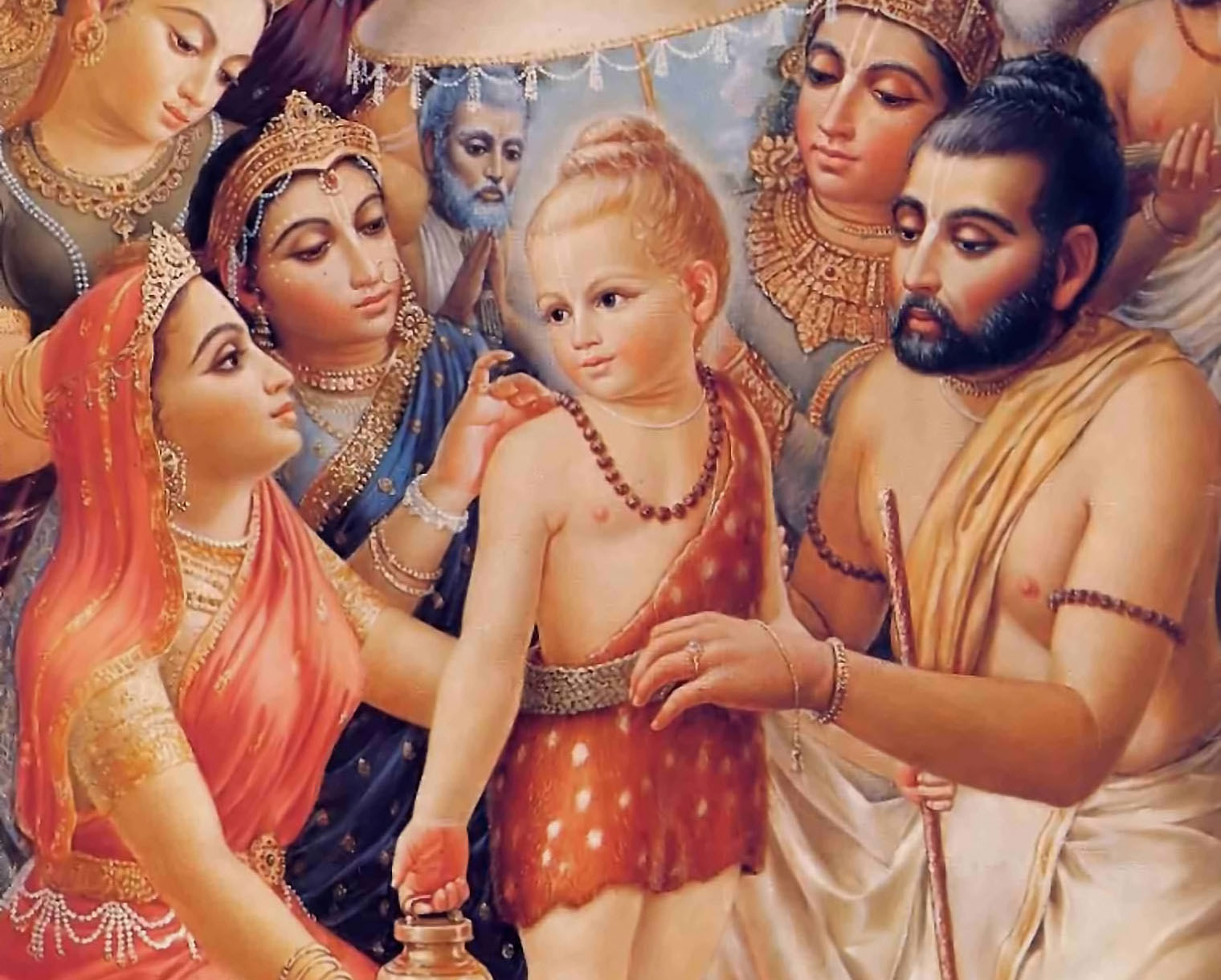
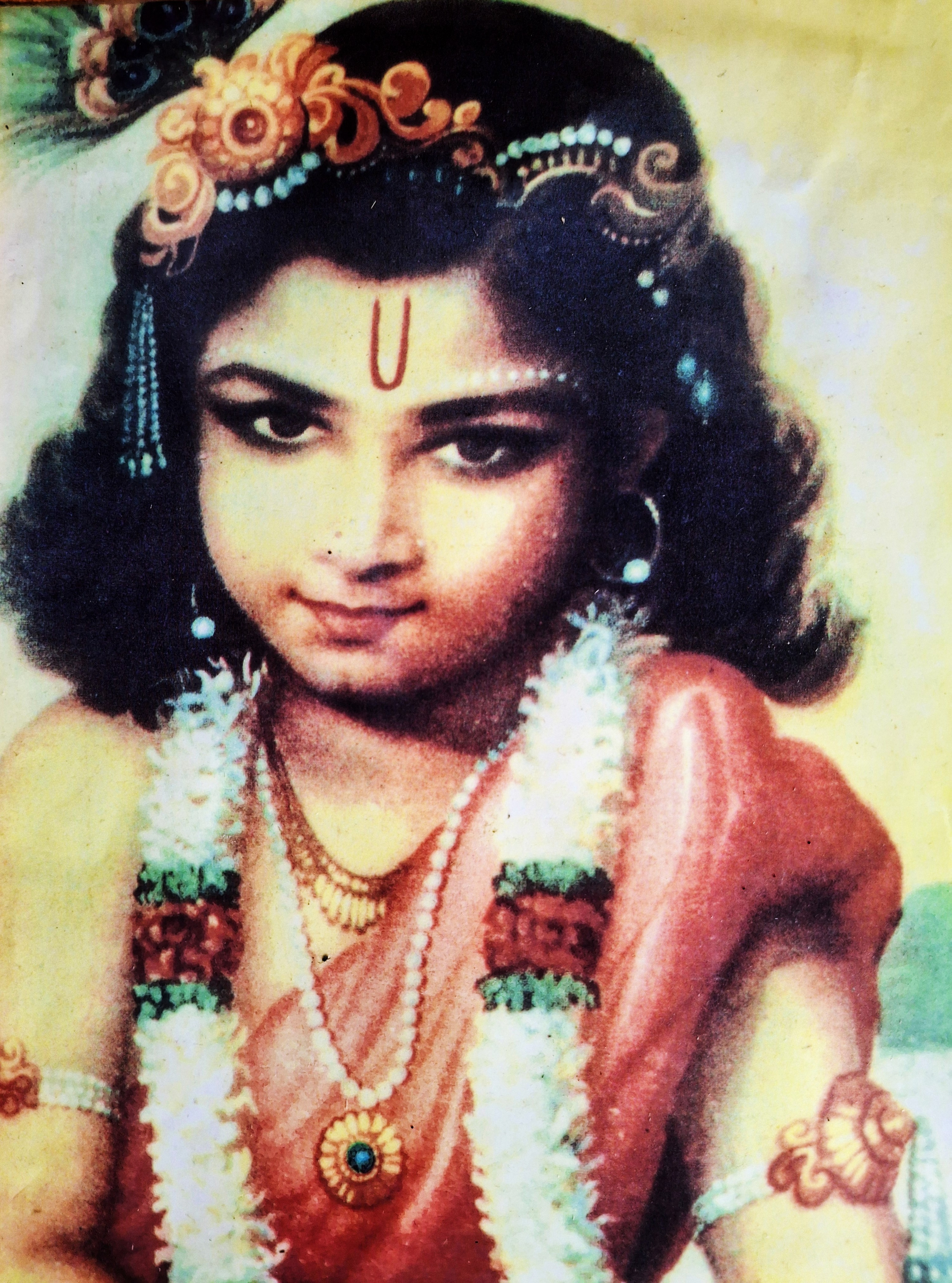
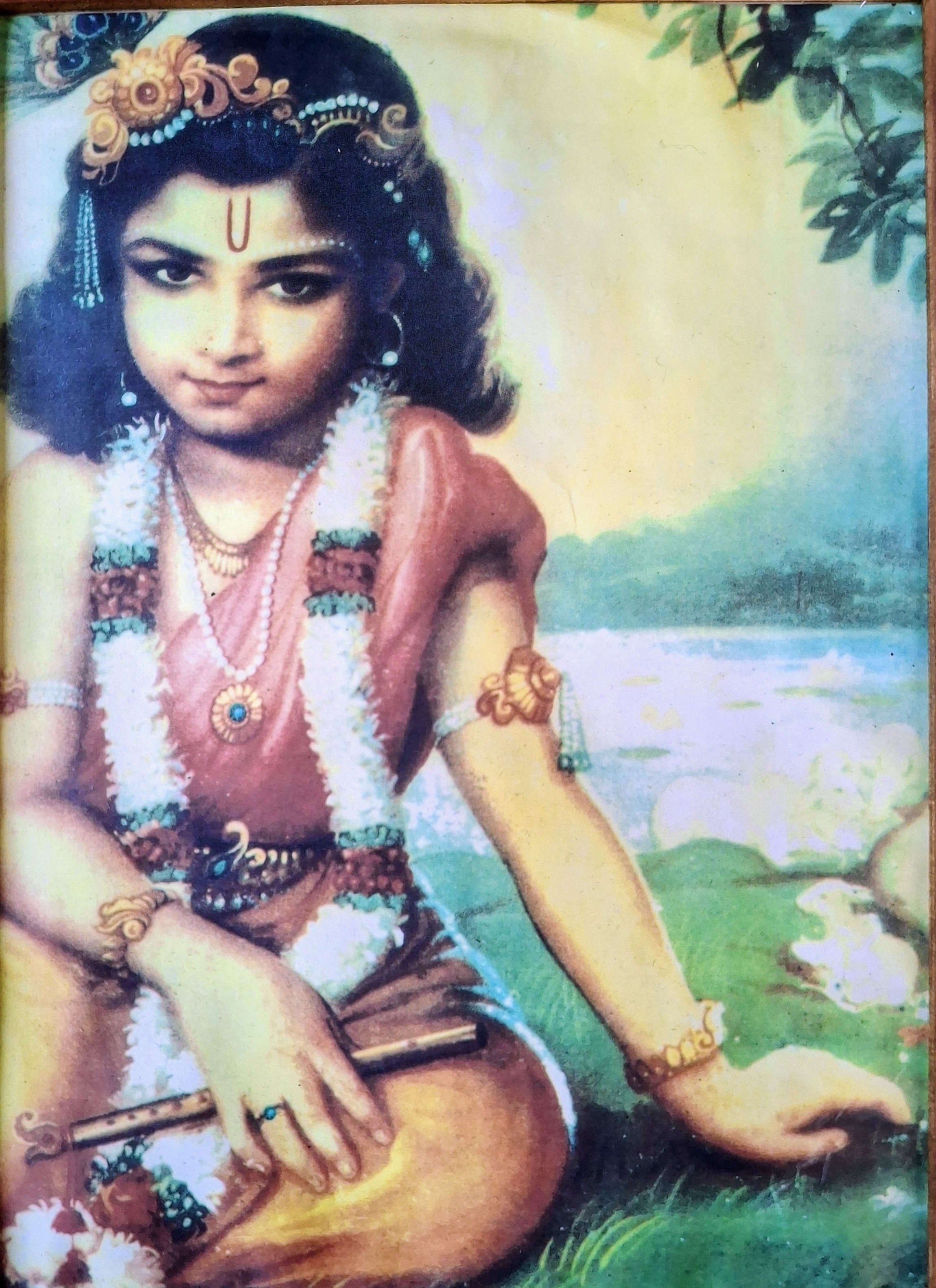
This is probably my favorite picture in our temple room. I don’t know much about the history of it, where it came from or how it appeared in our home, but it has always been hanging in our temple room. My wife Lokadrsti devi dasi, told me that this is a picture of Lord Caitanya in his childhood mood as Nimai. That’s about all I know, but I am enchanted by this painting, it is so beautiful!
The early pastimes of Lord Caitanya can be found in Adi-lila Volume 3, Chapter 13 of the Sri Caitanya-caritamrta. You can click on the following link to read the entire chapter.
Sri Caitanya-caritamrta
By His Divine Grace A. C. Bhaktivedanta Swami Prabhupada
The Advent of Lord Śrī Caitanya MahāprabhuCc. Ādi 13
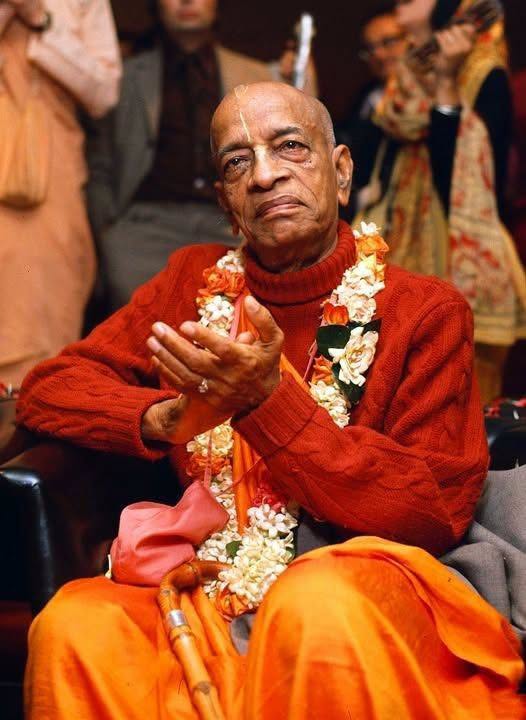
Today is the Apperancee Day of Our Beloved Spiritual Master, His Divine Grace A.C. Bhaktivedanta Swami Prabhupada. The Founder-Acarya of the International Society for Krishna Consciousness. We offer our profound gratitude and respectful obeisances. All Glories to Srila Prabhupada!
Vyasa-Puja: The Most Blessed Event
Dear Srila Prabhupada
So today, on this Most Blessed day, Your Appearance day celebration, Please accept my humble obeisances again and again, and kindly forgive my offenses.
On this auspicious day I have come with this offering just to worship you. On this day, and every day, I am filled with a sense of gratitude and wonder. I cannot even imagine where my life would be today, if you had not appeared and blessed us all with your divine mercy.
The fact that you have always resided in my heart, and have been my most constant friend and ever well-wisher, even without your physical presence, proves our eternal relationship with you. So many friends and family have come and gone, but you Srila Prabhupada, have remained in my life as the one constant in my life, I could always turn to.
You are present in your vani; your books and instructions. You are present still in your pictures and murti’s. You live in the hearts of your sincere devotees. You have touched us all so deeply; we cannot help but remember you. Srila Prabhupa, I am most unworthy to have received your mercy, and because of knowing my insignificance, it has caused me to be even more grateful and appreciative of your blessings.
“Indeed, I am just like a dwarf who wants to capture the moon. Although I am completely unfit, a desire to receive Your mercy is awakening within my mind.”
In writing this homage, I am reminded of a dream I had recently. In my dream you were reclining on your right side, propped up on your elbow and I was kneeling down in front of you. I said “Srila Prabhupada, my Krsna Consciousness is still very child-like”. Your face lit up and your Lotus eyes became very large.“Oh!” You said. “Sometimes when I see your picture, I began to cry” I replied. You leaned forward and very gravely but kindly said, “Yes, it is alright to have love and affection for your Spiritual Master”. I awoke from the dream and offered my obeisances thinking of your extraordinary magnanimity and kindness and your ability to ease our suffering and allow us to love you even more.
So on this Most Blessed day, Your Appearance day celebration, Please accept my humble obeisance again and again, kindly forgive my offenses, and continue to guide me as my captain with your books as maps, to steer me through the rough waters of this dangerous age of Kali
Begging to remain your eternal servant Vyasasan das
Please accept my humble obeisances at your lotus feet.
Srila Prabhupada you are not a mundane philanthropist or welfare worker.
You are not interested on merging into the brahman effulgence, nor interested in material honor or reputation.
You are the most exalted personality who wants to show mercy upon the conditioned souls
You are very much aggrieved to see the suffering of others.
By your presence the whole world has benefited and your heart is always filled with compassion for the conditioned souls.
You were prepared to risk everything to rescue the condition souls from the material existence and the medicine you gave is to chant Hare Krsna,Hare Krsna, Krsna Krsna, Hare Hare, Hare Rama, Hare Rama, Rama Rama Hare Hare.
The entire world is purified by the APPEARANCE of such a great devotee.
“One who is brought under the lotus feet of the Lord by the endeavor of the Lord’s servant, the spiritual master is certainly immediately purified, however lowborn he may be. He becomes eligible to return home, back to Godhead.” (SB. 2. 14-18)
Thank you,Srila Prabhuapada for coming to save us.
Now it is up to me to take the medicine you have given seriously.
Today we celebrate the Appearance of Lord Krishna (Janmastami) with a full day fast, untill midnight.Lord Krishna’s birth is commemorated at midnight with devotional songs (bhajans), followed bya small ekadasi vegetarian feast.
Janmashtami means the celebration of the birth of Lord Krishna, derived from the Sanskrit words “janma” (birth) and “ashtami” (the eighth day)
On this day we like to read from the Krsna Book, so we have included an excerpt from the Krsna book, chapter 5 entitled “Meeting of Nanda and Vasudeva”.
KRSNA The Supreme Personality of Godhead
By His Divne Grace A. C. Bhaktivedanta Swami Prabhupada
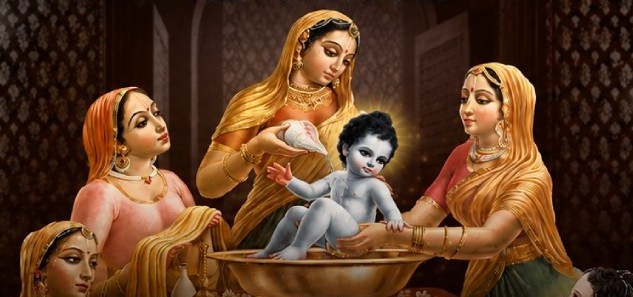
Although Kṛṣṇa was the real son of Vasudeva and Devakī, because of Kaṁsa’s atrocious activities Vasudeva could not enjoy the birth ceremony of his son. But Nanda Mahārāja, the foster father, celebrated the birth ceremony of Kṛṣṇa very joyfully. The next day, it was declared that a male child was born of Yaśodā. According to Vedic custom, Nanda Mahārāja called for learned astrologers and brāhmaṇas to perform the birth ceremony. After the birth of a child, the astrologers calculate the moment of the birth and make a horoscope of the child’s future life. Another ceremony takes place after the birth of the child: the family members take baths, cleanse themselves and decorate themselves with ornaments and garlands; then they come before the child and the astrologer to hear of the future life of the child. Nanda Mahārāja and other members of the family dressed and sat down in front of the birth place. All the brāhmaṇas who were assembled there on this occasion chanted auspicious mantras, according to the rituals, while the astrologers performed the birth ceremony. All the demigods are also worshiped on this occasion, as well as the forefathers of the family. Nanda Mahārāja distributed 200,000 well decorated, dressed and ornamented cows to the brāhmaṇas. He not only gave cows in charity, but hills of grains, decorated with golden-bordered garments and many ornaments.