24 Feb 2013
by The Hare Krishna Movement
in A.C. Bhaktivedanta Swami Prabhupada, Beyond Birth & Death, Bhagavad-gita, Bhismadeva, Srimad Bhagavatam
Tags: A.C. Bhaktivedanta Swami Prabhupada, beyond samsara, bhagavad-gita, Bhismadeva, bhutva-bhutva, Lord Sri Krsna, mystic yogis, mystics, parliyate, pure devotee, repetition of different bodies, samsara, samsara means material existence, samsara means this material entanglement, Srimad Bhagavatam, yogic situation, yogis

Beyond Saṁsāra
As I was reading from the Srimad Bhagavatam this morning about the passing of Bhīṣmadeva it was being described how “The perfect yogīs or mystics can leave the material body at their own sweet will at a suitable time and go to a suitable planet desired by them.” And how it is possiable to go beyond Saṁsāra, and go back to Godhead without any doubt.
…In the momentous hour of leaving his material body, Bhīṣmadeva set the glorious example concerning the important function of the human form of life. The subject matter which attracts the dying man becomes the beginning of his next life. Therefore, if one is absorbed in thoughts of the Supreme Lord Śrī Kṛṣṇa, he is sure to go back to Godhead without any doubt.
And what is Samsara?
Saṁsāra means material existence. That is called saṁsāra. Bhūtvā bhūtvā pralīyate (BG 8.19). You take your birth once in some form of body. You live for some time. Then you have to give up this body. Then you have to accept another body. Then again live for some time. Then give up that body. Again accept another body. In this way, it is going on. That is called saṁsāra, rotating within this material world. (Lecture on Gurvastakam at Upsala University by His Divine Grace -Stockholm, September 9, 1973)
The saṁsāra means repetition of different bodies. That is called saṁsāra. (Lecture on SB 1.2.4 -Rome, May 28, 1974)
Saṁsāra means this material entanglement. This is called saṁsāra.
(Lecture on CC Madhya-lila 25.40-50 – San Francisco, January 24, 1967)
More
18 Feb 2013
by The Hare Krishna Movement
in A.C. Bhaktivedanta Swami Prabhupada, Guru & Disciple, Krsna-katha, Srimad Bhagawatam
Tags: A.C. Bhaktivedanta Swami Prabhupada, bepetition of birth and death, bhagavad-gita, disciple, Krsna, Krsna-katha, liberated spiritual master, nivrtta-tarsaih, SB 10.1.4, Srila Prabhupada, Srimad Bhagavatam, Supreme Personality of Godhead
click on image to enlarge
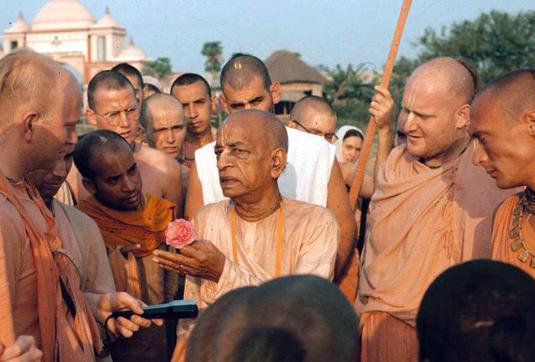
…When discourses on kṛṣṇa-kathā take place between a liberated spiritual master and his disciple, others also sometimes take advantage of hearing these topics and also benefit. These topics are the medicine to stop the repetition of birth and death. The cycle of repeated birth and death, by which one takes on different bodies again and again, is called bhava or bhava-roga. If anyone, willingly or unwillingly, hears kṛṣṇa-kathā, his bhava-roga, the disease of birth and death, will certainly stop. Therefore kṛṣṇa-kathā is called bhavauṣadha, the remedy to stop the repetition of birth and death.
In India it is the practice among the general populace to hear about Kṛṣṇa, either from Bhagavad-gītā or from Śrīmad-Bhāgavatam, in order to gain relief from the disease of repeated birth and death. Although India is now fallen, when there is a message that someone will speak about Bhagavad-gītā or Śrīmad-Bhāgavatam, thousands of people still gather to hear. The following verse indicates, however, that such recitation of Bhagavad-gītā and Śrīmad-Bhāgavatam must be done by persons completely freed from material desires (nivṛtta-tarṣaiḥ).
If we hear the glories of the Supreme Personality of Godhead from liberated persons, this hearing will certainly free us from the bondage of material activities, but hearing Śrīmad-Bhāgavatam spoken by a professional reciter cannot actually help us achieve liberation. Kṛṣṇa-kathā is very simple. In Bhagavad-gītā it is said that Kṛṣṇa is the Supreme Personality of Godhead. As He Himself explains, mattaḥ parataraṁ nānyat kiñcid asti dhanañjaya: “O Arjuna, there is no truth superior to Me.” Simply by understanding this fact—that Kṛṣṇa is the Supreme Personality of Godhead—one can become a liberated person. (Purport SB 10.1.4)
Full Verse and Purport More
13 Feb 2013
by The Hare Krishna Movement
in A.C. Bhaktivedanta Swami Prabhupada, Bhava, Srimad Bhagavatam, Vaisnava Vocabulary
Tags: A.C. Bhaktiverdanta Swami Prabhupada, affection, Bhagavad Gita, bhava, highest achievement of human society, love of God, preliminary stage of transcendental love of Godhead, prema, pure devotional service, pure love or prema, Srimad Bhagavatam

click on image to enlarge
Here is a new word for your Vaisnava Vocabulary: Bhāva. In the Glossary in the back of the Bhagavad-gita As It Is, 1972 Edition, the word Bhāva is defined as; the preliminary stage of transcendental love of Godhead. Bhāva is a big word and has various meanings
…The last stage of the devotional life is called bhāva, or transcendental love of Godhead.
“In the beginning one must have a preliminary desire for self-realization.…This taste leads one further forward to attachment for Kṛṣṇa consciousness, which is matured in bhāva, or the preliminary stage of transcendental love of God. Real love for God is called premā, the highest perfectional stage of life.” In the premā stage there is constant engagement in the transcendental loving service of the Lord. So, by the slow process of devotional service, under the guidance of the bona fide spiritual master, one can attain the highest stage, being freed from all material attachment, from the fearfulness of one’s individual spiritual personality, and from the frustrations resulting from void philosophy. Then one can ultimately attain to the abode of the Supreme Lord. (Bhagavad-gita 4.11)
So it seem that bhāva is not only the preliminary stage of transcendental love of Godhead but we find that this preliminary stage of transcendental love is also the path to the highest perfectional stage of life, pure love or premā. There are two ways to approach the Lord, one is with awe and reverence and the other is with affection; bhāva. One who approaches the Lord with affection, is sure to advance spiritually.
In the Srimad Bhagavatam we find many references to the word Bhāva and highlighted some of them here. More
12 Feb 2013
by The Hare Krishna Movement
in A.C. Bhaktivedanta Swami Prabhupada, Srimad Bhagawatam, Vidura
Tags: A. C. Bhaktivedanta Swami Prabhuapada, Dhrtarastra, Draupadi, gandhari, krpi, Kunti, Maharaja Yudhisthira, satyaki, SB 1.13, Srimad Bhagavatam, uttara, Vidura
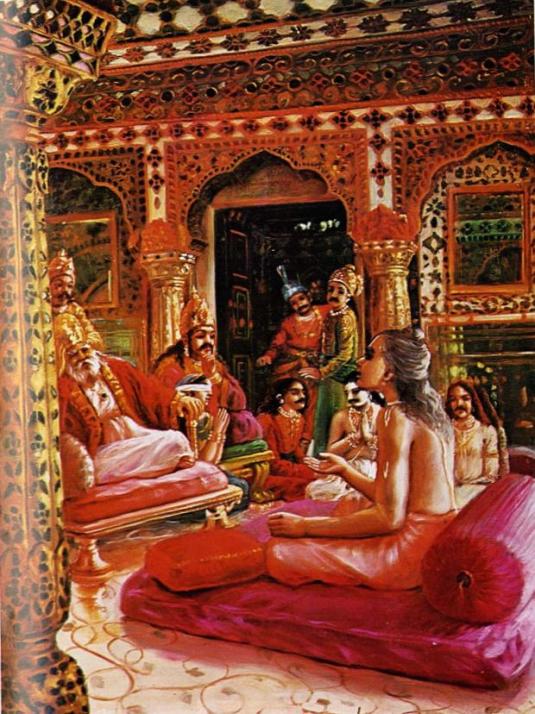
When they saw Vidura return to the palace, all the inhabitants—Mahārāja Yudhiṣṭhira, his younger brothers, Dhṛtarāṣṭra, Sātyaki, Sañjaya, Kṛpācārya, Kuntī, Gāndhārī, Draupadī, Subhadrā, Uttarā, Kṛpī, many other wives of the Kauravas, and other ladies with children—all hurried to him in great delight. It so appeared that they had regained their consciousness after a long period.
With great delight they all approached him, as if life had returned to their bodies. They exchanged obeisances and welcomed each other with embraces.
Due to anxieties and long separation, they all cried out of affection. King Yudhiṣṭhira then arranged to offer sitting accommodations and a reception.
After Vidura ate sumptuously and took sufficient rest, he was comfortably seated. Then the King began to speak to him, and all who were present there listened… (SB 1.13.3-7)
King Yudhiṣṭhira was expert in reception also, even in the case of his family members. Vidura was well received by all the family members by exchange of embraces and obeisances. After that, bathing and arrangements for a sumptuous dinner were made, and then he was given sufficient rest. After finishing his rest, he was offered a comfortable place to sit, and then the King began to talk about all happenings, both family and otherwise. That is the proper way to receive a beloved friend, or even an enemy. According to Indian moral codes, even an enemy received at home should be so well received that he will not feel any fearful situation. An enemy is always afraid of his enemy, but this should not be so when he is received at home by his enemy. This means that a person, when received at home, should be treated as a relative, so what to speak of a family member like Vidura, who was a well-wisher for all the members of the family. Thus Yudhiṣṭhira Mahārāja began to speak in the presence of all the other members.
(SB 1.13.7 purport)
full chapter More
28 Jan 2013
by The Hare Krishna Movement
in A.C. Bhaktivedanta Swami Prabhupada, Caitanya Mahaprabhu, Devotional Service, Srimad Bhagavatam
Tags: A.C. Bhaktivedanta Swami Prabhupada, causeless mercy, chanting, devotional service, hearing, Lord Sri Caitanya Mahaprabhu, mercy of sri caitanya, millennium, Prayers by Queen Kunti, praying, remembering, Srimad Bhagavad-gita, Srimad Bhagavatam, worshiping

…In the Śrīmad Bhagavad-gītā the Lord asserts that He appears in every millennium just to reestablish the way of religion. The way of religion is made by the Supreme Lord. No one can manufacture a new path of religion, as is the fashion for certain ambitious persons. The factual way of religion is to accept the Lord as the supreme authority and thus render service unto Him in spontaneous love.
The Lord, however, out of His causeless mercy, because He is more merciful to the suffering living beings than they can expect, appears before them and renovates the principles of devotional service comprised of hearing, chanting, remembering, serving, worshiping, praying, cooperating and surrendering unto Him. Adoption of all the above-mentioned items, or any one of them, can help a conditioned soul get out of the tangle of nescience and thus become liberated from all material sufferings created by the living being illusioned by the external energy. This particular type of mercy is bestowed upon the living being by the Lord in the form of Lord Śrī Caitanya Mahāprabhu. (from Purport to SB 1.8.35)
Full Text and puroprt More
23 Jan 2013
by The Hare Krishna Movement
in A.C. Bhaktivedanta Swami Prabhupada
Tags: A.C. Bhaktivedanta Swami Prabhupada, Absolute Truth, Arjuna, atma, Bg. 8, bhagavad-gita, Bhagavan, body mind soul, brahman, devotional seervice, fruitive activities, individual soul, karma, Krishna, krsna consciousness, living enity, Paramatma, Srimad Bhagavatam, transcendental, yoga, yoga principles

Bhagavad-gītā As It Is 1972 Edition
By His Divine Grace A. C. Bhaktivedanta Swami Prabhupāda
Chapter 8
Attaining the Supreme
More
03 Jan 2013
by The Hare Krishna Movement
in A.C. Bhaktivedanta Swami Prabhupada, Gajendra, Gajendra's Prayers of Surrender, Gajendra's Prayers of Surrender, Srimad Bhagavatam
Tags: A.C. Bhaktivedanta Swami Prabhupada, elephant and the crocodile, Gajendra, indradyumna, king of the elephants, SB 8.3.1-29, Srimad Bhagavatam, Supreme Lord, The Supreme Personality of Godhead
click on image to enlarge
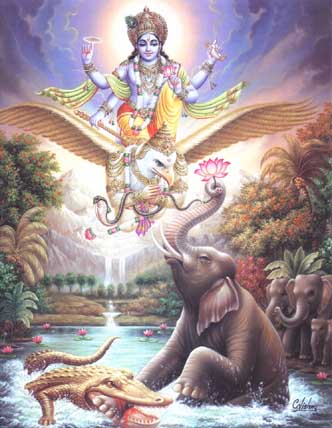
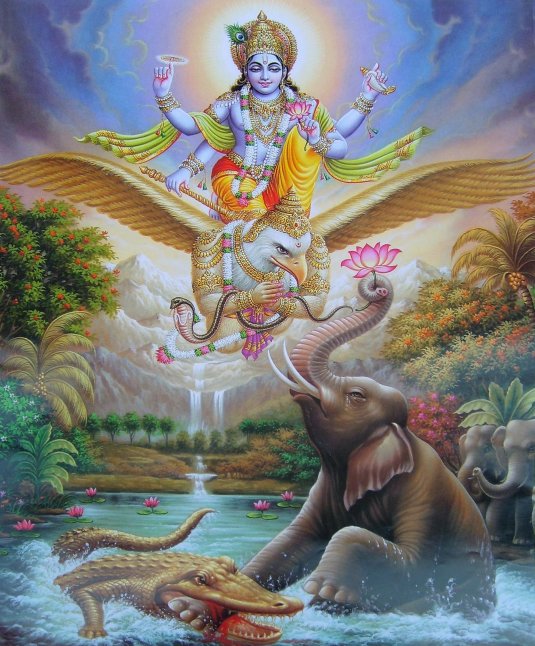
The following are the prayers by Gajendra, the King of the elephants, offered to the Supreme Personality of Godhead, during his difficult struggle with the crocodile. It appears that the King of the elephants was formerly a human being known as Indradyumna and that he learned a prayer to the Supreme Lord. Fortunately he remembered that prayer and began to chant it. First he offered his respectful obeisances to the Supreme Personality of Godhead, and because of his awkward position in having been attacked by the crocodile, he expressed his inability to recite prayers nicely. Nonetheless, he tried to chant the mantra and expressed himself in the prayers that follow.
…It is imperative that all devotees in Kṛṣṇa consciousness practice chanting some mantra. Certainly one should chant the Hare Kṛṣṇa mantra, which is the mahā-mantra, or great mantra, and also one should practice chanting cintāmaṇi-prakara-sadmasu or the Nṛsiṁha strotra (ito nṛsiṁhaḥ parato nṛsiṁho yato yato yāmi tato nṛsiṁhaḥ). Every devotee should practice in order to chant some mantra perfectly so that even though he may be imperfect in spiritual consciousness in this life, in his next life he will not forget Kṛṣṇa consciousness, even if he becomes an animal. Of course, a devotee should try to perfect his Kṛṣṇa consciousness in this life, for simply by understanding Kṛṣṇa and His instructions, after giving up this body one can return home, back to Godhead. Even if there is some falldown, practice of Kṛṣṇa consciousness never goes in vain. For example, Ajāmila, in his boyhood, practiced chanting the name of Nārāyaṇa under the direction of his father, but later, in his youth, he fell down and became a drunkard, woman-hunter, rogue and thief. Nonetheless, because of chanting the name of Nārāyaṇa for the purpose of calling his son, whom he had named Nārāyaṇa, he became advanced, even though he was involved in sinful activities. Therefore, we should not forget the chanting of the Hare Kṛṣṇa mantra under any circumstances. It will help us in the greatest danger, as we find in the life of Gajendra. (From Purport to text 1)
Śrīmad-Bhāgavatam
By His Divine Grace A. C. Bhaktivedanta Swami Prabhupāda
Canto 8, Chapter Three, Text 1-29
Gajendra’s Prayers of Surrender More
27 Dec 2012
by The Hare Krishna Movement
in A.C. Bhaktivedanta Swami Prabhupada, Bhismadeva
Tags: A.C. Bhaktivedanta Swami Prabhupada, battlefield, Battlefield of Kuruksetra, Bhismadeva, Lord Sri Krsna, SB 1.9.38, sharp arrows., Srimad Bhagavatam

…The dealings of Lord Kṛṣṇa and Bhīṣmadeva on the Battlefield of Kurukṣetra are interesting because the activities of Lord Śrī Kṛṣṇa appeared to be partial to Arjuna and at enmity with Bhīṣmadeva; but factually all this was especially meant to show special favor to Bhīṣmadeva, a great devotee of the Lord. The astounding feature of such dealings is that a devotee can please the Lord by playing the part of an enemy.
Srimad Bhagavatam
By His Divine Grace A.C. Bhaktivedanta Swami Prabhupada
First Canto, Chapter 9, Text 38
The Passing Away of Bhismadeva
More
16 Dec 2012
by The Hare Krishna Movement
in A.C. Bhaktivedanta Swami Prabhupada, Kali Yuga, Time
Tags: A.C. Bhaktivedanta Swami Prabhupada, as it is, bhagavad-gita, constant flux, cycle of time, duration of the material universe, dvapara-yuga, Kali-yuga, Macmillan 1972 Edition, material universe, satya-yuga, Srimad Bhagavatam, Time, transcendental knowledge, Treta-yuga, yuga

click on image to enlarge
Is It The End of The World or Just Kali Yuga?
As devotees, or rather as disciples of His Divine Grace A.C. Bhaktivedanta Swami Prabhupada, we do not accept the theory of “The End of the World”. There is too much scriptural evidence to counter such a speculative conclusion. There is ample description of “Time”, as given in the Vedic Scriptures such as the Bhagavad-gita and the Srimad Bhagavatam to confirm that there is no end to this age for another 427,000 years.
Once when Srila Prabhupada was asked by one devotee…
Lokamangala dasa: In your books you explain that we are in the Kali-yuga age. Is the Kali-yuga age coming to a close now?
Srila Prabhupada: No. It will continue for another 427,000 years. The duration of Kali-yuga is 432,000 years. Out of that, we have passed only 5,000 years. The balance is 427,000 years. And during this time the condition of society will be worse-not better but worse. In the last stage of Kali-yuga there will be no food grains, no milk, no fruits. It will be a very horrible time. People will kill their own children and eat them, just like animals. The last stage of Kali-yuga will be like that. So before coming to that stage, better to take Krsna consciousness and go back to Krsna. That is our program. We don’t wish to wait for the worst things. The worst things are already happening, and it will be still worse. Instead of waiting for that time, better to become perfect by chanting Hare Krsna and go back home, back to Godhead. That is our position.
Also in the books we find:
At the present moment we have just passed through five thousand years of the Kali-yuga, which lasts 432,000 years. Before this there was Dvāpara-yuga (800,000 years), and before that there was Tretā-yuga (1,200,000 years). Thus, some 2,005,000 years ago, Manu spoke the Bhagavad-gītā to his disciple and son Mahārāja lkṣvāku, the King of this planet earth. The age of the current Manu is calculated to last some 305,300,000 years, of which 120,400,000 have passed. (Bhagavad-gita 4.1)
The duration of the material universe is limited. It is manifested in cycles of kalpas. A kalpa is a day of Brahmā, and one day of Brahmā consists of a thousand cycles of four yugas or ages: Satya, Tretā, Dvāpara, and Kali. The cycle of Satya is characterized by virtue, wisdom and religion, there being practically no ignorance and vice, and the yuga lasts 1,728,000 years. In the Tretā-yuga vice is introduced, and this yuga lasts 1,296,000 years. In the Dvāpara-yuga there is an even greater decline in virtue and religion, vice increasing, and this yuga lasts 864,000 years. And finally in Kali-yuga (the yuga we have now been experiencing over the past 5,000 years) there is an abundance of strife, ignorance, irreligion and vice, true virtue being practically nonexistent, and this yuga lasts 432,000 years. In Kali-yuga vice increases to such a point that at the termination of the yuga the Supreme Lord Himself appears as the Kalki avatara, vanquishes the demons, saves His devotees, and commences another Satya-yuga. Then the process is set rolling again. These four yugas, rotating a thousand times, comprise one day of Brahmā, the creator god, and the same number comprise one night. Brahmā lives one hundred of such “years” and then dies. These “hundred years” by earth calculations total to 311 trillion and 40 million earth years. By these calculations the life of Brahmā seems fantastic and interminable, but from the viewpoint of eternity it is as brief as a lightning flash. In the causal ocean there are innumerable Brahmās rising and disappearing like bubbles in the Atlantic. Brahmā and his creation are all part of the material universe, and therefore they are in constant flux. (Bhagavad-gita 8.17)
There are four yugas: Satya-yuga, Tretā-yuga, Dvāpara-yuga and Kali-yuga. During the first yuga, Satya-yuga, people were very pious. Everyone practiced the mystic yoga system for spiritual understanding and realization of God. Because everyone was always absorbed in samādhi, no one was interested in material sense enjoyment. During Tretā-yuga, people enjoyed sense pleasure without tribulations. Material miseries began in Dvāpara-yuga, but they were not very stringent. Stringent material miseries really began from the advent of Kali-yuga. (Srimad Bhagavatam 5.17.12)
After the Battle of Kurukṣetra, at which Bhagavad-gītā was spoken, Kali-yuga continues for 432,000 years, of which only 5,000 years have passed. Thus there is still a balance of 427,000 years to come. Of these 427,000 years, the 10,000 years of the saṅkīrtana movement inaugurated by Śrī Caitanya Mahāprabhu 500 years ago provide the opportunity for the fallen souls of Kali-yuga to take to the Kṛṣṇa consciousness movement, chant the Hare Kṛṣṇa mahā-mantra and thus be delivered from the clutches of material existence and return home, back to Godhead. (Srimad Bhagavatam 8.5.23)
Full Text and Purports More
13 Dec 2012
by The Hare Krishna Movement
in A.C. Bhaktivedanta Swami Prabhupada, Srimad Bhagavatam
Tags: A.C. Bhaktivedanta Swami Prabhupada, bhakti, feelings of devotional service, illusion and fearfulness, illusion fearfulness, lamentation, Lord Krishna, SB 1.7.7., Srimad Bhagavatam, Supreme Personality of Godhead, The Son Of Drona Punished, transcendental sound, Vedic literature, worldly miseries, yasyam

The ultimate result of devotional service is to develop genuine love for the Supreme Personality…And love is the only word that can be properly used to indicate the relation between Lord Kṛṣṇa and the living entities.
Loving devotional service to the Lord begins with hearing about the Lord. There is no difference between the Lord and the subject matter heard about Him. Therefore, hearing about Him means immediate contact with Him by the process of vibration of the transcendental sound…
…The conclusion is that simply by hearing the Vedic literature Śrīmad-Bhāgavatam, one can have direct connection with the Supreme Personality of Godhead Śrī Kṛṣṇa, and thereby one can attain the highest perfection of life by transcending worldly miseries, illusion and fearfulness. These are practical tests for one who has actually given a submissive hearing to the readings of the Śrīmad-Bhāgavatam.
Full text and purport More
05 Dec 2012
by The Hare Krishna Movement
in Krsna Consciousness, Practicing Krishna Consciousness at Home, The Hare Krishna Movement
Tags: A.C. Bhaktivedanta Swami Prabhupada, bhakti yoga, devotees, Hare Krishna Movement, Krishna, Krishna consciousness, philosophy of the Hare Krishna Movement, science of devotional service. God, spiritual master, Srimad Bhagavatam, Srtila Prabhupada, The Hare Krishna Movement

click on above image to buy Srila Prabhupada’s original books
A Short Statement of the Philosophy of the Hare Krishna Movement
The Hare Krishna Movement is a worldwide community of devotees practicing bhakti-yoga, the eternal science of loving service to God. The movement was founded in the western world in 1966 by His Divine Grace A.C. Bhaktivedanta Swami Prabhupada, a pure devotee of God representing an unbroken chain of spiritual masters originating with Lord Krsna Himself.
Although the Movement has changed in many ways since the physical departure of Srila Prabhupada, still the principles, and practice has remained the same. And Srila Prabhupada is still the Spiritual Master for the Hare Krishna Movement.
“As long as the Spiritual master is physically present , the disciple should serve the physical body of the Spiritual master, and when the spiritual master is no longer physically existing, the disciple should serve the instructions of the spiritual master.” (Srimad Bhagavatam Purport 4.28.47)
The following eight principles are the basis of the Krsna consciousness movement. More
27 Nov 2012
by The Hare Krishna Movement
in A.C. Bhaktivedanta Swami Prabhupada, Festivals, KRSNA The Supreme Personality of Godhead, Rasa Dance
Tags: A.C. Bhaktivedanta Swami Prabhupada, Appearance of Bimbarkacarya, Caturmasya, Govardhana-puja, Kartika, Karttika, Krsna Book, Krsna rasa-yatra, Krsna The Supreme Personality of Godhead, Marriage of Tulasi and Salagrama, month of Damodara, Purnima, rasa dance, rasa-yatra, Srila Prabhupada, Srimad Bhagavatam, The Rasa Dance: Introduction

click on image to enlarge
Today is a very auspicious day on the Vaisnave Calender, as it marks the end of Kartika, the end of Caturmasya, the Full Moon (Purnima) of the Month of Damodara, the Krsna Rasa-yatra, the Marriage of Tulasi & Salagrama, and the Appearance of Nimbarkacarya.
Just a word about Krsna Rasa-yatra from the Vaisnava Calendar …”The purnima or full moon of Damodara month is the second full moon of the autumn season, and rasa lila is again celebrated. This second rasa yatra is celebrated more in Bengal, whereas the first one is celebrated more in Vrndavana.
On this day one should perform full worship of Radha and Krsna with many flowers, and place them in a rasa mandapa surrounded by the gopis.”
In honor of all the auspiciousness, we are posting a chapter from Srila Prabhupada’s Kṛṣṇa Book entitled “The Rāsa Dance: Introduction”. Hare Krishna!
More
18 Nov 2012
by The Hare Krishna Movement
in A.C. Bhaktivedanta Swami Prabhupada, Book Changes, Srimad Bhagavatam
Tags: A.C. Bhaktivedanta Swami Prabhupada, book changes, departure from mortal world, final verse, Nov. 14 1977, SB 10.13.64, Srila Prabhupada, Srimad Bhagavatam, Tenth Canto, translated by His Divine Grace
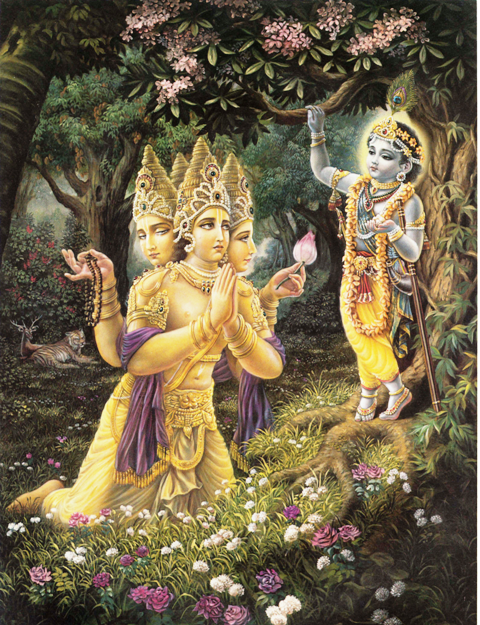
This is the final Srimad Bhagavatam verse translated by His Divine Grace A.C. Bhaktivedanta Swami Prabhupada, the Founder-Acarya of the International Society for Krishna Consciousness. This is where Srila Prabhupada ended his translating, before his departure from this mortal world on November 14, 1977, at the Krsna-Balarama Mandira in Vrndavana, India.
Śrīmad-Bhāgavatam
By His Divine Grace A.C. Bhaktivedanta Swami Prabhupada
Canto 10, Chapter 13, Text 64
śanair athotthāya vimṛjya locane
mukundam udvīkṣya vinamra-kandharaḥ
kṛtāñjaliḥ praśrayavān samāhitaḥ
sa-vepathur gadgadayailatelayā
śanaiḥ—gradually; atha—then; utthāya—rising; vimṛjya—wiping; locane—his two eyes; mukundam—at Mukunda, Lord Śrī Kṛṣṇa; udvīkṣya—looking up; vinamra-kandharaḥ—his neck bent; kṛta-añjaliḥ—with folded hands; praśraya-vān—very humble; samāhitaḥ—his mind concentrated; sa-vepathuḥ—his body trembling; gadgadayā—faltering; ailata—Brahmā began to offer praise; īlayā—with words.
Then, rising very gradually and wiping his two eyes, Lord Brahmā looked up at Mukunda. Lord Brahmā, his head bent low, his mind concentrated and his body trembling, very humbly began, with faltering words, to offer praises to Lord Kṛṣṇa.
Brahmā, being very joyful, began to shed tears, and he washed the lotus feet of Kṛṣṇa with his tears. Repeatedly he fell and rose as he recalled the wonderful activities of the Lord. After repeating obeisances for a long time, Brahmā stood up and smeared his hands over his eyes. Śrīla Viśvanātha Cakravartī Ṭhākura comments that the word locane indicates that with his two hands he wiped the two eyes on each of his four faces. Seeing the Lord before him, Brahmā began to offer prayers with great humility, respect and attention.
Thus end the Bhaktivedanta purports of the Tenth Canto, Thirteenth Chapter, of the Śrīmad-Bhāgavatam, entitled “The Stealing of the Boys and Calves by Brahmā.”
04 Nov 2012
by The Hare Krishna Movement
in A.C. Bhaktivedanta Swami Prabhupada, Beyond Birth & Death, Death and Dying, Free Downloads, Free eBooks
Tags: A.C. Bhaktivedanta Swami Prabhupada, Beyond Birth and Death, Bhagavad Gita, bhakti yoga, books by Srila Prabhupada, death and dying, free downloads, I am not this body, mantra-yoga, search for meaning, self realization, Srimad Bhagavatam, transcendentalists

This morning as I was driving up our lane, I saw a hawk flying past me with a live squirrel in his talons. And I thought, ‘how fragile is this life’. One moment the squirrel was out collecting nuts to store in his home for the winter, and the next moment, he is being carried away to his sure death. I was reminded of the famous quote “Life takes Life”, and of how all of ours lives, hang in the balance.
There is another famous Quote from the Srimad Bhagavatam:
“Mahārāja Yudhiṣṭhira was asked by Yamarāja, “What is the most wonderful thing in this world? Can you explain?” So Mahārāja Yudhiṣṭhira answered, “Yes. The most wonderful thing is that at every moment one can see that his friends, his fathers, and his relatives have died, but he is thinking, ‘I shall live forever.’”” (The Science of Self Realization)
This is the great illusion (maya)
So today I am moved to post another chapter from the book “Beyond Birth & Death” by His Divine Grace A.C. Bhaktivedanta Swami Prabhupada, Chapter One entitled “We Are Not These Bodies”.
Also for a Free PDF download of entire book click the link at bottom of post.
More
01 Nov 2012
by The Hare Krishna Movement
in A.C. Bhaktivedanta Swami Prabhupada, Kali Yuga, Time
Tags: A.C. Bhaktivedanta Swami Prabhupada, astrologer, astronomer, duration of life, future of mankind, influence of time, Kali-yuga, Liberated souls, millennium, Srimad Bhagavatam, the great sage vyasadeva, Time, Vyasadeva
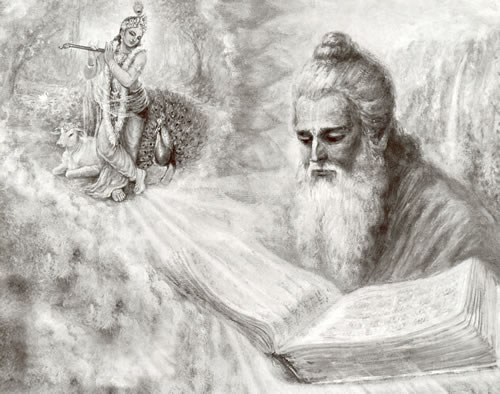
…The unmanifested forces of time are so powerful that they reduce all matter to oblivion in due course. In Kali-yuga, the last millennium of a round of four millenniums, the power of all material objects deteriorates by the influence of time. In this age the duration of the material body of the people in general is much reduced, and so is the memory.
The great sage Vyāsadeva could see this by his transcendental vision. As an astrologer can see the future fate of a man, or an astronomer can foretell the solar and lunar eclipses, those liberated souls who can see through the scriptures can foretell the future of all mankind. They can see this due to their sharp vision of spiritual attainment. (from purport to SB 1.4.17-18)
Full Verse and Purport follows More
31 Oct 2012
by The Hare Krishna Movement
in A.C. Bhaktivedanta Swami Prabhupada, Shiva
Tags: A.C. Bhaktivedanta Swami Prabhupada, Bg 9.25, bhagavad-gita, ghosts, ghosts and spirits, Halloween, halloween ghosts, nandi, SB 3.14.24, Shiva, Srimad Bhagavatam, witches
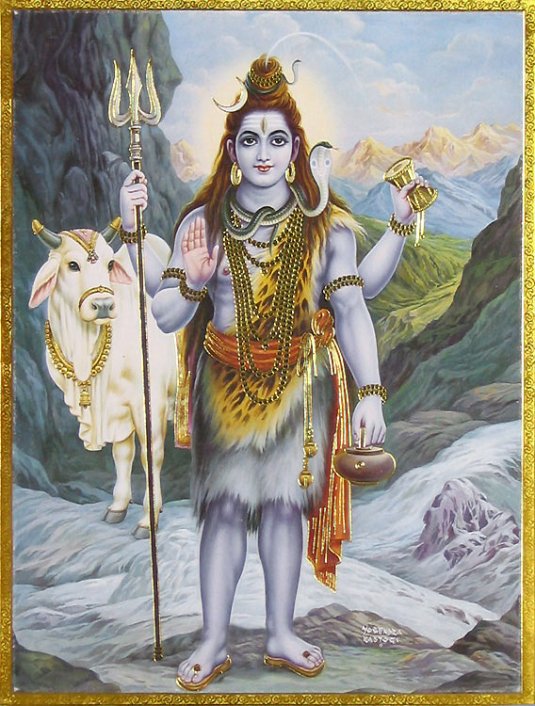
Shiva’s mount is the sacred bull Nandi, and is said to live on Mount Kailasa in the Himalayas.
Although Halloween is not a Vaisnave holiday, it is being celebrated here in the West today. So we wanted to do a post from the pages of Srila Prabhupada’s books where there is mention of Ghosts and Witches etc. Actually Ghosts are a very real entity as the following texts from the Bhagavad-gita and the Srimad Bhagavatam imply.
Lord Śiva, or Rudra, is the king of the ghosts. Ghostly characters worship Lord Śiva to be gradually guided toward a path of self-realization. Māyāvādī philosophers are mostly worshipers of Lord Śiva…Ghosts are bereft of a physical body because of their grievously sinful acts, such as suicide. The last resort of the ghostly characters in human society is to take shelter of suicide, either material or spiritual. Material suicide causes loss of the physical body, and spiritual suicide causes loss of the individual identity. Lord Śiva, being very kind to the ghosts, sees that although they are condemned, they get physical bodies. ( from purport to SB 3.14.24)
Those who worship the demigods will take birth among the demigods; those who worship ghosts and spirits will take birth among such beings; those who worship ancestors go to the ancestors; and those who worship Me will live with Me. (Bhagavad-gita 9.25)
Complete text and purports follow along with a definition of Halloween from Wikipedia More
25 Oct 2012
by The Hare Krishna Movement
in A.C. Bhaktivedanta Swami Prabhupada, Maharaja Pariksit, Srimad Bhagavatam
Tags: A.C. Bhaktivedanta Swami Prabhupada, enjoy life to the fullest, fast till death, Ganges, great emperor, kingdom, Maharaja Pariksit, pious king, power and opulence, retiring from life, SB 1.4.9-12, Srimad Bhagavatam
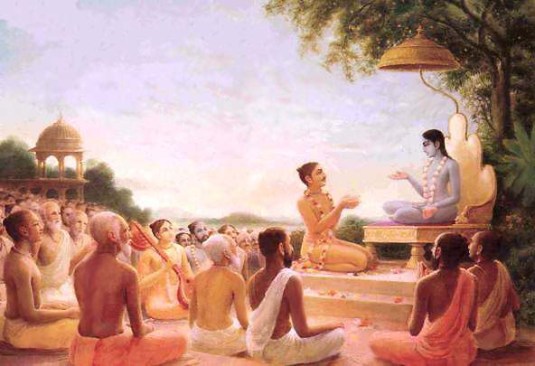
This morning I was reading about Maharaja Pariksit and of his qualities and position in life. He was in a position to enjoy life to the fullest extent,then why should he give up all these favorable circumstances and sit down on the bank of the Ganges, fasting till death? This is astonishing, and therefore all were eager to know the cause. He gave up everything to hear Sriman Bhagavatam from the lips of the pure devotee.
He was a great emperor and possessed all the opulences of his acquired kingdom. He was so exalted that he was increasing the prestige of the Pāṇḍu dynasty. Why did he give up everything to sit down on the bank of the Ganges and fast until death?
…There was nothing undesirable in his life. He was quite a young man and could enjoy life with power and opulence. So there was no question of retiring from active life. There was no difficulty in collecting the state taxes because he was so powerful and chivalrous that even his enemies would come to him and bow down at his feet and surrender all wealth for their own benefit. Mahārāja Parīkṣit was a pious king. He conquered his enemies, and therefore the kingdom was full of prosperity. There was enough milk, grains and metals, and all the rivers and mountains were full of potency. So materially everything was satisfactory. Therefore, there was no question of untimely giving up his kingdom and life. The sages were eager to hear about all this.
More
22 Sep 2012
by The Hare Krishna Movement
in A.C. Bhaktivedanta Swami Prabhupada, Letters by Srila Prabhupada
Tags: A.C. Bhaktivedanta Swami Prabhupada, bhagavad-gita, God conscious, Lecture by Srila Prabhupada, Maharaja Yudhisthira, SB 1.9.49, Srimad Bhagavatam, Srimad Bhagavatam lecture

click on image to enlarge
…But this Kṛṣṇa consciousness movement is so nice that even caṇḍālas can be also raised to the platform of brāhmaṇa. Even if a caṇḍāla is trained up as a devotee, he can be better than a qualified brāhmaṇa. These are the shastric injunctions. The yavanas’ names are there also. Yavana-mleccha means generally they are meat-eaters, especially cow meat, cow flesh eaters. They are called yavana-mlecchas. So the higher caste, they cannot become meat-eaters. Meat-eating is there. That is for the lower class, not for the higher class. If anyone gives up meat-eating or the bad habits of lower class, illicit sex, meat-eating, intoxication, gambling, and if he’s trained how to become a qualified brāhmaṇa, then he can be accepted.
…So our this movement is not for the kṛpaṇas. It is meant for the brāhmaṇas. We want to become ourself brāhmaṇa, and we want to make others also brāhmaṇa. Because there is need of brāhmaṇa at the present moment. The whole human society is now running by the śūdras, all śūdras. Kalau śūdra-sambhavaḥ. In this Kali-yuga, everyone is a śūdra. Maybe born of a brāhmaṇa family, but because he has no culture… The first culture is garbhādhāna-saṁskāra. If garbhādhāna-saṁskāra is not observed even in a brāhmaṇa family, he becomes immediately śūdra. This is the statement of the śāstra. So nobody is observing garbhādhāna-saṁskāra. Therefore, according to śāstra, everyone is a śūdra. Now because everyone is śūdra, therefore he cannot be trained up as brāhmaṇa? No. He can be trained up. Caṇḍālo ‘pi dvija-śreṣṭho hari-bhakti-parāyaṇaḥ. If that śūdra or caṇḍāla can be turned into a devotee of Kṛṣṇa, hari-bhakti-parāyaṇaḥ, then under training he can become better than brāhmaṇa.
Lecture by His Divine Grace A.C. Bhaktivedanta Swami Prabhupada
Māyāpura, June 15, 1973 More
23 Aug 2012
by The Hare Krishna Movement
in Gajendra, Spiritual World, Srimad Bhagavatam
Tags: A.C. Bhaktivedanta Swami Prabhupada, Brahma, demigods, Gajendra, gandharvas, king of the elephants, sages, Siva, Spiritual world, Srimad Bhagavatam, Sukadeva Gosvami

The Fourth Chapter of the Eight Canto of Srimad Bhagavatam describes the previous birth of Gajendra and the crocodile. It tells how the crocodile became a Gandharva and how Gajendra became an associate of the Supreme Personality of Godhead.
…in his birth as an elephant, when he was dangerously attacked by the crocodile, he remembered his past life in devotional service and remembered a prayer he had learned in that life. Because of this prayer, he again received the mercy of the Lord.
Śukadeva Gosvāmī ends this chapter by describing the good fortune of the elephant. Śukadeva Gosvāmī says that by hearing the narration of Gajendra’s deliverance, one can also get the opportunity to be delivered.
“One who seeks Your compassion and thus tolerates all kinds of adverse conditions due to the karma of his past deeds, who engages always in Your devotional service with his mind, words and body, and who always offers obeisances unto You, is certainly a bona fide candidate for liberation.”
A devotee who tolerates everything in this material world and patiently executes his devotional service can become mukti-pade sa dāya-bhāk, a bona fide candidate for liberation. The word dāya-bhāk refers to a hereditary right to the Lord’s mercy. A devotee must simply engage in devotional service, not caring about material situations. Then he automatically becomes a rightful candidate for promotion to Vaikuṇṭhaloka. The devotee who renders unalloyed service to the Lord gets the right to be promoted to Vaikuṇṭhaloka, just as a son inherits the property of his father.
Full Text & Purports More
23 Aug 2012
by The Hare Krishna Movement
in Quotes by Srila Prabhupada, Remembering Srila Prabhupada, Srila Prabhupada, Srimad Bhagavatam
Tags: disciples, Krishna consciousness, pure devotees, Remembering Srila Prabhupada, SB 3.22.21, smile of Krishna conscious person, Spiritual world, Srila Prabhupada, Srimad Bhagavatam, thoughts of Krsna

“That is the way of Krishna consciousness. Pure devotees are so absorbed in thought of Krishna that they have no other engagement; although they may seem to think or act otherwise, they are always thinking of Krishna. The smile of such a Krishna conscious person is so attractive that simply by smiling he wins so many admirers, disciples and followers.” (from purport to Srimad Bhagavatam, 3.22.21)
Full text and purport More
Previous Older Entries Next Newer Entries