10 Apr 2012
by The Hare Krishna Movement
in Bhagavad-gita, Devotional Service, Free Downloads, Raja-Vidya
Tags: Arjuna, Bg. 9.2, bhagavad-gita, books by Srila Prabhupada, chanting Hare Krishna, confidential knowledge, devotional service, Krishna, Raja-Vidya

click on link at bottom for a free download on entire book to read online or save in pdf format
…It is said that the execution of devotional service is so perfect that one can perceive the results directly. This direct result is actually perceived, and we have practical experience that any person who is chanting the holy names of Kṛṣṇa (Hare Kṛṣṇa, Hare Kṛṣṇa, Kṛṣṇa Kṛṣṇa, Hare Hare/ Hare Rāma, Hare Rāma, Rāma Rāma, Hare Hare)in course of time feels some transcendental pleasure and very quickly becomes purified of all material contamination. This is actually seen. Furthermore, if one engages not only in hearing but in trying to broadcast the message of devotional activities as well, or if he engages himself in helping the missionary activities of Kṛṣṇa consciousness, he gradually feels spiritual progress. This advancement in spiritual life does not depend on any kind of previous education or qualification. The method itself is so pure that by simply engaging in it one becomes pure.
Bhagavada-gita As It Is Macmillan Edition 1975
By His Divine Grace A.C. Bhaktivedanta Swami Prabhupada
Chapter 9, Text 2
rāja-vidyā rāja-guhyaṁ
pavitram idam uttamam
pratyakṣāvagamaṁ dharmyaṁ
su-sukhaṁ kartum avyayam
rāja-vidyā—the king of education; rāja-guhyam—the king of confidential knowledge; pavitram—the purest; idam—this; uttamam—transcendental; pratyakṣa—directly experienced; avagamam—understood; dharmyam—the principle of religion; susukham—very happy; kartum—to execute; avyayam—everlasting.
This knowledge is the king of education, the most secret of all secrets. It is the purest knowledge, and because it gives direct perception of the self by realization, it is the perfection of religion. It is everlasting, and it is joyfully performed.
Purport
This chapter of Bhagavad-gītā is called the king of education because it is the essence of all doctrines and philosophies explained before. There are seven principal philosophers in India: Gautama, Kaṇāda, Kapila, Yājñavalkya, Śāṇḍilya, Vaiśvānara, and, finally, Vyāsadeva, the author of the Vedānta-sūtra. So there is no dearth of knowledge in the field of philosophy or transcendental knowledge. Now the Lord says that this Ninth Chapter is the king of all such knowledge, the essence of all knowledge that can be derived from the study of the Vedas and different kinds of philosophy. It is the most confidential because confidential or transcendental knowledge involves understanding the difference between the soul and the body. And the king of all confidential knowledge culminates in devotional service.
More
25 Mar 2012
by The Hare Krishna Movement
in Bhagavad-gita, Krishna Consciousness, Raja-Vidya, Spiritual Life
Tags: A.C. Bhaktivedanta Swami Prabhupada, Action in Knowledge of Krsna, bound by karma, Brahma-samhita, fruitive reaction, karma, Krishna, material body, nature's arrangment, Raja-Vidya, the king of knowledge

…We must understand the meaning of relationships with Kṛṣṇa. In this material world we have many relationships as father, mother, wife or husband. Whatever relationship we find here is but a perverted reflection of the relationship we have with the Supreme Lord. Whatever we find in this material world is born of the Absolute Truth, but here it is pervertedly reflected in time. Whatever relationship we have with Kṛṣṇa goes on. If we have a relationship in friendship, that friendship is eternal and continues from life to life. In the material world, a friendship exists for a few years and then breaks; therefore it is called perverted, temporal, or unreal. If we make our friendship with Kṛṣṇa, it will never break. If we make our master Kṛṣṇa, we will never be cheated. If we love Kṛṣṇa as our son, He will never die. If we love Kṛṣṇa as our lover, He will be the best of all, and there will be no separation. Because Kṛṣṇa is the Supreme Lord, He is unlimited and has an unlimited number of devotees. Some are trying to love Him as lover or husband, and therefore Kṛṣṇa accepts this role. In whatever way we approach Kṛṣṇa, He will accept us, as He states in Bhagavad-gītā.
ye yathā māṁ prapadyante
tāṁs tathaiva bhajāmy aham
mama vartmānuvartante
manuṣyāḥ pārtha sarvaśaḥ
“All of them—as they surrender unto Me—I reward accordingly. Everyone follows My path in all respects, O son of Pṛthā.” (Bg. 4.11)
Raja-Vidya: The King of Knowledge
By His Divine Grace A.C. Bhaktivedanta Swami Prabhupada
Chapter 8
Action in Knowledge of Kṛṣṇa
na māṁ karmāṇi limpanti
na me karma-phale spṛhā
iti māṁ yo ’bhijānāti
karmabhir na sa badhyate
“There is no work that affects Me; nor do I aspire for the fruits of action. One who understands this truth about Me also does not become entangled in the fruitive reactions of work.”(Bg. 4.14)
The whole world is bound by karma. We all know of the existence of microbes or germs which exist by the million within the measurement of one millimeter. In the Brahma-saṁhitā it is stated that beginning with the microbe, which is called indragopa, up to Indra, the king of the heavenly planets, all are bound by karma, the reaction of work. We all have to suffer or enjoy the reactions of our work, be they good or bad. As long as we have to suffer or enjoy these reactions, we are bound to these material bodies.
By nature’s arrangement the material body is given to the living entity for his suffering or enjoying. Different types of bodies are acquired for different purposes. The body of a tiger is made for killing and eating raw meat. Similarly, the hogs are made in such a way that they can eat stool. And as human beings our teeth are made for eating vegetables and fruits. All of these bodies are made according to the work done in past lives by the living entity. Our next bodies are being prepared according to the work which we are now doing, but in the previously quoted verse Śrī Kṛṣṇa indicates that one who knows the transcendental nature of His activities becomes free from the reactions of activities. Our activities should be such that we will not again become entangled in this material world. This can be made possible if we become Kṛṣṇa conscious by studying Kṛṣṇa, learning of the transcendental nature of His activities, and understanding how He behaves in this material world and in the spiritual world.
More
11 Mar 2012
by The Hare Krishna Movement
in Bhagavad-gita, Raja-Vidya, Spiritual Life
Tags: A.C. Bhaktivedanta Swami Prabhupada, Arjuna, bhagavad-gita, faith, guru, Krishna, material world, Raja-Vidya, spiritual knowledge, spiritual master, Spiritual world, surrender, the king of knowledge

As spirit souls we are part and parcel of the Supreme Spirit, but due to our desire to enjoy this material world, we have been put into material nature. Yet in whatever species of life we may be, Kṛṣṇa is the Father. Thus Bhagavad-gītā is not meant for any particular party or nation but for everyone all over the world… In this way people may realize their true spiritual nature and their relationship to the supreme spiritual whole.
“And when you have thus learned the truth, you will know that all living beings are but parts of Me—and that they are in Me, and are Mine. Even if you are considered to be the most sinful of all sinners, when you are situated in the boat of transcendental knowledge, you will be able to cross over the ocean of miseries. As a blazing fire burns firewood to ashes, O Arjuna, so does the fire of knowledge burn to ashes all the reactions to material activities.” (Bg. 4.35–37)
Raja-vidya: The King of Knowledge
By His Divine Grace A.C. Bhaktivedanta Swami Prabhupada
Chapter 7
Knowledge as Faith in Guru and surrender to Kṛṣṇa
In the Fourth Chapter of Bhagavad-gītā Śrī Kṛṣṇa concludes that of all sacrifices, the best is the acquisition of knowledge.
śreyān dravya-mayād yajñāj
jñāna-yajñaḥ parantapa
sarvaṁ karmākhilaṁ pārtha
jñāne parisamāpyate
“O chastiser of the enemy, the sacrifice of knowledge is greater than the sacrifice of material possessions. O son of Pṛthā, after all, the sacrifice of work culminates in transcendental knowledge.” (Bg. 4.33)
Knowledge is the best sacrifice because this conditional life is due to ignorance. The purpose of sacrifice, penance, yoga and philosophical discussion is to acquire knowledge. There are three stages of transcendental knowledge by which one realizes the impersonal aspect of God (Brahman realization), the localized aspect of God within the heart and within every atom (Paramātmā or Supersoul realization) and the realization of the Supreme Personality of Godhead (Bhagavān realization). But the very first step in acquiring knowledge is coming to understand that “I am not this body. I am spirit soul, and my aim of life is to get out of this material entanglement.” The point is that whatever sacrifice we make is intended to enable us to come to the point of real knowledge. The highest perfection of knowledge is given in Bhagavad-gītā as surrender to Kṛṣṇa (bahūnāṁ janmanām ante jñānavān māṁ prapadyate) (Bg. 7.19). The jñānavān, not the fool, surrenders unto Kṛṣṇa, and that is the highest stage of knowledge. Similarly, at the end of Bhagavad-gītā Śrī Kṛṣṇa advises Arjuna:
More
09 Mar 2012
by The Hare Krishna Movement
in Book Changes, Caitanya Mahaprabhu, Guru & Disciple, Lectures
Tags: A.C. Bhaktivedanta Swami Prabhupada, Caitanya Mahaprabhu, everyone of you become guru, gopis, incarnation, Kali, Krishna, Lecture by Srila Prabhupada, Lord Caitanya, spiritual knowledge, Srila Prabhupada, Srila Rupa Goswami

…If we simply keep Sri Caitanya Mahaprabhu within our heart, then it will be very easy to understand what is Krsna, because if you understand Krsna, then your life is successful. Our Krsna consciousness movement means just try to understand Krsna; then your life is successful. Krsna says, “Anyone who understands Me, why I come here, what is My activities,” [Bg. 4.9], “he becomes liberated. After giving up this body, he does not accept any material body. In his own spiritual body he goes back to home, back to Godhead.” This is our Krsna consciousness..
…The mission of Sri Caitanya Mahaprabhu is that you become, every one of you, you become a guru. How to become guru? You simply present what Krsna says as it is. Then every one of you will become a guru. Don’t adulterate — “I think,” “In my opinion.” These nonsense things should be given up. We should always be aware that we are insignificant creature. Our opinion and thinking has no value. This should be the first principle. Why should you give opinion on the words of Krsna? Are you more authoritative person than Krsna? This is foolishness, to try to become more than Krsna. There are so many rascals. They present that “Now we have advanced. We know more than Krsna.” So be saved from these rascals. Then you will understand Krsna, and through Caitanya Mahaprabhu you will understand what is the position of Krsna, what is your relationship with Krsna, what is the ultimate goal of life…
“Everyone Of You – Become Guru”
Lecture on Caitanya Caritamrta Adi 1.4
Given By His Divine Grace A.C. Bhaktivedanta Swami Prabhupada
Mayapur, March 28, 1975
Nitai: “May that Lord, who is known as the son of Srimati Sacidevi, be transcendentally situated in the innermost chambers of your heart. Resplendent with the radiance of molten gold, He has appeared in the age of Kali by His causeless mercy to bestow what no incarnation ever offered before: the most sublime and radiant spiritual knowledge of the mellow taste of His service.”
Prabhupada:
anarpita-carim cirat karunayavatirnah kalau
samarpayitum unnata ujjvala-rasam sva-bhakti-sriyam
harih purata-sundara-dyuti-kadamba-sandipitah
sada hrdaya-kandare sphuratu vah saci-nandana
[Cc. Adi 1.4]
This is the blessings of Srila Rupa Gosvami upon everyone.
sri-caitanya-mano-‘bhistam
sthapitam yena bhu-tale
svayam rupah kada mahyam
dadati sva-padantikam
[When will Srila Rupa Gosvami Prabhupada, who has established within this material world the mission to fulfill the desire of Lord Caitanya, give me shelter under his lotus feet?]
We should pray to Rupa Gosvami for his blessings so that we can understand what is the actual position of Sri Caitanya Mahaprabhu. Sri Caitanya Mahaprabhu is the most merciful incarnation to bestow upon us Krsna-prema. Srila Rupa Gosvami understood it, Srila Sarvabhauma Bhattacarya understood it, and we should take their viewpoint of view, what they have studied about Sri Caitanya Mahaprabhu. So Srila Rupa Gosvami says… In the beginning Sri Caitanya Mahaprabhu was appreciated by Srila Rupa Gosvami as maha-vadanyavatara. There are many incarnations of Krsna, kesava dhrta-mina-sarira jaya jagadisa hare, kesava dhrta-nrsimha-rupa jaya jagadisa…, many incarnations. But this incarnation, Sri Caitanya Mahaprabhu, is anarpita-carim cirat. The mercy of this incarnation is unlimited. It was never given before. That is Sri Caitanya Mahaprabhu’s mercy. He distributed the most confidential part of love of Godhead. Although we are living in this fallen age, Kali-yuga, but He is giving the topmost platform of loving Krsna. Anarpita-carim cirat. Therefore He is supposed to be the most munificent incarnation. Namo maha-vadanyaya krsna-prema-pradaya te [Cc. Madhya 19.53]. He is giving directly Krsna-prema.
More
07 Mar 2012
by The Hare Krishna Movement
in Caitanya Mahaprabhu, Chanting Hare Krishna, Festivals
Tags: A.C. Bhaktivedanta Swami Prabhupada, Caitanya, chanting Hare Krishna, Gaura Purnima, golden avatara, Hare Krishna Mantra, Krishna, Lord Caitanya Mahaprabhu, love of God, Maha Mantra, self realization, Sri Caitanya, Srila Prabhupada

The Appearance of Lord Caitanya
Lord Sri Caitanya Mahaprabhu is Krishna Himself, and He is teaching how to develop love of God by a very simple method…chanting the names of the Lord. Only five hundred years ago Lord Caitanya Mahāprabhu, prophesied that the Hare Kṛṣṇa mantra would resound throughout every town and village in the world. At a time when Western man was directing his exploratory spirit toward studying the physical universe and circumnavigating the globe, in India Śrī Caitanya was inaugurating and masterminding a revolution directed inward. His movement swept the subcontinent, gained millions of followers, and profoundly influenced the future of religious and philosophical thinking, both in India and the West. In the following talk, presented in November 1969 at London’s Conway Hall, Śrīla Prabhupāda describes the divine appearance of Śrī Caitanya.
Śrī Caitanya Mahāprabhu, the golden avatāra, appeared in India nearly five hundred years ago. It is the custom in India that when a child is born, an astrologer is called for. When Lord Kṛṣṇa, the Supreme Personality of Godhead, appeared five thousand years ago, Gargamuni was called by His father, and he said, “This child formerly incarnated in three complexions, such as red and golden, and now He has appeared in blackish color.” Kṛṣṇa’s color is described in the scriptures as blackish, just like the color of a cloud. Lord Caitanya is understood to be Kṛṣṇa appearing in golden complexion.
There is much evidence in Vedic literature that Caitanya Mahāprabhu is an incarnation of Kṛṣṇa, and this is confirmed by scholars and devotees. In the Śrīmad-Bhāgavatam it is confirmed that the incarnation of Kṛṣṇa, or God, in this present age, Kali-yuga, will always engage in describing Kṛṣṇa. He is Kṛṣṇa, but as a devotee of Kṛṣṇa He describes Himself. And in this age His bodily complexion will not be blackish. This means that it may be white, it may be red, or it may be yellow, because these four colors—white, red, yellow, and black—are the colors assumed by the incarnations for the different ages. Therefore, since the red, white, and blackish colors were already taken by former incarnations, the remaining color, golden, is assumed by Caitanya Mahāprabhu. His complexion is not blackish, but He is Kṛṣṇa.
More
03 Mar 2012
by The Hare Krishna Movement
in Books by Srila Prabhupada, Guru & Disciple, Sri Caitanya-Caritamrta, Srila Prabhupada Lilamrta
Tags: A.C. Bhaktivedanta Swami Prabhupada, Bramananda Swami, Caitanya Caritamrta, disciple, Godbrothers, guru, Guru Maharaja, Krishna, print books, Radhavallabha, Ramesvara, Satsvarupa Dasa Goswami, Srila Prabhupada, Srila Prabhupada Lilamrta, Tamala Krishna Goswami
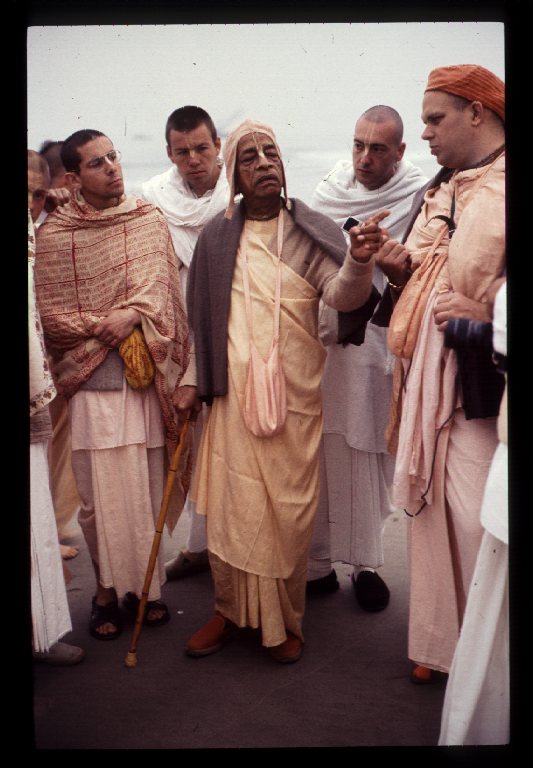
…”I have no personal qualification, but I simply try to satisfy my guru, that’s all. My Guru Maharaja asked me that, ‘If you get some money, you print books.’ So there was a private meeting, talking. Some of my important Godbrothers also were there–it was in Radha-kunda. So Guru Maharaja was speaking to me that, ‘Since we have got this Baghbazar marble temple, there has been so much dissension. And everyone thinking who will occupy this room or that room. I wish therefore to sell this temple and the marble and print some books.’ Yes, so I took up this from his mouth, that he is very fond of books. And he told me personally, ‘If you get some money, print books.’ Therefore I am stressing on this point–Where is book? Where is book? So kindly help me. That is my request. Print as many books as possible in as many languages as possible, and distribute throughout the whole world. Then the Krishna consciousness movement will automatically increase.”
The next morning, while walking on Venice Beach, Srila Prabhupada delivered an extraordinary ultimatum. Surrounded by devotees, he walked along, poking the sand softly with his cane. “These seventeen volumes unpublished,” he began, “are a great problem for our movement.”
“Yes, Prabhupada,” Ramesvara responded, attentive and concerned. The other devotees also nodded, commiserating. Something must be done.
“Yes,” Prabhupada continued, “they must be published immediately.”
“Yes, Prabhupada,” Ramesvara replied obediently.
“So I think they can be printed in two months,” Srila Prabhupada said conclusively.
Ramesvara wasn’t sure he had heard correctly. The Press had only just opened. The artists didn’t even have the lights in their room. Two months was illogical, impossible. Now was the moment to tell Srila Prabhupada the plan for increased production. Ramesvara stepped closer.
“Srila Prabhupada,” he began, “we’ve been meeting about this, and now that the Press is finally here and established, I think we can increase production four times. We think that now we can go from producing one book every four months to producing one of your books every month.” Now both Ramesvara and Radhavallabha were walking together beside Srila Prabhupada, with Tamala Krishna Goswami and Brahmananda Swami walking on his other side.
“One book every month,” Srila Prabhupada said, as if thinking out loud and considering it. “That means over one year. It is not fast enough.” The other devotees looked over at Ramesvara and Radhavallabha, who glanced at each other.
“You have to do all the books in two months’ time,” Srila Prabhupada said again. They had clearly heard it this time, and the two managers were stunned in disbelief.
“Srila Prabhupada,” Ramesvara said, “I think that’s impossible. Maybe we can go faster . . .”
Srila Prabhupada suddenly stopped walking. Planting his cane firmly in the sand, he turned to Ramesvara and said, without anger but very gravely, “Impossible is a word found in the fool’s dictionary.”
Suddenly Ramesvara realized his spiritual life was on the line. To say “impossible” now would mean he had no faith in Krishna’s representative, no faith in the power of God. He must throw away his material estimations and rational common sense.
More
01 Mar 2012
by The Hare Krishna Movement
in Teachings of Queen Kunti
Tags: A.C. Bhaktivedanta Swami Prabhupada, All-pervading Truth, Approaching Krsna, God, Krishna, kuntidevi, material manifestation, material world, prayers by Kuntidevi, Teachings of Queen Kunti

The Lord, being thus unapproachable by any material assets, out of unbounded and causeless mercy descends on the earth as He is in order to show His special mercy upon His unalloyed devotees and to diminish the upsurges of the demoniac persons. Queen Kuntī specifically adores the incarnation, or descent, of Lord Kṛṣṇa above all other incarnations because in this particular incarnation He is more approachable.
Teachings of Queen Kunti
By His Divine Grace A.C. Bhaktivedanta Swami Prabhupada
Chapter 4
Approaching Kṛṣṇa, the All-pervading Truth
kṛṣṇāya vāsudevāya
devakī-nandanāya ca
nanda-gopa-kumārāya
govindāya namo namaḥ
Let me therefore offer my respectful obeisances unto the Lord, who has become the son of Vasudeva, the pleasure of Devakī, the boy of Nanda and the other cowherd men of Vṛndāvana, and the enlivener of the cows and the senses.
—Śrīmad-Bhāgavatam 1.8.21
The Lord, being thus unapproachable by any material assets, out of unbounded and causeless mercy descends on the earth as He is in order to show His special mercy upon His unalloyed devotees and to diminish the upsurges of the demoniac persons. Queen Kuntī specifically adores the incarnation, or descent, of Lord Kṛṣṇa above all other incarnations because in this particular incarnation He is more approachable. In the Rāma incarnation He remained a king’s son from His very childhood, but in the incarnation of Kṛṣṇa, although He was the son of a king, He at once left the shelter of His real father and mother (King Vasudeva and Queen Devakī) just after His appearance and went to the lap of Yaśodāmayī to play the part of an ordinary cowherd boy in the blessed Vrajabhūmi, which is very sanctified because of His childhood pastimes. Therefore Lord Kṛṣṇa is more merciful than Lord Rāma. He was undoubtedly very kind to Kuntī’s brother Vasudeva and the family. Had He not become the son of Vasudeva and Devakī, Queen Kuntī could not claim Him to be her nephew and thus address Kṛṣṇa in parental affection. But Nanda and Yaśodā are more fortunate because they could relish the Lord’s childhood pastimes, which are more attractive than all other pastimes. There is no parallel to His childhood pastimes as exhibited at Vrajabhūmi, which are the prototypes of His eternal affairs in the original Kṛṣṇaloka, described as the cintāmaṇi-dhāma in the Brahma-saṁhitā. Lord Śrī Kṛṣṇa descended Himself at Vrajabhūmi with all His transcendental entourage and paraphernalia. Śrī Caitanya Mahāprabhu therefore confirmed that no one is as fortunate as the residents of Vrajabhūmi, and specifically the cowherd girls, who dedicated their everything for the satisfaction of the Lord. His pastimes with Nanda and Yaśodā and His pastimes with the cowherd men and especially with the cowherd boys and the cows have caused Him to be known as Govinda. Lord Kṛṣṇa as Govinda is more inclined to the brāhmaṇas and the cows, indicating thereby that human prosperity depends more on these two items, namely brahminical culture and cow protection. Lord Kṛṣṇa is never satisfied where these are lacking.
More
26 Feb 2012
by The Hare Krishna Movement
in Remembering Srila Prabhupada, Spiritual Life, Srila Prabhupada
Tags: Bahushiras das, Krishna, Memories-Anecedotes of a Modern-day Saint, Remembering Srila Prabhupada, Siddhanta das, Srila Prabhupada, When Lord Krishna Garlanded Prabhupada
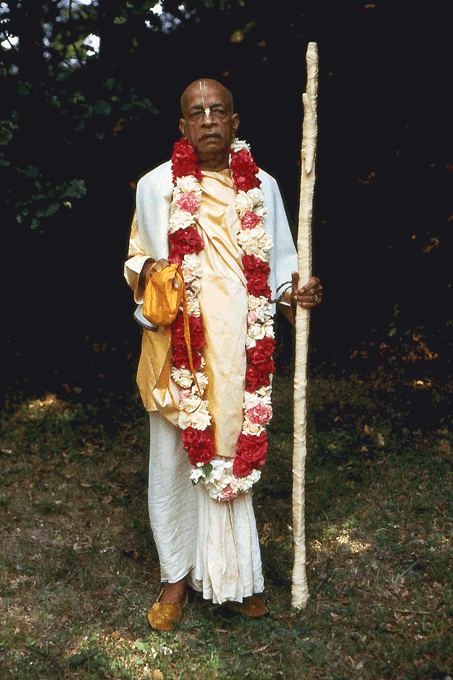
When Lord Krishna Garlanded Prabhupada
Bahushiras Das Adhikary
The following narration is from the visionary Memories series of Shriman Siddhanta das Adhikary. It is the remembrance of Shriman Bahushiras das Adhikary given in DVD 44 and in vol. 3, p. 334 of the book Memories-Anecdotes of a Modern-Day Saint.
After Shrila Prabhupada’s disappearance, [Patita Pavana das] asked if I’d like to assist Satswarupa’s Lilamrita project by interviewing people in India who had known Shrila Prabhupada. One of them was Acharya Prabhakar Misra, Prabhupada’s first disciple. Acharya Prabhakar Misra was clean-cut, well-behaved and articulate. His demeanor impressed me. He held a MA and PhD and was a very cultured Sanskrit scholar and teacher. In Jhansi, Prabhupada had told Acharya Prabhakar. “I met you because I saw you in a dream and I knew that I was supposed to come here.” Prabhupada and he would do bhajan together. They’d hold Rathayatra festivals and they’d have programme in villages in the area.
Acharya Prabhakar said that on Shri Krishna Janmashtami in 1954, he had to go to Delhi. When he returned to Jhansi, he took a little rest, woke up at 1:00 am and heard Shrila Prabhupada ecstatically playing mridanga in the temple room. Prabhupada was chanting in total bliss. Acharya Prabhakar went upstairs and saw Shrila Prabhupada bouncing around the temple room performing kirtan. Prabhupada was wearing a kadamba flower garland that went all the way down to his feet. Kadamba flowers are very rare in Jhansi and when they are available they are usually the size of a golf ball. But the ones Prabhupada was wearing were big, the size of tennis balls. And he said that the atmosphere right down to the atoms in the room was not material, aprakrita. The place was surcharged with the fragrance of the heavenly planets. Acharya Prabhakar wanted to ask Shrila Prabhupada, “Where did this garland come from? It is not available from the market.” But Shrila Prabhupada would not answer. His Divine Grace just kept on performing kirtan, bouncing round the room and chanting. The next morning Acharya Prabhakar asked Shrila Prabhupada, “Where did you get the garland, why did it have such a rich fragrance, and why were you feeling so blissful?”
Shrila Prabhupada told him, “I was chanting to Krishna and feeling some love for Him. And He appeared and gave me this garland. I went to touch His feet and He disappeared. Because of that I was dancing around the temple room.” Shrila Prabhupada was crying.
More
19 Feb 2012
by The Hare Krishna Movement
in Krishna Consciousness, Krsna is the Source of All Incarnations, Raja-Vidya
Tags: A.C. Bhaktivedanta Swami Prabhupada, Arjuna, ilusory energy, Krishna, Krishna consciousness, Krsna, Krsna's appearance, maya, Raja-Vidya, spiritual advancement

Kṛṣṇa’s birth, His appearance and disappearance, are likened unto the appearance and disappearance of the sun. In the morning it appears as if the sun is born from the eastern horizon, but actually it is not. The sun is neither rising nor setting; it is as it is in its position. All risings and settings are due to the rotation of the earth. Similarly, in Vedic literatures there are prescribed schedules for the appearance and disappearance of Śrī Kṛṣṇa. Kṛṣṇa’s rising is just like the sun. The sun’s rising and setting are going on at every moment; somewhere in the world people are witnessing sunrise and sunset. It is not that at one point Kṛṣṇa is born and at another point He is gone. He is always there somewhere, but He appears to come and go. Kṛṣṇa appears and disappears in many universes. We only have experience of this one universe, but from Vedic literatures we can understand that this universe is but a part of the infinite manifestations of the Supreme Lord.
Raja-vidya: The King of Knowledge
By His Divine Grace A.C. Bhaktivedanta Swami Prabhupada
Chapter 6
Knowledge of Kṛṣṇa’s Appearances and Activities
There are two forces of nature working in us. By one we decide that in this lifetime we will make spiritual advancement, but at the next moment the other force, māyā, or illusory energy, says, “What is all this trouble that you’re going to? Just enjoy this life and be easy with yourself.” This tendency to fall into forgetfulness is the difference between God and man. Arjuna is a companion and associate of Kṛṣṇa’s, and whenever Kṛṣṇa appears on any planet, Arjuna also takes birth and appears with Him. When Kṛṣṇa spoke Bhagavad-gītā to the sun god, Arjuna was also present with Him. But, being a finite living entity, Arjuna could not remember. Forgetfulness is the nature of the living entity. We cannot even remember what we were doing at this exact time yesterday or a week ago. If we cannot remember this, how is it possible to remember what happened in our previous lives? At this point we may ask how it is that Kṛṣṇa can remember and we cannot, and the answer is that Kṛṣṇa does not change His body.
More
14 Feb 2012
by The Hare Krishna Movement
in Devotional Service, Krishna Consciousness, KRSNA The Supreme Personality of Godhead
Tags: A.C. Bhaktivedanta Swami Prtabhupada, devotional service, entourage, feelings of separation, gopis, Krishna, Krsna The Supreme Personality of Godhead, Krsna's transcendental form Krsna's pastimes, Lord Caitanya, true love

Today being Valentines Day, and with everyone absorbed in a loving mood, we thought we would post something about True Love.
…Everyone and everything is attracted to Kṛṣṇa–that is the perfect description of Kṛṣṇa’s attraction. The example of the gopīs is very instructive to persons who are trying to be absorbed in Kṛṣṇa consciousness. One can very easily associate with Kṛṣṇa simply by remembering His transcendental pastimes. Everyone has a tendency to love someone. That Kṛṣṇa should be the object of love is the central point of Kṛṣṇa consciousness. By constantly chanting the Hare Kṛṣṇa mantra and remembering the transcendental pastimes of Kṛṣṇa, one can be fully in Kṛṣṇa consciousness and thus make his life sublime and fruitful.
KRSNA The Supreme Personality of Godhead
By His Divine Grace A.C. Bhaktivedanta Swami Prabhupada
Chapter 34
The Gopīs’ Feelings of Separation
The gopīs of Vṛndāvana were so attached to Kṛṣṇa that they were not satisfied simply with the rāsa dance at night. They wanted to associate with Him and enjoy His company during the daytime also. When Kṛṣṇa went to the forest with His cowherd boy friends and cows, the gopīs did not physically take part, but their hearts went with Him. And because their hearts went, they were able to enjoy His company through strong feelings of separation. To acquire this strong feeling of separation is the teaching of Lord Caitanya and His direct disciplic succession of Gosvāmīs. When we are not in physical contact with Kṛṣṇa, we can associate with Him like the gopīs, through feelings of separation. Kṛṣṇa’s transcendental form, qualities, pastimes, and entourage are all identical with Him. There are nine different kinds of devotional service. Devotional service to Kṛṣṇa in feelings of separation elevates the devotee to the highest perfectional level, to the level of the gopīs.
More
13 Feb 2012
by The Hare Krishna Movement
in Srimad Bhagavatam
Tags: A.C. Bhaktivedanta Swami Prabhupada, bhagavatam, Krishna, Personality of Godhead, SB 1.2.17, SB 1.2.18, SB 1.2.4, Srimad Bhagavatam
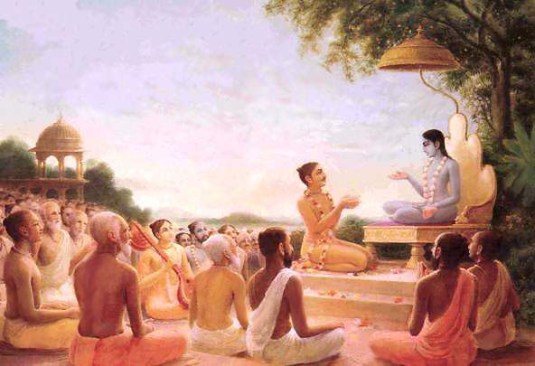
Verses Recited Before Śrīmad-Bhāgavatam Class
nārāyaṇaṁ namaskṛtya
naraṁ caiva narottamam
devīṁ sarasvatīṁ vyāsaṁ
tato jayam udīrayet
Before reciting this Śrīmad-Bhāgavatam, which is the very means of conquest, one should offer respectful obeisances unto the Personality of Godhead, Nārāyaṇa, unto Nara-nārāyaṇa Ṛṣi, the supermost human being, unto mother Sarasvatī, the goddess of learning, and unto Śrīla Vyāsadeva, the author. [SB 1.2.4]
śṛṇvatāṁ sva-kathāḥ kṛṣṇaḥ
puṇya-śravaṇa-kīrtanaḥ
hṛdy antaḥ stho hy abhadrāṇi
vidhunoti suhṛt satām
Śrī Kṛṣṇa, the Personality of Godhead, who is the Paramātmā [Supersoul] in everyone’s heart and the benefactor of the truthful devotee, cleanses desire for material enjoyment from the heart of the devotee who has developed the urge to hear His messages, which are in themselves virtuous when properly heard and chanted. [SB 1.2.17]
naṣṭa-prāyeṣv abhadreṣu
nityaṁ bhāgavata-sevayā
bhagavaty uttama-śloke
bhaktir bhavati naiṣṭhikī
By regular attendance in classes on the Bhāgavatam and by rendering of service to the pure devotee, all that is troublesome to the heart is almost completely destroyed, and loving service unto the Personality of Godhead, who is praised with transcendental songs, is established as an irrevocable fact. [SB 1.2.18]
Pasted from; http://causelessmercy.com/?P=TMG#1
07 Feb 2012
by The Hare Krishna Movement
in Hansadutta das, Srila Prabhupada
Tags: hansadutta das, Iskcon, Krishna, philosophy, prabhupada, science of self reasization, Srila Prabhupada, Varnashrama Dharma

Prabhupada, Man of God
By Sriman Hansadutta Prabhu
His Divine Grace A.C. Bhaktivedanta Swami Prabhupada, Founder-Acharya of the International Society for Krishna Consciousness (ISKCON) is respectfully called “Srila Prabhupada”, or “spiritual master at whose feet all others bow down”. Who was he really? What did he accomplish?
Five thousand years ago, the Supreme Personality of Godhead, Lord Sri Krishna, descended to re-establish the principles of religion. At that time, Vedic culture was dying all around the world, being ruled by demonic kings. After Krishna left this world, a rapid decline in the principles of Varnashrama Dharma ensued.
Before the appearance of Srila Prabhupada, Vedic culture existed only in very small pockets in India. We must truly understand what Srila Prabhupada actually achieved in the span of about 10 years. He took THE highest spiritual culture, THE highest philosophy and THE highest science of self-realization, and successfully brought it to the West, which had no spiritual culture, no philosophy and no science of the soul. He started a worldwide revolution in religion by humbly teaching tens of thousands of fallen, sinful, lusty and degraded persons the essence of Vedic culture: pure love of God.
More
30 Jan 2012
by The Hare Krishna Movement
in Krishna, Nectar of Devotion
Tags: Krishna, Krsna's exquisite beauty, Krsna's Transcendental qualities, Srila Prabhupada, Srimad Bhagavatam
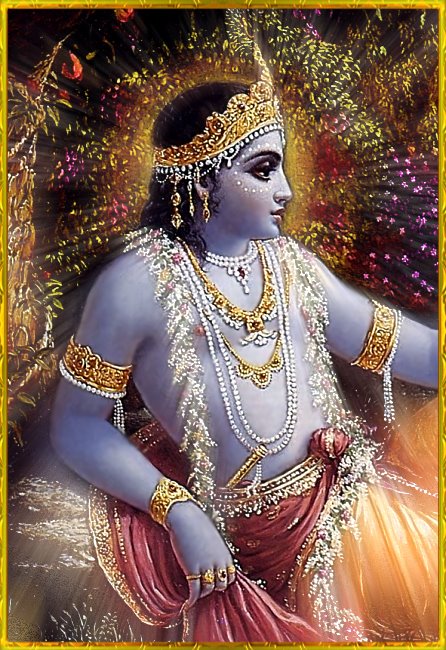
The Nectar of Devotion 1970 Edition
By His Divine Grace A.C. Bhaktivedanta Swami Prabhupada
Chapter 22 Qualities of Krsna Further Explained
Krsna’s Exquisite Beauty
In the Third Canto 2nd Chapter, 12th verse, of Śrīmad-Bhāgavatam, Uddhava tells Vidura, “My dear sir, Kṛṣṇa’s form was most wonderful when He appeared on this planet and exhibited the potency of His internal energy. His wonderfully attractive form was present during His pastimes on this planet, and by His internal potency He exhibited His opulences, which are striking to everyone. His personal beauty was so great that there was no necessity for His wearing ornaments on His body. In fact, instead of the ornaments’ beautifying Kṛṣṇa, Kṛṣṇa’s beauty enhanced the ornaments.”
Regarding the attractiveness of Kṛṣṇa’s bodily beauty and the sound vibration of His flute, in the Tenth Canto, 29th Chapter, 37th verse, of Śrīmad-Bhāgavatam, the gopīs address Kṛṣṇa as follows: “Although our attitude towards You resembles loving affairs with a paramour, we cannot but wonder at how no woman can maintain her chastity upon hearing the vibration from Your flute. And not only women, but even stronghearted men are subject to falling down from their position at the sound of Your flute. In fact, we have seen that in Vṛndāvana even the cows, the deer, the birds, the trees-everyone-has been enchanted by the sweet vibration of Your flute and the fascinating beauty of Your person.”
More
29 Jan 2012
by The Hare Krishna Movement
in Letters by Srila Prabhupada
Tags: chanting Hare Krishna, Krishna, Krishna consciousness, Letters by Srila Prabhupada, prabhupada, pure devotee, spiritual master

His Divine Grace A.C. Bhaktivedanta Swami Prabhupada
Letter to his London disciples, July, 1969:
“Therefore having a bona fide spiritual master and serving him and pleasing him and getting his mercy is essential. Otherwise there can be no advancement in Krishna consciousness. And unless the spiritual master is a pure devotee of Krishna then he has no potency to give you Krishna. He is simply a cheating rascal.
So in fact above all the rules and regulations and offenses I have mentioned the most important thing, the essential thing, which is required if you want to come to the stage of purely chanting the Hare Krishna mantra is you must have a bona fide spiritual master who is a pure devotee of Krishna. Without having a bona fide spiritual master you can chant Hare Krishna forever but you will not be able to advance because Krishna does not reveal Himself in this way. He only reveals Himself to those devotees who surrender to and serve and please His pure devotees.”
Pasted from; http://prabhupadanugas.blogspot.com/2012/01/gbc-stop-cheating.html
26 Jan 2012
by The Hare Krishna Movement
in Krishna Consciousness, KRSNA The Supreme Personality of Godhead, Spiritual Life, Spiritual World
Tags: A.C. Bhaktivedanta Swami Prabhupada, Balarama, Dvaraka, Krishna, Krsna and Balarama, Krsna The Supreme Personality of Godhead, Kuruksetra, Lord Parasurama, Vrndavana, Yadu dynasty
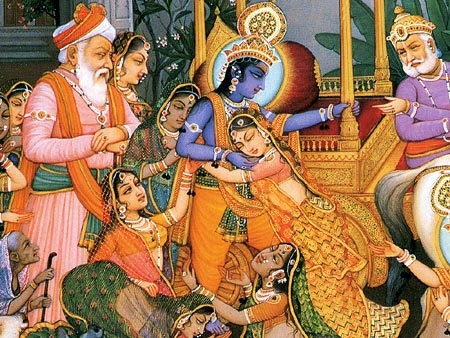
“For one who remembers Me without deviation, I am easy to obtain, O son of Prtha, because of his constnt engagement in devotional service. (Bhagavad-gita 8.14)
…The special qualification of the pure devotee is that he is always thinking of Kṛṣṇa without considering the time or place. There should be no impediments. He should be able to carry out his service anywhere and at any time. Some say that the devotee should remain in holy places like Vṛndāvana or some holy town where the Lord lived, but a pure devotee can live anywhere and create the atmosphere of Vṛndāvana by his devotional service. It was Śrī Advaita who told Lord Caitanya, “Wherever You are, O Lord-there is Vṛndavana.” (From Purport)
So to help us in remembering the Lord, we are posting this very nice chapter from “KRSNA The Supreme Personality of Godhead” by His Divine Grace A.C. Bhaktivedanta Swami, who is teaching us how to always think of Krishna.
…All the members of the Yadu dynasty were naturally very beautiful, and yet on this occasion, when they appeared duly decorated with gold necklaces and flower garlands, dressed in valuable clothing and properly armed with their respective weapons, their natural beauty and personalities were a hundred times enhanced. The members of the Yadu dynasty came to Kurukṣetra in their gorgeously decorated chariots resembling the airplanes of the demigods, pulled by big horses that moved like the waves of the ocean, and some of them rode on sturdy, stalwart elephants that moved like the clouds in the sky. Their wives were carried on beautiful palanquins by beautiful men whose features resembled those of the Vidyādharas. The entire assembly looked as beautiful as an assembly of the demigods of heaven…
KRSNA The Supreme Personality of Godhead (1970 Edition)
By His Divine Grace A.C. Bhaktivedanta Swami Prabhupada
Vol.2 Chapter 27
Lord Kṛṣṇa and Balarāma Meet the Inhabitants of Vṛndāvana
Once upon a time while Lord Kṛṣṇa and Balarāma were living peacefully in Their great city of Dvārakā, there was the rare occasion of a full solar eclipse, such as takes place at the end of every kalpa, or day of Brahmā. At the end of every kalpa the sun is covered by a great cloud, and incessant rain covers the lower planetary systems up to Svargaloka. By astronomical calculation, people were informed about this great eclipse prior to its taking place, and therefore everyone, both men and women, decided to assemble at the holy place in Kurukṣetra known as Samanta-pañcaka.
More
24 Jan 2012
by The Hare Krishna Movement
in Back to Godhead, Guru & Disciple, Hayagriva das, Spiritual Master, Uncategorized
Tags: A.C. Bhaktivedanta Swami Prabhupada, Back to Godhead Magazine, dharma of Kali Yuga, God, guru, hayagriva das, Krishna, prabhupada, religion, spiritual master

I like these early articles published in Back to Godhead Magazine. The mood was different in the early days of this movement, as the emphasis was on preaching. We understood the importance of Hari Nama Sankirtan, Book and Prasadam distribution, and there was not so much politics and internal wrangling, as we see today. Devotees had such profound appreciation for Srila Prabhupada, and the Mission of Lord Caitanya. We were unified; “Srila Prabhupada built a house the whole world could live in”, and we were in a unique position to change the world. To go back to those early days, we need only to put Srila Prabhupada and Krishna, back in the center of all our activities.
The Guru: Via Media to God
By Hayagriva das
“Excerpted from ‘Back To Godhead’ magazine, courtesy of The Bhaktivedanta Book Trust International, Inc., http://www.Krishna.com.” 1970 Vol. 1, No. 34
It is always best to assume that we are in the modes of ignorance, and at least we will be right on that point. When knowledge is staggeringly finite, humility is the best policy. On the spiritual path one tries to make progress to the modes of goodness and then transcend, for it is not always possible to transcend the modes all at once. God alone is perfect, and we are always imperfect, even in our so-called liberated state. It is because we are imperfect that we have to take shelter of the perfect.
Lord Caitanya advises that we take shelter of a sadhu, who is a holy man of spotless character, sastra, which is scripture, and guru, who is the perfect spiritual master. The scriptures should be the guidelines for the other two. The guru is liberated because he follows scriptures, and the sadhu is pure and honest because he accepts scriptural principles. The insistence on the authority of the scripture is to discourage people from inventing their own religions and to warn others against following such fabricators.
Actually, only God can establish a religion that is bona fide. Religion refers to man’s relationship with God or the Supreme Absolute Truth; it is neither a mere ritual, nor a set of regulations, nor a conglomeration of mental speculations concocted by man. Actual religion is to know God and one’s relationship to Him. And this is not possible unless God reveals who and what He is and reveals man’s relationship to Him. It is not that we can artificially say, “Oh, I think God is this, so I think if I do this or this I will become God, and then I’ll be happy.” One who invents in this way may be well intentioned, but he is actually misguiding himself and others.
More
21 Jan 2012
by The Hare Krishna Movement
in Raja-Vidya
Tags: Arjuna, Bhagavad-gita As It Is, His Divine Grace A.C. Bhaktivedanta Swami Prabhupada, kirtana, Krishna, mahatmas, material conditioning, Raja-Vidya, spiritual knowledge, spiritual progress, the king of knowledge

No one can be equal to God, and no one can be above Him. Even Lord Brahmā and Śiva, the most exalted demigods, are subservient to Him and pay their respectful obeisances. Instead of trying to become God by some meditational process or other, we had better hear about God submissively and try to understand Him and our relationship to Him. The representative of God or the incarnation of God never claims to be God but the servant of God. This is the sign of the bona fide representative.
Raja-Vidya: The King of Knowledge
By His Divine Grace A.C. Bhaktivedanta Swami Prabhupada
Chapter 4
Knowledge by Way of the Mahātmās, Great Souls
The presence of Kṛṣṇa in all aspects of the creation is perceived by the mahātmās, the great souls, who are always engaged in the worship of Kṛṣṇa. As Kṛṣṇa Himself states, these great souls are conversant with the confidential knowledge found in the Ninth Chapter of Bhagavad-gītā, and they know Kṛṣṇa to be the source of all things.
mahātmānas tu māṁ pārtha
daivīṁ prakṛtim āśritāḥ
bhajanty ananya-manaso
jñātvā bhūtādim avyayam
“O son of Pṛthā, those who are not deluded, the great souls, are under the protection of the divine nature. They are fully engaged in devotional service because they know Me as the Supreme Personality of Godhead, original and inexhaustible.” (Bg. 9.13)
More
17 Jan 2012
by The Hare Krishna Movement
in Krishna, Krishna Consciousness, Spiritual World, Srimad Bhagavatam
Tags: A.C. Bhaktivedanta Swami Prabhupada, brahmanas, chariots, conchshells, elephants, Krishna, Krsna enters Dwaraka, Lord Krishna, lotus flowers, Srimad Bhagavatam, The Supreme Personality of Godhead, unbroken seeds, Vedic hymns
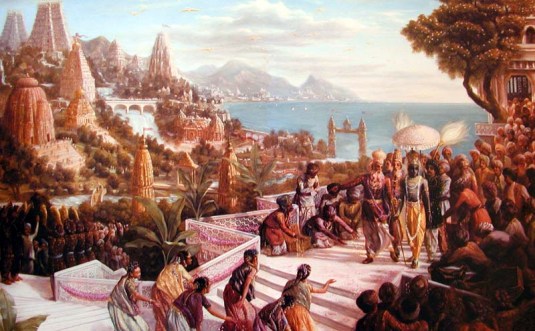
Srimad Bhagavatam
By His Divine Grace A.C. Bhaktivedanta Swami Prabhupada
Canto 1, Chapter 11
Lord Kṛṣṇa’s Entrance into Dvārakā
While entering the city of Dvaraka, Lord Krishna acknowledged all the inhabitants’ by casting His transcendental glance over them. The city was filled with the opulences of all seasons. There were hermitages, orchards, flower gardens, parks and reservoirs of water filled with lotus flowers. The highways, subways, lanes, markets and public meeting places were all thoroughly cleansed and then moistened with scented water, And to welcome the Lord, the residents of Dvaraka strew flowers, fruits and unbroken seeds everywhere. The residents hastened toward the Lord on chariots, upon which rode brahmanas bearing flowers, In front of the chariots were elephants, which are emblems of good fortune. Conchshells and bugles were sounded, and Vedic hymns were chanted. Thus, the residents offered their respects, which were saturated with affection, In return, Lord Krishna, the Personality of Godhead, approached them and offered due honor and respect to each and every one of the friends, relatives, citizens and others who came to receive and welcome Him. As the Lord passed along the public road of Dvaraka, His head was protected from sunshine by a white umbrella. White feathered fans moved in semicircles, and showers of flowers fell upon the road. His yellow garments and garlands of flowers made it appear as if a dark cloud were surrounded simultaneously by the sun, the moon, lighting and rainbows.
Lord Kṛṣṇa’s attraction is so powerful that once being attracted by Him one cannot tolerate separation from Him. Why is this so? Because we are all eternally related with Him as the sun rays are eternally related with the sun disc. The sun rays are molecular parts of the solar radiation. Thus the sun rays and the sun cannot be separated. The separation by the cloud is temporary and artificial, and as soon as the cloud is cleared, the sun rays again display their natural effulgence in the presence of the sun. Similarly, the living entities, who are molecular parts of the whole spirit, are separated from the Lord by the artificial covering of māyā, illusory energy. This illusory energy, or the curtain of māyā, has to be removed, and when it is so done, the living entity can see the Lord face to face, and all his miseries are at once removed. Every one of us wants to remove the miseries of life, but we do not know how to do it. The solution is given here, and it rests on us to assimilate it or not. (Srimad Bhagavatam 1.11.10 Purport)
Painting by-Ramadasa Abhirama dasa
05 Jan 2012
by The Hare Krishna Movement
in A.C. Bhaktivedanta Swami Prabhupada, Bhagavad-gita, Krishna Consciousness, Yoga
Tags: bhagavad-gita, bhajete, His Divine Grace A.C. Bhaktivedanta Swami Prabhupada, Krishna, Krishna consciousness, prabhupada, yoga, yogi, yoginam api sarvesam

It is by great fortune that one comes to Kṛṣṇa consciousness on the path of bhakti-yoga to become well situated according to the Vedic direction. The ideal yogī concentrates his attention on Kṛṣṇa, who is called Śyāmasundara, who is as beautifully colored as a cloud, whose lotus-like face is as effulgent as the sun, whose dress is brilliant with jewels and whose body is flower garlanded. Illuminating all sides is His gorgeous luster, which is called the brahmajyoti. He incarnates in different forms such as Rāma, Nṛsiṁha, Varāha and Kṛṣṇa, the Supreme Personality of Godhead, and He descends like a human being, as the son of Mother Yaśodā, and He is known as Kṛṣṇa, Govinda and Vāsudeva. He is the perfect child, husband, friend and master, and He is full with all opulences and transcendental qualities. If one remains fully conscious of these features of the Lord, he is called the highest yogī.
Bhagavad-gita As It Is – Macmillan 1972 Edition
By His Divine Grace A.C. Bhaktivedanta Swami Prabhupada
Chapter 6, Text 47
yoginām api sarveṣāṁ
mad-gatenāntar-ātmanā
śraddhāvān bhajate yo māṁ
sa me yuktatamo mataḥ
yoginām—of all yogīs; api—also; sarveṣām—all types of; mat-gatena—abiding in Me; antaḥ-ātmanā—always thinking of Me within; śraddhāvān—in full faith; bhajate—renders transcendental loving service; yaḥ—one who; mām—Me (the Supreme Lord); saḥ—he; me—Mine; yuktatamaḥ—the greatest yogī; mataḥ—is considered.
Translation
And of all yogīs, he who always abides in Me with great faith, worshiping Me in transcendental loving service, is most intimately united with Me in yoga and is the highest of all.
More
03 Jan 2012
by The Hare Krishna Movement
in Srila Prabhupada, The Hare Krishna Movement
Tags: Bhagavad=gita, Founder Acarya of the International Society for Krishna Consciousness, His Divine Grace A.C. Bhaktivedanta Swami Prabhupada, Krishna, Sri Caitanya, Srila Prabhupada, Srimad Bhagavatam, The Hare Krishna Movement

…Krishna says in the Bhagavad-gita, “one who teaches this most confidential knowledge to others is very dear to Me.” Through his translations of Vedic texts such as the Bhagavad-gita, Srimad Bhagavatam, and the Sri Chaitanya-caritamrita, Srila Prabhupada taught others the instructions of Lord Krishna in a way that was understandable to all…
Srila Prabhupada is a Friend to All
Author unknown
His Divine Grace A.C. Bhaktivedanta Swami, more affectionately known as Srila Prabhupada, is the Founder Acarya of the International Society for Krishna Consciousness, ISKCON, or more popularly known as The Hare Krishna Movement. The movement was inaugurated in India by Lord Caitanya almost five hundred years ago. The age that we currently live in is full of quarrel and dissent and the only means of self-realization is through the constant chanting of the holy name of God.
The Hare Krishna mantra, “Hare Krishna, Hare Krishna, Krishna Krishna, Hare Hare, Hare Rama, Hare Rama, Rama Rama, Hare Hare”, is found in the ancient scriptures of India, and is the most powerful of mantras in this age since it directly addresses God and His energy in a loving way. Lord Chaitanya freely distributed this mantra to all of India through congregational chanting. Srila Prabhupada, a spiritual master in the disciplic succession descending from Lord Chaitanya, preached this same movement in the mid 1960s beginning in America and eventually spreading throughout the world.
More
Previous Older Entries Next Newer Entries








 The Hare Krishna Movement