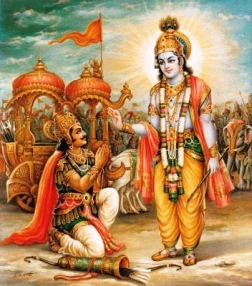
Celebrating Janmastami

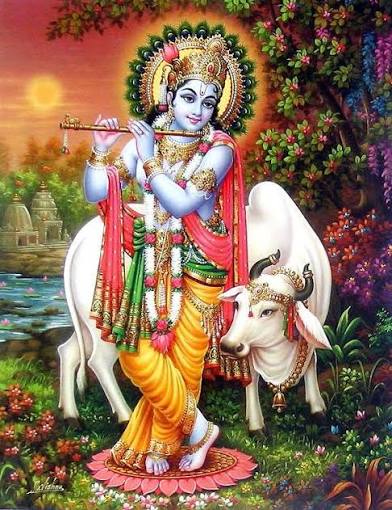
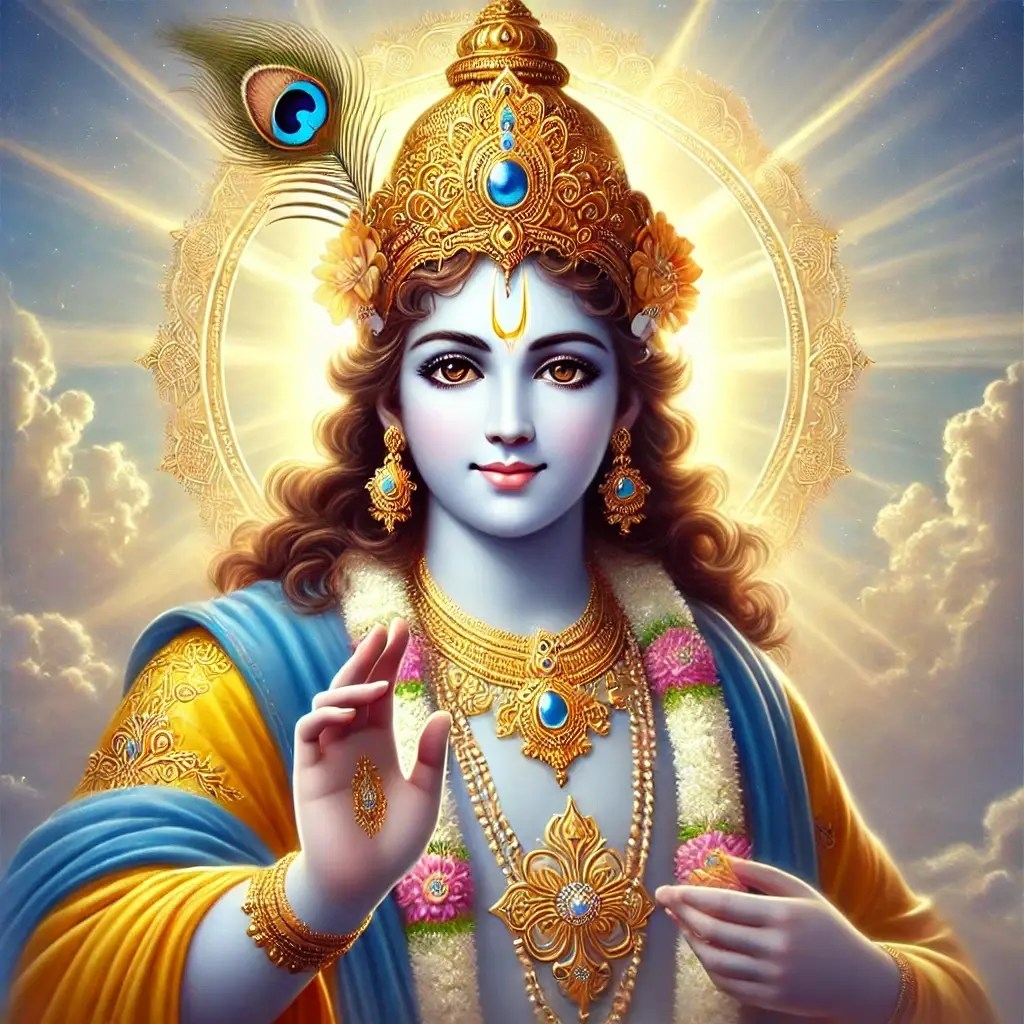
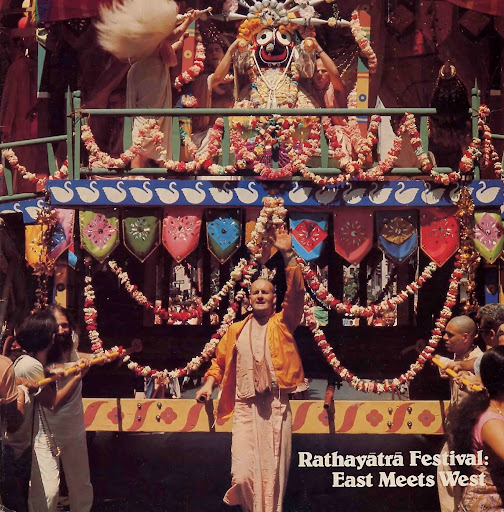
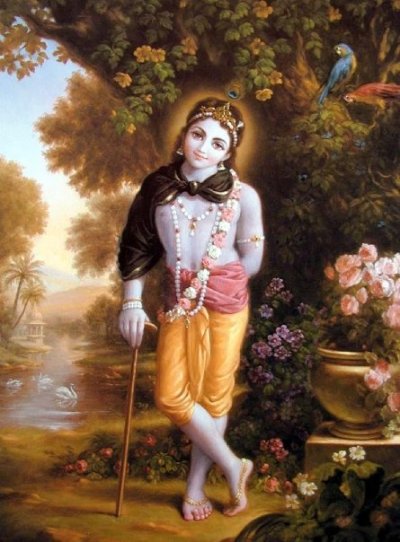
So today we honor Lord Sri Krishna’s appearance day with a full day fast, followed by a small feast after His appearance at midnight. We will try to increase our remembrance of Him by additional chanting and reading ,and singing His glories.

“There are many statements about the festive days in connection with Kṛṣṇa’s different activities. One of these festive days is Janmāṣṭamī, the day of Kṛṣṇa’s birth. This Janmāṣṭamī day is the most opulent festival day for the devotees, and it is still observed with great pomp in every Hindu house in India. Sometimes even the devotees of other religious groups take advantage of this auspicious day and enjoy the performance of the ceremony of Janmāṣṭamī. Ecstatic love for Kṛṣṇa is also aroused on the days of Ekādaśī, which are other festive days in connection with Kṛṣṇa.” (Nectar of Devotion, Chapter 26)

“Of course, this Janmāṣṭamī ceremony is observed by all Hindus. Irrespective of becoming Vaiṣṇava or not, this ceremony is observed in India every home. Just like in your Western countries the Christmas is observed in every home, similarly Janmāṣṭamī is observed in every home. Today is a great ceremonial day. So our program is, at twelve o’clock night the Lord will take birth and we shall receive Him.” (Srila Prabhupada Janmastami Lecture, Montreal, August 16, 1968)

“Today at (20/8/65) the captain arranged for a meeting on board the M/V Jaladuta on account of Janmastami day and I spoke for an hour on the philosophy and teachings of Lord Sri Krishna. All the officers attended the meeting and there was distribution of Prasadam. The matter was radiographed to Smt. Sumati Moraji in Bombay. The ship is stranded on the Arabian Sea about 4 miles away from the coast. We are in this position from 3/20 p.m. 20/8/65 to 9/30 a.m. on 22/8/65.” (Srila Prabhupada’s Jaladuta Diary, August 20, 1965)

“The devotees celebrated the festival of Janmāṣṭamī, Kṛṣṇa’s birthday, which is also called Nanda-mahotsava, the festival of Nanda Mahārāja. At that time Śrī Caitanya Mahāprabhu and His devotees dressed themselves as cowherd boys.

“Having dressed up like cowherd boys, all the devotees carried pots of milk and yogurt balanced on rods over their shoulders. Thus they all arrived at the festival grounds chanting the holy name of Hari.” (Caitanya-caritāmṛta Madhya 15.17-18)

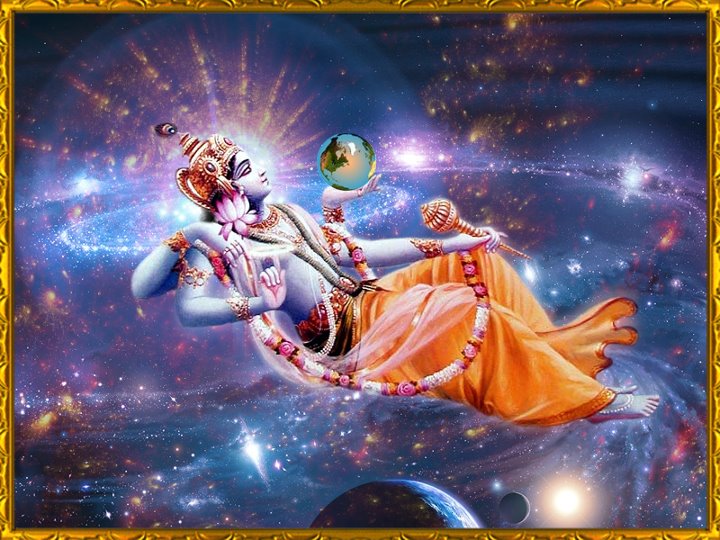
“Kṛṣṇa is present throughout the whole universe in some feature. In one universe you will find Kṛṣṇa is taking birth, Janmāṣṭamī. In some universe you will see Kṛṣṇa is playing with the cowherd boys. Somewhere… In this way. Therefore it is called nitya-līlā. Nitya-līlā means the janmāṣṭamī-līlā is going on permanently somewhere or other. Therefore it is called līlayā, yadṛcchayā.

So this is a great science, Kṛṣṇa science, kṛṣṇa-tattva. So we have to learn from the authorized Vedic literature about Kṛṣṇa. And that is required in human life. Because if we simply understand the truth about Kṛṣṇa, janma karma ca me divyam (BG 4.9), which are divine transcendental, yo jānāti tattvataḥ, if you try to understand and if you become fortunate to understand the divine nature of Kṛṣṇa’s līlā, then you become liberated, immediately: tyaktvā dehaṁ punar janma naiti mām eti kaunteya (BG 4.9).” (Srila Prabhupada Lecture, Bombay, December 16, 1974)

“Kṛṣṇa cannot be understood fully because He is unlimited, and we have got limited knowledge. But still, as far as possible and as much as possible, if we try to understand Kṛṣṇa, janma karma ca me divyam evaṁ yo vetti tattvataḥ (BG 4.9). Kṛṣṇa advents Himself, comes on this planet. He executes so many duties, takes part in so many occupational functions as human being, but everything is full of instructions. Therefore Kṛṣṇa says, ‘Don’t try to understand, even that is also good superficially, but in truth.’ Janma karma ca me divyam evaṁ yo vetti tattvataḥ. Tattvataḥ means ‘in truth, in fact.’ So if anyone… Janma karma ca me divyam. Divyam means His birth is not ordinary birth. If it had been ordinary birth, then why we are still performing the Janmāṣṭamī ceremony, Kṛṣṇa’s birthday ceremony? Many big, big kings came and gone. Who is performing the birthday ceremony of that king?” (Srila Prabhupada Lecture, Hong Kong, January 31, 1974)

“Kṛṣṇa is born here at Janmāṣṭamī, and as soon as Kṛṣṇa is taken to Gokula by Vasudeva, Kṛṣṇa is seen in another universe, born again. Just like our sun. As soon as it rises at six o’clock or, say, five o’clock… So as soon as here five o’clock finished, in another place five o’clock begins. But it is going on. Ananta-cakra. The five o’clock is permanent. Anywhere, there must be some five o’clock. Anywhere, there must be six o’clock. Anywhere, there must be seven o’clock. Just like the twenty-four hours is going on. You cannot say that the sun’s rising at five o’clock, because it is finished within your view, it is finished. No. It is not like that. The five o’clock is permanent to the sun. If it is so possible to a material thing, why not Kṛṣṇa? Therefore it is called nitya-līlā. Nitya-līlā means eternally Janmāṣṭamī is going on. Eternally everything is going on, eternally. So one who is liberated from this world and he is given the spiritual body, he’s immediately transferred to the place where Kṛṣṇa’s līlā is going on. Just like in Vṛndāvana, when Kṛṣṇa was present, all the Vṛndāvana-vāsīs, they were not ordinary men; they were liberated. They transferred to associate with Kṛṣṇa, practice. And after this complete practice, they were transferred to the Goloka Vṛndāvana.” (Srila Prabhupada Lecture, Gorakhpur, February 16, 1971)

“So Lord Kṛṣṇa for this reason has appeared. He wants to call the conditioned souls back to Godhead. He wants us to realize that He is the source of the whole universe, He is the owner of the universe, He is the supreme enjoyer, the supreme knower of everything, and that we are always welcome to associate with Him by the grace of His devotees, by the grace of a spiritual master. And so He has appeared, and we are now celebrating the Janmāṣṭamī day, the day when Lord Kṛṣṇa came to this conditioned plane out of His own transcendental power, with His full spiritual potency, in order to reveal the supreme nature of sac-cid-ānanda vigrahaḥ… eternal knowledge, consciousness, and bliss, to all the conditioned souls so that they might be attracted to Him, and so that they might come out of the miseries of material existence and of ignorance. At this particular time in the world it is very much necessary that all people hear about Kṛṣṇa and that they should become attracted to chanting the name of Kṛṣṇa, to hearing about Kṛṣṇa’s wonderful pastimes. So that by this exquisite attraction for Kṛṣṇa they might forget their lower desires.” (Srila Prabhupada Janmastami Lecture, Montreal, August 16, 1968)

“The advent of Kṛṣṇa, it is very important thing. We should try to understand Kṛṣṇa, why He advents, why He comes on this material world, what is His business, what are His activities. If we simply try to understand Kṛṣṇa, then what is the result? The result is tyaktvā dehaṁ punar janma naiti mām eti kaunteya (BG 4.9). You get that immortality. The aim of life is to achieve immortality. Amṛtatvāya kalpate. So in the advent of Kṛṣṇa, we shall try to understand the philosophy of Kṛṣṇa.” (Srila Prabhupada Janmastami Lecture, London, August 21, 1973)

Text pasted from: The Prabhupada Connection

There Will Always Be Difficulties

Sometimes when people take to Krsna Consciousness, they think that automatically, all their problems and difficulties will be solved, but unfortunately this is not the immediate case, as the letters from Srila Prabhupada to his disciples so vividly indicate. I was listening to one lecture where Srila Prabhupada was saying “…in this material world there will always be difficulties. This material world was designed in such a way that there will always be difficulties.” I went through some of the letters and highlighted where Srila Prabhupada used the word difficulties. It was interesting to read how he explained about these difficulties.

“Please accept my blessings. I beg to acknowledge receipt of your letter dated December 27, 1973. I can understand that you are sometimes experiencing difficulties but that you are very sincerely trying to become Krsna Conscious and that you have a number of persons there who are interested in your presentation of Krsna Consciousness. Actually this material world is full of suffering conditions and the only way to become free from these sufferings which are due to past sinful activities is to chant Hare Krsna. In this age no other method of rectification is possible. Along with the chanting of Hare Krsna we have to rigidly observe the prohibition of four sinful activities. If only these things we can do our lives can become perfect. I think you have my books so please study them carefully.” (Letter to: Bhumata — Los Angeles 2 January, 1974)

And in this one famous letter he wrote to Gurudas Prabhu, Srila Prabhupada descrbes his own difficulties in starting this Hare Krishna Movement.

My dear Gurudasa,

Please accept my blessings. I am in due receipt of your letter dated August 23, 1972, and I have noted the contents carefully. Do not be depressed. All along my God brothers gave me only depression, repression, compression—but I continued strong in my duty. So never mind there is some discouragement, continue with your work in full enthusiastic Krishna Consciousness attitude of service…

Hoping this meets you in good health.

Your ever well-wisher,
A.C. Bhaktivedanta Swami

The following are the letters that Srila Prabhupada wrote to his disciples wherein he uses the word difficulties.

Man’s artificial civilization has created so many artificial laws that we, although God’s men, have difficulties to travel in God’s countries on God’s business. The foolish law makers should have at least given us some facilities to make people Krishna conscious so that they might be happy in this life and in the next. The Kingdom of Maya is like that and still we have to execute our business in Krishna Consciousness. (Letter to: Brahmananda — ISKCON New York 14 March, 1967)

P.S. Also inform Jayananda I have received his letter and the difficulties of life may come as seasonal changes but we should not be disturbed by all those difficulties. Our process is to chant and that process will gradually clear everything in due course. There is nothing to be disrupted—you should go on with your work with enthusiasm and everything will be solved. We are on the sound footing of Krishna Consciousness. ( Letter to: Mukunda — New York 6 June, 1967)

More

AI Technology

Continuing with our post from yesterday…and this will probably be my last post on AI Technology, but I asked AI a simple question:

You asked: What did Śrīla Prabhupāda recommend regarding initiations after his departure? Here’s what’s clear from his instructions and historical records:


The Ritvik (Officiating Priest) System

  • On July 9, 1977, Śrīla Prabhupāda issued a signed directive appointing eleven senior disciples to act as ritviks—ritual officiants who would initiate new disciples on his behalf, not as independent gurus Wikipedia+1.
  • His instruction was explicit: henceforward, these ritvik representatives were to carry out initiation ceremonies, and names of new disciples would still be recorded in Prabhupāda’s Initiated Disciples book Hare KrishnaHansadutta.

Intent vs. Practice

  • Many early devotees, including temple leaders, clearly understood that Prabhupāda intended no successors—that the eleven ritviks were acting solely as his proxies, not as new gurus Vraj VrindavanHare Krishna London.
  • However, shortly after his departure on November 14, 1977, these ritviks began initiating disciples on their own behalf, leading to a shift toward a guru succession system Wikipedia+1.

Later Developments in ISKCON

  • The Governing Body Commission (GBC), which oversees ISKCON operations, eventually moved away from the ritvik system. By the mid-1980s, the GBC encouraged all qualified disciples to become initiating gurus, effectively changing Prabhupāda’s original system Wikipedia.

In Summary

  • Śrīla Prabhupāda’s final, direct instructions were for ritvik initiation: new disciples were to be initiated on his behalf by designated representatives, not by living gurus.
  • Yet, posthumously, that system was not upheld; the ritvik initiators became independent initiating gurus, diverging from Prabhupāda’s original plan.

Reflections from Devotees

Some early disciples recalled:

“I will announce some ritvik acharyas who will initiate disciples on my behalf when I leave the planet.”
— Gauridas Pandit Dasa, recalling a conversation with Prabhupāda in mid-1977 Hare Krishna London

This reinforces that the ritvik system was clearly intended to extend beyond his physical presence.

AI (Artificial Intelligence)

The other day I was talking with a devotee about AI (Artificial Intelligence), something I know nothing about. But when that person said that AI read all of Srila Prabhupada’s books, I became curious. So I did a Google search, just typed in “AI” and at the top of the list was this link https://openai.com/. So I asked a question, “Who is Srila Prabhupada?”. I was surprised when it came back with a detailed description:

Srila Prabhupada refers to A.C. Bhaktivedanta Swami Prabhupada (1896–1977), a renowned spiritual teacher and founder of the International Society for Krishna Consciousness (ISKCON), commonly known as the Hare Krishna movement.

He was born Abhay Charan De in Calcutta, India, and was a disciple of Srila Bhaktisiddhanta Sarasvati Thakura, a prominent leader in the Gaudiya Vaishnava tradition (a devotional branch of Hinduism focused on the worship of Krishna).

Some key points about him:

  • Mission: Srila Prabhupada’s main mission was to spread the teachings of Bhagavad-gītā and Śrīmad-Bhāgavatam around the world, emphasizing bhakti-yoga (devotional service to Krishna).
  • Global Impact: In 1965, at the age of 69, he traveled from India to the United States with little money and no institutional backing. Within 12 years, he established over 100 temples worldwide.
  • Books: He translated and wrote extensive commentaries on many sacred texts, including the Bhagavad-gītā As It Is, Śrīmad-Bhāgavatam, and Caitanya-caritāmṛta.
  • Philosophy: His teachings focused on chanting the Hare Krishna mantra as a means to achieve spiritual realization.
  • Legacy: Millions of people still follow his teachings today, and ISKCON continues to grow worldwide.

If you’d like, I can give you a short, inspiring biography of his life’s journey that reads more like a story than a fact sheet. Would you like that?

So I replied ‘Yes’.

Alright, here’s Srila Prabhupada’s story in a more flowing, inspiring way:

More

Appearance Day of Lord Balarama

Today marks the auspicious appearance of Lord Balaram. We honor it with a half day fast and followed by a nice vegetarian feast.

Lord Balarama is Krishna’s elder brother and His appearance day takes place on the full moon day (purnima), two weeks before Krishna Janmashtami. Krishna and Balarama were the darlings of Vrindavan/ Vraja. Together They would spend the day enjoying the company of the cowherd boys in the forests of Vraja. Their wonderful pastimes are related in the tenth canto of Srimad-Bhagavatam, which Srila Prabhupada also translated as The Krishna Book. Lord Balarama is also considered the original spiritual master and His worship is therefore most important for Vaishnavas.

Balarāma means guru-tattva. Balarāma represents guru. Yasya prasādād bhagavat-prasādaḥ. If we want to understand Caitanya Mahāprabhu, if we want to understand Kṛṣṇa, then we must take shelter of Balarāma. Nāyam ātmā bala-hinena labhyaḥ. This bala-hinena labhyaḥ, this Vedic injunction, means “Without the mercy of Balarāma you cannot understand, you cannot realize your spiritual identification. So that Balarāma comes as Nityānanda Prabhu. Balarāma hailā nitāi. Therefore we must take shelter of Balarāma.

Lecture given by His Divine Grace A.C. Bhaktivedanta Swami Prabhupada
Lord Nityānanda Prabhu’s Āvirbhāva Appearance Day
Bhuvaneśvara, February 2, 1977

More

Prabhupadanugas

Perhaps it was Krsna who directed me to the last chapter of Śrīla Prabhupāda-līlāmṛta, by Satsvarūpa dāsa Goswāmī. The famous book chronicling The life of our Founder-Acarya His Divine Grace A. C. Bhaktivedanta Swami Prabhupada. In this last chapter entitled, “The Final Lesson”, last sentence of this voluminious book, Satsvarūpa dāsa Goswāmī concludes with this statement:

“Our hope is that by hearing about Śrīla Prabhupāda the reader will become himself a Prabhupādānuga, a follower of Śrīla Prabhupāda. We can wish no better fortune upon anyone.”

Update:
this came as a comment…

This is probably the best thing Satsvarupa Maharaja ever wrote. When a devotee decides to join the Hare Krishna movement as a full-time member, they are announcing to the world their acceptance of Srila Prabhupada as the empowered representative of the Supreme Personality of Godhead. By mature realization they will come to recognize Srila Prabhupada as their eternal spiritual master. These lifetime servants of the spiritual master are called Prabhupadanugas.

Those who mould their lives in such a way that they can always think of the lotus feet of the spiritual master will live with him eternally. Because of Srila Prabhupada’s transcendental position, there is no separation in time or space between us. He is present in our lives and is guiding us back to Godhead through his written and spoken word. By his unlimited blessings we continue to move forward in Krishna consciousness and surely we will one day reach the ultimate goal of love of Godhead. The more we advance toward that goal, the more we will understand the greatness of Srila Prabhupada’s compassion upon us and his concern for the conditioned souls of this world who are all part and parcel of the Supreme Lord, Sri Krishna. (Locanananda das)

Sometimes the ISKCON devotees refer to Prabhupadanugas as some splinter group, not belonging to the mainstream devotees. But in fact we can plainly see from some of the writing of the senior members of our society that becoming a follower of Śrīla Prabhupāda is exactly what is needed. For instance in Bhakti Curu Swami’s, Disappearance Day offering to Srila Prabhupada, given June 16, 2010, he states:

…everyday, in all the temples of ISKCON, Srila Prabhupada is worshipped by everyone. Then why do we hesitate to tell a new comer who is searching for a guru that Srila Prabhupada, the best guru the world has ever seen, is still here, and one can surrender unto him and go back to Godhead very easily? When we have such a great good fortune, why do we not take full advantage of it? It is only when we do so that the glorious days of ISKCON will come back again and we will witness Sri Caitanya Mahaprabhu’s sankirtan movement starting to spread in leaps and bounds all over the world.

If we really love ISKCON and if we sincerely want the Krsna Consciousness movement to spread all over the world in every town and village, then let us broadcast all over the world that Srila Prabhupada is still with us and that anyone who wants to receive his mercy can approach him and establish his eternal relationship with him.

Full Chapter of the “The Final Lesson”

More

The Gopis Enchanted by the Flute

Without a doubt, this is my favorite book ever. I never get tired of reading from the Krsna Book. It seems to get sweeter every time.

Krsna was very pleased with the atmosphere of the forest, where flowers bloomed and bees and drones hummed very jubilantly. While the birds, trees and branches were all looking very happy, Krsna, tending the cows and accompanied by Sri Balarama and the cowherd boys, began to vibrate His transcendental flute. After hearing the vibration, the gopis in Vrndavana remembered Him and began to talk amongst themselves about how nicely Krsna was playing His flute. When the gopis were describing the sweet vibration of Krsna’s flute’; they also remembered their pastimes with Him; thus their minds became disturbed, and they were unable to fully describe the beautiful vibrations. While discussing the transcendental vibration, they also remembered how Krsna dressed, decorated with a peacock feather on His head, just like a dancing actor, and with blue flowers pushed over His ear. His garment glowed yellow-gold, and He was garlanded with a vaijayanti necklace. Dressed in such an attractive way, Krsna filled up the holes of His flute with the nectar emanating from His lips. So they remembered Him, entering Vrndavana forest, which is always glorified by the footprints of Krsna and His friends.

More

Govindam Prayers

He just listened with his eyes closed. And devotees got to see streams of tears coming down his cheeks.

Mukunda Goswami: Actually there is an interesting story that I wrote about. It took place when “Govindam” first came out, when the recording was first released.

I was in England, and she [Yamuna] was in England, and we sent this recording to the devotees in Los Angeles to show how we were really preaching big time to the Beatles, and we did this record, and so on and so forth.

But the devotees in Los Angeles didn’t want Prabhupada to hear this because they thought it was very strange that a woman’s voice would be leading the Hare Krishna mantra. And so they didn’t let Prabhupada hear it.

So one morning, just before the greeting of the Deities, Prabhupada was sitting on his vyasasana .

When the Deity doors open in Los Angeles, there is a big billow of incense smoke from the doors, it kind of pours out like a big cloud coming out.

More
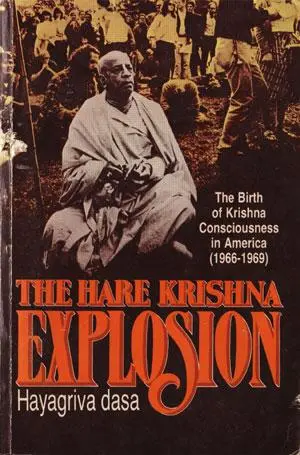
The Hare Krishna Explosion

The Hare Krishna Explosion
The Birth of Krishna Consciousness in America 1966 – 1969

by Hayagriva das

tad viddhi pranipatena
pariprashnena sevaya
upadekshyanti te jnanam
jnaninas tattva-darshinah

Just try to learn the truth by approaching a spiritual master. Inquire from him submissively and render service unto him. The self-realized soul can impart knowledge unto you because he has seen the truth. (Bhagavad-gita 4.34)

PREFACE

Although at first we called him “Swamiji,” we eventually changed to the more respectful “Prabhupada,” a Sanskrit word meaning “one who takes shelter at the lotus feet of Krishna.”

“This is the proper form of addressing the spiritual master,” he humbly suggested one day.

Somehow the strange word rang true, and from then on it was always “Prabhupada,” a word that conjured for us the omnipotent Lord Sri Krishna Himself.

“Guru and Krishna are like two rails of the same track,” he said, “always side by side. By the grace of Krishna, you get guru. And by the grace of guru, you get Krishna.”

Who was this great master called Srila Prabhupada, and what was he like? To answer this is to answer the question Arjuna asked Lord Krishna millenia ago:

sthita-prajnasya ka bhasa
samadhi-sthasya kesava
sthita-dhih kim prabhaseta
kim asita vrajeta kim

“What are the symptoms of one whose consciousness is merged in Transcendence? How does he speak, and what is his language? How does he sit, and how does he walk?” (Bhagavad-gita 2.54)

Prabhupada’s real identity defied analysis. I was surprised to learn that he had once been a pharmacist with a wife and children. Because worldy motives and passion never touched him, it was difficult to imagine him as a householder, as anything but the saffron-clad spiritual master, the paramhansa floating over the world like a swan over water.

“If you are drowning in the middle of the ocean,” he said, “and someone throws you a rope, you do not stop to enquire, ‘Oh dear sir, why are you throwing me this rope? What is your name? What country are you from? Why are you here?’ No. The drowning man grabs the rope for dear life.”

Since we were all drowning, few of us asked those questions. We grabbed the rope any way we could, assured of some ultimate victory in Vikuntha, a faraway spiritual universe.

In the closing words of Bhagavad-gita:

yatra yogeshvarah krishno
yatra partho dhanur-dharah
tatra srir vijayo bhutir
dhruva nitir matir mama

“Wherever there is Krishna, the master of all mystics, and whever there is Arjuna, the supreme archer, there will also certainly be opulence, victory, extraordinary power and morality.” (Bhagavad-gita 18.78)

And wherever there is Srila Prabhupada, there will certainly be Lord Krishna.

With special thanks to Hansadutta Prabhupada for first making this entire book available at; http://www.hansadutta.com/EXPLOSION/hkex.html Copied and reprinted with his permission. Hare Krishna!

Prabhupadagita.com

Some years ago I put the complete Original 1972 Bhagavad-gita “As It Is” by His Divine Grace A. C. Bhaktivedanta Swami online. You can click on link prabhupada.gita to visit. I find it is a quick and easy site for reference to all your favorite chapters and slokas.

Disappearance day of Srila Bhaktivinoda Thakura

Today marks the disappearance day of Srila Bhaktivinoda Thakura. We honor it with a half day fast followed by a nice vegetarian feast. We share with you one of my favorite songs composed by Srila Bhaktivinoda.

When, oh when, will that day be mine?
When my offenses ceasing,
taste for the name increasing,
when in my heart will your mercy shine?
When, oh when will that day be mine?

Lower than a blade of grass, more tolerant than a tree.
When will my mind attain this quality?
Respectful to all, not expecting their honour, then shall I taste the name’s nectar sublime.
When oh when will that day be mine?

Complete lyrics and translation

More

Jaya Radha Madhava

click on image to enlarge

Jaya Rādhā-Mādhava
by Srila Bhaktivinoda Thakura

jaya rādhā-mādhava kuñja-bihārī
gopī-jana-vallabha giri-vara-dhārī

jaya–all glories to: rādhā-mādhava–Rādhā and the Lord of sweetness; kuñja-bihārī–He who enjoys loving pastimes in the groves of Vṛndāvana; gopī-jana-vallabha–the lover of the cowherd maidens of Vraja; giri-vara-dhārī–the holder of the great hill named Govardhana;

Krsna is the lover of Radha. He displays many amorous pastimes in the groves of Vrndavana, He is the lover of the cowherd maidens of Vraja, and the holder of the great hill named Govardhana.

yaśodā-nandana braja-jana-rañjana
yāmuna-tīra-vana-cārī

yaśodā-nandana–the beloved son of mother Yaśodā; vraja-jana-rañjana–the delighter of the inhabitants of Vraja; yāmuna-tīra-vana-cārī–who wanders in the forests along the banks of the river Yamunā

He is the beloved son of mother Yasoda, the delighter of the inhabitants of Vraja, and He wanders in the forests along the banks of the River Yamuna!

Purport to Jaya Rādhā-Mādhava

More

Prabhupada Memories

“If Prabhupada wants me to drive faster, I will drive faster.”

A story told by Sri Nathji Prabhu

Sri Nathji: The twenty-eighth of September 1977 was a very sad day. At about 4:30 in the morning I got a phone call from Giriraj Swami. Crying, he said, “I want you to bring your big Dodge car.” I had a huge American car with a back seat long enough to lie down in.Giriraj Swami said, “Prabhupada wants to leave his body.” I said, “What?” I had never heard anybody say that someone “wanted to leave his body.”

“What do you mean, ‘Prabhupada wants to leave his body?’ Where does he want to leave his body?”

He said, “He wants to go to Vrindavan, and he’s leaving his body. He’s going away, and we have to take him to the train station.” By that time Prabhupada hadn’t eaten for nearly six months. He was living only on juice and charanamrita, and his body was depleted.

He had hardly any muscles, and his veins were pressing on his bones. It was very painful to see him. Here was the person with whom I had fought and argued.

Here was the person who was such a fine debater that he was like a lion. He could defeat anyone philosophically.

But that morning, when I saw how very thin Prabhupada was, it reminded me of Krishna’s description in the Bhagavad-gita of a person withdrawing himself like a tortoise withdraws himself within his shell.

So in Bombay, on the twenty-eighth of September 1977, Srila Prabhupada decided to leave, and for the first time I cleaned my car.

More

Radha Krishna Mudra

On this day in 2014 Brahmananda Prabhu posted this picture with explanation: “This pose or mudra of Radha Krishna is Srila Prabhupada’s favorite photo. He kept it as the main worshippable photo on the altar in his rooms at the LA temple. He said the pose was the perfect expression of Gaudiya Vaishnava philosophy of Radha Krishna rasa.”

Acintya-bhedabheda-tattva: One and Different Simultaneously

click on image to enlarge

Here is another word for your vaisnava vocabulary, acintya-bhedabheda-tattva. I was always facinated by this word because its meaning is inconceivable; simultaneous oneness and difference. Srila Prabhupada uses the example of the sun and the sunshine. The sunshine is not different from the sun as it is the engery of the sun, but when the sunshine is shinning in your room you cannot say the sun is in you room. Hence, one and different simultaneously. So similarly, God and His creation are one and different simultaneously One and Different.

Another example Srila Prabhupada uses is a drop of water from the ocean, has the same qualities as the ocean, in quality but not in quanitity. As living entities or as parts of God’s energy, we’re also equal in quality with God, but there’s a vast difference in quantity.

Achintya-bhedabheda-tattva refers to the inconceivable and simultaneous oneness and difference of the Supreme Person and His energies. This is one of the key points of theistic philosophy taught by Chaitanya Mahaprabhu. As parts of God’s energy, we’re also equal in quality with God, but there’s a vast difference in quantity. We’re each infinitesimal sparks of spiritual energy, and the Supreme Person, Krishna, is the infinite, supreme source of all energies.

Achintya-bhedabheda-tattva describes the relationship between the Supreme Lord and His energies, including individual souls, as both one with and different from Him simultaneously. This principle is beyond human comprehension, hence the “inconceivable” aspect.

From a lecture at a Christian Monastery – Melbourne April 06, 1972

More

The Twenty-Six Qualities of a Devotee

Sometimes I ask myself, “are you making any spiritual advancement? Are you becoming free from lust anger and greed? And are you developing the qualities of a devotee?”. So, from time to time I like to look up the “qualities of a devotee”, and do a reality check.

Srila Prabhupada exhibits all the super excellent qualities of a devotee. He is the Acarya (one who teaches by example) and is exemplary in showing us how to develop the qualities of a devotee, in order to benefit all living beings and to serve Krsna.

The qualities of a devotee, twenty-six in number, are listed below:

1.) Kind to everyone, 2.) Does not quarrel with anyone, 3.) Fixed in the Absolute Truth, 4.) Equal to everyone, 5.) Faultless, 6.) Charitable, 7.) Mild, 8.) Clean, 9.) Simple, without material possession, 10.) Benevolent, 11.) Peaceful, 12.) Completely attached to Krsna, 13.) Has no material hankering, 14.) Meek, 15.) Steady, 16.) Self-controlled, 17.) Does not eat more than required, 18.) Sane, 19.) Respectful, 20.) Humble, 21.) Grave, 22.) Compassionate, 23.) Friendly, 24.) Poetic, 25.) Silent, 26.) Expert

More

Ten Incarnations of Krishna

From upper left-hand corner: Lord Nrsimhadeva, the man-lion incarnation; Lord Vamana, the dwarf-brahmana incarnation; Lord Parasurama, the warrior incarnation; Lord Ramacandra; Lord Krishna and Lord Balarama; Lord Buddha; Lord Kalki, who destroys all demons at the end of the millennium; Lord Matsya, the fish incarnation; Lord Kurma, the tortoise incarnation; and Lord Varaha, the boar incarnation.

This morning my attention was drawn to the forth chapter of the Bhagavad-gita “As It Is” entitled Transcendental Knowledge. I just opened the book at random and this was the verse I saw…

Whenever and wherever there is a decline in religious practice, O descendant of Bharata, and a predominant rise of irreligion—at that time I descend Myself. (Bg. 4.7)

In order to deliver the pious and to annihilate the miscreants, as well as to reestablish the principles of religion, I advent Myself millennium after millennium. (Bg. 4.8)

Lord Krsna appears in every millennium, in various incarnations, to annihilate the demons, protect the devotees and reestablish the principles of religion.

More

The Bhagavad Gita “As It Is” Study Guide


The Bhagavad Gita As It Is Study Guide
Presented by Disciples and Followers of His Divine Grace A. C. Bhaktivedanta Swami Prabhupada


Click on link to open and save Bhagavad-gita Study Guide

Beautiful Reunion

My wife shared this with me, it was a post on Facebook, put up by Govinda dasi. Although I have never personally met Hayagriva Prabhu, I have enjoyed reading his books and articles in Back to Godhead Magizine.

…Srila Prabhupada named him Hayagriva, and used to jokingly say that Hayagriva is like the horse incarnation, and is sent by Krishna to make my books very beautiful and eloquent in English language.

Hari Sauri: There was an emotional reunion this afternoon between Srila Prabhupada and Hayagriva Prabhu. Although he was one of Srila Prabhupada’s first disciples, he has been away from devotional service for some years. He has come now to finish the philosophy book project and to be with Prabhupada for some time. He walked slowly into Prabhupada’s room, his face flushed and his deep voice trembling. “It’s your old Hayagriva, Prabhupada,” he choked out, and fell sobbing to the floor in full length dandavats. Prabhupada sat behind his desk, silent, but clearly moved by the sight of his sometimes – wayward son.

When Hayagriva got up Prabhupada gave him a garland, and remarked to Radhaballabha Dasa and me how Hayagriva had been sent by Krishna to help him spread Krishna consciousness all over the world. In reply, Hayagriva said that he had never forgotten Prabhupada, not even for a day. Prabhupada was deeply affected by this and said that he also had never forgotten Hayagriva. “I was thinking, has Hayagriva gone away? I was thinking like that.” His voice broke and he was unable to speak for a few seconds. Although he tried to check his tears, still some trickled from the corners of his eyes. Then he tipped his head from side to side. “All right,” he said, and we all left.

Prabhupada has so much affection for his disciples – no one can estimate how much. It was very apparent that he never forgets any devotional service that has been rendered to him.

Reference: A Transcendental Diary Volume 2 – Hari Sauri Dasa

Instructions to the Devotees of the Hare Krishna Movement

Excerpted from Back to Godhead Magizine

New York City, March 31, 1974

by His Holiness Visnujana Svami.

“One may artificially repress the desires of the senses, although the taste for sensual enjoyment remains; but by ceasing such enjoyments, experiencing a higher taste, one is fixed in consciousness.” (Bhagavad-gita 2.59)

Visnujana Swami: “When one experiences ruci, which, means a taste for Spiritual life, he can rise above the attraction of the illusory energy by the mercy of the Lord. Then he is able to feel vairagya. Vairagya is the strength that protects us, even when we are neophytes in Krishna consciousness, from breaking the Krishna conscious regulative principles and being attracted to the flickering sensual enjoyments of the mundane world. Ruci, and vairagya-the taste for spiritual life and the strength to maintain it-are rarely achieved.

If you had a huge diamond and were carrying it around with you on the street, people might flock to see such a diamond. Ruci and vairagya, however, are much more valuable diamonds. But although you are all walking through the streets with these valuable gifts, unfortunately no one is interested, in following you to take advantage of them. Ruci and vairagya are such wonderful gems, however, that if you give them away to others, these gems will still stay with you.

More

Previous Older Entries Next Newer Entries

108 Imporant Slokas from the 1972 Bhagavad-gita As It Is

Click on image to go to Post

Click on image to go to Post

The Hare Krishna Cookbook

Songs of the Vaisnava Acaryas

Bhagavad-gita As It Is 1972 Edition “Online”

click on image

click on image to visit site

Srimad Bhagavatam Online

click on image

Raja-Vidya the King of Knowledge

click on image

click on image

Blog Stats

  • 4,552,021 hits

Enter your email address to subscribe to this blog and receive notifications of new posts by email.

Join 3,910 other subscribers

Important Slokas from the Brahma-samhita

click on image

click on image

Slokas from the Sri Isopanisad

click on image

click on image

Prayers By Queen Kunti (Slokas)

click on image

Gajendra’s Prayers of Surrender (Slokas)

click on image

A Short Statement of the Philosophy of Krishna Consciousness

click on image

click on image

July 9th Letter

click on image

click on image

The Hare Krishna Explosion

Reference Material/Study Guide

click on image

click on image

  • LINKS