20 Oct 2014
by The Hare Krishna Movement
in A.C. Bhaktivedanta Swami Prabhupada, B. G. Sharma Art, Childhood Pastimes of Krsna, Kartika, Krishna Consciousness, KRSNA The Supreme Personality of Godhead, Nalakuvara and Manigriva
Tags: A.C. Bhaktivedanta Swami Prabhupada, art of B.B. Sharma, B.G. Sharma, demigods, ecstatic love, Gokula, Krishna's childhood pastimes, Krsna, Krsna The Supreme Personality of Godhead, liberated, Lord Krsna, lotus feet of the Lord, Mother Yasoda, Nalakurvara and Manigriva, Narada Muni, ropes of Yasoda, wooden grinding mortar
click on image to enlarge
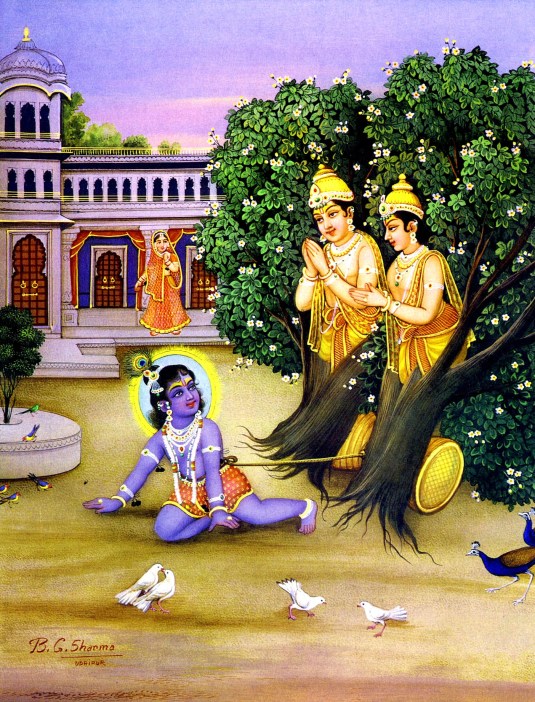
“O Lord Damodara, in Your form as a baby, Mother Yasoda bound You to a grinding stone with a rope for tying cows, You then freed the sons of Kuvera, Manigriva, and Nalakuvera, who were cursed to stand as trees, and You gave them the chance to become Your devotees. Please bless me in this same way, I have no desire for liberation into Your effulgence.” (Damodarastka Prayers)
So…continuining our month long attempt to stay focused on the childhood pastimes of Krsna, during this month of Damodara (Kartika), we bring you another exciting chapter from; Kṛṣṇa, the Supreme Personality of Godhead. Today we are posting the chapter entitled “The Deliverance of Nalakūvara and Maṇigrīva”.
Kṛṣṇa, the Supreme Personality of Godhead
By His Divine Grace A. C. Bhaktivedanta Swami Prabhupāda
Chapter Ten
The Deliverance of Nalakūvara and Maṇigrīva
The story of the cursing of Nalakūvara and Maṇigrīva and their deliverance by Kṛṣṇa, under the all-blissful desire of the great sage Nārada, is here described.
More
17 Oct 2014
by The Hare Krishna Movement
in A.C. Bhaktivedanta Swami Prabhupada, Srila Prabhupada's Books, Srimad Bhagavatam
Tags: A.C. Bhaktivedanta Swami Prabhupada, Bhaktivedanta purports, brahmajyoti effulgence, Brhaspati, conditioned soul, intelligent man, Lord Brahma, Lord Siva, Maharaja Pariksit, material world, pure devotional service, SB 2.3, Sri Sukadeva Gosvami, Srimad Bhagavatam, threshold of death, Vedas
click on image to enlarge
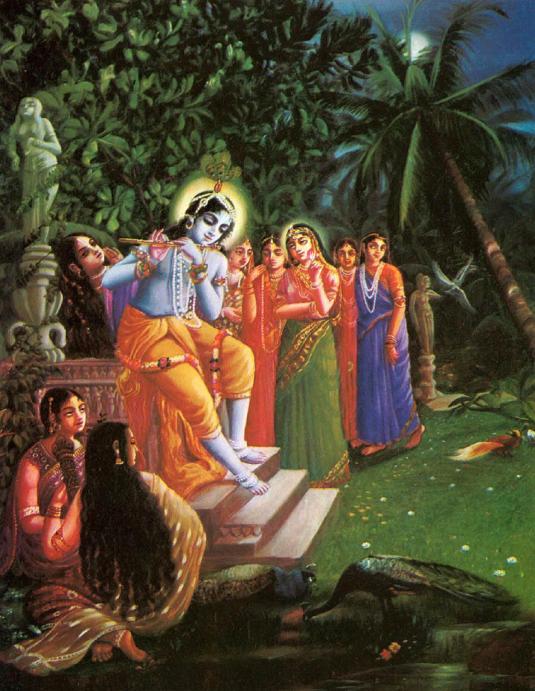
As we continue to update our (one of our other sites) Śrīmad-Bhāgavatam by posting a chapter at a time, of that great literary work by His Divine Grace Srila Prabhupada, we will continue to share the progress with our readers here at The Hare Krishna Movement.
Śrīmad-Bhāgavatam
by His Divine Grace A. C. Bhaktivedanta Swami Prabhupāda
Canto 2, Chapter Three
Pure Devotional Service: The Change in Heart
More
14 Oct 2014
by The Hare Krishna Movement
in A.C. Bhaktivedanta Swami Prabhupada, Damodara, Kartika, Krishna Consciousness, Krsna Consciousness, KRSNA The Supreme Personality of Godhead
Tags: A.C. Bhaktivedanta Swami Prabhupada, damodarastka prayers, Kartika, Krsna, Krsna The Supreme Personality of Godhead, month of Damodara, Mother Yasoda Binds Lord Krsna, spiritual subject matter, spiritually enlivening, transcendental subject matter

click on image to enlarge
The beauty of Transcendental subject matter is that it never gets old, but rather, becomes more relishable with every reading. For instance, every year we celebrate the month of Damodara or Kartika, with the reading of “Mother Yasoda Binds Lord Krsna”, and singing the Damodarastka prayers, and every year, it becomes more enjoyable and spiritually enlivening. That is the nature of Spiritual Subject Matter.
Kṛṣṇa, the Supreme Personality of Godhead
By His Divine Grace A. C. Bhaktivedanta Swami Prabhupāda
Chapter Nine
Mother Yaśodā Binds Lord Kṛṣṇa
Once upon a time, seeing that her maidservant was engaged in different household duties, mother Yaśodā personally took charge of churning butter. And while she churned butter, she sang the childhood pastimes of Kṛṣṇa and enjoyed thinking of her son.
More
12 Oct 2014
by The Hare Krishna Movement
in A.C. Bhaktivedanta Swami Prabhupada, Books by Srila Prabhupada, Mukunda=mala-stotra
Tags: A.C. Bhaktivedanta Swami Prabhupada, and death, books by prabhupada, disease, four principal miseries—birth, Krsna, lotus feet, mukunda mala stotra, mukunda murdhna, old age, spirit soul, sutra 3

This evening I was reading from the “Mukunda mala storta”. Using a Sanskrit edition published by Śrīla Bhaktivinoda Ṭhākura in 1895, Śrīla Prabhupāda began translating the Mukunda-mālā-stotra in the late 1950’s. But after completing six verses with commentary, he suspended it to work on the Śrīmad-Bhāgavatam. He never resumed it. The following is verse 3 with Srila Prabhupāda’s translations and purport. It is a very sweet verse, and powerful purport.
O Lord Mukunda! I bow down my head to Your Lordship and respectfully ask You to fulfill this one desire of mine: that in each of my future births I will, by Your Lordship’s mercy, always remember and never forget Your lotus feet.
…To forget one’s relationship with the Lord and thus to remain overwhelmed by material hankerings is the most condemned mode of life. This is exactly the nature of animal life. When the living entity is born in a species of lower animals, he completely forgets his relationship with the Lord and therefore remains always busy in the matter of eating, sleeping, fearing, and mating. Modern civilization promotes such a life of forgetfulness, with an improved economic condition for eating and so on. Various agents of the external energy make explicit propaganda to try to root out the very seed of divine consciousness. But this is impossible to do, because although circumstances may choke up a living being’s divine consciousness for the time being, it cannot be killed. In his original identity the living entity is indestructible, and so also are his original spiritual qualities. One can kill neither the spirit soul nor his spiritual qualities. To remember the Lord and desire to serve Him are the spiritual qualities of the spirit soul. One can curb down these spiritual qualities by artificial means, but they will be reflected in a perverted way on the mirror of material existence. The spiritual quality of serving the Lord out of transcendental affinity will be pervertedly reflected as love for wine, women, and wealth in different forms. The so-called love of material things—even love for one’s country, community, religion, or family, which is accepted as a superior qualification for civilized human beings—is simply a perverted reflection of the love of Godhead dormant in every soul. The position of King Kulaśekhara is therefore the position of a liberated soul, because he does not want to allow his genuine love of God to become degraded into so-called love for material things. (from purport)
More
10 Oct 2014
by The Hare Krishna Movement
in A.C. Bhaktivedanta Swami Prabhupada, Kartika, Krishna, Krishna Consciousness, Krsna, Krsna Consciousness, Yoga
Tags: A.C. Bhaktivedanta Swami Prabhupada, devotional service, fraternal mellow, God, Kartika, linking up with the Lord, month of Damadora, Nectar of Devotion, relationship with the Supreme Personality of Godhead, symptoms of ecstasy, yoga

click on image to enlarge
When Kṛṣṇa and His devotees meet, the meeting is technically called yoga, or linking up with the Lord. (Nectar of Devotion Chapter 39)
Durning the month of Damadora (Kartika) I like to focus my attention on the childhood pastimes of Krsna in Vrndavan. So with this in mind we decided to post a chapter from the Nectar of Devotion which focus’s on the Lords relationships with His devotees in the fraternal mellow or better known as friendship.
When a devotee is permanently situated in devotional service, and by different symptoms of ecstasy he has developed and matured a fraternal mellow or flavor in relationship with the Personality of Godhead, his feeling is called fraternal love of Godhead.
The impetus for such fraternal love of God is God Himself. When one is liberated and discovers his eternal relationship with the Supreme Lord, the Lord Himself becomes the impetus for increasing fraternal love. The eternal associates of the Lord in Vṛndāvana have described this as follows: “The Lord, Hari, whose bodily hue is like the indranīla jewel, whose smiling is as beautiful as the kunda flower, whose silk dress is as yellow as golden autumn foliage, whose chest is beautified with garlands of flowers and who is always playing upon His flute—this enemy of the Agha demon is always attracting our hearts by wandering about Vṛndāvana.” (Nectar of Devotion Chapter 41)
More
03 Oct 2014
by The Hare Krishna Movement
in A.C. Bhaktivedanta Swami Prabhupada, Back to Godhead, Founder-Acarya, Srila Prabhupada, The Hare Krishna Movement
Tags: A.C. Bhaktivedanta Swami Prabhupada, Back to Godhead Magazine, bhagavad-gita, BTG, discipline of God consciousness, God consciousness, Hare Krsna, Hare Rama, krsna consciousness, Srimad Bhagavatam, The Hare Krishna Movement, the krsna consciousness movement
click on image to enlarge
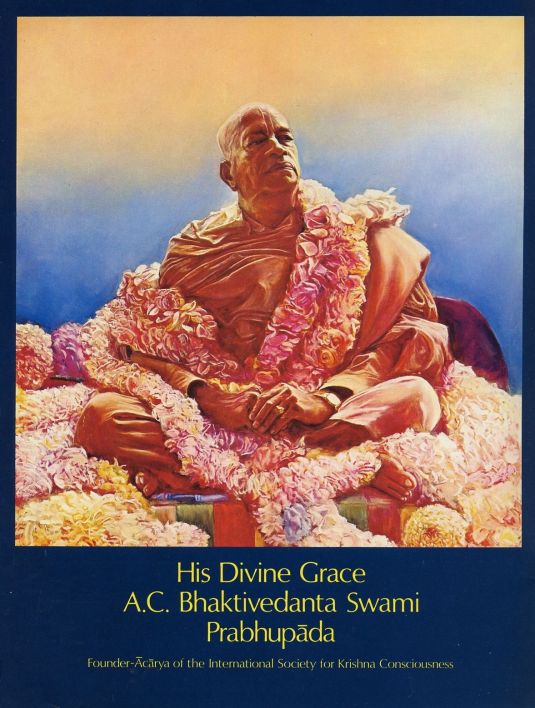
The Krsna Consciousness Movement
Excerpted from Back to Godhead Magazine Vol. 1, No. 48
The Krsna consciousness movement is now being increasingly recognized throughout the world as a spiritual force of great potency, purity and importance to human society. With the simultaneous publication of the first two cantos of Srimad-Bhagavatam and the complete 1,000-page edition of Bhagavad-gita As It Is, the public is becoming increasingly aware that the boys and girls whom they see chanting and dancing on their city streets are students of a most serious discipline of God consciousness which is established on the basis of a philosophical system of considerable completeness, consistency and depth.
Hare Krsna Hare Krsna Krsna Krsna Hare Hare
Hare Rama Hare Rama Rama Rama Hare Hare
More
23 Sep 2014
by The Hare Krishna Movement
in A.C. Bhaktivedanta Swami Prabhupada, Places of Pilgrimage, Srimad Bhagavatam
Tags: A.C. Bhaktivedanta Swami Prabhupada, duty of a pilgrim, Krsna, pilgrim, pilgrim's journey, pilgrim's progress, post office, postal system, postboxes, SB 3.1.18, traveling as a pilgrim

This morning I was reading from the 3rd Canto of the Srimad-Bhagavatam about Vidura and the beginning of his journey to the great places of pilgrimage. The following is excerpted from some of my reading.
He began to travel alone, thinking only of Kṛṣṇa, through various holy places like Ayodhyā, Dvārakā and Mathurā. He traveled where the air, hill, orchard, river and lake are all pure and sinless and where the forms of the Unlimited decorate the temples. Thus he performed the pilgrim’s progress. (SB 3.1.18)
…Places of pilgrimages are meant for eradicating the sins of the pilgrims, and they are distributed all over the universe just to give facility to all concerned for attaining pure existence and God realization. One should not be satisfied, however, merely by visiting the places of pilgrimage and performing one’s prescribed duties; he should be eager to meet the great souls who are already there, engaged in the service of the Lord. In each and every place of pilgrimage, the Lord is present in His various transcendental forms.
…The first and foremost duty of a pilgrim is to satisfy the Supreme Lord Hari. While traveling as a pilgrim, one should not be worried about pleasing society. There is no need to depend on social formalities or occupation or dress. One should remain always absorbed in the function of pleasing the Lord. Thus sanctified by thought and action, one is able to realize the Supreme Lord by the process of a pilgrim’s journey.
More
20 Sep 2014
by The Hare Krishna Movement
in A.C. Bhaktivedanta Swami Prabhupada, Bhagavad-gita, Draupadi
Tags: A.C. Bhaktivedanta Swami Prabhupada, Bg 1.2, Bhagavad-gita As It Is, blindness, Dhrtarastra, Draupadi, Duhsasana, King Yudhisthira, Krsna, Pandavas, progressive path of human life, SB 3.1.6, SB 3.1.7, spiritual blindness, Spiritual Life, spiritual vision

click on image to enlarge
The Insulting of Draupadi
I have always found this story of the disrobing of Draupadī, the wife of the godly King Yudhiṣṭhira, to be and example of how Krsna always protects his pure devotees. This incident contributes greatly to the Great Battle of Kurukṣetra, which almost completely annihilated the Kuru’s. And is a very good example of Spiritual Blindness. The following is a few select verses from the Srimad-Bhagavatam and Bhagavad-gita As It Is.
Dhṛtarāṣṭra was blind from birth, but his blindness in committing impious activities to support his dishonest sons was a greater blindness than his physical lack of eyesight. The physical lack of sight does not bar one from spiritual progress. But when one is blind spiritually, even though physically fit, that blindness is dangerously detrimental to the progressive path of human life. (SB 3.1.7 purport)
Dhṛtarāṣṭra was blind from birth. Unfortunately, he was also bereft of spiritual vision. He knew very well that his sons were equally blind in the matter of religion, and he was sure that they could never reach an understanding with the Pāṇḍavas, who were all pious since birth. (Bg 1.2 purport)
More
18 Sep 2014
by The Hare Krishna Movement
in A.C. Bhaktivedanta Swami Prabhupada, Nama Sankirtan, Narottama das Thakur, Six Goswamis, Songs of the Vaisnava Acaryas
Tags: A.C. Bhaktivedanta Swami Prabhupada, giridhari, gopala govinda rama, Gopinatha, Hari, hari haraye namah, kesavaya, krsna yadavaya namah, Madana-mohana, madhavaya, namah, six goswami's, Songs of the Vaisnava Acaryas, sri madhusudana, Srila Narottama Dasa Thakur, yadavay

Nāma-saṅkīrtana
by Śrīla Narottama Dāsa Ṭhākura
I have always liked the following song by Srila Narottama Dasa Thakur. And this song describes very simply, the beginning of the Sankirtan Movement, or The Hare Krishna Movement. The first four lines of the song, are the ones most often sung, with the first verse repeated as refrain.
Full Song and Purport follow.
…“You say that everything means Kṛṣṇa and we should ultimately always be chanting the names of Kṛṣṇa. Just how should we do this?” Then Lord Caitanya began to sing the names of Kṛṣṇa and clap His hands, and He began His nāma-saṅkīrtana movement. The names He sang are the first two lines of this song, and Narottama Dāsa Ṭhākura and others have placed these names in the beginning of their writings to immortalize these events in the memory of everyone.
…Then Śrīla Narottama Dāsa chants the names of the six Gosvāmīs. “I offer my obeisances at their feet,” he sings, “which destroy sufferings accumulated over many long years. I am the servant of these six Gosvāmīs, and the dust of their lotus feet is my five kinds of foodstuffs. To serve their lotus feet and keep the association of devotees is my only business, birth after birth.” (from purport to song by His Divine Grace A. C. Bhaktivedanta Swami Prabhupada)
Song & Purport More
15 Sep 2014
by The Hare Krishna Movement
in A.C. Bhaktivedanta Swami Prabhupada, A.C. Bhaktivedanta Swami Prabhupada, Back to Godhead, Founder-Acarya, Free Downloads, Free eBooks, Jaladuta, Poetry of Srila Prabhupada, Spiritual Master, Srila Prabhupada, Srila Prabhupada's Arrival in the USA
Tags: A.C. Bhaktivedanta Swami Prabhupada, Back to Godhead Magazine, First Arrival in the USA, Founder and Acarya of the International Society for Krishna Consciousness, His Divine Grace A. C. Bhaktivedanta Swami, Jaladuta, poem by prabhupada, Poetry of Srila Prabhupada, science of bhakti-yoga, Srila Prabhupada's arrival in the USA, transcendental loving service to God
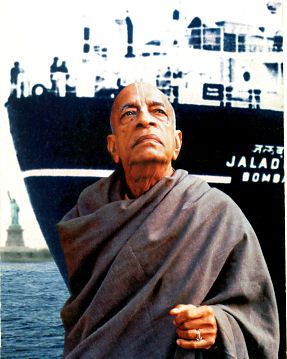
Today we celebrate the Arrival of Srila Prabhupada in the U.S.A. 1965 with this poem written aboard the ship the Jaladuta and with a free pdf download the Jaladuta Diary. Just click on link at bottom of post to read or save the pdf file.
Poem by Srila Prabhupada on His First Arrival in the USA
By His Divine Grace A. C. Bhaktivedanta Swami Prabhupada
Excerpted from Back to Godhead Magazine 1970, Vol. 1, No 34
The spiritual master and founder of the International Society for Krishna Consciousness, His Divine Grace A.C. Bhaktivedanta Swami Prabhupada, is now engaging thousands of men and women in America and throughout the world in the science of bhakti-yoga, transcendental loving service to God. Prabhupada had no personal motive in first beginning ISKCON; he so vigorously preaches the philosophy of God consciousness simply because he has been ordered to do so by his own spiritual master, Srila Bhaktisiddhanta Sarasvati Gosvami Maharaja.
His Divine Grace A.C. Bhaktivedanta Swami Prabhupada first arrived in the United States in 1965 with seven dollars, a letter of introduction to an Indian family in Pennsylvania, and a suitcase with some volumes of Srimad-Bhagavatam. In the following poem, written in Bengali on the day of his arrival in the USA, Srila Prabhupada addresses the Supreme Lord Krsna, asking Him His purpose in sending His servant to America. The translation from Bengali was done by Srila Prabhupada himself.
Poem More
14 Sep 2014
by The Hare Krishna Movement
in Free Downloads, Free eBooks, Krishna Path, Prasadam, Vegetarian Cooking, Vegetarian Recipies, Vegetarianism
Tags: A.C. Bhaktivedanta Swami Prabhupada, bhakti yoga, cow protection, ebook, free download, Simple Living, The Higher Taste, vegan, vegetarian cookbook, vegetarian cooking, vegetarian health and nutrition, vegetarian recipeis, vegetarianism

This is a nice little cookbook, with information on vegetarian cooking, health, nutrition, cow protection, bhakti yoga, etc. We offer it as a free download which you can view, print or save to your computer by following the link below:
click on link to veiw or download book; The Higher Taste
More
06 Sep 2014
by The Hare Krishna Movement
in Devotee Books, Free Downloads, Free eBooks, Jiva Goswami, Kusakratha das
Tags: A.C. Bhaktivedanta Swami Prabhupada, appearance of Jiva Gosvami, Bengali Vaisnava, Books by Srila Jiva Gosvami, classical Sanskrit, Dina Sharana das, Gaudiya Vaisnava, initiated disciple of His Divine Grace, jiva gosvami, Krishna Institute, Kusakratha das, Kusakratha Prabhu (ACBSP), literary treasures, prabhupada.de, Radha-Carana das, Sri Krishna Sandarbha
Today marks the appearance of Lord Vamanadeva and of Srila Jiva Goswami. In honor of the appearance of Srila Jiva Goswami, we share with you one of the great literary works written by Jiva Gosvami, and translated into English by Kusakratha Prabhu, as a free download. The work is entitled “Sri Krishna-sandarbha”.
Sri Krishna-sandarbha
Written by Srila Jiva Gosvami
Translated by Kusakratha Prabhu
click on link to read online or save; Sri Krishna-SandarbhaSri Krishna Sandarbha Kusakratha
More
04 Sep 2014
by The Hare Krishna Movement
in A.C. Bhaktivedanta Swami Prabhupada, Om, Srimati Radharani
Tags: a-kara, A.C. Bhaktivedanta Swami Prabhupada, aum, bhagavad-gita, devotee, entourage, His name fame, Krsna, ma-kara, Om, omkara, omkara is the resting place of everything, pastimes, potencies, sarva visva dhama, Sri Caitanya Caritamrta, Srimati Radharani, u-kara

The other day as I was doing some research on Srimati Radharani, for her appearance day post, I ran across the following;
…Oṁkāra is a combination of the letters a, u and m. A-kāreṇocyate kṛṣṇaḥ the letter a (a-kāra) refers to Kṛṣṇa, who is sarva-lokaika-nāyakaḥ, the master of all living entities and planets, material and spiritual. Nāyaka means “leader.” He is the supreme leader (nityo nityānāṁ cetanaś cetanānām (Kaṭha Upaniṣad 2.2.13)). The letter u (u-kāra) indicates Śrīmatī Rādhārāṇī, the pleasure potency of Kṛṣṇa, and m (ma-kāra) indicates the living entities (jīvas). Thus oṁ is the complete combination of Kṛṣṇa, His potency and His eternal servitors. In other words, oṁkāra represents Kṛṣṇa, His name, fame, pastimes, entourage, expansions, devotees, potencies and everything else pertaining to Him. As Caitanya Mahāprabhu states in the present verse of Śrī Caitanya-caritāmṛta, sarva-viśva-dhāma: oṁkāra is the resting place of everything, just as Kṛṣṇa is the resting place of everything (brahmaṇo hi pratiṣṭhāham) (CC Adi 7.128, Purport)
More
02 Sep 2014
by The Hare Krishna Movement
in A.C. Bhaktivedanta Swami Prabhupada, B. G. Sharma Art, Radha Krishna, Radhastami, Srimati Radharani
Tags: A.C. Bhaktivedanta Swami Prabhupada, appearance day of srimati radharani, beauty of krsna, beauty of radharani, Lord Caitanya, Radha, Radha-Krsna, Radharani, Ramananda Raya, SB 2.3.23, Spiritual world, Srila Prabhupada, Srimad Bhagavatam, Srimati Radharani

click on image to enlarge
So today being the appearance day of Srimati Radharani, my mind has been absorbed in thoughts of Radha and Krsna. It is described that she is the beloved consort of Krsna, Krsna’s pleasure potency, and the spiritual energy of Krsna.
…Lord Caitanya requested Rāmānanda Rāya to explain something more: “What are the transcendental features of Kṛṣṇa and Rādhārāṇī, and what are the transcendental features of the reciprocation of Their feelings, and what is the love between Them? If you kindly describe all this to Me, I will be very much obliged. But for you, no one can describe such things.” (Teachings of Lord Caitanya Chapter 30)
…In the Caitanya-caritāmṛta it is said that when Kṛṣṇa comes before Rādhārāṇī, She becomes so much engladdened by seeing the beauty of Kṛṣṇa that She becomes more beautiful, and as soon as Rādhārāṇī becomes beautiful, Kṛṣṇa becomes engladdened and He becomes more beautiful. So unlimitedly there is competition of becoming more beautiful. That is the state. Competition. Because in the spiritual world everything is unlimited. So unlimitedly both of them becoming beautiful and both of them enjoying unlimitedly. ((Lecture on SB 1.2.8 New Vrindaban, September 6, 1972)
…Śrīmatī Rādhārāṇī is a tenderhearted feminine counterpart of the supreme whole, resembling the perfectional stage of the worldly feminine nature. Therefore, the mercy of Rādhārāṇī is available very readily to the sincere devotees, and once She recommends such a devotee to Lord Kṛṣṇa, the Lord at once accepts the devotee’s admittance into His association. (Srimad-Bhagavatam Canto 2, Chapter 3, Text 23)
…She is Kṛṣṇa. Kṛṣṇa divided Himself into His energy and Himself. That energy, original spiritual energy, is Rādhārāṇī. ((Lecture on SB 2.1.1-5 Melbourne, June 26, 1974)
More
02 Sep 2014
by The Hare Krishna Movement
in A.C. Bhaktivedanta Swami Prabhupada, Bhagavad-gita, Krishna Consciousness, Lectures, Radhastami, Srimati Radharani
Tags: A.C. Bhaktivedanta Swami Prabhupada, appearance day of srimati radharani, jaya radhe, Lecture by A.C. Bhaktivedanta Swami Prabhupada, lecture by his divine grace srila prabhuada, Lord Caitanya, mercy of radha, mood of seperation, Radha, radha festival, Radharani, Radhastami, Srimati Radharani, Vrndavana

click on image to enlarge
Today we honor the appearance day of Srimati Radharani (Radhastami). We share with you a lecture given by Srila Prabhupada, given on Srimati Radharani’s appearance day, in London, September 18, 1969.
…Rādhārāṇī is hari-priyā, very dear to Kṛṣṇa. So if we approach Kṛṣṇa through Rādhārāṇī, through the mercy of Rādhārāṇī, then it becomes very easy. If Rādhārāṇī recommends that “This devotee is very nice,” then Kṛṣṇa immediately accepts, however fool I may be. Because it is recommended by Rādhārāṇī, Kṛṣṇa accepts. Therefore in Vṛndāvana you’ll find all the devotees, they’re chanting more Rādhārāṇī’s name than Kṛṣṇa’s. Wherever you’ll go, you’ll find the devotees are addressing, “Jaya Rādhe.” You’ll find still in Vṛndāvana. They are glorifying Rādhārāṇī. They’re more interested, worshiping Rādhārāṇī. Because however fallen I may be, if some way or other I can please Rādhārāṇī, then it is very easy for me to understand Kṛṣṇa. (Śrīmatī Rādhārāṇī’s Appearance Day Lecture, London, September 18, 1969
More
16 Aug 2014
by The Hare Krishna Movement
in A.C. Bhaktivedanta Swami Prabhupada, B. G. Sharma Art, Founder-Acarya, Free eBooks, guru-tattva, Krishna, Krishna Consciousness Movement, Srila Prabhupada
Tags: A.C. Bhaktivedanta Swami Prabhupada, Founder Acarya, Hare Krishna, janmastmi, Krishna, Lord Sri Krishna, prabhupada, spiritual master, Srila Prabhupada, The Hare Krishna Movement
click on image to enlarge
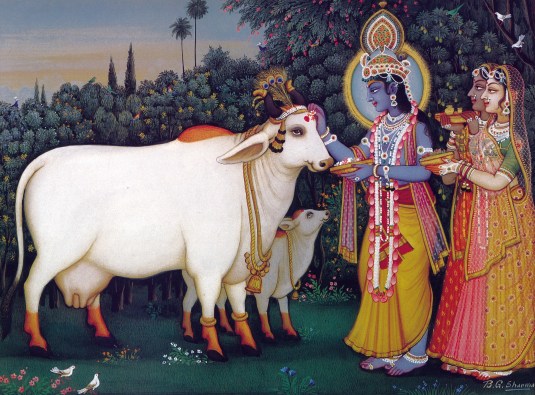
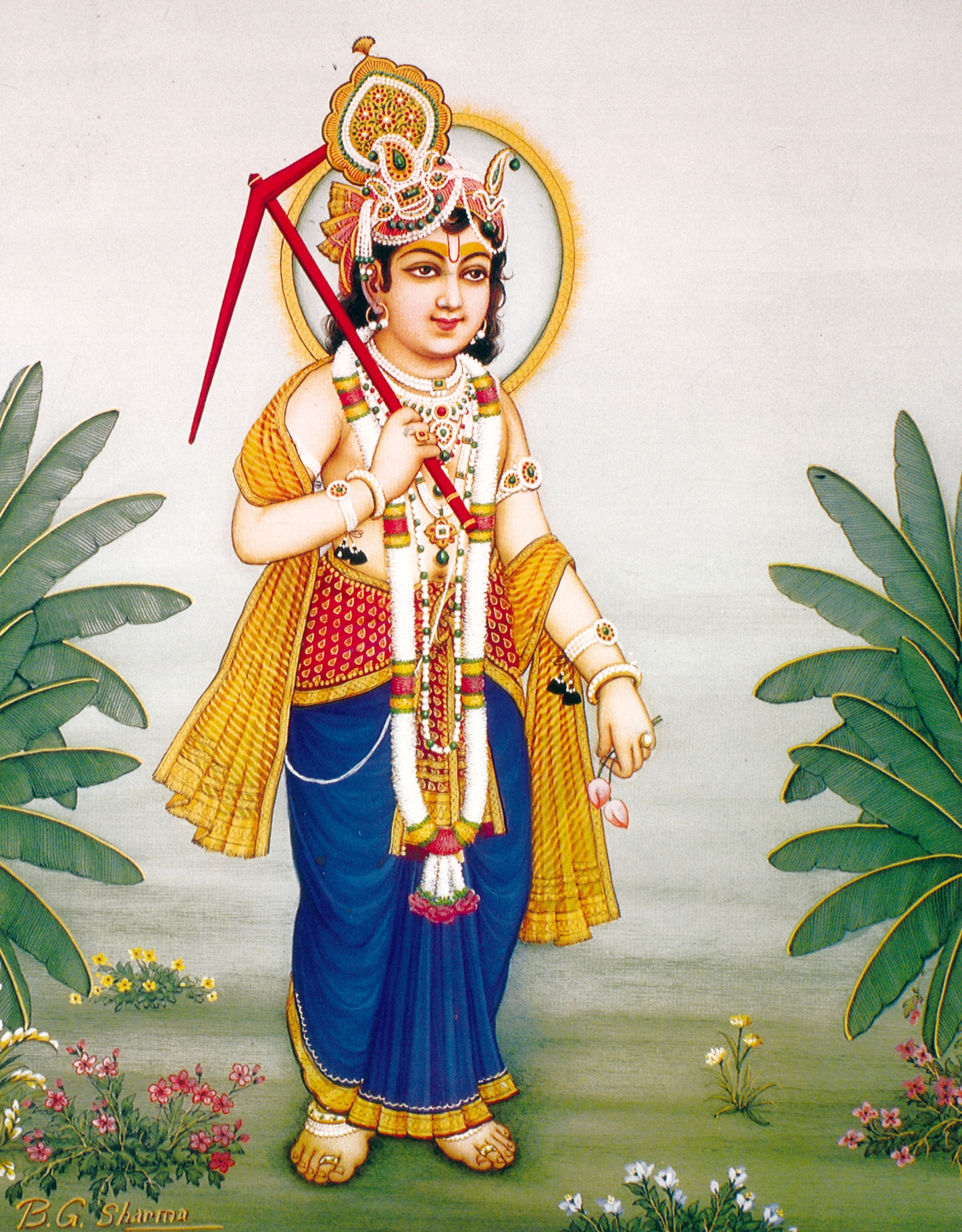
We will be away for a couple of weeks, but leave you with this beautiful image of Lord Sri Krishna and a short book entitled “Prabhupada”
click on link to veiw or save Prabhupada
More
15 Aug 2014
by The Hare Krishna Movement
in A.C. Bhaktivedanta Swami Prabhupada, Festivals, Founder-Acarya, ISKCON, Iskcon Bangalore, The Hare Krishna Movement, Vyas-puja
Tags: 2014 Vyasa Puja, A.C. Bhaktivedanta Swami Prabhupada, devotee offerings, Iskcon, ISKCON Bangalore, Krishna consciousness, Nandotsava, Srila Prabhupada's appearance day, The Hare Krishna Movement, Vyasasana

click on image to enlarge
For most devotees of The Hare Krishna Movement, Vyasa-puja is the most important festival of the year. It is the day we honor the appearance day of His Divine Grace A. C. Bhaktivedanta Swami Prabhupada. The Founder-Ācārya of the International Society for Krishna Consciousness (ISKCON – The Hare Krishna Movement).
Srila Prabhupada, was born on the day of Nandotsava (the day after Janmastami, the Birth day of Lord Sri Krishna), in 1896.
I ran across this nice offering book of last years homages, from the ISKCON Bangalor devotees. This is a nice example of Vyasa-puja offerings. Click on link below to view or save.
Vyasapuja Book 2013
15 Aug 2014
by The Hare Krishna Movement
in A.C. Bhaktivedanta Swami Prabhupada, Festivals, Janmastami, Krishna, Krsna Consciousness, Krsna God, KRSNA The Supreme Personality of Godhead
Tags: A.C. Bhaktivedanta Swami Prabhupada, birth of Lord Krishna, Janmastami, janmastami festival, Krishna, Krsna, Krsna Book, Sri Krishna Janmastami, Srimad Bhagavatam

click on image to enlarge
With the advent of Lord Krsna’s birthday celebration (Janmastami) rapidly approaching, it seemed fitting that we do a post on the birth of Lord Krsna. So the following is the entire third chapter from the Krsna Book entitled “The Birth of Lord Kṛṣṇa”.
…As stated in the Bhagavad-gītā, the Lord says that His appearance, birth, and activities, are all transcendental, and one who understands them factually becomes immediately eligible to be transferred to the spiritual world. The Lord’s appearance or birth is not like that of an ordinary man who is forced to accept a material body according to his past deeds. The Lord’s appearance is explained in the Second Chapter: He appears out of His own sweet pleasure. When the time was mature for the appearance of the Lord, the constellations became very auspicious. The astrological influence of the star known as Rohiṇī was also predominant because this star is considered to be very auspicious. Rohiṇī is under the direct supervision of Brahmā. According to the astrological conclusion, besides the proper situation of the stars, there are auspicious and inauspicious moments due to the different situations of the different planetary systems. At the time of Kṛṣṇa’s birth, the planetary systems were automatically adjusted so that everything became auspicious. ( from Kṛṣṇa, the Supreme Personality of Godhead Chapter 3)
Full Chapter More
12 Aug 2014
by The Hare Krishna Movement
in A.C. Bhaktivedanta Swami Prabhupada, Krishna Consciousness, Nectar of Instruction, Rupa Goswami, Upadesamrta
Tags: A.C. Bhaktivedanta Swami Prabhupada, fruitive workers, jnanis, knowledge, liberated by virtue, lord hari, nectar of instruction Srila Rupa Goswami, NoI 10, Srila Prabhupada, Supreme Personality of Godhead, Upadesamrta

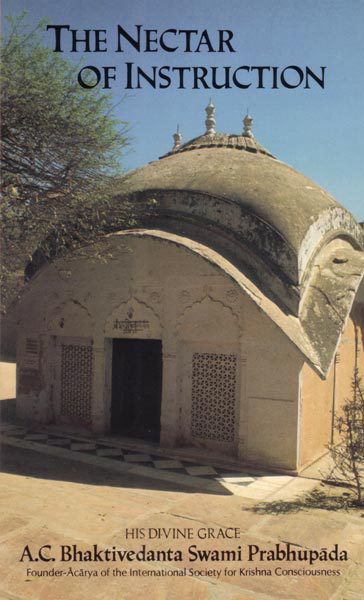
Continuing with our series on the Nectar of Inststuction (Upadeśāmṛta), we are posting Text 10, the very important instructions given by Śrīla Rūpa Gosvāmī on advanced knowledge of the higher values of life.
…The gopīs are exalted above all the advanced devotees because they are always totally dependent upon Śrī Kṛṣṇa, the transcendental cowherd boy. Among the gopīs, Śrīmatī Rādhārāṇī is the most dear to Kṛṣṇa. Her kuṇḍa [lake] is as profoundly dear to Lord Kṛṣṇa as this most beloved of the gopīs. Who, then, will not reside at Rādhā-kuṇḍa and, in a spiritual body surcharged with ecstatic devotional feelings [aprākṛtabhāva], render loving service to the divine couple Śrī Śrī Rādhā-Govinda, who perform Their aṣṭakālīya-līlā, Their eternal eightfold daily pastimes. Indeed, those who execute devotional service on the banks of Rādhā-kuṇḍa are the most fortunate people in the universe. (The Nectar of Instruction Text 10)
More
10 Aug 2014
by The Hare Krishna Movement
in A.C. Bhaktivedanta Swami Prabhupada, B. G. Sharma Art, Balarama, Festivals
Tags: A.C. Bhaktivedanta Swami Prabhupada, appearance day of lord balarama, bala, Balarama, brother of Krsna, full moon day, Krishna's elder brother, Lord Balarama, original spiritual master, Purnima, Srila Prabhupada, vaishnavas

Lord Balarama’s Appearance Day
Lord Balarama is Krishna’s elder brother and His appearance day takes place on the full moon day (purnima), two weeks before Krishna Janmashtami. Krishna and Balarama were the darlings of Vrindavan/ Vraja. Together They would spend the day enjoying the company of the cowherd boys in the forests of Vraja. Their wonderful pastimes are related in the tenth canto of Srimad-Bhagavatam, which Srila Prabhupada also translated as The Krishna Book. Lord Balarama is also considered the original spiritual master and His worship is therefore most important for Vaishnavas.
Lord Balarāma has two weapons, a plow and a club, from which He takes service when they are required.
(from Kṛṣṇa Book Chapter 65 Lord Balarāma Visits Vṛndāvana)
…In the Upaniṣads it is stated, nāyam ātmā bala-hīnena labhyaḥ. The purport is that one cannot attain the supreme platform of self-realization without being sufficiently favored by Balarāma. Bala does not mean physical strength. No one can attain spiritual perfection by physical strength. One must have the spiritual strength which is infused by Balarāma, or Saṅkarṣaṇa. Ananta, or Śeṣa, is the source of the power which sustains all the planets in their different positions. Materially this sustaining power is known as the law of gravitation, but actually it is a display of the potency of Saṅkarṣaṇa. Balarāma, or Saṅkarṣaṇa, is the source of spiritual power, or the original spiritual master. Therefore Lord Nityānanda Prabhu, who is also the incarnation of Balarāma, is the original spiritual master. And the spiritual master is the representative of Balarāma, the form of the Supreme Personality of Godhead who supplies spiritual strength. In the Caitanya-caritāmṛta it is confirmed that the spiritual master is the manifestation of the mercy of Kṛṣṇa. (from Kṛṣṇa Book Chapter 2: Prayers by the Demigods for Lord Kṛṣṇa in the Womb)
More
Previous Older Entries Next Newer Entries









 The Hare Krishna Movement