16 Jul 2012
by The Hare Krishna Movement
in A.C. Bhaktivedanta Swami Prabhupada, Meditation, Srimad Bhagavatam, Visnu, Yoga
Tags: A.C. Bhaktivedanta Swami Prabhupada, Absolute Truth, impersonal conception of the Absolute Truth, Lord Visnu, material energy, pantheism, Personality of Godhead, Srimad Bhagavatam, Visnu
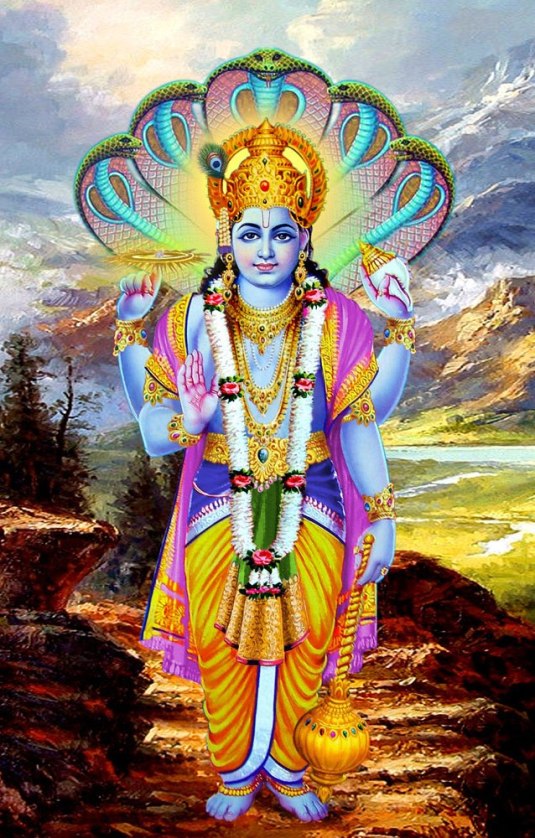
In our previous post Fix your mind upon the Supreme Personality of Godhead it was recommended that we should fix one’s mind in the service of the Personality of Godhead. Now the next step is to meditate upon the form of the Lord. To move from the impersonal to the more personal aspects of the Absolute Truth.
Thereafter, you should meditate upon the limbs of Viṣṇu, one after another, without being deviated from the conception of the complete body. Thus the mind becomes free from all sense objects. There should be no other thing to be thought upon. Because the Supreme Personality of Godhead, Viṣṇu, is the Ultimate Truth, the mind becomes completely reconciled in Him only.
…Therefore, thinking of Viṣṇu or meditating upon the transcendental form of Viṣṇu, specifically upon Lord Kṛṣṇa, is the last word on the subject of meditation.
…it is definitely assured that the Supreme Lord is not impersonal. He is a person, but His body is different from those of conditioned persons like us. Otherwise, meditation beginning from the praṇava (oṁkāra) up to the limbs of the personal body of Viṣṇu would not have been recommended by Śukadeva Gosvāmī for the attainment of complete spiritual perfection. The Viṣṇu forms of worship in great temples of India are not, therefore, arrangements of idol worship, as they are wrongly interpreted to be by a class of men with a poor fund of knowledge; rather, they are different spiritual centers of meditation on the transcendental limbs of the body of Viṣṇu. The worshipable Deity in the temple of Viṣṇu is identical with Lord Viṣṇu by the inconceivable potency of the Lord.
More
16 Jul 2012
by The Hare Krishna Movement
in Ganges, Holy Places of Pilgrimage
Tags: bhagavad-gita, Ganges, ganges river ganges, Holy places of pilgrimage, mother ganges, places of pilgrimage, pure devotees, sinful reactions, Srila Prabhupada, Tulasi
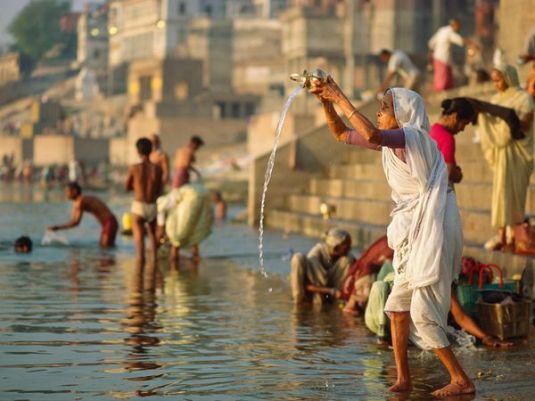
Some selected quotes on the river Ganges
Mother Ganges is worshiped by the water of the Ganges: a devotee takes a little water from the Ganges and offers it back to the Ganges. When the devotee takes the water, mother Ganges does not lose anything, and when the water is offered back, mother Ganges does not increase, but in this way the worshiper of the Ganges is benefited. Similarly, a devotee of the Lord offers the Lord patraṁ puṣpaṁ phalaṁ toyam—a leaf, flower, fruit or water—in great devotion, but everything, including the leaf, flower, fruit and water, belongs to the Lord, and therefore there is nothing to renounce or to accept. One must simply take advantage of the bhakti process because by following this process one does not lose anything but one gains the favor of the Supreme Person. (SB 9.9.12)
When there was a meeting of great sages at Naimiṣāraṇya, Sūta Gosvāmī was reciting Śrīmad-Bhāgavatam, and the importance of the Ganges was stated as follows: “The waters of the Ganges are always carrying the flavor of tulasī offered at the lotus feet of Śrī Kṛṣṇa, and as such the waters of the Ganges are ever flowing, spreading the glories of Lord Kṛṣṇa. Wherever the waters of the Ganges are flowing, all will be sanctified, both externally and internally.” ( Nectar of Devotion Chapter 7)
More
16 Jul 2012
by The Hare Krishna Movement
in A.C. Bhaktivedanta Swami Prabhupada, Meditation, Srimad Bhagavatam, Yoga
Tags: A.C. Bhaktivedanta Swami Prabhupada, God realization, meditation, Om, omkara, Personality of Godhead, pranava, SB 2.1.18, self realization, Srimad Bhagavatam, yoga

In our previous post Om, Oṁkāra, or the Praṇava, is the Seed of Transcendental Realization Oṁkāra, or the praṇava, which is the seed of transcendental realization, and it is composed of the three transcendental letters a-u-m, was discussed. By its chanting by the mind, in conjunction with the breathing process, was a means of changing the habit of the mind, to bring the mind under control. But in this next verse, Śukadeva Gosvāmī recommends the next step in God Realization, namely to fix one’s mind in the service of the Personality of Godhead.
Gradually, as the mind becomes progressively spiritualized, withdraw it from sense activities, and by intelligence the senses will be controlled. The mind too absorbed in material activities can be engaged in the service of the Personality of Godhead and become fixed in full transcendental consciousness.
More
15 Jul 2012
by The Hare Krishna Movement
in Lectures, Srimad Bhagavatam
Tags: A.C. Bhaktivedanta Swami Prabhupada, bhagavata, Book Bhagavata, Devotee Bhagavata, Krishna, Lord Siva, maya, Parvati, prabhupada, Pradyumna, SB 1.2.18, Siva Purana
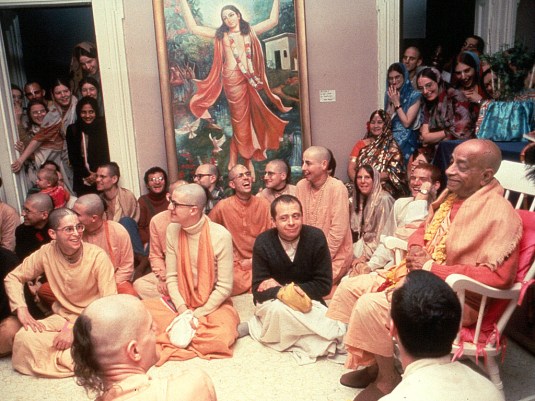
click on image to enlarge
…So Krsna and maya are side by side. As soon as you forget Krsna, or as soon as you want to utilize Krsna for your sense gratification, it is immediately maya, darkness. And as soon as you want to serve Krsna, immediately it is light. So if we keep ourself on this side, light side, always serving Krsna, then there is no possibility of our being in contact with maya.
“The Choice; Krishna Or Maya”
Srimad-Bhagavatam 1.2.18
August 21, 1972, Los Angeles
Pradyumna: (leads chanting, etc.)
nasta-prayesv abhadresu
nityam bhagavata-sevaya
bhagavaty uttama-sloke
bhaktir bhavati naisthiki
[SB 1.2.18]
Translation: “By regularly hearing the Bhagavatam and rendering service unto the pure devotee, all that is troublesome to the heart is practically destroyed, and loving service unto the glorious Lord, who is praised with transcendental songs, is established as an irrevocable fact.”
Prabhupada: So here it is said bhagavata-sevaya, not bhagavan-sevaya. Bhagavan is Krsna, the Supreme Personality of Godhead, and bhagavata means in relation with Bhagavan, who has got relationship with Bhagavan. So here it is recommended bhagavata-sevaya, not bhagavan-sevaya. The idea is that you cannot approach Bhagavan, God, directly. That is not possible. First of all, you have to serve bhagavata, the devotee bhagavata.
There are two kinds of bhagavata: book bhagavata and devotee bhagavata. So in the Siva Purana, there was a question by Parvati to Lord Siva. Lord Siva and Parvati, husband and wife. Parvati means the material nature. Srsti-sthiti-pralaya-sadhana-saktir eka chayeva yasya bhuvanani bibharti durga [Bs. 5.44]. Durga-devi. Durga-devi is in charge of this material world. It is called durga, durga, just like fort. And the superintendent of this fort is Durga. You cannot go out of this fort; you are imprisoned. So such Durga-devi, who is so powerful energy — she can create, annihilate, maintain, srsti-sthiti-pralaya-sadhana — she is always sitting by the side of her husband, Lord Siva, and questioning about spiritual enquiries. Just see. Such powerful deity is also ignorant about spiritual life. So the husband, Lord Siva, is Vaisnava, and she’s always asking, and sitting down underneath a bael tree. She can create so many universes, but for her, no building; only underneath a tree.
More
14 Jul 2012
by The Hare Krishna Movement
in Meditation, Om
Tags: aum, great mystics, mind control, O my Lord, Om, Om Hari Om, omkara, pranava, Supreme Personality of Godhead, trance, Transcendental meditation, transcendental realization, transcendental sound
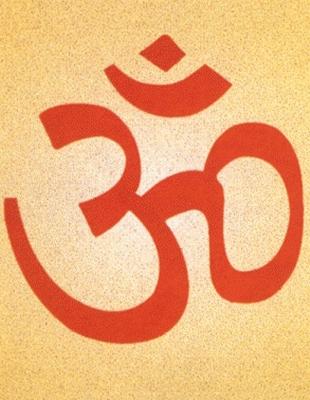
…Oṁkāra, or the praṇava, is the seed of transcendental realization, and it is composed of the three transcendental letters a-u-m. By its chanting by the mind, in conjunction with the breathing process, which is a transcendental but mechanical way of getting into trance, as devised by the experience of great mystics, one is able to bring the mind, which is materially absorbed, under control.
Oṁkāra is the seed of all transcendental sound and it is only the transcendental sound which can bring about the desired change of the mind and the senses. Mind or desire cannot be stopped, but to develop a desire to function for spiritual realization, the quality of engagement by the mind has to be changed.
In the Bhagavad-gītā, the praṇava (oṁkāra) has been accepted as the direct, literal representation of the Supreme Absolute Truth. One who is not able to chant directly the holy name of the Lord, as recommended above, can easily chant the praṇava (oṁkāra). This oṁkāra is a note of address, such as “O my Lord,” just as oṁ hari om means “O my Lord, the Supreme Personality of Godhead.” As we have explained before, the Lord’s holy name is identical with the Lord Himself. So also is oṁkāra. But persons who are unable to realize the transcendental personal form or name of the Lord on account of their imperfect senses (in other words, the neophytes) are trained to the practice of self-realization by this mechanical process of regulating the breathing function and simultaneously repeating the praṇava (oṁkāra) within the mind.
More
12 Jul 2012
by The Hare Krishna Movement
in Bhagavad-gita, Devotional Service
Tags: A.C. Bhaktivedanta Swami Prabhupada, Bg 10.8-11, bhagavad-gita, constantly devoted, devotional service, lamp of knowledge, shining lamp of knowledge, spiritual understanding, worship Me with love, worship of Krishna
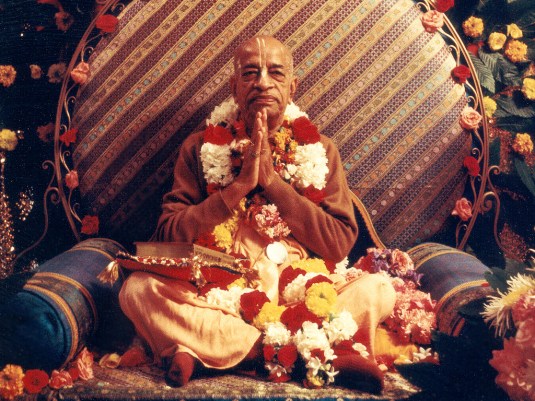
…Pure devotees concentrate their minds in Kṛṣṇa consciousness in full devotional service; therefore they are always situated in the transcendental position. Devotional service and worship of Kṛṣṇa are very clearly indicated in the 10th chapter of Bhagavad-gita verses eight to eleven. That is the way of pure devotional service.
Bhagavad-gita As It Is
By His Divine Grace A.C. Bhaktivedanta Swami Prabhupada
Chapter 10, Text 8-11
The Opulence of the Absolute
I am the source of all spiritual and material worlds. Everything emanates from Me. The wise who know this perfectly engage in My devotional service and worship Me with all their hearts.
The thoughts of My pure devotees dwell in Me, their lives are surrendered to Me, and they derive great satisfaction and bliss enlightening one another and conversing about Me.
To those who are constantly devoted and worship Me with love, I give the understanding by which they can come to Me.
Out of compassion for them, I, dwelling in their hearts, destroy with the shining lamp of knowledge the darkness born of ignorance.
For full text and purports More
11 Jul 2012
by The Hare Krishna Movement
in Bhaktivinoda Thakura, Gopinatha, Songs of the Vaisnava Acaryas
Tags: Bhaktivinoda Thakur, BTG, Gopinatha, Lord of the Gopis, O Gopinatha, please hear my prayers, Songs of the Vaisnava Acaryas

click image to enlarge
Gopinatha, Lord of the Gopis
By Srila Bhaktivinoda Thakura
(1)
gopīnāth, mama nivedana śuno
viṣayī durjana, sadā kāma-rata,
kichu nāhi mora guṇa
O Gopinatha, Lord of the gopis, please hear my prayer, I am a materialistic rascal, always full of lust. I have no good qualifications.
(2)
gopīnāth, āmāra bharasā tumi
tomāra caraṇe, loinu śaraṇa,
tomāra kińkora āmi
O Gopinatha! You are my only resort. As Your eternal servant, I take shelter of Your Lotus feet.
(3)
gopīnāth, kemone śodhibe more
nā jāni bhakati, karme jaḍa-mati,
porechi soḿsāra-ghore
O Gopinatha! How can I uplift myself? I don’t know anything regarding devotional service, I am weak minded and have fallen into a pit of illusion.
(4)
gopīnāth, sakali tomāra māyā
nāhi mama bala, jñāna sunirmala,
swādīna nahe e kāyā
O Gopinatha! Everything here is but Your illusory energy. I have no power or pure knowledge, and I am bound by a material body.
More
11 Jul 2012
by The Hare Krishna Movement
in A.C. Bhaktivedanta Swami Prabhupada, Back to Godhead, Lectures, Spiritual Life
Tags: A.C. Bhaktivedanta Swami Prabhupada, BTG Magazine, Gurudas, krsna consciousness, Lecture by Srila Prabhupada, photo by Gurudas, religious system, Spiritual Life, spiritual understanding

…So if we are serious, if we actually want to be happy, we must take to the cultivation of spiritual understanding, an understanding of Krsna consciousness. Of course, in every country of the world there is some religious system, some system for understanding spiritual life. But unfortunately, almost nobody is interested in spiritual life because people have been induced to become addicted to material, or sensual, activities. They are going further and further away from spiritual life and becoming more and more confused. Disappointment is rising all over the world.
So to mitigate this disappointment and confusion, one has to take to Krsna consciousness. Try to understand the philosophy of Krsna consciousness, and act accordingly. Then you will be happy.
A Call to Spiritual Life
By His Divine Grace A.C. Bhaktivedanta Swami Prabhupada
An address given in September 1973 (upon arriving for his first visit in Stockholm).
Thank you very much for kindly receiving me on this first visit of mine to your country.
The Krsna consciousness movement is gradually spreading all over the world, but it is a little difficult to understand the purport of this movement because it is completely on the spiritual platform. Generally, people do not understand what the spiritual platform is. But it is quite simple. Every one of us every living being is a combination of two things: matter and spirit. Matter we can understand, but on account of our long association with matter we cannot understand what spirit is.
More
09 Jul 2012
by The Hare Krishna Movement
in Chanting Hare Krishna, Hare Krishna Maha Mantra, Krishna Consciousness, Srimad Bhagavatam
Tags: A.C. Bhaktivedanta Swami Prabhupada, chanting Hare Krishna, devotional service, offenseless chanting and hearing, parikshit, Prabhupada books, Sri Sukadeva Goswami, Srimad Bhagavatam, The Hare Krishna Movement, transcendental chanting of the holy name
click on image to visit online store
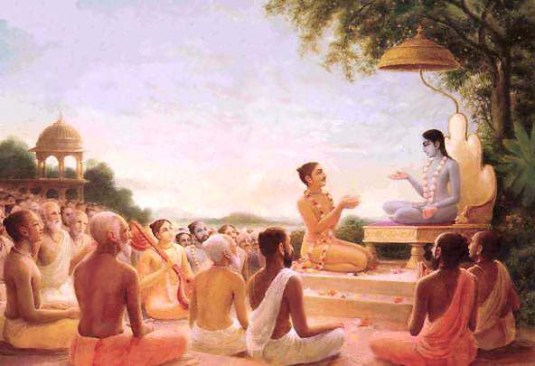
…In this verse, Śrī Śukadeva Gosvāmī recommends the transcendental chanting of the holy name of the Lord. By offenseless chanting and hearing of the holy name of the Lord, one becomes acquainted with the transcendental form of the Lord, and then with the attributes of the Lord, and then with the transcendental nature of His pastimes, etc. Here it is mentioned that one should constantly chant the holy name of the Lord after hearing it from authorities. This means that hearing from the authorities is the first essential.
Anyone who hears Śrīmad-Bhāgavatam attentively from its bona fide reciter is sure to become a sincere devotee of the Lord, who is able to award liberation. There was none so attentive as Mahārāja Parīkṣit in the matter of hearing Śrīmad-Bhāgavatam, and there was none so qualified as Śukadeva Gosvāmī to recite the text of Śrīmad-Bhāgavatam. Therefore, anyone who follows in the footsteps of either the ideal reciter or the ideal hearer, Śukadeva Gosvāmī and Mahārāja Parīkṣit respectively, will undoubtedly attain salvation like them.
O King, constant chanting of the holy name of the Lord after the ways of the great authorities is the doubtless and fearless way of success for all, including those who are free from all material desires, those who are desirous of all material enjoyment, and also those who are self-satisfied by dint of transcendental knowledge.
Srimad Bhagavatam
By His Divine Grace A.C. Bhaktivedanta Swami Prabhupada
Second Canto, Chapter One, Text 10-11
The First Step in God Realization
More
05 Jul 2012
by The Hare Krishna Movement
in Book Changes, Book Distribution, Devotee's, Rupanuga das
Tags: A.C. Bhaktivedanta Swami Prabhupada, Book Distribution, Controversy Theory, Lord Caitanya Mahaprabhu, Rupanuga das, Sampradaya Acarya, sastra, unique position of Srila Prabhupada, vaisnava community

…(At the Mayapur GBC meeting in 1977 Srila Prabhupada made their duty clear): The real thing is to somehow or other introduce these books… and in the long run that will be the real beneficial thing for the whole world. Now we are very much wanting to distribute full force and push book distribution without fear of public reaction… Our book distribution means that he has helped our attempt to expand the glorification of Krsna. Or if he is reading our book that is also glorification of Krsna… Our attempt is to awaken people to understand Krsna. There is no other way — hearing, glorifying Krsna through book distribution.
…the unique position of Srila Prabhupada — empowered to teach to the whole world the ultimate siddhanta as originally taught by the Supreme Lord Himself — is not carefully understood in his own movement, especially by those who were born after his disappearance. This, even though many of his disciples are still present. The result has been that newcomers in recent decades have inherited a poor fund of knowledge about Srila Prabhupada’s exalted position and his priorities for his ISKCON, notwithstanding abundant evidence of his unequalled accomplishments and documented instructions.
During his manifest presence devotees had a much clearer understanding, even though the movement, entirely new to them, was without the extensive facilities of temples, books, experienced adherents, etc., all of which are now the norm.
Controversy Theory
By Rupanuga das (ACBSP)
Jul 04, 2012 — JACKSONVILLE, FLORIDA, USA (SUN)
During a Bhagavatam lecture (1.16.11) January 8, 1974 in Los Angeles, Srila Prabhupada said, “There is a controversy among the Vaisnava community about Lord Caitanya Mahaprabhu, just as the Nimbarka Sampradaya, they say “We accept Lord Caitanya as a great devotee.” But the Gaudiya Sampradaya, we say that Lord Caitanya is the Supreme Personality of Godhead because it is stated in the Sastra.”
Lord Caitanya’s advent is predicted and described in many Sastras, including the Kurma Purana Padma Purana, Sama Veda, Visvasara Tantra, Jaimini-bharata, Visnu-yamala, Brahma-rahasya, et al. For example, in the Saura Purana it is said: “The Supreme Personality of Godhead appears in two forms. He is either dark Lord Krsna, who is always worshipped by all, or He is fair Lord Gaura, a brahmana who knows the meaning of all the Vedas.” And in the Matsya Purana: “In the Kali-yuga I will take birth in a place where three rivers meet. I will be fair and tall. I will have a shaven head. I will be very merciful. I will eagerly chant the Holy Names.”
Therefore, the authority and order of the Sastra is clear, Lord Caitanya is to be accepted as the Supreme Personality of Godhead. Yet, the controversy goes on because the sastra is either overlooked or ignored, both of which indicate a poor fund of knowledge.
More
04 Jul 2012
by The Hare Krishna Movement
in Uncategorized
Tags: A.C. Bhaktivedanta Swami Prabhupada, Arjuna, as it is, bhagavad-gita, buddhi-yoga, chant the holy name of the Lord, constitution of the soul, Hare Krishna, karma, karma yoga, Krishna, krsna consciousness, material grief, philosophy of the soul, spiritual advancement, Sri Krsna, The Supreme Personality of Godhead
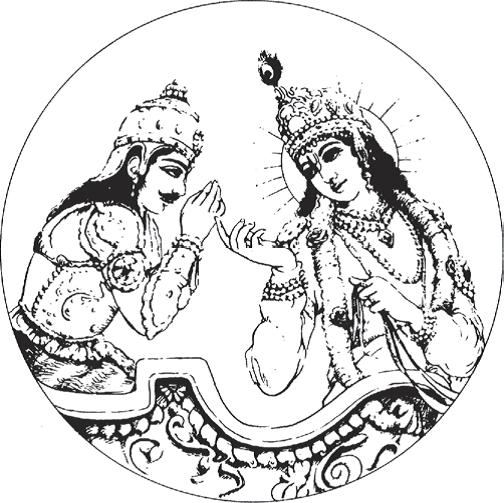
Bhagavad-gita As It Is – Macmillan 1972 Edition
By His Divine Grace A.C. Bhaktivedanta Swami Prabhupada
Chapter 3
TEXT 1
arjuna uvāca
jyāyasī cet karmaṇas te
matā buddhir janārdana
tat kiṁ karmaṇi ghore māṁ
niyojayasi keśava
arjunaḥ—Arjuna; uvāca—said; jyāyasī—speaking very highly; cet—although; karmaṇaḥ—than fruitive action; te—your; matā—opinion; buddhiḥ—intelligence; janārdana—O Kṛṣṇa; tat—therefore; kim—why; karmaṇi—in action; ghore—ghastly; mām—me; niyojayasi—engaging me; keśava—O Kṛṣṇa.
TRANSLATION
Arjuna said: O Janārdana, O Keśava, why do You urge me to engage in this ghastly warfare, if You think that intelligence is better than fruitive work?
PURPORT
The Supreme Personality of Godhead Śrī Kṛṣṇa has very elaborately described the constitution of the soul in the previous chapter, with a view to deliver His intimate friend Arjuna from the ocean of material grief. And the path of realization has been recommended: buddhi-yoga, or Kṛṣṇa consciousness. Sometimes Kṛṣṇa consciousness is misunderstood to be inertia, and one with such a misunderstanding often withdraws to a secluded place to become fully Kṛṣṇa conscious by chanting the holy name of Lord Kṛṣṇa. But without being trained in the philosophy of Kṛṣṇa consciousness, it is not advisable to chant the holy name of Kṛṣṇa in a secluded place where one may acquire only cheap adoration from the innocent public. Arjuna also thought of Kṛṣṇa consciousness or buddhi-yoga, or intelligence in spiritual advancement of knowledge, as something like retirement from active life and the practice of penance and austerity at a secluded place. In other words, he wanted to skillfully avoid the fighting by using Kṛṣṇa consciousness as an excuse. But as a sincere student, he placed the matter before his master and questioned Kṛṣṇa as to his best course of action. In answer, Lord Kṛṣṇa elaborately explained karma-yoga, or work in Kṛṣṇa consciousness, in this Third Chapter.
More
28 Jun 2012
by The Hare Krishna Movement
in Lectures, Sri Caitanya-Caritamrta
Tags: A.C. Bhaktivedanta Swami Prabhupada, books, bookworm, goal of life, learned scholar, libary of Trinity College, Lord Caitanya Mahaprabhu

click on image to enlarge
“If one becomes a bookworm, reading many books and scriptures and hearing many commentaries and the instructions of many men, this will produce doubt within his heart. One cannot in this way ascertain the real goal of life.” (Adi-lila 16. 11)
…Man has a general tendency toward fruitive activities, religious ritualistic ceremonies and philosophical speculation. A living entity thus bewildered since time immemorial does not understand the real goal of life, and thus his activities in life are wasted. Innocent persons misled in this way are deprived of unalloyed kṛṣṇa-bhakti, devotional service to the Lord. Tapana Miśra is a vivid example of such a person. He was a learned scholar, but he could not ascertain what the goal of life is. Therefore he was given a chance to hear Lord Caitanya Mahāprabhu instructing Sanātana Gosvāmī. Lord Caitanya’s instruction to Tapana Miśra is especially significant for persons who loiter here and there collecting books and reading none of them, thus becoming bewildered regarding the aim of life.
.. Simply by studying, becoming bookworm, you cannot advance. The real secret is… Yasya deve para bhaktir yatha deve tatha gurau [ŚU 6.23] That is stated in the Vedas. Unflinching faith in God and spiritual master. Then things will be revealed from within.
Sri Caitanya-caritamrta – 1975 Edition
By His Divine Grace A.C. Bhaktivedanta Swami Prabhupada
Adi-lila Chapter 16, Text 11
The Pastimes of the Lord in His Childhood and Youth
bahu-śāstre bahu-vākye citte bhrama haya
sādhya-sādhana śreṣṭha nā haya niścaya
bahu-śāstre—by many books or scriptures; bahu-vākye—by many versions of many persons; citte—within the heart; bhrama—doubt; haya—there is; sādhya-sādhana—objective and means; śreṣṭha—about the best; nā—not; haya—there is; niścaya—certainty.
If one becomes a bookworm, reading many books and scriptures and hearing many commentaries and the instructions of many men, this will produce doubt within his heart. One cannot in this way ascertain the real goal of life.
PURPORT
In Śrīmad-Bhāgavatam (7.13.8) it is said, granthān naivābhyased bahūn na vyākhyām upayuñjīta: “One should not read many books, nor should one try to make a profession of reciting many books, especially if one is a devotee.” One must give up the ambition to be a learned scholar and in this way earn a worldly reputation and financial facilities. If one diverts his attention to studying many books, he cannot fix his mind in devotional service, nor can he understand many scriptures, for they are full of grave statements and meanings. In this connection Śrīla Bhaktisiddhānta Sarasvatī Ṭhākura gives his opinion that those who are attracted to studying many kinds of literature concerning various subject matters, especially fruitive activities and philosophical speculation, are deprived of unalloyed devotional service because of their splayed attention.
More
27 Jun 2012
by The Hare Krishna Movement
in A.C. Bhaktivedanta Swami Prabhupada, Back to Godhead, Lectures, Vaisnava Compassion
Tags: A.C. Bhaktivedanta Swami Prabhupada, Back to Godhead Magazine, hellish conditions, hellish life, krsna consciousness, Krsnaloka, Maharaja Pariksit, spiritual body, Sukadeva Goswami, Vaisnava heart
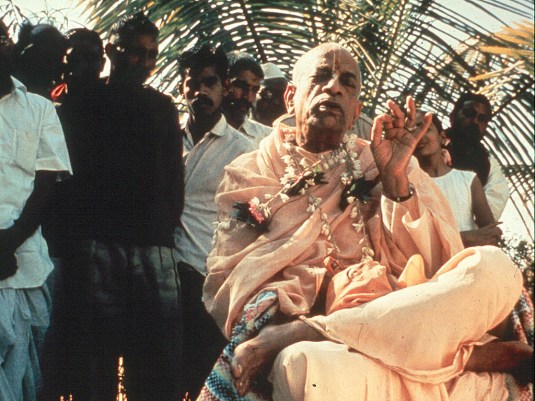
…With similar Vaisnava compassion, Pariksit Maharaja says to Sukadeva Gosvami, “You have described the different types of hellish conditions of life. Now, tell me how those who are suffering can be delivered. Kindly explain this to me.” “How can they be delivered from their fierce miseries and horrible pains?” That is a Vaisnava heart. Maharaja Pariksit says, “Somehow or other they have fallen down to this hellish life. But that does not mean that they should remain in that condition. There must be some means by which they can be delivered, so kindly explain that.”
“Yes, I’ve already described the different types of hellish conditions and very severe painful life, but one has to counteract it.”
If you are to go to Krsna, then you have to prepare your spiritual body. That is Krsna consciousness, If you keep yourself in Krsna consciousness, then gradually you prepare your next body, a spiritual body, which will carry you immediately to Krsnaloka, and you will become happy. You will live there perpetually and blissfully.
A Devotee is an Ocean of Mercy
Lecture given by His Divine Grace A.C. Bhaktivedanta Swami Srila Prabhupada
From Back to Godhead Magazine 1972 Vol. 1, No 45
Today I shall speak to you about the glorification of the holy name of God. This was discussed between Maharaja Pariksit and Sukadeva Gosvami in connection with a brahmana who was very fallen and addicted to all kinds of sinful activities but was saved simply by chanting the holy name. This is found in the Sixth Canto of Srimad-Bhagavatam.
More
25 Jun 2012
by The Hare Krishna Movement
in Bhagavad-gita, Salvation, Srimad Bhagavatam
Tags: A.C. Bhaktivedanta Swami Prabhupada, Arjuna, Battlefield of Kuruksetra, bhagavad-gita, Bhisma, liberation from material bondage, merciful glance, salvation, SB 1.9.35, Srimad Bhagavatam, The Passing Away of Bhismadeva in the Presence of Lord Krsna

…The Lord diminished the duration of life of the opposite party by His merciful glance. It is said that all the fighters who assembled on the Battlefield of Kurukṣetra attained salvation by personally seeing the Lord at the time of death. Therefore, His diminishing the duration of life of Arjuna’s enemy does not mean that He was partial to the cause of Arjuna. Factually He was merciful to the opposite party because they would not have attained salvation by dying at home in the ordinary course of life. Here was a chance to see the Lord at the time of death and thus attain salvation from material life. Therefore, the Lord is all good, and whatever He does is for everyone’s good.
Srimad Bhagavatam
By His Divine Grace A.C. Bhaktivedanta Swami Prabhupada
Canto 1, Chapter 9, Text 35
The Passing Away of Bhismadeva in the Presence of Lord Krsna
sapadi sakhi-vaco niśamya madhye
nija-parayor balayo rathaṁ niveśya
sthitavati para-sainikāyur akṣṇā
hṛtavati pārtha-sakhe ratir mamāstu
sapadi—on the battlefield; sakhi-vacaḥ—command of the friend; niśamya—after hearing; madhye—in the midst; nija—His own; parayoḥ—and the opposite party; balayoḥ—strength; ratham—chariot; niveśya—having entered; sthitavati—while staying there; para-sainika—of the soldiers on the opposite side; āyuḥ—duration of life; akṣṇā—by looking over; hṛtavati—act of diminishing; pārtha—of Arjuna, son of Pṛthā (Kuntī); sakhe—unto the friend; ratiḥ—intimate relation; mama—my; astu—let there be.
In obedience to the command of His friend, Lord Śrī Kṛṣṇa entered the arena of the Battlefield of Kurukṣetra between the soldiers of Arjuna and Duryodhana, and while there He shortened the life spans of the opposite party by His merciful glance. This was done simply by His looking at the enemy. Let my mind be fixed upon that Kṛṣṇa.
Purport
In the Bhagavad-gītā (1.21-25) Arjuna ordered the infallible Lord Śrī Kṛṣṇa to place his chariot between the phalanxes of the soldiers. He asked Him to stay there until he had finished observing the enemies he had to face in the battle. When the Lord was so asked, He at once did so, just like an order carrier. And the Lord pointed out all the important men on the opposite side, saying, “Here is Bhīṣma, here is Droṇa,” and so on. The Lord, being the supreme living being, is never the order supplier or order carrier of anyone, whoever he may be. But out of His causeless mercy and affection for His pure devotees, sometimes He carries out the order of the devotee like an awaiting servant. By executing the order of a devotee, the Lord becomes pleased, as a father is pleased to carry out the order of his small child. This is possible only out of pure transcendental love between the Lord and His devotees, and Bhīṣmadeva was quite aware of this fact. He therefore addressed the Lord as the friend of Arjuna.
More
23 Jun 2012
by The Hare Krishna Movement
in Krishna Consciousness, Teachings of Queen Kunti
Tags: A.C. Bhaktivedanta Swami Prabhupada, back to Godhead, calamities, clamity, dangers, Krishna, Krishna consciousness, Krsna, kuntidevi, Let There Be Calamities, Queen Kunti, repetition of birth and death, Teachings of Queen Kunti, vipadah

…In this very interesting verse, it is described that vipadaḥ—calamities or dangers—are very good if such dangers and calamities remind us of Kṛṣṇa.
Here Kuntīdevī speaks of apunar bhava-darśanam. The prefix a means “not,” and punar bhava means “repetition of birth and death.” The real danger is the repetition of birth and death. That must be stopped.
As long as we are in this material world, there must be calamities because this is the place of calamity. But even with calamities our business should be to develop our Kṛṣṇa consciousness, so that after giving up this body we may go back home, back to Kṛṣṇa.
Teachings of Queen Kuntī
By His Divine Grace A. C. Bhaktivedanta Swami Prabhupāda
Chapter Eight
Let There Be Calamities
vipadaḥ santu tāḥ śaśvat
tatra tatra jagad-guro
bhavato darśanaṁ yat syād
apunar bhava-darśanam
I wish that all those calamities would happen again and again so that we could see You again and again, for seeing You means that we will no longer see repeated births and deaths. (Śrīmad-Bhāgavatam 1.8.25)
Generally, the distressed, the needy, the intelligent, and the inquisitive who have performed some pious activities worship or begin to worship the Lord. Others, who are thriving on misdeeds only, regardless of status, cannot approach the Supreme due to being misled by the illusory energy. Therefore, for a pious person, if there is some calamity there is no other alternative than to take shelter of the lotus feet of the Lord. Constantly remembering the lotus feet of the Lord means preparing for liberation from birth and death. Therefore, even though there are so-called calamities, they are welcome because they give us an opportunity to remember the Lord, which means liberation.
One who has taken shelter of the lotus feet of the Lord, which are accepted as the most suitable boat for crossing the ocean of nescience, can achieve liberation as easily as one leaps over the holes made by the hooves of a calf. Such persons are meant to reside in the abode of the Lord, and they have nothing to do with a place where there is danger in every step.
More
20 Jun 2012
by The Hare Krishna Movement
in KRSNA The Supreme Personality of Godhead, Spiritual World
Tags: A.C. Bhaktivedanta Swami Prabhupada, astronomical summer, excessive heat, high summer temperatures, June 20 2012, Krsna The Supreme Personality of Godhead, scorching heat of the sun, summer, summer season, summer solstice

The astronomical summer (Northern Hemisphere) begins today Wednesday, June 20, 2012, and ends Friday, September 21, 2012.
…The summer season in India is not very much welcomed because of the excessive heat, but in Vṛndāvana everyone was pleased because summer there appeared just like spring. This was possible only because Lord Kṛṣṇa and Balarāma, who are the controllers even of Lord Brahmā and Lord Śiva, were residing there. In Vṛndāvana there are many falls which are always pouring water, and the sound is so sweet that it covers the sound of the crickets. And because water flows all over, the forest always looks very green and beautiful.
The inhabitants of Vṛndāvana were never disturbed by the scorching heat of the sun or the high summer temperatures. The lakes of Vṛndāvana are surrounded by green grasses, and various kinds of lotus flowers bloom there, such as the kalhāra-kañjotpala, and the air blowing in Vṛndāvana carries the aromatic pollen of those lotus flowers. When the particles of water from the waves of the Yamunā, the lakes and the waterfalls, touched the bodies of the inhabitants of Vṛndāvana, they automatically felt a cooling effect. Therefore they were practically undisturbed by the summer season. (from: KRSNA The Supreme Personality of Godhead)
Full Chapter More
20 Jun 2012
by The Hare Krishna Movement
in Essays & Articles, The Hare Krishna Movement
Tags: A.C. Bhaktivedanta Swami Prabhupada, fulfillment of desire, Lordship's Lotus feet, material nature, maya, pure devotee, pure devotional service, Srila Prabhupada, transcendental releam
…A devotee who has attained perfect success in devotional service returns to Godhead without a doubt. For him there is no question of repeated birth and death. But if a devotee does not attain complete perfection, he is guaranteed birth in a learned and well-to-do family, and even if he is not given birth in a good family, he is blessed by being able to remember the lotus feet of the Lord. Such a benediction is greater than any number of material assets. Constant remembrance of the Lord’s name, fame and qualities automatically counteracts the reactions of all vices and extends the blessings of goodness. Constantly remembering the lotus feet of the Lord is the same as rendering active service to the Lord.
Therefore a pure devotee does not ask the Lord for material wealth, manpower, followers or beautiful women. Rather, he simply prays for unalloyed faith in the Lord’s service. This should be the prayer and life motto of all prospective students in devotional service.
The Desire of A Pure Devotee
An excerpt from “Prayers of King Kulasekhara”
An unpublished manuscript by
His Divine Grace A.C. Bhaktivedanta Swami Prabhupada
mukunda murdhna pranipatya yace bhavantam ekantam iyantam artham
avismrtis tvac-caranaravinde bhave bhave me ‘stu bhavat-prasadat
Mukunda-mala-stotra (Verse 4) King Kulasekhara
O my Lord Mukunda! I bow my head down before Your Lordship’s lotus feet and respect fully ask for the fulfillment of my only desire. Throughout my repeated births may I never forget but always remember You by Your Lordship’s mercy.
More
18 Jun 2012
by The Hare Krishna Movement
in Guru & Disciple, Lectures
Tags: A.C. Bhaktivedanta Swami Prabhupada, bona fide guru, bona fide spiritual master, Caitanya Mahaprabhu, guru, guru-krsna-krpaya, Gurudas photo, India, lecture on Nectar of Devotion, spiritual master, The Nectar of Devotion, Vrindavan
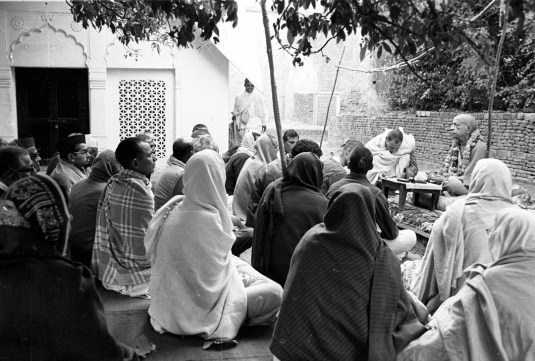
click on picture to enlarge
…So to find out a bona fide guru is not difficult, provided one is bona fide to search out a guru. Therefore Caitanya Mahāprabhu said, guru-kṛṣṇa-kṛpāya pāya bhakti-latā-bīja [Cc. Madhya 19.151]. By the mercy of guru and Kṛṣṇa… Because by the mercy of Kṛṣṇa one gets a bona fide guru, and by the mercy of bona fide guru, one gets Kṛṣṇa. This is the process. When I am actually serious to have connection with Kṛṣṇa, Kṛṣṇa is sitting in everyone’s heart. Īśvaraḥ sarva-bhūtānāṁ hṛd-deśe ’rjuna tiṣṭhati [Bg. 18.61]. So Kṛṣṇa can understand. We cannot hide anything from Kṛṣṇa. That is not possible.
Bona Fide Spiritual Master
Lecture from The Nectar of Devotion
By His Divine Grace A. C. Bhaktivedanta Swami Prabhupāda
Vṛndāvana, October 31, 1972
Pradyumna: (reading) Page xxi. “In the Caitanya-caritāmṛta, by Kṛṣṇadāsa Kavirāja Gosvāmī, Lord Caitanya states that it is a fortunate person who comes in contact with a bona fide spiritual master by the grace of Kṛṣṇa. One who is serious about spiritual life is given by Kṛṣṇa the intelligence to come in contact with a bona fide spiritual master.”
Prabhupāda: Yes. Here it is stated, “It is…, it is a fortunate person.” Not the unfortunate. “It is the fortunate person who comes in contact with a bona fide spiritual master.” This question, we were just discussing before coming to the class, how to select a bona fide spiritual master. So that is not very difficult. Just like in our ordinary business life, we accept somebody as representative of the firm who is actually come, canvassing for the benefit of the firm. He’s representative. Suppose he’s representing some book seller, publisher, so he should canvass for selling the books published by his firm, not for anything else. Suppose he has taken the advantage of becoming representative of a business firm, but he’s doing his own business. He’s not bona fide. He’s not bona fide. So real guru is Kṛṣṇa. Kṛṣṇa… Aham eva āsam agre. Kṛṣṇa existed before the creation. Then He made His representative, Brahma. Tene brahma hṛdā ādi-kavaye. He instructed the original guru, Brahma. Because there was no other living creature, except Brahma, in the beginning of creation, and He instructed Brahma. Tene brahma hṛdā ādi-kavaye. There are other versions in the Vedas, that He instructed Brahma. So therefore, the original guru is Kṛṣṇa. The same guru, Kṛṣṇa, is instructing Arjuna also. Kṛṣṇa became guru of Arjuna. Arjuna accepted Him guru: śiṣyas te ’ham. Arjuna said, “Now I am not talking with You as friend, but I accept You as my guru.” Therefore, by sastric conclusion, Kṛṣṇa is the original guru. Who can deny it? Kṛṣṇa is jagat-guru. He’s guru of everyone, because everyone (is) accepting this authority of Kṛṣṇa. Anyone is accepting the authority of Bhagavad-gītā, he’s accepting, imperceptibly, Kṛṣṇa as guru. Therefore, bona fide spiritual master means who is representing Kṛṣṇa. Who can deny it?
So to find out a bona fide spiritual master is not a very difficult job, because if one is representing guru, Kṛṣṇa, then he must speak of Kṛṣṇa, canvass for Kṛṣṇa. What do you think, Visanji?
Indian man: Jaya, Mahārāja.
More
17 Jun 2012
by The Hare Krishna Movement
in A.C. Bhaktivedanta Swami Prabhupada, Srimad Bhagavatam
Tags: A.C. Bhaktivedanta Swami Prabhupada, birds of the same feather, crows, goodness, passion, SB 1.5.10-11, Srimad Bhagavatam, swans, swans and crows

…Crows and swans are not birds of the same feather because of their different mental attitudes. The fruitive workers or passionate men are compared to the crows, whereas the all-perfect saintly persons are compared to the swans. The swans do not take pleasure in the places where crows are assembled for conferences and meetings. They are instead seen in the atmosphere of natural scenic beauty where there are transparent reservoirs of water nicely decorated with stems of lotus flowers in variegated colors of natural beauty. That is the difference between the two classes of birds.
Those words which do not describe the glories of the Lord, who alone can sanctify the atmosphere of the whole universe, are considered by saintly persons to be like unto a place of pilgrimage for crows. Since the all-perfect persons are inhabitants of the transcendental abode, they do not derive any pleasure there.
On the other hand, that literature which is full of descriptions of the transcendental glories of the name, fame, forms, pastimes, etc., of the unlimited Supreme Lord is a different creation, full of transcendental words directed toward bringing about a revolution in the impious lives of this world’s misdirected civilization. Such transcendental literatures, even though imperfectly composed, are heard, sung and accepted by purified men who are thoroughly honest.
… literatures which describe the glories of the Lord are enjoyed by the paramahaṁsas who have grasped the essence of human activities.
Srimad Bhagavatam
By His Divine Grace A.C. Bhaktivedanta Swami Prabhupada
Canto 1, Chapter 5, Texts 10-11
More
16 Jun 2012
by The Hare Krishna Movement
in Back to Godhead, Hayagriva das, Spiritual Master
Tags: Back to Godhead Magazine, bona fide spiritual master, by the grace of Krsna, emissary of the Supreme Person, guru, Hayagriva dasa, Krishna, Madhya 19.151, spiritual master

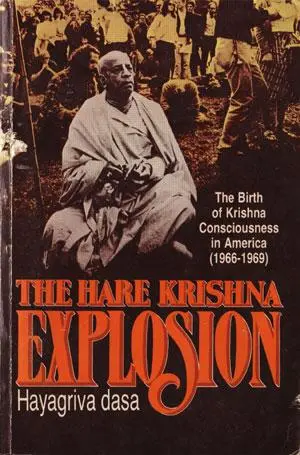
This is a well researched, nicely written article by Sriman Hayagriva Prabhu, with many quotes from Srila Prabhupada’s books. Worth the read!
The Spiritual Master: Emissary of the Supreme Person
By Hayagriva Dasa Adhikari
Published in Back to Godhead Magazine 1970, Vol.1, No.38
brahmāṇḍa bhramite kona bhāgyavān jīva
guru-kṛṣṇa-prasāde pāya bhakti-latā-bīja
“According to their karma, all living entities are wandering throughout the entire universe. Some of them are being elevated to the upper planetary systems, and some are going down into the lower planetary systems. Out of many millions of wandering living entities, one who is very fortunate gets an opportunity to associate with a bona fide spiritual master by the grace of Kṛṣṇa. By the mercy of both Kṛṣṇa and the spiritual master, such a person receives the seed of the creeper of devotional service.”(Śrī Caitanya-caritāmṛta: Madhya-līlā 19.151)
His Divine Grace A.C. Bhaktivedanta Swami, Srila Prabhupada, once said that religion without philosophy is fanaticism and philosophy without religion is mental speculation. For a sincere student engaged in God realization, major philosophical points should be understood in the light of the guru, scripture and practical devotional service. One of the first points to understand is the position of the spiritual master. How is he related to Krsna? Is he Krsna? Is he an ordinary man? How should the disciple approach him? How can one know that the spiritual master is bona fide? What is the duty of the spiritual master? What are his symptoms? These and other questions concerning the spiritual master and Krsna are discussed herein by way of authoritative evidence compiled from the writings of Srila Prabhupada, the spiritual master himself.
In addition to rendering devotional service to Krsna through the spiritual master, the student should come to a philosophical understanding based on scripture of his own identity and the identity of the Supreme Person, Sri Krsna, and His emissary, the bona fide spiritual master. This understanding should correlate with the basic teachings of the spiritual master and other great saints and sages.
More
Previous Older Entries Next Newer Entries















 The Hare Krishna Movement