17 Jun 2013
by The Hare Krishna Movement
in A.C. Bhaktivedanta Swami Prabhupada, Hearing and Memorizing, Meditation, Nectar of Devotion
Tags: A.C. Bhaktivedanta Swami Prabhupada, causeless mercy, core of his heart, liberated, meditation, offering respectful obeisances, resultant actions of his past misdeeds, rightful claim, SB 10.14.8, SB 5.10.14, tat te nukampam

click on image to enlarge
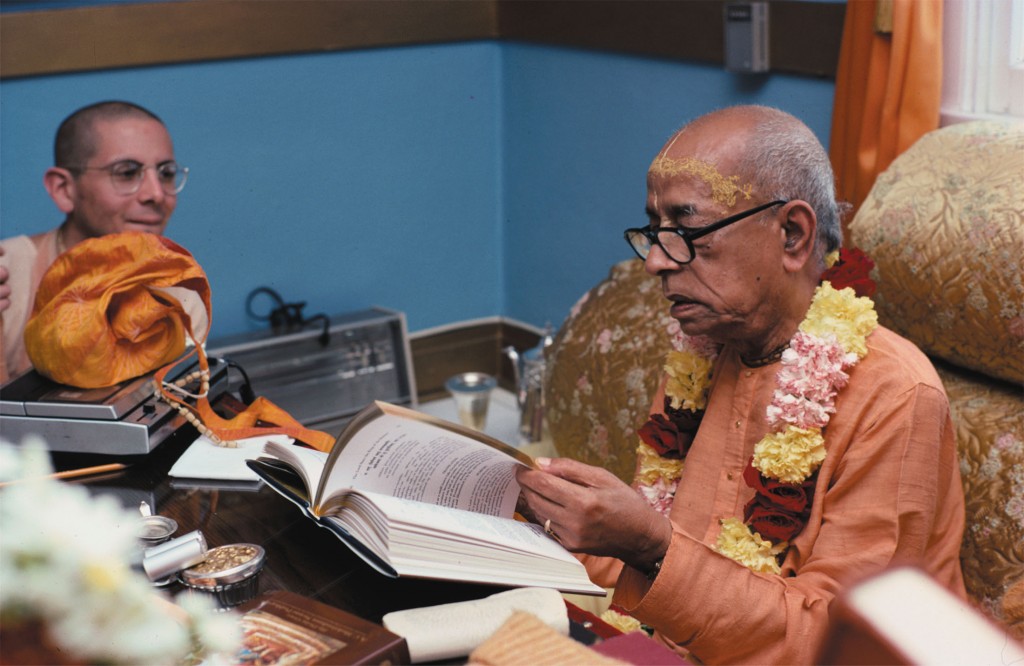
This morning as I was reading from the Srimad Bhagavatam, I was feeling the aches and pains of age, and I was reminded of one of my most favorite verses:
tat te ‘nukampāṁ susamīkṣamāṇo
bhuñjāna evātma-kṛtaṁ vipākam
hṛd-vāg-vapurbhir vidadhan namas te
jīveta yo mukti-pade sa dāya-bhāk
“My dear Lord, any person who is constantly awaiting Your causeless mercy to be bestowed upon him, and who goes on suffering the resultant actions of his past misdeeds, offering You respectful obeisances from the core of his heart, is surely eligible to become liberated, for it has become his rightful claim.” (SB 10.14.8)
…A devotee of the Lord never thinks that he is a paramahaṁsa or a liberated person. He always remains a humble servant of the Lord. In all reverse conditions, he agrees to suffer the results of his past life. He never accuses the Lord of putting him into a distressed condition. These are the signs of an exalted devotee. Tat te ‘nukampāṁ susamīkṣyamāṇaḥ. When suffering reversed conditions, the devotee always considers that the reverse conditions are the Lord’s concessions. He is never angry with his master; he is always satisfied with the position his master offers. In any case, he continues performing his duty in devotional service. Such a person is guaranteed promotion back home, back to Godhead. (from purport)
When I did a computer search on the phrase “rightful claim”, this of course brought me to the different references from the Srimad Bhagavatam (ie., SB 5.10.14, and SB 8.14.13) but also to the “Nectar of Devotion”, chapter ten. Reading from it was so nice, that I decided to post the entire chapter. More
16 Jun 2013
by The Hare Krishna Movement
in A.C. Bhaktivedanta Swami Prabhupada, Books by Srila Prabhupada, Raja-Vidya
Tags: A.C. Bhaktivedanta Swami Prabhupada, beyond samsara, faith in guru and Krsna, great souls, knowledge through disciplic succession, Krsna's energies, mahatma, Raja-Vidya, the king of knowledge

This is the index to the Contents of “Raja-Vidya The King of Knowledge” by His Divine Grace A.C. Bhaktivedanta Swami Prabhupada. We have posted it here in its entirety. This index will give you immediate access to the chapters by clicking on the following underlined links. And for a free PDF download click on link at bottom of post.
Chapter One Raja – Vidya: The King of Knowledge
Chapter Two Knowledge Beyond Saṁsāra
Chapter Three Knowledge of Kṛṣṇa’s Energies
Chapter Four Knowledge by Way of the Mahātmās, Great Souls
Chapter Five Parampara: Knowledge Through Disciplic Succession
Chapter Six Knowledge of Kṛṣṇa’s Appearances and Activities
Chapter Seven Knowledge as Faith in Guru and surrender to Kṛṣṇa
Chapter Eight Action in Knowledge of Kṛṣṇa
For a free pdf download of Raja-Vidya The King of Knowledge; Raja-Vidya-The-King-of-Knowledge
14 Jun 2013
by The Hare Krishna Movement
in A.C. Bhaktivedanta Swami Prabhupada, Dedication Slokas, Srimad Bhagavatam
Tags: A.C. Bhaktivedanta Swami, collection of slokas, dedication slokas, krsne sva-dhamopagate, original books by srila prtabhupada, slokas, srila prabhupada slokas, Srimad Bhagavatam
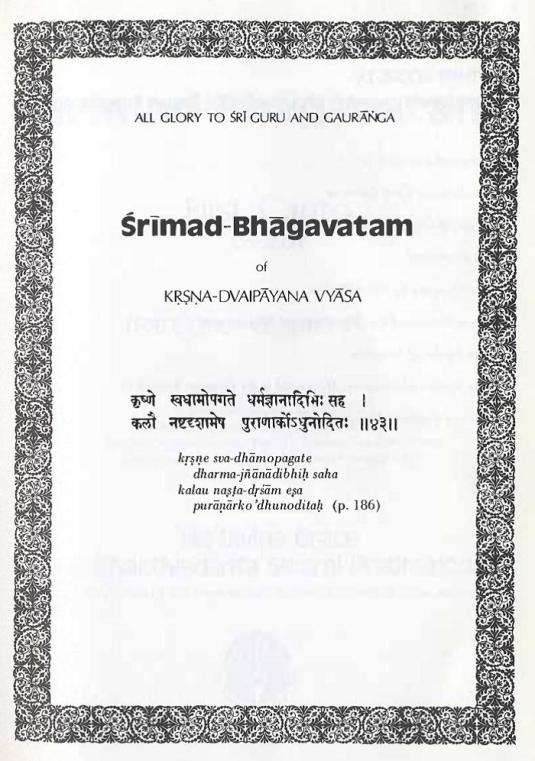
For anyone who has had the good fortune to read and study Srila Prabhupada’s epic Srimad Bhagavatam, will know that on the title page of each and every volume is a dedication sloka. I thought it would be interesting to compile a list of the dedication slokas from all of the original books. I stopped this collection of slokas with the Tenth Canto, Part Three, as this is where Srila Prabhupada left off, and where my collection of Srimad Bhagavatam’s stops. -Vyasasan das
More
14 Jun 2013
by The Hare Krishna Movement
in A.C. Bhaktivedanta Swami Prabhupada, Bhaktivinoda Thakura, Narada Muni, Narada Muni Bajay Vina
Tags: 24 hour kirtan, A.C. Bhaktiverdanta Swami Prabhupada, Haribol, Indra, Krishna's names, Narada Muni, narada muni bajay vina, New Vrindavan, Radhika-ramana, Srila Bhaktivinoda Thakur, vina

Narada Muni Bajay Vina
This is one of my favorite Vaisnava Songs, written by Srila Bhaktivinoda Thakura, with a puroprt by His Divine Grace A.C. Bhaktivedanta Swami Prabhupada. We post it today in honnor of the 24 Hour Kirtan that will start this evening at the New Vrindavan Community.
…This is a song sung by Bhaktivinoda Thakura. The purport of this song is that the great soul Narada Muni is playing on his stringed instrument, called the vina, and vibrating Radhika-ramana, one of Krsna’s names. So, as soon as he plucks the strings and chants, all the devotees immediately respond to him, and it becomes a very beautiful vibration. Amiya-dhara, barise ghana. As the singing goes on with the stringed instrument, it appears that there is a shower of nectar, and all the devotees then dance in ecstasy to the fullest extent of their satisfaction. Then, as they dance, it appears that they become intoxicated by drinking the beverage called madhuri pura. And as one becomes almost mad by drinking, similarly, all the devotees became mad in ecstasy. And some of them are crying, and some of them are dancing, and some of them, although they cannot dance publicly, are dancing within their hearts. Then Lord Siva embraces Narada Muni and begins to dance and cry out in ecstasy, and when Lord Brahma sees Lord Siva dancing with Narada Muni, he joins in and says, “All of you kindly chant ‘Haribol! Haribol!'” Then gradually the king of heaven, Indra, also joins in with great satisfaction and begins to dance and to chant “Hari hari bol!”
In this way, by the influence of the transcendental vibration of the holy name of God, the whole universe becomes ecstatic, and Bhaktivinoda Thakura says, “When the whole universe becomes ecstatic in this way, my desires are satisfied, and I therefore pray unto the lotus feet of Rupa Gosvami that the chanting of harinama may go on nicely like this.” (from purport)
Narada Muni Bajay Vina
by Srila Bhaktivinoda Thakura
Full song with Bengali lyrics, translation and purport. More
12 Jun 2013
by The Hare Krishna Movement
in A.C. Bhaktivedanta Swami Prabhupada, Ramesvara das, Remembering Srila Prabhupada, Srila Prabhupada
Tags: A.C. Bhaktivedanta Swami Prabhupada, Interview with Ramesvara Prabhu on Book Changes, Krsna Book, rose garden, Srila Prabhupada

Reading Krsna Book With Prabhupada
from; Interview with Ramesvara Prabhu on Book Changes 1979
There’s a few more early incidents that I can remember. In Los Angeles on one of those early visits, probably ’73, we used to read the Krsna Book to Prabhupada every evening, he would sit in his garden. And it was just the most wonderful, intimate association with Prabhupada. And I used to marvel at the way Prabhupada would sit and listen to the Krsna Book. His head was looking up very erect, the way he was holding his body, and very grave, serious, sober look on his face. Very intense. Although it was so personal and ecstatic and informal, to just be with a handful of devotees reading the Krsna Book to Prabhupada, Prabhupada was showing us how to actually become absorbed in hearing of God. It wasn’t that…he was not in a light mood. He was in a heavy mood, like a great transcendental aristocrat. I’ll never forget how serious, how he was looking, so formal. Even though the mood was so informal. In that way he was showing us how to hear the Krsna Book.
for full interview; Interview with Ramesvara Prabhu on Book Changes
11 Jun 2013
by The Hare Krishna Movement
in A.C. Bhaktivedanta Swami Prabhupada, Dharma, Srimad Bhagavatam, Vaisnava Vocabulary
Tags: A.C. Bhaktivedanta Swami Prabhupada, adhoksaje, apratihata, His Divine Grace, Lecture by Srila Prabhupada, nivrtti-marga, path of renunciation, path of sense enjoyment, pravrtti-marga, sa vai pumsam paro dharmo, Srila Prabhupada

For some reason I woke up this morning thinking about this very important verse from the Srimad Bhagavatam;
sa vai puṁsāṁ paro dharmo
yato bhaktir adhokṣaje
ahaituky apratihatā
yayātmā suprasīdati
The supreme occupation [dharma] for all humanity is that by which men can attain to loving devotional service unto the transcendent Lord. Such devotional service must be unmotivated and uninterrupted to completely satisfy the self.
I was trying to recall the two occupational paths; the path of sense enjoyment, and the path of renunciation, and the sanskrit words for them. I remembered that the verse and purport was in the first canto, chapter two, so I looked it up and there was the two words my mind was searching for;
“The Vedas prescribe two different types of occupation for the human being. One is called the pravṛtti-mārga, or the path of sense enjoyment, and the other is called the nivṛtti-mārga, or the path of renunciation.”
Both good words for your vaisnava vocabulary. But anyway, as I was searching this verse, I realized just how important this particular verse was. Srila Prabhupada lectured on this verse 13 times. And in one Lecture given by His Divine Grace in Montreal, August 3rd, 1968, Srila Prabhupada begins by saying…
“The real aim of life is how to get satisfaction, full, complete satisfaction. And that satisfaction, complete satisfaction, can be achieved only by prosecution of devotional service. There is no other method. If you want to be happy, free from all cares and anxieties, then you have to engage yourself in devotional servece of the Lord. That will make you free from all material miseries. We are all seeking after that position, how to become completely happy. Our whole struggle for existence…Anyone, in any place, any country, they are all struggling how to become happy. This happiness of the mind, atma, is only possible when we are engaged in Krsna consciousness. That is the only remedy. There is no other alternative.” (Srimad Bhagavatam Lecture Aug. 3, 1968)
I guess this was what I needed to hear this morning before leaving for work.
Full text and purport More
09 Jun 2013
by The Hare Krishna Movement
in A.C. Bhaktivedanta Swami Prabhupada
Tags: 1972 Edition, A.C. Bhaktivedanta Swami Prabhupada, Arjuna, as it is, Bg. 11, bhagavad-gita, Chapter Eleven, Krishna, Krsna, prabhupada gita, spiritual master, Supreme Lord, Supreme Personality of Godhead, Universal Form
05 Jun 2013
by The Hare Krishna Movement
in A.C. Bhaktivedanta Swami Prabhupada, Back to Godhead, Kali Yuga
Tags: A.C. Bhaktivedanta Swami Prabhupada, bhagavatam, chanting Hare Krishna, future, Hare Krishna, hypocrisy, kalau dasa-nidhe rajan, Kali-yuga, past, prediction, present, Srimad Bhagavatam

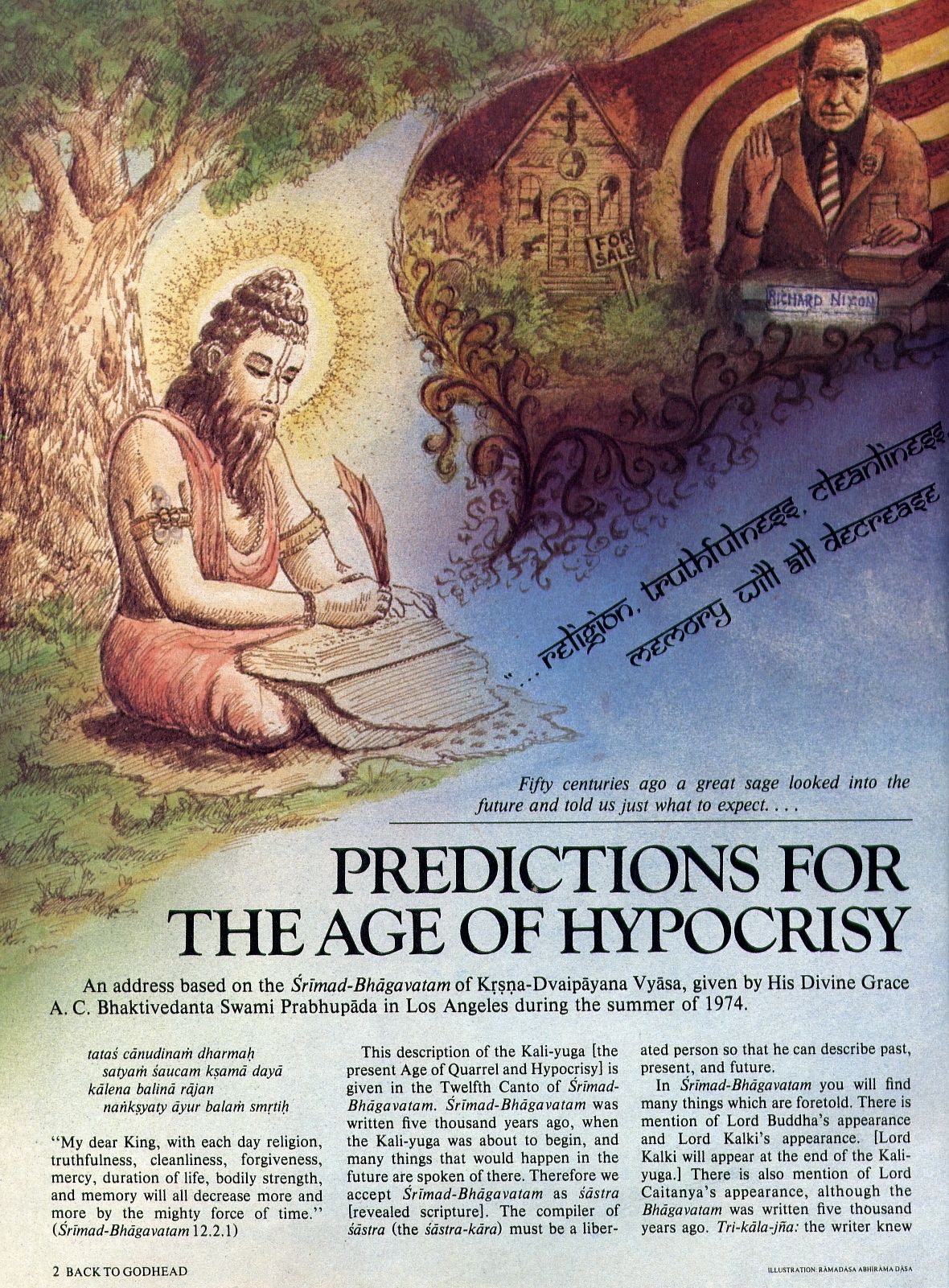
Predictions for the Age of Hypocrisy
Fifty centuries ago a great sage looked into the future and told us just what to expect. . .
An address based on the Srimad-Bhagavatam of Krsna-Dvaipayana Vyasa, given by His Divine Grace A.C. Bhaktivedanta Swami Prabhupada in Los Angeles during the summer of 1974.
Excerpted from Back to Godhead Magazine
tatas canu-dinam dharmah
satyam saucam ksama daya
kalena balina rajan
nanksyaty ayur balam smrtih
“My dear King, with each day religion, truthfulness, cleanliness, forgiveness, mercy, duration of life, bodily strength, and memory will all decrease more and more by the mighty force of time.” (Srimad-Bhagavatam 12.2.1)
This description of the Kali-yuga [the present Age of Quarrel and Hypocrisy] is given in the Twelfth Canto of Srimad-Bhagavatam. Srimad-Bhagavatam was written five thousand years ago, when the Kali-yuga was about to begin, and many things that would happen in the future are spoken of there. Therefore we accept Srimad-Bhagavatam as sastra [revealed scripture]. The compiler of sastra (the sastra-kara) must be a liberated person so that he can describe past, present, and future.
In Srimad-Bhagavatam you will find many things which are foretold. There is mention of Lord Buddha’s appearance and Lord Kalki’s appearance. [Lord Kalki will appear at the end of the Kali-yuga.] There is also mention of Lord Caitanya’s appearance, although the Bhagavatam was written five thousand years ago. Tri-kala-jna: the writer knew past, present, and future.
So here Sukadeva Gosvami is describing the chief symptoms of this age. He says, tatas canudinam: with the progress of this age (Kali-yuga), dharma, religious principles; satyam, truthfulness; saucam, cleanliness; ksama, forgiveness; daya, mercifulness; ayur, duration of life; balam, bodily strength; smrti, memory—these eight things will gradually decrease to nil or almost nil.
More
04 Jun 2013
by The Hare Krishna Movement
in A.C. Bhaktivedanta Swami Prabhupada, Chanting Hare Krishna, Sri Caitanya-Caritamrta
Tags: A.C. Bhaktivedanta Swami Prabhupada, Antya-lila 4.71, chanting Hare Krishna, Hare Krishna, holy name of the lord, Sri Caitanya-caritamrta, Srila Prabhupada, ten offenses
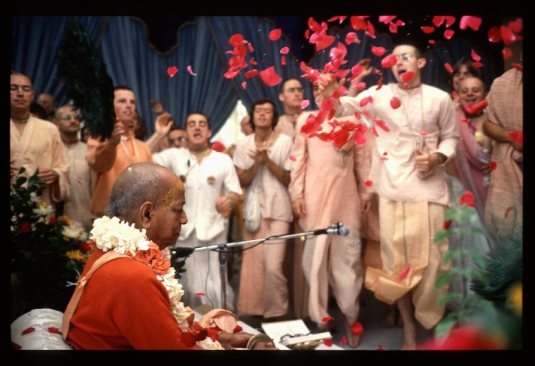
The Following is a very nice verse from the Sri Caitanya-caritamrta about the importance of Chanting the Holy Name of the Lord. Following that is the verse which describes the importance of chanting the names śrī-kṛṣṇa-caitanya prabhu-nityānanda before chanting the Hare Kṛṣṇa mahā-mantra, and the ten kinds of offenses which should be avoided.
…”Of the nine processes of devotional service, the most important is to always chant the holy name of the Lord. If one does so, avoiding the ten kinds of offenses, one very easily obtains the most valuable love of Godhead.” (Antya-lila 4.71)
Similarly, Śrīla Sanātana Gosvāmī has praised the chanting of the holy name as follows in his Bṛhad-bhāgavatāmṛta (Chapter One, verse 9)
“All glories, all glories to the all-blissful holy name of Śrī Kṛṣṇa, which causes the devotee to give up all conventional religious duties, meditation and worship. When somehow or other uttered even once by a living entity, the holy name awards him liberation. The holy name of Kṛṣṇa is the highest nectar. It is my very life and my only treasure.”
More
01 Jun 2013
by The Hare Krishna Movement
in A.C. Bhaktivedanta Swami Prabhupada, Bob Dylan, Srimad Bhagavatam
Tags: A.C. Bhaktivedanta Swami Prtabhupada, Bob Dylan, illusioned by material energy, liberated soul, Lord Krishna, Maharaja Yudhisthira, materially engrossed, one who is served, SB 1.12.6, sense gratification, servitor, song lyrics by Bob Dylan, You Gotta Serve Somebody
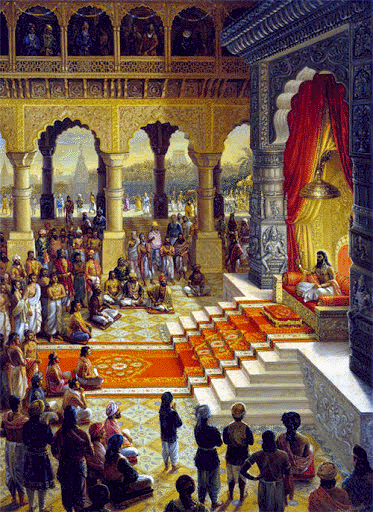
This morning as I was reading from the Srimad Bhagavatam 1.12.6 about Mahārāja Yudhiṣṭhira, who was the King and a liberated soul durning the time of Lord Krishna. How he did not take any pleasure in a his vast kingdom, good wife, obedient brothers, happy subjects and prosperous world. He was satisfied only by rendering loving service for the satisfaction of the Lord. As is stated in following verse:
O brāhmaṇas, the opulence of the King was so enchanting that the denizens of heaven aspired for it. But because he was absorbed in the service of the Lord, nothing could satisfy him except the Lord’s service.
As I was reading from the purport to this verse a song by Bob Dylan kept going through my head…
But you’re gonna have to serve somebody, yes indeed
You’re gonna have to serve somebody
Well, it may be the devil or it may be the Lord
But you’re gonna have to serve somebody
…which was kinda cool because it coincided with the reading. So I share with you, the complete verse and purport by Srila Prabhupada, as well as the song lyrics by Bob Dylan.
More
30 May 2013
by The Hare Krishna Movement
in A.C. Bhaktivedanta Swami Prabhupada, Letters by Srila Prabhupada, Practicing Krishna Consciousness at Home, Vegetarian Cooking, Vegetarianism
Tags: A.C. Bhaktivedanta Swami Prabhupada, nama om vishnu-padaya, namo maha-vadanyaya, namo rahmanya-devaya, offering food, offering food to the Lord, offering prasadam, Prasadam, prayer to Srila Prabhupada, spiritual master
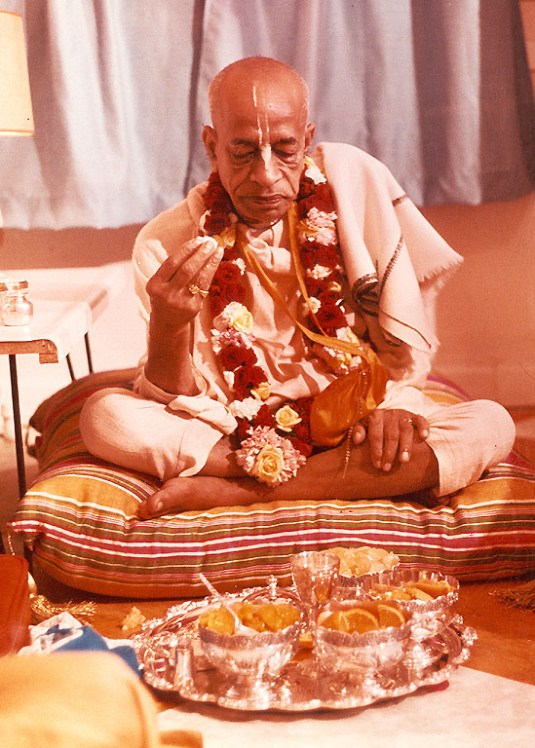
…For offering prasadam simply prayers to the Spiritual Master is sufficient. The process is that everything is offered to the Spiritual Master, and the Spiritual Master is supposed to offer the same foodstuff to the Lord. When a thing is offered to the Spiritual Master, he immediately offers to the Lord. That is the system, and as we come by parampara system, it is our duty to go through the right channel—namely, first the Spiritual Master, then Lord Caitanya, and then Krishna. So when we chant prayers, we do this, Vande ham Sri Guru . . . and gradually to the Goswamis, then to Lord Caitanya, and then to Radha Krishna. That is the praying system. But offering the prasadam to present everything before the Spiritual Master whose picture is also in the altar, means that the Spiritual Master will take care of offering the foodstuff to the Lord. Therefore simply by chanting the prayer to the Spiritual Master, everything will be complete. (Letter to Harer Nama May 28, 1968)
More
29 May 2013
by The Hare Krishna Movement
in A.C. Bhaktivedanta Swami Prabhupada, Bhagavad-gita, Prajah, Vaisnava Vocabulary
Tags: 84000000, A.C. Bhaktivedanta Swami Prabhupada, Bg 14/.4, bhagavad-gita, birth and death, kunteya, living being, material desires, material nature, material world, praja, sarva-yonisu, species of life

Here is a word for your vaisnava vocabulary; Prajah.
Prajā means the living being who has taken his birth in the material world. Actually the living being has no birth and no death, but because of his separation from the service of the Lord and due to his desire to lord it over material nature, he is offered a suitable body to satisfy his material desires. In doing so, one becomes conditioned by the laws of material nature, and the material body is changed in terms of his own work. The living entity thus transmigrates from one body to another in 8,400,000 species of life.
As Krishna points out in the Bhagavad-gita:
It should be understood that all species of life, O son of Kuntī, are made possible by birth in this material nature, and that I am the seed-giving father. (Bg 14-4)
Full verse and purport More
27 May 2013
by The Hare Krishna Movement
in A.C. Bhaktivedanta Swami Prabhupada, Book Distribution, Krsna Consciousness, Krsna Consciousness the Matchless Gift, Srimad Bhagavatam, The Hare Krishna Movement
Tags: A.C. Bhaktivedanta Swami Prabhupada, Book Distribution, devotees, heaven or hell, jnanis, karmis, krsna consciousness, Lord Nrsimhadeva, material adjustment, materialistic activity, meditate, prahlada, Prahlada Maharaja, sankirtan, SB 7.9.44, secluded place, Transcendental meditation

click on image to enlarge
…The Kṛṣṇa conscious person can go even to hell and still be happy. The pure devotee is never unhappy in any condition of life.
For a devotee, being situated in the heavenly planets and being in the hellish planets are equal, for a devotee lives neither in heaven nor in hell but with Kṛṣṇa in the spiritual world. The secret of success for the devotee is not understood by the karmīs and jñānīs. Karmīs therefore try to be happy by material adjustment, and jñānīs want to be happy by becoming one with the Supreme. The devotee has no such interest. He is not interested in so-called meditation in the Himalayas or the forest. Rather, his interest is in the busiest part of the world, where he teaches people Kṛṣṇa consciousness. The Kṛṣṇa consciousness movement was started for this purpose. We do not teach one to meditate in a secluded place just so that one may show that he has become very much advanced and may be proud of his so-called transcendental meditation, although he engages in all sorts of foolish materialistic activity.
A Vaiṣṇava is not interested in such a bluff of spiritual advancement. Rather, he is interested in enlightening people in Kṛṣṇa consciousness because that is the only way for them to become happy. One wanders within the universe, life after life, but by the grace of a devotee, a servant of Śrī Caitanya Mahāprabhu, one can get the clue to Kṛṣṇa consciousness and then not only become happy in this world but also return home, back to Godhead. That is the real target in life… The members of the Kṛṣṇa consciousness movement must be fully convinced that without Kṛṣṇa one cannot be happy. Thus the Kṛṣṇa conscious person avoids all kinds of pseudo spiritualists, transcendentalists, meditators, monists, philosophers and philanthropists. (from Purport to SB 7.9.44)
Full Verse and Purport More
26 May 2013
by The Hare Krishna Movement
in A.C. Bhaktivedanta Swami Prabhupada, Krishna, Krishna Consciousness, Nectar of Devotion
Tags: A.C. Bhaktivedanta Swami Prabhupada, devotees, linking up with the Lord, Nectar of Devotion, perfection, perfectional stage of meeting krsna, Radha-Krsna, Radharani, Rupa Goswami, satisfaction, Srimati Radharani, steadiness, Yamuna, yoga

click on image to enlarge
…When Kṛṣṇa and His devotees meet, the meeting is technically called yoga, or linking up with the Lord. Such meetings between Kṛṣṇa and His devotees can be divided into three classes-namely, perfection, satisfaction, and steadiness. When the devotee meets with Kṛṣṇa in great eagerness, that state of meeting is called perfection.
An example of this perfectional stage of meeting Krishna can be found in the words of Srimati Radharani in this very nice verse;
Rādhārāṇī told Her companion, “My dear friend, I was just going to the bank of the Yamunā, and all of a sudden a very nice boy whose complexion is like a dark blue cloud became visible in front of My eyes. He glanced over Me in a way that I cannot describe. But since this has occurred, I am sorry that I can no longer engage My mind in the duties of My household affairs.”
The following is Chapter 39 from the Nectar of Devotion More
24 May 2013
by The Hare Krishna Movement
in A.C. Bhaktivedanta Swami Prabhupada, Festivals, Nrsimha, Srimad Bhagavatam
Tags: A.C. Bhaktivedanta Swami Prabhupada, demons, half lion, half man, half man and half lion, hiranyakasipu, king of the demons, Lord Nrsimhadeva, Lord Visnu, Nrsimha, Nrsimhadeva, prahlada, Prahlada Maharaja, SB 7.8, Sri Nrkesari, Srimad Bhagavatam, Supreme Personality of Godhead
click on image to enlarge
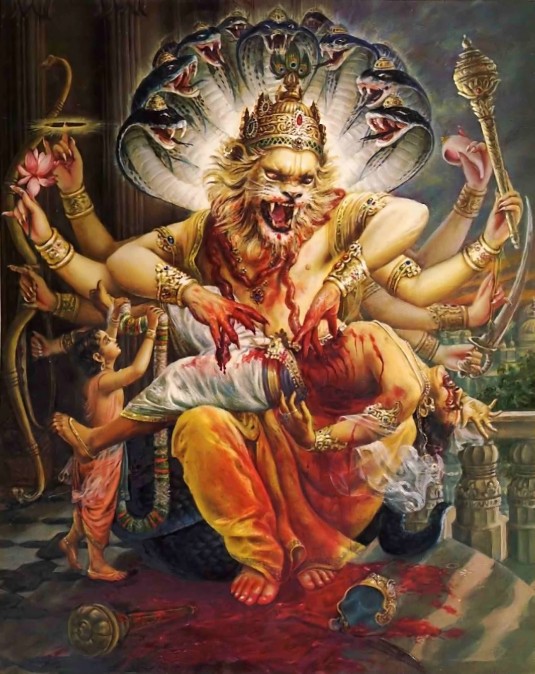
In honnor of the Appearance of Lord Nṛsiṁhadeva, we are posting the entire Eighth Chapter from the Seventh Canto of the Srimad Bhagavatam, entitled “Lord Nṛsiṁhadeva Slays the King of the Demons”. We are celebrating Lord Nrsimhadeva’s today, with a fast till dusk, because it is the variant date for our area. This is a wonderful chapter, and one I am fond of reading on this auspicious day.
Śrīmad-Bhāgavatam
By His Divine Grace A. C. Bhaktivedanta Swami Prabhupāda
Canto Seven, Chapter Eight
Lord Nṛsiṁhadeva Slays the King of the Demons
As described in this chapter, Hiraṇyakaśipu was ready to kill his own son Prahlāda Mahārāja, but the Supreme Personality of Godhead appeared in front of the demon as Śrī Nṛkeśarī, half lion and half man, and killed him.
More
23 May 2013
by The Hare Krishna Movement
in A.C. Bhaktivedanta Swami Prabhupada, Free Downloads, krsnaTunes, MP3 Downloads
Tags: bhajanas, classic kirtans, free downloads, hansadutta das, Hare Krishna LPs, krsna tunes, MP3 downloads, streaming audios, The Hare Krishna Movement
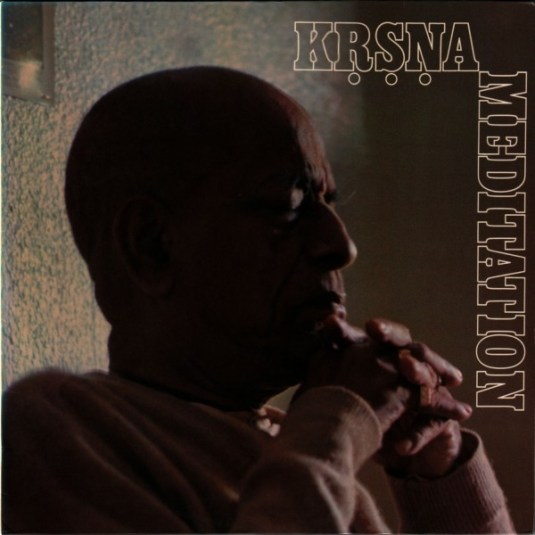
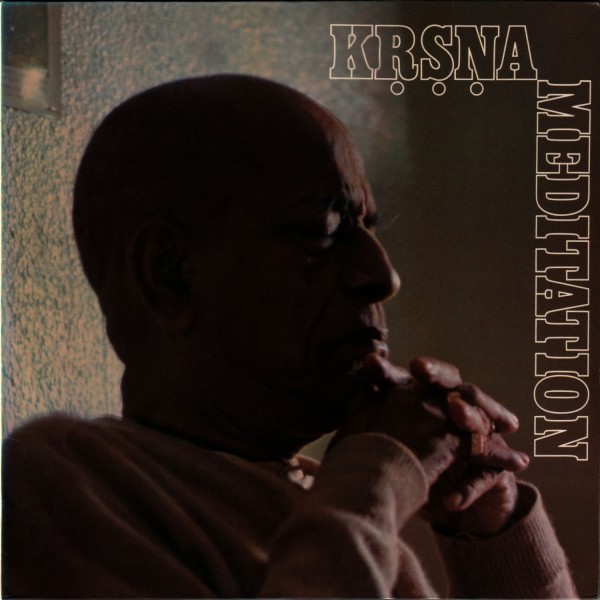
Krsna Meditation Album
Excerpted from; krsnaTunes
Arguably one of the most important and most mesmerizing recordings of His Divine Grace A.C. Bhaktivedanta Swami Prabhupada.
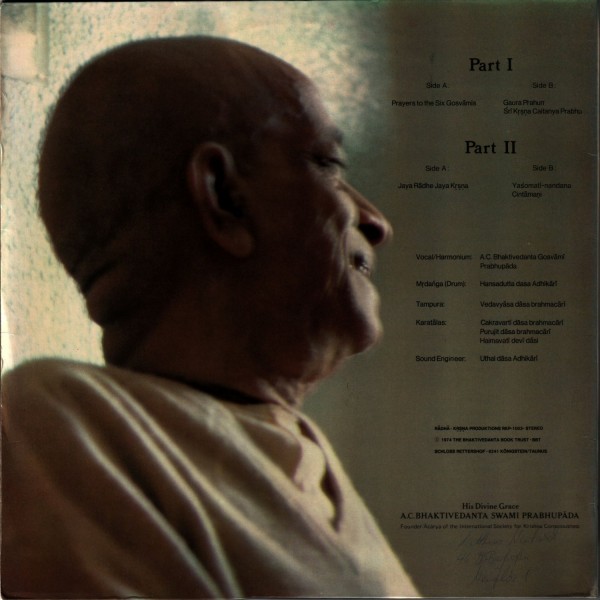
Produced by Hansadutta & the German Yatra, 1974. The album was recorded in June, 1974 at Schloss Rettershoff, during Srila Prabhupada’s visit there. It was his second and final visit to Germany. The devotees set up a recording room beneath the stairs, and Srila Prabhupada happily obliged their request to do a recording. Vocals and harmonium by Srila Prabhupada, Hansadutta on mrdanga, Cakravarti and Himavati play kartals. Read more about it: Classic ISKCON Vinyl – Srila Prabhupada’s Krsna Meditation Double LP.

There aren’t many Krishna-related double LPs out there. And only one that is fully Srila Prabhupada.
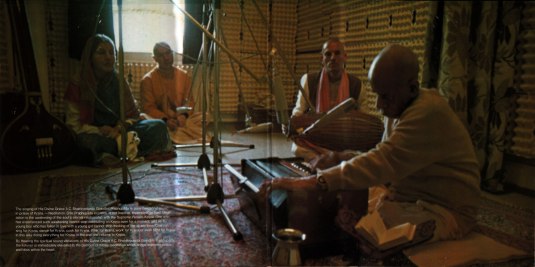
One of the cool things about double LP’s is that they often have gatefold covers. Krsna Meditation is no exception. The inside of this gatefold sports a huge picture taken during the recording session.
click on image to enlarge
The paragraph that appears on the lower left corner of the gatefold reads:
The singing of His Divine Grace A.C. Bhaktivedanta Gosvami Prabhupada is pure devotional music in praise of Krsna – Meditation, Srila Prabhupada explains, is not inactive, impersonal or void. Meditation is the awakening of the soul’s eternal relationship with the Supreme Person, Krsna. One who has experienced such an awakening cannot stop meditating on Krsna even for a moment, just as a young boy who has fallen in love with a young girl cannot stop thinking of her at any time. One can sing for Krsna, dance for Krsna, cook for Krsna, think for Krsna, work for Krsna or even fight for Krsna. In this way doing everything for Krsna, in the end one returns to Krsna.
By Hearing the spiritual sound vibrations of His Divine Grace A.C. Bhaktivedanta Gosvami Prabhupada, the listener is immediately elevated to the platform of Krsna meditation which brings supreme peace and bliss within the heart.
More
21 May 2013
by The Hare Krishna Movement
in A.C. Bhaktivedanta Swami Prabhupada, Caitanya Mahaprabhu, Gaurangera Duti Pada, Narottama das Thakur, Narottama Dasa Thakura, Songs of the Vaisnava Acaryas
Tags: A.C. Bhaktivedanta Swami Prabhupada, devotee, eternal pastimes of Radha-Krsna, gaurangera duti pada, Lord Caitanya, Narottama Dasa, Narottama Dasa Thakura, O Gauranga, sabarana sri gaura mahima, Vaisnava songs

click on image to enlarge
This is a very nice song by Naottama dasa Thakura who says; Anyone who has accepted the two lotus feet of Lord Caitanya can understand the true essence of devotional service. Therefore, Narottama dasa Thakura prays that one take shelter of Lord Caitanya and follow in His footsteps.
We have included the Bengali/Elglish transliteration, translation, and 2 different purports by His Divine Grace Srila Prabhupada.
Gaurangera Duti Pada
by Narottama dasa Thakura
Anyone who has accepted the two lotus feet of Lord Caitanya can understand the true essence of devotional service. If one is captivated by the pleasing pastimes of Lord Caitanya, the dirty things in his heart will all become cleansed.
One who simply takes the holy name of Gaurasundara, Sri Krsna Caitanya, will immediately develop love of God. To such a person I say: Bravo! Very nice! Excellent! If one appreciates the merciful pastimes of Lord Caitanya and feels ecstasy and sometimes cries, this process will immediately help him to understand the eternal pastimes of Radha-Krsna.
Simply by understanding that the associates of Lord Gauranga are eternally free from material contamination, one can immediately be promoted to the transcendental abode of Lord Krsna. If one simply understands that the land of Navadvipa is not different from Vrndavana, then he actually lives in Vrndavana.
If one says: “Let me dive deep into the waves of the nectarean ocean of the transcendental loving movement introduced by Lord Caitanya”, he immediately becomes one of the confidential devotees of Radha and Krsna. It does not matter whether one is a householder living at home or a vanaprastha or sannyasi living in the forest, if he chants “O Gauranga, and becomes a devotee of Lord Caitanya, then Narottama dasa begs to have his association.
More
20 May 2013
by The Hare Krishna Movement
in A.C. Bhaktivedanta Swami Prabhupada, Krishna Consciousness, KRSNA The Supreme Personality of Godhead, Uddhava
Tags: A.C. Bhaktivedanta Swami Prabhupada, bhagavad-gita, cowherd boys, cowherd men, devotional service, expert devotees, gopis, Krsna and Balarama, Krsna The Supreme Personality of Godhead, message of solace, residents of Vrndavana, Srila Prabhupada, Srimati Radharani, Uddhava, Uddhava Visits Vrndavana, Vrndavana, Yasoda, ye yatha mam prapadyante
click on image to enlarge
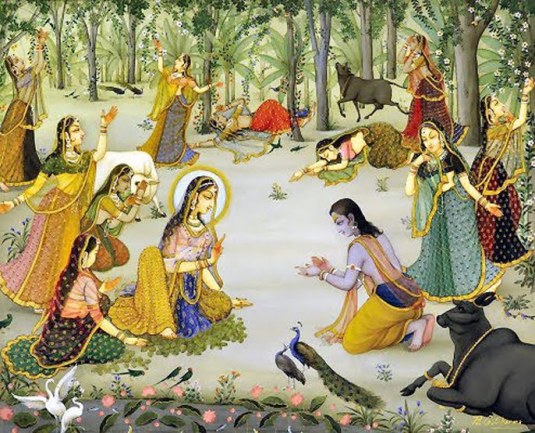
This is perhaps one of my favorite chapters in the Kṛṣṇa Book, and I find myself reading it again and again. There are many lessons one can take away from this chapter. With great pleasure we are posting the entire chapter in the hopes that one of our readers will become enlivened in Kṛṣṇa Consciousness as a result of reading it.
…As stated in the Bhagavad-gītā, ye yathā māṁ prapadyante: Kṛṣṇa is very responsive. He responds in proportion to the devotee’s advancement in devotional service. The gopīs were thinking of Kṛṣṇa in separation twenty-four hours a day. Kṛṣṇa was also always thinking of the gopīs, mother Yaśodā, Nanda Mahārāja and the residents of Vṛndāvana, although He appeared to be away from them. He could understand how they were transcendentally aggrieved, and so He immediately wanted to send Uddhava to give them a message of solace.
Uddhava is described as the most exalted personality in the Vṛṣṇi dynasty, almost equal to Kṛṣṇa. He was a great friend, and on account of being the direct student of Bṛhaspati, the teacher and priest of the heavenly planets, he was very intelligent and sharp in decision. From the intellectual standpoint, he was highly qualified. Kṛṣṇa, being a very loving friend of Uddhava, wanted to send him to Vṛndāvana just to study the highly elevated ecstatic devotional service practiced there. Even if one is highly elevated in material education and is even the disciple of Bṛhaspati, he still has to learn from the gopīs and the residents of Vṛndāvana how to love Kṛṣṇa to the highest degree. Sending Uddhava to Vṛndāvana with a message to the residents of Vṛndāvana to pacify them was Kṛṣṇa’s special favor to Uddhava.
Lord Kṛṣṇa’s name is Hari, which means one who takes away all the distress from the surrendered souls. Lord Caitanya states that there cannot be, at any time, a worship as exalted as that realized by the gopīs. Being very anxious about the gopīs’ grief, Kṛṣṇa talked with Uddhava and politely requested him to go to Vṛndāvana. Shaking Uddhava’s hand with His own hands, He said, ”My dear gentle friend Uddhava, please go immediately to Vṛndāvana and try to pacify My father and mother, Nanda Mahārāja and Yaśodā-devī, and the gopīs. They are very much griefstricken, as if suffering from great ailments. Go and give them a message. I hope their ailments will be partially relieved. The gopīs are always absorbed in thoughts of Me. They have dedicated body, desire, life and soul to Me. I am anxious not only for the gopīs, but for anyone who sacrifices society, friendship, love and personal comforts for Me. It is My duty to protect such exalted devotees. The gopīs are the most dear. They are always thinking of Me in such a way that they remain overwhelmed and almost dead in anxiety due to separation from Me. They are keeping alive simply by thinking that I am returning to them very soon.“
Full Chapter More
16 May 2013
by The Hare Krishna Movement
in A.C. Bhaktivedanta Swami Prabhupada, BBT, Book Changes, Books by Srila Prabhupada, Free Downloads, ISKCON History, Ramesvara das
Tags: 1979 interview with Ramesvara, A.C. Bhaktivedanta Swami Prabhupada, Baladeva Vidyabhusana, BBT, Bhaktivedanta Book Trust, Bhaktivedanta Books, book changes, interview with Ramesvara, Iskcon, ISKCON history, MacMillan, Ramesvara, Ramesvara dasa, Srila Prabhupada, Srila Prabhupada books, Tamal Krsna Maharaja, The Hare Krishna Movement
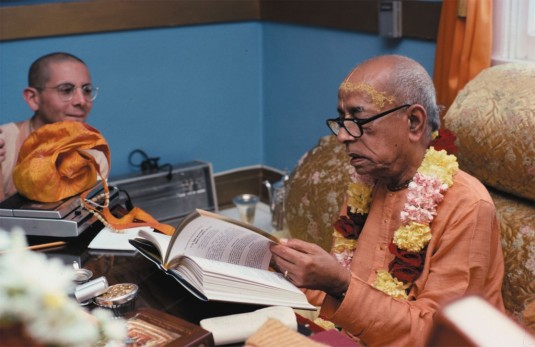
click on image to enlarge
Testimonial by Ramesvara dasa
Ramesvara-interview-1979
A very, very important document has just become public. It is a 300+ page transcript of a 1979 interview betweem Baladeva Vidyabhusana Prabhu and Ramesvara Prabhu, the manager of the Bhaktivedanta Book Trust, the person who was directly in charge of printing Srila Prabhupada’s books durning that time. Ramesvara had many direct instructions from Srila Prabhupada in regard to printing his books, and he also gives an eye-witness account of many events that took place while Srila Prabhupada was physically present. Very interesting read!!!
You can download the PDF file of the interview by clicking on: Ramesvara-interview-1979
Or you can read the entire interview here… More
14 May 2013
by The Hare Krishna Movement
in A.C. Bhaktivedanta Swami Prabhupada, BBT, Book Changes, Books by Srila Prabhupada, Govinda dasi, Hayagriva das, Srila Prabhupada's Books
Tags: 1972 Edition, A.C. Bhaktivedanta Swami Prabhupada, as it is, BBT, bhagavad-gita, book changes, gita manuscript, Govinda dasi, Hayagriva, Jayadvaita Swami, MacMillan, That is the Question, to Edit or Not To Edit
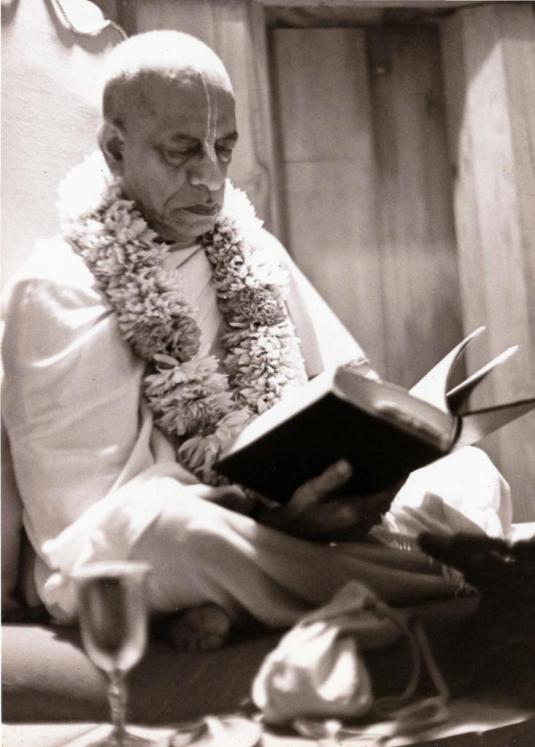
This is another very nice article by Govinda dasi on Book Changes, posted recently on the Sun. We are reprinting it here, as it is a very important issue, and needs to be shared with every devotee.
…Yes, he read his books daily, and he spoke from that original Bhagavad-gita for over 10 years! He gave lectures on nearly every verse in that original Gita, and he requested only a couple of corrections, such as “the planet of the trees,” (to be changed to “the pitris”), and a couple of other small corrections. Had only those few changes been made, perhaps this controversy would never have occurred.
However, the problem is this: BBT did not simply edit Srila Prabhupada’s books and make simple Sanskrit corrections; rather, they edited Srila Prabhupada’s books and made sweeping changes, over 5,000 of them in the Gita alone, and thus changed the “writer’s voice” that had been so artistically created by Srila Prabhupada and Hayagriva working together.
Full article More
Previous Older Entries Next Newer Entries












 The Hare Krishna Movement