04 May 2016
by The Hare Krishna Movement
in A.C. Bhaktivedanta Swami Prabhupada, Brahmastra Weapon, Srimad Bhagavatam
Tags: A.C. Bhaktiveanta Swami Prabhupada, atomic bomb, atomic energy, atomic radiation, Brahmastra Weapon, nuclear weapon, SB 1.7.28, SB 1.7.32, science of chanting hymns, Srila Prabhupada, Srimad Bhagavatam

This morning I was reading from the Srimad Bhagavatam, First Canto, Chapter 7, entitled “The Son of Drona Punished”. This chapter has always intrigued me, because although the Srimad Bhagavatam was compiled by Srila Vyasedeva five thousand years ago, there is mention of the ultimate weapon, the brahmāstra [nuclear weapon] being used. We think that Atomic energy or Nuclear energy is some modern technological advancement, but actually this knowledge has been around since the time that Srimad Bhagavatam was first spoken, many thousands of years ago.
…The brahmāstra is similar to the modern nuclear weapon manipulated by atomic energy. The atomic energy works wholly on total combustibility, and so the brahmāstra also acts. It creates an intolerable heat similar to atomic radiation, but the difference is that the atomic bomb is a gross type of nuclear weapon, whereas the brahmāstra is a subtle type of weapon produced by chanting hymns. It is a different science, and in the days gone by such science was cultivated in the land of Bhārata-varṣa. The subtle science of chanting hymns is also material, but it has yet to be known by the modern material scientists. Subtle material science is not spiritual, but it has a direct relationship with the spiritual method, which is still subtler. A chanter of hymns knew how to apply the weapon as well as how to retract it. That was perfect knowledge. (from purport to SB 1.7.28)
…The theory that the modern atomic bomb explosions can annihilate the world is childish imagination. First of all, the atomic energy is not powerful enough to destroy the world. And secondly, ultimately it all rests on the supreme will of the Supreme Lord because without His will or sanction nothing can be built up or destroyed. It is foolish also to think that natural laws are ultimately powerful. Material nature’s law works under the direction of the Lord, as confirmed in the Bhagavad-gītā. The Lord says there that natural laws work under His supervision. The world can be destroyed only by the will of the Lord and not by the whims of tiny politicians. Lord Śrī Kṛṣṇa desired that the weapons released by both Drauṇi and Arjuna be withdrawn, and it was carried out by Arjuna at once. Similarly, there are many agents of the all-powerful Lord, and by His will only can one execute what He desires. (from purport to 1.7.32)
More
24 Apr 2016
by The Hare Krishna Movement
in A.C. Bhaktivedanta Swami Prabhupada, Krishna Consciousness, Lectures, Srimad Bhagavatam
Tags: 1.5.12-13, A. c. Bhaktivedanta Swami Prabhupada, Krishna consciousness, lecture at New Vrindaban, Lecture by Srila Prabhupada, Simple Living, Srimad Bhagavatam, Unnecessary Necessities
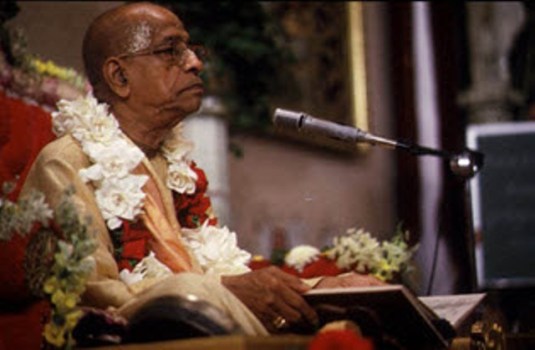
The following is a lecture on the Srimad-Bhagavatam 1.5.12-13. Recorded June 11, 1969, New Vrndavana. There is a link at bottom of post, if you want to hear the audio.
Śrīmad-Bhāgavatam Lecture 1.5.12-13
By Hiws Divine Grace A. C. Bhaktivedanta Swami Prabhupada
More
15 Apr 2016
by The Hare Krishna Movement
in A.C. Bhaktivedanta Swami Prabhupada, Krsna is the Source of All Incarnations, Rama
Tags: A.C. Bhaktivedanta Swami Prabhupada, Kṛṣṇa Is the Source of All Incarnations, Lord Rama, Maharaja Dasaratha, Maharaja Iksvaku, Personality of Godhead eighteenth incarnation, Rama, Ramacandra, Ravana, SB1.3.22, SB2.7.23, SB2.7.24, SB2.7.25, Sita, Srimad Bhagavatam

Today we celebrate the appearance of Lord Ramacandra with an all day fast, and hearing of Lord Rama’s pastimes. I went to the Srimad Bhagavatam this morning and did a little reading from the First Canto, Chapter 2 entitled “Kṛṣṇa Is the Source of All Incarnations”, and from the Second Canto, Chapter 7 entitled “Scheduled Incarnations with Specific Functions”. I have included some verses below.
Śrīmad-Bhāgavatam
By His Divine Grace A. C. Bhaktivedanta Swami Prabhupāda
Canto One, Chapter 2, Text 22
nara-devatvam āpannaḥ
sura-kārya-cikīrṣayā
samudra-nigrahādīni
cakre vīryāṇy ataḥ param
nara—human being; devatvam—divinity; āpannaḥ—having assumed the form of; sura—the demigods; kārya—activities; cikīrṣayā—for the purpose of performing; samudra—the Indian Ocean; nigraha-ādīni—controlling, etc.; cakre—did perform; vīryāṇi—superhuman prowess; ataḥ param—thereafter.
TRANSLATION
In the eighteenth incarnation, the Lord appeared as King Rāma. In order to perform some pleasing work for the demigods, He exhibited superhuman powers by controlling the Indian Ocean and then killing the atheist King Rāvaṇa, who was on the other side of the sea.
PURPORT
The Personality of Godhead Śrī Rāma assumed the form of a human being and appeared on the earth for the purpose of doing some pleasing work for the demigods or the administrative personalities to maintain the order of the universe. Sometimes great demons and atheists like Rāvaṇa and Hiraṇyakaśipu and many others become very famous due to advancing material civilization by the help of material science and other activities with a spirit of challenging the established order of the Lord. For example, the attempt to fly to other planets by material means is a challenge to the established order. The conditions of each and every planet are different, and different classes of human beings are accommodated there for particular purposes mentioned in the codes of the Lord. But, puffed up by tiny success in material advancement, sometimes the godless materialists challenge the existence of God. Rāvaṇa was one of them, and he wanted to deport ordinary men to the planet of Indra (heaven) by material means without consideration of the necessary qualifications. He wanted a staircase to be built up directly reaching the heavenly planet so that people might not be required to undergo the routine of pious work necessary to enter that planet. He also wanted to perform other acts against the established rule of the Lord. He even challenged the authority of Śrī Rāma, the Personality of Godhead, and kidnapped His wife, Sītā. Of course Lord Rāma came to chastise this atheist, answering the prayer and desire of the demigods. He therefore took up the challenge of Rāvaṇa, and the complete activity is the subject matter of the Rāmāyaṇa. Because Lord Rāmacandra was the Personality of Godhead, He exhibited superhuman activities which no human being, including the materially advanced Rāvaṇa, could perform. Lord Rāmacandra prepared a royal road on the Indian Ocean with stones that floated on the water. The modern scientists have done research in the area of weightlessness, but it is not possible to bring in weightlessness anywhere and everywhere. But because weightlessness is the creation of the Lord by which He can make the gigantic planets fly and float in the air, He made the stones even within this earth to be weightless and prepared a stone bridge on the sea without any supporting pillar. That is the display of the power of God.
More
04 Feb 2016
by The Hare Krishna Movement
in A.C. Bhaktivedanta Swami Prabhupada, Free Downloads, Free eBooks, Krishna Consciousness, Transcendental Teachings of Prahlada Maharaja
Tags: A.C. Bhaktivedanta Swami Prabhupada, age of kali, age of quarrel, atheistic, atheistic person, demons, devotee, God, His Divine Grace A.C. Bhaktivedanta Swami Prabhupada, Krishna Path, krsna consciousness, materialists, materially powerrful, My dear friends, Prahlada Maharaja, Srila Prabhupada's books, Srimad Bhagavatam

For some reason (supersoul, I guess), I have been reading the “Transcendental Teachings of Prahlada Maharaja”. There are so many books on my shelves, but I searched for this small paper back book amongst the many small books in our library. We have included it here today as a post. You can also download it as a free pdf file, or as a scanned pdf of the original. Just click on following links to download.
Transcendental Teachings of Prahlad Maharaj 1973 Original
Transcendental_Teachings_of_Prahlad_Maharaj-Original_book-SCAN
The following is based on a series of talks Śrīla Prabhupāda gave in 1968 on the Śrīmad-Bhāgavatam, Canto 7, Chapter 6.
Transcendental Teachings of Prahlāda Mahārāja
By His Divine Grace A. C. Bhaktivedanta Swami Prabhupada
Full Book More
17 Jan 2016
by The Hare Krishna Movement
in A.C. Bhaktivedanta Swami Prabhupada, Krsna, Krsna Book
Tags: A.C. Bhaktivedanta Swami Prabhupada, bugles made of horn, buzzing of the bumblebees, cowheard boys, devotees of Krsna, Krishna, Krsna, Krsna Book, Srimad Bhagavatam, voice of the cuckoo

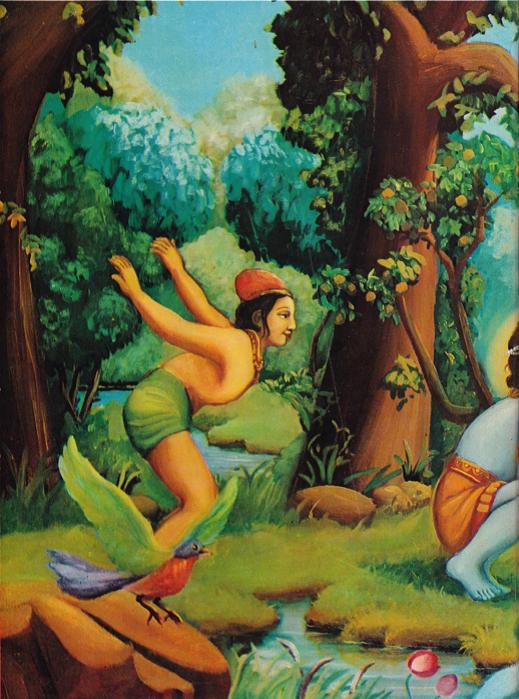
All the boys would be differently engaged. Some boys blew their flutes, and others blew bugles made of horn. Some imitated the buzzing of the bumblebees, and others imitated the voice of the cuckoo. Some boys imitated flying birds by running after the birds’ shadows on the ground, some imitated the beautiful movements and attractive postures of the swans, some sat down with the ducks, sitting silently, and others imitated the dancing of the peacocks. Some boys attracted young monkeys in the trees, some jumped into the trees, imitating the monkeys, some made faces as the monkeys were accustomed to do, and others jumped from one branch to another. Some boys went to the waterfalls and crossed over the river, jumping with the frogs, and when they saw their own reflections on the water they would laugh. They would also condemn the sounds of their own echoes. In this way, all the cowherd boys used to play with Kṛṣṇa, who is the source of the Brahman effulgence for jñānīs desiring to merge into that effulgence, who is the Supreme Personality of Godhead for devotees who have accepted eternal servitorship, and who for ordinary persons is but another ordinary child. The cowherd boys, having accumulated the results of pious activities for many lives, were able to associate in this way with the Supreme Personality of Godhead. How can one explain their great fortune? (SB 10.12.7-11)
More
12 Jan 2016
by The Hare Krishna Movement
in A.C. Bhaktivedanta Swami Prabhupada, Cow Protection, Srimad Bhagavatam
Tags: A. C. Bhakthvedanta Swami Prabhupada, brahmanas, brahminical culture, cow protection, cows and the senses, devotees, Dwaraka Puri, govindah, Lord Krsna, pious assembly, SB1.14.34, Srimad Bhagavatam, the Personality of Godhead

“The Lord is the protector of cows and the brahminical culture. A society devoid of cow protection and brahminical culture is not under the direct protection of the Lord, just as the prisoners in the jails are not under the protection of the king but under the protection of a severe agent of the king. Without cow protection and cultivation of the brahminical qualities in human society, at least for a section of the members of society, no human civilization can prosper at any length. By brahminical culture, the development of the dormant qualities of goodness, namely truthfulness, equanimity, sense control, forbearance, simplicity, general knowledge, transcendental knowledge and firm faith in the Vedic wisdom, one can become a brāhmaṇa and thus see the Lord as He is.” (from within the Purport of Srimad-Bhagavatam 1.14.34)
Full text and purport More
28 Nov 2015
by The Hare Krishna Movement
in A.C. Bhaktivedanta Swami Prabhupada, Arsha Prayoga, Bhagavad-gita, Bhagavad-gita As It Is 1972 Edition, Book Changes, Books by Srila Prabhupada, Lectures, Uncategorized
Tags: A.C. Bhaktivedanta Swami Prabhupada, Arsha Prayoga, as it is, Bhagavad Gita, bhagavad-gita, Bhagavad-gita As It Is, book changes, no change, original books, Srila Prabhupada, Srila Prabhupada's books, Srimad Bhagavatam
… …That is the gift of Lord Caitanya Mahāprabhu. It is in the śāstra. Caitanya Mahāprabhu does not give you anything which is not in the śāstra. He’s ācārya, although He’s God Himself. He can make śāstra. Whatever He does, whatever He speaks, that is śāstra. But still, because He’s playing the part of ācārya, He immediately gives Vedic evidences. That is the way of ācārya. Ācāryas will never say, “I think.” “It is in my opinion.” No. Such things are not accepted. No personal opinion. It must be supported by Vedic evidences. That is called paramparā system, genuine system of understanding. As Kṛṣṇa says, evaṁ paramparā-prāptam imaṁ rājarṣayo viduḥ [Bg. 4.2]. No change. Therefore we are presenting Bhagavad-gītā as it is. We do not change. We have no power to change. Then where is the authority of Bhagavad-gītā? I am a third-class man, and if I change the statements in the Bhagavad-gītā, then where is the authority of Bhagavad-gītā? That is going on. Therefore it is practically… You have got experience that there are hundreds of Bhagavad-gītā editions in the Western countries, but because we are presenting Bhagavad-gītā as it is, our sale is better than all others. There is a report from the trade manager of Macmillan. He says, “While other editions are dwindling, going down, this edition is coming up.” They published our, this present enlarged edition of Bhagavad-gītā, fifty thousand in the month of August. They are going to print again, second edition, August, September, October. So the reason is that if we present things as they are, it will be accepted. Without any adulteration. Sometimes, you know, people say that I have done miracles. They say everywhere. But I do not know anything, miracles or magic. If there is any miracle, that miracle is that we present things as they are. That’s all. Without any adulteration. So that should be the principle. Present as it is. It will be accepted.
excerpted from a lecture on the Srimad Bhagavatam 1.2.11 Vrindavan India October 22, 1972
Full Lecture More
26 Jun 2015
by The Hare Krishna Movement
in A.C. Bhaktivedanta Swami Prabhupada, Srimad Bhagavatam, Srimad Bhagavatam Index
Tags: A. C. Bhakthvedanta Swami Prabhupada, Jan Alexander, Krsna, Srimad Bhagavatam, Srimad-Bhagavatam Index, Supreme Personality of Godhead, Topical Guide
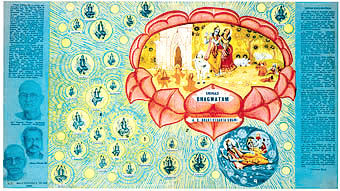
Sometime back one of our readers submitted this Index on the Srimad-Bhagavatam, and asked if I could post it. It is truly a very impressive piece of work, and represents a great deal of time and study. We applaud the effort that Jan has put into this Index, and with great pleasure we post it here, in the hopes that others can benefit.
Srimad-Bhagavatam Index, Notes, Topical Guide
compiled by Jan Alexander
This was written to help me find, understand and remember the massive truth found in the Srimad-Bhagavatam. Every abbrieviated, shortened, misused, form of the Supreme Personality of Godhead’s name, fame, and pastimes is just in attempt to cram the Srimad-Bhagavatam into this being that I am. I hope that this will be of great help to others who are studying the Srimad-Bhagavatam. I offer this handful of rice to the Lord.
– Jan Alexander
This file is so large we will have to post it in parts. This Third part is letters L – P
More
02 May 2015
by The Hare Krishna Movement
in A.C. Bhaktivedanta Swami Prabhupada, Lord Nrsimha, Srimad Bhagavatam
Tags: A.C. Bhaktiveanta Swami Prabhupada, appearance of Lord Nrismha, hiranyakasipu, Nrisimhadeva, prahlada, Prahlada Maharaja, SB 7.8, Srimad Bhagavatam
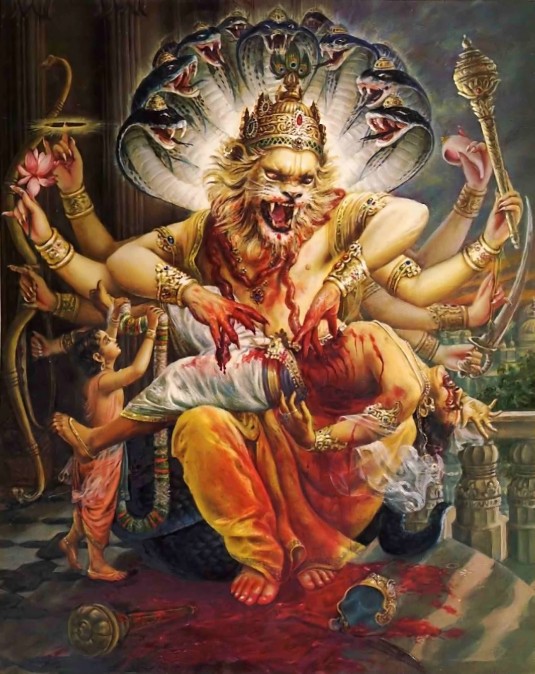
In honor of the appearance day of Lord Nrsimhadeva, we are posting the eight chapter of the Seventh Canto of the Srimad-Bhagavatam, entitled “Lord Nṛsiṁhadeva Slays the King of the Demons”.
click on image to enlarge
Śrīmad-Bhāgavatam
By His Divine Grace A. C. Bhaktivedanta Swami Prabhupāda
Canto Seven, Chapter Eight
Lord Nṛsiṁhadeva Slays the King of the Demons
Chapter Summary
As described in this chapter, Hiraṇyakaśipu was ready to kill his own son Prahlāda Mahārāja, but the Supreme Personality of Godhead appeared in front of the demon as Śrī Nṛkeśarī, half lion and half man, and killed him.
Following the instructions of Prahlāda Mahārāja, all the sons of the demons became attached to Lord Viṣṇu, the Supreme Personality of Godhead. When this attachment became pronounced, their teachers, Ṣaṇḍa and Amarka, were very much afraid that the boys would become more and more devoted to the Lord. In a helpless condition, they approached Hiraṇyakaśipu and described in detail the effect of Prahlāda’s preaching. After hearing of this, Hiraṇyakaśipu decided to kill his son Prahlāda. Hiraṇyakaśipu was so angry that Prahlāda Mahārāja fell down at his feet and said many things just to pacify him, but he was unsuccessful in satisfying his demoniac father. Hiraṇyakaśipu, as a typical demon, began to advertise himself as being greater than the Supreme Personality of Godhead, but Prahlāda Mahārāja challenged him, saying that Hiraṇyakaśipu was not God, and began to glorify the Supreme Personality of Godhead, declaring that the Lord is all-pervading, that everything is under Him, and that no one is equal to or greater than Him. Thus he requested his father to be submissive to the omnipotent Supreme Lord.
The more Prahlāda Mahārāja glorified the Supreme Personality of Godhead, the more angry and agitated the demon became. Hiraṇyakaśipu asked his Vaiṣṇava son whether his God existed within the columns of the palace, and Prahlāda Mahārāja immediately accepted that since the Lord is present everywhere, He was also present within the columns. When Hiraṇyakaśipu heard this philosophy from his young son, he derided the boy’s statement as just the talk of a child and forcefully struck the pillar with his fist.
As soon as Hiraṇyakaśipu struck the column, there issued forth a tumultuous sound. At first Hiraṇyakaśipu, the King of the demons, could not see anything but the pillar, but to substantiate Prahlāda’s statements, the Lord came out of the pillar in His wonderful incarnation as Narasiṁha, half lion and half man. Hiraṇyakaśipu could immediately understand that the extraordinarily wonderful form of the Lord was surely meant for his death, and thus he prepared to fight with the form of half lion and half man. The Lord performed His pastimes by fighting with the demon for some time, and in the evening, on the border between day and night, the Lord captured the demon, threw him on His lap, and killed him by piercing his abdomen with His nails. The Lord not only killed Hiraṇyakaśipu, the King of the demons, but also killed many of his followers. When there was no one else to fight, the Lord, roaring with anger, sat down on Hiraṇyakaśipu’s throne.
The entire universe was thus relieved of the rule of Hiraṇyakaśipu, and everyone was jubilant in transcendental bliss. Then all the demigods, headed by Lord Brahmā, approached the Lord. These included the great saintly persons, the Pitās, the Siddhas, the Vidyādharas, the Nāgas, the Manus, the prajāpatis, the Gandharvas, the Cāraṇas, the Yakṣas, the Kimpuruṣas, the Vaitālikas, the Kinnaras and also many other varieties of beings in human form. All of them stood not far from the Supreme Personality of Godhead and began offering their prayers unto the Lord, whose spiritual effulgence was brilliant as He sat on the throne.
Translations and purports More
29 Apr 2015
by The Hare Krishna Movement
in A.C. Bhaktivedanta Swami Prabhupada, Srimad Bhagavatam Index
Tags: A. C. Bhakthvedanta Swami Prabhupada, guide to Srimad Bhagavatam Srila Prabhupada, Jan Alexander, Srimad Bhagavatam, Srimadbhagavatam Index
Sometime back one of our readers submitted this Index on the Srimad-Bhagavatam, and asked if I could post it. It is truly a very impressive piece of work, and represents a great deal of time and study. We applaud the effort that Jan has put into this Index, and with great pleasure we post it here, in the hopes that others can benefit.
Srimad-Bhagavatam Index, Notes, Topical Guide
compiled by Jan Alexander
This was written to help me find, understand and remember the massive truth found in the Srimad-Bhagavatam. Every abbrieviated, shortened, misused, form of the Supreme Personality of Godhead’s name, fame, and pastimes is just in attempt to cram the Srimad-Bhagavatam into this being that I am. I hope that this will be of great help to others who are studying the Srimad-Bhagavatam. I offer this handful of rice to the Lord.
– Jan Alexander
This file is so large we will have to post it in parts. The first part is #1 – letter E
More
28 Mar 2015
by The Hare Krishna Movement
in A.C. Bhaktivedanta Swami Prabhupada, Rama, Srimad Bhagavatam
Tags: A.C. Bhaktivedanta Swami Prabhupada, Bharata, Laksmana, Lord Ramacandra, Maharaja Dasratha, mother Sita, Rama, Ramayana, Ravana kidnapped Sita, Satrughnna, Sita, Srimad Bhagavatam, the Absolute Truth Himself, The Supreme Personality of Godhead, visnu-tattva
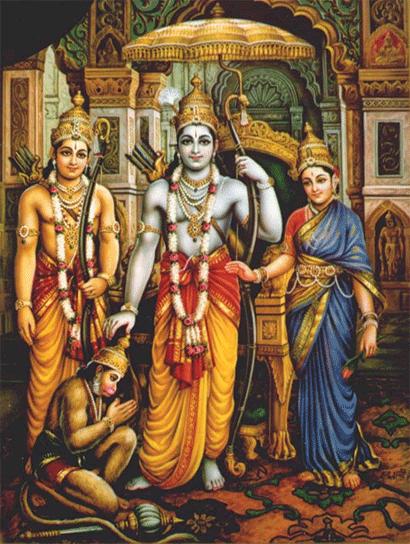
In honor of the Appearance day of Lord Ramacandra, we are posting the entire tenth chapter from the ninth Canto of Srimad Bhagavatam entitled “The Pastimes of the Supreme Lord, Rāmacandra”.
Śrīmad-Bhāgavatam
By His Divine Grace A. C. Bhaktivedanta Swami Prabhupāda
Canto Nine, Chapter Ten
More
28 Feb 2015
by The Hare Krishna Movement
in A.C. Bhaktivedanta Swami Prabhupada, Kali Yuga, Science of Self Realization
Tags: A.C. Bhaktiveanta Swami Prabhupada, dvapara-yuga, human life, Kali, Kali-yuga, satya-yuga, SB1.1.21, SB1.1.22, self realization, self-realization in the age of kali, Srimad Bhagavatam, Treta-yuga

Kali Yuga
Last week we did a post entitled In the Age of Kali and are continuing it here today. We begin with the description of the previous ages from Srimad Bhagavatam 1.1.21 followed by further descriptions of the age from text 1.1.22.
One thing that jumped out at me from my reading this morning was from the purport to text22, wherein Srila Prabhupada points out: “…people do not realize that this brief life, is but a moment on our great journey towards self-realization.” That put things in perspective for me.
This age of Kali is not at all suitable for self-realization as was Satya-yuga, the golden age, or Tretā- or Dvāpara-yugas, the silver and copper ages. For self-realization, the people in Satya-yuga, living a lifetime of a hundred thousand years, were able to perform prolonged meditation. And in Tretā-yuga, when the duration of life was ten thousand years, self-realization was attained by performance of great sacrifice. And in the Dvāpara-yuga, when the duration of life was one thousand years, self-realization was attained by worship of the Lord. But in the Kali-yuga, the maximum duration of life being one hundred years only and that combined with various difficulties, the recommended process of self-realization is that of hearing and chanting of the holy name, fame, and pastimes of the Lord. (purport SB 1.1.21)
The age of Kali is very dangerous for the human being. Human life is simply meant for self-realization, but due to this dangerous age, men have completely forgotten the aim of life. In this age, the life span will gradually decrease. People will gradually lose their memory, finer sentiments, strength, and better qualities. …And so this age is very difficult for those who want to utilize this life for self-realization. The people are so busy with sense gratification that they completely forget about self-realization. Out of madness they frankly say that there is no need for self-realization because they do not realize that this brief life is but a moment on our great journey towards self-realization. (purport 1.1.22)
Full Text and purports More
12 Feb 2015
by The Hare Krishna Movement
in A.C. Bhaktivedanta Swami Prabhupada, Chanting Hare Krishna, Mantra Meditation
Tags: A.C. Bhaktivedanta Swami Prabhupada, birth and death, chanting Hare Krishna, chanting the holy name of Kṛṣṇa, feared by fear personified, SB1.1.14, Srimad Bhagavatam
It seems there is world wide fear over the outbreak of the Coronavirus disease (COVID-19). Most people infected with the COVID-19 virus will experience mild to moderate respiratory illness and recover without requiring special treatment. Older people, such as myself , and those with underlying medical problems like cardiovascular disease, diabetes, chronic respiratory disease, and cancer are more likely to develop serious illness. But I refuse to live in fear, although we have accepted a self imposed quarantine, I have gone about my business working alone in my woodworking shop, and chanting the holy name. Hare Krishna! -V
Living beings who are entangled in the complicated meshes of birth and death can be freed immediately by even unconsciously chanting the holy name of Kṛṣṇa, which is feared by fear personified. (SB 1.1.14)
… It is stated herein that the name of Kṛṣṇa is feared even by fear personified. This indicates that the name of Kṛṣṇa is nondifferent from Kṛṣṇa. Therefore, the name of Kṛṣṇa is as powerful as Lord Kṛṣṇa Himself. There is no difference at all. Anyone, therefore, can take advantage of the holy names of Lord Śrī Kṛṣṇa even in the midst of greatest dangers. The transcendental name of Kṛṣṇa, even though uttered unconsciously or by force of circumstances, can help one obtain freedom from the hurdle of birth and death. (from purport)
Full tent and purport More
30 Jan 2015
by The Hare Krishna Movement
in A.C. Bhaktivedanta Swami Prabhupada, Varaha
Tags: A.C. Bhaktivedanta Swami Prabhupada, agni-hotra, frog-philosophers, His tusks, Lord Boar, Lord Varāha (Boar), O descendant of Bharata, O lifter of the earth, O sinless Vidura, SB 3.13, Srimad Bhagavatam, The Appearance of Lord Varaha, The sage Maitreya, Vidhura

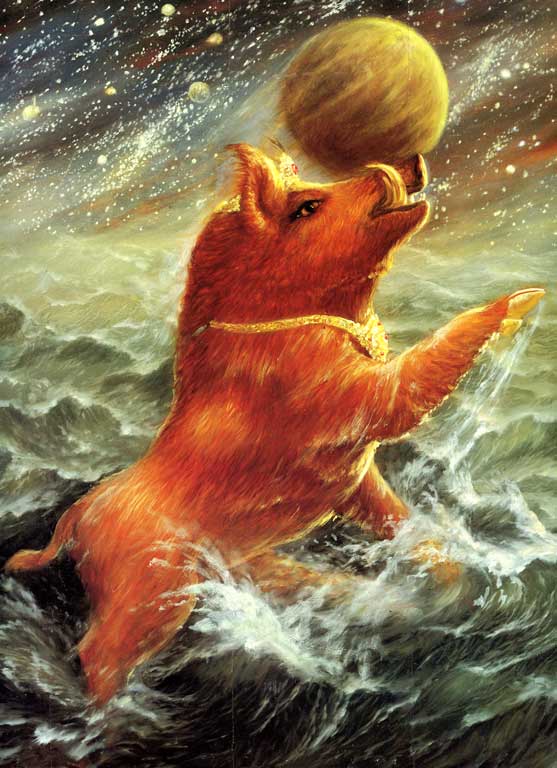
Varahadeva lifts the Earth
Today marks Bhaimi Ekadasi (fast from grains & Beans), but it is a special Ekadasi in that we fast till noon today for Varahadeva, and feast tomorrow.
In honor of the Appearance of Lord Varahadeva [Varaha Dvadasi] tomorrow, we are posting the entire chapter entitled “The Appearance of Lord Varāha” from the Srimad Bhagavatam.
Śrīmad-Bhāgavatam
By His Divine Grace A. C. Bhaktivedanta Swami Prabhupāda
Canto Three, Chapter 13
The Appearance of Lord Varāha
More
25 Jan 2015
by The Hare Krishna Movement
in A.C. Bhaktivedanta Swami Prabhupada, Srimad Bhagavatam, Time
Tags: A.C. Bhaktivedanta Swami Prabhupada, Asita, Atri, Bṛhadaśva, Bharadvāja and Paraśurāma and disciples, Dhaumya, Gautama, Gṛtsamada, Hūṇa, Indrapramada, Kakṣīvān, Kauśika, Kirāta, Mahabhrata, members of the Khasa races, Narada, Parvata Muni, Pulinda, Pulkaśa, SB 1.9.6-7, SB 2.4.18, Srimad Bhagavatam, Trita, Vasiṣṭha, Vyāsa the incarnation of God, Yavana, Śumbha, Ābhīra, Āndhra

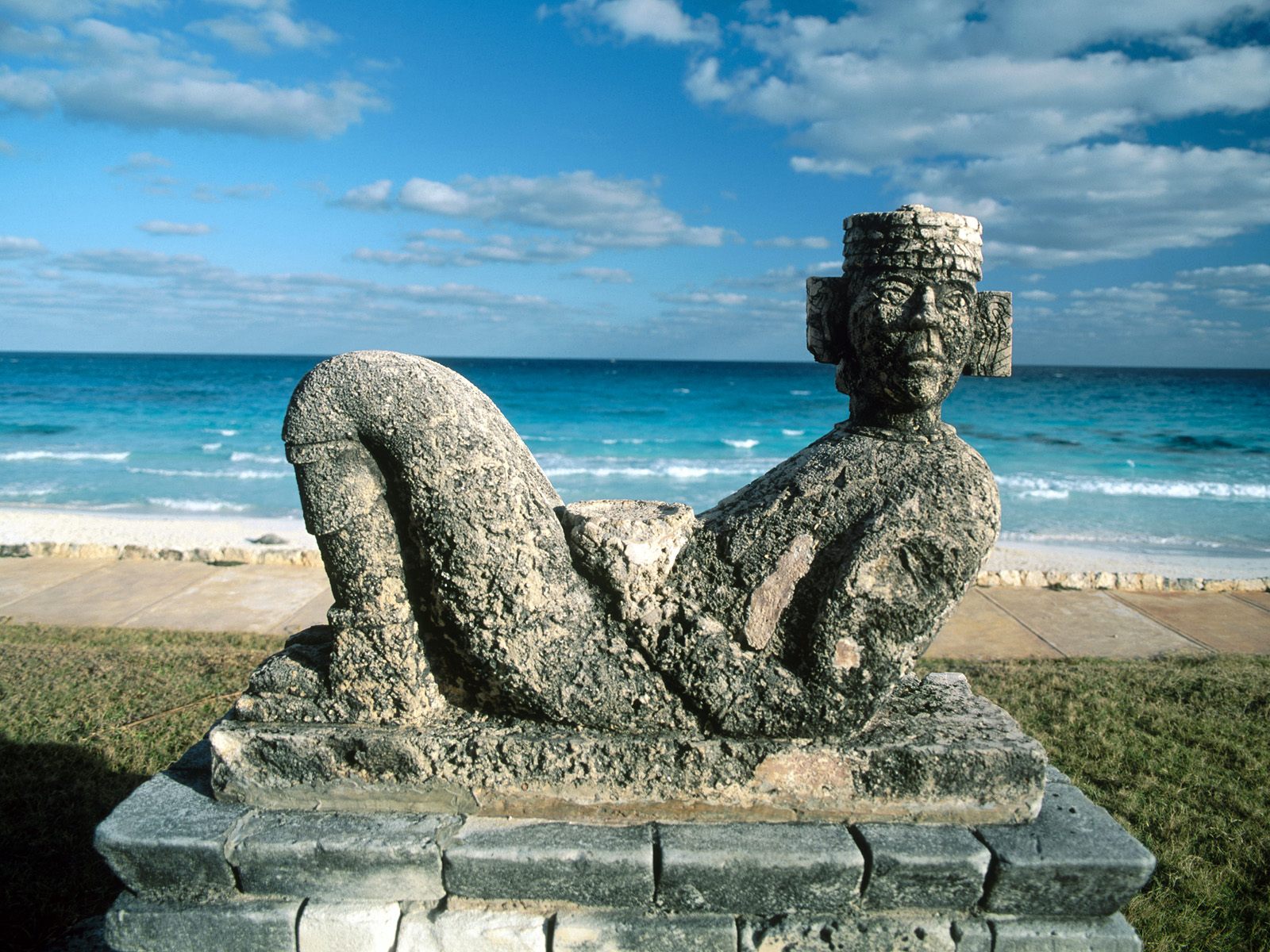
One thing I have often found interesting when reading books like the Srimad Bhagavatam and the Maha Bharata, is how far back the recorded oral histories go. Often Millions of Years. On our last visit to Mexico we were learning some about the Mayan culture, and how Millions of people vanished some 5,000 years ago. Which happens to coincide with the ancient Battle of Kurukestra which took place in India.
Also Srila Prabhupada has mentioned so many places in his books about how at one time, all the different parts of the world were ruled by one king.
…In the modern age people are under the impression that during the Vedic period or the prehistoric ages America and many other parts of the world had not been discovered, but that is not a fact. Pṛthu Mahārāja ruled over the world many thousands of years before the so-called prehistoric age, and it is clearly mentioned here that in those days not only were all the different parts of the world known, but they were ruled by one king, Mahārāja Pṛthu. (from purport to SB 4.21.12)
An interesting link ended up in my mailbox this morning which I share with all of you describing some of the common spiritual cultures on differing sides of the world.
Baffling Links to Ancient India: History is full of misnomers; one such term is the New World, as applied to the Americas. The landing of Columbus in 1492 undoubtedly created a new life on the continents, but it neither created nor discovered a new world. Many centuries ago Asian migrants had come to the western shore in substantial numbers. What if the popular idea that Tibetans and American Indians have much in common in terms of their spiritual culture is largely a result of another historical scenario?
What if Hindus and Hopis, Advantins and Aztecs, Tibetan Monks and Mayans were part of one world culture – a spiritual one?
Click on Link Links to Ancient India for more information
We also include a few brief excerpts form the Srimad Bhagavatam describing this one world culture which existed thousands of years ago.
More
18 Jan 2015
by The Hare Krishna Movement
in A.C. Bhaktivedanta Swami Prabhupada, Chapter a Day
Tags: A. C. Bhakthvedanta Swami Prabhupada, bhagavad-gita, Brahma, brahmaji, Cause of All Causes, chad, chapter a day, demigod, disciplic succession, jnanam, Krsna, Lord Brahma, Narada, Narada Muni, parampara system, quailified spiritual master, Srila Prabhupada, Srimad Bhagavatam, transcendental knowledge, Vedic literture
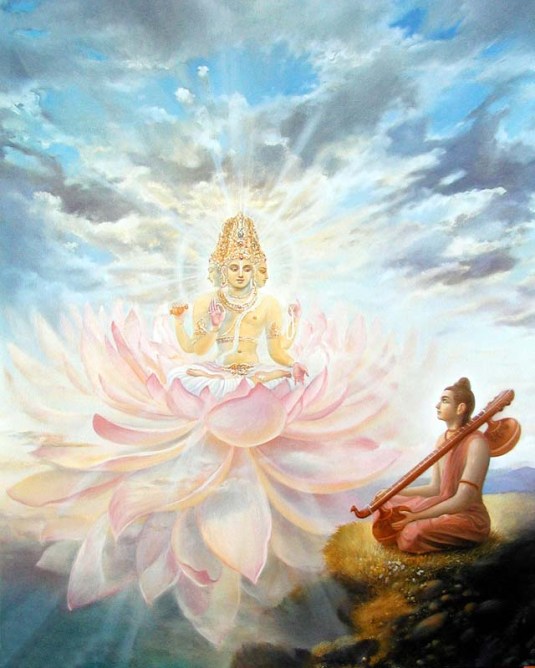
As we continue to update one of our other sites Śrīmad-Bhāgavatam by posting a chapter at a time, of that great literary work by His Divine Grace Srila Prabhupada, we will continue to share the progress with our readers here at The Hare Krishna Movement.
Śrīmad-Bhāgavatam: Canto 2: “The Cosmic Manifestation”
By His Divine Grace A. C. Bhaktivedanta Swami Prabhupāda
Canto Two, Chapter 5
More
09 Jan 2015
by The Hare Krishna Movement
in A.C. Bhaktivedanta Swami Prabhupada, Prahlada Maharaja, Srila Prabhupada's Books, Srimad Bhagavatam
Tags: A. C. Bhakthvedanta Swami Prabhupada, books by Srila Prabhupada, even though irregularly composed, fame, form and pastimes of the unlimited Supreme Lord, impious life, kaumara acaret pranjo, misdirected civilization, Preface to Srimad Bhagavatam, SB.7.6.1, sri prahrada uvaca, Srimad Bhagavatam, that literature which is full with descriptions of the transcendental glories of the name, transcendental literature
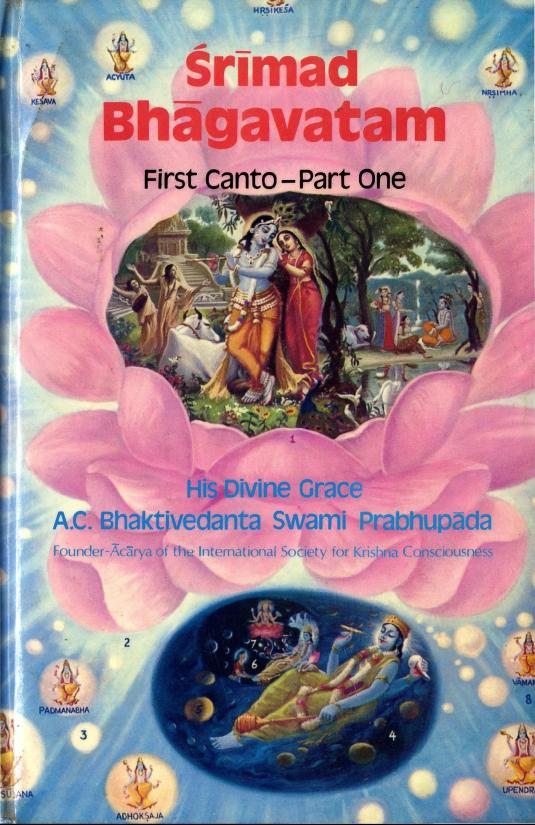
It seems that every time I start a new volume of the Srimad Bhagavatam, I open it and read the Preface first. I must have read the preface now many times, but every time I read it, it seems fresh and new. One could argue that it because my memory is poor, or, that is just the nature of transcendental literature. But what is interesting is to me this morning, is how I never looked up the verse that Srila Prabhupada quotes in his Preface:
kaumāra ācaret prājñodharmān bhāgavatān ihadurlabhaṁ mānuṣaṁ janmatad apy adhruvam arthadam (Bhāg. 7.6.1)
This morning I was curious, so I went to the Seventh Canto, Chapter 6, Text 1, and it read:
Prahlāda Mahārāja said: One who is sufficiently intelligent should use the human form of body from the very beginning of life—in other words, from the tender age of childhood—to practice the activities of devotional service, giving up all other engagements. The human body is most rarely achieved, and although temporary like other bodies, it is meaningful because in human life one can perform devotional service. Even a slight amount of sincere devotional service can give one complete perfection.
Full text and purport follows the Preface More
06 Jan 2015
by The Hare Krishna Movement
in A.C. Bhaktivedanta Swami Prabhupada, Chapter a Day, Srimad Bhagavatam
Tags: A. C. Bhakthvedanta Swami Prabhupada, accepting the shelter of a bona fide spiritual master, Asvatthama, atomic bomb, Bhaktivedanta purports, Brahma, brahmastra, causless mercy, chad, chapter a day, chaste, creation of material world, existing, Krsna, Maharaja Pariksit, material world, satim, SB. 2.4, spiritual master, Srimad Bhagavatam, Sukadiva Gosvami, Suta Gosvami, suta uvaca, the process of creation, uttara
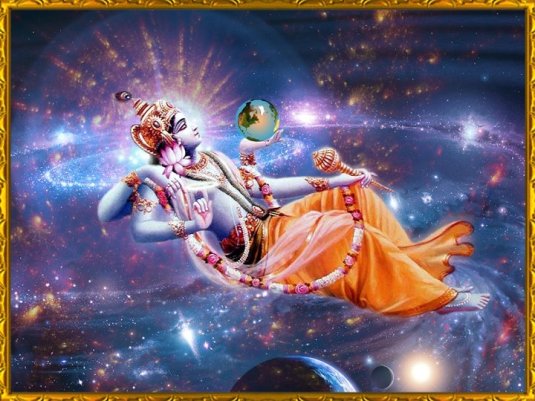
click on image to enlarge
As we continue to update our (one of our other sites) Śrīmad-Bhāgavatam by posting a chapter at a time, of that great literary work by His Divine Grace Srila Prabhupada, we will continue to share the progress with our readers here at The Hare Krishna Movement.
Śrīmad-Bhāgavatam
By His Divine Grace A. C. Bhaktivedanta Swami Prabhupāda
Canto Two, Chapter Four
The Process of Creation
More
09 Dec 2014
by The Hare Krishna Movement
in A.C. Bhaktivedanta Swami Prabhupada, B. G. Sharma Art, Krishna Consciousness, Krsna, Krsna Consciousness, Srimad Bhagavatam
Tags: A.C. Bhaktivedanta Swami Prabhupada, Arjuna, arjuna's arrows, awakened to love of God, Battlefield of Kurukṣetra, Goloka Vrndavana, Krsna, lotuslike face of Krsna, love of God, material contaminations, pleasing to the eyes of the seer, SB3.2.20, spiritual sky, Srimad Bhagavatam, the beauty of the Lord, transcendental sky, Vaikuntha planets

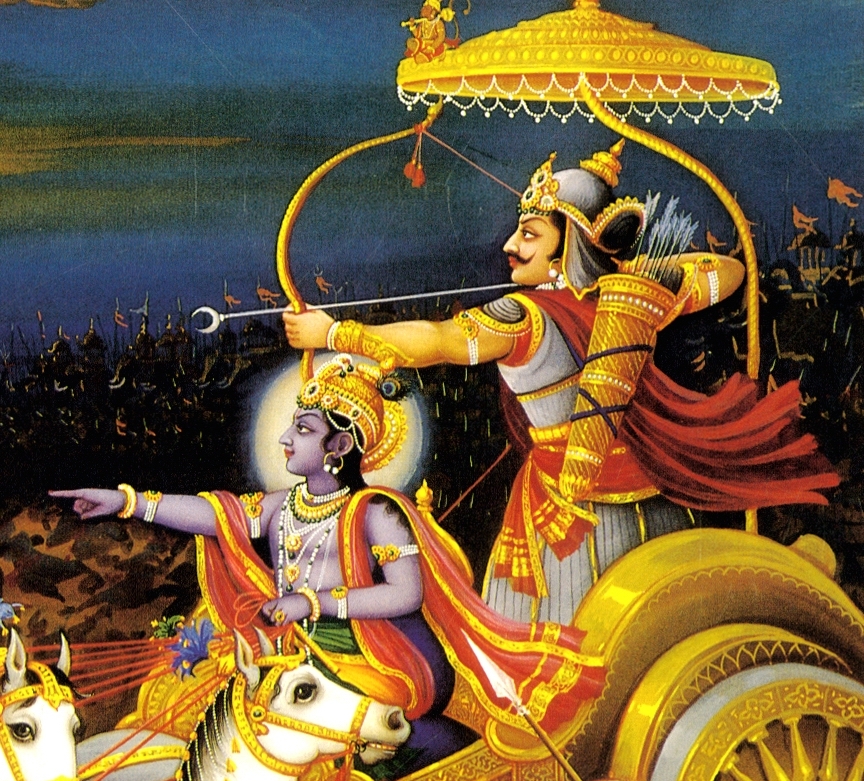
Certainly others who were fighters on the Battlefield of Kurukṣetra were purified by the onslaught of Arjuna’s arrows, and while seeing the lotuslike face of Kṛṣṇa, so pleasing to the eyes, they achieved the abode of the Lord. (SB 3.2.20)
This morning as I was reading from the Srimad-Bhagavatam, the words “pleasing to the eyes of the seer” jumped out at me. And I was reminded again how just by appreciating the beauty of the Lord, one can attain success in life, as the following purport explains.
“…All the warriors who fought against Arjuna but who were able to see the lotuslike face of the Lord on the battlefront achieved the abode of the Lord, exactly as the devotees of the Lord do. The words “pleasing to the eyes of the seer” are very significant. When the warriors from the other side of the battlefield saw Lord Kṛṣṇa at the front, they appreciated His beauty, and their dormant instinct of love of God was awakened.
This love of God is awakened by the association of pure devotees of the Lord… Those who saw the beautiful face of the Lord on the Battlefield of Kurukṣetra were purified first by Arjuna when he made his onslaught with arrows… All the activities of a pure devotee are executed on behalf of the Lord because a pure devotee of the Lord has nothing to do for his personal interest. Arjuna’s killing was as good as killing by the Lord Himself. As soon as Arjuna shot an arrow at an enemy, that enemy became purified of all material contaminations and became eligible to be transferred to the spiritual sky… those who awakened to love of God were transferred to the planets of the transcendental sky.
Those whose love of God is awakened to the fullest extent go back to the Goloka Vṛndāvana planet in the spiritual sky, whereas persons who have just awakened to love of Godhead by accident or association are transferred to the Vaikuṇṭha planets. Essentially there is no material difference between Goloka and Vaikuṇṭha, but in the Vaikuṇṭhas the Lord is served in unlimited opulence, whereas in Goloka the Lord is served in natural affection.” (from purport to SB 3.2.20)
Full Text and Purport More
04 Dec 2014
by The Hare Krishna Movement
in A.C. Bhaktivedanta Swami Prabhupada, Gopis, Vrindavan, Vrndavana
Tags: A.C. Bhaktivedanta Swami, ecstasy, gopis, great demigods like Brahma and Siva, krsna and the gopis, Lord Krsna, notorious as a teasing friend, Prabhupada books, SB3.2.14, Srimad Bhagavatam, The damsels of Vraja, transcendental love, unalloyed affection, Vrindaban, Vrndavana

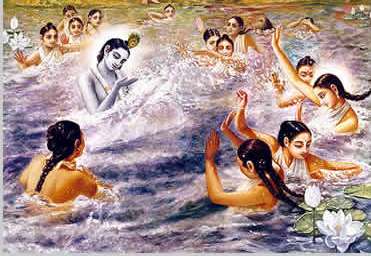
…In His boyhood at Vṛndāvana, Lord Kṛṣṇa was notorious as a teasing friend in transcendental love to all the girls His age. His love for them was so intense that there is no comparison to that ecstasy, and the damsels of Vraja were so much attached to Him that their affection excelled that of the great demigods like Brahmā and Śiva. Lord Kṛṣṇa finally admitted His defeat before the transcendental affection of the gopīs and declared that He was unable to repay them for their unalloyed affection. (from purport SB 3.2.14)
More
Previous Older Entries Next Newer Entries









 The Hare Krishna Movement