07 Aug 2014
by The Hare Krishna Movement
in A.C. Bhaktivedanta Swami Prabhupada, Letters by Srila Prabhupada, Mukunda das Goswami, Spiritual Master, Spiritual World
Tags: A.C. Bhaktivedanta Swami Prabhupada, Krishna, Krishna Loka, letters by prabhupada, liberated person, Lord Caitanya, Mukunda dasa, resident of Krishna Loka, spiritual master, Srila Prabhupada
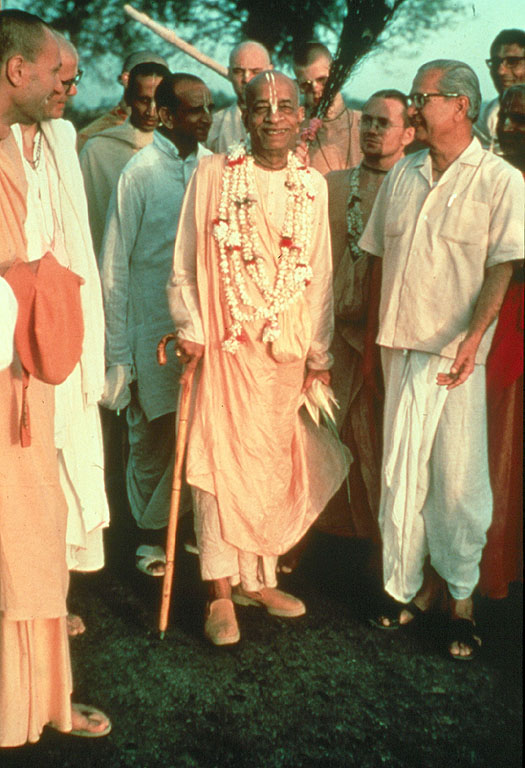
…Unless one is a resident of Krishna Loka, one cannot be a Spiritual Master. That is the first proposition. A layman cannot be a Spiritual Master, and if he becomes so then he will simply create disturbance. And who is a liberated person? One who knows Krishna. It is stated in BG, fourth chapter, anyone who knows Krishna in truth is immediately liberated, and after quitting the present body, he immediately goes to Krishna. That means he becomes a resident of Krishna Loka. As soon as one is liberated he is immediately a resident of Krishna Loka, and anyone who knows the truth of Krishna can become Spiritual Master. That is the version of Lord Caitanya. So to summarize the whole thing, it is to be understood that a bona fide Spiritual Master is a resident of Krishna Loka. (Letter to Mukunda June 10, 1969)
Full letter More
07 Aug 2014
by The Hare Krishna Movement
in Letters by Srila Prabhupada, Madhudvisa das (ACBSP)
Tags: A.C. Bhaktivedanta Swami Prabhupada, Australia Sankirtan, feild for dancing, letters by prabhupada, Madhudvisa dasa, Madhudvisa Swami, Michael Morrissey, sankirtan, Srila Prabhupada
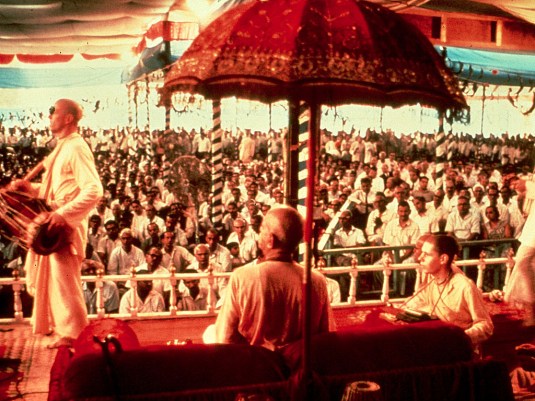
…I have no objection if you feel like going to Australia for heading up the Sankirtana party there and managing things in general….You can go to Australia, there you have got enough field for your dancing. (Letter to Madhudvisa dasa April 26, 1972)
More
06 Aug 2014
by The Hare Krishna Movement
in Iskcon Bangalore, Madhu Pandit das, Temples, The Hare Krishna Movement
Tags: A.C. Bhaktivedanta Swami Prabhupada, Chanchalapathi dasa, Indias tallest temple for Krishna, ISKCON Bangalore, largest religious structure in India, Madhu Pandit dasa, sacred edificice, Sri Krishna, Vrindavan Chandrodaya Mandir, Vrindavan Mathura district

Vrindavan to have India’s tallest temple for Krishna
“Just like we have got a tendency to construct a skyscraper building. As in your country, you do. So you should not be attached to the skyscraper building, but you can utilize the tendency by constructing a big temple like skyscraper for Krishna. In this way, you have to purify your material activities.”(Srila Prabhupada in a class in front of the samadhi of Srila Rupa Gosvami in Vrindavan, Oct 29th, 1972)
“This is Krishna conscious vision: ‘Oh, there are so many skyscrapers. Why not construct a nice skyscraper temple of Krishna?’ This is Krishna consciousness.” (Srila Prabhupada lecture in Bombay, Feb 25th, 1974)
VRINDAVAN/MATHURA: A 210-metre-high temple is soon going to change the skyline of Vrindavan in Mathura district. The project, whose foundation stone will be laid on March 16, has been conceived by Madhu Pandit Dasa, president of ISKCON, Bangalore, and will consist of a grand temple of Sri Krishna at its centre and many other interesting elements around it. Poised to be the tallest and largest religious structure in India, the monumental temple, named the Vrindavan Chandrodaya Mandir, with a footprint of about four and a half acres and a built-up area of 540,000 square feet, will integrate elements of modern architecture with traditional Indian temple architecture.
for more images of temple go to; Vrindavan Chandrodaya Mandir
More
05 Aug 2014
by The Hare Krishna Movement
in A.C. Bhaktivedanta Swami Prabhupada, Bhagavad-gita, Soul
Tags: A.C. Bhaktivedanta Swami Prabhupada, Arjuna, Bg2.12, Bg2.30, bhagavad-gita, boyhood to youth to old age, dehino smin yatha dehe, eternal soul, ever existing soul, for the soul there is never birth or death, Krsna, krsna consciousness, reincarnation, science of the soul science of self realization, soul, soul passes into another body, soul slokas, Srila Prabhupada, unborn
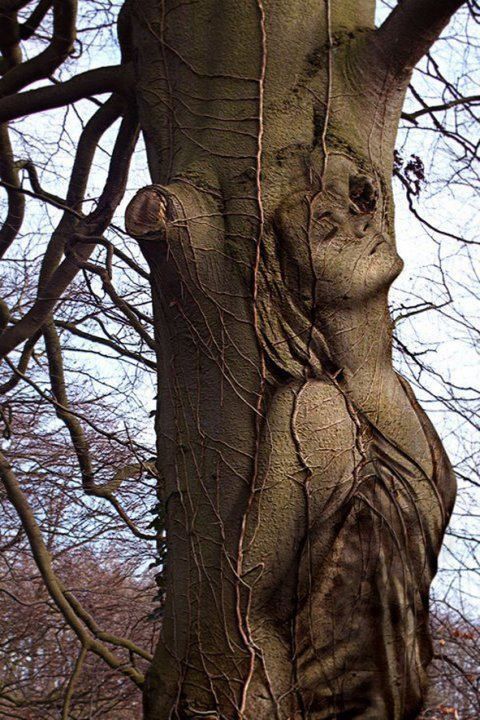
This morning I was thinking about the soul and its eternal journey. So I went to Srila Prabhupada’s Bhagavad-gita As It Is and found some of the important slokas that pertained to the subject of the soul.
As the embodied soul continually passes, in this body, from boyhood to youth to old age, the soul similarly passes into another body at death. The self-realized soul is not bewildered by such a change. (Bg. 2.13)
For the soul there is never birth nor death. Nor, having once been, does he ever cease to be. He is unborn, eternal, ever-existing, undying and primeval. He is not slain when the body is slain. (Bg. 2.20)
As a person puts on new garments, giving up old ones, similarly, the soul accepts new material bodies, giving up the old and useless ones. (Bg. 2.22)
The soul can never be cut into pieces by any weapon, nor can he be burned by fire, nor moistened by water, nor withered by the wind. (Bg. 2.23)
More
27 Jul 2014
by The Hare Krishna Movement
in A.C. Bhaktivedanta Swami Prabhupada, B. G. Sharma Art, Cow Protection
Tags: 68-06-14, A.C. Bhaktivedanta Swami Prabhupada, cow protection, cowherd friends, Krishna and Balarama, Letter to Hayagriva, Nanda Maharaja, New Vrindaban, protection of the cows and bulls, vaisya community

click on image to enlarge
…The community in which Krishna preferred to belong was Vaisya community, because Nanda Maharaja happened to be a Vaisya king, or landholder, and his main business was cow protection. It is understood that he had 900,000 cows and Krishna and Balarama used to take charge of them, along with His many cowherd boy friends, and every day, in the morning He used to go out with His friends and cows into the pasturing grounds.
We have to maintain the animals throughout their life. We must not make any program for selling them to the slaughterhouses. That is the way of cow protection. Krishna by His practical example taught us to give all protection to the cows and that should be the main business of New Vrindaban. Vrindaban is also known as Gokula. Go means cows, and kula means congregation. Therefore the special feature of New Vrindaban will be cow protection, and by doing so, we shall not be loser. In India of course, a cow is protected and the cowherdsmen they derive sufficient profit by such protection. (Letter to Hayagriva June 14, 1968)
Full letter More
26 Jul 2014
by The Hare Krishna Movement
in A.C. Bhaktivedanta Swami Prabhupada, Festivals, Krishna Consciousness, Krishna Consciousness Movement, Krsna Consciousness
Tags: A.C. Bhaktivedanta Swami Prabhupada, Hare Krishna, human being, jagannatha svami, krsna consciousness, Kuruksetra, philosophy of Krsna Consciousness, prabhupada, Ratha Yatra Festival, Ratha yatra lecture, Ratha-yatra, San Francisco Ratha yatra, solar eclipse, The Hare Krishna Movement

…So if we want to have eternal life, full of knowledge and blissfulness, then we must take to Kṛṣṇa consciousness. Our, this Kṛṣṇa consciousness movement is the greatest welfare activities in the human society. We are giving information to every man, without any discrimination of cast, creed, or color, that every human being especially, not only human being, all living entities, including the animals, beasts, birds, trees, aquatics—everyone—they can achieve to the highest perfection of life by this Kṛṣṇa consciousness. But especially the extra intelligence of the human being can be utilized to realize Kṛṣṇa. If we don’t do that, we are missing a great opportunity. So our request to everyone is to understand this philosophy of Kṛṣṇa consciousness. (Ratha-yātrā Lecture, June 27, 1971, San Francisco)
Full Lecture More
22 Jul 2014
by The Hare Krishna Movement
in A.C. Bhaktivedanta Swami Prabhupada, Srimad Bhagavatam
Tags: A.C. Bhaktivedanta Swami Prabhupada, Bhagavata-dharma, Brahmaloka, conditioned souls, fruitive activities, heavenly planets, incarnation, kingdom of God, Krsna, Lord Brahma, material ezistence, material world, meditate upon the virat-rupa, Patalaloka, phantasmagoria, Spiritual world, sri suka uvaca, Sri Sukadeva Gosvami, Srimad Bhagavatam, The Lord in the Heart, virat-rupa
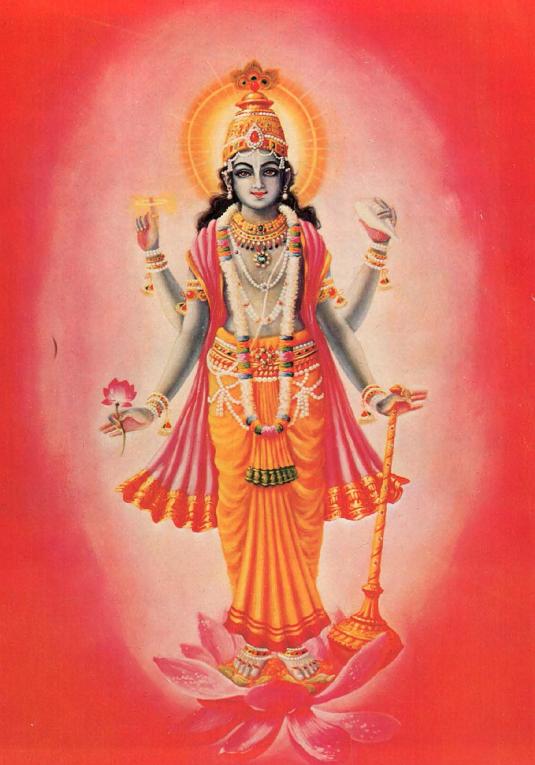
Śrīmad-Bhāgavatam
By His Divine Grace A. C. Bhaktivedanta Swami Prabhupāda
Canto Two, Chapter 2
The Lord in the Heart
Full Chapter More
19 Jul 2014
by The Hare Krishna Movement
in A.C. Bhaktivedanta Swami Prabhupada, Krishna Consciousness, Krishna Nectar, Krsna Consciousness, KRSNA The Supreme Personality of Godhead, Vaisnava Vocabulary
Tags: A.C. Bhaktivedanta Swami Prabhupada, chanting Krsna, cowheard boys, hearing and chanting about Krsna, Krsna Book, krsna consciousness, krsna nectar, Krsna the suporeme personality of godhead, nityanavanavayamana, transcendental subject matter

I am so much enjoying my reading of the Krsna Book every morning. Although I have read and re-read it so many times before, it is more relishable with each new reading.
It is said that it is the nature of a devotee to constantly apply his mind, energy, words, ears, etc., in hearing and chanting about Kṛṣṇa. This is called Kṛṣṇa consciousness, and for one who is rapt in hearing and chanting Kṛṣṇa, the subject matter never becomes hackneyed or old. That is the significance of transcendental subject matter in contrast to material subject matter. Material subject matter becomes stale, and one cannot hear a certain subject for a long time; he wants change. But as far as transcendental subject matter is concerned, it is called nityanavanavāyamāna. This means that one can go on chanting and hearing about the Lord and never feel tired but will remain fresh and eager to hear more and more.
It is the duty of the spiritual master to disclose all confidential subject matter to the inquisitive and sincere disciple.
And thus in the Krsna Book, Srila Prabhupada reveals the activities of the Supreme Person Krsna as is evident from the following excerpt:
More
17 Jul 2014
by The Hare Krishna Movement
in A.C. Bhaktivedanta Swami Prabhupada, Demons, Krishna Nectar, KRSNA The Supreme Personality of Godhead
Tags: A.C. Bhaktivedanta Swami Prabhupada, Aghasura, aghasura demon, demon, inhabitants of Vrndavana, Krsna, Krsna and Balarama, Krsna Book, Krsna The Supreme Personality of Godhead, mahima, mahima-siddhi, mystic powers, Vrndavan, yoga system, yogic siddhi
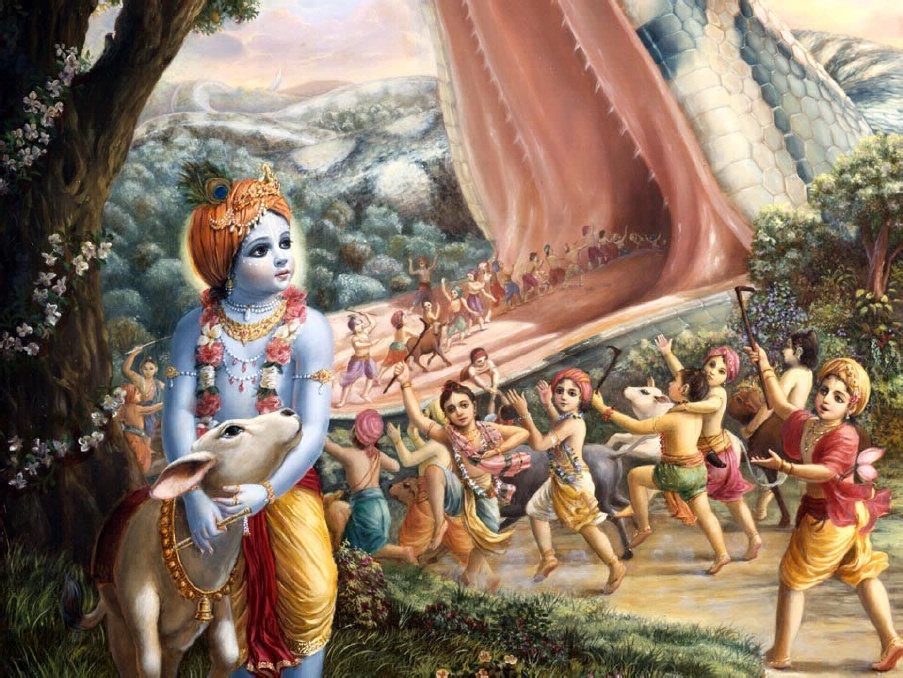
click on image to enlarge
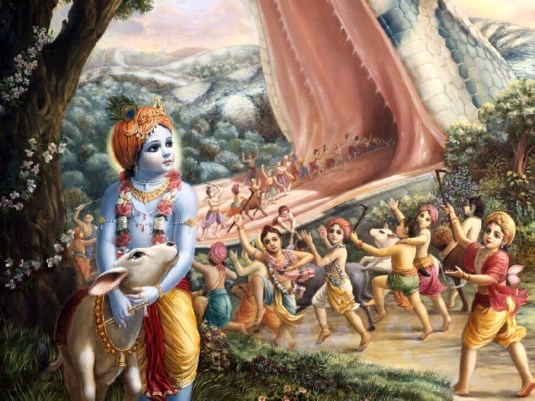
This is one of my favorite stories from the Krsna Book. I always enjoyed how fearless the cowherd boys were. They were free of any fear. This is the benefit of Krsna Consciousness; “Any material arrangement for protecting oneself from death is always unsure, but if one is in Kṛṣṇa consciousness, then immortality is confidently assured.”
…Aghāsura, thus deciding to kill all the inhabitants of Vṛndāvana, expanded himself by the yogic siddhi called mahimā. The demons are generally expert in achieving almost all kinds of mystic powers. In the yoga system, by the perfection called mahimā-siddhi, one can expand himself as he desires. The demon Aghāsura expanded himself up to eight miles and assumed the shape of a very fat serpent. Having attained this wonderful body, he stretched his mouth open just like a mountain cave. Desiring to swallow all the boys at once, including Kṛṣṇa and Balarāma, he sat on the path.
The demon in the shape of a big fat serpent expanded his lips from land to sky; his lower lip was touching the ground, and his upper lip was touching the clouds. His jaws appeared like a big mountain cave, without limitation, and his teeth appeared just like mountain summits. His tongue appeared to be a broad traffic way, and he was breathing just like a hurricane. His eyes were blazing like fire. At first the boys thought that the demon was a statue, but after examining it they saw that it was a big serpent lying down on the road and widening his mouth. The boys began to talk among themselves: “Dear friends, this figure appears to be a great animal, and he is sitting in such a posture just to swallow us all. Just see—is it not a big snake that has widened his mouth to eat all of us?”
More
16 Jul 2014
by The Hare Krishna Movement
in A.C. Bhaktivedanta Swami Prabhupada, Meditation, Srimad Bhagavatam
Tags: A.C. Bhaktivedanta Swami Prabhupada, form of the lord, lotus feet of the Lord, meditation, meditation upon the lotus feet, rasa dance, virat rupa form
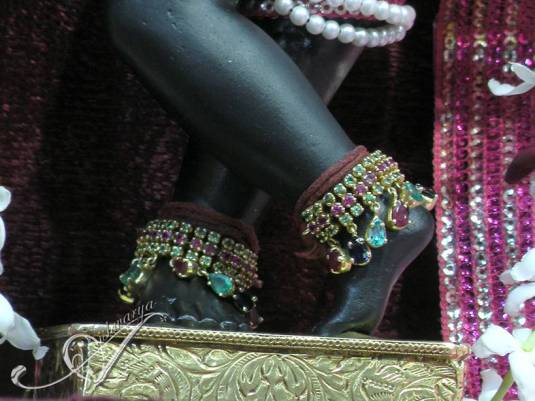
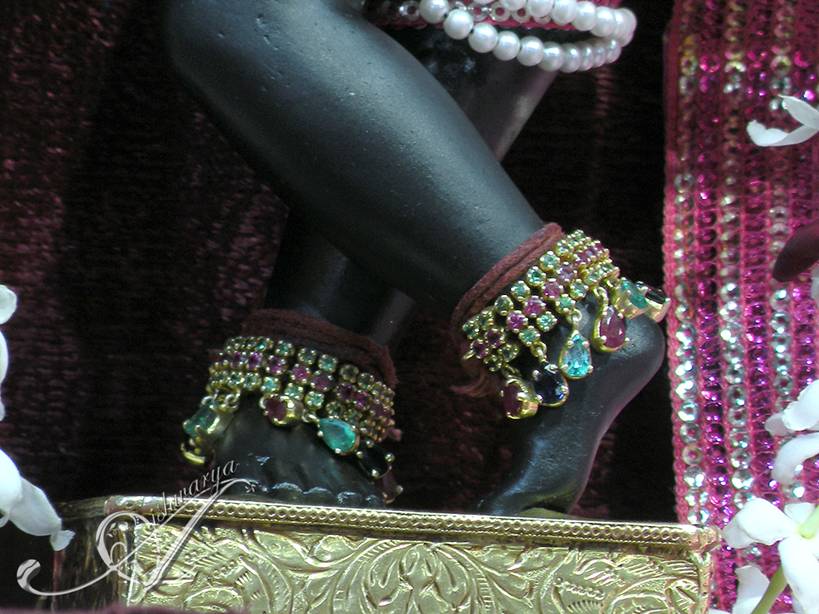
…The process of meditation recommended in the Śrīmad-Bhāgavatam is not to fix one’s attention on something impersonal or void.
The process of meditation should begin from the lotus feet of the Lord and progress to His smiling face. The meditation should be concentrated upon the lotus feet, then the calves, then the thighs, and in this way higher and higher. The more the mind becomes fixed upon the different parts of the limbs, one after another, the more the intelligence becomes purified. (SB 2.2.13)
More
12 Jul 2014
by The Hare Krishna Movement
in A.C. Bhaktivedanta Swami Prabhupada, Nectar of Devotion, Nectar of Devotion
Tags: A.C. Bhaktivedanta Swami Prabhupada, Acyutananda, bhakti, bhakti means devotional service, Gurudas, Janaki, lecture on Nectar of Devotion, Malati, Mukunda, Nectar of Devotion, prabhupada, Srila Prabhupada, Syamasundara, Yamuna

click on image to enlarge
The Nectar of Devotion
given by His Divine Grace A. C. Bhaktivedanta Swami Prabhupada
Vṛndāvana, October 16, 1972
Pradyumna (reading): “The Nectar of Devotion is a summary study of Bhakti-rasāmṛta-sindhu, which was written in Sanskrit by Śrīla Rūpa Gosvāmī Prabhupāda. He was the chief of the six Gosvāmīs who were the direct disciples of Lord Caitanya Mahāprabhu. When he first met Lord Caitanya, Śrīla Rūpa Gosvāmī Prabhupāda was engaged as a minister in the Muhammadan government of Bengal. He and his brother Sanātana were then named Sākara Mallika and Dabira Khāsa respectively, and they held responsible posts as ministers of Nawab Hussain Shah. At that time, five hundred years ago, the Hindu society was very rigid and if a member of the brāhmaṇa caste accepted the service of a Muhammadan ruler he was at once rejected from brāhmaṇa society. That was the position of the two brothers, Dabira Khāsa and Sākara Mallika. They belonged to the highly situated sārasvata-brāhmaṇa…”
More
11 Jul 2014
by The Hare Krishna Movement
in A.C. Bhaktivedanta Swami Prabhupada, B. G. Sharma Art, Bhagavad-gita
Tags: A.C. Bhaktivedanta Swami Prabhupada, Arjuna, Bg2.10, Bg2.11, Bg2.12, bhagavad-gita, God, illusion, impersonal Brahman, individual soul, Krsna, maya, mayavadi theory, saintly persons, Sharaman, supreme authority, Supreme Lord, the blessed Lord said, The Krishna Art of B. G. Sharma

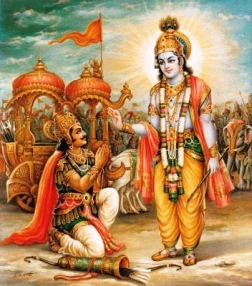
click on image to enlarge
…at that time Kṛṣṇa, smiling, in the midst of both the armies, spoke the following words to the grief-stricken Arjuna.
The Blessed Lord said: While speaking learned words, you are mourning for what is not worthy of grief. Those who are wise lament neither for the living nor the dead.
Never was there a time when I did not exist, nor you, nor all these kings; nor in the future shall any of us cease to be. (Bg. 2.10-12)
Full text and purports More
10 Jul 2014
by The Hare Krishna Movement
in A.C. Bhaktivedanta Swami Prabhupada, Spiritual Master, Srila Prabhupada, Srimad Bhagavatam
Tags: A.C. Bhaktivedanta Swami Prabhupada, captain of the ship, good navigator, guru, human form of life, instructions of Krsna, mercy of Krsna, ocean of nescience, spiritual master, Srila Prabhupada, srila prabhupada's murti, strong boat
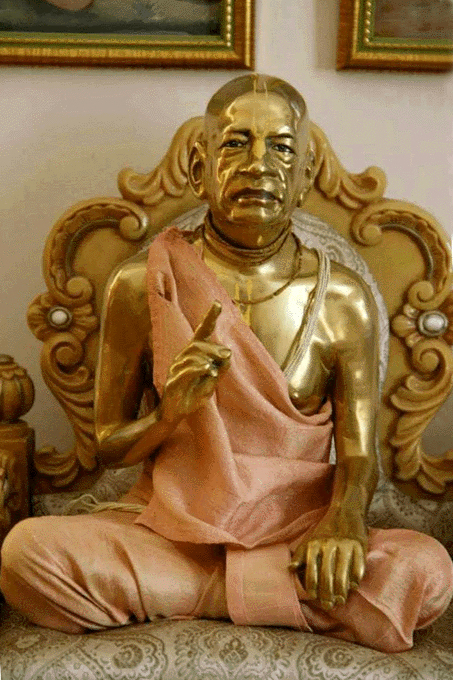
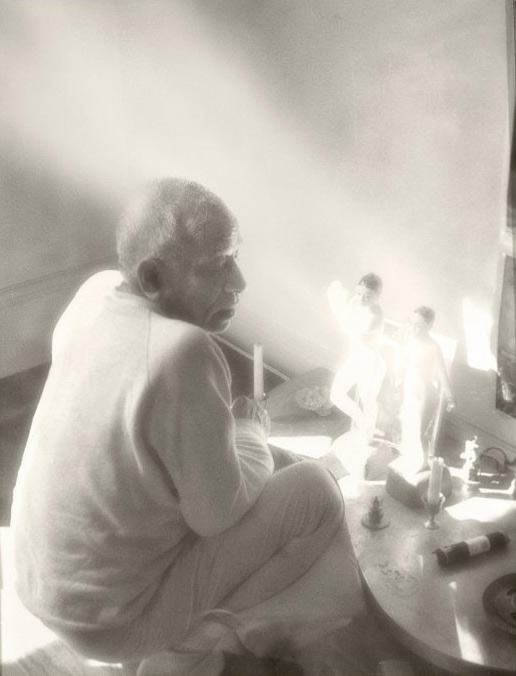
This morning I saw this image of Srila Prabhupada’s murti while I was surfing on Sampradaya Sun. I like it very much and just wanted to include it here on our page.
…When one wants to cross a large ocean, he requires a strong boat. It is said that this human form of life is a good boat by which one can cross the ocean of nescience. In the human form of life one can obtain the guidance of a good navigator, the spiritual master. One also gets a favorable wind by the mercy of Kṛṣṇa, and that wind is the instructions of Kṛṣṇa. The human body is the boat, the instructions of Lord Kṛṣṇa are the favorable winds, and the spiritual master is the navigator. The spiritual master knows well how to adjust the sails to catch the winds favorably and steer the boat to its destination. If, however, one does not take advantage of this opportunity, one wastes the human form of life. Wasting time and life in this way is the same as committing suicide.
More
09 Jul 2014
by The Hare Krishna Movement
in A.C. Bhaktivedanta Swami Prabhupada, Bhagavad-gita, Spiritual World, Vrindavan, Vrndavana
Tags: A.C. Bhaktivedanta Swami Prabhupada, abode of lord krsna, as it is, Bhagavad Gita, Goloka, goloka vrndavan, Krsna, sac-cid-ananda-vigraha, Spiritual Life, spiritual sky, Spiritual world, Syamasundara, Vrindavan, Vrndavana
click on image to enlarge
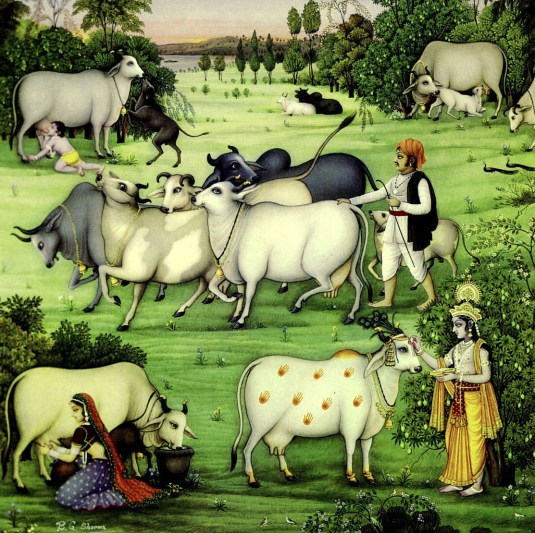
…The Lord descends to this mortal world to show His pastimes in Vṛndāvana, which are full of happiness. When Lord Śrī Kṛṣṇa was in Vṛndāvana, His activities with His cowherd boy friends, with His damsel friends, with the inhabitants of Vṛndāvana and with the cows were all full of happiness. The total population of Vṛndāvana knew nothing but Kṛṣṇa. But Lord Kṛṣṇa even discouraged His father Nanda Mahārāja from worshiping the demigod Indra because He wanted to establish the fact that people need not worship any demigod. They need only worship the Supreme Lord because their ultimate goal is to return to His abode. (from Introduction to the Bhagavad-gita As It Is)
More
06 Jul 2014
by The Hare Krishna Movement
in A.C. Bhaktivedanta Swami Prabhupada, Deity Worship, Letters by Srila Prabhupada
Tags: A.C. Bhaktivedanta Swami Prabhupada, heathenism, idol worship, installed deity, Krishna, Laksmi-Narayana, Letters by Srila Prabhupada, murtis, Radha Krishna deity, Radha-Krishna murtis, Radha-Krishna worship, regulative principles, Vrindaban

Deity Worship is so important to our preaching mission and the development of our Krsna consciousness, and there are so many letters written by Srila Prabhupada to his disciples explaining its importance. I have only posted just a very few letters here.
…Proper Deity worship, with all attention to cleanliness, is of the utmost importance. If you can please the Deity by your sincere service, then your temple will flourish. To be able to personally serve the Deity is a great privilege and such a person is very fortunate indeed. So you continue in this way and Krishna will surely bless you. (Letter to Hladini, Dec. 29, 1970)
I am very glad to learn that Harivilasa has given you a Pair of Radha Krishna Murtis, so it appears that Radha Krishna is very kind on you, because you went to Vrindaban, to live there but circumstantially, you could not live there, and you left. Krishna has given you New Vrindaban, as well as He has, out of His good will, He has come to you. It is very surprising. So please welcome the Deity and install Him in a nice throne. I think Vamanadeva will be able to prepare a nice throne, and you have seen the New York Deities’ dress and process of worship, so you can do in that way. There is nothing to be added new. The same principle should be followed, and the Deities should always be well-dressed in clothing and some ornaments and flowers and incense. The Deities should always be attractive. And the more we are engaged in decorating the Deities, washing the room, the more we are engaged in Deity worship, the more we become purified. That is practical. Brahmananda is also taking care of my Deity in New York, and he is practically experiencing and doing it. So if necessary you can take some information from him also. (Letter to Kirtananda, Sept 22, 1968)
…Actually, although Radha-Krishna is worshiped in Vrindaban which is like a simple village, but we worship Laksmi-Narayana, and the worship is accepted by the Radha-Krishna Deity. Actually, in our present status, we can not worship Radha-Krishna. But as all the Visnu Murtis are situated in Krishna, therefore, our Radha-Krishna worship is transferred to Visnu, Lord Narayana. Visnu worship is the regulative devotional principles, and Radha-Krishna worship is spontaneous service of eternal feelings. Therefore, as Laksmi-Narayana is the Deity of great opulences, similarly our Radha-Krishna Murtis also should be worshiped with great pomp and dignity. Krishna will give you the proper intelligence to do this very nicely. (Letter to Satsvarupa, Feb. 12, 1969)
… Our Deity worship is not heathenism. If we keep Forms of the Lord without worshiping the Deity under regulative principles, it will gradually turn into idol worship, which is an offense. The Deity of the Lord and the Lord Himself are identical. Krishna can act through the Deity perfectly. As I have given several times the example, the mailbox can act perfectly as the post office because it is authorized. Similarly, when the Deity is installed under authorized regulative principles, the Deity is as good as Krishna Himself. (Letter to Syamasundara, July 15, 1969)
Full Letters More
03 Jul 2014
by The Hare Krishna Movement
in A.C. Bhaktivedanta Swami Prabhupada, Lectures, Srimad Bhagavatam
Tags: A.C. Bhaktivedanta Swami Prabhupada, His messages, in everyones heart and the benefactor of the truthful, lecture on Bhagavatam, let them hear about Krsna, material enjoyment, Paramatma, Personality of Godhead, properly heard and chanted, Spiritual Life, Srila Prabhupada, srnvatam sva kathah, supersoul

click on image to enlarge
Just Give Them Chance to Hear About Krishna
I have not bribed these American and European boys to become Krishna conscious. I have no money. When I went to America, I had only seven dollars. One hour’s expenditure in New York. There is no question of bribing them. But they heard about Krishna. I was reading Bhagavad-gita on the street, in the park, and chanting. They heard, and they came to me. They became attracted. Why? (Srila Prabhupada)
Lecture by His Divine Grace A.C. Bhaktivedanta Swami Prabhupada
Srimad-Bhagavatam 1.2.17 Vrndavana, October 28, 1972
More
03 Jul 2014
by The Hare Krishna Movement
in A.C. Bhaktivedanta Swami Prabhupada, Demigod, Durga, Laksmi, Sarasvati, Srimad Bhagavatam, Uma
Tags: 1972 Edititon, A.C. Bhaktivedanta Swami Prabhupada, as it is, bhagavad-gita, demigods, God, goddess durga, goddess of fortune, goddess of learning, intelligence to see God, Laksmi, Lord Shiva, mother of the universe, Siva, Srimad Bhagavatam, Supreme Personality of Godhead, the Mother of the Universe, Uma the wife of Lord Shiva

Sarasvatī, the Goddess of Learning
click on image to enlarge
The other day I was doing some service at the Hare Krishna Temple here in New Vrindavan, West Virginia, and I ran into some Indian guests. After we greeted each other one of them asked me “when did you become a Hindu?” “I never became a Hindu” I replied, “I am a Hare Krishna devotee, a disciple of His Divine Grace A. C. Bhaktivedanta Swami Prabhupada. I am not a Hindu. I worship the Supreme Personality of Godhead Lord Kṛṣṇa.”
So just to make things a little clearer…both to myself and others, I did some research from Srila Prabhupada’s books to find the proper understanding of Goddess Worship, or worship of the demigods.
…Worship of demigods is discouraged herein because even the greatest demigods like Brahmā and Śiva only represent part of the opulence of the Supreme Lord. (Bg 10.42)
…The goddess of fortune, Lakṣmī, and all-powerful demigods like Brahmā and Śiva are engaged in the worship of Viṣṇu or Lord Kṛṣṇa; therefore who can be more powerful than Mukunda (Lord Kṛṣṇa) to be factually called the Supreme Personality of Godhead? The goddess of fortune, Lakṣmījī, Lord Brahmā and Lord Śiva are not independently powerful; they are powerful as expansions of the Supreme Lord, and all of them are engaged in the transcendental loving service of the Lord, and so also are the living entities. (from purport SB 1.18.21)
…Both the living entity and the demigods are subordinate to the will of the Supreme Personality of Godhead…not a blade of grass moves without the will of the Supreme Personality of Godhead. Generally, persons who are distressed in the material world go to the demigods, as they are advised in the Vedic literature. A person wanting some particular thing may worship such and such a demigod. For example, a diseased person is recommended to worship the sun-god; a person wanting education may worship the goddess of learning, Sarasvatī; and a person wanting a beautiful wife may worship the goddess Umā, the wife of Lord Śiva. In this way there are recommendations in the śāstras (Vedic scriptures) for different modes of worship of different demigods. And because a particular living entity wants to enjoy a particular material facility, the Lord inspires him with a strong desire to achieve that benediction from that particular demigod, and so he successfully receives the benediction. The particular mode of the devotional attitude of the living entity toward a particular type of demigod is also arranged by the Supreme Lord. The demigods cannot infuse the living entities with such an affinity, but because He is the Supreme Lord or the Supersoul who is present in the heart of all living entities, Kṛṣṇa gives impetus to man to worship certain demigods. (from purport Bg 7.21)
…Everyone thinks that his intelligence is perfect. Sometimes one employs his intelligence in the worship of Umā, the wife of Lord Śiva, in order to obtain a beautiful wife. Sometimes, when one wants to become as learned as Lord Brahmā, he employs his intelligence in the worship of the goddess of learning, Sarasvatī. Sometimes, when one wishes to become as opulent as Lord Viṣṇu, he worships the goddess of fortune, Lakṣmī.
Intelligence should be employed in the service of the Supreme Personality of Godhead. As soon as one uses his intelligence in this way, the goddess of fortune automatically becomes favorable to him. The goddess of fortune, Lakṣmī, never remains without her husband, Lord Viṣṇu. Consequently, when one worships Lord Viṣṇu he automatically obtains the favor of the goddess of fortune. (from purport SB 4.25.28)
Full text and purports from above excerpts More
01 Jul 2014
by The Hare Krishna Movement
in A.C. Bhaktivedanta Swami Prabhupada, Bhagavad-gita, Bhagavad-gita, Krsna Consciousness, Lectures
Tags: A.C. Bhaktivedanta Swami Prabhupada, as it is, Bg 9.34, bhagavad-gita, economically, God, God's party, Just always think of Me, just worship Me, krsna consciousness, lectures on Bhagavad gita, man-mana bava mad-bhakto, materialists, political field, politically, socially or religiously, spiritualism, spiritualists
Engage your mind always in thinking of Me, offer obeisances and worship Me. Being completely absorbed in Me, surely you will come to Me. (Bg 9.34)
This is perhaps my favorite sloka from the Bhagavad-gita As It Is. “Always think of Me”, this for me is the essence of Krsna consciousness. Srila Prabhupada once said that “Krsna consciousness is so simple, you can miss it”. Thinking of Krsna, is Krsna consciousness. We have posted one of two lectures Srila Prabhupada gave on this very important verse.
Bhagavad-gītā Lecture 9.34
By His Divine Grace A. C. Bhaktivedanta Swami Prabhupada
New York, December 26, 1966
Prabhupāda:
man-manā bhava mad-bhakto
mad-yājī māṁ namaskuru
mām evaiṣyasi yuktvaivam
ātmānaṁ mat-parāyaṇaḥ
[Bg. 9.34]
This śloka, this verse we have already finished. The conclusion of the Ninth Chapter of Śrīmad Bhagavad-gītā, that, the Lord says that, man-manā bhava mad-bhaktaḥ. “Just always think of Me. Just become My devotee. And, if you want to worship, just worship Me.”
Full Lecture More
29 Jun 2014
by The Hare Krishna Movement
in A.C. Bhaktivedanta Swami Prabhupada, Caaitanya-caritamrta, Sri Caitanya-Caritamrta, Srimati Radharani, Vaisnava Vocabulary
Tags: A.C. Bhaktivedanta Swami Prabhupada, ananda, aradhana, blissfulness, cit, devi, gopis The Supreme Personality of Godhead, His devotees, hladini, hladini energy, hladini-shakti, hlādinī—pleasure potency, krsna mayi, Krsna pleasure, lovely abode of Lord Krsna, pleasure potency, Radha Radhika, resplendent and most beautiful, sat, sat cit ananda, worship

click on image to enlarge
This morning there was this nagging voice that kept saying “read Adi-lila chapter 4, of the Sri Caitanya-caritamrta” I haven’t read from the Caitanya-caritamrta for a while because I was re-reading the Bhagavad-gita and Krsna Book and because it is summer, I am busy with work. But today is Sunday and my time is a bit more relaxed. So I responded to the nagging voice…and pulled Vol. 1 from the shelf. As I read I became more and more enlivened and the words jumped out at me…. Śrīmatī Rādhārāṇī, who is the attraction for the all-attractive. What is attracting the All Attractive? Srimati Radharani!
And the other thing that jumped out at me was the word hlādinī. Here is another word for your vaishnava vocabulary. So today is a two part post from the Sri Caitanya-caritamrta, describing the hladini energy, and the attractiveness of Srimati Radharani.
Lord Kṛṣṇa enchants the world, but Śrī Rādhā enchants even Him. Therefore She is the supreme goddess of all. (Adi 4.95)
Śrī Rādhā is the full power, and Lord Kṛṣṇa is the possessor of full power. The two are not different, as evidenced by the revealed scriptures. (Adi 4.96)
Śrīmatī Rādhārāṇī is as fully spiritual as Kṛṣṇa. No one should consider Her to be material. She is definitely not like the conditioned souls, who have material bodies, gross and subtle, covered by material senses. She is all-spiritual, and both Her body and mind are of the same spiritual embodiment. Because Her body is spiritual, Her senses are also spiritual. Thus Her body, mind and senses fully shine in love of Kṛṣṇa. She is the personified hlādinī-śakti (the pleasure-giving energy of the Lord’s internal potency), and therefore She is the only source of enjoyment for Śrī Kṛṣṇa.
Śrī Kṛṣṇa cannot enjoy anything that is internally different from Him. Therefore Rādhā and Śrī Kṛṣṇa are identical. The sandhinī portion of Śrī Kṛṣṇa’s internal potency has manifested the all-attractive form of Śrī Kṛṣṇa, and the same internal potency, in the hlādinī feature, has presented Śrīmatī Rādhārāṇī, who is the attraction for the all-attractive. No one can match Śrīmatī Rādhārāṇī in the transcendental pastimes of Śrī Kṛṣṇa. (from purport Adi 4.71)
…All the desires of Lord Kṛṣṇa rest in Śrīmatī Rādhārāṇī. (from purport)
Some notes on the hlādinī potency More
Previous Older Entries Next Newer Entries











 The Hare Krishna Movement