03 Mar 2013
by The Hare Krishna Movement
in A.C. Bhaktivedanta Swami Prabhupada, Lokadrsti devi, Spiritual Master, Srila Prabhupada, Srila Prabhupada Pranati
Tags: A.C. Bhaktivedanta Swami Prabhupada, His Divine Grace, Lokadrsti devi dasi, nama om visnu padaya, namas to sarasvate, Prabhupada's Vyasasana, Pranati, Srila Prabhupada, Srila Prabhupada Pranati, Vyasasana

click on image to enlarge
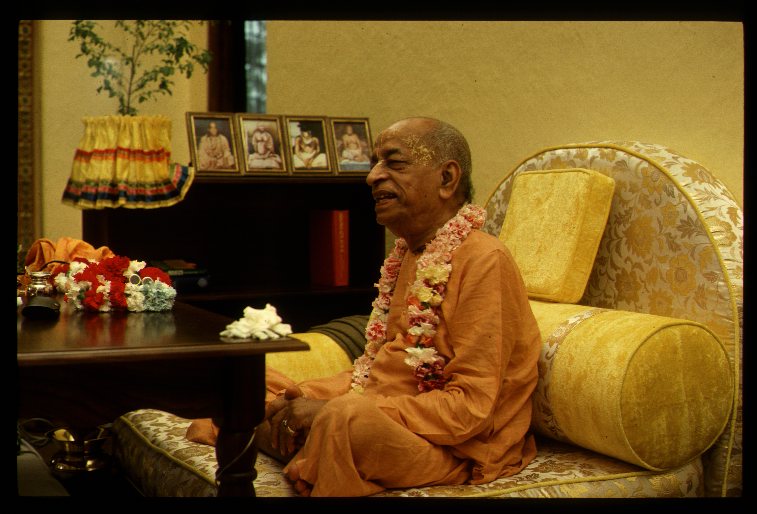
Śrīla Prabhupāda Praṇati
nama oṁ viṣṇu-pādāya kṛṣṇa-preṣṭhāya bhū-tale
śrīmate bhaktivedānta-svāmin iti nāmine
namah–obeisances; om–address;visnu-padaya–unto him who is at the feet of Lord Visnu;krsna-presthaya–who is very dear to Lord Krsna;bhu-tale–on the earth;srimate–all beautiful;bhaktivedanta-svamin–A.C. Bhaktivedanta Swami;iti–thus;namine–who is named
I offer my respectful obeisances unto His Divine Grace A. C. Bhaktivedanta Swami Prabhupāda, who is very dear to Lord Kṛṣṇa, having taken shelter at His lotus feet.
namas te sārasvate deve gaura-vāṇī-pracāriṇe
nirviśeṣa-śūnyavādi-pāścātya-deśa-tāriṇe
namah–obeisances;te–unto you;sarasvate deve-servant of Bhaktisiddhanta Sarasvati Gosvami;gaura-vani–the message of Lord Caitanya;pracarine–who are preaching;nirvisesa–impersonalism;sunyavadi–voidism;pascatya–Western;desa–countries;
tarine–who are delivering
Our respectful obeisances are unto you, O spiritual master, servant of Sarasvatī Gosvāmī. You are kindly preaching the message of Lord Caitanyadeva and delivering the Western countries, which are filled with impersonalism and voidism.
Vyasasana decorations by Lokadrsti devi dasi
02 Mar 2013
by The Hare Krishna Movement
in A.C. Bhaktivedanta Swami Prabhupada, Vaisnava Vocabulary, Vani
Tags: A.C. Bhaktivedanta Swami Prabhupada, definition of vani, His Divine Grace Srila Bhaktisiddhanta Sarasvati Thakura Prabhupada, message, teaching, the power of speach, transcendental words, vaisnava vocabulary, vani, vanipedia, vanisource, vibration, voice, words

By chance I happened upon the Vanipedia About Page this morning while researching a post for Srila Bhaktisiddhanta’s appearance day, and found this most fascinating definition of the word Vani. We can see from studying Srila Prabhupada’s books just how vast the Sanskrit language is just from the example of this one word; vāṇī. In one letter written to Tribhuvanatha in June of 1972, Srila Prabhupada writes:
“I am very much stressing nowadays that my students shall increase their reading of my books and try to understand them from different angles of vision. Each sloka can be seen from many, many angles of vision, so become practiced in seeing things like this.”
So here is a word for your Vaisnava Vocabulary with its many meanings.
“Although according to material vision His Divine Grace Śrīla Bhaktisiddhānta Sarasvatī Ṭhākura Prabhupāda passed away from this material world on the last day of December, 1936, I still consider His Divine Grace to be always present with me by his vāṇī, his words. There are two ways of association-by vāṇī and by vapuḥ. Vāṇī means words, and vapuḥ means physical presence. Physical presence is sometimes appreciable and sometimes not, but vāṇī continues to exist eternally. Therefore we must take advantage of the vāṇī, not the physical presence. The Bhagavad-gītā, for example, is the vāṇī of Lord Kṛṣṇa. Although Kṛṣṇa was personally present five thousand years ago and is no longer physically present from the materialistic point of view, the Bhagavad-gītā continues.”
Definitions of Vani
Śrīla Prabhupāda has translated vāṇī in the following ways;
vāṇī—a voice
vāṇī—injunction
vāṇī—message
vāṇī—talking
vāṇī—teachings
vāṇī—the organ of speech
vāṇī—transcendental words
vāṇī—vibration
vāṇī—words
vāṇī—words, the power of speech
and here we see the meaning when connected to other words; More
02 Mar 2013
by The Hare Krishna Movement
in A.C. Bhaktivedanta Swami Prabhupada, Bhaktisiddhanta Sarasvati Thakura, Festivals, Lectures
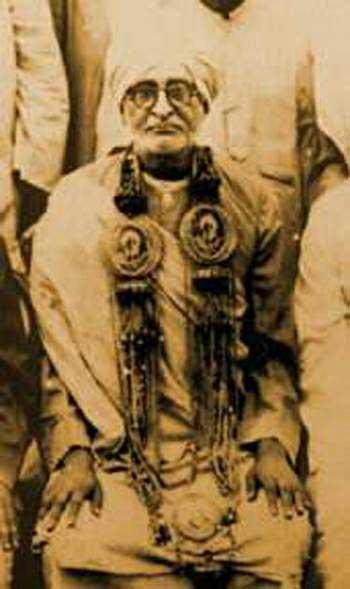
Today is the Appearance Day of His Divine Grace Srila Bhaktisiddhanta Sarasvati Gosvami, the spiritual master of our Srila Prabhupada. So we honor this event with a lecture given by A.C. Bhaktivedanta Swami Prabhupada on Srila Bhaktisiddhanta’s appearance day festival given in Mayapur, February 8, 1977.
…We should become intelligent. And to make us intelligent, Kṛṣṇa comes, Kṛṣṇa’s devotees come, some messenger comes. And Śrīla Bhaktisiddhānta Sarasvatī Ṭhākura is one of the messengers of Kṛṣṇa Caitanya Mahāprabhu to preach Kṛṣṇa consciousness. And not only he preached, but he trained up many disciples to preach this Kṛṣṇa consciousness all over the world. So by his grace we are also endeavoring to do something. This is called paramparā system.
So we should take advantage of this Vaiṣṇava mission. Our Guru Mahārāja Bhaktisiddhānta Sarasvatī Ṭhākura, he is Vaiṣṇava, cent percent Vaiṣṇava.
…Vaiṣṇava means he doesn’t want any material profit or material opulence or material reputation.
But in the material world everyone is busy for three things—material profit, material reputation, and material adoration.
This is not Vaiṣṇava’s business. Vaiṣṇava never cares for all these things. Vaiṣṇava is always thinking how to do good to the suffering humanity.
Full Lecture More
01 Mar 2013
by The Hare Krishna Movement
in A.C. Bhaktivedanta Swami Prabhupada, Bhagavad-gita, Guru & Disciple, Krishna Consciousness
Tags: A.C. Bhaktivedanta Swami Prabhupada, Arjuna, Bg 10.12-14, brahman, guru, Krishna, param brahma param dhama, pavitram paramam bhavan, spiritual master, Srila Prabhupada, Supreme Brahman, Supreme Personality of Godhead

click on image to enlarge
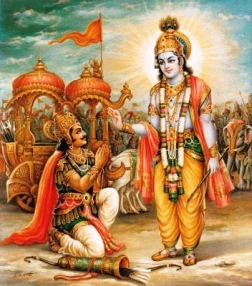
…The Bhagavad-gītā should be taken up in a spirit of devotion. One should not think that he is equal to Kṛṣṇa, nor should he think that Kṛṣṇa is an ordinary personality or even a very great personality. Lord Śrī Kṛṣṇa is the Supreme Personality of Godhead, at least theoretically, according to the statements of Bhagavad-gītā or the statements of Arjuna, the person who is trying to understand the Bhagavad-gītā. We should therefore at least theoretically accept Śrī Kṛṣṇa as the Supreme Personality of Godhead, and with that submissive spirit we can understand the Bhagavad-gītā. Unless one reads the Bhagavad-gītā in a submissive spirit, it is very difficult to understand Bhagavad-gītā because it is a great mystery.
Although I have read and re-read the introduction to the Bhagavad-gita many times now, every time it seems fresh, and new realizations are evident. For instance this morning I was reading how one should accept the Bhagavad-gita in a ‘submissive spirit’. This instruction just jumped out at me because recently I was having a discussion with one devotee friend who was describing from Srila Prabhupada’s letters that Krishna Consciousness cannot be achieved…
Krishna Consciousness is a transcendental science which can be revealed to a sincere devotee who is prepared to render service to the Lord. Krishna Consciousness is not achieved by dry arguments or by academic qualifications. (Letter to Subala – Delhi 29 September, 1967)
…but rather is received, through the mercy of the spiritual master and Krishna.
More
27 Feb 2013
by The Hare Krishna Movement
in A.C. Bhaktivedanta Swami Prabhupada, Krishna Consciousness, Kulashekara das, Remembering Srila Prabhupada, Srila Prabhupada, The Hare Krishna Movement
Tags: Billy Preston, Colin Jury, George Harrison, john & Yoko, John Lennon, kirtan at Georges house, Kulasekhara das, mantra meditation, prabhupada, Radha Krishna Temple, Shyamasundar, tablas, Tittenhurst, TM, Yamuna devi, yoga

click on image to enlarge
Srila Prabhupada’s England Visit
by Kulashekara Das
The journey with Swami Prabhupada has been the most satisfying aspect of my life. His values of life has given a new dimension to the world and has helped people in all the facets of life.
Advent
In the late 1960’s I first came in contact with practitioners of the Vaishnava tradition. Several American disciples of A.C. Bhaktivedanta Swami Prabhupada had arrived in the UK to establish a Radha Krishna Temple.
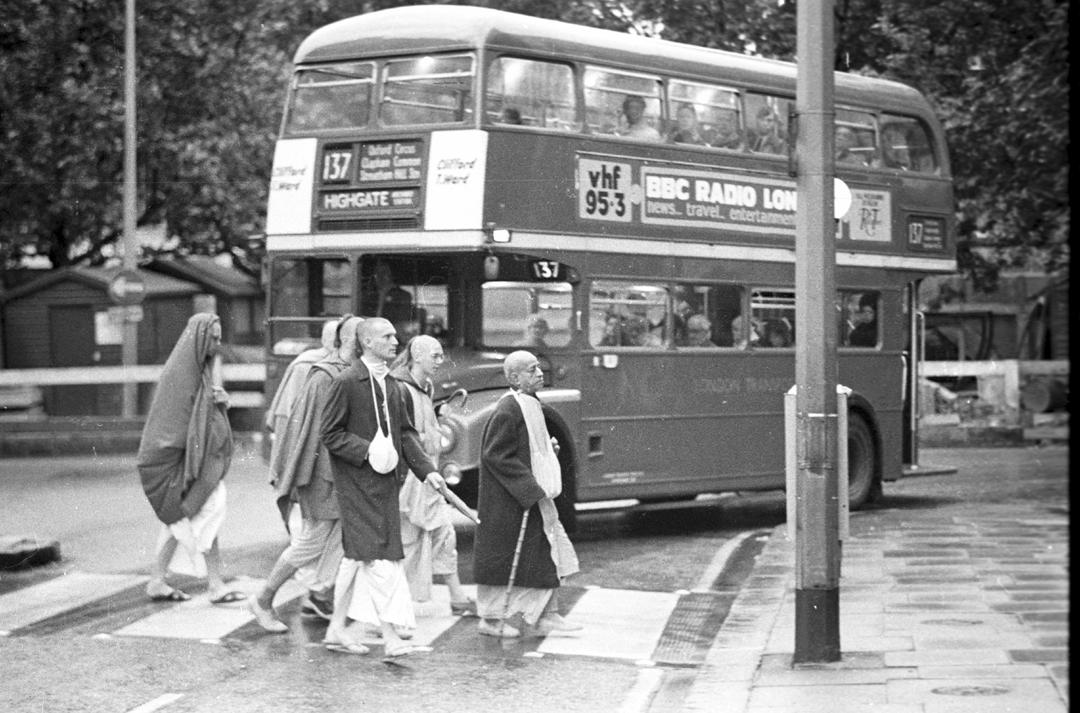
I was quite impressed with the depth of Vedic philosophy and especially with the chanting of the Holy Names of God. Almost overnight I quit my entire Rock n Roll lifestyle and my job and began my life as a Brahmachari. I soon found myself living at John & Yoko Lennon’s eighty plus acre estate – “Tittenhurst” and ended up staying there for six months.
More
27 Feb 2013
by The Hare Krishna Movement
in Premanjana das, Quotes by Srila Prabhupada
Tags: A.C. Bhaktivedanta Swami Prabhupada, All Devotees Should Write, bhagavad-gita, devotees should write, krishna consciousness articles, Pranjal Joshi, preachers of krishna consciousness, Premanjana das, Srila Prabhupada writting, Srimad Bhagavatam, Teachings of Lord Caitanya
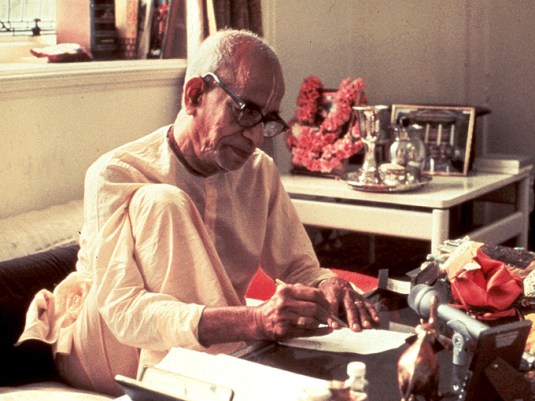
This is a very nice compilation of quotes on the importance of writting based on the works of Srila Prabhupada.
“All students should be encouraged to write some article after reading Srimad-Bhagavatam, Bhagavad-gita and Teachings of Lord Caitanya. They should realize the information, and they must present their assimilation in their own words. Otherwise, how they can become preachers?”
(Letter to Brahmananda — Los Angeles, July 1, 1969)
More
26 Feb 2013
by The Hare Krishna Movement
in A.C. Bhaktivedanta Swami Prabhupada, Mangalacarana Prayers, Songs of the Vaisnava Acaryas
Tags: A.C. Bhaktivedanta Swami Prabhupoada, feet of all vaisnavas, Gadadhara, Krishna, Lord Kṛṣṇa Caitanya and Lord Nityānanda along with Advaita Ācārya, lotus feet of my spiritual master, respectful obeisances, Sanatana Goswami, six goswami's, spiritual master, Sri Lalita, Sri Visakha, Srila Rupa Gosvami, Srimati Radharani, Srivasa, vande
click on image to enlarge
Maṅgalācaraṇa Prayers
vande ’haṁ śrī-guroḥ śrī-yuta-pada-kamalaṁ śrī-gurun vaiṣṇavāṁś ca
śrī-rūpaṁ sāgrajātaṁ saha-gaṇa-raghunāthānvitaṁ taṁ sa-jīvam
sādvaitaṁ sāvadhūtaṁ parijana-sahitaṁ kṛṣṇa-caitanya-devaṁ
śrī-rādhā-kṛṣṇa-pādān saha-gaṇa-lalitā-śrī-viśākhānvitāṁś ca
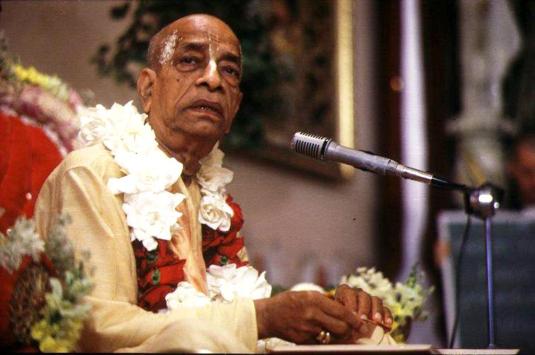
I offer my respectful obeisances unto the lotus feet of my spiritual master and unto the feet of all Vaiṣṇavas. I offer my respectful obeisances unto the lotus feet of Śrīla Rūpa Gosvāmī along with his elder brother Sanātana Gosvāmī, as well as Raghunātha Dāsa and Raghunātha Bhaṭṭa, Gopāla Bhaṭṭa, and Śrīla Jīva Gosvāmī. I offer my respectful obeisances to Lord Kṛṣṇa Caitanya and Lord Nityānanda along with Advaita Ācārya, Gadādhara, Śrīvāsa, and other associates. I offer my respectful obeisances to Śrīmatī Rādhārāṇī and Śrī Kṛṣṇa along with Their associates, Śrī Lalitā and Viśākhā.
Purport to the Maṅgalācaraṇa Prayers
by His Divine Grace A.C. Bhaktivedanta Swami Prabhupada
Los Angeles, January 8, 1969
More
24 Feb 2013
by The Hare Krishna Movement
in A.C. Bhaktivedanta Swami Prabhupada, Beyond Birth & Death, Bhagavad-gita, Bhismadeva, Srimad Bhagavatam
Tags: A.C. Bhaktivedanta Swami Prabhupada, beyond samsara, bhagavad-gita, Bhismadeva, bhutva-bhutva, Lord Sri Krsna, mystic yogis, mystics, parliyate, pure devotee, repetition of different bodies, samsara, samsara means material existence, samsara means this material entanglement, Srimad Bhagavatam, yogic situation, yogis

Beyond Saṁsāra
As I was reading from the Srimad Bhagavatam this morning about the passing of Bhīṣmadeva it was being described how “The perfect yogīs or mystics can leave the material body at their own sweet will at a suitable time and go to a suitable planet desired by them.” And how it is possiable to go beyond Saṁsāra, and go back to Godhead without any doubt.
…In the momentous hour of leaving his material body, Bhīṣmadeva set the glorious example concerning the important function of the human form of life. The subject matter which attracts the dying man becomes the beginning of his next life. Therefore, if one is absorbed in thoughts of the Supreme Lord Śrī Kṛṣṇa, he is sure to go back to Godhead without any doubt.
And what is Samsara?
Saṁsāra means material existence. That is called saṁsāra. Bhūtvā bhūtvā pralīyate (BG 8.19). You take your birth once in some form of body. You live for some time. Then you have to give up this body. Then you have to accept another body. Then again live for some time. Then give up that body. Again accept another body. In this way, it is going on. That is called saṁsāra, rotating within this material world. (Lecture on Gurvastakam at Upsala University by His Divine Grace -Stockholm, September 9, 1973)
The saṁsāra means repetition of different bodies. That is called saṁsāra. (Lecture on SB 1.2.4 -Rome, May 28, 1974)
Saṁsāra means this material entanglement. This is called saṁsāra.
(Lecture on CC Madhya-lila 25.40-50 – San Francisco, January 24, 1967)
More
23 Feb 2013
by The Hare Krishna Movement
in A.C. Bhaktivedanta Swami Prabhupada, Balarama, Festivals, guru-tattva, Nityananda
Tags: 2-2-1977, A.C. Bhaktivedanta Swami, Balarama, Caitanya Mahaprabhu, guru, guru tattva, Krishna, Krsna, lecture by Prabhupada, Lord Nityananda's Appearance Day, Nityananda, spiritual master, Srila Prabhupada, yasya prasadad bhagavat-prasadah

click on image to enlarge
…Balarāma means guru-tattva. Balarāma represents guru. Yasya prasādād bhagavat-prasādaḥ. If we want to understand Caitanya Mahāprabhu, if we want to understand Kṛṣṇa, then we must take shelter of Balarāma. Nāyam ātmā bala-hinena labhyaḥ. This bala-hinena labhyaḥ, this Vedic injunction, means “Without the mercy of Balarāma you cannot understand, you cannot realize your spiritual identification. So that Balarāma comes as Nityānanda Prabhu.”
…So if we want actually peace of mind, if we actually want to be free from this material fatiguement, then we must take the shelter of Nityānanda Prabhu. Nityānanda Prabhu is the strength, spiritual strength. And without spiritual strength you cannot approach Kṛṣṇa.
More
23 Feb 2013
by The Hare Krishna Movement
in A.C. Bhaktivedanta Swami Prabhupada, Nityananda, Sri Caitanya-Caritamrta
Tags: A.C. Bhaktivedanta Swami Prabhupada, Absolute Truth, appearance of lord nityananda, Gadadesa, Lord Nityananda, Sri Krsna Caitanya, sun and moon

“I offer my respectful obeisances unto Śrī Kṛṣṇa Caitanya and Lord Nityānanda, who are like the sun and moon. They have arisen simultaneously on the horizon of Gauḍa to dissipate the darkness of ignorance and thus wonderfully bestow benediction upon all.”
Śrī Kṛṣṇa and Balarāma, the Personalities of Godhead, who formerly appeared in Vṛndāvana and were millions of times more effulgent than the sun and moon, have arisen over the eastern horizon of Gauḍadeśa [West Bengal], being compassionate for the fallen state of the world.
The appearance of Śrī Kṛṣṇa Caitanya and Prabhu Nityānanda has surcharged the world with happiness.
As the sun and moon drive away darkness by their appearance and reveal the nature of everything, these two brothers dissipate the darkness of ignorance covering the living beings’ and enlighten them with knowledge of the Absolute Truth.
By the grace of Lord Caitanya and Lord Nityānanda, this darkness of ignorance is removed, and the truth is brought to light.
The Absolute Truth is Śrī Kṛṣṇa, and loving devotion to Śrī Kṛṣṇa exhibited in pure love is achieved through congregational chanting of the holy name, which is the essence of all bliss.
Hare Krishna, Hare Krishna
Krishna Krishna, Hare Hare
Hare Rama, Hare Rama
Rama Rama, Hare Hare
These two, the sun and moon, are very kind to the people of the world. Thus for the good fortune of all, They have appeared on the horizon of Bengal.

click on image to enlarge
Verses excerpted from:
Sri Caitanya-caritamrta 1975 Edition
by His Divine Grace A.C. Bhaktivedanta Swami Prabhupada
Adi-lila 1.84-89, 95-96, & 102
22 Feb 2013
by The Hare Krishna Movement
in A.C. Bhaktivedanta Swami Prabhupada, Narottama das Thakur, Nitai Pada Kamala, Nityananda, Songs of the Vaisnava Acaryas
Tags: A.C. Bhaktivedanta Swami Prabhupada, appearance of Nityananda Prabhu, lotus feet are like cooling moons, lotus feet of lord nityananda, Narottama Dasa Thakura, Nita Pada Kamala, nitai-pada, Nityananda, Nityananda Prabhu, nitāi-pada-kamala, Radha-Krsna, Sri Nityananda, Sri Nityananda Nistha

Nita Pada Kamala
Sri Nityananda Nistha (offical name)
by Narottama Dasa Thakura
nitāi-pada-kamala, koṭi-candra-suśītala
je chāyāy jagata jurāy
heno nitāi bine bhāi, rādhā-kṛṣṇa pāite nāi
dṛḍha kori’ dharo nitāir pāy
The lotus feet of Lord Nityananda are a shelter where one will get the soothing moonlight not only of one, but of millions of moons. If the world wants to have real peace, it should take shelter of Lord Nityananda. Unless one takes shelter under the shade of the lotus feet of Lord Nityananda, it will be very difficult for him to approach Radha-Krsna. If one actually wants to enter into the dancing party of Radha-Krsna, he must firmly catch hold of the lotus feet of Lord Nityananda.
se sambandha nāhi jā’r, bṛthā janma gelo tā’r
sei paśu boro durācār
nitāi nā bolilo mukhe, majilo saḿsāra-sukhe
vidyā-kule ki koribe tār
Anyone who has not established his relationship with Nityananda Prabhu is understood to have spoiled his valuable human birth. Such a human being is actually an uncontrollable animal. Because he never uttered the holy name of Nityananda, he has become merged into so-called material happiness. What can his useless education and family tradition do to help him?
More
22 Feb 2013
by The Hare Krishna Movement
in A.C. Bhaktivedanta Swami Prabhupada, Varaha
Tags: A.C. Bhaktivedanta Swami Prabhupada, Bhaktivedanta purports, Brahma, incarnations, Lord Sri Krsna, Lord Varaha's appearance day, Manu, Mrthu, Narasimha, Rama, Rudra, Srila Prabhupada lectures, transcendental incarnations, Varaha, Vyasa

In honor of Lord Varaha’s Apperance Day we are posting some words by Srila Prabhupada from the Bhaktivedanta Purports to the Srimad Bhagavatam and some words from one of his lectures on the Srimad Bhagavatam explaining the Lords various incarnations.
Lord Varaha’s Appearance Day
Kṛṣṇa Is the Source of All Incarnations
As the supreme controller of both the material and spiritual worlds, the Lord has different incarnations of unlimited categories. Incarnations like Brahmā, Rudra, Manu, Pṛthu and Vyāsa are His material qualitative incarnations, but His incarnations like Rāma, Narasiṁha, Varāha and Vāmana are His transcendental incarnations. Lord Śrī Kṛṣṇa is the fountainhead of all incarnations, and He is therefore the cause of all causes. (SB 1.1.17 Purport)
More
19 Feb 2013
by The Hare Krishna Movement
in A.C. Bhaktivedanta Swami Prabhupada, Prayers & Verses, Songs of the Vaisnava Acaryas, Sri Sri Guru-astaka, Sri Sri Guru-astaka, Vishvanatha Chakravarti
Tags: A.C. Bhaktivedanta Swami Prabhupada, blazing fire of material existence, gurus and disciples, material existence, prayer to the spiritual master, samsara, samsara-davanalalidha-loka, spiritual master, Srila Prabhupada, Srila Visvanatha Cakravarti Thakura

click on image to enlarge
Śrī Śrī Gurv-aṣṭaka
Eight Prayers to the Spiritual Master
by Śrīla Viśvanātha Cakravartī Ṭhākura
Śrīla Viśvanātha Cakravartī Ṭhākura, who appeared in the latter half of the 17th Century, is a great spiritual master in the Kṛṣṇa conscious chain of gurus and disciples. He says that one should loudly chant the following eight prayers, with care and attention, during brahma-muhurta, the auspicious time an hour and a half before sunrise when devotional practices are especially potent. Anyone who thus chants these eight beautiful prayers glorifying the spiritual master will certainly get a chance to render direct service to Krishna, the lord of Vrndavana, after the demise of his body.
…This song is offering obeisances particularly to the spiritual master, and the symptoms of the spiritual master are described in this prayer. The spiritual master has two kind of symptoms in his activities. One kind is called constant, and other kind is called temporary. So the first verse says that the constant symptom of the spiritual master is that he can deliver his disciples from the blazing fire of this material existence. That is the eternal qualification of spiritual master. (From purport by His Divine Grace A.C. Bhaktivedanta Swami Prabhupada)
For full song with Roman transliteration, English equivalents, translation and purport by His Divine Grace A.C. Bhaktivedanta Swami Prabhupada More
19 Feb 2013
by The Hare Krishna Movement
in A.C. Bhaktivedanta Swami Prabhupada, Bhagavad-gita, Krishna Consciousness, The Hare Krishna Movement
Tags: 1972 Edition, A.C. Bhaktivedanta Swami Prabhupada, as it is, bhagavad-gita, chanting Hare Krishna, Krishna consciousness, krishna consciousness is natural and transcendental, krishna conssciousness is historically authorized, krsna consciousness, preface

click on image to enlarge
…Our Kṛṣṇa consciousness movement is genuine, historically authorized, natural and transcendental due to its being based on Bhagavad-gītā As It Is. It is gradually becoming the most popular movement in the entire world, especially amongst the younger generation. It is becoming more and more interesting to the older generation also. Older gentlemen are becoming interested, so much so that the fathers and grandfathers of my disciples are encouraging us by becoming life members of our great society, the International Society for Krishna Consciousness.
…The Kṛṣṇa consciousness movement is essential in human society, for it offers the highest perfection of life. How this is so is explained fully in the Bhagavad-gītā. This knowledge constitutes a great science, and each and every living being has to hear it for his own interest. (from Preface to the Bhagavad-gita As It Is)
More
18 Feb 2013
by The Hare Krishna Movement
in A.C. Bhaktivedanta Swami Prabhupada, Guru & Disciple, Krsna-katha, Srimad Bhagawatam
Tags: A.C. Bhaktivedanta Swami Prabhupada, bepetition of birth and death, bhagavad-gita, disciple, Krsna, Krsna-katha, liberated spiritual master, nivrtta-tarsaih, SB 10.1.4, Srila Prabhupada, Srimad Bhagavatam, Supreme Personality of Godhead
click on image to enlarge
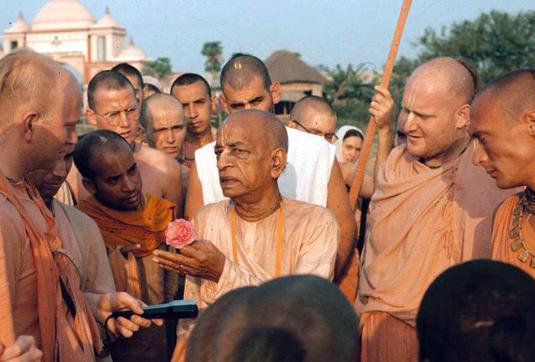
…When discourses on kṛṣṇa-kathā take place between a liberated spiritual master and his disciple, others also sometimes take advantage of hearing these topics and also benefit. These topics are the medicine to stop the repetition of birth and death. The cycle of repeated birth and death, by which one takes on different bodies again and again, is called bhava or bhava-roga. If anyone, willingly or unwillingly, hears kṛṣṇa-kathā, his bhava-roga, the disease of birth and death, will certainly stop. Therefore kṛṣṇa-kathā is called bhavauṣadha, the remedy to stop the repetition of birth and death.
In India it is the practice among the general populace to hear about Kṛṣṇa, either from Bhagavad-gītā or from Śrīmad-Bhāgavatam, in order to gain relief from the disease of repeated birth and death. Although India is now fallen, when there is a message that someone will speak about Bhagavad-gītā or Śrīmad-Bhāgavatam, thousands of people still gather to hear. The following verse indicates, however, that such recitation of Bhagavad-gītā and Śrīmad-Bhāgavatam must be done by persons completely freed from material desires (nivṛtta-tarṣaiḥ).
If we hear the glories of the Supreme Personality of Godhead from liberated persons, this hearing will certainly free us from the bondage of material activities, but hearing Śrīmad-Bhāgavatam spoken by a professional reciter cannot actually help us achieve liberation. Kṛṣṇa-kathā is very simple. In Bhagavad-gītā it is said that Kṛṣṇa is the Supreme Personality of Godhead. As He Himself explains, mattaḥ parataraṁ nānyat kiñcid asti dhanañjaya: “O Arjuna, there is no truth superior to Me.” Simply by understanding this fact—that Kṛṣṇa is the Supreme Personality of Godhead—one can become a liberated person. (Purport SB 10.1.4)
Full Verse and Purport More
17 Feb 2013
by The Hare Krishna Movement
in Free Downloads, Free eBooks, Sri Rupa-cintamani, Vishvanatha Chakravarti
Tags: altar, and barleycorn, and conchshell, ari, barleycorn, bow, bracelet, chariot, club, conch, cow's hoofprint, earrings, elephant-goad, fish, flag, flower, halfmoon, jambu fruit, Krsna, left foot, lotus, mountain, parasol, Radha, Rupa Gosvami, sky, Sri Vishvanatha Chakravarti, svastika, the eight-pointed star, the parasol, the śakti, thunderbolt, triangle, vine, water-pot, wheel, ūrdhva-rekhā
click on image to enlarge
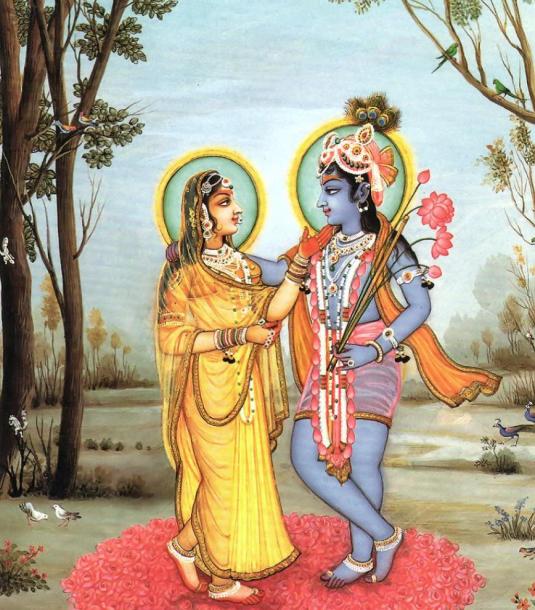
…Decorated with splendid jewel lotus petals, the youthful and fragrant divine couple are splendid as a monsoon cloud and lightning as They stand on a jeweled golden pavement under a tall kalpa-druma tree by the Yamunā in Vṛndāvana Forest. O mind, please always remember Their charming, gentle smile.
O mind, please remember Lord Hari’s splendid crown decorated with peacock feathers and guñjā, His wavy locks of hair, His forehead splendid with tilaka, His eyebrows, eyes, nose, splendid cheeks, ears, glittering jewel earrings, red lips, flute, face, arching neck marked with three lines, soft shoulders, broad arms decorated with armlets and other ornaments, hands, fingers marked with wavy lines, chest decorated with kaustubha jewel and garlands of pearls and forest flowers and the splendid mark of the goddess of fortune, the line of hairs on His splendid abdomen, His lotus navel, slender waist, tinkling bells, yellow garments, large knees, ankles decorated with tinkling ankle-bells, lotus feet, graceful toes, pink toenails, the redness that extends across the soles of His feet up to His heels, and on His right foot: the barleycorn-mark at the base of His big toe, the ūrdhva-rekhā by His fore-toe, the curved lotus in the middle of His foot, the flag on the surface of His foot, the elephant-goad and thunderbolt at the base of His little-toe, the four svastikas, the jambus, and the eight-pointed star in the middle.
A charming couple, two mountainous oceans of the nectar of the love they bear for each other, shines in Vṛndāvana Forest. The young girl, whose splendor rebukes the lightning flash, hides a gentle smile under Her blue sari. Please remember that smile.
O mind, please meditate on Rādhā’s fine, curly, braided hair, the jewel, golden leaf, tilaka, and curly hairs on Her forehead, Her eyebrows, mascara-anointed eyes, ears, the charming shark-shaped earings at Her cheeks, Her pearl-decorated nose, lips. splendid teeth, musk-dot-decorated chin, neck marked with three lines and decorated with many necklaces, gracefully sloping shoulders, armlet-decorated arms, elbows, lotus hands endowed with beautiful and auspicious lines and decorated with bracelets, jewel ūrmikās, rings, beautiful fingernails, breasts covered with a splendid red bodice, locket, flower-petal abdomen with a line of hairs, navel, slender waist marked with three lines, colorful undergarments, blue petticoat, thighs, knees, legs, ankles, anklets, ankle-bells, toe-ūrmikās, toe-rings, and toe-nails, the barleycorn and ari beneath Her left big-toe, the ūrdhva-rekhābeneath Her fore-toe, the small chariot nearby, the lotus, flag, flower, and vine in the middle, the elephant-goad beneath Her little-toe, beneath that a bracelet and parasol, on the heel a half-moon, on the heel of the other foot a fish, above that a flying mountain, on the sides a śakti and pada, under the big-toe a conchshell, under the little toe an altar, and beneath that an earring…
More
16 Feb 2013
by The Hare Krishna Movement
in A.C. Bhaktivedanta Swami Prabhupada, Radha Madhava, Science of Self Realization, Spiritual Life, Vrindavan
Tags: A.C. Bhaktivedanta Swami Prabhupada, cowherd boys, devotees, father, gopis, Kṛṣṇa’s associate as a friend, Krsna, Krsnaloks, or mother, reciprocation of love, self realization, servant, summit of self-realization, The Perfection of Self Realization
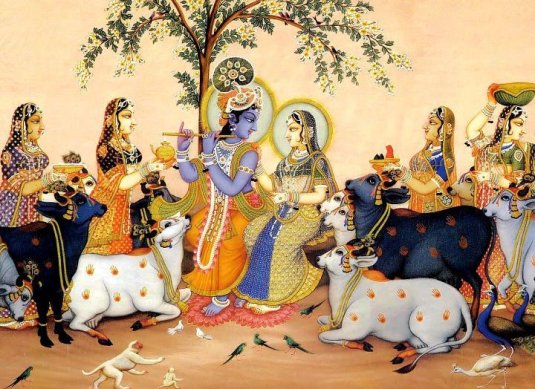
…Kṛṣṇa’s only business is satisfying the devotees, and their only business is satisfying Kṛṣṇa. This is the reciprocation of love… The Supreme Personality of Godhead, wanders on the banks of the Yamunā to please the gopīs, the cowherd boys, the birds, the bees, and the cows and calves. These are not ordinary birds, bees, cows, calves, or men; they have all reached the summit of self-realization and thus, after many, many lives, have attained a position whereby they can play with Kṛṣṇa. This Kṛṣṇa consciousness movement can enable everyone to go to Kṛṣṇaloka and become Kṛṣṇa’s associate as a friend, servant, father, or mother. Kṛṣṇa is agreeable to take any of these positions in relation to His devotee.
More
16 Feb 2013
by The Hare Krishna Movement
in Advaita Acarya, Festivals
Tags: Advaita Acharya, advauta acharya, appearance of advaita acharya, Babla, Lord Caitanya Mahaprabhu, madan gopal, pastimes of the lord, prakasha expansion, shaligram shila, Sita, Srimati Sita devi, yogamaya
click on image to enlarge
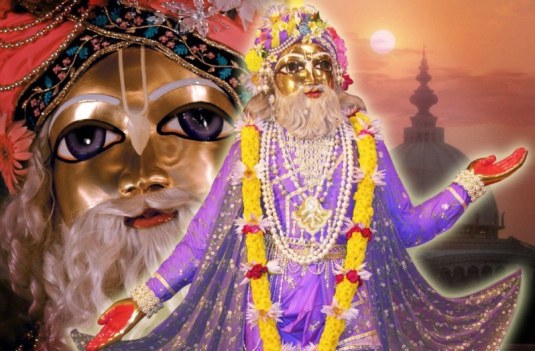
In honor of the Appearance day of Advaita Acharya we share this short biography of the live and pastimes of this great vaisnava acharya.
Sri Advaita Acharya’s Appearance Day
February 16, 2013
More
Previous Older Entries Next Newer Entries