24 Dec 2017
by The Hare Krishna Movement
in A.C. Bhaktivedanta Swami Prabhupada, Bhakti Yoga, Srimad Bhagavatam
Tags: A. C. Bhakthvedanta Swami Prabhupada, atma-tattva, bhakti yoga, Brahma, jivatma, Paramatma, SB 2.9.4, Srimad Bhagavatam, yoga

Reading or hearing of Śrīmad-Bhāgavatam is also performance of bhakti-yoga
The sound of Śrīmad-Bhāgavatam is transcendental, and the resonance of Śrīmad-Bhāgavatam is as good as that of the Vedas. Thus the topic of the Śrīmad-Bhāgavatam is the science of both the Lord and the living entity.
…The sound of Śrīmad-Bhāgavatam is transcendental, and the resonance of Śrīmad-Bhāgavatam is as good as that of the Vedas. Thus the topic of the Śrīmad-Bhāgavatam is the science of both the Lord and the living entity. Regular reading or hearing of Śrīmad-Bhāgavatam is also performance of bhakti-yoga, and one can attain the highest perfection simply by the association of Śrīmad-Bhāgavatam. Both Śukadeva Gosvāmī and Mahārāja Parīkṣit attained perfection through the medium of Śrīmad-Bhāgavatam. (from purport SB 2.9.4)
full text and purport follows: More
12 Aug 2017
by The Hare Krishna Movement
in A.C. Bhaktivedanta Swami Prabhupada, Back to Godhead, Bhagavata Dharma Discourses, Bhakti Yoga, Yoga
Tags: A.C. Bhaktivedanta Swami Prabhupada, Back to Godhead Magizine, Bhagavad-gita, Bhagavata Dharma Discourse, bhakti yoga, hatha yoga, Krsna consciousness movement, science of understanding God, topmost yoga system, yoga, yoga system

The Perfection of Yoga: Pure Love of Krsna
excerpted form; Back to Godhead Magazine Volume 10, Number 4, 1975
“Yoga” is a word becoming increasingly familiar top people all over the world. Many are asking, “What is yoga? What does the yoga practitioner seek to achieve? And what is the ultimate goal of yoga?”
A Bhagavata Dharma Discourse—an address on the science of understanding God, delivered in Delhi, India.
By His Divine Grace A.C. Bhaktivedanta Swami Prabhupada
This Krsna consciousness movement is the topmost yoga system. You have perhaps read in the Sixth Chapter of Bhagavad-gita, wherein Arjuna declined to accept the hatha-yoga system, the following words of Krsna:
yoginam api sarvesam
mad-gatenantaratmana
sraddhavan bhajate yo mam
sa me yuktatamo matah
“And of all yogis, he who always abides in Me with great faith, worshiping Me in transcendental loving service, is most intimately united with Me in yoga and is the highest of all” (Bg. 6.47)
Krsna is known as Yogesvara, the master of all yogis, and if one takes Krsna within his heart, he becomes the topmost yogi.
More
25 Feb 2017
by The Hare Krishna Movement
in A.C. Bhaktivedanta Swami Prabhupada, Shiva, Siva Ratri
Tags: A. c. Bhaktivedanta Swami Prabhupada, festival in Hinduism, god Shiva, Maha Shivaratri, overcoming darkness and ignorance, Shivaratri, siva ratai, Srila Prabhupada, the great night of shiva, yoga, yogi

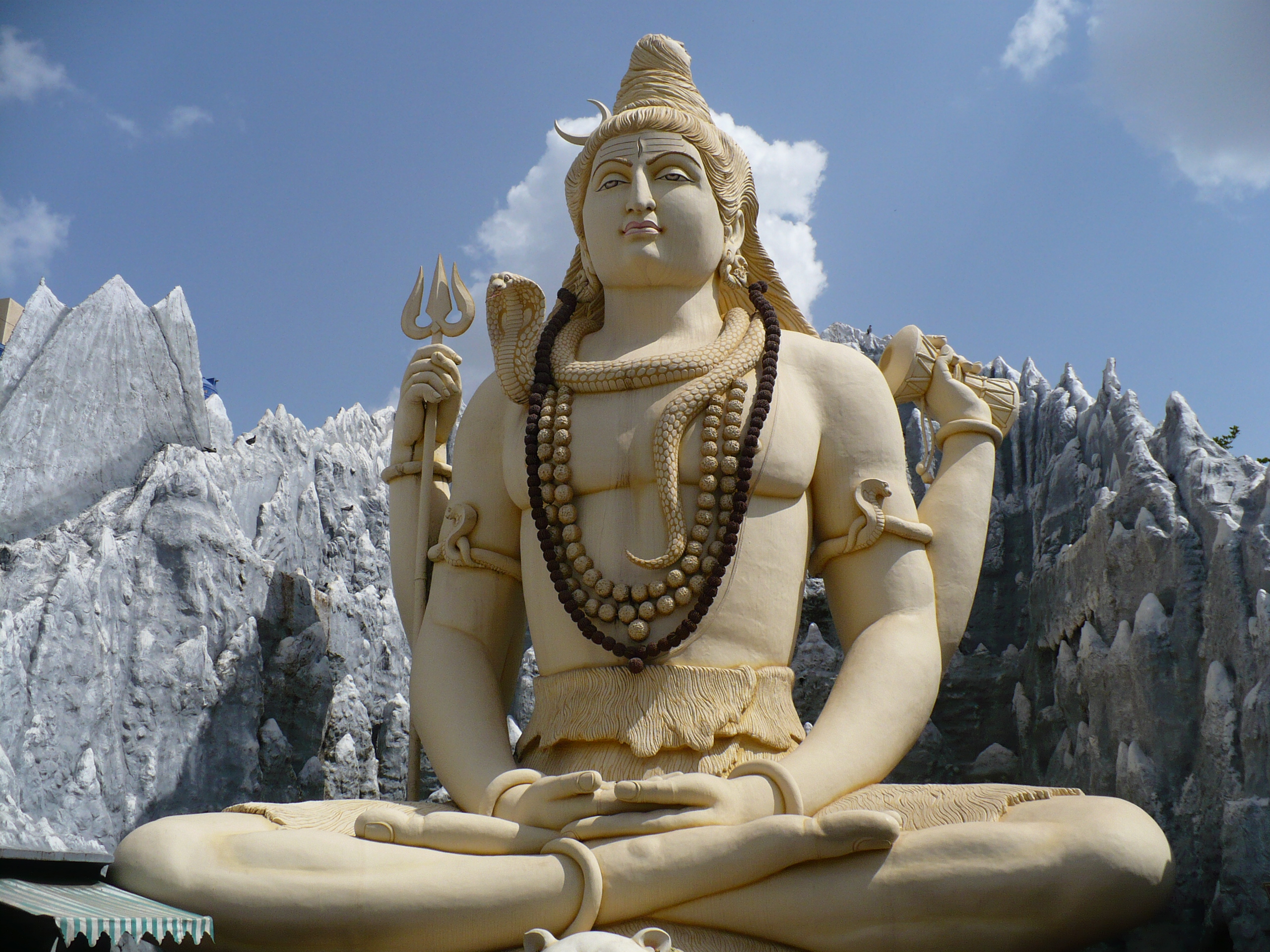
Today marks the annual festival of Shiva Ratri , in honor of the God Shiva. Although as Vaisnavas or as Krishna bhaktas, we do not participate in the many Hindu festivals, still we honor Lord Shiva as being the greatest yogi (SB. 2.8.20) and as the greatest devotee (SB. 4.24.18). Both Text and purports by Srila Prabhupada follow.
Maha Shivaratri is a Hindu festival celebrated annually in honour of the god Shiva. There is a Shivaratri in every luni-solar month of the Hindu calendar, on the month’s 13th night/14th day, but once a year in late winter (February/March, or Phalguna) and before the arrival of spring, marks Maha Shivaratri which means “the Great Night of Shiva”.
It is a major festival in Hinduism, but one that is solemn and marks a remembrance of “overcoming darkness and ignorance” in life and the world. It is observed by remembering Shiva and chanting prayers, fasting, doing Yoga, and meditating on ethics and virtues such as self-restraint, honesty, noninjury to others, forgiveness, and the discovery of Shiva. The ardent devotees keep awake all night. Others visit one of the Shiva temples or go on pilgrimage to Jyotirlingams. This is an ancient Hindu festival whose origin date is unknown. (text pasted from; https://en.wikipedia.org/wiki/Maha_Shivaratri)
More
14 Jan 2016
by The Hare Krishna Movement
in A.C. Bhaktivedanta Swami Prabhupada, Devotional Service, Krishna Nectar, Krsna, Krsna Consciousness, Krsna Consciousness: The Topmost Yoga System, Yogamaya
Tags: Balarama, bhakti yoga, highest perfection is love, Krishna, Krishna eating dirt, Krsna, Mother Yasoda, transcendental ecstatic love, Yasoda, yoga, yogamaya

click on image to enlarge
One day while Krishna was playing with His small playmates, including Balarama and other sons of the gopas, all His friends came together and lodged a complaint to mother Yasoda. “Mother,” they submitted, “Krishna has eaten earth.” Upon hearing this from Krishnas’s playmates, mother Yasoda, who was always full of anxiety over Krishna’s welfare, picked Krishna up with her hands to look into His mouth and chastise Him. Her eyes fearful, she spoke to her son as follows. Dear Krishna, why are You so restless that You have eaten dirt in a solitary place? This complaint has been lodged against You by all Your playmates, including Your elder brother, Balarama. How is this? Lord Śrī Krishna replied: My dear mother, I have never eaten dirt. All My friends complaining against Me are liars. If you think they are being truthful, you can directly look into My mouth and examine it. Mother Yasoda challenged Krishna, “If You have not eaten earth, then open Your mouth wide.” When challenged by His mother in this way, Krishna, the son of Nanda Mahārāja and Yasoda, to exhibit pastimes like a human child, opened His mouth. Although the Supreme Personality of Godhead, Krishna, who is full of all opulences, did not disturb His mother’s parental affection, His opulence was automatically displayed, for Krishna’s opulence is never lost at any stage, but is manifest at the proper time. When Krishna opened His mouth wide by the order of mother Yasoda, she saw within His mouth all moving and non-moving entities, outer space, and all directions, along with mountains, islands, oceans, the surface of the earth, the blowing wind, fire, the moon and the stars. She saw the planetary systems, water, light, air, sky, and creation by transformation of ahaṅkāra. She also saw the senses, the mind, sense perception, and the three qualities goodness, passion and ignorance. She saw the time allotted for the living entities, she saw natural instinct and the reactions of karma, and she saw desires and different varieties of bodies, moving and nonmoving. Seeing all these aspects of the cosmic manifestation, along with herself and Vṛndāvana-dhāma, she became doubtful and fearful of her son’s nature. (SB 10.8.32-45)
More
27 Apr 2015
by The Hare Krishna Movement
in Qualities of a Devotee
Tags: 26 qualities of a devotee, A. C. Bhakthvedanta Swami Prabhupada, devotees, Does not quarrel with anyone, elevated qualities, Equal to everyone, Fixed in the Absolute Truth, Kind to everyone, liberated from material entanglement, Lord Visnu, Maharaja Prthu, SB 4.20.16, Srila Prabhupada, transcendental qualities, yoga
For some time now I have been meaning to look up the 26 qualities of a devotee and print them out. This was the topic of a discussion we had with a fellow devotee some time back. None of us could exactly remember all 26 qualities, but we were pretty sure that we were not in possession of them all in full. After a little searching we found them, and share them with you.
…These qualities of a devotee,twenty–six in number, are listed as follows: (1) kind to everyone, (2) does not quarrel with anyone, (3) fixed in the Absolute Truth, (4) equal to everyone, (5) faultless, (6) charitable, (7) mild, (8) clean, (9) simple, (10) benevolent, (11) peaceful, (12) completely attached to Krsna, (13) has no material hankering, (14) meek, (15) steady, (16) self-controlled, (17) does not eat more than required, (18) sane, (19) respectful, (20) humble, (21) grave, (22) compassionate, (23) friendly, (24) poetic, (25) expert, (26) silent. (from purport to SB 4.20.16)
More
08 Apr 2015
by The Hare Krishna Movement
in A.C. Bhaktivedanta Swami Prabhupada, Conversation with Srila Prabhupada, Guru & Disciple, guru-tattva, Science of Self Realization
Tags: A. C. Bhakthvedanta Swami Prabhupada, disciple, guru, interview with Srila Prabhupada, London Times, meditation, Saints and Swindlers, self proclaimed gods, self-styled gurus, yoga, yogi

click on image to enlarge
Saints and Swindlers
London Times Interview with Srila Prabhupada
Excerpted from the Science of Self Realization
Every day the number of people interested in practicing yoga and meditation increases by the thousands. Unfortunately, a person looking for a suitable guide is likely to encounter a bewildering array of magicians, self-styled gurus, and self-proclaimed gods. In an interview with the London Times, Śrīla Prabhupāda explains how a sincere seeker can tell the difference between a counterfeit and genuine spiritual guide.
More
06 Jan 2015
by The Hare Krishna Movement
in Surya Namaskara, Yoga, Yogi
Tags: activates digestion, bhakti yoga, blood oxygenated, hatha yoga, sun salutation, surya namaskara, suryanamaskara, Synchronizing breath with movement, yoga

Sun Salutation A by Neil Keleher
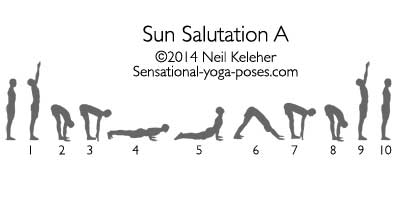
I heard an interesting fact the other day. That the Number 1 New Year’s Resolution each year is to; “Get Healthy” and/or “Lose Weight”. I usually try to make this my number two, followed by my usual No. 1, which is to read and chant more. Hatha yoga is not something I promote as a means to self realization or increasing God consciousness, for that there is the higher practice of bhakti-yoga, but it is effective in this age for maintaining some semblance of good health and circulation.
This body is our temple, so keeping it clean, strong and healthy, is our duty and responsibility. With this in mind I share with all of you, this nice description of the sun salutation and overview of some the movements. The bulk of this post including the nice images, came from the web page Sensational Yoga Poses so thank you to Neil Keleher for some of the text and drawings.
More
01 Jan 2015
by The Hare Krishna Movement
in A.C. Bhaktivedanta Swami Prabhupada, Bhagavad-gita, Goloka Vrndaban, Spiritual World, Transcendental Knowledge, Yoga, Yogi
Tags: Bg 6.15, Bhagavad-gita As It Is 1972 Edition, bhakti yoga, brahmajyoti, cessation of material existence, Goloka Vrndavana, His Divine Grace A.C. Bhaktivedanta Swami Prabhupada, kingdom of God, Krsna, mystic transcendentalist, Prabhupada books, Sankhya-yoga, supreme abode, yoga
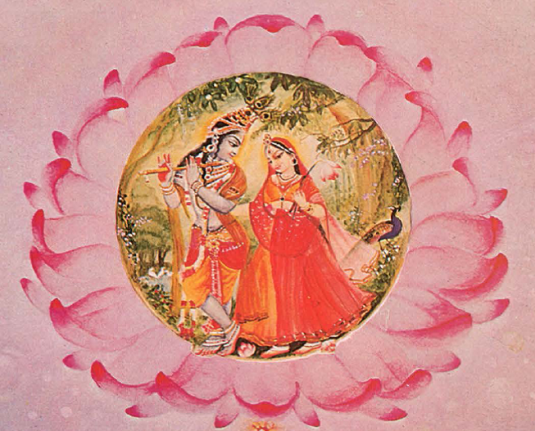
With the beginning of a new year, I am always apt to take up my studies with renewed enthusiasm, a resolution and firmness of purpose, to read more from Srila Prabhupada’s books, and to delve more deeply into the practice of bhakti-yoga. This morning I was reading about the spiritual sky; Goloka Vṛndāvana.
The abode of Lord Śrī Kṛṣṇa is described in the Bhagavad-gītā, Fifteenth Chapter, sixth verse:
na tad bhāsayate sūryo na śaśāṅko na pāvakaḥ
yad gatvā na nivartante tad dhāma paramaṁ mama
“That abode of Mine is not illumined by the sun or moon, nor by electricity. And anyone who reaches it never comes back to this material world.” (Bg. 15.6)
This verse gives a description of that eternal sky. Of course we have a material conception of the sky, and we think of it in relationship to the sun, moon, stars and so on, but in this verse the Lord states that in the eternal sky there is no need for the sun nor for the moon nor fire of any kind because the spiritual sky is already illuminated by the brahmajyoti, the rays emanating from the Supreme Lord. We are trying with difficulty to reach other planets, but it is not difficult to understand the abode of the Supreme Lord. This abode is referred to as Goloka. In the Brahma-saṁhitā it is beautifully described: Goloka eva nivasaty akhilātma-bhūtaḥ. The Lord resides eternally in His abode Goloka, yet He can be approached from this world, and to this end the Lord comes to manifest His real form, sac-cid-ānanda-vigraha. When He manifests this form, there is no need for our imagining what He looks like. To discourage such imaginative speculation, He descends and exhibits Himself as He is, as Śyāmasundara. Unfortunately, the less intelligent deride Him because He comes as one of us and plays with us as a human being. But because of this we should not consider that the Lord is one of us. It is by His potency that He presents Himself in His real form before us and displays His pastimes, which are prototypes of those pastimes found in His abode. (from Introduction to the Bhagavad-gita As It Is)
…The ultimate goal in practicing yoga is now clearly explained. Yoga practice is not meant for attaining any kind of material facility; it is to enable the cessation of all material existence. One who seeks an improvement in health or aspires after material perfection is no yogī according to Bhagavad-gītā. Nor does cessation of material existence entail one’s entering into “the void,” which is only a myth. There is no void anywhere within the creation of the Lord. Rather, the cessation of material existence enables one to enter into the spiritual sky, the abode of the Lord. (from purport to Bg 6.15)
More
10 Oct 2014
by The Hare Krishna Movement
in A.C. Bhaktivedanta Swami Prabhupada, Kartika, Krishna, Krishna Consciousness, Krsna, Krsna Consciousness, Yoga
Tags: A.C. Bhaktivedanta Swami Prabhupada, devotional service, fraternal mellow, God, Kartika, linking up with the Lord, month of Damadora, Nectar of Devotion, relationship with the Supreme Personality of Godhead, symptoms of ecstasy, yoga

click on image to enlarge
When Kṛṣṇa and His devotees meet, the meeting is technically called yoga, or linking up with the Lord. (Nectar of Devotion Chapter 39)
Durning the month of Damadora (Kartika) I like to focus my attention on the childhood pastimes of Krsna in Vrndavan. So with this in mind we decided to post a chapter from the Nectar of Devotion which focus’s on the Lords relationships with His devotees in the fraternal mellow or better known as friendship.
When a devotee is permanently situated in devotional service, and by different symptoms of ecstasy he has developed and matured a fraternal mellow or flavor in relationship with the Personality of Godhead, his feeling is called fraternal love of Godhead.
The impetus for such fraternal love of God is God Himself. When one is liberated and discovers his eternal relationship with the Supreme Lord, the Lord Himself becomes the impetus for increasing fraternal love. The eternal associates of the Lord in Vṛndāvana have described this as follows: “The Lord, Hari, whose bodily hue is like the indranīla jewel, whose smiling is as beautiful as the kunda flower, whose silk dress is as yellow as golden autumn foliage, whose chest is beautified with garlands of flowers and who is always playing upon His flute—this enemy of the Agha demon is always attracting our hearts by wandering about Vṛndāvana.” (Nectar of Devotion Chapter 41)
More
09 Oct 2014
by The Hare Krishna Movement
in Krishna Consciousness, Krishna Consciousness Movement, Meditation, The Hare Krishna Movement, What Happened to the Hare Krishna's?, Yoga
Tags: Brendan O'connor, cult, Hare Krishna, Hare Krishna's, Krishna consciousness, krishnas, meditation, The Hare Krishna Movement, yoga

We are All Hare Krishnas now, Meditation goes Mainstream
by Brendan O’Connor
Sunday Independent
Gradually they are coming out the woodwork. And suddenly it seems that half the people I know are secretly meditating. They range from casual transcendental meditators to practically full-blown Buddhists or Hare Krishnas.
And the strange thing is that these are not hippies or crusties or drop-outs or people living alternative lifestyles on an ashram-inspired commune near Sligo. Just regular blokes, a few of them quite senior in what they do. There are thrusting business types and entrepreneurs and generally pretty serious people. These are not people who go for reiki or acupuncture or any of the other usual trappings of the “I’m not religious but I am a very spiritual person” lifestyle. They are fairly practical people. And meditation is just one of their tools, a technology for modern living.
More
24 Sep 2014
by The Hare Krishna Movement
in A.C. Bhaktivedanta Swami Prabhupada, Founder-Acarya, Lectures
Tags: A. C. Bhaktivedanta Swami Pabhupada, as it is, astanga yogi, avajananti, bhagavad-gita, bhakti yoga, bhakti yogi, devotion, Govinda, hatha yogi, in yoga, jnana yogi, karma yogi, Krsna, krsnaconsciousness, Lecture by Srila Prabhupada, Rama, The Supreme Personality of Godhead, transcendental loving service, Vasudeva, yoga, yoginam api sarvesam, yogis

Devotion – The Highest Yoga
A lecture given by His Divine Grace A.C. Bhaktivedanta Swami Prabhupada
Founder-Acarya of the International Society for Krishna Consciousness
1968
The word yoga has become synonymous in Western vernacular with a lithe figure, radiant health, peace of mind, and other material benefits. But the original meaning of the Sanskrit term carries a different, higher import: linking with the Supreme. In this lecture from 1968, Srila Prabhupada distinguishes the true goal of yoga—loving devotion to the Supreme Lord—from the physical and psychological elements of yoga practice.
Full Lecture More
10 Sep 2014
by The Hare Krishna Movement
in A.C. Bhaktivedanta Swami Prabhupada, Mahamaya, Maya, Yogamaya
Tags: A. C. Bhaktivedanta Swami Pabhupada, Adi4.29, Adi4.30, Bg. 9.13, Lord Krsna's internal potency, mahamaya, maya, mayas, meaning of yogamaya, Vaikuntha, yoga, yogamaya

click on image to enlarge
This morning I was reading again from the 4th chapter of the Sri Caitanya-caritamrta Adi-lila, wherin Srila Prabhupada was describing the yogamaya potency…
…Yogamāyā is the name of the internal potency that makes the Lord forget Himself and become an object of love for His pure devotee in different transcendental mellows. This yogamāyā potency creates a spiritual sentiment in the minds of the damsels of Vraja by which they think of Lord Kṛṣṇa as their paramour.
I thought it would be interesting do do a post on the difference between yogamaya and mahamaya, and define the word yogamaya.
Yogamaya means the mercy of the Supreme Lord which connects a devotee in the transcendental loving service of the Lord, and mahamaya means the external potency of the Lord which puts a conditioned soul into illusion that he will be happy by material adjustment. (Letter to Aniruddha Los Angeles 14 November, 1968)
Yogamāyā means… Here, this is also Kṛṣṇa’s exhibition of māyā, but it is temporary. In the another, spiritual world, that is also exhibition of Kṛṣṇa’s māyā, but it is permanent. Here is a perverted reflection, we say. (Lecture on SB 2.9.2 Melbourne, April 4, 1972)
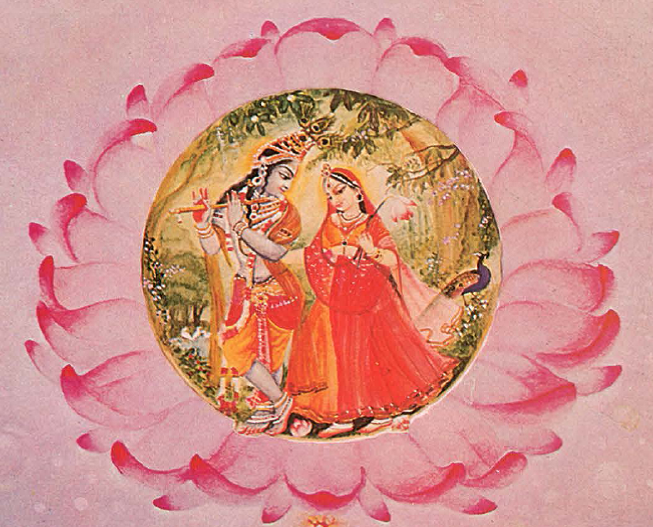
Yogamāyā means that which connects you. Yogamāyā, the original yogamāyā, is Kṛṣṇa’s internal potency. That is Rādhārāṇī. (from Lecture Seattle, October 18, 1968)
Yogamāyā means forgetfulness. (Lecture on SB 3.25.13 — Bombay, November 13, 1974)
More
29 Jul 2014
by The Hare Krishna Movement
in A.C. Bhaktivedanta Swami Prabhupada, Caitanya Mahaprabhu, Chanting Hare Krishna, The Path of Perfection, Yoga
Tags: Adi 17.21, bhakti yoga, chanting, chanting Hare Krishna, chanting the holy names of the Lord, harer nama, harer namaiva kevalam, liberation, quarrel and hypocris, self realization, The Path of Perfection, yoga, yoga systems

…the bhakti-yoga system is recommended for everyone. Without training or education, one can automatically participate in bhakti-yoga. Even a small child can clap at kīrtana. Therefore Lord Caitanya Mahāprabhu has proclaimed bhakti-yoga the only system practical for this age.
harer nāma harer nāma
harer nāmaiva kevalam
kalau nāsty eva nāsty eva
nāsty eva gatir anyathā
[Adi 17.21]
“In this age of quarrel and hypocrisy the only means of deliverance is chanting the holy name of the Lord. There is no other way. There is no other way. There is no other way.”
Chanting is very simple, and one will feel the results immediately. Pratyakṣāvagamaṁ dharmyam. If we attempt to practice other yoga systems, we will remain in darkness; we will not know whether or not we are making progress. In bhakti-yoga, one can understand, “Yes, now I am making progress.” This is the only yoga system by which one can quickly attain self-realization and liberation in this life. One doesn’t have to wait for another lifetime. (The Path of Perfection, Chapter Seven)
Full Chapter More
17 Jun 2014
by The Hare Krishna Movement
in A.C. Bhaktivedanta Swami Prabhupada, Bhagavad-gita, Krsna, Krsna Consciousness, Meditation, Yoga, Yogi
Tags: A.C. Bhaktiveanta Swami Prabhupada, bhakti yoga, Govinda, Krsna, krsna consciousness, meditation, Nrismha, Rama, Syamasundara, Varaha, yoga, yogas, yogi, yoginam api sarvesam

“Of all yogis, he who abides in Me with great faith is the highest of all.”
It is by great fortune that one comes to Kṛṣṇa consciousness on the path of bhakti-yoga to become well situated according to the Vedic direction. The ideal yogī concentrates his attention on Kṛṣṇa, who is called Śyāmasundara, who is as beautifully colored as a cloud, whose lotus-like face is as effulgent as the sun, whose dress is brilliant with jewels and whose body is flower garlanded. Illuminating all sides is His gorgeous luster, which is called the brahmajyoti. He incarnates in different forms such as Rāma, Nṛsiṁha, Varāha and Kṛṣṇa, the Supreme Personality of Godhead, and He descends like a human being, as the son of Mother Yaśodā, and He is known as Kṛṣṇa, Govinda and Vāsudeva. He is the perfect child, husband, friend and master, and He is full with all opulences and transcendental qualities. If one remains fully conscious of these features of the Lord, he is called the highest yogī. (from purport to Bg. 6.47)
This is more or less a continuation of yesterdays post Freedom From All Miseries as it is the last verse in the Chapter 6, entitled; “Sankhya-yoga”. This is one of the very best verses and purports in the Bhagavad-gita for study if one is an aspiring yogi…
…The culmination of all kinds of yoga practices lies in bhakti-yoga. All other yogas are but means to come to the point of bhakti in bhakti-yoga. Yoga actually means bhakti-yoga; all other yogas are progressions toward the destination of bhakti-yoga. From the beginning of karma-yoga to the end of bhakti-yoga is a long way to self-realization. Karma-yoga, without fruitive results, is the beginning of this path. When karma-yoga increases in knowledge and renunciation, the stage is called jñāna-yoga. When jñāna-yoga increases in meditation on the Supersoul by different physical processes, and the mind is on Him, it is called aṣṭāṅga-yoga. And, when one surpasses the aṣṭāṅga-yoga and comes to the point of the Supreme Personality of Godhead Kṛṣṇa, it is called bhakti-yoga, the culmination. Factually, bhakti-yoga is the ultimate goal, but to analyze bhakti-yoga minutely one has to understand these other yogas. The yogī who is progressive is therefore on the true path of eternal good fortune. (from purport to Bg. 6.47)
More
16 Jun 2014
by The Hare Krishna Movement
in A.C. Bhaktivedanta Swami Prabhupada, Patanjali Muni, Yoga
Tags: A.C. Bhaktivedanta Swami Prabhupada, monist, Patanjali Muni, patanjali system, Patanjali system of yoga, patanjali yoga sutras, samadhi, superself, theory of oneness, trance, transcendental pleasure, yoga, yoga practice, yoga principle, yogi

This morning my body was stiff when I woke from sleep, as I have been working rather hard lately, and I thought that I would do my morning Yoga out on the deck as the Sun was rising. Going through all the different asanas, my mind was thinking about the actual meaning of the word yoga (union with God). So after my shower I opened the Bhagavad-gita As It Is and read chapter six entitled “Sankhya-yoga”.
I guess you could say I felt some pleasure while performing my hatha-yoga asanas, as the stiffness left my body and blood circulation returned, and then from my reading I could understand that this was understandable and acceptable.
…There is an acceptance of transcendental pleasure in the Patañjali system, but the monists do not accept this transcendental pleasure out of fear of jeopardizing the theory of oneness. The duality of knowledge and knower is not accepted by the nondualist, but in this verse transcendental pleasure—realized through transcendental senses—is accepted. And this is corroborated by the Patañjali Muni, the famous exponent of the yoga system. The great sage declares in his Yoga-sūtras: puruṣārtha-śūnyānāṁ guṇānāṁ pratiprasavaḥ kaivalyaṁ svarūpa-pratiṣṭhā vā citi-śaktir iti.
This citi-śakti, or internal potency, is transcendental. Puruṣārtha means material religiosity, economic development, sense gratification and, at the end, the attempt to become one with the Supreme. This “oneness with the Supreme” is called kaivalyam by the monist. But according to Patañjali, this kaivalyam is an internal, or transcendental, potency by which the living entity becomes aware of his constitutional position. In the words of Lord Caitanya, this state of affairs is called ceto-darpaṇa-mārjanam, or clearance of the impure mirror of the mind. This “clearance” is actually liberation, or bhava-mahādāvāgni-nirvāpaṇam. The theory of nirvāṇa—also preliminary—corresponds with this principle. In the Bhāgavatam this is called svarūpeṇa vyavasthitiḥ. The Bhagavad-gītā also confirms this situation in this verse. (from purport to Bg. 6.20-23)
Maybe I just use the philosophy to justify my enjoyment of yoga-asanas, or perhaps controlling the mind, body and senses, is the preliminary path leading to liberation, freedom from all miseries.
As a lamp in a windless place does not waver, so the transcendentalist, whose mind is controlled, remains always steady in his meditation on the transcendent Self. (Bg. 6.19)

The stage of perfection is called trance, or samādhi, when one’s mind is completely restrained from material mental activities by practice of yoga. This is characterized by one’s ability to see the self by the pure mind and to relish and rejoice in the self. In that joyous state, one is situated in boundless transcendental happiness and enjoys himself through transcendental senses. Established thus, one never departs from the truth, and upon gaining this he thinks there is no greater gain. Being situated in such a position, one is never shaken, even in the midst of greatest difficulty. This indeed is actual freedom from all miseries arising from material contact.
(Bg. 6.20-23)
More
22 Apr 2014
by The Hare Krishna Movement
in A.C. Bhaktivedanta Swami Prabhupada, Bhagavad-gita As It Is 1972 Edition, Bhakti Yoga, Karma
Tags: A.C. Bhaktivedanta Swami Prabhupada, as it is, bhagavad-gita, buddhi-yoga, karma, karma yoga, krsna consciousness, religion and philosophy, Sankhya-yoga, spirit and matter, yoga

Sometime back one of our readers asked the question; “What is the difference between karma and karma-yoga?” I answered his question in some length, I recall, referring to the Bhagavad-gita As It Is as reference. But just this morning, I was reading from the Srimad Bhagavatam, and I read this very short and concise explaination.
“There is a difference between karma and karma-yoga. Karma is regulated action for the enjoyment of the fruit by the performer, but karma-yoga is action performed by the devotee for the satisfaction of the Lord. Karma-yoga is based on bhakti, or pleasing the Lord, whereas karma is based on pleasing the senses of the performer himself.” (from purport to SB 1.3.4)
More
01 Mar 2014
by The Hare Krishna Movement
in A.C. Bhaktivedanta Swami Prabhupada, Bhagavad-gita, Milk, Vegetarianism, Yoga
Tags: A.C. Bhaktivedanta Swami Prabhupada, Bg. 8.16, bhagavad-gita, eats too little, eats too much, fruits, grains, Krsna Book, milk, no need for killing, yoga, yogi

click on image to enlarge
This morning as I was making a breakfast offering, and was offering a nice glass of fresh milk, my mind just seemed to go to this picture of Krsna milking a cow. And I thought ‘milk is such a wonderful food, miraculous really. One can live on milk, and as small children milk is all that is required, and as we develop as yogis, we can subsist on the gifts of God, such as fruits, grains and milk, without a need for killing.
The above picture is one of my very favorites from the Krsna Book, because it is so simple and sweet, and there is a noticeable absence of technology.
The following are two verses from the Bhagavad-gita As It Is describing the healthy diet, and activities of the yogi.
More
08 Feb 2014
by The Hare Krishna Movement
in A.C. Bhaktivedanta Swami Prabhupada, Chanting Hare Krishna, Krsna Consciousness, Mantra Meditation, Meditation, The Path of Perfection, Yoga
Tags: A.C. Bhaktivedanta Swami Prtabhupada, Action as Yoga, Bhagavad Gita, chanting and dancing, chanting Hare Krishna, dancing and chanting, Hare Krishna, kirtan, Krsna, mantra meditation, meditation, sankirtan, The Hare Krishna Movement, The Path of Perfection, yoga, yoga system
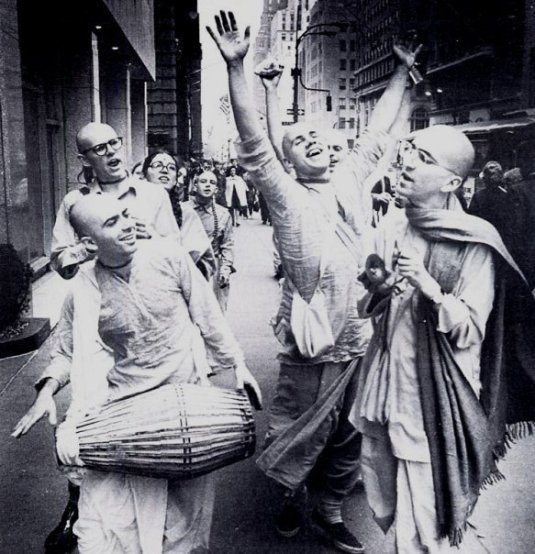
…In the Sixth and Eighth Chapters of Bhagavad-gītā, Lord Śrī Kṛṣṇa, the Supreme Personality of Godhead, explains that the eightfold yoga system is a means to control the mind and senses. This method, however, is very difficult for people to perform, especially in this age of Kali, an age characterized by ignorance and chaos.
Although this eightfold yoga system is particularly recommended in the Sixth Chapter of Bhagavad-gītā, the Lord emphasizes that the process of karma-yoga, action in Kṛṣṇa consciousness, is superior.
…No one really wants to sit down and meditate. Why should we? We’re meant for positive activity, for recreation, for pleasure. In Kṛṣṇa consciousness, our recreation is dancing and chanting, and when we get tired, we take prasāda. Is dancing difficult? Is chanting difficult? We don’t charge anything to dance in the temple. If you go to a ballroom, you have to pay to enter, but we do not charge. It is natural to enjoy music and dancing and palatable foods. These are our recreations, and this is our method of meditation. So this yoga system is not at all laborious. It is simply recreation, susukham. It is stated in the Ninth Chapter of Bhagavad-gītā (9.2) that this yoga is susukham—very happy. “It is everlasting, and it is joyfully performed.” It is natural, automatic, and spontaneous. It is our real life in the spiritual world. (The Path of Perfection)
Full Chapter More
03 Feb 2014
by The Hare Krishna Movement
in Remembering Srila Prabhupada, Satsvarupa das Goswami, Spiritual Life, Spiritual Master, Spiritual World, Srila Prabhupada, Srila Prabhupada Lilamrta
Tags: Citsukhananda das, Cuernavaca, happies, hatha yoga, hippies, India personified, kirtan in mexico, Laksmi-priya dasi, mexico, Mexico City, prabhupada, Spiritual world, Srila Prabhupada, yoga, yoga in mexico

click on image to enlarge
I was talking with one devotee the other day about Puerto Vallarta Mexico. We both agreed that it was a very beautiful and magical place and the devotee informed me that Srila Prabhupada had once visited there, liked it very much and said it reminded him of the birth place of Bhaktivinoda Thakur. This prompted me to do a search on Srila Prabhupada’s visit to Mexico…
More
28 Jan 2014
by The Hare Krishna Movement
in Bhagavad-gita, Bhakti Yoga, Krsna Consciousness: The Topmost Yoga System, Meditation, Yoga
Tags: A. C. Bhaktivedanta Swami Prabhuada, astanga-yoga, Bg 6.47, bhagavad-gita, bhakti yoga, dhyana yogi, hath yogi, highest yoga, jnana-yoga, karma yoga, krsna consciousness, Mount Everest, raja yogi, yoga, yogi
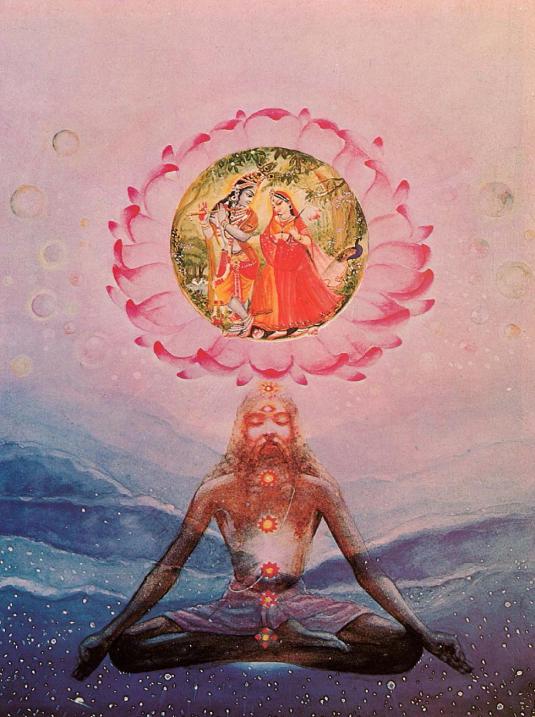
And of all yogīs, he who always abides in Me with great faith, worshiping Me in transcendental loving service, is most intimately united with Me in yoga and is the highest of all.
…The culmination of all kinds of yoga practices lies in bhakti-yoga. All other yogas are but means to come to the point of bhakti in bhakti-yoga. Yoga actually means bhakti-yoga; all other yogas are progressions toward the destination of bhakti-yoga. From the beginning of karma-yoga to the end of bhakti-yoga is a long way to self-realization. Karma-yoga, without fruitive results, is the beginning of this path. When karma-yoga increases in knowledge and renunciation, the stage is called jñāna-yoga. When jñāna-yoga increases in meditation on the Supersoul by different physical processes, and the mind is on Him, it is called aṣṭāṅga-yoga. And, when one surpasses the aṣṭāṅga-yoga and comes to the point of the Supreme Personality of Godhead Kṛṣṇa, it is called bhakti-yoga, the culmination. Factually, bhakti-yoga is the ultimate goal, but to analyze bhakti-yoga minutely one has to understand these other yogas. The yogī who is progressive is therefore on the true path of eternal good fortune. (from purport to Bhagavad-gita 6.47)
full text and purport More
Previous Older Entries Next Newer Entries












 The Hare Krishna Movement