16 Jan 2012
by The Hare Krishna Movement
in Books by Srila Prabhupada, Free Downloads, Free eBooks, Prahlada-Nrsimha das
Tags: books by His Divine Grace A.C. Bhaktivedanta Swami Prabhupada, books online, free download, free eBooks, Krishna Path, Srila Prabhupada, the philosophy of devotion

The other day I was asked “Where can I find Srila Prabhupada’s Original Books online to download to my laptop?” I thought for a moment and remembered this fine web site to reccomend; Krishna Path This is a very nice site! And we encourage all our readers to visit it, and download one of Srila Prabhupada’s Original books to their home or laptop computer.
http://www.krishnapath.org/
14 Jan 2012
by The Hare Krishna Movement
in Guru & Disciple, Srila Prabhupada
Tags: devotional sentiments, guru and disciple, Guru Maharaja, mercy of Krishna, Niragadeva das, spiritual master is present, spiritual masters instructions, Srila Prabhupada

“The Spiritual Master is present wherever his sincere disciple is trying to serve his instructions. This is possible by the mercy of Krishna. In your attempts to serve me, and in all your sincere devotional sentiments I am with you, as my Guru Maharaja is with me. Remember this always…I shall never leave you. You are my disciple and I am your Sriritual Master, so there is no question, as long as you follow my instructions, than I shall never leave you” -Srila Prabhupada
13 Jan 2012
by The Hare Krishna Movement
in Devotee's, Guru & Disciple, Prahlada-Nrsimha das, Srila Prabhupada
Tags: GBC, Iskcon, Prabhavisnu das, prabhupada, Prahlada-Nrsimbha, Rupanuga das, Sannyasi, Srila Prabhupada

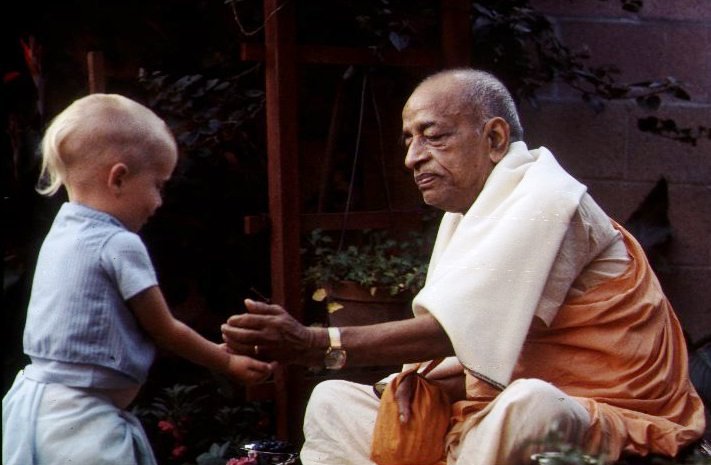
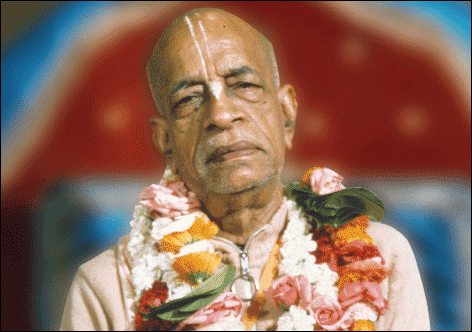
His Divine Grace A.C. Bhaktivedanta Swami Prabhupada Founder Acarya of the International Society for Krishna Consciousness
This is an older post that appeared sometime back on the Sampradaya Sun, but in light of all the discussion on the plight of the ex-GBC/sannyasi/guru; Prabhavisnu Prabhu, we thought it important to remind our readers again of the unique position of Srila Prabhupada. As Prahlada-Nrsimbha reminds us in the following article…”Let us — members of ISKCON, friends of ISKCON, “fringes”, haters of ISKCON, whoever, everyone, just love Srila Prabhupada and fly the one flag of Srila Prabhupada over our heads, and all of us be united under Srila Prabhupada’s lotus feet!”
Fly the One Flag of Srila Prabhupada
By Prahlada-Nrsimha Prabhu
Aug 23, 2011 — USA (SUN)
Dear Rupanuga Prabhu I respect and admire you greatly! I just read your recent article, entitled “The World Acarya”. It is so inspiring to me how you honor Srila Prabhupada very nicely, concluding by saying: “…in due time, people will understand the true meaning of “Prabhupada” – the Master (Prabhu) at whose lotus feet (pada) all others pay their obeisances. All glories to Srila Prabhupada…”
It gives my heart great happiness to see others recognize the unique position of Srila Prabhupada and acknowledge that we (at best) sit at his feet in his shadow as a speck of insignificant dust in comparison to Srila Prabhupada.
I feel now (and since 1977) in ISKCON, Srila Prabhupada is greatly minimized. I have seen that devotees initiated since 1977, the devotee that gives the name and chants on the beads of the newly initiated disciple is given more importance then Srila Prabhupada.
I more often than not meet devotees that have been initiated by devotees in ISKCON and they know the mood and standpoint on various subjects of the devotee that has preformed their initiation ceremony (and/or their local GBC or temple president) and they can even quote him on so many subjects. But when I quote Srila Prabhupada on these subjects they have no idea that Srila Prabhupada said this. They only know what their own GBC or initiator or temple president said.
More
13 Jan 2012
by The Hare Krishna Movement
in A.C. Bhaktivedanta Swami Prabhupada, Devotee's, Lectures, Srimad Bhagavatam
Tags: Ajamila, devotees, Lectures by Srila Prabhupada, Narayana, SB 6.1.28-29, sinful persons, Srila Prabhupada, Srimad Bhagavatam, Visnudutas, Yamaduta, Yamaraja

“At the time of his death the sinful Ajamila saw three awkward persons with deformed bodily features, fierce, twisted faces, and hair standing erect on their bodies. With ropes in their hands, they had come to take him away to the abode of Yamaraja. When he saw them he was extremely bewildered, and because of attachment to his child, Narayana, who was playing a short distance away, Ajamila began to cal him loudly by his name. Thus with tears in his eyes he somehow or other chanted the holy name of Narayana. the order carriers of Visnu, the Visnudutas, immediately arrived when when they heard the holy name of their master from the mouth of the dying Ajamila. The order carriers of Yamaraja were snatching the soul from the core of the heart of Ajamila, the husband of the prostitute, but with resounding voices the messengers of Lord Visnu, the Visnudutas, forbade them to do so” (from Srimad Bhagavatam 6.1.27-29)
Srimad Bhagavatam Lectures
By His Divine Grace A.C. Bhaktivedanta Swami Prabhupada
SB 6.1.28-29 May 28, 1975 Honolulu
Pradyumna: Translation: “Ajāmila then saw three awkward persons with deformed bodily features, fierce, twisted faces, and hair standing erect on their bodies. With ropes in their hands they had come to take him away to the abode of Yamarāja. When he saw them he was extremely bewildered, and because of attachment to his child, who was playing a short distance away, Ajāmila began to call him loudly by his name. Thus, with tears in his eyes, he somehow or other chanted the holy name of Nārāyaṇa.” [SB 6.1.28-29]
Prabhupāda: Sa pāśa-hastāṁs trīn dṛṣṭvā puruṣān ati-dāruṇān. So, at the time of death there are so many disturbance. We have got experience, but you have forgot because bhūtvā bhūtvā pralīyate [Bg. 8.19]. But these things are observed by the sinful person. The Yamadūta, they come to take to the sinful, sinful person, not devotees. Just like the whole population of the city, they are not all subjected to the prison laws. Some criminals. Similarly, this Yamadūta goes to such sinful persons. They are not all. But it is the question of Ajāmila… He was so sinful that automatically the Yamadūtas came, and they wanted to take him.
full lecture More
09 Jan 2012
by The Hare Krishna Movement
in Devotee's, Kanhaiya das, Srila Prabhupada
Tags: devotee, Kanhaiya das, poem to Srila Prabhupada, spiritual master, Srila Prabhupada, Srila Prabhupada's Lotus feet
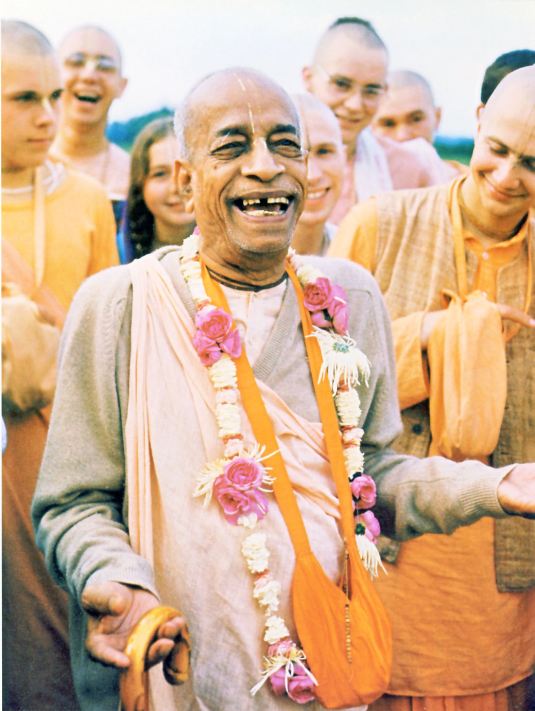
Click photo to enlarge
What else do I want other than Srila Prabhupada’s Lotus feet?
By Kanhaiya Das
“What else do I want other than Srila Prabhupada’s Lotus feet?
In this age of hypocrisy and hatredness that’s my only treat
Who else will remind me of my eternal relationship that I have forgotten,
Just due to the same reason – many million life times, here I have rotten,
When there was so darkness and the path in front I couldn’t see….
When everyone else has given up hopes and abandoned me,
What else do I need other than His Lotus Feet,
Which promise me the world –
The world of love and not hatred,
The world of care and not enviousness
The world of light and not darkness…
The world of association and not isolation…”
More
07 Jan 2012
by The Hare Krishna Movement
in Interview with Srila Prabhupada, Krishna Consciousness, Science of Self Realization, Srila Prabhupada Conversations
Tags: caste system, Christ consciousness, fake gurus, God consciousness, Hare Krsna mantra, Interviews with Srila Prabhupada, krsna consciousness, Sandy Nixon, spiritual master God, Srila Prabhupada
The following interview with freelance reporter Sandy Nixon took place in July 1975, in Śrīla Prabhupāda’s quarters at the Kṛṣṇa center in Philadelphia. This discussion serves as a superb introduction to Kṛṣṇa consciousness and covers such basic topics as the Hare Kṛṣṇa mantra, the relationship between the spiritual master and God, the difference between genuine and fake gurus, the role of women in Kṛṣṇa consciousness, the Indian caste system, and the relationship between Christ consciousness and Kṛṣṇa consciousness.
What is Krsna Consciousness?
Ms. Nixon: My first question is very basic. What is Kṛṣṇa consciousness?
Śrīla Prabhupāda: Kṛṣṇa means God. We are all intimately connected with Him because He is our original father. But we have forgotten this connection. When we become interested in knowing, “What is my connection with God? What is the aim of life?” then we are called Kṛṣṇa conscious.
Ms. Nixon: How does Kṛṣṇa consciousness develop in the practitioner?
Śrīla Prabhupāda: Kṛṣṇa consciousness is already there in the core of everyone’s heart. But because of our materially conditioned life, we have forgotten it. The process of chanting the Hare Kṛṣṇa mahā-mantra—Hare Kṛṣṇa, Hare Kṛṣṇa, Kṛṣṇa Kṛṣṇa, Hare Hare/ Hare Rāma, Hare Rāma, Rāma Rāma, Hare Hare—revives the Kṛṣṇa consciousness we already have. For example, a few months ago these American and European boys andgirls did not know about Kṛṣṇa, but just yesterday we saw how they were chanting Hare Kṛṣṇa and dancing in ecstasy throughout the whole Ratha-yātrā procession [an annual festival sponsored by the Kṛṣṇa consciousness movement in cities around the world]. Do you think that was artificial? No. Artificially, nobody can chant and dance for hours together. They have actually awakened their Kṛṣṇa consciousness by following a bona fide process. This is explained in the Caitanya-caritāmṛta (Madhya 22. 107)
More
03 Jan 2012
by The Hare Krishna Movement
in Srila Prabhupada, The Hare Krishna Movement
Tags: Bhagavad=gita, Founder Acarya of the International Society for Krishna Consciousness, His Divine Grace A.C. Bhaktivedanta Swami Prabhupada, Krishna, Sri Caitanya, Srila Prabhupada, Srimad Bhagavatam, The Hare Krishna Movement

…Krishna says in the Bhagavad-gita, “one who teaches this most confidential knowledge to others is very dear to Me.” Through his translations of Vedic texts such as the Bhagavad-gita, Srimad Bhagavatam, and the Sri Chaitanya-caritamrita, Srila Prabhupada taught others the instructions of Lord Krishna in a way that was understandable to all…
Srila Prabhupada is a Friend to All
Author unknown
His Divine Grace A.C. Bhaktivedanta Swami, more affectionately known as Srila Prabhupada, is the Founder Acarya of the International Society for Krishna Consciousness, ISKCON, or more popularly known as The Hare Krishna Movement. The movement was inaugurated in India by Lord Caitanya almost five hundred years ago. The age that we currently live in is full of quarrel and dissent and the only means of self-realization is through the constant chanting of the holy name of God.
The Hare Krishna mantra, “Hare Krishna, Hare Krishna, Krishna Krishna, Hare Hare, Hare Rama, Hare Rama, Rama Rama, Hare Hare”, is found in the ancient scriptures of India, and is the most powerful of mantras in this age since it directly addresses God and His energy in a loving way. Lord Chaitanya freely distributed this mantra to all of India through congregational chanting. Srila Prabhupada, a spiritual master in the disciplic succession descending from Lord Chaitanya, preached this same movement in the mid 1960s beginning in America and eventually spreading throughout the world.
More
01 Jan 2012
by The Hare Krishna Movement
in Bhagavad-gita, Time
Tags: Arjuna, As It Is 1972 Edition, bhagavad-gita, His Divine Grace A.C. Bhaktivedanta Swami Prabhupada, Krishna, past present and future, Srila Prabhupada, supersoul, supreme soul

…Anyone with a material body cannot remember his past life, nor can he foretell his future life, nor can he predict the outcome of his present life; therefore he cannot know what is happening in past, present and future. Unless one is liberated from material contamination, he cannot know past, present and future.
…out of millions and millions of men, some try to become perfect in this human form of life, and out of thousands and thousands of such perfected men, hardly one can understand what Lord Kṛṣṇa is. Even if one is perfected by realization of impersonal Brahman or localized Paramātmā, he cannot possibly understand the Supreme Personality of Godhead, Śrī Kṛṣṇa, without being in Kṛṣṇa consciousness.
Bhagavad-gita As It Is 1972 Edition
By His Divine Grace A.C. Bhaktivedanta Swami Prabhupada
Chapter 7, Text 26
vedāhaṁ samatītāni
vartamānāni cārjuna
bhaviṣyāṇi ca bhūtāni
māṁ tu veda na kaścana
veda—know; aham—I; sama—equally; atītāni—past; vartamānāni—present; ca—and; arjuna—O Arjuna; bhaviṣyāṇi—future; ca—also; bhūtāni—living entities; mām—Me; tu—but; veda—knows; na—not; kaścana—anyone.
Translation
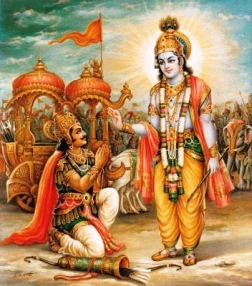
O Arjuna, as the Supreme Personality of Godhead, I know everything that has happened in the past, all that is happening in the present, and all things that are yet to come. I also know all living entities; but Me no one knows.
Purport
Here the question of personality and impersonality is clearly stated. If Kṛṣṇa, the form of the Supreme Personality of Godhead, is considered by the impersonalists to be māyā, to be material, then He would, like the living entity, change His body and forget everything in His past life. Anyone with a material body cannot remember his past life, nor can he foretell his future life, nor can he predict the outcome of his present life; therefore he cannot know what is happening in past, present and future. Unless one is liberated from material contamination, he cannot know past, present and future.
More
27 Dec 2011
by The Hare Krishna Movement
in Devotee's, Guru das, People
Tags: By His Example, Govinda, Govinda adi purasham, Gurudas, Hare Krishna, photo by Gurudas, prabhupada, Radha and Krishna, Srila Prabhupada, Sriman George Harrison, Swamiji, The Hare Krishna Movement, Yamuna
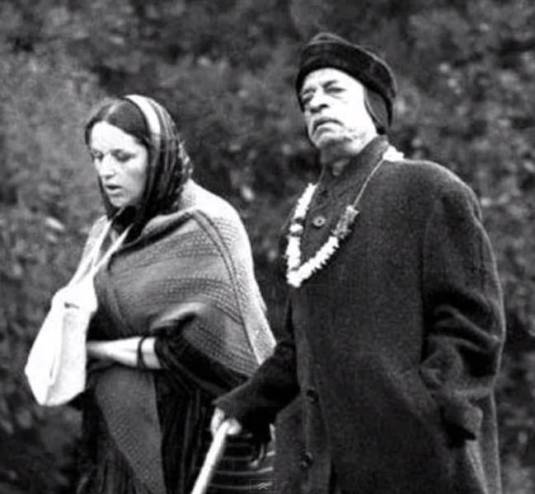
Click on photo to enlarge
Yamuna
By Gurudas
I am saddened by my feeling of separation from you, that I will not see you again on this planet, yet I still feel close to you. Our relationship transcends material boundaries and You are in my, and many peoples hearts.
Let us all pray for your continued spiritual journey, which makes me happy, as you are not in pain anymore, and with our beloved Spiritual Master, and Radha and Krishna.
I fell in love with you upon viewing your powerful presence.
I fell in Love with you, little did I know what A great path you carved out and offered to me, for you introduced me to Prabhupad.
I noted your great qualities, spiritual beauty, perseverance, a great confidant and friend. Steadfast, curious, sweet, meticulous, detail oriented, and expert in anything you were interested in. Your smile lit up many rooms and hearts.
You showed love for Prabhupad from the very beginning.
More
25 Dec 2011
by The Hare Krishna Movement
in Bhagavad-gita, Devotional Service, Krishna Consciousness, Lord Jesus Christ
Tags: Arjuna, bhagavad-gita, devotee is friendly to every living entity, devotional service, God consciousness, Jesus Christ, Lord Jesus Christ, Srila Prabhupada
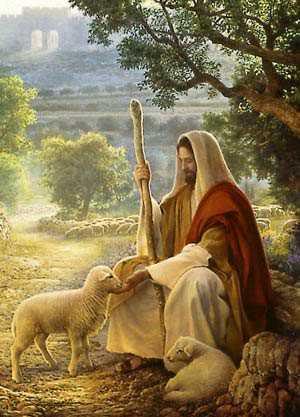
A devotee of Kṛṣṇa is friendly to everyone. Therefore it is said here that he has no enemy. How is this? A devotee situated in Kṛṣṇa consciousness knows that only devotional service to Kṛṣṇa (God) can relieve a person from all the problems of life. He has personal experience of this, and therefore he wants to introduce this system, Kṛṣṇa consciousness, or God Consciousness, into human society. There are many examples in history of devotees of the Lord risking their lives for the spreading of God consciousness. The favorite example is Lord Jesus Christ
He was crucified by the nondevotees, but He sacrificed His life for spreading God consciousness. Of course, it would be superficial to understand that He was killed. Similarly, in India also there are many examples, such as Ṭhākur Haridāsa. Why such risk? Because they wanted to spread Kṛṣṇa consciousness, and it is difficult. A Kṛṣṇa conscious person knows that if a man is suffering, it is due to his forgetfulness of his eternal relationship with Kṛṣṇa (God). Therefore, the highest benefit one can render to human society is relieving one’s neighbor from all material problems. In such a way, a pure devotee is engaged in the service of the Lord. Now, we can imagine how merciful Kṛṣṇa is to those engaged in His service, risking everything for Him. Therefore it is certain that such persons must reach the supreme planet after leaving the body.
Bhagavad-gita As It Is – Macmillan 1972 Edition
By His Divine Grace A.C. Bhaktivedanta Swami Prabhupada
Chapter 11 The Universial Form Text 55
mat-karma-kṛn mat-paramo
mad-bhaktaḥ saṅga-varjitaḥ
nirvairaḥ sarva-bhūteṣu
yaḥ sa mām eti pāṇḍava
mat-karma-kṛt—engaged in doing My work; mat-paramaḥ—concerning Me, the Supreme; mat-bhaktaḥ—engaged in My devotional service; saṅga-varjitaḥ—freed from the contamination of previous activities and mental speculation; nirvairaḥ—without an enemy; sarva-bhūteṣu—to every living entity; yaḥ—one who; saḥ—he; mām—unto Me; eti—comes; pāṇḍava—O son of Pāṇḍu.
Translation
My dear Arjuna, one who is engaged in My pure devotional service, free from the contaminations of previous activities and from mental speculation, who is friendly to every living entity, certainly comes to Me.
More
25 Dec 2011
by The Hare Krishna Movement
in Lord Jesus Christ, Science of Self Realization, Srila Prabhupada Conversations, Vegetarianism
Tags: Christ, Christos, Emmanuel Jungclaussen, Father Emmanuel, Jesus, Krishna, Krsna, Krsta, Lord Jesus Christ, Srila Prabhupada, the anointed one, The Science of Self Realization, Understanding Krsna and Christ

Conversation with Father Emmanuel
The Science of Self Realization
By His Divine Grace A.C. Bhaktivedanta Swami Prabhupada
Chapter 4 “Understanding Krsna and Christ”
Conversation with Father Emmanuel
In 1974, near ISKCON’s center in Frankfurt am Main, West Germany, Srila Prabhupada and several of his disciples took a morning walk with father Emmanuel Jungclaussen, a Benedictine monk from Niederalteich Monastery.
Noticing that Srila Prabhupada was carrying meditation beads similar to the rosary, Father Emmanuel explained that he also chanted a constant prayer: “Lord Jesus Christ, be merciful unto us.” The following conversation ensued.
Srila Prabhupada: What is the meaning of the word Christ?
Father Emmanuel: Christ comes from the Greek word Christos, meaning “the anointed one.”
Srila Prabhupada: Christos is the Greek version of the word Krsna.
Father Emmanuel: This is very interesting.
Srila Prabhupada: When an Indian person calls on Krsna, he often says, “Krsta.” Krsta is a Sanskrit word meaning “attraction.” So when we address God as “Christ,” “Krsta,” or “Krsna,” we indicate the same all-attractive Supreme Personality of Godhead. When Jesus said, “Our Father, who art in heaven, sanctified be Thy name,” that name of God was “Krsta” or “Krsna.” Do you agree?
Father Emmanuel: I think Jesus, as the son of God, has revealed to us the actual name of God: Christ. We can call God “Father,” but if we want to address Him by His actual name, we have to say “Christ.”
Srila Prabhupada: Yes. “Christ” is another way of saying Krsta, and “Krsta” is another way of pronouncing Krsna, the name of God. Jesus said that one should glorify the name of God, but yesterday I heard one theologian say that God has no name-that we can call Him only “Father.” A son may call his father “Father,” but the father also has a specific name. Similarly, “God” is the general name of the Supreme Personality of Godhead, whose specific name is Krsna. Therefore whether you call God “Christ,” “Krsta,” or “Krsna,” ultimately you are addressing the same Supreme Personality of Godhead.
More
22 Dec 2011
by The Hare Krishna Movement
in Diksha, Disciplic succession, Guru & Disciple, Siksa
Tags: disciple, guru, His Divine Grace A.C. Bhaktivedanta Swami Prabhupada, Initiation, Nov. 14th 1977, rules and regulations, spiritual master, Srila Prabhupada

Srila Prabhupada Spiritually Present
Physically Departed / Spiritually Present
Author unknown
“Yes, I am the Spiritual Master of this institution, and all members of the society, they’re supposed to be my disciples. They follow the rules and regulations which I ask them to follow, and they are initiated by me spiritually.”
Srila Prabhupada left this world on November 14th 1977 in Krishna’s holy land of Vrindavan. He had been translating his books and instructing his disciples to the very last, and left in the most auspicious circumstances, surrounded by his disciples chanting the maha-mantra.
He left behind a massive legacy of teachings in the form of numerous books, audio and video taped lectures and conversations, as well as a worldwide Movement. He said he had given everything necessary to go back home, back to Godhead, we just had to read his books, chant and follow his instructions. He taught that there was no difference to serving him when he was physically present, to doing so when he was absent. He would remain spiritually present in his books and instructions:
More
21 Dec 2011
by The Hare Krishna Movement
in Devotee's, Srila Prabhupada, Vegetarian Cooking, Yamuna devi
Tags: equal to all, Govindam Prayers, panditah sama-darsinah, Srila Prabhupada, Srila Prabhupada's Transcendental Sweetness and Beauty, Vegetarian cookbooks, Yamuna devi

Srila Prabhupada with Yamuna Devi
As many of you already know, Her Grace Yamuna devi dasi, one of the first disciples of His Divine Grace A.C. Bhaktivedanta Swami Prabhupada, departed on the morning of the auspicious day of Saphala Ekadasi. She is well-known for her glorious contributions to the Iskcon society and the world at large. She has authored many fine award winning books on Vegetarian cooking, and is famous as a kirtan leader, and for her beautiful singing of the Govindam Adipurusham prayers that we hear and chant daily in all of the Hare Krishna Centers throughout the world. We offer her our respectful obiesances.
The following is a Presentation to the GBC, on “Women in ISKCON”, March 2000
Srila Prabhupada’s Transcendental Sweetness and Beauty
Presentation by Yamuna devi dasi
What a week of Vaisnava sadhu-satsanga this has been! I leave the richer, having exchanged with my family members, old and new, Godbrothers, Godsisters, nephews and nieces. While I feel most unqualified to speak to you today, I am honoured and privileged to join my Godsisters in voicing my concerns as a woman in ISKCON.
As the GBC body, all of you are responsible for establishing Srila Prabhupada’s legacy, which, in these difficult and turbulent times, is at stake. One realm of that legacy – the rapport Srila Prabhupada established with his Vaisnavi disciples – is the topic of our discussion today, because over the years since his disappearance it has been largely forgotten. Perhaps my personal service and association with him, along with his later guidance and instructions, offer some insights in this area.
As a strong and independent young woman I met Srila Prabhupada in 1966 and took initiation in 1967. Had Srila Prabhupada demanded conformity to orthodox roles for women as a condition of surrender, I, along with many of my Godsisters, would probably not have joined ISKCON. That he did not is testament to his spiritual vision. He lovingly encouraged and engaged us in the service of the sankirtana movement, and he consistently revealed himself to be panditah sama-darsinah – equal to all.
More
20 Dec 2011
by The Hare Krishna Movement
in Devotee's, Yamuna devi
Tags: Deena Bandhu das, devotee, disciple, Godsister, Srila Prabhupada, Vrindavan, Yamuna Devi Dasi

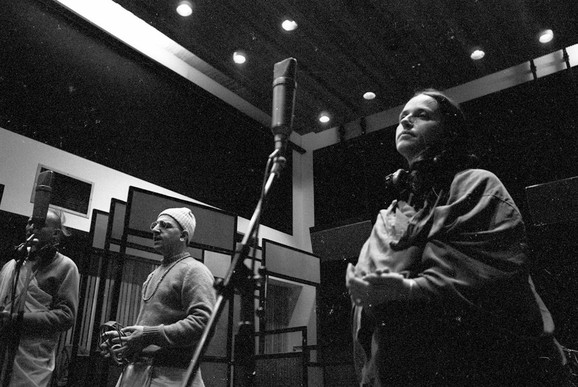
Yamuna devi dasi Recording The Hare Krsna Album
Early this morning on Saphala Ekadasi in Florida, our very dear Godsister Yamuna left this world. Don’t have any details yet, but Dina Tarini found her asleep with her hand in her beadbag. One of Prabhupada’s first and dearest daughters, he said she cooks just like Radharani. So now she must be helping Radharani to cook for Shyamasundara. – Deena Bandhu, Vrindavan
14 Dec 2011
by The Hare Krishna Movement
in Devotee's, Hayagriva das, Matchless Gifts, The Hare Krishna Movement
Tags: Bhaktisiddanta Saraswati, Divine Intoxication, founder and Acharya, Hare Krsna Movement, hayagriva das, His Divine Grace A.C. Bhaktivedanta Swami Prabhupada, Krsnadas, matchless gifts, Srila Prabhupada, Swamiji, the hare krishna explosion

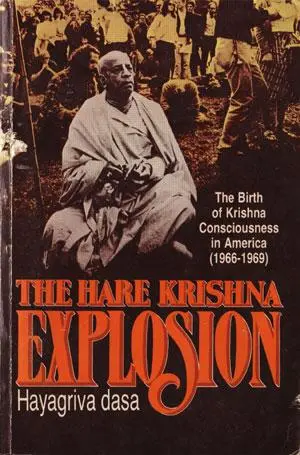
The words “Matchless Gifts” means something very special to the followers of this Hare Krsna movement. The founder and Acharya of this movement, His Divine Grace A.C.Bhaktivedanta Swami Prabhupada, arrived in the United States from India. Alone, and at the late age of 69, and practically penniless; in September of 1965, on the order of His Spiritual Master, Bhaktisiddanta Saraswati Swami, He came by freighter steamboat, to attempt to spread this Krsna Consciousness to the western countries. He also asked Him to print books. In July 1966, in a storefront in New York City, He began the International Society for Krsna Consciousness, ISKCON, practically single-handed; except for a small group of bohemians and hippies, whom He attracted, while walking the streets of New York City.This small storefront building, had been a curiosity shop before Srila Prabhupada rented it, and someone had painted “Matchless Gifts” over the storefront window. At that time, no one realized just how prophetic these words were; for it was there, that this worldwide movement was started, at the storefront called “Matchless Gifts”. -Krsnadas
The Story of MATCHLESS GIFTS
By Hayagriva das
I walked around the corner with him, and he pointed out a small storefront building between First and Second Streets, next door to a Mobil filling station. It had been a curiosity shop, and someone had painted Matchless Gifts over the window. At the time I didn’t realize how prophetic the words were.
When I first met my spiritual master, His Divine Grace A. C. Bhaktivedanta Swami Prabhupada, I felt that there was never a time when I did not know him. I never tire of telling of my first meeting with him on the streets of Lower East Side New York. At the time, I was hurrying from my Mott Street apartment, which had become a refuge for psychedeliacs, to a much quieter apartment on Fifth Street where I hoped to get some peace.
I was walking down Houston Street and across Bowery, past the rushing traffic and stumbling derelicts, and after crossing Bowery, just before Second Avenue, I saw His Divine Grace jauntily strolling down the sidewalk, his head high in the air, his hand in a beadbag. He struck me like a famous actor in a very familiar movie. He seemed ageless, though later I found out that he was seventy years old. He was wearing the traditional saffron-colored robes of a sannyasi; the renounced order, and quaint white shoes with points. Coming down Houston Street, he looked like the genie that popped out of Aladdin’s lamp. I was fresh from a trip to India, and His Divine Grace reminded me of the many holy men I had recently seen walking the dirt roads of Hardwar and Hrishikesh and bathing in the Ganges. I had gone to India to look for a guru but had returned disappointed. It was on this bright July morning, when I was least expecting it, that Sri Krsna, out of His infinite mercy, sent guru to me.
More
13 Dec 2011
by The Hare Krishna Movement
in Bhaktisiddhanta Sarasvati Thakura, Poetry of Srila Prabhupada, Songs of the Vaisnava Acaryas
Tags: Bhaktisiddhanta Sarasvati, disappearance day of Bhaktisiddhanta Sarasvati, Jaladuta, Prayer unto the Lotus Feet of Krsna, Sept 13 1965, Sri Srimad Bhaktisiddhanta Sarasvati Thakura, Srila Prabhupada, Srimati Radharani
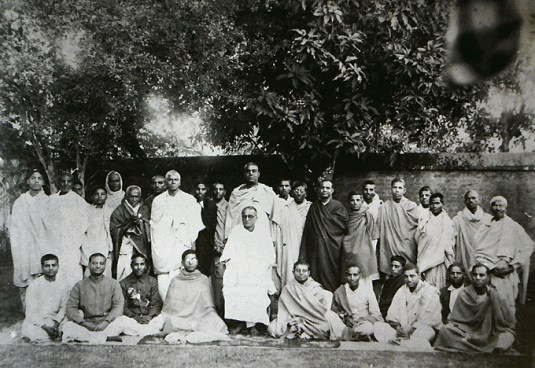
Srila Bhaktisiddhanta Saraswati Thakur and his disciples
Dec 14, 2001 is the Disappearance Day of Srila Bhaktisiddhanta Sarasvati Goswami, and we honor him with a prayer written by Srila Prabhupada written aboard the ship Jaladuta, on his way to fulfill the order (mission) of his spiritual master, Srila Bhaktisiddhanta.
Prayer unto the Lotus Feet of Krsna
by His Divine Grace A.C. Bhaktivedanta Swami Prabhupāda
on board the ship Jaladuta, September 13, 1965
(refrain)
kṛṣṇa taba puṇya habe bhāi
e-puṇya koribe jabe rādhārāṇī khusī habe
dhruva ati boli tomā tāi
I emphatically say to you, O brothers, you will obtain your good fortune from the Supreme Lord Kṛṣṇa only when Śrīmatī Rādhārāṇī becomes pleased with you.
śrī-siddhānta saraswatī śacī-suta priya ati
kṛṣṇa-sebāya jāra tula nāi
sei se mohānta-guru jagater madhe uru
kṛṣṇa-bhakti dey ṭhāi ṭhāi
Śrī Śrīmad Bhaktisiddhānta Sarasvatī Ṭhākura, who is very dear to Lord Gaurāṅga, the son of mother Śacī, is unparalleled in his service to the Supreme Lord Śrī Kṛṣṇa. He is that great saintly spiritual master who bestows intense devotion to Kṛṣṇa at different places throughout the world.
More
11 Dec 2011
by The Hare Krishna Movement
in Back to Godhead, Brahmananda das, Spiritual Life, Spiritual World, Vrindavan
Tags: Back to Godhead Magazine, Brahmananda dasa, devotional service, Krishna, Land of No Return, Srila Prabhupada, Vrindavan forest, Vrndavan

Vrndavana—Land of No Return
By His Holiness Brahmananda Swami
Originally Published in Back to Godhead 1975 Vol. 10, No. 11
Part 2
I once visited Vrndavana, India with His Divine Grace Srila Prabhupada. As I accompanied him on his daily walk one morning we suddenly came upon a particularly beautiful spot. The cool sands were thick with foliage; the tall trees full of singing birds. As the sun brightened the clear morning sky, peacocks filled the air with their peculiar call.
Srila Prabhupada looked over his shoulder and said to me, “So, Brahmananda, this is Vrndavana. How do you like it?”
“It’s wonderful, Srila Prabhupada,” was all I could reply. I felt that he was actually revealing the glories of Vrndavana to me even though I had no particular spiritual qualification.
Vrndavana is the place where the Supreme Lord Sri Krsna appeared five thousand years ago. Lord Krsna descended there from His own spiritual planet, Goloka Vrndavana to attract us by displaying His supernatural pastimes. Srila Prabhupada has explained that when Krsna descends to the material world, this same Vrndavana descends with Him just as an entourage accompanies an important personage. Because when Krsna comes His land also comes, Vrndavana is not considered to exist in the material world. Therefore devotees take shelter of the Vrndavana in India, for it is considered to be a replica of the original Goloka Vrndavana.
More
08 Dec 2011
by The Hare Krishna Movement
in Chanting Hare Krishna, Sankirtan
Tags: chanting Hare Krishna, Iskcon, Krishna consciousness movement, Locananda dasa, Lord Caitanya, nama-sankirtan, sankirtan, Sri Panca-Tattva, Srila Prabhupada, The Hare Krishna Movement, Vaisnavas
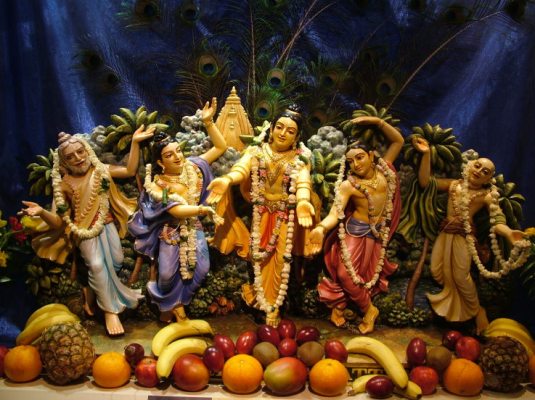
Sri Panca Tattva Wellington New Zealand
…What the Lord Caitanya Mahaprabhu Himself proclaims to be the prime benediction for mankind, and the activity that He Himself appeared in this world to inaugurate, has been very badly neglected by ISKCON’s leaders. To attract devotees, to engage devotees and to elevate the awareness of the public, there is no better method than to perform nama-sankirtana. This same instruction was given to Lord Caitanya by His spiritual master:
“My dear child, continue dancing, chanting and performing sankirtana in association with devotees. Furthermore, go out and preach the value of chanting Krishna-nama, for by this process You will be able to deliver all fallen souls.”
Nama Sankirtana
Editorial (VNN) – by Locanananda Das
Originally Published on Vaishnava News
By reading the Sri Caitanya Caritamrita, one should become convinced that the Krishna consciousness movement is the vehicle through which the mercy of Caitanya Mahaprabhu will deliver the entire world. But events taking place within the movement over the last twenty years have shaken everyone’s faith, and it has become very difficult to take pride in being a member of ISKCON, the organization that Srila Prabhupad risked his life to create. The year of the Centennial having come and gone, ISKCON continues to be plagued by a malaise that is rooted in its leaders’ lack of vision and apparent lack of concern for the spiritual well-being of the devotees. Compounded by the offensive banning of vaisnavas and the enactment of deviant policies, the movement has been thrown into a tailspin from which some think it may not recover.
Personally, I have tremendous faith in the system established by Srila Prabhupad. I am thoroughly convinced that there can be a reconciliation of the parties on the different sides of all current issues, but it will require that we rise above false ego and agree to do what is best for the Krishna consciousness movement.
More
01 Dec 2011
by The Hare Krishna Movement
in Back to Godhead, Brahmananda das, Spiritual World, Vrindavan
Tags: back to Godhead, Brahmananda dasa, Krishna, Land of No Return, material world, Shangri-la, Spiritual world, Srila Prabhupada, Vrindavan
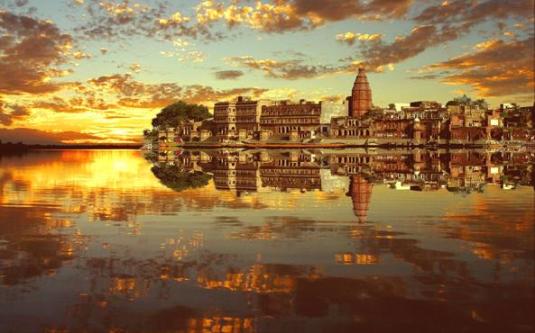
Because Vrndavana is the eternal and entirely spiritual abode of the Lord, it is nondifferent from Him. At Vrndavana, one will find unlimited wealth, strength, fame, wisdom, beauty and renunciation—all the six opulences possessed by the Supreme Personality of Godhead, Bhagavan Sri Krsna. Indeed Vrndavana is Krsna, and, to go there is to perceive God Himself.
Vrndavana—Land of No Return (Part 1)
By His Holiness Brahmananda Swami
Back to Godhead Magazine 1975 Volume 10 Number 9
From the beginning of time, man has yearned for the perfect home—a paradise, a Shangri-la, a Walden—where he could live eternally in peace and happiness. Such a place cannot be found anywhere in the material world, however, for the material world is by its very nature temporary and frustrating. To end our weary searching, we must go beyond this world of duality, beyond the boundaries of space and time, into the spiritual realm.
Vrndavana, India, is that sought-after eternal resting place because it is at Vrndavana that Lord Sri Krsna, the Supreme Personality of Godhead, descended to this planet five thousand years ago. The Lord’s appearance and activities are not mundane; they are completely transcendental. Just as a king may travel with all his retinue, set up camp, and conduct his affairs of state in the same style as if he were in his palace, Lord Krsna brought with Him all His transcendental associates and paraphernalia and created on earth an exact replica of the spiritual world, known as Goloka Vrndavana.
More
24 Nov 2011
by The Hare Krishna Movement
in Songs of the Vaisnava Acaryas, Sri Caitanya-Caritamrta, Vegetarian Cooking
Tags: Advaita Acarya, Caitanya Caritamrta, ecstasy of Sri Caitanya Mahaprabhu, grhastha-asrama, Krishna, Lord Chaianya Mahaprabhu, Lord Nityananda, Prasadam, sak, Srila Prabhupada, vegetarian Thanksgiving

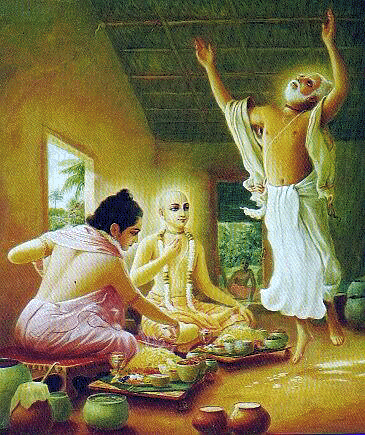
Today being Thanksgiving, we decided to post a story of one of the “Most Famous Feasts” in recent Vaisnava history, cooked by the wife of Advaita Acarya, Sita. Followed by the song composed by Srila Bhaktivinoda Thakura, “Prasada-sevya part 2” honoring this event.
Sri Caitanya-caritamrta – 1975 Edition
By His Divine Grace A.C. Bhaktivedanta Swami Prabhupada
Lord Sri Caitanya Mahaprabhu’s Stay at the House of Advaita Acarya
Madhya 3, Text 38-136
Advaita Ācārya said, “You have been fasting continuously for three days in Your ecstasy of love for Kṛṣṇa. I therefore invite You to My home, where You may kindly take Your alms. Come with Me to My residence.”
Advaita Prabhu continued, “At My home I have just cooked one palmful of rice. The vegetables are always very simple. There is no luxurious cooking-simply a little liquid vegetable and spinach.”
Saying this, Śrī Advaita Ācārya took the Lord into the boat and brought the Lord to His residence. There Advaita Ācārya washed the feet of the Lord and was consequently very happy within.
All the eatables were first cooked by the wife of Advaita Ācārya. Then Śrīla Advaita Ācārya personally offered everything to Lord Viṣṇu.
More
Previous Older Entries Next Newer Entries