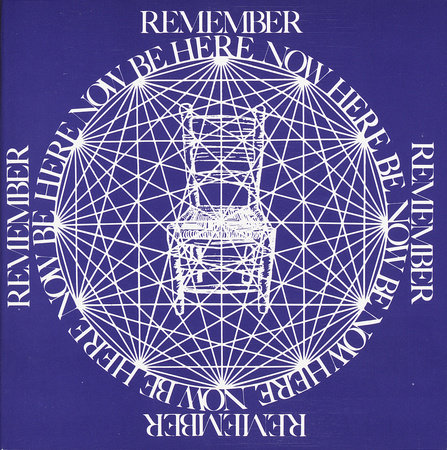
Today most people have heard of yoga and meditation, but I remember when I first took up yoga back in 1972, it was not so widely known. I was first introduced to it from the book “Be Here Now”. It was a very simplistic book, but it was full of ideas, quotes and images, that opened my mind to a world of spiritual thought. It introduced me to yoga, meditation, the concept of vegetarianism, spirituality, and the need of a Guru or Spiritual Master. I began to take seriously ideas that were introduced, such as self realization, living a more pure life, developing our relationship with God, finding out who is God, and finding my spiritual master (guru). So for me, the book was the beginning of my journey, as it was for many, so indeed it was a huge success, it that regard.
Maybe I was sincere, or maybe just lucky, but I soon found my eternal Spiritual Master, His Divine Grace A.C. Bhaktivedanta Swami Prabhupada, and he answered all my questions. He told me who is God (Krsna), what my relationship with him is (sanatan-dharma), the process for self realization (bhakti-yoga), and how to get out of this temporary material world and return home back to Godhead.
When I first began my practice of Yoga, it was purely as a spiritual Practice. Nowadays, people will take it up for many different reasons, such as weight loss, fitness, relaxation, or social acceptance and community. But I still see it as a spiritual practice. The daily asanas, which are good for my ageing body, are an offering, and the breathing is a mindful prayer.
The word Yoga means “Union”. To link our consciousness with a Higher Consciousness.
Yoga means “linking” with the Supreme. The Bhagavad-gītā describes several systems—karma-yoga (work), jñāna-yoga (knowledge), dhyāna-yoga (meditation), and aṣṭāṅga-yoga (eightfold path)—but ultimately declares bhakti-yoga, devotional service, to be the highest.
“Of all yogīs, he who always abides in Me with great faith, worshiping Me in transcendental loving service, is most intimately united with Me in yoga, and is the highest of all.” (Bg. 6.47) So one who thinks of the Supreme Lord always is the greatest yogi, the supermost jnani, and the greatest devotee at the same time.
This morning as I was finishing the Tenth Chapter of the Second Canto, the following verse and purport jumped out at me from the pages. And I realized for the thousandth time, what great good fortune we have in that we can hear directly from the pure devotee of the Lord, about the eternal pastimes of the Lord, through the pages of the Srimad Bhagavatam.
Of the three types of Transcendentalist’s, namely the jñānī, the yogī and the bhakta, or the impersonalist, the meditator and the devotee. It is only the devotee who can factually know the Lord as He is and thus be trained in the bona fide service of the Lord and be allowed to enter into the direct association of the Lord in so many capacities. The highest glorious association with the Lord is made possible in the planet of Goloka Vṛndāvana, where Lord Kṛṣṇa enjoys Himself with the gopīs and His favorite animals, the surabhi cows.
… The impersonalist is satisfied simply by understanding the all-pervasive influence of the Lord. This is called Brahman realization. Greater than the impersonalist is the mystic who sees the Lord situated in his heart as Paramātmā, the partial representation of the Lord. But there are pure devotees who take part in the direct pleasure (ānanda) potency of the Lord by factual reciprocation of loving service. The Lord in His abode called the Vaikuṇṭha planets, which are eternal manifestations, always remains with His associates and enjoys transcendental loving services by His pure devotees in different transcendental humors.
So we are pleased to present the following Texts and Purports
When we speak of yoga we refer to linking up our consciousness with the Supreme Absolute Truth. Such a process is named differently by various practitioners in terms of the particular method adopted. When the linking up process is predominantly in fruitive activities, it is called karma-yoga, when it is predominantly empirical, it is called jñāna-yoga, and when it is predominantly in a devotional relationship with the Supreme Lord, it is called bhakti-yoga. Bhakti-yoga or Kṛṣṇa consciousness is the ultimate perfection of all yogas, as will be explained in the following verse.
And of all yogīs, he who always abides in Me with great faith, worshiping Me in transcendental loving service, is most intimately united with Me in yoga and is the highest of all. (Bhagavad-gita 6.47)
The culmination of all kinds of yoga practices lies in bhakti-yoga. All other yogas are but means to come to the point of bhakti in bhakti-yoga. Yoga actually means bhakti-yoga; all other yogas are progressions toward the destination of bhakti-yoga. From the beginning of karma-yoga to the end of bhakti-yoga is a long way to self-realization. Karma-yoga, without fruitive results, is the beginning of this path. When karma-yoga increases in knowledge and renunciation, the stage is called jñāna-yoga. When jñāna-yoga increases in meditation on the Supersoul by different physical processes, and the mind is on Him, it is called aṣṭāṅga-yoga. And, when one surpasses the aṣṭāṅga-yoga and comes to the point of the Supreme Personality of Godhead Kṛṣṇa, it is called bhakti-yoga, the culmination. Factually, bhakti-yoga is the ultimate goal, but to analyze bhakti-yoga minutely one has to understand these other yogas. The yogī who is progressive is therefore on the true path of eternal good fortune. One who sticks to a particular point and does not make further progress is called by that particular name: karma-yogī, jñāna-yogī or dhyāna-yogī, rāja-yogī, haṭha-yogī, etc. If one is fortunate enough to come to the point of bhakti-yoga, it is to be understood that he has surpassed all the other yogas. Therefore, to become Kṛṣṇa conscious is the highest stage of yoga, just as, when we speak of Himalayan, we refer to the world’s highest mountains, of which the highest peak, Mount Everest, is considered to be the culmination.
The Kṛṣṇa consciousness movement is conducted under the supervision of Śrīla Rūpa Gosvāmī. The Gauḍīya Vaiṣṇavas, or Bengali Vaiṣṇavas, are mostly followers of Śrī Caitanya Mahāprabhu, of whom the six Gosvāmīs of Vṛndāvana are direct disciples. Therefore Śrīla Narottama dāsa Ṭhākura has sung:
rūpa-raghunātha-pade ha-ibe ākuti kabe hāma bujhaba se yugala-pīriti
“When I am eager to understand the literature given by the Gosvāmīs, then I shall be able to understand the transcendental loving affairs of Rādhā and Kṛṣṇa.” Śrī Caitanya Mahāprabhu appeared in order to bestow upon human society the benediction of the science of Kṛṣṇa. The most exalted of all the activities of Lord Kṛṣṇa are His pastimes of conjugal love with the gopīs. Śrī Caitanya Mahāprabhu appeared in the mood of Śrīmatī Rādhārāṇī, the best of the gopīs. Therefore, to understand the mission of Lord Śrī Caitanya Mahāprabhu and follow in His footsteps, one must very seriously follow in the footsteps of the six Gosvāmīs—Śrī Rūpa, Sanātana, Bhaṭṭa Raghunātha, Śrī Jīva, Gopāla Bhaṭṭa and Dāsa Raghunātha.
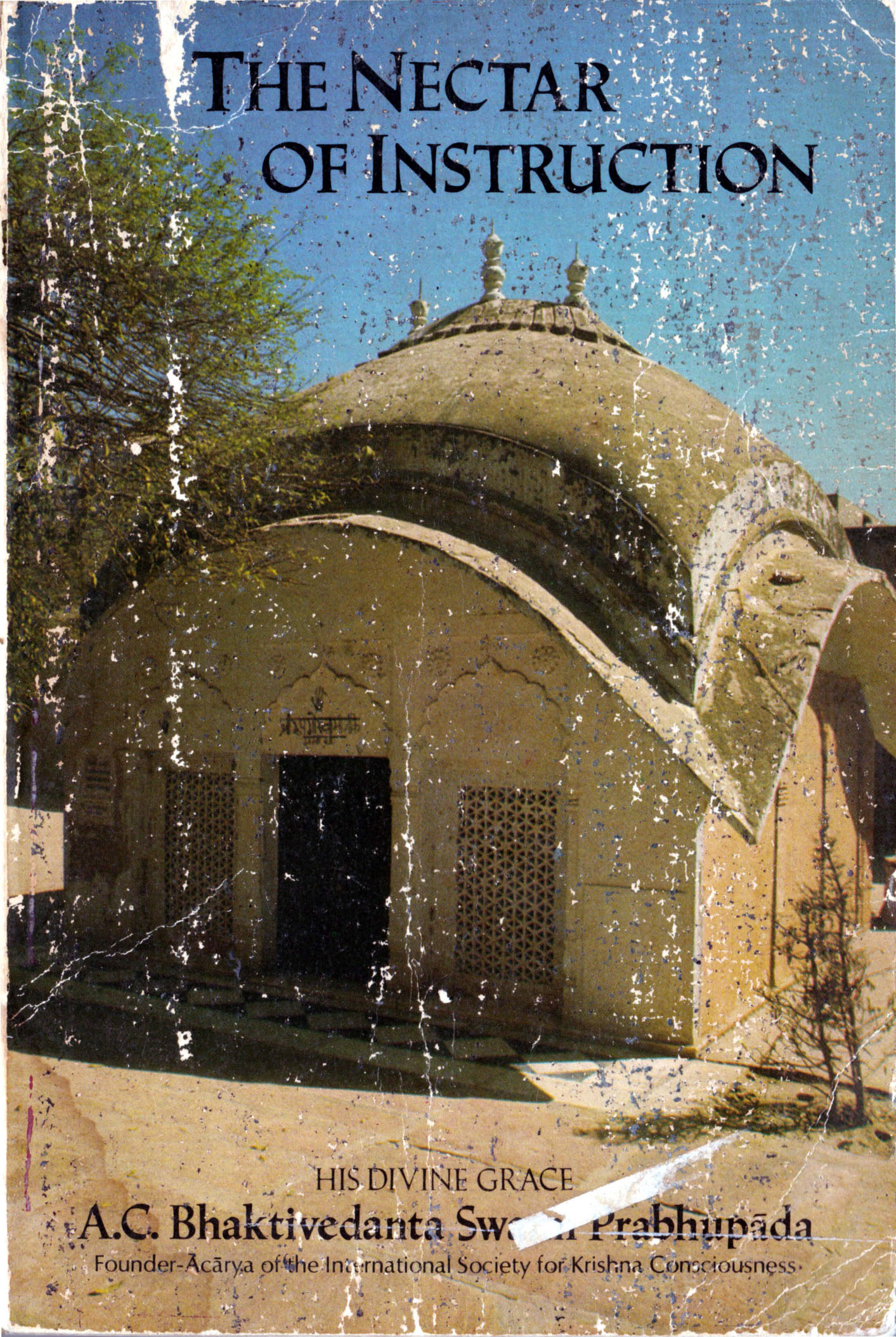
Śrī Rūpa Gosvāmī was the leader of all the Gosvāmīs, and to guide our activities he gave us this Upadeśāmṛta (The Nectar of Instruction) to follow. As Śrī Caitanya Mahāprabhu left behind Him the eight verses known as Śikṣāṣṭaka, Rūpa Gosvāmī gave us Upadeśāmṛta so that we may become pure Vaiṣṇavas.
In all spiritual affairs, one’s first duty is to control his mind and senses. Unless one controls his mind and senses, one cannot make any advancement in spiritual life. Everyone within this material world is engrossed in the modes of passion and ignorance. One must promote himself to the platform of goodness, sattva-guṇa, by following the instructions of Rūpa Gosvāmī, and then everything concerning how to make further progress will be revealed.
Advancement in Kṛṣṇa consciousness depends on the attitude of the follower. A follower of the Kṛṣṇa consciousness movement should become a perfect gosvāmī. Vaiṣṇavas are generally known as gosvāmīs. In Vṛndāvana, this is the title by which the director of each temple is known. One who wants to become a perfect devotee of Kṛṣṇa must become a gosvāmī. Go means “the senses,” and svāmī means “the master.” Unless one controls his senses and mind, one cannot become a gosvāmī. To achieve the highest success in life by becoming a gosvāmī and then a pure devotee of the Lord, one must follow the instructions known as Upadeśāmṛta, which have been given by Śrīla Rūpa Gosvāmī. Śrīla Rūpa Gosvāmī has given many other books, such as Bhakti-rasāmṛta-sindhu, Vidagdha-mādhava and Lalita-mādhava, but Upadeśāmṛta constitutes the first instructions for neophyte devotees. One should follow these instructions very strictly. Then it will be easier to make one’s life successful. Hare Kṛṣṇa.
A.C. Bhaktivedanta Swami September 20, 1975 Viśvarūpa-mahotsava Kṛṣṇa-Balarāma Mandira Ramaṇa-reti Vṛndāvana, India
Chanting the Maha Mantra, or the great “chant for deliverance”, is very easy, and can be preformed anywhere, anytime. Srila Prabhupada has said “from your lips to your ears”, it is that easy. It is the kind of yoga (union), or meditation, one can easily practice anywhere, anytime.
Chanting of the Hare Kṛṣṇa mantra is the easiest process of meditation. (from purport to Srimad Bhagavatam 4.8.53)
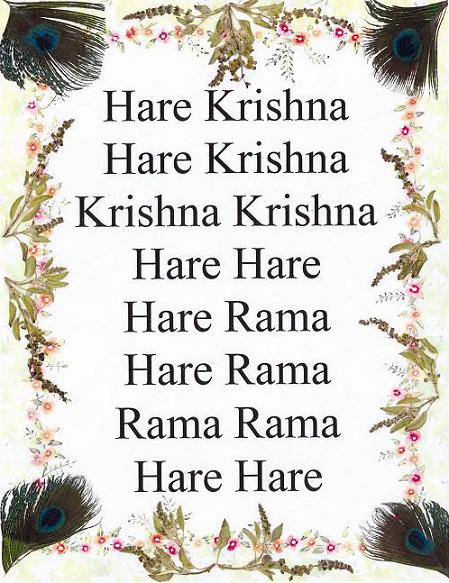
No other means of spiritual realization is as effective in this age of quarrel and hypocrisy as the chanting of the mahā-mantra: Hare Kṛṣṇa, Hare Kṛṣṇa, Kṛṣṇa Kṛṣṇa, Hare Hare / Hare Rāma, Hare Rāma, Rāma Rāma, Hare Hare. (BTG #30 1970)
Chanting the Hare Kṛṣṇa Mantra
(appeared as a separate pamphlet in 1967 and reproduced from the article “On Chanting the Hare Krishna Mantra” published in the 1970 Back to Godhead Magazine number 34)
“This simplest method of meditation is recommended for this age. By practical experience also, one can perceive that by chanting this mahā-mantra, or the Great Chanting for Deliverance, one can feel a transcendental ecstasy coming through from the spiritual stratum.”
This morning while I was chanting my japa (chanting silently the Hare Krishna mantra) I was thinking of how Google defined mantra meditation. So many people today have heard the words yoga and meditation, but what do they think it means? Some think yoga is just a good form of exercise, and meditation is just a way of shutting out the noise, and thinking of nothing. So I did a Google search:
Mantra meditation involves repeating a sacred sound, word, or phrase to focus the mind and promote relaxation. This technique helps to quiet the mind and allow for deeper states of meditation. The repeated mantra acts as a point of focus, helping to direct the mind and reduce mental chatter.
Mantra meditation is a technique that involves using mantras to relax the mind and help it focus.
Not bad definitions really, but for me, actually Yoga means “Union with God”, and Meditation means “Meditation on God”. So the ultimate goal of Yoga is bhakti-yoga, and the highest form of Mantra-meditation is to focus on God (Krishna).
…The process of meditation recommended in the Śrīmad-Bhāgavatam is not to fix one’s attention on something impersonal or void.
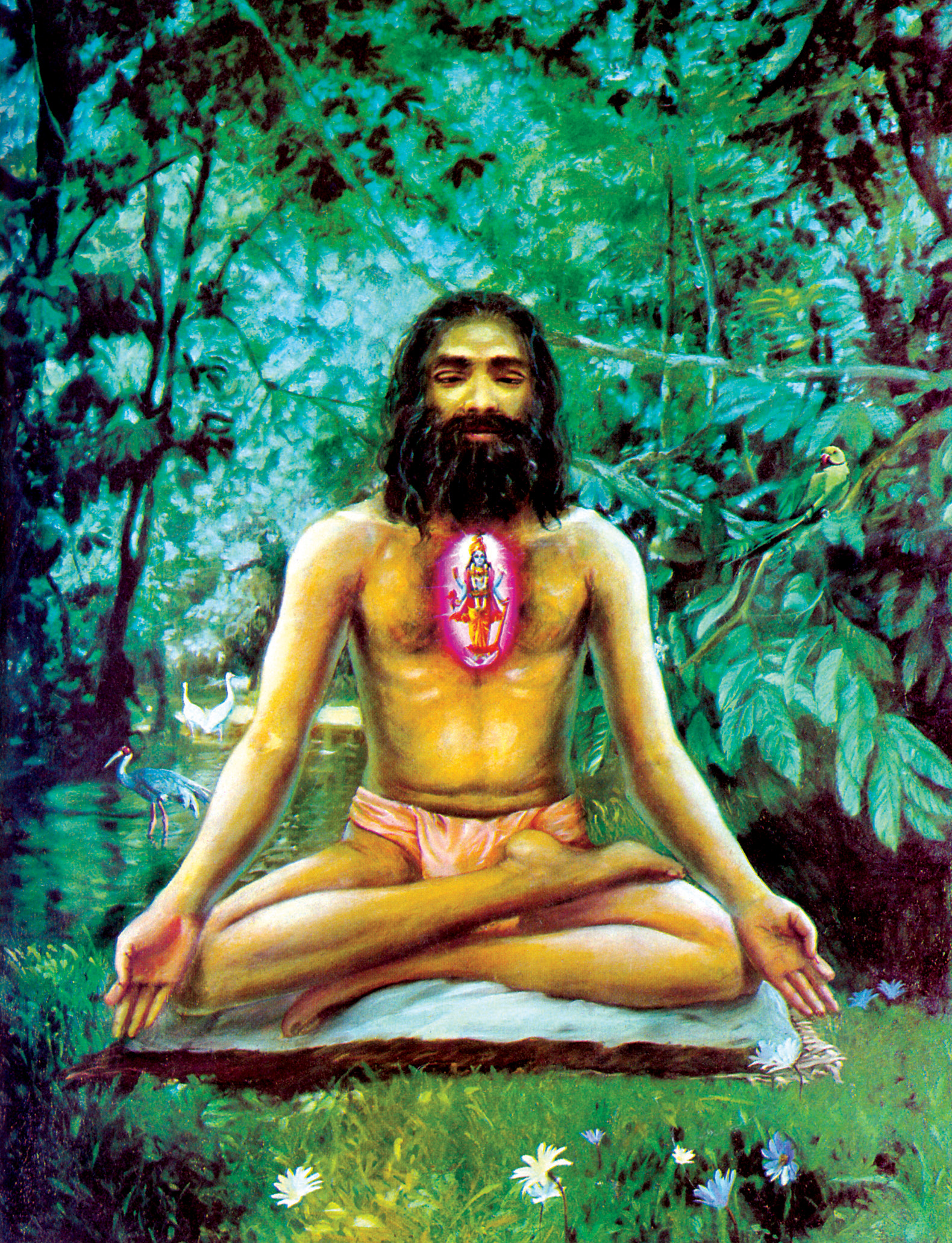
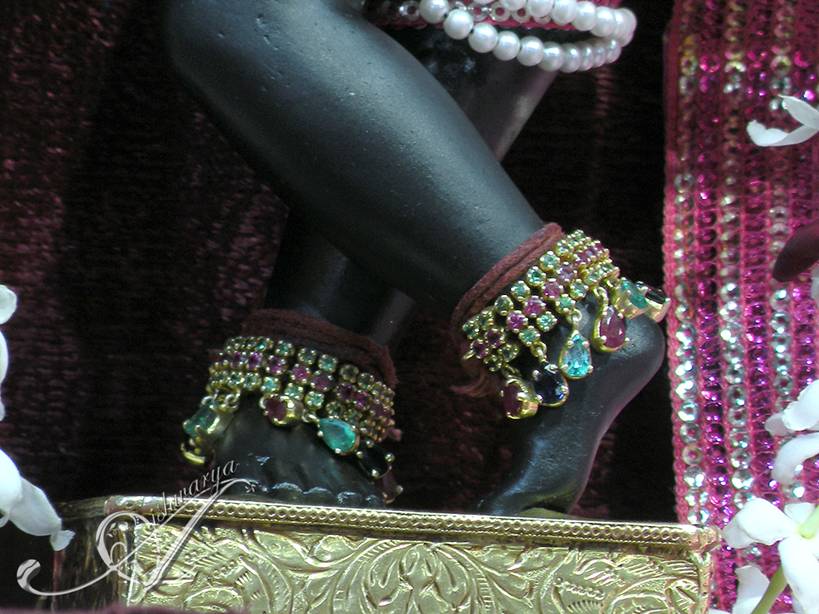
The process of meditation should begin from the lotus feet of the Lord and progress to His smiling face. The meditation should be concentrated upon the lotus feet, then the calves, then the thighs, and in this way higher and higher. The more the mind becomes fixed upon the different parts of the limbs, one after another, the more the intelligence becomes purified. (SB 2.2.13)
Śrīmad-Bhāgavatam By His Divine Grace A. C. Bhaktivedanta Swami Prabhupāda Canto Two, Chapter 2, Text 13-14
This is an old photo taken in 1907 that my wife found on Facebook. I remember as a kid, thinking that’s what yogis do. Sit on a bed of nails, or levitate off the ground while meditating.
Before Srila Prabhupada came to the West, bringing with him the Vedic Philosophy, not many people had any idea of what was Yoga or Meditation. Or that there were different types of Yoga and Meditation.
We share with you an excerpt from the small paperback book by His Divine Grace A. C. Bhaktivedanta Swmai Prabhupada entitled ” The Perfection of Yoga ”
The yogī obviously has to go through a great deal of difficulty to purify the ātmā (mind, body and soul), but it is a fact that this can be done most effectively in this age simply by the chanting of Hare Kṛṣṇa, Hare Kṛṣṇa, Kṛṣṇa Kṛṣṇa, Hare Hare/ Hare Rāma, Hare Rāma, Rāma Rāma, Hare Hare. Why is this? Because this transcendental sound vibration is nondifferent from Kṛṣṇa. When we chant His name with devotion, then Kṛṣṇa is with us, and when Kṛṣṇa is with us, then what is the possibility of remaining impure? Consequently, one absorbed in Kṛṣṇa consciousness, in chanting the names of Kṛṣṇa and serving Him always, receives the benefit of the highest form of yoga. The advantage is that he doesn’t have to take all the trouble of the meditational process. That is the beauty of Kṛṣṇa consciousness.
In yoga it is necessary to control all of the senses, and when all the senses are controlled, the mind must be engaged in thinking of Viṣṇu. One becomes peaceful after thus conquering material life.
jitātmanaḥ praśāntasya paramātmā samāhitaḥ
“for one who has conquered the mind, the Supersoul is already reached, for he has attained tranquillity.” ( Bg. 6.7)
This material world has been likened to a great forest fire. As in the forest, fire may automatically take place, so in this material world, although we may try to live peacefully, there is always a great conflagration. It is not possible to live in peace anywhere in the material world. But for one who is transcendentally situated—either by the meditational yoga system or by the empirical philosophical method or by bhakti-yoga—peace is possible. All forms of yoga are meant for transcendental life, but the method of chanting is especially effective in this age. Kīrtana may go on for hours, and one may not feel tired, but it is difficult to sit in lotus position perfectly still for more than a few minutes. Yet regardless of the process, once the fire of material life is extinguished, one does not simply experience what is called impersonal void. Rather, as Kṛṣṇa tells Arjuna, one enters into the supreme abode.
“By meditating in this manner, always controlling the body, mind and activities, the mystic transcendentalist attains to the kingdom of God through cessation of material existence.” (Bg. 6.15)
I ran across this article this morning, and although I don’t know who authored it, I thought it worthy of posting. -V
10 Affirmations for Chanting the Hare Krishna Maha-mantra
Sound has the ability to affect our consciousness to a large extent. The quality of sound vibration that goes into our ears determines the quality of our consciousness. Sound has the highest capturing potency; our ideas, conceptions and visions all come to us from sound. We can transform our lives depending on the sound vibration that we hear. The Yoga texts recommend the Hare Krishna Maha-mantra as the prime sound vibration for this age which is full of anxiety and distress. The Hare Krishna Maha-mantra, Hare Krishna Hare Krishna Krishna Krishna Hare Hare Hare Rama Hare Rama Rama Rama Hare Hare, is a spiritual sound vibration which brings us out of bodily consciousness and attaches our consciousness to the Supreme consciousness.
Chanting of the Hare Krishna Maha-mantra: (1) helps to revive awareness of your spiritual identity; (2) helps to revive awareness of your connection with the Supreme being; and (3) gives awareness of the love Supreme and the dynamics of the reciprocal relationship between your spiritual self and the Supreme spiritual self.
Thus, it is important that we spend time working on our internal attitude and motivation for chanting the Hare Krishna Maha-mantra. In this article, we will explore the practice of affirmations to help improve and increase our presence while chanting. Saying affirmations out loud and meditating on their core meanings before chanting the Hare Krishna Maha-mantra may allow us to further enhance our chanting experience.
I was going through some paperwork this morning and opened a very old looking notebook and this piece of paper fell to the floor. I picked it up and was surprised to find this written there. I don’t know the original source but it looks like its from an old devotee manual. I thought I would share it for your amusement and enlightenment.(I copied it just the way it was printed)
12 Reasons Why You Should Chant “Hare Krishna”
By regularly chanting the Maha-Mantra which is Hare Krishna, Hare Krishna, Krishna, Hare, Hare Rama, Hare Rama, Rama Rama, Hare Hare, even if it is only 1 round or 10 minutes every day, your problems will begin to vanish. Lord Krishna will fulfill all your desires, aspirations and wishes and bless you and your family both materially and spiritually.
Health Improves: By regularly chanting the Hare Krishna Maha Mantra (Hare Krishna, Hare Krishna, Krishna Krishna, Hare Hare) your health will increase also your bodily strength and luster will be maintained even in old age!
Wealth Increases: By satisfying Lord Krishna by this chanting He will look after all your needs by providing sufficient opulence for both you and your family members.
Live Longer: It is stated in the Vedas (ancient Indian scriptures) that by performing this sacrifice of chanting Hare Krishna, ones very length of life will increase.
Nice Family:Constant chanting will create a very peaceful, satisfying family situation.
Worshipping Your Forefathers: By chanting the Lords name in front of a picture of you late forefathers, they will make advancement wherever they are, even though they might have died many years ago!!
Freedom From Anxieties and the Stress of Life: The sound of God’s name produced by chanting Hare Krishna, Hare Krishna, Krishna Krishna, Hare Hare, Hare Rama Hare Rama, Rama Rama, Hare Hare can relieve you from all personal anxieties and create a very peaceful frame of mind.
Attractive Personality: This chanting of Hare Krishna produces a very pure character which is attractive to everyone.
Improves Your Memory: By constant remembrance of the Lord’s name your memory becomes very sharp and clear.
Evil Spirits and Ghosts: Any ghosts or evil spirits which are troubling you or your family cannot remain in a house if there is constant chanting of the Lord’s name.
Intelligence: Chanting Hare Krishna results in a deeper insight into life and an increased awareness of everything around you.
Enjoyment: The more you chant the Lord’s name the happier you become. This enjoyment is priceless and increases all the time.
Counteracts Sinful Life: “Simply by chanting one holy name of Hari (or Hare Krishna), a sinful man can counteract the reactions to more sine than he is able to commit. (from the Brhad-visnu Purana).
George Harrison Interview: Hare Krishna Mantra–There’s Nothing Higher (1982)
This entry is part 3 of 10 in the series The Beatles and Hare Krishna
George: It’s really the same sort of thing as meditation, but I think it has a quicker effect. I mean, even if you put your beads down, you can still say the mantra or sing it without actually keeping track on your beads. One of the main differences between silent meditation and chanting is that silent meditation is rather dependent on concentration, but when you chant, it’s more of a direct connection with God.
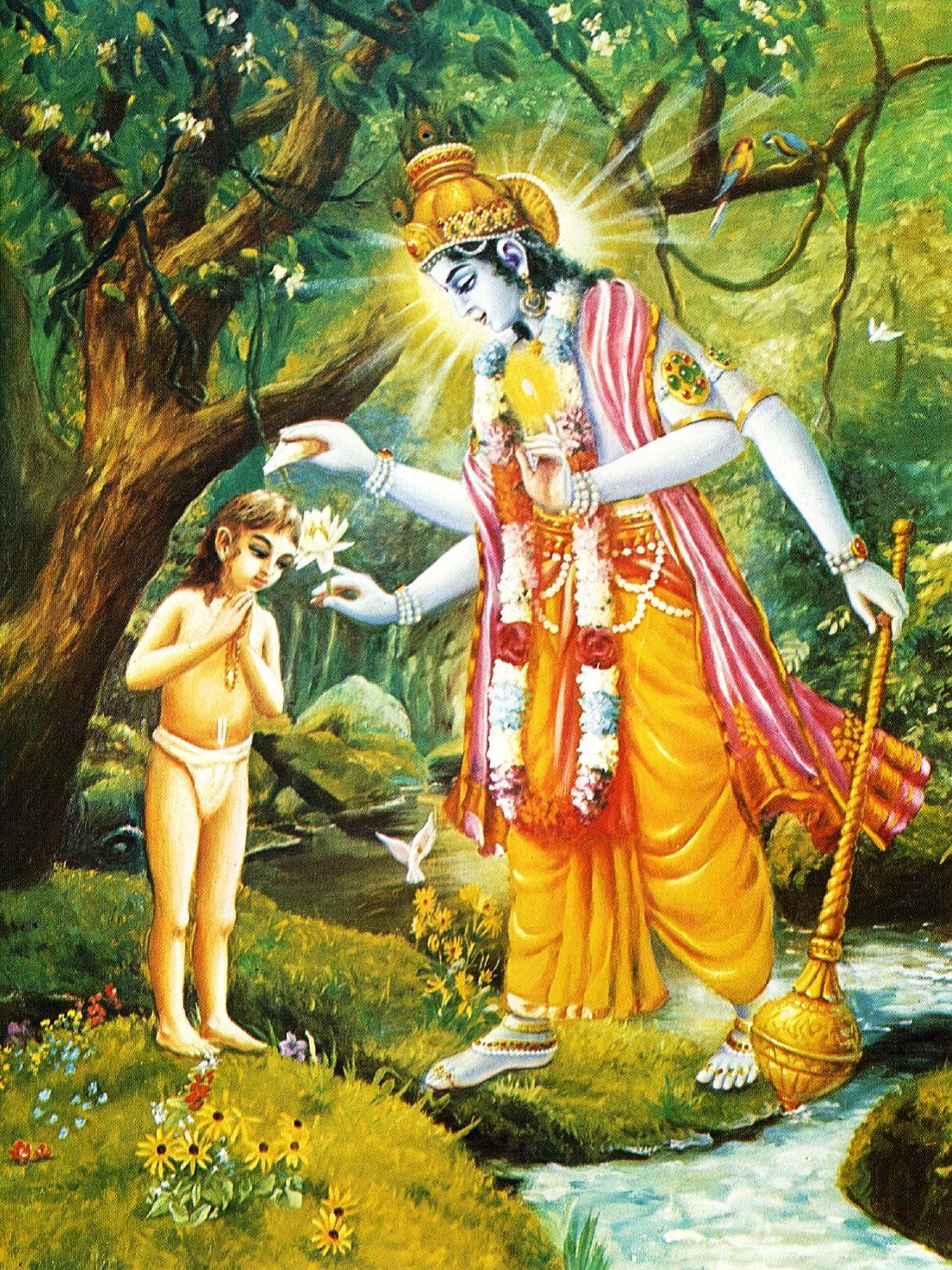
Today I woke up thinking about Dhruva Maharaja. It was nothing specific, it was more just a visual picture of this small boy doing austerities in the forest and opening his eyes to discover the Lord standing directly in front of him. So I had to tax my mind…where is that picture? It was located in the Second Canto, Part Two of the original Srimad Bhagavatam. It became my morning meditation, and the following is from some of the reading I did on the life of Dhruva Mahārāja. For the full story on the life of Dhruva Mahārāja one can go to the Forth Canto, Chapter Eight of the Srimad Bhagavatam. Today we have posted the 25th Chapter from the Teachings of Queen Kunti, entitled Unalloyed Devotion.
…The incidents in the life of Dhruva Mahārāja are very attractive for devotees. From his pious actions, one can learn how one can detach himself from material possessions and how one can enhance one’s devotional service by severe austerities and penances. By hearing the activities of pious Dhruva, one can enhance one’s faith in God and can directly connect with the Supreme Personality of Godhead, and thus one can very soon be elevated to the transcendental platform of devotional service. The example of Dhruva Mahārāja’s austerities can immediately generate a feeling of devotional service in the hearts of the hearers. (from purport to SB 4.8.8)
…When Dhruva Mahārāja was undergoing penance and meditating upon the form of Viṣṇu within his heart, the Viṣṇu form suddenly disappeared, and his meditation broke. Upon opening his eyes, Dhruva Mahārāja immediately saw Viṣṇu before him. Like Dhruva Mahārāja, we should always think of Kṛṣṇa, and when we attain perfection we shall see Kṛṣṇa before us. This is the process. We should not be too hasty. We should wait for the mature time. Of course, it is good to be eager to see Kṛṣṇa, but we should not become discouraged if we do not see Him immediately. (Teachings of Queen Kunti Chapter 25)
Saints and Swindlers
London Times Interview with Srila Prabhupada
Excerpted from the Science of Self Realization
Every day the number of people interested in practicing yoga and meditation increases by the thousands. Unfortunately, a person looking for a suitable guide is likely to encounter a bewildering array of magicians, self-styled gurus, and self-proclaimed gods. In an interview with the London Times, Śrīla Prabhupāda explains how a sincere seeker can tell the difference between a counterfeit and genuine spiritual guide.
Chanting a mantra or hymn softly and slowly is called japa, and chanting the same mantra loudly is called kīrtana. For example, uttering the mahā-mantra (Hare Kṛṣṇa, Hare Kṛṣṇa, Kṛṣṇa Kṛṣṇa, Hare Hare/ Hare Rāma, Hare Rāma, Rāma Rāma, Hare Hare) very softly, only for one’s own hearing, is called japa. Chanting the same mantra loudly for being heard by all others is called kīrtana. The mahā-mantra can be used for japa and kīrtana also. When japa is practiced it is for the personal benefit of the chanter, but when kīrtana is performed it is for the benefit of all others who may hear.
In the Padma Purāṇa there is a statement: “For any person who is chanting the holy name either softly or loudly, the paths to liberation and even heavenly happiness are at once open.” (from Nectar of Devotion Chapter 9)
We are All Hare Krishnas now, Meditation goes Mainstream
by Brendan O’Connor
Sunday Independent
Gradually they are coming out the woodwork. And suddenly it seems that half the people I know are secretly meditating. They range from casual transcendental meditators to practically full-blown Buddhists or Hare Krishnas.
And the strange thing is that these are not hippies or crusties or drop-outs or people living alternative lifestyles on an ashram-inspired commune near Sligo. Just regular blokes, a few of them quite senior in what they do. There are thrusting business types and entrepreneurs and generally pretty serious people. These are not people who go for reiki or acupuncture or any of the other usual trappings of the “I’m not religious but I am a very spiritual person” lifestyle. They are fairly practical people. And meditation is just one of their tools, a technology for modern living.
…The process of meditation recommended in the Śrīmad-Bhāgavatam is not to fix one’s attention on something impersonal or void.
The process of meditation should begin from the lotus feet of the Lord and progress to His smiling face. The meditation should be concentrated upon the lotus feet, then the calves, then the thighs, and in this way higher and higher. The more the mind becomes fixed upon the different parts of the limbs, one after another, the more the intelligence becomes purified. (SB 2.2.13)
“Of all yogis, he who abides in Me with great faith is the highest of all.”
It is by great fortune that one comes to Kṛṣṇa consciousness on the path of bhakti-yoga to become well situated according to the Vedic direction. The ideal yogī concentrates his attention on Kṛṣṇa, who is called Śyāmasundara, who is as beautifully colored as a cloud, whose lotus-like face is as effulgent as the sun, whose dress is brilliant with jewels and whose body is flower garlanded. Illuminating all sides is His gorgeous luster, which is called the brahmajyoti. He incarnates in different forms such as Rāma, Nṛsiṁha, Varāha and Kṛṣṇa, the Supreme Personality of Godhead, and He descends like a human being, as the son of Mother Yaśodā, and He is known as Kṛṣṇa, Govinda and Vāsudeva. He is the perfect child, husband, friend and master, and He is full with all opulences and transcendental qualities. If one remains fully conscious of these features of the Lord, he is called the highest yogī. (from purport to Bg. 6.47)
This is more or less a continuation of yesterdays post Freedom From All Miseries as it is the last verse in the Chapter 6, entitled; “Sankhya-yoga”. This is one of the very best verses and purports in the Bhagavad-gita for study if one is an aspiring yogi…
…The culmination of all kinds of yoga practices lies in bhakti-yoga. All other yogas are but means to come to the point of bhakti in bhakti-yoga. Yoga actually means bhakti-yoga; all other yogas are progressions toward the destination of bhakti-yoga. From the beginning of karma-yoga to the end of bhakti-yoga is a long way to self-realization. Karma-yoga, without fruitive results, is the beginning of this path. When karma-yoga increases in knowledge and renunciation, the stage is called jñāna-yoga. When jñāna-yoga increases in meditation on the Supersoul by different physical processes, and the mind is on Him, it is called aṣṭāṅga-yoga. And, when one surpasses the aṣṭāṅga-yoga and comes to the point of the Supreme Personality of Godhead Kṛṣṇa, it is called bhakti-yoga, the culmination. Factually, bhakti-yoga is the ultimate goal, but to analyze bhakti-yoga minutely one has to understand these other yogas. The yogī who is progressive is therefore on the true path of eternal good fortune. (from purport to Bg. 6.47)
…In the Sixth and Eighth Chapters of Bhagavad-gītā, Lord Śrī Kṛṣṇa, the Supreme Personality of Godhead, explains that the eightfold yoga system is a means to control the mind and senses. This method, however, is very difficult for people to perform, especially in this age of Kali, an age characterized by ignorance and chaos.
Although this eightfold yoga system is particularly recommended in the Sixth Chapter of Bhagavad-gītā, the Lord emphasizes that the process of karma-yoga, action in Kṛṣṇa consciousness, is superior.
…No one really wants to sit down and meditate. Why should we? We’re meant for positive activity, for recreation, for pleasure. In Kṛṣṇa consciousness, our recreation is dancing and chanting, and when we get tired, we take prasāda. Is dancing difficult? Is chanting difficult? We don’t charge anything to dance in the temple. If you go to a ballroom, you have to pay to enter, but we do not charge. It is natural to enjoy music and dancing and palatable foods. These are our recreations, and this is our method of meditation. So this yoga system is not at all laborious. It is simply recreation, susukham. It is stated in the Ninth Chapter of Bhagavad-gītā (9.2) that this yoga is susukham—very happy. “It is everlasting, and it is joyfully performed.” It is natural, automatic, and spontaneous. It is our real life in the spiritual world. (The Path of Perfection)
The process of meditation should begin from the lotus feet of the Lord and progress to His smiling face. The meditation should be concentrated upon the lotus feet, then the calves, then the thighs, and in this way higher and higher. The more the mind becomes fixed upon the different parts of the limbs, one after another, the more the intelligence becomes purified. (SB 2.2.13)
…The process of meditation recommended in the Śrīmad-Bhāgavatam is not to fix one’s attention on something impersonal or void. The meditation should concentrate on the person of the Supreme Godhead, either in His virāṭ-rūpa, the gigantic universal form, or in His sac-cid-ānanda-vigraha [Bs. 5.1], as described in the scriptures. There are authorized descriptions of Viṣṇu forms, and there are authorized representations of Deities in the temples. Thus one can practice meditating upon the Deity, concentrating his mind on the lotus feet of the Lord and gradually rising higher and higher, up to His smiling face.
When we think of Yoga, we used to think of some old bearded yogi standing on his head, or more recently of young beautiful men & women in athletic clothing posing serenely, or a class full of people stretching on yoga mats. But actually the meaning of yoga is far beyond any of the physical gymnastics we tend to associate with the word. There are many systems of yoga, namely; karma yoga, jnana yoga, dhayana yoga, hatha yoga, bhakti yoga, and so many patterns of yoga. But as we understand from the Bhagavad-gita:
…in the Bhagavad-gītā it is clearly stated that…yoga means to get into touch with the Supreme Lord. The process, however, includes several bodily features such as āsana, dhyāna, prāṇāyāma and meditation(from purport SB 1.2.28-29)
…The word yoga means “link.” Any system of yoga is an attempt to reconnect our broken relationship with the Supreme Personality of Godhead. There are different types of yoga, of which bhakti-yoga is the best. In other yoga systems, one must undergo various processes before attaining perfection, but bhakti-yoga is direct. (from purport SB 10.2.6)
…The culmination of all kinds of yoga practices lies in bhakti-yoga. All other yogas are but means to come to the point of bhakti in bhakti-yoga. Yoga actually means bhakti-yoga; all other yogas are progressions toward the destination of bhakti-yoga. From the beginning of karma-yoga to the end of bhakti-yoga is a long way to self-realization. Karma-yoga, without fruitive results, is the beginning of this path. When karma-yoga increases in knowledge and renunciation, the stage is called jñāna-yoga. When jñāna-yoga increases in meditation on the Supersoul by different physical processes, and the mind is on Him, it is called aṣṭāṅga-yoga. And, when one surpasses the aṣṭāṅga-yoga and comes to the point of the Supreme Personality of Godhead Kṛṣṇa, it is called bhakti-yoga, the culmination. Factually, bhakti-yoga is the ultimate goal, but to analyze bhakti-yoga minutely one has to understand these other yogas. The yogī who is progressive is therefore on the true path of eternal good fortune. One who sticks to a particular point and does not make further progress is called by that particular name: karma-yogī, jñāna-yogī or dhyāna-yogī, rāja-yogī, haṭha-yogī, etc. If one is fortunate enough to come to the point of bhakti-yoga, it is to be understood that he has surpassed all the other yogas. Therefore, to become Kṛṣṇa conscious is the highest stage of yoga, just as, when we speak of Himalayan, we refer to the world’s highest mountains, of which the highest peak, Mount Everest, is considered to be the culmination.
It is by great fortune that one comes to Kṛṣṇa consciousness on the path of bhakti-yoga to become well situated according to the Vedic direction. The ideal yogī concentrates his attention on Kṛṣṇa, who is called Śyāmasundara, who is as beautifully colored as a cloud, whose lotus-like face is as effulgent as the sun, whose dress is brilliant with jewels and whose body is flower garlanded. Illuminating all sides is His gorgeous luster, which is called the brahmajyoti. He incarnates in different forms such as Rāma, Nṛsiṁha, Varāha and Kṛṣṇa, the Supreme Personality of Godhead, and He descends like a human being, as the son of Mother Yaśodā, and He is known as Kṛṣṇa, Govinda and Vāsudeva. He is the perfect child, husband, friend and master, and He is full with all opulences and transcendental qualities. If one remains fully conscious of these features of the Lord, he is called the highest yogī. (Bhagavad-gita 6.47)
The very word yoga means connecting link with the supreme being. We accept Krishna as the supreme being, and nobody is equal to him or greater than him. (Letter to Sri Krishna C. Batra – Vrindaban 8 December, 1975)











 The Hare Krishna Movement