24 Sep 2014
by The Hare Krishna Movement
in Back to Godhead, Narahari das, Simple Living, Spiritual Life
Tags: Back to Godhead Magazine, bonafide religion, BTG, chant Hare Krsna, every town and village, God, Iskcon, Krsna, Narahari, narahari das, read Srila Prabhupada's books daily, Sailing Back to Godhead, Spiritual Life, spiritual master, Srila Prabhupada, The Hare Krishna Movement, the hare krsna's, transcendental knowledge

Yesterday I was cleaning out the abandoned barn at Bahulavan, which is now being put back together again, and I found an old issue of Back to Godhead Magazine mixed in with so much debris. I pulled it out, cleaned it off, and added it to my collection of Back to Godhead Magazines. I had always heard of this famous sailing ship, and finally got a chance to see it.
Sailing Back to Godhead
Article excerpted from Back to Godhead Magazine Vol. 16, No. 6, 1981
A teakwood ketch and a devotee’s determination help bring Lord Krsna’s message to the Hawaiian Islands.
“…Krsna consciousness is the only established religion I know of that openly respects all other bonafide religions. My wife and I chant Hare Krsna and read Srila Prabhupada’s books daily. It’s added a dimension to my life that I feel is essential.”
More
23 Sep 2014
by The Hare Krishna Movement
in A.C. Bhaktivedanta Swami Prabhupada, Places of Pilgrimage, Srimad Bhagavatam
Tags: A.C. Bhaktivedanta Swami Prabhupada, duty of a pilgrim, Krsna, pilgrim, pilgrim's journey, pilgrim's progress, post office, postal system, postboxes, SB 3.1.18, traveling as a pilgrim

This morning I was reading from the 3rd Canto of the Srimad-Bhagavatam about Vidura and the beginning of his journey to the great places of pilgrimage. The following is excerpted from some of my reading.
He began to travel alone, thinking only of Kṛṣṇa, through various holy places like Ayodhyā, Dvārakā and Mathurā. He traveled where the air, hill, orchard, river and lake are all pure and sinless and where the forms of the Unlimited decorate the temples. Thus he performed the pilgrim’s progress. (SB 3.1.18)
…Places of pilgrimages are meant for eradicating the sins of the pilgrims, and they are distributed all over the universe just to give facility to all concerned for attaining pure existence and God realization. One should not be satisfied, however, merely by visiting the places of pilgrimage and performing one’s prescribed duties; he should be eager to meet the great souls who are already there, engaged in the service of the Lord. In each and every place of pilgrimage, the Lord is present in His various transcendental forms.
…The first and foremost duty of a pilgrim is to satisfy the Supreme Lord Hari. While traveling as a pilgrim, one should not be worried about pleasing society. There is no need to depend on social formalities or occupation or dress. One should remain always absorbed in the function of pleasing the Lord. Thus sanctified by thought and action, one is able to realize the Supreme Lord by the process of a pilgrim’s journey.
More
20 Sep 2014
by The Hare Krishna Movement
in A.C. Bhaktivedanta Swami Prabhupada, Bhagavad-gita, Draupadi
Tags: A.C. Bhaktivedanta Swami Prabhupada, Bg 1.2, Bhagavad-gita As It Is, blindness, Dhrtarastra, Draupadi, Duhsasana, King Yudhisthira, Krsna, Pandavas, progressive path of human life, SB 3.1.6, SB 3.1.7, spiritual blindness, Spiritual Life, spiritual vision

click on image to enlarge
The Insulting of Draupadi
I have always found this story of the disrobing of Draupadī, the wife of the godly King Yudhiṣṭhira, to be and example of how Krsna always protects his pure devotees. This incident contributes greatly to the Great Battle of Kurukṣetra, which almost completely annihilated the Kuru’s. And is a very good example of Spiritual Blindness. The following is a few select verses from the Srimad-Bhagavatam and Bhagavad-gita As It Is.
Dhṛtarāṣṭra was blind from birth, but his blindness in committing impious activities to support his dishonest sons was a greater blindness than his physical lack of eyesight. The physical lack of sight does not bar one from spiritual progress. But when one is blind spiritually, even though physically fit, that blindness is dangerously detrimental to the progressive path of human life. (SB 3.1.7 purport)
Dhṛtarāṣṭra was blind from birth. Unfortunately, he was also bereft of spiritual vision. He knew very well that his sons were equally blind in the matter of religion, and he was sure that they could never reach an understanding with the Pāṇḍavas, who were all pious since birth. (Bg 1.2 purport)
More
16 Sep 2014
by The Hare Krishna Movement
in A.C. Bhaktivedanta Swami Prabhupada, Caaitanya-caritamrta, Caitanya Mahaprabhu, Sri Caitanya-Caritamrta, Srimati Radharani
Tags: Adi1.5, buddhi yogam, devotee, esoteric, God, isvarah sarva-bhutanam, Krsna, magnum opus, philosophy, Radharani, scientist, servant of God, spiritual master, spiritual philosophy, spiritual science, Sri Krsna Caitanya Mahaprabhu, tesam satata-yuktanam

click on image to enlarge
Lately, I have been absorbed in reading Sri Caitanya-caritamrta. For me it is a hard book to pick up, but after I begin reading…it is a hard book to put down. Sometimes it seems so esoteric (1 intelligible only to those with special knowledge. 2 intended only for the initiated), but I cannot help but to be thrown into complete and utter awe of the masterful writing, it seems to be Srila Prabhupada’s magnum opus (1 great work of art, literture. 2 the most important work of an artist, writer, etc.). Yes, I have the Oxford Dictionary open on my desk.
The loving affairs of Śrī Rādhā and Kṛṣṇa are transcendental manifestations of the Lord’s internal pleasure-giving potency. Although Rādhā and Kṛṣṇa are one in Their identity, They separated Themselves eternally. Now these two transcendental identities have again united, in the form of Śrī Kṛṣṇa Caitanya. I bow down to Him, who has manifested Himself with the sentiment and complexion of Śrīmatī Rādhārāṇī although He is Kṛṣṇa Himself. (Śrī Caitanya-caritāmṛta, Ādi-līlā 1.5)
The following is a Lecture given on this important verse, and the complete text.
…You cannot understand God, or Kṛṣṇa, without being a faithful servant. This is the secret. And if we become faithful servant under the guidance of proper spiritual master, then we can understand what is Kṛṣṇa, what is Parabrahman, and what is loving affairs with Rādhārāṇī, what is Śrī Kṛṣṇa Caitanya Mahāprabhu. These things are revealed. It is not acquired by so-called mundane knowledge. That is not possible… So we should always remain faithful servant of Kṛṣṇa. And Kṛṣṇa is within everyone’s heart, and He will be pleased by your service, and then He will reveal Himself, what He is. Otherwise it is not possible. (from Śrī Caitanya-caritāmṛta Lecture Ādi-līlā 1.5)
Adi-lila 1.5 Lecture and Verse More
09 Sep 2014
by The Hare Krishna Movement
in A.C. Bhaktivedanta Swami Prabhupada, Back to Godhead, Soul, Spiritual Life
Tags: A. C. Bhaktivedanta Swami Pabhupada, Back to Godhead Magazine, Bhagavata-dharma, BTG, God, Krsna, part and parcel of God, relationship with God, sons of God, soul, Supreme Lord Krishna, wandering soul

Which Way Home for the Wandering Soul?
A lecture by His Divine Grace A.C. Bhaktivedanta Swami Prabhupada
Founder-Acarya of the International Society for Krishna Consciousness
Excerpted from Back to Godhead Magazine Vol. 18, No. 10, 1983
Ladies and gentlemen, thank you very much for kindly participating in this Krsna consciousness movement, which is spreading bhagavata-dharma. Bhagavata-dharma means “the activities performed in relationship with the Supreme Lord.” The Lord is Bhagavan, the Supreme Personality of Godhead, and the devotee is bhagavata, one who acts in relationship with Bhagavan.
More
04 Sep 2014
by The Hare Krishna Movement
in A.C. Bhaktivedanta Swami Prabhupada, Om, Srimati Radharani
Tags: a-kara, A.C. Bhaktivedanta Swami Prabhupada, aum, bhagavad-gita, devotee, entourage, His name fame, Krsna, ma-kara, Om, omkara, omkara is the resting place of everything, pastimes, potencies, sarva visva dhama, Sri Caitanya Caritamrta, Srimati Radharani, u-kara

The other day as I was doing some research on Srimati Radharani, for her appearance day post, I ran across the following;
…Oṁkāra is a combination of the letters a, u and m. A-kāreṇocyate kṛṣṇaḥ the letter a (a-kāra) refers to Kṛṣṇa, who is sarva-lokaika-nāyakaḥ, the master of all living entities and planets, material and spiritual. Nāyaka means “leader.” He is the supreme leader (nityo nityānāṁ cetanaś cetanānām (Kaṭha Upaniṣad 2.2.13)). The letter u (u-kāra) indicates Śrīmatī Rādhārāṇī, the pleasure potency of Kṛṣṇa, and m (ma-kāra) indicates the living entities (jīvas). Thus oṁ is the complete combination of Kṛṣṇa, His potency and His eternal servitors. In other words, oṁkāra represents Kṛṣṇa, His name, fame, pastimes, entourage, expansions, devotees, potencies and everything else pertaining to Him. As Caitanya Mahāprabhu states in the present verse of Śrī Caitanya-caritāmṛta, sarva-viśva-dhāma: oṁkāra is the resting place of everything, just as Kṛṣṇa is the resting place of everything (brahmaṇo hi pratiṣṭhāham) (CC Adi 7.128, Purport)
More
15 Aug 2014
by The Hare Krishna Movement
in A.C. Bhaktivedanta Swami Prabhupada, Festivals, Janmastami, Krishna, Krsna Consciousness, Krsna God, KRSNA The Supreme Personality of Godhead
Tags: A.C. Bhaktivedanta Swami Prabhupada, birth of Lord Krishna, Janmastami, janmastami festival, Krishna, Krsna, Krsna Book, Sri Krishna Janmastami, Srimad Bhagavatam

click on image to enlarge
With the advent of Lord Krsna’s birthday celebration (Janmastami) rapidly approaching, it seemed fitting that we do a post on the birth of Lord Krsna. So the following is the entire third chapter from the Krsna Book entitled “The Birth of Lord Kṛṣṇa”.
…As stated in the Bhagavad-gītā, the Lord says that His appearance, birth, and activities, are all transcendental, and one who understands them factually becomes immediately eligible to be transferred to the spiritual world. The Lord’s appearance or birth is not like that of an ordinary man who is forced to accept a material body according to his past deeds. The Lord’s appearance is explained in the Second Chapter: He appears out of His own sweet pleasure. When the time was mature for the appearance of the Lord, the constellations became very auspicious. The astrological influence of the star known as Rohiṇī was also predominant because this star is considered to be very auspicious. Rohiṇī is under the direct supervision of Brahmā. According to the astrological conclusion, besides the proper situation of the stars, there are auspicious and inauspicious moments due to the different situations of the different planetary systems. At the time of Kṛṣṇa’s birth, the planetary systems were automatically adjusted so that everything became auspicious. ( from Kṛṣṇa, the Supreme Personality of Godhead Chapter 3)
Full Chapter More
05 Aug 2014
by The Hare Krishna Movement
in A.C. Bhaktivedanta Swami Prabhupada, Bhagavad-gita, Soul
Tags: A.C. Bhaktivedanta Swami Prabhupada, Arjuna, Bg2.12, Bg2.30, bhagavad-gita, boyhood to youth to old age, dehino smin yatha dehe, eternal soul, ever existing soul, for the soul there is never birth or death, Krsna, krsna consciousness, reincarnation, science of the soul science of self realization, soul, soul passes into another body, soul slokas, Srila Prabhupada, unborn
This morning I was thinking about the soul and its eternal journey. So I went to Srila Prabhupada’s Bhagavad-gita As It Is and found some of the important slokas that pertained to the subject of the soul.
As the embodied soul continually passes, in this body, from boyhood to youth to old age, the soul similarly passes into another body at death. The self-realized soul is not bewildered by such a change. (Bg. 2.13)
For the soul there is never birth nor death. Nor, having once been, does he ever cease to be. He is unborn, eternal, ever-existing, undying and primeval. He is not slain when the body is slain. (Bg. 2.20)
As a person puts on new garments, giving up old ones, similarly, the soul accepts new material bodies, giving up the old and useless ones. (Bg. 2.22)
The soul can never be cut into pieces by any weapon, nor can he be burned by fire, nor moistened by water, nor withered by the wind. (Bg. 2.23)
More
22 Jul 2014
by The Hare Krishna Movement
in A.C. Bhaktivedanta Swami Prabhupada, Srimad Bhagavatam
Tags: A.C. Bhaktivedanta Swami Prabhupada, Bhagavata-dharma, Brahmaloka, conditioned souls, fruitive activities, heavenly planets, incarnation, kingdom of God, Krsna, Lord Brahma, material ezistence, material world, meditate upon the virat-rupa, Patalaloka, phantasmagoria, Spiritual world, sri suka uvaca, Sri Sukadeva Gosvami, Srimad Bhagavatam, The Lord in the Heart, virat-rupa
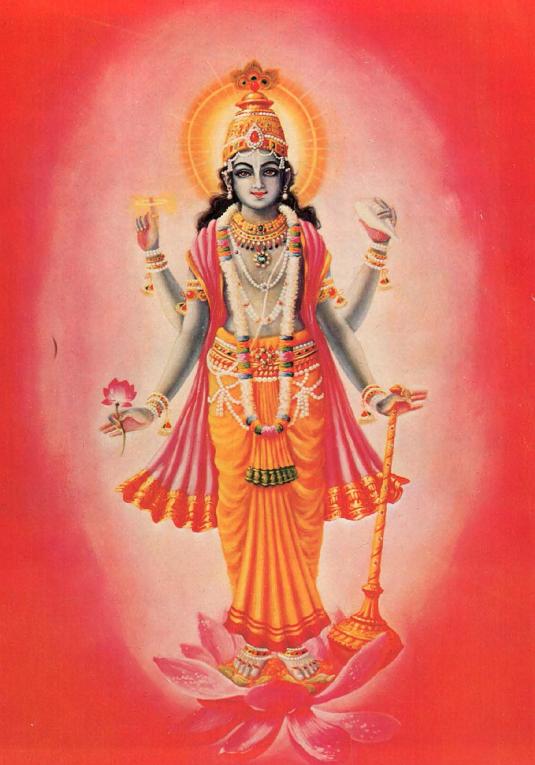
Śrīmad-Bhāgavatam
By His Divine Grace A. C. Bhaktivedanta Swami Prabhupāda
Canto Two, Chapter 2
The Lord in the Heart
Full Chapter More
17 Jul 2014
by The Hare Krishna Movement
in A.C. Bhaktivedanta Swami Prabhupada, Demons, Krishna Nectar, KRSNA The Supreme Personality of Godhead
Tags: A.C. Bhaktivedanta Swami Prabhupada, Aghasura, aghasura demon, demon, inhabitants of Vrndavana, Krsna, Krsna and Balarama, Krsna Book, Krsna The Supreme Personality of Godhead, mahima, mahima-siddhi, mystic powers, Vrndavan, yoga system, yogic siddhi
click on image to enlarge
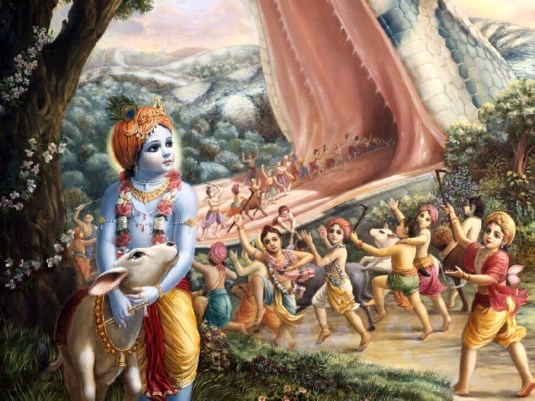
This is one of my favorite stories from the Krsna Book. I always enjoyed how fearless the cowherd boys were. They were free of any fear. This is the benefit of Krsna Consciousness; “Any material arrangement for protecting oneself from death is always unsure, but if one is in Kṛṣṇa consciousness, then immortality is confidently assured.”
…Aghāsura, thus deciding to kill all the inhabitants of Vṛndāvana, expanded himself by the yogic siddhi called mahimā. The demons are generally expert in achieving almost all kinds of mystic powers. In the yoga system, by the perfection called mahimā-siddhi, one can expand himself as he desires. The demon Aghāsura expanded himself up to eight miles and assumed the shape of a very fat serpent. Having attained this wonderful body, he stretched his mouth open just like a mountain cave. Desiring to swallow all the boys at once, including Kṛṣṇa and Balarāma, he sat on the path.
The demon in the shape of a big fat serpent expanded his lips from land to sky; his lower lip was touching the ground, and his upper lip was touching the clouds. His jaws appeared like a big mountain cave, without limitation, and his teeth appeared just like mountain summits. His tongue appeared to be a broad traffic way, and he was breathing just like a hurricane. His eyes were blazing like fire. At first the boys thought that the demon was a statue, but after examining it they saw that it was a big serpent lying down on the road and widening his mouth. The boys began to talk among themselves: “Dear friends, this figure appears to be a great animal, and he is sitting in such a posture just to swallow us all. Just see—is it not a big snake that has widened his mouth to eat all of us?”
More
11 Jul 2014
by The Hare Krishna Movement
in A.C. Bhaktivedanta Swami Prabhupada, B. G. Sharma Art, Bhagavad-gita
Tags: A.C. Bhaktivedanta Swami Prabhupada, Arjuna, Bg2.10, Bg2.11, Bg2.12, bhagavad-gita, God, illusion, impersonal Brahman, individual soul, Krsna, maya, mayavadi theory, saintly persons, Sharaman, supreme authority, Supreme Lord, the blessed Lord said, The Krishna Art of B. G. Sharma

click on image to enlarge
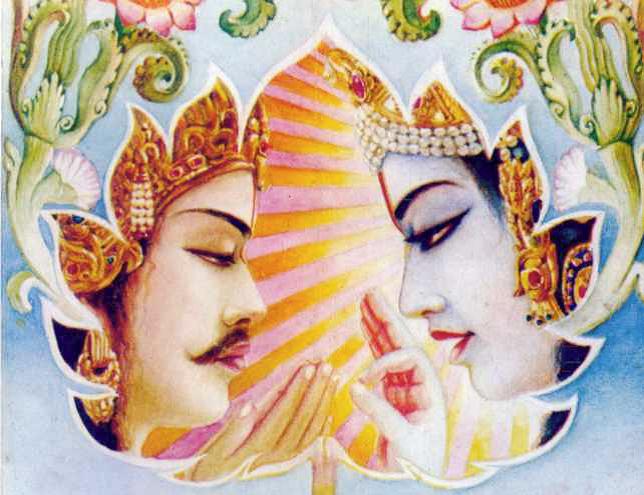
…at that time Kṛṣṇa, smiling, in the midst of both the armies, spoke the following words to the grief-stricken Arjuna.
The Blessed Lord said: While speaking learned words, you are mourning for what is not worthy of grief. Those who are wise lament neither for the living nor the dead.
Never was there a time when I did not exist, nor you, nor all these kings; nor in the future shall any of us cease to be. (Bg. 2.10-12)
Full text and purports More
09 Jul 2014
by The Hare Krishna Movement
in A.C. Bhaktivedanta Swami Prabhupada, Bhagavad-gita, Spiritual World, Vrindavan, Vrndavana
Tags: A.C. Bhaktivedanta Swami Prabhupada, abode of lord krsna, as it is, Bhagavad Gita, Goloka, goloka vrndavan, Krsna, sac-cid-ananda-vigraha, Spiritual Life, spiritual sky, Spiritual world, Syamasundara, Vrindavan, Vrndavana
click on image to enlarge
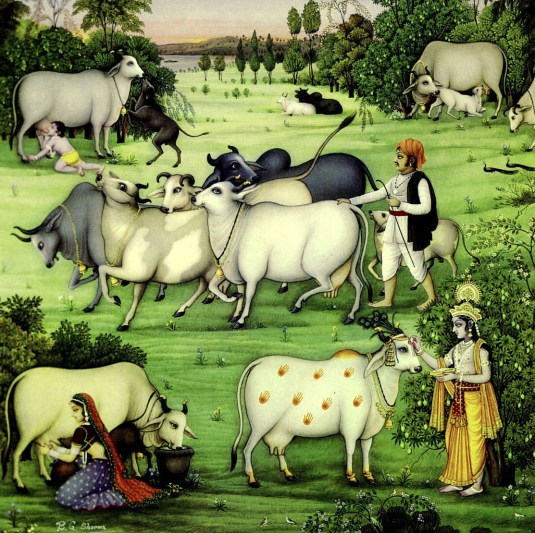
…The Lord descends to this mortal world to show His pastimes in Vṛndāvana, which are full of happiness. When Lord Śrī Kṛṣṇa was in Vṛndāvana, His activities with His cowherd boy friends, with His damsel friends, with the inhabitants of Vṛndāvana and with the cows were all full of happiness. The total population of Vṛndāvana knew nothing but Kṛṣṇa. But Lord Kṛṣṇa even discouraged His father Nanda Mahārāja from worshiping the demigod Indra because He wanted to establish the fact that people need not worship any demigod. They need only worship the Supreme Lord because their ultimate goal is to return to His abode. (from Introduction to the Bhagavad-gita As It Is)
More
27 Jun 2014
by The Hare Krishna Movement
in A.C. Bhaktivedanta Swami Prabhupada, Krishna Nectar, Krsna Consciousness
Tags: A.C. Bhaktivedanta Swami Prabhupada, celebrated flute, cowherd boys, friends of krsna, Krishna, Krsna, remembrance of Lord Krsna, SB 3.2.27, Srimad Bhagavatam, Third Canto, transcendental flute, transcendental pleasure, Yamuna river
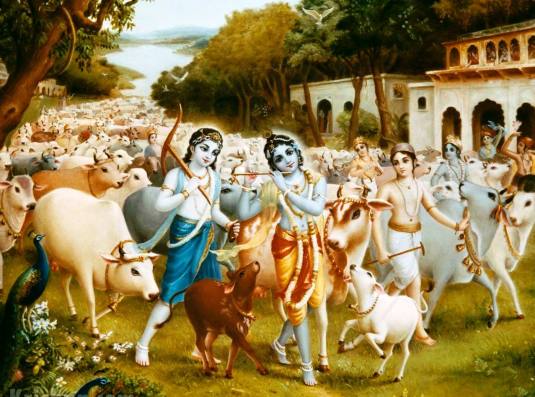
click on image to enlarge
This morning I was reading from the Srimad Bhagavatam Third Canto, Chapter Two. It was so enlivening, that I read out-loud, the entire chapter. The following is just three verses and purports from the chapter entitled ” Remembrance of Lord Kṛṣṇa”.
In His childhood, the Almighty Lord was surrounded by cowherd boys and calves, and thus He traveled on the shore of the Yamunā River, through gardens densely covered with trees and filled with vibrations of chirping birds. (SB 3.2.27)
…the Lord used to play His celebrated flute. The sound vibrated by His flute would give His friends such transcendental pleasure that they would forget all the talks of the brahmānanda which is so praised by the impersonalists. These cowherd boys, as will be explained by Śukadeva Gosvāmī, were living entities who had accumulated heaps of pious acts and thus were enjoying with the Lord in person and were hearing His transcendental flute. The Brahma-saṁhitā (5.30) confirms the Lord’s blowing His transcendental flute. (from purport to SB 3.2.29)
veṇuṁ kvaṇantam aravinda-dalāyatākṣaṁ
barhāvataṁsam asitāmbuda-sundarāṅgam
kandarpa-koṭi-kaminīya-viśeṣa-śobhaṁ
govindam ādi-puruṣaṁ tam ahaṁ bhajāmi
Brahmājī said, “I worship Govinda, the primeval Lord, who plays on His transcendental flute. His eyes are like lotus flowers, He is decorated with peacock plumes, and His bodily color resembles a fresh black cloud although His bodily features are more beautiful than millions of cupids.” These are the special features of the Lord.
More
17 Jun 2014
by The Hare Krishna Movement
in A.C. Bhaktivedanta Swami Prabhupada, Bhagavad-gita, Krsna, Krsna Consciousness, Meditation, Yoga, Yogi
Tags: A.C. Bhaktiveanta Swami Prabhupada, bhakti yoga, Govinda, Krsna, krsna consciousness, meditation, Nrismha, Rama, Syamasundara, Varaha, yoga, yogas, yogi, yoginam api sarvesam

“Of all yogis, he who abides in Me with great faith is the highest of all.”
It is by great fortune that one comes to Kṛṣṇa consciousness on the path of bhakti-yoga to become well situated according to the Vedic direction. The ideal yogī concentrates his attention on Kṛṣṇa, who is called Śyāmasundara, who is as beautifully colored as a cloud, whose lotus-like face is as effulgent as the sun, whose dress is brilliant with jewels and whose body is flower garlanded. Illuminating all sides is His gorgeous luster, which is called the brahmajyoti. He incarnates in different forms such as Rāma, Nṛsiṁha, Varāha and Kṛṣṇa, the Supreme Personality of Godhead, and He descends like a human being, as the son of Mother Yaśodā, and He is known as Kṛṣṇa, Govinda and Vāsudeva. He is the perfect child, husband, friend and master, and He is full with all opulences and transcendental qualities. If one remains fully conscious of these features of the Lord, he is called the highest yogī. (from purport to Bg. 6.47)
This is more or less a continuation of yesterdays post Freedom From All Miseries as it is the last verse in the Chapter 6, entitled; “Sankhya-yoga”. This is one of the very best verses and purports in the Bhagavad-gita for study if one is an aspiring yogi…
…The culmination of all kinds of yoga practices lies in bhakti-yoga. All other yogas are but means to come to the point of bhakti in bhakti-yoga. Yoga actually means bhakti-yoga; all other yogas are progressions toward the destination of bhakti-yoga. From the beginning of karma-yoga to the end of bhakti-yoga is a long way to self-realization. Karma-yoga, without fruitive results, is the beginning of this path. When karma-yoga increases in knowledge and renunciation, the stage is called jñāna-yoga. When jñāna-yoga increases in meditation on the Supersoul by different physical processes, and the mind is on Him, it is called aṣṭāṅga-yoga. And, when one surpasses the aṣṭāṅga-yoga and comes to the point of the Supreme Personality of Godhead Kṛṣṇa, it is called bhakti-yoga, the culmination. Factually, bhakti-yoga is the ultimate goal, but to analyze bhakti-yoga minutely one has to understand these other yogas. The yogī who is progressive is therefore on the true path of eternal good fortune. (from purport to Bg. 6.47)
More
15 Jun 2014
by The Hare Krishna Movement
in A.C. Bhaktivedanta Swami Prabhupada, Bhagavad-gita, Father, Letters by Srila Prabhupada
Tags: A.C. Bhaktivedanta Swami Prabhupada, disciplic succession, eternal father, father, fathers, Fathers day, God, Krishna, Krsna, original father, spiritual master, supreme father
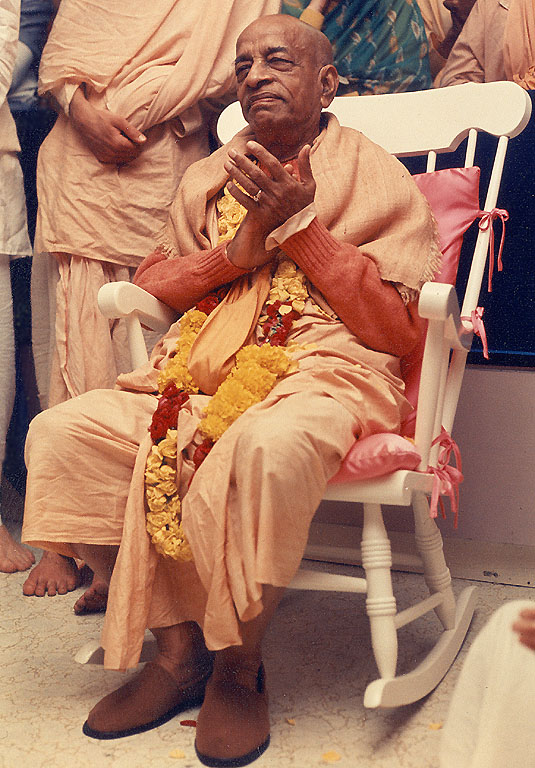
Here in the West people are celebrating Fathers day. So today we honor our our Father with some quotes on Father.
…To accept Kṛṣṇa as father means “My father is there. I have no anxiety.” (Morning Walk — April 26, 1976, Melbourne)
…I am your Spiritual Father, and Krishna is your Spiritual Husband. A girl can never forget either her father or her husband.
(Letter to Jadurani — Stinson Beach, Calif 8 July, 1967)
…The Lord is very kind to the living entities because they are His sons. Lord Kṛṣṇa declares in Bhagavad-gītā, “sarva-yoniṣu…ahaṁ bīja-pradaḥ pitā.” “I am the father of all.”
You are the father of this complete cosmic manifestation, the worshipable chief, the spiritual master. No one is equal to You, nor can anyone be one with You. Within the three worlds, You are immeasurable.
You are the Supreme Lord, to be worshiped by every living being. Thus I fall down to offer You my respects and ask Your mercy. Please tolerate the wrongs that I may have done to You and bear with me as a father with his son, or a friend with his friend, or a lover with his beloved. (Bg 11. 43-44)
More
08 Jun 2014
by The Hare Krishna Movement
in A.C. Bhaktivedanta Swami Prabhupada, Balarama, Krishna, Krishna Consciousness, Krishna Nectar, KRSNA The Supreme Personality of Godhead, Krsna-katha
Tags: A.C. Bhaktivedanta Swami Prabhupada, Balarama, gopis, Krishna, Krsna, Krsna and Balarama, krsna and balarama nectar, Krsna's flute, land of vrndavana, pastimes of krsna and balarama, pastimes of krsna and balarama in the forest of vrndavan, Rama, Spiritual Life, Vrndavan

When I saw this beautiful image of Krsna and Balarama, my mind immediately went to the Krsna Book. So I pulled out some of the pastimes of the two transcendental brothers to share with you today.
…Accompanied by the cowherd boys and Balarāma, Kṛṣṇa brought forward the cows and played on His flute through the forest of Vṛndāvana, which was full of flowers, vegetables, and pasturing grass. The Vṛndāvana forest was as sanctified as the clear mind of a devotee and was full of bees, flowers and fruits. There were chirping birds and clear water lakes with waters that could relieve one of all fatigues. Sweet flavored breezes blew always, refreshing the mind and body. Kṛṣṇa, with His friends and Balarāma, entered the forest and, seeing the favorable situation, enjoyed the atmosphere to the fullest extent. Kṛṣṇa saw all the trees, overloaded with fruits and fresh twigs, coming down to touch the ground as if welcoming Him by touching His lotus feet. He was very pleased by the behavior of the trees, fruits and flowers, and He began to smile realizing their desires. (Chapter 15 Killing of Dhenukasura)
…One day, when Kṛṣṇa, along with Balarāma, was maintaining the calves in the forest, They saw some cows grazing on the top of Govardhana Hill. The cows could see down into the valley where the calves were being taken care of by the boys. Suddenly, on sighting their calves, the cows began to run towards them. They leaped downhill with joined front and rear legs. The cows were so melted with affection for their calves that they did not care about the rough path from the top of Govardhana Hill down to the pasturing ground. They began to approach the calves with their milk bags full of milk, and they raised their tails upwards. When they were coming down the hill, their milk bags were pouring milk on the ground out of intense maternal affection for the calves, although they were not their own calves. These cows had their own calves, and the calves that were grazing beneath Govardhana Hill were larger; they were not expected to drink milk directly from the milk bag but were satisfied with the grass. Yet all the cows came immediately and began to lick their bodies, and the calves also began to suck milk from the milk bags. There appeared to be a great bondage of affection between the cows and calves. (Chapter 13 The Stealing of the Boys and Calves by Brahma)
…Kṛṣṇa was very pleased with the atmosphere of the forest where flowers bloomed and bees and drones hummed very jubilantly. While the birds, trees and branches were all looking very happy, Kṛṣṇa, tending the cows, accompanied by Śrī Balarāma and the cowherd boys… (Chapter 21 The Gopīs Attracted by the Flute)
More
07 Jun 2014
by The Hare Krishna Movement
in A.C. Bhaktivedanta Swami Prabhupada, Dream, Srila Prabhupada's Books, Uncategorized
Tags: A.C. Bhaktivedanta Swami Prabhupada, awakenes to discover the self, deep sleep, dreaming, dreams, human form of life, Krsna, Le Reve, original creator, Srimad Bhagavatam, Supreme Lord, The Dream, The Supreme Personality of Godhead, The Wynn, vasudevah sarvam, wynn las vegas, Wynn theater

Recently we were in Las Vegas for a wedding celebration, and after dinner we went to the show “Le Reve” at the Wynn. “Le Reve” is French for; “The Dream”. It was the most amazing theatrical performance we have seen in years. My mind was swept away by the magnificence of the production, and it was in fact, dream-like. I was transported to another dimension; phantasmagoria. A.C. Bhaktivedanta Swami uses this word in his books, to describe the dream-like nature of this material world.
I would highly recommend seeing Le Reve at the Wynn, if you are in Las Vegas, and as always…recommend reading the books by His Divne Grace A. C. Bhaktivedanta Swami Prabhupada for further advancement and enlightenment in life.
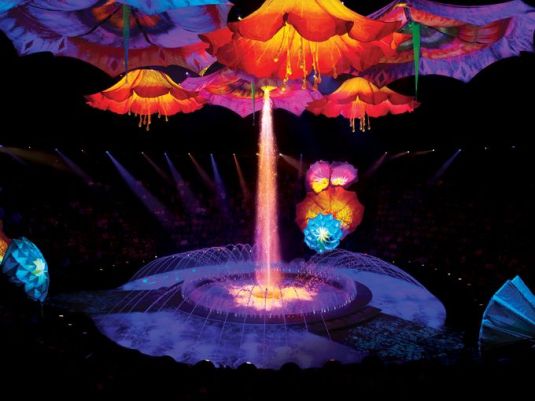
When a person is in deep sleep, he dreams and sees in himself many other objects, such as great mountains and rivers or perhaps even the entire universe, although they are far away. Sometimes when one awakens from a dream he sees that he is in a human form, lying in his bed in one place. Then he sees himself, in terms of various conditions, as belonging to a particular nationality, family and so on. All the conditions of deep sleep, dreaming and wakefulness are but energies of the Supreme Personality of Godhead. One should always remember the original creator of these conditions, the Supreme Lord, who is unaffected by them. (SB 6.16.53-54_
More
06 Jun 2014
by The Hare Krishna Movement
in A.C. Bhaktivedanta Swami Prabhupada, Bhagavad-gita, Bhagavad-gita As It Is 1972 Edition
Tags: A.C. Bhaktivedanta Swami Prabhupada, back home, back to Godhead, conditioned souls, essence of bhagavad gita, eternal relationship with the Supreme Lord, Krishna and Arjuna, Krsna, Krsnaloka planet, spiritual existence, spiritual personality, spiritual sky, Supreme Personality of Godhead
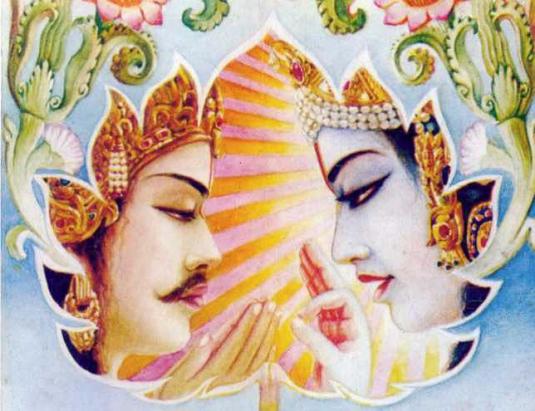
Sometimes when reading the Bhagavad-gita As It Is by His Divine Grace A. C. Bhaktivedanta Swami Prabhupada, a verse or purport will just jump out at me, as it did this morning. No matter how many times I read the Bhagavad-gita, because it is transcendental literature, it is everfresh and new. Every reading has new and deeper realizations…as was the case with this important verse and purport.
My dear Arjuna, one who is engaged in My pure devotional service, free from the contaminations of previous activities and from mental speculation, who is friendly to every living entity, certainly comes to Me. (Bg 11.55)
Anyone who wants to approach the Supreme of all the Personalities of Godhead, on the Kṛṣṇaloka planet in the spiritual sky, and be intimately connected with the Supreme Personality, Kṛṣṇa, must take this formula, as is stated by the Supreme Himself. Therefore, this verse is considered to be the essence of Bhagavad-gītā. The Bhagavad-gītā is a book directed to the conditioned souls, who are engaged in the material world with the purpose of lording it over nature and who do not know of the real, spiritual life. The Bhagavad-gītā is meant to show how one can understand his spiritual existence and his eternal relationship with the Supreme Spiritual Personality and to teach one how to go back home, back to Godhead. Now here is the verse which clearly explains the process by which one can attain success in his spiritual activity: devotional service….
More
14 May 2014
by The Hare Krishna Movement
in A.C. Bhaktivedanta Swami Prabhupada, Free Downloads, Free eBooks, Srila Prabhupada's Books, Teachings of Lord Chaitanya, The Hare Krishna Movement
Tags: A.C. Bhaktiveanta Swami Prabhupada, devotees, impersonalism, Krishnapath, Krsna, Krsna consciousness movement, Lord Caitanya, pure devotional service, Supreme Lord, Supreme Personality of Godhead, Transcendental Teachings of Caitanya Mahaprabhu, voidism

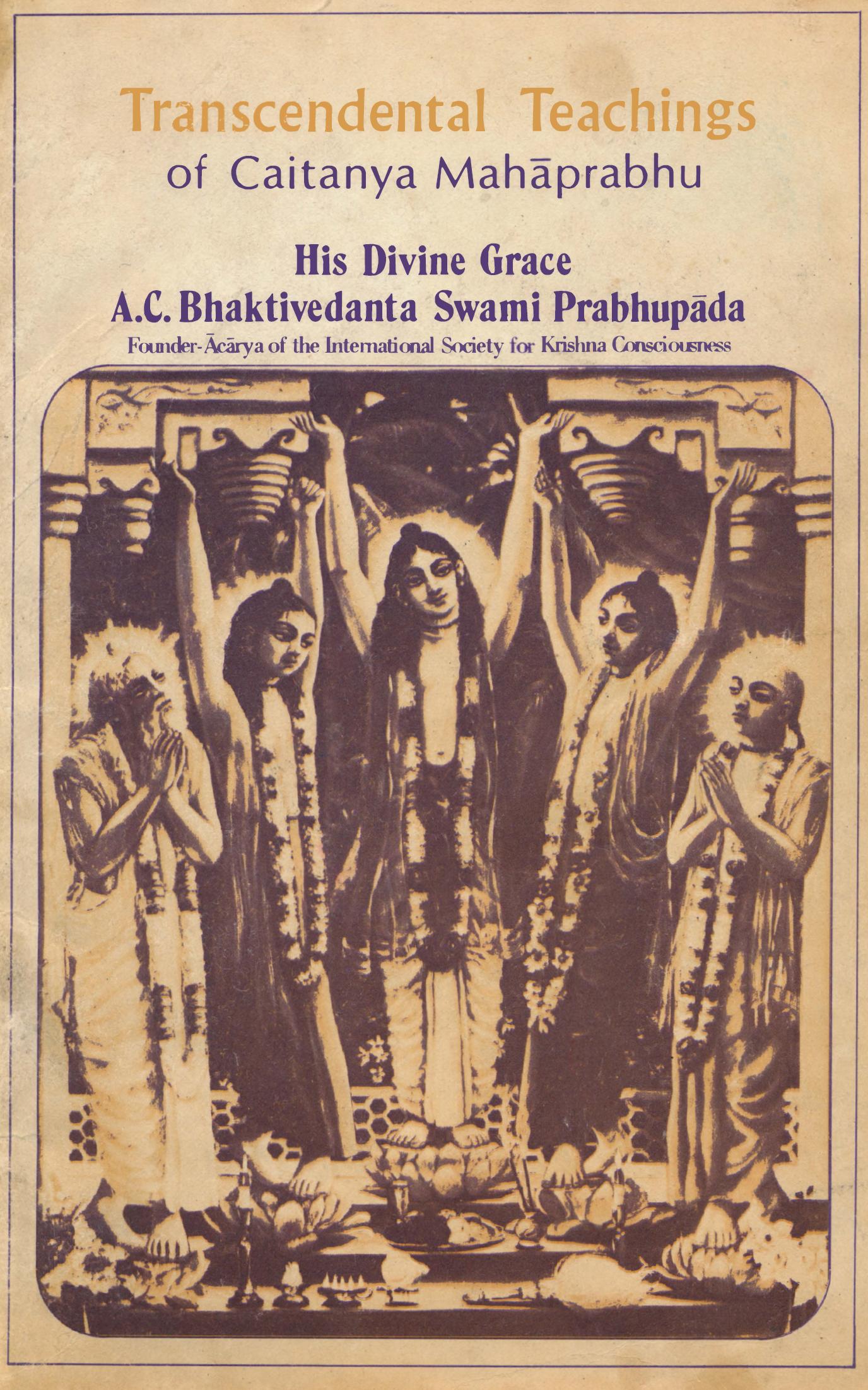
We share with you this nice little booklet printed in 1972 by the ISKCON Press. This book is Srila Prabhupada’s “A short sketch of the life and teachings of Lord Caitanya, the preacher of Srimad Bhagavtam”, which appeared in the Introduction to the Srimad Bhagavatam. This scanned copy was made available by Krishnapath.org where you can go to find other ebooks and Audio books that are available as a free download. To veiw or save the entire book follow link below. Hare Krishna!
The transcendental teachings of Lord Caitanya Mahaprabhu offer a practical and scientific method by which anyone can easily develop love for the Supreme Personality of Godhead, Krsna. These teachings, in their pure form, have been spread all over the world by His Divine Grace A.C. Bhaktivedanta Swami Prabhupada, to whom devotees of Lord Krsna and Lord Caitanya throughout the world offer their most humble and respectful obeisances.
Especially in the West, where the philosophies of impersonalism and voidism, presented in different ways, are enjoying temporary prominence, the culture of pure devotional service to the Supreme Lord appears to have been lost in the oblivion of time. Now Srila Prabhupada has appeared in the West to spread the Krsna consciousness movement introduced by Lord Caitanya in India 500 years ago and thus renovate the principles of pure devotional service. (From Preface)
to read online or to save click on following link; Transcendental Teachings of Caitanya Mahaprabhu
More
07 May 2014
by The Hare Krishna Movement
in A.C. Bhaktivedanta Swami Prabhupada, Nectar of Instruction, Rupa Goswami
Tags: A.C. Bhaktivedanta Swami Prabhupada, Govardhana Hill, Krsna, Krsna's rasa lila pastimes, Mathura, Nectar on Instruction, Radha-kunda, Sri Krsna, Srila Rupa Goswami, Text 9, transcendental forest of Vrndavan, transcendental world, Vaikuntha
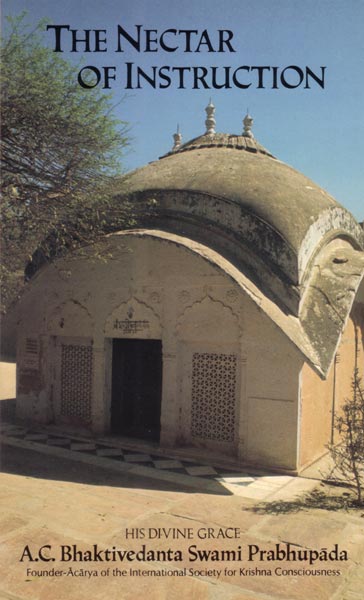
Continuing with our series on the Nectar of Instruction (Upadeśāmṛta), we are posting Text 9, the very important instructions given by Śrīla Rūpa Gosvāmī on visiting the holy places of pilgrimage.
The Nectar of Instruction
By His Divine Grace A. C. Bhaktivedanta Swami Prabhupāda
Text Nine
vaikuṇṭhāj janito varā madhu-purī tatrāpi rāsotsavād
vṛndāraṇyam udāra-pāṇi-ramaṇāt tatrāpi govardhanaḥ
rādhā-kuṇḍam ihāpi gokula-pateḥ premāmṛtāplāvanāt
kuryād asya virājato giri-taṭe sevāṁ vivekī na kaḥ
SYNONYMS
vaikuṇṭhāt—than Vaikuṇṭha, the spiritual world; janitaḥ—because of birth; varā—better; madhu-purī—the transcendental city known as Mathurā; tatra api—superior to that; rāsa-utsavāt—because of the performance of the rāsa-līlā; vṛndā-araṇyam—the forest of Vṛndāvana; udāra-pāṇi—of Lord Kṛṣṇa; ramaṇāt—because of various kinds of loving pastimes; tatra api—superior to that; govardhanaḥ—Govardhana Hill; rādhā-kuṇḍam—a place called Rādhā-kuṇḍa; iha api—superior to this; gokula-pateḥ—of Kṛṣṇa, the master of Gokula; prema-amṛta—with the nectar of divine love; āplāvanāt—because of being overflooded; kuryāt—would do; asya—of this (Rādhā-kuṇḍa); virājataḥ—situated; giri-taṭe—at the foot of Govardhana Hill; sevām—service; vivekī—who is intelligent; na—not; kaḥ—who.
TRANSLATION
The holy place known as Mathurā is spiritually superior to Vaikuṇṭha, the transcendental world, because the Lord appeared there. Superior to Mathurā-Purī is the transcendental forest of Vṛndāvana because of Kṛṣṇa’s rāsa-līlā pastimes. And superior to the forest of Vṛndāvana is Govardhana Hill, for it was raised by the divine hand of Śrī Kṛṣṇa and was the site of His various loving pastimes. And, above all, the superexcellent Śrī Rādhā-kuṇḍa stands supreme, for it is overflooded with the ambrosial nectarean prema of the Lord of Gokula, Śrī Kṛṣṇa. Where, then, is that intelligent Person who is unwilling to serve this divine Rādhā-kuṇḍa, which is situated at the foot of Govardhana Hill?
PURPORT
The spiritual world is three fourths of the total creation of the Supreme Personality of Godhead, and it is the most exalted region. The spiritual world is naturally superior to the material world; however, Mathurā and the adjoining areas, although appearing in the material world, are considered superior to the spiritual world because the Supreme Personality of Godhead Himself appeared at Mathurā. The interior forests of Vṛndāvana are considered superior to Mathurā because of the presence of the twelve forests (dvādaśa-vana), such as Tālavana, Madhuvana and Bahulāvana, which are famous for the various pastimes of the Lord. Thus the interior Vṛndāvana forest is considered superior to Mathurā, but superior to these forests is the divine Govardhana Hill because Kṛṣṇa lifted Govardhana Hill like an umbrella, raising it with His lotuslike beautiful hand to protect His associates, the denizens of Vraja, from the torrential rains sent by the angry Indra, King of the demigods. It is also at Govardhana Hill that Kṛṣṇa tends the cows with His cowherd friends, and there also He had His rendezvous with His most beloved Śrī Rādhā and engaged in loving pastimes with Her. Rādhā-kuṇḍa, at the foot of Govardhana, is superior to all because it is there that love of Kṛṣṇa overflows. Advanced devotees prefer to reside at Rādhā-kuṇḍa because this place is the site of many memories of the eternal loving affairs between Kṛṣṇa and Rādhārāṇī (rati-vilāsa).
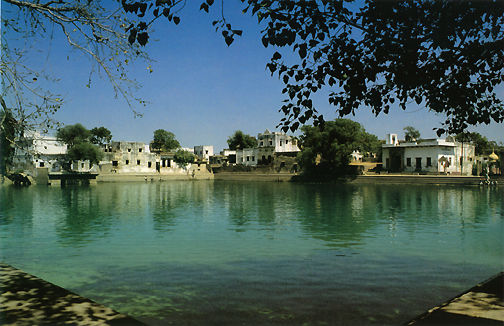
In Caitanya-caritāmṛta (Madhya-līlā) it is stated that when Śrī Caitanya Mahāprabhu first visited the area of Vrajabhūmi, He could not at first find the location of Rādhā-kuṇḍa. This means that Śrī Caitanya Mahāprabhu was actually searching for the exact location of Rādhā-kuṇḍa. Finally He found the holy spot, and there was a small pond there. He took His bath in that small pond and told His devotees that the actual Rādhā-kuṇḍa was situated there. Later the pond was excavated by Lord Caitanya’s devotees, headed first by the six Gosvāmīs, such as Rūpa and Raghunātha dāsa. Presently there is a large lake known as Rādhā-kuṇḍa there. Śrīla Rūpa Gosvāmī has given much stress to Rādhā-kuṇḍa because of Śrī Caitanya Mahāprabhu’s desire to find it. Who, then, would give up Rādhā-kuṇḍa and try to reside elsewhere? No person with transcendental intelligence would do so. The importance of Rādhā-kuṇḍa, however, cannot be realized by other Vaiṣṇava sampradāyas, nor can persons uninterested in the devotional service of Lord Caitanya Mahāprabhu understand the spiritual importance and divine nature of Rādhā-kuṇḍa. Thus Rādhā-kuṇḍa is mainly worshiped by the Gauḍīya Vaiṣṇavas, the followers of Lord Śrī Kṛṣṇa Caitanya Mahāprabhu.
Previous Older Entries Next Newer Entries










 The Hare Krishna Movement