“…If one thinks that there are many pseudo devotees or nondevotees in the Kṛṣṇa Consciousness Society, one can keep direct company with the spiritual master, and if there is any doubt, one should consult the spiritual master. However, unless one follows the spiritual master’s instructions and the regulative principles governing chanting and hearing the holy name of the Lord, one cannot become a pure devotee. By one’s mental concoctions, one falls down… (CC Madhya 19.157 purport)
I enjoy reading and re-reading to old issues of Back to Godhead Magazine. And it seems the older the issue the more relishable the content, as is the case with this 1969 issue…
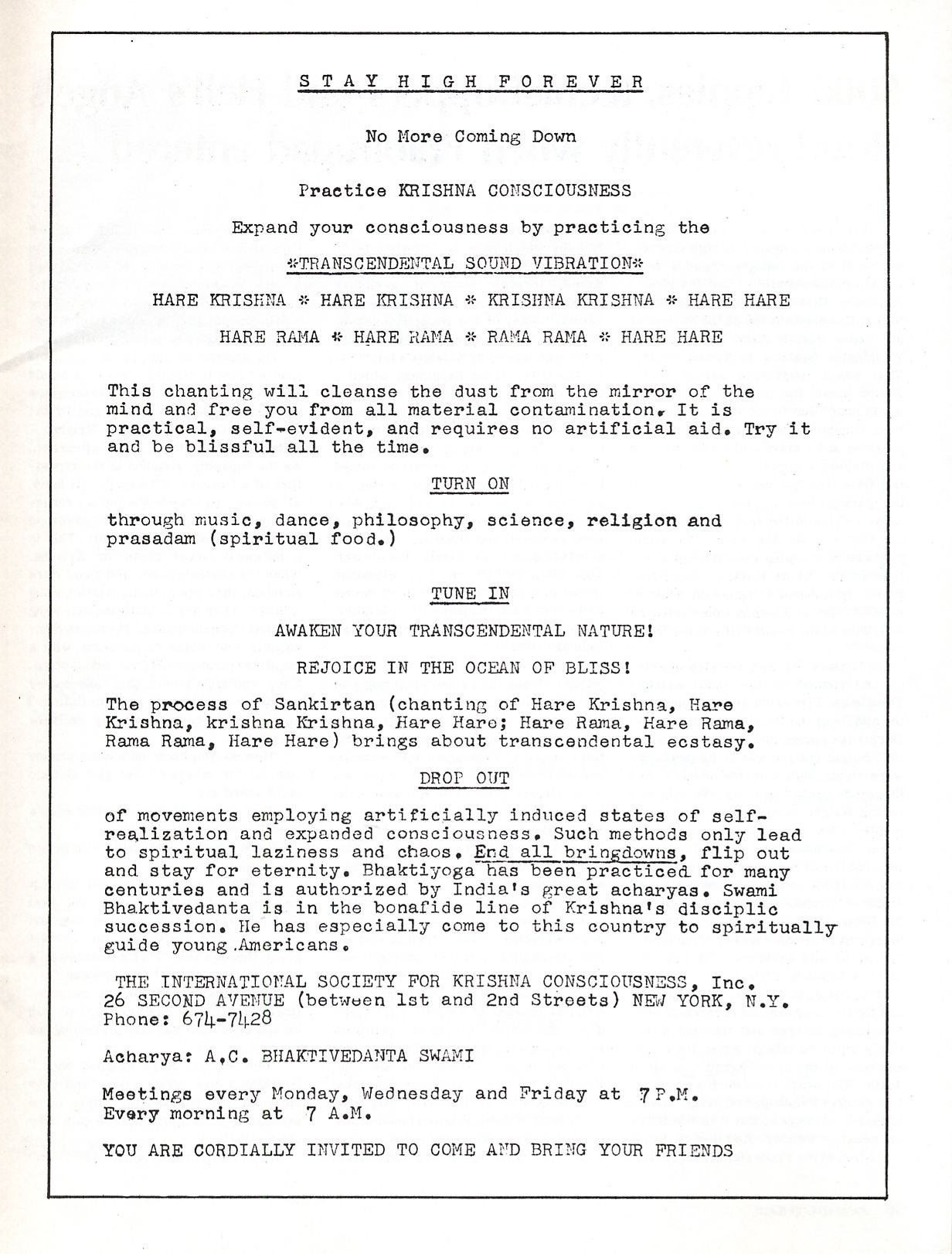
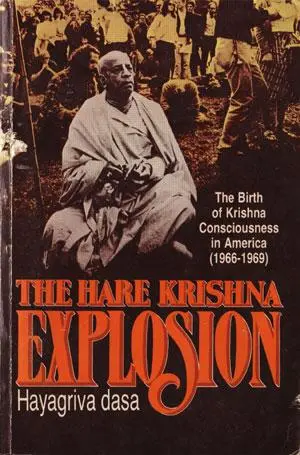
The Hare Krishna Explosion
by Hayagriva das
Excerpted from Back to Godhead Magazine 1969 Vol. 1, No. 26
The joyful history of a dynamic transcendental movement
Hare Krishna, Hare Krishna, Krishna Krishna, Hare Hare vibrates from a walkup temple on New York’s Lower East Side, from the sidewalks of Haight Ashbury, from Golden Gate Park, from a London flat, from student quarters in Hamburg and Amsterdam, from a storefront in Santa Fe, an exbowling alley in Montreal, a sprawling university campus in Ohio, from Old Vrindaban in India to New Vrindaban in the West Virginia mountains, and from Boston and Buffalo to Los Angeles, Seattle and Vancouver and across the Pacific to Hawaii.
Hare Rama, Hare Rama, Rama Rama, Hare Hare. The voices chanting the magic vibrations are invariably young. The chanting, accompanied by khartals (small hand cymbals), tambourines and drums, is often loud and frenetic. The dancing is vigorous. The middle-aged and elderly usually stand in doorways or look through windows, watching in amazement, unaware that they are witnessing a process of spiritual realization that has been practiced on this planet for thousands of years. They do not understand. No one really understands. The chanting just spreads. Hare Krishna, Hare Krishna …
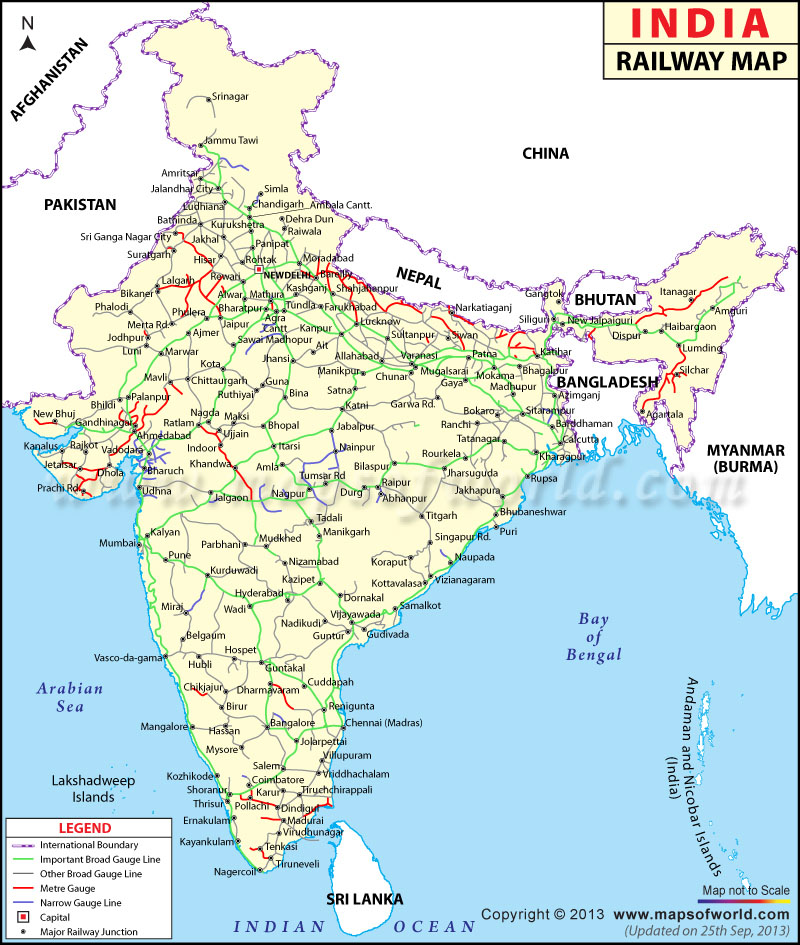
Whenever I plan a trip to India, it seems the first thing I do, is start looking at maps. I have always been a map person, as there is some romantic imagery for me, especially when I look at a map of India. The shape of this country has always invoked in me, a sense of spirituality and wonderment, as if the very shape of it is somehow what a spiritual holy land should look like.
There are so many ways to travel in India; on foot, by bicycle rickshaw, or the motorized “cockroach” rickshaws, by bus, by plane, or my favorite, by train.
Actually we are planing to go to Vrndavana, but will take in some other places of interest as well. The following are some selections from Srila Prabhupada’s books which describe India, Vrndavana, and the purpose of pilgrimage etc.
The purpose of pilgrimages is to remember the Lord constantly, and therefore the Lord is known as tīrtha-kīrti. The purpose of going to a place of pilgrimage is to get the chance to glorify the Lord. Even today, although times have changed, there are still pilgrimage sites in India. For example, in Mathurā and Vṛndāvana, where we had a chance to stay, people are awake from early in the morning at 4 A.M. up until nighttime and are constantly engaged, some way or other, in chanting the holy glories of the Lord. The beauty of such a pilgrimage site is that automatically one remembers the holy glories of the Lord. His name, fame, quality, form, pastimes and entourage are all identical to the Lord, and therefore chanting the glories of the Lord invokes the personal presence of the Lord. Any time or anywhere pure devotees meet and chant the glories of the Lord, the Lord is present without any doubt. It is said by the Lord Himself that He always stays where His pure devotees chant His glories. (from purport SB 3.1.45)
Places of pilgrimage yield a special advantage for a devotee in quickly advancing his spiritual life. Lord Kṛṣṇa lives everywhere, but still it is very easy to approach Him in holy places of pilgrimage because these places are inhabited by great sages. Lord Śrī Kṛṣṇa says that He lives wherever His devotees are chanting the glories of His transcendental activities. (from purport SB 4.8.42)
Today marks the winter solstice, or the day with the fewest hours of sunlight during the whole year. The good news is that after today (Dec. 21 at 6:03 p.m. EST) the days will begin getting longer.
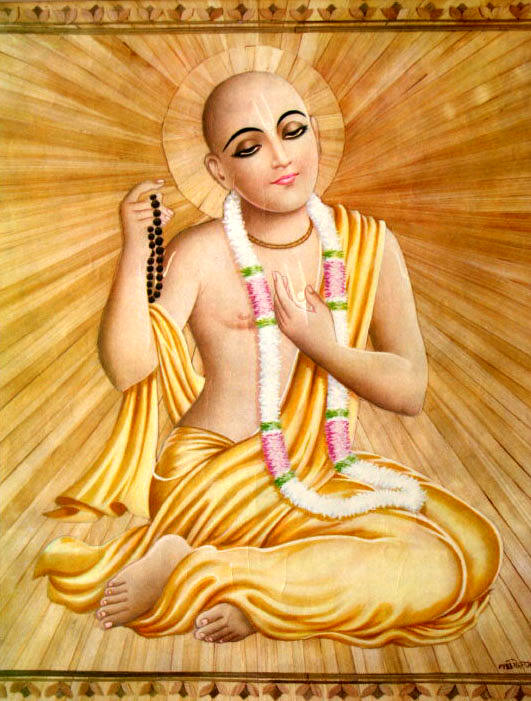
Sarvabhauma Bhattacarya once asked Lord Chaitanya: “Which item is most important in the execution of devotional service?” The Lord replied: “The most important item is the chanting of the holy name of the Lord.”
Sri Caitanya Mahaprabhu further explains, ceto-darpana-marjanam the mirror of one’s heart is cleansed by the holy names; and bhava-maha-davagni-nirvapanam, it extinguishes the blazing fire of material existence. By chanting the holy names one can destroy the sinful condition of material existence and purify the unclean heart.
There is no need, therefore, to understand the language of the mantra, nor is there any need for mental speculation or any intellectual adjustment for chanting this maha-mantra. It springs automatically from the spiritual platform, and as such, anyone can take part in the chanting without any previous qualification, and dance in ecstasy. (Srila Prabhupada)
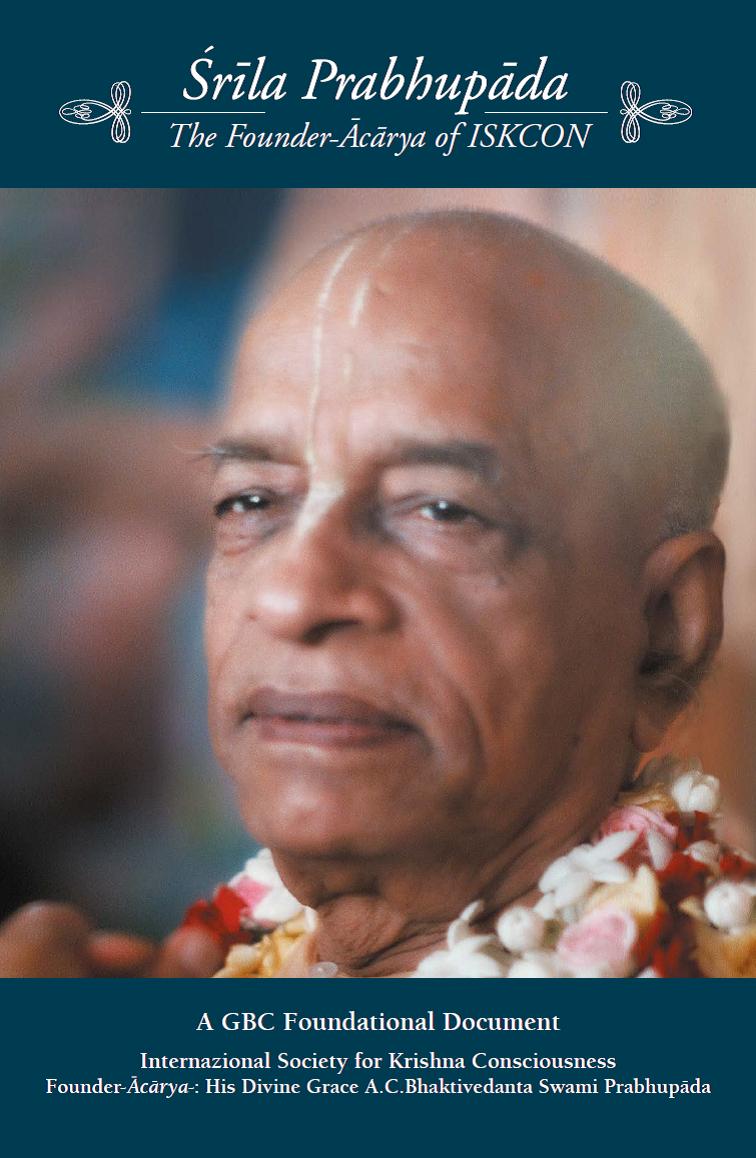
There is a nice book that was published recently entitled ““Srila Prabhupada: The Founder-Acarya of ISKCON”, written by Ravindra Svarupa Das and published by ISKCON GBC Press.
In our Mission Statement on our About Us Page we have stated;
…”to put it rather simply, we are promoting Srila Prabhupada; The Founder-Acarya of the International Society for Krishna Consciousness, his Original writtings, his teachings, and his instructions for the world.”
So it is with this mind, we share with you this nice publication
In the course of the evolutionary process, which is caused by fruitive activities due to undesirable material sense gratification, I have received this human form of life, which can lead to the heavenly planets, to liberation, to the lower species, or to rebirth among human beings. (SB7.13.25)
…All living entities within this material world are undergoing the cycle of birth and death according to the laws of nature. This struggle of birth and death in different species may be called the evolutionary process, but in the Western world it has been wrongly explained. Darwin’s theory of evolution from animal to man is incomplete because the theory does not present the reverse condition, namely evolution from man to animal.
Human life, which is obtained in the course of the evolutionary process, is a chance for elevation (svargāpavarga) or for degradation (tiraścām punar asya ca). If one uses this human form of life properly, he can elevate himself to the higher planetary systems, where material happiness is many thousands of times better than on this planet, or one may cultivate knowledge by which to become free from the evolutionary process and be reinstated in one’s original spiritual life. This is called apavarga, or liberation. (from purport to SB 7.13.25)
Some years back I was reading from one book and the author was explaining how within each of us, we have the Keys to the gates of the Kingdom of Heaven, and we also have the Keys to the gates of Hell. It is our choice at every moment which we choose to use. Or as the saying goes “It is Rama, or it is Drama”.
I was reading about the duration of the material universe this evening, and this whole notion of time, puts presure on my insignificant tiny brain.
…The duration of the material universe is limited. It is manifested in cycles of kalpas. A kalpa is a day of Brahmā, and one day of Brahmā consists of a thousand cycles of four yugas or ages: Satya, Tretā, Dvāpara, and Kali. The cycle of Satya is characterized by virtue, wisdom and religion, there being practically no ignorance and vice, and the yuga lasts 1,728,000 years. In the Tretā-yuga vice is introduced, and this yuga lasts 1,296,000 years. In the Dvāpara-yuga there is an even greater decline in virtue and religion, vice increasing, and this yuga lasts 864,000 years. And finally in Kali-yuga (the yuga we have now been experiencing over the past 5,000 years) there is an abundance of strife, ignorance, irreligion and vice, true virtue being practically nonexistent, and this yuga lasts 432,000 years. (from purport Bg 8.17)
Even if I could grasp the extent of time in the material universe, that is just a fraction of the unlimited eternal time that continues after the termination of the yuga.
…Then the process is set rolling again. These four yugas, rotating a thousand times, comprise one day of Brahmā, the creator god, and the same number comprise one night. Brahmā lives one hundred of such “years” and then dies. These “hundred years” by earth calculations total to 311 trillion and 40 million earth years. By these calculations the life of Brahmā seems fantastic and interminable, but from the viewpoint of eternity it is as brief as a lightning flash. In the causal ocean there are innumerable Brahmās rising and disappearing like bubbles in the Atlantic. Brahmā and his creation are all part of the material universe, and therefore they are in constant flux. (from purport Bg 8.17)
The above calculations Srila Prabhupada uses and I quote;“seems fantastic and interminable, but from the viewpoint of eternity it is as brief as a lightning flash. In the causal ocean there are innumerable Brahmās rising and disappearing like bubbles in the Atlantic.”Wow!
Today being Sunday, and with the weather cold and wet, I decided to stay indoors and practice my cooking, by learning how to cook Kachoris, which is basically a pastry with filling, for the Lord. I have never actually made them before, although I have eaten countless kachoris at various feasts. So I searched for some recipes in our cookbooks and on the Internet and found a nice selection of recipes for different types of Kachoris at harekrsna.com. So I have posted many nice Kachori recipes or variations, and will pick one to cook today for our Sunday Feast.
My wife shared this You Tube with me this morning, that she had on her Face Book. It was very beautiful and powerful, and I thought, I should share it with all of you as well.
Sri Pancha Tattva Maha Abhiseka 2014
The 10th anniversary of the installation of Sri Panca tattva in Mayapur was celebrated with great jubilation by offering a Maha Abhisheka. Around 10,000 devotees congregated in the Holy Dham to take darshan of the large size murtis of the Panca tattva.
This morning I was reading from the Bhagavad-gita As It Is, and it seemed like it was all about “Faith”. That word just kept coming up again and again, and as I was reading, I had to ask myself, ‘how strong is my faith?’. I would like to think it is pretty strong, as it has sustained me, my entire adult life. Even as a child I always believed in God. Don’t know why, I just did.
I thought today, I will do a post on “Faith”
…faith is a most important factor for progress in Kṛṣṇa consciousness. In the Caitanya-caritāmṛta it is said that one should have complete conviction that simply by serving the Supreme Lord Śrī Kṛṣṇa he can achieve all perfection. That is called real faith. In the Śrīmad-Bhāgavatam (3.4.12) it is stated that by giving water to the root of a tree, its branches, twigs and leaves become satisfied, and by supplying food to the stomach all the senses of the body become satisfied, and, similarly, by engaging in the transcendental service of the Supreme Lord, all the demigods and all the living entities automatically become satisfied.
After reading Bhagavad-gītā one should promptly come to the conclusion of Bhagavad-gītā: one should give up all other engagements and adopt the service of the Supreme Lord, Kṛṣṇa, the Personality of Godhead. If one is convinced of this philosophy of life, that is faith. Now the development of that faith is the process of Kṛṣṇa consciousness. (from purport to Bg. 9.3)
yasya deve parā bhaktir
yathā deve tathā gurau
tasyaite kathitā hy arthāḥ
prakāśante mahātmanaḥ
“Only unto those great souls who have implicit faith in both the Lord and the spiritual master are all the imports of Vedic knowledge automatically revealed.” (ŚU 6.23)
…Now our point was that how to see Kṛṣṇa in everything?… By these blunt, material senses, we cannot appreciate, or we can see, the Supreme Personality of Godhead. It has to be purified… One must be relieved from all designations. So long one thinks that “I am Hindu. I am Christian. I am Muhammadan. I am this. I am brāhmaṇa. I am śūdra. I am kṣatriya. I am man. I am woman. I am black. I am white.” These are all designations. One has to become free from all these designations. That is called sarvopādhi-vinirmuktam. If you see God, Kṛṣṇa, from the Hindu angle of vision, if you see God from Christian angle of vision, then you cannot see God. That is not seeing God. You have to become freed from all these designations. Just like Caitanya Mahāprabhu taught us, nāhaṁ vipra na ca nara-patir na yatir vā. Caitanya Mahāprabhu says, “I am not a brāhmaṇa. I am not a kṣatriya. I am not a vaiśya. I am not a śūdra. I am not a sannyāsī. I am not a gṛhastha. I am not a brahmacārī.” Then “What You are?” Because within these eight categories, we are living. But Caitanya Mahāprabhu says, “I don’t belong to all these categories.” Then “What You are, Sir?”… “I am the servant of the servant of the servant of the servant of Kṛṣṇa, the maintainer of the gopīs.” (The Nectar of Devotion Lecture Vṛndāvana, October 18, 1972)
Sometimes when I am sitting and reading from Srila Prabhupada’s Srimad Bhagavatam, a verse or sentence from the purport just jumps out from the page almost like it is in 3D, and I catch a glimpse of what the Spiritual World must be like. It is beyond even my imagination, but sometimes I catch a glimmer of light, through a transcendental window, by the grace of my spiritual master His Divine Grace A. C. Bhaktivedanta Swami Prabhupada.
…The transcendental abode of the Lord where the trees are all desire trees and the buildings are made of touchstone. The Lord Govinda is engaged there in herding the surabhi cows as His natural occupation.
“I worship Govinda, the primeval Lord, the first progenitor who is tending the cows, yielding all desire, in abodes built with spiritual gems, surrounded by millions of purpose trees, always served with great reverence and affection by hundreds of thousands of lakṣmīs or gopīs.” (Bs 5.29)
…The Lord Govinda is engaged there in herding the surabhi cows as His natural occupation. And those who are artists, overtaken by the beautiful creation, should better see to the beautiful face of the Lord for complete satisfaction. The face of the Lord is the embodiment of beauty. What they call beautiful nature is but His smile, and what they call the sweet songs of the birds are but specimens of the whispering voice of the Lord.
Chanting the Hare Krishna Mantra
By His Divine Grace A. C. Bhaktivedanta Swami Prabhupada
“This transcendental vibration by chanting of Hare Krishna, Hare Krishna, Krishna Krishna, Hare Hare/ Hare Rama, Hare Rama, Rama Rama, Hare Hare, is the sublime method for reviving our Krishna consciousness. As living spiritual soul, we are all originally Krishna conscious entities, but due to our association with matter from time immemorial, our consciousness is now polluted by material atmosphere. In this polluted concept of life we are all trying to exploit the resources of material nature, but actually we are becoming more and more entangled in our complexities. This illusion is called maya, or hard struggle for existence, for winning over the stringent laws of material nature. This illusory struggle against material nature can at once be stopped by revival of our Krishna consciousness.
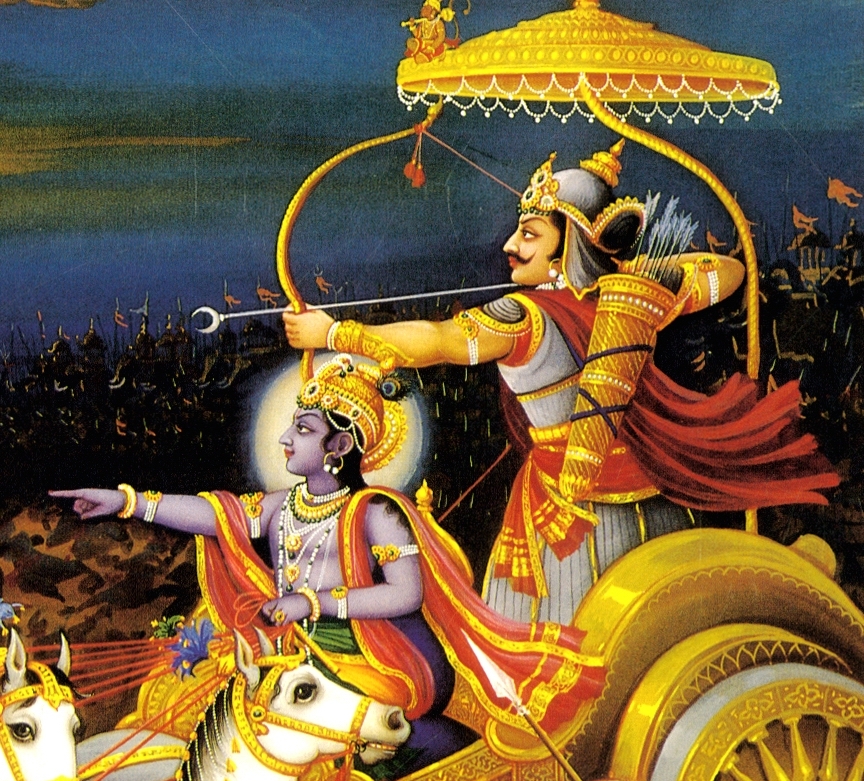
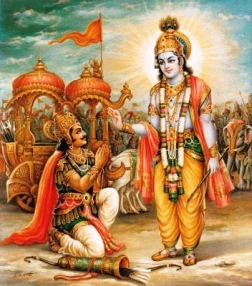
Certainly others who were fighters on the Battlefield of Kurukṣetra were purified by the onslaught of Arjuna’s arrows, and while seeing the lotuslike face of Kṛṣṇa, so pleasing to the eyes, they achieved the abode of the Lord. (SB 3.2.20)
This morning as I was reading from the Srimad-Bhagavatam, the words “pleasing to the eyes of the seer” jumped out at me. And I was reminded again how just by appreciating the beauty of the Lord, one can attain success in life, as the following purport explains.
“…All the warriors who fought against Arjuna but who were able to see the lotuslike face of the Lord on the battlefront achieved the abode of the Lord, exactly as the devotees of the Lord do. The words “pleasing to the eyes of the seer” are very significant. When the warriors from the other side of the battlefield saw Lord Kṛṣṇa at the front, they appreciated His beauty, and their dormant instinct of love of God was awakened.
This love of God is awakened by the association of pure devotees of the Lord… Those who saw the beautiful face of the Lord on the Battlefield of Kurukṣetra were purified first by Arjuna when he made his onslaught with arrows… All the activities of a pure devotee are executed on behalf of the Lord because a pure devotee of the Lord has nothing to do for his personal interest. Arjuna’s killing was as good as killing by the Lord Himself. As soon as Arjuna shot an arrow at an enemy, that enemy became purified of all material contaminations and became eligible to be transferred to the spiritual sky… those who awakened to love of God were transferred to the planets of the transcendental sky.
Those whose love of God is awakened to the fullest extent go back to the Goloka Vṛndāvana planet in the spiritual sky, whereas persons who have just awakened to love of Godhead by accident or association are transferred to the Vaikuṇṭha planets. Essentially there is no material difference between Goloka and Vaikuṇṭha, but in the Vaikuṇṭhas the Lord is served in unlimited opulence, whereas in Goloka the Lord is served in natural affection.” (from purport to SB 3.2.20)
Ox Barn Renovation at New Vrindavan
by Vyasasan das
Back in August of this year, I began the overwhelming task of rebuilding the barn at New Vrindavan, West Virginia. As you will be able to see from the following pictures, the neglected barn was sadly in a state of disrepair and dilapidation. The building had been completely abandoned and neglected for over twenty years, and was filled with unspeakable garbage and debris. You could say it was a hazard and an eyesore. Actually the building was scheduled to be torn down…but then a remarkable thing happened. Male bulls started being born here at New Vrindavan. One after another, ten in a row, male bulls were appearing and the oxen program was born.
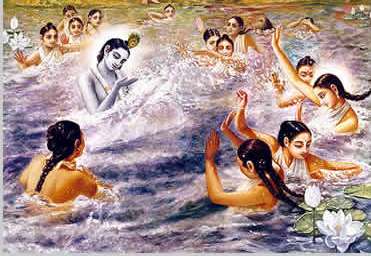
…In His boyhood at Vṛndāvana, Lord Kṛṣṇa was notorious as a teasing friend in transcendental love to all the girls His age. His love for them was so intense that there is no comparison to that ecstasy, and the damsels of Vraja were so much attached to Him that their affection excelled that of the great demigods like Brahmā and Śiva. Lord Kṛṣṇa finally admitted His defeat before the transcendental affection of the gopīs and declared that He was unable to repay them for their unalloyed affection. (from purport SB 3.2.14)
Although I have posted the Sri Siksastaka prayers from this site in the past, the importance of these eight prayers by Lord Caitanya Mahaprabhu can not be over emphasized. Therefore we are posting them again along with a Commentary by Srila Prabhupada and a sound file by Achutananda Prabhu.
…Although Lord Caitanya was widely renowned as a scholar in His youth, He left only eight verses, called Śikṣāṣṭaka. These eight verses clearly reveal His mission and precepts. These supremely valuable prayers are translated herein.
Śrī Śrī Śikṣāṣṭaka
Eight Instructions of Lord Śrī Caitanya Mahāprabhu
Today marks the advent of the Srimad Bhagavad-gita, orherwise known as ‘Gita Jayanti”. So we honor this auspicious day with a reading of the entire text.
We ran across this nice overview, or study guide, of the Bhagavad-gita As It Is, on the Sampradaya Sun and thought we would share it with all of you.
The Glories of Srimad Bhagavad-gita
By: Sun Staff Cananda (SUN)
Summary Overview of Bhagavad-gita As It Is
By His Divine Grace A. C. Bhaktivedanta Swami Prabhupada
Chapter One
Observing the Armies on the Battlefield of Kurukshetra
The armies of Pandava’s and Kaurava’s have assembled at Kurukshetra. As Kurukshetra is dharmakshetra and Krishna is dharma personified, so the side, having Krishna with them will be victorious. Thus Duryodhana feels apprehensive due to the prowess of the Pandavas army. However, he pacifies himself by expressing the glories of his own army to his martial Guru Dronacarya. Thus starting with Bhishma, all warriors blow their conchshells to herald the beginning of the war. A ferocious uproar results, shattering the hearts of the Kurus.
How the Hare Krsna Movement Came to Africa
by His Holiness Brahmananda Swami
Excerpted from; Back to Godhead Magazine 1975 Vol. 10, No. 12
The story of how the Hare Krsna movement came to Africa starts in 1971 in the United States. I was in Tallahassee, Florida, teaching an experimental course in Krsna consciousness at the state university, when I received a letter from my spiritual master, His Divine Grace A.C. Bhaktivedanta Swami Prabhupada, instructing me to go immediately to West Pakistan for preaching work. I had very little money, and I knew the trip to Pakistan would be long and arduous. However, a disciple takes his spiritual master’s order as his very life and soul, and I was determined that nothing would stop me.













 The Hare Krishna Movement