25 Aug 2020
by The Hare Krishna Movement
in Radha Krishna, Srila Prabhupada, Srimati Radharani, Uncategorized
Tags: appearance day of srimati radharani, Krishna, quotes by Srila Prabhupada, Radha, Radha Krishna, Radharani, Radhastami, Srila Prabhupada, Srimati Radharani

Today marks the Appearance of Srimati Radharani. We honor it with a half day fast, puspanjali, discussion on the glories of Srimati Radharani, followed by a feast.
The following are just a few of the many quotes from Srila Prabhupada which encourage us to approach Krishna through the mercy of Srimati Radharani, Krishna’s eternal consort. For those of us who feel that there is no hope of making spiritual progress in this lifetime, Srimati Radharani, Who is compassion personified, kindly comes to our rescue if we can humbly invoke Her divine blessings.
tapta-kancana-gaurangi radhe vrndavanesvari
vrsabhanu-sute devi pranamami hari-priye
“I offer my respects to Radharani whose bodily complexion is like molten gold and who is the Queen of Vrndavana. You are the daughter of King Vrsabhanu, and You are very dear to Lord Krishna.” (Sri Radha Pranama)
“So this is our philosophy, to please Krishna through Radharani, and just today is the auspicious day of Radharani appearance. So we should offer puspanjali and pray to Radharani that ‘Radharani, kindly be merciful and tell about me to Your Krishna. To Your Krishna. Krishna is Yours.’ Krishna, Radha-Krishna. Krishna is not independent. Krishna is Radharani’s property. So you have to approach Krishna through Radharani. That is, today is the auspicious day. Worship Radharani very nicely and be happy.” (Srila Prabhupada Lecture, September 5, 1973)
“The beauty of Srimati Radharani’s eyes forcibly devours the beauty of newly grown blue lotus flowers, and the beauty of Her face surpasses that of an entire forest of fully blossomed lotuses. Her bodily luster seems to place even gold into a painful situation. Thus the wonderful, unprecedented beauty of Srimati Radharani is awakening in Vrindavana.” (Caitanya-caritamrita Antya 1.169)
“I emphatically say to you, O brothers, you will obtain your good fortune from the Supreme Lord Krishna only when Srimati Radharani becomes pleased with you.”(Prayer to the Lotus Feet of Krishna, September 13, 1965)
More
25 Aug 2020
by The Hare Krishna Movement
in Kachori, Radhaballabha Kachoris, Radhastami, Srimati Radharani, The Hare Krsna Cookbook, Vegetarian Cooking, Vegetarian Recipies
Tags: appearance day of srimati radharani, hare krishna cookbook, Krishna, Radha, radhallabha kachoris recipe, Srimate Radharani, vegetarian cooking

Today we celebrate the Appearance Day of Srimati Radharani [Radhastami] with a half day fast followed by a feast cooked in honor of Srimati Radharani. She appears at noon so we begin our day with songs in praise of Srimati Radharani and time in the kitchen cooking up a nice vegetarian offering. Since She is fond of Kachori’s, we share with you this nice recipe from “The Hare Krishna Cookbok”; Radhaballabha Kachoris.
“This preparation is one of Srimati Radharani’s favorites and is always prepared for Her appearance day. There is nothing in the material world to compare with the flavor of Radhaballabha Kachoris”.
Radhaballabha Kachoris Recipe
ghee for deep frying
1 cup of cleaned, split urad dhal
2 cups white flour
cayenne pepper
asafoetida
2 T. freshly ground anise seed
butter or ghee solids
Wash urad dahl thoroughly. Soak in water overnight. Drain, leaving a tiny bit of water. In a blender, grind urad dhal untill it is a smooth paste, adding a little more water if necessary. The past should ve very thick. Set aside. Add ground anise seed to paste. Using white flour, butter or ghee solids and water, make a soft dough, like puri dough. (not wet.) Let the dough sit for one hour under a dampened cloth. Meanwhile prepare three very small bowls in the following manner:
1. Put in a mixture of 1 T. water and 1/2 t. asafoetida.
2. Put plain salt in the second.
3. Put cayenne pepper in the third.
Pinch off balls of dough one inch in diameter. Roll them out into circles of 2 1/2 inches in diameter. Pinch off a ball of kachori paste about one inch in diameter; dip into each of bowls in succession, and place in the center of the circle of kachori dough. Gather up the dough around the paste as you would gather a paper bag. Make sure all the urad dahl paste is covered, and seal the top edge very well using a little water. Flatten the sealed kachori with a rolling pin and then roll gently as you would apuri or chapati.
Be carful not to break the surfaces. If necessary, pat them out by hand. Deep-fry the kachori in fairly hot ghee as you would a puri. Stand up kachoris on paper toweling to drain. Before offering them, re-fry very quickly, but do not brown.
“This preparation is one of Srimati Radharani’s favorites and is always prepared for Her appearance day. There is nothing in the material world to compare with the flavor of Radhaballabha Kachoris”.
This recipe I copied from; “The Hare Krishna Cookbook” [click on link to down load the entire book]
24 Aug 2020
by The Hare Krishna Movement
in A.C. Bhaktivedanta Swami Prabhupada, GBC, Guru & Disciple, guru-tattva, Locanananda das
Tags: A. c. Bhaktivedanta Swami Prabhupada, GBC, gbc conspiracy, guru tattva, initiations in Iskcon, Iskcon, Locanananda das, Srila Prabhupadas instructions on initiations, Vrndavana

The following is an older article but one of great importance, with perhaps the only remaining document of the GBC summary report of the meeting that took place between May 27-29, 1977.
Officiating Acaryas
Editorial: “GBC Suppressed The Truth”
by Locanananda dasa
EDITORIAL, Dec 13 [1999] (VNN)
New evidence has just been discovered that suggests a GBC conspiracy to suppress instructions given by Śrīla Prabhupāda concerning how he wanted initiations to be performed after his departure.
In May of 1977, the members of the GBC were summoned to Vrndavana, India to meet with Śrīla Prabhupāda when His Divine Grace thought his departure from this world was imminent. His Divine Grace revealed to a committee of GBC members that he was going to recommend some of his disciples to act as officiating ācāryas to perform first and second initiations when he would no longer be with us. As evidenced by the following document, the GBC decided at the time that devotees throughout the world should not be informed of this most important revelation made by their beloved spiritual master.
The repercussions of the decision to suppress the truth and the subsequent deviation from Śrīla Prabhupāda’s instructions have left devoted followers of His Divine Grace deadlocked over the issue of guru succession and initiations in ISKCON for more than two decades.
The document in question is a summary report of the GBC meetings held during the three days from May 27-29, 1977. The report was sent out to all ISKCON temple presidents and begins with a list of names of the GBC members in attendance. The first point mentioned in the report is that a list of trustees of all ISKCON properties was submitted to Śrīla Prabhupāda. The second point states that committees were formed to improve the original charter and expand the Bureau of Management in India. Point number three deals with the questions posed by the GBC committee concerning how Śrīla Prabhupāda’s mission was to be continued under the direction of the GBC after his departure. It is this third item that is of great significance.
A review of the document shows quite clearly that the GBC deliberately omitted from the report Śrīla Prabhupāda’s answer to the question concerning initiations. This intentional omission was apparently made to conceal Śrīla Prabhupāda’s wishes from his disciples worldwide concerning the initiation procedures he wanted followed after his departure. Had this been an honest presentation of the facts, the report would have stated:
“When asked how first and second initiations would be performed after he was no longer with us, Śrīla Prabhupāda said that he was going to recommend some of his disciples to act as officiating ācāryas.”
The text of Śrīla Prabhupāda’s conversation with the GBC committee was not disclosed for many years, which has created a credibility gap between the leaders of ISKCON and ISKCON’s general membership.
Six weeks later, a letter issued on July 9th, 1977 bearing Śrīla Prabhupāda’s signature was sent to all temple presidents to explain changes that were being made in initiation procedures. It was the outcome of a discussion that had taken place two days earlier between Śrīla Prabhupāda and his secretary. In that conversation, to resolve the problem of an initiation backlog, Śrīla Prabhupāda first recommended that senior sannyāsīs could again perform initiation ceremonies as had been done before his illness. However, when the secretary reminded Śrīla Prabhupāda of the May 28th meeting with the GBC, this historic conversation evolved into the naming of the officiating ācāryas, referred to in the letter as “ritvik representatives.”
Śrīla Prabhupāda had said he was going to recommend some of his disciples to perform initiations on his behalf after his disappearance, and the July 9th letter was the fulfillment of that promise. According to the May 28th announcement to the GBC, those initiated during his physical presence by representatives of the ācārya would be considered his direct disciples, while those initiated after his disappearance by officiating ācāryas would be considered his second generation of disciples, or granddisciples. The difference was considered to be one of formalities, since all members of ISKCON throughout the course of its history would perpetually serve, worship and follow the teachings of their great preceptor ācārya, His Divine Grace A.C. Bhaktivedanta Swami Prabhupāda. That is the principle that unifies the International Society for Kṛṣṇa Consciousness.
The document presented below was transcribed exactly from the original which accounts for any spelling or grammatical errors. Because the only remaining copy may be the one in my possession, I recommend that devotees save copies in their files for future reference.
More
11 Aug 2020
by The Hare Krishna Movement
in A.C. Bhaktivedanta Swami Prabhupada
Tags: A. C. Bhakthvedanta Swami Prabhupada, Janmastami, Krishna, Krishna Janmastami, Krsna, Krsna Book, Krsna The Supreme Personality of Godhead
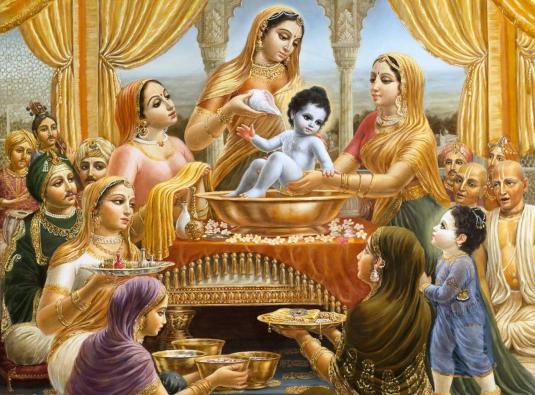
Joyous Celebration at Krishna’s Birth
Today we celebrate the birth of Lord Krsna, or Krishna Janmastami, with a full day fast and a feast after his appearance at Midnight tonight. We honor this auspicious day with a post from the Krsna Book.
The joyous vibrations at Krsna’s birth ceremony could be heard in all the pasturing grounds and houses.
KRSNA, The Supreme Personality of Godhead
By His Divine Grace A. C. Bhaktivedanta Swami Prabhupada
Chapter 5
Meeting of Nanda and Vasudeva
Although Kṛṣṇa was the real son of Vasudeva and Devakī, because of Kaṁsa’s atrocious activities Vasudeva could not enjoy the birth ceremony of his son. But Nanda Mahārāja, the foster father, celebrated the birth ceremony of Kṛṣṇa very joyfully. The next day, it was declared that a male child was born of Yaśodā. According to Vedic custom, Nanda Mahārāja called for learned astrologers and brāhmaṇas to perform the birth ceremony. After the birth of a child, the astrologers calculate the moment of the birth and make a horoscope of the child’s future life. Another ceremony takes place after the birth of the child: the family members take baths, cleanse themselves and decorate themselves with ornaments and garlands; then they come before the child and the astrologer to hear of the future life of the child. Nanda Mahārāja and other members of the family dressed and sat down in front of the birthplace. All the brāhmaṇas who were assembled there on this occasion chanted auspicious mantras, according to the rituals, while the astrologers performed the birth ceremony. All the demigods are also worshiped on this occasion, as well as the forefathers of the family. Nanda Mahārāja distributed 200,000 well decorated, dressed and ornamented cows to the brāhmaṇas. He not only gave cows in charity, but hills of grains, decorated with golden-bordered garments and many ornaments.
More
11 Aug 2020
by The Hare Krishna Movement
in A.C. Bhaktivedanta Swami Prabhupada, Janmastami, Krishna, Krsna
Tags: advent of Krsna, Bhagavad-gita, birth and death, janma karma me divyam, Janmastami, Krishna, Krishna's appearance day, Krsna, Lecture by Srila Prabhupada

Lord Krishna’s Appearance Day Lecture
By His Divine Grace A.C. Bhaktivedanta Swami Prabhupada
(London, August 21, 1973)
Prabhupāda: His Excellency, the High Commissioner; ladies and gentlemen, I thank you very much for your coming here and participating in this ceremony, Janmāṣṭamī, advent of Kṛṣṇa. The subject matter I’ve been ordered to speak on is advent of Kṛṣṇa. Kṛṣṇa says in the Bhagavad-gītā,
janma karma me divyaṁ
yo jānāti tattvataḥ
tyaktvā dehaṁ punar janma
naiti mām eti kaunteya
(BG 4.9)
This fact, that we can achieve such a stage of life when we can stop our birth and death… Sa ‘mṛtatvāya kalpate. This morning, I was explaining this verse:
yaṁ hi na vyathayanty ete
puruṣaṁ puruṣarsabha
sama-duḥkha-sukhaṁ dhīraṁ
so ‘mṛtatvāya kalpate
Amrtatva means immortality. So the modern civilization, they have no idea, either the great philosopher, great politician or great scientist, that it is possible to attain the stage of immortality. Amṛtatva. We are all amṛta. In the Bhagavad-gītā it is said, na jāyate na mrīyate vā kadācin. We living entities, we never die, never take birth. Nityaḥ śāśvato yaṁ, na hanyate hanyamāne śarīre (BG 2.20). Every one of us, we are eternal, nityaḥ śāśvato; Purāṇa, the oldest. And after annihilation of this body, we do not die. Na hanyate. The body is finished, but I have to accept another body. Tathā dehāntara prāptir dhīras tatra na muhyati. Dehino ‘smin yathā dehe kaumāraṁ yauvanaṁ jarā (BG 2.13).
This simple thing, at the present moment, they are lacking knowledge, that we, all living entities, part and parcel of Kṛṣṇa, we are eternal, we are blissful, and we are cognizant. Kṛṣṇa is described in the Vedic śāstras:
More
08 Aug 2020
by The Hare Krishna Movement
in A.C. Bhaktivedanta Swami Prabhupada, Bhagavad-gita, Chanting Hare Krishna, Hare Krishna Maha Mantra, Hare Krishna Movement, Krsna Consciousness

In this present day, people are very much eager to have one scripture, one God, one religion, and one occupation.
Therefore,
ekam sastram devaki-putra-gitam: let there be one scripture only, one common scripture for the whole world – Bhagavad-gita.
Eko devo devaki-putra eva: let there be one God for the whole world – Sri Krishna.
Eko mantras tasya namani: and one hymn, one mantra, one prayer – the chanting of His name
Hare Krishna, Hare Krishna, Krishna Krishna, Hare Hare
Hare Rama, Hare Rama, Rama Rama, Hare Hare
Karmapy ekam tasya devasya seva: and let there be one work only – the service of the Supreme Personality of Godhead.
05 Aug 2020
by The Hare Krishna Movement
in A.C. Bhaktivedanta Swami Prabhupada, Rudra-gita, Shiva, Uncategorized
Tags: A.C. Bhaktivedanta Swami Prabhupada, benedictions, hymn of liberation, Lord Siva, Pracetas, prayers composed by lord siva, Rudra-gita, Shiva, Siva, Srimad Bhagavatam, The Supreme Personality of Godhead, Visnu
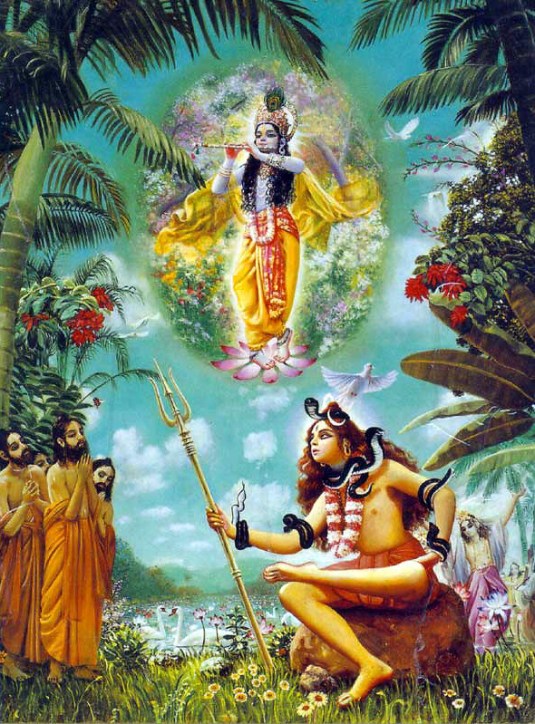
The Supreme Lord (Viṣṇu) says: “Those who will offer Me the prayers composed by Lord Śiva, both in the morning and in the evening, will be given benedictions by Me. In this way they can both fulfill their desires and attain good intelligence.” (SB 4.30.10)
Chanting the Song Sung by Lord Śiva
Lord Śiva said to the Pracetās:
“Just execute your kingly duties with a pure heart and chant the prayer I have recited, fixing your mind on the lotus feet of the Lord. That will bring you all good fortune.” (p. 405)
The Rudra-gītā is Lord Śiva’s song to the Supreme Lord, Vāsudeva (Viṣṇu) and is known as the hymn of liberation. These prayers, which are contained in Śrīmad-Bhāgavatam 4.24.33-74, are presented by Lord Śiva to the sons (Pracetās) of King Prācīnabarhi for reaching the ultimate spiritual perfection.
The Supreme Lord (Viṣṇu) says: “Those who will offer Me the prayers composed by Lord Śiva, both in the morning and in the evening, will be given benedictions by Me. In this way they can both fulfill their desires and attain good intelligence.” (SB 4.30.10)
More
24 Jul 2020
by The Hare Krishna Movement
in A.C. Bhaktivedanta Swami Prabhupada, Donald Trump, Sociopath
Tags: ingiedelity, lack of empathy, lake of remorse, manipulative, need for stimulation, pathological, pathological lying, promiscous sexual behavior, shallow emotions incapacity for love, Sociopath, sociopaths, Who Is Crazy

Who’s Crazy
For some time now I have been meaning to look up the word Sociopath. Srila Prabhupada has wrriten a very nice essay, which was published in our Back To Godhead Magazine, entitled, “Who Is Crazy” (which is at bottom of post). Today we see leaders and public figures who seem to fit the category of ‘Crazy’, or ‘Sociopathtic’. So I wanted to look into the description of the Sociopth, to get a better understanding.
…The so called democratic government means some of the sudras, rascals without any knowledge of the highest aim of life. By hook and crook they get some votes and get the responsible chair in government. Naturally they can whimsically enact any law which is against the interest of the people in general. (Letter to: Madhudvisa Kenya 15 September, 1971)
Profile of the Sociopath
This is a summarization of some of the common features and descriptions of the behavior of sociopaths:
Pathological Lying Has no problem lying coolly and easily and it is almost impossible for them to be truthful on a consistent basis. Can create, and get caught up in, a complex belief about their own powers and abilities. Extremely convincing and even able to pass lie detector tests.
Manipulative and Cunning They never recognize the rights of others and see their self-serving behaviors as permissible. They appear to be charming, yet are covertly hostile and domineering, seeing their victim as merely an instrument to be used. They may dominate and humiliate their victims.
More
19 Jul 2020
by The Hare Krishna Movement
in A.C. Bhaktivedanta Swami Prabhupada, A.C. Bhaktivedanta Swami Prabhupada, Allen Ginsberg, chanting, George Harrison, peace
Tags: Allen Ginsberg, counterculture, Hare Krishna Mantra, Mantra Rock, peace, peace movement, peaceful protest, spiritual movement, spiritula revolution, Srila Prabhupada
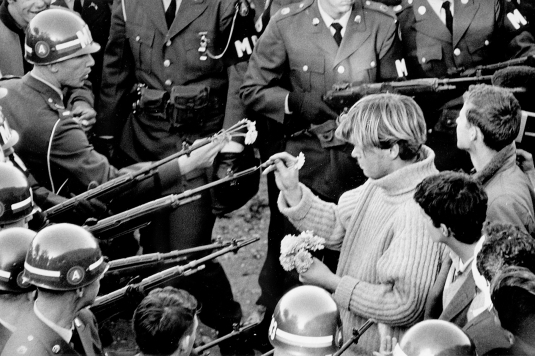
Whatever Happened to the Revolution?
by Padmapani das
For many of us who came of age in the sixties and seventies, the counterculture and its promise of an alternative society based on love and peace was an important part of our lives. Art, music, poetry, philosophy, ecology and human rights were just a few of the buzzwords floating through the collective psyche of the sixties generation. Revolution was in the air. “The establishment” was doomed and soon to be replaced with a kinder society. Peace would reign supreme, and all peoples of the world would unite and be free from the chains of oppression. Or so we thought.
At the time, it appeared that massive cultural changes were about to sweep away the capitalist system (or the “military industrial complex,” as we liked to call it). Every day there was a new victory for change. Underground newspapers proliferated, broadcasting the latest progress reports: the sit-ins, the love-ins, the be-ins, the antiwar and civil rights demonstrations, the Democratic National Convention of 1968, the Chicago Seven Trial, Woodstock, etc. Something was happening here, and it was big.
More
18 Jul 2020
by The Hare Krishna Movement
in Albert Einstein, People, Vegetarian Cooking, Vegetarian Recipies, Vegetarianism
Tags: basic vegetarian recipes, Hare Krishna, hare krishna cookbook, Prasadam, the Hare Krishna cookbook, vegan, vegetarian cooking, vegetarianism
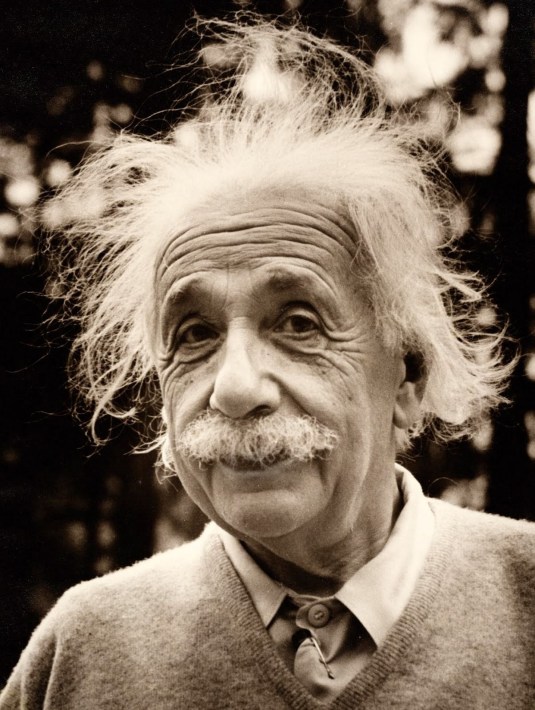
Nothing will benefit human health and increase chances for the survival of life on Earth as much as the evolution to a vegetarian diet. -Albert Einstein
I personally feel it is very important to eat as healthy as possible. That is one of the reasons I plant a garden. Although not everyone has that luxury to plant a garden, still there are so many fresh fruits and vegetables available in every American grocery store, there is ample opportunity to eat a healthy vegetarian diet.
Back in 1972 when I first became a vegetarian, the challenge was learning how to cook vegetarian meals. Therefore I am including the first cookbook that taught me the basics as a free pdf download (just click on link at bottom of post). Wishing you all a happy and healthy life. -V
More
13 Jul 2020
by The Hare Krishna Movement
in Uncategorized
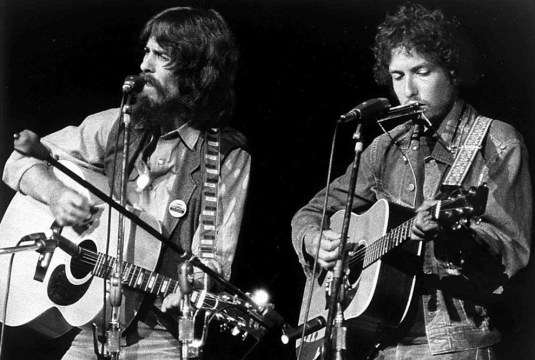
My wife ran across this post on Facebook and read it aloud to me. I have always been a big fan of Bob Dylan and George Harrison, so I was intrigued by it and thought I would share it here. -V
By Patita Pavana dasa
There are a few ISKCON old-timers, relics of the ’60’s—including me—who feel that Dylan was sort of planted into the wonderland of that era’s counter culture by a guiding hand of destiny. Much of his influence was positive in directing the young people away from a stone-like social order that was on the verge of self-destruction with the Viet Nam War in full swing and a giant Cold War overhead. His anti-establishment message has led us to consider that at least a few of his songs were at least a little prophetic.
Was Dylan empowered to sing of the coming of the Sri Chaitanya Mahaprabhu line of disciplic succession? As crazy as it sounds, at least to some devotees it makes perfect sense that he could be the prophetic voice of a minstrel who was planted by the will of the Supreme Lord into the crowd of the day’s social rebels. In his song “Lay Down Your Weary Tune”—reminiscent of the Srimad Bhagavatam’s 2nd canto of describing the Supreme Lord in Nature—he sang of God’s endless orchestra in the sky and ocean. Many devotees consider that his “Mr. Tambourine Man” is a prophecy of the coming of Srila Prabhupada and of the sankirtana movement. His “It’s All Over Now, Baby Blue” speaks of the hopelessness of modern civilization.
More
26 Jun 2020
by The Hare Krishna Movement
in A.C. Bhaktivedanta Swami Prabhupada, Padmapani das, Prabhupada Connection
Tags: A. C. Bhakthvedanta Swami Prabhupada, Founder Acarya of the International Society for Krishna Consciousness, Padmapani das, Prabhupada Connection, Srila Prabhupada
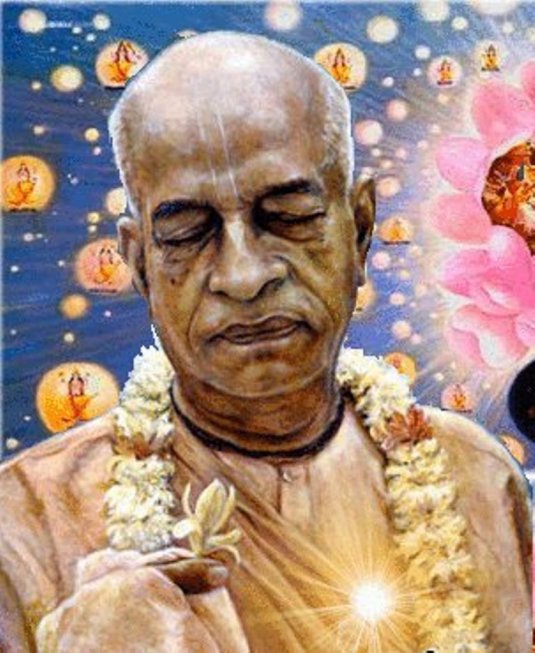
“Sometimes Maya may come and try to interfere but we must not falter; we must always follow the chalked-out path laid down by the great acharyas, and in the end you will see.” (Srila Prabhupada letter, 25/11/73)
Respecting Srila Prabhupada
by Padmapani das
As disciples and followers of His Divine Grace A.C. Bhaktivedanta Swami Prabhupada, Founder-Acarya of the International Society for Krsna Consciousness, we all have an eternal debt to Srila Prabhupada for his unprecedented sacrifice in freely distributing the mercy of Lord Caitanya Mahaprabhu all over the world.
More
25 Jun 2020
by The Hare Krishna Movement
in Uncategorized

click on image to enlarge
…”You write to me that you do not know what is my desire, but my desire is an open secret. I simply want all over the Western countries people may take this simple formula of chanting, dancing and eating Krishna Prasadam, and being happy. I am simply surprised that they should not accept this simple formula and be happy themselves. My only desire is that all people become happy and prosperous in Krishna Consciousness.”
(Srila Prabhupada letter, September 19, 1969)
Full Letter More
24 Jun 2020
by The Hare Krishna Movement
in Buddha, Four Nobel Truths
Tags: authority of the vedas, dukkha, four noble truths, happiness, live is suffering, Lord Buddha, magga, nirhodha, samudaya, suffering, the eightfold path
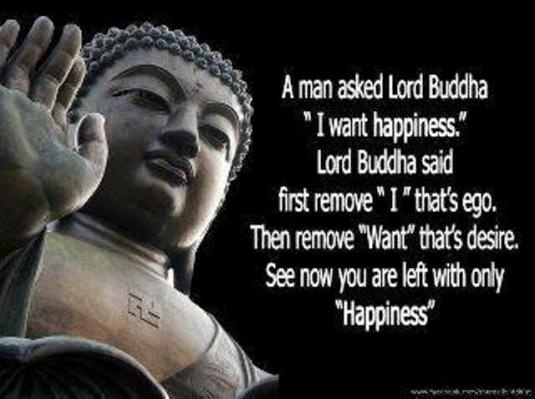
Ever since I was a small child, I have been attracted to the statue of Buddha. Don’t know why, but I had a statue of Buddha in my bedroom, and it was a Christian home. I didn’t really know about Krishna then or who the Buddha was…but I was so attracted to everything Eastern. As I learned latter in life Buddha was actually an incarnation of Krsna. “From the Bhāgavatam we understand that Lord Buddha is the incarnation of Kṛṣṇa who appeared when materialism was rampant and materialists were using the pretext of the authority of the Vedas.” (from purport Bg 4.7)
The Four Noble Truths & The Eightfold Path More
14 Jun 2020
by The Hare Krishna Movement
in A.C. Bhaktivedanta Swami Prabhupada, Bhagavad-gita, Bhagavad-gita As It Is 1972 Edition
Tags: A. C. Bhakthvedanta Swami Prabhupada, arcana, Bg 9.27, Bhagavad-gita, bhagavad-gita slokas, books by prabhupada, devotional service, Krishna, Krsna, real renunciation, yoga

This morning I went into our temple room, as I do every morning, and offered my obeisances. As I was saying my morning prayers this thought just entered my mind; ‘Vyasasan das, reporting for service”. It seemed like a strange thing to be thinking so early in the morning, and I do not recall ever thinking like that before. But almost immediately, I was reminded of this verse from the Bhagavad-gita:
O son of Kuntī, all that you do, all that you eat, all that you offer and give away, as well as all austerities that you may perform, should be done as an offering unto Me.
I could not remember at first, what chapter and verse, but I went to the Bhagavad-gita As It Is, and began searching…Oh yes, I remember Chapter Nine, Text 27…and the purport reads:
…Everyone has to work for maintenance of his body and soul together, and Kṛṣṇa recommends herein that one should work for Him. Everyone has to eat something to live; therefore he should accept the remnants of foodstuffs offered to Kṛṣṇa. Any civilized man has to perform some religious ritualistic ceremonies; therefore Kṛṣṇa recommends, “Do it for Me,” and this is called arcanā. Everyone has a tendency to give something in charity; Kṛṣṇa says, “Give it to Me,”
This is real renunciation, real yoga; always thinking and planning how to serve the Lord. And for one brief moment in my life, my mind was right.
Bhagavad-gita Chapter Nine,Texts 22-28 More
30 May 2020
by The Hare Krishna Movement
in George Harrison, Hare Krishna Maha Mantra, Hare Krishna Movement, Krishna, Krishna Consciousness, The Beatles
Tags: closet yogi, George Harrison, Gurudas, John Lennon, Krishna, Krishna consciousness, Mukunda, plainclothes devotee, Srila Prabhupada, Syamasundara
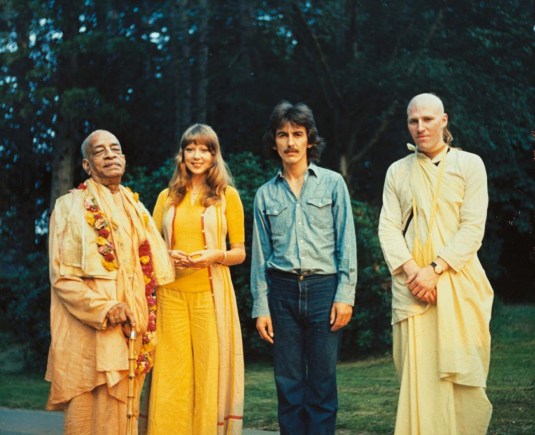
click on inage to enlarge
In the following conversation, taped at George’s home in England on September 4, 1982, George reveals some memorable experiences he has had chanting Hare Krishna and describes in detail his deep personal realizations about the chanting. He reveals what factors led him to produce “The Hare Krishna Mantra” record, “My Sweet Lord,” and the LPs All Things Must Pass and Living in the Material World, which were all influenced to a great extent by the Hare Krishna chanting and philosophy. He speaks lovingly and openly about his association with His Divine Grace A. C. Bhaktivedanta Swami Prabhupada, Founder-Acarya (spiritual master) of the Hare Krishna movement. In the following interview George speaks frankly about his personal philosophy regarding the Hare Krishna movement, music, yoga, reincarnation, karma, the soul, God, and Christianity. The conversation concludes with his fond remembrances of a visit to the birthplace of Lord Krishna in Vrndavana, India, home of the Hare Krishna mantra, and with George discussing some of his celebrity friends’ involvement with the mantra now heard and chanted around the world.
More
25 May 2020
by The Hare Krishna Movement
in A.C. Bhaktivedanta Swami Prabhupada, Divine and Demoniac Natures, Donald Trump, Qualities of a Devotee
Tags: A. C. Bhakthvedanta Swami Prabhupada, as it is, Bhagavad-gita, british, British writer, Divine and Demoniac Natures, Donald Trump, Nate White, troll

Although I don’t normally do political posts from this page, we are living in difficult times, in the midst of a modern viral pandemic, and we see that our political leader has no transcendental vision and does not know what is actually beneficial for human society.
British Writer Pens The Best Description Of Trump I’ve Read
by Nate White
“Why do some British people not like Donald Trump?” Nate White, an articulate and witty writer from England wrote the following response:
A few things spring to mind. Trump lacks certain qualities which the British traditionally esteem. For instance, he has no class, no charm, no coolness, no credibility, no compassion, no wit, no warmth, no wisdom, no subtlety, no sensitivity, no self-awareness, no humility, no honour and no grace – all qualities, funnily enough, with which his predecessor Mr. Obama was generously blessed. So for us, the stark contrast does rather throw Trump’s limitations into embarrassingly sharp relief.
Plus, we like a laugh. And while Trump may be laughable, he has never once said anything wry, witty or even faintly amusing – not once, ever. I don’t say that rhetorically, I mean it quite literally: not once, not ever. And that fact is particularly disturbing to the British sensibility – for us, to lack humour is almost inhuman. But with Trump, it’s a fact. He doesn’t even seem to understand what a joke is – his idea of a joke is a crass comment, an illiterate insult, a casual act of cruelty.
More
21 May 2020
by The Hare Krishna Movement
in A.C. Bhaktivedanta Swami Prabhupada, B. G. Sharma Art, Bhismadeva, Srimad Bhagavatam
Tags: A. C. Bhakthvedanta Swami Prabhupada, Arjuna, Battlefield of Kuruksetra, Bhismadeva, Krishna, salvation, Sri Krsna, Supreme Lord, the Personality of Godhead, ultimate destination

click on image to enlarge
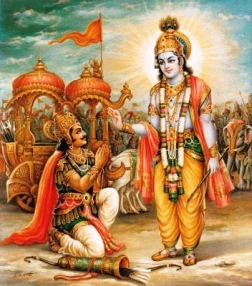
…The dealings of Lord Kṛṣṇa and Bhīṣmadeva on the Battlefield of Kurukṣetra are interesting because the activities of Lord Śrī Kṛṣṇa appeared to be partial to Arjuna and at enmity with Bhīṣmadeva; but factually all this was especially meant to show special favor to Bhīṣmadeva, a great devotee of the Lord. The astounding feature of such dealings is that a devotee can please the Lord by playing the part of an enemy.
Srimad Bhagavatam
By His Divine Grace A.C. Bhaktivedanta Swami Prabhupada
First Canto, Chapter 9, Text 38
The Passing Away of Bhismadeva
More
20 May 2020
by The Hare Krishna Movement
in Devotee's, Uncategorized
Tags: Back to Godhead Magazine, devotional service, Krishna prasadam, krsna-prasada, prasada, vegetarian cookbook, vegetarian cooking, Visakha devi dasi

This is one of my favorite Back to Godhead Magazine covers. Always liked this picture of Krishna and the cow heard boys taking lunch. Cooking and offering nicely prepared vegetarian meals to the Lord, has always been one of my favorite devotional practices. I love to cook, and enjoy eating the remains. The following is an article that was published in Back to Godhead Magazine way back in 1974 by Visakha devi dasi.
More
06 May 2020
by The Hare Krishna Movement
in A.C. Bhaktivedanta Swami Prabhupada, Jayananda Thakur, Kalakantha dasa
Tags: A Day in the Life of Jayananda Thakur, Jayananda, Jayananda and Srila Prabhupada, Jim Kohr, Kalakantha dasa, Srila Prabhupada

Yesterday was the disappearance day of Jayananda das Thakur. Jayananda was a very dear friend of mine and the closest thing I ever had to a brother in this life. He took me under his wing and nourished my Krishna Consciousness. I am eternally indebted to him for instilling in me a service attitude, and love for Srila Prabhupada. We honor the disappearance day of this extraordinary personality Jayananda das Thakur with the folowing post.
The Life of Jayananda Prabhu
by Kalakantha dasa
After the disappearance of Jayananda Das on May 1, 1977, His Divine Grace Srila Prabhupada instructed devotees all over the world to commemorate the event every year as they would any great Vaishnava’s disappearance day.
Therefore we respectfully submit these pages to all devotees and friends of ISKCON as a means to remember and understand more about Jayananda’s devotional service. Of course, we will see how he joined ISKCON and how he left this mortal world. More importantly, we shall see the astounding qualities possessed by a true devotee, a sincere disciple and genuine servant of Srila Prabhupada.
More
Previous Older Entries Next Newer Entries





 The Hare Krishna Movement