Chanting the Maha Mantra, or the great “chant for deliverance”, is very easy, and can be preformed anywhere, anytime. Srila Prabhupada has said “from your lips to your ears”, it is that easy. It is the kind of yoga (union), or meditation, one can easily practice anywhere, anytime.
Chanting of the Hare Kṛṣṇa mantra is the easiest process of meditation. (from purport to Srimad Bhagavatam 4.8.53)
No other means of spiritual realization is as effective in this age of quarrel and hypocrisy as the chanting of the mahā-mantra: Hare Kṛṣṇa, Hare Kṛṣṇa, Kṛṣṇa Kṛṣṇa, Hare Hare / Hare Rāma, Hare Rāma, Rāma Rāma, Hare Hare. (BTG #30 1970)
Chanting the Hare Kṛṣṇa Mantra
(appeared as a separate pamphlet in 1967 and reproduced from the article “On Chanting the Hare Krishna Mantra” published in the 1970 Back to Godhead Magazine number 34)
“This simplest method of meditation is recommended for this age. By practical experience also, one can perceive that by chanting this mahā-mantra, or the Great Chanting for Deliverance, one can feel a transcendental ecstasy coming through from the spiritual stratum.”
This morning while I was chanting my japa (chanting silently the Hare Krishna mantra) I was thinking of how Google defined mantra meditation. So many people today have heard the words yoga and meditation, but what do they think it means? Some think yoga is just a good form of exercise, and meditation is just a way of shutting out the noise, and thinking of nothing. So I did a Google search:
Mantra meditation involves repeating a sacred sound, word, or phrase to focus the mind and promote relaxation. This technique helps to quiet the mind and allow for deeper states of meditation. The repeated mantra acts as a point of focus, helping to direct the mind and reduce mental chatter.
Mantra meditation is a technique that involves using mantras to relax the mind and help it focus.
Not bad definitions really, but for me, actually Yoga means “Union with God”, and Meditation means “Meditation on God”. So the ultimate goal of Yoga is bhakti-yoga, and the highest form of Mantra-meditation is to focus on God (Krishna).
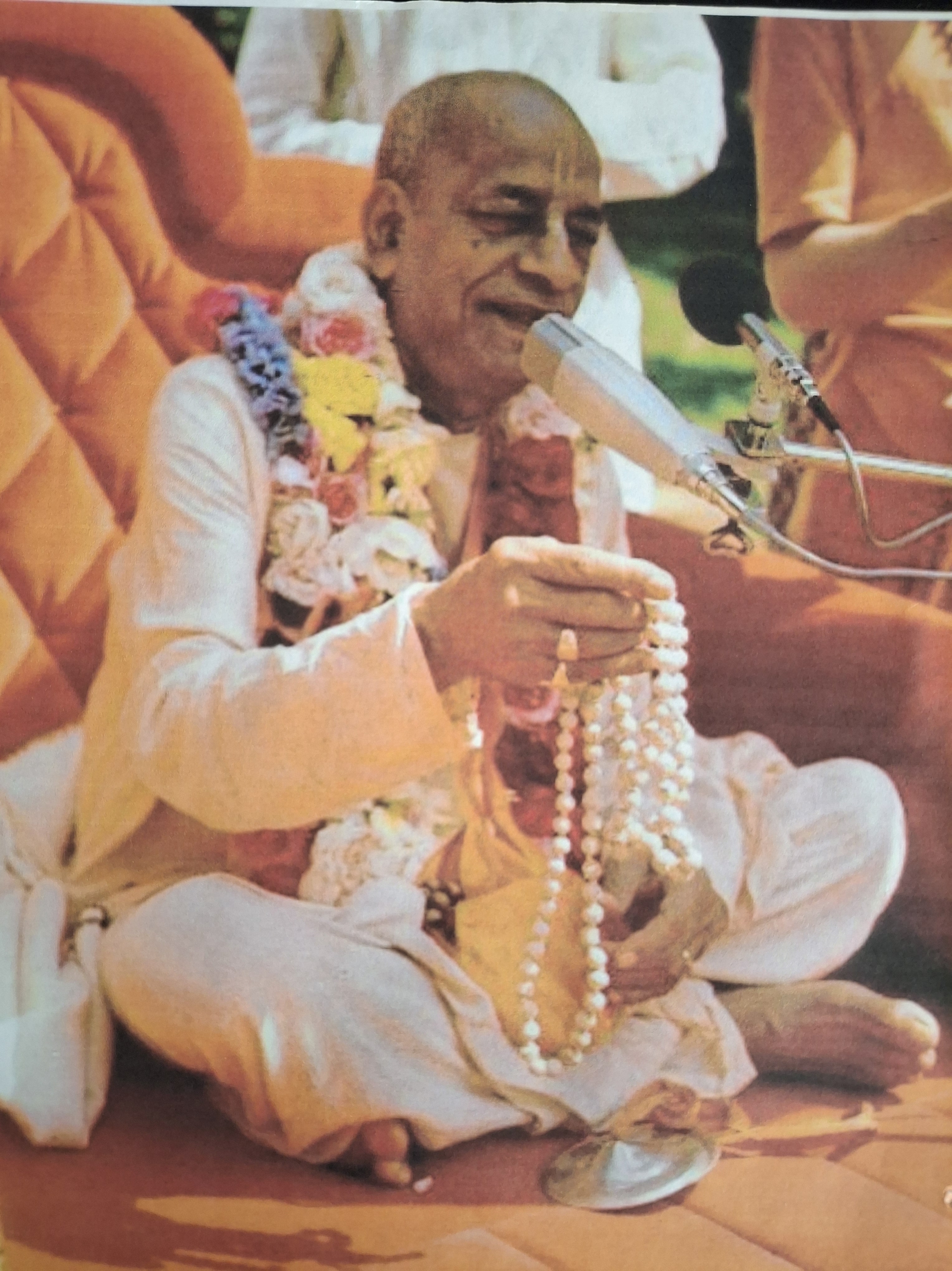
I’m sure everyone has a favorite picture of Srila Prabhupada, I particularly like this one in the morning when I am chanting Japa. It reminds me of the promise I made to chant every day.
When a mantra or hymn is chanted softly and slowly, that is called japa. The same mantra, when chanted loudly, is called kīrtana. For example, the mahā-mantra (Hare Kṛṣṇa, Hare Kṛṣṇa, Kṛṣṇa Kṛṣṇa, Hare Hare/ Hare Rāma, Hare Rāma, Rāma Rāma, Hare Hare) when uttered very softly only for one’s own hearing is called japa. The same mantra, when chanted loudly for being heard by all others, is called kīrtana. The mahā-mantra can be used for japa and kīrtana also. When japa is practiced it is for the personal benefit of the chanter, but when kīrtana is performed it is for the benefit of all others who may hear.
In the Padma Purāṇa there is a statement: “For any person who is chanting the holy name either softly or loudly, the paths to liberation and even heavenly happiness are at once open.” (Nectar of Devotion Chapter 9)
Of all the sacrifices, the chanting of Hare Kṛṣṇa, Hare Kṛṣṇa, Kṛṣṇa Kṛṣṇa, Hare Hare/ Hare Rāma, Hare Rāma, Rāma Rāma, Hare Hare is the purest representation of Kṛṣṇa. (from purport; Bhagavad-gita 10.25)
For many of us we struggle to chant our prescribed 16 rounds of japa daily. I know for me it is a daily struggle, if I wake up to late, if I am traveling, if I am sick, or have a headache, or just feeling lazy and unmotivated. But I try.
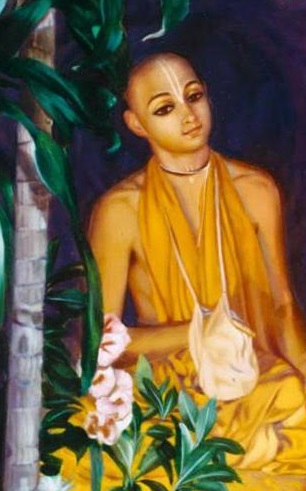
This morning my japa was pretty good, I felt inspired, and I was knocking of the rounds rather effortlessly, and I was thinking about Haridas Thakur who daily chanted 300,000 names or about 175 rounds. I can’t even imagine. But I felt inspired by thinking about him, and wanted to do a post about him. -V
“Haridāsa Ṭhākura is known as nāmācārya because it is he who preached the glories of chanting hari-nāma, the holy name of God.”
“Haridas Thakur chanted 3 lakhs of names each day, that means 16 names in the mantra, 108×16 or 1,728 names in each round of mala, dividing 300,000 by 1,728 comes to roundabout 175 rounds on beads daily. And for us it is even difficult to chant 16 rounds! That is why Haridas Thakur is namacharya. We find in Chaitanya Charitamrta information that both Lord Chaitanya and Haridas Thakur were constantly absorbed in chanting the Hare Krishna mantra: Hare Krishna, Hare Krishna, Krishna Krishna Hare Hare/ Hare Rama Hare Rama Rama Rama Hare Hare.” (Srila Prabhupada Letter, January 2, 1972)
The nice thing about mantra meditation or chanting the maha mantra:
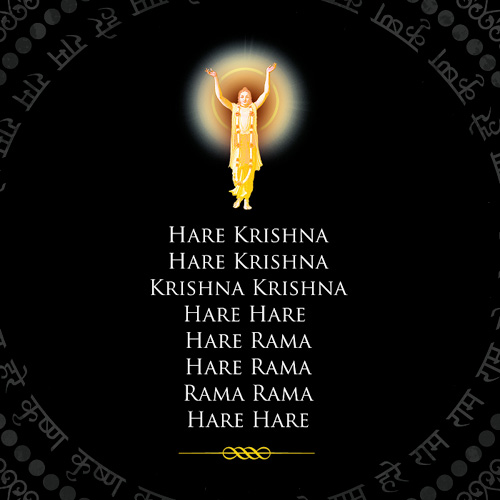
Hare Krishna, Hare Krishna, Krishna Krishna, Hare Hare, Hare Rama, Hare Rama , Rama Rama, Hare Hare
is that one can do it anywhere, any time. In a plane, train or automobile, sitting, walking, or standing on one’s head. I find myself chanting when I am working in my shop, cutting the lawn, taking a shower, working in the garden. Chanting always makes me feel better.
“…one should learn the art of chanting the Holy name of Krishna 24 hours a day and that alone is the remedy for all problems of material existence.” (from letter to Susan Beckman August 29th 1973)
Prabhupada: The chanting is a process of purification. Just like we use soap to cleanse the body, this is material, but the chanting is spiritual cleansing. The three stages of cleansing are first
(1) To clean the mirror of the mind. In the Bhagavad Gita it is said:
“The mind is the best friend and the worst enemy, for one who has learned to control the mind it is the best of friends but for one who has failed to do so it is the worst enemy.”
Due to long term association, the mind absorbed in material things has become contaminated, or dirty, the chanting process purifies the mind.
(2) Then the next stage, when the mind is cleansed one becomes free from the symptoms of material existence. Material existence means to be always hankering and lamenting. I must have a new automobile, I must have more money, I must have good wife, I must have this I must have that. Then when I have the thing, I lament, I have lost my wife, I have lost my money, I have lost my car, simply lamenting. So the second stage is to be free from this anxiety.
(3) The third stage is “He never laments nor desires to have anything; he is equally disposed to every living entity. In that state he attains pure devotional service unto me.”
“One who is thus transcendentally situated at once realizes the Supreme Brahman and becomes fully joyful. He never laments or desires to have anything. He is equally disposed toward every living entity. In that state he attains pure devotional service unto Me.”
Lecture on Maha-mantra New York, September 8, 1966
By His Divine Grace A.C.Bhaktivedanta Swami Prabhupada
Prabhupada: Now, some of you members have asked me to explain the meaning of this chanting, Hare Krishna, Hare Krsna, Krsna Krsna, Hare Hare. Hare Rama, Hare Rama, Rama Rama, Hare Hare. Now, this sound is transcendental sound, transcendental sound, incarnation, sound incarnation of the Absolute Truth. Just try to understand what is incarnation. Incarnation means…
I ran across this article this morning, and although I don’t know who authored it, I thought it worthy of posting. -V
10 Affirmations for Chanting the Hare Krishna Maha-mantra
Sound has the ability to affect our consciousness to a large extent. The quality of sound vibration that goes into our ears determines the quality of our consciousness. Sound has the highest capturing potency; our ideas, conceptions and visions all come to us from sound. We can transform our lives depending on the sound vibration that we hear. The Yoga texts recommend the Hare Krishna Maha-mantra as the prime sound vibration for this age which is full of anxiety and distress. The Hare Krishna Maha-mantra, Hare Krishna Hare Krishna Krishna Krishna Hare Hare Hare Rama Hare Rama Rama Rama Hare Hare, is a spiritual sound vibration which brings us out of bodily consciousness and attaches our consciousness to the Supreme consciousness.
Chanting of the Hare Krishna Maha-mantra: (1) helps to revive awareness of your spiritual identity; (2) helps to revive awareness of your connection with the Supreme being; and (3) gives awareness of the love Supreme and the dynamics of the reciprocal relationship between your spiritual self and the Supreme spiritual self.
Thus, it is important that we spend time working on our internal attitude and motivation for chanting the Hare Krishna Maha-mantra. In this article, we will explore the practice of affirmations to help improve and increase our presence while chanting. Saying affirmations out loud and meditating on their core meanings before chanting the Hare Krishna Maha-mantra may allow us to further enhance our chanting experience.
This is an older Editorial by my good friend Padmpani Prabhu over atPrabhupada Connection. I never tire of reading and re-reading his posts.
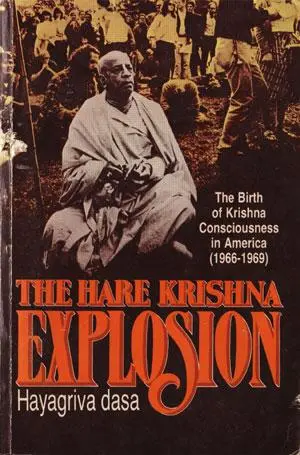
The Prabhupada Revolution
For many of us who came of age in the Sixties and Seventies, the counterculture and its promise of an alternative society based on love and peace was an important part of our lives. Art, music, poetry, philosophy, ecology and human rights were just a few of the buzzwords floating around the collective psyche of the Sixties generation. Revolution was in the air. “The establishment” was doomed and soon to be replaced with a kinder, gentler society. Peace would reign supreme and all peoples of the world would unite and be free from the chains of oppression. Or so we thought.
At the time it appeared that massive cultural changes were about to sweep away the capitalist system (or the “military-industrial-complex” as we used to call it). Every day there was a new victory for change. Underground newspapers proliferated, broadcasting the latest progress reports: the sit-ins, the love-ins, the be-ins, the antiwar and civil rights demonstrations, the Democratic National Convention of 1968, the Chicago Seven Trial, Woodstock, etc. Something was happening here, and it was big.
I was going through some paperwork this morning and opened a very old looking notebook and this piece of paper fell to the floor. I picked it up and was surprised to find this written there. I don’t know the original source but it looks like its from an old devotee manual. I thought I would share it for your amusement and enlightenment.(I copied it just the way it was printed)
12 Reasons Why You Should Chant “Hare Krishna”
By regularly chanting the Maha-Mantra which is Hare Krishna, Hare Krishna, Krishna, Hare, Hare Rama, Hare Rama, Rama Rama, Hare Hare, even if it is only 1 round or 10 minutes every day, your problems will begin to vanish. Lord Krishna will fulfill all your desires, aspirations and wishes and bless you and your family both materially and spiritually.
Health Improves: By regularly chanting the Hare Krishna Maha Mantra (Hare Krishna, Hare Krishna, Krishna Krishna, Hare Hare) your health will increase also your bodily strength and luster will be maintained even in old age!
Wealth Increases: By satisfying Lord Krishna by this chanting He will look after all your needs by providing sufficient opulence for both you and your family members.
Live Longer: It is stated in the Vedas (ancient Indian scriptures) that by performing this sacrifice of chanting Hare Krishna, ones very length of life will increase.
Nice Family:Constant chanting will create a very peaceful, satisfying family situation.
Worshipping Your Forefathers: By chanting the Lords name in front of a picture of you late forefathers, they will make advancement wherever they are, even though they might have died many years ago!!
Freedom From Anxieties and the Stress of Life: The sound of God’s name produced by chanting Hare Krishna, Hare Krishna, Krishna Krishna, Hare Hare, Hare Rama Hare Rama, Rama Rama, Hare Hare can relieve you from all personal anxieties and create a very peaceful frame of mind.
Attractive Personality: This chanting of Hare Krishna produces a very pure character which is attractive to everyone.
Improves Your Memory: By constant remembrance of the Lord’s name your memory becomes very sharp and clear.
Evil Spirits and Ghosts: Any ghosts or evil spirits which are troubling you or your family cannot remain in a house if there is constant chanting of the Lord’s name.
Intelligence: Chanting Hare Krishna results in a deeper insight into life and an increased awareness of everything around you.
Enjoyment: The more you chant the Lord’s name the happier you become. This enjoyment is priceless and increases all the time.
Counteracts Sinful Life: “Simply by chanting one holy name of Hari (or Hare Krishna), a sinful man can counteract the reactions to more sine than he is able to commit. (from the Brhad-visnu Purana).
This is such a beautiful picture of Srila Prabhupada with his japa bag, that we thought we would do a short post on ‘japa’.
When a mantra or hymn is chanted softly and slowly, that is called japa. The same mantra, when chanted loudly, is called kīrtana. For example, the mahā-mantra (Hare Kṛṣṇa, Hare Kṛṣṇa, Kṛṣṇa Kṛṣṇa, Hare Hare/ Hare Rāma, Hare Rāma, Rāma Rāma, Hare Hare) when uttered very softly only for one’s own hearing is called japa. The same mantra, when chanted loudly for being heard by all others, is called kīrtana. The mahā-mantra can be used for japa and kīrtana also. When japa is practiced it is for the personal benefit of the chanter, but when kīrtana is performed it is for the benefit of all others who may hear.
In the Padma Purāṇa there is a statement: “For any person who is chanting the holy name either softly or loudly, the paths to liberation and even heavenly happiness are at once open.” (Nectar of Devotion Chapter 9)
Of all the sacrifices, the chanting of Hare Kṛṣṇa, Hare Kṛṣṇa, Kṛṣṇa Kṛṣṇa, Hare Hare/ Hare Rāma, Hare Rāma, Rāma Rāma, Hare Hare is the purest representation of Kṛṣṇa. (from purport; Bhagavad-gita 10.25)
Srila Prabhupada describes the formula for success: “Our request to all our students is that they daily chant at least sixteen rounds of this harer nāma mahā-mantra offenselessly, following the regulative principles. Thus, their success will be assured without a doubt.”
I wanted to try something different this morning…so I attempted to import a sound file. You can click on following link to hear Srila Prabhupada chanting Japa.
This morning we were reading from the Sri Caitanya-caritamrta, Adi-lila chapter 3, text 79, of the benefits and merits of chanting Hare Krishna.
“Even if one distributes ten million cows in charity during an eclipse of the sun, lives at the confluence of the Ganges and Yamunā for millions of years, or gives a mountain of gold in sacrifice to the brāhmaṇas, he does not earn one hundredth part of the merit derived from chanting Hare Kṛṣṇa.”
In other words, one who accepts the chanting of Hare Kṛṣṇa to be some kind of pious activity is completely misled. Of course, it is pious; but the real fact is that Kṛṣṇa and His name, being transcendental, are far above all mundane pious activity. Pious activity is on the material platform, but chanting of the holy name of Kṛṣṇa is completely on the spiritual plane. (from purport Adi 3.79)
This morning I happened upon this very interesting conversation between Srila Prabhupada and a guest, while I was visiting the Sampradaya Sun. We are reprinting the entire conversation as it was published in the Back to Godhead Magazine.
Kundalini, Reincarnation, the Astral World, and More
by His Divine Grace A.C. Bhaktivedanta Swami Prabhupada
excerpted from Back to Godhead Magazine 1983 Volume 18 No. 9
Questions and Answers On the Science of Transcendence
This conversation with guests took place at the Hare Krsna center in Los Angeles in the late sixties.
Guest: What is the outcome of the continual chanting of om?
Srila Prabhupada: Like the Hare Krsna mantra, om is a manifestation of the Supreme Lord in the form of sound vibration. That is stated in the Bhagavad-gita. So, Hare Krsna and om have practically the same value, but chanting Hare Krsna is easier. Another reason we chant Hare Krsna is that it was specifically chanted by Lord Caitanya. * [“Lord Caitanya is Krsna Himself in the role of His own devotee. He appeared in Bengal, India, five hundred years ago to teach love of God through the chanting of the Hare Krsna mantra.]
Om is generally chanted at the beginning of Vedic mantras: om tad visnoh paramam padam sada. . . . om purnam adah purnam idam. Om addresses the Lord, and Hare Krsna also addresses the Lord. But chanting Hare Krsna is easier, and it is recommended for this age. Otherwise, transcendentally, or spiritually, there is no difference.
Guest: What do you think of kundalini-yoga and raja-yoga?
Srila Prabhupada: Raja-yoga means “the king of yogas.” But we are practicing the emperor of yogas, bhakti-yoga, so raja-yoga is included in it. In the Bhagavad-gita [6.47], Lord Krsna says,
yoginam api sarvesam
mad-gatenantar-atmana
sraddhavan bhajate yo mam
sa me yuktatamo matah
“Anyone who is always thinking of Me within himself is the topmost yogi.”
Therefore a person who is in full Krsna consciousness has surpassed all other kinds of yogic principles”.
This morning I was reading from the Forth Canto of the Srimad Bhagavatam about the process of mantra meditation. I have always loved this story of Druva Maharaja, and his determination in meditation, on the form of the Lord. We have included the entire text and purport.
O son of the King, now I shall speak unto you the mantra which is to be chanted with this process of meditation. One who carefully chants this mantra for seven nights can see the perfect human beings flying in the sky. (SB4.8.53)
…Another point established in this verse is that meditation should be carried on with the chanting of a mantra. Chanting of the Hare Kṛṣṇa mantra is the easiest process of meditation in this age. As soon as one chants the Hare Kṛṣṇa mantra, he sees the forms of Kṛṣṇa, Rāma and Their energies, and that is the perfect stage of trance. One should not artificially try to see the form of the Lord while chanting Hare Kṛṣṇa, but when the chanting is performed offenselessly the Lord will automatically reveal Himself to the view of the chanter. The chanter, therefore, has to concentrate on hearing the vibration, and without extra endeavor on his part, the Lord will automatically appear.
This morning I was reminded of the importance of chanting sixteen rounds. Sometimes I think my work or service is more important than my chanting…but in the following verses and purports Srila Prabhupa makes it very clear; “One may have other duties to perform under the direction of the spiritual master, but he must first abide by the spiritual master’s order to chant a certain number of rounds.”, and I thank the devotee who reminded me of this important instruction.
…There are many regulative principles in the śāstras and directions given by the spiritual master. These regulative principles should act as servants of the basic principle-that is, one should always remember Kṛṣṇa and never forget Him. This is possible when one chants the Hare Kṛṣṇa mantra. Therefore one must strictly chant the Hare Kṛṣṇa mahā-mantra twenty-four hours daily. One may have other duties to perform under the direction of the spiritual master, but he must first abide by the spiritual master’s order to chant a certain number of rounds. In our Kṛṣṇa consciousness movement, we have recommended that the neophyte chant at least sixteen rounds. This chanting of sixteen rounds is absolutely necessary if one wants to remember Kṛṣṇa and not forget Him. Of all the regulative principles, the spiritual master’s order to chant at least sixteen rounds is most essential. (from purport Madhya-lila 22.113)
…Of all the sacrifices, the chanting of Hare Kṛṣṇa, Hare Kṛṣṇa, Kṛṣṇa Kṛṣṇa, Hare Hare/ Hare Rāma, Hare Rāma, Rāma Rāma, Hare Hare is the purest representation of Kṛṣṇa. (from purport Bg 10.25)
…Śrī Bhaktisiddhānta Sarasvatī Gosvāmī Mahārāja comments in this connection, “One can become perfectly successful in the mission of his life if he acts exactly according to the words he hears from the mouth of his spiritual master.” This acceptance of the words of the spiritual master is called śrauta-vākya, which indicates that the disciple must carry out the spiritual master’s instructions without deviation. Śrīla Viśvanātha Cakravartī Ṭhākura remarks in this connection that a disciple must accept the words of his spiritual master as his life and soul. Śrī Caitanya Mahāprabhu here confirms this by saying that since His spiritual master ordered Him only to chant the holy name of Kṛṣṇa, He always chanted the Hare Kṛṣṇa mahā-mantra according to this direction (‘kṛṣṇa-mantra’ japa sadā,-ei mantra-sāra). (from purport to Adi-lila 7.72)
One of the most used books in our temple room is the songbook. Everyday it seems, I am flipping through the “Songs of the Vaisnava Acaryas”, singing one of the many songs or reciting some of the numerous pranams (prayers) as part of my daily sadhana. The following post is the first 13 pages of songbook, which in my mind is a nice way to start the day and is a good prelude to other devotional service.
Pranams
from the Songs of the Vaisnava Acaryas
SRI GURU PRANAMA
om ajnana-timirandhasya jnananjana-salakaya
caksur unmilitam yena tasmai sri-gurave namah
om-address; ajnana-of ignorance; timira-by the darkness; andhasya-of one who was blinded; jnana-anjana-by the ointment of spiritual knowledge; salakaya-by a medical instrument called a salaka, which is used to apply medical ointment to eyes afflicted with cataracts: caksuh-eyes; unmilitam-were opened; yena-by whom; tasmai-unto him; sri-gurave-unto my spiritual master; namah-obeisances.
I offer my respectful obeisances unto my spiritual master, who has opened my eyes, which were blinded by the darkness of ignorance, with the torchlight of knowledge.
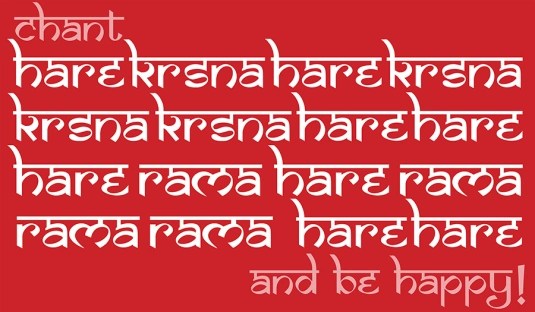
I ran across this above image this morning on Facebook, and was inspired to do a post on chanting.
Hare Krishna Hare Krishna
Krishna Krishna Hare Hare
Hare Rama Hare Rama
Rama Rama Hare Hare
“Chant Hare Kṛṣṇa and be happy. Thank you. Hare Kṛṣṇa.” (Srila Prabhupada Lecture & Initiation Seattle, October 20, 1968)
“…chant dance, take prasadam and be happy.” (Srila Prabhupada Letter to Saksi Gopala 6 December, 1975)
“Following in the footsteps of Lord Caitanya Mahāprabhu, the Kṛṣṇa consciousness movement is distributing the Hare Kṛṣṇa mahā-mantra and inducing people all over the world to chant. We are giving people an immense treasury of transcendental literature, translated into all the important languages of the world, and by the grace of Lord Śrī Caitanya Mahāprabhu this literature is selling profusely, and people are chanting the Hare Kṛṣṇa mahā-mantra with great delight. This is the preaching process of the Caitanya cult. Since the Lord wanted this cult preached all over the world, the International Society for Krishna Consciousness is acting in a humble way so that the vision of Śrī Caitanya Mahāprabhu may be fulfilled all over the world, especially in the Western countries.” (purport to Sri Caitanya-caritamrta 1975 Adi-lila 16.19)
Also:
Vedic sanskrit references for chanting the Hare Krishna Maha MantraMore
George Harrison Interview: Hare Krishna Mantra–There’s Nothing Higher (1982)
This entry is part 3 of 10 in the series The Beatles and Hare Krishna
George: It’s really the same sort of thing as meditation, but I think it has a quicker effect. I mean, even if you put your beads down, you can still say the mantra or sing it without actually keeping track on your beads. One of the main differences between silent meditation and chanting is that silent meditation is rather dependent on concentration, but when you chant, it’s more of a direct connection with God.
…In this present day, man is very eager to have one scripture, one God, one religion, and one occupation. So let there be one common scripture for the whole world—Bhagavad-gītā. And let there be one God only for the whole world—Śrī Kṛṣṇa. And one mantra only—Hare Krishna, Hare Krishna, Krishna Krishna, Hare Hare/ Hare Rāma, Hare Rāma, Rāma Rāma, Hare Hare. And let there be one work only—the service of the Supreme Personality of Godhead. (from Introduction to the Bhagavad-gita As It Is)










 The Hare Krishna Movement