27 Aug 2012
by The Hare Krishna Movement
in A.C. Bhaktivedanta Swami Prabhupada, Krsna Consciousness: The Topmost Yoga System, Yoga
Tags: A.C. Bhaktivedanta Swami Prabhupada, bhagavad-gita, bhakti yoga, goal of yoga, Krishna, krsna consciousness, The Topmost Yoga System, yoga

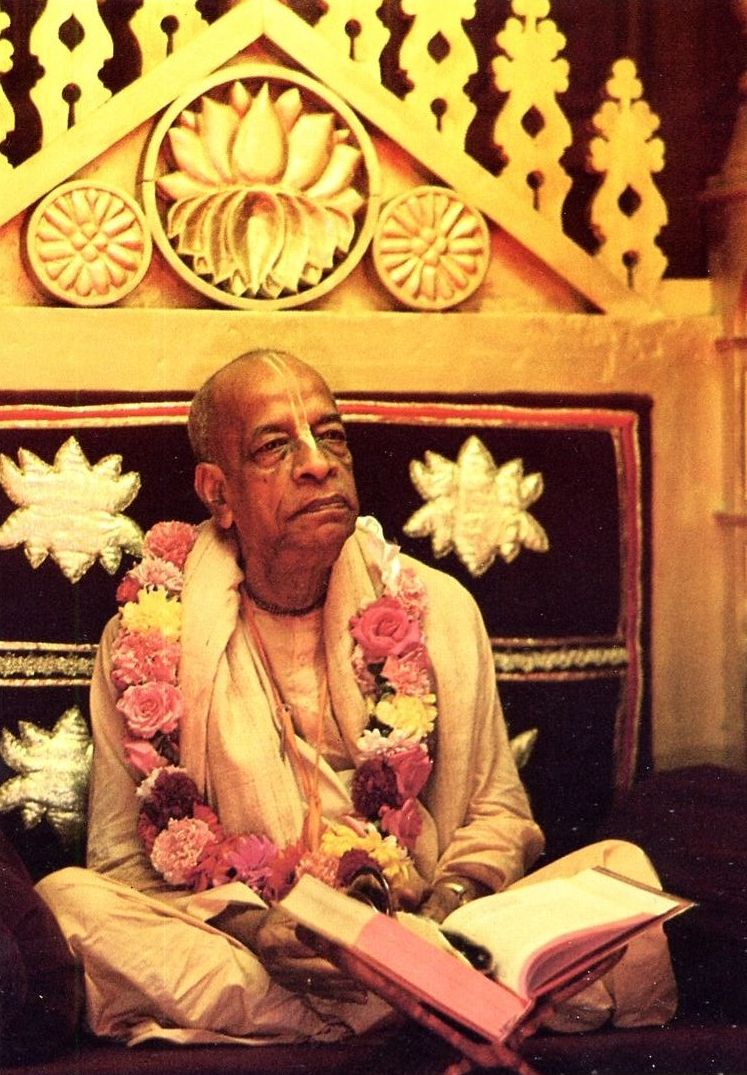
…Kṛṣṇa consciousness is the great necessity of human society. Learn it and appreciate it, comprehend it and assimilate it—and teach it. It is very simple. If you offenselessly chant Hare Kṛṣṇa, everything will be revealed from within because Kṛṣṇa is sitting within you. If you are strong and have faith and conviction in Kṛṣṇa, as well as in the spiritual master, the transparent via medium to Kṛṣṇa, then Kṛṣṇa is there. The Vedas say that if you have implicit faith in God and implicit faith in your bona fide guru, who teaches you Kṛṣṇa consciousness, then the result will be that all the Vedic scriptures will be revealed authoritatively.(Srila Prabhupada)
More
11 Aug 2012
by The Hare Krishna Movement
in Remembering Srila Prabhupada, Srila Prabhupada, Vyas-puja
Tags: A.C. Bhaktivedanta Swami Prabhupada, Dear Srila Prabhupada, jagad-guru, Kamadhuk devi dasi, krsna consciousness, preaching potency, spiritual master, Sri Vyasa Puja, Srila Prabhupada

…It is obvious that as jagad-guru of the universe there is nobody who can compare to your greatness, to your humility, to your mercifulness and to your preaching potency, because you were chosen by Krsna to be His representative.
…It was a challenge for you to introduce Krsna consciousness to the West and it is a challenge for your disciples to protect your movement from any attempt made to minimize your greatness.
This offering was from 1982, by Kamadhuk-devi-dasi, and is still as pertinent today.
Dear Srila Prabhupada
Allow me to offer you my most humble oveisances in the dust of your lotus feet.
When you arrived in America in the mid-1960’s you allowed this Western world to be released from the total darkness which surrounds it. Since that time, many millions of livings entities have been released from the bondage of birth, death, disease and old age, by hearing about this Krsna consciousness process.
More
07 Aug 2012
by The Hare Krishna Movement
in Krishna Consciousness, The Matchless Gift
Tags: A.C. Bhaktivedanta Swami Prabhupada, affection, eternal, God, krsna consciousness, Learning to Love, learning to love God, love, loving relationship with Krishna, spirit soul, The Matchless Gift

click on image to slightly enlarge
…Since we as living entities are eternal, temporary activities are not our main concern. Our engagements should be eternal because we are eternal, and that eternal engagement is the rendering of service to Kṛṣṇa in love.
Love begins with this give and take. We give something to our lover, he gives something to us, and in this way love develops. When we create any loving transaction with any boy or girl, man or woman, we give and take. Thus Kṛṣṇa is teaching us how to give and take. Kṛṣṇa is begging us:
“Try to love Me. Learn how to love Me. Offer something to Me.”
“Sir,” we may say, “I have nothing to give You.”
“Oh, you cannot collect a piece of fruit, a flower, a leaf or a little water?”
“Oh yes, why not? Anyone can collect this.”
This then is the method of Kṛṣṇa consciousness which allows one to make friends with Kṛṣṇa. We can enter into any number of relationships with Kṛṣṇa. We can become a direct servant of Kṛṣṇa, or in the highest stages we can become Kṛṣṇa’s father, mother or lover. Kṛṣṇa is prepared to establish a loving relationship with all living entities. In actuality this relationship is already there because He is the supreme father and we are His parts and parcels. Because the son is part of the body of the father, the relationship between them cannot be broken; it may be forgotten for some time, but as soon as one recognizes his father or son, immediately affection develops. Similarly, we are eternally related to Kṛṣṇa, but at the present moment this relationship is simply forgotten or suppressed. Consequently we think that we have no relationship with Kṛṣṇa, but this is not a fact. Because we are integral with Him, because we are part and parcel of Him, our relationship with Him is eternal. That relationship simply has to be revived, and that revival is this process of Kṛṣṇa consciousness.
Krsna Consciousness, The Matchless Gift
By His Divine Grace A.C. Bhaktivedanta Swami Prabhupada
Chapter 3
Learning to Love
More
25 Jul 2012
by The Hare Krishna Movement
in Bhagavad-gita, Changing Bodies, Science of Self Realization
Tags: A.C. Bhaktivedanta Swami Prabhupada, bhagavad-gita, blood corpuscles, changing bodies, changing body, dehino smin yatha dehe, from boyhood to youth to old age, krsna consciousness, self realization, soul, soul is eternal, Srila Prabhupada
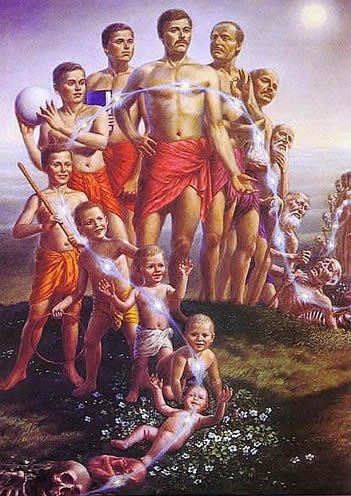
We Are Not These Bodies, We Are Soul
…within this body there is soul, and the body is changing every moment, but the soul is there. Just as a soul comes from the womb of his mother with a small body, and that small body changes—it becomes the body of a boy, it becomes the body of a youth, then it becomes the body of an old man, then it vanquishes… That we have to admit. We may say that the body is growing, but actually, the fact is, body is changing. It is medically admitted that we are changing our body every second. We are changing our blood corpuscles, and therefore a change of the body is taking place, and that is being manifested in a different shape only. Actually, we are changing every moment our body. So the ultimate change, when this body cannot be worked any more, just like a dress, when it is torn, when it is too old, you have to change it. Similarly, when this body becomes useless, no more, it cannot be pulled on any more, you take another body. Tathā dehāntara-prāptir. As we are, in our practical life, we are changing our body every moment, similarly, the last stage of changing this body is called death. Just as I give up this body, I have to enter into the womb of some kind of mother. These things are explained in the Vedic literatures. (Srila Prabhupada from lecture; San Francisco, April 2, 1968)
The soul is eternal, it is changing body, different bodies, and there are 8,400,000 different forms of body. According to his desire, he is entering another body.
…in the hundreds and thousands of universities all over the world there is no department of knowledge where the science of the soul is taught. Actually, we are all spirit soul. From Bhagavad-gītā we understand that we are transmigrating from one body to another, even in our present lives. All of us had at one time the body of a small baby. Where is that body? That body is gone. Presently I am an old man, but I remember that I was once a small baby. I still remember when I was about six months old; I was lying down on the lap of my elder sister, who was knitting, and I was playing. I can remember that, so it is possible for everyone to remember that he had a small body. After the baby’s body I had a boy’s body; then I had a youthful body, and now I am in this body. Where are those bodies? They are gone now. This is a different body. It is explained in Bhagavad-gītā that when I give up this body, I will have to accept another body. It is very simple to understand. I have changed so many bodies, not only from childhood to boyhood to youth, but according to medical science we are changing bodies every second, imperceptibly. This Process indicates that the soul is permanent. Although I have changed many bodies, I remember my baby body and my childhood body—I am the same person, soul. Similarly, when ultimately I change this body, I shall have to accept another. This simple formula is stated in Bhagavad-gītā. Everyone can reflect on it…(Srila Prabhupada from; Krsna Consciousness The Topmost Yoga System)
A person or an animal is not the material body; rather, the material body is the covering of the living being. Bhagavad-gītā compares the body to a dress and elaborately explains how one changes dresses one after another. The same Vedic knowledge is confirmed here. The living being, the soul, is constantly changing bodies one after another. Even in the present life, the body changes from childhood to boyhood, from boyhood to youth, and from youth to old age; similarly, when the body is too old to continue, the living being gives up this body and, by the laws of nature, automatically gets another body according to his fruitive activities, desires and ambitions. The laws of nature control this sequence, and therefore as long as the living entity is under the control of the external, material energy, the process of bodily change takes place automatically, according to one’s fruitive activities.
More
11 Jul 2012
by The Hare Krishna Movement
in A.C. Bhaktivedanta Swami Prabhupada, Back to Godhead, Lectures, Spiritual Life
Tags: A.C. Bhaktivedanta Swami Prabhupada, BTG Magazine, Gurudas, krsna consciousness, Lecture by Srila Prabhupada, photo by Gurudas, religious system, Spiritual Life, spiritual understanding

…So if we are serious, if we actually want to be happy, we must take to the cultivation of spiritual understanding, an understanding of Krsna consciousness. Of course, in every country of the world there is some religious system, some system for understanding spiritual life. But unfortunately, almost nobody is interested in spiritual life because people have been induced to become addicted to material, or sensual, activities. They are going further and further away from spiritual life and becoming more and more confused. Disappointment is rising all over the world.
So to mitigate this disappointment and confusion, one has to take to Krsna consciousness. Try to understand the philosophy of Krsna consciousness, and act accordingly. Then you will be happy.
A Call to Spiritual Life
By His Divine Grace A.C. Bhaktivedanta Swami Prabhupada
An address given in September 1973 (upon arriving for his first visit in Stockholm).
Thank you very much for kindly receiving me on this first visit of mine to your country.
The Krsna consciousness movement is gradually spreading all over the world, but it is a little difficult to understand the purport of this movement because it is completely on the spiritual platform. Generally, people do not understand what the spiritual platform is. But it is quite simple. Every one of us every living being is a combination of two things: matter and spirit. Matter we can understand, but on account of our long association with matter we cannot understand what spirit is.
More
04 Jul 2012
by The Hare Krishna Movement
in Uncategorized
Tags: A.C. Bhaktivedanta Swami Prabhupada, Arjuna, as it is, bhagavad-gita, buddhi-yoga, chant the holy name of the Lord, constitution of the soul, Hare Krishna, karma, karma yoga, Krishna, krsna consciousness, material grief, philosophy of the soul, spiritual advancement, Sri Krsna, The Supreme Personality of Godhead
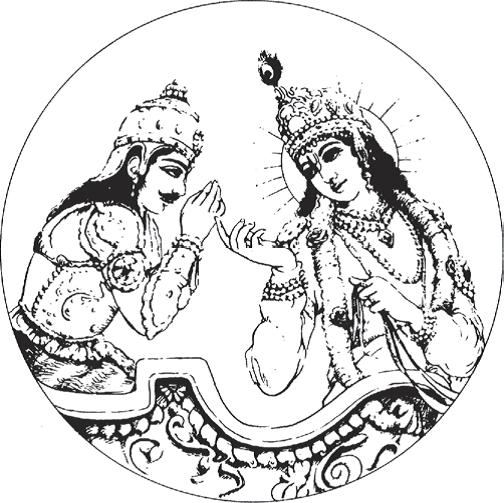
Bhagavad-gita As It Is – Macmillan 1972 Edition
By His Divine Grace A.C. Bhaktivedanta Swami Prabhupada
Chapter 3
TEXT 1
arjuna uvāca
jyāyasī cet karmaṇas te
matā buddhir janārdana
tat kiṁ karmaṇi ghore māṁ
niyojayasi keśava
arjunaḥ—Arjuna; uvāca—said; jyāyasī—speaking very highly; cet—although; karmaṇaḥ—than fruitive action; te—your; matā—opinion; buddhiḥ—intelligence; janārdana—O Kṛṣṇa; tat—therefore; kim—why; karmaṇi—in action; ghore—ghastly; mām—me; niyojayasi—engaging me; keśava—O Kṛṣṇa.
TRANSLATION
Arjuna said: O Janārdana, O Keśava, why do You urge me to engage in this ghastly warfare, if You think that intelligence is better than fruitive work?
PURPORT
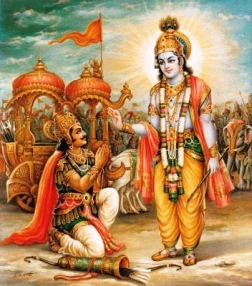
The Supreme Personality of Godhead Śrī Kṛṣṇa has very elaborately described the constitution of the soul in the previous chapter, with a view to deliver His intimate friend Arjuna from the ocean of material grief. And the path of realization has been recommended: buddhi-yoga, or Kṛṣṇa consciousness. Sometimes Kṛṣṇa consciousness is misunderstood to be inertia, and one with such a misunderstanding often withdraws to a secluded place to become fully Kṛṣṇa conscious by chanting the holy name of Lord Kṛṣṇa. But without being trained in the philosophy of Kṛṣṇa consciousness, it is not advisable to chant the holy name of Kṛṣṇa in a secluded place where one may acquire only cheap adoration from the innocent public. Arjuna also thought of Kṛṣṇa consciousness or buddhi-yoga, or intelligence in spiritual advancement of knowledge, as something like retirement from active life and the practice of penance and austerity at a secluded place. In other words, he wanted to skillfully avoid the fighting by using Kṛṣṇa consciousness as an excuse. But as a sincere student, he placed the matter before his master and questioned Kṛṣṇa as to his best course of action. In answer, Lord Kṛṣṇa elaborately explained karma-yoga, or work in Kṛṣṇa consciousness, in this Third Chapter.
More
27 Jun 2012
by The Hare Krishna Movement
in A.C. Bhaktivedanta Swami Prabhupada, Back to Godhead, Lectures, Vaisnava Compassion
Tags: A.C. Bhaktivedanta Swami Prabhupada, Back to Godhead Magazine, hellish conditions, hellish life, krsna consciousness, Krsnaloka, Maharaja Pariksit, spiritual body, Sukadeva Goswami, Vaisnava heart
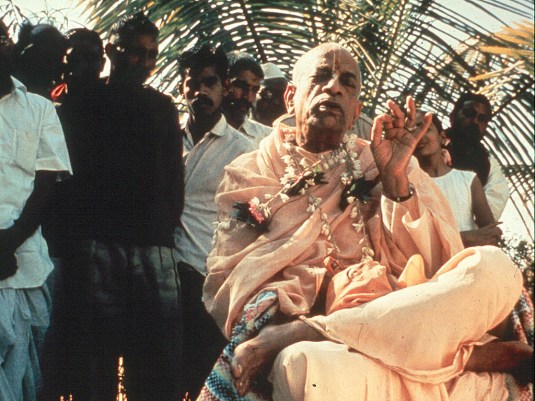
…With similar Vaisnava compassion, Pariksit Maharaja says to Sukadeva Gosvami, “You have described the different types of hellish conditions of life. Now, tell me how those who are suffering can be delivered. Kindly explain this to me.” “How can they be delivered from their fierce miseries and horrible pains?” That is a Vaisnava heart. Maharaja Pariksit says, “Somehow or other they have fallen down to this hellish life. But that does not mean that they should remain in that condition. There must be some means by which they can be delivered, so kindly explain that.”
“Yes, I’ve already described the different types of hellish conditions and very severe painful life, but one has to counteract it.”
If you are to go to Krsna, then you have to prepare your spiritual body. That is Krsna consciousness, If you keep yourself in Krsna consciousness, then gradually you prepare your next body, a spiritual body, which will carry you immediately to Krsnaloka, and you will become happy. You will live there perpetually and blissfully.
A Devotee is an Ocean of Mercy
Lecture given by His Divine Grace A.C. Bhaktivedanta Swami Srila Prabhupada
From Back to Godhead Magazine 1972 Vol. 1, No 45
Today I shall speak to you about the glorification of the holy name of God. This was discussed between Maharaja Pariksit and Sukadeva Gosvami in connection with a brahmana who was very fallen and addicted to all kinds of sinful activities but was saved simply by chanting the holy name. This is found in the Sixth Canto of Srimad-Bhagavatam.
More
14 Jun 2012
by The Hare Krishna Movement
in Krishna Consciousness, Practicing Krishna Consciousness at Home, Varnasrama Dharma
Tags: brahmanas, krsna consciousness, Krsna Consciousness is for Everyone, Padmapani dasa, Prabhupada connect, Prasadam, spiritual food, spiritual solutions, Srila Prabhupada's teachings, varnasrama-dharma
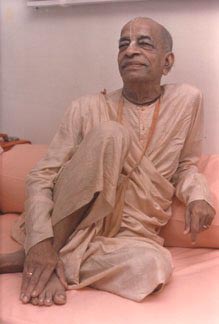
…In order for his movement to be successful, Srila Prabhupada emphasized that there is no room for politics in Krsna consciousness: “Politics means planning for one’s own happiness. That is politics. So in our society there should be no diplomacy, no politics. Everyone should be eager how to do good for others. That is Vaisnava.”
Krishna Consciousness is for Everyone
By Sriman Padmapani Prabhu
Oftentimes those who are practicing Krsna consciousness are challenged that merely tending to spiritual life can’t possibly solve one’s problems in the real world. How can chanting Hare Krsna help someone who is constantly worried about putting food on their dinner table? So-called spiritual solutions seem vague and impractical. However, if we make the effort to study Srila Prabhupada’s teachings in full, we soon discover that he was always down-to-earth along with being committed to living and preaching a godly life.
In early 1974, Srila Prabhupada instructed his leading disciples to start organizing his movement according to the principles of varnasrama-dharma: “Everywhere, wherever we have got our centers, a varnasrama college should be established to train all divisions: one class brahmana, one class ksatriya, one class vaisya, and one class sudra” (Srila Prabhupada, Vrindavan, March, 1974). These four divisions of society are described in the 18th chapter of the Bhagavad-gita where Lord Krsna states that such divisions are naturally “in accordance with the modes of nature” (B.G. 18.41). In the varnasrama system, the brahmanas are the priests, the ksatriyas are the administrators, the vaisyas are the producers of food and the sudras are the workers. By co-operating together, these four parts of the social body are able to maintain a healthy and well functioning society. On the basis of Vedic scripture, Srila Prabhupada guaranteed that there would be no scarcity if the principles of varnasrama were properly established in human society. “Come and join us,” he said. “We shall give you food, shelter, everything. This is Krsna consciousness.”
More
11 Jun 2012
by The Hare Krishna Movement
in Chanting Hare Krishna, Diksha, Guru & Disciple, Hare Krishna Maha Mantra
Tags: chanting Hare Krishna, guru disciple, initiation ceromony, Krsna, krsna consciousness, lecture on initiation, Madhudvisa, Revatinandana, spiritual master, Srila Prabhupada, Srimati dasi, ten offences to be advoided while chanting the maha-mantra, ten offenses, Vilasa-vigraha, yoga process
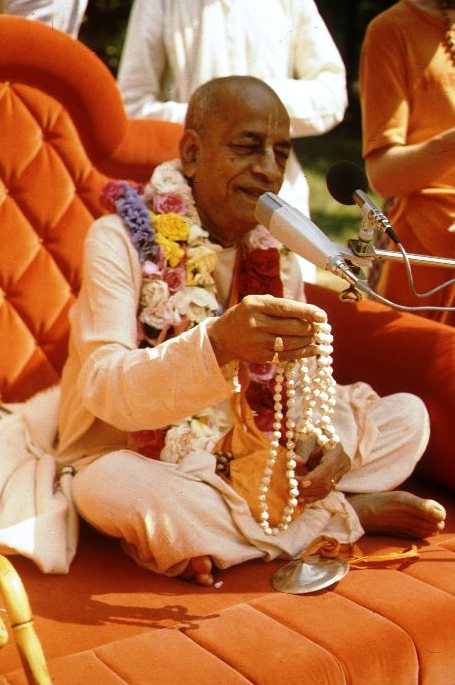
…Madhudviṣa: Śrīla Prabhupāda? Should I read the ten offenses?
Prabhupāda: Yes.
Madhudviṣa: We have them here.
Prabhupāda: Just see. Go on reading. Yes, you read.
Madhudviṣa: “The ten offenses to avoid while chanting the mahā-mantra. Number one: Blaspheming the Lord’s devotee.”
Prabhupāda: Now just try to understand. Any devotee of Lord should not be blasphemed. It doesn’t matter in any country. Just like Lord Jesus Christ, he is a great devotee. And even Muhammad, he’s also a devotee. It is not that because we are devotee and they are not devotee. Don’t think like that. Anyone who is preaching the glories of God, he is a devotee. He should not be blasphemed. You should be careful. Then?
Madhudviṣa: “Number two: Considering the Lord and other demigods on the same level or assuming there are many Gods.”…
Lecture on Initiation and the Ten Offences to be Advoided While Chanting the Maha-mantra
By His Divine Grace A. C. Bhaktivedanta Swami Prabhupāda
Seattle, October 20, 1968
More
04 Jun 2012
by The Hare Krishna Movement
in Krishna Consciousness, Teachings of Lord Kapila, The Hare Krishna Movement
Tags: A.C. Bhaktivedanta Swami Prabhupada, Bhagavan, God, Krishna consciousness movement, krsna consciousness, krsnas tu bhagavan svayam, Lord Kapila, Son of Devahuti, Sri Krsna, Teachings of Lord Kapila
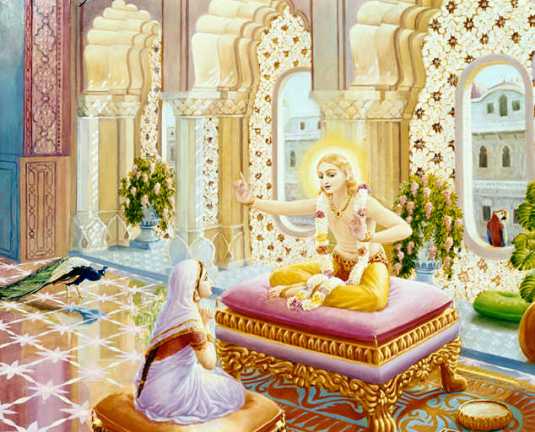
…The purpose of this Kṛṣṇa consciousness movement is to inform everyone that no one is superior to Kṛṣṇa, God. Because many young Americans and Europeans are fortunate and know nothing of any hodgepodge god, they have taken this bona fide Kṛṣṇa consciousness movement seriously. Kṛṣṇas tu bhagavān svayam: Bhagavān, God, means Śrī Kṛṣṇa. We have simply presented this information, saying, “Here is God. Śrī Kṛṣṇa.” Because they have taken this seriously, many young Americans and Europeans are advancing in Kṛṣṇa consciousness. Consequently many people are surprised to see how Americans and Europeans have become such great devotees and are dancing in ecstasy. How is it they are so advanced? They have taken the information seriously: kṛṣṇas tu bhagavān svayam. Whether one touches fire blindly or knowingly, fire will burn. It is not that because the fire is touched by a child, fire will not burn. These young Westerners have touched fire, and consequently it is acting as fire.
…If we hear about Kṛṣṇa, we become purified. Hearing about Kṛṣṇa means associating with Kṛṣṇa. In this way we may perfect our lives.
Teachings of Lord Kapila, the Son of Devahūti
By His Divine Grace A. C. Bhaktivedanta Swami Prabhupāda
Chapter One
The Purpose of Lord Kapila’s Advent
TEXT 1
śaunaka uvāca
kapilas tattva-saṅkhyātā
bhagavān ātma-māyayā
jātaḥ svayam ajaḥ sākṣād
ātma-prajñaptaye nṛṇām
TRANSLATION
Śrī Śaunaka said: Although He is unborn, the Supreme Personality of Godhead took birth as Kapila Muni by His internal potency. He descended to disseminate transcendental knowledge for the benefit of the whole human race.
PURPORT
The word ātma-prajñaptaye indicates that the Lord descends for the benefit of the human race to give transcendental knowledge. Material necessities are quite sufficiently provided for in the knowledge given in the Vedic literatures, which offer a program for good living and gradual elevation to the platform of sattva-guṇa, the mode of goodness. Once one is situated in sattva-guṇa, one’s knowledge expands. On the platform of passion there is no knowledge, for passion is an impetus to enjoy material benefits. On the platform of ignorance there is neither knowledge nor enjoyment but simply animalistic living.
More
11 May 2012
by The Hare Krishna Movement
in Jahanva devi, Krsna Culture in Music, Sriman George Harrison, The Hare Krishna Movement
Tags: Allen Ginsburg, anti-war peaceniks, Beatnik poetry, Bob Dylan, chanting, cultural fabric, dancing peace and self-realization, East-Village, eastern arts, Grateful Dead, Hair, Hare Krsna theme, hippy rock, krsna consciousness, Krsna mucic, mantra music, Mantra Rock, psychedelia, Srila Prabhupada, Sriman George Harrison, Tompkins Square Park
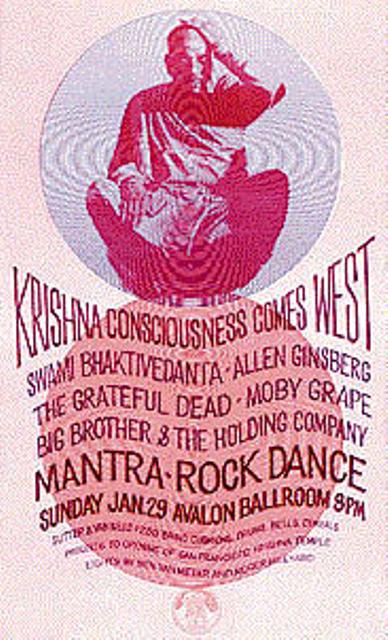
Krsna Culture in Music
By: Jahanva devi
May 10, 2012 — CANADA (SUN)
Reprising a 2006 Sun series on the cultural impact of Krsna Consciousness on the western music scene.
Shortly after Srila Prabhupada’s arrival in the West a most astonishing phenomenon took place in the world of music. In the United States, Europe, South America and elsewhere on the planet, the Holy Name of Krsna manifested in musical offerings by devotees and non-devotees alike.
Without question, the Beatles’ interest in Krsna Consciousness helped to spark this revolution. But it was also the presence of the devotees, who brought Lord Caitanya’s Sankirtana mission to towns and villages on every continent, that caused this Krsna Conscious musical proliferation to occur.
By the early 1970’s, many records had been released that included song titles or lyrics featuring Sri Krsna or the Maha-mantra. These records manifested in all genres of music, from classical to jazz, blues, folk, pop, rock, and psychedelia. There were even releases of Beatnik poetry and comedy that played on the Hare Krsna theme.
Many of those who became followers of Srila Prabhupada in the 1960’s had connections to the counterculture movement. The counterculture comprised not only the hippies, but also the beatniks who preceded them, the yippies, and the anti-war peaceniks. The Krsna Consciousness movement was comprised of elements that were a common denominator amongst all these groups: sharing love and food, chanting, dancing, advocating peace and self-realization, and delving into the mysteries of the ancient eastern arts.
Personalities like Allen Ginsberg and George Harrison kept popping up in the popular media, and their association with Srila Prabhupada’s movement created important visibility for the Hare Krsna explosion. The devotees also gained attention by showing up at counterculture events, peace gatherings, be-in’s, and musical events that showcased personalities who are now famously associated with that era. Even Muhammad Ali shared the spotlight with Srila Prabhupada, at an anti-war peace concert Ali organized.
In retrospect, we find one very important common denominator, seen throughout this unique historical collection of artifacts. That is, that no matter when or where Srila Prabhupada and his Krsna devotees appeared, the mood and message was always the same — it was kirtan, bhajan, harinama sankirtana in the mood of Prabhupada and the Sampradaya Acaryas. No matter what sort of music was going on all around them, the devotees steadfastly preserved Srila Prabhupada’s mood in sharing our Krsna Conscious culture. Srila Prabhupada delivered the transcendental sound vibration of the Hare Krsna Maha-mantra purely and sweetly, and his disciples followed suit.
More
11 May 2012
by The Hare Krishna Movement
in Meditation
Tags: A.C. Bhaktivedanta Swami Prabhupada, executing devotion service, krsna consciousness, meditation, meditation on devotional service, meditation on the form of Visnu, meditation on the transcendental quality of the Lord, Nectar of Devotion, Puranas, Supreme Personality of Godhead

Meditation means to engage the mind in thinking of the form of the Lord, of the qualities of the Lord, of the activities of the Lord and of the service of the Lord. Meditation does not mean anything impersonal or void. According to Vedic literature, meditation is always on the form of Viṣṇu.
The Nectar of Devotion 1970 Edition
By His Divine Grace A.C. Bhaktivedanta Swami Prabhupada
Chapter 10 “Techniques of Hearing and Memorizing”
In the Nṛsiṁha Purāṇa there is a statement about meditation on the form of the Lord. It is said there: “Meditation focusing on the lotus feet of the Supreme Personality of Godhead has been accepted as transcendental and beyond the experience of material pain and pleasure. By such meditation even one who is grossly miscreant can be delivered from the sinful reactions of his life.”
In the Viṣṇu-dharma there is a statement about meditation on the transcendental quality of the Lord. It is said, “Persons who are constantly engaged in Kṛṣṇa consciousness, and who remember the transcendental qualities of the Lord, become free from all reactions to sinful activities, and after being so cleansed they become fit to enter into the kingdom of God.” In other words, no one can enter into the kingdom of God without being freed from all sinful reactions. Sinful reactions can be avoided simply by remembering the form, qualities, pastimes, etc., of the Lord.
In the Padma Purāṇa there is a statement about remembering the activities of the Lord: “A person who is always engaged in meditation on the sweet pastimes and wonderful activities of the Lord surely becomes freed from all material contamination.”
Meditation on Executing Devotional Service More
30 Apr 2012
by The Hare Krishna Movement
in Ganges, Holy Places of Pilgrimage, Srimad Bhagavatam
Tags: cleansed of all dirty things, Ganges, Ganges River, holy ganges river, krsna consciousness, Maharaja Prthu, SB . 4. 21. 31, spiritual progress, Srila Prabhupada, Srimad Bhagavatam

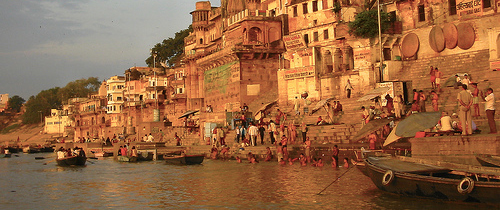
Ganges River at Varanasi India
Srimad-Bhagavatam
By His Divine Grace A.C. Bhaktivedanta Swami Prabhupada
Canto 4, Chapter 21, Text 31
Instructions by Maharaja Prthu
yat-pāda-sevābhirucis tapasvinām
aśeṣa-janmopacitaṁ malaṁ dhiyaḥ
sadyaḥ kṣiṇoty anvaham edhatī satī
yathā padāṅguṣṭha-viniḥsṛtā sarit
yat-pāda—whose lotus feet; sevā—service; abhiruciḥ—inclination; tapasvinām—persons undergoing severe penances; aśeṣa—innumerable; janma—birth; upacitam—acquire; malam—dirtiness; dhiyaḥ—mind; sadyaḥ—immediately; kṣiṇoti—destroys; anvaham—day after day; edhatī—increasing; satī—being; yathā—as; pada-aṅguṣṭha—the toes of His lotus feet; viniḥsṛtā—emanating from; sarit—water.
By the inclination to serve the lotus feet of the Supreme Personality of Godhead, suffering humanity can immediately cleanse the dirt which has accumulated in their minds during innumerable births. Like the Ganges water, which emanates from the toes of the lotus feet of the Lord, such a process immediately cleanses the mind, and thus spiritual or Kṛṣṇa consciousness gradually increases.
In India, one can actually see that a person who takes a bath in the Ganges waters daily is almost free from all kinds of diseases. A very respectable brāhmaṇa in Calcutta never took a doctor’s medicine. Even though he sometimes felt sick, he would not accept medicine from the physician but would simply drink Ganges water, and he was always cured within a very short time. The glories of Ganges water are known to Indians and to ourselves also.
More
24 Mar 2012
by The Hare Krishna Movement
in A.C. Bhaktivedanta Swami Prabhupada, Back to Godhead, Remembering Srila Prabhupada, Srila Prabhupada
Tags: back to Godhead, bhagavad-gita, devotional service, Krsna conscious person, krsna consciousness, part and parcel, spritual sky, Srila Prabhupada, suffering of conditioned soul

…Someone asked, “What is the Krsna conscious person’s attitude towards others?” Srila Prabhupada replied, “He sees everyone as part and parcel of Krsna. The Krsna conscious person thinks, ‘They are suffering from not knowing Krsna, so let me bring them to Krsna.’ This is the highest service. Everyone is suffering, so to act in Krsna consciousness is the highest service. After all, they are suffering on account of detachment from Krsna.”
“Krsna consciousness never becomes old, it is fresh eternally. Do you know of any book five thousand years old that reads as fresh as Bhagavad-gita? Live in spiritual understanding and you’ll never become faded.”
The Great Soul Who Walked Among Us
Excerpted from Back To Godhead Magazine Vol. 13 No. 1-2
“Consider this example: when the sun is in the sky, there is no question of darkness. Similarly, when the Hare Krsna mantra is vibrating on your tongue and you are hearing attentively, then your consciousness becomes Krsna consciousness, or clear consciousness, and there is no question of maya, or hazy consciousness. Just as when light and darkness come together the darkness cannot stand before the light, maya cannot remain in the presence of Krsna.
More
21 Feb 2012
by The Hare Krishna Movement
in Lectures, The Hare Krishna Movement
Tags: actual religion, bhagavad-gita, devotional service, His Divine Grace A.C. Bhaktivedanta Swami Prabhupada, krsna consciousness, love for God, Song of God, Srila Prabhupada lecture
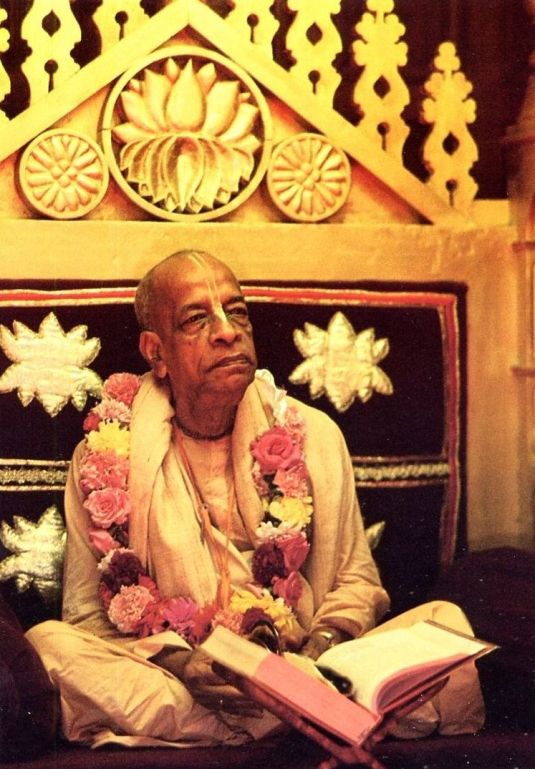
…so far our movement is concerned, you know, more or less, about our movement. But you should know that this is the most scientific, authorized movement in the human society, because the movement is based on the authority of Bhagavad-gita. Bhagavad-gita is spoken by the Supreme Personality of Godhead for the benefit of the whole human society.
“Actual Religion means to understand God and to develop your Love for God”
Lecture by His Divine Grace A.C. Bhaktivedanta Swami Prabhupada
New York, April 5, 1973
Ladies and Gentlemen, I thank you very much for kindly receiving me in this honorable way. According to our Vaisnava philosophy, whatever honor is offered to the spiritual master, that is transferred to the Supreme Personality of Godhead. Yasya prasadad bhagavat-prasado yasyaprasadan na gatih kuto ’pi. Our this philosophy, Vaisnava philosophy, it teaches that if you please your spiritual master, then God is also pleased. Because the spiritual master is the most confidential servant of God, therefore by honoring the spiritual master, the Supreme Personality of Godhead is honored. Just like in English language there is the word, “If you love me, love my dog.” So the spiritual master is the “dog” of God; therefore if the spiritual master is patted, God is very much pleased.
More
07 Jan 2012
by The Hare Krishna Movement
in Interview with Srila Prabhupada, Krishna Consciousness, Science of Self Realization, Srila Prabhupada Conversations
Tags: caste system, Christ consciousness, fake gurus, God consciousness, Hare Krsna mantra, Interviews with Srila Prabhupada, krsna consciousness, Sandy Nixon, spiritual master God, Srila Prabhupada
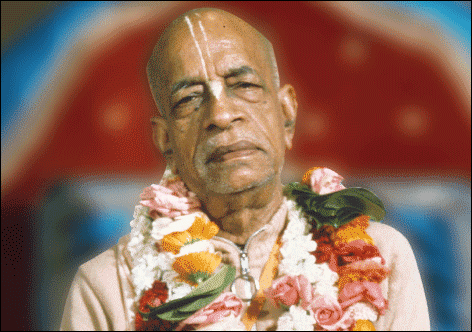
The following interview with freelance reporter Sandy Nixon took place in July 1975, in Śrīla Prabhupāda’s quarters at the Kṛṣṇa center in Philadelphia. This discussion serves as a superb introduction to Kṛṣṇa consciousness and covers such basic topics as the Hare Kṛṣṇa mantra, the relationship between the spiritual master and God, the difference between genuine and fake gurus, the role of women in Kṛṣṇa consciousness, the Indian caste system, and the relationship between Christ consciousness and Kṛṣṇa consciousness.
What is Krsna Consciousness?
Ms. Nixon: My first question is very basic. What is Kṛṣṇa consciousness?
Śrīla Prabhupāda: Kṛṣṇa means God. We are all intimately connected with Him because He is our original father. But we have forgotten this connection. When we become interested in knowing, “What is my connection with God? What is the aim of life?” then we are called Kṛṣṇa conscious.
Ms. Nixon: How does Kṛṣṇa consciousness develop in the practitioner?
Śrīla Prabhupāda: Kṛṣṇa consciousness is already there in the core of everyone’s heart. But because of our materially conditioned life, we have forgotten it. The process of chanting the Hare Kṛṣṇa mahā-mantra—Hare Kṛṣṇa, Hare Kṛṣṇa, Kṛṣṇa Kṛṣṇa, Hare Hare/ Hare Rāma, Hare Rāma, Rāma Rāma, Hare Hare—revives the Kṛṣṇa consciousness we already have. For example, a few months ago these American and European boys andgirls did not know about Kṛṣṇa, but just yesterday we saw how they were chanting Hare Kṛṣṇa and dancing in ecstasy throughout the whole Ratha-yātrā procession [an annual festival sponsored by the Kṛṣṇa consciousness movement in cities around the world]. Do you think that was artificial? No. Artificially, nobody can chant and dance for hours together. They have actually awakened their Kṛṣṇa consciousness by following a bona fide process. This is explained in the Caitanya-caritāmṛta (Madhya 22. 107)
More
06 Jan 2012
by The Hare Krishna Movement
in Krishna Consciousness, Lectures, Srimad Bhagavatam
Tags: constant devotional remembrance. spiritual sky, Damaghosa, His Divine Grace A.C. Bhaktivedanta Swami Prabhupada, krsna consciousness, Lord Krsna, Pradyamuna das, pure consciousness, SB 1.15.47-48, Srila Prabhupada Lecture Srimad Bhagavatam
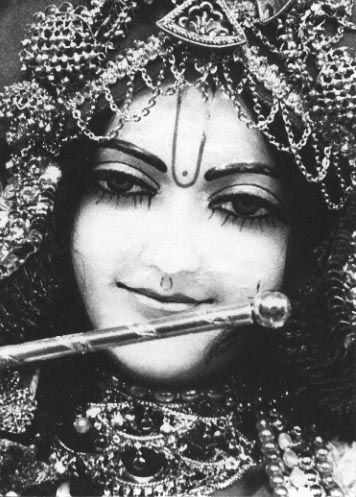
Photo by Damaghosa Prabhu
“If you become devotee of Krsna, then you can live with Krsna, even in this life. Even in this life. Because Krsna is omnipotent, if you are really devotee of Krsna, He will talk with you, He will dance with you, He will eat with you, everything.”
Lecture by His Divine Grace A.C. Bhaktivedanta Swami Prabhupada
December 25, 1973, Los Angeles
Srimad-Bhagavatam 1.15.47-48
Pradyumna: “Thus by pure consciousness due to constant devotional remembrance, they attained the spiritual sky, which is ruled by the Supreme Nārāyaṇa, Lord Kṛṣṇa. This is attained only by those who meditate upon the one Supreme Lord without deviation. This abode of the Lord Śrī Kṛṣṇa, known as Goloka Vṛndāvana, cannot be attained by persons who are absorbed in the material conception of life. But the Pāṇḍavas, being completely washed of all material contamination, attained that abode in their very same bodies.” [SB 1.15.47-48]
Prabhupāda: Tad-dhyāna udriktayā. Dhyāna means meditation. So the Pāṇḍavas, always they were thinking of Kṛṣṇa. While they were eating, they were sitting, they were sleeping, they were talking, they were fighting-Kṛṣṇa. This is Kṛṣṇa consciousness. When Arjuna was fighting, so there was also Kṛṣṇa. When they were dealing in politics with Duryodhana, there was Kṛṣṇa. Kṛṣṇa is his friend, always talking with him, staying with him, sleeping with him, eating with him.
More
28 Dec 2011
by The Hare Krishna Movement
in Krishna Consciousness, Raja-Vidya
Tags: Arjuna, His Divine Grace A.C. Bhaktivedanta Swami Prabhupada, Krishna, krsna consciousness, Raja-Vidya, samsara, susukham, the king of knowledge, Yudhisthira Maharaja

When Yudhiṣṭhira Mahārāja was asked, “What is the most wonderful thing in the world?” he replied, “The most wonderful thing is that every day, every moment, people are dying, and yet everyone thinks that death will not come for him.”
Raja – Vidya: The King of Knowledge
By His Divine Grace A.C. Bhaktivedanta Swami Prabhupada
Chapter 2
Knowledge Beyond Saṁsāra
Kṛṣṇa specifically states that this process of Kṛṣṇa consciousness is susukham, very pleasant and easy to practice. Indeed, the devotional process is very pleasant; we melodiously sing with instruments, and someone will listen and also join (śravaṇaṁ kīrtanam). Of course the music should be in relation with the Supreme Lord, in glorification of Him. Hearing Bhagavad-gītā is also part of devotional service, and in addition to hearing it one should be eager to apply it in his life. Kṛṣṇa consciousness is a science and should not be accepted blindly. There are nine processes of devotional service recommended (hearing, chanting, remembering, worshiping, praying, serving, engaging as a servitor of the Lord, establishing friendly relations with the Lord, offering everything to the Lord). These are all easy to practice and should be joyfully performed.
Of course if one thinks that Bhagavad-gītā and the Hare Kṛṣṇa mantra are part of the Hindu system and doesn’t want to accept them because of this, he can nonetheless attend the Christian church and sing there. There is no difference between this process and that process; the point is whatever process one follows, he must become God conscious. God is neither Moslem nor Hindu nor Christian—He is God. Nor are we to be considered Hindu, Moslem or Christian. These are bodily designations. We are all pure spirit, part and parcel of the Supreme. God is pavitram, pure, and we are also pure. Somehow or other, however, we have fallen into this material ocean, and as the waves toss, we suffer. Actually we have nothing to do with the tossing waves of material miseries. We must simply pray, “Kṛṣṇa, please pick me up.” As soon as we forget Kṛṣṇa, the ocean of illusion is there, and it at once captures us. The chanting of Hare Kṛṣṇa is most important in order to escape from this ocean. Hare Kṛṣṇa, Hare Kṛṣṇa, Kṛṣṇa Kṛṣṇa, Hare Hare/ Hare Rāma, Hare Rāma, Rāma Rāma, Hare Hare is a sound (śabda) that is non-different from Kṛṣṇa. The sound Kṛṣṇa and the original Kṛṣṇa are the same. When we chant Hare Kṛṣṇa and dance, Kṛṣṇa is also dancing with us. Of course we may say, “Well, I do not see Him,” but why do we put so much stress on seeing? Why not hearing? Seeing, tasting, smelling, touching, and hearing are all instruments for experience and knowledge. Why do we put such exclusive stress on seeing? A devotee does not wish to see Kṛṣṇa; he is satisfied by simply hearing of Kṛṣṇa. Seeing may eventually be there, but hearing should not be considered any less important. There are things which we hear but do not see—the wind may be whistling past our ears, and we can hear it, but there is no possibility of seeing the wind. Since hearing is no less an important experience or valid one than seeing, we can hear Kṛṣṇa and realize His presence through sound. Śrī Kṛṣṇa Himself says, “I am not there in My abode, or in the heart of the meditating yogī but where my pure devotees are singing.” We can feel the presence of Kṛṣṇa as we actually make progress.
More
23 Dec 2011
by The Hare Krishna Movement
in Free Downloads, Free eBooks, The Hare Krsna Cookbook, Vegetarian Cooking, Vegetarian Recipies, Vegetarianism
Tags: A.C. Bhaktivedanta Swami Prabhupada, devotional service, Krishna, krsna consciousness, Krsna devi dasi, Prasadam, Sama devi dasi, singing dancing and feasting, The Hare Krsna Cookbook, vegetarian cooking, vegetarian recipies, vegetarianism

click on link at bottom to download entire book in pdf format
The Hare Krsna Cookbook
1973 Bhaktivedanta Book Trust
Compiled by Krsna devi dasi and Sama devi dasi
“The Hare Krsna Cookbook”, originally published in 1973, was the first widely distributed book of vegetarian recipes, throughout the Movement. This was the book myself and many early devotees learned to cook from, and remains today my all time favorite cookbook, and is a constant companion in our kitchen. We offer the complete book on a PDF Format as a gift to all our readers this Holiday Season.
Dedication
Prasadam means mercy, and this Prasadam Cookbook is dedicated to the fountainhead of all mercy, the spiritual master, His Divine Grace A.C. Bhaktivedanta Swami Prabhupada. He is by nature kind to every living entity, but that ocean of mercy becomes fully visible in his devotees.
Srila Prabhupada has not given us some dry, canned philosophy to chew; he has given us the nectar for which we have sought so long: he has taught us how to render transcendental loving service to the Lord in all our daily activities. This book illustrates on of them.
The Process of Krsna Consciousness is usually described as one of dinging, dancing and feasting. We have already demonstrated to the world how anyone can sing and dance to the holy names of God, Hare Krsna, and now, with the publication of this Prasadam Cookbook, we hope that the whole world will feast in honor of the Supreme Lord. That will make this world like Vrndavana, the transcendental abode of Krsna, where Krsna, Balarama and the monkeys visit every kitchen with thieving intend and bless the devotees with pure love of God. (Dedication from The Hare Krsna Cookbook)
Dwonload PDF Format 5.6MB The Hare KRSNA Cookbook
08 Nov 2011
by The Hare Krishna Movement
in A.C. Bhaktivedanta Swami Prabhupada, Back to Godhead, Krishna Consciousness
Tags: A.C. Bhaktivedanta Swami Prabhupada, Back to Godhead Magazine, bhagavad-gita, Freedom in Krsna, krsna consciousness, yoga, yogi

Freedom in Krsna
By His Divine Grace A.C. Bhaktivedanta Swami Prabhupada
Re-printed from Back to Godhead Magazine 1973, Vol. 1, No. 48
vande rupa-sanatanau raghuyugau sri-jiva-gopalakau.
We are following in the footsteps of Lord Caitanya Mahaprabhu in order to understand Krsna consciousness. Krsna, the Supreme Personality of Godhead, is said in Sri Isopanisad to be very far away from us yet at the same time to be very near. Isvara, the supreme controller, is situated in everyone’s heart, not only in the hearts of human beings, but also within the beasts, birds, aquatics, and even within the atoms themselves. We simply have not realized Him. Actually anyone, however, can find Krsna within his heart.
The process of finding Krsna is called yoga. There are many types of yoga. In the Western countries people are generally familiar with the process of hatha-yoga. This is an approved method and is described in the Sixth Chapter of Bhagavad-gita. At the present moment, however, people are short-lived, they are not very fortunate, and they are always disturbed by many external affairs, and therefore it is not possible to properly execute this hatha-yoga. Even five thousand years ago when Krsna advised His friend Arjuna to accept the hatha-yoga process, Arjuna said, “Krsna, this practice is impossible.” He further said that to control the mind is as difficult as to control the wind. The mind flickers from one engagement to another and changes so swiftly that it is very difficult to control it in this age. Therefore Arjuna said that for him this process of hatha-yoga was not possible.
More
Previous Older Entries Next Newer Entries










 The Hare Krishna Movement