16 Jun 2012
by The Hare Krishna Movement
in Back to Godhead, Hayagriva das, Spiritual Master
Tags: Back to Godhead Magazine, bona fide spiritual master, by the grace of Krsna, emissary of the Supreme Person, guru, Hayagriva dasa, Krishna, Madhya 19.151, spiritual master

This is a well researched, nicely written article by Sriman Hayagriva Prabhu, with many quotes from Srila Prabhupada’s books. Worth the read!
The Spiritual Master: Emissary of the Supreme Person
By Hayagriva Dasa Adhikari
Published in Back to Godhead Magazine 1970, Vol.1, No.38
brahmāṇḍa bhramite kona bhāgyavān jīva
guru-kṛṣṇa-prasāde pāya bhakti-latā-bīja
“According to their karma, all living entities are wandering throughout the entire universe. Some of them are being elevated to the upper planetary systems, and some are going down into the lower planetary systems. Out of many millions of wandering living entities, one who is very fortunate gets an opportunity to associate with a bona fide spiritual master by the grace of Kṛṣṇa. By the mercy of both Kṛṣṇa and the spiritual master, such a person receives the seed of the creeper of devotional service.”(Śrī Caitanya-caritāmṛta: Madhya-līlā 19.151)
His Divine Grace A.C. Bhaktivedanta Swami, Srila Prabhupada, once said that religion without philosophy is fanaticism and philosophy without religion is mental speculation. For a sincere student engaged in God realization, major philosophical points should be understood in the light of the guru, scripture and practical devotional service. One of the first points to understand is the position of the spiritual master. How is he related to Krsna? Is he Krsna? Is he an ordinary man? How should the disciple approach him? How can one know that the spiritual master is bona fide? What is the duty of the spiritual master? What are his symptoms? These and other questions concerning the spiritual master and Krsna are discussed herein by way of authoritative evidence compiled from the writings of Srila Prabhupada, the spiritual master himself.
In addition to rendering devotional service to Krsna through the spiritual master, the student should come to a philosophical understanding based on scripture of his own identity and the identity of the Supreme Person, Sri Krsna, and His emissary, the bona fide spiritual master. This understanding should correlate with the basic teachings of the spiritual master and other great saints and sages.
More
09 Jun 2012
by The Hare Krishna Movement
in Krishna, Srimad Bhagavatam
Tags: A.C, austerity, Bhaktivedanta Swami Prabhupada, goal of life, knowledge, Krishna, Personality of Godgead, revealed scriptures, sacrifices, SB 1.2.28-29, Sri Krsna, Srila Prabhupada, Srimad Bhagavatam, ultimate goal of life, Vasudeva, vasudeva-para veda, yoga
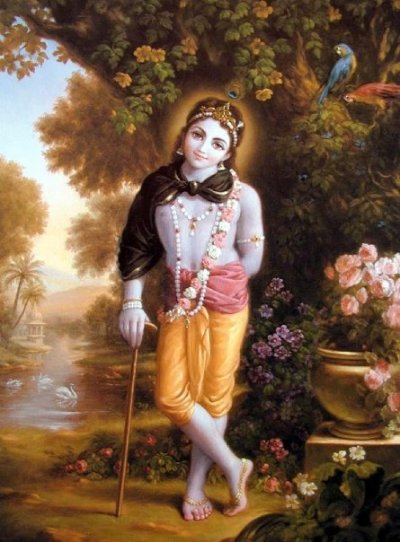
That Śrī Kṛṣṇa, the Personality of Godhead, is the only object of worship is confirmed in these two ślokas.
Srimad-Bhagavatam
By His Divine Grace A.C. Bhaktivedanta Swami Prabhupada
Canto 1, Chapter Two, Text 28-29
TEXTS 28-29
vāsudeva-parā vedā
vāsudeva-parā makhāḥ
vāsudeva-parā yogā
vāsudeva-parāḥ kriyāḥ
vāsudeva-paraṁ jñānaṁ
vāsudeva-paraṁ tapaḥ
vāsudeva-paro dharmo
vāsudeva-parā gatiḥ
vāsudeva—the Personality of Godhead; parāḥ—the ultimate goal; vedāḥ—revealed scriptures; vāsudeva—the Personality of Godhead; parāḥ—for worshiping; makhāḥ—sacrifices; vāsudeva—the Personality of Godhead; parāḥ—the means of attaining; yogāḥ—mystic paraphernalia; vāsudeva—the Personality of Godhead; parāḥ—under His control; kriyāḥ—fruitive activities; vāsudeva—the Personality of Godhead; param—the supreme; jñānam—knowledge; vāsudeva—the Personality of Godhead; param—best; tapaḥ—austerity; vāsudeva—the Personality of Godhead; paraḥ—superior quality; dharmaḥ—religion; vāsudeva—the Personality of Godhead; parāḥ—ultimate; gatiḥ—goal of life.
In the revealed scriptures, the ultimate object of knowledge is Śrī Kṛṣṇa, the Personality of Godhead. The purpose of performing sacrifice is to please Him. Yoga is for realizing Him. All fruitive activities are ultimately rewarded by Him only. He is supreme knowledge, and all severe austerities are performed to know Him. Religion [dharma] is rendering loving service unto Him. He is the supreme goal of life.
Purport
That Śrī Kṛṣṇa, the Personality of Godhead, is the only object of worship is confirmed in these two ślokas. In the Vedic literature there is the same objective: establishing one’s relationship and ultimately reviving our lost loving service unto Him. That is the sum and substance of the Vedas. In the Bhagavad-gītā the same theory is confirmed by the Lord in His own words: the ultimate purpose of the Vedas is to know Him only. All the revealed scriptures are prepared by the Lord through His incarnation in the body of Śrīla Vyāsadeva just to remind the fallen souls, conditioned by material nature, of Śrī Kṛṣṇa, the Personality of Godhead. No demigod can award freedom from material bondage. That is the verdict of all the Vedic literatures. Impersonalists who have no information of the Personality of Godhead minimize the omnipotency of the Supreme Lord and put Him on equal footing with all other living beings, and for this act such impersonalists get freedom from material bondage only with great difficulty. They can surrender unto Him only after many, many births in the culture of transcendental knowledge.
More
07 Jun 2012
by The Hare Krishna Movement
in A.C. Bhaktivedanta Swami Prabhupada, Devotee's, Krishna Consciousness, Lectures
Tags: A.C. Bhaktivedanta Swami Prabhupada, benefactor of the truthful devotee, bhagavad-gita, chanting Hare Krishna, Hear About Krishna, heard and chanted, Krishna, lecture by Prabhupada, material enjoyment, Paramata, Sri Krishna, supersoul, The Supreme Personality of Godhead

…I have not bribed these American and European boys to become Krishna conscious. I have no money. When I went to America, I had only seven dollars. One hour’s expenditure in New York. There is no question of bribing them. But they heard about Krishna. I was reading Bhagavad-gita on the street, in the park, and chanting. They heard, and they came to me. They became attracted. Why?
Just Give Them Chance to Hear About Krishna
Srimad-Bhagavatam Lecture 1.2.17 Vrndavana, October 28, 1972
By His Divine Grace A.C. Bhaktivedanta Swami Prabhupada
srnvatam sva-kathah krsnah
punya-sravana-kirtanah
hrdy antah-stho hy abhadrani
vidhunoti suhrt satam
Translation: “Sri Krishna, the Personality of Godhead, who is the Paramatma, Supersoul, in everyone’s heart and the benefactor of the truthful devotee, cleanses desire for material enjoyment from the heart of the devotee who relishes His messages, which are in themselves virtuous when properly heard and chanted.”
There is a English proverb that “God helps him who tries to help himself”. That is a English proverb. So to become Krsna conscious is not very difficult thing. People have no taste. They do not understand the importance of this Krsna consciousness movement. But this is the only way by which one can become perfect and happy.
It is confirmed in the Bhagavad-gita that just to become happy and peaceful one has to learn three things.
bhoktaram yajna-tapasam
sarva-loka-mahesvaram
suhrdam sarva-bhutanam
jnatva mam santim rcchati
If you want… Because the problem is that we want to be happy and peaceful. Everyone says, “I want peace. There is no peace in my mind.” That is a general understanding. Nobody can say that “I am completely happy and peaceful.” No, that is not possible. The material world is made in such a way that you cannot feel happy. That is not possible. First of all, we have come to this material world to enjoy sense gratification, but that is not our proper business. Our proper business is to satisfy the senses of Krsna, not our senses. So because we have deviated from our original position, therefore it is always a perplexity of our life. But due to illusion we cannot understand it.
More
07 Jun 2012
by The Hare Krishna Movement
in Uncategorized
Tags: 1972 Macmillan edition, A.C. Bhaktivedanta Swami Prabhupada, Arjuna, as it is, bhagavad-gita, Bhagavad-gita text and purports, happiness of distress, heavenly planets, Krishna, Krishna consciousness, loss or gain, material activities, Mukunda, sense gratification, son of Kunti, victory or defeat

This is the second half of Chapter Two “Contents of the Gita Sumarized”
Bhagavad-gita As It Is 1972 Macmillan Edition
By His Divine Grace A.C. Bhaktivedanta Swami Prabhupada
Chapter 2, Text & Purports 37-72
TEXT 37
hato vā prāpsyasi svargaṁ
jitvā vā bhokṣyase mahīm
tasmād uttiṣṭha kaunteya
yuddhāya kṛta-niścayaḥ
hataḥ—being killed; vā—either; prāpsyasi—you gain; svargam—the heavenly kingdom; jitvā—by conquering; vā—or; bhokṣyase—you enjoy; mahīm—the world; tasmāt—therefore; uttiṣṭha—get up; kaunteya—O son of Kuntī; yuddhāya—to fight; kṛta—determination; niścayaḥ—uncertainty.
TRANSLATION
O son of Kuntī, either you will be killed on the battlefield and attain the heavenly planets, or you will conquer and enjoy the earthly kingdom. Therefore get up and fight with determination.
PURPORT
Even though there was no certainty of victory for Arjuna’s side, he still had to fight; for, even being killed there, he could be elevated into the heavenly planets.
TEXT 38
sukha-duḥkhe same kṛtvā
lābhālābhau jayājayau
tato yuddhāya yujyasva
naivaṁ pāpam avāpsyasi
sukha—happiness; duḥkhe—in distress; same—in equanimity; kṛtvā—doing so; lābhālābhau—both in loss and profit; jayājayau—both in defeat and victory; tataḥ—thereafter; yuddhāya—for the sake of fighting; yujyasva—do fight; na—never; evam—in this way; pāpam—sinful reaction; avāpsyasi—you will gain.
TRANSLATION
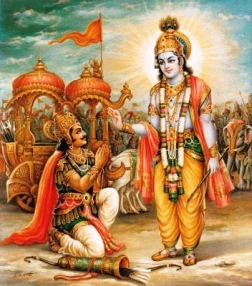
Do thou fight for the sake of fighting, without considering happiness or distress, loss or gain, victory or defeat-and, by so doing, you shall never incur sin.
PURPORT
Lord Kṛṣṇa now directly says that Arjuna should fight for the sake of fighting because He desires the battle. There is no consideration of happiness or distress, profit or gain, victory or defeat in the activities of Kṛṣṇa consciousness. That everything should be performed for the sake of Kṛṣṇa is transcendental consciousness; so there is no reaction to material activities. He who acts for his own sense gratification, either in goodness or in passion, is subject to the reaction, good or bad. But he who has completely surrendered himself in the activities of Kṛṣṇa consciousness is no longer obliged to anyone, nor is he a debtor to anyone, as one is in the ordinary course of activities. It is said:
devarṣi-bhutāpta-nṛṇāṁ pitṝṇāṁ
na kiṅkaro nāyamṛṇī ca rājan
sarvātmanā yaḥ śaraṇaṁ śaraṇyaṁ
gato mukundaṁ parihṛtya kartam
(Bhag. 11.5.41)
“Anyone who has completely surrendered unto Kṛṣṇa, Mukunda, giving up all other duties, is no longer a debtor, nor is he obliged to anyone-not the demigods, nor the sages, nor the people in general, nor kinsmen, nor humanity, nor forefathers.” That is the indirect hint given by Kṛṣṇa to Arjuna in this verse, and the matter will be more clearly explained in the following verses.
More
07 Jun 2012
by The Hare Krishna Movement
in A.C. Bhaktivedanta Swami Prabhupada, Back to Godhead, Lectures
Tags: A.C. Bhaktivedanta Swami Prabhupada, Conway Hall London, eternal servitors of Krishna, Gurudas, Krishna, lecture by Prabhupada, meditation, relationship with God, sankirtana movement, self realization, Srila Prabhupada, Supreme Lord, true identity

…As soon as one understands his identity, his relationship with God, then immediately he becomes happy. We are so full of miseries because we have identified ourselves with the material world. Therefore we are unhappy. Anxieties and fearfulness are due to our misidentifying with the material world.
A Lecture Given At Conway Hall, London,
By His Divine Grace A.C. Bhaktivedanta Swami Prabhupada
We Are All Eternal Servitors of Krsna
Today’s subject matter is our relationship with God. That is self-realization. The sankirtana movement is the easiest process for self-realization because it cleanses the heart. Our misunderstanding of our identity is due to the dust covering the mirror of the mind. In a mirror which is covered with dust one cannot see himself. But if it is very clear, then one can see himself. So meditation is a process for cleansing the heart. Meditation means to try to understand one’s relationship with the Supreme.
More
06 Jun 2012
by The Hare Krishna Movement
in Uncategorized
Tags: 1972 Macmillan edition, A.C. Bhaktivedanta Swami Prabhupada, Arjuna, as it is, bhagavad-gita, Contents of the Gita Sumarized, Krishna, Krishna consciousness, Krsna, Madhusudana, material compassion, real self, Sanjaya, self realization
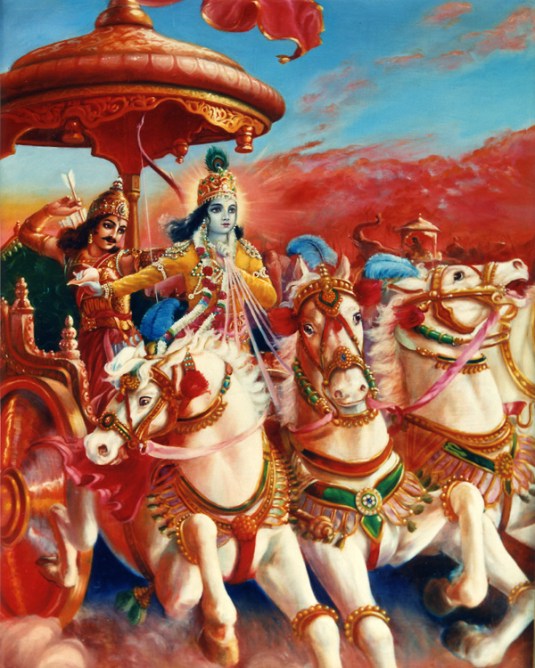
As this is a very long chapter we are posting it in two parts. Today we are posting text 1-35, and tomorrow we will conclude the chapter entitled “Contents of the Gita Summarized”
Bhagavad-gita As It Is 1972 Macmillan Edition
By His Divine Grace A.C. Bhaktivedanta Swami Prabhupada
Chapter Two, Text and Purports 1-35
Contents of the Gita Summarized
TEXT 1
sañjaya uvāca
taṁ tathā kṛpayāviṣṭam
aśru-pūrṇākulekṣaṇam
viṣīdantam idaṁ vākyam
uvāca madhusūdanaḥ
sañjayaḥ uvāca—Sañjaya said; tam—unto Arjuna; tathā—thus; kṛpayā—by compassion; āviṣṭam—overwhelmed; aśru-pūrṇa—full of tears; ākula—depressed; īkṣaṇam—eyes; viṣīdantam—lamenting; idam—this; vākyam—words; uvāca—said; madhusūdanaḥ—the killer of Madhu.
TRANSLATION
Sañjaya said: Seeing Arjuna full of compassion and very sorrowful, his eyes brimming with tears, Madhusūdana, Kṛṣṇa, spoke the following words.
PURPORT
Material compassion, lamentation and tears are all signs of ignorance of the real self. Compassion for the eternal soul is self-realization. The word “Madhusūdana” is significant in this verse. Lord Kṛṣṇa killed the demon Madhu, and now Arjuna wanted Kṛṣṇa to kill the demon of misunderstanding that had overtaken him in the discharge of his duty. No one knows where compassion should be applied. Compassion for the dress of a drowning man is senseless. A man fallen in the ocean of nescience cannot be saved simply by rescuing his outward dress-the gross material body. One who does not know this and laments for the outward dress is called a śūdra, or one who laments unnecessarily. Arjuna was a kṣatriya, and this conduct was not expected from him. Lord Kṛṣṇa, however, can dissipate the lamentation of the ignorant man, and for this purpose the Bhagavad-gītā was sung by Him. This chapter instructs us in self-realization by an analytical study of the material body and the spirit soul, as explained by the supreme authority, Lord Śrī Kṛṣṇa. This realization is made possible by working with the fruitive being situated in the fixed conception of the real self.
More
28 May 2012
by The Hare Krishna Movement
in Bhaktivinoda Thakura, Kabe Ha'be Bolo, Songs of the Vaisnava Acaryas
Tags: holy name, invocation of the Holy Name, kabe ha'be bolo, Krishna, Lord Caitanya, name's nectar sublime, Srila Bhaktivinoda Thakura, when will that day be mine
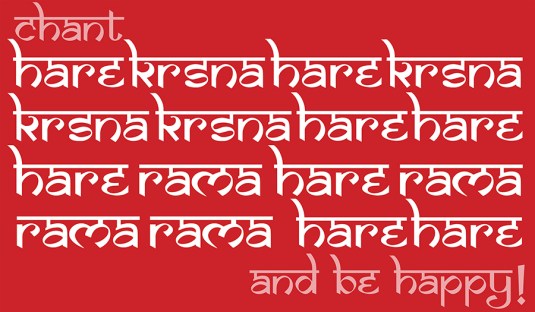
When, oh when, will that day be mine?
When my offenses ceasing,
taste for the name increasing,
when in my heart will your mercy shine?
When, oh when will that day be mine?
Lower than a blade of grass, more tolerant than a tree.
When will my mind attain this quality?
Respectful to all, not expecting their honour, then shall I taste the name’s nectar sublime.
When oh when will that day be mine?
Kabe Ha’be Bolo (Invocation of the Holy Name)
by Srila Bhaktivinoda Thakura
For complete lyrics and translation More
27 May 2012
by The Hare Krishna Movement
in Krishna Consciousness, KRSNA The Supreme Personality of Godhead
Tags: 1970 Edition, A.C. Bhaktivedanta Swami Prabhupada, ahaituka, apratihata, gopis, Krishna, Krsna Book, Krsna The Supreme Personality of Godhead, Lord Caitanya, Lord Sri Krishna, Radharani

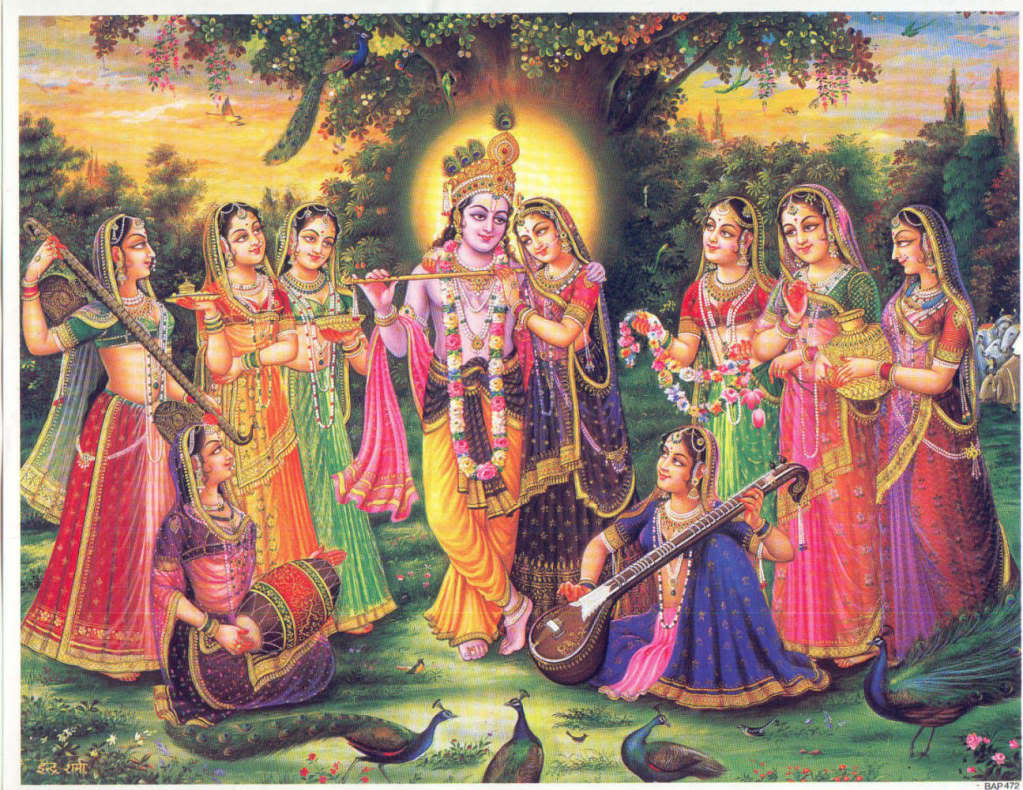
…The exemplary character of devotional service manifested by the devotees of Vṛndāvana is the purest type of devotion. It is enjoined in authoritative śāstra that devotional service must be ahaituka and apratihata. This means that devotional service to Kṛṣṇa cannot be checked by political or religious convention. The stage of devotional service is always transcendental. The gopīs particularly showed pure devotional service towards Kṛṣṇa, so much so that Kṛṣṇa Himself remained indebted to them. Lord Caitanya thus said that the devotional service manifested by the gopīs in Vṛndāvana excelled all other methods of approaching the Supreme Personality of Godhead.
Kṛṣṇa The Supreme Personality of Godhead 1970 Edition
By His Divine Grace A.C. Bhaktivedanta Swami Prabhupada
Vol.1, Chapter 31
Songs by the Gopīs
One gopī said, “My dear Kṛṣṇa, ever since You took Your birth in this land of Vrajabhūmi, everything appears to be glorious. The land of Vṛndāvana has become glorious, and it is as if the goddess of fortune is personally always existing here. But it is only we who are very unhappy, because we are searching for You, but cannot see You with our greatest effort. Our life is completely dependent upon You; therefore we request that You again come to us.”
More
17 May 2012
by The Hare Krishna Movement
in KRSNA The Supreme Personality of Godhead
Tags: A.C. Bhaktivedanta Swami Prabhupada, gopis, Krishna, Krishna's Flute, Krsna The Supreme Personality of Godhead, samadhi, seeing Krsna, Transcendental meditation, Vrndavan forest
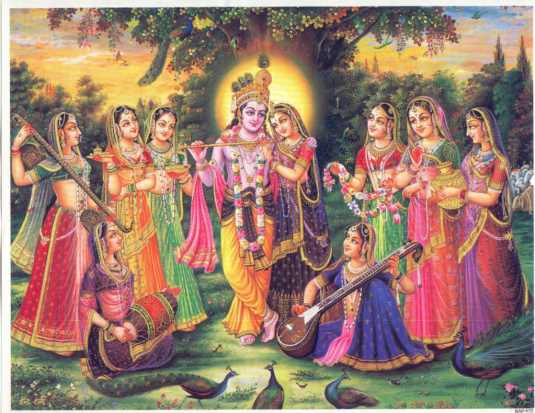
Click on image to enlarge
…Kṛṣṇa was very expert in playing the flute, and the gopīs were captivated by the sound vibration, which was not only attractive to them, but to all living creatures who heard it. One of the gopīs told her friends, ”The highest perfection of the eyes is to see Kṛṣṇa and Balarāma entering the forest and playing Their flutes and tending the cows with Their friends.“
Persons who are constantly engaged in the transcendental meditation of seeing Kṛṣṇa, internally and externally, by thinking of Him playing the flute and entering the Vṛndāvana forest, have really attained the perfection of samādhi.
Kṛṣṇa, the Supreme Personality of Godhead
By His Divine Grace A.C. Bhaktivedanta Swami Prabhupada
Chapter 21
The Gopīs Attracted by the Flute
Kṛṣṇa was very pleased with the atmosphere of the forest where flowers bloomed and bees and drones hummed very jubilantly. While the birds, trees and branches were all looking very happy, Kṛṣṇa, tending the cows, accompanied by Śrī Balarāma and the cowherd boys, began to vibrate His transcendental flute. After hearing the vibration of the flute of Kṛṣṇa, the gopīs in Vṛndāvana remembered Him and began to talk amongst themselves about how nicely Kṛṣṇa was playing His flute. When the gopīs were describing the sweet vibration of Kṛṣṇa’s flute, they also remembered their pastimes with Him; thus their minds became disturbed, and they were unable to describe completely the beautiful vibrations. While discussing the transcendental vibration, they remembered also how Kṛṣṇa dressed, decorated with a peacock feather on His head, just like a dancing actor, and with blue flowers pushed over His ear. His garment glowed yellow-gold, and He was garlanded with a vaijayantī necklace. Dressed in such an attractive way, Kṛṣṇa filled up the holes of His flute with the nectar emanating from His lips. So they remembered Him, entering the forest of Vṛndāvana, which is always glorified by the footprints of Kṛṣṇa and His companions.
More
05 May 2012
by The Hare Krishna Movement
in Srimad Bhagavatam
Tags: A.C. Bhaktivedanta Swami, Absolute Truth, Bhaktivedanta purports, Krishna, Srila Prabhupada, Srimad Bhagavatam, The Supreme Personality of Godhead

…Forgetting Kṛṣṇa, we have created so many objects of questions and answers, but none of them are able to give us complete satisfaction. All things—but Kṛṣṇa—give temporary satisfaction only, so if we are to have complete satisfaction we must take to the questions and answers about Kṛṣṇa. We cannot live for a moment without being questioned or without giving answers. Because the Śrīmad-Bhāgavatam deals with questions and answers that are related to Kṛṣṇa, we can derive the highest satisfaction only by reading and hearing this transcendental literature.
Srimad Bhagavatam
By His Divine Grace A.C. Bhaktivedanta
Canto 1, Chapter 2, Text 5
munayaḥ sādhu pṛṣṭo ’haṁ
bhavadbhir loka-maṅgalam
yat kṛtaḥ kṛṣṇa-sampraśno
yenātmā suprasīdati
munayaḥ—O sages; sādhu—this is relevant; pṛṣṭaḥ—questioned; aham—myself; bhavadbhiḥ—by all of you; loka—the world; maṅgalam—welfare; yat—because; kṛtaḥ—made; kṛṣṇa—the Personality of Godhead; sampraśnaḥ—relevant question; yena—by which; ātmā—self; suprasīdati—completely pleased.
TRANSLATION
O sages, I have been justly questioned by you. Your questions are worthy because they relate to Lord Kṛṣṇa and so are of relevance to the world’s welfare. Only questions of this sort are capable of completely satisfying the self.
PURPORT
Since it has been stated hereinbefore that in the Bhāgavatam the Absolute Truth is to be known, the questions of the sages of Naimiṣāraṇya are proper and just, because they pertain to Kṛṣṇa, who is the Supreme Personality of Godhead, the Absolute Truth. In Bhagavad-gītā (15.15) the Personality of Godhead says that in all the Vedas there is nothing but the urge for searching after Him, Lord Kṛṣṇa. Thus the questions that pertain to Kṛṣṇa are the sum and substance of all the Vedic inquiries.
The whole world is full of questions and answers. The birds, beasts and men are all busy in the matter of perpetual questions and answers. In the morning the birds in the nest become busy with questions and answers, and in the evening also the same birds come back and again become busy with questions and answers. The human being, unless he is fast asleep at night, is busy with questions and answers. The businessmen in the market are busy with questions and answers, and so also the lawyers in the court and the students in the schools and colleges. The legislators in the parliament are also busy with questions and answers, and the politicians and the press representatives are all busy with questions and answers. Although they go on making such questions and answers for their whole lives, they are not at all satisfied. Satisfaction of the soul can only be obtained by questions and answers on the subject of Kṛṣṇa.
More
02 May 2012
by The Hare Krishna Movement
in Journey of Self-Discovery, Lectures, Spiritual World
Tags: A.C. Bhaktivedanta Swami Prabhupada, journey of self-discovery, journey through life, Krishna, material world, Radha Krishna, self realization, Spiritual world

“Everything in the spiritual world is substantial and original. This material world is only an imitation…. It is just like a cinematographic picture, in which we see only the shadow of the real thing.” In this lecture, delivered in October 1966 in New York City, Śrīla Prabhupāda gives an amazing glimpse into the nature of the spiritual world and some positive instructions on how to arrive there at the end of life’s perilous journey.
The Journey of Self-Discovery
By His Divine Grace A.C. Bhaktivedanta Swami Prabhupada
paras tasmāt tu bhāvo ’nyo
’vyakto ’vyaktāt sanātanaḥ
yaḥ sa sarveṣu bhūteṣu
naśyatsu na vinaśyati
“Yet there is another unmanifest nature, which is eternal and is transcendental to this manifested and unmanifested matter. It is supreme and is never annihilated. When all in this world is annihilated, that part remains as it is.” [Bhagavad-gītā 8.20]
We cannot calculate the length and breadth of even this universe, yet there are millions and millions of universes like this one within the material sky. And above this material sky there is another sky, which is called the spiritual sky. In that sky all the planets are eternal, and life is eternal, also. We cannot know these things by our material calculations, so we must take this information from the Bhagavad-gītā.
More
01 May 2012
by The Hare Krishna Movement
in Spiritual World, Srimad Bhagavatam
Tags: A.C. Bhaktivedanta Swami Prabhupada, bhagavate, Brahma, Devaki, Krishna, Krsna, om namo bhagavate vasudevaya, Personality of Godhead, primeval Lord, SB 1.1.1, Sri Krsna, Srimad Bhagavatam, Vasudeva, Vyasadeva

Śrīmad-Bhāgavatam:
by His Divine Grace A. C. Bhaktivedanta Swami Prabhupāda
Canto 1: “Creation”, Chapter 1, Text 1
Questions by the Sages
oṁ namo bhagavate vāsudevāya
janmādy asya yato ’nvayād itarataś cārtheṣv abhijñaḥ svarāṭ
tene brahma hṛdā ya ādi-kavaye muhyanti yat sūrayaḥ
tejo-vāri-mṛdāṁ yathā vinimayo yatra tri-sargo ’mṛṣā
dhāmnā svena sadā nirasta-kuhakaṁ satyaṁ paraṁ dhīmahi
om—O my Lord; namaḥ—offering my obeisances; bhagavate—unto the Personality of Godhead; vāsudevāya—unto Vāsudeva (the son of Vasudeva), or Lord Śrī Kṛṣṇa, the primeval Lord; janma-ādi—creation, sustenance and destruction; asya—of the manifested universes; yataḥ—from whom; anvayāt—directly; itarataḥ—indirectly; ca—and; artheṣu—purposes; abhijñaḥ—fully cognizant; sva-rāṭ—fully independent; tene—imparted; brahma—the Vedic knowledge; hṛdā—consciousness of the heart; yaḥ—one who; ādi-kavaye—unto the original created being; muhyanti—are illusioned; yat—about whom; sūrayaḥ—great sages and demigods; tejaḥ—fire; vāri—water; mṛdām—earth; yathā—as much as; vinimayaḥ—action and reaction; yatra—whereupon; tri-sargaḥ—three modes of creation, creative faculties; amṛṣā—almost factual; dhāmnā—along with all transcendental paraphernalia; svena—self-sufficiently; sadā—always; nirasta—negation by absence; kuhakam—illusion; satyam—truth; param—absolute; dhīmahi—I do meditate upon.
TRANSLATION
O my Lord, Śrī Kṛṣṇa, son of Vasudeva, O all-pervading Personality of Godhead, I offer my respectful obeisances unto You. I meditate upon Lord Śrī Kṛṣṇa because He is the Absolute Truth and the primeval cause of all causes of the creation, sustenance and destruction of the manifested universes. He is directly and indirectly conscious of all manifestations, and He is independent because there is no other cause beyond Him. It is He only who first imparted the Vedic knowledge unto the heart of Brahmājī, the original living being. By Him even the great sages and demigods are placed into illusion, as one is bewildered by the illusory representations of water seen in fire, or land seen on water. Only because of Him do the material universes, temporarily manifested by the reactions of the three modes of nature, appear factual, although they are unreal. I therefore meditate upon Him, Lord Śrī Kṛṣṇa, who is eternally existent in the transcendental abode, which is forever free from the illusory representations of the material world. I meditate upon Him, for He is the Absolute Truth.
PURPORT
Obeisances unto the Personality of Godhead, Vāsudeva, directly indicate Lord Śrī Kṛṣṇa, who is the divine son of Vasudeva and Devakī. This fact will be more explicitly explained in the text of this work. Śrī Vyāsadeva asserts herein that Śrī Kṛṣṇa is the original Personality of Godhead, and all others are His direct or indirect plenary portions or portions of the portion. Śrīla Jīva Gosvāmī has even more explicitly explained the subject matter in his Kṛṣṇa-sandarbha. And Brahmā, the original living being, has explained the subject of Śrī Kṛṣṇa substantially in his treatise named Brahma-saṁhitā. In the Sāma-veda Upaniṣad, it is also stated that Lord Śrī Kṛṣṇa is the divine son of Devakī. Therefore, in this prayer, the first proposition holds that Lord Śrī Kṛṣṇa is the primeval Lord, and if any transcendental nomenclature is to be understood as belonging to the Absolute Personality of Godhead, it must be the name indicated by the word Kṛṣṇa, which means the all-attractive. In Bhagavad-gītā, in many places, the Lord asserts Himself to be the original Personality of Godhead, and this is confirmed by Arjuna, and also by great sages like Nārada, Vyāsa, and many others. In the Padma Purāṇa, it is also stated that out of the innumerable names of the Lord, the name of Kṛṣṇa is the principal one. Vāsudeva indicates the plenary portion of the Personality of Godhead, and all the different forms of the Lord, being identical with Vāsudeva, are indicated in this text. The name Vāsudeva particularly indicates the divine son of Vasudeva and Devakī. Śrī Kṛṣṇa is always meditated upon by the paramahaṁsas, who are the perfected ones among those in the renounced order of life.
More
26 Apr 2012
by The Hare Krishna Movement
in Bhagavad-gita
Tags: A.C. Bhaktivedanta Swami Prabhupada, Arjuna, Bg. 1, bhagavad-gita, Dhrtarastra, disciplic succession, Gita, gita-mahatmya, Glorification of the Gita, Krishna, Lord Sri Krsna, Sanjaya, scriptures, theistic science, Vedic wisdom

Dhrtarastra inquires from Sanjaya
We are posting the First Chapter of the Original Bhagavad-gita As It Is 1972 Macmillian Edition complete with the corresponding pictures.
Bhagavad-gita As It Is 1972 Edition
By His Divine Grace A.C. Bhaktivedanta Swami Prabhupada
Chapter 1: Observing the Armies on the Battlefield of Kuruksetra
TEXT 1
dhṛtarāṣṭra uvāca
dharma-kṣetre kuru-kṣetre
samavetā yuyutsavaḥ
māmakāḥ pāṇḍavāś caiva
kim akurvata sañjaya
dhṛtarāṣṭraḥ—King Dhṛtarāṣṭra; uvāca—said; dharma-kṣetre—in the place of pilgrimage; kuru-kṣetre—in the place named Kurukṣetra; samavetāḥ—assembled; yuyatsavaḥ—desiring to fight; māmakāḥ—my party (sons); pāṇḍavāḥ—the sons of Pāṇḍu; ca—and; eva-certainly; kim—what; akurvata—did they do; sañjaya—O Sañjaya.
TRANSLATION
Dhṛtarāṣṭra said: O Sañjaya, after assembling in the place of pilgrimage at Kurukṣetra, what did my sons and the sons of Pāṇḍu do, being desirous to fight?
PURPORT
Bhagavad-gītā is the widely read theistic science summarized in the Gītā-māhātmya (Glorification of the Gītā). There it says that one should read Bhagavad-gītā very scrutinizingly with the help of a person who is a devotee of Śrī Kṛṣṇa and try to understand it without personally motivated interpretations. The example of clear understanding is there in the Bhagavad-gītā itself, in the way the teaching is understood by Arjuna, who heard the Gītā directly from the Lord. If someone is fortunate enough to understand Bhagavad-gītā in that line of disciplic succession, without motivated interpretation, then he surpasses all studies of Vedic wisdom, and all scriptures of the world. One will find in the Bhagavad-gītā all that is contained in other scriptures, but the reader will also find things which are not to be found elsewhere. That is the specific standard of the Gītā. It is the perfect theistic science because it is directly spoken by the Supreme Personality of Godhead, Lord Śrī Kṛṣṇa.
The topics discussed by Dhṛtarāṣṭra and Sañjaya, as described in the Mahābhārata, form the basic principle for this great philosophy. It is understood that this philosophy evolved on the Battlefield of Kurukṣetra, which is a sacred place of pilgrimage from the immemorial time of the Vedic age. It was spoken by the Lord when He was present personally on this planet for the guidance of mankind.
More
23 Apr 2012
by The Hare Krishna Movement
in A.C. Bhaktivedanta Swami Prabhupada, Bhagavad-gita, Bhakti Yoga, Krishna Consciousness, Yoga
Tags: astanga-yoga, bhakti yoga, Govinda, jnana-yoga, karma yoga, Krishna, Srila Prabhupada, Syamasundara, Vasudeva, yoga, yogi

If one is fortunate enough to come to the point of bhakti-yoga, it is to be understood that he has surpassed all the other yogas. Therefore, to become Kṛṣṇa conscious is the highest stage of yoga, just as, when we speak of Himalayan, we refer to the world’s highest mountains, of which the highest peak, Mount Everest, is considered to be the culmination.
The culmination of all kinds of yoga practices lies in bhakti-yoga. All other yogas are but means to come to the point of bhakti in bhakti-yoga. Yoga actually means bhakti-yoga; all other yogas are progressions toward the destination of bhakti-yoga. From the beginning of karma-yoga to the end of bhakti-yoga is a long way to self-realization. Karma-yoga, without fruitive results, is the beginning of this path. When karma-yoga increases in knowledge and renunciation, the stage is called jñāna-yoga. When jñāna-yoga increases in meditation on the Supersoul by different physical processes, and the mind is on Him, it is called aṣṭāṅga-yoga. And, when one surpasses the aṣṭāṅga-yoga and comes to the point of the Supreme Personality of Godhead Kṛṣṇa, it is called bhakti-yoga, the culmination. Factually, bhakti-yoga is the ultimate goal, but to analyze bhakti-yoga minutely one has to understand these other yogas. The yogī who is progressive is therefore on the true path of eternal good fortune.
It is by great fortune that one comes to Kṛṣṇa consciousness on the path of bhakti-yoga to become well situated according to the Vedic direction. The ideal yogī concentrates his attention on Kṛṣṇa, who is called Śyāmasundara, who is as beautifully colored as a cloud, whose lotus-like face is as effulgent as the sun, whose dress is brilliant with jewels and whose body is flower garlanded. Illuminating all sides is His gorgeous luster, which is called the brahmajyoti. He incarnates in different forms such as Rāma, Nṛsiṁha, Varāha and Kṛṣṇa, the Supreme Personality of Godhead, and He descends like a human being, as the son of Mother Yaśodā, and He is known as Kṛṣṇa, Govinda and Vāsudeva. He is the perfect child, husband, friend and master, and He is full with all opulences and transcendental qualities. If one remains fully conscious of these features of the Lord, he is called the highest yogī.
More
12 Apr 2012
by The Hare Krishna Movement
in Narada-bhakti-sutra
Tags: A.C. Bhaktivedanta Swami Prabhupada, devotional service., gopis, Krishna, Narada Muni
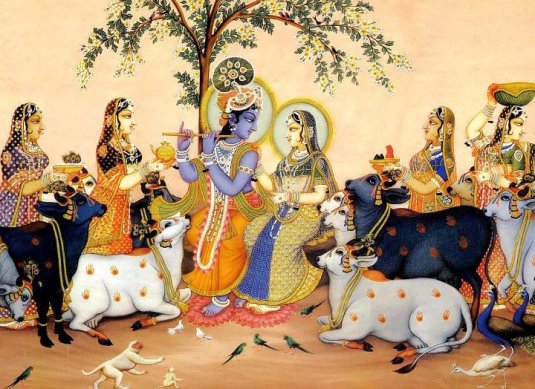
click to enlarge picture
“My dear gopīs, I am not able to repay My debt for your spotless service, even within a lifetime of Brahmā. Your connection with Me is beyond reproach. You have worshiped Me, cutting off all domestic ties, which are difficult to break. Therefore please let your own glorious deeds be your compensation.”
Narada-bhakti-sutra
By His Divine Grace A.C. Bhaktivedanta Swami Prabhupada
Text 7
sā na kāmayamānā nirodha-rūpatvāt
sā—that devotional service in pure love of God; na—not; kāmayamānā—like ordinary lust; nirodha—renunciation; rūpatvāt—because of having as its form.
There is no question of lust in the execution of pure devotional service, because in it all material activities are renounced.
PURPORT
In pure devotional service there is no question of sense gratification. Some people mistake the loving affairs between Kṛṣṇa and the gopīs (cowherd girls) for activities of ordinary sense gratification, but these affairs are not lustful because there is no material contamination. As Rūpa Gosvāmī states in his Bhakti-rasāmṛta-sindhu (1.2.285),
premaiva gopa-rāmāṇāṁ kāma ity agamat prathām
ity uddhavādayo ’py etaṁ vāñchanti bhagavat-priyāḥ
“Although the dealings of the gopīs with Kṛṣṇa are wrongly celebrated by many as lust, great sages and saintly persons like Uddhava hanker for such loving affairs with Kṛṣṇa.” Śrīla Kṛṣṇadāsa Kavirāja, the author of Caitanya-caritāmṛta, has therefore said,
kāma, prema,—doṅhākāra vibhinna lakṣaṇa
lauha āra hema yaiche svarūpe vilakṣaṇa
“As there is a difference between iron and gold, so there is a difference between material lust and Kṛṣṇa’s loving affairs with the gopīs” (Cc. Ādi 4.164). Although such loving affairs may sometimes resemble material lust, the difference is as follows:
ātmendriya-prīti-vāñchā—tāre bali ‘kāma’
kṛṣṇendriya-prīti-icchā dhare ‘prema’ nāma
“The desire to satisfy one’s own senses is called lust, while the desire to satisfy the senses of Kṛṣṇa is called prema, love of God” (Cc. Ādi 4.165).
More
10 Apr 2012
by The Hare Krishna Movement
in Guru & Disciple, Remembering Srila Prabhupada, The Hare Krishna Movement
Tags: conditioned soul, devotees, disciple, Iskcon, Krishna, Prabhupada's ISKCON, Prahlada-Nrsibha das, spiritual master, Srila Prabhupada, Supreme Personality of Godhead

click on image to enlarge
Prabhupada’s ISKCON is Beautiful and Perfect!
By Prahlada-Nrsimha das
Apr 09, 2012 — USA (SUN)
I often write to simply sort out my own thoughts and get them off my chest, so to speak. Recently I came across the following letter I wrote a long time ago. Although it is just my own thoughts, maybe others will be inspired by it, so I am presenting it here:
“As it is said by Srila Visvanatha Cakravarti Thakura, saksad-dharitvena samasta-sastraih: a spiritual master, or the parampara-acarya, should be respected exactly like the Supreme Personality of Godhead.” (SB 4.22.4)
Here we see the difference between a conditioned soul (or even an advanced devotee) and Srila Prabhupada. We must respect all devotees even though they are conditioned souls, to one degree or another, but it says here that “the spiritual master, or the parampara-acarya should be respected exactly like the Supreme Personality of Godhead”. It is not proper to put a conditioned soul in this position and thus artificially give him (or her) the respect or worship equal to the Supreme Personality of Godhead. This will simply cause a disturbance.
Artificial or blind following can and will create havoc in the world.
More
10 Apr 2012
by The Hare Krishna Movement
in Bhagavad-gita, Devotional Service, Free Downloads, Raja-Vidya
Tags: Arjuna, Bg. 9.2, bhagavad-gita, books by Srila Prabhupada, chanting Hare Krishna, confidential knowledge, devotional service, Krishna, Raja-Vidya

click on link at bottom for a free download on entire book to read online or save in pdf format
…It is said that the execution of devotional service is so perfect that one can perceive the results directly. This direct result is actually perceived, and we have practical experience that any person who is chanting the holy names of Kṛṣṇa (Hare Kṛṣṇa, Hare Kṛṣṇa, Kṛṣṇa Kṛṣṇa, Hare Hare/ Hare Rāma, Hare Rāma, Rāma Rāma, Hare Hare)in course of time feels some transcendental pleasure and very quickly becomes purified of all material contamination. This is actually seen. Furthermore, if one engages not only in hearing but in trying to broadcast the message of devotional activities as well, or if he engages himself in helping the missionary activities of Kṛṣṇa consciousness, he gradually feels spiritual progress. This advancement in spiritual life does not depend on any kind of previous education or qualification. The method itself is so pure that by simply engaging in it one becomes pure.
Bhagavada-gita As It Is Macmillan Edition 1975
By His Divine Grace A.C. Bhaktivedanta Swami Prabhupada
Chapter 9, Text 2
rāja-vidyā rāja-guhyaṁ
pavitram idam uttamam
pratyakṣāvagamaṁ dharmyaṁ
su-sukhaṁ kartum avyayam
rāja-vidyā—the king of education; rāja-guhyam—the king of confidential knowledge; pavitram—the purest; idam—this; uttamam—transcendental; pratyakṣa—directly experienced; avagamam—understood; dharmyam—the principle of religion; susukham—very happy; kartum—to execute; avyayam—everlasting.
This knowledge is the king of education, the most secret of all secrets. It is the purest knowledge, and because it gives direct perception of the self by realization, it is the perfection of religion. It is everlasting, and it is joyfully performed.
Purport
This chapter of Bhagavad-gītā is called the king of education because it is the essence of all doctrines and philosophies explained before. There are seven principal philosophers in India: Gautama, Kaṇāda, Kapila, Yājñavalkya, Śāṇḍilya, Vaiśvānara, and, finally, Vyāsadeva, the author of the Vedānta-sūtra. So there is no dearth of knowledge in the field of philosophy or transcendental knowledge. Now the Lord says that this Ninth Chapter is the king of all such knowledge, the essence of all knowledge that can be derived from the study of the Vedas and different kinds of philosophy. It is the most confidential because confidential or transcendental knowledge involves understanding the difference between the soul and the body. And the king of all confidential knowledge culminates in devotional service.
More
25 Mar 2012
by The Hare Krishna Movement
in Bhagavad-gita, Krishna Consciousness, Raja-Vidya, Spiritual Life
Tags: A.C. Bhaktivedanta Swami Prabhupada, Action in Knowledge of Krsna, bound by karma, Brahma-samhita, fruitive reaction, karma, Krishna, material body, nature's arrangment, Raja-Vidya, the king of knowledge

…We must understand the meaning of relationships with Kṛṣṇa. In this material world we have many relationships as father, mother, wife or husband. Whatever relationship we find here is but a perverted reflection of the relationship we have with the Supreme Lord. Whatever we find in this material world is born of the Absolute Truth, but here it is pervertedly reflected in time. Whatever relationship we have with Kṛṣṇa goes on. If we have a relationship in friendship, that friendship is eternal and continues from life to life. In the material world, a friendship exists for a few years and then breaks; therefore it is called perverted, temporal, or unreal. If we make our friendship with Kṛṣṇa, it will never break. If we make our master Kṛṣṇa, we will never be cheated. If we love Kṛṣṇa as our son, He will never die. If we love Kṛṣṇa as our lover, He will be the best of all, and there will be no separation. Because Kṛṣṇa is the Supreme Lord, He is unlimited and has an unlimited number of devotees. Some are trying to love Him as lover or husband, and therefore Kṛṣṇa accepts this role. In whatever way we approach Kṛṣṇa, He will accept us, as He states in Bhagavad-gītā.
ye yathā māṁ prapadyante
tāṁs tathaiva bhajāmy aham
mama vartmānuvartante
manuṣyāḥ pārtha sarvaśaḥ
“All of them—as they surrender unto Me—I reward accordingly. Everyone follows My path in all respects, O son of Pṛthā.” (Bg. 4.11)
Raja-Vidya: The King of Knowledge
By His Divine Grace A.C. Bhaktivedanta Swami Prabhupada
Chapter 8
Action in Knowledge of Kṛṣṇa
na māṁ karmāṇi limpanti
na me karma-phale spṛhā
iti māṁ yo ’bhijānāti
karmabhir na sa badhyate
“There is no work that affects Me; nor do I aspire for the fruits of action. One who understands this truth about Me also does not become entangled in the fruitive reactions of work.”(Bg. 4.14)
The whole world is bound by karma. We all know of the existence of microbes or germs which exist by the million within the measurement of one millimeter. In the Brahma-saṁhitā it is stated that beginning with the microbe, which is called indragopa, up to Indra, the king of the heavenly planets, all are bound by karma, the reaction of work. We all have to suffer or enjoy the reactions of our work, be they good or bad. As long as we have to suffer or enjoy these reactions, we are bound to these material bodies.
By nature’s arrangement the material body is given to the living entity for his suffering or enjoying. Different types of bodies are acquired for different purposes. The body of a tiger is made for killing and eating raw meat. Similarly, the hogs are made in such a way that they can eat stool. And as human beings our teeth are made for eating vegetables and fruits. All of these bodies are made according to the work done in past lives by the living entity. Our next bodies are being prepared according to the work which we are now doing, but in the previously quoted verse Śrī Kṛṣṇa indicates that one who knows the transcendental nature of His activities becomes free from the reactions of activities. Our activities should be such that we will not again become entangled in this material world. This can be made possible if we become Kṛṣṇa conscious by studying Kṛṣṇa, learning of the transcendental nature of His activities, and understanding how He behaves in this material world and in the spiritual world.
More
11 Mar 2012
by The Hare Krishna Movement
in Bhagavad-gita, Raja-Vidya, Spiritual Life
Tags: A.C. Bhaktivedanta Swami Prabhupada, Arjuna, bhagavad-gita, faith, guru, Krishna, material world, Raja-Vidya, spiritual knowledge, spiritual master, Spiritual world, surrender, the king of knowledge

As spirit souls we are part and parcel of the Supreme Spirit, but due to our desire to enjoy this material world, we have been put into material nature. Yet in whatever species of life we may be, Kṛṣṇa is the Father. Thus Bhagavad-gītā is not meant for any particular party or nation but for everyone all over the world… In this way people may realize their true spiritual nature and their relationship to the supreme spiritual whole.
“And when you have thus learned the truth, you will know that all living beings are but parts of Me—and that they are in Me, and are Mine. Even if you are considered to be the most sinful of all sinners, when you are situated in the boat of transcendental knowledge, you will be able to cross over the ocean of miseries. As a blazing fire burns firewood to ashes, O Arjuna, so does the fire of knowledge burn to ashes all the reactions to material activities.” (Bg. 4.35–37)
Raja-vidya: The King of Knowledge
By His Divine Grace A.C. Bhaktivedanta Swami Prabhupada
Chapter 7
Knowledge as Faith in Guru and surrender to Kṛṣṇa
In the Fourth Chapter of Bhagavad-gītā Śrī Kṛṣṇa concludes that of all sacrifices, the best is the acquisition of knowledge.
śreyān dravya-mayād yajñāj
jñāna-yajñaḥ parantapa
sarvaṁ karmākhilaṁ pārtha
jñāne parisamāpyate
“O chastiser of the enemy, the sacrifice of knowledge is greater than the sacrifice of material possessions. O son of Pṛthā, after all, the sacrifice of work culminates in transcendental knowledge.” (Bg. 4.33)
Knowledge is the best sacrifice because this conditional life is due to ignorance. The purpose of sacrifice, penance, yoga and philosophical discussion is to acquire knowledge. There are three stages of transcendental knowledge by which one realizes the impersonal aspect of God (Brahman realization), the localized aspect of God within the heart and within every atom (Paramātmā or Supersoul realization) and the realization of the Supreme Personality of Godhead (Bhagavān realization). But the very first step in acquiring knowledge is coming to understand that “I am not this body. I am spirit soul, and my aim of life is to get out of this material entanglement.” The point is that whatever sacrifice we make is intended to enable us to come to the point of real knowledge. The highest perfection of knowledge is given in Bhagavad-gītā as surrender to Kṛṣṇa (bahūnāṁ janmanām ante jñānavān māṁ prapadyate) (Bg. 7.19). The jñānavān, not the fool, surrenders unto Kṛṣṇa, and that is the highest stage of knowledge. Similarly, at the end of Bhagavad-gītā Śrī Kṛṣṇa advises Arjuna:
More
09 Mar 2012
by The Hare Krishna Movement
in Book Changes, Caitanya Mahaprabhu, Guru & Disciple, Lectures
Tags: A.C. Bhaktivedanta Swami Prabhupada, Caitanya Mahaprabhu, everyone of you become guru, gopis, incarnation, Kali, Krishna, Lecture by Srila Prabhupada, Lord Caitanya, spiritual knowledge, Srila Prabhupada, Srila Rupa Goswami

…If we simply keep Sri Caitanya Mahaprabhu within our heart, then it will be very easy to understand what is Krsna, because if you understand Krsna, then your life is successful. Our Krsna consciousness movement means just try to understand Krsna; then your life is successful. Krsna says, “Anyone who understands Me, why I come here, what is My activities,” [Bg. 4.9], “he becomes liberated. After giving up this body, he does not accept any material body. In his own spiritual body he goes back to home, back to Godhead.” This is our Krsna consciousness..
…The mission of Sri Caitanya Mahaprabhu is that you become, every one of you, you become a guru. How to become guru? You simply present what Krsna says as it is. Then every one of you will become a guru. Don’t adulterate — “I think,” “In my opinion.” These nonsense things should be given up. We should always be aware that we are insignificant creature. Our opinion and thinking has no value. This should be the first principle. Why should you give opinion on the words of Krsna? Are you more authoritative person than Krsna? This is foolishness, to try to become more than Krsna. There are so many rascals. They present that “Now we have advanced. We know more than Krsna.” So be saved from these rascals. Then you will understand Krsna, and through Caitanya Mahaprabhu you will understand what is the position of Krsna, what is your relationship with Krsna, what is the ultimate goal of life…
“Everyone Of You – Become Guru”
Lecture on Caitanya Caritamrta Adi 1.4
Given By His Divine Grace A.C. Bhaktivedanta Swami Prabhupada
Mayapur, March 28, 1975
Nitai: “May that Lord, who is known as the son of Srimati Sacidevi, be transcendentally situated in the innermost chambers of your heart. Resplendent with the radiance of molten gold, He has appeared in the age of Kali by His causeless mercy to bestow what no incarnation ever offered before: the most sublime and radiant spiritual knowledge of the mellow taste of His service.”
Prabhupada:
anarpita-carim cirat karunayavatirnah kalau
samarpayitum unnata ujjvala-rasam sva-bhakti-sriyam
harih purata-sundara-dyuti-kadamba-sandipitah
sada hrdaya-kandare sphuratu vah saci-nandana
[Cc. Adi 1.4]
This is the blessings of Srila Rupa Gosvami upon everyone.
sri-caitanya-mano-‘bhistam
sthapitam yena bhu-tale
svayam rupah kada mahyam
dadati sva-padantikam
[When will Srila Rupa Gosvami Prabhupada, who has established within this material world the mission to fulfill the desire of Lord Caitanya, give me shelter under his lotus feet?]
We should pray to Rupa Gosvami for his blessings so that we can understand what is the actual position of Sri Caitanya Mahaprabhu. Sri Caitanya Mahaprabhu is the most merciful incarnation to bestow upon us Krsna-prema. Srila Rupa Gosvami understood it, Srila Sarvabhauma Bhattacarya understood it, and we should take their viewpoint of view, what they have studied about Sri Caitanya Mahaprabhu. So Srila Rupa Gosvami says… In the beginning Sri Caitanya Mahaprabhu was appreciated by Srila Rupa Gosvami as maha-vadanyavatara. There are many incarnations of Krsna, kesava dhrta-mina-sarira jaya jagadisa hare, kesava dhrta-nrsimha-rupa jaya jagadisa…, many incarnations. But this incarnation, Sri Caitanya Mahaprabhu, is anarpita-carim cirat. The mercy of this incarnation is unlimited. It was never given before. That is Sri Caitanya Mahaprabhu’s mercy. He distributed the most confidential part of love of Godhead. Although we are living in this fallen age, Kali-yuga, but He is giving the topmost platform of loving Krsna. Anarpita-carim cirat. Therefore He is supposed to be the most munificent incarnation. Namo maha-vadanyaya krsna-prema-pradaya te [Cc. Madhya 19.53]. He is giving directly Krsna-prema.
More
Previous Older Entries Next Newer Entries









 The Hare Krishna Movement