How the Teachings of Lord Caitanya Came to the Western World (Part 3)

Lord Caitanya's Sankirtan Party

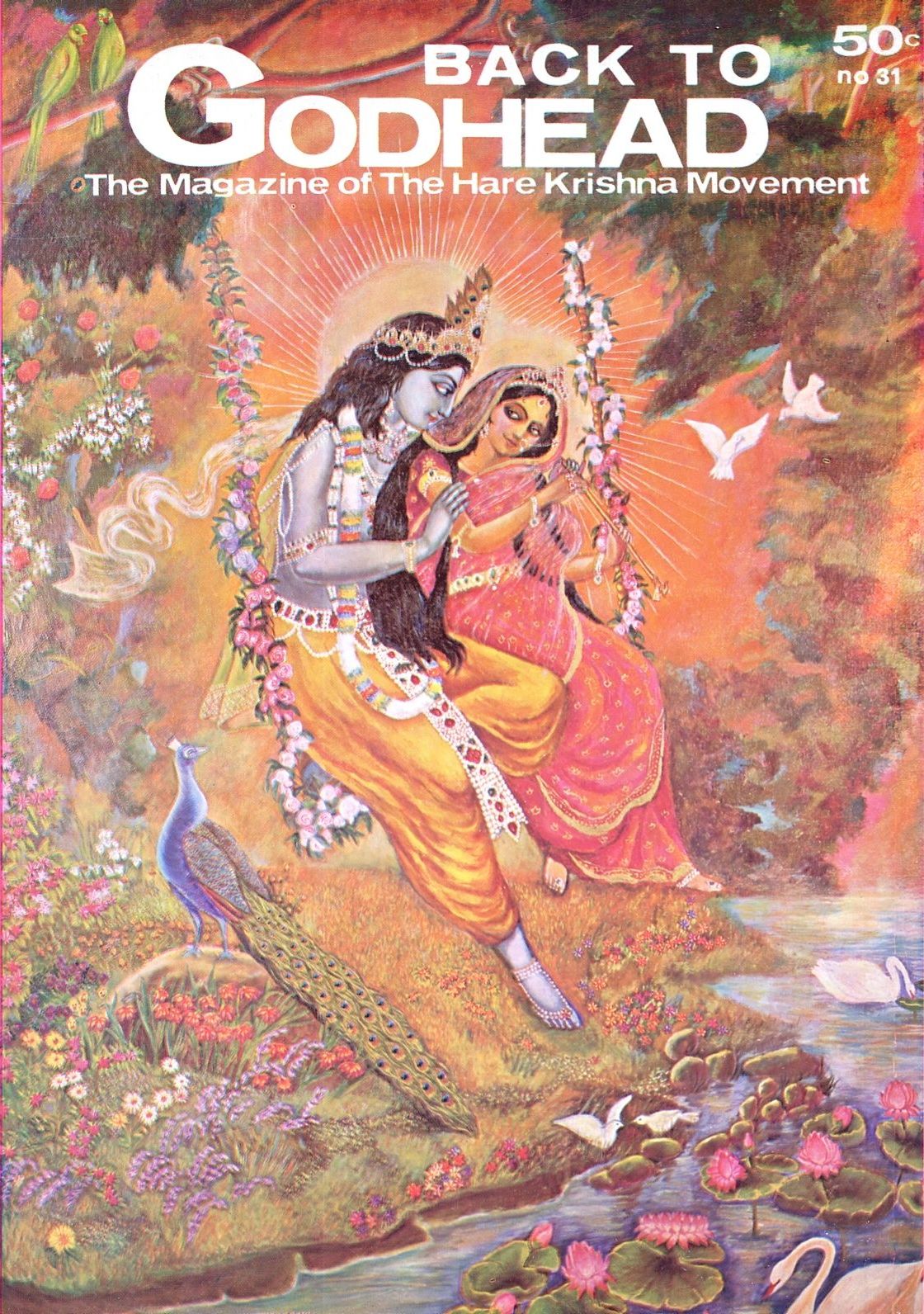
This is Part 3, or the conclusion, of the very informative article by Sriman Brahmananda Prabhu as it appeared in Back to Godhead Magazine in 1975, which gives not only some of the History of Lord Caitanya’s Mission, but on the preaching of Srila Bhaktivinoda Thakur, Srila Bhaktisiddhanta, A.C. Bhaktivedanta Swami Prabhupada, Gaudiya Vaisnavism, and the Hare Krishna Movement here in the West.

How the Teachings of Lord Caitanya Came to the Western World (Part 3)
Excerpted from Back to Godhead Magazine
Vol.10, No. 1, 1975
by His Holiness Brahmananda Swami

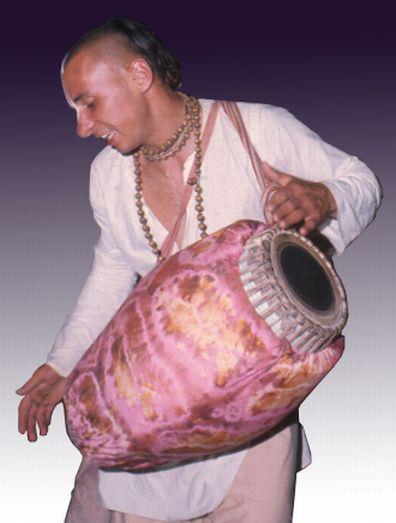
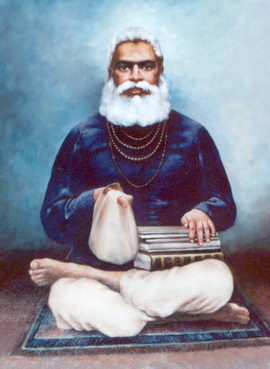
After the disappearance of Srila Bhaktivinoda Thakura, his son, Srila Bhaktisiddhanta Sarasvati Gosvami Maharaja, a great scholar and pure devotee, continued to expand the mission of Lord Caitanya. He wrote many books and established printing presses and sixty-four temples dedicated to preaching the message of Krsna consciousness.

The following is the third of three articles depicting the pioneering efforts of Srila Bhaktivinoda Thakura, Srila Bhaktisiddhanta Sarasvati Gosvami, and those who have followed them in spreading the benediction of Krsna consciousness throughout the world.)

More

How the Teachings of Lord Caitanya Came to the Western World (Part 2)

Lord Sri Caitanya Mahaprabhu

This is Part 2 of the very informative article by Sriman Brahmananda Prabhu as it appeared in Back to Godhead Magazine in 1974, which gives not only some of the History of Lord Caitanya’s Mission, but on the preaching of Srila Bhaktivinoda Thakur, Srila Bhaktisiddhanta, Gaudiya Vaisnavism, and the Hare Krishna Movement here in the West.

How the Teachings of Lord Caitanya Came to the Western World
Excerpted from Back to Godhead Magazine
Vol.1, No. 68, 1974
Part 2
by His Holiness Brahmananda Svami

[Lord Caitanya Mahaprabhu, who is Krsna Himself in the form of His own pure devotee, appeared 500 years ago in Bengal, India, to teach—by His own example—how one can become fully Krsna conscious. The teachings of Lord Caitanya were recorded and transmitted by many faithful disciples, but they were virtually unknown in the West until 1896, when Srila Bhaktivinoda Thakura, a great spiritual master in the disciplic line from Lord Caitanya, published a short book entitled Sri Caitanya Mahaprabhu—His Life and Precepts and sent copies to the Western world. The following is the second of three articles depicting the pioneering efforts of Srila Bhaktivinoda Thakura, and those who have followed him, in spreading the great benediction of Krsna consciousness to the West.]

More

How the Teachings of Lord Caitanya Came to the Western World

BTG_Year-1974_Volume-01_Number-63_Page_01

This is a very informative article which gives not only some of the History of Lord Caitanya’s Mission, but on the preaching of Srila Bhaktivinoda Thakur, Gaudiya Vaisnavism, and the Hare Krishna Movement here in the West.

How the Teachings of Lord Caitanya Came to the Western World
Excerpted from Back to Godhead Magazine
Vol.1, No. 66, 1974
Part 1
by His Holiness Brahmananda Swami

“He reasons ill who tells that Vaisnavas die When thou art living still in Sound! The Vaisnavas die to live and living try To spread a holy life around!”—verse by Srila Bhaktivinoda Thakura on the tomb of the great saint Thakura Haridasa at Puri, India

In Calcutta in 1896, the teachings of Lord Caitanya began their journey to the West. In Bengali-speaking Calcutta on August 20th of that year, Srila Bhaktivinoda Thakura published a small English treatise entitled Lord Caitanya—His Life and Precepts. Seventyone years later, in 1967, in Montreal, Canada, a graduate student came across a copy of this book while browsing through the rare-book collection of the McGill University library. The book was a wonderful find for him because he was a dedicated follower of Lord Caitanya’s, having been convinced of Lord Caitanya’s teachings by His Divine Grace A.C. Bhaktivedanta Swami Prabhupada, whom he had accepted as his spiritual master. Srila Prabhupada was born in Calcutta on September 1, 1896, only a few days after Lord Caitanya-His Life and Precepts was published. Thus by a transcendental arrangement this significant book and he who would fulfill the purpose of the book appeared together.

More

Narada Muni Bajay Vina

Narada Muni

Narada Muni Bajay Vina

This is one of my favorite Vaisnava Songs, written by Srila Bhaktivinoda Thakura, with a puroprt by His Divine Grace A.C. Bhaktivedanta Swami Prabhupada. We post it today in honnor of the 24 Hour Kirtan that will start this evening at the New Vrindavan Community.

…This is a song sung by Bhaktivinoda Thakura. The purport of this song is that the great soul Narada Muni is playing on his stringed instrument, called the vina, and vibrating Radhika-ramana, one of Krsna’s names. So, as soon as he plucks the strings and chants, all the devotees immediately respond to him, and it becomes a very beautiful vibration. Amiya-dhara, barise ghana. As the singing goes on with the stringed instrument, it appears that there is a shower of nectar, and all the devotees then dance in ecstasy to the fullest extent of their satisfaction. Then, as they dance, it appears that they become intoxicated by drinking the beverage called madhuri pura. And as one becomes almost mad by drinking, similarly, all the devotees became mad in ecstasy. And some of them are crying, and some of them are dancing, and some of them, although they cannot dance publicly, are dancing within their hearts. Then Lord Siva embraces Narada Muni and begins to dance and cry out in ecstasy, and when Lord Brahma sees Lord Siva dancing with Narada Muni, he joins in and says, “All of you kindly chant ‘Haribol! Haribol!'” Then gradually the king of heaven, Indra, also joins in with great satisfaction and begins to dance and to chant “Hari hari bol!”

In this way, by the influence of the transcendental vibration of the holy name of God, the whole universe becomes ecstatic, and Bhaktivinoda Thakura says, “When the whole universe becomes ecstatic in this way, my desires are satisfied, and I therefore pray unto the lotus feet of Rupa Gosvami that the chanting of harinama may go on nicely like this.” (from purport)

Narada Muni Bajay Vina
by Srila Bhaktivinoda Thakura

Full song with Bengali lyrics, translation and purport. More

Arunodaya Kirtana

Lord Gaurasundara

When the rising sun appeared in the East, the jewel of the twice-born, Lord Gaurasundara, awakened, and, taking His devotees with Him, He went all over the countryside towns and villages. The mṛdangas (khol) resounded “tāthaī, tāthaī,” and the jhājas [large metal karatālas that look like small cymbals] in that kīrtana played in time. Lord Gaurāńga’s golden form slightly trembled in ecstatic love of Godhead, and His footbells jingled. All the devotees chanted the names Mukunda, Mādhava, Yadava and Hari, their mouths being filled with the vibrations. They would announce to the still sleeping people, “You spend your nights uselessly sleeping and your days decorating your bodies! You have achieved such a rare human body, but you do not care for this gift. You remain not serving the darling of Yaśodā and slowly fall through your last moments to death. With every rising and setting of the sun, a day passes and is lost. Then, why do you remain idle and not serve the Lord of the heart? This temporary life is full of various miseries. Take shelter of the holy name as your only business. To penetrate the darkness of ignorance and bless everyone’s heart, the holy name has risen like the shining sun. Drink the pure nectar of the holy name. There is nothing but the name to be had in the fourteen worlds. It has filled the soul of Srī Bhaktivinoda Thākura.

Full Song with Bengali translation and word for word transliteration. More

Invocation of the Holy Name

Visnujana Swami

This song written by Srila Bhaktivinoda Thakura, and made famous in the West by the illustrious Visnujana Swami, has always been a favorite of mine, and the devotees of The Hare Krishna Movement.

Kabe Ha’be Bolo
(Invocation of the Holy Name)
By Srila Bhaktivinoda Thakura

When, oh when will that day be mine?
When my offenses ceasing, taste for the name increasing.
When in my heart will your mercy shine?
When, oh when, will that day be mine.

Lower than a blade of grass, more tolerant than a tree.
When will my mind attain this quality?
Respectful to all, not expecting their honor,
then shall I taste the name’s nectar sublime.

Great wealth or followers, feminine beauty,
I won’t care for them or the comforts of my body.
Birth after birth, give me, Oh Lord Caitanya,
causeless devotion to Your feet divine.

When will I utter Krsna, Krsna, Krsna,
with words choked up and shivering body?
When will I be trembling all over, lose bodily color,
tears pouring from my eyes.

When in Navadvipa along the Ganges bank,
shouting ‘Gaura-Nityananda’ as a surrendered soul,
dancing, chanting, running everywhere,
when will I become half mad of mind?

When will Lord Nityananda show mercy upon me,
when will I reject the world of Maya:
Bestow unto me the shade of Your lotus feet,
let the right to preach the name be mine.

I will beg, borrow, or steal the nectar of the name.
By the name’s effect I will feel paralyzed.
Oh! Enjoyed of the nectar of the name
when will I touch your lotus feet till the end of time?

When kindness to all beings will be appearing
with free heart forget myself comforting
Bhaktivinoda in all humility prays
“Now I will set out to preach Your order sublime.”

More

Radha Madhava

Jaya Radha Madhava

click on image to enlarge

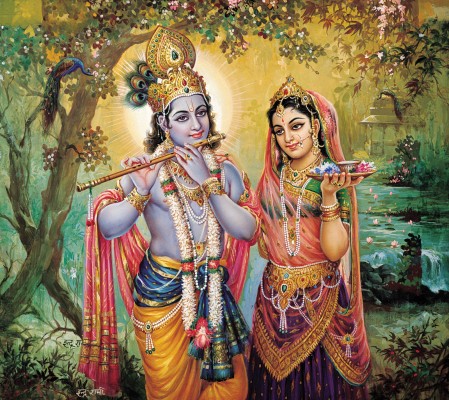
…Ladies and gentlemen, I thank you very much for your coming here to participate in this Kṛṣṇa consciousness movement. We are calling everyone to go back to home, back to Godhead. This is our movement, Kṛṣṇa consciousness movement. Just now we described the place where we intend to go. That is Goloka Vṛndāvana. There the Supreme Personality of Godhead is residing with His consort Rādhārāṇī. Rādhā-Mādhava. (from lecture by Srila Prabhupada, Laguna Beach 9-30-1972)

So this is the original nature of Krsna. He is Radha-Madhava. He is the lover of Srimati Radharani.

Full Lecture plus song More

Jaya Radha Madhava

Jaya Radha Madhava

Jaya Radha Madhava
by Srila Bhaktivinoda Thakura
with Purport by Srila Prabhupada

jaya rādhā-mādhava kuñja-bihārī
gopī-jana-vallabha giri-vara-dhārī
yaśodā-nandana braja-jana-rañjana
yāmuna-tīra-vana-cārī

Translation
from the 1974 Edition of “Songs of the Vaisnava Acaryas”

Sri Rādhā-Mādhava have their loving pastimes in the groves (kuñja) of Vrndavana. Gopī-jana-vallabha means “one who attracts and reciprocates loving pastimes with the gopis. Giri-vara-dhārī is Krishna’s name in the pastime of lifting Goverdhana Hill. Yaśodā-nandana is the son of Yasoda (“nanda” means son and is also the name of Krishna’s father, so Krishna is also Nanda-nandana). Braja-jana-rañjana means the attractive darling of the inhabitants of Vrndavana. He is always playing in the groves (vana) on the bank (tira) of the Yamuna River, therefore Krishna is also known as Yāmuna-tīra-vana-cārī.

Srila Prabhupada was very fond of this song and sang it just before his lectures. In Allahabad and Gorakhpur Srila Prabhupada fell into a trance after singing the first two lines, and after some time he came back into external consciousness and said, “Now just chant Hare Krsna.” Srila Prabhupada said that this song is “a picture of Vrndavana. Everything is there–Srimati Radharani, Vrndavana, Govardhana, Yasoda, and all the cowherd boys.”

Purport by His Divine Grace A.C. Bhaktivedanta Swami Prabhupada More

Appearance Day of Srila Bhaktivinoda Thakura

Today we honor the Appearance Day of one of our great spiritual fathers; Srila Bhaktivinoda Thakura, with this famous song.

Jiv Jago Jiv Jago
Official Name: Arunodaya Kirtana Song 2
By Srila Bhaktivinoda Thakura

jīv jāgo, jīv jāgo, gauracānda bole
kota nidrā jāo māyā-piśācīra kole

1) Lord Gaurānga is calling, “Wake up, sleeping souls! Wake up, sleeping souls! How long will you sleep in the lap of the witch called Māyā?

bhajibo boliyā ese saḿsāra-bhitare
bhuliyā rohile tumi avidyāra bhare

2) You have forgotten the way of devotional service and are lost in the world of birth and death.

tomāre loite āmi hoinu avatāra
āmi binā bandhu āra ke āche tomāra

3) I have descended just to save you; other than Myself you have no friend in this world.

enechi auṣadhi māyā nāśibāro lāgi’
hari-nāma mahā-mantra lao tumi māgi’

4) I have brought the medicine that will wipe out the disease of illusion from which you are suffering. Take this mahā-mantra-Hare Kṛṣṇa, Hare Kṛṣṇa, Kṛṣṇa Kṛṣṇa, Hare Hare/Hare Rāma, Hare Rāma Rāma Rāma, Hare Hare.”

bhakativinoda prabhu-caraṇe pariyā
sei hari-nāma-mantra loilo māgiyā

5) Śrīla Bhaktivinoda Thākura says: “I fall at the Lord’s feet, having taken this mahā-mantra.”

Purport by His Divine Grace A.C. Bhaktivedanta Swami Prabhupada More

Gopinatha, Lord of the Gopis

click image to enlarge

Gopinatha, Lord of the Gopis
By Srila Bhaktivinoda Thakura

(1)
gopīnāth, mama nivedana śuno
viṣayī durjana, sadā kāma-rata,
kichu nāhi mora guṇa

O Gopinatha, Lord of the gopis, please hear my prayer, I am a materialistic rascal, always full of lust. I have no good qualifications.

(2)
gopīnāth, āmāra bharasā tumi
tomāra caraṇe, loinu śaraṇa,
tomāra kińkora āmi

O Gopinatha! You are my only resort. As Your eternal servant, I take shelter of Your Lotus feet.

(3)
gopīnāth, kemone śodhibe more
nā jāni bhakati, karme jaḍa-mati,
porechi soḿsāra-ghore

O Gopinatha! How can I uplift myself? I don’t know anything regarding devotional service, I am weak minded and have fallen into a pit of illusion.

(4)
gopīnāth, sakali tomāra māyā
nāhi mama bala, jñāna sunirmala,
swādīna nahe e kāyā

O Gopinatha! Everything here is but Your illusory energy. I have no power or pure knowledge, and I am bound by a material body.

More

Invocation of the Holy Name

When, oh when, will that day be mine?
When my offenses ceasing,
taste for the name increasing,
when in my heart will your mercy shine?
When, oh when will that day be mine?

Lower than a blade of grass, more tolerant than a tree.
When will my mind attain this quality?
Respectful to all, not expecting their honour, then shall I taste the name’s nectar sublime.
When oh when will that day be mine?

Kabe Ha’be Bolo (Invocation of the Holy Name)
by Srila Bhaktivinoda Thakura

For complete lyrics and translation More

Siksa Guru


…So far as your second question, Thakura Bhaktivinode was not official Spiritual Master of Gaura Kisora dasa Babaji Maharaja. Gaura Kisora dasa Babaji Maharaja was already renounced order, Paramahamsa, but Thakura Bhaktivinode, while He was even playing the part of a householder, was treated by Gaura Kisora dasa Babaji Maharaja as Preceptor, on account of His highly elevated spiritual understanding, and thus He was always treating Him as His Spiritual Master. The Spiritual Master is divided into two parts; namely, siksa guru and diksa guru. So officially Bhaktivinode Thakura was like siksa guru of Gaura Kisora das Babaji Maharaja.

Letter to: Dayananda
Allston, Mass
1 May, 1969

My Dear Dayananda,

Please accept my blessings. Just yesterday morning I was thinking of you that I did not hear from Dayananda for so many days, and immediately I got your nice letter dated April 25, 1969. You are such a nice soul that you are always thinking of Krishna and becoming more and more purified in Krishna Consciousness. As stated in the Srimad-Bhagavatam, First Canto, Second Chapter, Twenty-Seventh Verse, Krishna is sitting in everyone’s heart and He is purifying one who is Krishna Conscious. The symptoms of advancement in Krishna Consciousness is gradually feeling detached to materialistic way of life. Although you are young man, you have got your nice young wife and child, and by Krishna’s Grace, everything is all right so far as your family is concerned, still you are feeling detached. That is very nice. But when your wife and child all are cooperating in your Krishna Consciousness, there is no hampering in your progress. So keep yourself always in Krishna Consciousness with your family members, raise your children to that standard, and employ your energy for serving Krishna. Then, even though you are in family life, you are as good as sannyasi.

More

Bhaja Bhakata-Vatsala Srī-Gaurahari (Sri-Bhoga-Arotik)

This was the song that Srila Prabhupada introduced to be sung at the noon Bhoga-Arotik when offering Krishna His lunch

Bhaja Bhakata Vatsala
By Srila Bhaktivinoda Thakur

Just worship Sri Gaurahari, who is always affectionate toward His devotees. He is the same Supreme Godhead, Krsna, who sported in the cowherd pastures of Vraja and stole the hearts of Nanda and Yasoda.

Mother Yasoda calls to Krsna, “My dear Damodara, it is very late. Please come right now, sit down in the dining hall, and take Your lunch.”

On the direction of Nanda Maharaja, Krsna, the holder of Govardhana Hill, sits down, and then all the cowherd boys, along with Krsna’s elder brother, Sri Baladeva, sit down in rows to take their lunch.

They are then served a feast of sukta and various kinds of green leafy vegetables, then nice fried things, and a salad made of the green leaves of the jute plant. They are also served pumpkin, baskets of fruit, small square cakes made of lentils and cooked down milk, then thick yogurt, squash cooked in milk, and vegetable preparations made from the tower of the banana tree.

Then they receive fried squares of mung dahl patties, and urad dahl patties, capatis, and rice with ghee. Next, sweets made with milk, sugar and sesamum, rice flour cakes; thick cooked-down milk; cakes floating in milk; and sweet rice.

There is also sweet rice that tastes just like nectar due to its being mixed with camphor. There are bananas, and cheese which is nectarean and delicious. They are also served twelve kinds of sour preparations made with tamarinds, limes, lemons, oranges, and pomegranates.

There are puns made with white flour and sugar; puns filled with cream; laddus; and dahl patties boiled in sugared rice. Krsna eagerly eats all of the food.

In great ecstasy and joy Krsna eats the rice, curried vegetables, sweets, and pastries cooked by Srimati Radharani.

Krsna’s funny brahmana friend Madhumangala, who is very fond of Laddus, gets them by hook or by crook. Eating the laddus he shouts, “Haribol! Haribol!~’ and makes a funny sound by swapping his sides under his armpits with his hands.

Beholding Radharani and Her gopifriends out of the courters of His eyes, Krsna eats at the house of mother Yasoda with great satisfaction.

After lunch, Krsna drinks rose-scented water. Then all of the boys, standing in lines, wash their mouths.

After all the cowherd boys wash their hands and mouths, in great bliss they take rest with Lord Balarama.

The two cowherd boys Jambula and Rasala then bring Krsna pan made with betel nuts, fancy spices, and catechu. After eating that pin, Sri Krsnacandra then happily goes to sleep.

While Krsna happily takes His rest on an excellent bedstead, His servant Visalaksa cools Him with a fan of peacock feathers.

At mother Yasoda’s request the gopi Dhanistha brings remnants of food left on Krsna’s plate to Srimati Radharani, who eats them with great delight

Lalita-devi and the other gopis then receive the remnants, and within their hearts they sing the glories of Radharani and Krsna with great joy.

Thakura Bhaktivinoda, whose one and only Joy is the pastimes of Lord Hari, sings this Bhoga-arati song

Bengali lyrcis follow… More

The Market Place of the Holy Name

Sri Nagar Kirtana
The Market Place of the Holy Name
By Srila Bhaktivinoda Thakur

nadiya-godrume nityananda mahajana
patiyache nam-hatta jivera karana

Nityananda Mahajana so mercifully opened a marketplace in Nadiya-Godruma for the welfare of the suffering souls. In that market place only the Holy Name is traded.

(sraddhavan jana he, sraddhavan jana he)
prabhura ajnay, bhai, magi ei bhiksha
bolo krsna, bhajo krsna, koro krsna-shiksa

What is the price? sraddhavana jana he! sraddhavana jana he! Those who have faith in the Holy Name and faith in the words of sadhu, sastra, guru. This is the price! Faith! Only those persons are allowed to enter that marketplace. They can buy and sell the Holy Name. Sri Nityananda Prabhu requests the faithful persons, those who have developed faith in the Holy Name, to come and take it! Sri Nityananda Prabhu says, ‘This is the order of My Lord! My Prabhu! My Master! Therefore I have come to your doorstep, 0 brother! I am a beggar! I beg for these alms. ‘Utter the name of Krsna! Do krsna-bhajana! Accept what Krishna has taught us!’ These are the alms I am begging from you.

More

Kabe Ha’be Bolo

Visnujana Swami

This song written by Srila Bhaktivinoda Thakura, and made famous in the West by the illustrious Visnujana Swami, has always been a favorite of mine, and the devotees of The Hare Krishna Movement.

Kabe Ha’be Bolo
(Invocation of the Holy Name)
By Srila Bhaktivinoda Thakura

When, oh when will that day be mine?
When my offenses ceasing, taste for the name increasing.
When in my heart will your mercy shine?
When, oh when, will that day be mine.

Lower than a blade of grass, more tolerant than a tree.
When will my mind attain this quality?
Respectful to all, not expecting their honor,
then shall I taste the name’s nectar sublime.

Great wealth or followers, feminine beauty,
I won’t care for them or the comforts of my body.
Birth after birth, give me, Oh Lord Caitanya,
causeless devotion to Your feet divine.

When will I utter Krsna, Krsna, Krsna,
with words choked up and shivering body?
When will I be trembling all over, lose bodily color,
tears pouring from my eyes.

When in Navadvipa along the Ganges bank,
shouting ‘Gaura-Nityananda’ as a surrendered soul,
dancing, chanting, running everywhere,
when will I become half mad of mind?

When will Lord Nityananda show mercy upon me,
when will I reject the world of Maya:
Bestow unto me the shade of Your lotus feet,
let the right to preach the name be mine.

I will beg, borrow, or steal the nectar of the name.
By the name’s effect I will feel paralyzed.
Oh! Enjoyed of the nectar of the name
when will I touch your lotus feet till the end of time?

When kindness to all beings will be appearing
with free heart forget myself comforting
Bhaktivinoda in all humility prays
“Now I will set out to preach Your order sublime.”

More

Brief Biography of Srila Bhaktivinoda Thakura


Today is the appearance day of Srila Bhaktivinoda Thakura

Brief Biography of Srila Bhaktivinoda Thakura

Srila Bhaktivinoda Thakura, then known as Kedarnatha Datta was born in 1838, in Birangara (Bengal). The youngest of seven sons, his father Raja Krisananda Datta was a great devotee of Lord Nityananda. The family lived in fairly wealthy circumstances, until Kedarnatha’s father passed away in 1849, when they were reduced to poverty. In 1850, Kedarnatha’s mother arranged a marriage with the five-year-old daughter of Madhusudana Mitra Mahasaya; a resident of Rana Ghata.

More

Hare Krishna Maha-mantra


Hare Krsna Maha-mantra
Purport by Srila Bhaktivinoda Thakura
 
 
हरे कृष्ण हरे कृष्ण कृष्ण कृष्ण हरे हरे |
हरे राम हरे राम राम राम हरे हरे ||
 
hare kṛṣṇa hare kṛṣṇa kṛṣṇa kṛṣṇa hare hare
hare rāma hare rāma rāma rāma hare hare
 
The Hare Kṛṣṇa mantra is known as the mahāmantra, or the greatest of sound vibrations. The mahamantra is a thirty-two syllable mantra chanted requesting Harā (another name of His supreme pleasure energy, personified by Srimati Radharani), and the Supreme Lord (given by two of His names, Krsna, the All-Attractive One, and Rama, the Reservoir of Pleasure) an opportunity to serve Them.
 
There are four cosmic ages, namely, Satya Yuga, Treta Yuga, Dvapara Yuga, and Kali Yuga. Satya Yuga is known as the “Golden Age”, for values of truth and virtues were at the peak. In Treta Yuga (the age where Lord Sri Ramacandra appeared), vice was introduced. Then, Dvapara Yuga (the age when Sri Krsna appeared on Earth) took place, where vice and virtue was leveled off. Following Dvapara Yuga is the darkest age, known as Kali Yuga. It began approximately five thousand years ago, after Sri Krsna left the world. Throughout each age, the prescribed method of salvation changed. In Satya Yuga, strict penances and austerities was the path of salvation. Then, Treta Yuga introduced the concept of conducting sacrifices as mentioned in scriptures. Dvapara Yuga’s method of salvation comprised of developing personal relations with the Lord.
 
In Kali Yuga, however, lifespan, intelligence, and qualities are significantly lowered. Therefore, performing severe penance and austerities is impractical. Conducting sacrifices per scriptures is immensely difficult, for those scriptures are not easily accessible, and conductors of such sacrifices are not present on Earth. Receiving personal association and forming relations with the Lord was only fortunate for a few. Therefore, such methods are not practical and applicable for this age. Therefore, the Brhad Naradiya Purana has claimed:
 
harer nāma harer nāma harer nāmaiva kevalam
kalau nāsty eva nāsty eva nāsty eva gatir anyathā
 
“Only the Holy Name, Only the Holy Name, Only the Holy Name, is the only way. There is no other way, no other way, no other way in this Age of Kali”
 
Therefore, it is clearly indicated that in Kali Yuga, the only method of salvation is by chanting the holy name of God. However, the most powerful mantra for salvation was hidden in confidentiality until this age. It wasn’t until the late fifteenth century when the mahamantra was openly revealed by Lord Caitanya Mahaprabhu. Typically, the Lord does not incarnate on Earth during Kali Yuga, until the very end. However, this Kali Yuga was especially fortunate to have Lord Caitanya Mahaprabhu’s incarnation of gold appear on earth. Through His mission to spread the movement of devotional service in degraded age, He brought the Hare Krsna mahamantra openly for all to benefit.

Pasted from http://kksongs.org/mantra/hk_expl.html

Prayer in Separation of Srila Bhaktivinode Thakur

The Disappearance day of His Divine Grace Srila Bhaktivinoda Thakur
Jun 29, 2011 — CANADA (SUN) —

The Disappearance day of His Divine Grace Srila Bhaktivinoda Thakur is observed on June 30th.
Translator’s Note: This prayer to Srila Bhaktivinode Thakur, the pioneer of Pure Devotion in the recent age, was composed within the lifetime of the author’s Guru, Srila Bhakti Siddhanta Saraswati Thakur Goswami Prabhupada. Upon reading the original Sanskrit verse, Srila (Bhaktisiddhanta) Prabhupada commented, “Now I am confident that we have one man who is qualified to uphold the standard of our Sampradaya (Divine Succession).” [English Translation by Sripad Swarupananda das.]

Prayer in Separation of Srila Bhaktivinode Thakur

“Alas, alas! O Bhaktivinode Thakur, O Supreme Guru, for twenty-two years this world has been plunged into misfortune, long grief-stricken in your intolerable separation. You are the Divine Potency of Sri Gaura, and you graciously made your advent in this earthly plane, being attracted by the living beings’ virtuous deeds performed throughout many lifetimes.”

“Since I am lowly and very wretched, it was not my luck to reach the ocean that bestows the fortune of surrender—-the Ocean of the Ecstasy of bathing in a particle of the dust of your Holy Lotus Feet. Yet due to your magnanimous nature, you gave your Grace to the whole universe, personally revealing your supereminence as the personification of the Mercy Potency of Sri Gauranga. (That is, by coming into this world, I received His Grace.)”

More

The Divine Character of Bhaktivinoda Thakura

The Divine Character of Bhaktivinoda Thakura
By Stephen Knapp

In his Sri Caitanya-shiksamrita he predicted a day when people of all nations, castes, creeds and colors would come under the banners of Sri Caitanya Mahaprabhu and dance together hand in hand in the universal church of the chanting of the Holy Name of God. He believed strongly that the sankirtana movement of Sri Caitanya Mahaprabhu would bring eternal peace and harmony to the whole world and for this reason he stressed the preaching of Sri Caitanya’s teachings, particularly through the medium of the English language in the world today.

By studying the character, life and literary works of a great Vaishnava acharya, one can derive deep understanding of how to lead one’s life in such a way that devotion to God becomes manifest in the heart. Although in the beginning of Thakura Bhaktivinoda’s life he seemed to display the activities of an ordinary mortal man, one should not wrongly think him to be so, for he is the dearly beloved associate of the Supreme Personality of Godhead Sri Krishna and it was by the Lord’s divine wish that he appeared on this mundane plane of existence, for the spiritual reformation of fallen humanity of the nineteenth century was in a miserable plight. There were so many off-shoots from the main stem of religion, each sect preaching its own philosophy, that people were thrown into utter confusion and did not know what the pure religion was. It then became a necessity for a leader to save the good souls who were hankering for their real welfare. To quench their thirst a bhakta-avatara was badly needed and that avatara appeared in the form of Thakura Bhaktivinoda. His religious disposition was observed from his very childhood and as he grew older he studied all the religious books of the world and appreciated the doctrines preached by Sri Caitanya Mahaprabhu as the most sublime of all and the surest path to lead the fallen souls to the feet of God. The enlightened and cultured men of the present age have now learned to honor this most sublime philosophy which the Thakura brought to light and which would have lain buried in darkness, had he not opened their eyes.

More

Srila Prabhupada Explains the Unique Position of Bhaktivinoda Thakura

…sometimes even a liberated person like Arjuna plays the part of a conditioned soul in order to play some important part. Similarly, Bhaktivinode Thakura for sometimes was associating with the impersonalists. And then he exhibited himself in his true color as pure devotee, exactly in the same way as Arjuna exhibited in the beginning as a conditioned soul, and then as a liberated soul. So there is nothing to be misunderstood in this connection. Krishna and His devotees sometimes play like that, as much as Lord Buddha although an incarnation of Krishna, preached the philosophy of voidism.

Letter to: Madhusudana
Los Angeles
20 November, 1968

My Dear Madhusudana,

Please accept my blessings. I am in due receipt of your letter of Nov. 16, 1968, and have noted the contents carefully. Your sentiment is very much appreciated by me, and your service attitude is very nice. It is very good that you are helping to put out our magazine Back To Godhead, and whenever I see the new magazine mailed to me each month, I am so pleased to go through its contents and see all the nice work you have done, and you are always in my thoughts as I read through it, as well as Rayarama, and all your other co-workers. To make this magazine a great success is very very important to the mission. And you along with your co-workers are doing it very nicely. And Krishna will bless you, please continue to do it.

More

Previous Older Entries Next Newer Entries

108 Imporant Slokas from the 1972 Bhagavad-gita As It Is

Click on image to go to Post

Click on image to go to Post

The Hare Krishna Cookbook

Songs of the Vaisnava Acaryas

Bhagavad-gita As It Is 1972 Edition “Online”

click on image

click on image to visit site

Srimad Bhagavatam Online

click on image

Raja-Vidya the King of Knowledge

click on image

click on image

Blog Stats

  • 4,577,071 hits

Enter your email address to subscribe to this blog and receive notifications of new posts by email.

Join 3,909 other subscribers

Important Slokas from the Brahma-samhita

click on image

click on image

Slokas from the Sri Isopanisad

click on image

click on image

Prayers By Queen Kunti (Slokas)

click on image

Gajendra’s Prayers of Surrender (Slokas)

click on image

A Short Statement of the Philosophy of Krishna Consciousness

click on image

click on image

July 9th Letter

click on image

click on image

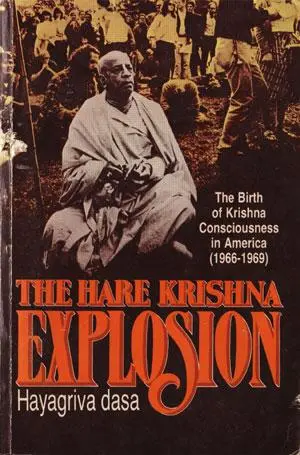
The Hare Krishna Explosion

Reference Material/Study Guide

click on image

click on image

  • LINKS