14 Apr 2013
by The Hare Krishna Movement
in A.C. Bhaktivedanta Swami Prabhupada, Srimad Bhagavatam, Srimati Radharani
Tags: A.C. Bhaktivedanta Swami Prabhupada, devotee, feminine counterpart of God, feminine nature, pure devotee, Radha, Radharani, Srimad Bhagavatam, Srimati Radharani, Vedic literatures, Vrndavana
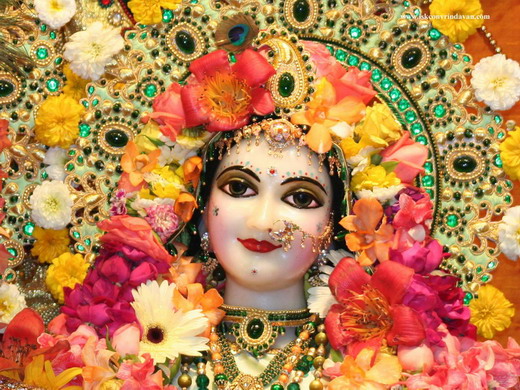
…In the Brahma-saṁhitā it is said that the Lord is never to be found by becoming a great scholar of the Vedic literatures, but He is very easily approachable through His pure devotee. In Vṛndāvana all the pure devotees pray for the mercy of Śrīmatī Rādhārāṇī, the pleasure potency of Lord Kṛṣṇa. Śrīmatī Rādhārāṇī is a tenderhearted feminine counterpart of the supreme whole, resembling the perfectional stage of the worldly feminine nature. Therefore, the mercy of Rādhārāṇī is available very readily to the sincere devotees, and once She recommends such a devotee to Lord Kṛṣṇa, the Lord at once accepts the devotee’s admittance into His association. The conclusion is, therefore, that one should be more serious about seeking the mercy of the devotee than that of the Lord directly, and by one’s doing so (by the good will of the devotee) the natural attraction for the service of the Lord will be revived. (Purport Srimad Bhagavatam 2.3.23)
Full text and purport More
05 Apr 2013
by The Hare Krishna Movement
in Narottama Dasa Thakura, Spiritual World, Srimati Radharani, Vrndavana, Vrndavana
Tags: golden throne, gopis, Krishna, Narotama das Thakura, Radha and Krishna, Radha Krishna, Songs of the Vaisnava Acaryas, spiritual sky, Srimati Radharani, touchstones, transcendental beautiful place, transcendental lovers, Vrndavan

Vṛndāvana
by Narottama das Thakura
Vrndavan is a transcendental beautiful place. It is the spiritual sky, where everything is made of touchstone, which fulfills all desires. All the temples there are bedcked with costly jewels, In that far distant place is the River Yamuna, which is full of lotus flowers, In the midst of that throng of lotus flowers there is a golden boat, appearing like another big lotus flower, with eight petals, who are none but the eight chief gopis who always surround Radha and Krishna, In the surrounding petals there is a golden throne where the two transcendental lovers, namely Radha and Krishna are seated, but of all of them the governing Deity is Srimati Radharani. There is no comparison to Radharani’s beauty and the luster of Her transcendental body. The so-called beauty of the moon has fallen on the ground in the presence of Radharani’s beauty. In that assembly of Radha-Krishna and their principal associates there is a flood of laughing and joking as they address one another. Narottama das says that the eternal pastimes of Radha-Krishna from day to day are full of transcendental pleasure, Let us all remember them now and then and thus become happy even in this material world.
Full Song Lyrics More
19 Mar 2013
by The Hare Krishna Movement
in A.C. Bhaktivedanta Swami Prabhupada, Caitanya Mahaprabhu, Sri Caitanya-Caritamrta, Srimati Radharani
Tags: A.C. Bhaktivedanta Swami Prabhupada, bumblebee, Krishna, Krsna, kumkuma, Mathura, Radha, Radharani, Spring, Srimati Radharani, The Song to the Bumblebee, Uddhava

“My dear bumblebee, you are a very cunning friend of Uddhava and Kṛṣṇa. You are very expert in touching people’s feet, but I am not going to be misled by this. You appear to have sat on the breasts of one of Kṛṣṇa’s friends, for I see that you have kuṅkuma dust on your mustache. Kṛṣṇa is now engaged in flattering all His young girl friends in Mathurā. Therefore, now that He can be called a friend of the residents of Mathurā, He does not need the help of the residents of Vṛndāvana. He has no reason to satisfy us gopīs. Since you are the messenger of such a person as He, what is the use of your presence here? Certainly Kṛṣṇa would be ashamed of your presence in this assembly.”
Full Text and Purport More
26 Feb 2013
by The Hare Krishna Movement
in A.C. Bhaktivedanta Swami Prabhupada, Mangalacarana Prayers, Songs of the Vaisnava Acaryas
Tags: A.C. Bhaktivedanta Swami Prabhupoada, feet of all vaisnavas, Gadadhara, Krishna, Lord Kṛṣṇa Caitanya and Lord Nityānanda along with Advaita Ācārya, lotus feet of my spiritual master, respectful obeisances, Sanatana Goswami, six goswami's, spiritual master, Sri Lalita, Sri Visakha, Srila Rupa Gosvami, Srimati Radharani, Srivasa, vande
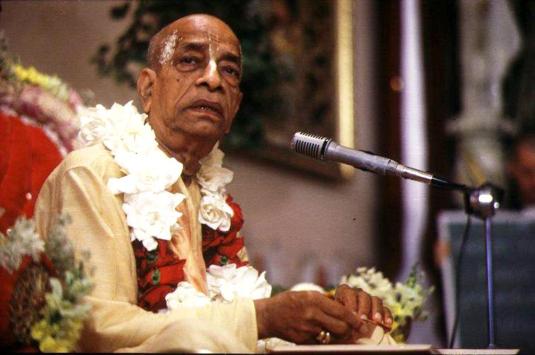
click on image to enlarge
Maṅgalācaraṇa Prayers
vande ’haṁ śrī-guroḥ śrī-yuta-pada-kamalaṁ śrī-gurun vaiṣṇavāṁś ca
śrī-rūpaṁ sāgrajātaṁ saha-gaṇa-raghunāthānvitaṁ taṁ sa-jīvam
sādvaitaṁ sāvadhūtaṁ parijana-sahitaṁ kṛṣṇa-caitanya-devaṁ
śrī-rādhā-kṛṣṇa-pādān saha-gaṇa-lalitā-śrī-viśākhānvitāṁś ca
I offer my respectful obeisances unto the lotus feet of my spiritual master and unto the feet of all Vaiṣṇavas. I offer my respectful obeisances unto the lotus feet of Śrīla Rūpa Gosvāmī along with his elder brother Sanātana Gosvāmī, as well as Raghunātha Dāsa and Raghunātha Bhaṭṭa, Gopāla Bhaṭṭa, and Śrīla Jīva Gosvāmī. I offer my respectful obeisances to Lord Kṛṣṇa Caitanya and Lord Nityānanda along with Advaita Ācārya, Gadādhara, Śrīvāsa, and other associates. I offer my respectful obeisances to Śrīmatī Rādhārāṇī and Śrī Kṛṣṇa along with Their associates, Śrī Lalitā and Viśākhā.
Purport to the Maṅgalācaraṇa Prayers
by His Divine Grace A.C. Bhaktivedanta Swami Prabhupada
Los Angeles, January 8, 1969
More
02 Feb 2013
by The Hare Krishna Movement
in Songs of the Vaisnava Acaryas, Vrndavana
Tags: Krishna, Narottama das thakura, radharani's beauty Radha-Krishna, Songs of the Vaisnava Acaryas, spiritual sky, Srimati Radharani, Vrndavana, vrndavana is a transcendental beautiful place, vrndavana ramyasthana
by Narottama das Thakura
Vrndavan is a transcendental beautiful place. It is the spiritual sky, where everything is made of touchstone, which fulfills all desires. All the temples there are bedcked with costly jewels, In that far distant place is the River Yamuna, which is full of lotus flowers, In the midst of that throng of lotus flowers there is a golden boat, appearing like another big lotus flower, with eight petals, who are none but the eight chief gopis who always surround Radha and Krishna, In the surrounding petals there is a golden throne where the two transcendental lovers, namely Radha and Krishna are seated, but of all of them the governing Deity is Srimati Radharani. There is no comparison to Radharani’s beauty and the luster of Her transcendental body. The so-called beauty of the moon has fallen on the ground in the presence of Radharani’s beauty. In that assembly of Radha-Krishna and their principal associates there is a flood of laughing and joking as they address one another. Narottama das says that the eternal pastimes of Radha-Krishna from day to day are full of transcendental pleasure. Let us all remember them now and then and thus become happy even in this material world.
Bengali lyrics; More
06 Dec 2012
by The Hare Krishna Movement
in A.C. Bhaktivedanta Swami Prabhupada, Bhaktivinoda Thakura, Radha Madhava, Songs of the Vaisnava Acaryas
Tags: A.C. Bhaktivedanta Swami Prabhupada, braja-jana-ranjana, giri-vara-dhari, gopi-jana-vallabha, Govardhana Hill, Krishna, kunja, Radha-Madhava, Songs of the Vaisnava Acaryas, Sri Radha Madhava, Srila Bhaktivinoda Thakura, Srila Prabhupada, Srimati Radharani, tira, vana
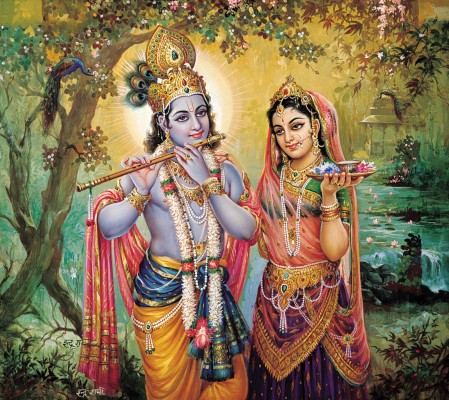
Jaya Radha Madhava
by Srila Bhaktivinoda Thakura
with Purport by Srila Prabhupada
jaya rādhā-mādhava kuñja-bihārī
gopī-jana-vallabha giri-vara-dhārī
yaśodā-nandana braja-jana-rañjana
yāmuna-tīra-vana-cārī
Translation
from the 1974 Edition of “Songs of the Vaisnava Acaryas”
Sri Rādhā-Mādhava have their loving pastimes in the groves (kuñja) of Vrndavana. Gopī-jana-vallabha means “one who attracts and reciprocates loving pastimes with the gopis. Giri-vara-dhārī is Krishna’s name in the pastime of lifting Goverdhana Hill. Yaśodā-nandana is the son of Yasoda (“nanda” means son and is also the name of Krishna’s father, so Krishna is also Nanda-nandana). Braja-jana-rañjana means the attractive darling of the inhabitants of Vrndavana. He is always playing in the groves (vana) on the bank (tira) of the Yamuna River, therefore Krishna is also known as Yāmuna-tīra-vana-cārī.
Srila Prabhupada was very fond of this song and sang it just before his lectures. In Allahabad and Gorakhpur Srila Prabhupada fell into a trance after singing the first two lines, and after some time he came back into external consciousness and said, “Now just chant Hare Krsna.” Srila Prabhupada said that this song is “a picture of Vrndavana. Everything is there–Srimati Radharani, Vrndavana, Govardhana, Yasoda, and all the cowherd boys.”
Purport by His Divine Grace A.C. Bhaktivedanta Swami Prabhupada More
07 Nov 2012
by The Hare Krishna Movement
in A.C. Bhaktivedanta Swami Prabhupada, Radha-kunda, Sri Caitanya-Caritamrta, Srimati Radharani
Tags: A.C. Bhaktivedanta Swami Prabhupada, Adi 4.215, appearance of radha kund, gopis, Madhya-lila 18.3-7, Radha Kund, Sri Caitanya Mahaprabhu, Sri Caitanya-caritmrta, Srimati Radharani

As today marks the appearance of Radha-kund we are honored to post from Srila Prabhupada’s Sri Caitanya-caritamrta, a few select verses from Madhya-lila 18.3-7. Radha-kunda is considered to be the holiest place on earth for all Gaudiya Vaisnavas.
Śrī Caitanya Mahāprabhu danced in ecstasy, but when He arrived at Āriṭgrāma, His sense perception was awakened.
PURPORT
Āriṭ-grāma is also called Ariṣṭa-grāma. Śrī Caitanya Mahāprabhu understood that in that village, Ariṣṭāsura was killed by Śrī Kṛṣṇa. While there, He inquired about Rādhā-kuṇḍa, but no one could tell Him where it was. The brāhmaṇa accompanying Him could also not ascertain its whereabouts. Śrī Caitanya Mahāprabhu could then understand that the holy places known as Rādhā-kuṇḍa and Śyāma-kuṇḍa were at that time lost to everyone’s vision. He therefore discovered Rādhā-kuṇḍa and Śyāma-kuṇḍa, which were two reservoirs of water in two paddy fields. Although there was very little water, Śrī Caitanya Mahāprabhu was omniscient and could understand that formerly these two ponds were called Śrī Rādhā-kuṇḍa and Śyāma-kuṇḍa. In this way Rādhā-kuṇḍa and Śyāma-kuṇḍa were discovered.
Śrī Caitanya Mahāprabhu asked the local people,”Where is Rādhā-kunda?” No one could inform Him, and the brāhmaṇa accompanying Him did not know either.
The Lord then understood that the holy place called Rādhā-kuṇḍa was no longer visible. However, being the omniscient Supreme Personality of Godhead, He discovered Rādhā-kuṇḍa and Śyāma-kuṇḍa in two paddy fields. There was only a little water, but He took His bath there.
When the people of the village saw Śrī Caitanya Mahāprabhu taking His bath in those two ponds in the middle of the paddy fields, they were very astonished. The Lord then offered His prayers to Śrī Rādhā-kuṇḍa.
“Of all the gopīs, Rādhārāṇī is the dearmost. Similarly, the lake known as Rādhā-kuṇḍa is very dear to the Lord because it is very dear to Śrīmatī Rādhārāṇī.
Also this from Adi-lila More
25 Oct 2012
by The Hare Krishna Movement
in Remembering Srila Prabhupada, Srimati Radharani, Tungabhadra devi
Tags: Back to Godhead Magazine, deities of Radha and Krishna, Krishna, Remembering Srila Prabhupada, Srimati Radharani, Tungabhadra devi, worship the deity forms of Krishna

Remembering Srila Prabhupada
Excerpted from Back to Godhead Magazine
by Tungabhadra Devi Dasi
Among many other things, Srila Prabhupada taught his disciples how to worship the Deity forms of Lord Krsna and His eternal consort Srimati Radharani. For instance, he told us that we should dress the Deities very opulently, which meant that we had to make special garments for Them. I was in Bombay in 1972 when I made my first attempt at sewing outfits.
When Srila Prabhupada walked into the temple one day to see the Deities, he smiled broadly. Even as he was prostrating himself before Radha and Krsna, he looked up at Them repeatedly and smiled. Then he arose, and he said to me, “Thank you very much. Make thousands of outfits like this. And always make Radharani more beautiful than Krsna, then Krsna will never leave.”
More
21 Sep 2012
by The Hare Krishna Movement
in A.C. Bhaktivedanta Swami Prabhupada, Krishna Consciousness, KRSNA The Supreme Personality of Godhead, Srimati Radharani
Tags: A.C. Bhaktivedanta Swami Prabhupada, bumblebee, Goloka Vrndavana, gopis, inhabitants of Vrndavana, Krishna, Krsna, Nanda Maharaja, Radha, Radhastami, Srimati Radharani, srimati radharani appearance day, Uddhava, Yasoda
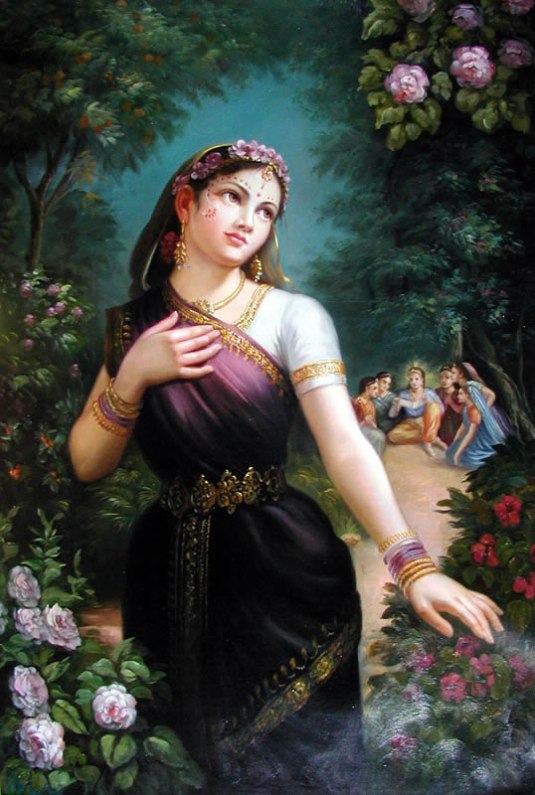
On this eve of Srimati Radharani’s appearance day (Radhastami) celebration I am reminded of one of my favorite KRSNA Book stories; Delivery of the Message of Kṛṣṇa to the Gopīs. We share the entire chapter with you here.
…One of the gopīs, namely Śrīmatī Rādhārāṇī, was so much absorbed in thoughts of Kṛṣṇa by dint of Her personal touch with Him that She actually began to talk with a bumblebee which was flying there and trying to touch Her lotus feet. While another gopī was talking with Kṛṣṇa’s messenger Uddhava, Śrīmatī Rādhārāṇī took that bumblebee to be a messenger from Kṛṣṇa and began to talk with it as follows. “Bumblebee, you are accustomed to drinking honey from the flowers, and therefore you have preferred to be a messenger of Kṛṣṇa, who is of the same nature as you. I have seen on your moustaches the red powder of kuṅkuma, which was smeared on the flower garland of Kṛṣṇa while He was pressing the breast of some other girl who is My competitor. You are feeling very proud by touching that flower, and your moustaches have become reddish. You have come here carrying a message for Me. You are anxious to touch My feet. But My dear bumblebee, let me warn you–don’t touch Me! I don’t want any messages from your unreliable master. You are the unreliable servant of an unreliable master.” It may be that Śrīmatī Rādhārāṇī purposely addressed that bumblebee sarcastically in order to criticize the messenger Uddhava. Indirectly, Śrīmatī Rādhārāṇī saw Uddhava as not only resembling Kṛṣṇa’s bodily features but as being equal to Kṛṣṇa. In this way She indicated that Uddhava was as unreliable as Kṛṣṇa Himself. Śrīmatī Rādhārāṇī wanted to give specific reasons why She was dissatisfied with Kṛṣṇa and His messengers.
She addressed the bumblebee, “Your master Kṛṣṇa is exactly of your quality. You sit down on a flower, and after taking a little honey you immediately fly away and sit in another flower and taste. You’re just like your master Kṛṣṇa. He gave us the chance of tasting the touch of His lips and then left altogether. I know also that the goddess of fortune, Lakṣmī, who is always in the midst of the lotus flower, is constantly engaged in Kṛṣṇa’s service. But I do not know why she has become so captivated by Kṛṣṇa. She is attached to Him, although she knows His actual character. As far as we are concerned, we are more intelligent than that goddess of fortune. We are not going to be cheated anymore by Kṛṣṇa or His messengers…”
Kṛṣṇa, The Supreme Personality of Godhead
By His Divine Grace A.C. Bhaktivedanta Swami Prabhupada
Chapter 46
Delivery of the Message of Kṛṣṇa to the Gopīs More
21 Sep 2012
by The Hare Krishna Movement
in A.C. Bhaktivedanta Swami Prabhupada, Radha-kunda, Sri Caitanya-Caritamrta, Srimati Radharani
Tags: A.C. Bhaktivedanta Swami Prabhupada, kunda, Madhya-lila 18.4-13, Radha Krishna, Radha-kunda, Sri Caitanya Mahaprabhu, Sri Caitanya-caritamrta, Sri Radha, Srila Prabhupada, Srimati Radharani, Syama-kund
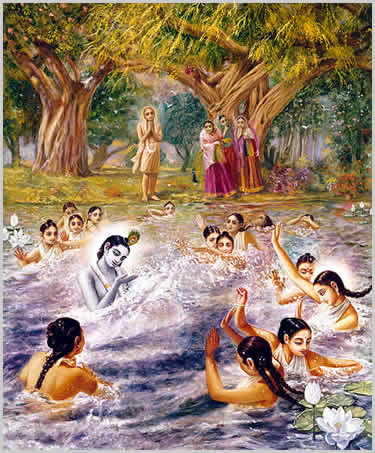
In honor of the appearance day of Srimati Radharani we again post from the Śrī Caitanya-caritāmṛta by His Divine Grace A.C. Bhaktivedanta Swami Prabhupada. The Glories of Śrīmatī Rādhārāṇī and Her lake known as Rādhā-kuṇḍa. The following verses are from Madhya-līlā, Chapter 18, Text 4-13.
Śrī Caitanya Mahāprabhu asked the local people,“Where is Rādhā-kunda?” No one could inform Him, and the brāhmaṇa accompanying Him did not know either.
The Lord then understood that the holy place called Rādhā-kuṇḍa was no longer visible. However, being the omniscient Supreme Personality of Godhead, He discovered Rādhā-kuṇḍa and Śyāma-kuṇḍa in two paddy fields. There was only a little water, but He took His bath there.
When the people of the village saw Śrī Caitanya Mahāprabhu taking His bath in those two ponds in the middle of the paddy fields, they were very astonished. The Lord then offered His prayers to Śrī Rādhā-kuṇḍa.
More
13 Dec 2011
by The Hare Krishna Movement
in Bhaktisiddhanta Sarasvati Thakura, Poetry of Srila Prabhupada, Songs of the Vaisnava Acaryas
Tags: Bhaktisiddhanta Sarasvati, disappearance day of Bhaktisiddhanta Sarasvati, Jaladuta, Prayer unto the Lotus Feet of Krsna, Sept 13 1965, Sri Srimad Bhaktisiddhanta Sarasvati Thakura, Srila Prabhupada, Srimati Radharani
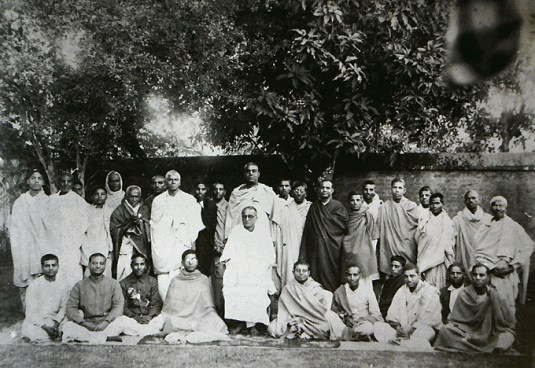
Srila Bhaktisiddhanta Saraswati Thakur and his disciples
Dec 14, 2001 is the Disappearance Day of Srila Bhaktisiddhanta Sarasvati Goswami, and we honor him with a prayer written by Srila Prabhupada written aboard the ship Jaladuta, on his way to fulfill the order (mission) of his spiritual master, Srila Bhaktisiddhanta.
Prayer unto the Lotus Feet of Krsna
by His Divine Grace A.C. Bhaktivedanta Swami Prabhupāda
on board the ship Jaladuta, September 13, 1965
(refrain)
kṛṣṇa taba puṇya habe bhāi
e-puṇya koribe jabe rādhārāṇī khusī habe
dhruva ati boli tomā tāi
I emphatically say to you, O brothers, you will obtain your good fortune from the Supreme Lord Kṛṣṇa only when Śrīmatī Rādhārāṇī becomes pleased with you.
śrī-siddhānta saraswatī śacī-suta priya ati
kṛṣṇa-sebāya jāra tula nāi
sei se mohānta-guru jagater madhe uru
kṛṣṇa-bhakti dey ṭhāi ṭhāi
Śrī Śrīmad Bhaktisiddhānta Sarasvatī Ṭhākura, who is very dear to Lord Gaurāṅga, the son of mother Śacī, is unparalleled in his service to the Supreme Lord Śrī Kṛṣṇa. He is that great saintly spiritual master who bestows intense devotion to Kṛṣṇa at different places throughout the world.
More
26 Oct 2011
by The Hare Krishna Movement
in Songs of the Vaisnava Acaryas, Sri Damodarastakam, Vishnujana Swami, Visnujana Swami
Tags: Lord Brahma, Lord Damodara, Mother Yasoda, namas te stu damne sphurad-dipti-dhamne, Sri Damodarastakam, Srimati Radharani, Visnujana Swami
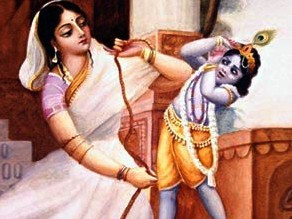
O Lord, the entire universe was created by Lord Brahma, who was born from Your abdomen, which was bound with a rope by Mother Yasoda. To this rope I offer my humble obeisances.
namas te ‘stu dāmne sphurad-dīpti-dhāmne
tvadīyodarāyātha viśvasya dhāmne
namo rādhikāyai tvadīya-priyāyai
namo ‘nanta-līlāya devāya tubhyam
namaḥ–obeisances; te–to You; astu–may there be; dāmne–unto the rope around Your waist; sphurat–splendrous; dīpti-dhāmne–unto the effulgent abode; tvadīya-udarāya–unto Your belly; atha–thus; viśvasya–of the entire universe; dhāmne–unto the shelter; namaḥ–obeisances; rādhikāyai–unto Rādhikā; tvadīya priyāyai–unto Your Beloved; namaḥ– obeisances; ananta-līlāya–unto Your limitless sportive pastimes; devāya– unto Your transcendental nature; tubhyam–unto You.
8) O Lord, the entire universe was created by Lord Brahma, who was born from Your abdomen, which was bound with a rope by Mother Yasoda. To this rope I offer my humble obeisances. I offer my obeisances to Your most beloved Srimati Radharani, and to Your unlimited pastimes.
At the conclusion of the prayer, obeisances are offered (namas te) to the Lord’s unique binding, His bodily limbs, His associates, and to the Lord Himself, in order to arouse the mood of bhakti. Even the rope that binds His belly (damne) receives worship. That rope is the abode of, or source of, effulgence (sphurad dipti-dhamne), and the poet here suggests that the rope is also the source of the all-pervading brahman effulgence.
Then, obeisances are offered to the Lord’s belly, which is bound by this wondrous rope (tvadiyodarayatha). What is that belly like? It is the abode or support of all the infinite universes in the creation (visvasya), including all the moving and non-moving living entities dwelling therein. A gigantic lotus flower that sustains the fourteen worlds sprouts from that belly and is the abode of Lord Brahma.
More
19 Oct 2011
by The Hare Krishna Movement
in A.C. Bhaktivedanta Swami Prabhupada, Nectar of Instruction, Radha-kunda, Srimati Radharani
Tags: A.C. Bhaktivedanta Swami Prabhupada, damsels of Vrajabhumi, divine kunda, His Divine Grace A.C. Bhaktivedanta Swami Prabhupada, Nectar of Instruction, Radha-kunda, Sri Radha kunda, Srila Rupa Goswami, Srimati Radharani

Rādhā-kuṇḍa
It is stated that a devotee will at once develope pure love of Kṛṣṇa in the wake of the gopīs if he once takes a bath in Rādhā-kuṇḍa.
The Nectar of Instruction
By His Divine Grace A.C. Bhaktivedanta Swami Prabhupada
Text 11
kṛṣṇasyoccaiḥ praṇaya-vasatiḥ preyasībhyo ’pi rādhā
kuṇḍaṁ cāsyā munibhir abhitas tādṛg eva vyadhāyi
yat preṣṭhair apy alam asulabhaṁ kiṁ punar bhakti-bhājāṁ
tat premedaṁ sakṛd api saraḥ snātur āviṣkaroti
kṛṣṇasya—of Lord Śrī Kṛṣṇa; uccaiḥ—very highly; praṇaya-vasatiḥ—object of love; preyasībhyaḥ—out of the many lovable gopīs; api—certainly; rādhā—Śrīmatī Rādhārāṇī; kuṇḍam—lake; ca—also; asyāḥ—of Her; munibhiḥ—by great sages; abhitaḥ—in all respects; tādṛk eva—similarly; vyadhāyi—is described; yat—which; preṣṭhaiḥ—by the most advanced devotees; api—even; alam—enough; asulabham—difficult to obtain; kim—what; punaḥ—again; bhakti-bhājām—for persons engaged in devotional service; tat—that; prema—love of Godhead; idam—this; sakṛt—once; api—even; saraḥ—lake; snātuḥ—of one who has bathed; āviṣkaroti—arouses.
Of the many objects of favored delight and of all the lovable damsels of Vrajabhūmi, Śrīmatī Rādhārāṇī is certainly the most treasured object of Kṛṣṇa’s love. And, in every respect, Her divine kuṇḍa is described by great sages as similarly dear to Him. Undoubtedly Rādhā-kuṇḍa is very rarely attained even by the great devotees; therefore it is even more difficult for ordinary devotees to attain. If one simply bathes once within those holy waters, one’s pure love of Kṛṣṇa is fully aroused.
Why is Rādhā-kuṇḍa so exalted? The lake is so exalted because it belongs to Śrīmatī Rādhārāṇī, who is the most beloved object of Śrī Kṛṣṇa. Among all the gopīs, She is the most beloved. Similarly, Her lake, Śrī Rādhā-kuṇḍa, is also described by great sages as the lake that is as dear to Kṛṣṇa as Rādhā Herself. Indeed, Kṛṣṇa’s love for Rādhā-kuṇḍa and Śrīmatī Rādhārāṇī is the same in all respects. Rādhā-kuṇḍa is very rarely attained, even by great personalities fully engaged in devotional service, not to speak of ordinary devotees who are only engaged in the practice of vaidhī bhakti.
It is stated that a devotee will at once develope pure love of Kṛṣṇa in the wake of the gopīs if he once takes a bath in Rādhā-kuṇḍa. Śrīla Rūpa Gosvāmī recommends that even if one cannot live permanently on the banks of Rādhā-kuṇḍa, he should at least take a bath in the lake as many times as possible. This is a most important item in the execution of devotional service. Śrīla Bhaktivinoda Ṭhākura writes in this connection that Śrī Rādhā-kuṇḍa is the most select place for those interested in advancing their devotional service in the wake of the lady friends (sakhīs) and confidential serving maids (mañjarīs) of Śrīmatī Rādhārāṇī. Living entities who are eager to return home to the transcendental kingdom of God, Goloka Vṛndāvana, by means of attaining their spiritual bodies (siddha-deha) should live at Rādhā-kuṇḍa, take shelter of the confidential serving maids of Śrī Rādhā and under their direction engage constantly in Her service.
This is the most exalted method for those engaged in devotional service under the protection of Śrī Caitanya Mahāprabhu. In this connection Śrīla Bhaktisiddhānta Sarasvatī Ṭhākura writes that even great sages and great devotees like Nārada and Sanaka do not get an opportunity to come to Rādhā-kuṇḍa to take their baths. What, then, to speak of ordinary devotees? If, by great fortune, one gets an opportunity to come to Rādhā-kuṇḍa and bathe even once, he can develop his transcendental love for Kṛṣṇa, exactly as the gopīs did. It is also recommended that one should live on the banks of Rādhā-kuṇḍa and should be absorbed in the loving service of the Lord. One should bathe there regularly and give up all material conceptions, taking shelter of Śrī Rādhā and Her assistant gopīs. If one is thus constantly engaged during his lifetime, after giving up the body he will return back to Godhead to serve Śrī Rādhā in the same way as he contemplated during his life on the banks of Rādhā-kuṇḍa. The conclusion is that to live on the banks of the Rādhā-kuṇḍa and to bathe there daily constitute the highest perfection of devotional service. It is a difficult position to attain, even for great sages and devotees like Nārada. Thus there is no limit to the glory of Śrī Rādhā-kuṇḍa. By serving Rādhā-kuṇḍa, one can get an opportunity to become an assistant of Śrīmatī Rādhārāṇī under the eternal guidance of the gopīs.
09 Sep 2011
by The Hare Krishna Movement
in Bhaktivinoda Thakura, Chanting Hare Krishna
Tags: bhaktivinoda, Hare Krishna Maha-mantra, Krishna's holy name, Rama, Srila Bhaktivinoda Thakura, Srimati Radharani
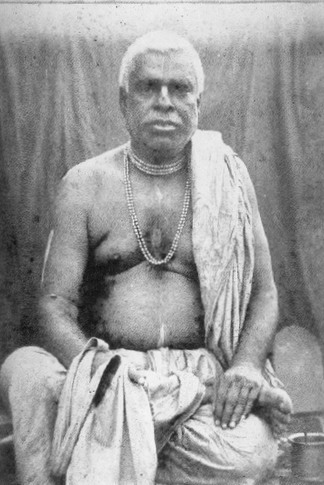
Hare Krsna Maha-mantra
Purport by Srila Bhaktivinoda Thakura
हरे कृष्ण हरे कृष्ण कृष्ण कृष्ण हरे हरे |
हरे राम हरे राम राम राम हरे हरे ||
hare kṛṣṇa hare kṛṣṇa kṛṣṇa kṛṣṇa hare hare
hare rāma hare rāma rāma rāma hare hare
The Hare Kṛṣṇa mantra is known as the mahāmantra, or the greatest of sound vibrations. The mahamantra is a thirty-two syllable mantra chanted requesting Harā (another name of His supreme pleasure energy, personified by Srimati Radharani), and the Supreme Lord (given by two of His names, Krsna, the All-Attractive One, and Rama, the Reservoir of Pleasure) an opportunity to serve Them.
There are four cosmic ages, namely, Satya Yuga, Treta Yuga, Dvapara Yuga, and Kali Yuga. Satya Yuga is known as the “Golden Age”, for values of truth and virtues were at the peak. In Treta Yuga (the age where Lord Sri Ramacandra appeared), vice was introduced. Then, Dvapara Yuga (the age when Sri Krsna appeared on Earth) took place, where vice and virtue was leveled off. Following Dvapara Yuga is the darkest age, known as Kali Yuga. It began approximately five thousand years ago, after Sri Krsna left the world. Throughout each age, the prescribed method of salvation changed. In Satya Yuga, strict penances and austerities was the path of salvation. Then, Treta Yuga introduced the concept of conducting sacrifices as mentioned in scriptures. Dvapara Yuga’s method of salvation comprised of developing personal relations with the Lord.
In Kali Yuga, however, lifespan, intelligence, and qualities are significantly lowered. Therefore, performing severe penance and austerities is impractical. Conducting sacrifices per scriptures is immensely difficult, for those scriptures are not easily accessible, and conductors of such sacrifices are not present on Earth. Receiving personal association and forming relations with the Lord was only fortunate for a few. Therefore, such methods are not practical and applicable for this age. Therefore, the Brhad Naradiya Purana has claimed:
harer nāma harer nāma harer nāmaiva kevalam
kalau nāsty eva nāsty eva nāsty eva gatir anyathā
“Only the Holy Name, Only the Holy Name, Only the Holy Name, is the only way. There is no other way, no other way, no other way in this Age of Kali”
Therefore, it is clearly indicated that in Kali Yuga, the only method of salvation is by chanting the holy name of God. However, the most powerful mantra for salvation was hidden in confidentiality until this age. It wasn’t until the late fifteenth century when the mahamantra was openly revealed by Lord Caitanya Mahaprabhu. Typically, the Lord does not incarnate on Earth during Kali Yuga, until the very end. However, this Kali Yuga was especially fortunate to have Lord Caitanya Mahaprabhu’s incarnation of gold appear on earth. Through His mission to spread the movement of devotional service in degraded age, He brought the Hare Krsna mahamantra openly for all to benefit.
Pasted from http://kksongs.org/mantra/hk_expl.html
04 Sep 2011
by The Hare Krishna Movement
in Devotional Service, Science of Self Realization, Srimati Radharani
Tags: Devotees in Vrndavana, His Divine Grace A.C. Bhaktivedanta Swami Prabhupada, Krishna, Madana-mohana-mohani, Nectar of Devotion, Radharani, Srimati Radharani

From; The Nectar of Devotion – 1970 Edition
By His Divine Grace A.C. Bhaktivedanta Swami Prabhupada
Attracting Krsna
Śrīla Rūpa Gosvāmī has stated that devotional service attracts even Kṛṣṇa. Kṛṣṇa attracts everyone, but devotional service attracts Kṛṣṇa. The symbol of devotional service in the highest degree is Rādhārāṇī. Kṛṣṇa is called Madana-mohana, which means that He is so attractive that He can defeat the attraction of thousands of Cupids. But Rādhārāṇī is still more attractive, for She can even attract Kṛṣṇa. Therefore devotees call Her Madana-mohana-mohanī-the attractor of the attractor of Cupid.
To perform devotional service means to follow in the footsteps of Rādhārāṇī, and devotees in Vṛndāvana put themselves under the care of Rādhārāṇī in order to achieve perfection in their devotional service. In other words, devotional service is not an activity of the material world; it is directly under the control of Rādhārāṇī. In Bhagavad-gītā it is confirmed that the mahātmās, or great souls, are under the protection of daivī prakṛti, the internal energy-Rādhārāṇī. So, being directly under the control of the internal potency of Kṛṣṇa, devotional service attracts even Kṛṣṇa Himself.
This fact is corroborated by Kṛṣṇa in the Eleventh Canto of Śrīmad-Bhāgavatam, 12th Chapter, 1st verse, where He says, “My dear Uddhava, you may know it from Me that the attraction I feel for devotional service rendered by My devotees is not to be attained even by the performance of mystic yoga, philosophical speculation, ritualistic sacrifices, the study of Vedānta, the practice of severe austerities or the giving of everything in charity. These are, of course, very nice activities, but they are not as attractive to Me as the transcendental loving service rendered by My devotees.”(from Nectar of Devotion: Chapter One, Characteristics of Pure Devotional Service, Attracting Krsna)
03 Sep 2011
by The Hare Krishna Movement
in Festivals, Lectures, Srimati Radharani
Tags: Krishna, Radha, Radharani, Radhastami, Srila Prabhupada, Srimati Radharani, Srimati Radharani's Apperance Day
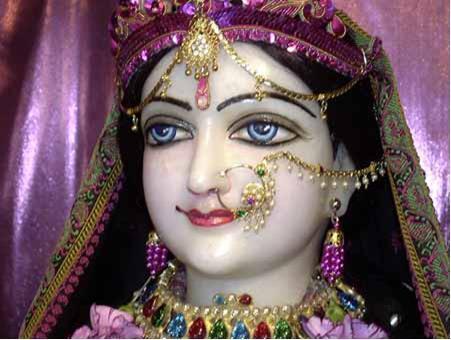
Rādhārāṇī is hari-priyā, very dear to Kṛṣṇa. So if we approach Kṛṣṇa through Rādhārāṇī, through the mercy of Rādhārāṇī, then it becomes very easy. If Rādhārāṇī recommends that “This devotee is very nice,” then Kṛṣṇa immediately accepts, however fool I may be. Because it is recommended by Rādhārāṇī, Kṛṣṇa accepts. Therefore in Vṛndāvana you’ll find all the devotees, they’re chanting more Rādhārāṇī’s name than Kṛṣṇa’s. Wherever you’ll go, you’ll find the devotees are addressing, “Jaya Rādhe.” You’ll find still in Vṛndāvana. They are glorifying Rādhārāṇī. They’re more interested, worshiping Rādhārāṇī. Because however fallen I may be, if some way or other I can please Rādhārāṇī, then it is very easy for me to understand Kṛṣṇa.
The devotees of the Lord in Vaikuntha want to see the Lord as most beautiful, but the devotees in Vrindavana want to see Radharani as even more beautiful than Krishna
Rādhāṣṭamī:
Śrīmatī Rādhārāṇī’s Appearance Day
Lecture given by His Divine Grace A. C. Bhaktivedanta Swami Prabhupada
London, August 29, 1971
Prabhupāda: (chants maṅgalācaraṇa prayers) Today is birth, appearance day of Śrīmatī Rādhārāṇī, Rādhāṣṭamī. Fifteen days after Kṛṣṇa’s birth, Rādhārāṇī appeared. (pause) Rādhārāṇī is Kṛṣṇa’s pleasure potency. Rādhā-kṛṣṇa-praṇaya-vikṛtir hlādinī-śaktiḥ. More
02 Sep 2011
by The Hare Krishna Movement
in Books by Srila Prabhupada, Krishna, Srimati Radharani
Tags: Bhaktivedanta Swami Prabhupada, Krsna The Supreme Personality of Godhead, Radha, Radha Krishna, Radhastmi, Srimati Radharani

Dear friends, just imagine how the dust of this place is transcendentally glorious. The dust of the lotus feet of Kṛṣṇa is worshiped even by Lord Brahmā and Lord Śiva, and the goddess of fortune, Lakṣmī. But at the same time, we are very sorry that this particular gopī has gone along with Kṛṣṇa, for She is sharing the nectar of Kṛṣṇa’s kisses and leaving us aside to lament. O friends, just see! At this particular spot we do not see the footprints of that gopī. It appears that because there were some pin-pricks from the dried grass, Kṛṣṇa took Rādhārāṇī on His shoulder. O, She is so dear to Him! Kṛṣṇa must have picked some flowers in this spot to satisfy Rādhārāṇī, because here, where He stood erect to get the flowers from the high branches of the tree, we find only half the impression of His feet. Dear friends, just see how Kṛṣṇa must have sat down here with Rādhārāṇī and tried to set flowers in Her hair. You can be certain that both of Them sat together here.”
KRSNA The Supreme Personality of Godhead
By His Divine Grace A.C. Bhaktivedanta Swami Prabhupada
Kṛṣṇa’s Hiding from the Gopīs
When Kṛṣṇa suddenly disappeared from the company of the gopīs, they began to search for Him in every place. After not finding Him anywhere, they became afraid and almost mad after Him. They were simply thinking of the pastimes of Kṛṣṇa in great love and affection. Being absorbed in thought, they experienced loss of memory, and with dampened eyes they began to see the very pastimes of Kṛṣṇa, His beautiful talks with them, His embracing, kissing, and other activities. Being so attracted to Kṛṣṇa, they began to imitate His dancing, His walking and smiling, as if they themselves were Kṛṣṇa. Due to Kṛṣṇa’s absence, they all became crazy; each one of them began to tell the others that she was Kṛṣṇa Himself. Soon they all began to assemble together and chant Kṛṣṇa’s name very loudly, and they moved from one part of the forest to another searching for Him. Actually, Kṛṣṇa is all-pervasive; He is in the sky, and He is in the forest; He is within the heart, and He is always everywhere.
More
01 Sep 2011
by The Hare Krishna Movement
in Srimati Radharani
Tags: Krishna, Queen of Vrindavan, Radha, Sri Prarthana-paddhati, Srila Rupa Goswami, Srimati Radharani, Stavamala

“O Radharani, O Queen of Vrindavana, Your complexion is like molten gold, Your doe-like eyes are captivatingly restless, a million full and brilliant moons wane before Your lustrous countenance, and a blue sari, having stolen the hue of a fresh rain-laden cloud, has enwrapped Your exquisite form. O Radha, You are the crest-jewel of all the dallying damsels of Vrindavana, fragrant and pristine like a budding jasmine flower. Your sublime form is adorned with priceless jewelry, and you are the best of all the charming and intelligent gopis. You are decorated with all wonderful excellences and surrounded by eight dedicated and beloved cowherd girls known as the asta-sakhis.
“The ambrosia of Your beautiful lips, red as the bimba fruit, is life-giving syrup to Krishna. O Radha, I am rolling on the banks of the Yamuna, my poor heart filled with anticipation, praying to You with all humility. I am guilty of being an offender, a rascal, a useless wretch — yet I beg You to kindly engage me in even the smallest service to Your lotus feet. O most merciful Lady, it will not become You to ignore this most distressed soul, for Your heart is always overflowing with compassion and love.”
[Sri Prarthana-paddhati [Stavamala], Srila Rupa goswami]
Pasted from; http://www.harekrsna.de/radha-beauty.htm
18 Jun 2011
by The Hare Krishna Movement
in Back to Godhead, Chanting Hare Krishna
Tags: devotees, Hare Krishna, impersonalists, Krsna, Kurappiah Chockalingam, Om, omkara, pranava, spiritual vibration, Srimati Radharani

Om or Hare Krishna?
By Kurappiah Chockalingam
Though the sacred sound om is often associated with impersonalists, only the devotees understand its full import.
The Gosvamis of Vrndavana have analyzed om (a-u-m) as follows: The letter a refers to Krsna, the master of all planets and all living entities. The letter u indicates Srimati Radharani, the pleasure potency of Krsna, and m indicates the living entities. Thus omkara represents Krsna; His name, fame, pastimes, potencies, and devotees; and everything else pertaining to Him.
THROUGHOUT THE VEDAS there is much mention of the syllabel om. This spiritual vibration, which is sometimes called omkara or pranava, comprises three Sanskrit sounds – a, u, and ma (the a in ma is silent). When these three sounds are combined, the result is the single-syllabled vibration om.
An unusual attribute of om is that it has no direct translation from Sanskrit into English. And though every Vedantist will accept om to be a representation of God, exactly how om is viewed differs according to various schools to thought. These schools can be classified into two main categories, the Mayavadi, or impersonalist, and the Vaisnava, or devotee.
The impersonalist, as the name suggests, is happy to treat om as an impersonal, formless, representation of the Absolute Truth. Therefore, the Mayavadi will very openly chant om, being careful to avoid names such as Krsna and Rama, which according to them, are limited. A Mayavadi might explain his theory of pranava om like this: “Since this whole universe has been created by Him (God), whatever there is in the universe is Him alone.
As such, He has no name. But if He has to have a name, then all names are His, for He alone is appearing in all forms. The first sound in most languages is a; the last sound to leave as our mouth closes is m; u is the center of the two. Together, they represent all the basic sounds from which words are produced. And threfore, these three sounds, making up the syllable om, represent the entire universe of names and forms.”
More
15 Apr 2011
by The Hare Krishna Movement
in Srimati Radharani
Tags: Caitanya-caritamrita, feminine aspect of God, friend of devotees, Krsna, Radha Kund, Radharani, Srila Rupa Goswami, Srimati Radharani, Stephen Knapp, Surpreme Goddess, topmost of all Goddesses
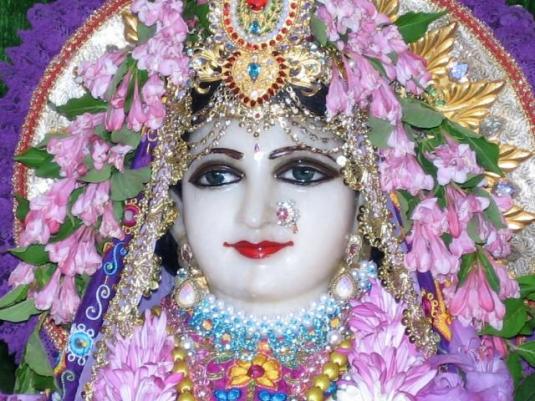
The descriptions of the beauty of Radharani are wonderfully poetic and descriptive. Actually, the residents of Vrindavana care more for Radharani than they do for Lord Krishna. They know that Krishna can be influenced through Radharani. They know that Radha can bring one to Krishna. She is also the compassionate nature of the Lord, and thus more easily approached than trying to reach Lord Krishna directly.
Srimati Radharani
By Stephen Knapp
Srimati Radharani is the Supreme Goddess. She is most always seen with Lord Krishna. It is described that She is the Chief Associate and devotee of Lord Krishna, and topmost of all Goddesses. Her name means the She is the most excellent worshiper of Lord Krishna. However, She is also an expansion of the Lord’s energy. Since She is also an extension of Krishna, She is the feminine aspect of God. Thus, in the Gaudiya Vaishnava tradition, God is both male and female. They are One, but Krishna expands into two, Himself and Radharani, for the sake of divine loving pastimes. If They remained as One, then there is no relationship, there are no pastimes, and there can be no dynamic exchange of love. (Caitanya-caritamrita, Adi-lila, 4.55-56) Actually, if we all remained merged or amalgamated into one single force or light, then there is no further need of anything else. There certainly would be no need for the material manifestation to provide the innumerable conditioned souls with the means to seek out the way to satisfy their senses, minds, emotions, desires for self-expression, intellectual pursuits, and on and on.
More
Previous Older Entries Next Newer Entries







 The Hare Krishna Movement