I am often of two minds. As a practicing devotee, I know that I should focus my mind on spiritual matters, but I am also living in this material world in a material body. Therefore much of my time and energy is engaged in material activities, like watching world news for example. It is like driving by a roadside accident and wanting to look at the damage, but knowing I should keep my eyes on the road.
I try to understand that “I am not this body, I am Spirit soul” and yet every day I feel the pains of ageing. I try to focus on the teachings of the Bhagavad-gita and the Srimad Bhagavatam, but my mind is drawn to events of this world. My heart aches for the suffering of others, and my only solace is the teachings of the Bhagavad-gita and Srimad Bhagavatam.
In Bhagavad-gītā it is stated that one who is advanced in spiritual knowledge is not disturbed by the pains and pleasures of the material body. The material body is completely separate from the spirit soul, and the pains and pleasures of the body are superfluous. The practice of austerity and penance is meant for understanding the distinction between the body and the soul and how the soul can be unaffected by the pleasures and pains of the body…” (from purport SB 5.10.9)
Everyone in this material world is distressed by miserable conditions, but Śrīla Prabodhānanda Sarasvatī says that this world is full of happiness. How is this possible? He answers, yat-kāruṇya-katākṣa-vaibhavavatāṁ taṁ gauram eva stumaḥ. A devotee accepts the distress of this material world as happiness only due to the causeless mercy of Śrī Caitanya Mahāprabhu. By His personal behavior, Śrī Caitanya Mahāprabhu showed that He was never distressed but always happy in chanting the Hare Kṛṣṇa mahā-mantra. One should follow in the footsteps of Śrī Caitanya Mahāprabhu and engage constantly in chanting the mahā-mantra—Hare Kṛṣṇa, Hare Kṛṣṇa, Kṛṣṇa Kṛṣṇa, Hare Hare/ Hare Rāma, Hare Rāma, Rāma Rāma, Hare Hare. Then he will never feel the distresses of the world of duality. In any condition of life one will be happy if he chants the holy name of the Lord. (from purport SB 6.17.30)
One should live in the material world very expertly. The material world is known as the world of duality because one sometimes has to act impiously and sometimes has to act piously. Although one does not want to act impiously, the world is so fashioned that there is always danger (padaṁ padaṁ yad vipadām [SB 10.14.58]). Thus even when performing devotional service a devotee has to create many enemies. Prahlāda Mahārāja himself had experience of this, for even his father became his enemy. A devotee should expertly manage to think always of the Supreme Lord so that the reactions of suffering cannot touch him (from purport SB 7.10.13)
Trying to advance in spiritual life outside the association of fellow devotees can be difficult. the Sanskrit word Smṛtyā means remembering Kṛṣṇa always. Life should be molded in such a way that one cannot remain alone without thinking of Kṛṣṇa. We should live in Kṛṣṇa so that while eating, sleeping, walking and working we remain only in Kṛṣṇa. Our Kṛṣṇa consciousness society recommends that we arrange our living so that we can remember Kṛṣṇa. (from purport SB 4.22.24)
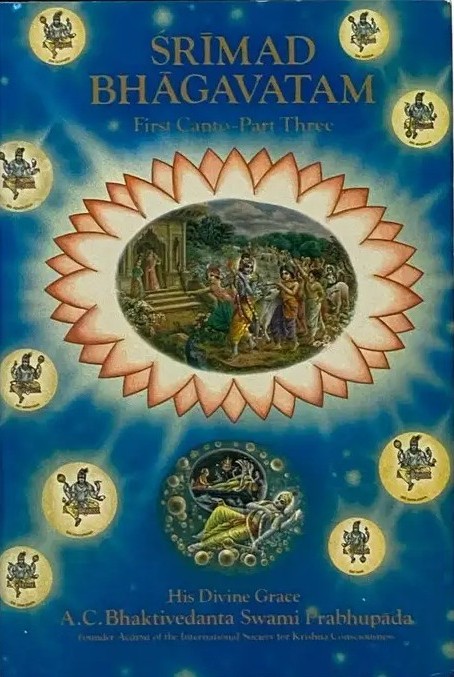
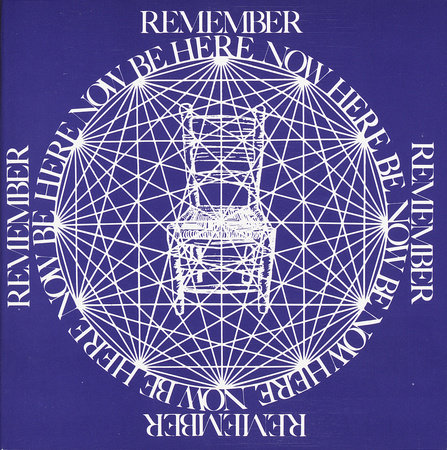
Today most people have heard of yoga and meditation, but I remember when I first took up yoga back in 1972, it was not so widely known. I was first introduced to it from the book “Be Here Now”. It was a very simplistic book, but it was full of ideas, quotes and images, that opened my mind to a world of spiritual thought. It introduced me to yoga, meditation, the concept of vegetarianism, spirituality, and the need of a Guru or Spiritual Master. I began to take seriously ideas that were introduced, such as self realization, living a more pure life, developing our relationship with God, finding out who is God, and finding my spiritual master (guru). So for me, the book was the beginning of my journey, as it was for many, so indeed it was a huge success, it that regard.
Maybe I was sincere, or maybe just lucky, but I soon found my eternal Spiritual Master, His Divine Grace A.C. Bhaktivedanta Swami Prabhupada, and he answered all my questions. He told me who is God (Krsna), what my relationship with him is (sanatan-dharma), the process for self realization (bhakti-yoga), and how to get out of this temporary material world and return home back to Godhead.
When I first began my practice of Yoga, it was purely as a spiritual Practice. Nowadays, people will take it up for many different reasons, such as weight loss, fitness, relaxation, or social acceptance and community. But I still see it as a spiritual practice. The daily asanas, which are good for my ageing body, are an offering, and the breathing is a mindful prayer.
The word Yoga means “Union”. To link our consciousness with a Higher Consciousness.
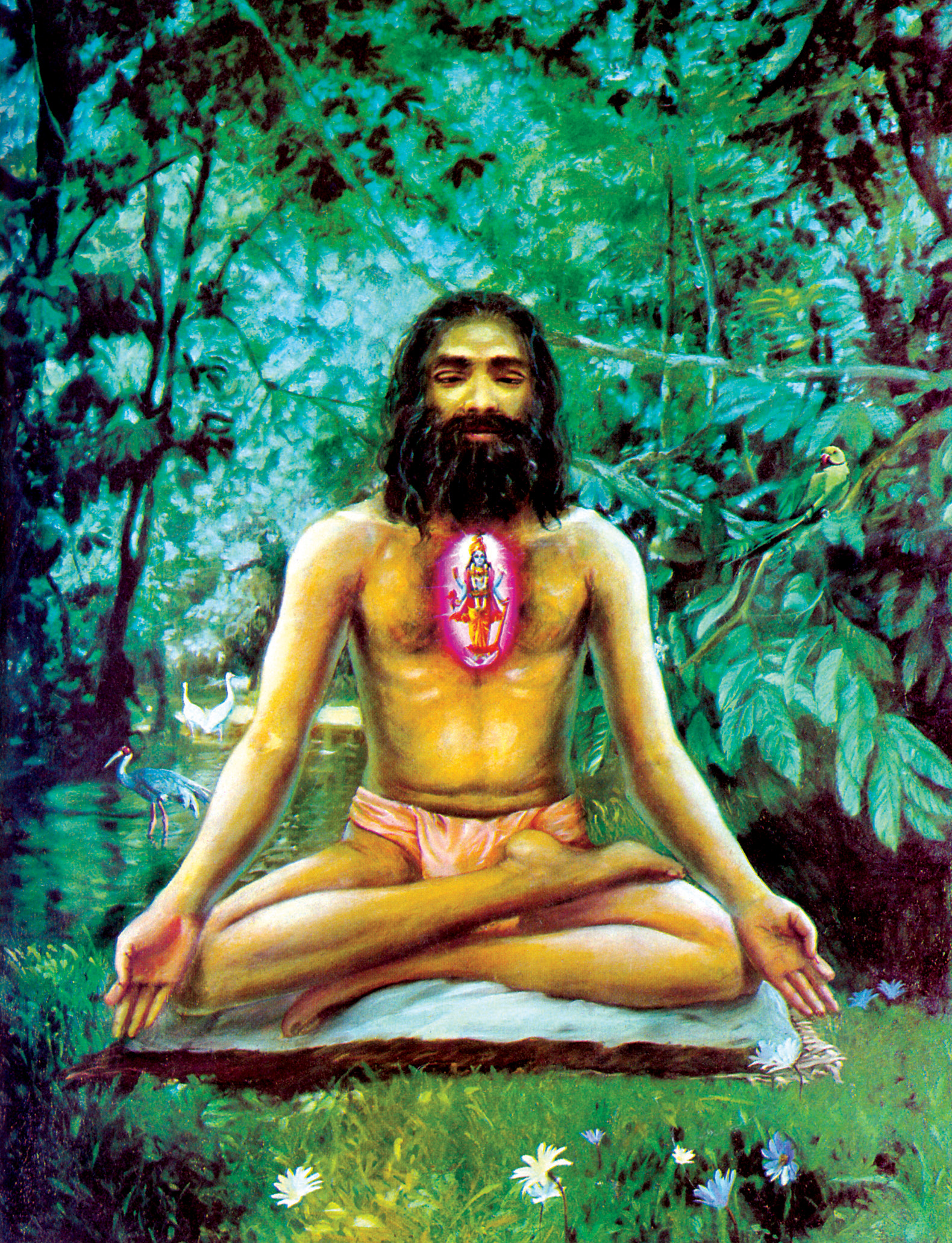
Yoga means “linking” with the Supreme. The Bhagavad-gītā describes several systems—karma-yoga (work), jñāna-yoga (knowledge), dhyāna-yoga (meditation), and aṣṭāṅga-yoga (eightfold path)—but ultimately declares bhakti-yoga, devotional service, to be the highest.
“Of all yogīs, he who always abides in Me with great faith, worshiping Me in transcendental loving service, is most intimately united with Me in yoga, and is the highest of all.” (Bg. 6.47) So one who thinks of the Supreme Lord always is the greatest yogi, the supermost jnani, and the greatest devotee at the same time.
I remember some years ago (1979), Bob Dylan released this song entitled “Gotta Serve Somebody”. I’m sure many of you remember it.
[Chorus] But you’re going to have to serve somebody, yes indeed You’re going to have to serve somebody Well, it may be the devil or it may be the Lord But you’re going to have to serve somebody
I chose to serve the Lord, Krishna. Service ts our eternal nature, our dharma. And like Bob says “You’re going to have to serve somebody”
The following are some quotes from the Srimad Bhagavatam, ant the Bhagavad-gita, on our eternal relationship (sanātana-dharma) with the Lord.
At the last stage of one’s life, one should be bold enough not to be afraid of death. But one must cut off all attachment to the material body and everything pertaining to it and all desires thereof. (SB 2.1.15)
The foolishness of gross materialism is that people think of making a permanent settlement in this world, although it is a settled fact that one has to give up everything here that has been created by valuable human energy. Great statesmen, scientists, philosophers, etc., who are foolish, without any information of the spirit soul, think that this life of a few years only is all in all and that there is nothing more after death. This poor fund of knowledge, even in the so-called learned circles of the world, is killing the vitality of human energy, and the awful result is being keenly felt. And yet the foolish materialistic men do not care about what is going to happen in the next life. The preliminary instruction in the Bhagavad-gītā is that one should know that the identity of the individual living entity is not lost even after the end of this present body, which is nothing but an outward dress only. As one changes an old garment, so the individual living being also changes his body, and this change of body is called death. Death is therefore a process of changing the body at the end of the duration of the present life. An intelligent person must be prepared for this and must try to have the best type of body in the next life. The best type of body is a spiritual body, which is obtained by those who go back to the kingdom of God or enter the realm of Brahman. (from purport)
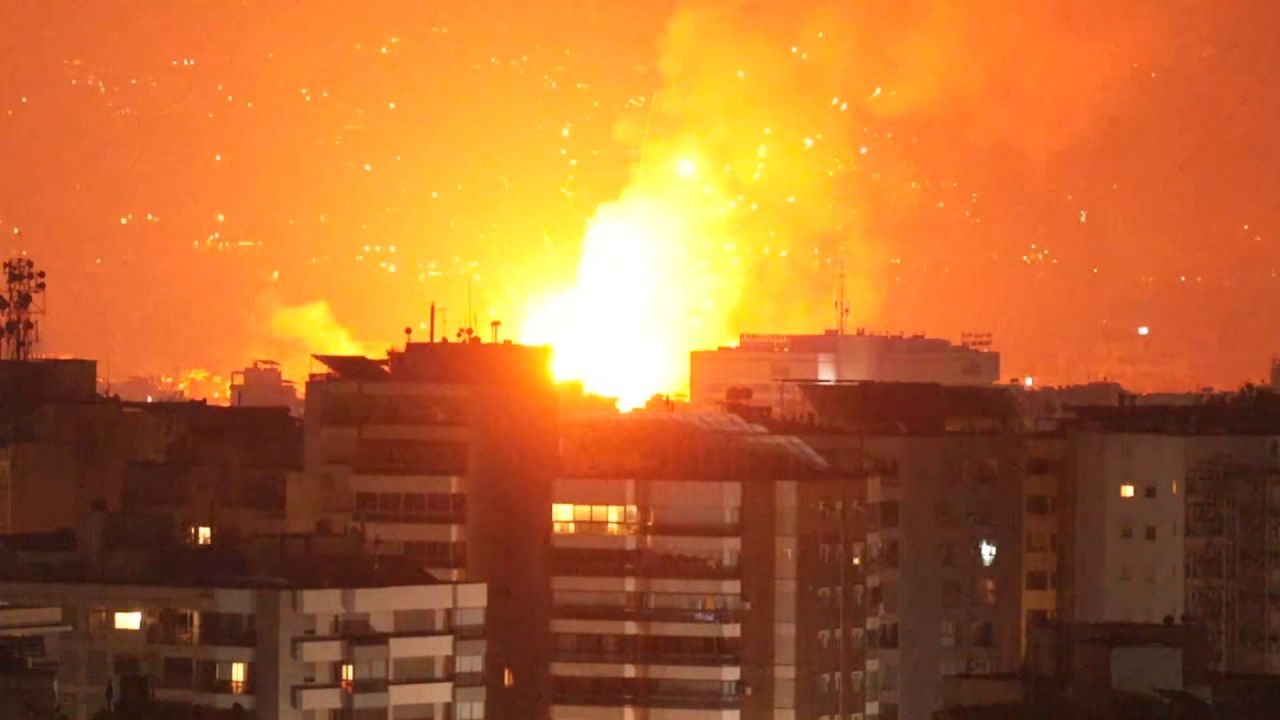
This morning as I was waking up, I was reminded that just yesterday, America and Israel declared war on Iran.
As much as I would like not to meditate on politics, it almost seems unavoidable, because it affects us all.
People are suffering, and starving and dying everyday in places like Ukraine, Gaza, Venezuela, Iran, and not to mention thousands of other places in the world.
It is too easy to just look away, and write it off as Karma.
As a devotee, I try to see this world through the lens of the Vedas, particularly the Bhagavad-gita and the Srimad Bhagavatam.
And I was thinking how different we all are, but connected as well; brothers and sisters, parents and children, friends and neighbors. All connected like drops of water in the ocean, or sparks from the same fire.
I went to the seventh chapter of the Bhagavad-gita, entitled “Knowledge of the Absolute”, in hopes of a better understanding of world events.
na māṁ duṣkṛtino mūḍhāḥ prapadyante narādhamāḥ māyayāpahṛta-jñānā āsuraṁ bhāvam āśritāḥ
na—not; mām—unto Me; duṣkṛtinaḥ—miscreants; mūḍhāḥ—foolish; prapadyante—surrender; narādhamāḥ—lowest among mankind; māyayā—by the illusory energy; apahṛta—stolen by illusion; jñānāḥ—knowledge; asuram—demonic; bhāvam—nature; āśritāḥ—accepting.
TRANSLATION
Those miscreants who are grossly foolish, lowest among mankind, whose knowledge is stolen by illusion, and who partake of the atheistic nature of demons, do not surrender unto Me. (Bg. 7.15)
When we speak of yoga we refer to linking up our consciousness with the Supreme Absolute Truth. Such a process is named differently by various practitioners in terms of the particular method adopted. When the linking up process is predominantly in fruitive activities, it is called karma-yoga, when it is predominantly empirical, it is called jñāna-yoga, and when it is predominantly in a devotional relationship with the Supreme Lord, it is called bhakti-yoga. Bhakti-yoga or Kṛṣṇa consciousness is the ultimate perfection of all yogas, as will be explained in the following verse.
And of all yogīs, he who always abides in Me with great faith, worshiping Me in transcendental loving service, is most intimately united with Me in yoga and is the highest of all. (Bhagavad-gita 6.47)
The culmination of all kinds of yoga practices lies in bhakti-yoga. All other yogas are but means to come to the point of bhakti in bhakti-yoga. Yoga actually means bhakti-yoga; all other yogas are progressions toward the destination of bhakti-yoga. From the beginning of karma-yoga to the end of bhakti-yoga is a long way to self-realization. Karma-yoga, without fruitive results, is the beginning of this path. When karma-yoga increases in knowledge and renunciation, the stage is called jñāna-yoga. When jñāna-yoga increases in meditation on the Supersoul by different physical processes, and the mind is on Him, it is called aṣṭāṅga-yoga. And, when one surpasses the aṣṭāṅga-yoga and comes to the point of the Supreme Personality of Godhead Kṛṣṇa, it is called bhakti-yoga, the culmination. Factually, bhakti-yoga is the ultimate goal, but to analyze bhakti-yoga minutely one has to understand these other yogas. The yogī who is progressive is therefore on the true path of eternal good fortune. One who sticks to a particular point and does not make further progress is called by that particular name: karma-yogī, jñāna-yogī or dhyāna-yogī, rāja-yogī, haṭha-yogī, etc. If one is fortunate enough to come to the point of bhakti-yoga, it is to be understood that he has surpassed all the other yogas. Therefore, to become Kṛṣṇa conscious is the highest stage of yoga, just as, when we speak of Himalayan, we refer to the world’s highest mountains, of which the highest peak, Mount Everest, is considered to be the culmination.
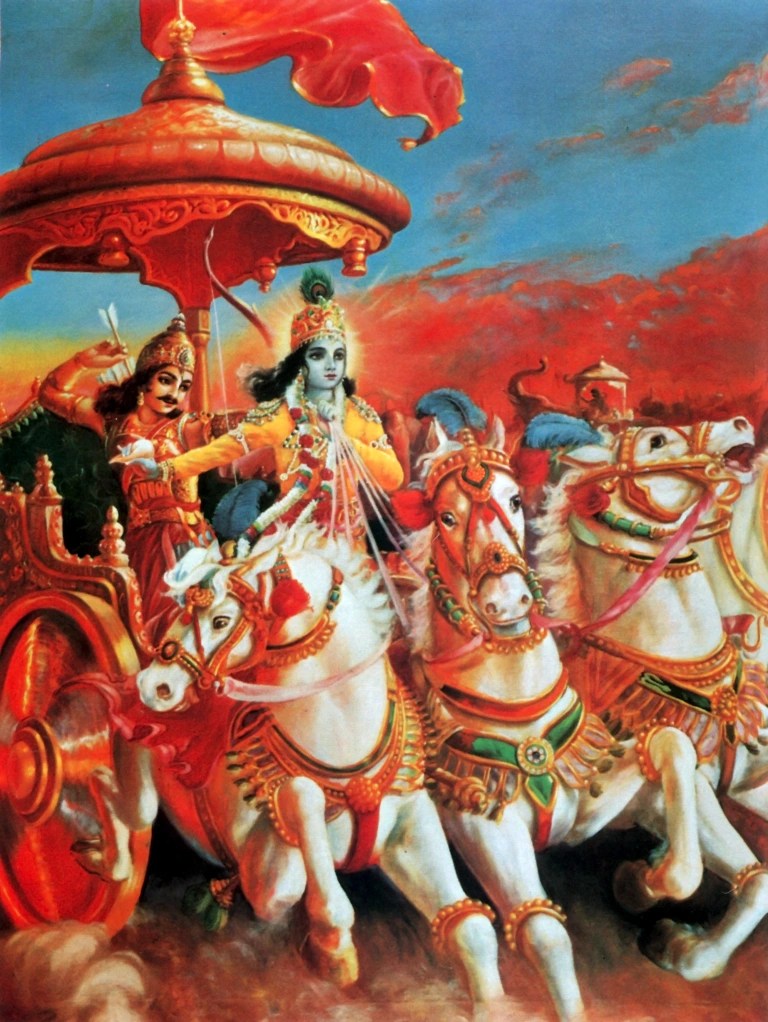
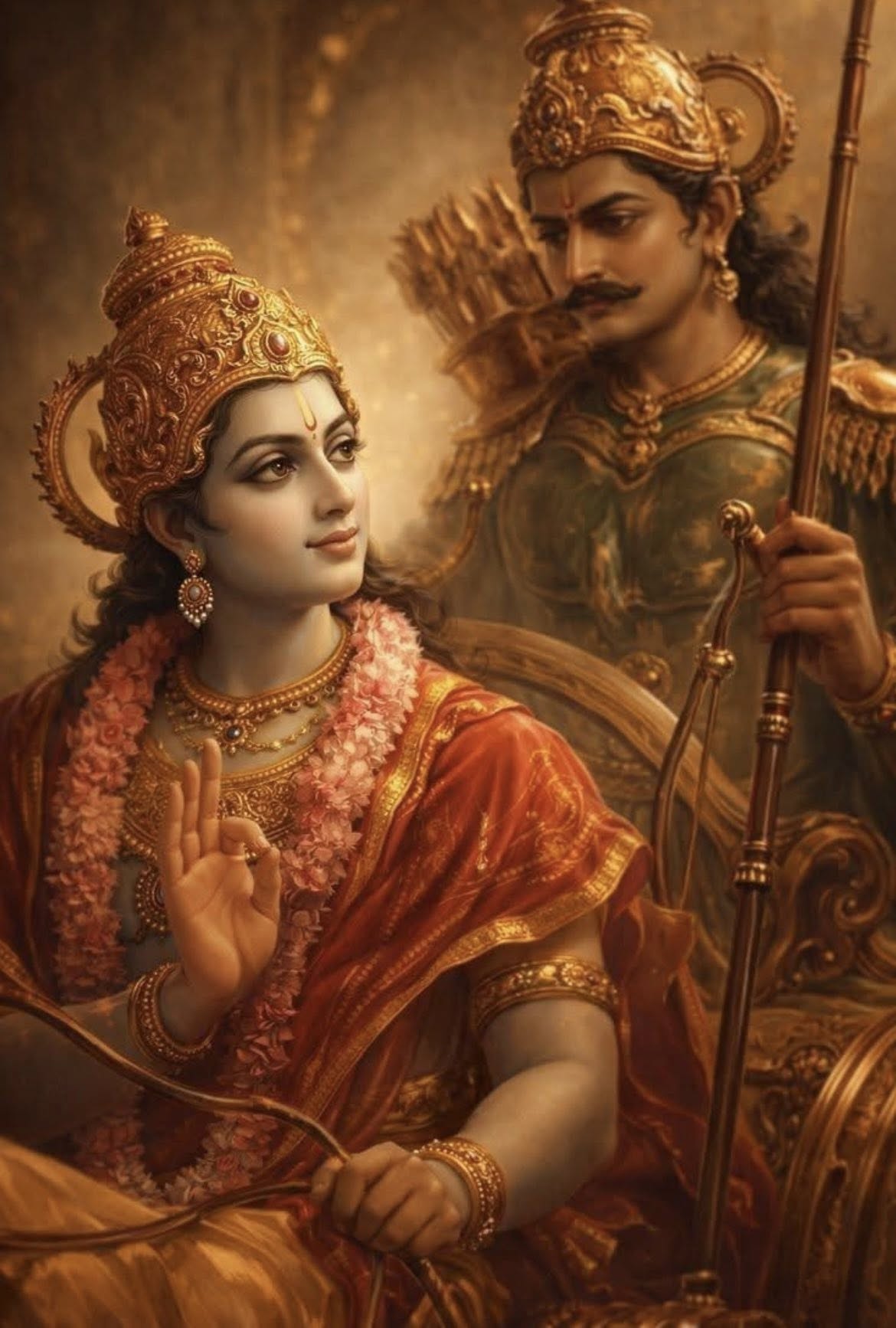
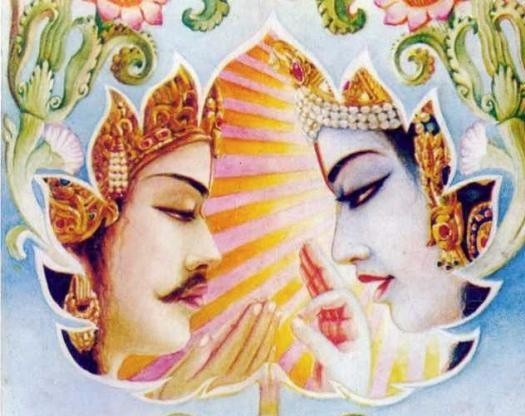
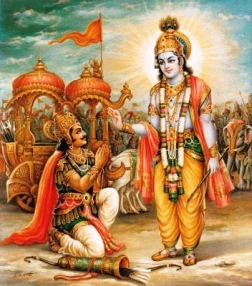
Whenever I think about the Bhagavad-gita, this image comes to mind. It is the “Song of God”, the words spoken by the Supreme Personality of Godhead to His dear friend and disciple Arjuna.
Bhagavad-gītā As It Is 1972 Edition By His Divine Grace A. C. Bhaktivedanta Swami Prabhupāda Chapter Ten, Text 12-13
Arjuna said: You are the Supreme Brahman, the ultimate, the supreme abode and purifier, the Absolute Truth and the eternal divine person. You are the primal God, transcendental and original, and You are the unborn and all-pervading beauty. All the great sages such as Nārada, Asita, Devala, and Vyāsa proclaim this of You, and now You Yourself are declaring it to me.
PURPORT
In these two verses the Supreme Lord gives a chance to the modern philosopher, for here it is clear that the Supreme is different from the individual soul. Arjuna, after hearing the essential four verses of Bhagavad-gītā in this chapter, became completely free from all doubts and accepted Kṛṣṇa as the Supreme Personality of Godhead. He at once boldly declares, “You are Parambrahma, the Supreme Personality of Godhead.” And previously Kṛṣṇa states that He is the originator of everything and everyone. Every demigod and every human being is dependant on Him. Men and demigods, out of ignorance, think that they are absolute and independant of the Supreme Lord Kṛṣṇa. That ignorance is removed perfectly by the discharge of devotional service. This is already explained in the previous verse by the Lord. Now by His grace, Arjuna is accepting Him as the Supreme Truth, in concordance with the Vedic injunction. It is not because Kṛṣṇa is an intimate friend of Arjuna that he is flattering Him by calling Him the Supreme Personality of Godhead, the Absolute Truth. Whatever Arjuna says in these two verses is confirmed by Vedic truth. Vedic injunctions affirm that only one who takes to devotional service to the Supreme Lord can understand Him, whereas others cannot. Each and every word of this verse spoken by Arjuna is confirmed by Vedic injunction.
…Sometimes an ever-liberated personal associate of the Supreme Personality of Godhead descends into this universe just as the Lord descends. Although working for the liberation of conditioned souls, the messenger of the Supreme Lord remains untouched by the material energy. Generally ever-liberated personalities live in the spiritual world as associates of Lord Kṛṣṇa, and they are known as kṛṣṇa-pāriṣada, associates of the Lord. Their only business is enjoying Lord Kṛṣṇa’s company, and even though such eternally liberated persons come within this material world to serve the Lord’s purpose, they enjoy Lord Kṛṣṇa’s company without stoppage. The ever-liberated person who works on Kṛṣṇa’s behalf enjoys Lord Kṛṣṇa’s company through his engagement.
… The conditioned soul subjected to the threefold material miseries is ceaselessly kicked by māyā, and this is his disease. If by chance he meets a saintly person who works on Kṛṣṇa’s behalf to deliver conditioned souls, and if he agrees to abide by his order, he can gradually approach the Supreme Personality of Godhead, Kṛṣṇa.(from purport to Madhya-lila 22.14-15)
Last night as I was falling asleep, this prayer just popped into my head:
SRI RUPA PRANAMA
sri-caitanya-mano-‘bhistam sthapitum yena bhtu-tale svayam rupah kada mahyam dadati sva-padantikam
sri-caitanya-of Lord Caitanya; manah– mind; abhistam-what is desired; sthapitam-established; yena-by whom; bhu-tale-on the surface of the globe; svayam-himself; rupah-Srila Rupa Gosvami; kada-when; mahyam-unto me; dadati-will give; sva-his own; pada-lotus feet; antikam-proximity to.
When will Srila Rupa Gosvami Prabhupada, who has established within this material world the mission to fulfill the desire of Lord Caitanya, give me shelter under his lotus feet?
And as I drifted off to sleep I was thinking about Srila Rupa Goswami, I don’t know why. But I woke still thinking about him. The following is an article from Back to Godhead Magizine.
Obstacles on the Path of Eternity An Excerpt from Srila Rupa Gosvami’s Upadesamrta from Back to Godhead Magazine Vol. 1, No.88, 1973
[SRILA RUPA GOSVAMI was one of six exalted devotees especially chosen through the Krsna conscious chain of spiritual masters to teach the devotional service of the Supreme Lord in a scientific manner. Although all of these six great devotees were erudite scholars and prolific writers, Srila Rupa Gosvami is the most prominent, for he most greatly appreciated the nectar of Krsna consciousness. His Upadesamrta (Nectarean Instructions), a short work of only eleven verses, teaches the basic principles for arousing one’s dormant love of Krsna, the Supreme Lord. Written in Sanskrit some 400 years ago, it has now been translated into English, with an illuminating explanation of each verse, by His Divine Grace A.C. Bhaktivedanta Swami Prabhupada.]
Sometime ago, I ran across this wonderful web site Prabhupada.io. It has it all, images, text, conversations, lectures, letters, etc. It is truly an Archive of Srila Prabhupada’s Original unedited words. Highly Recommended!
Building a Sacred Digital Archive for the Next 10,000 Years
The path to creating Prabhupada.io began with a simple recognition: Srila Prabhupada’s teachings are not merely books—they are eternal law books that deserve preservation and accessibility for millennia to come.
The Vision: A True Digital Archive
What distinguishes a true digital archive from a mere collection of files? It requires, among other things:
Comprehensive indexing that reveals the interconnected web of spiritual knowledge
Clean, searchable source texts extracted with care from the original works
Intuitive navigation that serves both newcomers and scholars
Open accessibility that removes barriers between seekers and sacred wisdom
Future-proof architecture built to endure for generations
Thank you to whoever posted this on Facebook. I didn’t catch the name of person posting this, but this is real good!
THE BHAGAVAD GITA IN TEN POINTS On July 13, 1947 Srila Prabhupada wrote a letter to Raja Mohendra Pratap and explained the Bhagavad-gita to him in ten points. The following is Srila Prabhupada’s summary of ten conclusions in the Bhagavad-gita.
1) God is one and everything is in Him and He is in everything.
2) To render transcendental service unto God is to serve everything that be, just like to water the root of the tree is to water the different branches and numerous leaves of the tree or to supply food to the stomach is to vitalize all the senses and the sense organs of the body.
3) The parts are automatically served when the Whole is served but when the parts are served the whole may not be served or not served at all.
4) The parts and the Whole being eternally related, it is the eternal duty of the parts to render service unto the Whole.
5) A recipient of the services of the parts, God’s sat-cit-ananda vigraha, i.e., the all-attractive Cognizant and all-blissful Personality eternal. He can reveal Himself by His own potency without any help of the external potency called maya in order to be cognizable by the limited potency of the parts and as such He is not only the greatest of all but he is the smallest of all. That is His prerogative.
6) He is better realized when He by His causeless mercy agrees to descend in this mortal world but He is never realized by the partial speculations of the empiric philosophers, however systematic and long-termed it may be.
7) Sri Krishna is the Personality of Godhead and is the Summum Bonum Cause of all Causes proved by fact and figures in the statement of Bhagavad-gita, but He reserves the right of not being exposed to the sensual speculations of the empiric philosophers.
One should therefore surrender unto Him if one wants to know Him as He is and that is the real process to approach the Infinite by the infinitesimals.
9) Sri Krishna is easily available by the religion of love, i.e., by love and service as conceived by the damsels of Vraja who had practically no education whatsoever and much less any claim for high class birthright.
10) The highest service that can be rendered to the mankind is, therefore, to preach the philosophy and religion of Bhagavad-gita for all the times, all the places and all the people.
That supreme abode is called unmanifested and infallible, and it is the supreme destination. When one goes there, he never comes back. That is My supreme abode. (Bhagavad-gita 8.21)
Purport
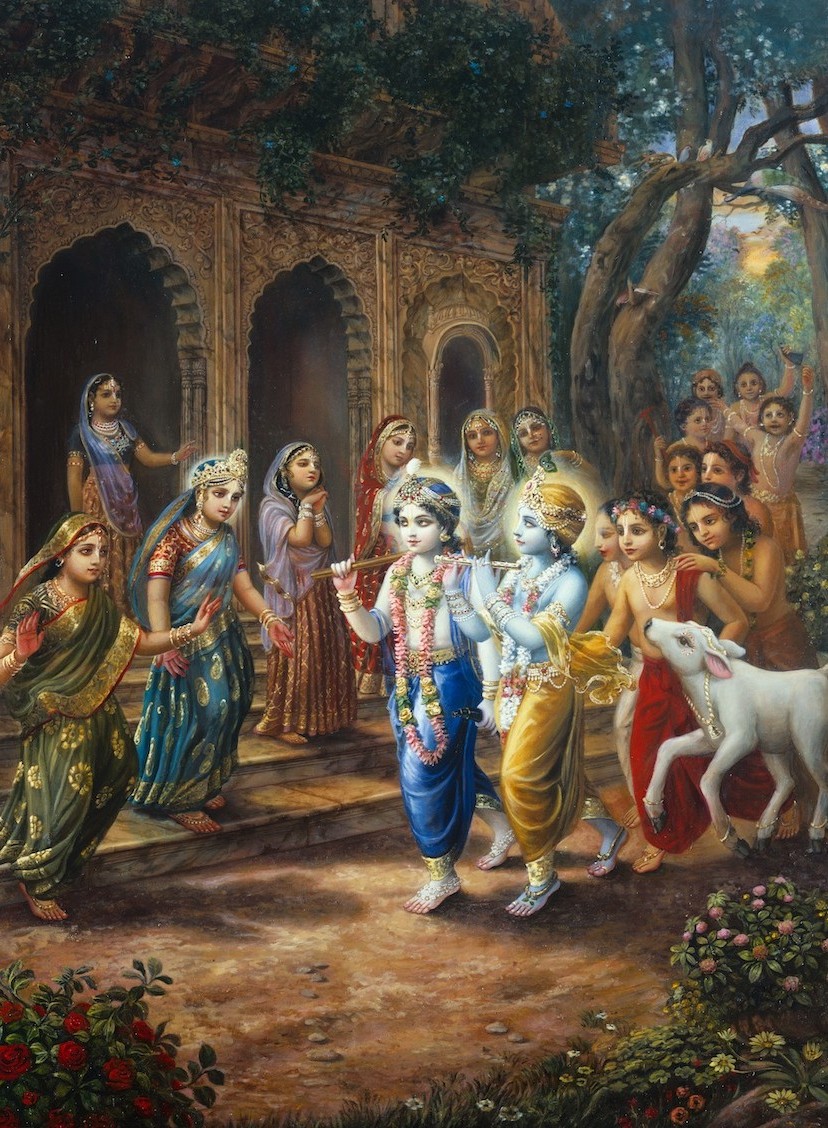
The supreme abode of the Personality of Godhead, Kṛṣṇa, is described in the Brahma-saṁhitā as cintāmaṇi-dhāma, a place where all desires are fulfilled. The supreme abode of Lord Kṛṣṇa known as Goloka Vṛndāvana is full of palaces made of touchstone. There are also trees which are called “desire trees” that supply any type of eatable upon demand, and there are cows known as surabhi cows which supply a limitless supply of milk. In this abode, the Lord is served by hundreds of thousands of goddesses of fortune (Lakṣmīs), and He is called Govinda, the primal Lord and the cause of all causes. The Lord is accustomed to blow His flute (venum kvanantam). His transcendental form is the most attractive in all the worlds—His eyes are like the lotus petals and the color of His body like clouds. He is so attractive that His beauty excels that of thousands of cupids. He wears saffron cloth, a garland around His neck and a peacock feather in His hair. In the Gītā Lord Krṣṇa gives only a small hint of His personal abode (Goloka Vṛndāvana) which is the supermost planet in the spiritual kingdom. A vivid description is given in the Brahma-saṁhitā. Vedic literature states that there is nothing superior to the abode of the Supreme Godhead, and that that abode is the ultimate destination. When one attains to it, he never returns to the material world. Kṛṣṇa’s supreme abode and Kṛṣṇa Himself are non different, being of the same quality. On this earth, Vṛndāvana, ninety miles southeast of Delhi, is a replica of that supreme Goloka Vṛndāvana located in the spiritual sky. When Kṛṣṇa descended on this earth, He sported on that particular tract of land known as Vṛndāvana in the district of Mathurā, India.
Happy New Year to all are readers. Wishing you all a prosperous new year filled with happiness and love. And may your Krishna Consciousness increase with each passing day.
When I think of New Years, I am reminded of what a short time a year is in the greater scheme of eternity. In the Bhagavad-gita there is a brief description of the duration of time in the material universe.
…The duration of the material universe is limited. It is manifested in cycles of kalpas. A kalpa is a day of Brahmā, and one day of Brahmā consists of a thousand cycles of four yugas or ages: Satya, Tretā, Dvāpara, and Kali. The cycle of Satya is characterized by virtue, wisdom and religion, there being practically no ignorance and vice, and the yuga lasts 1,728,000 years. In the Tretā-yuga vice is introduced, and this yuga lasts 1,296,000 years. In the Dvāpara-yuga there is an even greater decline in virtue and religion, vice increasing, and this yuga lasts 864,000 years. And finally in Kali-yuga (the yuga we have now been experiencing over the past 5,000 years) there is an abundance of strife, ignorance, irreligion and vice, true virtue being practically nonexistent, and this yuga lasts 432,000 years. (from purport Bg 8.17)
Even if I could grasp the extent of time in the material universe, that is just a fraction of the unlimited eternal time that continues after the termination of the yuga.
…Then the process is set rolling again. These four yugas, rotating a thousand times, comprise one day of Brahmā, the creator god, and the same number comprise one night. Brahmā lives one hundred of such “years” and then dies. These “hundred years” by earth calculations total to 311 trillion and 40 million earth years. By these calculations the life of Brahmā seems fantastic and interminable, but from the viewpoint of eternity it is as brief as a lightning flash. In the causal ocean there are innumerable Brahmās rising and disappearing like bubbles in the Atlantic. Brahmā and his creation are all part of the material universe, and therefore they are in constant flux. (from purport Bg 8.17)
The above calculations Srila Prabhupada uses and I quote;
…seems fantastic and interminable, but from the viewpoint of eternity it is as brief as a lightning flash.
Arsha Prayoga – Part One April 26, 2010 by Locanananda Prabhu
…For those who saw the Hare Krishna movement spread from city to city and from country to country, it was clear that the original version of Srila Prabhupada’s books was full of spiritual potency and did not require to be changed in any way for his words to act upon the hearts of the conditioned souls…
The question as to whether the writings of the acarya may or may not be revised by his disciples after his disappearance is answered by the rule of “arsa prayoga”. This principle states that one should not see mistakes in what the spiritual master has written or think that his writings may be changed to make them more effective or politically correct. To preserve his teachings in their originally published form is the way by which the acarya is honored, and to do otherwise is to dishonor him. That is the rule of “arsa prayoga”, a principle that devoted followers of a bona fide spiritual master must adhere to without deviation.
The rationale for changing Srila Prabhupada’s books was based on a series of false arguments, many of which were defeated by Srila Prabhupada himself as this article will show. To justify their actions, the BBT editors created the illusion that Srila Prabhupada’s books were defective and in need of extensive editing even though they knew His Divine Grace had never authorized anyone to revise his books after his disappearance. Subsequent to his departure, they conveniently overlooked the principle of “arsa prayoga” and proceeded to do exactly what vaisnava tradition strictly prohibits.
…So far Narada Muni is concerned, in His previous life He was a maidservant’s son, but by the mercy of the devotees He later on became siddha and next life He appeared as Narada with complete freedom to move anywhere by the grace of the Lord. So even though He was in his previous life a maidservant’s son there was no impediment in the achievement of His perfect spiritual life. Similarly any living entity who is conditioned can achieve the perfectional stage of life by the above mentioned processes and the vivid example is Narada Muni.
So I do not know why you have asked about my previous life. Whether I was subjected to the laws of material nature? So, even though accepting that I was subjected to the laws of material nature, does it hamper in my becoming Spiritual Master? What is your opinion? From the life of Narada Muni it is distinct that although He was a conditioned soul in His previous life, there was no impediment of His becoming the Spiritual Master. This law is applicable not only to the Spiritual Master, but to every living entity.
Letter to: Tamala Krsna Los Angeles 21 June, 1970
Paris My Dear Tamala,
Please accept my blessings. I beg to acknowledge receipt of your letter dated 18th June, 1970, sent by Special Delivery Air Mail.
Krsna philosophy is understood as it is stated in the Vedas:
Yasya deve para bhakti yatha deve tatha gurau tasya ete kathitha hi artha prakasante mahatmanah
“One who has got unflinching faith in the Supreme Lord and similar faith in his Spiritual Master to him only the imports of Vedic knowledge become revealed.”
A Spiritual Master is always liberated. In any condition of His life He should not be mistaken as ordinary human being. This position of a Spiritual Master is achieved by three processes. One is called sadhana siddha. That means one who is liberated by executing the regulative principle of devotional service. Another is krpa siddha, one who is liberated by the mercy of Krsna or His devotee. And another is nitya siddha who is never forgetful of Krsna throughout his whole life. These are the three features of the perfection of life.
So today we honor the Disappearance Day of our Srila Prabhupada. We honor this day with a half day fast and remembrances.
He reasons ill who says that Vaiṣṇavas die, When thou art living still in sound! The Vaiṣṇavas die to live, and living try To spread the holy name around.
Srila Prabhupada is still present through his words and instructions. We would like to share with youthe following speech was delivered in 1936 Bombay by the pure devotee who three decades later will become the world-renowned spiritual master of The Hare Krishna Movement. Abhay Charan das who latter becomes His Divine Grace A.C. Bhaktivedanta Swami Prabhupada glorifies his own spiritual master Śrīla Bhaktisiddhānta Sarasvatī Goswami Maharaja with this Appearance day (Vyasa-puja) homage. Thus we learn the time-honored meaning of spiritual master, disciple and their relationship.
On Janmastami (Lord Krsna’s Appearance Day) my wife and I, towards evening sat down, and watched the beautiful DVD “Darsana Krsna Meditiation”. After a long day of fasting, I was ready to go to sleep, but my wife suggested we watch the Darsana DVD instead. To my surprise it woke me up and I felt very enlivened, and we kept it playing until midnight, when Krsna makes His appearance. Then the next day I pulled out the book and just relished reading the text and reveling in the beautiful photography of the deities. Highly recommended!
The Darshan story
(by Nitya-tripta devi dasi)
I started my devotional service in 1975 at the BBT photo department, also affectionately known by the name of “Photo-Loka” to residents of the New Dvaraka community in Los Angeles. One of my assigned duties was to photograph the Deities with a 4×5 View-Camera. It is not a particularly easy camera to use. It is big and bulky; focusing the image is done on a ground glass at the back of the camera with a magnifying lens, which displays the image upside down and backwards. Exposures have to be taken with a hand held light-meter at the subject, and the light reading is calculated accordingly. And oh yes, there is usually the need of lights with their stands and a substantial tripod to support the camera. We also used this class of camera to photograph all the art-work for the BBT publications due to its fine rendition of detail. Only the best for Krishna!
The pictures I took in those early years in New Dvaraka and other temples were used in books and posters, sent to Srila Prabhupada directly, and used by the pujari island seamstresses to improve the quality of dress standards offered to the Lord. Many devotees, including myself, would talk of a book with magnificent Deity pictures, and we made our own private photo collections. Later on through the years I took pictures on various altars for the Krishna Vision Deity slide shows. Each Deity is different in his own special mood reciprocating with His devotees according to their needs and desires.
Here is another word for your vaisnava vocabulary, acintya-bhedabheda-tattva. I was always facinated by this word because its meaning is inconceivable; simultaneous oneness and difference. Srila Prabhupada uses the example of the sun and the sunshine. The sunshine is not different from the sun as it is the engery of the sun, but when the sunshine is shinning in your room you cannot say the sun is in you room. Hence, one and different simultaneously. So similarly, God and His creation are one and different simultaneously One and Different.
Another example Srila Prabhupada uses is a drop of water from the ocean, has the same qualities as the ocean, in quality but not in quanitity. As living entities or as parts of God’s energy, we’re also equal in quality with God, but there’s a vast difference in quantity.
Achintya-bhedabheda-tattva refers to the inconceivable and simultaneous oneness and difference of the Supreme Person and His energies. This is one of the key points of theistic philosophy taught by Chaitanya Mahaprabhu. As parts of God’s energy, we’re also equal in quality with God, but there’s a vast difference in quantity. We’re each infinitesimal sparks of spiritual energy, and the Supreme Person, Krishna, is the infinite, supreme source of all energies.
Achintya-bhedabheda-tattva describes the relationship between the Supreme Lord and His energies, including individual souls, as both one with and different from Him simultaneously. This principle is beyond human comprehension, hence the “inconceivable” aspect.
From a lecture at a Christian Monastery – Melbourne April 06, 1972
…The best and ultimate authority is Kṛṣṇa, for He is our eternal well-wisher, and He always speaks for our benefit. Since we have to accept some authority, why not accept His? Simply by hearing of His glories from Bhagavad-gītā and Śrīmad-Bhāgavatam and by chanting His names: Hare Kṛṣṇa, Hare Krsna, Krsna Krsna, Hare Hare, Hare Rama, Hare Rama, Rama Rama, Hare Hare, we can swiftly perfect our lives.
Kṛṣṇa Consciousness, the Matchless Gift By His Divine Grace A. C. Bhaktivedanta Swami Prabhupāda Chapter One
Spiritual Knowledge Through Kṛṣṇa
The aim of this Kṛṣṇa consciousness movement is to bring all living entities back to their original consciousness. All living entities within the material world are, to varying degrees, afflicted with a type of madness. This Kṛṣṇa consciousness movement aims at curing man of his material disease and reestablishing his original consciousness. In a Bengali poem a great Vaiṣṇava poet has written, “When a man is haunted by ghosts, he can only speak nonsense. Similarly, anyone who is under the influence of material nature should be considered haunted, and whatever he speaks should be considered nonsense.” One may be considered a great philosopher or great scientist, but if he is haunted by the ghost of māyā, illusion, whatever he theorizes and whatever he speaks is more or less nonsensical. Today we are given the example of a psychiatrist who, when requested to examine a murderer, proclaimed that since all the patients with whom he had come in contact were more or less crazy, the court could excuse the murderer on those grounds if it so desired. The point is that in the material world it is very difficult to find a sane living entity. The prevailing atmosphere of insanity in this world is all caused by the infection of material consciousness.
Śrīmad-Bhāgavatam 7.5.22-34 Lecture By His Divine Grace A.C. Bhaktivedanta Swami Prabhupada Los Angeles, May 27, 1972
So today, appearance day of Lord Nṛsiṁhadeva. Lord Nṛsiṁhadeva appeared on this Nṛsiṁha Cāturdaśī on account of His devotee, Prahlāda. As it is stated in the Bhagavad-gītā, yadā yadā hi dharmasya glānir bhavati bhārata, abhyutthānam adharmasya [Bg. 4.7]. Paritrāṇāya sādhūnāṁ vināśāya ca duṣkṛtāṁ, sambhavāmi yuge yuge [Bg. 4.8]. The Lord appears with two purposes. Paritrāṇāya sādhūnām: just to give protection and rescue the devotees, and to kill the demons, vināśāya ca duṣkṛtām. So Prahlāda Mahārāja, five-years-old boy, his only fault was that he was Kṛṣṇa conscious. He was devotee of Kṛṣṇa. That was his only fault. And the father was so unkind to a child, even five years old. He could not excuse, “Oh, let this boy do whatever, chanting Hare Kṛṣṇa.” No. The demons are so much against God consciousness that even at his home he would not allow his own child to become God conscious. This is demoniac civili… So you’ll find many critics, many enemies, because you are making progress in Kṛṣṇa consciousness. So the demons are always against this Kṛṣṇa consciousness movement. That is the whole history. Just like Lord Jesus Christ, he was crucified. What was his fault? He was preaching God consciousness, that’s all. This society is so cruel. So Prahlāda Mahārāja was tortured in so many ways. The torturing methods, I think you will find as you will see in today’s picture, how Prahlāda Mahārāja was tortured.
So one day, Hiraṇyakaśipu… After all, he was his son. Affection was there. So one day, Hiraṇyakaśipu asked the boy,
So he asked his son, “My dear son, what you have learned? The best thing, what you have learned from your teachers, so you kindly let me know.” So Prahlāda Mahārāja informed that “I have learned like this.” What is that?









 The Hare Krishna Movement