
The Bhagavad Gita As It Is Study Guide
Presented by Disciples and Followers of His Divine Grace A. C. Bhaktivedanta Swami Prabhupada
Click on link to open and save Bhagavad-gita Study Guide
Every Town and Village
01 Jun 2025 Leave a comment
in Uncategorized Tags: A.C. Bhaktivedanta, Arjuna, as it is, Bhagavad-gita, Bhagavad-gita study guide, Hare Krishna, hinduism, India, Krishna, Krsna, philosophy, religion, spirituality, Srila Prabhupada
The Bhagavad Gita As It Is Study Guide
Presented by Disciples and Followers of His Divine Grace A. C. Bhaktivedanta Swami Prabhupada
Click on link to open and save Bhagavad-gita Study Guide
22 May 2025 Leave a comment
in A. C. Bhaktivedanta Swami Prabhupada, Bhagavad-gita, Bhagavad-gita As It Is 1972 Edition, Meditation, Uncategorized Tags: ac-bhaktivedanta, always think of Me, become-my-devotee, Bhagavad-gita, faith, offer-homage-unto-me, spirituality, Srila Prabhupada, worship-me
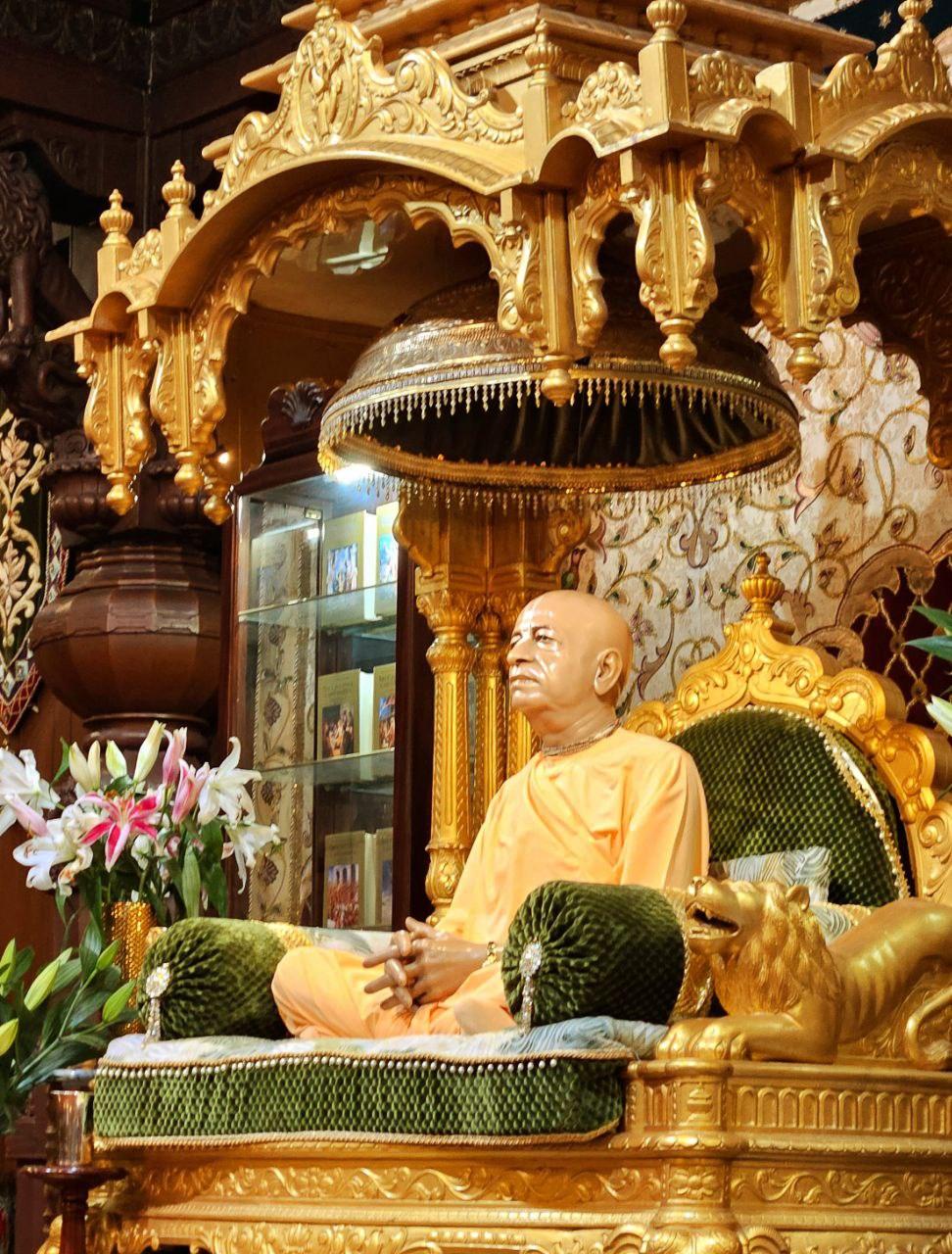
This morning I was reminded of something that I heard Srila Prabhupada say in a lecture. He was describing that Krishna Consciousness is very simple, you just need to do four things. Always think of Krishna, become His devotee, offer obeisances, and worship Him.
man-manā bhava mad-bhakto
mad-yājī māṁ namaskuru
mām evaiṣyasi yuktvaivam
ātmānaṁ mat-parāyaṇaḥ
mat-manāḥ—always thinking of Me; bhava—become; mat—My; bhaktaḥ—devotee; mat—My; yājī—worshiper; mām—unto Me; namaskuru—offer obeisances; mām—unto Me; eva—completely; eṣyasi—come; yuktvā evam—being absorbed; ātmānam—your soul; mat-parāyaṇaḥ—devoted to Me.
TRANSLATION
Engage your mind always in thinking of Me, offer obeisances and worship Me. Being completely absorbed in Me, surely you will come to Me. (Bhagavad-gita 9.34)
This verse is also repeated in the 16th Chapter:
man-manā bhava mad-bhakto
mad-yājī māṁ namaskuru
mām evaiṣyasi satyaṁ te
pratijāne priyo ’si me
man-manāḥ—thinking of Me; bhava—just become; mat-bhaktaḥ—My devotee; mat-yājī—My worshiper; mām—unto Me; namaskuru—offer your obeisances; mām—unto Me; eva—certainly; eṣyasi—come; satyam—truly; te—to you; pratijāne—I promise; prijaḥ—dear; asi—you are; me—My.
TRANSLATION
Always think of Me and become My devotee. Worship Me and offer your homage unto Me. Thus you will come to Me without fail. I promise you this because you are My very dear friend.
In this verse it is clearly indicated that Kṛṣṇa consciousness is the only means of being delivered from the clutches of this contaminated material world…Pure devotional service is the highest achievement of human society. (from purport)
More
30 Apr 2025 Leave a comment
in Uncategorized Tags: A.C. Bhaktivedanta Swami, Bhagavad-gita, God, Hare Krishna, japa, Krishna, Krsna, mantra meditation, religion, sankirtan, spirituality, Srila Prabhupada
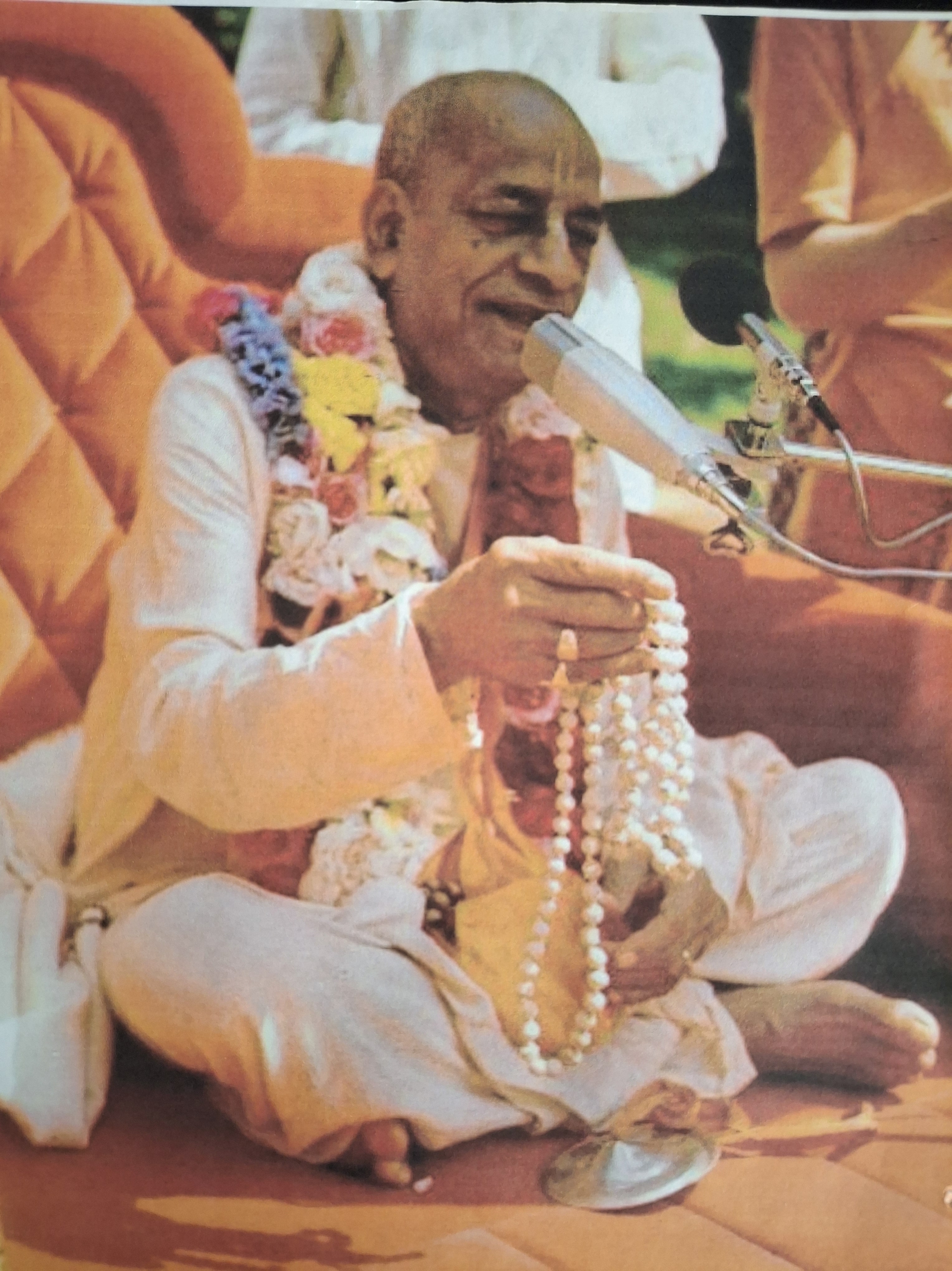
I’m sure everyone has a favorite picture of Srila Prabhupada, I particularly like this one in the morning when I am chanting Japa. It reminds me of the promise I made to chant every day.
When a mantra or hymn is chanted softly and slowly, that is called japa. The same mantra, when chanted loudly, is called kīrtana. For example, the mahā-mantra (Hare Kṛṣṇa, Hare Kṛṣṇa, Kṛṣṇa Kṛṣṇa, Hare Hare/ Hare Rāma, Hare Rāma, Rāma Rāma, Hare Hare) when uttered very softly only for one’s own hearing is called japa. The same mantra, when chanted loudly for being heard by all others, is called kīrtana. The mahā-mantra can be used for japa and kīrtana also. When japa is practiced it is for the personal benefit of the chanter, but when kīrtana is performed it is for the benefit of all others who may hear.
In the Padma Purāṇa there is a statement: “For any person who is chanting the holy name either softly or loudly, the paths to liberation and even heavenly happiness are at once open.” (Nectar of Devotion Chapter 9)
Of all the sacrifices, the chanting of Hare Kṛṣṇa, Hare Kṛṣṇa, Kṛṣṇa Kṛṣṇa, Hare Hare/ Hare Rāma, Hare Rāma, Rāma Rāma, Hare Hare is the purest representation of Kṛṣṇa. (from purport; Bhagavad-gita 10.25)
More
28 Apr 2025 Leave a comment
in Uncategorized Tags: A.C. Bhaktivedanta Swami, Bhagavad-gita, bhakti yoga, Bible, christianity, faith, God, Krishna, Krsna, perfection of yoga, seeing-god, spirituality, Srimad Bhagavatam, yoga
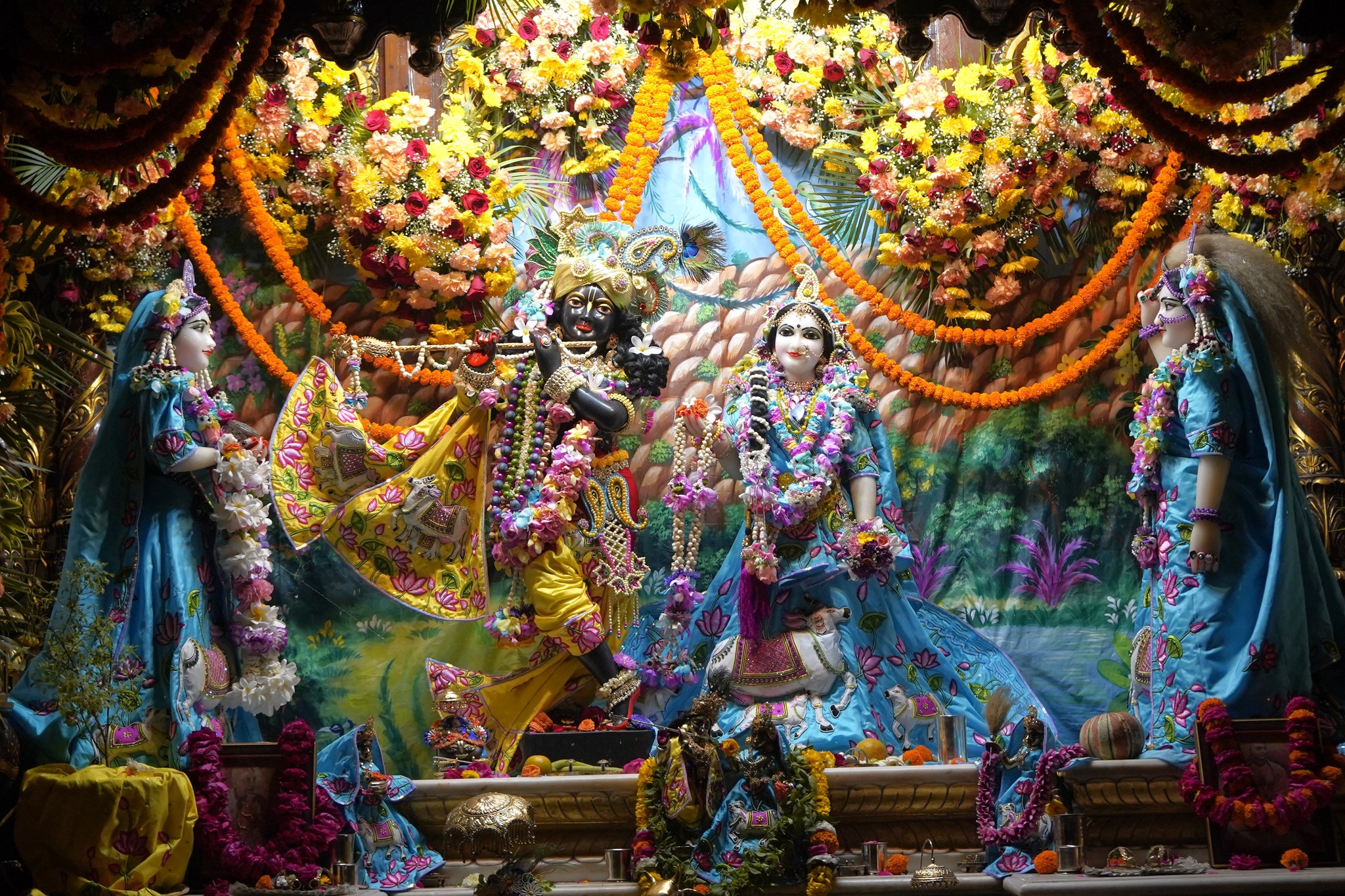
click on images to enlarge
“One has to qualify himself to see and understand God, and that process of qualification is called Kṛṣṇa consciousness. By engaging ourselves in God’s service, we become qualified to see God. Otherwise it is not possible.“
“One cannot understand the form, name, quality, or paraphernalia of God with one’s material senses.” (Cc Madya 17.136)
Just as God is eternal, we are also eternal, and when we establish our eternal relationship with the supreme, complete eternal, we realize our eternality.
Nityo nityānāṁ cetanaś cetanānām (Kaṭha Upaniṣad 2.2.13).
God is the supreme living entity among all living entities, the supreme eternal among all eternals. By Kṛṣṇa consciousness, by purification of the senses, this knowledge will be realized, and we will come to see God.
The following post is Chapter 3 from the book “The Path to Perfection” which gives some instruction on Seeing God (Krsna) and on the yoga system.
More
24 Apr 2025 Leave a comment
in A. C. Bhaktivedanta Swami Prabhupada, Rasa's (relationships), Uncategorized Tags: A.C. Bhaktivedanta Swami, Bhagavad-gita, devotion-in-friendship, fraternal-devotion, Krishna, religion, sakhya-rasa, spirituality, The Nectar of Devotion

So we are continuing our series on the five types of relationships (rasa’s) with the Lord. Today we are exploring the Fraternal Devotional stage of Love of God (Sakhya-rasa) as explained in chapter 41 of “The Nectar of Devotion”. Also included in todays post are some select verses from the Bhagavad-gita describing Arjuna’s friendship with Krishna.
When a devotee is permanently situated in devotional service, and by different symptoms of ecstasy he has developed and matured a fraternal mellow or flavor in relationship with the Personality of Godhead, his feeling is called fraternal love of Godhead.
The impetus for such fraternal love of God is God Himself. When one is liberated and discovers his eternal relationship with the Supreme Lord, the Lord Himself becomes the impetus for increasing fraternal love. The eternal associates of the Lord in Vrindavan have described this as follows: “The Lord, Hari, whose bodily hue is like the indranīla jewel, whose smiling is as beautiful as the kunda flower, whose silk dress is as yellow as golden autumn foliage, whose chest is beautified with garlands of flowers and who is always playing upon His flute-this enemy of the Agha demon is always attracting our hearts by wandering about Vrindavan.”
There are similar statements of fraternal love expressed outside the jurisdiction of Vrindavan. When the sons of Pandu, headed by Mahārāj Yudhisthira, saw Krishna in His four handed form on the battlefield of Kuruksetra, holding His conchshell, disc, club and lotus flower, they completely forgot themselves and became merged in the ocean of nectarean happiness. This shows how the sons of Pandu-King Yudhisthira, Bhima, Arjuna, Nakula and Sahadeva-were all caught up in fraternal love for Krishna.
From the Bhagavad-gita we are reminded of Arjuna’s friendship with Krishna.
More
22 Apr 2025 Leave a comment
in A. C. Bhaktivedanta Swami Prabhupada, Nectar of Devotion, Rasa's (relationships), Uncategorized Tags: A.C. Bhaktivedanta, Bhagavad-gita, bhakti yoga, God, Krishna, Krsna, Nectar of Devotion, neutral-love-of-god, religion, santa-rasa, spirituality, yogis

Today we are exploring the Neutral stage of Love of God, (santa-rasa), as explained in chapter 35 of “The Nectar of Devotion”.
“When the yogi sees the eternal form of Visnu and appreciates the Lord’s beauty in awe and veneration, he is situated in the neutral stage of love of God.”
…Some great sages have attained this neutral position by practicing austerity, penance and meditation to control the senses. Such sages are generally called mystic yogīs, and in most cases they are inclined to appreciate the spiritual pleasure of the impersonal feature of the absolute truth. They are practically unaware of the transcendental pleasure derived from personal contact with the Supreme Godhead.
When some great saintly persons who had undergone penances and austerities saw the four-handed transcendental form of Visnu, they began to remark as follows: “This four-handed form of the Lord, manifested in a bluish color, is the reservoir of all pleasure and the center of our living force. Actually, when we see this eternal form of Visnu, we, along with many other paramahaṁsas, become immediately captivated by the beauty of the Lord.” This appreciation of Lord Visnu by saintly persons is an instance of situation in santa-rasa, or the neutral stage of devotional service. In the beginning, those who are aspiring for salvation try to get out of the material entanglement by performing painful austerities and penances, and ultimately they come to the impersonal status of spiritual realization. At this brahma-bhuta [SB 4.30.20] stage of liberation from the material entanglement, the symptoms, as explained in the Bhagavad-gita, are that one becomes joyous beyond any hankering or lamentation and gains a universal vision. When the devotee is situated in the santa-rasa, or neutral stage of devotional service, he appreciates the Visnu form of the Lord.
More
20 Apr 2025 Leave a comment
in Uncategorized Tags: ac-bhaktivedanta-swami-prabhupada, Bhagavad-gita, Bible, Christ, Easter Sunday, faith, God, Jesus, Krishna, Krsna, salvation

Today as most of the Western World celebrates Easter Sunday, we thought we word honor the life of Lord Jesus Christ with some select writings by our spiritual master A.C. Bhaktivedanta Swami Prabhupada.
The Śrīmad-Bhāgavatam states that any bona fide preacher of God consciousness must have the qualities of titikṣā (tolerance) and karuṇā (compassion). In the character of Lord Jesus Christ we find both these qualities. He was so tolerant that even while he was being crucified, he didn’t condemn anyone. And he was so compassionate that he prayed to God to forgive the very persons who were trying to kill him. (Of course, they could not actually kill him. But they were thinking that he could be killed, so they were committing a great offense.) As Christ was being crucified he prayed, “Father, forgive them. They know not what they are doing.”
…Of course, the message that Christ preached was just according to his particular time, place, and country, and just suited for a particular group of people. But certainly he is the representative of God. Therefore we adore Lord Jesus Christ and offer our obeisances to him.
Once, in Melbourne, a group of Christian ministers came to visit me. They asked, “What is your idea of Jesus Christ?” I told them, “He is our guru. He is preaching God consciousness, so he is our spiritual master.” The ministers very much appreciated that.
Actually, anyone who is preaching God’s glories must be accepted as a guru. Jesus Christ is one such great personality. We should not think of him as an ordinary human being. The scriptures say that anyone who considers the spiritual master to be an ordinary man has a hellish mentality. If Jesus Christ were an ordinary man, then he could not have delivered God consciousness. (Science of Self Realization, Chapter 4, “Understanding Krsna and Christ)
Full Chapter
More
14 Feb 2025 Leave a comment
in 108 Bhagavad-gita slokas, A. C. Bhaktivedanta Swami Prabhupada, Bhagavad-gita, Bhagavad-gita As It Is 1972 Edition, Slokas, Uncategorized Tags: 1972 Edition, A.C. Bhaktivedanta, Arjuna, bagavad-gita slokas, Bhagavad-gita, Krishna, slokas
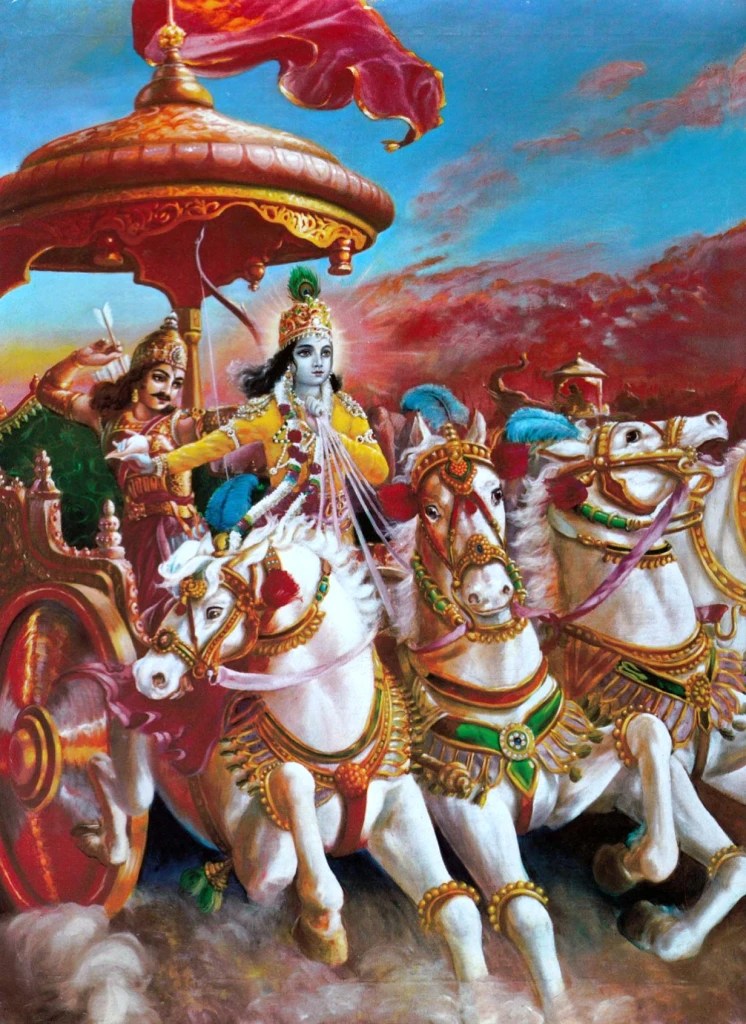
I am sure that many of you have your favorite Bhagavad-gita slokas, and I was thinking about it this morning. I was trying to recall my top 8 slokas, (which is hard to select only 8). But I have listed them below, in no particular order.
For the list the 108 most important Bhagavad-gita slokas click on following link: 1972 Bhagavad-gita
patraṁ puṣpaṁ phalaṁ toyaṁ
yo me bhaktyā prayacchati
tad ahaṁ bhakty-upahṛtam
aśnāmi prayatātmanaḥ
If one offers Me with love and devotion a leaf, a flower, fruit or water, I will accept it.
More
06 Feb 2025 Leave a comment
in A. C. Bhaktivedanta Swami Prabhupada, Chanchalapati das, Devotee's, Disciplic succession, Guru & Disciple, guru-tattva, Uncategorized Tags: Bhagavad-gita, disciplic succession, evam-parampara, hinduism, India, iskcon-banglore, Krishna, madhvacarya, spirituality

So today we recognize the Disappearance day of Madhvacarya, who is in our line of Disciplic Succession dating back to Krsna. His philosophy and writings have distinguished him as one of India’s greatest spiritual teachers. He is the Acarya of the Madhva Sampradaya. So this following post by Chanchalapathi Prabhu is very timely.
“Srila Prabhupada is the Deliverer of all ISKCON Devotees”
By Chanchalapathi Dasa -ISKCON Bangalore
Recently I had the opportunity of interacting with a few scholars of Madhva sampradaya in Bangalore and Udupi. One of them was an elderly Sanskrit scholar, a seventy year old retired university professor, a respected teacher and follower of Madhva philosophy in Bangalore.
The discussion with him led to the subject of the theological differences between ISKCON Bangalore and ISKCON Mumbai.
More
20 Jan 2025 Leave a comment
in Uncategorized Tags: Bhagavad-gita, cooking-vegetarian, India, Krishna, Krishna prasadam, spiritual food, spirituality, vegetarian, vegetarian-food
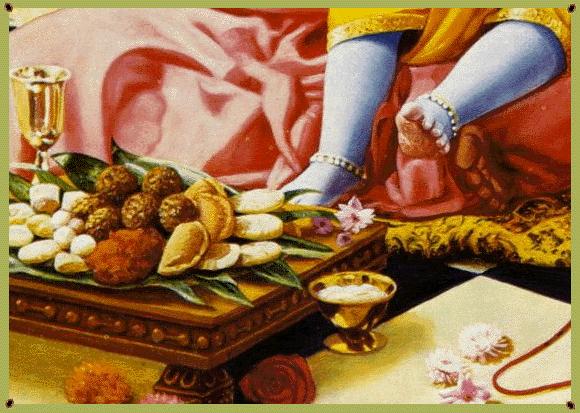
One very important and enjoyable activity we can practice, is cooking and offering foodstuffs to Lord Krishna. The following are some instructions on cleanliness, ingredients, and prayers for offering. This is a nice way to practice Krishna Consciousness at home.
Prasadam
How to Prepare and Offer Food
Food prepared for and offered to Krishna with love and devotion becomes completely spiritualized. Such food is called Krishna prasadam, which means “the mercy of Lord Krishna.”
Eating only food offered to Krishna is the perfection of vegetarianism. In the Bhagavad-gita Lord Krishna says that unless one eats only food that has been offered to Him in sacrifice, one will suffer the reactions of karma. He also states, “If one offers Me with love and devotion a leaf, a flower, a fruit, or water, I will accept it.”
We can offer Krishna foods prepared from milk products, vegetables, fruits, nuts, and grains. Meat, fish and eggs are not offerable. And a few vegetarian items are also forbidden— garlic and onions, for example, which are in the mode of darkness. (Hing, or asafoetida, is a tasty substitute for them in cooking.) Nor can you offer Krishna coffee or tea.
In preparing food, cleanliness is the most important principle. Nothing impure should be offered to God, so keep your kitchen very clean. Always wash your hands thoroughly before entering the kitchen. While preparing food, do not taste it, for you are cooking the meal not for yourself but for the plea¬sure of Krishna. Arrange positions of the food on dinnerware kept especially for this purpose; no one but the Lord should eat from these dishes. The easiest way to offer food is simply to pray, “My dear Lord Krishna, please accept this food,” and to chant each of the following prayers three times while ringing a bell.
More
11 Jan 2025 Leave a comment
in Uncategorized Tags: A.C. Bhaktivedanta, Bhagavad-gita, Bible, california-fires, chant Hare Krishna, Kali-yuga, Krishna, material-exestince, nature, samsara, spirituality

I am so saddened by the news coming out of California. Such a tragic loss for so many. Beautiful homes and forests, lives lost, lives disrupted. Our hearts go out to all who have been affected by the utter devastation.
This morning as I was singing the morning prayers:
.samsara-dāvānala-līḍha-loka-
tranayakarunakarunya-ghanāghanatvam
prāptasya kalyana-guṇārṇavasya
vandegurohsri-caraṇāravindam
“The spiritual master is receiving benediction from the ocean of mercy. Just as the cloud pours water on the forest fire to extinguish it, so the spiritual master extinguishes the blazing fire of material existence. I offer my respectful obeisances unto the lotus feet of my spiritual master.” (Śrī Gurvaṣṭakam, Verse 1)
I was again reminded of the California Fires and how this material world is often compared to a forest fire in Srila Prabhupada’s books. From the small paperback book entitled “Elevation to Krsna Consciousness” we read:
This material world is often compared to a forest fire which takes place automatically. No one wants a forest fire, but there is often lightning, or carelessness, or friction, or whatever, and the fire immediately takes place. Similarly, this material world is beset with a blazing fire of problems. Everyone wants to live here peacefully, but situations develop in such a way that this is not possible for anyone. We struggle very hard to adjust things in so many ways, but nature’s laws are so cruel and dangerous that in spite of our hopes and plans the blazing fire of the problems of material existence continues.
More
06 Jan 2025 Leave a comment
in A. C. Bhaktivedanta Swami Prabhupada, Srimad Bhagavatam, Subhadra Tags: Baladeva, Bhagavad-gita, India, jaganatha, Krishna, Krsna, lady-sudadhra, spirituality, subadhra, travel

Who is that smiling women in the middle? Why its Lady Subhadra!
Subhadra : Daughter of Vasudeva and sister of Lord Śrī Krsna. She was not only a very dear daughter of Vasudeva, but also a very dear sister to both Krsna and Baladeva. The two brothers and sister are represented in the famous Jagannatha temple of Puri, and the temple is still visited by thousands of pilgrims daily. This temple is in remembrance of the Lord’s visit at Kuruksetra during an occasion of solar eclipse and His subsequent meeting with the residents of Vrndavana. The meeting of Radha and Krsna during this occasion is a very pathetic story, and Lord Śrī Caitanya, in the ecstasy of Rādhārāṇī, always pined for Lord Śrī Krsna at Jagannatha Puri. While Arjuna was at Dvaraka, he wanted to have Subhadra as his queen, and he expressed his desire to Lord Krsna. Śrī Krsna knew that His elder brother, Lord Baladeva, was arranging her marriage elsewhere, and since He did not dare to go against the arrangement of Baladeva, He advised Arjuna to kidnap Subhadra. So when all of them were on a pleasure trip on the Raivata Hill, Arjuna managed to kidnap Subhadra according to the plan of Śrī Krsna. Śrī Baladeva was very angry at Arjuna, and He wanted to kill him, but Lord Krsna implored His brother to excuse Arjuna. Then Subhadra was duly married with Arjuna, and Abhimanyu was born of Subhadra. At the premature death of Abhumanyu, Subhadra was very mortified, but on the birth of Pariksit she was happy and solaced. (from purport to SB 1.13.3-4)
24 Dec 2024 Leave a comment
in A. C. Bhaktivedanta Swami Prabhupada, Bhagavad-gita, Bhagavad-gita As It Is 1972 Edition Tags: ac-bhaktivedanta, as it is, Bhagavad-gita, hare-krishna-devotee, Krishna, Krsna Book, penguin-classic, spirituality, yoga
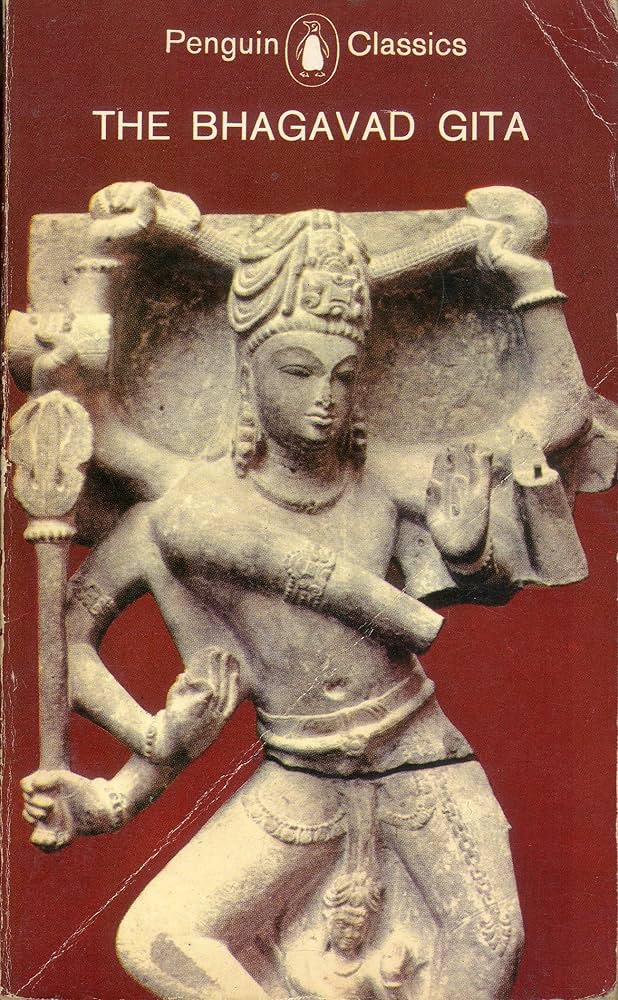
I remember back in my younger years, before I became a devotee, I decided to spend my summer off from college, hiking the Appalachian trail. I took with me some small books with me to read along the way. I was becoming interested in Eastern philosophy, and was asking myself questions like who is God, who am I, and what is my relationship with Him. I carried with me a small paperback book by Hermann Hesse entitled Siddhartha, a book by Henry David Thoreau; “Walden”, and the Penguin Classic; “The Bhagavad-gita.
From the book “Siddhartha” I became interested in meditation and the journey to self discovery. From “Walden”, I became interested is self- sufficiency, or as I later describe it as simple living and high thinking, and from the Bhagavad-gita, I discovered who God is. Really. For some reason, as soon as I began reading, I immediately accepted that Krishna was God. This book was the song of God. This was God speaking to His friend Arjuna, instructing him. And I thought how wonderful to be a friend of God, to become Gods friend.
Even though I was raised as a Christian, went to church on Sunday, was taught by nuns and priests, I never got satisfactory answers to my question, Who is God? But this book the Bhagavad-gita, This was God Himself speaking to his friend. Now I knew, there is a God, and His name was Krishna.
About a year later I meet a Hare Krishna devotee at the Chicago O’Hare airport, and I got from him the Krsna Book, then later I went back there and found a deserted copy of the Bhagavad-gita As It Is, on a neglected bench seat, by His Divine Grace A. C. Bhaktivedanta Swami. It wasn’t just the translations that the penguin classic offered, but it was the complete edition, with original Sanskrit text, Roman transliterations, English equivalents, translation and elaborate purports.

22 Dec 2024 Leave a comment
in A. C. Bhaktivedanta Swami Prabhupada, Books by Srila Prabhupada, Free Downloads, Srila Prabhupada vani, Srila Prabhupada's Accomplishments, Srimad Bhagavatam, Uncategorized Tags: ac-bhaktivedanta, Bhagavad-gita, India, Krishna, Krsna, prayers-by-lord-brahma, spirituality, Srila Prabhupada, srimad-bhagavatam-tenth-canto

I have been reading the Krsna Book lately, and just yesterday we were reading chapter 14 “Prayers Offered by Lord Brahma to Lord Krsna”, and I was reminded this was the last chapter Srila Prabhupada was working on in the Srimad Bhagavatam series before his passing. So I had another look at the Tenth Canto, part 3, and thought it a good idea to share it with all our readers.
click on following link; Srimad Bhagavatam Tenth Canto Part 3
This is the final Śrīmad-Bhāgavatam volume translated by His Divine Grace A. C. Bhaktivedanta Swami Prabhupada, Founder-Acarya of the International Society for Krishna Consciousness, before his untimely departure. We share it with you as a free PDF download. You can click on the above link to view the complete volume or save it to your computer.
Foward
This is the final Śrīmad-Bhāgavatam volume translated by His Divine Grace A. C. Bhaktivedanta Swami Prabhupada, founder-acarya of the International Society for Krishna Consciousness. It is smaller than the earlier volumes because it ends where the renowned author stopped translating just before his departure from this mortal world on November 14, 1977, at the Krsna-Balarama Mandira in Vrndavana, India.
More
20 Dec 2024 Leave a comment
in A. C. Bhaktivedanta Swami Prabhupada, Bhagavad-gita As It Is 1972 Edition, Changing Bodies, consciousness, Soul Tags: ac-bhaktivedanta-swami, Bhagavad-gita, consciousness, philosophy, psychology, soul, spirituality

This morning as I went out to feed the birds, I saw a dead bird on the patio who must have crashed into the window, and it just got to thinking about what is the difference between a dead body and a live body? Consciousness. So I did a little research on that word. The simple definition of the word is:
“Consciousness is the state of being aware of oneself, one’s body, and the outside world.”
OK that is the simple definition. But in the Bhagavad-gita As It Is, Srila Prabhupada gives us a more advanced understanding:
“Know that which pervades the entire body is indestructible. No one is able to destroy the imperishable soul.” (Bg. 2.17)
This verse more clearly explains the real nature of the soul, which is spread all over the body. Anyone can understand what is spread all over the body: it is consciousness. Everyone is conscious of the pains and pleasures of the body in part or as a whole. This spreading of consciousness is limited within one’s own body. The pains and pleasures of one body are unknown to another. Therefore, each and every body is the embodiment of an individual soul, and the symptom of the soul’s presence is perceived as individual consciousness…
…This very small spiritual spark is the basic principle of the material body, and the influence of such a spiritual spark is spread all over the body as the influence of the active principle of some medicine spreads throughout the body. This current of the spirit soul is felt all over the body as consciousness, and that is the proof of the presence of the soul. Any layman can understand that the material body minus consciousness is a dead body, and this consciousness cannot be revived in the body by any means of material administration. Therefore, consciousness is not due to any amount of material combination, but to the spirit soul. . Neither Vedic knowledge nor modern science denies the existence of the spirit soul in the body, and the science of the soul is explicitly described in the Bhagavad-gita by the Personality of Godhead Himself.
So we can conclude, that that consciousness is the presence of the soul.
18 Dec 2024 Leave a comment
in Bhaktisiddhanta Sarasvati Thakura Tags: Bhagavad-gita, disappearance day of Bhaktisiddhanta Sarasvati, guru, India, Krishna, spirituality, Srila Bhaktisiddanta, Srila Bhaktisiddhanta Sarasvati

So today we celebrate the Disappearance Day of Srila Bhaktisiddhanta Sarasvati Thakura, the Spiritual Master of our Srila Prabhupada. We honor it today with a half day fast a Pushpanjali (offering of prayers and flowers) followed by a nice vegetarian feast.
SRILA BHAKTISIDDHANTA SARASVATI-PRANATI
nama om vinsu-padaya krsna-presthaya bhu-tale
srimate bhaktisiddhanta-sarasvatiti namine
I offer my respectful obeisances unto His Divine Grace Bhaktisiddhanta Sarasvati, who is very dear to Lord Krnsa, having taken shelter at His lotus feet.
sri- varsabhanavi-devi-dayitaya krpadhaye
krsna-sambandha-vijnana-dayine prabhave namah
sri-varsabhanavi-devi-dayitaya–unto Sri Varsabhanavi-devi-dayita Dasa, the servant of the lover of Srimati Radharani; krpa-abdhaye–who is an ocean of mercy; krsna-sambandha–(of) the relationship with Krsna; vijnana–(of) the science; dayine–who is the deliverer; prabhave–unto the master; namah–obeisances.
I offer my respectful obeisances to Sri Varsabhanavi-devi-dayita Dasa [another name of Srila Bhaktisiddhanta Sarasvati, who is favored by Srimati Radharani and who is the ocean of transcendental mercy and the deliverer of the science of Krsna.
madhuryojjvala-premadhya-sri-rupanuga-bhaktida-
sri-gaura-karuna-sakti-vigrahaya namo ‘stu te
madhurya–conjugal; ujjvala–brilliant; prema–love; adhya– enriched with; sri-rupa-anuga–following Srila Rupa Gosvami; bhakti-da–delivering devotional service; sri-gaura–(of) Lord Caitanya Mahaprabhu; karuna–(of) the mercy, sakti–energy; vigrahaya–unto the personified; namah–obeisances; astu–let there be; to–unto you.
“I offer my respectful obeisances unto you, who delivers devotional service which is enriched with conjugal love of Radha and Krsna, coming exactly in the live of revelation of Srila Rupa Gowvami.”
names te gaura-vani-sri-murtaye dina-tarine
rupanuga-viruddhapasiddhanta-dhvanta-harine
namah–obeisances; to–unto you; gaura-vani–teachings of Lord Caitanya; sri-murtaye–unto the personified; dina–(of) the fallen; tarine–unto the deliverer; rupa-anuga–the philosophy which follows the teachings of Srila Rupa Gosvami; viruddha–against; apasiddhanta–(of) unauthorized statements; dhvanta–the darkness; harine–unto you who are removing.
I offer my respectful obeisances unto you, who are the personified teachings of Lord Caitanya. You are the deliverer of the fallen souls. You do not tolerate any statement which is against the teachings of devotional service enunciated by Srila Rupa Gosvami.
11 Dec 2024 Leave a comment
in Uncategorized Tags: 16 rounds, Bhagavad-gita, Chanting Hare Krishna, four-regulative-princiaples, India, Krishna, Krsna, spirituality, Srila Prabhupada, Vyasasan das

Do The Best You Can
by; Vyasasan das
I remember on the morning of my initiation, 48+ years ago, my mind was completely disturbed. Srila Prabhupada was in New York for the big 1976 Rathayathra Festival, and I was there with the Radha Damodara Traveling Sankirtan Party. I had been traveling with the RDTSKP for the last year doing festivals and book distribution, and today right after the morning program I was about to get my first initiation. Like I said, my mind was disturbed. I was in total anxiety, never felt such terrible anxiety and doubt before. I wasn’t sure I could go through with it, wasn’t sure I could make such a serious promise. “I promise to chant 16 rounds and follow all 4 regulative principles.” I mean, I’m pretty sure I can follow some of the regulative principles, and chant some of my rounds every day, but 4 regs. and 16 rounds every day for the rest of my days, I don’t know?
More
05 Nov 2024 Leave a comment
in A. C. Bhaktivedanta Swami Prabhupada, Guru & Disciple, Vyasasan das Tags: A.C. Bhaktivedanta Swami Prabhupada, Bhagavad-gita, disappearance day of Srila Prabhupada, Hare Krishna, Srila Prabhupada, vyasasab das

His Divine Grace A. C. Bhaktivedanta Swami Prabhupada’s Disappearance Day homage
by Vyasasan das
Dear Srila Prabhupada
Please accept my fallen obeisance’s, and my love, on this auspicious day of your disappearance. With your arrival on the shores of America, you brought with you the shinning lamp of knowledge; the wisdom on India and the Supreme Absolute Truth. You appeared on the shores of America the way the sun appears on the Eastern Horizon. Slowly revealing itself at first, then dominating the sky with its blazing effulgence. Illuminating the entire world with its golden light. Where there is light there is no darkness. And wherever your words are being sung and repeated, there is a glimmer of hope for the materially conditioned souls.
Your words and instructions are the very life and soul of a genuine disciple. It is said that the best process of understanding Krishna is to hear about Him, either from Krishna Himself as given in statements from the Bhagavad-Gita As It Is, or from the self realized pure devotee. One does not even need to change his worldly position; he simply has to hear the message of Krishna.
It is from you only, Srila Prabhupada, that I know anything at all about Krishna or the spiritual world. By your grace only, the knowledge is revealed, and you become revealed to your disciples and listeners. Anyone who submissively hears from you, either by reading your books, or hearing your lectures, can attain the highest perfectional platform. Just as there is the sun and the sunshine, so, there is Krishna and Krishna’s pure representative. When we feel the sunshine, we know the sun is there, and when we hear from you, we know that Krishna is there.
Your fallen servant
Vyasasan das
11 Oct 2024 Leave a comment
in A. C. Bhaktivedanta Swami Prabhupada, Padmapani das, Prabhupada Connection Tags: Bhagavad-gita, Hare Krishna, Krishna, mantra-rock-concert, Padmapani das, spirituality, Srila Prabhupada, the prabhupada connection

(Mantra Rock Dance poster, Avalon Ballroom, San Francisco, 1967)
The Prabhupada Revolution
by Padmapani Das
For many of us who came of age in the Sixties and Seventies, the counterculture and its promise of an alternative society based on love and peace was an important part of our lives. Art, music, poetry, philosophy, ecology and human rights were just a few of the buzzwords floating around the collective psyche of the Sixties generation. Revolution was in the air. “The establishment” was doomed and soon to be replaced with a kinder, gentler society. Peace would reign supreme and all peoples of the world would unite and be free from the chains of oppression. Or so we thought.
More
08 Oct 2024 Leave a comment
in A. C. Bhaktivedanta Swami Prabhupada, Bhagavad-gita, Politics, truthfulness Tags: A.C. Bhaktivedanta, Bhagavad-gita, faith, God, Krishna, Krsna, philosophy, satyam, Srila Prabhupada, truth, truthfulness, Vedas

There has been so much misinformation lately, on the news networks, on social media, in politics, etc. about election results, relief funds for hurricane victims, eating pets in Springfield Ohio, etc., that it got me thinking about truthfulness. The English definition is simply: the quality of being honest and not containing or telling any lies. However according to the Vedic definition which goes a little deeper: Satyam, truthfulness, means that facts should be presented as they are for the benefit of others.
Satyam, truthfulness, means that facts should be presented as they are for the benefit of others. Facts should not be misrepresented. According to social conventions, it is said that one can speak the truth only when it is palatable to others. But that is not truthfulness. The truth should be spoken in a straight and forward way, so that others will understand actually what the facts are. If a man is a thief and if people are warned that he is a thief, that is truth. Although sometimes the truth is unpalatable, one should not refrain from speaking it. Truthfulness demands that the facts be presented as they are for the benefit of others. That is the definition of truth. (from purport Bhagavada-gita 10. 4-5)
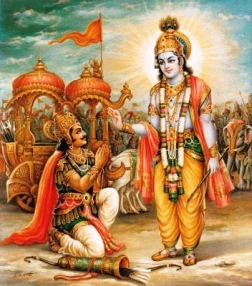
Click on image to go to Post


click on image to visit site


click on image

click on image

click on image


click on image

click on image
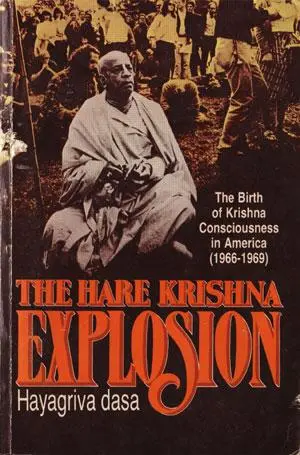

click on image
 The Hare Krishna Movement