19 Nov 2012
by The Hare Krishna Movement
in A.C. Bhaktivedanta Swami Prabhupada, Bob Cohen, Free Downloads, Free eBooks, Perfect Answers Perfect Questions
Tags: A.C. Bhaktivedanta Swami Prabhupada, Bob Cohen, goodness, higher knowledge, ignorance, passion, perfect questions perfect answers, spirituala master, Srila Prabhupada, three gunas, three modes of material nature
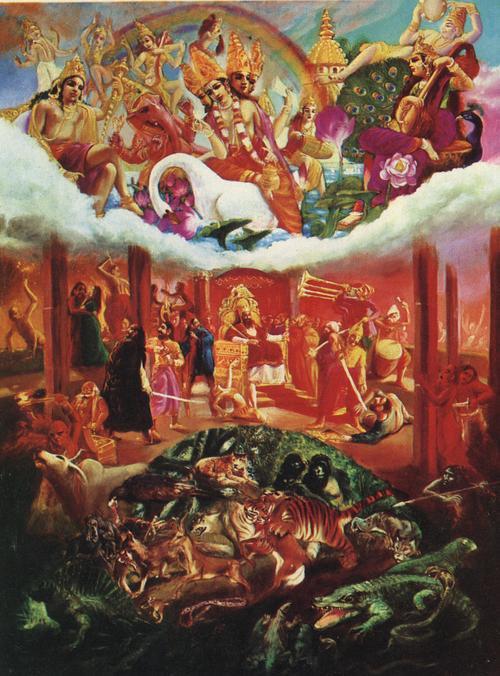
Continuing with our series of a True account entitled Perfect Questions, Perfect Answers… A search for meaning carries Bob Cohen, a young American Peace Corps worker halfway around the world, to an ancient village in the midst of West Bengal. There, in a small bamboo hut, he finds a teacher who is able to tell him everything he ever wanted to know. To download the entire book free on pdf file, click on link at bottom of post.
Perfect Questions, Perfect Answers
By His Divine Grace A.C. Bhaktivedanta Swami Prabhupada
Chapter 4, February 28, 1972 (continued)
The Three Modes Of Nature
Bob: I have read that there are three guṇas—passion, ignorance and goodness—in life. I was wishing that you would explain this somewhat, especially what is meant by the mode of ignorance and the mode of goodness.
Śrīla Prabhupāda: In goodness you can understand things—knowledge. You can know that there is God, that this world was created by Him, and so many things, actual things—the sun is this, the moon is this—perfect knowledge. If one has some knowledge, even though it may not be perfect, that is goodness. And in passion one identifies with his material body and tries to gratify his senses. That is passion. And ignorance is animal life—in ignorance, one does not know what is God, how to become happy, why we are in this world. For example, if you take an animal to the slaughterhouse, it will go. This is ignorance. But a man will protest. If a goat is to be killed after five minutes but you give it a morsel of grass, it is happy because it is eating. Just like a child—even if you are planning to kill her or kill him, he is happy and laughs because he is innocent. That is ignorance.
Bob: Being in these modes determines your karma. Is that correct?
More
18 Nov 2012
by The Hare Krishna Movement
in A.C. Bhaktivedanta Swami Prabhupada, Book Changes, Srimad Bhagavatam
Tags: A.C. Bhaktivedanta Swami Prabhupada, book changes, departure from mortal world, final verse, Nov. 14 1977, SB 10.13.64, Srila Prabhupada, Srimad Bhagavatam, Tenth Canto, translated by His Divine Grace
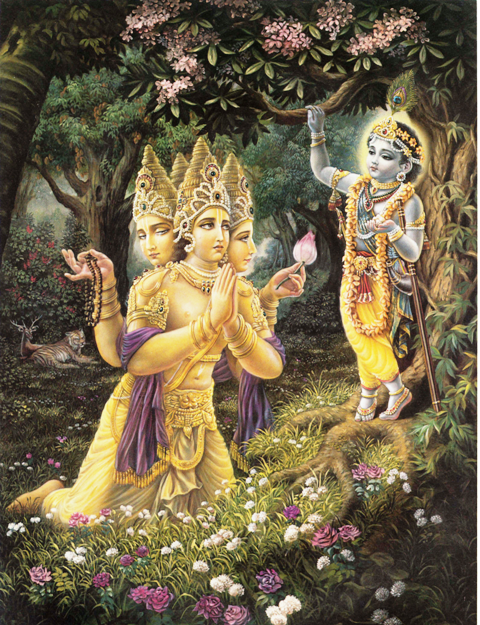
This is the final Srimad Bhagavatam verse translated by His Divine Grace A.C. Bhaktivedanta Swami Prabhupada, the Founder-Acarya of the International Society for Krishna Consciousness. This is where Srila Prabhupada ended his translating, before his departure from this mortal world on November 14, 1977, at the Krsna-Balarama Mandira in Vrndavana, India.
Śrīmad-Bhāgavatam
By His Divine Grace A.C. Bhaktivedanta Swami Prabhupada
Canto 10, Chapter 13, Text 64
śanair athotthāya vimṛjya locane
mukundam udvīkṣya vinamra-kandharaḥ
kṛtāñjaliḥ praśrayavān samāhitaḥ
sa-vepathur gadgadayailatelayā
śanaiḥ—gradually; atha—then; utthāya—rising; vimṛjya—wiping; locane—his two eyes; mukundam—at Mukunda, Lord Śrī Kṛṣṇa; udvīkṣya—looking up; vinamra-kandharaḥ—his neck bent; kṛta-añjaliḥ—with folded hands; praśraya-vān—very humble; samāhitaḥ—his mind concentrated; sa-vepathuḥ—his body trembling; gadgadayā—faltering; ailata—Brahmā began to offer praise; īlayā—with words.
Then, rising very gradually and wiping his two eyes, Lord Brahmā looked up at Mukunda. Lord Brahmā, his head bent low, his mind concentrated and his body trembling, very humbly began, with faltering words, to offer praises to Lord Kṛṣṇa.
Brahmā, being very joyful, began to shed tears, and he washed the lotus feet of Kṛṣṇa with his tears. Repeatedly he fell and rose as he recalled the wonderful activities of the Lord. After repeating obeisances for a long time, Brahmā stood up and smeared his hands over his eyes. Śrīla Viśvanātha Cakravartī Ṭhākura comments that the word locane indicates that with his two hands he wiped the two eyes on each of his four faces. Seeing the Lord before him, Brahmā began to offer prayers with great humility, respect and attention.
Thus end the Bhaktivedanta purports of the Tenth Canto, Thirteenth Chapter, of the Śrīmad-Bhāgavatam, entitled “The Stealing of the Boys and Calves by Brahmā.”
16 Nov 2012
by The Hare Krishna Movement
in Remembering Srila Prabhupada, Srila Prabhupada, Vyasasan das
Tags: A.C. Bhaktivedanta Swami Prabhupada, appearance and disappearance, feeling of separation, Lord Krishna, Remembering Srila Prabhupada, spiritual, Srila Bhaktisiddhanta Sarasvati, Srila Prabhupada, transcendental, Vyasasan das
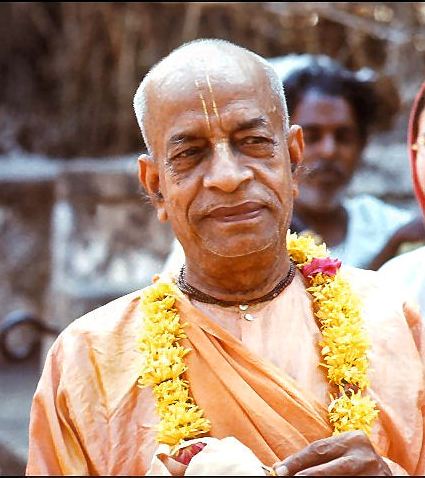
Today we honor the disappearance day of Srila Prabhupada.
om ajñāna-timirāndhasya
jñānāñjana-śalākayā
cakṣur unmīlitaṁ yena
tasmai śrī-gurave namaḥ
I was born in the darkest ignorance, and my spiritual master opened my eyes with the torch of knowledge. I offer my respectful obeisances unto him.
Dear Srila Prabhupada
On this most auspicious day, we are celebrating your disappearance, with remembrances and prayers.
There are so many days on the Vaisnava Calendar where we are celebrating some auspicious holiday or festival, but none of them are as important to me personally, as the two days when we honor your appearance and disappearance. There is no day more important to this insignificant disciple, then your appearance into my life.
More
15 Nov 2012
by The Hare Krishna Movement
in A.C. Bhaktivedanta Swami Prabhupada, Back to Godhead, Remembering Srila Prabhupada, Srila Prabhupada
Tags: A.C. Bhaktivedanta Swami Prabhupada, and living try To spread the holy name around!, Bhaktivinoda Thakura, dedication, Hari, He reasons ill who tells that Vaisnavas die When thou art living still in sound! The Vaisnavas die to live, Lord Krsna, Sept 18 1965, Srila Prabhupada, vausnava

click on image to enlarge
Today is the Disappearance day of His Divine Grace A.C. Bhaktivedanta Swami Prabhupada. Founder Acharya of the International Society for Krishna Consciousness. Srila Prabhupada had this to say about the disappearance of Vaisnavas:
“As Lord Krsna’s appearance and disappearance are all spiritual, transcendental, they are not ordinary things, similarly, Lord Krsna’s devotee, His representative, who is sent to this material world for preaching the glories of Lord Krsna, their appearance and disappearance is also like Krsna’s. Therefore, according to Vaisnava principles, the appearance and disappearance of Vaisnava is considered all-auspicious.”
Dedication to His Divine Grace A.C. Bhaktivedanta Swami Prabhupada
Excerpted from Back to Godhead Magazine Vol. 13, 1-2, 1978
Around the turn of the century, the great spiritual master Srila Bhaktivinoda Thakura made this prediction:
“Soon there will appear a personality who will preach the holy name of Hari [Lord Krsna] all over the world.”
As we have witnessed for the past twelve years, that personality was His Divine Grace A.C. Bhaktivedanta Swami Prabhupada. Throughout his life, Srila Prabhupada prepared himself for his great mission, and from his arrival in America on September 18, 1965, to his passing on November 14, 1977—through some seventy books and thousands of letters, interviews, and lectures-he gave the world the holy names of Krsna and the Vedic science of self-realization.
Bhaktivinoda Thakura also wrote a short stanza about the influence that a Vaisnava (a pure devotee of the Lord) carries in this world even after his passing:
“He reasons ill who tells that Vaisnavas die When thou art living still in sound! The Vaisnavas die to live, and living try To spread the holy name around!”
So, while it is natural for us to be sorrowful that Srila Prabhupada has passed away, we can know for sure that he will never pass away, for he is “living still in sound.” As he himself said, “I will never die. I will live forever in my books.” In the days and years to come, may everyone come to remember Srila Prabhupada in the same way that he remembered his spiritual master:
“He lives forever by his divine instructions, and the follower lives with him.”
(c) The Bhaktivedanta Book Trust International, Inc.
14 Nov 2012
by The Hare Krishna Movement
in A.C. Bhaktivedanta Swami Prabhupada, Govardhana-puja, Krsna Consciousness, KRSNA The Supreme Personality of Godhead
Tags: A.C. Bhaktivedanta Swami Prabhupada, demigods, Devastating Rainfall in Vrndavan, Govardhana Hill, Govardhana-puja, Indra, Krishna, Krishna consciousness, Krsna Book, Krsna The Supreme Personality of Godhead, Swami Prabhupada
click on image to enlarge
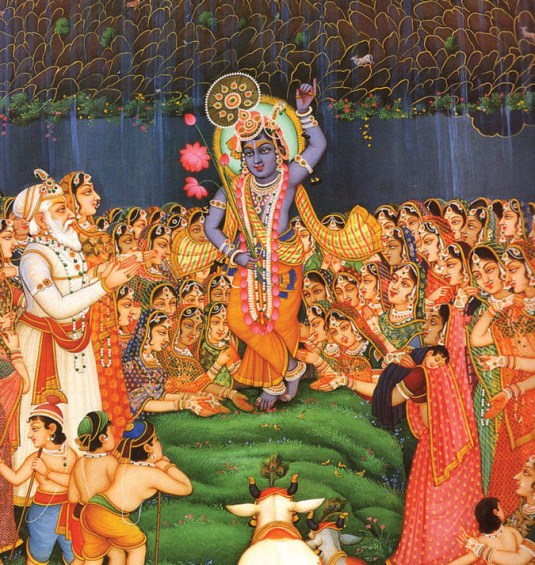
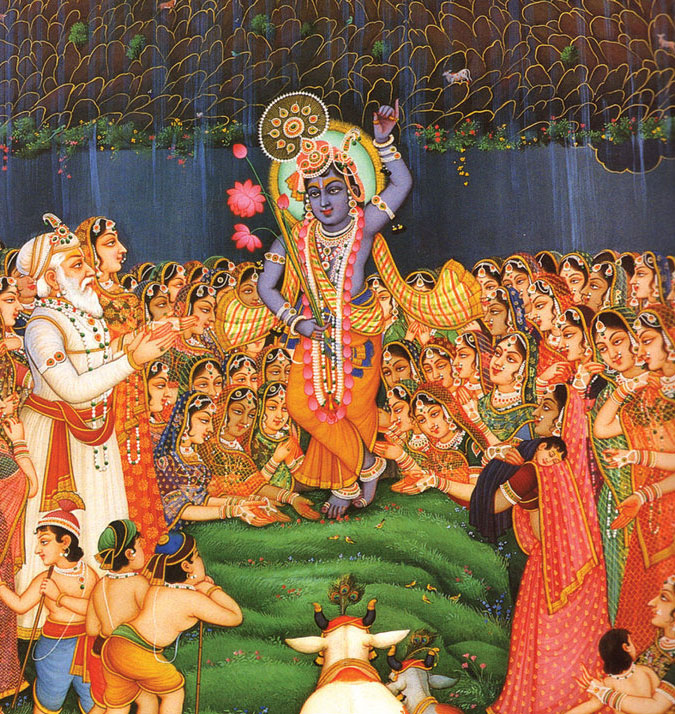
On this very auspicious day, Govardhana-puja, we are reminded of Krsna’s lifting of Govardhana Hill, as told by His Divine Grace A.C. Bhaktivedanta Swami Prabhupada in chapter 25 of the Krsna Book.
…Kṛṣṇa has declared in the Bhagavad-gītā that the worshipers of the demigods are not very intelligent. He has also declared that one has to give up all kinds of worship and simply concentrate on Kṛṣṇa consciousness. Kṛṣṇa’s invoking the anger of Indra and later on chastising him is a clear indication to His devotee that those who are engaged in Kṛṣṇa consciousness have no need to worship any demigod, even if it is found that the demigod has become angry. Kṛṣṇa gives His devotees all protection, and they should completely depend on His mercy.
Kṛṣṇa, the Supreme Personality of Godhead
By His Divine Grace A. C. Bhaktivedanta Swami Prabhupāda
Chapter 25
Devastating Rainfall in Vṛndāvana
When Indra understood that the sacrifice offered by the cowherd men in Vṛndāvana was stopped by Kṛṣṇa, he became angry, and he vented his anger upon the inhabitants of Vṛndāvana, who were headed by Nanda Mahārāja, although Indra knew perfectly well that Kṛṣṇa was personally protecting them. As the director of different kinds of clouds, Indra called for the Sāṁvartaka. This cloud is invited when there is a need to devastate the whole cosmic manifestation. The Sāṁvartaka was ordered by Indra to go over Vṛndāvana and inundate the whole area with an extensive flood. Demonically, Indra thought himself to be the all-powerful supreme personality. When demons become very powerful, they defy the supreme controller, Personality of Godhead. Indra, though not a demon, was puffed up by his material position, and he wanted to challenge the supreme controller. He thought himself, at least for the time being, as powerful as Kṛṣṇa. Indra said, “Just see the impudence of the inhabitants of Vṛndāvana! They are simply inhabitants of the forest, but being infatuated with their friend Kṛṣṇa, who is nothing but an ordinary human being, they have dared to defy the demigods.”
More
14 Nov 2012
by The Hare Krishna Movement
in A.C. Bhaktivedanta Swami Prabhupada, Festivals, Govardhana-puja, KRSNA The Supreme Personality of Godhead
Tags: A.C. Bhaktivedanta Swami Prabhupada, cowheard men, Govardhana Hill, Govardhana-puja, Indra, King of heaven, Krsna and Balarama, Krsna The Supreme Personality of Godhead, vedic ritualistic ceremonies, Vedic sacrifices, worshiping the demigods
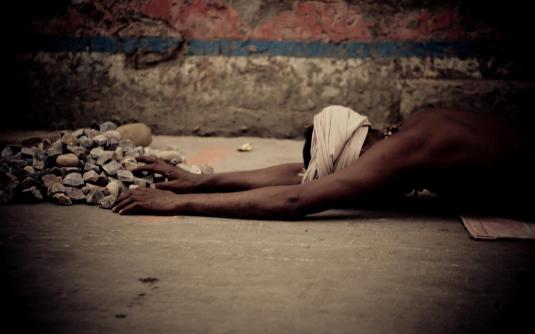
Brajabasi is Worshiping Govardhana Hill with obeisances
Today we celebrate Govardhana-puja with a chapter from Srila Prabhupada’s Krsna Book, entitled “Worshiping Govardhana Hill”
Kṛṣṇa, the Supreme Personality of Godhead
By His Divine Grace A. C. Bhaktivedanta Swami Prabhupāda
Chapter 24
Worshiping Govardhana Hill
While engaged with the brāhmaṇas who were too involved in the performance of Vedic sacrifices, Kṛṣṇa and Balarāma also saw that the cowherd men were preparing a similar sacrifice in order to pacify Indra, the King of heaven, who is responsible for supplying water. As stated in the Caitanya-caritāmṛta, a devotee of Kṛṣṇa has strong and firm faith in the understanding that if he is simply engaged in Kṛṣṇa consciousness and Kṛṣṇa’s transcendental loving service, then he is freed from all other obligations. A pure devotee of Lord Kṛṣṇa doesn’t have to perform any of the ritualistic functions enjoined in the Vedas; nor is he required to worship any demigods. Being a devotee of Lord Kṛṣṇa, one is understood to have performed all kinds of Vedic rituals and all kinds of worship to the demigods. Just by performing the Vedic ritualistic ceremonies or worshiping the demigods, one does not develop devotional service for Kṛṣṇa but one who is engaged fully in the service of the Lord has already finished all Vedic injunctions.
More
12 Nov 2012
by The Hare Krishna Movement
in Diksha, Disciplic succession, Guru & Disciple, Locanananda das
Tags: A.C. Bhaktivedanta Swami Prabhupada, disciple, future initiations, guru, Initiation, initiation system, Iskcon, Locanananda das, spiritual master, Srila Prabhupada
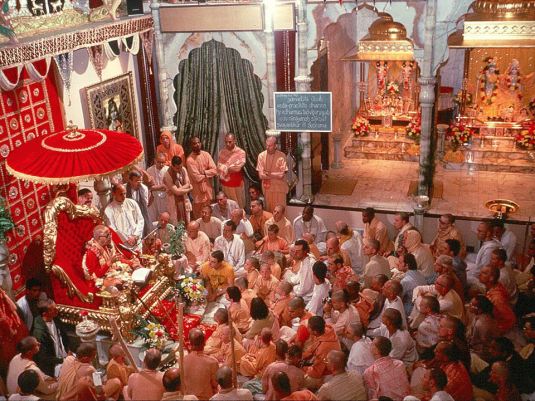
click on image to enlarge
…What Srila Prabhupada arranged in ISKCON was a very safe and very clear path for the new adherent to advance in Krishna consciousness and in the end to reach the ultimate goal of going back to Godhead. The process of sadhana bhakti with morning and evening classes, kirtana and Deity worship coupled with training in preaching and daily Sankirtana activity was the path to purification and the awakening of our dormant love for Krishna. Simple, yet sublime!
As far as acceptance of a spiritual master, in our day it was a foregone conclusion that the initiated disciple was agreeing to worship Srila Prabhupada as good as God and that the spiritual master was promising to deliver the disciple from the cycle of birth and death.
Presently, people are still being attracted to join this movement by coming into contact with Srila Prabhupada’s books, by association with good devotees who represent him with transparency, and by developing a taste for chanting the Holy Name and honoring Krishna prasadam. They agree to abide by the principles established by Srila Prabhupada for all generations of ISKCON devotees — past, present and future. They read and distribute his books, offer obeisances to him when entering the temple, worship his murti, and focus on cultivating a personal relationship with him. In other words, someone who joins our movement today is doing so as a follower of Srila Prabhupada and is accepting His Divine Grace as their eternal spiritual master. It is he who is taking them back to the spiritual world. How could someone who is not a resident of the spiritual world do so?
This is a continuation from our previous posts, The Spiritual Master some time ago, and the further discussion in The Spiritual Master (Part 2)
And The Spiritual Master (Part 3) This is a fascinating account by Sriman Locanananda Prabhu revealing his insights into the ‘guru issue’ in our ISKCON society today, from his own personal understanding, and his realizations of the instructions given by Srila Prabhupada shortly before his untimely departure. Our obeisances to him for sharing his personal recollections and realizations. This new The Spiritual Master (Part 4) is exploring the same theme although from a different source.
More
12 Nov 2012
by The Hare Krishna Movement
in A.C. Bhaktivedanta Swami Prabhupada, Books by Srila Prabhupada, Quotes by Srila Prabhupada, Srila Prabhupada vani, Vidura das
Tags: A.C. Bhaktivedanta Swami Prabhupada, Book Distribution, disciple should remain a fool before his spiritual master, krsna consciousness, Lord and His associates, preaching, science of Krsna, Srila Prabhupada vani, Vidhura das

click on image to slightly enlarge
Śrīla Prabhupāda vāṇī
Submitted by Vidura dasa
“…killing is also preaching. If I kill your ignorance, that is also killing. That is also killing. …Killing does not mean that everyone has to take the sword.” (Morning Walk, Los Angeles, 13/5/73)
“In my books the philosophy of Krishna Consciousness is explained fully so if there is anything which you do not understand, then you simply have to read again and again. By reading daily the knowledge will be revealed to you and by this process your spiritual life will develop.”
(Letter to: Bahurupa — Bombay 22 November, 1974)
More
08 Nov 2012
by The Hare Krishna Movement
in A.C. Bhaktivedanta Swami Prabhupada, Devotional Service, Krishna Consciousness, Spiritual World
Tags: A.C. Bhaktivedanta Swami Prabhupada, all-beautiful face, Brahma, cintamani, cintamani-dhama, devotees, goddesses of fortune, Krishna, lotus face of the Lord, lotus feet of the Lord, Spiritual world, Srila Rupa Goswami, touchstone
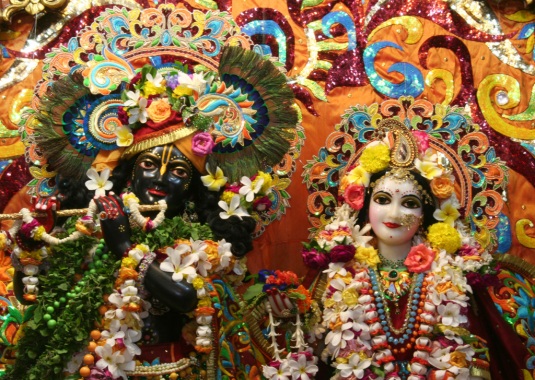
click on image to enlarge
…The essence of everything is the Supreme Lord: He is called the sāram. And those who sing and talk about Him are called the sāraṅgas, or the pure devotees. The pure devotees are always hankering after the lotus feet of the Lord. The lotus has a kind of honey which is transcendentally relished by the devotees. They are like the bees who are always after the honey. Śrīla Rūpa Gosvāmī, the great devotee ācārya of the Gauḍīya-Vaiṣṇava-sampradāya, has sung a song about this lotus honey, comparing himself to the bee: “O my Lord Kṛṣṇa, I beg to offer my prayers unto You. My mind is like the bee, and it is after some honey. Kindly, therefore, give my bee-mind a place at Your lotus feet, which are the resources for all transcendental honey. I know that even big demigods like Brahmā do not see the rays of the nails of Your lotus feet, even though they are engaged in deep meditation for years together. Still, O infallible one, my ambition is such, for You are very merciful to your surrendered devotees. O Mādhava, I know also that I have no genuine devotion for the service of Your lotus feet, but because Your Lordship is inconceivably powerful, You can do what is impossible to be done. Your lotus feet can deride even the nectar of the heavenly kingdom, and therefore I am very much attracted by them. O supreme eternal, please, therefore, let my mind be fixed at Your lotus feet so that eternally I may be able to relish the taste of Your transcendental service.”
for full verse and purport More
08 Nov 2012
by The Hare Krishna Movement
in A.C. Bhaktivedanta Swami Prabhupada, Guru & Disciple, Letters by Srila Prabhupada
Tags: A.C. Bhaktivedanta Swami Prabhupada, devotees, Krishna, Krishna consciousness philosophy, Letters by Srila Prabhupada, Master Krishna, Servant Krishna, spiritual master

click on image to enlarge
Letter by Srila Prabhupada
“Lately there has been some misunderstanding amongst our devotees about our Krishna Consciousness philosophy. Particularly there has been some confusion about the relationship between the Spiritual Master and Krishna.
The Vedas say that there is a Master Krishna. This Servant Krishna is the Spiritual Master and this is the conclusion. The Spiritual Master is the Mercy Representative of the Supreme Lord and as such He is given honor as good as Krishna, but He is never identical with Krishna.
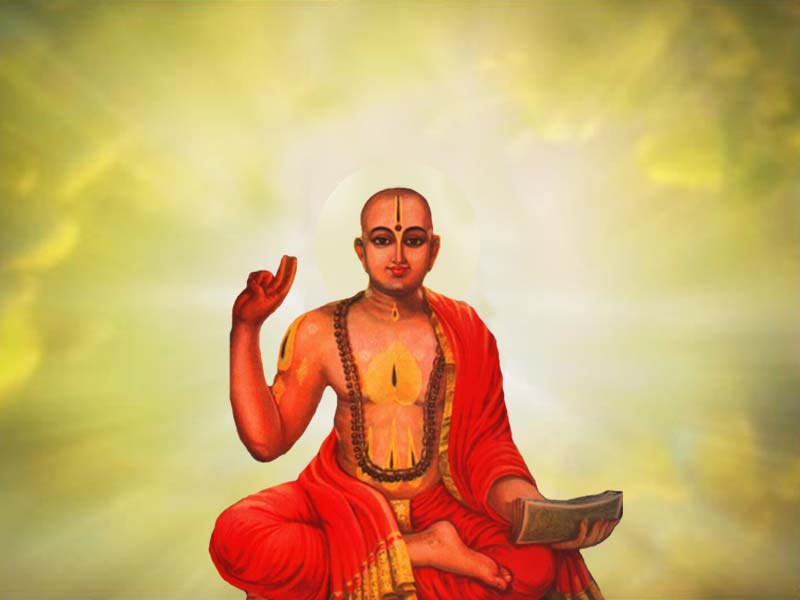
Perhaps you know the picture of Madhvacarya, one of the great Acaryas in our line, who is holding two fingers up to indicate Krishna and jiva. The impersonalists hold up one finger because their idea is that everything is one. So if we make the Spiritual Master identical with Krishna, then we will also become impersonalists.
If we say that our Spiritual Master is Krishna, then the conclusion is that if we become Spiritual Master some day, then we will also become Krishna. Please try to understand how dangerous this kind of reasoning is.
In my books I have tried to explain clearly this simultaneously one and different philosophy acinta beda beda tattva propounded by Lord Caitanya Mahaprabhu. But sometimes it happens that this philosophy is given a self-interested interpretation. As soon as personal motivation comes in it is not possible for one to understand our Krishna Consciousness philosophy.” (From Letter to Isana and Vibhavati, 21 September, 1970, Calcutta)
Full Letter More
07 Nov 2012
by The Hare Krishna Movement
in A.C. Bhaktivedanta Swami Prabhupada, Radha-kunda, Sri Caitanya-Caritamrta, Srimati Radharani
Tags: A.C. Bhaktivedanta Swami Prabhupada, Adi 4.215, appearance of radha kund, gopis, Madhya-lila 18.3-7, Radha Kund, Sri Caitanya Mahaprabhu, Sri Caitanya-caritmrta, Srimati Radharani

As today marks the appearance of Radha-kund we are honored to post from Srila Prabhupada’s Sri Caitanya-caritamrta, a few select verses from Madhya-lila 18.3-7. Radha-kunda is considered to be the holiest place on earth for all Gaudiya Vaisnavas.
Śrī Caitanya Mahāprabhu danced in ecstasy, but when He arrived at Āriṭgrāma, His sense perception was awakened.
PURPORT
Āriṭ-grāma is also called Ariṣṭa-grāma. Śrī Caitanya Mahāprabhu understood that in that village, Ariṣṭāsura was killed by Śrī Kṛṣṇa. While there, He inquired about Rādhā-kuṇḍa, but no one could tell Him where it was. The brāhmaṇa accompanying Him could also not ascertain its whereabouts. Śrī Caitanya Mahāprabhu could then understand that the holy places known as Rādhā-kuṇḍa and Śyāma-kuṇḍa were at that time lost to everyone’s vision. He therefore discovered Rādhā-kuṇḍa and Śyāma-kuṇḍa, which were two reservoirs of water in two paddy fields. Although there was very little water, Śrī Caitanya Mahāprabhu was omniscient and could understand that formerly these two ponds were called Śrī Rādhā-kuṇḍa and Śyāma-kuṇḍa. In this way Rādhā-kuṇḍa and Śyāma-kuṇḍa were discovered.
Śrī Caitanya Mahāprabhu asked the local people,”Where is Rādhā-kunda?” No one could inform Him, and the brāhmaṇa accompanying Him did not know either.
The Lord then understood that the holy place called Rādhā-kuṇḍa was no longer visible. However, being the omniscient Supreme Personality of Godhead, He discovered Rādhā-kuṇḍa and Śyāma-kuṇḍa in two paddy fields. There was only a little water, but He took His bath there.
When the people of the village saw Śrī Caitanya Mahāprabhu taking His bath in those two ponds in the middle of the paddy fields, they were very astonished. The Lord then offered His prayers to Śrī Rādhā-kuṇḍa.
“Of all the gopīs, Rādhārāṇī is the dearmost. Similarly, the lake known as Rādhā-kuṇḍa is very dear to the Lord because it is very dear to Śrīmatī Rādhārāṇī.
Also this from Adi-lila More
06 Nov 2012
by The Hare Krishna Movement
in A.C. Bhaktivedanta Swami Prabhupada, Disciplic succession, Spiritual Master
Tags: A.C. Bhaktivedanta Swami Prabhupada, Brahma, Brahma sampradaya, disciplic succession, evam parampara-praptam, Krsna, Madhva sampradaya, Madhva-Gaudiya-Sampradaya, Narada, sampradayas, Vyasa

The Disciplic Succession
Those who are followers of His Divine Grace A.C. Bhaktivedanta Swami Prabhupada, and read from his books with faith and conviction, are receiving Transcendental Knowledge Evaṁ paramparā-prāptam imaṁ rājarṣayo viduḥ. (Bhagavad-gīta, 4.2; see below for full verse and purport) through this disciplic succession:
1) Kṛṣṇa, 2) Brahmā, 3) Nārada; 4) Vyāsa, 5) Madhva, 6) Padmanābha, 7) Nṛhari, 8) Mādhava, 9) Akṣobhya, 10) Jayatīrtha, 11) Jñānasindhu, 12) Dayānidhi, 13) Vidyānidhi, 14) Rājendra, 15) Jayadharma, 16) Puruṣottama, 17) Brahmaṇyatīrtha, 18) Vyāsatīrtha, 19) Lakṣmīpati, 20) Mādhavendra Purī, 21) Īśvara Purī, (Nityānanda, Advaita), 22) Lord Caitanya, 23) Rūpa (Svarūpa, Sanātana), 24) Raghunātha, Jīva, 25) Kṛṣṇadāsa, 26) Narottama, 27) Viśvanātha, 28) (Baladeva) Jagannātha, 29) Bhaktivinode, 30) Gaurakiśora, 31) Bhaktisiddhānta Sarasvatī, 32) His Divine Grace A. C. Bhaktivedanta Swami Prabhupāda.
…We have to accept Kṛṣṇa through the disciplic succession. There are four sampradāyas, disciplic successions. One comes from Lord Brahmā (the Brahma-sampradāya), and another comes from Lakṣmī, the goddess of fortune, (the Śrī-sampradāya). There are also the Kumāra-sampradāya and the Rudra-sampradāya. At the present moment, the Brahmā sampradāya is represented by the Madhva-sampradāya, and we belong to the Madhva-Gauḍīya-sampradāya. Our original sampradāya stems from Madhvācārya. In that sampradāya there was Mādhavendra Purī, and Mādhavendra Purī’s disciple was Śrī Īśvara Purī. Śrī Īśvara Purī’s disciple was Lord Caitanya Mahāprabhu. Thus we are coming in the disciplic succession from Śrī Caitanya Mahāprabhu, and therefore our sampradāya is called the Madhva-Gauḍīya-sampradāya. It is not that we have manufactured a sampradāya; rather, our sampradāya stems from Lord Brahmā.
More
04 Nov 2012
by The Hare Krishna Movement
in A.C. Bhaktivedanta Swami Prabhupada, Beyond Birth & Death, Death and Dying, Free Downloads, Free eBooks
Tags: A.C. Bhaktivedanta Swami Prabhupada, Beyond Birth and Death, Bhagavad Gita, bhakti yoga, books by Srila Prabhupada, death and dying, free downloads, I am not this body, mantra-yoga, search for meaning, self realization, Srimad Bhagavatam, transcendentalists

This morning as I was driving up our lane, I saw a hawk flying past me with a live squirrel in his talons. And I thought, ‘how fragile is this life’. One moment the squirrel was out collecting nuts to store in his home for the winter, and the next moment, he is being carried away to his sure death. I was reminded of the famous quote “Life takes Life”, and of how all of ours lives, hang in the balance.
There is another famous Quote from the Srimad Bhagavatam:
“Mahārāja Yudhiṣṭhira was asked by Yamarāja, “What is the most wonderful thing in this world? Can you explain?” So Mahārāja Yudhiṣṭhira answered, “Yes. The most wonderful thing is that at every moment one can see that his friends, his fathers, and his relatives have died, but he is thinking, ‘I shall live forever.’”” (The Science of Self Realization)
This is the great illusion (maya)
So today I am moved to post another chapter from the book “Beyond Birth & Death” by His Divine Grace A.C. Bhaktivedanta Swami Prabhupada, Chapter One entitled “We Are Not These Bodies”.
Also for a Free PDF download of entire book click the link at bottom of post.
More
03 Nov 2012
by The Hare Krishna Movement
in A.C. Bhaktivedanta Swami Prabhupada, Narottama das Thakur, Narottama Dasa Thakura, Songs of the Vaisnava Acaryas
Tags: A.C. Bhaktivedanta Swami Prabhupada, biography of norottama das, disappearance of narottama das, Narottama das Thakur, Songs of the Vaisnava Acaryas, Sri Krsna Caitanya Prabhu, vaisnava songbook

click on image to slightly enlarge
In honor of the disappearance day of Srila Narottama das Thakur we are posting one of his famous songs, Sri-Krsna-Caitanya-Prabhu, along with a purport to that song by His Divine Grace A.C. Bhaktivedanta Swami Prabhupada. (from the original “Songs of the Vaisnava Acaryas” songbook). There is also a brief Biography of the life of Narottama Dasa Thakur following song.
More
01 Nov 2012
by The Hare Krishna Movement
in A.C. Bhaktivedanta Swami Prabhupada, Kali Yuga, Time
Tags: A.C. Bhaktivedanta Swami Prabhupada, astrologer, astronomer, duration of life, future of mankind, influence of time, Kali-yuga, Liberated souls, millennium, Srimad Bhagavatam, the great sage vyasadeva, Time, Vyasadeva
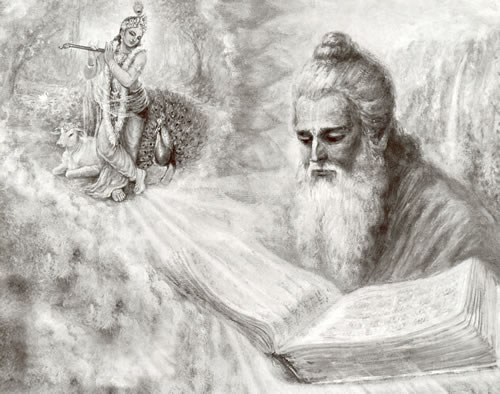
…The unmanifested forces of time are so powerful that they reduce all matter to oblivion in due course. In Kali-yuga, the last millennium of a round of four millenniums, the power of all material objects deteriorates by the influence of time. In this age the duration of the material body of the people in general is much reduced, and so is the memory.
The great sage Vyāsadeva could see this by his transcendental vision. As an astrologer can see the future fate of a man, or an astronomer can foretell the solar and lunar eclipses, those liberated souls who can see through the scriptures can foretell the future of all mankind. They can see this due to their sharp vision of spiritual attainment. (from purport to SB 1.4.17-18)
Full Verse and Purport follows More
31 Oct 2012
by The Hare Krishna Movement
in A.C. Bhaktivedanta Swami Prabhupada, Shiva
Tags: A.C. Bhaktivedanta Swami Prabhupada, Bg 9.25, bhagavad-gita, ghosts, ghosts and spirits, Halloween, halloween ghosts, nandi, SB 3.14.24, Shiva, Srimad Bhagavatam, witches
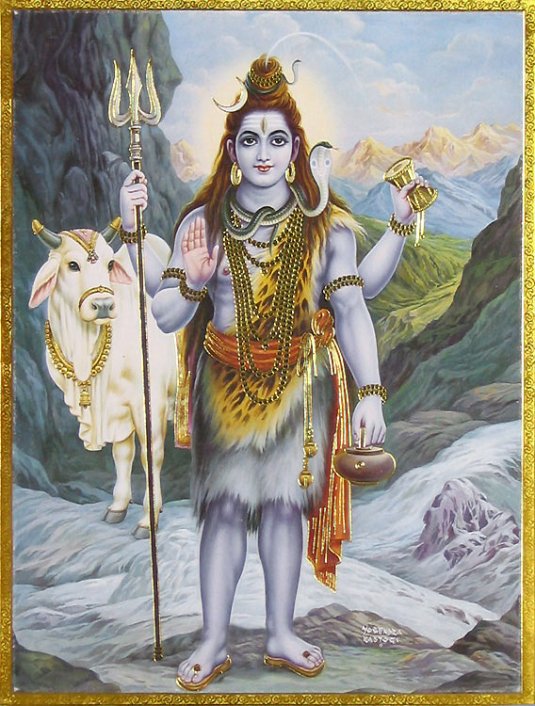
Shiva’s mount is the sacred bull Nandi, and is said to live on Mount Kailasa in the Himalayas.
Although Halloween is not a Vaisnave holiday, it is being celebrated here in the West today. So we wanted to do a post from the pages of Srila Prabhupada’s books where there is mention of Ghosts and Witches etc. Actually Ghosts are a very real entity as the following texts from the Bhagavad-gita and the Srimad Bhagavatam imply.
Lord Śiva, or Rudra, is the king of the ghosts. Ghostly characters worship Lord Śiva to be gradually guided toward a path of self-realization. Māyāvādī philosophers are mostly worshipers of Lord Śiva…Ghosts are bereft of a physical body because of their grievously sinful acts, such as suicide. The last resort of the ghostly characters in human society is to take shelter of suicide, either material or spiritual. Material suicide causes loss of the physical body, and spiritual suicide causes loss of the individual identity. Lord Śiva, being very kind to the ghosts, sees that although they are condemned, they get physical bodies. ( from purport to SB 3.14.24)
Those who worship the demigods will take birth among the demigods; those who worship ghosts and spirits will take birth among such beings; those who worship ancestors go to the ancestors; and those who worship Me will live with Me. (Bhagavad-gita 9.25)
Complete text and purports follow along with a definition of Halloween from Wikipedia More
30 Oct 2012
by The Hare Krishna Movement
in A.C. Bhaktivedanta Swami Prabhupada, Krishna Consciousness, KRSNA The Supreme Personality of Godhead, Sri Damodarastakam
Tags: 1970 Edition, A.C. Bhaktivedanta Swami Prabhupada, binding Lord Krishna, Damodara, Damodarastakam, kartik, Krishna's childhood pastimes, Krsna The Supreme Personality of Godhead, Mother Yasoda, Mother Yasoda Binding Lord Krsna

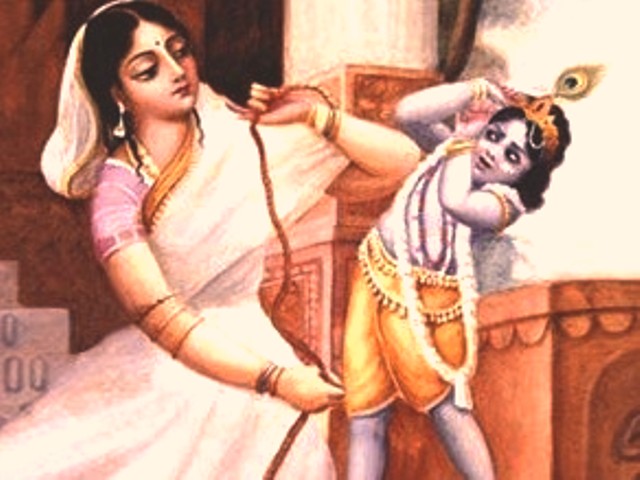
…Mother Yaśodā chased Him to all corners, trying to capture the Supreme Personality of Godhead who is never approached even by the meditations of great yogīs. In other words, the Supreme Personality of Godhead, Kṛṣṇa, who is never caught by the yogīs and speculators, was playing just like a little child for a great devotee like mother Yaśodā. Mother Yaśodā, however, could not easily catch the fast-running child because of her thin waist and heavy body. Still she tried to follow Him as fast as possible. Her hair loosened, and the flower in her hair fell to the ground. Although she was tired, she somehow reached her naughty child and captured Him. When He was caught, Kṛṣṇa was almost on the point of crying. He smeared His hands over His eyes, which were anointed with black eye cosmetics. The child saw His mother’s face while she stood over Him, and His eyes became restless from fear. Mother Yaśodā could understand that Kṛṣṇa was unnecessarily afraid, and for His benefit she wanted to allay His fears.
Kṛṣṇa, The Supreme Personality of Godhead 1970 Edition
By His Divine Grace A.C. Bhaktivedanta Swami Prabhupada
Vol. 1, Chapter 9
Mother Yaśodā Binding Lord Kṛṣṇa
Once upon a time, seeing that her maidservant was engaged in different household duties, mother Yaśodā personally took charge of churning butter. And while she churned butter, she sang the childhood pastimes of Kṛṣṇa and enjoyed thinking of her son.
More
28 Oct 2012
by The Hare Krishna Movement
in A.C. Bhaktivedanta Swami Prabhupada, Bhaktisiddhanta Sarasvati Thakura, Disciplic succession, Gaudiya Math, Guru & Disciple, Rupanuga das, Spiritual Master
Tags: A.C. Bhaktivedanta Swami Prabhupada, Bhaktivinode Thakur, disciples, Gaudiya Math, generals who could not be defeated, guru, Lord Caitianya Mahaprabhu, Rupanuga das, sankirtan, spiritual master, Srila Bhaktisiddhanta, Srila Prabhupada, viraha astaka
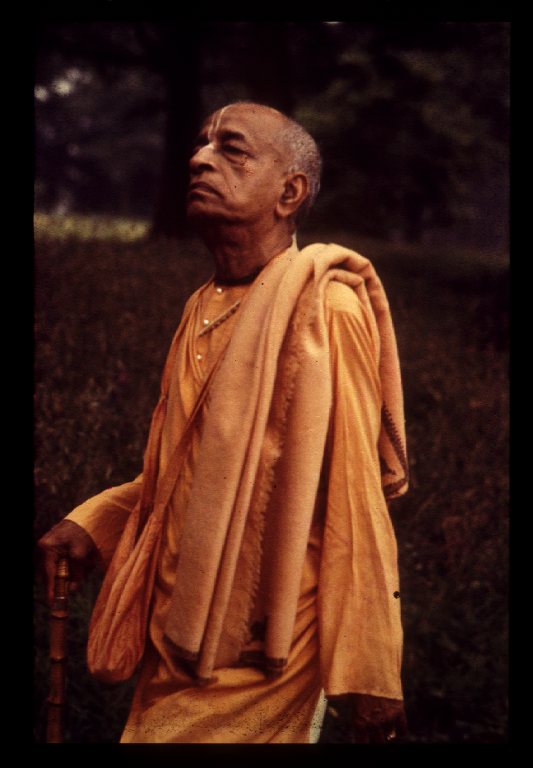
…whatever Krsna Consciousness exists outside of India is due to the humble efforts of His Divine Grace A.C. Bhaktivedanta Swami Prabhupada, who openly challenged the scientific voidism and sectarian impersonalism dominating the world. Like Bhaktivinode Thakur and Bhaktisiddhanta Thakur, his predecessors in bringing Lord Caitanya’s causeless mercy of Harinama out of India, His Divine Grace remains undefeated, and is prepared to commission any and all of his followers to carry on the tradition of victory.
…The Generals who could not be defeated have already provided the strategy, weapons, and knowledge, the spiritual strength, to guarantee ultimate victory. The Parampara Acaryas have chosen Srila Prabhupada-vani to lead the mission into this 21st Century…
Therefore, the wise shall accept the infallible guidance and protection of Srila Prabhupada and to best capacity help deliver, by His Divine Grace, the inconceivable benediction of Lord Caitanya Mahaprabhu.
The Generals Who Could Not Be Defeated
by Sriman Rupanuga das
His Divine Grace A.C. Bhaktivedanta Swami Prabhupada once remarked to his disciples, “You must become a general like me. I cannot be defeated.” Srila Prabhupada was commissioned by another undefeated general, Srila Bhaktisiddhanta Thakur, who against all opposition established the legitimacy and influence of the Gaudiya Vaisnava siddhanta in India. Srila Bhaktisiddhanta met resistance from every quarter: professional gurus, prakrta-sahajiyas, caste goswamis, ecumenists, eclecticists, et al., but anyone who dared to sally forth and meet his challenge was ultimately trounced.
More
28 Oct 2012
by The Hare Krishna Movement
in A.C. Bhaktivedanta Swami Prabhupada, Prahlada Maharaja, Srimad Bhagavatam, Teachings of Pralada Maharaja
Tags: 9 types of devotional service, A.C. Bhaktivedanta Swami Prabhupada, arcanam, atma-nivedanam, dasyam, devotional service, kirtanam, Narada Muni, nine processes of devotional service, pada-sevanam, Prahlada Maharaja, sakyam, sarvanam, smaranam, Srila Prabhupada, Teachings of Prahlada Maharaja, the science of God, vandanam, visnoh
click on image to enlarge
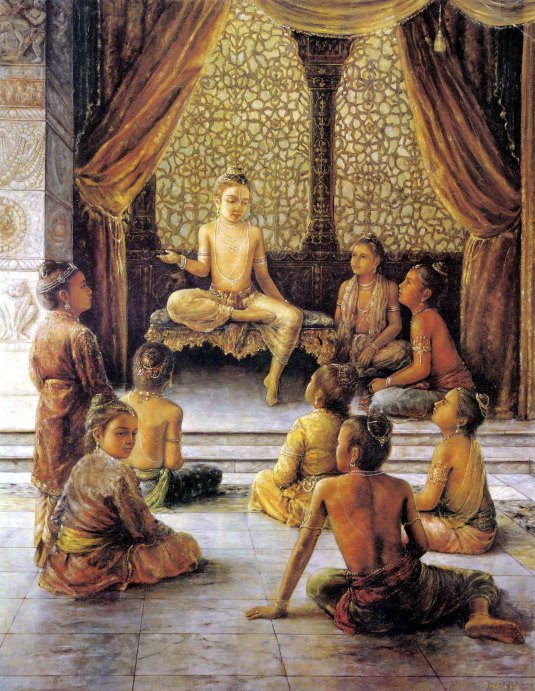
Prahlāda Mahārāja said: Hearing and chanting about the transcendental holy name, form, qualities, paraphernalia and pastimes of Lord Viṣṇu, remembering them, serving the lotus feet of the Lord, offering the Lord respectful worship with sixteen types of paraphernalia, offering prayers to the Lord, becoming His servant, considering the Lord one’s best friend, and surrendering everything unto Him (in other words, serving Him with the body, mind and words)—these nine processes are accepted as pure devotional service. One who has dedicated his life to the service of Kṛṣṇa through these nine methods should be understood to be the most learned person, for he has acquired complete knowledge.
Full text and purport More
25 Oct 2012
by The Hare Krishna Movement
in A.C. Bhaktivedanta Swami Prabhupada, Maharaja Pariksit, Srimad Bhagavatam
Tags: A.C. Bhaktivedanta Swami Prabhupada, enjoy life to the fullest, fast till death, Ganges, great emperor, kingdom, Maharaja Pariksit, pious king, power and opulence, retiring from life, SB 1.4.9-12, Srimad Bhagavatam
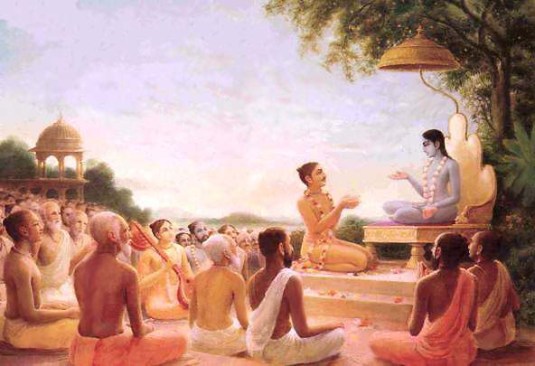
This morning I was reading about Maharaja Pariksit and of his qualities and position in life. He was in a position to enjoy life to the fullest extent,then why should he give up all these favorable circumstances and sit down on the bank of the Ganges, fasting till death? This is astonishing, and therefore all were eager to know the cause. He gave up everything to hear Sriman Bhagavatam from the lips of the pure devotee.
He was a great emperor and possessed all the opulences of his acquired kingdom. He was so exalted that he was increasing the prestige of the Pāṇḍu dynasty. Why did he give up everything to sit down on the bank of the Ganges and fast until death?
…There was nothing undesirable in his life. He was quite a young man and could enjoy life with power and opulence. So there was no question of retiring from active life. There was no difficulty in collecting the state taxes because he was so powerful and chivalrous that even his enemies would come to him and bow down at his feet and surrender all wealth for their own benefit. Mahārāja Parīkṣit was a pious king. He conquered his enemies, and therefore the kingdom was full of prosperity. There was enough milk, grains and metals, and all the rivers and mountains were full of potency. So materially everything was satisfactory. Therefore, there was no question of untimely giving up his kingdom and life. The sages were eager to hear about all this.
More
Previous Older Entries Next Newer Entries









 The Hare Krishna Movement