16 Jul 2013
by The Hare Krishna Movement
in A.C. Bhaktivedanta Swami Prabhupada, Books by Srila Prabhupada, Free Downloads, Free eBooks, Srila Prabhupada's Books, Srimad Bhagavatam
Tags: A.C. Bhaktivedanta Swami Prabhupada, Book Distribution, epic bhagavatam, free books, free pdf download, pdf download, Srimad Bhagavatam, Tenth Canto, The Hare Krishna Movement


One of our readers suggested that we also upload Part One and Part Two of the Tenth Canto as a Free PDF Download, to go with Part Three which we posted the other day. So with great pleasure we post the Free links to read or save the pdf files of Part One and Two of Srila Prabhupada’s Epic Srimad-Bhagavatam.

click on link for free pdf download; SB10.1

click on link for free pdf download; SB10.2
More
14 Jul 2013
by The Hare Krishna Movement
in A.C. Bhaktivedanta Swami Prabhupada, BBT, Book Changes, Books by Srila Prabhupada, Srimad Bhagavatam
Tags: A.C. Bhaktivedanta Swami Prabhupada, BBT, dictaphone, final volume, Founder Acarya, foward to tenth canto, International Society for Krishna Consciousness, Krsna Balarama Mandir, Sanskrit text, Srimad Bhagavatam, Tenth Canto, translation and commentary

Śrīmad-Bhāgavatam
By His Divine Grace A.C. Bhaktivedanta Swami Prabhupada
Tenth Canto, Part Three
Foward
This is the final Śrīmad-Bhāgavatam volume translated by His Divine Grace A. C. Bhaktivedanta Swami Prabhupada, founder-acarya of the International Society for Krishna Consciousness. It is smaller than the earlier volumes because it ends where the renowned author stopped translating just before his departure from this mortal world on November 14, 1977, at the Krsna-Balarama Mandira in Vrndavana, India.
The first part of this volume was produced in the usual fashion. Srila Prabhupada would sit and read silently from the Sanskrit text and then speak the translation and commentary into his dictaphone. Later, due to illness, it became necessary for his disciples to assist him personally.
In these last days Srila Prabhupada was gravely ill. Unable to eat for weeks, his health had deteriorated, making even the slightest movement excruciatingly painful.
As he lay still, a devotee would softly read the Sanskrit to him. Another disciple, sitting on his bed, held the microphone to him, nearly touching his mouth. And then Srila Prabhupada would speak, voice sometimes barely audible.
These recordings, made in his quarters at the temple, constitute the balance of this book.
In these final moments, the physician attending His Divine Grace confided that an ordinary man in such critical condition would have been crying out from the intense pain. Srila Prabhupada’s disciples were awestruck as they watched their spiritual master work quietly, undisturbed.
In the last part of the book we find Srila Prabhupada’s usual clarity of thought, constant scriptural references, scrupulous attention to detail, and rigorous philosophical exposition fully intact, just as they were in the preceding twenty-nine volumes of the Śrīmad-Bhāgavatam.
Srila Prabhpada’s last days and this translation will stands an inspiring reminder that even the severest material circumstances cannot impede the activities of a pure devotee of the Supreme Personality of Godhead.
-The Publishers

For a Free PDF download of this special volume click on following link; SB-10-03-1980
More
12 Jul 2013
by The Hare Krishna Movement
in A.C. Bhaktivedanta Swami Prabhupada, Prayers & Verses, Quotes by Srila Prabhupada, Slokas
Tags: A.C. Bhaktivedanta Swami Prabhupada, conversation with Srila Prabhupada, imports of Vedic knowledge, Letters by Srila Prabhupada, Prabhupada lectures, quotes by prabhupada, spiritual master, SU 6.23, Svetasvatara Upanisad, vani, vani quotes, Vedic knowledge, yasya deve para bhaktir, yatha deve tatha gurau

Last night I was having a discussion with a fellow vaisnava, and the following, important sloka, came up in the course of our conversation. I was reminded of a story that once Gurukrpa Swami asked Srila Prabhupada what was the most important sloka in our literature, and Srila Prabhupada responded:
yasya deve parā bhaktir
yathā deve tathā gurau
tasyaite kathitā hy arthāḥ
prakāśante mahātmanaḥ
“Only unto those great souls who have implicit faith in both the Lord and the spiritual master are all the imports of Vedic knowledge automatically revealed.” (Śvetāśvatara Upaniṣad 6.23)
I wanted to see how many times Srila Prabhupada used this sloka in his books and lectures so I went to Vani Quotes and did a search. It appears that this verse was used in:
Bhagavad-gita; 2 times
Srimad Bhagavatam; 11 times
Sri Caitanya-caritamrta; 12 times
Lectures; 43 times
Letters; 7 times
Morning Walks and Conversations; 22 times
Other books; twice
We share with you some of the the results of the Vani Quotes Research team, and thank Visnu Murti and Mayapur prabhu’s efforts.
More
11 Jul 2013
by The Hare Krishna Movement
in A.C. Bhaktivedanta Swami Prabhupada, Back to Godhead, Festivals, Ratha-yatra
Tags: A.C. Bhaktivedanta Swami Prabhupada, ananda, Back to Godhead Magazine, BTG, cit, Festival in San Franscisco's Glden Gate Park, festival of the chariots, Jagannatha, Jagannatha's Ratha-yatra, sat, Srila Prabhupada, The Supreme Personality of Godhead
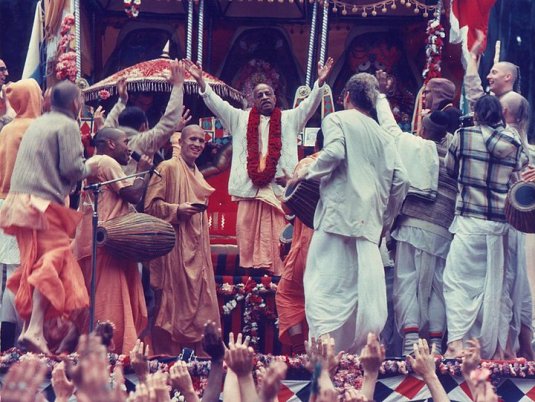
The Festival’s Inspiration
Excerpted from Back to Godhead Magazine Vol 13, No. 6, 1978
His Divine Grace A.C. Bhaktivedanta Swami Prabhupada brought the ancient Indian Ratha-yatra, the Festival of the Chariots, to the West in 1967. That year Srila Prabhupada held the festival in San Francisco’s Golden Gate Park, and it quickly caught on all over the world. In 1969, at the third San Francisco festival, Srila Prabhupada spoke these words:
“My dear American boys and girls, I thank you very much for your taking part in this great festival known as Lord Jagannatha’s Ratha-yatra. This festival has been held every year for the last two thousand years or more in India, and in your country perhaps this is the third year we have held this great Ratha-yatra festival. We are also holding this festival in Boston, London, New York, and Columbus. The purpose for this Krsna consciousness movement is to invoke your dormant love for Jagannatha, the Supreme Personality of Godhead. Every one of us—not only human beings but every living entity including birds, beasts, and aquatics—is part and parcel of the Supreme Personality of Godhead. And just like a son has the right to inherit the property of his father, so we have the prerogative to achieve the status of our father, the Supreme Personality of Godhead. This status is called sac-cid-ananda-vigraha, Sat means ‘eternal,’ cit means ‘complete in knowledge,’ ananda means ‘bliss,’ and vigraha means ‘person.’ As we are all persons, so the Supreme Personality of Godhead is also a person, but He is very, very great. And He being the greatest, He supplies the needs of all other individual persons. We have a relationship with Lord Jagannatha, and we are meant to participate in His qualities of eternity, knowledge, and bliss.
“This inauguration of the Ratha-yatra festival will bring a new chapter in the history of the world—it is that potent. It is stated in the Vedic literature that anyone who sees Lord Jagannatha seated on this chariot will never again have to take birth within this miserable material world.”
(c) The Bhaktivedanta Book Trust International, Inc.
11 Jul 2013
by The Hare Krishna Movement
in Festivals, Jagajivana das, Ratha-yatra
Tags: A.C. Bhaktivedanta Swami Prabhupada, Back to Godhead Magazine, BTG, chariots, Jagajivana das, Ratha-yatra, Srila Prabhupada, The Festival of the Chariots, yoga

The Festival of the Chariots
Excerpted from Back to Godhead Magazine Vol. 13, No. 6, 1978
by Jagajivana dasa
Intimations of a Festive World
This Krsna culture,” His Divine Grace A.C. Bhaktivedanta Swami Prabhupada used to say, “has so many festivals. We could have one every day. In the spiritual world, every day is a festival.” And when you first see the chariots, you wonder whether that’s just where they’ve come from. Three soaring, silk-covered peaks rumbling along on ten-foot wheels—you have a feeling they’ve come from somewhere you’ve been before, but haven’t been back to for a long while.
More
09 Jul 2013
by The Hare Krishna Movement
in A.C. Bhaktivedanta Swami Prabhupada, Srimad Bhagavatam
Tags: A.C. Bhaktivedanta Swami Prabhupada, codes of religion, dharma, God, jnana, Kali-yuga, knowledge, krsne sva-dhamopagate, Lord Sri Krishna, purana, religion
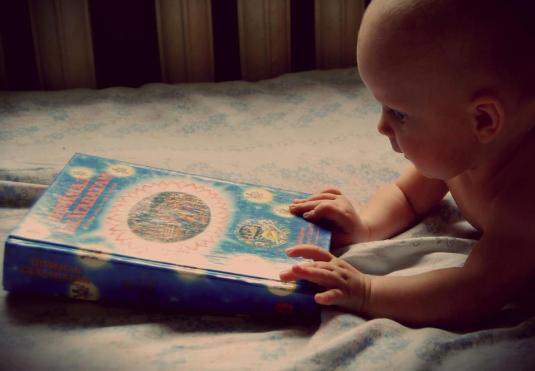
Srimad Bhagavatam
By His Divine Grace A.C. Bhaktivedanta Swami Prabhupada
Canto One, Chapter 3, Text 43
kṛṣṇe sva-dhāmopagate
dharma-jñānādibhiḥ saha
kalau naṣṭa-dṛśām eṣa
purāṇārko ’dhunoditaḥ
kṛṣṇe—in Kṛṣṇa’s; sva-dhāma—own abode; upagate—having returned; dharma—religion; jñāna—knowledge; ādibhiḥ—combined together; saha—along with; kalau—in the Kali-yuga; naṣṭa-dṛśām—of persons who have lost their sight; eṣaḥ—all these; purāṇa-arkaḥ—the Purāṇa which is brilliant like the sun; adhunā—just now; uditaḥ—has arisen.
TRANSLATION
This Bhāgavata Purāṇa is as brilliant as the sun, and it has arisen just after the departure of Lord Kṛṣṇa to His own abode, accompanied by religion, knowledge, etc. Persons who have lost their vision due to the dense darkness of ignorance in the age of Kali shall get light from this Purāṇa.
PURPORT
Lord Śrī Kṛṣṇa has His eternal dhāma, or abode, where He eternally enjoys Himself with His eternal associates and paraphernalia. And His eternal abode is a manifestation of His internal energy, whereas the material world is a manifestation of His external energy. When He descends on the material world, He displays Himself with all paraphernalia in His internal potency, which is called ātma-māyā. In the Bhagavad-gītā the Lord says that He descends by His own potency (ātma-māyā). His form, name, fame, paraphernalia, abode, etc., are not, therefore, creations of matter. He descends to reclaim the fallen souls and to reestablish codes of religion which are directly enacted by Him. Except for God, no one can establish the principles of religion. Either He or a suitable person empowered by Him can dictate the codes of religion. Real religion means to know God, our relation with Him and our duties in relation with Him and to know ultimately our destination after leaving this material body. The conditioned souls, who are entrapped by the material energy, hardly know all these principles of life. Most of them are like animals engaged in eating, sleeping, fearing and mating. They are mostly engaged in sense enjoyment under the pretension of religiosity, knowledge or salvation. They are still more blind in the present age of quarrel, or Kali-yuga. In the Kali-yuga the population is just a royal edition of the animals. They have nothing to do with spiritual knowledge or godly religious life. They are so blind that they cannot see anything beyond the jurisdiction of the subtle mind, intelligence or ego, but they are very much proud of their advancement in knowledge, science and material prosperity. They can risk their lives to become a dog or hog just after leaving the present body, for they have completely lost sight of the ultimate aim of life. The Personality of Godhead Śrī Kṛṣṇa appeared before us just a little prior to the beginning of Kali-yuga, and He returned to His eternal home practically at the commencement of Kali-yuga. While He was present, He exhibited everything by His different activities. He spoke the Bhagavad-gītā specifically and eradicated all pretentious principles of religiosity. And prior to His departure from this material world, He empowered Śrī Vyāsadeva through Nārada to compile the messages of the Śrīmad-Bhāgavatam, and thus both the Bhagavad-gītā and the Śrīmad-Bhāgavatam are like torchbearers for the blind people of this age. In other words, if men in this age of Kali want to see the real light of life, they must take to these two books only, and their aim of life will be fulfilled. Bhagavad-gītā is the preliminary study of the Bhāgavatam. And Śrīmad-Bhāgavatam is the summum bonum of life, Lord Śrī Kṛṣṇa personified. We must therefore accept Śrīmad-Bhāgavatam as the direct representation of Lord Kṛṣṇa. One who can see Śrīmad-Bhāgavatam can see also Lord Śrī Kṛṣṇa in person. They are identical.
09 Jul 2013
by The Hare Krishna Movement
in A.C. Bhaktivedanta Swami Prabhupada, Chanting Hare Krishna, Free Downloads, Free eBooks, On the Way to Krsna
Tags: 2nd Ave., A.C. Bhaktivedanta Swami Prabhupada, chanting Hare Krishna, free ebook, free pdf download, Hare, Hare Krishna, Krishna, meditation, mirror of the mind, On the Way to Krishna, Rama, The Way of Chanting and knowing Krsna, transcendental sound vibration

The following chapter “The Way of Chanting and Knowing Kṛṣṇa” is from one of the small paperback books entitled On The Way to Kṛṣṇa that was printed back in 1973. I always liked these smaller paperback books because I could take them with me wherever I went. For a Free PDF download that you can save or read online follow the link at bottom of post.
On the Way to Kṛṣṇa
By His Divine Grace A. C. Bhaktivedanta Swami Prabhupāda
Chapter Two
More
05 Jul 2013
by The Hare Krishna Movement
in A.C. Bhaktivedanta Swami Prabhupada, Spiritual World, Teachings of Lord Chaitanya
Tags: A.C. Bhaktivedanta Swami Prabhupada, Aniruddha, Damodara, devotees, four-handed, Hrsikesa, Krsna, Madhava, Madhusudana, Narayana, Padmanabha, prabhava form, Pradyumna, Sankarsana, spiritual sky, Sridhara, Teachings of Lord Chaitanya, Trivikrama, universe, vaisnava calendar, Vamana, Vasudeva, vilasa-murti, Visnu

click on image
Sometime back I ran across this picture and saved it to my files thinking I could use it in a post someday. While posting this chapter from the Teachings of Lord Caintanya, entitled “Unlimited Forms of Godhead”, I was looking for an image to use. So I selected the above image and to my surprise when I clicked on it, it moved. I had forgotten how cheesy cool this image was, and why it captured my interest, back when I saved it. So we share it today with our readers, and thank the unknown artist who put this picture to life.
…The different forms of Kṛṣṇa are distributed throughout the universe to give pleasure to the devotees. It is not that devotees are born only in India. There are devotees in all parts of the world, but they have simply forgotten their identity. These forms incarnate not only to give pleasure to the devotee but to reestablish devotional service and perform other activities which vitally concern the Supreme Personality of Godhead.
Teachings of Lord Chaintanya
By His Divine Grace A.C. Bhaktivedanta Swami Prabhupada
Chapter Seven
More
04 Jul 2013
by The Hare Krishna Movement
in A.C. Bhaktivedanta Swami Prabhupada, Back to Godhead, Conversation with Srila Prabhupada
Tags: 4th of July, A.C. Bhaktivedanta Swami Prabhupada, American Independence, Back to Godhead Magazine, BTG, Dependence on God, Independence day, life liberty and the pursuit of happiness, RDTSKP, transcendental literature

I remember as a younger man, back in 1976, when I was a member of the Radha Damodar Traveling Sankirtan Party (RDTSKP), I was in Washington D.C. distributing this very same issue of Back to Godhead Magazine. The thing about Transcendental Literature, is it remains ever fresh. 37 years later this article is still as important and significant as the day it was first published in Back to Godhead Magazine.
Declaring Our Dependence on God
Excerpted from Back to Godhead Magazine Vol. 11, No. 7, 1976
Two hundred years ago, Americans fought the War of Independence to assure life, liberty, and happiness in a fledgling nation. In a conversation with the BACK TO GODHEAD staff, His Divine Grace A.C. Bhaktivedanta Swami Prabhupada explains that Americans can actually achieve these things only by maintaining a God conscious society, with God conscious leaders.
More
03 Jul 2013
by The Hare Krishna Movement
in A.C. Bhaktivedanta Swami Prabhupada
Tags: A.C. Bhaktivedanta Swami Prabhupada, Arjuna, bhakta, devotion, devotional service, Gita, impersonal, impersonal Brahman, impersonalists, karmi, Krishna, Krsna, meditation, personalists, spiritual realization, spiritual sky, unmanifested, yogi

In this 12th chapter of the Bhagavad-gita As It Is entitled Devotional Service, the path of liberation is explained…
For one who worships Me, giving up all his activities unto Me and being devoted to Me without deviation, engaged in devotional service and always meditating upon Me, who has fixed his mind upon Me, O son of Pṛthā, for him I am the swift deliverer from the ocean of birth and death.
Also a nice description of the qualities of a devotee are given…
One who is not envious but who is a kind friend to all living entities, who does not think himself a proprietor, who is free from false ego and equal both in happiness and distress, who is always satisfied and engaged in devotional service with determination and whose mind and intelligence are in agreement with Me—he is very dear to Me.
Full Chapter More
28 Jun 2013
by The Hare Krishna Movement
in A.C. Bhaktivedanta Swami Prabhupada, Books by Srila Prabhupada, Free Downloads, Free eBooks, Nectar of Instruction, Rupa Goswami
Tags: A.C. Bhaktivedanta Swami Prabhupada, actions of anger, bengali vaisnavas, Gaudiya Vaisnavas, guru and disciple, manasah krodha-vegam, mind's demands, Nectar of Devotion Rupa Goswami, Sri Caitanya Mahaprabhu, upadesmrta, urge to speak, urges of the tongue, vaco vegam
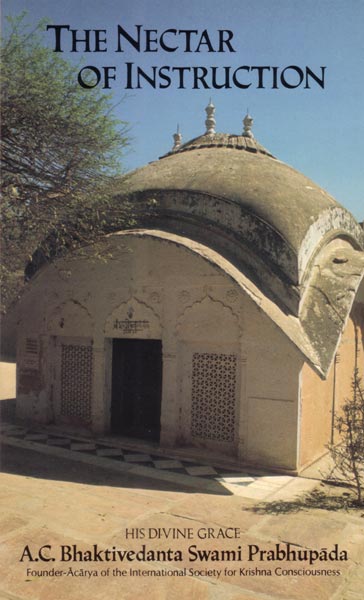
Also for a free pdf downlaod of entire book click on link at bottom More
27 Jun 2013
by The Hare Krishna Movement
in A.C. Bhaktivedanta Swami Prabhupada, Bhaktisiddhanta Sarasvati Thakura, Bhaktivinoda Thakura, Brahmananda das, Caitanya Mahaprabhu, The Hare Krishna Movement
Tags: A.C. Bhaktivedanta Swami Prabhupada, Bhaktisiddhanta Saravati Thakura, bogi yogis, disciples, George Harrison, guru, Indian sanyasis, sannyasis, Srila Prabhupada, Srila Prabhupada's disciples, The Hare Krishna Movement, The Hare Krsna Explosion
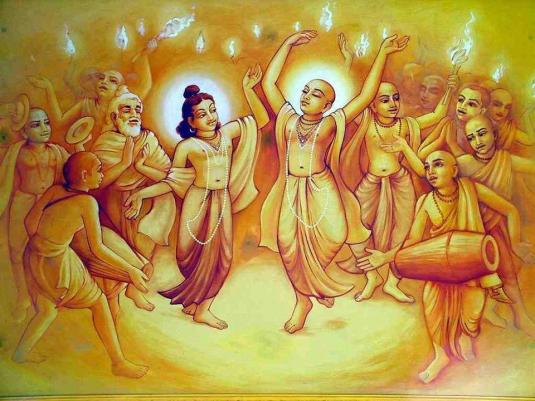
This is Part 3, or the conclusion, of the very informative article by Sriman Brahmananda Prabhu as it appeared in Back to Godhead Magazine in 1975, which gives not only some of the History of Lord Caitanya’s Mission, but on the preaching of Srila Bhaktivinoda Thakur, Srila Bhaktisiddhanta, A.C. Bhaktivedanta Swami Prabhupada, Gaudiya Vaisnavism, and the Hare Krishna Movement here in the West.
How the Teachings of Lord Caitanya Came to the Western World (Part 3)
Excerpted from Back to Godhead Magazine
Vol.10, No. 1, 1975
by His Holiness Brahmananda Swami
After the disappearance of Srila Bhaktivinoda Thakura, his son, Srila Bhaktisiddhanta Sarasvati Gosvami Maharaja, a great scholar and pure devotee, continued to expand the mission of Lord Caitanya. He wrote many books and established printing presses and sixty-four temples dedicated to preaching the message of Krsna consciousness.
The following is the third of three articles depicting the pioneering efforts of Srila Bhaktivinoda Thakura, Srila Bhaktisiddhanta Sarasvati Gosvami, and those who have followed them in spreading the benediction of Krsna consciousness throughout the world.)
More
26 Jun 2013
by The Hare Krishna Movement
in A.C. Bhaktivedanta Swami Prabhupada, Sat-cit-ananda, Vaisnava Vocabulary
Tags: A.C. Bhaktivedanta Swami Prabhupada, ananda, eternal, jubilation, knowledge, knowledge and blissful, pleasure, sat cit ananda
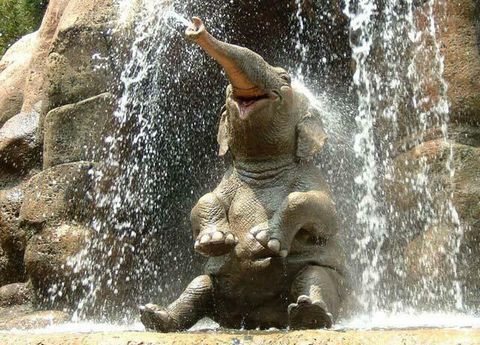
This morning while reading I came across the words sat-cit-ānanda. Many of us, we know what the words mean, but have we realized the meaning yet? Do we truly understand what it means to be eternal, full of knowledge and blissfull? I thought I would do a search on the phrase “sac-cid-ānanda” and see how this was explained by Srila Prabhupada.
Cit means knowledge, sat means eternal, and bliss means full of jubilation, ānanda, pleasure. (from lectures)
Because we are spirit soul, our position is ānandamāyā. Ānandamāyā means always blissful. Because we are part and parcel of God… God is blissful, all-good, sac-cid-ānanda…Sat means eternal, and cit means full of knowledge, and ānanda means full of bliss. So we are part and parcel of God. Kṛṣṇa says, mamaivāṁśo jīva bhūtaḥ: BG 15.7 “All these living entities, they are My part and parcel.” So if Kṛṣṇa is sat-cit-ānanda, then we are also sat-cit-ānanda, because we are part. Just like gold and a gold, small particle. That is also gold.
…Part is never equal to the whole. But quality is the same. Therefore we, being part and parcel of Kṛṣṇa, the Supreme Lord, we are trying to utilize our original constitutional position. This is going on. But we are doing that without Kṛṣṇa at the present moment. Therefore it is not successful. Part must remain with the whole. I have given this example many times, that a small screw of typewriter or any machine, it must remain with the whole machine. Then it has value. If it is out of the machine, there is no value. A small screw in the motorcar, so long it is with the motorcar, it has got value. And as soon as it is thrown out of the motorcar, it has no value. (Lecture on the Srimad Bhagavatam 1.2.9 given Detroit, August 3, 1975, by His Divine Grace A.C. Bhaktivedanta Swami Prabhupada)
It is interesting to note that Srila Prabhupada used this phrase ‘sat cit ananda’, 41 times in Lectures, 5 times in Letters, and can be found is his books. Some of the usage is as follows: More
25 Jun 2013
by The Hare Krishna Movement
in Back to Godhead, Bhaktisiddhanta Sarasvati Thakura, Bhaktivinoda Thakura, Brahmananda das, Caitanya Mahaprabhu, Gaudiya Vaisnavism
Tags: A.C. Bhaktivedanta Swami Prabhupada, Back to Godhead Magazine, Bhaktisiddhanta Sarasvati, Brahmananda dasa, Brahmananda Swami, brahmanas, devotional service, lion guru, Lord Caitanya, netyananda-vamsa, Srila Bhaktisiddhanta, Srila Bhaktivinoda Thakur

This is Part 2 of the very informative article by Sriman Brahmananda Prabhu as it appeared in Back to Godhead Magazine in 1974, which gives not only some of the History of Lord Caitanya’s Mission, but on the preaching of Srila Bhaktivinoda Thakur, Srila Bhaktisiddhanta, Gaudiya Vaisnavism, and the Hare Krishna Movement here in the West.
How the Teachings of Lord Caitanya Came to the Western World
Excerpted from Back to Godhead Magazine
Vol.1, No. 68, 1974
Part 2
by His Holiness Brahmananda Svami
[Lord Caitanya Mahaprabhu, who is Krsna Himself in the form of His own pure devotee, appeared 500 years ago in Bengal, India, to teach—by His own example—how one can become fully Krsna conscious. The teachings of Lord Caitanya were recorded and transmitted by many faithful disciples, but they were virtually unknown in the West until 1896, when Srila Bhaktivinoda Thakura, a great spiritual master in the disciplic line from Lord Caitanya, published a short book entitled Sri Caitanya Mahaprabhu—His Life and Precepts and sent copies to the Western world. The following is the second of three articles depicting the pioneering efforts of Srila Bhaktivinoda Thakura, and those who have followed him, in spreading the great benediction of Krsna consciousness to the West.]
More
24 Jun 2013
by The Hare Krishna Movement
in A.C. Bhaktivedanta Swami Prabhupada, Ganges, Srimad Bhagavatam
Tags: A.C. Bhaktivedanta Swami Prabhupada, amartya, baby Krsna, Ganges, Ganges River, Gokula, Krsna's lotus feet, sacred rivers, sanctified, SB 1.19.6, Srimad Bhagavatam, transcendental, Tulasi, tulasi leaves, Yamuna, Yamuna river
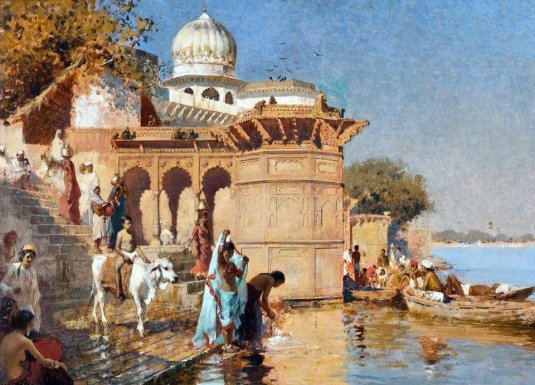
click on image to enlarge
…Both the Ganges and the Yamunā are amartyā (transcendental) rivers, but the Yamunā is still more sanctified for the following reasons.
…And as far as sanctity is concerned, the River Yamunā is more directly connected with Lord Kṛṣṇa than the Ganges. The Lord sanctified the River Yamunā from the beginning of His transcendental pastimes in the world. While His father Vasudeva was crossing the Yamunā with the baby Lord Kṛṣṇa for a safe place at Gokula on the other bank of the river from Mathurā, the Lord fell down in the river, and by the dust of His lotus feet the river at once became sanctified. It is especially mentioned herein that Mahārāja Parīkṣit took shelter of that particular river which is beautifully flowing, carrying the dust of the lotus feet of Lord Kṛṣṇa, mixed with tulasī leaves. Lord Kṛṣṇa’s lotus feet are always besmeared with the tulasī leaves, and thus as soon as His lotus feet contact the water of the Ganges and the Yamunā, the rivers become at once sanctified. The Lord, however, contacted the River Yamunā more than the Ganges. (from purport to SB 1.19.6)
Full verse and purport More
19 Jun 2013
by The Hare Krishna Movement
in A.C. Bhaktivedanta Swami Prabhupada, Book Changes, Book Distribution, ISKCON, ISKCON History, Ramesvara das
Tags: A.C. Bhaktivedanta Swami Prabhupada, Baladeva Vidyabhusana das, BBT, Bhaktivedanta Book Trust, bood distribution, book changes, Iskcon, ISKCON history, Ramesvara das, Srila Prabhupada, Srila Prabhupada's books, The Hare Krishna Movement
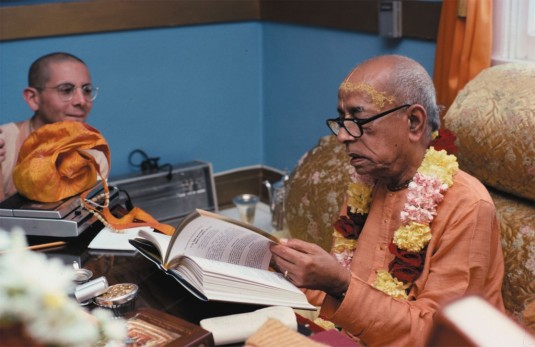
click on image to enlarge
In case anyone missed this important 1979 interview with Ramesvara Prabhu, on the History of ISKCON, Book Changes, Book Publication, etc., etc. We are re-posting again.
Testimonial by Ramesvara dasa
Ramesvara-interview-1979
A very, very important document has just become public. It is a 300+ page transcript of a 1979 interview betweem Baladeva Vidyabhusana Prabhu and Ramesvara Prabhu, the manager of the Bhaktivedanta Book Trust, the person who was directly in charge of printing Srila Prabhupada’s books durning that time. Ramesvara had many direct instructions from Srila Prabhupada in regard to printing his books, and he also gives an eye-witness account of many events that took place while Srila Prabhupada was physically present. Very interesting read!!!
You can download the PDF file of the interview by clicking on: Ramesvara-interview-1979
Or you can read the entire interview here… More
17 Jun 2013
by The Hare Krishna Movement
in A.C. Bhaktivedanta Swami Prabhupada, Hearing and Memorizing, Meditation, Nectar of Devotion
Tags: A.C. Bhaktivedanta Swami Prabhupada, causeless mercy, core of his heart, liberated, meditation, offering respectful obeisances, resultant actions of his past misdeeds, rightful claim, SB 10.14.8, SB 5.10.14, tat te nukampam

click on image to enlarge
This morning as I was reading from the Srimad Bhagavatam, I was feeling the aches and pains of age, and I was reminded of one of my most favorite verses:
tat te ‘nukampāṁ susamīkṣamāṇo
bhuñjāna evātma-kṛtaṁ vipākam
hṛd-vāg-vapurbhir vidadhan namas te
jīveta yo mukti-pade sa dāya-bhāk
“My dear Lord, any person who is constantly awaiting Your causeless mercy to be bestowed upon him, and who goes on suffering the resultant actions of his past misdeeds, offering You respectful obeisances from the core of his heart, is surely eligible to become liberated, for it has become his rightful claim.” (SB 10.14.8)
…A devotee of the Lord never thinks that he is a paramahaṁsa or a liberated person. He always remains a humble servant of the Lord. In all reverse conditions, he agrees to suffer the results of his past life. He never accuses the Lord of putting him into a distressed condition. These are the signs of an exalted devotee. Tat te ‘nukampāṁ susamīkṣyamāṇaḥ. When suffering reversed conditions, the devotee always considers that the reverse conditions are the Lord’s concessions. He is never angry with his master; he is always satisfied with the position his master offers. In any case, he continues performing his duty in devotional service. Such a person is guaranteed promotion back home, back to Godhead. (from purport)
When I did a computer search on the phrase “rightful claim”, this of course brought me to the different references from the Srimad Bhagavatam (ie., SB 5.10.14, and SB 8.14.13) but also to the “Nectar of Devotion”, chapter ten. Reading from it was so nice, that I decided to post the entire chapter. More
16 Jun 2013
by The Hare Krishna Movement
in A.C. Bhaktivedanta Swami Prabhupada, Books by Srila Prabhupada, Raja-Vidya
Tags: A.C. Bhaktivedanta Swami Prabhupada, beyond samsara, faith in guru and Krsna, great souls, knowledge through disciplic succession, Krsna's energies, mahatma, Raja-Vidya, the king of knowledge

This is the index to the Contents of “Raja-Vidya The King of Knowledge” by His Divine Grace A.C. Bhaktivedanta Swami Prabhupada. We have posted it here in its entirety. This index will give you immediate access to the chapters by clicking on the following underlined links. And for a free PDF download click on link at bottom of post.
Chapter One Raja – Vidya: The King of Knowledge
Chapter Two Knowledge Beyond Saṁsāra
Chapter Three Knowledge of Kṛṣṇa’s Energies
Chapter Four Knowledge by Way of the Mahātmās, Great Souls
Chapter Five Parampara: Knowledge Through Disciplic Succession
Chapter Six Knowledge of Kṛṣṇa’s Appearances and Activities
Chapter Seven Knowledge as Faith in Guru and surrender to Kṛṣṇa
Chapter Eight Action in Knowledge of Kṛṣṇa
For a free pdf download of Raja-Vidya The King of Knowledge; Raja-Vidya-The-King-of-Knowledge
12 Jun 2013
by The Hare Krishna Movement
in A.C. Bhaktivedanta Swami Prabhupada, Ramesvara das, Remembering Srila Prabhupada, Srila Prabhupada
Tags: A.C. Bhaktivedanta Swami Prabhupada, Interview with Ramesvara Prabhu on Book Changes, Krsna Book, rose garden, Srila Prabhupada

Reading Krsna Book With Prabhupada
from; Interview with Ramesvara Prabhu on Book Changes 1979
There’s a few more early incidents that I can remember. In Los Angeles on one of those early visits, probably ’73, we used to read the Krsna Book to Prabhupada every evening, he would sit in his garden. And it was just the most wonderful, intimate association with Prabhupada. And I used to marvel at the way Prabhupada would sit and listen to the Krsna Book. His head was looking up very erect, the way he was holding his body, and very grave, serious, sober look on his face. Very intense. Although it was so personal and ecstatic and informal, to just be with a handful of devotees reading the Krsna Book to Prabhupada, Prabhupada was showing us how to actually become absorbed in hearing of God. It wasn’t that…he was not in a light mood. He was in a heavy mood, like a great transcendental aristocrat. I’ll never forget how serious, how he was looking, so formal. Even though the mood was so informal. In that way he was showing us how to hear the Krsna Book.
for full interview; Interview with Ramesvara Prabhu on Book Changes
Previous Older Entries Next Newer Entries






 The Hare Krishna Movement
Foward to Final Volume of the Srimad Bhagavatam
14 Jul 2013 1 Comment
by The Hare Krishna Movement in A.C. Bhaktivedanta Swami Prabhupada, BBT, Book Changes, Books by Srila Prabhupada, Srimad Bhagavatam Tags: A.C. Bhaktivedanta Swami Prabhupada, BBT, dictaphone, final volume, Founder Acarya, foward to tenth canto, International Society for Krishna Consciousness, Krsna Balarama Mandir, Sanskrit text, Srimad Bhagavatam, Tenth Canto, translation and commentary
Śrīmad-Bhāgavatam
By His Divine Grace A.C. Bhaktivedanta Swami Prabhupada
Tenth Canto, Part Three
Foward
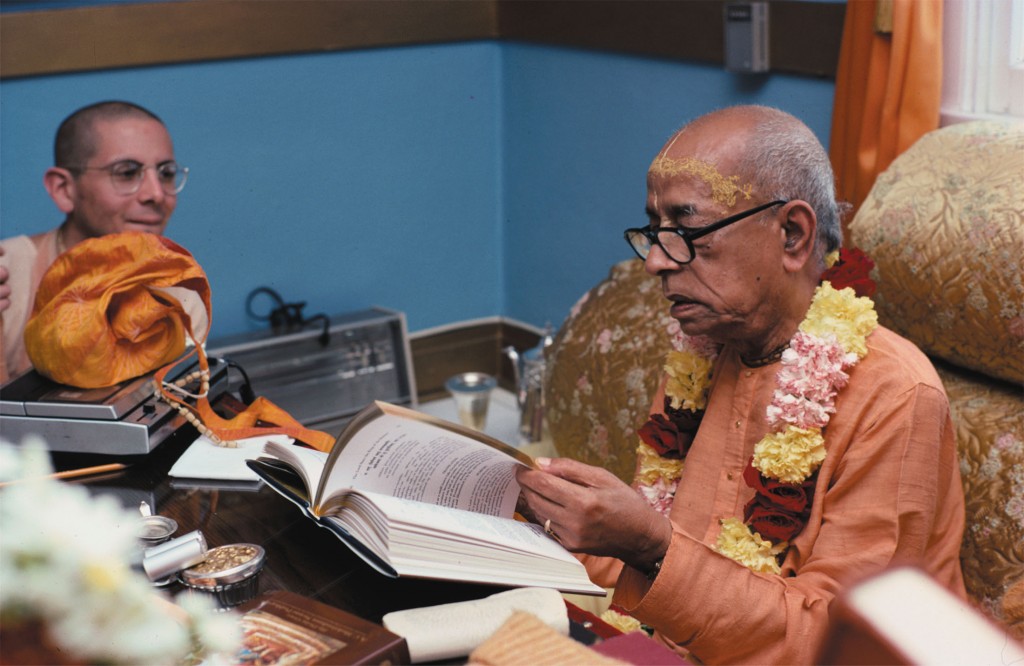
This is the final Śrīmad-Bhāgavatam volume translated by His Divine Grace A. C. Bhaktivedanta Swami Prabhupada, founder-acarya of the International Society for Krishna Consciousness. It is smaller than the earlier volumes because it ends where the renowned author stopped translating just before his departure from this mortal world on November 14, 1977, at the Krsna-Balarama Mandira in Vrndavana, India.
The first part of this volume was produced in the usual fashion. Srila Prabhupada would sit and read silently from the Sanskrit text and then speak the translation and commentary into his dictaphone. Later, due to illness, it became necessary for his disciples to assist him personally.
In these last days Srila Prabhupada was gravely ill. Unable to eat for weeks, his health had deteriorated, making even the slightest movement excruciatingly painful.
As he lay still, a devotee would softly read the Sanskrit to him. Another disciple, sitting on his bed, held the microphone to him, nearly touching his mouth. And then Srila Prabhupada would speak, voice sometimes barely audible.
These recordings, made in his quarters at the temple, constitute the balance of this book.
In these final moments, the physician attending His Divine Grace confided that an ordinary man in such critical condition would have been crying out from the intense pain. Srila Prabhupada’s disciples were awestruck as they watched their spiritual master work quietly, undisturbed.
In the last part of the book we find Srila Prabhupada’s usual clarity of thought, constant scriptural references, scrupulous attention to detail, and rigorous philosophical exposition fully intact, just as they were in the preceding twenty-nine volumes of the Śrīmad-Bhāgavatam.
Srila Prabhpada’s last days and this translation will stands an inspiring reminder that even the severest material circumstances cannot impede the activities of a pure devotee of the Supreme Personality of Godhead.
-The Publishers
For a Free PDF download of this special volume click on following link; SB-10-03-1980
More