12 Feb 2015
by The Hare Krishna Movement
in A.C. Bhaktivedanta Swami Prabhupada, Chanting Hare Krishna, Mantra Meditation
Tags: A.C. Bhaktivedanta Swami Prabhupada, birth and death, chanting Hare Krishna, chanting the holy name of Kṛṣṇa, feared by fear personified, SB1.1.14, Srimad Bhagavatam
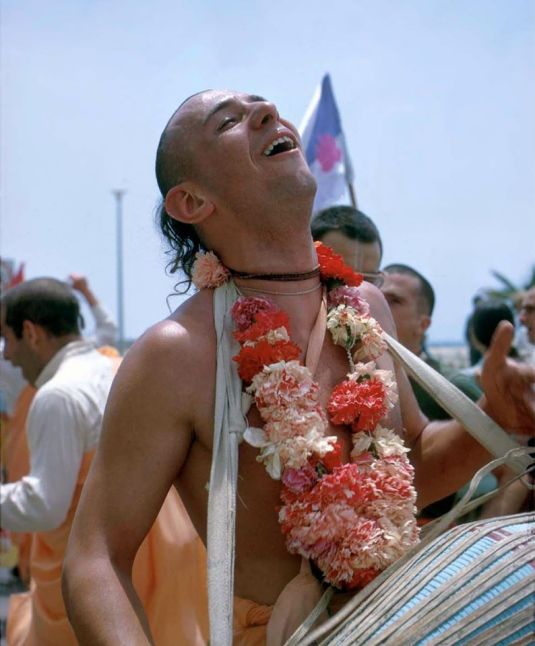
It seems there is world wide fear over the outbreak of the Coronavirus disease (COVID-19). Most people infected with the COVID-19 virus will experience mild to moderate respiratory illness and recover without requiring special treatment. Older people, such as myself , and those with underlying medical problems like cardiovascular disease, diabetes, chronic respiratory disease, and cancer are more likely to develop serious illness. But I refuse to live in fear, although we have accepted a self imposed quarantine, I have gone about my business working alone in my woodworking shop, and chanting the holy name. Hare Krishna! -V
Living beings who are entangled in the complicated meshes of birth and death can be freed immediately by even unconsciously chanting the holy name of Kṛṣṇa, which is feared by fear personified. (SB 1.1.14)
… It is stated herein that the name of Kṛṣṇa is feared even by fear personified. This indicates that the name of Kṛṣṇa is nondifferent from Kṛṣṇa. Therefore, the name of Kṛṣṇa is as powerful as Lord Kṛṣṇa Himself. There is no difference at all. Anyone, therefore, can take advantage of the holy names of Lord Śrī Kṛṣṇa even in the midst of greatest dangers. The transcendental name of Kṛṣṇa, even though uttered unconsciously or by force of circumstances, can help one obtain freedom from the hurdle of birth and death. (from purport)
Full tent and purport More
12 Feb 2015
by The Hare Krishna Movement
in A.C. Bhaktivedanta Swami Prabhupada, Dhira Govinda das, Diksha, Founder-Acarya, Guru & Disciple, guru-tattva, Spiritual Master, Srila Prabhupada
Tags: A.C. Bhaktivedanta Swami Prabhupada, current and direct link, Dhira Govinda das, GBC, guru, Iskcon, living guru, prominent link, SAC, spiritual master, spiritual master and disciple, Srila Prabhupada The Prominent Link

Srila Prabhupada: The Prominent Link
Recently I had the good fortune to meet one of my God brothers, Dhira Govinda Prabhu. It was on the appearance day of Srila Bhaktisiddhanta Sarasvati Thakur. I had heard of him, and in the past, had posted some of his writings, and had read his book “Srila Prabhupada; The Prominent Link”, but had not yet meet him. I found him to be a very nice devotee of good character. And just to give his voice a broader range we decided to post his book Srila Prabhupada The Prominent Link as well as the Prominent Link Supplementary Articles here.
Click on either of the above underlined links to read or save the pdf files.
More
30 Jan 2015
by The Hare Krishna Movement
in A.C. Bhaktivedanta Swami Prabhupada, Varaha
Tags: A.C. Bhaktivedanta Swami Prabhupada, agni-hotra, frog-philosophers, His tusks, Lord Boar, Lord Varāha (Boar), O descendant of Bharata, O lifter of the earth, O sinless Vidura, SB 3.13, Srimad Bhagavatam, The Appearance of Lord Varaha, The sage Maitreya, Vidhura

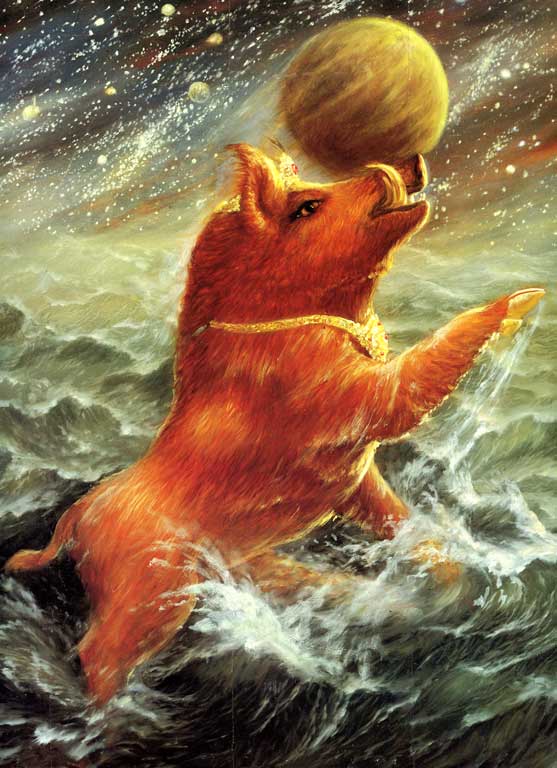
Varahadeva lifts the Earth
Today marks Bhaimi Ekadasi (fast from grains & Beans), but it is a special Ekadasi in that we fast till noon today for Varahadeva, and feast tomorrow.
In honor of the Appearance of Lord Varahadeva [Varaha Dvadasi] tomorrow, we are posting the entire chapter entitled “The Appearance of Lord Varāha” from the Srimad Bhagavatam.
Śrīmad-Bhāgavatam
By His Divine Grace A. C. Bhaktivedanta Swami Prabhupāda
Canto Three, Chapter 13
The Appearance of Lord Varāha
More
25 Jan 2015
by The Hare Krishna Movement
in A.C. Bhaktivedanta Swami Prabhupada, Srimad Bhagavatam, Time
Tags: A.C. Bhaktivedanta Swami Prabhupada, Asita, Atri, Bṛhadaśva, Bharadvāja and Paraśurāma and disciples, Dhaumya, Gautama, Gṛtsamada, Hūṇa, Indrapramada, Kakṣīvān, Kauśika, Kirāta, Mahabhrata, members of the Khasa races, Narada, Parvata Muni, Pulinda, Pulkaśa, SB 1.9.6-7, SB 2.4.18, Srimad Bhagavatam, Trita, Vasiṣṭha, Vyāsa the incarnation of God, Yavana, Śumbha, Ābhīra, Āndhra

One thing I have often found interesting when reading books like the Srimad Bhagavatam and the Maha Bharata, is how far back the recorded oral histories go. Often Millions of Years. On our last visit to Mexico we were learning some about the Mayan culture, and how Millions of people vanished some 5,000 years ago. Which happens to coincide with the ancient Battle of Kurukestra which took place in India.
Also Srila Prabhupada has mentioned so many places in his books about how at one time, all the different parts of the world were ruled by one king.
…In the modern age people are under the impression that during the Vedic period or the prehistoric ages America and many other parts of the world had not been discovered, but that is not a fact. Pṛthu Mahārāja ruled over the world many thousands of years before the so-called prehistoric age, and it is clearly mentioned here that in those days not only were all the different parts of the world known, but they were ruled by one king, Mahārāja Pṛthu. (from purport to SB 4.21.12)
An interesting link ended up in my mailbox this morning which I share with all of you describing some of the common spiritual cultures on differing sides of the world.
Baffling Links to Ancient India: History is full of misnomers; one such term is the New World, as applied to the Americas. The landing of Columbus in 1492 undoubtedly created a new life on the continents, but it neither created nor discovered a new world. Many centuries ago Asian migrants had come to the western shore in substantial numbers. What if the popular idea that Tibetans and American Indians have much in common in terms of their spiritual culture is largely a result of another historical scenario?
What if Hindus and Hopis, Advantins and Aztecs, Tibetan Monks and Mayans were part of one world culture – a spiritual one?
Click on Link Links to Ancient India for more information
We also include a few brief excerpts form the Srimad Bhagavatam describing this one world culture which existed thousands of years ago.
More
21 Jan 2015
by The Hare Krishna Movement
in A.C. Bhaktivedanta Swami Prabhupada, Mahatma, Spiritual Master, Srila Prabhupada, The Hare Krishna Movement
Tags: A.C. Bhaktivedanta Swami Prabhupada, always chanting My glories, chanting the flories of the lord, divine nature, great soul, Krsna, krsna consciousness, mahatma, mahatmanas tu mam partha, Srila Prabhupada, Supreme Personality of Godhead, The Hare Krishna Movement, thoes who are not deluded, transcendental qualities
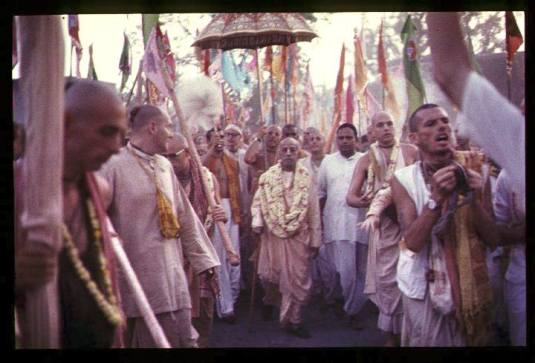
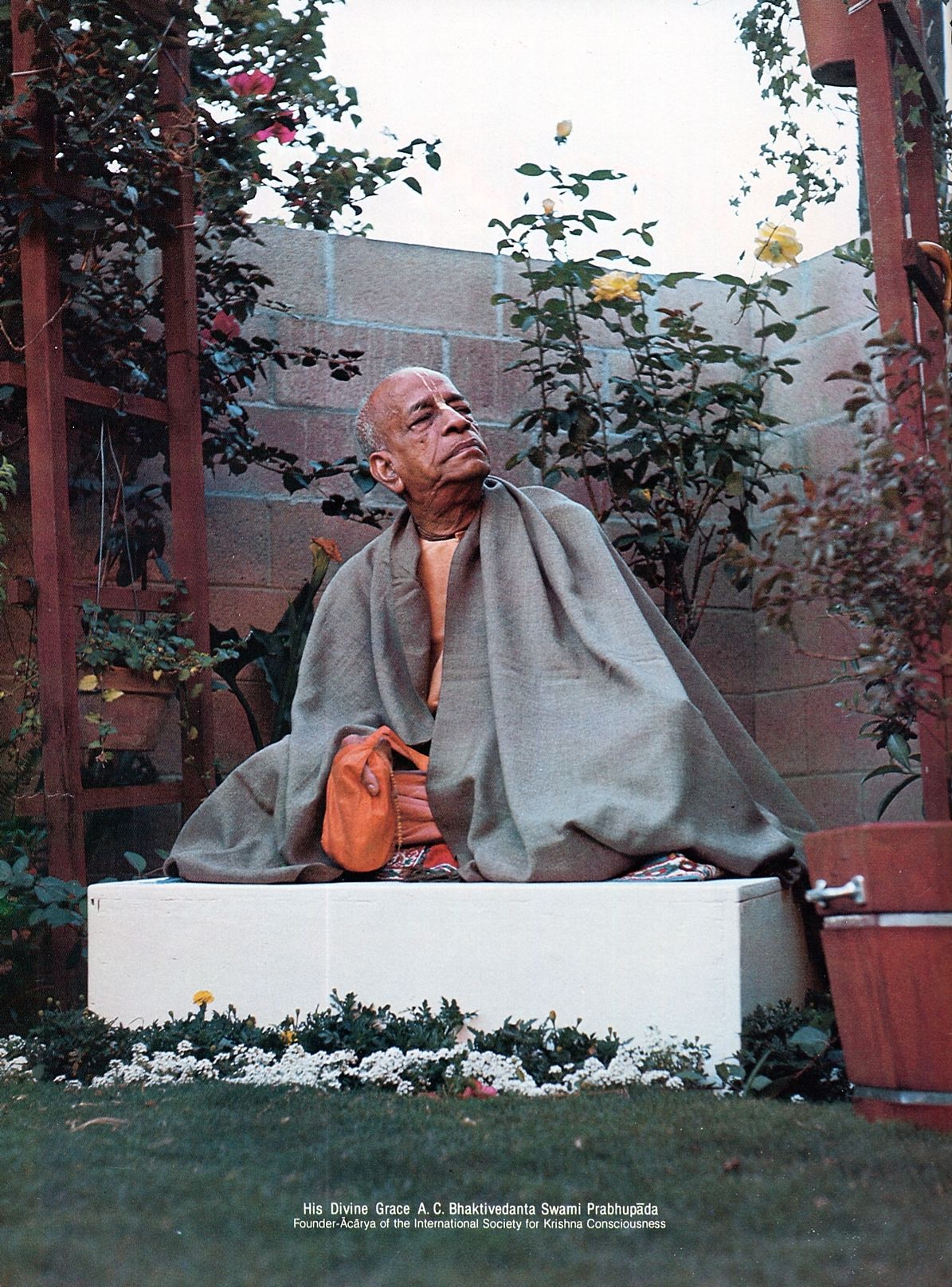
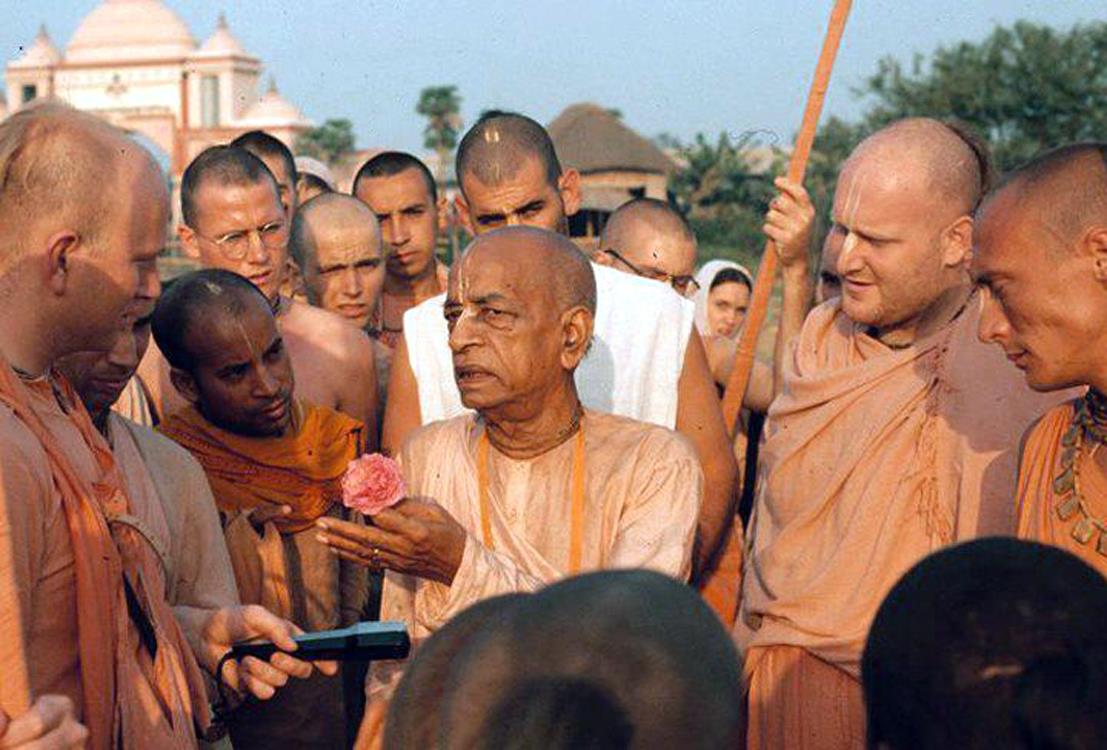
This morning I happened upon the above picture of Srila Prabhupada, and my mind immediately thought of the following two verses from the Bhagavad-gita:
O son of Pṛthā, those who are not deluded, the great souls, are under the protection of the divine nature. They are fully engaged in devotional service because they know Me as the Supreme Personality of Godhead, original and inexhaustible. (Bg 9. 13)
Always chanting My glories, endeavoring with great determination, bowing down before Me, these great souls perpetually worship Me with devotion. (Bg 9.14)
…In this verse the description of mahātmā is clearly given. The first sign of the mahātmā is that he is already situated in the divine nature…The mahātmā does not divert his attention to anything outside Kṛṣṇa because he knows perfectly well that Kṛṣṇa is the original Supreme Person, the cause of all causes. There is no doubt about it. Such a mahātmā, or great soul, develops through association with other mahātmās, pure devotees.
…The mahātmā cannot be manufactured by rubber-stamping an ordinary man. His symptoms are described here: a mahātmā is always engaged in chanting the glories of the Supreme Lord Kṛṣṇa, the Personality of Godhead. He has no other business. He is always engaged in the glorification of the Lord. In other words, he is not an impersonalist. When the question of glorification is there, one has to glorify the Supreme Lord, praising His holy name, His eternal form, His transcendental qualities and His uncommon pastimes. One has to glorify all these things; therefore a mahātmā is attached to the Supreme Personality of Godhead. (from purports)
I find that for me personally, thinking about Srila Prabhupada is one of the best forms of meditation, is good for my Krishna consciousness, and makes me feel very fortunate to be a part of The Hare Krishna Movement.
Full text and purport More
19 Jan 2015
by The Hare Krishna Movement
in A.C. Bhaktivedanta Swami Prabhupada, Bhagavad-gita, Krsna Consciousness, Photos
Tags: A.C. Bhaktivedanta Swami Prabhupada, absoulte stage, Bhagavad-gita lecture, devotees, God, Govinda dasi, krsna consciousness, photograph of spiritual master, prabhupada, Sept. 16 1966, Spiritual Life, spiritual master, spiritually advanced, transcendental life

click on image to enlarge
…Yes. Those who are spiritually advanced, their photograph and ordinary photograph is different. Just like here is statue of Kṛṣṇa. He’s not different from Kṛṣṇa. The original person Kṛṣṇa and this statue of Kṛṣṇa is the same. Similarly, a spiritually perfect person and his photograph is the same. Because it is in the absolute stage. In the absolute stage there is no difference. In the material stage there is difference. Is that clear?… (Srila Prabhupada Bhagavad-gita Lecture Sept. 16, 1966)
Full Lecture More
17 Jan 2015
by The Hare Krishna Movement
in A.C. Bhaktivedanta Swami Prabhupada, Bhagavad-gita As It Is 1972 Edition, Book Changes, Book Distribution, Books by Srila Prabhupada, Madhudvisa das, Ramesvara das
Tags: A.C. Bhaktivedanta Swami Prabhupada, BBT, Bhagavad-gita As It Is, Bhaktivedanta Book Trust, book changes, Book Changes Issue, change disease, dravida das, Madhudvisa dasa, Prabhupada Lilamrta, Ramesvara dasa, responsible publishing, Revised and Enlarged, Srila Prabhupada, Srila Prabhupada books, thanscendental books, the lilamrita interviews

The following article appeared in my mailbox. It was sent to me by Madhudvisa Prabhu, and as I am personally, strongly against the changing of Srila Prabhupada’s beautiful books, this article caught my attention. I like Ramesvara Prabhu and have heard him speak a number of times now on the BBT, his relationship with Srila Prabhupada, book changes, publishing, art work, etc. and not only found his delivery very informative, but very truthful as well. I would highly recomend reading the Interview with Ramesvara if you havn’t already.
Ramesvara-interview-1979
Ramesvara Clears up the Book Changes Issue
by Madhudvisa dasa
Hare Krishna
As you know our relationship with Srila Prabhupada is based on our associaton with him as we read his transcendental books. Srila Prabhupada is living in his transcendental books. The authority of Srila Prabhuapda’s books is lost if they are changed. And unfortunatly the BBT are constantly changing Srila Prabhupada’s books. If you are unfamiliar with this problem please refer to http://www.BookChanges.com
Srila Prabhupada appointed Ramesvara Prabhu as the manager of his Bhaktivedanta Book Trust (BBT) so he was responsible for organizing the printing and distribution of Srila Prabhupada’s original books. Prabhupada gave more direct personal instructions to Ramesvara on book production and distribution than any other devotee.
Fortunately Ramesvara kept a detailed diary and used that diary in an interview for the Prabhupada Lilamrta in 1981. It is because of this diary and the Lilamrta interview that Ramesvara’s memories on Srila Prabhupada’s instructions regarding the publication of his books have been very accurately and authoritatively preserved over the years.
Recently some letters from Ramesvara Prabhu have surfaced on the internet which shed a great deal of light on the book changes issue. Here are a few quotes from these letters.
More
12 Jan 2015
by The Hare Krishna Movement
in A.C. Bhaktivedanta Swami Prabhupada, Calamity, Srimad Bhagavatam
Tags: A.C. Bhaktivedanta Swami Prabhupada, advanced in spiritual knowledge, calamitous condition, calamity, catastrophes, devotional service, difficulty, highest perfection of life, mental calamity, spiritual energy, The Supreme Personality of Godhead

Yesterday we did one post entitled “There will always be difficulties”, and while doing that post I was reminded of Queen Kunti, as the following letter we posted yesterday points out…
…You are a very good girl and a sincere devotee therefore, even though you have experienced difficulty you are remaining pure in Krsna Consciousness and keeping faith in Krsna and the spiritual master. This faithfulness has pleased me very much. So many great devotees have had to undergo difficulties, and the great example among women was Queen Kunti whose family life was perpetual danger, but because she always thought of Krsna she was saved. (Letter to: Dinadayadri — Rome 26 May, 1974)
Today I thought I would expand on this notion of difficulties in the form of “Calamities”. Which Queen Kunti prayed for, as indicated by the following verse from the Srimad Bhagavatam:
I wish that all those calamities would happen again and again so that we could see You again and again, for seeing You means that we will no longer see repeated births and deaths. (SB 1.8.25)
More
10 Jan 2015
by The Hare Krishna Movement
in A.C. Bhaktivedanta Swami Prabhupada, Difficulties, Krsna Consciousness, Letters by Srila Prabhupada
Tags: A.C. Bhaktivedanta Swami Prabhupada, chant Hare Krishna, compression, depression, difficulities, difficult, guru disciple, krsna consciousness, letters by prabhupada, rectification, repression, the material world

Sometimes when people take to Krsna Consciousness, they think that automatically, all their problems and difficulties will be solved, but unfortunately this is not the immediate case, as the letters from Srila Prabhupada to his disciples so vividly indicate. I was listening to one lecture where Srila Prabhupada was saying “…in this material world there will always be difficulties. This material world was designed in such a way that there will always be difficulties.” I went through some of the letters and highlighted where Srila Prabhupada used the word difficulties. It was interesting to read how he explained about these difficulties.
“Please accept my blessings. I beg to acknowledge receipt of your letter dated December 27, 1973. I can understand that you are sometimes experiencing difficulties but that you are very sincerely trying to become Krsna Conscious and that you have a number of persons there who are interested in your presentation of Krsna Consciousness. Actually this material world is full of suffering conditions and the only way to become free from these sufferings which are due to past sinful activities is to chant Hare Krsna. In this age no other method of rectification is possible. Along with the chanting of Hare Krsna we have to rigidly observe the prohibition of four sinful activities. If only these things we can do our lives can become perfect. I think you have my books so please study them carefully.” (Letter to: Bhumata — Los Angeles 2 January, 1974)
And in this one famous letter he wrote to Gurudas Prabhu, Srila Prabhupada descrbes his own difficulties in starting this Hare Krishna Movement.
My dear Gurudasa,
Please accept my blessings. I am in due receipt of your letter dated August 23, 1972, and I have noted the contents carefully. Do not be depressed. All along my godbrothers gave me only depression, repression, compression—but I continued strong in my duty. So never mind there is some discouragement, continue with your work in full enthusiastic Krishna Consciousness attitude of service…
Hoping this meets you in good health.
Your ever well-wisher,
A.C. Bhaktivedanta Swami
The following are the letters that Srila Prabhupada wrote to his disciples wherein he uses the word difficulties. More
24 Dec 2014
by The Hare Krishna Movement
in A.C. Bhaktivedanta Swami Prabhupada, Bhakti-latā-bīja, Caaitanya-caritamrta, Guru & Disciple, guru-tattva, Spiritual Master, Srila Prabhupada
Tags: A.C. Bhaktivedanta Swami Prabhupada, bhakti-lata creeper, devotional creeper, guru, Krishna Consciousness Society, Madhya 19.157, neophyte devotee, non devotees, powerful elephant of offenses, pseudo devotees, pure devotees, Spiritual Life, spiritual master, spiritual masters instructions, Srila Prabhupada
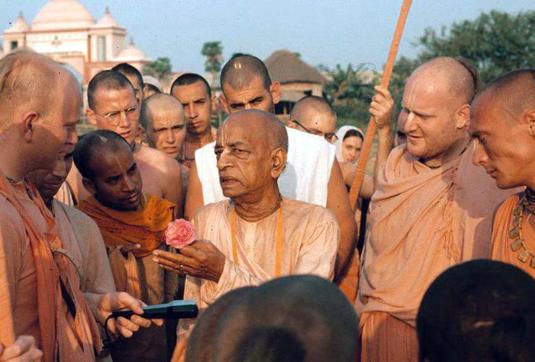
ckick on image to enlarge
“…If one thinks that there are many pseudo devotees or nondevotees in the Kṛṣṇa Consciousness Society, one can keep direct company with the spiritual master, and if there is any doubt, one should consult the spiritual master. However, unless one follows the spiritual master’s instructions and the regulative principles governing chanting and hearing the holy name of the Lord, one cannot become a pure devotee. By one’s mental concoctions, one falls down… (CC Madhya 19.157 purport)
Full verse and purport More
15 Dec 2014
by The Hare Krishna Movement
in A.C. Bhaktivedanta Swami Prabhupada, Brahma, Kali Yuga, Time
Tags: A.C. Bhaktivedanta Swami Prabhupada, Brahma, causal ocean, cycles of kalpas, Dvapara, eternity, innumerable Brahmas, Kali, Kali-yuga, kalpas, lightning flash, material universe, Satya, Srila Prabhupada, Time, Treta, unlimited eternal time, yugas

I was reading about the duration of the material universe this evening, and this whole notion of time, puts presure on my insignificant tiny brain.
…The duration of the material universe is limited. It is manifested in cycles of kalpas. A kalpa is a day of Brahmā, and one day of Brahmā consists of a thousand cycles of four yugas or ages: Satya, Tretā, Dvāpara, and Kali. The cycle of Satya is characterized by virtue, wisdom and religion, there being practically no ignorance and vice, and the yuga lasts 1,728,000 years. In the Tretā-yuga vice is introduced, and this yuga lasts 1,296,000 years. In the Dvāpara-yuga there is an even greater decline in virtue and religion, vice increasing, and this yuga lasts 864,000 years. And finally in Kali-yuga (the yuga we have now been experiencing over the past 5,000 years) there is an abundance of strife, ignorance, irreligion and vice, true virtue being practically nonexistent, and this yuga lasts 432,000 years. (from purport Bg 8.17)
Even if I could grasp the extent of time in the material universe, that is just a fraction of the unlimited eternal time that continues after the termination of the yuga.
…Then the process is set rolling again. These four yugas, rotating a thousand times, comprise one day of Brahmā, the creator god, and the same number comprise one night. Brahmā lives one hundred of such “years” and then dies. These “hundred years” by earth calculations total to 311 trillion and 40 million earth years. By these calculations the life of Brahmā seems fantastic and interminable, but from the viewpoint of eternity it is as brief as a lightning flash. In the causal ocean there are innumerable Brahmās rising and disappearing like bubbles in the Atlantic. Brahmā and his creation are all part of the material universe, and therefore they are in constant flux. (from purport Bg 8.17)
The above calculations Srila Prabhupada uses and I quote; “seems fantastic and interminable, but from the viewpoint of eternity it is as brief as a lightning flash. In the causal ocean there are innumerable Brahmās rising and disappearing like bubbles in the Atlantic.” Wow!
More
09 Dec 2014
by The Hare Krishna Movement
in A.C. Bhaktivedanta Swami Prabhupada, B. G. Sharma Art, Krishna Consciousness, Krsna, Krsna Consciousness, Srimad Bhagavatam
Tags: A.C. Bhaktivedanta Swami Prabhupada, Arjuna, arjuna's arrows, awakened to love of God, Battlefield of Kurukṣetra, Goloka Vrndavana, Krsna, lotuslike face of Krsna, love of God, material contaminations, pleasing to the eyes of the seer, SB3.2.20, spiritual sky, Srimad Bhagavatam, the beauty of the Lord, transcendental sky, Vaikuntha planets

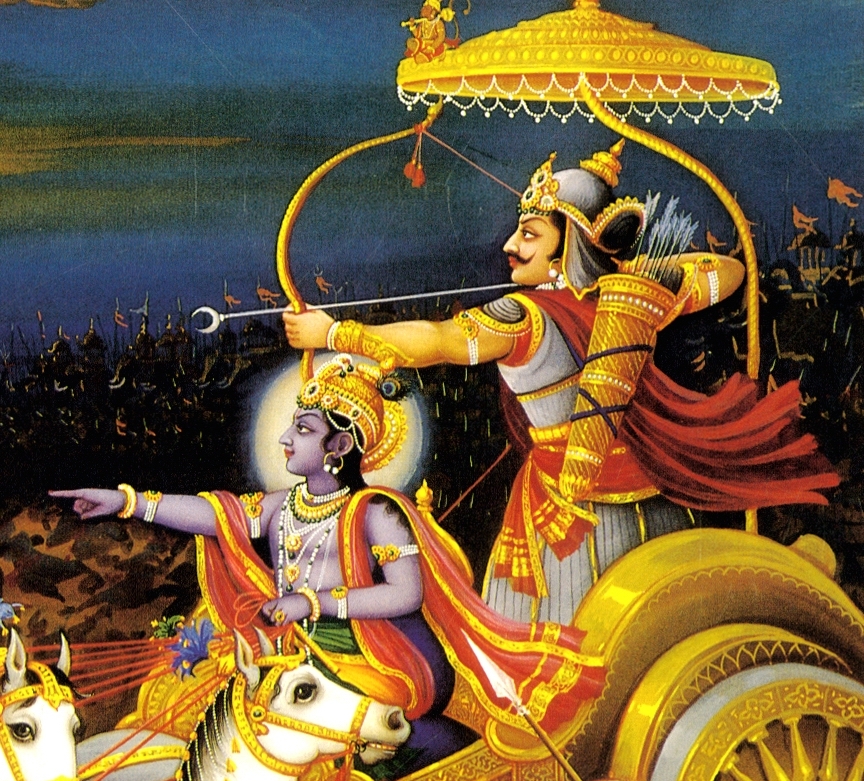
Certainly others who were fighters on the Battlefield of Kurukṣetra were purified by the onslaught of Arjuna’s arrows, and while seeing the lotuslike face of Kṛṣṇa, so pleasing to the eyes, they achieved the abode of the Lord. (SB 3.2.20)
This morning as I was reading from the Srimad-Bhagavatam, the words “pleasing to the eyes of the seer” jumped out at me. And I was reminded again how just by appreciating the beauty of the Lord, one can attain success in life, as the following purport explains.
“…All the warriors who fought against Arjuna but who were able to see the lotuslike face of the Lord on the battlefront achieved the abode of the Lord, exactly as the devotees of the Lord do. The words “pleasing to the eyes of the seer” are very significant. When the warriors from the other side of the battlefield saw Lord Kṛṣṇa at the front, they appreciated His beauty, and their dormant instinct of love of God was awakened.
This love of God is awakened by the association of pure devotees of the Lord… Those who saw the beautiful face of the Lord on the Battlefield of Kurukṣetra were purified first by Arjuna when he made his onslaught with arrows… All the activities of a pure devotee are executed on behalf of the Lord because a pure devotee of the Lord has nothing to do for his personal interest. Arjuna’s killing was as good as killing by the Lord Himself. As soon as Arjuna shot an arrow at an enemy, that enemy became purified of all material contaminations and became eligible to be transferred to the spiritual sky… those who awakened to love of God were transferred to the planets of the transcendental sky.
Those whose love of God is awakened to the fullest extent go back to the Goloka Vṛndāvana planet in the spiritual sky, whereas persons who have just awakened to love of Godhead by accident or association are transferred to the Vaikuṇṭha planets. Essentially there is no material difference between Goloka and Vaikuṇṭha, but in the Vaikuṇṭhas the Lord is served in unlimited opulence, whereas in Goloka the Lord is served in natural affection.” (from purport to SB 3.2.20)
Full Text and Purport More
16 Nov 2014
by The Hare Krishna Movement
in A.C. Bhaktivedanta Swami Prabhupada, Caaitanya-caritamrta, Sri Caitanya-Caritamrta, Temples
Tags: A.C. Bhaktivedanta Swami Prabhupada, Adi lila, damsels of Vraja, Gopijana-vallabha, Govinda, grace of Krsna, Madana-mohana, neophyte devotees, reservoir of all pleasure, Sri Radha Madana Mohana, Supreme Lord, the pleasure deity

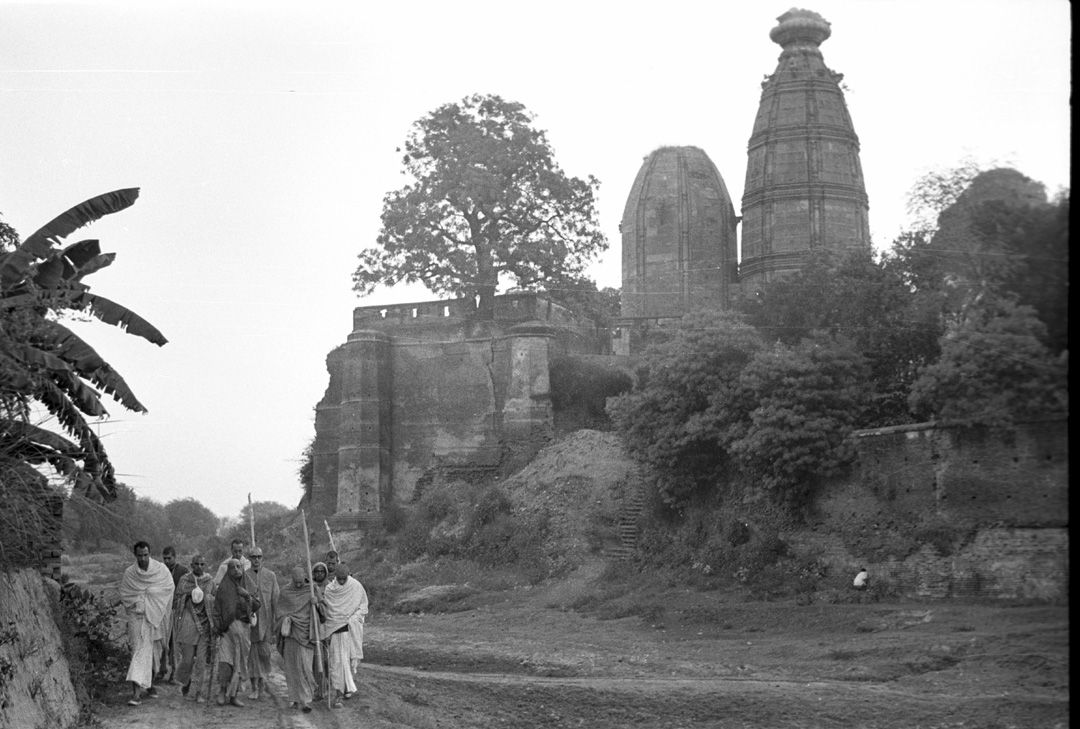
Sri Sri Radha-Madana-mohana Mandir
click on image to enlarge
As we mentioned in a previous post With the Radiance of Molten Gold “The First Chapter of Śrī Caitanya-caritāmṛta begins with fourteen Sanskrit verses that describe the Absolute Truth. Then the next three Sanskrit verses describe the principal Deities of Vṛndāvana, namely, Śrī Rādhā-Madana-mohana, Śrī Rādhā-Govindadeva and Śrī Rādhā-Gopīnāthajī.” Today we are posting the next three verses describing the principal deities, with images of the three temples. In addition we are posting verses 18 & 19. The purport to text 19, is the main content of today’s post.
…The three Deities-Madana-mohana, Govinda and Gopījana-vallabha-have very specific qualities. Worship of Madana-mohana is on the platform of reestablishing our forgotten relationship with the Personality of Godhead. In the material world we are presently in utter ignorance of our eternal relationship with the Supreme Lord… It is best for such persons not to aspire for success in fruitive activities or mental speculation, but instead simply to surrender to the Supreme Personality of Godhead. The perfection of life is simply to surrender to the Supreme. In the beginning of our spiritual life we must therefore worship Madana-mohana so that He may attract us and nullify our attachment for material sense gratification. This relationship with Madana-mohana is necessary for neophyte devotees. When one wishes to render service to the Lord with strong attachment, one then worships Govinda on the platform of transcendental service. Govinda is the reservoir of all pleasures. When by the grace of Kṛṣṇa and the devotees one reaches perfection in devotional service, he can appreciate Kṛṣṇa as Gopījana-vallabha, the pleasure Deity of the damsels of Vraja. (from purport to Adi 1.19)
More
12 Nov 2014
by The Hare Krishna Movement
in Cow Protection, Vegetarianism
Tags: A.C. Bhaktivedanta Swami Prabhupada, Albert Einstein, animal slaughter, cow protection, personal awareness, St. Francis of Assisi, vefetarian ethics, vegetarian diet, vegetarian lifestyle

I ran across the following article on the Sampradaya Sun the other day on Vegetarian Ethics. It is a very nice collection of quotes on the importance of a vegetarian diet, and a case against animal slaughter.
“Many people consider the ethical reasons the most important of all for becoming vegetarian. The beginning of ethical vegetarianism is the knowledge that other creatures have feelings, and that their feelings are similar to ours. This knowledge encourages one to extend personal awareness to encompass the suffering of others.” (The Hare Krishna Book of Vegetarian Cooking)
“If you have men who will exclude any of God’s creatures from the shelter of compassion and pity, you will have men who will deal likewise with their fellow men.” (St. Francis of Assisi)
More
07 Nov 2014
by The Hare Krishna Movement
in A.C. Bhaktivedanta Swami Prabhupada, Bhagavata Dharma Discourses, Srimad Bhagavatam
Tags: A.C. Bhaktivedanta Swami Prabhupada, Bhagavata Dharma Discourses, Lord Krsna, New Vrindavan, New Vrindavan 1972, Pradyuma, SB 1.2.5, Srila Prabhupada lecture, Srimad Bhagavatam lecture, srimad bhagavatam lectures

Continuning with our “Bhagavata Dharma Discourses” series given at New Vrindavan, 1972.
Śrīmad-Bhāgavatam Lecture
New Vrindaban, September 4, 1972
By His Divine Grace A. C. Bhaktivedanta Swami Prabhupada
Canto 1, Chapter Two, Text 5
Pradyumna: “O sages, I have been justly questioned by you. Your questions are worthy because they relate to Lord Kṛṣṇa and so are of relevance to the world’s welfare. Only questions of this sort are capable of completely satisfying the self.” [SB 1.2.5]
Prabhupāda: So there was a great meeting. Just like we are holding here meeting for a few days, a similar meeting was held thousands of years ago, at least four thousand years ago, in a place which is called Naimiṣāraṇya. The Naimiṣāraṇya is in India. It is near Lucknow. Here is Professor Shivasrava(?). He knows. The station is called now Nimsar. I think it is in Hardoi district? So still the place is there, and if you sometimes go to India you can visit this place. It is a very nice place for spiritual atmosphere. So formerly all the great sages used to assemble in that Naimiṣāraṇya. It is said that all the demigods used to visit that place. So in that great meeting, Bhāgavata was discussed.
More
06 Nov 2014
by The Hare Krishna Movement
in A.C. Bhaktivedanta Swami Prabhupada, Krishna Consciousness, Krishna's flute, KRSNA The Supreme Personality of Godhead, Rasa Dance, Tulasi-saligram Vivaha
Tags: A.C. Bhaktivedanta Swami Prabhupada, autumn season, Caturmasya, full moon in autum, full moonlight, gopis, Kartika, Kṛṣṇa, Krsna, krsna consciousness, Purnima, rasa dance, rasa-lila, Sri Krsna Rasa-yatra, Srimati Tulsi Devi, The Rasa Dance, The Supreme Personality of Godhead, Tulasi-Saligrama Vivaha

Today being Purnima (the Full Moon), is also the End of Kartika, Sri Krsna Rasa-yatra (the purnima or full moon of Damodara month is the second full moon of the autumn season, and rasa lila is again celebrated), Tulasi-Saligrama Vivaha (this is the celebration of the marriage ceremony of Srimati Tulsi Devi and Lord Sri Krishna), and the Last Day of Caturmasya.
In honor of this auspicious day, we are posting the Introduction to the Rasa Dance, Chapter 29 of the Krsna Book.
…The appearance of the moon increased Kṛṣṇa’s desire to dance with the gopīs. The forests were filled with fragrant flowers. The atmosphere was cooling and festive. When Lord Kṛṣṇa began to blow His flute, the gopīs all over Vṛndāvana became enchanted. Their attraction to the vibration of the flute increased a thousand times due to the rising full moon, the red horizon, the calm and cool atmosphere, and the blossoming flowers. All these gopīs were by nature very much attracted to Kṛṣṇa’s beauty, and when they heard the vibration of His flute, they became apparently lustful to satisfy the senses of Kṛṣṇa.
Immediately upon hearing the vibration of the flute, they all left their respective engagements and proceeded to the spot where Kṛṣṇa was standing. While they ran very swiftly, all their earrings swung back and forth. They all rushed toward the place known as Vaṁśīvaṭa. Some of them were engaged in milking cows, but they left their milking business half finished and immediately went to Kṛṣṇa. One of them had just collected milk and put it in a milk pan on the oven to boil, but she did not care whether the milk overboiled and spilled–she immediately left to go see Kṛṣṇa. Some of them were breast feeding their small babies, and some were engaged in distributing food to the members of their families, but they left all such engagements and immediately rushed towards the spot where Kṛṣṇa was playing His flute. Some were engaged in serving their husbands, and some were themselves engaged in eating, but neither caring to serve their husbands nor eat, they immediately left. Some of them wanted to decorate their faces with cosmetic ointments and to dress themselves very nicely before going to Kṛṣṇa, but unfortunately they could not finish their cosmetic decorations nor put on their dresses in the right way because of their anxiety to meet Kṛṣṇa immediately. Their faces were decorated hurriedly and were haphazardly finished; some even put the lower part of their dresses on the upper part of their bodies and the upper part on the lower part.
While all the gopīs were hurriedly leaving their respective places, their husbands, brothers and fathers were all struck with wonder to know where they were going. Being young girls, they were protected either by husbands, elderly brothers or fathers. All their guardians forbade them to go to Kṛṣṇa, but they disregarded them. When a person becomes attracted by Kṛṣṇa and is in full Kṛṣṇa consciousness, he does not care for any worldly duties, even though very urgent. Kṛṣṇa consciousness is so powerful that it gives everyone relief from all material activities. Śrīla Rūpa Gosvāmī has written a very nice verse wherein one gopī advises another, “My dear friend, if you desire to enjoy the company of material society, friendship and love, then please do not go to see this smiling boy Govinda, who is standing on the bank of the Yamunā and playing His flute, His lips brightened by the beams of the full moonlight.” Śrīla Rūpa Gosvāmī indirectly instructs that one who has been captivated by the beautiful smiling face of Kṛṣṇa has lost all attraction for material enjoyments. This is the test of advancement in Kṛṣṇa consciousness: a person advancing in Kṛṣṇa consciousness must lose interest in material activities and personal sense gratification.
Full Chapter More
05 Nov 2014
by The Hare Krishna Movement
in A.C. Bhaktivedanta Swami Prabhupada, Damodara, Kartika, KRSNA The Supreme Personality of Godhead
Tags: A.C. Bhaktivedanta Swami, A.C. Bhaktivedanta Swami Prabhupada, brahmanas, gopis, handcart, hither and thither, Krishna, Krishna's childhood pastimes, Krsna, Nanda Maharaja, Supreme Personality of Godhead, Vedic hymns, Yasoda, YMother Yasoda

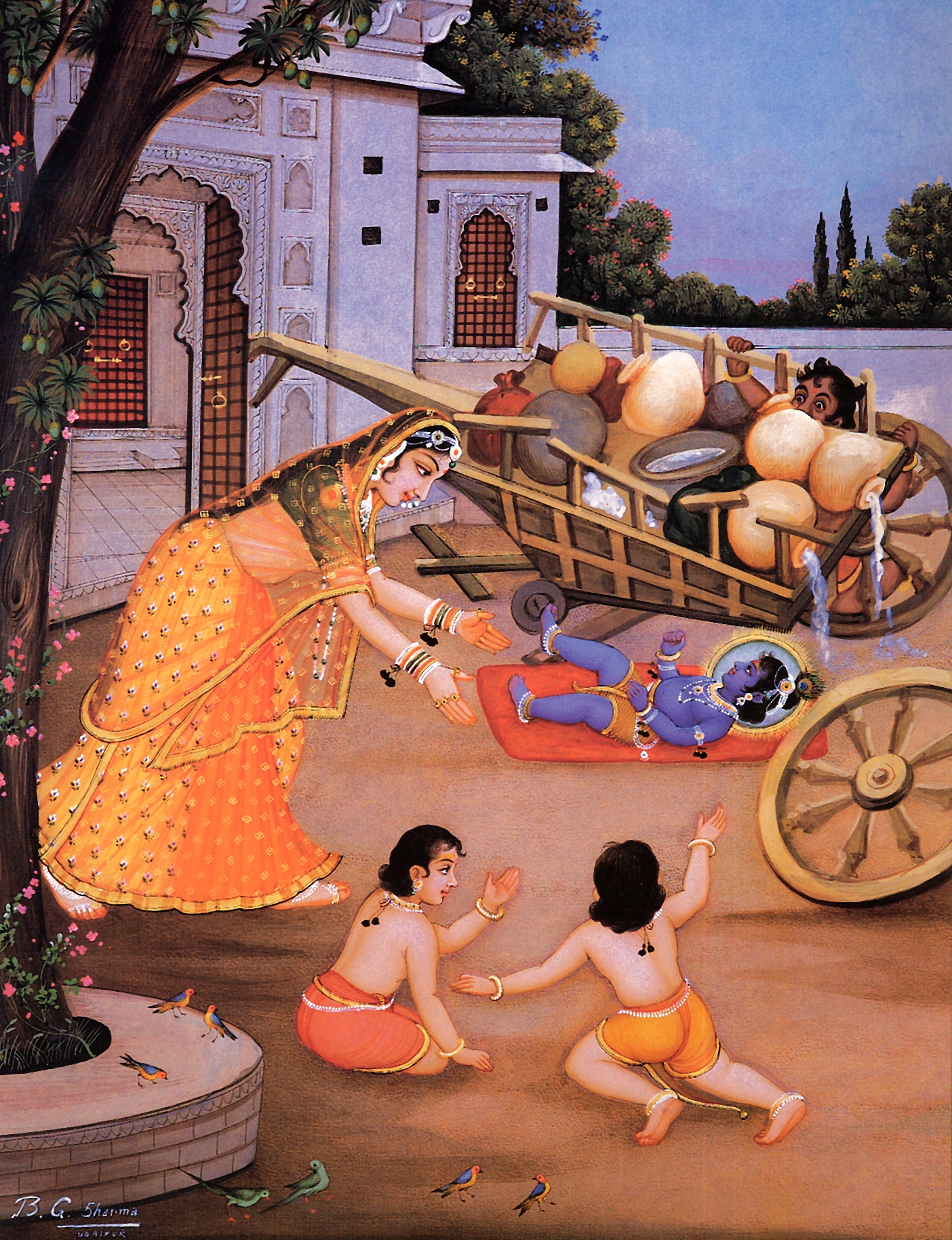
Continuining our month long attempt to stay focused on the childhood pastimes of Krsna, during this month of Damodara (Kartika), we bring you another exciting chapter from; Kṛṣṇa, the Supreme Personality of Godhead. Today we are posting the chapter entitled “The Salvation of Tṛṇāvarta”.
…Baby Kṛṣṇa had been placed underneath a hand-driven cart, and while He was kicking His legs, He accidentally touched the wheel of the cart, and it collapsed. Various kinds of utensils and brass and metal dishes had been piled up in the handcart, and they all fell down with a great noise. The wheel of the cart separated from the axle, and the spokes of the wheel were all broken and scattered hither and thither. Mother Yaśodā and all the gopīs, as well as Mahārāja Nanda and the cowherd men, were astonished as to how the cart could have collapsed by itself.
…If someone takes advantage of hearing the pastimes of the Lord, the material contamination of dust, accumulated in the heart due to long association with material nature, can be immediately cleansed. Lord Caitanya also instructed that simply by hearing the transcendental name of Lord Kṛṣṇa, one can cleanse the heart of all material contamination. There are different processes for self-realization, but this process of devotional service–of which hearing is the most important function–when adopted by any conditioned soul, will automatically cleanse him of the material contamination and enable him to realize his real constitutional position. (Kṛṣṇa, the Supreme Personality of Godhead)
Full Chapter More
27 Oct 2014
by The Hare Krishna Movement
in A.C. Bhaktivedanta Swami Prabhupada, Lokadrsti devi, Vyas-puja, Vyasasan das, Vyasasana
Tags: A.C. Bhaktivedanta Swami Prabhupada, bhagavad-gita, disappearance day of Srila Prabhupada, Hari Nama devi, Krishna, lokadrsti devi, Maha Laxmi devi, Pushpanjali, Srila Prabhupada, Vyasasan das, Vyasasana
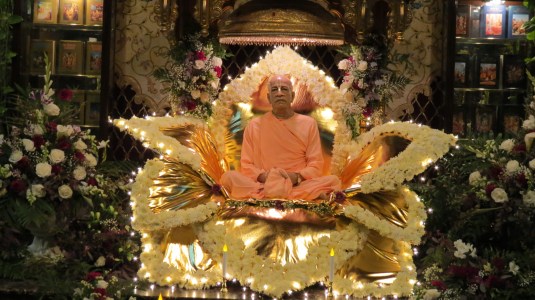
click on images to enlarge
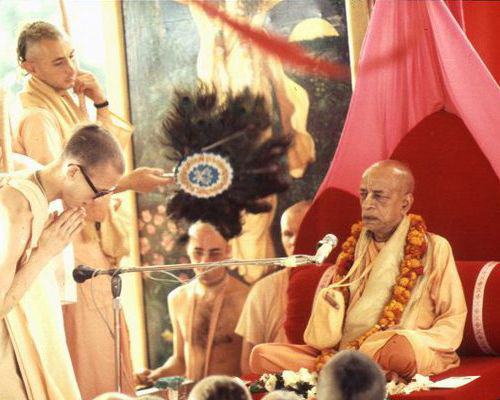
Picture taken before Guru-puja
Today we honored His Divine Grace A. C. Bhaktivedanta Swami Prabhupada’s disappearance day here at New Vrindavan Farm Community, with beautiful offerings, a Pushpanjali (an offering of flowers) followed by an amazing feast The beautiful Vyasasana decoration was done by Her Grace Lokadrsti devi dasi, with assistance from Hari Nama, Maha Laxmi, and Christine prabhus. More
25 Oct 2014
by The Hare Krishna Movement
in A.C. Bhaktivedanta Swami Prabhupada, Damodara, Gopis, Srimad Bhagavatam
Tags: A.C. Bhaktivedanta Swami Prabhupada, affection of the gopis, damsels of Vraja, ecstasy, gopis, Krsna, Lord Krsna, remembrance of Lord Krsna, SB3.2.14, Srimad Bhagavatam, transcendental love, Vrndavana

click on image to enlarge
In our attempt to stay focused on the childhood pastimes of Lord Krsna throughout this month of Damodara, we were reading from the Third Canto of the Srimad-Bhagavatam, chapter 2, entitled; “Remembrance of Lord Kṛṣṇa”. The great devotee Uddhava, was asked by Vidura, to speak on the messages of Lord Krsna. The following is but one of the verses and purports from this famous chapter.
…In His boyhood at Vṛndāvana, Lord Kṛṣṇa was notorious as a teasing friend in transcendental love to all the girls His age. His love for them was so intense that there is no comparison to that ecstasy, and the damsels of Vraja were so much attached to Him that their affection excelled that of the great demigods like Brahmā and Śiva. Lord Kṛṣṇa finally admitted His defeat before the transcendental affection of the gopīs and declared that He was unable to repay them for their unalloyed affection. (from purport to SB 3.2.14)
Full text and purport More
24 Oct 2014
by The Hare Krishna Movement
in A.C. Bhaktivedanta Swami Prabhupada, Festivals, Govardhana-puja
Tags: A.C. Bhaktivedanta Swami Prabhupada, Bhaktivedanta purports, Govardhana Hill, Govardhana-puja, Krsna Book, Krsna consciousness movement, Lord Krishna, Worshiping Govardhana Hill

Today in honor of Govardhana-puja, we are posting the entire chapter from Krsna Book, entitled “Worshiping Govardhana Hill”
…The sacrifice known as Govardhana-pūjā is observed in the Kṛṣṇa consciousness movement. Lord Caitanya has recommended that since Kṛṣṇa is worshipable, so His land, Vṛndāvana and Govardhana Hill, are also worshipable. To confirm this statement, Lord Kṛṣṇa said that Govardhana Pūjā is as good as worship of Him. From that day, the Govardhana Pūjā has been still going on and is known as Annakūṭa. In all the temples of Vṛndāvana or outside of Vṛndāvana, huge quantities of food are prepared in this ceremony and are very sumptuously distributed to the general population. Sometimes the food is thrown to the crowds, and they enjoy collecting it off the ground. From these instances, we can understand that prasādam offered to Kṛṣṇa never becomes polluted or contaminated, even if it is thrown on the ground. The people, therefore, collect it and eat with great satisfaction.
More
Previous Older Entries Next Newer Entries













 The Hare Krishna Movement