30 Oct 2013
by The Hare Krishna Movement
in A.C. Bhaktivedanta Swami Prabhupada, Childhood Pastimes of Krsna, Krsna Consciousness, Spiritual World, Srimad Bhagavatam, Vrndavana
Tags: A.C. Bhaktivedanta Swami Prabhupada, asura, Bakasura, BBT, Bhaktivedanta purports, cowheard boys, fruit vendor, go carana, Gokula, Krishna and Balarama, Krsna, Mother Yasoda, Nanda, Nanda Maharaja, pastimes of krsna, SB 10.11, Srimad Bhagavatam, Vatsasura, yamala arjunas, Yasoda

Today is Rama Ekadasi (fast from grains and beans), so on this auspicious day, in the auspicious month of Damodara, we wanted to do a special post. The following is the entire 11th chapter of the Tenth Canto of Srimad Bhagavatam entitled “The Childhood Pastimes of Kṛṣṇa”.
The following two verses are just an example of the nectar one will find in the following chapter…
…The gopīs would say, “If You dance, my dear Kṛṣṇa, then I shall give You half a sweetmeat.” By saying these words or by clapping their hands, all the gopīs encouraged Kṛṣṇa in different ways. At such times, although He was the supremely powerful Personality of Godhead, He would smile and dance according to their desire, as if He were a wooden doll in their hands. Sometimes He would sing very loudly, at their bidding. In this way, Kṛṣṇa came completely under the control of the gopīs.(Text 7)
…To pure devotees throughout the world who could understand His activities, the Supreme Personality of Godhead, Kṛṣṇa, exhibited how much He can be subdued by His devotees, His servants. In this way He increased the pleasure of the Vrajavāsīs by His childhood activities. (Text 9)
Srimad Bhagavatam
By His Divine Grace A. C. Bhaktivedanta Swami Prabhupada
Canto 10, Chapter 11
More
24 Oct 2013
by The Hare Krishna Movement
in A.C. Bhaktivedanta Swami Prabhupada, Damodara, KRSNA The Supreme Personality of Godhead, Srimad Bhagavatam
Tags: A.C. Bhaktivedanta Swami Ppabhupada, Balarama, butter, cows, Dear Yasoda, Krishna, Krsna Book, Krsna's childhood pastimes, milk, naughty childish activities of Krsna and Balarama in Vrndavan, naughty Krsna, Rohini, steal butter, Yasoda, yogurt

…All the gopī friends of Yaśodā and Rohiṇī enjoyed the naughty childish activities of Kṛṣṇa and Balarāma in Vṛndāvana. In order to enjoy further transcendental bliss, they all assembled and went to mother Yaśodā to lodge complaints against the restless boys. When Kṛṣṇa was sitting before mother Yaśodā, all the elderly gopīs began to lodge complaints against Him so that Kṛṣṇa could hear. They said, “Dear Yaśodā, why don’t you restrict your naughty Kṛṣṇa? He comes to our houses along with Balarāma every morning and evening, and before the milking of the cows They let loose the calves, and the calves drink all the milk of the cows. So when we go to milk the cows, we find no milk, and we have to return with empty pots. If we warn Kṛṣṇa and Balarāma about doing this, They simply smile charmingly. (Krsna Book Chapter 8)
…continuing with our attempt to post Krsna’s childhood pastimes, throughout the duration of the “Month of Damodara”
More
23 Oct 2013
by The Hare Krishna Movement
in A.C. Bhaktivedanta Swami Prabhupada, Damodara, Krishna Consciousness, KRSNA The Supreme Personality of Godhead, Srimad Bhagavatam
Tags: A.C. Bhaktivedanta Swami Prabhupada, Balarama, clay and saffron, Damodara, gopis, Krishna, Krsna, Krsna The Supreme Personality of Godhead, Lord Damodara, naughty babies, Rohini, sandalwood pulp, Yasoda

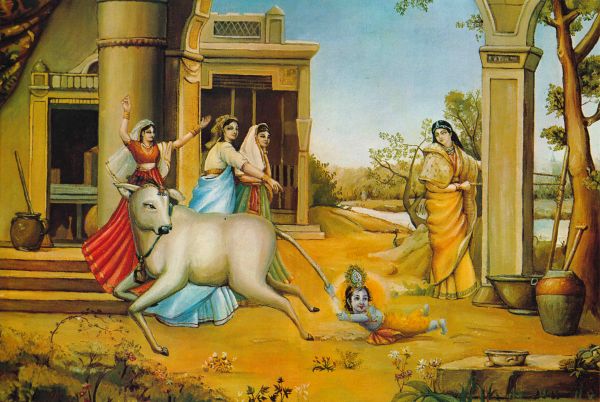
Within the house of Nanda Mahārāja, the cowherd ladies would enjoy seeing the pastimes of the babies Rāma and Kṛṣṇa. The babies would catch the ends of the calves’ tails, and the calves would drag Them here and there. When the ladies saw these pastimes, they certainly stopped their household activities and laughed and enjoyed the incidents. (SB 10.8.24)
These childhood pastimes of Krsna are so sublime and pleasing to the consciousness. We will continue to post Krsna’s childhood pastimes throughout the duration of the “Month of Damodara”.
…both Balarāma and Kṛṣṇa began to crawl on Their hands and knees. When They were crawling like that, They pleased Their mothers. The bells tied to Their waist and ankles sounded fascinating, and They would move around very pleasingly. Sometimes, just like ordinary children, They would be frightened by others and would immediately hurry to Their mothers for protection. Sometimes They would fall into the clay and mud of Vṛndāvana and would approach Their mothers smeared with clay and saffron. They were actually smeared with saffron and sandalwood pulp by Their mothers, but due to crawling over muddy clay, They would simultaneously smear Their bodies with clay. As soon as They would come crawling to Their mothers, Yaśodā and Rohiṇī would take Them on their laps and, covering the lower portion of their saris, allow Them to suck their breasts. When the babies were sucking their breasts, the mothers would see small teeth coming in. Thus their joy would be intensified to see their children grow. Sometimes the naughty babies would crawl up to the cowshed, catch the tail of a calf and stand up. The calves, being disturbed, would immediately begin running here and there, and the children would be dragged over clay and cow dung. To see this fun, Yaśodā and Rohiṇī would call all their neighboring friends, the gopīs. Upon seeing these childhood pastimes of Lord Kṛṣṇa, the gopīs would be merged in transcendental bliss. In their enjoyment they would laugh very loudly. (excerpted from Krsna Book Chapter 8)
Also from the Srimad Bhagavatam More
22 Oct 2013
by The Hare Krishna Movement
in A.C. Bhaktivedanta Swami Prabhupada, Damodara, Kartika, Srila Prabhupada's Books, Srimad Bhagavatam
Tags: A.C. Bhaktivedanta Swami Prabhupada, austerities, bagavata, bhakta, black ointment around His eyes, Damodara, Krsna, Mother Yasoda, Mother Yasoda Binds Lord Krsna, mystics, Paramatma, penances, SB 10.9, Srila Prabhupada, Srimad Bhagavatam, yogis
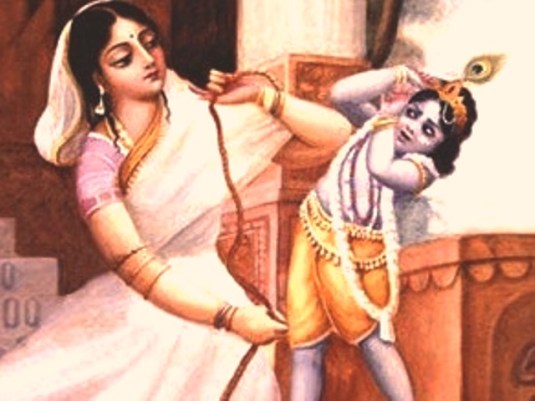
In celebration of the month of Damodara (Kartika) we are focusing our attention on the pastimes of Krishna in Vrndavan. Especially Krishna’s childhood pastimes. So with this in mind we are posting the entire 9th chapter from the Tenth Canto of Srila Prabhupada’s Srimad Bhagavatam entitled Mother Yaśodā Binds Lord Kṛṣṇa.
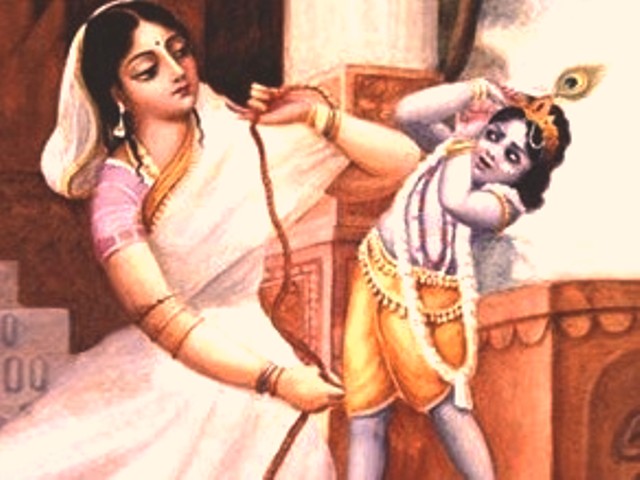
When caught by mother Yaśodā, Kṛṣṇa became more and more afraid and admitted to being an offender. As she looked upon Him, she saw that He was crying, His tears mixing with the black ointment around His eyes, and as He rubbed His eyes with His hands, He smeared the ointment all over His face. Mother Yaśodā, catching her beautiful son by the hand, mildly began to chastise Him. (SB 10.9.11)
Yogīs, mystics, want to catch Kṛṣṇa as Paramātmā, and with great austerities and penances they try to approach Him, yet they cannot. Here we see, however, that Kṛṣṇa is going to be caught by Yaśodā and is running away in fear. This illustrates the difference between the bhakta and the yogī. Yogīs cannot reach Kṛṣṇa, but for pure devotees like mother Yaśodā, Kṛṣṇa is already caught. (from purport to SB 10.9.9)
Srimad-Bhagavatam
By His Divine Grace A.C. Bhaktivedanta Swami Prabhupada
Tenth Canto, Chapter 9
More
06 Oct 2013
by The Hare Krishna Movement
in A.C. Bhaktivedanta Swami Prabhupada, Bhagavad-gita, Dasya (Friendship), Srimad Bhagavatam
Tags: A.C. Bhaktivedanta Swami Prabhupada, Arjuna, awe and reverence, conjugal love, dasya, friendship, God is great, Krishna, neutral stage, parental affection, sakhya, santa-rasa, servitude, srngara, vatsalya

There are five basic relationships a devotee might have with the Lord; namely in the neutral stage (sānta-rasa), which is the stage of awe and reverence. Knowing that God is Great. Then there are four transcendental mellows (rasas); servitude (dāsya), friendship (sakhya), parental affection (vātsalya) and conjugal love (śṛṅgāra).
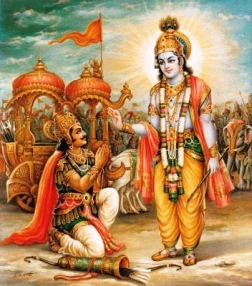
Kṛṣṇa and Arjuna are related in friendship.
Arjuna was in a relationship with the Lord as friend. Of course there is a gulf of difference between this friendship and the friendship found in the material world. This is transcendental friendship which cannot be had by everyone. Of course everyone has a particular relationship with the Lord, and that relationship is evoked by the perfection of devotional service. But in the present status of our life, we have not only forgotten the Supreme Lord, but we have forgotten our eternal relationship with the Lord. Every living being, out of many, many billions and trillions of living beings, has a particular relationship with the Lord eternally. That is called svarūpa. By the process of devotional service, one can revive that svarūpa, and that stage is called svarūpa-siddhi-perfection of one’s constitutional position. So Arjuna was a devotee, and he was in touch with the Supreme Lord in friendship. (from Introduction to Bhagavad-gita As It Is)
The following verse is one of my most favorite from the Bhagavad-gita As It Is.
I have in the past addressed You as “O Kṛṣṇa,” “O Yādava,” “O my friend,” without knowing Your glories. Please forgive whatever I may have done in madness or in love. I have dishonored You many times while relaxing or while lying on the same bed or eating together, sometimes alone and sometimes in front of many friends. Please excuse me for all my offenses.
I find this verse to be a beautiful expression of what is Bhakti Yoga. It is a personal loving exchange with the Lord. There are two ways to approach the Lord. One can approach the Lord with awe and reverence (sānta-rasa), or with a more personal approach; love and affection.
Kṛṣṇa’s devotees relate to Kṛṣṇa in various relationships.. Kṛṣṇa and Arjuna are related in friendship. As the father tolerates, or the husband or master tolerates, so Kṛṣṇa tolerates. Very Beautiful!
Bhagavad-gita As It Is Texts 40-45 More
21 Sep 2013
by The Hare Krishna Movement
in A.C. Bhaktivedanta Swami Prabhupada, Buddha, Srimad Bhagavatam, Vegetarianism
Tags: A.C. Bhaktivedanta Swami, animal sacrifices, Anjana, buddha, Gaya, God, incarnation of the Personality of Godhead, Lord Buddha, moral discipline, nonviolence, prabhupada, Vedas

click on image to enlarge
For some reason, I have always been attracted to Buddha since my early childhood. Later in my life as I turned 18, I also became interested in vegetarianism, which peaked my interest in spiritual life as well. So it was, I began the practice of yoga and meditation. It is interesting to note that later (age 21) when I became a Hare Krishna devotee, was when my actual education in Lord Buddha began. We share with you two select verses from the Srimad Bhagavatam describing the mission of Lord Buddha.
The mission of Lord Buddha was to save people from the abominable activity of animal killing and to save the poor animals from being unnecessarily killed.
Lord Buddha, a powerful incarnation of the Personality of Godhead, appeared in the province of Gayā (Bihar) as the son of Añjana, and he preached his own conception of nonviolence and deprecated even the animal sacrifices sanctioned in the Vedas. At the time when Lord Buddha appeared, the people in general were atheistic and preferred animal flesh to anything else. On the plea of Vedic sacrifice, every place was practically turned into a slaughterhouse, and animal killing was indulged in unrestrictedly. Lord Buddha preached nonviolence, taking pity on the poor animals. He preached that he did not believe in the tenets of the Vedas and stressed the adverse psychological effects incurred by animal killing. Less intelligent men of the age of Kali, who had no faith in God, followed his principle, and for the time being they were trained in moral discipline and nonviolence, the preliminary steps for proceeding further on the path of God realization. He deluded the atheists because such atheists who followed his principles did not believe in God, but they kept their absolute faith in Lord Buddha, who himself was the incarnation of God. Thus the faithless people were made to believe in God in the form of Lord Buddha. That was the mercy of Lord Buddha: he made the faithless faithful to him.
Select verses: More
20 Sep 2013
by The Hare Krishna Movement
in A.C. Bhaktivedanta Swami Prabhupada, Srimad Bhagavatam
Tags: A.C. Bhaktivedanta Swami Prabhupada, age of kali, austerity, brahminical culture, cleanliness, innocent animals, Kali, Kali-yuga, ksatriya rulers, Maharaja Pariksit, mercy. truthfulness, Punishment and Reward of Kali, SB 17, spiritual initiation, Srimad Bhagavatam, sudra, surabji, Suta Goswami

Śrīmad-Bhāgavatam
By His Divine Grace A. C. Bhaktivedanta Swami Prabhupāda
Chapter Seventeen
More
16 Sep 2013
by The Hare Krishna Movement
in A.C. Bhaktivedanta Swami Prabhupada, Jiva Goswami, Srimad Bhagavatam, Vamanadeva
Tags: A.C. Bhaktivedanta Swami Prabhupada, Aditi, appearance of lord vamandeva, Bali Maharaja, club, conchshell, disc, dwarf-brahmana, Jiva Goswami, Krsna, lotus, Srila Prabhupada, Srimad Bhagavatam, Vamana, Vamanadeva, Vijaya

Today we honor the Appearance of Lord Vamandeva, who, as some of you know, appeared as the fifteenth incarnation of Krsna. Lord Vāmanadeva assumed the form of a dwarf-brāhmaṇa [Vāmana] and visited the arena of sacrifice arranged by Mahārāja Bali. The following is a brief summary from Srila Prabhupada’s Srimad Bhagavatam, 8th Canto, Chapter 18.
Today also marks the Appearance of Srila Jiva Goswami, and there is a brief instruction given by him on understanding God at bottom of post.
Lord Vāmanadeva appeared in this world from the womb of Aditi completely equipped with conchshell, disc, club and lotus. His bodily hue was blackish, and He was dressed in yellow garments. Lord Viṣṇu appeared at an auspicious moment on Śravaṇa-dvādaśī when the Abhijit star had arisen. At that time, in all the three worlds (including the higher planetary system, outer space and this earth), all the demigods, the cows, the brāhmaṇas and even the seasons were happy because of God’s appearance. Therefore this auspicious day is called Vijayā.
More
03 Sep 2013
by The Hare Krishna Movement
in A.C. Bhaktivedanta Swami Prabhupada, KRSNA The Supreme Personality of Godhead, Krsna-katha, Maharaja Pariksit, Srimad Bhagavatam, Sukadeva Goswami
Tags: A.C. Bhaktivedanta Swami Prabhupada, Arjuna, Battlefield of Kuruksetra, Ganges, Krsna, Krsna-katha, Kuruksetra, Maharaja Pariksit, Sukadeva Goswami, The Supreme Personality of Godhead, topics about krishna
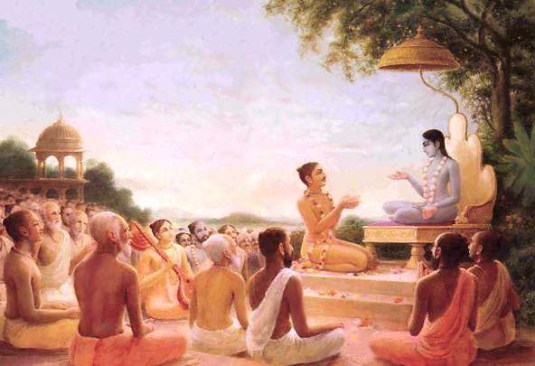
The position of Mahārāja Parīkṣit and Śukadeva Gosvāmī is unique. Mahārāja Parīkṣit is the right person to hear about the transcendental pastimes of Kṛṣṇa, and Śukadeva Gosvāmī is the right person to describe them. If such a fortunate combination is made possible, then Kṛṣṇa-kathā immediately becomes revealed, and people may benefit to the highest possible degree from such a conversation.
More
16 Jul 2013
by The Hare Krishna Movement
in A.C. Bhaktivedanta Swami Prabhupada, Books by Srila Prabhupada, Free Downloads, Free eBooks, Srila Prabhupada's Books, Srimad Bhagavatam
Tags: A.C. Bhaktivedanta Swami Prabhupada, Book Distribution, epic bhagavatam, free books, free pdf download, pdf download, Srimad Bhagavatam, Tenth Canto, The Hare Krishna Movement


One of our readers suggested that we also upload Part One and Part Two of the Tenth Canto as a Free PDF Download, to go with Part Three which we posted the other day. So with great pleasure we post the Free links to read or save the pdf files of Part One and Two of Srila Prabhupada’s Epic Srimad-Bhagavatam.

click on link for free pdf download; SB10.1

click on link for free pdf download; SB10.2
More
14 Jul 2013
by The Hare Krishna Movement
in A.C. Bhaktivedanta Swami Prabhupada, BBT, Book Changes, Books by Srila Prabhupada, Srimad Bhagavatam
Tags: A.C. Bhaktivedanta Swami Prabhupada, BBT, dictaphone, final volume, Founder Acarya, foward to tenth canto, International Society for Krishna Consciousness, Krsna Balarama Mandir, Sanskrit text, Srimad Bhagavatam, Tenth Canto, translation and commentary

Śrīmad-Bhāgavatam
By His Divine Grace A.C. Bhaktivedanta Swami Prabhupada
Tenth Canto, Part Three
Foward
This is the final Śrīmad-Bhāgavatam volume translated by His Divine Grace A. C. Bhaktivedanta Swami Prabhupada, founder-acarya of the International Society for Krishna Consciousness. It is smaller than the earlier volumes because it ends where the renowned author stopped translating just before his departure from this mortal world on November 14, 1977, at the Krsna-Balarama Mandira in Vrndavana, India.
The first part of this volume was produced in the usual fashion. Srila Prabhupada would sit and read silently from the Sanskrit text and then speak the translation and commentary into his dictaphone. Later, due to illness, it became necessary for his disciples to assist him personally.
In these last days Srila Prabhupada was gravely ill. Unable to eat for weeks, his health had deteriorated, making even the slightest movement excruciatingly painful.
As he lay still, a devotee would softly read the Sanskrit to him. Another disciple, sitting on his bed, held the microphone to him, nearly touching his mouth. And then Srila Prabhupada would speak, voice sometimes barely audible.
These recordings, made in his quarters at the temple, constitute the balance of this book.
In these final moments, the physician attending His Divine Grace confided that an ordinary man in such critical condition would have been crying out from the intense pain. Srila Prabhupada’s disciples were awestruck as they watched their spiritual master work quietly, undisturbed.
In the last part of the book we find Srila Prabhupada’s usual clarity of thought, constant scriptural references, scrupulous attention to detail, and rigorous philosophical exposition fully intact, just as they were in the preceding twenty-nine volumes of the Śrīmad-Bhāgavatam.
Srila Prabhpada’s last days and this translation will stands an inspiring reminder that even the severest material circumstances cannot impede the activities of a pure devotee of the Supreme Personality of Godhead.
-The Publishers

For a Free PDF download of this special volume click on following link; SB-10-03-1980
More
09 Jul 2013
by The Hare Krishna Movement
in A.C. Bhaktivedanta Swami Prabhupada, Srimad Bhagavatam
Tags: A.C. Bhaktivedanta Swami Prabhupada, codes of religion, dharma, God, jnana, Kali-yuga, knowledge, krsne sva-dhamopagate, Lord Sri Krishna, purana, religion
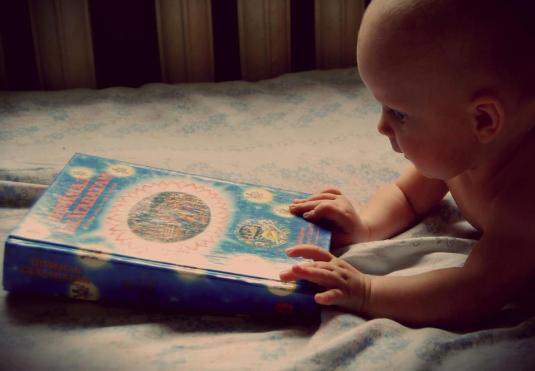
Srimad Bhagavatam
By His Divine Grace A.C. Bhaktivedanta Swami Prabhupada
Canto One, Chapter 3, Text 43
kṛṣṇe sva-dhāmopagate
dharma-jñānādibhiḥ saha
kalau naṣṭa-dṛśām eṣa
purāṇārko ’dhunoditaḥ
kṛṣṇe—in Kṛṣṇa’s; sva-dhāma—own abode; upagate—having returned; dharma—religion; jñāna—knowledge; ādibhiḥ—combined together; saha—along with; kalau—in the Kali-yuga; naṣṭa-dṛśām—of persons who have lost their sight; eṣaḥ—all these; purāṇa-arkaḥ—the Purāṇa which is brilliant like the sun; adhunā—just now; uditaḥ—has arisen.
TRANSLATION
This Bhāgavata Purāṇa is as brilliant as the sun, and it has arisen just after the departure of Lord Kṛṣṇa to His own abode, accompanied by religion, knowledge, etc. Persons who have lost their vision due to the dense darkness of ignorance in the age of Kali shall get light from this Purāṇa.
PURPORT
Lord Śrī Kṛṣṇa has His eternal dhāma, or abode, where He eternally enjoys Himself with His eternal associates and paraphernalia. And His eternal abode is a manifestation of His internal energy, whereas the material world is a manifestation of His external energy. When He descends on the material world, He displays Himself with all paraphernalia in His internal potency, which is called ātma-māyā. In the Bhagavad-gītā the Lord says that He descends by His own potency (ātma-māyā). His form, name, fame, paraphernalia, abode, etc., are not, therefore, creations of matter. He descends to reclaim the fallen souls and to reestablish codes of religion which are directly enacted by Him. Except for God, no one can establish the principles of religion. Either He or a suitable person empowered by Him can dictate the codes of religion. Real religion means to know God, our relation with Him and our duties in relation with Him and to know ultimately our destination after leaving this material body. The conditioned souls, who are entrapped by the material energy, hardly know all these principles of life. Most of them are like animals engaged in eating, sleeping, fearing and mating. They are mostly engaged in sense enjoyment under the pretension of religiosity, knowledge or salvation. They are still more blind in the present age of quarrel, or Kali-yuga. In the Kali-yuga the population is just a royal edition of the animals. They have nothing to do with spiritual knowledge or godly religious life. They are so blind that they cannot see anything beyond the jurisdiction of the subtle mind, intelligence or ego, but they are very much proud of their advancement in knowledge, science and material prosperity. They can risk their lives to become a dog or hog just after leaving the present body, for they have completely lost sight of the ultimate aim of life. The Personality of Godhead Śrī Kṛṣṇa appeared before us just a little prior to the beginning of Kali-yuga, and He returned to His eternal home practically at the commencement of Kali-yuga. While He was present, He exhibited everything by His different activities. He spoke the Bhagavad-gītā specifically and eradicated all pretentious principles of religiosity. And prior to His departure from this material world, He empowered Śrī Vyāsadeva through Nārada to compile the messages of the Śrīmad-Bhāgavatam, and thus both the Bhagavad-gītā and the Śrīmad-Bhāgavatam are like torchbearers for the blind people of this age. In other words, if men in this age of Kali want to see the real light of life, they must take to these two books only, and their aim of life will be fulfilled. Bhagavad-gītā is the preliminary study of the Bhāgavatam. And Śrīmad-Bhāgavatam is the summum bonum of life, Lord Śrī Kṛṣṇa personified. We must therefore accept Śrīmad-Bhāgavatam as the direct representation of Lord Kṛṣṇa. One who can see Śrīmad-Bhāgavatam can see also Lord Śrī Kṛṣṇa in person. They are identical.
02 Jul 2013
by The Hare Krishna Movement
in A.C. Bhaktivedanta Swami Prabhupada, Maharaja Pariksit, Spiritual Master, Srila Prabhupada's Books, Srimad Bhagavatam, Sukadeva Goswami
Tags: A.C. Bhaktivedanta Swami, at time of death, hear chant and remember, Maharaja Pariksit, perfection of life, segue, self realization, Srimad Bhagavatam, Sukadeva Goswami

This morning I was marveling at how beautifully Srila Prabhupada segues [def: an uninterrupted transition from one song to another. 2. go on without a pause.] from the First Canto of the Srimad Bhagavatam into the Second Canto. This Srimad Bhagavatam, is truly one of the most amazing books in existence today!
You are the spiritual master of great saints and devotees. I am therefore begging you to show the way of perfection for all persons, and especially for one who is about to die. (SB 1.19.37)
Please let me know what a man should hear, chant, remember and worship, and also what he should not do. Please explain all this to me. (SB 1.19.38)
Śrī Sūta Gosvāmī said: The King thus spoke and questioned the sage, using sweet language. Then the great and powerful personality, the son of Vyāsadeva, who knew the principles of religion, began his reply… (SB 1.19.40) [End of First Canto]
[Start of Second Canto]…Śrī Śukadeva Gosvāmī said: My dear King, your question is glorious because it is very beneficial to all kinds of people. The answer to this question is the prime subject matter for hearing, and it is approved by all transcendentalists. (SB 2.1.1)
…That very Śrīmad-Bhāgavatam I shall recite before you because you are the most sincere devotee of Lord Kṛṣṇa. One who gives full attention and respect to hearing Śrīmad-Bhāgavatam achieves unflinching faith in the Supreme Lord, the giver of salvation. (SB 2.1.10)
Unless one is perfectly anxious to inquire about the way of perfection, there is no necessity of approaching a spiritual master. A spiritual master is not a kind of decoration for a householder. Generally a fashionable materialist engages a so-called spiritual master without any profit. The pseudo spiritual master flatters the so-called disciple, and thereby both the master and his ward go to hell without a doubt. Mahārāja Parīkṣit is the right type of disciple because he puts forward questions vital to the interest of all men, particularly for the dying men. The question put forward by Mahārāja Parīkṣit is the basic principle of the complete thesis of Śrīmad-Bhāgavatam. Now let us see how intelligently the great master replies. (from purport to SB 1.19.37)
Full translation and purports More
24 Jun 2013
by The Hare Krishna Movement
in A.C. Bhaktivedanta Swami Prabhupada, Ganges, Srimad Bhagavatam
Tags: A.C. Bhaktivedanta Swami Prabhupada, amartya, baby Krsna, Ganges, Ganges River, Gokula, Krsna's lotus feet, sacred rivers, sanctified, SB 1.19.6, Srimad Bhagavatam, transcendental, Tulasi, tulasi leaves, Yamuna, Yamuna river
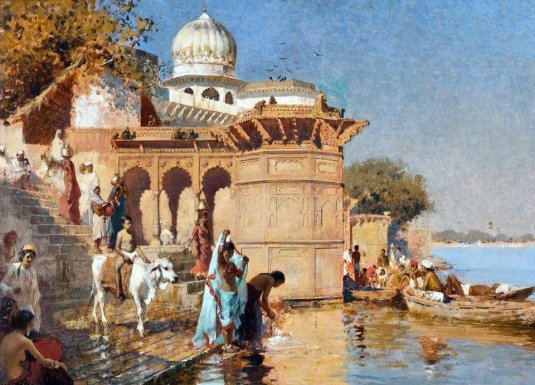
click on image to enlarge
…Both the Ganges and the Yamunā are amartyā (transcendental) rivers, but the Yamunā is still more sanctified for the following reasons.
…And as far as sanctity is concerned, the River Yamunā is more directly connected with Lord Kṛṣṇa than the Ganges. The Lord sanctified the River Yamunā from the beginning of His transcendental pastimes in the world. While His father Vasudeva was crossing the Yamunā with the baby Lord Kṛṣṇa for a safe place at Gokula on the other bank of the river from Mathurā, the Lord fell down in the river, and by the dust of His lotus feet the river at once became sanctified. It is especially mentioned herein that Mahārāja Parīkṣit took shelter of that particular river which is beautifully flowing, carrying the dust of the lotus feet of Lord Kṛṣṇa, mixed with tulasī leaves. Lord Kṛṣṇa’s lotus feet are always besmeared with the tulasī leaves, and thus as soon as His lotus feet contact the water of the Ganges and the Yamunā, the rivers become at once sanctified. The Lord, however, contacted the River Yamunā more than the Ganges. (from purport to SB 1.19.6)
Full verse and purport More
14 Jun 2013
by The Hare Krishna Movement
in A.C. Bhaktivedanta Swami Prabhupada, Dedication Slokas, Srimad Bhagavatam
Tags: A.C. Bhaktivedanta Swami, collection of slokas, dedication slokas, krsne sva-dhamopagate, original books by srila prtabhupada, slokas, srila prabhupada slokas, Srimad Bhagavatam
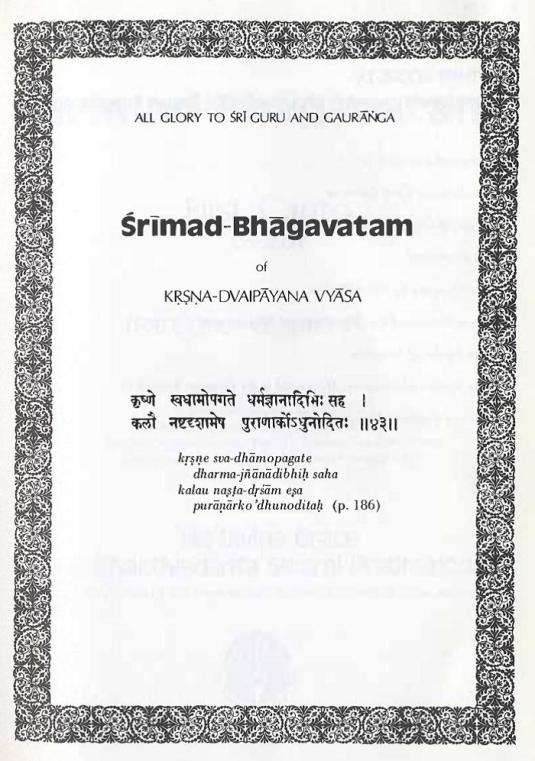
For anyone who has had the good fortune to read and study Srila Prabhupada’s epic Srimad Bhagavatam, will know that on the title page of each and every volume is a dedication sloka. I thought it would be interesting to compile a list of the dedication slokas from all of the original books. I stopped this collection of slokas with the Tenth Canto, Part Three, as this is where Srila Prabhupada left off, and where my collection of Srimad Bhagavatam’s stops. -Vyasasan das
More
11 Jun 2013
by The Hare Krishna Movement
in A.C. Bhaktivedanta Swami Prabhupada, Dharma, Srimad Bhagavatam, Vaisnava Vocabulary
Tags: A.C. Bhaktivedanta Swami Prabhupada, adhoksaje, apratihata, His Divine Grace, Lecture by Srila Prabhupada, nivrtti-marga, path of renunciation, path of sense enjoyment, pravrtti-marga, sa vai pumsam paro dharmo, Srila Prabhupada

For some reason I woke up this morning thinking about this very important verse from the Srimad Bhagavatam;
sa vai puṁsāṁ paro dharmo
yato bhaktir adhokṣaje
ahaituky apratihatā
yayātmā suprasīdati
The supreme occupation [dharma] for all humanity is that by which men can attain to loving devotional service unto the transcendent Lord. Such devotional service must be unmotivated and uninterrupted to completely satisfy the self.
I was trying to recall the two occupational paths; the path of sense enjoyment, and the path of renunciation, and the sanskrit words for them. I remembered that the verse and purport was in the first canto, chapter two, so I looked it up and there was the two words my mind was searching for;
“The Vedas prescribe two different types of occupation for the human being. One is called the pravṛtti-mārga, or the path of sense enjoyment, and the other is called the nivṛtti-mārga, or the path of renunciation.”
Both good words for your vaisnava vocabulary. But anyway, as I was searching this verse, I realized just how important this particular verse was. Srila Prabhupada lectured on this verse 13 times. And in one Lecture given by His Divine Grace in Montreal, August 3rd, 1968, Srila Prabhupada begins by saying…
“The real aim of life is how to get satisfaction, full, complete satisfaction. And that satisfaction, complete satisfaction, can be achieved only by prosecution of devotional service. There is no other method. If you want to be happy, free from all cares and anxieties, then you have to engage yourself in devotional servece of the Lord. That will make you free from all material miseries. We are all seeking after that position, how to become completely happy. Our whole struggle for existence…Anyone, in any place, any country, they are all struggling how to become happy. This happiness of the mind, atma, is only possible when we are engaged in Krsna consciousness. That is the only remedy. There is no other alternative.” (Srimad Bhagavatam Lecture Aug. 3, 1968)
I guess this was what I needed to hear this morning before leaving for work.
Full text and purport More
01 Jun 2013
by The Hare Krishna Movement
in A.C. Bhaktivedanta Swami Prabhupada, Bob Dylan, Srimad Bhagavatam
Tags: A.C. Bhaktivedanta Swami Prtabhupada, Bob Dylan, illusioned by material energy, liberated soul, Lord Krishna, Maharaja Yudhisthira, materially engrossed, one who is served, SB 1.12.6, sense gratification, servitor, song lyrics by Bob Dylan, You Gotta Serve Somebody
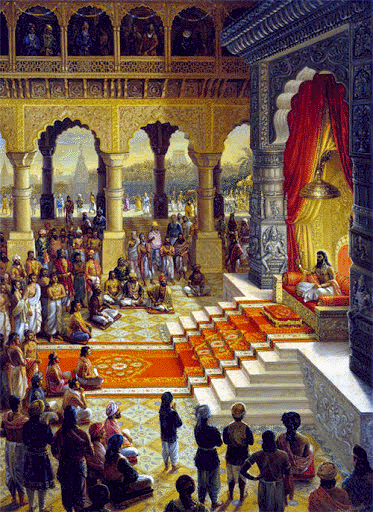
This morning as I was reading from the Srimad Bhagavatam 1.12.6 about Mahārāja Yudhiṣṭhira, who was the King and a liberated soul durning the time of Lord Krishna. How he did not take any pleasure in a his vast kingdom, good wife, obedient brothers, happy subjects and prosperous world. He was satisfied only by rendering loving service for the satisfaction of the Lord. As is stated in following verse:
O brāhmaṇas, the opulence of the King was so enchanting that the denizens of heaven aspired for it. But because he was absorbed in the service of the Lord, nothing could satisfy him except the Lord’s service.
As I was reading from the purport to this verse a song by Bob Dylan kept going through my head…
But you’re gonna have to serve somebody, yes indeed
You’re gonna have to serve somebody
Well, it may be the devil or it may be the Lord
But you’re gonna have to serve somebody
…which was kinda cool because it coincided with the reading. So I share with you, the complete verse and purport by Srila Prabhupada, as well as the song lyrics by Bob Dylan.
More
27 May 2013
by The Hare Krishna Movement
in A.C. Bhaktivedanta Swami Prabhupada, Book Distribution, Krsna Consciousness, Krsna Consciousness the Matchless Gift, Srimad Bhagavatam, The Hare Krishna Movement
Tags: A.C. Bhaktivedanta Swami Prabhupada, Book Distribution, devotees, heaven or hell, jnanis, karmis, krsna consciousness, Lord Nrsimhadeva, material adjustment, materialistic activity, meditate, prahlada, Prahlada Maharaja, sankirtan, SB 7.9.44, secluded place, Transcendental meditation

click on image to enlarge
…The Kṛṣṇa conscious person can go even to hell and still be happy. The pure devotee is never unhappy in any condition of life.
For a devotee, being situated in the heavenly planets and being in the hellish planets are equal, for a devotee lives neither in heaven nor in hell but with Kṛṣṇa in the spiritual world. The secret of success for the devotee is not understood by the karmīs and jñānīs. Karmīs therefore try to be happy by material adjustment, and jñānīs want to be happy by becoming one with the Supreme. The devotee has no such interest. He is not interested in so-called meditation in the Himalayas or the forest. Rather, his interest is in the busiest part of the world, where he teaches people Kṛṣṇa consciousness. The Kṛṣṇa consciousness movement was started for this purpose. We do not teach one to meditate in a secluded place just so that one may show that he has become very much advanced and may be proud of his so-called transcendental meditation, although he engages in all sorts of foolish materialistic activity.
A Vaiṣṇava is not interested in such a bluff of spiritual advancement. Rather, he is interested in enlightening people in Kṛṣṇa consciousness because that is the only way for them to become happy. One wanders within the universe, life after life, but by the grace of a devotee, a servant of Śrī Caitanya Mahāprabhu, one can get the clue to Kṛṣṇa consciousness and then not only become happy in this world but also return home, back to Godhead. That is the real target in life… The members of the Kṛṣṇa consciousness movement must be fully convinced that without Kṛṣṇa one cannot be happy. Thus the Kṛṣṇa conscious person avoids all kinds of pseudo spiritualists, transcendentalists, meditators, monists, philosophers and philanthropists. (from Purport to SB 7.9.44)
Full Verse and Purport More
24 May 2013
by The Hare Krishna Movement
in A.C. Bhaktivedanta Swami Prabhupada, Festivals, Nrsimha, Srimad Bhagavatam
Tags: A.C. Bhaktivedanta Swami Prabhupada, demons, half lion, half man, half man and half lion, hiranyakasipu, king of the demons, Lord Nrsimhadeva, Lord Visnu, Nrsimha, Nrsimhadeva, prahlada, Prahlada Maharaja, SB 7.8, Sri Nrkesari, Srimad Bhagavatam, Supreme Personality of Godhead
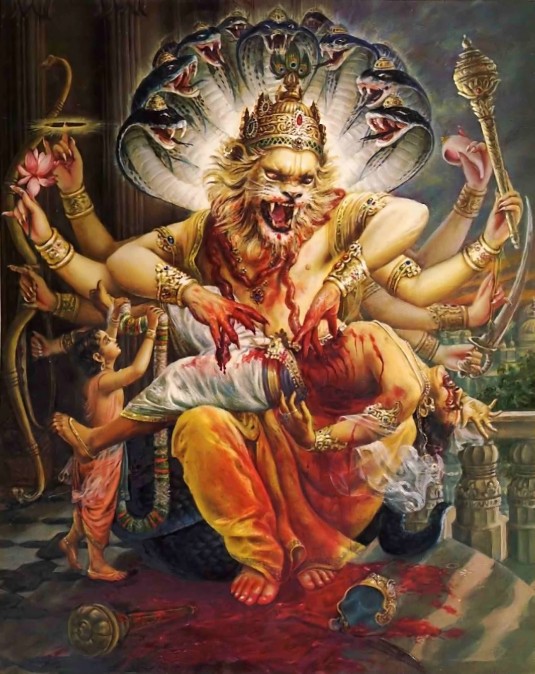
click on image to enlarge
In honnor of the Appearance of Lord Nṛsiṁhadeva, we are posting the entire Eighth Chapter from the Seventh Canto of the Srimad Bhagavatam, entitled “Lord Nṛsiṁhadeva Slays the King of the Demons”. We are celebrating Lord Nrsimhadeva’s today, with a fast till dusk, because it is the variant date for our area. This is a wonderful chapter, and one I am fond of reading on this auspicious day.
Śrīmad-Bhāgavatam
By His Divine Grace A. C. Bhaktivedanta Swami Prabhupāda
Canto Seven, Chapter Eight
Lord Nṛsiṁhadeva Slays the King of the Demons
As described in this chapter, Hiraṇyakaśipu was ready to kill his own son Prahlāda Mahārāja, but the Supreme Personality of Godhead appeared in front of the demon as Śrī Nṛkeśarī, half lion and half man, and killed him.
More
Previous Older Entries Next Newer Entries







 The Hare Krishna Movement
Foward to Final Volume of the Srimad Bhagavatam
14 Jul 2013 1 Comment
by The Hare Krishna Movement in A.C. Bhaktivedanta Swami Prabhupada, BBT, Book Changes, Books by Srila Prabhupada, Srimad Bhagavatam Tags: A.C. Bhaktivedanta Swami Prabhupada, BBT, dictaphone, final volume, Founder Acarya, foward to tenth canto, International Society for Krishna Consciousness, Krsna Balarama Mandir, Sanskrit text, Srimad Bhagavatam, Tenth Canto, translation and commentary
Śrīmad-Bhāgavatam
By His Divine Grace A.C. Bhaktivedanta Swami Prabhupada
Tenth Canto, Part Three
Foward
This is the final Śrīmad-Bhāgavatam volume translated by His Divine Grace A. C. Bhaktivedanta Swami Prabhupada, founder-acarya of the International Society for Krishna Consciousness. It is smaller than the earlier volumes because it ends where the renowned author stopped translating just before his departure from this mortal world on November 14, 1977, at the Krsna-Balarama Mandira in Vrndavana, India.
The first part of this volume was produced in the usual fashion. Srila Prabhupada would sit and read silently from the Sanskrit text and then speak the translation and commentary into his dictaphone. Later, due to illness, it became necessary for his disciples to assist him personally.
In these last days Srila Prabhupada was gravely ill. Unable to eat for weeks, his health had deteriorated, making even the slightest movement excruciatingly painful.
As he lay still, a devotee would softly read the Sanskrit to him. Another disciple, sitting on his bed, held the microphone to him, nearly touching his mouth. And then Srila Prabhupada would speak, voice sometimes barely audible.
These recordings, made in his quarters at the temple, constitute the balance of this book.
In these final moments, the physician attending His Divine Grace confided that an ordinary man in such critical condition would have been crying out from the intense pain. Srila Prabhupada’s disciples were awestruck as they watched their spiritual master work quietly, undisturbed.
In the last part of the book we find Srila Prabhupada’s usual clarity of thought, constant scriptural references, scrupulous attention to detail, and rigorous philosophical exposition fully intact, just as they were in the preceding twenty-nine volumes of the Śrīmad-Bhāgavatam.
Srila Prabhpada’s last days and this translation will stands an inspiring reminder that even the severest material circumstances cannot impede the activities of a pure devotee of the Supreme Personality of Godhead.
-The Publishers
For a Free PDF download of this special volume click on following link; SB-10-03-1980
More