10 Oct 2013
by The Hare Krishna Movement
in A.C. Bhaktivedanta Swami Prabhupada, Nectar of Instruction, Rupa Goswami, Upadesamrta
Tags: A. C. Bhaktivedanta Swami Prbhupada, avoid offenses, consciousness, instructions on spiritual life, Krsna consciousness movement, Nectar of Instruction, pure devotee, Rupa Goswami, Srila Prabhupada, Srila Rupa Gosvami, Upadesamrta, Vaisnavas

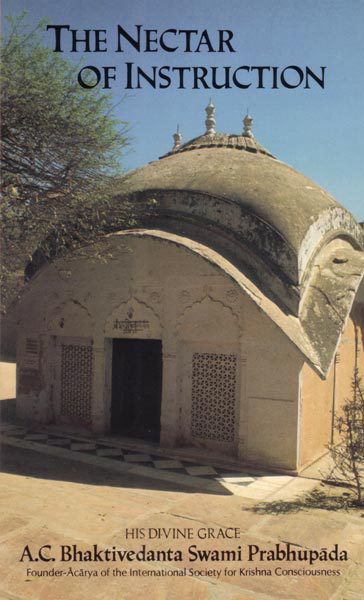
Continuing with our series on the Nectar of Iststuction (Upadeśāmṛta), we are posting Text 6, the very important instructions given by Śrīla Rūpa Gosvāmī on the position of a person situated in Krsna consciousness. Srila Prabhupada explains in the purport that a person engaged in devotional service must be free from material motives. In this Kṛṣṇa consciousness movement, one’s consciousness is what needs to be changed. How we should view the pure devotee, and also the warning is there how to avoid offenses at the feet of the Vaiṣṇavas. Very important instructions.
The Nectar of Instruction
By His Divine Grace A. C. Bhaktivedanta Swami Prabhupāda
Text Six More
08 Oct 2013
by The Hare Krishna Movement
in A.C. Bhaktivedanta Swami Prabhupada, Back to Godhead, Bhagavad-gita
Tags: A.C. Bhaktivedanta Swami Prabhupada, Arjuna, as it is, bhagavad-gita, Bhaktivedanta purports, Krishna, Lord Krsna, mental agonies, Puranas, Srila Prabhupada, Srimad Bhagavatam, Upanisads, Vedanta-sutras, Vedic literatures, Vedic wisdom

1973 Back to Godhead cover
This morning I was reading from the Srimad Bhagavatam Canto 1, Chapter 15, Text 27, wherein Srila Prabhupada was describing the glories and importance of the the Bhagavad-gita As It Is. The following is some excerpts from this amazing purport, followed by full text and purport. I found this one purport to be a very nice synopsis of the entire Bhagavad-gita As It Is.
…The Lord left behind Him the instructions of the Bhagavad-gītā not for the benefit of Arjuna alone, but also for all time and in all lands. The Bhagavad-gītā, being spoken by the Supreme Personality of Godhead, is the essence of all Vedic wisdom. It is nicely presented by the Lord Himself for all who have very little time to go through the vast Vedic literatures like the Upaniṣads, Purāṇas and Vedānta-sūtras.
…the Bhagavad-gītā can be consulted in all critical times, not only for solace from all kinds of mental agonies, but also for the way out of great entanglements which may embarrass one in some critical hour.
…The merciful Lord left behind Him the great teachings of the Bhagavad-gītā so that one can take the instructions of the Lord even when He is not visible to material eyesight.
…There is no difference between the sound representation of the Lord and the Lord Himself. One can derive the same benefit from the Bhagavad-gītā as Arjuna did in the personal presence of the Lord.
…The Bhagavad-gītā begins with the problems of life by discriminating the soul from the elements of matter and proves by all reason and argument that the soul is indestructible in all circumstances and that the outer covering of matter, the body and the mind, change for another term of material existence which is full of miseries. The Bhagavad-gītā is therefore meant for terminating all different types of miseries, and Arjuna took shelter of this great knowledge, which had been imparted to him during the Kurukṣetra battle. (from Purport to SB 1.15.27)
Full verse and purport More
16 Sep 2013
by The Hare Krishna Movement
in A.C. Bhaktivedanta Swami Prabhupada, Jiva Goswami, Srimad Bhagavatam, Vamanadeva
Tags: A.C. Bhaktivedanta Swami Prabhupada, Aditi, appearance of lord vamandeva, Bali Maharaja, club, conchshell, disc, dwarf-brahmana, Jiva Goswami, Krsna, lotus, Srila Prabhupada, Srimad Bhagavatam, Vamana, Vamanadeva, Vijaya

Today we honor the Appearance of Lord Vamandeva, who, as some of you know, appeared as the fifteenth incarnation of Krsna. Lord Vāmanadeva assumed the form of a dwarf-brāhmaṇa [Vāmana] and visited the arena of sacrifice arranged by Mahārāja Bali. The following is a brief summary from Srila Prabhupada’s Srimad Bhagavatam, 8th Canto, Chapter 18.
Today also marks the Appearance of Srila Jiva Goswami, and there is a brief instruction given by him on understanding God at bottom of post.
Lord Vāmanadeva appeared in this world from the womb of Aditi completely equipped with conchshell, disc, club and lotus. His bodily hue was blackish, and He was dressed in yellow garments. Lord Viṣṇu appeared at an auspicious moment on Śravaṇa-dvādaśī when the Abhijit star had arisen. At that time, in all the three worlds (including the higher planetary system, outer space and this earth), all the demigods, the cows, the brāhmaṇas and even the seasons were happy because of God’s appearance. Therefore this auspicious day is called Vijayā.
More
15 Sep 2013
by The Hare Krishna Movement
in Festivals
Tags: chanting dancing feasting, chanting Hare Krishna, festival of colors, Krishna consciousness, Krishna prasadam, krishna's holy names, New Vrindavan, Palace of Gold, Srila Prabhupada, worlds happiest festival

click on image to enlarge
Festival of Colors
The Worlds Happiest Festival
Today we spent the day chanting, dancing, and feasting, at the second annual Festival of Colors held on the grounds of Srila Prabhupada’s Palace of Gold in New Vrindavan. What can I say…we had a great time! After hours of dancing and throwing colored dye, we sat down in the shade of a nearby tree, caught our breath, and just took it all in. To my complete amazement and satisfaction, as I watched the children playing, the young people laughing and dancing, and the adults of all ages celebrating the day, everyone was smiling. Srila Prabhupada must also have been smiling to see so many visitors to the Palace, so many people of all walks of life rejoicing in the sounds of Krishna’s Holy Names, taking Krishna Prasadam, and having a favorable impression of Krishna Consciousness. It was huge.
We share with you some images from this happy festival. More
12 Sep 2013
by The Hare Krishna Movement
in Radha Krishna, Srimati Radharani, Transcendental Qualities of Radha
Tags: asta-sakhis, beauty of Srimati Radharani, complexion like molten gold, Madana-daha, Oh Radhe, Queen of Vrindavan, Radha. Srimati Radharani, Radharani, Radhika, Srila Prabhupada
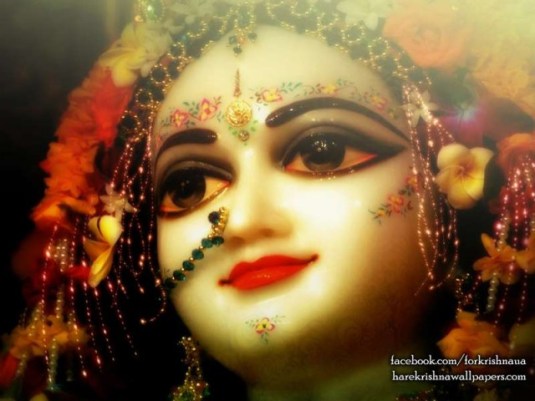
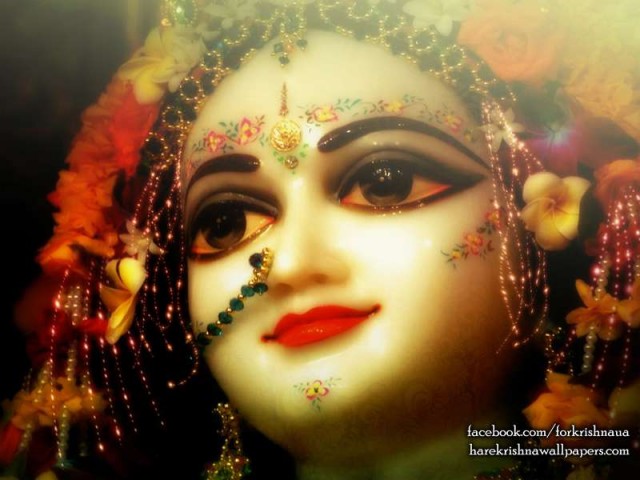
Although Lord Kṛṣṇa is Madana-mohana, He becomes Madana-dāha, or enchanted by the beauty of Śrīmatī Rādhārāṇī.
“O Radharani, O Queen of Vrindavana, Your complexion is like molten gold, Your doe-like eyes are captivatingly restless, a million full and brilliant moons wane before Your lustrous countenance, and a blue sari, having stolen the hue of a fresh rain-laden cloud, has enwrapped Your exquisite form. O Radha, You are the crest-jewel of all the dallying damsels of Vrindavana, fragrant and pristine like a budding jasmine flower. Your sublime form is adorned with priceless jewelry, and you are the best of all the charming and intelligent gopis. You are decorated with all wonderful excellences and surrounded by eight dedicated and beloved cowherd girls known as the asta-sakhis.
“The ambrosia of Your beautiful lips, red as the bimba fruit, is life-giving syrup to Krishna. O Radha, I am rolling on the banks of the Yamuna, my poor heart filled with anticipation, praying to You with all humility. I am guilty of being an offender, a rascal, a useless wretch — yet I beg You to kindly engage me in even the smallest service to Your lotus feet. O most merciful Lady, it will not become You to ignore this most distressed soul, for Your heart is always overflowing with compassion and love.” [Sri Prarthana-paddhati [Stavamala], Srila Rupa goswami]
More
10 Sep 2013
by The Hare Krishna Movement
in A.C. Bhaktivedanta Swami Prabhupada, Bhagavad-gita, Threefold Miseries
Tags: A.C, bhakti yoga, Bhaktivedanta Swami Prabhupada, happiness and distress, Krishna consciousness, krsna consciousness is happy, living entities, perfect yogi, pure devotee, relationship with God, Srila Prabhupada, supreme enjoyer, threefold miseries, true equality

[*Note; Les Misérables (“The Miserable Ones”); translated variously from the French as The Miserable Ones, The Wretched, The Poor Ones, The Wretched Poor, or The Victims]
Often while reading Srila Prabhupada’s books, he talks about getting free from the miseries of life, or the threefold miseries. For instance in this purport it is described:
…One who is Kṛṣṇa conscious is a perfect yogī; he is aware of everyone’s happiness and distress by dint of his own personal experience. The cause of the distress of a living entity is forgetfulness of his relationship with God. And the cause of happiness is knowing Kṛṣṇa to be the supreme enjoyer of all the activities of the human being. Kṛṣṇa is the proprietor of all lands and planets. The perfect yogī is the sincerest friend of all living entities. He knows that the living being who is conditioned by the modes of material nature is subjected to the threefold material miseries due to forgetfulness of his relationship with Kṛṣṇa. Because one in Kṛṣṇa consciousness is happy, he tries to distribute the knowledge of Kṛṣṇa everywhere. Since the perfect yogī tries to broadcast the importance of becoming Kṛṣṇa conscious, he is the best philanthropist in the world, and he is the dearest servitor of the Lord.
I thought we could do a short post on just what are the threefold miseries, and how can one become free from them.
The threefold miseries are:
(1) Those miseries which arise from the mind and body
(2) Those miseries inflicted by other living beings
(3) Those miseries arising from natural catastrophes over which one has no control.
More
08 Sep 2013
by The Hare Krishna Movement
in A.C. Bhaktivedanta Swami Prabhupada, Free Downloads, Free eBooks, KRSNA The Supreme Personality of Godhead
Tags: 1970 Edition, A.C. Bhaktivedanta Swami Prabhupada, download free pdf, free, ISKCON Press, Krsna, one thousandth post, pdf download, scanned copy of Krsna, Srila Prabhupada, The Hare Krishna Movement, The Supreme Personality of Godhead, theharekrishnamovement, Vol. 1

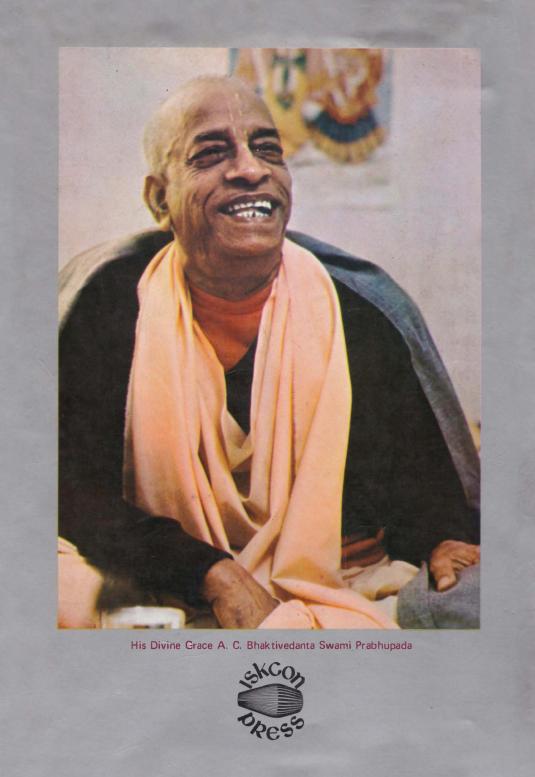
This marks our one thousandth post! So we are putting up our favorite book; “Kṛṣṇa, the Supreme Personality of Godhead” Vol. 1, as a Free PDF Download. You can click on following link to view the entire scanned book, and or save it.
KRSNA_Book_Vol.1_1970_ISKCON_Press_edition_SCAN
More
04 Sep 2013
by The Hare Krishna Movement
in A.C. Bhaktivedanta Swami Prabhupada, Back to Godhead, Krsna Consciousness, Visakha devi dasi
Tags: A.C. Bhaktivedanta Swami Prabhupada, Back to Godhead Magazine, Book Distribution, BTG, His Divine Grace, hot off the press, preaching Krishna consciousness, Srila Prabhupada, transcontinental jet, traveling emissary, Visakha devi dasi
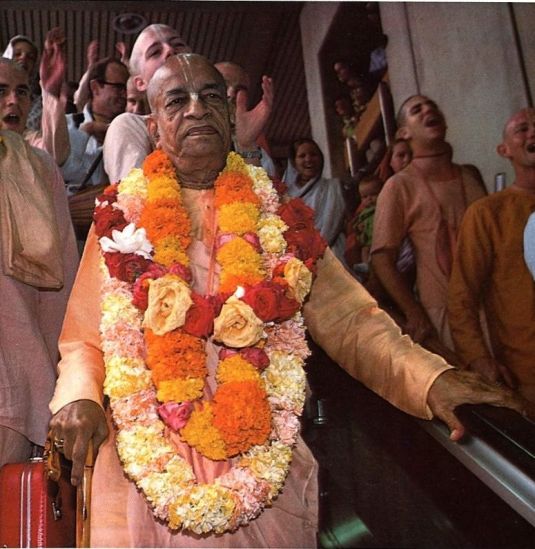
As a young devotee/book distributor, we were always anxious to see the new Back to Godhead Magazines “Hot off the Press”, and distribute them to the public. This was one article written by Visakha devi dasi that I fondly remember. Whenever I got tired out on book distribution, I would think of Srila Prabhupada’s rigorous schedule, and it would inspire me to continue on. Srila Prabhupada was tireless in his preaching and generous in giving others his divine association.
Summer Sessions With Srila Prabhupada
Excerpted from Back to Godhead Magazine 1975, Vol. 10, No 10
Article by Visakha devi dasi
In five cities and on a transcontinental jet, His Divine Grace spends a typical month at his favorite pastime—teaching Krsna Consciousness.
He’s probably logged as much flight time in the past ten years as any other traveling emissary. His Divine Grace A.C. Bhaktivedanta Swami Prabhupada has gone around the world twelve times visiting his ISKCON centers, lecturing and insuring a high standard of spiritual life among his disciples. The author traveled with him this past summer as he shuttled from West to East coast and back again, holding informal meetings and having dialogues with those who came to ask questions no one else could answer.
More
30 Aug 2013
by The Hare Krishna Movement
in A.C. Bhaktivedanta Swami Prabhupada, KRSNA The Supreme Personality of Godhead, Krsna-katha, Vaisnava Vocabulary
Tags: A.C. Bhaktivedanta Swami Prabhupada, Krishna, Krsna The Supreme Personality of Godhead, Krsna-katha, Krsna_katha, Liberated souls, narrations spoken about Krsna, narrations spoken by Krsna, path of liberation, Srila Prabhupada, topics about krishna

Here is a another word for your vaisnava vocabulary; Kṛṣṇa-kathā. The following is from the Introduction to the Krsna Book and how narrations describing the transcendental activities of the Lord are relished by liberated souls. But whether one is liberated or is trying to be liberated, or is even grossly materialistic, the pastimes of Lord Kṛṣṇa are worth studying. The more people know about Kṛṣṇa, the more they will be perfectly benefited in this human form of life.
…Kṛṣṇa-kathā means narrations about Kṛṣṇa. There are two kṛṣṇa-kathās: narrations spoken by Kṛṣṇa and narrations spoken about Kṛṣṇa. Bhagavad-gītā is the narration or the philosophy or the science of God, spoken by Kṛṣṇa Himself. Śrīmad-Bhāgavatam is the narration about the activities and transcendental pastimes of Kṛṣṇa. Both are Kṛṣṇa-kathā. It is the order of Lord Caitanya that Kṛṣṇa-kathā should be spread all over the world, because if the conditioned souls, suffering under the pangs of material existence, take to Kṛṣṇa-kathā, then their path of liberation will be open and clear. The purpose of presenting this book is primarily to induce people to understand Kṛṣṇa or Kṛṣṇa-kathā, because thereby they can become freed from material bondage. (from introduction to “Krsna, The Supreme Personality of Godhead”)
More
28 Aug 2013
by The Hare Krishna Movement
in A.C. Bhaktivedanta Swami Prabhupada, Srila Prabhupada, Vyas-puja
Tags: A.C. Bhaktivedanta Swami Prabhupada, appearance day of spiritual master, disciple, guru, most blessed day, om ajnana, prabhupada, spiritual master, Srila Prabhupada, Vyasa Puja, Vyasasan das
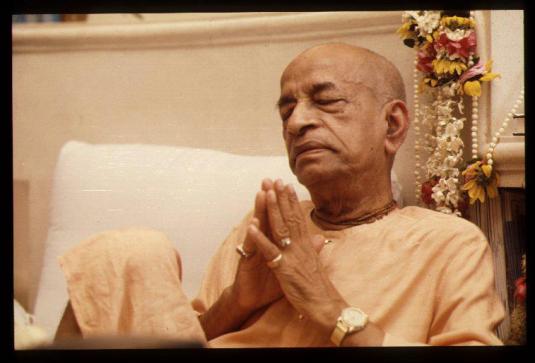
The Most Blessed Event: Sri Vyasa-puja
by Vyasasan das
Dear Srila Prabhupada,
On this most blessed and auspicious day, the celebration of your appearance; Sri Vyasa-puja
Please let me offer my respectful obeisances:
om ajñāna-timirāndhasya jñānāñjana-śalākayā
cakṣur unmīlitaṁ yena tasmai śrī-gurave namaḥ
I offer my respectful obeisances unto you, for you have opened my eyes, which were blinded by the darkness of ignorance, with the torchlight of knowledge.
It is impossible to guarantee the authenticity of the emotions of a conditioned soul such as myself, but I think that I can honestly say, that in this lifetime, I have never loved anyone more than I love you.
And what is this love?
This love is simply the realization that in this life you are my dear most friend, my ever well wisher, my teacher and spiritual master, and above all my constant companion.
Yes my constant companion.
People, friends, family, loved ones have come and gone throughout the course of my life, but you have remained the one constant in my entire adult life.
More
22 Aug 2013
by The Hare Krishna Movement
in Prema-dhvani Prayers
Tags: ananta loti vaisnava-vrnda, astottara-sata, ki jaya, om visnu-pada, paramahamsa, parivrajakacarya, prema-dhvani prayers, Srila Bhaktisiddhanta, Srila Prabhupada

click on image to enlarge
Prema-dhvani Prayers
(Obeisnaces & Respects)
jaya oṁ viṣṇu-pāda paramahaṁsa parivrājakācārya aṣṭottara-śata śrī śrīmad a.c. bhaktivedānta svāmī mahārāja prabhupāda—kī jaya.
(108 glories to the wandering mendicant and topmost swanlike devotee, the great preceptor His Divine Grace A. C. Bhaktivedanta Swami Prabhupada, who has taken shelter at the feet of Lord Viṣṇu)
jaya oṁ viṣṇu-pāda paramahaṁsa parivrājakācārya aṣṭottara-śata śrī śrīmad bhaktisiddhānta sarasvatī gosvāmī mahārāja prabhupāda—kī jaya.
(108 glories to the wandering mendicant and topmost swanlike devotee, the great preceptor His Divine Grace Srila Bhaktisiddhānta Sarasvatī Gosvami Maharaja Prabhupada, who has taken shelter at the feet of Lord Viṣṇu)
ananta koṭi vaiṣṇava-vṛnda—kī jaya.
(All glories to the unlimited millions of Vaiṣṇavas.)
nāmācārya śrīla haridāsa ṭhākura—kī jaya.
(All glories to the Nāmācārya Śrīla Haridāsa Ṭhākura.)
ISKCON-Founder-Ācārya Śrīla Prabhupāda—kī jaya.
(All glories to Śrīla Prabhupāda, the Founder-Ācārya of the International Society for Kṛṣṇa Consciousness.)
prem-se kaho śrī-kṛṣṇa-caitanya prabhu nityānanda śrī advaita, gadādhara, śrīvāsādi gaura-bhakta-vṛnda—kī jaya.
(Call out with love the names Śrī Kṛṣṇa Caitanya, Prabhu Nityānanda, Śrī Advaita, Śrī Gadādhara, Śrīvāsa and all the devotees of Lord Caitanya.)
śrī śrī rādha-kṛṣṇa, gopa-gopīnatha, śyāma-kuṇḍa, rādhā-kuṇḍa giri-govardhana—kī jaya.
(All glories to Rādhā and Kṛṣṇa, the Lord of the gopas and gopis. All Glories to Śyāma-kuṇḍa, Rādhā-kuṇḍa and Govardhana Hill.)
[One may glorify the Deities of the temple at this time.]
śrī vṛndāvana dhāma—kī jaya.
(All glories to the abodes Śrī Vṛndāvana-dhāma.)
śrī māyāpur dhāma—kī jaya.
(All glories to Śrī Māyāpur-dhāma.)
jagannatha-puri-dhama-ki jaya.
(All glories to the temple of the Lord of the universe at Puri)
gaṅgā-mayī—kī jaya.
(All glories to Gaṅgā-devī.)
yamunā-mayī—kī jaya.
(All glories to Yamunā-devī.)
tulasī-devī—kī jaya.
(All glories to Tulasī-devī.)
bhakti-devī—kī jaya.
(All glories to bhakti, devotional service to the Lord)
śrī hari-nāma saṅkīrtana—kī jaya.
(All glories to the congregational chanting of the holy name of Hari.)
brhad-mrdanga-ki yaya.
(All glories to the publication and distribution of transcendental literatures glorifying the Supreme Personality of Godhead, Lord Sri Krishna.)
[Srila Bhaktisiddhānta Sarasvatī likened this activity to playing on a big mrdanga drum which can be heard around the world]
samāveta bhakta-vṛnda—kī jaya.
(All glories to the assembled devotees.)
(All glories to the assembled devotees.)
(All glories to the assembled devotees.)
gaura-premānande hari-haribol.
(Chant the names Hari! Hari! in the ecstasy of Caitanya-prema.)
All glories to Śrī Guru and Śrī Gaurāṅga.
All glories to Śrīla Prabhupāda.
More
15 Aug 2013
by The Hare Krishna Movement
in A.C. Bhaktivedanta Swami Prabhupada, Lectures, The Hare Krishna Movement
Tags: A.C. Bhaktivedanta Swami Prabhupada, Arrival Lecture, Hare Krishna, in every town and village, Krishna, Krsna Caitanya, krsna consciousness, Radha-Krsna, Srila Prabhupada, svayan krsna

Arrival Lecture
By His Divine Grace A.C. Bhaktivedanta Swami Prabhupada
Los Angeles, May 18, 1972
Prabhupada: (airport noises) (leads Prema-dhvani; says “Los Angeles bhakta-vrnda ki jaya!”)
So my dear boys and girls, about six years ago I came to your country single-handed, with this pair of cymbals. Now you are so many chanting Hare Krsna. That is my success. It was the prediction of Lord Caitanya Mahaprabhu:
prthivite ache yata nagaradi grama
sarvatra pracara hoibe mora nama
Lord Caitanya desired that “In all the towns, in as many towns and villages as there are on the surface of the globe, My name will be broadcast.” He is Krsna Himself, svayam krsna, krsna caitanya-namine, simply changing His name as Krsna Caitanya. So His prediction will never go in vain. That’s a fact. So my plan was that “I shall go to America. America is the leading country of the world. If I can convince (the) younger generation of America, they will take up.” I am old man. I came here at the age of seventy years; now I am seventy-six. So my warning is already there. In nineteen hundred and seventy-one, I had a severe heart attack. You know, all. So the mission of Caitanya Mahaprabhu is now in your hands. You are American boys and girls, very intelligent and graced by Krsna. You are not poverty-stricken. You have enough resources, prestige. Everything materially, you are all well-equipped. If you kindly take this Krsna consciousness movement seriously, your country will be saved, and the whole world will be saved.
More
14 Aug 2013
by The Hare Krishna Movement
in A.C. Bhaktivedanta Swami Prabhupada, Dhira Govinda das, Diksha, Guru & Disciple, Siksa, Srila Prabhupada, The Prominent Link
Tags: A.C. Bhaktivedanta Swami Prabhupada, Dhira Govinda das, disciplic succession, guru disciple relationship, guru tattva, guru-disciple, Iskcon, knowledge, murti, Parampara, self realization, spiritual knowledge, spiritual master, Srila Prabhupada, The Hare Krishna Movement, transcendental knowledge
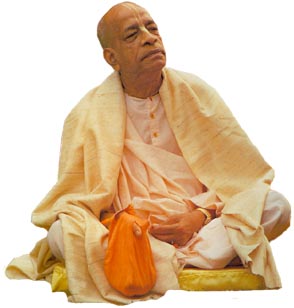
Srila Prabhupada: The Prominent Link
by Dhira Govinda dasa
Recently I had the good fortune to meet one of my God brothers, Dhira Govinda Prabhu. It was on the appearance day of Srila Bhaktisiddhanta Sarasvati Thakur. I had heard of him and had posted the following article some time back and had read some of his book “Srila Prabhupada; The Prominent Link”, but had not meet him yet. But I found him to be a very nice devotee of good character. Just to give his voice a broader rang we decided to post his book Srila Prabhupada The Prominent Link as well as the Prominent Link Supplementary Articles Click on either of the above links to read or save the pdf files.
Many members of Srila Prabhupada’s movement who did not receive formal initiation from him experience Srila Prabhupada as the primary giver of direct transcendental knowledge. This empirical reality forms the basis of recognizing Srila Prabhupada as the prominent link to the parampara. Such a conception is supported by sastric descriptions of the essence of the initiation process, and by the delineation of the parampara described by Srila Prabhupada and Srila Bhaktisiddhanta Sarasvati Thakura.
Introduction
This paper presents a framework for understanding Srila Prabhupada’s position that is derived from a comprehension of Srila Prabhupada’s direct and personal relationship with the members of his movement. The central idea is that Srila Prabhupada is the prominent link to the parampara by virtue of being the prime deliverer of transcendental knowledge. We present these ideas in a mood of open-minded discussion and ask that the reader approach the material with a fresh perspective and a willingness to reexamine the issues.
More
12 Aug 2013
by The Hare Krishna Movement
in Acyutanananda das, Devotee Books
Tags: Achyutananda das, blazing, Blazing Sadhus, Charles M Barnett, CMB Books, never trust a holy man who can't dance, sadhus, Srila Prabhupada, swami
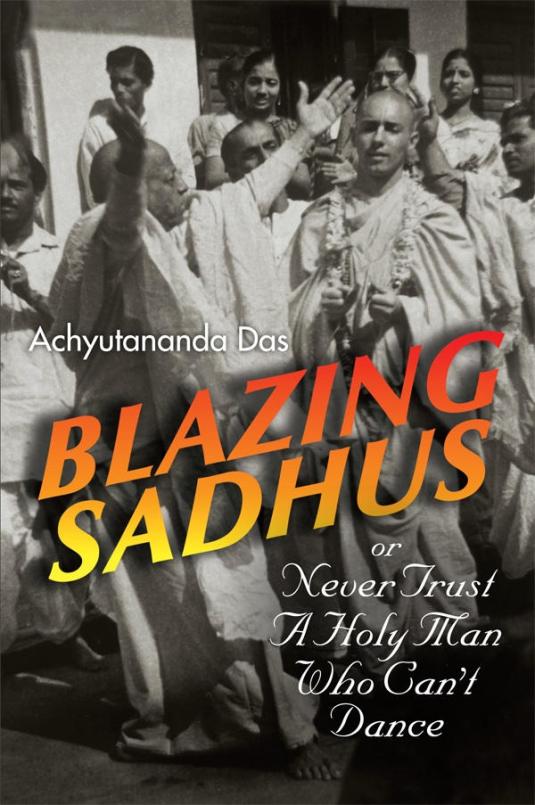
click on image to purchase
Blazing Sadhus
or
Never Trust A Holy Man Who Can’t Dance
by Achyutananda Das
We are now offering this extraordinary book for sale on our web page www.theharekrishnamovement.com. We liked it so much we are offering Free Shipping. Highly Recomended!
Excerpt from back cover;
“Do you know what just happened in there? Do you know what he just did? He gave me the answers to the most cosmic, theological, universal, eternal questions ever asked! And like it was just matter-of-fact! Then he thanks me for asking! I gotta tell people about this.” (-from Chapter Two)
More
11 Aug 2013
by The Hare Krishna Movement
in A.C. Bhaktivedanta Swami Prabhupada, Aksauhini, Lectures, Vaisnava Vocabulary
Tags: 109, 21, 600 cavalry is called an akṣauhiṇī, 650 infantry and 65, 870 chariots, 870 elephants, A.C. Bhaktivedanta Swami Prabhupada, aksauhini, bhakta, bhaktas, isvarah paramah, Krishna, mukti, solid phalanx of 21, Srila Prabhupada, Srimad Bhagavatam lecture
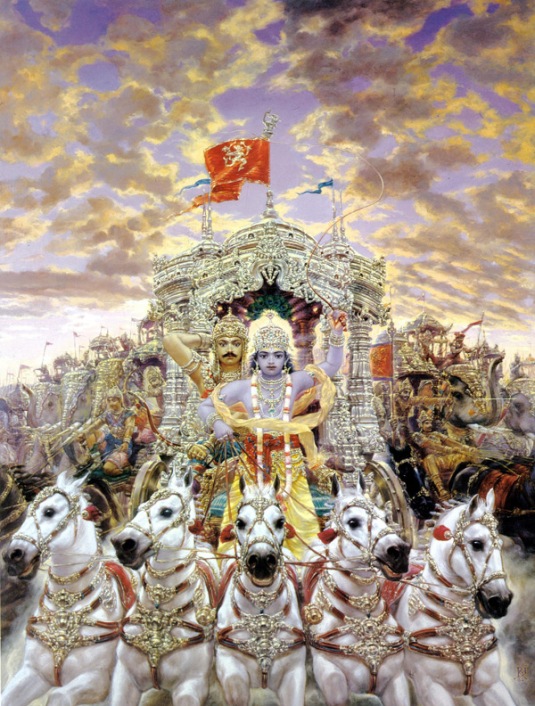
Here is a word for your vaisnava vocabulary: Aksauhini (akṣauhiṇī).
The word akṣauhiṇī refers to a military phalanx consisting of 21,870 chariots and elephants, 109,350 infantry soldiers and 65,610 horses. An exact description is given in the Mahābhārata, Ādi parva, Second Chapter, as follows:
“One chariot, one elephant, five infantry soldiers and three horses are called a patti by those who are learned in the science. The wise also know that a senāmukha is three times what a patti is. Three senāmukhas are known as one gulma, three gulmas are called a gaṇa, and three gaṇas are called a vāhinī. Three vāhinīs have been referred to by the learned as a pṛtanā, three pṛtanās equal one camū, and three camūs equal one anīkinī. The wise refer to ten anīkinīs as one akṣauhiṇī. The chariots of an akṣauhiṇī have been calculated at 21,870 by those who know the science of such calculations, O best of the twice-born, and the number of elephants is the same. The number of infantry soldiers is 109,350, and the number of horses is 65,610. This is called an akṣauhiṇī.” (SB 9.15.30)
A solid phalanx of 21,870 chariots, 21,870 elephants, 109,650 infantry and 65,600 cavalry is called an akṣauhiṇī. (SB 1.8.48 purport)
What makes this word so noteworthy, is the fact that many akṣauhiṇīs were killed on the Battlefield of Kurukṣetra. Such was the enormity of the battle.
Following is a lecture by His Divine Grace describing the lamentation of King Yudhisthira. Mahārāja Yudhiṣṭhira, as the most pious king of the world, takes for himself the responsibility for killing such a huge number of living beings because the battle was fought to reinstate him on the throne.
More
30 Jul 2013
by The Hare Krishna Movement
in A.C. Bhaktivedanta Swami Prabhupada, Founder-Acarya, ISKCON, ISKCON History, Srila Prabhupada Conversations, The Hare Krishna Movement
Tags: A.C. Bhaktivedanta Swami Prabhupada, Founder Acarya, incorporation of ISKCON, Iskcon, Krishna consciousness, Lord Caitanya Mahaprabhu's Sankirtan Movement, Srila Prabhupada, The Hare Krishna Movement, The international Society For Krishna Consciousness, the Village Voice, Tompkins Square Park, your ever well-wisher

Today (July 30th) marks the auspicious anniversary of Srila Prabhupada’s incorporation of ISKCON New York, in 1966. We thank Sampradaya Sun for posting this very nice homage in honor of the occasion.
Incorporation of ISKCON New York
July 29, 2013 — CANADA (SUN)
Bhaktivedanta Book Trust
In 1966, Srila Prabhupada began chanting the Hare Krsna maha-mantra under a tree in New York’s Tompkins Square Park, thereby inaugurating the western advance of Lord Caitanya Mahaprabhu’s glorious Sankirtana movement. On July 13th, 1966 Srila Prabhupada incorporated ISKCON New York, and in Autumn of 1966 he established the ISKCON Press, which clearly demonstrated his emphasis on the importance of publishing and distributing his authorized books. Since that time, many millions of his books have been distributed throughout the world, translated into many different languages.
“We shall call our society I.S.K.C.O.N.”, Srila Prabhupada said with great pleasure when he first coined the acronym for the International Society of Krishna Consciousness. ‘Krishna Consciousness’ was Srila Prabhupada’s rendering of a phrase from Srila Rupa Goswami’s Padyavali:
krsna-bhakti-rasa-bhavita
“To be absorbed in the mellow taste of executing devotional service to Krsna’.”
“He had initiated the legal work of incorporation that spring, while still living on the Bowery, but even before its legal beginning, he had been talking about his “International Society for Krishna Consciousness”, and so it had appeared in letters to India and in “The Village Voice” (newspaper). A friend had suggested a title that would sound more familiar to Westerners “International society for God Consciousness”. But ‘God’ was a vague term, whereas ‘Krishna’ was exact and scientific; ‘God Consciousness’ was spiritually weaker, less personal. And if Westerners didn’t know or understand that Krishna was God, then the ‘International Society for Krishna Consciousness’ would tell them, by spreading His glories ‘in every town and village’. (“Your Ever Well-wisher”, page 45-47)
More
30 Jul 2013
by The Hare Krishna Movement
in Founder-Acarya, Padmapani das, Spiritual Master, Srila Prabhupada
Tags: A.C. Bhaktivedanta Swami Prabhupada, disciple, disciples of Srila Prabhupada, disciplic succession, Founder Acarya, guru, Padmapani das, spiritual master, Srila Prabhupada

From time to time I like to visit the web site The Prabhupada Connection just to drink in the nectar. If you haven’t visited this site yet, I recommend that you visit the underlined link above and bookmark it to your favorites.
The site was created by Padmapani Prabhu who is a disciple of Srila Prabhupada, and is well loved by the devotee community. The following is some nectar I found in the Editorial Notes category.
Respecting Srila Prabhupada
by Padmapani dasa
As disciples and followers of His Divine Grace A.C. Bhaktivedanta Swami Prabhupada, Founder-Acarya of the International Society for Krsna Consciousness, we all have an eternal debt to Srila Prabhupada for his unprecedented sacrifice in freely distributing the mercy of Lord Caitanya Mahaprabhu all over the world.
More
28 Jul 2013
by The Hare Krishna Movement
in A.C. Bhaktivedanta Swami Prabhupada, Ecstasy, KRSNA The Supreme Personality of Godhead, Separation, Sriman George Harrison
Tags: A.C. Bhaktivedanta Swami Prabhupada, adi 9.51, be with you, George Harrison, gopis, gopis feelings of separation, Krsna Book, Krsna The Supreme Personality of Godhead, My Sweet Lord, o govinda, see you, show you lord, Sri Caitanya Mahaprabhu, Srila Prabhupada
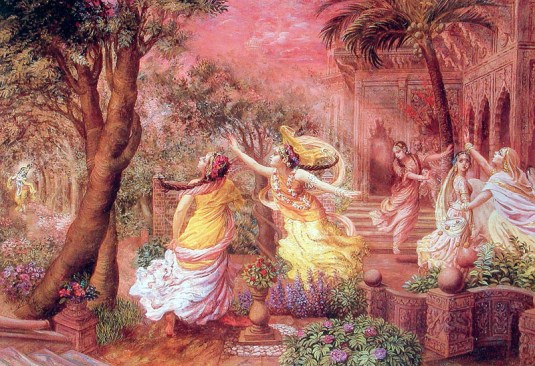
click on image to enlarge
We were discussing the other night with some friends, that the mood of Lord Caitanya was love in separation, and that this should also be our mood as devotees. George Harrison understood this mood, and in his song “My Sweet Lord” we find in his lyrics:
My sweet Lord
Hmm, my Lord
Hmm, my Lord
I really want to see you
Really want to be with you
Really want to see you, Lord, but it takes so long, my Lord …
I really want to know you
Really want to go with you
Really want to show you, Lord, that it won’t take long, my Lord …
Hare Krishna, Hare Krishna
Krishna Krishna, Hare Hare
Hare Rama, Hare Rama
Rama Rama, Hare Hare
Srila Prabhupada has described this very nicely throughout all his writings, and in the Caitanya-caritmrta we find:
“O Govinda! Feeling Your separation, I am considering a moment to be like twelve years or more. Tears are flowing from My eyes like torrents of rain, and I am feeling all vacant in the world in Your absence.” This is the perfectional stage of chanting the Hare Kṛṣṇa mantra and eating the fruit of love of Godhead, as exhibited by Śrī Caitanya Mahāprabhu. One should not artificially imitate this stage, but if one is serious and sincerely follows the regulative principles and chants the Hare Kṛṣṇa mantra, the time will come when these symptoms will appear. Tears will fill his eyes, he will be unable to chant distinctly the mahā-mantra, and his heart will throb in ecstasy. Śrī Caitanya Mahāprabhu says that one should not imitate this, but a devotee should long for the day to come when such symptoms of trance will automatically appear in his body. (Purport Sri Caitanya-caritamrta, Adi 9.51)
This is all but and introduction to one of the very best, sweetest, chapters in the KRSNA Book “The Gopīs’ Feelings of Separation” which we have posted here in its entirety.
More
25 Jul 2013
by The Hare Krishna Movement
in Practicing Krishna Consciousness at Home, Prasadam, The Hare Krsna Cookbook, Vegetarian Cooking, Vegetarianism
Tags: cows and brahmans, extraordinary tastes, Krishna prasadam, Krishna's lips, Lord's mercy, mercy of the Lord, Prasadam, senses become spiritualized, spiritual nectar, spiritualized food, Srila Prabhupada, supreme absolute truth, transcendental qualities, uncommon fragrances, vegetarian

Prasadam
How to Prepare and Offer Food
Food prepared for and offered to Krishna with love and devotion becomes completely spiritualized. Such food is called Krishna prasadam, which means “the mercy of Lord Krishna.”
Lord Caitanya said of prasadam…”now that they have been prepared for Krishna and offered to Him with devotion, these foods have acquired extraordinary tastes and uncommon fragrances. Just taste them and see the difference! Apart from the taste, even the fragrance pleases the mind and makes one forget any other fragrance. Therefore, it should be understood that the spiritual nectar of Krishna’s lips must have touched these ordinary foods and imparted to them all their transcendental qualities.”
Eating only food offered to Krishna is the perfection of vegetarianism. In the Bhagavad-gita Lord Krishna says that unless one eats only food that has been offered to Him in sacrifice, one will suffer the reactions of karma. He also states, “If one offers Me with love and devotion a leaf, a flower, a fruit, or water, I will accept it.”
More
17 Jul 2013
by The Hare Krishna Movement
in A.C. Bhaktivedanta Swami Prabhupada, Ecstasy, Krsna Consciousness, Nectar of Devotion, Srimati Radharani, Teachings of Lord Chaitanya, Vaisnava Vocabulary
Tags: A.C. Bhaktivedanta Swami Prabhupada, amorous pastimes, ecstasy, ecstasy of transcendental love, Krishna, Radha Madana-mohana, Spiritual Life, Srila Prabhupada, Srimati Radharani, supreme ecstasy of srimati radharani

No common man can understand the ecstasy of transcendental love between Radharani and Krsna (from Teachings of Lord Caitanya)
That supreme ecstasy of Srimati Radharani is the essence of spiritual life. Her only business is to fulfill all the desires of Krsna (CC Madhya 8.164, Translation)
This morning as I was doing my morning meditations (japa) I happened to be looking at this beautiful picture of Radha and Krishna. I was very much moved by the picture and was reminded of the following verse…
“Glory to the all-merciful Sri Radha and Madana-Mohana, who are always engaged in amorous pastimes. They are the only shelter of my depraved and crippled self. Their lotus feet are the be-all and end-all of my life” (Songs of the Vaisnava Acaryas)
…and the word that kept coming up in my mind was “Ecstasy”. I could not even begin to understand what Srimati Radharani must be feeling when She looks at Krishna, or what Sri Krishna must be experiencing when He looks into the eyes of Srimati Radharani. It must be Ecstaic Love!
I went to Srila Prabhupada’s “Nectar of Devotion”, to the “Teachings of Lord Caitanya”, and to try to get a better understanding also did a search on the word ‘ecstasy’ in vainquotes. The results of my readings are as follows:
More
Previous Older Entries Next Newer Entries
















 The Hare Krishna Movement