Today we celebrate the Appearance of Srila Bhaktisiddhanta Saraswati Thakura, the son of Srila Bhaktivinoda Thakura, and Spiritual Master of our Srila Prabhupada. We will honor it with a half day fast, rememberances and readings. I happened upon the following post some years ago on the Sampradaya Sun, and because it was so nicely assembled, we will share it with you here today.
The Appearance of Srila Bhaktisiddhanta by Sun Staff CANADA (SUN)
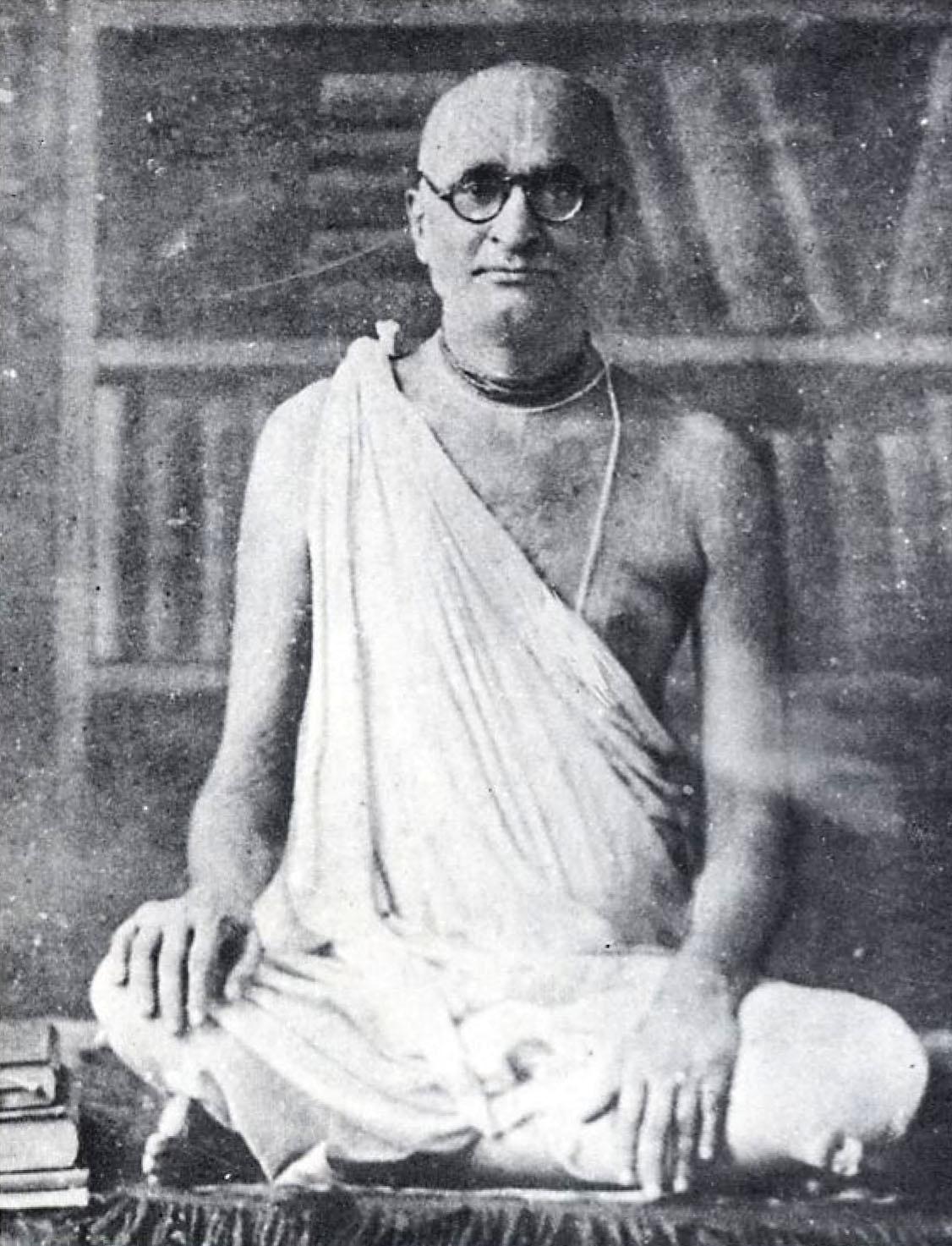
Srila Bhaktisiddhanta Saraswati Thakura appeared in Purusottam Ksetra, Jagannatha Puri, Orissa, on February 6, 1874. He was born in the family home next to the Narayan-chhata of Sri Jagannatha Temple, which always reverberated with the chanting of the Holy Name. Named Bimala Prasad, He was the fourth son of Srila Bhaktivinoda Thakura and Srimati Bhagavati Devi.
By the age of twelve, Bhaktisiddhanta Sarasvati was well versed in astronomy. Hearing news of this, Srila Jagannatha dasa Babaji summoned him one day and instructed him to make a Vaisnava calendar that included the appearance and disappearance days of all Lord Caitanya Mahaprabhu’s and Visnupriya Thakurani’s associates. Following these instructions, Srila Bhaktisiddhanta Sarasvati made the necessary calculations and began publication of “Sri Nabadvipa Panjica”.
Recently I was staying at a friends house, and in the room where I was spending the night there was one book by Giriraj Swami entitled “Watering the Seed”. I happened to open it and began reading from the Preface:
…from that first meeting with Srila Prabhupada, my whole life’s purpose became to bring people to meet Srila Prabhupada. And I was able to do that for many years. But when he passed away, I wondered ‘what will be my service now?’. My whole service had been to bring people to Srila Prabhupada.
Now I understand that Srila Prabhupada is always present, and that by speaking of him, hearing about him, remembering him, and, most significantly, by studying his books and following his instructions, we can experience his presence. So I can continue doing what I was doing when he was personally present-introducing soul’s to Srila Prabhupada-and that is what I feel most natural doing. Because I know that somehow or other, if someone comes in touch with Srila Prabhupada, his life will become successful. (Watering the Seed, Preface)
Now, I am always encouraged when I hear my Godbrothers speaking in this way, because this is how I have always felt, and continue to feel. That my main purpose, as a disciple, is to bring people to Srila Prabhupada, and there-by bringing them to Krishna.
Here is another word for your vaisnava vocabulary; Acaryopasanam.
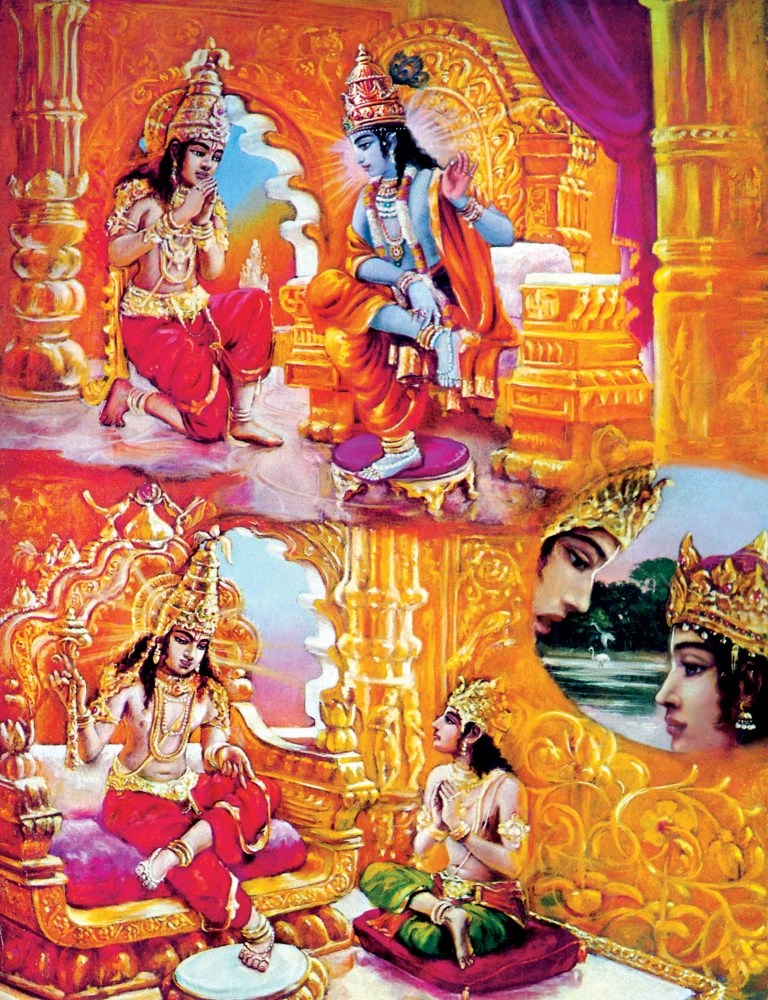
In Bhagavad-gita, Thirteenth Chapter, it is clearly stated that one should execute devotional service and advance on the path of spiritual knowledge by accepting the acarya.Ācāryopāsanam: one should worship an acarya, a spiritual master who knows things as they are. The spiritual master must be in the disciplic succession from Krsna. (from purport SB 3.29.17)
We can understand from Srila Prabhupada, that there are huge gaps in the disciplic succession, but we need to follow the prominent Acarya.
“So these gaps do not hamper from understanding the parampara system. We have to pick up the Prominent Acarya, and follow from him.” (letter to Dayananda April12,1968)
His Divine Grace Śrīla Bhaktisiddhānta Sarasvatī Gosvāmī Prabhupāda’s Disappearance Day, Lecture By His Divine Grace A. C. Bhaktivedanta Swami Prabhupāda Los Angeles, December 13, 1973
Prabhupāda:
nama oṁ viṣṇu-pādāyakṛṣṇa-preṣṭhāya bhūtaleśrīmate bhaktisiddhāntasarasvatīti nāmine
Bhaktisiddhānta Sarasvatī Ṭhākura passed away from this material world on 31st December, 1936. So almost forty years past. So there are two phases, prakaṭa and aprakaṭa, appearance and disappearance. So we have nothing to lament on account of disappearance because Kṛṣṇa and Kṛṣṇa’s devotee… Not only devotees, even the nondevotees, nobody disappears. Nobody disappears because every living entity… As Kṛṣṇa is eternal… It is confirmed in the Vedic literature, nityo nityānāṁ cetanaścetanānām. The description of the Supreme Lord is that He is also nitya, eternal, and the living entities are also eternal. But He is the chief eternal. Nityo nityānāṁ cetanaś cetanānām. So qualitatively, there is no difference between Kṛṣṇa and the living entities. And quantitatively, there is difference. What is the difference between nitya, the singular number nitya, and the plural number nitya? The plural number nitya is subordinate, eternal servants of the singular number nitya. Just like if you want to serve somebody, so the master is also exactly like you. He has got two hands, two legs, or the same sentiments. He also eats. Everything is same there. But the difference is the master and the servant. That’s all. Otherwise, equal in every respect.
God’s word cannot be changed. Then what will be the difference between God and ourself? He is always perfect. He is always perfect. What He said forty millions of years ago, what He said five thousand years ago, that is also correct up to date. That is sastra. Not that “So many years have passed and it has become old. Now let us reform it and put it into new way.” No.
So today we honor the Disappearance Day of our Srila Prabhupada. We honor this day with a half day fast and remembrances.
He reasons ill who says that Vaiṣṇavas die, When thou art living still in sound! The Vaiṣṇavas die to live, and living try To spread the holy name around.
Srila Prabhupada is still present through his words and instructions. We would like to share with youthe following speech was delivered in 1936 Bombay by the pure devotee who three decades later will become the world-renowned spiritual master of The Hare Krishna Movement. Abhay Charan das who latter becomes His Divine Grace A.C. Bhaktivedanta Swami Prabhupada glorifies his own spiritual master Śrīla Bhaktisiddhānta Sarasvatī Goswami Maharaja with this Appearance day (Vyasa-puja) homage. Thus we learn the time-honored meaning of spiritual master, disciple and their relationship.
Those who are followers of His Divine Grace A.C. Bhaktivedanta Swami Prabhupada, and read from his books with faith and conviction, are receiving Transcendental Knowledgethrough the disciplic succession.Evaṁ paramparā-prāptam imaṁ rājarṣayo viduḥ. (Bhagavad-gīta, 4.2)
So today we celebrate the Appearance Day of Srila Bhaktisiddhanta Sarasvati Thakura, the Spiritual Master of our Srila Prabhupada. We honor it today with a half day fast a Pushpanjali (offering of prayers and flowers) followed by a nice vegetarian feast.
The Absolute Necessity of a Spiritual Master—The Universal Teacher By His Divine Grace A.C. Bhaktivedanta Swami Prabhupada Founder-Acharya of the world-wide Hare Krishna Movement
In February 1936, in Bombay, India, the members of a reputed religious society, the Gaudiya Matha, were astonished by the powerful and eloquent words of a young member who spoke in honor of his spiritual master, Srila Bhaktisiddhanta Sarasvati Gosvami. Three decades later, the young speaker would become the world-renowned founder and spiritual master of the Krishna consciousness movement. Srila Prabhupada’s presentation is a memorable statement on the importance of the guru in spiritual life.
sakshad-dharitvena samasta-shastrair uktas tatha bhavyata eva sadbhih kintu prabhor yah priya eva tasya vande guroh sri-charanaravindam
“In the revealed scriptures it is declared that the spiritual master should be worshiped like the Supreme Personality of Godhead, and this injunction is obeyed by pure devotees of the Lord. The spiritual master is the most confidential servant of the Lord. Thus let us offer our respectful obeisances unto the lotus feet of our spiritual master.”
The following is a Vayas-puja address offered by Srila Prabhupada to his spiritual master Srila Bhaktisiddhanta Sarasvati Goswami Prabhupada.
The Spiritual Master is present wherever his sincere disciple is trying to serve his instructions. This is possible by the mercy of Krishna.
In your attempts to serve me, and in all your sincere devotional sentiments, I am with you, as my Guru Maharaja is with me. Remember this always…I shall never leave you. You are my disciple and I am your Spiritual Master, so there is no question, as long as you follow my instructions, that I shall never leave you.
So today we celebrate the Disappearance Day of Srila Bhaktisiddhanta Sarasvati Thakura, the Spiritual Master of our Srila Prabhupada. We honor it today with a half day fast a Pushpanjali (offering of prayers and flowers) followed by a nice vegetarian feast.
SRILA BHAKTISIDDHANTA SARASVATI-PRANATI
nama om vinsu-padaya krsna-presthaya bhu-tale srimate bhaktisiddhanta-sarasvatiti namine
I offer my respectful obeisances unto His Divine Grace Bhaktisiddhanta Sarasvati, who is very dear to Lord Krnsa, having taken shelter at His lotus feet.
sri-varsabhanavi-devi-dayitaya–unto Sri Varsabhanavi-devi-dayita Dasa, the servant of the lover of Srimati Radharani; krpa-abdhaye–who is an ocean of mercy; krsna-sambandha–(of) the relationship with Krsna; vijnana–(of) the science; dayine–who is the deliverer; prabhave–unto the master; namah–obeisances.
I offer my respectful obeisances to Sri Varsabhanavi-devi-dayita Dasa [another name of Srila Bhaktisiddhanta Sarasvati, who is favored by Srimati Radharani and who is the ocean of transcendental mercy and the deliverer of the science of Krsna.
madhuryojjvala-premadhya-sri-rupanuga-bhaktida- sri-gaura-karuna-sakti-vigrahaya namo ‘stu te
madhurya–conjugal; ujjvala–brilliant; prema–love; adhya– enriched with; sri-rupa-anuga–following Srila Rupa Gosvami; bhakti-da–delivering devotional service; sri-gaura–(of) Lord Caitanya Mahaprabhu; karuna–(of) the mercy, sakti–energy; vigrahaya–unto the personified; namah–obeisances; astu–let there be; to–unto you.
“I offer my respectful obeisances unto you, who delivers devotional service which is enriched with conjugal love of Radha and Krsna, coming exactly in the live of revelation of Srila Rupa Gowvami.”
names te gaura-vani-sri-murtaye dina-tarine rupanuga-viruddhapasiddhanta-dhvanta-harine
namah–obeisances; to–unto you; gaura-vani–teachings of Lord Caitanya; sri-murtaye–unto the personified; dina–(of) the fallen; tarine–unto the deliverer; rupa-anuga–the philosophy which follows the teachings of Srila Rupa Gosvami; viruddha–against; apasiddhanta–(of) unauthorized statements; dhvanta–the darkness; harine–unto you who are removing.
I offer my respectful obeisances unto you, who are the personified teachings of Lord Caitanya. You are the deliverer of the fallen souls. You do not tolerate any statement which is against the teachings of devotional service enunciated by Srila Rupa Gosvami.
“…Prabhupada had an uncanny way of knowing how to engage different disciples in various services according to their natures”
Good Management
by Gargamuni Prabhu
The first acting officers of ISKCON were appointed by Prabhupada in the Fall 1966. We were sitting in Prabhupada’s room, only five or six of us, when He asked, “So Who should be president?” Everyone looked at each other and then Brahmananda suggested, “I think that Kirtanananda should be the president because he was the first to join.” There were other suggestions but Prabhupada didn’t approve, and then said, “No. I think that Brahmananda should be the president.” Why? Because he was actually maintaining the temple by giving his entire paycheck; $400 a month, as a NYC public substitute school-teacher. We both stayed in the temple-storefront. All the other working devotees had apartments and so they couldn’t give much money or time. So Brahmananda became the first president of ISKCON and Satsvarupa was appointed as secretary. I became the first treasurer/accountant. Prabhupada had an uncanny way of knowing how to engage different disciples in various services according to their natures. I was sure that he chose Brahmananda because he was a natural leader. He had been the president of his senior-high school class, and was captain of the football team and was captain of the wrestling team, for which he received a scholarship to the USA Naval Academy at Annapolis. He had a natural tendency to lead. He had his own club called The Playmakers, for which he was president, and they had their own jackets which they wore to school. He was a born leader and Prabhupada knew that just by looking at him. He made Satsvarupa the secretary because he was an intellectual—an excellent writer and editor. He made me the treasurer because I was by nature interested in business. When I was seven I started my own business selling cherry bombs (a very powerful kind of firecracker) at school. The kids would buy them and blow up mailboxes. The police were called and they found out it was me, but because I was only seven, they didn’t do anything. Even as a child I made my own office out of card-board and played with my father’s old business letters. I never told Prabhupada about my business activities, but he knew my nature just by looking into my eyes. It is a common understanding that the eyes are the ‘mirror of the mind’. I didn’t know anything about accounting but Prabhupada taught me. He explained accounting the following way:
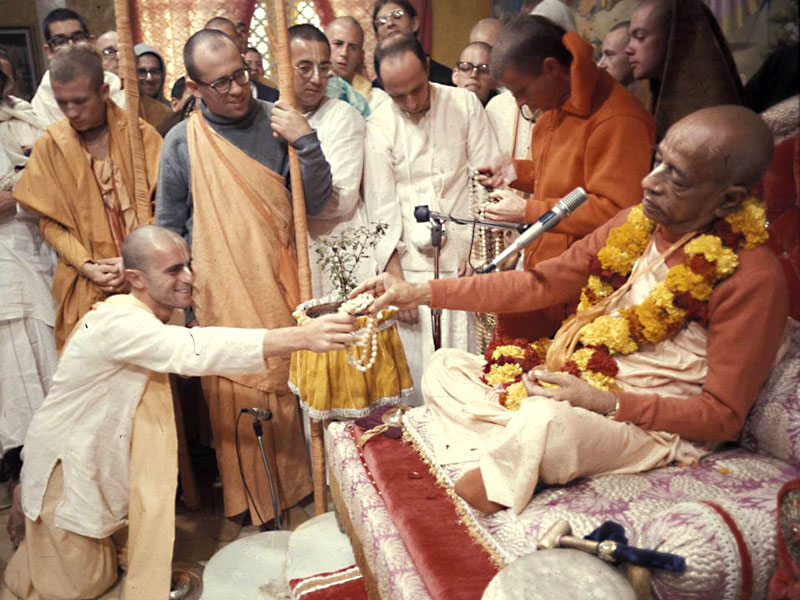
“Please accept my blessings. Just now I have received some more requests for giving first initiation from Dhananjaya, and now I am receiving weekly not less than ten to fifteen such requests from new students. So it is becoming very expensive to send so many sets of beads such long distance, and it has become little bothersome for me also, so I think now you may be appointed by me to give first initiations to new disciples by chanting on their beads on my behalf. In America Kirtanananda Swami is doing that. So now if there are two of you that will give me great relief. Kirtanananda will chant on the beads for new devotees in America, Canada, like that, you can chant on the beads for the European continent new disciples. They shall, of course, still be considered as my disciples, not that they shall become your disciples, but you will be empowered by me to chant their beads and that is the same effect of binding master and disciple as if I were personally chanting.”
Srila Prabhupada’s Letter to: Revatinandana — Bombay 4 January, 1973
The following interview with freelance reporter Sandy Nixon took place in July 1975, in Śrīla Prabhupāda’s quarters at the Kṛṣṇa center in Philadelphia. This discussion serves as a superb introduction to Kṛṣṇa consciousness and covers such basic topics as the Hare Kṛṣṇa mantra, the relationship between the spiritual master and God, the difference between genuine and fake gurus, the role of women in Kṛṣṇa consciousness, the Indian caste system, and the relationship between Christ consciousness and Kṛṣṇa consciousness.
What is Krsna Consciousness?
Ms. Nixon: My first question is very basic. What is Kṛṣṇa consciousness?
Śrīla Prabhupāda: Kṛṣṇa means God. We are all intimately connected with Him because He is our original father. But we have forgotten this connection. When we become interested in knowing, “What is my connection with God? What is the aim of life?” then we are called Kṛṣṇa conscious.
Ms. Nixon: How does Kṛṣṇa consciousness develop in the practitioner?
Śrīla Prabhupāda: Kṛṣṇa consciousness is already there in the core of everyone’s heart. But because of our materially conditioned life, we have forgotten it. The process of chanting the Hare Kṛṣṇa mahā-mantra—Hare Kṛṣṇa, Hare Kṛṣṇa, Kṛṣṇa Kṛṣṇa, Hare Hare/ Hare Rāma, Hare Rāma, Rāma Rāma, Hare Hare—revives the Kṛṣṇa consciousness we already have. For example, a few months ago these American and European boys and girls did not know about Kṛṣṇa, but just yesterday we saw how they were chanting Hare Kṛṣṇa and dancing in ecstasy throughout the whole Ratha-yātrā procession [an annual festival sponsored by the Kṛṣṇa consciousness movement in cities around the world]. Do you think that was artificial? No. Artificially, nobody can chant and dance for hours together. They have actually awakened their Kṛṣṇa consciousness by following a bona fide process. This is explained in the Caitanya-caritāmṛta (Madhya 22. 107)
For a while Srila Prabhupada lived In this building, in a windowless fifth floor room.
The Biography of a Pure Devotee
Srila Prabhupada in New York City, 1965 – Struggling Alone
by Satsvarupa dasa Goswami
On arriving in New York, Srila Prabhupada had nowhere to stay but the asrama of an impersonalist svami. To see students submissively listening to a speaker who denied the Personality of Godhead was painful for the pure devotee. But was he to go homeless and beg in the streets? A holy man might have been able to do that in India, but not in Manhattan.
Srila Prabhupada knew no one in New York City, but at least he had a contact. In India he had met a publisher of religious books, Paramananda Mehra of Bombay, who had, written a note introducing him to a guru based in New York City, Dr. Rammurti Misra, While still in Butler, Pennsylvania, Srila Prabhupada had sent Mr. Mehra’s note and one of his own to Dr. Misra. He had also phoned Dr. Misra, who had told him he was welcome to come join him in New York.
A student of Dr. Misra’s met Srila Prabhupada on his arrival, from Butler and brought him directly to an Indian festival in the city. There he was introduced to Dr. Misra, as well as to Ravi Shankar and his brother, the dancer Uddhar Shankar. Srila Prabhupada then accompanied Dr. Misra to his apartment at 33 Riverside Drive, beside the Hudson River, The apartment was on the fourteenth floor and had large windows facing the river. Dr. Misra gave Srila Prabhupada a room to himself.
Devotee: Sometimes this question comes up, with the devotees especially, that it says the devotee makes advancement when the spiritual master is pleased. Right? So sometimes the spiritual master is far, far away. He may be in Los Angeles. Somebody is coming to Hamburg temple. He thinks, “How will the spiritual master be pleased?”
Prabhupada: Just follow his order. Spiritual master is along with you by his words. Just like my spiritual master is not physically present, but I am associating with him by his words.
Devotee: And Krishna knows that; therefore we make advancement. He is sitting in our heart. He knows what we’re doing. So He sees, “He’s serving My pure devotee,” immediately there is advancement.
The following conversation between Srila Prabhupada and Mr. Malhotra recorded in Poona, December 22, 1976, is a good instruction on our relationship between guru and disciple.
Prabhupada: Not equal; representative. Not equal. I send one representative of this man, and he may be very expert, doing very good business, still he cannot be equal with me. He is acting as my representative, that’s another thing. But not that he has become the original proprietor.
Prabhupada: These my disciples, they are part and parcel of me. Whole mission is going on with their cooperation. But if he says that “I am equal to my Guru Mahārāja,” then that is offense.
The following link is a Position Paper PDF on “Initiations After 1977” that you can open or save to your computer. This is a short 54 page booklet which describes Srila Prabhupada’s final instructions on initiations after his departure based on his instructions with śāstric and historical references. I have only had a chance to briefly preview it, but it appears to be well put together and backed up with many quotes and references.
The instructions of Śrīla Prabhupāda are the thread that holds the beautiful pearl necklace of our movement. If they are disobeyed, the thread would snap and the necklace would be lost. That is exactly what happened especially with regards to
initiations after Śrīla Prabhupāda’s departure.
The scope of this book is
1. To study Śrīla Prabhupāda’s final instructions on how initiations should takeplace after his departure;
2. To fortify the authenticity of his instructions with śāstric and historical references;
3. To present śāstric references that explain the root cause of all problems within our worldwide Kṛṣṇa consciousness movement, its effects and how to solve it.
This book is entirely based on the official documents of Śrīla Prabhupāda and supported by scriptural quotations from Śrīla Prabhupāda’s translations of Bhagavadgītā, Śrīmad Bhāgavatam and other related literature. We have just attempted to compile it in order to serve his mission and the devotees who are true to his mission.
“The main business of human society is to think of the Supreme Personality of Godhead at all times, to become His devotees, to worship the Supreme Lord and to bow down before Him. The ācārya, the authorized representative of the Supreme Lord, establishes these principles, but when he disappears, things once again become disordered. The perfect disciples of the ācārya try to relieve the situation by sincerely following the instructions of the spiritual master.” (Śrīmad Bhāgavatam 4.28.48, Purport)
Letter to: Devotees
Los Angeles
26 August, 1972
72-08-26
My dear beloved Children,
Please accept my blessings. I am so much pleased with your kind and affectionate words on the occasion of my birthday anniversary on the Nandotsava day this year (1972). My Guru Maharaja wanted me to spread this Krishna Consciousness Movement in western world, and you are all helping in this great attempt.
My Spiritual Master knew it that alone I could not do this great work. Therefore He has very kindly sent you all to help me in this task. I accept you therefore as representatives of my Guru Maharaja playing as my affectionate disciples.
It is said that child is father of man. Kindly therefore continue your help in this great task and act as my young father and mother in my old age. I am
Your ever well-wisher,
A.C. Bhaktivedanta Swami
ACBS/sda
This morning I was inspired by a post I happened upon on Prabhupada Connect. I expanded on the post with a few select verses from Srila Prabhupada’s books.
“So far as I am concerned, I have accepted you as my disciple and you have accepted me as your spiritual father. This relationship cannot be ended anymore. It is eternal.” (Srila Prabhupada letter, July 9, 1969)
…The relationship of a disciple with his spiritual master is as good as his relationship with the Supreme Lord. A spiritual master always represents himself as the humblest servitor of the Personality of Godhead, but the disciple must look upon him as the manifested representation of Godhead. (purport to Adi-lila 1.45)












 The Hare Krishna Movement