Follow in the Footprints of Lord Jesus

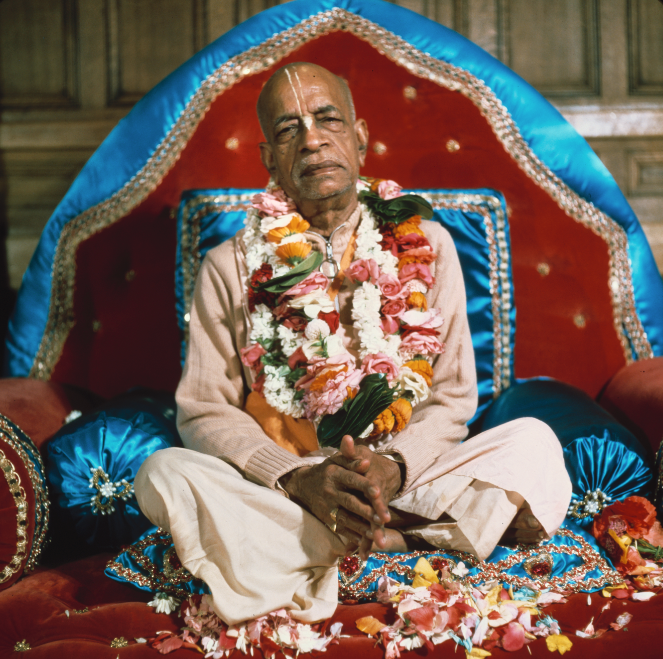
When we were in Butler PA, this summer for the for the 60th aniversary of Srila Prabhupada’s arrival in the USA, We visited the home of Sally Agarwal, where Srila Prabhupada first stayed as their guest when he arrived in America. We heard many sweet stories of his stay in Butler, and how Sally’s daughter referred to Srila Prabhupada as Swami Jesus.

…I am obliged to your good daughter for awarding me a good degree as SWAMIJESUS which is actually a great honour for me. Some time the Lord speaks through innocent child and I take this honour as sent by Lord Jesus through an innocent child free from all formalities of the current society. Lord Jesus preached the message of God and I have taken up the same mission, and it would be a good luck for me if I can follow the foot prints of Lord Jesus who preached the message of God in spite of all persecution. Lord Jesus is a living example how one has to suffer in this material world simply for the matter of preaching the message of God… (letter to Sally Agarwal)

Full Letter

More

The Vaisnava Journal


Our dear departed friend Padmapani Prabhu, is gone but not forgotten, as he has left us with the beautiful web page The Prabhupada Connection, but he has also, as some of the earlier devotees might remember, left us with this fine publication The Vaisnava Journal. I feel it is an important part of our history, and I wanted to be sure it available to all our readers, so we share all 5 issuses as PDF that you can view or save, by clicking on the links. Hare Krishna!


The Vaisnava Journal

by Padmapani Das


Shortly after Srila Prabhupada physically departed from this world, I joined the Middle East program. Since there were no temples in that part of the world, we simply carried on as we had always done—chanting Hare Krishna and worshiping Srila Prabhupada as our guru and the founder-acarya of ISKCON. But while visiting temples in India and Europe for short breaks, I noticed things were becoming increasingly difficult for devotees and the movement. So when the Middle East program had finished its course after five years, I humbly tried to make a positive contribution towards keeping our movement and the devotees together with Srila Prabhupada in the center. The Vaisnava Journal was created and distributed to ISKCON leaders and devotees worldwide with that objective in mind.

At the time we had Back to Godhead magazine and the ISKCON World Review, but neither of these publications addressed the topical issues of the day which were affecting the stability of Srila Prabhupada’s movement. I saw a great need for open and respectful communication in our society, and by Krishna’s grace, devotees of all persuasions and positions responded favorably. We openly discussed vital issues of concern to our movement and many spirited exchanges resulted. Unfortunately after five issues I was no longer able to support the rising publication and mailing costs on my own, so I had to stop work on the journal. However we now have a record of those discussions and our readers can research the contents online. Please click on the links below to access each issue in PDF format.

More

Envy

This morning, for some reason I was thinking about envy, and how it is the enemy of the soul. Srila Prabhupada once described the Atheist as someone who is so envious of God, that they deny His existence. (ie. don’t believe in God)

I did a search on Vanipedia search and came up with just a few of the many things Srila Prabhupada had to say about envy.

The venomous snake. I mean, by nature they are so angry and so envious that they feel pleasure if somebody is bitten and immediately die. That is their nature.

And the Cāṇakya Paṇḍita says that a person who has envious nature, he’s more dangerous than the serpent. Cāṇakya Paṇḍita has enunciated that sarpaḥ krūraḥ khalaḥ krūraḥ (Cāṇakya Paṇḍita). There are two envious creatures: one is the snake, and another, a man envious, unnecessarily envious of others. So sarpāt krūrataraḥ khalaḥ. That man, envious, he’s dangerous, more dangerous than the snake. Why more dangerous? Now, mantrauśādhi-vaśaḥ sarpaḥ khalaḥ kena nivāryate. You can subdue a snake by herbs and by chanting particular type of mantra. There are many snake charmers in India, by mantra they can charm the snakes.

But a person who is envious, you cannot pacify him in any way. Therefore sarpaḥ krūrataraḥ khalaḥ. Just like Jesus Christ was crucified by some envious persons. Even the Roman judge denied that “This man should not be . . . there is no such fault.” But because they were envious, they were persistent, “Yes, he should be crucified.”

More

Learning How to See God

click on images to enlarge

One has to qualify himself to see and understand God, and that process of qualification is called Kṛṣṇa consciousness. By engaging ourselves in God’s service, we become qualified to see God. Otherwise it is not possible.

“One cannot understand the form, name, quality, or paraphernalia of God with one’s material senses.” (Cc Madya 17.136)

Just as God is eternal, we are also eternal, and when we establish our eternal relationship with the supreme, complete eternal, we realize our eternality.

Nityo nityānāṁ cetanaś cetanānām (Kaṭha Upaniṣad 2.2.13).

God is the supreme living entity among all living entities, the supreme eternal among all eternals. By Kṛṣṇa consciousness, by purification of the senses, this knowledge will be realized, and we will come to see God.

The following post is Chapter 3 from the book “The Path to Perfection” which gives some instruction on Seeing God (Krsna) and on the yoga system.

More

Mothers Day, Seven Mothers

Here in the West Mothers Day is being celebrated; a day to honor our Mothers.

…According to scriptures also, there are seven mothers: (1) the real mother, (2) the wife of the spiritual master, (3) the wife of a brāhmaṇa, (4) the wife of the king, (5) the cow, (6) the nurse, and (7) the earth. All of them are mothers.

Srimad Bhagavatam
By His Divine Grace A.C. Bhaktivedanta Swaim Prabhupada
from Canto 1, Chapter 11, Text 28-

Seven Mothers

praviṣṭas tu gṛhaṁ pitroḥ
pariṣvaktaḥ sva-mātṛbhiḥ
vavande śirasā sapta
devakī-pramukhā mudā

praviṣṭaḥ—after entering; tu—but; gṛham—houses; pitroḥ—of the father; pariṣvaktaḥ—embraced; sva-mātṛbhiḥ—by His own mothers; vavande—offered obeisances; śirasā—His head; sapta—seven; devakī—Devakī; pramukhā—headed by; mudā—gladly.

After entering the house of His father, He was embraced by the mothers present, and the Lord offered His obeisances unto them by placing His head at their feet. The mothers were headed by Devakī [His real mother].

It appears that Vasudeva, the father of Lord Kṛṣṇa, had completely separate residential quarters where he lived with his eighteen wives, out of whom Śrīmatī Devakī is the real mother of Lord Kṛṣṇa. But in spite of this, all other stepmothers were equally affectionate to Him, as will be evident from the following verse. Lord Kṛṣṇa also did not distinguish His real mother from His stepmothers, and He equally offered His obeisances unto all the wives of Vasudeva present on the occasion. According to scriptures also, there are seven mothers: (1) the real mother, (2) the wife of the spiritual master, (3) the wife of a brāhmaṇa, (4) the wife of the king, (5) the cow, (6) the nurse, and (7) the earth. All of them are mothers. Even by this injunction of the śāstras, the stepmother, who is the wife of the father, is also as good as the mother because the father is also one of the spiritual masters. Lord Kṛṣṇa, the Lord of the universe, plays the part of an ideal son just to teach others how to treat their stepmothers.

tāḥ putram aṅkam āropya
sneha-snuta-payodharāḥ
harṣa-vihvalitātmānaḥ
siṣicur netrajair jalaiḥ

tāḥ—all of them; putram—the son; aṅkam—the lap; āropya—having placed on; sneha-snuta—moistened by affection; payodharāḥ—breasts filled up; harṣa—delight; vihvalita-ātmānaḥ—overwhelmed by; siṣicuḥ—wet; netrajaiḥ—from the eyes; jalaiḥ—water.

The mothers, after embracing their son, sat Him on their laps. Due to pure affection, milk sprang from their breasts. They were overwhelmed with delight, and the tears from their eyes wetted the Lord.

When Lord Kṛṣṇa was at Vṛndāvana even the cows would become moistened by affection towards Him, and He would draw milk from the nipples of every affectionate living being, so what to speak of the stepmothers who were already as good as His own mother.

108 Imporant Slokas from the 1972 Bhagavad-gita As It Is

Click on image to go to Post

Click on image to go to Post

The Hare Krishna Cookbook

Songs of the Vaisnava Acaryas

Bhagavad-gita As It Is 1972 Edition “Online”

click on image

click on image to visit site

Srimad Bhagavatam Online

click on image

Raja-Vidya the King of Knowledge

click on image

click on image

Blog Stats

  • 4,571,522 hits

Enter your email address to subscribe to this blog and receive notifications of new posts by email.

Join 3,906 other subscribers

Important Slokas from the Brahma-samhita

click on image

click on image

Slokas from the Sri Isopanisad

click on image

click on image

Prayers By Queen Kunti (Slokas)

click on image

Gajendra’s Prayers of Surrender (Slokas)

click on image

A Short Statement of the Philosophy of Krishna Consciousness

click on image

click on image

July 9th Letter

click on image

click on image

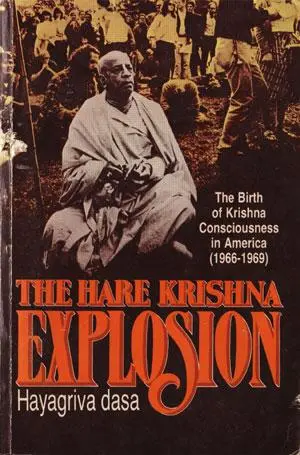
The Hare Krishna Explosion

Reference Material/Study Guide

click on image

click on image

  • LINKS