08 Feb 2026
by The Hare Krishna Movement
in chapati, Uncategorized, Vegetarian Cooking, Vegetarian Recipies
Tags: basic vegetarian recipes, chapati, cooking-vegetarian, hare krishna cookbook, roti, whole wheat chapatis
With all this cold weather, I have been spending more time in the kitchen. Instead of the quick meal that often took place after a long days work, we are finding renewed pleasure in going through our vegetarian cookbooks and planning nice well balanced meals. One thing we have been eating more of is chapatis. They go well with almost every vegetable dish, are easy to prepare, and are a healthy alternative to bread which usually contains yeast.
From The Hare KRSNA Cookbook 1972
Basic Chapati
1 cup Whole Weat Flour
1/4 cup Melted Butter
Warm water
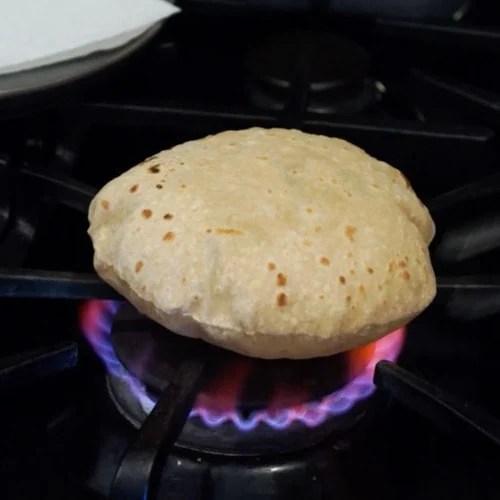
Mix the flour and water together, adding water gradually until dough is soft but not wet, and can be kneaded. Knead the dough until it’s fairly soft (8 to 10 minutes). Cover and let dough rest for one hour. Sprinkle flour on rolling area and makes 1-1/2 inch balls out of dough. Flatten balls and roll out to about 4-5″ diameter. Place the chapati on a heated skillet (dry, free from oil) and cook until bubbles appear. Turn chapati quickly and let cook until bubbles appear again. Using tongs, remove chapati from pan, and hold over an open flame or burner to make it puff up. Heat it first on the side that was first cooked. You can lay directly on the burner for a brief moment, but don’t let it stick. When chapati puffs up, turn quickly and repeat on other side till it puffs. Remove, butter both sides, and cover with a clean cloth to keep in heat while remaining chapatis are cooked.
23 Sep 2025
by The Hare Krishna Movement
in A. C. Bhaktivedanta Swami Prabhupada, Albert Einstein, The Hare Krsna Cookbook, Uncategorized, Vegetarian Cooking, Vegetarian Recipies, Vegetarianism
Tags: Albert Einstein, basic vegetarian recipes, cooking-vegetarian, Krishna, krsna-prasada, Prasadam, Srila Prabhupada, the Hare Krishna cookbook, vegerarian cooking, vegetarian
Nothing will benefit human health and increase chances for the survival of life on Earth as much as the evolution to a vegetarian diet. -Albert Einstein
I personally feel it is very important to eat as healthy as possible. That is one of the reasons I plant a garden. Although not everyone has that luxury to plant a garden, still there are so many fresh fruits and vegetables available in every American grocery store, there is ample opportunity to eat a healthy vegetarian diet.
Back in 1972 when I first became a vegetarian, the challenge was learning how to cook vegetarian meals. Therefore I am including the first cookbook that taught me the basics as a free pdf download (just click on link at bottom of post). Wishing you all a happy and healthy life. -V
More
15 Nov 2024
by The Hare Krishna Movement
in Vegetarian Cooking, Vegetarianism
Tags: diet, food, health, nutrition, vegetables
As most all devotees are vegetarian, I thought this would be a beneficial post. I am avid gardener and cook when I am at home, and enjoy picking fresh greens and other garden vegetables to offer the Lord every day.
Note: some editing has been done by me, for quicker reading.
What Are the Healthiest Vegetables?
By: Samantha Cassetty, RD
Most people are familiar with the phrase “eat your vegetables” —and it’s good advice for many reasons.
If you’re deciding which vegetables to add to your weekly lineup, check out our list of healthiest vegetables, along with some of their research-backed benefits.
What is the healthiest vegetable?
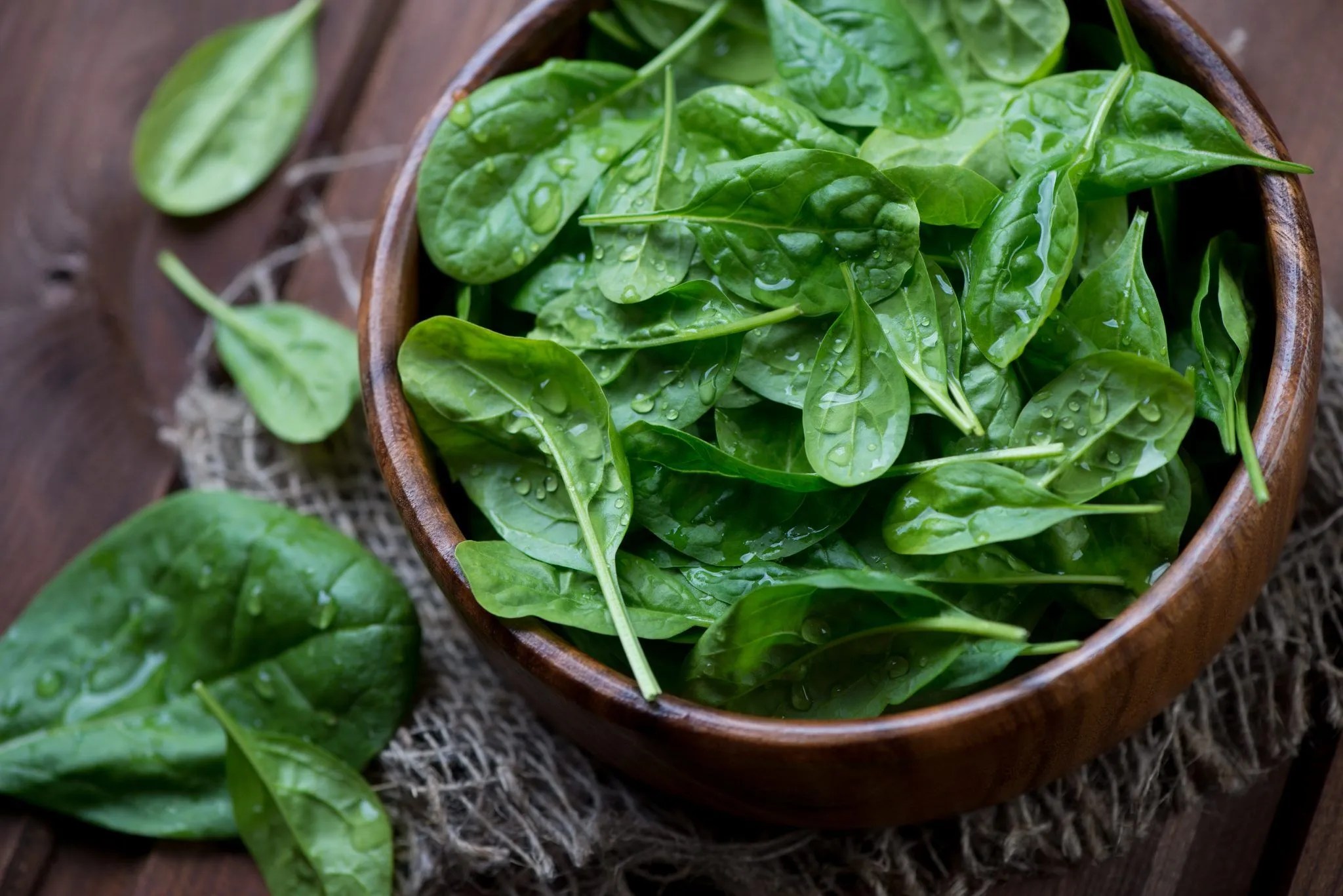
Spinach takes the top prize as the healthiest vegetable because of its range of nutrients and benefits.
Spinach contains numerous types of antioxidants that guard against cancer, heart disease and Type 2 diabetes. One antioxidant abundant in spinach supports eye health and may protect against age-related macular degeneration, the leading cause of vision loss in older adults. Spinach is also loaded with other essential vitamins and minerals, including folate, vitamin A, K and C.
There is no doubt that spinach has a lot going for it, but including a range of vegetables in your diet is the most beneficial. This strategy helps you get the plant diversity you need to optimize your health, while also helping you meet the recommended amounts of fiber, vitamins, and minerals, and get the broadest range of nutrients.
Take note that there are two types of vegetables: starchy and non-starchy. While both types include beneficial nutrients, starchy vegetables count as the carbohydrate portion of your plate. It’s a good rule of thumb to eat twice the amount of non-starchy vegetables compared to starchy foods, including starchy veggies.
Here are some of the healthiest vegetables to incorporate into your menu.
More
16 Feb 2024
by The Hare Krishna Movement
in Prasadam, Vegetarian Cooking, Vegetarianism
Tags: A. C. Bhakthvedanta Swami Prabhupada, healthy diet, Krishna, krsna consciousness, Srila Prabhupada, vegerarian cooking, vegetarian, vegetarian cookbook
Nothing will benefit human health and increase chances for the survival of life on Earth as much as the evolution to a vegetarian diet. -Albert Einstein
I personally feel it is very important to eat as healthy as possible. That is one of the reasons I plant a garden. Although not everyone has that luxury to plant a garden, still there are so many fresh fruits and vegetables available in every American grocery store, there is ample opportunity to eat a healthy vegetarian diet.
Back in 1972 when I first became a vegetarian, the challenge was learning how to cook vegetarian meals. Therefore I am including the first cookbook that taught me the basics as a free pdf download (just click on link at bottom of post). Wishing you all a happy and healthy life. -V
More
26 Jul 2023
by The Hare Krishna Movement
in Vegetarian Cooking, Vegetarian Recipies
Tags: gardening, vegetarian banana bread, vegetarian cooking, zucchini bread
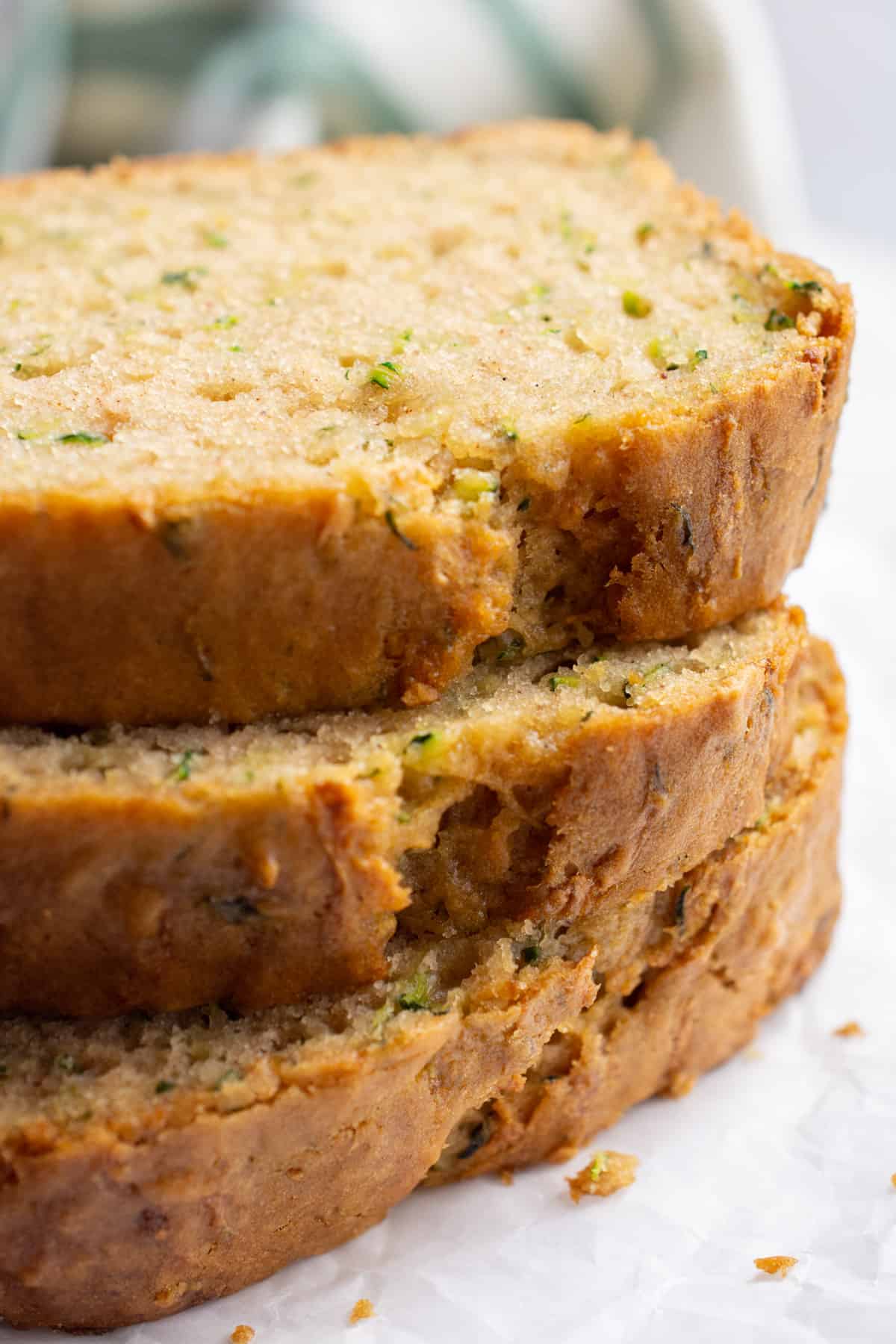
I don’t know if any you have planted a garden this year, but mine is doing very nicely, with tomatoes, okra, Swiss chard, and zucchini all coming into full production. The Zucchini has done particularly well this year, and I have an over abundance. I have tried freezing some (with good success) but then I saw some very ripe Bananas on the counter and it hit me to make some Banana/Zucchini bread loaves. I found that a loaf would keep very well without refrigeration for week, and also the loafs freeze very well.
Basic Recipe
More
11 Jun 2023
by The Hare Krishna Movement
in Mint Chutney, Vegetarian Cooking, Vegetarian Recipies
Tags: aids in digestion, Ancient times, Ayurvedic, detoxifying, doshas, Mint Chutney, pudina chutney, tridoshic
We have an abundance of fresh mint leaves just growing wild, outside our back door, here in West Virginia. And this morning I decided to try my hand at making some Mint Chutney. I went through a few of my favorite Indian cookbooks, and looked at a few recipes online. It seems like there are hundreds of variations to this basic recipe. But I chose one that I had all the ingredients to make, and we share it with you today.
If you plan on making a large batch (which I plan to do), the freezer is your friend. Otherwise if will keep fresh for a couple of days in the fridge.
Mint is a herb that has been used in Ayurvedic practices since Ancient Times. It is a healing herb that has some nutritional values and health benefits, especially when eaten fresh without cooking.
Mint leaves are said to be Tridoshic, meaning have the potential to balance all kinds of imbalances (doshas) in the body. They are calming, refreshing, detoxifying, and aids in digestion.
Use fresh green leaves that are vibrant in color, and avoid using the stalks and stems, as they can impart a bitter taste.
Adding a few teaspoons of lemon juice helps preserve the bright green color.
Recipe
More
01 Jan 2023
by The Hare Krishna Movement
in A. C. Bhaktivedanta Swami Prabhupada, Krishna Consciousness, Kurma das (cook), Spiritual Practice, Vegetarian Cooking, Vegetarian Recipies, Vegetarianism
Tags: Apurva das, cooking for Krishna, Feast, Gopati das, Krishna, Kurma das, Srila Prabhupada, veteran ISKCON cooks
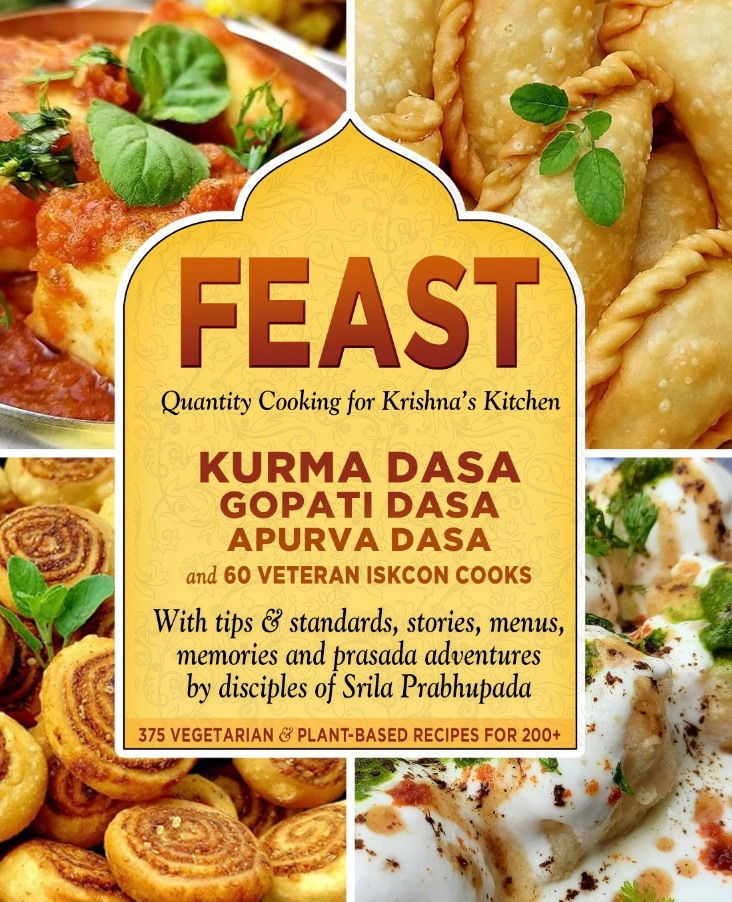
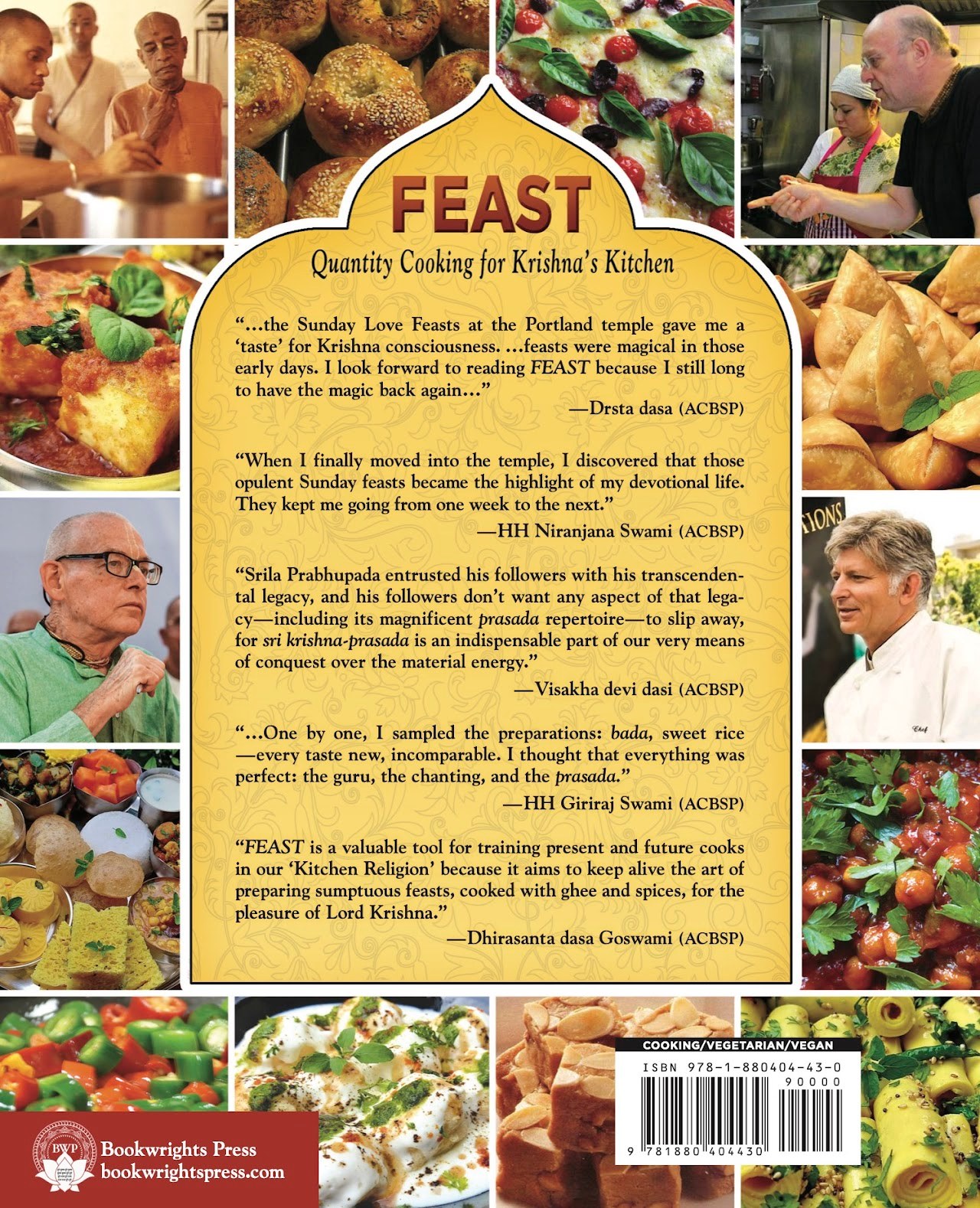
My wife shared this with me, something she saw on Facebook. Time Tested “Big” Prasadam Recipies. Love Kurma’s cookbooks and recipes. Hare Krishna and happy New Year!
New Kurma Cookbook!
I’ve finally opened my treasure trove of time-tested ‘big’ prasadam recipes from five decades of quantity cooking. Interwoven with hundreds of fascinating stories, realizations and memories from early disciples, FEAST includes Srila Prabhupada’s original recipes, ISKCON Sunday feast kitchen classics, and modern favourites.
This large and beautifully presented 492-page book, designed and published by Srimati Mayapriya devi dasi from Bookwrights Press, is a generous collection of 375 meticulous, large-sized vegetarian and plant-based recipes from myself and veteran chefs Gopati dasa and Apurva dasa, as well as 60 other Hare Krishna kitchen giants.
Feast is a legacy of love, offered by ISKCON’s first generation of cooks for future chefs, and for the upliftment of human society at large. Srila Prabhupada writes “Simply by liberal distribution of prasada and sankirtana, the whole world can become peaceful and prosperous.” (SB 4.12.10)
Coming soon!
23 Sep 2022
by The Hare Krishna Movement
in A. C. Bhaktivedanta Swami Prabhupada, Ghee, Vegetarian Cooking, Vegetarianism
Tags: ghee, Srila Prabhupada, Srutakirti das, vegetarianism
This was something that Srutakirti Prabhu posted on Facebook. We are sharing it with you because I truly believe that Ghee was that special ingredient that made the the prasadam in the early days both magical and mystical. We ate huge quantities of prasadam at the Sunday “Love Feast” and danced in ecstasy.
GHEE, GHEE, GHEE AND MORE GHEE!
(from a BTG article by Srila Prabhupada more than 65 years ago.)
“Pure Ghee (Clarified butter) offered on the fire of ‘Yajna’ produces more and more Ghee but non-acceptance of such sacrificial rites, under the plea of non-productive economy, drives away completely the production of ample pure ghee, yielding place to the harmful hydrogenated vegetable oils. In the ‘Ayurvedic’ scriptures oil is particularly mentioned to be harmful for the stomach but in the absence of sacrificial energy of the human being he is forced to accept harmful vegetable oil for the stomach in the name of and absence of pure unadulterated clarified butter. That is the importance of the process of ‘Yajna’ and that is the Law of Nature.
Foolish people think vitamin value of foodstuff in their own way and push into the stomach all sorts of rubbish thing thinking that ‘Vaiswanara’ heat, representative of the Supreme Lord, will accept any such rubbish thing for assimilation. The case is different. The ‘Vaiswanara’ representative power of Godhead in the stomach of the human being can accept only leaves, flower, fruits of the vegetable group and pure water and milk for vitaminising the human energy. The mouth being the entrance door to the region of the stomach, it must guard the tongue of every human being to acquire the quality of a Brahmin, who can accept only foodstuff of ‘Satwik’ quality. Description of Satwik quality foodstuff is mentioned in Bhagwat Geeta and that also of the Brahmin in fact.”
25 Nov 2021
by The Hare Krishna Movement
in eggless pumpkin pie, Vegetarian Cooking, Vegetarian Recipies
Tags: eggless pumpkin pie, thanksgiving recipe, vegetarian cooking, vegetarian recipes
Today in the West people are celebrating “Thanksgiving”. So we are posting a traditional Thanksgiving recipe; Pumpkin Pie (without the eggs). I have been making egg-less pies for the last 39 years, and have tried many different variations. I use 2 tablespoons of sour cream instead of 2 eggs, and one year I used Philadelphia cream cheese instead of evaporated milk, all with good success.
If you want to do everything yourself, there is the do it yourself recipe for a “homemade” pie crust, pumpkin puree, spicing, and sweetened whipped cream.
Ingredients:
More
01 Jun 2021
by The Hare Krishna Movement
in A. C. Bhaktivedanta Swami Prabhupada, Bhagavad-gita As It Is 1972 Edition, Vegetarian Cooking, Vegetarianism
Tags: A.C. Bhaktivedanta Swami Prabhupada, Bg.17.8-10, bhagavad-gita, foods in the mode of goodness, healthy diet, vegetarian, vegetarian cooking, vegetarian diet, vegetarianism
Nothing will benefit human health and increase chances for the survival of life on Earth as much as the evolution to a vegetarian diet.
-Albert Einstein
A Vegetarian diet not only is the safe alternative to meat eating, but increase the duration of life, purify one’s existence and give strength, health, happiness and satisfaction. As Srila Prabhupada explaines in the Bhagavad-gita;
Bhagavad-gita As It Is
Macmillan 1972 Edition
By His Divine Grace A.C. Bhaktivedanta Swami Prabhupada
Chapter 17 The Divisions of Faith
Text 8-10
Foods in the mode of goodness increase the duration of life, purify one’s existence and give strength, health, happiness and satisfaction. Such nourishing foods are sweet, juicy, fattening and palatable. Foods that are too bitter, too sour, salty, pungent, dry and hot, are liked by people in the modes of passion. Such foods cause pain, distress, and disease. Food cooked more than three hours before being eaten, which is tasteless, stale, putrid, decomposed and unclean, is food liked by people in the mode of ignorance.
PURPORT
Thc purpose of food is to increase the duration of life, purify the mind and aid bodily strength. This is its only purpose. In the past, great authorities selected those foods that best aid health and increase life’s duration, such as milk products, sugar, rice, wheat, fruits and vegetables. These foods are very dear to those in the mode of goodness. Some other foods, such as baked corn and molasses, while not very palatable in themselves, can be made pleasant when mixed with milk or other foods. They are then in the mode of goodness. All these foods are pure by nature. They are quite distinct from untouchable things like meat and liquor. Fatty foods, as mentioned in the eighth verse, have no connection with animal fat obtained by slaughter. Animal fat is available in the form of milk, which is the most wonderful of all foods. Milk, butter, cheese and similar products give animal fat in a form which rules out any need for the killing of innocent creatures. It is only through brute mentality that this killing goes on. The civilized method of obtaining needed fat is by milk. Slaughter is the way of subhumans. Protein is amply available through split peas, dhal, whole wheat, etc.
More
31 Jan 2021
by The Hare Krishna Movement
in Kurma das (cook), Vegetarian Cooking, Vegetarianism
Tags: Great Vegetarian Dishes, Kurma Dasa, kurma.net, recipes from around the world
This morning I took out one of my favorite cookbooks; “Great Vegetarian Dishes” by Kurma Dasa. There are over 240 recipes from around the world. Kurma Dasa also has a nice web page Cooking With Kurma, and while visiting this nice site I ran across these noteworthy quotes on Vegetarianism we share with you.
“Vegetarian food leaves a deep impression on our nature. If the whole world adopts vegetarianism, it can change the destiny of humankind.”
Albert Einstein
“There is just no reason why animals should be slaughtered to serve as human diet when there are so many substitutes. Man can live without meat.”
The Dalai Lama
I have no doubt that it is a part of the destiny of the human race, in its gradual improvement, to leave off eating animals, as surely as the savage tribes have left off eating each other.
Henry David Thoreau, Walden, 1854
More
25 Aug 2020
by The Hare Krishna Movement
in Kachori, Radhaballabha Kachoris, Radhastami, Srimati Radharani, The Hare Krsna Cookbook, Vegetarian Cooking, Vegetarian Recipies
Tags: appearance day of srimati radharani, hare krishna cookbook, Krishna, Radha, radhallabha kachoris recipe, Srimate Radharani, vegetarian cooking

Today we celebrate the Appearance Day of Srimati Radharani [Radhastami] with a half day fast followed by a feast cooked in honor of Srimati Radharani. She appears at noon so we begin our day with songs in praise of Srimati Radharani and time in the kitchen cooking up a nice vegetarian offering. Since She is fond of Kachori’s, we share with you this nice recipe from “The Hare Krishna Cookbok”; Radhaballabha Kachoris.
“This preparation is one of Srimati Radharani’s favorites and is always prepared for Her appearance day. There is nothing in the material world to compare with the flavor of Radhaballabha Kachoris”.
Radhaballabha Kachoris Recipe
ghee for deep frying
1 cup of cleaned, split urad dhal
2 cups white flour
cayenne pepper
asafoetida
2 T. freshly ground anise seed
butter or ghee solids
Wash urad dahl thoroughly. Soak in water overnight. Drain, leaving a tiny bit of water. In a blender, grind urad dhal untill it is a smooth paste, adding a little more water if necessary. The past should ve very thick. Set aside. Add ground anise seed to paste. Using white flour, butter or ghee solids and water, make a soft dough, like puri dough. (not wet.) Let the dough sit for one hour under a dampened cloth. Meanwhile prepare three very small bowls in the following manner:
1. Put in a mixture of 1 T. water and 1/2 t. asafoetida.
2. Put plain salt in the second.
3. Put cayenne pepper in the third.
Pinch off balls of dough one inch in diameter. Roll them out into circles of 2 1/2 inches in diameter. Pinch off a ball of kachori paste about one inch in diameter; dip into each of bowls in succession, and place in the center of the circle of kachori dough. Gather up the dough around the paste as you would gather a paper bag. Make sure all the urad dahl paste is covered, and seal the top edge very well using a little water. Flatten the sealed kachori with a rolling pin and then roll gently as you would apuri or chapati.
Be carful not to break the surfaces. If necessary, pat them out by hand. Deep-fry the kachori in fairly hot ghee as you would a puri. Stand up kachoris on paper toweling to drain. Before offering them, re-fry very quickly, but do not brown.
“This preparation is one of Srimati Radharani’s favorites and is always prepared for Her appearance day. There is nothing in the material world to compare with the flavor of Radhaballabha Kachoris”.
This recipe I copied from; “The Hare Krishna Cookbook” [click on link to down load the entire book]
18 Jul 2020
by The Hare Krishna Movement
in Albert Einstein, People, Vegetarian Cooking, Vegetarian Recipies, Vegetarianism
Tags: basic vegetarian recipes, Hare Krishna, hare krishna cookbook, Prasadam, the Hare Krishna cookbook, vegan, vegetarian cooking, vegetarianism

Nothing will benefit human health and increase chances for the survival of life on Earth as much as the evolution to a vegetarian diet. -Albert Einstein
I personally feel it is very important to eat as healthy as possible. That is one of the reasons I plant a garden. Although not everyone has that luxury to plant a garden, still there are so many fresh fruits and vegetables available in every American grocery store, there is ample opportunity to eat a healthy vegetarian diet.
Back in 1972 when I first became a vegetarian, the challenge was learning how to cook vegetarian meals. Therefore I am including the first cookbook that taught me the basics as a free pdf download (just click on link at bottom of post). Wishing you all a happy and healthy life. -V
More
01 Jan 2018
by The Hare Krishna Movement
in Gulub Jamun, Kurma das (cook), Vegetarian Cooking, Vegetarian Recipies, Vegetarianism
Tags: cooking with Kurma, gulub jamun recipe, hare krishna cooking, Kurma das, milk balls, vegan, vegetarian, vegetarian cooking, vegetarian cuisine
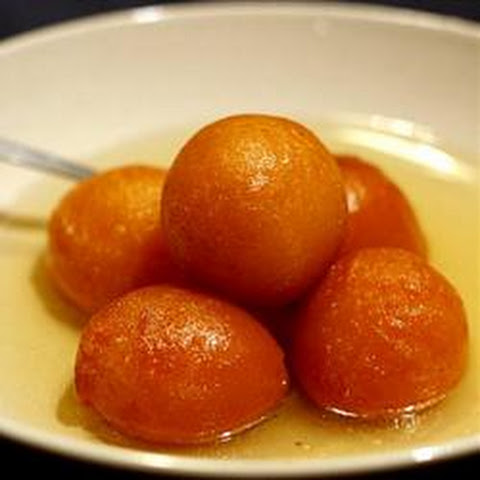
Today being the New Year, a Holiday celebrated around the world, we thought we would post a festive recipe. This Gulab Jumaun recipe was taken from the very nice cooking web page Cooking with Kurma. I encourage you all to try this wonderful recipe on your friends and family.
Succulent Milk Balls in Rose-scented Syrup (Gulab Jamuns)
Gulab Jamuns are ideal confections for festive moments and entertaining. When guests are confronted with them for the first time they invariably ask, “What are they? ” Guesses then range from preserved fruits to doughnuts. In fact, Gulab Jamuns are made from just milk powder and flour. They’re fried slowly in ghee until the lactose in the milk powder caramelises and turns them a golden brown, and then they are soaked in a rose-scented, medium- heavy sugar syrup. Hence, the Hindi words Gulab Jamun meaning literally “rose ball”.
Full recipe follows More
24 Nov 2016
by The Hare Krishna Movement
in Vegetarian Cooking, Vegetarian Recipies, Vegetarianism
Tags: cooking without eggs, eggless cooking, eggless tapioca pudding, Ekadashi, Tapioca Pudding, thanksgiving, vegetarian cooking, vegetarian recipes

This morning I was thinking what to cook for a Thanksgiving Offering. There was some confusion on the two calendars we have, because one said that today was Ekadashi (fasting day from grains and beans) and the other gave an alternate date of tomorrow for our location. But I decided to play it safe and observe Ekadashi with my menu planning. I decided it would be good to make a nice Tapioca Pudding (without eggs).
The beauty of this tapioca pudding is that it is egg-less and it does not need baking. It is cooked right on stove top with just three main ingredients: tapioca, milk and sugar. Just like that it tastes good but often it is further embellished with cashews, saffron and cardamom. Or you can use seasonal fruits to garnish.
Eggless Tapioca Pudding
1/2 cup tapioca
1/2 cup sugar
4 cups milk
1 teaspoon pure vanilla extract
DIRECTIONS
* Combine tapioca, milk & sugar in a medium/large saucepan and let sit for 5 minutes.
* Bring to a slow boil over medium high heat. Stir the milk and tapioca and sugar frequently to prevent it from sticking to the bottom of the container. It thickens as it cooks but will still be a liquid.
* Remove from heat and add vanilla.
* Cardamom (optional), Saffron (optional), and Cashews (optional)
* Stir & allow to cool. It thickens as it cools.
Makes 8-10 servings
Note: Two tablespoons of tapioca for a cup of milk will give you a fairly thick pudding. If you want yours thin, use less tapioca or more milk. Same goes for sugar.
08 Oct 2016
by The Hare Krishna Movement
in Ghee, Vegetarian Cooking, Vegetarian Recipies, Vegetarianism
Tags: cooking oil, cooking with ghee, crown jewel of oils, foodstuff, fried in ghee, ghee, golden ghee, Krsna prasadam, Prasadam, Srimati Radharane, vegetarian cooking
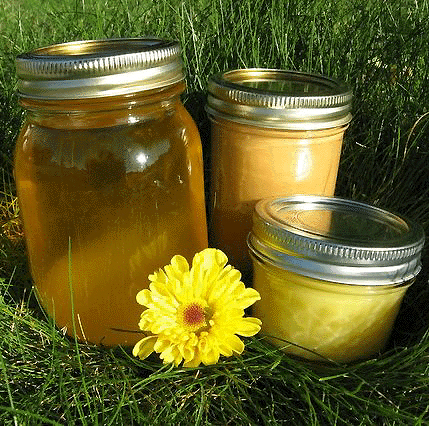
Previously we posted part One & Two of the article on Ghee (which is the crown jewel of oils, and is one of Srimati Radharani’s most favored ingredients). Today we are posting part Three of this fine article as posted on the Sampradaya Sun
Prasadam – Ghee, Part Three
by Sun Staff (SUN)
A journey through India: border to border, bhoga to prasadam.
The importance of golden ghee in cooking Krsna prasadam is very evident when we consider books of Vaisnava literature such as Sri Govinda-lilamrta and Sri Caitanya-caritamrta. In Govinda-lilamrta we find descriptions of the great range of uses for ghee, as it’s described in the conversations between Mother Yasoda and the gopis who are arranging so many nice foodstuffs for Krsna.
In Verse 53, Mother Yasoda is telling Kilimba that they had milked the cow named Sugandha, and churned her milk into butter, and the gopis could use this special butter to make ghee. Yashoda requests the gopis to make many different dishes cooked in ghee, and to prepare sweets with ghee, and Rohini Devi also describes the preparations Radharani has been making for Krsna with ghee.
More
05 Oct 2016
by The Hare Krishna Movement
in Ghee, Prasadam, Rochan das, Vegetarian Cooking, Vegetarian Recipies, Vegetarianism
Tags: cow protection, deep fried in ghee, ghee, Mahamrtunjaya Mantra, making ghee, Prasadam, Vedic tradition, vegetarian cooking, Worship Krsna by offering ghee lamps

This morning I happened to visit the Sampradaya Sun web page. Rocan Prabhu has been doing a series entitled ” A journey through India: border to border, bhoga to prasadam” and in the last week has done a two part article on ‘Ghee’. We have reprinted both the first and second part here.
Prasadam – Ghee
by Sun Staff
…the Mother of all ingredients is milk, and all its glorious byproducts. Today we’ll begin an exploration of ghee, which is one of the final foodstuffs derived from processing milk. Cow’s milk is said to possess the essential sap of all plants, and ghee is a most valued derivation of that nutritious stuff. The clear golden liquid known as ghee is the crown jewel of oils, and is one of Srimati Radharani’s most favored ingredients.
The word ghee comes from the Sanskrit ghrta [ghrit], or “sprinkled”. Aayurghritam means ‘ghee is life’, and this is reflected in the many sacred ways the stuff is used in devotional practice, from cooking to feeding the sacred fire, or performing abhisheka with panchamrta. Use of ghee as a substance to anoint the Deities is mentioned in Yajurveda, and the Rgveda has many references to butter and ghee.
More
21 Sep 2016
by The Hare Krishna Movement
in A.C. Bhaktivedanta Swami Prabhupada, Bhagavad-gita, Bhagavad-gita As It Is 1972 Edition, Vegetarian Cooking, Vegetarianism
Tags: A. C. Bhakthvedanta Swami Prabhupada, as it is, Bg. 17.8-10, Bhagavad-gita, duration of life, foods in the mood of goodness, happiness and satisfaction, health, patram puspam phalam toyam, Prasadam, purify one’s existence and give strength, Vegetarians

I must have woke up hungry, because my meditation this morning was on wholesome, nurturing foods in the mode of goodness.
…The purpose of food is to increase the duration of life, purify the mind and aid bodily strength. This is its only purpose. (from purport to Bg. 17.8-10)
Foods in the mode of goodness increase the duration of life, purify one’s existence and give strength, health, happiness and satisfaction. Such nourishing foods are sweet, juicy, fattening and palatable. Foods that are too bitter, too sour, salty, pungent, dry and hot, are liked by people in the modes of passion. Such foods cause pain, distress, and disease. Food cooked more than three hours before being eaten, which is tasteless, stale, putrid, decomposed and unclean, is food liked by people in the mode of ignorance. (Bhagavad-gita As It Is 17.8-10)
More
16 Feb 2016
by The Hare Krishna Movement
in A.C. Bhaktivedanta Swami Prabhupada, Bhagavad-gita, Bhagavad-gita As It Is 1972 Edition, Vegetarian Cooking, Vegetarianism
Tags: A. C. Bhaktivedanta Swami Pabhupada, Bhagavad-gita As It Is, food, food in the mode of ignorance, food in the mode of passion, foods in the mode of goodness, Foods in the mode of goodness increase the duration of life, happiness and satisfaction, health, purify one’s existence and give strength, Srila Prabhupada

Foods in the mode of goodness increase the duration of life, purify one’s existence and give strength, health, happiness and satisfaction. Such nourishing foods are sweet, juicy, fattening and palatable. Foods that are too bitter, too sour, salty, pungent, dry and hot, are liked by people in the modes of passion. Such foods cause pain, distress, and disease. Food cooked more than three hours before being eaten, which is tasteless, stale, putrid, decomposed and unclean, is food liked by people in the mode of ignorance. (Bhagavad-gita As It Is 17.8-10)
…The purpose of food is to increase the duration of life, purify the mind and aid bodily strength. This is its only purpose. In the past, great authorities selected those foods that best aid health and increase life’s duration, such as milk products, sugar, rice, wheat, fruits and vegetables. These foods are very dear to those in the mode of goodness. (from purport to Bhagavad-gita 17.8-10)
full translation and purport More
13 Mar 2015
by The Hare Krishna Movement
in A.C. Bhaktivedanta Swami Prabhupada, Letters by Srila Prabhupada, Prasadam, Vegetarian Cooking, Vegetarianism
Tags: A.C. Bhaktivedanta Swami Prabhpada, BTG, Krishna prasadam, Krsna prasadam, Letters by Srila Prabhupada, non-vegetarian, vegetarian, vegetarian diet
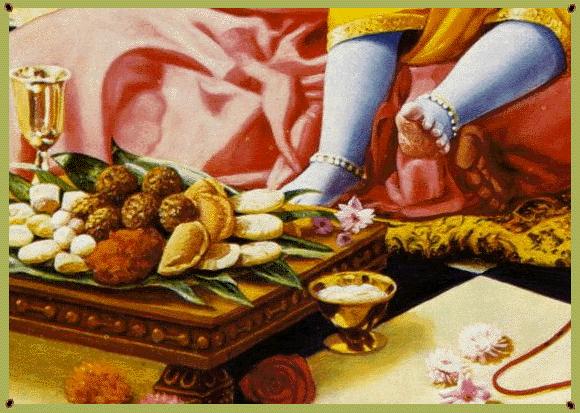
The following excerpt from a letter written by Srila Prabhupada was circulated on Facebook last week, and my wife read it aloud to me. It was very informative in that it explained our position on vegetarian vs. non-vegetarian, and the benefits of eating Krsna prasadam (food offered first to the Lord).
…Regarding propaganda against animal slaughter in BTG. Please do not print any picture showing how a cow is being murdered in our BTG. This will pollute the whole atmosphere. We are not meant for moving anyone’s sentiment against animal slaughter, we are neither Buddhists or Jains, whose main propaganda is against animal slaughter. Even the so-called vegetarians who do not take Krishna prasadam are as much sinful as the non-vegetarians. Our propaganda is different, to make people Krishna Conscious, which automatically makes them sympathetic against any kind of animal slaughter. According to Srimad-Bhagavatam, one living entity subsists on the life of other living entities, either vegetarian or non-vegetarian. But we are neither of them. We are not vegetarian nor non-vegetarian. We are transcendental. We are concerned with Krishna Prasadam. Try to popularize Krishna Prasadam as you have already done. People will naturally become vegetarian without any ghastly propaganda.
full letter More
Previous Older Entries










 The Hare Krishna Movement