22 Sep 2011
by The Hare Krishna Movement
in A.C. Bhaktivedanta Swami Prabhupada, Back to Godhead, Devotional Service, Krishna Consciousness
Tags: Back to Godhead Magazine, devotional service, His Divine Grace A.C. Bhaktivedanta Swami Prabhupada, Krishna, krsna consciousness, materialism, spiritual endeavors, Supreme Personality of Godhead
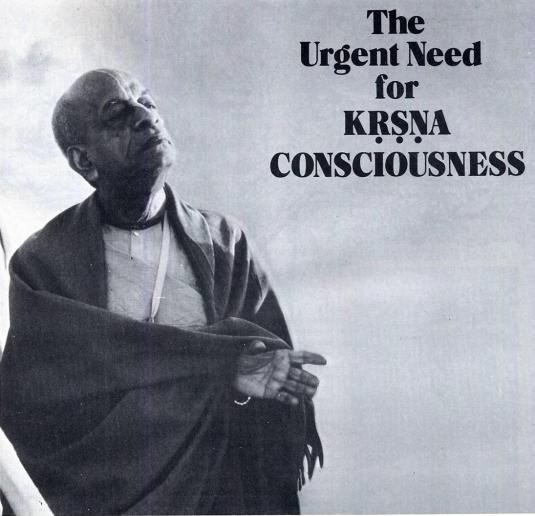
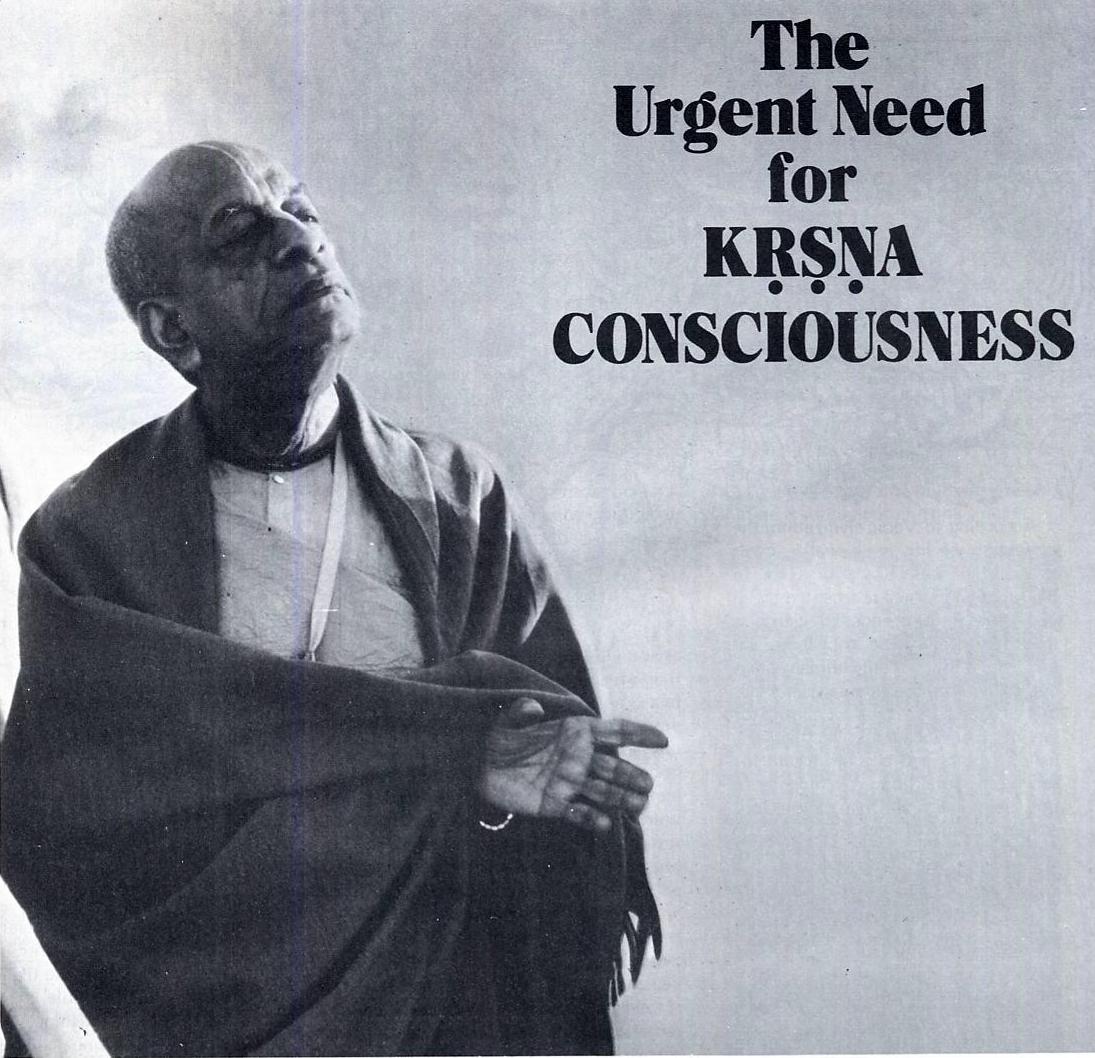
The Urgent Need for Krishna Consciousness
By His Divine Grace A.C. Bhaktivedanta Swami Prabhupada
This very important Krsna consciousness movement is meant to save human society from spiritual death. At present human society is being misled by leaders who are blind, for they do not know the aim and objective of human life, which is self-realization and the reestablishment of our lost relationship with the Supreme Personality of Godhead. That is the missing point. This Krsna consciousness movement is trying to enlighten human society in this important matter.
According to Vedic civilization, the perfection of life is to realize one’s relationship with Krsna or God. In Bhagavad-gita, which is accepted by all authorities in transcendental science as the basis of all Vedic knowledge, we understand that not only human beings but all living entities are parts and parcels of God. The parts are meant for serving the whole, just as the legs, hands, fingers and ears are meant for serving the total body. We living entities, being parts and parcels of God, are duty bound to serve Him.
Actually our position is that we are always rendering service to someone, either to our family, country or society. If we have no one to serve, sometimes we keep a pet cat or dog and render service to it. All these factors prove that we are constitutionally meant to render service, yet in spite of serving to our best capacity, we are no more satisfied. Nor is the person to whom we are rendering that service satisfied. On the material platform, everyone is frustrated. The reason for this is that the service which is being rendered is not properly directed. For example, if we want to render service to a tree, we must water the root. If we pour water on the leaves, branches and twigs, there is little benefit. If the Supreme Personality of Godhead is served, all other parts and parcels will be automatically satisfied. Consequently all welfare activities as well as service to society, family and nation are realized by serving the Supreme Personality of Godhead.
More
20 Sep 2011
by The Hare Krishna Movement
in A.C. Bhaktivedanta Swami Prabhupada, Back to Godhead, Lectures
Tags: back to Godhead, Balarama, Gauda, Krishna, Lecture by A.C. Bhaktivedanta Swami Prabhupada, Lord Nityananda, Sri Caitanya-caritamrta, Sri Krsna Caitanya, sun and moon
 The Rising Sun and Moon
Lecture by His Divine Grace A.C. Bhaktivedanta Swami Prabhupada
Mayapur, India—March 26, 1975
Back to Godhead 2004, Vol.38, No. 4
vande sri-krsna-caitanya-
nityanandau sahoditau
gaudodaye puspavantau
citrau sandau tamo-nudau
“I offer my respectful obeisances unto Sri Krsna Caitanya and Lord Nityananda, who are like the sun and moon. They have arisen simultaneously on the horizon of Gauda [West Bengal] to dissipate the darkness of ignorance and thus wonderfully bestow benediction upon all.”—Sri Caitanya-caritamrta, Adi 1.2
SriKrsna Caitanya has many expansions, and the first is Lord Nityananda, who is Krsna’s brother, Balarama. We have to understand these things from the mahajanas, the great sages who are learned in the science of Krsna consciousness. Narottama Dasa Thakura, a mahajana, says, vrajendra-nandana yei, saci-suta hoilo sei, balarama hoilo nitai: “Sri Caitanya Mahaprabhu is Lord Krsna, the son of Nanda Maharaja, and Sri Nityananda Prabhu is Balarama.”
Sometimes foolish people say that Nityananda is an expansion of Radharani. That is not a fact. Nityananda is Balarama. We have to know from the mahajanas; we cannot manufacture our own ideas. That is blasphemy.
More
16 Sep 2011
by The Hare Krishna Movement
in A.C. Bhaktivedanta Swami Prabhupada, Krsna Consciousness: The Topmost Yoga System, Yoga
Tags: bhagavad-gita, bhakti yoga, hatha yoga, Kali-yuga, krsna consciousness, Srila Prabhupada, the perfection of yoga, topmost yoga system, yoga
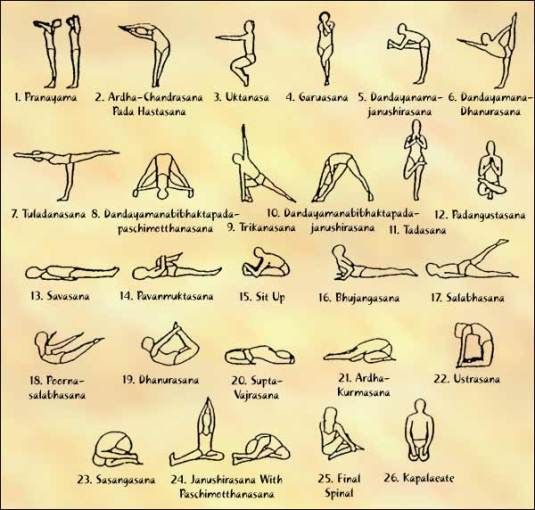
Simply to make a show of gymnastics is not perfection of yoga. Yoga means control of the senses. If you indulge your senses unrestrictedly but make a show of yoga practice, you will never be successful.
Krsna Consciousness: The Topmost Yoga System
By His Divine Grace A.C. Bhaktivedanta Swami Prabhupada
Chapter One
The Perfection of Yoga
Lord Kṛṣṇa, the Supreme Personality of Godhead, speaks about the topmost system of yoga in the Sixth Chapter of Bhagavad-gītā. There He has explained the haṭha-yoga system. Please remember that we are preaching this Kṛṣṇa consciousness movement on the authority of Bhagavad-gītā. It is nothing manufactured. The bhakti-yoga system is authorized, and if you want to know about God, then you have to adopt this bhakti-yoga system because in the Sixth Chapter of Bhagavad-gītā it is concluded that the topmost yogī is he who is always thinking of Kṛṣṇa within himself.
More
14 Sep 2011
by The Hare Krishna Movement
in A.C. Bhaktivedanta Swami Prabhupada, Back to Godhead, Sankirtan, The Hare Krishna Movement
Tags: A.C. Bhaktivedanta Swami Prabhupada, Back to Godhead Magazine, Great Apostle of love of God, Lord Caitanya Mahaprabhu, Lord Sri Krishna Caitanya, Origin of the Hare Krishna Movement, sankirtan movement
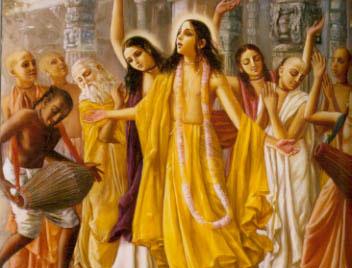
Lord Sri Krishna Caitanya's Sankirtan Movement
Origin of the Hare Krishna Movement
By His Divine Grace A.C. Bhaktivedanta Swami Prabhupada
Back to Godhead Magazine Volume 01, Number 20, 1968
Lord Sri Krishna Chaitanya Mahaprabhu, the Great Apostle of love of God and the Father of the Sankirtan Movement, advented Himself in the City of Nabadwipa in Bengal, India. This was in February, 1486, by Christian reckoning.
By the will of the Lord there was a lunar eclipse on that evening. It is the custom of the Hindu public to bathe in the Ganges of any other sacred river during the hours of eclispe, and to chant the Vedic mantras for purification. When Lord Chaitanya was born during the eclipse, then, the whole India was roaring with the holy sound of Hare Krishna, Hare Krishna, Krishna Krishna, Hare Hare/ Hare Rama, Hare Rama, Rama Rama, Hare Hare.
These sixteen Names of the Lord are mentioned in many Puranas and Upanishads, and they are described as “Tarak Brahman,” the Names for this age. It is stated in the “Shashtras,” the accepted Scriptures, that offenseless chanting of the Holy Names of the Lord can deliver a fallen soul from material bondage. There inumerable Names for the Lord both in India and elsewhere, and all of them are equally good because all of them indicate the Supreme Personality of Godhead. But because these sixteen Names are especially recommended for this Age, called Kali Yuga, it is better for people to take the path of the great Acharyas, the saintly teachers who attained success by practice of this system.
More
14 Sep 2011
by The Hare Krishna Movement
in A.C. Bhaktivedanta Swami Prabhupada, Krishna Consciousness, Srimad Bhagavatam, Uncategorized, Yoga
Tags: devotee, krsna consciousness, mystic yogi, narayana-para, Srimad Bhagavatam, Surpreme Personality of Godhead, transcendental service of the Lord, yogi

…The real purpose of yogic performances is to control the mind and the senses. In other words, one cannot attain the mercy and benediction of the Supreme Lord until one is able to control the mind and the senses. This is actually possible when one fully engages in Kṛṣṇa consciousness…
Srimad-Bhagavatam
By His Divine Grace A.C. Bhaktivedanta Swami Prabhupada
Canto 3: “The Status Quo”
SB 3.15: Description of the Kingdom of God
There is no defeat in this material world for persons who control the mind and senses by controlling the breathing process and who are therefore experienced, mature mystics. This is because by such perfection in yoga they have attained your mercy.
Purport
The purpose of yogic performances is explained here. It is said that an experienced mystic attains full control of the senses and the mind by controlling the breathing process. Therefore, controlling the breathing process is not the ultimate aim of yoga. The real purpose of yogic performances is to control the mind and the senses. Anyone who has such control is to be understood to be an experienced, mature mystic yogī. It is indicated herein that a yogī who has control over the mind and senses has the actual benediction of the Lord, and he has no fear. In other words, one cannot attain the mercy and benediction of the Supreme Lord until one is able to control the mind and the senses. This is actually possible when one fully engages in Kṛṣṇa consciousness. A person whose senses and mind are always engaged in the transcendental service of the Lord has no possibility of engaging in material activities. The devotees of the Lord are not defeated anywhere in the universe. It is stated, nārāyaṇa-parāḥ sarve: one who is nārāyaṇa-para, or a devotee of the Supreme Personality of Godhead, is not afraid anywhere, whether he is sent to hell or promoted to heaven (Bhāg. 6.17.28).
Pasted from; PrabhupadaBooks.com
12 Aug 2011
by The Hare Krishna Movement
in A.C. Bhaktivedanta Swami Prabhupada, Balarama, Spiritual World, Srila Prabhupada's Books
Tags: Balarama, gopis, Lord Balarama Visits Vrndavana, rasa dance, Srila Prabhupada, Srimad Bhagavatam, Vrindavan forest

Lord Balarāma Visits Vṛndāvana
Lord Balarāma could, of course, understand the ecstatic feelings of the gopīs, and therefore He wanted to pacify them. He was expert in presenting an appeal, and thus, treating the gopīs very respectfully, He began to narrate the stories of Kṛṣṇa so tactfully that the gopīs became satisfied. In order to keep the gopīs in Vṛndāvana satisfied, Lord Balarāma stayed there continually for two months, namely the months of Caitra (March-April) and Vaiśākha (April-May). For those two months He kept Himself among the gopīs, and He passed every night with them in the forest of Vṛndāvana in order to satisfy their desire for conjugal love. Thus Balarāma also enjoyed the rāsa dance with the gopīs during those two months.
Lord Balarāma Visits Vṛndāvana
From; Kṛṣṇa, the Supreme Personality of Godhead
By His Divine Grace A. C. Bhaktivedanta Swami Prabhupada
Lord Balarāma became very anxious to see His father and mother, Mahārāja Nanda and Yaśodā. Therefore He started for Vṛndāvana on a chariot with great enthusiasm. The inhabitants of Vṛndāvana had been anxious to see Kṛṣṇa and Balarāma for a very long time. When Lord Balarāma returned to Vṛndāvana, all the cowherd boys and the gopīs had grown up; but still, on His arrival, they all embraced Him, and Balarāma embraced them in reciprocation. After this He came before Mahārāja Nanda and Yaśodā and offered His respectful obeisances unto them. In response, mother Yaśodā and Nanda Mahārāja offered their blessings unto Him. They addressed Him as Jagadīśvara, or the Lord of the universe who maintains everyone. The reason for this was that both Kṛṣṇa and Balarāma maintain all living entities, and yet Nanda and Yaśodā were put into such difficulties on account of Their absence. Feeling like this, they embraced Balarāma and, seating Him on their laps, began their perpetual crying, wetting Balarāma with their tears. Lord Balarāma then offered His respectful obeisances to the elderly cowherd men and accepted the obeisances of the younger cowherd men. Thus, according to their different ages and relationships, Lord Balarāma exchanged feelings of friendship with them. He shook hands with those who were His equals in age and friendship, and with loud laughing embraced each one of them.
More
12 Aug 2011
by The Hare Krishna Movement
in A.C. Bhaktivedanta Swami Prabhupada, Balarama
Tags: Baladeva, Balarama, Balarama Purnima, Lord Balarama, Sri Baladeva, Surpreme Personality of Godhead

Balarama Purnima
The Apperance Day of Lord Balarama
We share with you some Balarama Nectar to honor His Apperance Day. By His Divine Grace A. C. Bhaktivedanta Swami Prabhupada
The foremost manifestation of Kṛṣṇa is Saṅkarṣaṇa, who is known as Ananta. He is the origin of all incarnations within this material world. Previous to the appearance of Lord Kṛṣṇa, this original Saṅkarṣaṇa will appear as Baladeva, just to please the Supreme Lord Kṛṣṇa in His transcendental pastimes. (Srimad Bhagavatam 10.1.24)
Śrī Baladeva is the Supreme Personality of Godhead Himself. He is equal in supremacy to the Supreme Godhead, yet wherever Kṛṣṇa appears, Śrī Baladeva appears as His brother, sometimes elder and sometimes younger. When Kṛṣṇa appears, all His plenary expansions and other incarnations appear with Him. This is elaborately explained in Caitanya-caritāmṛta. This time, Baladeva would appear before Kṛṣṇa as Kṛṣṇa’s elder brother. (Purport)
“One devotee described the personal beauty of Baladeva as follows “Let me take shelter of the lotus feet of Balarāma, whose beauty is enhanced by the earrings touching His cheeks. His face is decorated with tilaka made from kastūrī [musk], and His broad chest is decorated with a garland of guñjā [small conchshells]. His complexion is as white as an autumn cloud, He wears garments of blue color, and His voice is very grave. His arms are very long, touching His thighs, and He has shown His great strength by killing the Pralamba demon. Let me take shelter of this chivalrous Balarāma.” (Nectar of Devotion Chapter 41)
Once when Krishna, Balarama and the cowherd boys were walking through the forests of Vrndavana Krishna spoke the following affectionate words to His brother:
My dear brother, You are the supreme worshipable Godhead. Just see how the peacocks are dancing before You in great ecstasy. The deer, whose behavior is just like that of the gopis, are welcoming You with the same affection. And the cuckoos who are residing in this forest are welcoming You with their joyful, sweet cries because they consider that Your appearance in their home is so auspicious. Even though they are trees and animals, these residents of Vrndavana are glorifying You. They are prepared to welcome You to the best of their ability, as is the practice of great souls in receiving another great soul at home. As for the land, it is so pious and fortunate because the footprints of Your lotus feet are marking its body.
(Krishna Book Ch. 15 “The Killing of Dhenukasura”)
“Lord Kṛṣṇa and Balarāma are not two different Personalities of Godhead. God is one without a second, but He expands Himself in many forms without their being separate from one another. They are all plenary expansions. The immediate expansion of Lord Kṛṣṇa is Baladeva, and Brahmā, born from the lotus flower from Garbhodakaśāyī Viṣṇu, is an expansion of Baladeva. This indicates that Kṛṣṇa and Baladeva are not subjected to the regulations of the universe; on the contrary, the whole universe is under Their subjugation. They appeared at the request of Brahmā to liberate the burden of the world, and They relieved the world by many superhuman activities so that everyone became happy and prosperous. Without the grace of the Lord, no one can become happy and prosperous. Because the happiness of the family of the Lord’s devotees depends on the happiness of the Lord…” (Srimad Bhagavatam 3.1.26 Purport)
03 Aug 2011
by The Hare Krishna Movement
in A.C. Bhaktivedanta Swami Prabhupada, Devotee's, Guru & Disciple, Letters by Srila Prabhupada, Tamal Krishna Goswami
Tags: krpa siddha, Krsna, nitya siddha, sadhana siddha, spiritual master, Srila Prabhupada, Tamala Krishna

Letter to: Tamala Krsna
Los Angeles
21 June, 1970
Paris
My Dear Tamala,
Please accept my blessings. I beg to acknowledge receipt of your letter dated 18th June, 1970, sent by Special Delivery Air Mail.
Krsna philosophy is understood as it is stated in the Vedas:
Yasya deve para bhakti yatha deve tatha gurau
tasya ete kathitha hi artha prakasante mahatmanah
“One who has got unflinching faith in the Supreme Lord and similar faith in his Spiritual Master to him only the imports of Vedic knowledge become revealed.”
A Spiritual Master is always liberated. In any condition of His life He should not be mistaken as ordinary human being. This position of a Spiritual Master is achieved by three processes. One is called sadhana siddha. That means one who is liberated by executing the regulative principle of devotional service. Another is krpa siddha, one who is liberated by the mercy of Krsna or His devotee. And another is nitya siddha who is never forgetful of Krsna throughout his whole life. These are the three features of the perfection of life.
So far Narada Muni is concerned, in His previous life He was a maidservant’s son, but by the mercy of the devotees He later on became siddha and next life He appeared as Narada with complete freedom to move anywhere by the grace of the Lord. So even though He was in his previous life a maidservant’s son there was no impediment in the achievement of His perfect spiritual life. Similarly any living entity who is conditioned can achieve the perfectional stage of life by the above mentioned processes and the vivid example is Narada Muni.
So I do not know why you have asked about my previous life. Whether I was subjected to the laws of material nature? So, even though accepting that I was subjected to the laws of material nature, does it hamper in my becoming Spiritual Master? What is your opinion? From the life of Narada Muni it is distinct that although He was a conditioned soul in His previous life, there was no impediment of His becoming the Spiritual Master. This law is applicable not only to the Spiritual Master, but to every living entity.
There are thousands of examples explained in our books that the conditioned soul is never affected with the material body. It is said in the Vedas asamga ayam purusa which means the living entity is always unaffected with matter. Another example is given that the reflection of the moon on water appears to be moving, but actually the moon is not moving, it is fixed up. So any living entity is like that. His reflection on the material body appears to be changing, but the spirit soul is fixed up, therefore this movement is called illusion.
Liberation means liberation from this changing condition.
So far I am concerned, I cannot say what I was in my previous life, but one great astrologer calculated that I was previously a physician and my life was sinless. Besides that, to corroborate the statement of Bhagavad-gita “sucinam srimatam gehe yogabhrasta samyayate” [Bg. 6.41] which means an unfinished yogi takes birth in rich family or born of a suci or pious father. By the grace of Krsna I got these two opportunities in the present life to be born of a pious father and brought up in one of the richest, aristocratic families of Calcutta (Kasinath Mullick). The Radha Krsna Deity in this family called me to meet Him, and therefore last time when I was in Calcutta, I stayed in that temple along with my American disciples. Although I had immense opportunities to indulge in the four principles of sinful life because I was connected with a very aristocratic family, Krsna always saved me, and throughout my whole life I do not know what is illicit sex, intoxication, meat-eating or gambling. So far my present life is concerned, I do not remember any part of my life when I was forgetful of Krsna.
More
11 Jul 2011
by The Hare Krishna Movement
in A.C. Bhaktivedanta Swami Prabhupada, Diksha, Guru & Disciple, Madhudvisa das, Pandu das, Ritvik Representative of the Acharya
Tags: agni-hotra, exalted priest, Pandu das, Prabhupadanuga News, ritvik, ritvik initiation system, rtvijah, rtvijah-the priests, Srila Prabhupada, Vedic culture, Vedic sastra

Pandu on 17. December 2008 at 2:41 am said:
Srila Prabhupada’s Ritvik Initiation System
Some time back I was reading and article on the Prabhupadanuga News and I ran across this comment posted by Pandu Prabhu. I thought it relevant today, so I am posting it. It is some good information on the word “ritvik”. Also enclosed at end of post is the link to original article.
Since Srila Prabhupada himself Coined the term “Ritvik”, it is very offensive to Srila Prabhupada, to denounce this term. The attempt of certain persons to degrade the transcendental Vedic term “rtvijah” or “ritvik” to a derogatory word is one more example of offenses that have entered Iskcon due to our neglect of Srila Prabhupada’s advice.
In Vedic culture, a ritvik is an exalted priest. Such priests were often endowed with siddhis and respected as gurus, yet they never pretended to be as good as Lord Hari. By the order of the Acarya, the rtvijah recites the mantras that request the presence of Lord Visnu in the fire of Vedic sacrifice (agni-hotra), and he then makes offerings to the Supreme Lord according to Vedic sastra. The rtvijah performs an exalted function. He is a pure brahmin or Vaisnava who is never concerned about the political correctness or convenience of his stance.
Srila Prabhupada’s Ritvik statements can be found in his Supporting Instructions as well as in the Srimad Bhagavatam:
“…continue to become ritvik and act on my charge.” (July 19th)
“…continue to become ritvik and act on my behalf.” (July 31th)
“…the process for initiation to be followed in the future.” (July 11th)
Srila Prabhupada to Hansadutta: “You are a suitable person and you can give initiation to those who are ready for it. I have selected you among eleven men as “rittvik” or representative of the acharya, to give initiations, both first and second initiation, on my behalf.”
Srila Prabhupada: Yes. I shall recommend some of you. After this is settled up I shall recommend some of you to act as officiating acarya(s).
Tamal Krishna: Is that called ritvik acarya?
Srila Prabhupada: “ritvik. Yes”.
In these documents we find words such as “ritvik”, “continue” and “future” which, along with the word “henceforward”, all point to the permanency of the ritvik system. There is no statement from Srila Prabhupada that even hints that this system was to terminate on his departure.
SB 9.1.15 adhvaryuna–by the rtvik priest;
SB 4.5.7 rtvijah–the priests;
SB 4.5.18 rtvijah–the priests
SB 4.6.52 rtvijam–of the priests;
SB 4.7.16 rtvik–the priests;
SB 4.7.27 rtvijah–the priests;
SB 4.7.45 rtvijah–the priests;
SB 4.7.56 rtvigbhih–with the priests;
SB 4.13.26 rtvijah–the priests;
In Srimad-Bhagavatam (8.16.53), Srila Prabhupada defines “ritvik” (rtvijah) as “the priests recommended by the spiritual master”. In this instance ritviks are defined as the deputed priests of the spiritual master. They preside over a Vedic ritual meant for the worship of Lord Visnu (visnu-aradhana). The initiation ritual observed in ISKCON is a standard Vedic ceremony, and it may be performed by ritviks, who officiate on behalf of the Acarya.
This understanding and practice was clearly established by Srila Prabhupada personally, and there should be no controversy regarding the definition or function of the ritvik priest. The new initiates offer dakshina and service to the mission of the guru, and the priests may also receive some token honor or reward for their services, according to Vedic custom. (In ISKCON Srila Prabhupada would either receive the guru dakshina personally and use it for a global ISKCON project or for his traveling expenses, or he would give money to the BBT or some other important or needy branch of his preaching mission. He never said that priests representing ISKCON should receive money or expensive gifts for their services. Nor did he say they should assume positions of absolute authority and accept worship as gurus.)
http://www.prabhupadanugas.eu/?p=849
08 Jun 2011
by The Hare Krishna Movement
in A.C. Bhaktivedanta Swami Prabhupada, Nectar of Devotion, Srimati Tulasi Devi
Tags: Aspects of Transcendental Service, Srila Prabhupada, Srimati Tulasi Devi, The Nectar of Devotion, Tulasi, Vrnda devi
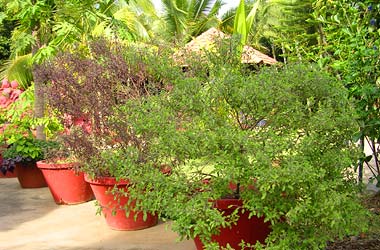
The Worship of Srimati Tulasi Devi
Tulasi is auspicious in all respects. Simply by seeing, simply by touching, simply by remembering, simply by praying to, simply by bowing before, simply by hearing about or simply by sowing this tree, there is always auspiciousness. Anyone who comes in touch with the tulasi tree in the above-mentioned ways lives eternally in the Vaikuntha world.
The Nectar of Devotion 1970 Edition
Chapter 11 Aspects of Transcendental Service
By His Divine Grace A. C. Bhaktivedanta Swami Prabhupada
In the Skanda Purāṇa there is a statement eulogizing the tulasī tree as follows: “Let me offer my respectful obeisances unto the tulasī tree, which can immediately vanquish volumes of sinful activities. Simply by seeing or touching this tree one can become relieved from all distresses and diseases. Simply by offering obeisances to and pouring water on the tulasī tree, one can become freed from the fear of being sent to the court of Yamarāj [the King of death, who punishes the sinful]. If someone sows a tulasī tree somewhere, certainly he becomes devoted to Lord Kṛṣṇa. And when the tulasī leaves are offered in devotion at the lotus feet of Kṛṣṇa, there is the full development of love of Godhead.”
In India every Hindu, even those not belonging to the Vaiṣṇava group, take special care of the tulasī tree. Even in great cities where it is very difficult to keep a tulasī tree, people are to be found very carefully keeping this plant. They water it and offer obeisances to it, because worship of the tulasī tree is very important in devotional service.
In the Skanda Purāṇa there is another statement about tulasī, as follows: “Tulasī is auspicious in all respects. Simply by seeing, simply by touching, simply by remembering, simply by praying to, simply by bowing before, simply by hearing about or simply by sowing this tree, there is always auspiciousness. Anyone who comes in touch with the tulasī tree in the above-mentioned ways lives eternally in the Vaikuṇṭha world.”
05 Jun 2011
by The Hare Krishna Movement
in A.C. Bhaktivedanta Swami Prabhupada, The Nectar of Instruction, Upadesamrta
Tags: anger, Gaudiya Vaisnavas, goswamis, His Divine Grace A.C. Bhaktivedanta Swami Prabhupada, knowledge, Sri Caitanya Mahaprabhu, Srila Rupa Goswami, The Nectar of Instruction, Upadesamrta

…anger can be controlled. We cannot stop anger altogether, but if we simply become angry with those who blaspheme the Lord or the devotees of the Lord, we control our anger in Kṛṣṇa consciousness. Lord Caitanya Mahāprabhu became angry with the miscreant brothers Jagāi and Mādhāi, who blasphemed and struck Nityānanda Prabhu. In His Śikṣāṣṭaka Lord Caitanya wrote, tṛṇād api sunīcena taror api sahiṣṇunā: “One should be humbler than the grass and more tolerant than the tree.” One may then ask why the Lord exhibited His anger. The point is that one should be ready to tolerate all insults to one’s own self, but when Kṛṣṇa or His pure devotee is blasphemed, a genuine devotee becomes angry and acts like fire against the offenders.
The Nectar Of Instruction
By His Divine Grace A.; C. Bhaktivedanta Swami Prabhupada
Text One
More
20 May 2011
by The Hare Krishna Movement
in A.C. Bhaktivedanta Swami Prabhupada, Bhagavad-gita, Divine and Demoniac Natures
Tags: A.C. Bhaktivedanta Swami Prabhupada, as it is, Bg chapter 16, bhagavad-gita, Demoniac, Divine, nature, qualities
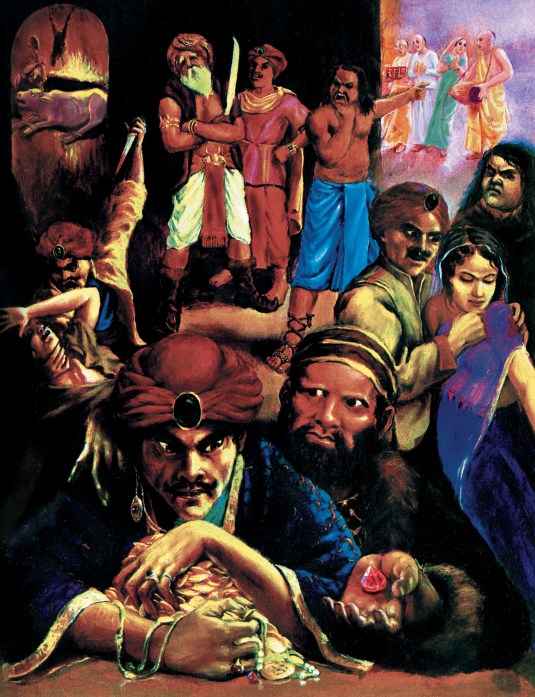
The Divine and Demoniac Natures
We are in the middle of a pandemic that is killing thousands of people worldwide.
Here in America we have a president that instead of acting in a sympathetic, compassionate way towards the sufferings of others, is instead criticizing and blaming others. This is not a good quality for a leader who should be taking responsibility for the safety and welfare of his citizens. All his self glorification, and his attack on others, in this time of turmoil, I find very disturbing and reminiscent of the description given in the 16th chapter of the Bhagavad-gita entitled “The Divine and Demon Natures”
Arrogance, pride, anger, conceit, harshness and ignorance—these qualities belong to those of demonic nature… (Bg. 4.16)
Those who are demoniac do not know what is to be done and what is not to be done. Neither cleanliness nor proper behavior nor truth is found in them. (Bg. 7.16)
The demoniac person thinks: “So much wealth do I have today, and I will gain more according to my schemes. So much is mine now, and it will increase in the future, more and more. He is my enemy, and I have killed him; and my other enemy will also be killed. I am the lord of everything, I am the enjoyer, I am perfect, powerful and happy. I am the richest man, surrounded by aristocratic relatives. There is none so powerful and happy as I am. I shall perform sacrifices, I shall give some charity, and thus I shall rejoice.” In this way, such persons are deluded by ignorance. (Bg. 13-15.16)
Full Chapter Texts and Purports More
28 Mar 2011
by The Hare Krishna Movement
in A.C. Bhaktivedanta Swami Prabhupada, Beyond Birth & Death
Tags: Beyond Birth & Death, bhagavad-gita, Hare Krishna Hare Rama Hare Hare, Liberated souls, spiritual sky, Vaikuntha planets

Beyond Birth & Death
Chapter 5
By His Divine Grace A.C. Bhaktivedanta Swami Prabhupada
The inhabitants of the Vaikuṇṭha planets in the spiritual sky are all liberated souls.
“And whoever, at the time of death, quits his body remembering Me alone, at once attains My nature. Of this there is no doubt. He who meditates on the Supreme Personality of Godhead, his mind constantly engaged in remembering Me, undeviated from the path, he, O Pārtha [Arjuna], is sure to reach Me.” (Bg. 8.5, 8.8) Such meditation on Kṛṣṇa may seem very difficult, but it is not. If one practices Kṛṣṇa consciousness by chanting the mahā-mantra, Hare Kṛṣṇa, Hare Kṛṣṇa, Kṛṣṇa Kṛṣṇa, Hare Hare/ Hare Rāma, Hare Rāma, Rāma Rāma, Hare Hare, he will be quickly helped. Kṛṣṇa and His name are nondifferent, and Kṛṣṇa and His transcendental abode are also nondifferent. By sound vibration we can have Kṛṣṇa associate with us”.
More
23 Mar 2011
by The Hare Krishna Movement
in A.C. Bhaktivedanta Swami Prabhupada, Poetry of Srila Prabhupada, Viraha Astaka, Vyas-puja
Tags: Dasaratha-suta das, Hindu ceremonies, His Divine Grace A.C. Bhaktivedanta Swami Prabhupada, Lord Nityananda, materialists, maya, Poetry of Srila Prabhupada, Sankirtan mission, Srila Bhaktisiddhanta Saraswati Goswami Thakur

Viraha Astaka
By His Divine Grace A.C. Bhaktivedanta Swami Prabhupada
Recently translated and published from the Bengali into English by Dasaratha-suta dasa, the following is an offering of eight prayers to Srila Prabhupada’s spiritual master, His Divine Grace Srila Bhaktisiddhanta Saraswati Goswami Thakur, composed sometime in December, 1958.
First Octet: The Flood of Krishna Prema
1) O Srila Prabhupada! You personally suffer
to see the suffering
of the fallen conditioned souls.
On this anniversary of your separation
I am utterly despondent.
2) “The ocean of mercy was previously held back by a dam,
but Lord Nityananda personally cut a channel in it
and thereby released the outpouring flood
of pure ecstatic love of God.”
(from Lochana dasa’s song “Nitai Guna Mani”)
3) Those devotees to whom the responsiblity was given
to continue spreading this flood of love
somehow became overpowered by Maya
and were thus reduced to simply performing
ritualistic Hindu ceremonies
for the benefit of the materialists.
More
05 Mar 2011
by The Hare Krishna Movement
in A.C. Bhaktivedanta Swami Prabhupada, Devotee's, Srila Prabhupada Conversations
Tags: always think of Me, devotional service, Krishna consciousness movement, Madhudvisa Swami, man mana bhava mad bhakto, sinful activity, surrender to Krishna, there is no difficulty

There is no difficulty
Madhudvisa prabhu (repeating question to Srila Prabhupada): “We have been here for many lifetimes performing sinful activities. So is it possible to counteract all those sinful activities in one lifetime, or does it require many…?”
Srila Prabhupada: “One minute. That is Krishna consciousness movement. One minute. You are not reading Bhagavad Gita? What Krishna says? sarva dharman parityajya mam ekam saranam vraja aham tvam sarva papebhyo moksayisyami (BG 18.66) ‘You surrender unto Me. Give up your all business. I will give you relief from all sinful reaction immediately.’ So it requires one minute. ‘My dear Krishna, I was forgotten. Now I understand. I fully surrender unto you.’ Then you become immediately free from all sinful reactions.
Without any reservation, without any politics, if you fully surrender, Krishna is assuring, aham tvam sarva papebhyo moksayisyami ma sucah. He reassures, ‘Don’t worry whether I will be able to give you relief from all reaction’; ma sucah, finished, guaranteed. You do this. So how much time it requires to surrender to Krishna? Immediately you can do that. Surrender means you surrender and work as Krishna says.
That is surrender. What Krishna says to do? man mana bhava mad bhakto mad yaji mam namaskuru (BG 18.65); four things: ‘You always think of Me, and you become My devotee, you worship Me, and offer your respect, full obeisances unto Me’ You do these four things. That is full surrender. Mam evaisyasi asamsaya: ‘Then you come to Me without any doubt.’ Everything is there. Krishna has given everything fully. If you accept it, then life is very simple. There is no difficulty. Yes?”
Next Newer Entries






 The Hare Krishna Movement