26 Feb 2026
by The Hare Krishna Movement
in Uncategorized
Tags: A.C. Bhaktivedanta, arogance, Bhagavad-gita, Bible, christianity, faith, God, greed, Jesus, lust, pride, the-divine-and-demonic
I have read and re-read this chapter many times this election year, and this is a perfect description on the demoniac man.
dambho darpo ’bhimānaś ca
krodhaḥ pāruṣyam eva ca
ajñānaṁ cābhijātasya
pārtha sampadam āsurīm
dambhaḥ—pride; darpaḥ—arrogance; abhimānaḥ—conceit; ca—and; krodaḥ—anger; pāruṣyam—harshness; eva—certainly; ca—and; ajñānam—ignorance; ca—and; abhijātasya—one who is born; pārtha—O son of Pṛthā; sampadam—nature; āsurīm—demoniac.
Arrogance, pride, anger, conceit, harshness and ignorance—these qualities belong to those of demonic nature, O son of Pṛthā. (Bg 16.4)
In this verse, the royal road to hell is described. The demoniac want to make a show of religion and advancement in spiritual science, although they do not follow the principles. They are always arrogant or proud in possessing some type of education or so much wealth. They desire to be worshiped by others, and demand respectability, although they do not command respect. Over trifles they become very angry and speak harshly, not gently. They do not know what should be done and what should not be done. They do everything whimsically, according to their own desire, and they do not recognize any authority. These demoniac qualities are taken on by them from the beginning of their bodies in the wombs of their mothers, and as they grow they manifest all these inauspicious qualities. (From purport to Bg. 16.4)
The demoniac man knows no limit to his desire to acquire money. That is unlimited. He only thinks how much assessment he has just now and schemes to engage that stock of wealth farther and farther. For that reason, he does not hesitate to act in any sinful way and so deals in the black market for illegal gratification. He is enamoured by the possessions he has already, such as land, family, house and bank balance, and he is always planning to improve them…
More
06 Feb 2026
by The Hare Krishna Movement
in Uncategorized
Tags: ac-bhaktivedanta, Bible, christianity, disciple-and-guru, faith, God, guru, Jesus, Sarasvati, spiritual master, Srila Bhaktisiddhanta, Srila Prabhupada, thakur
Today we celebrate the Appearance of Srila Bhaktisiddhanta Saraswati Thakura, the son of Srila Bhaktivinoda Thakura, and Spiritual Master of our Srila Prabhupada. We will honor it with a half day fast, rememberances and readings. I happened upon the following post some years ago on the Sampradaya Sun, and because it was so nicely assembled, we will share it with you here today.
The Appearance of Srila Bhaktisiddhanta
by Sun Staff CANADA (SUN)
Srila Bhaktisiddhanta Saraswati Thakura appeared in Purusottam Ksetra, Jagannatha Puri, Orissa, on February 6, 1874. He was born in the family home next to the Narayan-chhata of Sri Jagannatha Temple, which always reverberated with the chanting of the Holy Name. Named Bimala Prasad, He was the fourth son of Srila Bhaktivinoda Thakura and Srimati Bhagavati Devi.
By the age of twelve, Bhaktisiddhanta Sarasvati was well versed in astronomy. Hearing news of this, Srila Jagannatha dasa Babaji summoned him one day and instructed him to make a Vaisnava calendar that included the appearance and disappearance days of all Lord Caitanya Mahaprabhu’s and Visnupriya Thakurani’s associates. Following these instructions, Srila Bhaktisiddhanta Sarasvati made the necessary calculations and began publication of “Sri Nabadvipa Panjica”.
More
24 Dec 2025
by The Hare Krishna Movement
in A. C. Bhaktivedanta Swami Prabhupada, Uncategorized
Tags: Bible, butler-pa, christianity, faith, follow-in-the-footsteps-of-jesus, God, Hare Krishna, Jesus, message-of-god, sally-argwal, Srila Prabhupada, swami-jesus
When we were in Butler PA, this summer for the for the 60th aniversary of Srila Prabhupada’s arrival in the USA, We visited the home of Sally Agarwal, where Srila Prabhupada first stayed as their guest when he arrived in America. We heard many sweet stories of his stay in Butler, and how Sally’s daughter referred to Srila Prabhupada as Swami Jesus.
…I am obliged to your good daughter for awarding me a good degree as SWAMIJESUS which is actually a great honour for me. Some time the Lord speaks through innocent child and I take this honour as sent by Lord Jesus through an innocent child free from all formalities of the current society. Lord Jesus preached the message of God and I have taken up the same mission, and it would be a good luck for me if I can follow the foot prints of Lord Jesus who preached the message of God in spite of all persecution. Lord Jesus is a living example how one has to suffer in this material world simply for the matter of preaching the message of God… (letter to Sally Agarwal)
Full Letter
More
20 Dec 2025
by The Hare Krishna Movement
in Uncategorized
Tags: A.C. Bhaktivedanta, Bhagavad-gita, God, hinduism, Jesus, Krishna, Krishna and Arjuna, Krsna, rainbow-festival, religion, spirituality, Srila Prabhupada, Universal Form
I remember back many years ago, when I was a new devotee traveling with the RDTSP, we attended a Rainbow Festival in Oregon. There were many hippy type personalities, and aspiring spiritualists, and I meet this one man, who looked like Jesus, with long hair and sandals, with a sign around his neck that said, “I Am God”.
So I said to him, “If you are God, then show me your Universal Form”. It was stunned silence. He could not reply. I guess maybe he wasn’t God after all. Or I didn’t have the divine vision to see. But either way, he wasn’t still wearing the sign at the end of the day.
O greatest of all personalities, O supreme form, though I see here before me Your actual position, I yet wish to see how You have entered into this cosmic manifestation. I want to see that form of Yours. (Bg. 11. 3)
If You think that I am able to behold Your cosmic form, O my Lord, O master of all mystic power, then kindly show me that universal self. (Bg 11 .4)
The Blessed Lord said: My dear Arjuna, O son of Pṛthā, behold now My opulences, hundreds of thousands of varied divine forms, multicolored like the sea. (Bg 11. 5)
But you cannot see Me with your present eyes. Therefore I give to you divine eyes by which you can behold My mystic opulence. (Bg. 11. 8)
Arjuna saw in that universal form unlimited mouths and unlimited eyes. It was all wondrous. The form was decorated with divine, dazzling ornaments and arrayed in many garbs. He was garlanded gloriously, and there were many scents smeared over His body. All was magnificent, all-expanding, unlimited. This was seen by Arjuna. (Bg 11. 10-11
Full chapter : Universal Form
26 May 2025
by The Hare Krishna Movement
in Uncategorized
Tags: atheist, Bible, christianity, envy, envy-of-god, faith, God, Jesus, Srila Prabhupada
This morning, for some reason I was thinking about envy, and how it is the enemy of the soul. Srila Prabhupada once described the Atheist as someone who is so envious of God, that they deny His existence. (ie. don’t believe in God)
I did a search on Vanipedia search and came up with just a few of the many things Srila Prabhupada had to say about envy.
The venomous snake. I mean, by nature they are so angry and so envious that they feel pleasure if somebody is bitten and immediately die. That is their nature.
And the Cāṇakya Paṇḍita says that a person who has envious nature, he’s more dangerous than the serpent. Cāṇakya Paṇḍita has enunciated that sarpaḥ krūraḥ khalaḥ krūraḥ (Cāṇakya Paṇḍita). There are two envious creatures: one is the snake, and another, a man envious, unnecessarily envious of others. So sarpāt krūrataraḥ khalaḥ. That man, envious, he’s dangerous, more dangerous than the snake. Why more dangerous? Now, mantrauśādhi-vaśaḥ sarpaḥ khalaḥ kena nivāryate. You can subdue a snake by herbs and by chanting particular type of mantra. There are many snake charmers in India, by mantra they can charm the snakes.
But a person who is envious, you cannot pacify him in any way. Therefore sarpaḥ krūrataraḥ khalaḥ. Just like Jesus Christ was crucified by some envious persons. Even the Roman judge denied that “This man should not be . . . there is no such fault.” But because they were envious, they were persistent, “Yes, he should be crucified.”
More
20 Apr 2025
by The Hare Krishna Movement
in Uncategorized
Tags: ac-bhaktivedanta-swami-prabhupada, Bhagavad-gita, Bible, Christ, Easter Sunday, faith, God, Jesus, Krishna, Krsna, salvation
Today as most of the Western World celebrates Easter Sunday, we thought we word honor the life of Lord Jesus Christ with some select writings by our spiritual master A.C. Bhaktivedanta Swami Prabhupada.
The Śrīmad-Bhāgavatam states that any bona fide preacher of God consciousness must have the qualities of titikṣā (tolerance) and karuṇā (compassion). In the character of Lord Jesus Christ we find both these qualities. He was so tolerant that even while he was being crucified, he didn’t condemn anyone. And he was so compassionate that he prayed to God to forgive the very persons who were trying to kill him. (Of course, they could not actually kill him. But they were thinking that he could be killed, so they were committing a great offense.) As Christ was being crucified he prayed, “Father, forgive them. They know not what they are doing.”
…Of course, the message that Christ preached was just according to his particular time, place, and country, and just suited for a particular group of people. But certainly he is the representative of God. Therefore we adore Lord Jesus Christ and offer our obeisances to him.
Once, in Melbourne, a group of Christian ministers came to visit me. They asked, “What is your idea of Jesus Christ?” I told them, “He is our guru. He is preaching God consciousness, so he is our spiritual master.” The ministers very much appreciated that.
Actually, anyone who is preaching God’s glories must be accepted as a guru. Jesus Christ is one such great personality. We should not think of him as an ordinary human being. The scriptures say that anyone who considers the spiritual master to be an ordinary man has a hellish mentality. If Jesus Christ were an ordinary man, then he could not have delivered God consciousness. (Science of Self Realization, Chapter 4, “Understanding Krsna and Christ)
Full Chapter
More
26 Jan 2025
by The Hare Krishna Movement
in Uncategorized
Tags: faith, God, human life, Jesus, Krishna Consciousness, philosophy, Prahlada Maharaja, Pralada, spirituality, Srila Prabhupada lecture
The Dearmost Person
Srila Prabhupada Lecture on Srimad Bhagavatam, Canto 7, Chapter 6, 1968
Today I shall speak to you of the history of a boy devotee named Prahlāda Mahārāja. He was born in a family that was stubbornly atheistic. There are two kinds of men in this world: the demons and the demigods. What is the difference between them? The main difference is that the demigods, or godly persons, are devoted to the Supreme Lord, whereas the demons are atheistic. They do not believe in God because they are materialists. These two classes of men always exist in this world. At the present moment, due to the Age of Kali (Age of Quarrel), the number of demons has increased, but the classification has existed since the beginning of creation. The incident I am narrating to you occurred very, very long ago, a few million years after the time of creation.
Prahlāda Mahārāja was the son of the most atheistic person and the most materially powerful as well. Because the society was materialistic, this boy had no opportunity to glorify the Supreme Lord. The characteristic of a great soul is that he is very eager to broadcast glorification of the Supreme Lord. Lord Jesus Christ, for example, was very eager to broadcast the glorification of God, but demoniac people misunderstood him and crucified him.
More
12 Jan 2025
by The Hare Krishna Movement
in Deity Worship, sri-aparadha-shodhana
Tags: faith, forgiveness, God, Hare Krishna, Jesus, Krishna, spirituality, sri-aparadha-shodhana, Srila Prabhupada
This morning this verse kept going through my head:
Whatever inauspicious things I have done out of ignorance or unknowingly, please forgive that, and accept me as Your insignificant servant.
I had a hard time remembering where it came from. Then I remembered it was from the Sri Aparada-shodhana prayers. So I share them with you again. Hare Krishna!
Sri Aparadha-shodhana
(Verses for Requesting Forgiveness for One’s Offences)
mantra-hinam kriya-hinam bhakti-hinam janardana
yat pujitam maya deva paripurnam tad astu me
O my Lord, O Janardana, whatever little puja or worship that has been performed by me, although it is without devotion, without proper mantras, and without the proper performance, please let that become complete.
More
31 Mar 2013
by The Hare Krishna Movement
in A.C. Bhaktivedanta Swami Prabhupada, Jesus Christ
Tags: A.C. Bhaktivedanta Swami Prabhupada, Christian, compassion, crucified, Easter Sunday, Father forgive them, God consciousness, guru, Jesus, Jesus Christ, Lord Jisus Christ, spiritual master, tolerance

Today as most of the Western World celebrates Easter Sunday, we thought we word honor the life of Lord Jesus Christ with some select writings by our spiritual master A.C. Bhaktivedanta Swami Prabhupada.
The Śrīmad-Bhāgavatam states that any bona fide preacher of God consciousness must have the qualities of titikṣā (tolerance) and karuṇā (compassion). In the character of Lord Jesus Christ we find both these qualities. He was so tolerant that even while he was being crucified, he didn’t condemn anyone. And he was so compassionate that he prayed to God to forgive the very persons who were trying to kill him. (Of course, they could not actually kill him. But they were thinking that he could be killed, so they were committing a great offense.) As Christ was being crucified he prayed, “Father, forgive them. They know not what they are doing.”
…Of course, the message that Christ preached was just according to his particular time, place, and country, and just suited for a particular group of people. But certainly he is the representative of God. Therefore we adore Lord Jesus Christ and offer our obeisances to him.
Once, in Melbourne, a group of Christian ministers came to visit me. They asked, “What is your idea of Jesus Christ?” I told them, “He is our guru. He is preaching God consciousness, so he is our spiritual master.” The ministers very much appreciated that.
Actually, anyone who is preaching God’s glories must be accepted as a guru. Jesus Christ is one such great personality. We should not think of him as an ordinary human being. The scriptures say that anyone who considers the spiritual master to be an ordinary man has a hellish mentality. If Jesus Christ were an ordinary man, then he could not have delivered God consciousness. (Science of Self Realization, Chapter 4, “Understanding Krsna and Christ)
Full Chapter More
25 Dec 2012
by The Hare Krishna Movement
in A.C. Bhaktivedanta Swami Prabhupada, Bob Cohen, Guru & Disciple, Srila Prabhupada, Srila Prabhupada Conversations
Tags: A.C. Bhaktivedanta Swami Prabhupada, Bob Cohen, Christ, disciple, disciples, Jesus, Jesus Christ, Krishna, perfect questions perfect answers, spiritual master, young American Peace Corps worker

Continuing with our series of a True account entitled Perfect Questions, Perfect Answers… A search for meaning carries Bob Cohen, a young American Peace Corps worker halfway around the world, to an ancient village in the midst of West Bengal. There, in a small bamboo hut, he finds a teacher who is able to tell him everything he ever wanted to know.
…The spiritual master has to take the responsibility for all the sinful activities of his disciples…He takes responsibility for all the fallen souls. That idea is also in the Bible. Jesus Christ took all the sinful reactions of the people and sacrificed his life. That is the responsibility of a spiritual master.
Perfect Questions Perfect Answers
By His Divine Grace A.C. Bhaktivedanta Swami Prabhupada
February 29, 1972, evening
Chapter Six
More
08 Apr 2012
by The Hare Krishna Movement
in Krishna, Lord Jesus Christ, Science of Self Realization
Tags: Easter Sunday, guru, Jesus, Jesus Christ, spiritual master, Srila Prabhupada, The Science of Self Realization
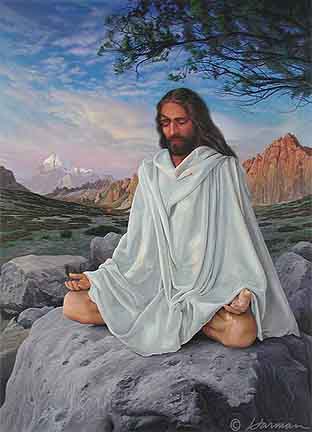
Today here in the West most of the World is celebrating Easter Sunday, therefore we are posting some of Srila Prabhupada’s instructions on Jesus Christ
…Jesus Christ was such a great personality—the son of God, the representative of God. He had no fault. Still, he was crucified. He wanted to deliver God consciousness, but in return they crucified him—they were so thankless. They could not appreciate his preaching. But we appreciate him and give him all honor as the representative of God.
Of course, the message that Christ preached was just according to his particular time, place, and country, and just suited for a particular group of people. But certainly he is the representative of God. Therefore we adore Lord Jesus Christ and offer our obeisances to him.
Once, in Melbourne, a group of Christian ministers came to visit me. They asked, “What is your idea of Jesus Christ?” I told them, “He is our guru. He is preaching God consciousness, so he is our spiritual master.” The ministers very much appreciated that.
Actually, anyone who is preaching God’s glories must be accepted as a guru. Jesus Christ is one such great personality. We should not think of him as an ordinary human being. The scriptures say that anyone who considers the spiritual master to be an ordinary man has a hellish mentality. If Jesus Christ were an ordinary man, then he could not have delivered God consciousness…
The Science of Self Realization
By His Divine Grace A.C. Bhaktivedanta Swami Prabhupada
Chapter 4,
Understanding Krsna and Christ
The Śrīmad-Bhāgavatam states that any bona fide preacher of God consciousness must have the qualities of titikṣā (tolerance) and karuṇā (compassion). In the character of Lord Jesus Christ we find both these qualities. He was so tolerant that even while he was being crucified, he didn’t condemn anyone. And he was so compassionate that he prayed to God to forgive the very persons who were trying to kill him. (Of course, they could not actually kill him. But they were thinking that he could be killed, so they were committing a great offense.) As Christ was being crucified he prayed, “Father, forgive them. They know not what they are doing.”
More
25 Dec 2011
by The Hare Krishna Movement
in Lord Jesus Christ, Science of Self Realization, Srila Prabhupada Conversations, Vegetarianism
Tags: Christ, Christos, Emmanuel Jungclaussen, Father Emmanuel, Jesus, Krishna, Krsna, Krsta, Lord Jesus Christ, Srila Prabhupada, the anointed one, The Science of Self Realization, Understanding Krsna and Christ

Conversation with Father Emmanuel
The Science of Self Realization
By His Divine Grace A.C. Bhaktivedanta Swami Prabhupada
Chapter 4 “Understanding Krsna and Christ”
Conversation with Father Emmanuel
In 1974, near ISKCON’s center in Frankfurt am Main, West Germany, Srila Prabhupada and several of his disciples took a morning walk with father Emmanuel Jungclaussen, a Benedictine monk from Niederalteich Monastery.
Noticing that Srila Prabhupada was carrying meditation beads similar to the rosary, Father Emmanuel explained that he also chanted a constant prayer: “Lord Jesus Christ, be merciful unto us.” The following conversation ensued.
Srila Prabhupada: What is the meaning of the word Christ?
Father Emmanuel: Christ comes from the Greek word Christos, meaning “the anointed one.”
Srila Prabhupada: Christos is the Greek version of the word Krsna.
Father Emmanuel: This is very interesting.
Srila Prabhupada: When an Indian person calls on Krsna, he often says, “Krsta.” Krsta is a Sanskrit word meaning “attraction.” So when we address God as “Christ,” “Krsta,” or “Krsna,” we indicate the same all-attractive Supreme Personality of Godhead. When Jesus said, “Our Father, who art in heaven, sanctified be Thy name,” that name of God was “Krsta” or “Krsna.” Do you agree?
Father Emmanuel: I think Jesus, as the son of God, has revealed to us the actual name of God: Christ. We can call God “Father,” but if we want to address Him by His actual name, we have to say “Christ.”
Srila Prabhupada: Yes. “Christ” is another way of saying Krsta, and “Krsta” is another way of pronouncing Krsna, the name of God. Jesus said that one should glorify the name of God, but yesterday I heard one theologian say that God has no name-that we can call Him only “Father.” A son may call his father “Father,” but the father also has a specific name. Similarly, “God” is the general name of the Supreme Personality of Godhead, whose specific name is Krsna. Therefore whether you call God “Christ,” “Krsta,” or “Krsna,” ultimately you are addressing the same Supreme Personality of Godhead.
More







 The Hare Krishna Movement