12 Aug 2011
by The Hare Krishna Movement
in A.C. Bhaktivedanta Swami Prabhupada, Balarama, Spiritual World, Srila Prabhupada's Books
Tags: Balarama, gopis, Lord Balarama Visits Vrndavana, rasa dance, Srila Prabhupada, Srimad Bhagavatam, Vrindavan forest

Lord Balarāma Visits Vṛndāvana
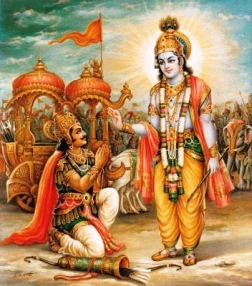
Lord Balarāma could, of course, understand the ecstatic feelings of the gopīs, and therefore He wanted to pacify them. He was expert in presenting an appeal, and thus, treating the gopīs very respectfully, He began to narrate the stories of Kṛṣṇa so tactfully that the gopīs became satisfied. In order to keep the gopīs in Vṛndāvana satisfied, Lord Balarāma stayed there continually for two months, namely the months of Caitra (March-April) and Vaiśākha (April-May). For those two months He kept Himself among the gopīs, and He passed every night with them in the forest of Vṛndāvana in order to satisfy their desire for conjugal love. Thus Balarāma also enjoyed the rāsa dance with the gopīs during those two months.
Lord Balarāma Visits Vṛndāvana
From; Kṛṣṇa, the Supreme Personality of Godhead
By His Divine Grace A. C. Bhaktivedanta Swami Prabhupada
Lord Balarāma became very anxious to see His father and mother, Mahārāja Nanda and Yaśodā. Therefore He started for Vṛndāvana on a chariot with great enthusiasm. The inhabitants of Vṛndāvana had been anxious to see Kṛṣṇa and Balarāma for a very long time. When Lord Balarāma returned to Vṛndāvana, all the cowherd boys and the gopīs had grown up; but still, on His arrival, they all embraced Him, and Balarāma embraced them in reciprocation. After this He came before Mahārāja Nanda and Yaśodā and offered His respectful obeisances unto them. In response, mother Yaśodā and Nanda Mahārāja offered their blessings unto Him. They addressed Him as Jagadīśvara, or the Lord of the universe who maintains everyone. The reason for this was that both Kṛṣṇa and Balarāma maintain all living entities, and yet Nanda and Yaśodā were put into such difficulties on account of Their absence. Feeling like this, they embraced Balarāma and, seating Him on their laps, began their perpetual crying, wetting Balarāma with their tears. Lord Balarāma then offered His respectful obeisances to the elderly cowherd men and accepted the obeisances of the younger cowherd men. Thus, according to their different ages and relationships, Lord Balarāma exchanged feelings of friendship with them. He shook hands with those who were His equals in age and friendship, and with loud laughing embraced each one of them.
More
12 Aug 2011
by The Hare Krishna Movement
in A.C. Bhaktivedanta Swami Prabhupada, Balarama
Tags: Baladeva, Balarama, Balarama Purnima, Lord Balarama, Sri Baladeva, Surpreme Personality of Godhead

Balarama Purnima
The Apperance Day of Lord Balarama
We share with you some Balarama Nectar to honor His Apperance Day. By His Divine Grace A. C. Bhaktivedanta Swami Prabhupada
The foremost manifestation of Kṛṣṇa is Saṅkarṣaṇa, who is known as Ananta. He is the origin of all incarnations within this material world. Previous to the appearance of Lord Kṛṣṇa, this original Saṅkarṣaṇa will appear as Baladeva, just to please the Supreme Lord Kṛṣṇa in His transcendental pastimes. (Srimad Bhagavatam 10.1.24)
Śrī Baladeva is the Supreme Personality of Godhead Himself. He is equal in supremacy to the Supreme Godhead, yet wherever Kṛṣṇa appears, Śrī Baladeva appears as His brother, sometimes elder and sometimes younger. When Kṛṣṇa appears, all His plenary expansions and other incarnations appear with Him. This is elaborately explained in Caitanya-caritāmṛta. This time, Baladeva would appear before Kṛṣṇa as Kṛṣṇa’s elder brother. (Purport)
“One devotee described the personal beauty of Baladeva as follows “Let me take shelter of the lotus feet of Balarāma, whose beauty is enhanced by the earrings touching His cheeks. His face is decorated with tilaka made from kastūrī [musk], and His broad chest is decorated with a garland of guñjā [small conchshells]. His complexion is as white as an autumn cloud, He wears garments of blue color, and His voice is very grave. His arms are very long, touching His thighs, and He has shown His great strength by killing the Pralamba demon. Let me take shelter of this chivalrous Balarāma.” (Nectar of Devotion Chapter 41)
Once when Krishna, Balarama and the cowherd boys were walking through the forests of Vrndavana Krishna spoke the following affectionate words to His brother:
My dear brother, You are the supreme worshipable Godhead. Just see how the peacocks are dancing before You in great ecstasy. The deer, whose behavior is just like that of the gopis, are welcoming You with the same affection. And the cuckoos who are residing in this forest are welcoming You with their joyful, sweet cries because they consider that Your appearance in their home is so auspicious. Even though they are trees and animals, these residents of Vrndavana are glorifying You. They are prepared to welcome You to the best of their ability, as is the practice of great souls in receiving another great soul at home. As for the land, it is so pious and fortunate because the footprints of Your lotus feet are marking its body.
(Krishna Book Ch. 15 “The Killing of Dhenukasura”)
“Lord Kṛṣṇa and Balarāma are not two different Personalities of Godhead. God is one without a second, but He expands Himself in many forms without their being separate from one another. They are all plenary expansions. The immediate expansion of Lord Kṛṣṇa is Baladeva, and Brahmā, born from the lotus flower from Garbhodakaśāyī Viṣṇu, is an expansion of Baladeva. This indicates that Kṛṣṇa and Baladeva are not subjected to the regulations of the universe; on the contrary, the whole universe is under Their subjugation. They appeared at the request of Brahmā to liberate the burden of the world, and They relieved the world by many superhuman activities so that everyone became happy and prosperous. Without the grace of the Lord, no one can become happy and prosperous. Because the happiness of the family of the Lord’s devotees depends on the happiness of the Lord…” (Srimad Bhagavatam 3.1.26 Purport)
10 Aug 2011
by The Hare Krishna Movement
in Devotee's, Gauridas Pandit das, Rupa Goswami, Six Goswamis
Tags: Gaudiya Vaisnava, Gauridas Pandita das, six goswami's, Sri Rupa Goswami, sri rupa manjari pada, Sri Rupa-manjari

Sri Rupa Goswami
By Gauridasa Pandita Prabhu
Today is the disapperance day of Sri Rupa Goswami and Gauridasa Pandita
Sri Rupa Goswami
Gaudiya Vaisnava’s, Devotees today and in the future are known as Rupanugas, followers of Sri Rupa Gosvami. Every devotee should aspire to become a servant of the servant of the lotus feet of Sri Rupa Gosvami. Sri Narottama Dasa Thakura sings, sri-rupa-manjari-pada, se more sampada, sei mor bhajana pujana: “The feet of Sri Rupa-manjari (Rupa Gosvami’s eternal form as Sri Radha’s maidservant in Vraja) are my only wealth. They are the only object of my service and worship.”
Srila Rupa Goswami was an incarnation of Rupa Manjari, the most important of the eight confidential maidservants of Srimati Radharani in the spiritual world. It is said that without taking shelter of Srila Rupa Goswami one cannot enter into the pastimes of Lord Chaitanya, and without taking shelter of Rupa Manjari one cannot enter into the confidential loving pastimes of Sri Sri Radha and Krishna.
More
08 Aug 2011
by The Hare Krishna Movement
in Diksha, Guru & Disciple, Quotes by Srila Prabhupada, Siksa, Srila Prabhupada
Tags: ISKCON Guru Tattva Siddhanta, Madhavananda das, spiritual master Jagad Guru, Srila Prabhupada, VNN

Iskcon Guru Tattva Siddhanta
By Madhavananda Das
December 27, 1998 (VNN) 2746
(The following is a series of quotes from Srila Prabhupada relevant to the ISKCON guru issue. The quotes are presented in a logical order which addresses the entire issue point by point. Let us hear the perfected words of our beloved spiritual master.)
There are two kinds of instructing spiritual masters. One is the liberated person fully absorbed in meditation in devotional service, and the other is he who invokes the disciple’s spiritual consciousness by means of relevant instructions. (Adi 1.47)
“…in order to receive the real message of Srimad Bhagavatam one should approach the current link, or spiritual master in the chain of disciplic succession.” (S.B. 2.9.7)
“…disciplic succession does not always mean that one has to be initiated officially. Disciplic succession means to accept the disciplic conclusion. (Letter Dinesh 10/31/69)
In other words, the spiritual master awakens the sleeping living entity to his original consciousness so that he can worship Lord Visnu. This is the purpose of diksa, or initiation. Initiation means receiving the pure knowledge of spiritual consciousness. (Madhya 9.61)
Diksa actually means initiating a disciple with transcendental knowledge by which he becomes freed from all material contamination. (Madhya 4.110)
Initiation or no initiation, first thing is knowledge. (break) …knowledge. Initiation is formality. Just like you go to a school for knowledge, and admission is formality. That is not very important thing. (Conv. 10/16/76)
In my books the philosophy of Krishna Consciousness is explained fully, so if there is anything which you do not understand, then you simply have to read again and again. By reading daily the knowledge will be revealed to you and by this process your spiritual life will develop.(Letter Baharupa 11/22/74)
Everyone of you must regularly read our books at least twice, in the morning and evening, and automatically all questions will be answered. (Letter Ranadhir 1/24/70)
“I shall remain your personal guidance, physically present or not physically, as I am getting personal guidance from my Guru Maharaja.” (Conv. 7/14/77)
Generally a spiritual master who constantly instructs a disciple in spiritual science becomes his initiating spiritual master later on.” (Adi 1.35)
Sometimes a diksa-guru is not present always. Therefore one can take learning, instruction, from an advanced devotee. That is called the siksa-guru. (Lec 7/4/77 Honolulu)
You simply say, “Krsna said four things: man-mana bhava mad-bhakto mad-yaji mam namaskuru. ‘Just always think of Me.’ Krsna said. ‘And just become My devotee. Just worship Me and offer obeisances.’ Kindly do these things.” So if you can induce one person to do these four things, you become guru. Is there any difficulty? (Conv. 2/8/76 Paris)
More
05 Aug 2011
by The Hare Krishna Movement
in Diksha, Guru & Disciple, Siksa
Tags: Ananda devi dasi, devotional service, diksa guru, disciplic succession, Iskcon, July 9th Letter, officiating Acarya, vani, vapuh

Vani Seva
By Ananda devi dasi
May 12 2009, UK
“In the absence of physical presentation of the Spiritual Master, the vaniseva is more important. My Spiritual Master Saraswati Goswami, may appear to be physically not present but still I try to serve His Instruction, I never feel separated from Him” (Srila Prabhupada Lecture, August 22, 1970)
After the disappearance of Srila Prabhupada His instructions remained the same, they didn’t change. Therefore Srila Prabhupada is the Diksa Guru and His ISKCON-specific instructions and the process of Diksa remains the same. A disciple who has had no chance of serving the Spiritual Master, Srila Prabhupada, when He was in His Vapuh, can still follow His Vani, instructions, and fully benefit from this association and advance in devotional service.
The Officiating Acarya process is not a replacement system for the Disciplic Succession, nor is it an initiating system, either. Srila Prabhupada is the Initiator Guru whether there is an Officiating Acarya system in place or not, whether or not the July 9th Letter is implemented or not. Devotees that join ISKCON can only be initiated by Srila Prabhupada because He is the Diksa Guru for ISKCON, period.
In Srimad Bhagavatam 4.28.47 we read:
“The disciple and spiritual master are never separated because the spiritual master always keeps company with the disciple as long as the disciple follows strictly the instructions of the spiritual master. This is called the association of Vani. Physical presence is called Vapuh. As long as the spiritual master is physically present, the disciple should serve the physical body of the spiritual master, and when the spiritual master is no longer physically existing, the disciple should serve the instructions of the spiritual master.”
Srila Prabhupada makes it crystal clear that after the disappearance of the Spiritual Master, the disciple follows the instructions of the Spiritual Master. The Spiritual Master left His instructions in the form of Books, verbal instructions, letters, tapes, videos, all these are instructions from the Spiritual Master,Vani.
After the disappearance of Srila Prabhupada His instructions remained the same, they didn’t change. Therefore Srila Prabhupada is the Diksa Guru and His ISKCON-specific instructions and the process of Diksa remains the same. A disciple who has had no chance of serving the Spiritual Master, Srila Prabhupada, when He was in His Vapuh, can still follow His Vani, instructions, and fully benefit from this association and advance in devotional service.
In Caitanya-caritamrta Adi 1.35 we read:
“It is imperative that one accepts a spiritual master if he at all desires to gain the favor of the Lord. The service of the Spiritual Master is essential. If there is no chance to serve the spiritual master directly, a devotee should serve Him by remembering His instructions. There is no difference between the spiritual masters instructions and the spiritual master Himself. In His absence,therefore,His words of direction should be the pride of the disciple.”
More
05 Aug 2011
by The Hare Krishna Movement
in Srila Prabhupada, Srimad Bhagavatam
Tags: Book Bhagavata, Devotee Bhagavata, devotional service, Divinity and Divine Service, Srila Prabhupada, Srimad Bhagavatam, transcendental knowledge
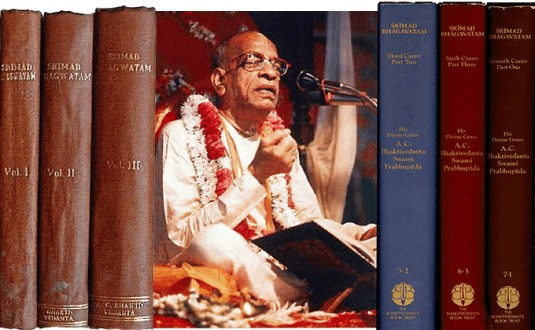
The message of the Book Bhagavata is received from the devotee Bhagavata, Srila Prabhupada, and under His guidance the devotee is able to progress in devotional service. By such sincere association the disciple is able to receive transcendental knowledge very easily.
Srimad Bhagavatam
By His Divine Grace A. C. Bhaktivedanta Swami Prabhupada
Chapter 3 Divinity and Divine Service
naṣṭa-prāyeṣv abhadreṣu
nityaṁ bhāgavata-sevayā
bhagavaty uttama-śloke
bhaktir bhavati naiṣṭhikī
By regular attendance in classes on the Bhāgavatam and by rendering of service to the pure devotee, all that is troublesome to the heart is almost completely destroyed, and loving service unto the Personality of Godhead, who is praised with transcendental songs, is established as an irrevocable fact.
Here is the remedy for eliminating all inauspicious things within the heart which are considered to be obstacles in the path of self-realization. The remedy is the association of the Bhāgavatas. There are two types of Bhāgavatas, namely the book Bhāgavata and the devotee Bhāgavata. Both the Bhāgavatas are competent remedies, and both of them or either of them can be good enough to eliminate the obstacles. A devotee Bhāgavata is as good as the book Bhāgavata because the devotee Bhāgavata leads his life in terms of the book Bhāgavata and the book Bhāgavata is full of information about the Personality of Godhead and His pure devotees, who are also Bhāgavatas. Bhāgavata book and person are identical.
The devotee Bhāgavata is a direct representative of Bhagavān, the Personality of Godhead. So by pleasing the devotee Bhāgavata one can receive the benefit of the book Bhāgavata. Human reason fails to understand how by serving the devotee Bhāgavata or the book Bhāgavata one gets gradual promotion on the path of devotion. But actually these are facts explained by Śrīla Nāradadeva, who happened to be a maidservant’s son in his previous life. The maidservant was engaged in the menial service of the sages, and thus he also came into contact with them. And simply by associating with them and accepting the remnants of foodstuff left by the sages, the son of the maidservant got the chance to become the great devotee and personality Śrīla Nāradadeva. These are the miraculous effects of the association of Bhāgavatas. And to understand these effects practically, it should be noted that by such sincere association of the Bhāgavatas one is sure to receive transcendental knowledge very easily, with the result that he becomes fixed in the devotional service of the Lord. The more progress is made in devotional service under the guidance of the Bhāgavatas, the more one becomes fixed in the transcendental loving service of the Lord. The messages of the book Bhāgavata, therefore, have to be received from the devotee Bhāgavata, and the combination of these two Bhāgavatas will help the neophyte devotee to make progress on and on.
04 Aug 2011
by The Hare Krishna Movement
in Festivals, Krishna Consciousness
Tags: chanting, dancing and eating prasadam, Hare Krishna Movement, Iskcon Times, Rathayatra, Srila Prabhupada, Yashoda Nandan das

The Potency of Ratha-yatra
By: Compiled by Yashoda Nandan Das (USA)
Our Hare Krishna movement is standing on three principal things: chanting, dancing, and eating prasadam.
Excerpts from the teaching of Srila Prabhupada
Srila Prabhupada: Melbourne, Tokyo, and many other places. And India also, in Calcutta also. So this festival, taking part in these festivals means a step forward for our self-realization. Rathe ca vamanamarstva punar janma na vidyate. Simply by seeing the Lord on the chariot, one makes advancement for stopping the repetition of birth and death.
So I am very glad that you have taken so much trouble to come here. Now will you chant Hare Krishna mantra along with the devotees and take part in honoring the prasadam? The prasadam is also one of the programs. Our Hare Krishna movement is standing on three principal things: chanting, dancing, and eating prasadam. It is not very difficult. It is very enjoyable to chant, dance, and take prasadam. And if you like, you can hear a little philosophy of this movement. Or even if you do not understand the philosophy, even you do not read the books, simply if you take part in these three things, chanting, dancing, and taking part in eating the prasadam, your life will gradually progress in spiritual advancement of life. And if you continue this, then some day will come, even in this life it may come, that you will understand what is Krishna. And as soon as you understand Krishna, then after leaving this body you go back to home, back to Godhead, directly (?). This is stated in the Bhagavad-gita. Those who have read Bhagavad-gita… Lord Krishna says,
janma karma me divyam yo janati tattvatah tyaktva deham punar janma naiti mam eti kaunteya [Bg. 4.9]
Simply by understanding Krishna, Krishna’s appearance, Krishna’s disappearance, Krishna’s activities. This Rathayatra is one of the activities of Krishna. Therefore to take part in the Rathayatra festival means to associate with Krishna directly. So in this way, if we associate with Krishna’s name, Krishna’s pastimes, Krishna’s qualities, Krishna’s form, then, gradually, we transcend this material existence Janma karma me divyam yo janati tattvatah. If we simply try to understand about Krishna’s movement, then the result is, Krishna says, tyaktva deham: we have to give up this body. But if we give up this body after being elevated into Krishna consciousness, then Krishna says, tyaktva deham punar janma naiti [Bg. 4.9]. Then, after giving up this body, you haven’t got to accept another material body. Tyaktva deham punar janma naiti [Bg. 4.9]. Then where shall I go? Krishna says, mam eti: “He comes to Me.
More
03 Aug 2011
by The Hare Krishna Movement
in A.C. Bhaktivedanta Swami Prabhupada, Devotee's, Guru & Disciple, Letters by Srila Prabhupada, Tamal Krishna Goswami
Tags: krpa siddha, Krsna, nitya siddha, sadhana siddha, spiritual master, Srila Prabhupada, Tamala Krishna

Letter to: Tamala Krsna
Los Angeles
21 June, 1970
Paris
My Dear Tamala,
Please accept my blessings. I beg to acknowledge receipt of your letter dated 18th June, 1970, sent by Special Delivery Air Mail.
Krsna philosophy is understood as it is stated in the Vedas:
Yasya deve para bhakti yatha deve tatha gurau
tasya ete kathitha hi artha prakasante mahatmanah
“One who has got unflinching faith in the Supreme Lord and similar faith in his Spiritual Master to him only the imports of Vedic knowledge become revealed.”
A Spiritual Master is always liberated. In any condition of His life He should not be mistaken as ordinary human being. This position of a Spiritual Master is achieved by three processes. One is called sadhana siddha. That means one who is liberated by executing the regulative principle of devotional service. Another is krpa siddha, one who is liberated by the mercy of Krsna or His devotee. And another is nitya siddha who is never forgetful of Krsna throughout his whole life. These are the three features of the perfection of life.
So far Narada Muni is concerned, in His previous life He was a maidservant’s son, but by the mercy of the devotees He later on became siddha and next life He appeared as Narada with complete freedom to move anywhere by the grace of the Lord. So even though He was in his previous life a maidservant’s son there was no impediment in the achievement of His perfect spiritual life. Similarly any living entity who is conditioned can achieve the perfectional stage of life by the above mentioned processes and the vivid example is Narada Muni.
So I do not know why you have asked about my previous life. Whether I was subjected to the laws of material nature? So, even though accepting that I was subjected to the laws of material nature, does it hamper in my becoming Spiritual Master? What is your opinion? From the life of Narada Muni it is distinct that although He was a conditioned soul in His previous life, there was no impediment of His becoming the Spiritual Master. This law is applicable not only to the Spiritual Master, but to every living entity.
There are thousands of examples explained in our books that the conditioned soul is never affected with the material body. It is said in the Vedas asamga ayam purusa which means the living entity is always unaffected with matter. Another example is given that the reflection of the moon on water appears to be moving, but actually the moon is not moving, it is fixed up. So any living entity is like that. His reflection on the material body appears to be changing, but the spirit soul is fixed up, therefore this movement is called illusion.
Liberation means liberation from this changing condition.
So far I am concerned, I cannot say what I was in my previous life, but one great astrologer calculated that I was previously a physician and my life was sinless. Besides that, to corroborate the statement of Bhagavad-gita “sucinam srimatam gehe yogabhrasta samyayate” [Bg. 6.41] which means an unfinished yogi takes birth in rich family or born of a suci or pious father. By the grace of Krsna I got these two opportunities in the present life to be born of a pious father and brought up in one of the richest, aristocratic families of Calcutta (Kasinath Mullick). The Radha Krsna Deity in this family called me to meet Him, and therefore last time when I was in Calcutta, I stayed in that temple along with my American disciples. Although I had immense opportunities to indulge in the four principles of sinful life because I was connected with a very aristocratic family, Krsna always saved me, and throughout my whole life I do not know what is illicit sex, intoxication, meat-eating or gambling. So far my present life is concerned, I do not remember any part of my life when I was forgetful of Krsna.
More
03 Aug 2011
by The Hare Krishna Movement
in Devotee's, Diksha, Guru & Disciple, Hansadutta das, Siksa, Srila Prabhupada His Movement & You
Tags: hansadutta das, initiated disciple, Srila Prabhupada, Srila Prabhupada books
How to be linked up with Srila Prabhupada
Posted by Hansadutta das on October 22, 2010
A devotee in Texas wrote in, asking what to do, how to be properly connected with Srila Prabhupada. He is certainly not the only one. There are many devotees like him all over the world, so I hope this helps others who likewise want to understand their situation in relationship to Prabhupada.
Dear Bhakta Ronnie, obeisances, all glories to Srila Prabhupada.
Thank you for your nice letter (letter follows). You have asked, “What exactly is a devotee like me supposed to do? How do I get linked up with Srila Prabhupada?” This is the question that plagues you, right?
Vaikuntanath das, a good friend of mine from NY City in early 1968, was alone with Srila Prabhupada at the Radha Damodar temple in Vrindaban, India. He wanted to ask a question of Prabhupada that had haunted him for a long time. Finally he felt, “This is my chance.” He asked, “Srila Prabhupada, we are distributing millions of books, but in the future when you are not here, how will these people who read your books be INITIATED?” Srila Prabhupada looked at him approvingly and answered, “One who reads my books, he is initiated automatically.”
More
02 Aug 2011
by The Hare Krishna Movement
in Books by Srila Prabhupada, The Hare Krishna Movement
Tags: Bhagavata Purana, Kali, Lord Krsna, Srila Prabhupada, Srimad Bhagavatam

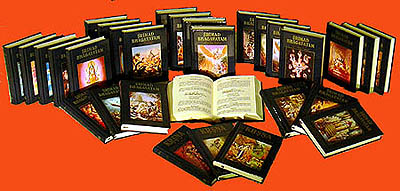
Srimad Bhagavatam Compact 30 Vol 1977 Edition
Cantos 1-9, plus the Original Krsna Book in 3 Volumes comprising the 10th Canto
This 12,000 page, 30 vol. set, comes in High Quality Hard Bound 5×7 size. with over 600 beautiful full color plates.
For a limited time selling at the reduced Wholesale rate of $149.95
No home library is complete without a set.
Get one today at http://www.theharekrishnamovement.com
And Śrīmad-Bhāgavatam is the summum bonum of life, Lord Śrī Kṛṣṇa personified. We must therefore accept Śrīmad-Bhāgavatam as the direct representation of Lord Kṛṣṇa. One who can see Śrīmad-Bhāgavatam can see also Lord Śrī Kṛṣṇa in person. They are identical.
Srimad Bhagavatam
Canto 1, Chapter 3, Text 43
By His Divine Grace A. C. Bhaktivedanta Swami Prabhupada
kṛṣṇe sva-dhāmopagate
dharma-jñānādibhiḥ saha
kalau naṣṭa-dṛśām eṣa
purāṇārko ‘dhunoditaḥ
SYNONYMS
kṛṣṇe—in Kṛṣṇa’s; sva-dhāma—own abode; upagate—having returned; dharma—religion; jñāna—knowledge; ādibhiḥ—combined together; saha—along with; kalau—in the Kali-yuga; naṣṭa-dṛśām—of persons who have lost their sight; eṣaḥ—all these; purāṇa-arkaḥ—the Purāṇa which is brilliant like the sun; adhunā—just now; uditaḥ—has arisen.
This Bhāgavata Purāṇa is as brilliant as the sun, and it has arisen just after the departure of Lord Kṛṣṇa to His own abode, accompanied by religion, knowledge, etc. Persons who have lost their vision due to the dense darkness of ignorance in the age of Kali shall get light from this Purāṇa.
More
01 Aug 2011
by The Hare Krishna Movement
in Krsna is the Source of All Incarnations, Vamanadeva
Tags: dwarf-brahman, fifteenth incarnation, Krsna Is The Source of All Incarnations, Maharaja Bali, SB 1.3.19, SB 8.18, Srila Prabhupada, Srimad Bhagavatam, Vamana, Vamanadeva

Lord Vāmanadeva, the Dwarf Incarnation
Srimad Bhagavatam: Canto 8: “Withdrawal of the Cosmic Creations”
Chapter 18, Text 1-32, Translations & Purports
By His Divine Grace A. C. Bhaktivedanta Swami Prabhupada
Chapter Eighteen
Lord Vāmanadeva, the Dwarf Incarnation
TEXT 1
Śukadeva Gosvāmī said: After Lord Brahmā had thus spoken, glorifying the Supreme Lord’s activities and prowess, the Supreme Personality of Godhead, who is never subject to death like an ordinary living being, appeared from the womb of Aditi. His four hands were decorated with a conchshell, club, lotus and disc, He was dressed in yellow garments, and His eyes appeared like the petals of a blooming lotus.
PURPORT
The word amṛta-bhūḥ is significant in this verse. The Lord sometimes appears like an ordinary child taking birth, but this does not mean that He is subject to birth, death or old age. One must be very intelligent to understand the appearance and activities of the Supreme Lord in His incarnations. This is confirmed in Bhagavad-gītā (4.9): janma karma ca me divyam evaṁ yo vetti tattvataḥ. One should try to understand that the Lord’s appearance and disappearance and His activities are all divyam, or transcendental. The Lord has nothing to do with material activities. One who understands the appearance, disappearance and activities of the Lord is immediately liberated. After giving up his body, he never again has to accept a material body, but is transferred to the spiritual world (tyaktvā dehaṁ punar janma naiti mām eti so ’rjuna [Bg. 4.9]).
TEXT 2
The body of the Supreme Personality of Godhead, blackish in complexion, was free from all inebrieties. His lotus face, decorated with earrings resembling sharks, appeared very beautiful, and on His bosom was the mark of Śrīvatsa. He wore bangles on His wrists, armlets on His arms, a helmet on His head, a belt on His waist, a sacred thread across His chest, and ankle bells decorating His lotus feet.
TEXT 3
An uncommonly beautiful garland of flowers decorated His bosom, and because the flowers were extremely fragrant, a large group of bees, making their natural humming sounds, invaded them for honey. When the Lord appeared, wearing the Kaustubha gem on His neck, His effulgence vanquished the darkness in the home of the Prajāpati Kaśyapa.
More
31 Jul 2011
by The Hare Krishna Movement
in Devotee's, Diksha, Guru & Disciple, Madhudvisa das, Siksa, The Hare Krishna Movement
Tags: acharyas, disciples, Evidence and Clarification, Iskcon, Madhuvisa dasa, prabhupada, ritvik, Rocan dasa, Sampradaya sun, Srila Prabhupada, Tamal Krishna Goswami

Srila Prabhupada is the Only Spiritual Master for ISKCON
Srila Prabhupada created ISKCON for his disciples and it is really only going to work for his disciples. There is no history of a group of gurus living together and having all their disciples together. Even the Goswamis in Vrindavan, they were coming together for kirtans but they all had their own separate temples and disciples.
A short while back I read an interesting article written by Madhuvisa Prabhu, and posted by Rochan Prabhu on his site Sampradaya Sun. The article was entitled Evidence and Clarification. We are posting some of it here.
“…But as far as the facts are concerned it is certainly a fact that Prabhupada established a ritvik initiation system in ISKCON in the early 70’s where he would appoint representatives to perform the fire yajnas for his disciples on his behalf. And it is a fact that he gave these “ritviks” more power as the years went on, and in the July 9th letter, he gave them complete power to accept disciples on his behalf and chant on their beads and give them a name, without having any physical involvement in the matter at all.
It is also a provable fact that Srila Prabhuapda did not consider that any of his disciples were qualified for the position of acharya. And therefore it is very reasonable to say that Srila Prabhupada did not appoint any successor acharyas. I was just listening to one of the 1977 conversation tapes a couple of days ago and Srila Prabhupada told Tamal that the problem is among his disciples there is no strong man. He said they are all like children and among all Ramesvara may be the best. The same thing is there in other places where Prabhupada is clearly stating that his disciples are immature and not qualified for the post of acharya.
So it is a fact that the system Srila Prabhupada used in ISKCON to accept disciples in him physical presence was ritvik, 100% ritvik in the later years. And we can say it is a fact that he did not appoint any successor acharyas. Even Tamal confirms this in his Topanga Canyon talks. He says clearly that Prabhupada only appointed ritviks.
More
31 Jul 2011
by The Hare Krishna Movement
in Bhagavad-gita, Guru & Disciple, Kali Yuga
Tags: bhagavad-gita, disciplic succession, Iksvaku, Kali-yuga, krsna consciousness, Manu, spiritual knowledge, Srila Prabhupada, Supreme Personality of Godhead, Vivasvan

Bhagavad-gita As It Is – Macmillan 1972 Edition; Transcendental Knowledge
By His Divine Grace A. C. Bhaktivedanta Swami Prabhupada
Chapter 4, Text 1
śrī-bhagavān uvāca
imaṁ vivasvate yogaṁ
proktavān aham avyayam
vivasvān manave prāha
manur ikṣvākave ‘bravīt
SYNONYMS
śrī bhagavān uvāca—the Supreme Personality of Godhead said; imam—this; vivasvate—unto the sun-god; yogam—the science of one’s relationship to the Supreme; proktavān—instructed; aham—I; avyayam—imperishable; vivasvān—Vivasvān (the sun-god’s name); manave—unto the father of mankind (of the name Vaivasvata); prāha—told; manuḥ—the father of mankind; ikṣvākave—unto King Ikṣvāku; abravīt—said.
TRANSLATION
The Blessed Lord said: I instructed this imperishable science of yoga to the sun-god, Vivasvān, and Vivasvān instructed it to Manu, the father of mankind, and Manu in turn instructed it to Ikṣvāku.
PURPORT
Herein we find the history of the Bhagavad-gītā traced from a remote time when it was delivered to the royal order, the kings of all planets. This science is especially meant for the protection of the inhabitants and therefore the royal order should understand it in order to be able to rule the citizens and protect them from the material bondage to lust. Human life is meant for cultivation of spiritual knowledge, in eternal relationship with the Supreme Personality of Godhead, and the executive heads of all states and all planets are obliged to impart this lesson to the citizens by education, culture and devotion. In other words, the executive heads of all states are intended to spread the science of Kṛṣṇa consciousness so that the people may take advantage of this great science and pursue a successful path, utilizing the opportunity of the human form of life.
More
15 Jul 2011
by The Hare Krishna Movement
in Festivals
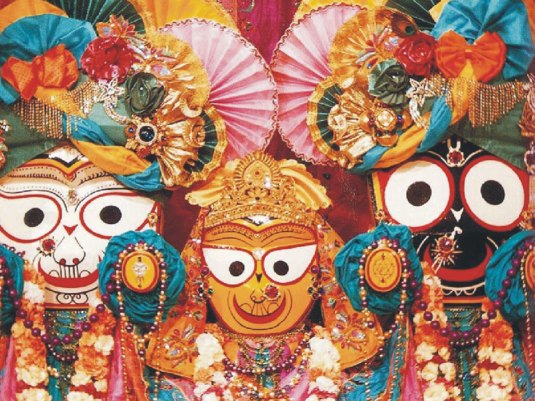
Ratha Yatra – Significance of Ratha Yatra
The word “Yatra” means pligrimage or Holy procession. Devotees and believers consider the yatra as most auspicious occasion in their lives.
The festival of yatra is considered very auspicious. Even a glimpse of Lord Jagannatha on the chariot is regarded as auspicious and the person who gets it is considered as fortunate. It is said that pulling the cart is enough to confer the results of hundreds and thousands of pious deeds or penances. In the Kathopanishada, the concept of the chariot is explained as follows:
Atmanam rathinam viddhi sareeram rathamevatu
Buddhim tu saarathim viddhi marah pragrahameva cha.
“Those who are fortunate to see the deities of the Srimandira in the Gundicha Temple, the final destination of the procession of the chariots, derive the benefits of a thousand horse sacrifices, an immensely pious deed.”
Thus, one can know how significant and meaningful ratha yatra is. We request our readers to participate in this famous festival and receive mercy of the the most merciful Lordships, Sri Sri Jagannatha, Balabhadra and Subhadra.
14 Jul 2011
by The Hare Krishna Movement
in The Hare Krsna Cookbook, Vegetarian Cooking
Tags: basic cooking ingredients, cooking for Krsna, Krsna prasadam, The Hare Krsna Cookbook, vegetarian cooking

The Hare Krsna Cookbook
Chapter One
Basic Cooking Ingredients
In the Vedic scriptures it is stated that the Supreme Lord has provided ample varieties of food-stuffs for all living creatures and that one should take only that which is allotted to him by the Lord, not more. For Humanity the Lord has set aside simple foods such as grains, vegetables, fruit and milk products and He has requested that we offer Him such pure and nourishing foods. In this way, there are hundred and thousands of palatable dishes that may be prepared and then offered to Lord Krishna.
Listed below are some of the ingredients most commonly used in preparing Krsna prasadam.
white flour (unbleached if available)
whole mung beans *
chick-pea flour, somtimes called besan or gram flour *
whole chick-peas
yellow split peas
split, cleaned urad dahl *
split, claned mung dahl *
powdered milk
almonds (raw and shelled)
walnuts (raw and shelled)
peanuts (raw and shelled)
white rice flour *
sugar
Most of these ingredients are readily abailable from regular grocery stores. The items marked was asterisks would more likely be found at Chinese food stores or Indian specialty stores.
Note; There are of course many more key ingredients, but it is our humble attempt to present “The Hare Krsna Cookbook” the way it was written back in 1973. Next post will be on Spices, which are the jewels of cooking for Krsna.
14 Jul 2011
by The Hare Krishna Movement
in Devotional Service, Krishna Consciousness, Nectar of Devotion
Tags: Bhakti-rasamrta-sindhu, causless mercy, devotional service, devotional service is ecstasy, His Divine Grace A.C. Bhaktivedanta Swami Prabhupada, Nectar of Devotion, pure love of Godhead, Srila Rupa Goswami

Nectar of Devotion
by His Divine Grace A. C. Bhaktivedanta Swami Prabhupāda
Chapter Two
We should always try to mold the activities of our lives in such a way that we will constantly remember Viṣṇu, or Kṛṣṇa. That is Kṛṣṇa consciousness. Whether one concentrates his mind on the four-handed form of Viṣṇu or on the form of two-handed Kṛṣṇa, it is the same. The Padma Purāṇa recommends: somehow or other always think of Viṣṇu, without forgetting Him under any circumstances. Actually this is the most basic of all regulative principles. For, when there is an order from a superior about doing something, there is simultaneously a prohibition. When the order is that one should always remember Kṛṣṇa, the prohibition is that one should never forget Him. Within this simple order and prohibition, all regulative principles are found complete.
The First Stages of Devotion
The three categories of devotional service which Śrīla Rūpa Gosvāmī describes in Bhakti-rasāmṛta-sindhu are listed as devotional service in practice, devotional service in ecstasy and devotional service in pure love of Godhead. There are many subheadings in each of these categories. Generally it is understood that in the category of devotional service in practice there are two different qualities, devotional service in ecstasy has four qualities, and devotional service in pure love of Godhead has six qualities. These qualities will be explained by Śrīla Rūpa Gosvāmī later on.
In this connection, Śrīla Rūpa Gosvāmī suggests that the person eligible for Kṛṣṇa consciousness, or devotional service, can be classified by his particular taste. He says that devotional service is a continual process from one’s previous life. No one can take to devotional service unless he has had some previous connection with it. For example, suppose in this life I practice devotional service to some extent. Even though it is not one-hundred-percent perfectly performed, whatever I have done will not be lost. In my next life, from the very point where I stop in this life, I shall begin again. In this way there is always a continuity. But even if there is no continuity, if only by chance a person takes interest in a pure devotee’s instruction, he can be accepted and can advance in devotional service. Anyway, for persons who have a natural taste for understanding books like Bhagavad-gītā and Śrīmad-Bhāgavatam, devotional service is easier than for those who are simply accustomed to mental speculation and argumentative processes.
More
12 Jul 2011
by The Hare Krishna Movement
in Hayagriva das, The Hare Krishna Explosion
Tags: Dwarkadish das, hayagriva das, Jai Sri Krishna, Kirtanananda Swami, Nara-narayana, New Vrindaban, Paramananda das, Paramhansa in the Hills, Rupanuga, Srila Prabhupada, the hare krishna explosion, Vamandev das

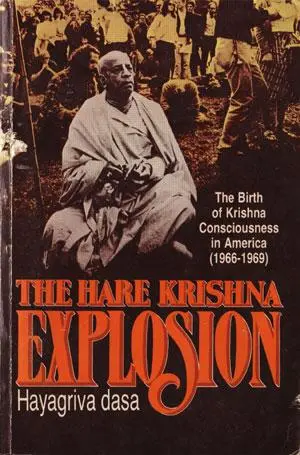
The Hare Krishna Explosion
by Hayagriva das
Part III: New Vrindaban, 1968-1969
Chapter 18
Paramhansa in the Hills
When we arrive at the foot of Aghasura Road, the devotees are waiting beside the powerwagon. The air is vibrant with the humming of bees and fragrant with the sweet aroma of white locust flowers.
The devotees offer obeisances as soon as the Lincoln turns down the driveway. They fall face down on the grass and gravel.
“Oh, there are many waiting here,” Prabhupada says, stepping out of the car. “Jai Sri Krishna!”
Little Dwarkadish, six years old, timidly obeys his mother and garlands Prabhupada with gardenias and red roses.
“Oh, thank you, Mr. D.D.D.,” Prabhupada says. “D.D.D.” is his nickname for Dwarkadish-das, who has just arrived with his mother from the Los Angeles temple. Present also are other recent arrivals: John and Susan, students from Ohio University, where Prabhupada lectured; Patita-pavana and Uddhava, two brothers from New York; Rupanuga and his five-year-old son Ekendra; and Nara-narayana, the carpenter who’s been helping Vamandev repair the farmhouse.
“So, where do we go from here?” Prabhupada asks.
“It’s two miles up that road, Prabhupada,” Ranandhir says, pointing at the muddy Aghasura winding its way down the creek through locust and maple.
“And we go in this?” Prabhupada asks, looking at the old powerwagon.
“It’s as strong as a tank, Prabhupada, “ Kirtanananda says, getting inside and starting it. The engine roars and smokes as he revs it up.
“Why not walk?” Prabhupada suggests.
We protest that the two-mile trek would be too hard on Prabhupada. Driving the power-wagon over Mr. Thompson’s property is quicker and easier.
Paramananda calls me aside to inform me that he couldn’t contact Mr. Thompson.
“He wasn’t in last night or this morning,” he says. “I guess it’s all right to drive over. He’s never refused.”
“Well, it’s an emergency,” I say.
Purushottam and Devananda load Prabhupada’s luggage in the back of the powerwagon. Prabhupada curiously asks about the vehicle’s model as he gets in. To cushion the jolts, we’ve placed clean pillows over the bare springs of the seat. Shama-dasi has even garlanded the dashboard.
Once Prabhupada is securely seated, Kirtanananda starts driving up the gravel road to Mr. Thompson’s farm. The powerwagon shudders and lurches forward. Hrishikesh, Paramananda, Ranandhir and I jump in back. The other devotees run behind in a hurried procession.
More
12 Jul 2011
by The Hare Krishna Movement
in Diksha, Guru & Disciple, Siksa
Tags: Hansadutta Maharaja, July 10th, July 11th 1977, July 31st 1977, Kirtanananda Swami, Kurma das, Prabhupadanuga News, ritvik, Srila Prabhupada
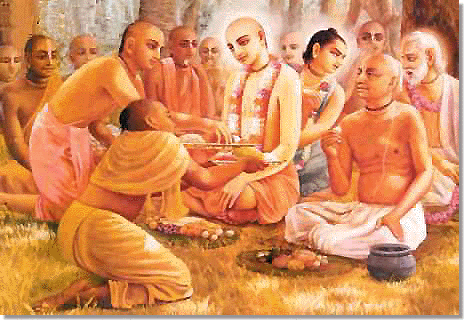
Ritvik Supported In Other Letters
By: Kurma Das
July 11 2011, Australia — For those of us following Rocana Dasa’s most recent dressing down of the July 9th letter, here are three other letters which clearly support the objectives of the July 9th letter and which describe the word RITTVIK two times
Kirtanananda Swami July 11th 1977
“A letter has been sent to all temple presidents and GBC which you should be receiving soon, describing the process of Initiation to be followed in the future. Srila Prabhupada has appointed thus far eleven representatives who will initiate new devotees on his behalf. You can wait for the letter to arrive ( The original has been sent to Rameswara Maharaja for duplicating ) and then all of the persons whom you recommended in your previous letters can be initiated .”
Hansadutta Swami July 10th 1977
“You are a suitable person and you can give initiation to those that are ready for it. I have selected you among eleven men as ‘Rittvik representative of the Acharya, to give initiations, both first and second initiation, on my behalf.’ A newsletter is being sent to all temple presidents and GBC in this regard, listing the eleven representatives selected by His Divine Grace. Those who are initiated are the disciples of Srila Prabhupada, and anyone whom you deem fit and initiate in this way, you should send their names to be included in Srila Prabhupada’s ‘Initiated disciples’ book.”
Hansadutta Swami July 31st 1977
“You have written to Srila Prabhupada saying you do not know why he has chosen you to be a recipient of his Mercy. His Divine Grace immediately replied, ‘It is because you are my sincere servant. You have given up attachment to a beautiful and qualified wife and that is a great benediction. You are a real preacher. Therefore I like you. (Then laughing) Sometimes you become obstinate, but that is true of any intelligent man. Now you have got a very good field. Now organize it and it will be a great credit. No one will disturb you there. MAKE YOUR OWN FIELD AND CONTINUE TO BE RITTVIK AND ACT ON MY BEHALF.’”
Kurma (not the chef)
http://www.prabhupadanugas.eu/?p=21298#more-21298
11 Jul 2011
by The Hare Krishna Movement
in A.C. Bhaktivedanta Swami Prabhupada, Diksha, Guru & Disciple, Madhudvisa das, Pandu das, Ritvik Representative of the Acharya
Tags: agni-hotra, exalted priest, Pandu das, Prabhupadanuga News, ritvik, ritvik initiation system, rtvijah, rtvijah-the priests, Srila Prabhupada, Vedic culture, Vedic sastra

Pandu on 17. December 2008 at 2:41 am said:
Srila Prabhupada’s Ritvik Initiation System
Some time back I was reading and article on the Prabhupadanuga News and I ran across this comment posted by Pandu Prabhu. I thought it relevant today, so I am posting it. It is some good information on the word “ritvik”. Also enclosed at end of post is the link to original article.
Since Srila Prabhupada himself Coined the term “Ritvik”, it is very offensive to Srila Prabhupada, to denounce this term. The attempt of certain persons to degrade the transcendental Vedic term “rtvijah” or “ritvik” to a derogatory word is one more example of offenses that have entered Iskcon due to our neglect of Srila Prabhupada’s advice.
In Vedic culture, a ritvik is an exalted priest. Such priests were often endowed with siddhis and respected as gurus, yet they never pretended to be as good as Lord Hari. By the order of the Acarya, the rtvijah recites the mantras that request the presence of Lord Visnu in the fire of Vedic sacrifice (agni-hotra), and he then makes offerings to the Supreme Lord according to Vedic sastra. The rtvijah performs an exalted function. He is a pure brahmin or Vaisnava who is never concerned about the political correctness or convenience of his stance.
Srila Prabhupada’s Ritvik statements can be found in his Supporting Instructions as well as in the Srimad Bhagavatam:
“…continue to become ritvik and act on my charge.” (July 19th)
“…continue to become ritvik and act on my behalf.” (July 31th)
“…the process for initiation to be followed in the future.” (July 11th)
Srila Prabhupada to Hansadutta: “You are a suitable person and you can give initiation to those who are ready for it. I have selected you among eleven men as “rittvik” or representative of the acharya, to give initiations, both first and second initiation, on my behalf.”
Srila Prabhupada: Yes. I shall recommend some of you. After this is settled up I shall recommend some of you to act as officiating acarya(s).
Tamal Krishna: Is that called ritvik acarya?
Srila Prabhupada: “ritvik. Yes”.
In these documents we find words such as “ritvik”, “continue” and “future” which, along with the word “henceforward”, all point to the permanency of the ritvik system. There is no statement from Srila Prabhupada that even hints that this system was to terminate on his departure.
SB 9.1.15 adhvaryuna–by the rtvik priest;
SB 4.5.7 rtvijah–the priests;
SB 4.5.18 rtvijah–the priests
SB 4.6.52 rtvijam–of the priests;
SB 4.7.16 rtvik–the priests;
SB 4.7.27 rtvijah–the priests;
SB 4.7.45 rtvijah–the priests;
SB 4.7.56 rtvigbhih–with the priests;
SB 4.13.26 rtvijah–the priests;
In Srimad-Bhagavatam (8.16.53), Srila Prabhupada defines “ritvik” (rtvijah) as “the priests recommended by the spiritual master”. In this instance ritviks are defined as the deputed priests of the spiritual master. They preside over a Vedic ritual meant for the worship of Lord Visnu (visnu-aradhana). The initiation ritual observed in ISKCON is a standard Vedic ceremony, and it may be performed by ritviks, who officiate on behalf of the Acarya.
This understanding and practice was clearly established by Srila Prabhupada personally, and there should be no controversy regarding the definition or function of the ritvik priest. The new initiates offer dakshina and service to the mission of the guru, and the priests may also receive some token honor or reward for their services, according to Vedic custom. (In ISKCON Srila Prabhupada would either receive the guru dakshina personally and use it for a global ISKCON project or for his traveling expenses, or he would give money to the BBT or some other important or needy branch of his preaching mission. He never said that priests representing ISKCON should receive money or expensive gifts for their services. Nor did he say they should assume positions of absolute authority and accept worship as gurus.)
http://www.prabhupadanugas.eu/?p=849
11 Jul 2011
by The Hare Krishna Movement
in Diksha, Guru & Disciple, Siksa
Tags: GBC guru-acharya, Guru Maharaja, gurus, ISKCON Journal, rittvik initiation, Srila Prabhupada, successor guru-acharyas, Tamal Krishna Goswami, Topanga Canyon
Tamal Krishna Goswami on Rittvik Initiation
In 1979-1980, Tamal Krishna Goswami (GBC guru-acharya ) confessed that Srila Prabhupada never appointed any successor guru-acharyas:
Tamal Krishna Goswami: …Actually, Prabhupada never appointed any gurus. He did not appoint eleven gurus. He appointed eleven rittviks [officiating priests]. He never appointed them as gurus . Myself and the other GBCs have done the greatest disservice to this movement for the last three years, because we interpreted the appointment of rittviks as the appointment of gurus….
[What Srila Prabhupada said was], “All right, I will appoint so many,” and he named them. He made it very clear that they [new members] were still to be his disciples. At that point it was very clear in my mind that they were his disciples….
Now I understand that what he did was very clear. He was physically incapable of performing the function of initiating physically; therefore he appointed officiating priests to initiate on his behalf. He appointed eleven and he said very clearly, “Whoever is nearest, he can initiate.”
This is a very important point, because when it comes to initiating, it is not “whoever is nearest.” It is wherever your heart goes–to whom you can repose your faith in.
But when it is officiating, it’s “whoever is nearest,” and he was very clear… “Whoever is nearest will check you out. Then, on my behalf, they will initiate….”
If it had been more than that [officiating priests], you can bet your bottom dollar that Prabhupada would have spoken for days and hours and weeks on end about how to set up this thing with the gurus…. But he did not, because he already said it a million times. He said, “My Guru Maharaja did not appoint anyone. It is by qualification.” We made a great mistake….
You cannot show me anything on tape or in writing where Prabhupada says, “I appoint these eleven as gurus .” It does not exist, because he never appointed any gurus. This is a myth.–
1979-1980, Topanga Canyon, California, (Spoken in Topanga Canyon and subsequently published in ISKCON Journal, Vol. I, No. 1)
Previous Older Entries Next Newer Entries











 The Hare Krishna Movement