14 Jan 2013
by The Hare Krishna Movement
in A.C. Bhaktivedanta Swami Prabhupada, Jiva Goswami, Six Goswamis, Sri Caitanya-Caritamrta
Tags: A.C. Bhaktivedanta Swami Prabhupada, disappearance of srila jiva goswami, Jiva Goswami, Srila Jiva Goswami
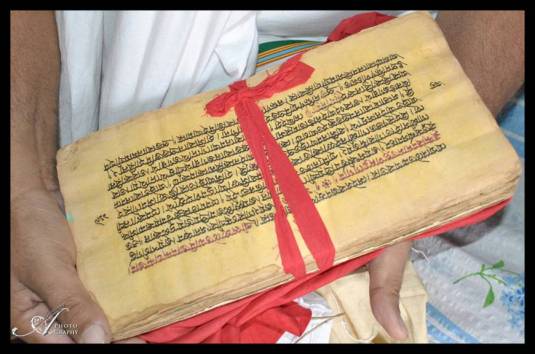
In honor of the disappearance day of Srila Jiva Goswami, we are posting some verses from Sri Caitanya-caritamrta that have been submitted to us by Yasodanandana Prabhu.
…Śrīla Jīva Gosvāmī became the ācārya of all the Vaiṣṇavas in Bengal, Orissa and the rest of the world, and it is he who used to guide them in their devotional service. In Vṛndāvana he established the Rādhā-Dāmodara temple, where we had the opportunity to live and retire until the age of sixty-five, when we decided to come to the United States of America. When Jīva Gosvāmī was still present, Śrīla Kṛṣṇadāsa Kavirāja Gosvāmī compiled his famous Caitanya-caritāmṛta. Later, Śrīla Jīva Gosvāmī inspired Śrīnivāsa Ācārya, Narottama dāsa Ṭhākura and Duḥkhī Kṛṣṇadāsa to preach Kṛṣṇa consciousness in Bengal. Jīva Gosvāmī was informed that all the manuscripts that had been collected from Vṛndāvana and sent to Bengal for preaching purposes were plundered near Viṣṇupura, in Bengal, but later he received the information that the books had been recovered.
More
30 Dec 2012
by The Hare Krishna Movement
in A.C. Bhaktivedanta Swami Prabhupada, Cow Protection, Sri Caitanya-Caritamrta
Tags: A.C. Bhaktivedanta Swami Prabhupada, Balarama, cows and calves, Krishna, Krishna Balarama and cows, only shelter for the fallen conditioned soul, opulence and sweetness, real goal of life, Sri Caitanya Mahaprabhu, The Opulence and Sweetness of Lord Śrī Kṛṣṇa

click on image to enlarge
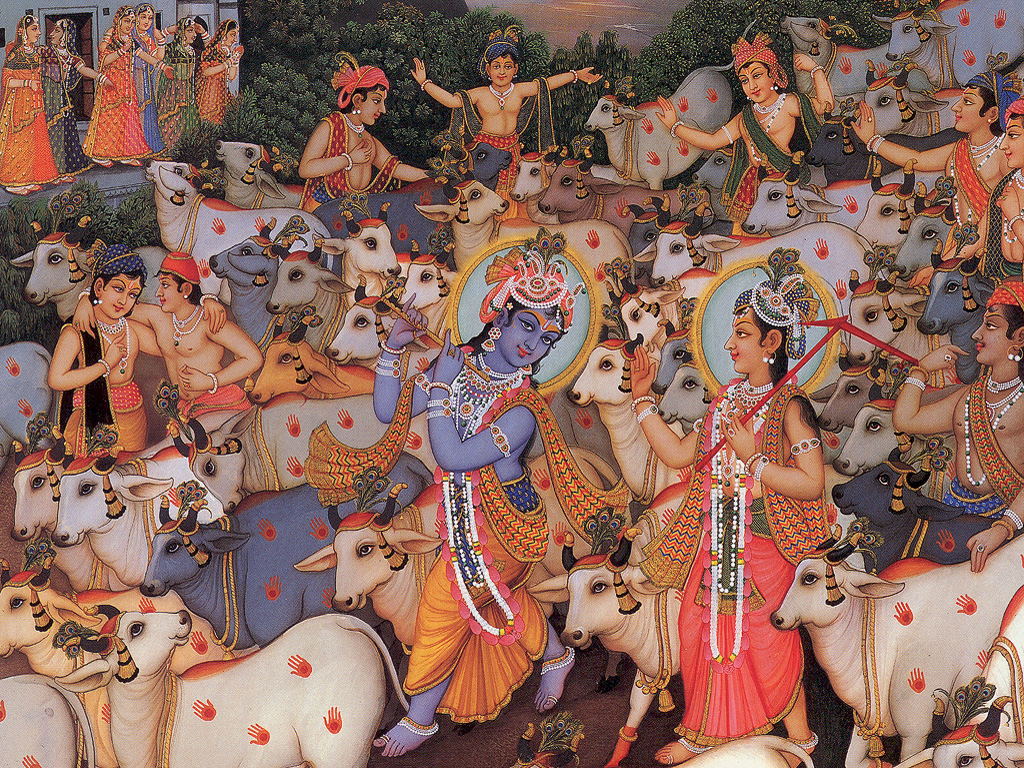
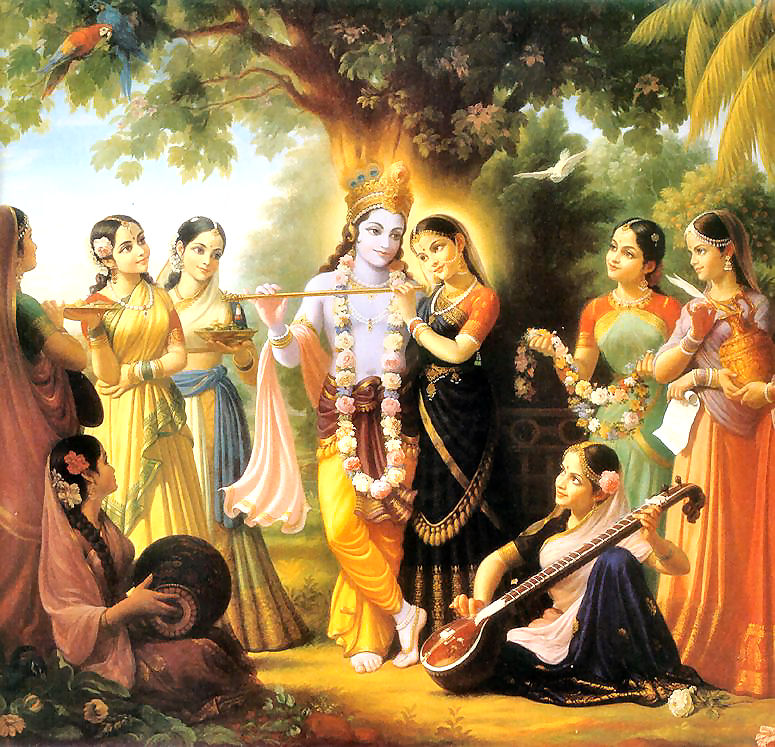
“According to Śukadeva Gosvāmī, Kṛṣṇa had unlimited cows and cowherd boys with Him. No one could count their actual number.
“All the cowherd boys had unlimited calves. Similarly, their canes, flutes, lotus flowers, horns, garments and ornaments were all unlimited. They cannot be limited by writing about them.
More
29 Nov 2012
by The Hare Krishna Movement
in A.C. Bhaktivedanta Swami Prabhupada, Book Changes, Devotee Business's, Sri Caitanya-Caritamrta, Vyasasan das
Tags: 1975 edition, BBT, BBTI, Bhaktivedanta VedaBase, book changes, c.c. madhya 19.157, Caitanya Caritamrta, Locanananda das, One can keep direct company with the Spiritual Master, Srila Prabhupada, veda base, Vyasasan das

One Can Keep Direct Company With the Spiritual Master
by Vyasasan das
There is an ongoing debate over the changes to Srila Prabhupada’s books. The current BBTI want you to believe they are only changing the spelling and grammatical errors, and are simply improving the books. But there is much evidence to prove otherwise. For instance in the famous verse from the Caitanya-caritamrta Madhya-Lila 19.157: “The gardener must defend the creeper by fencing it all around so that the powerful elephant of offenses may not enter.” while reading the purport to this verse from the original 1975 Edition, I couldn’t help but appreciate just how clear Srila Prabhupada’s instructions were:
“If one thinks that there are many pseudo devotees or nondevotees in the Kṛṣṇa Consciousness Society, one can keep direct company with the spiritual master, and if there is any doubt, one should consult the spiritual master.” (from purport to Original 1975 Edition)
While discussing this statement with a friend, he informed me that the BBTI had changed the purport in their re-vised edition. I couldn’t understand why they would change such a clear statement…so I looked it up in the Bhaktivedanta VedaBase…and to my great surprise they did change it!!! So much for the spelling and grammatical errors argument, no they were changing the meaning of Srila Prabhupada’s books.
Lets take a look at this example, of how the books of His Divine Grace A.C. Bhaktivedanda Swami, are being changed by our so-called leaders and intellectuals. (Note the Bold Letters below is done by me to indicate the changes.)
Sri Caitanya-caritamrta (1975 Edition)
If one thinks that there are many pseudo devotees or nondevotees in the Kṛṣṇa Consciousness Society, one can keep direct company with the spiritual master, and if there is any doubt, one should consult the spiritual master. However, unless one follows the spiritual master’s instructions and the regulative principles governing chanting and hearing the holy name of the Lord, one cannot become a pure devotee. By one’s mental concoctions, one falls down. By associating with nondevotees, one breaks the regulative principles and is thereby lost.
Sri Caitanya-caritamrta (Bhaktivedanta VedaBase)
Even if one thinks that there are many pseudo devotees or nondevotees in the Kṛṣṇa Consciousness Society, still one should stick to the Society; if one thinks the Society’s members are not pure devotees, one can keep direct company with the spiritual master, and if there is any doubt, one should consult the spiritual master. However, unless one follows the spiritual master’s instructions concerning the regulative principles and chanting and hearing the holy name of the Lord, one cannot become a pure devotee. By one’s mental concoctions, one falls down. By associating with nondevotees, one breaks the regulative principles and is thereby lost.
More
11 Nov 2012
by The Hare Krishna Movement
in A.C. Bhaktivedanta Swami Prabhupada, Caitanya Mahaprabhu, Slokas, Sri Caitanya-Caritamrta
Tags: A.C. Bhaktivedanta Swami Prabhupada. Mercy of Sri Caitanya Mahaprabhu, age of kali, Beda-kirtana Pastimes, Caitanya, congregational chanting, golden complexion, incarnation of Godhead, Madhya-lila 11. 100-104, sings the name of Krsna, Sri Caitanya Mahaprabhu, Srila Prabhupada, worship

Very Important verses and purports from Srila Prabhupada’s Sri Caitanya-caritamrta, on the Mercy of Śrī Caitanya Mahāprabhu.
” ‘In the Age of Kali, intelligent persons perform congregational chanting to worship the incarnation of Godhead who constantly sings the name of Kṛṣṇa. Although His complexion is not blackish, He is Kṛṣṇa Himself. He is accompanied by His associates, servants, weapons and confidential companions.’ “
The King said, “According to evidence given in the revealed scriptures, it is concluded that Lord Śrī Caitanya Mahāprabhu is Lord Kṛṣṇa Himself. Why, then, are learned scholars sometimes indifferent to Him?”
The Bhaṭṭācārya replied, “A person who has received but a small fraction of mercy from Śrī Caitanya Mahāprabhu can understand that He is Lord Kṛṣṇa. No one else can.
“If the mercy of Śrī Caitanya Mahāprabhu is not bestowed upon a person-regardless of how learned a scholar that person may be and regardless of his seeing or listening-he cannot accept Lord Caitanya as the Supreme Personality of Godhead.
” ‘My Lord, if one is favored by even a slight trace of the mercy of Your lotus feet, he can understand the greatness of Your personality. But those who speculate to understand the Supreme Personality of Godhead are unable to know You, even though they continue to study the Vedas for many years.’ “
More
11 Nov 2012
by The Hare Krishna Movement
in Remembering Srila Prabhupada, Sri Caitanya-Caritamrta, Srila Prabhupada
Tags: enlighten the occupant of every house, householders, krsna consciousness, Madhya-lila 8.39, preaching Krsna consciousness, saintly persons, Sri Caitanya-caritamrta, Srila Prabhupada, Sudarshan dasa

This was funny and we just had to post it. This was submitted by Sudarshan Prabhu.
It is the general practice of all saintly people to deliver the fallen. Therefore they go to people’s houses, although they have no personal business there. (Sri Caitanya-caritamrta 8.39 Madhya-lila 8.39)
For full text and purport More
07 Nov 2012
by The Hare Krishna Movement
in A.C. Bhaktivedanta Swami Prabhupada, Radha-kunda, Sri Caitanya-Caritamrta, Srimati Radharani
Tags: A.C. Bhaktivedanta Swami Prabhupada, Adi 4.215, appearance of radha kund, gopis, Madhya-lila 18.3-7, Radha Kund, Sri Caitanya Mahaprabhu, Sri Caitanya-caritmrta, Srimati Radharani

As today marks the appearance of Radha-kund we are honored to post from Srila Prabhupada’s Sri Caitanya-caritamrta, a few select verses from Madhya-lila 18.3-7. Radha-kunda is considered to be the holiest place on earth for all Gaudiya Vaisnavas.
Śrī Caitanya Mahāprabhu danced in ecstasy, but when He arrived at Āriṭgrāma, His sense perception was awakened.
PURPORT
Āriṭ-grāma is also called Ariṣṭa-grāma. Śrī Caitanya Mahāprabhu understood that in that village, Ariṣṭāsura was killed by Śrī Kṛṣṇa. While there, He inquired about Rādhā-kuṇḍa, but no one could tell Him where it was. The brāhmaṇa accompanying Him could also not ascertain its whereabouts. Śrī Caitanya Mahāprabhu could then understand that the holy places known as Rādhā-kuṇḍa and Śyāma-kuṇḍa were at that time lost to everyone’s vision. He therefore discovered Rādhā-kuṇḍa and Śyāma-kuṇḍa, which were two reservoirs of water in two paddy fields. Although there was very little water, Śrī Caitanya Mahāprabhu was omniscient and could understand that formerly these two ponds were called Śrī Rādhā-kuṇḍa and Śyāma-kuṇḍa. In this way Rādhā-kuṇḍa and Śyāma-kuṇḍa were discovered.
Śrī Caitanya Mahāprabhu asked the local people,”Where is Rādhā-kunda?” No one could inform Him, and the brāhmaṇa accompanying Him did not know either.
The Lord then understood that the holy place called Rādhā-kuṇḍa was no longer visible. However, being the omniscient Supreme Personality of Godhead, He discovered Rādhā-kuṇḍa and Śyāma-kuṇḍa in two paddy fields. There was only a little water, but He took His bath there.
When the people of the village saw Śrī Caitanya Mahāprabhu taking His bath in those two ponds in the middle of the paddy fields, they were very astonished. The Lord then offered His prayers to Śrī Rādhā-kuṇḍa.
“Of all the gopīs, Rādhārāṇī is the dearmost. Similarly, the lake known as Rādhā-kuṇḍa is very dear to the Lord because it is very dear to Śrīmatī Rādhārāṇī.
Also this from Adi-lila More
13 Oct 2012
by The Hare Krishna Movement
in A.C. Bhaktivedanta Swami Prabhupada, Guru & Disciple, Sri Caitanya-Caritamrta
Tags: A.C. Bhaktivedanta Swami Prabhupada, bona fide spiritual master, grace of krishna, guru and disciple, Krsna's Mercy, maya, mercy of the spiritual master, Sri Caitanya-caritamrta

…There are millions and trillions of living entities everywhere, and they are engaged by māyā in suffering and enjoying the results of their fruitive activity life after life. This is the position of the materially conditioned living entities. Out of many of these living entities, if one is actually fortunate (bhāgyavān), he comes in contact with a bona fide spiritual master by Kṛṣṇa’s mercy.
Śrī Caitanya-caritāmṛta
By His Divine Grace A. C. Bhaktivedanta Swami Prabhupāda
Madhya-līlā, Chapter 19, Text 151
brahmāṇḍa bhramite kona bhāgyavān jīva
guru-kṛṣṇa-prasāde pāya bhakti-latā-bīja
brahmāṇḍa bhramite—wandering in this universe; kona—some; bhāgyavān—most fortunate; jīva—living being; guru—of the spiritual master; kṛṣṇa—of Kṛṣṇa; prasāde—by the mercy; pāya—gets; bhakti-latā—of the creeper of devotional service; bīja—the seed.
“According to their karma, all living entities are wandering throughout the entire universe. Some of them are being elevated to the upper planetary systems, and some are going down into the lower planetary systems. Out of many millions of wandering living entities, one who is very fortunate gets an opportunity to associate with a bona fide spiritual master by the grace of Kṛṣṇa. By the mercy of both Kṛṣṇa and the spiritual master, such a person receives the seed of the creeper of devotional service.”
More
06 Oct 2012
by The Hare Krishna Movement
in A.C. Bhaktivedanta Swami Prabhupada, Krishna Consciousness, Sri Caitanya-Caritamrta
Tags: A.C. Bhaktivedanta Swami Prabhupada, cleanse the heart as the Lord cleansed the Gundica temple, devotee, devotional service, Gundica Temple, Krsna, krsna consciousness, Lord Caitanya, madhya-lila 12.135, Sri Caitanya-carimrta
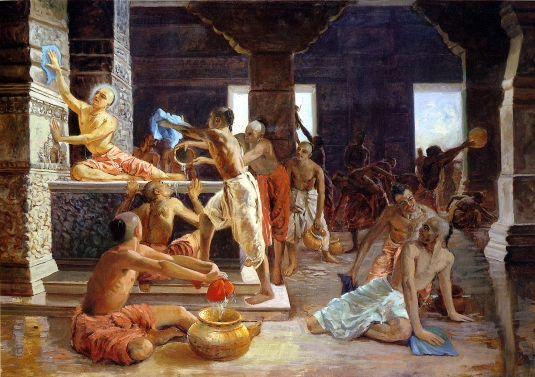
…If a devotee at all wants to cleanse his heart, he must chant and hear the glories of the Lord, Śrī Kṛṣṇa (śṛṇvatāṁ sva-kathāḥ kṛṣṇaḥ). This is a simple process. Kṛṣṇa Himself will help cleanse the heart because He is already seated there. Kṛṣṇa wants to continue living within the heart, and the Lord wants to give directions, but one has to keep his heart as clean as Lord Caitanya Mahāprabhu kept the Guṇḍicā temple. The devotee therefore has to cleanse his heart just as the Lord cleansed the Guṇḍicā temple. In this way one can be pacified and enriched in devotional service.
More
21 Sep 2012
by The Hare Krishna Movement
in A.C. Bhaktivedanta Swami Prabhupada, Radha-kunda, Sri Caitanya-Caritamrta, Srimati Radharani
Tags: A.C. Bhaktivedanta Swami Prabhupada, kunda, Madhya-lila 18.4-13, Radha Krishna, Radha-kunda, Sri Caitanya Mahaprabhu, Sri Caitanya-caritamrta, Sri Radha, Srila Prabhupada, Srimati Radharani, Syama-kund
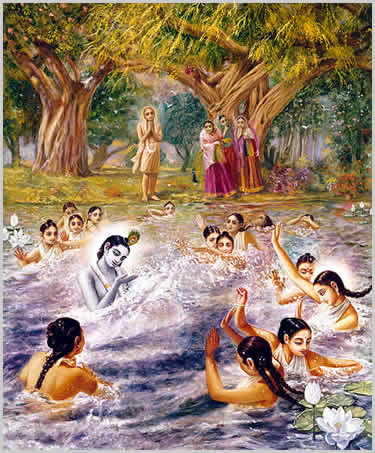
In honor of the appearance day of Srimati Radharani we again post from the Śrī Caitanya-caritāmṛta by His Divine Grace A.C. Bhaktivedanta Swami Prabhupada. The Glories of Śrīmatī Rādhārāṇī and Her lake known as Rādhā-kuṇḍa. The following verses are from Madhya-līlā, Chapter 18, Text 4-13.
Śrī Caitanya Mahāprabhu asked the local people,“Where is Rādhā-kunda?” No one could inform Him, and the brāhmaṇa accompanying Him did not know either.
The Lord then understood that the holy place called Rādhā-kuṇḍa was no longer visible. However, being the omniscient Supreme Personality of Godhead, He discovered Rādhā-kuṇḍa and Śyāma-kuṇḍa in two paddy fields. There was only a little water, but He took His bath there.
When the people of the village saw Śrī Caitanya Mahāprabhu taking His bath in those two ponds in the middle of the paddy fields, they were very astonished. The Lord then offered His prayers to Śrī Rādhā-kuṇḍa.
More
20 Sep 2012
by The Hare Krishna Movement
in A.C. Bhaktivedanta Swami Prabhupada, Advaita Acarya, Sita Thakurani, Sri Caitanya-Caritamrta
Tags: A.C. Bhaktivedanta Swami Prabhupada, Adi-lila 13.111-119, Advaita Acharya, Gokula, Jagannatha Misra, Krsna, Lord Caitanya Mahaprabhu, Nimai, Sita Thakurani, Sitadevi, Sri Caitanya-caritamrta, transcendental bodily effulgence

In honor of the Appearance day of Sītā Ṭhākurāṇī (the eternal wife of Sri Advaita Acharya), we are posting a brief pastime from Srila Prabhupada’s Śrī Caitanya-caritāmṛta: Ādi-līlā Chapter 13, Text 111-119, which gives the following account of Sita Thakurani’s visit to the house of Jagannatha Mishra after the birth of the Lord
One day shortly after Lord Caitanya Mahāprabhu was born, Advaita Ācārya’s wife, Sītādevī, who is worshipable by the whole world, took her husband’s permission and went to see that topmost child with all kinds of gifts and presentations
She brought different kinds of golden ornaments, including bangles for the hand, armlets, necklaces and anklets.
There were also tiger nails set in gold, waist decorations of silk and lace, ornaments for the hands and legs, nicely printed silken sārīs and a child’s garment, also made of silk. Many other riches, including gold and silver coins, were also presented to the child.
Riding in a palanquin covered with cloth and accompanied by maidservants, Sītā Ṭhākurāṇī came to the house of Jagannātha Miśra, bringing with her many auspicious articles such as fresh grass, paddy, gorocana, turmeric, kuṅkuma and sandalwood. All these presentations filled a large basket.
When Sītā Ṭhākurāṇī came to the house of Śacīdevī, bringing with her many kinds of eatables, dresses and other gifts, she was astonished to see the newly born child, for she appreciated that except for a difference in color, the child was directly Kṛṣṇa of Gokula Himself.
Seeing the transcendental bodily effulgence of the child, each of His nicely constructed limbs full of auspicious signs and resembling a form of gold, Sītā Ṭhākurāṇī was very much pleased, and because of her maternal affection, she felt as if her heart were melting.
She blessed the newly born child by placing fresh grass and paddy on His head and saying, “May You be blessed with a long duration of life.” But being afraid of ghosts and witches, she gave the child the name Nimāi.
On the day the mother and son bathed and left the maternity home, Sītā Ṭhākurāṇī gave them all kinds of ornaments and garments and then also honored Jagannātha Miśra. Then Sītā Ṭhākurāṇī, being honored by mother Śacīdevī and Jagannātha Miśra, was greatly happy within her mind, and thus she returned home.
In this way mother Śacīdevī and Jagannātha Miśra, having obtained a son who was the husband of the goddess of fortune, had all their desires fulfilled. Their house was always filled with riches and grains. As they saw the beloved body of Śrī Caitanya Mahāprabhu, day after day their pleasure increased.
For full Text and Purport More
12 Aug 2012
by The Hare Krishna Movement
in Guru & Disciple, Sri Caitanya-Caritamrta, Srila Prabhupada's Books
Tags: A.C. Bhaktivedanta Swami Prabhupada, association with the Pure Devotee, devotees, devotees of Lord Caitanya, physical presence, sound vibration, spiritual master, Sri Caitanya-caritamrta, transcendental literatures, two ways of association, vani, vapu
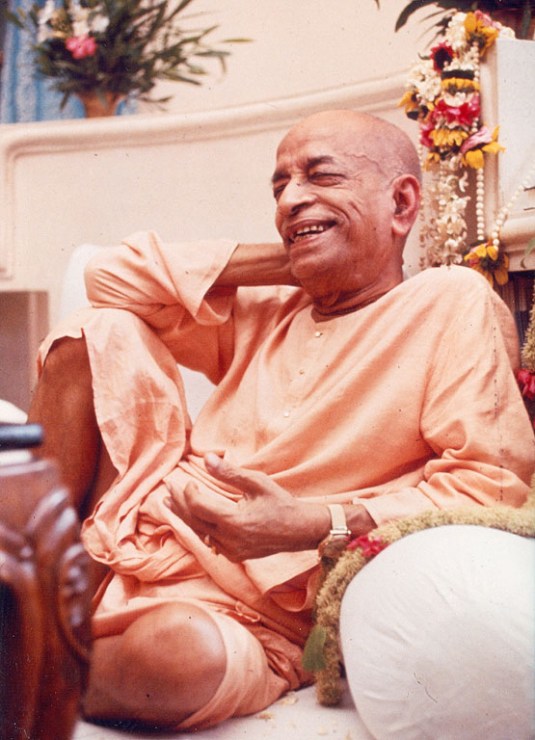
From the Concluding Words to the Sri Caitanya-caritamrta by His Divine Grace A.C. Bhaktivedanta Swami Prabhupada
…There are two ways of association-by vāṇī and by vapu. Vāṇī means words, and vapu means physical presence. Physical presence is sometimes appreciable and sometimes not, but vāṇī continues to exist eternally. Therefore we must take advantage of the vāṇī, not the physical presence. Bhagavad-gītā, for example, is the vāṇī of Lord Kṛṣṇa. Although Kṛṣṇa was personally present five thousand years ago and is no longer physically present from the materialistic point of view, Bhagavad-gītā continues.
I still consider His Divine Grace Śrīla Bhaktisiddhānta Sarasvatī Ṭhākura Prabhupāda to be always present with me by his vāṇī, his words.
It is my wish that devotees of Lord Caitanya all over the world enjoy this translation, and I am glad to express my gratitude to the learned men in the Western countries who are so pleased with my work that they are ordering in advance all my books that will be published in the future. On this occasion therefore, I request my disciples who are determined to help me in this work to continue their cooperation fully, so that philosophers, scholars, religionists and people in general all over the world will benefit by reading our transcendental literatures such as Śrīmad-Bhāgavatam and Śrī Caitanya-caritāmṛta.
For full text More
05 Aug 2012
by The Hare Krishna Movement
in Krishna, Opulence of the Absolute, Sri Caitanya-Caritamrta, Srimati Radharani
Tags: A.C. Bhaktivedanta Swami Prabhupada, Aprakrta-madana, cupid, Krishna, Krsna, Mad. 8.139, Madana, Madana-mohana, Manmatha-madana, Nectar of Devotion, sac-cid-ananda-vigraha, Sri Caitanya-caritamrta
click on image to enlarge
“The very name Kṛṣṇa means that He attracts even Cupid. He is therefore attractive to everyone-male and female, moving and inert living entities. Indeed, Kṛṣṇa is known as the all-attractive one.
“Śrīla Rūpa Gosvāmī has stated that devotional service attracts even Kṛṣṇa. Kṛṣṇa attracts everyone, but devotional service attracts Kṛṣṇa. The symbol of devotional service in the highest degree is Rādhārāṇī. Kṛṣṇa is called Madana-mohana, which means that He is so attractive that He can defeat the attraction of thousands of Cupids. But Rādhārāṇī is still more attractive, for She can even attract Kṛṣṇa. Therefore devotees call Her Madana-mohana-mohinī, the attractor of the attractor of Cupid. To perform devotional service means to follow in the footsteps of Rādhārāṇī…” (Nectar of Devotion Lecture, Nov. 11, 1972, Vrindavan)
…The name Madana refers to Cupid, but Kṛṣṇa is the spiritual Madana. His body is not material like the body of Cupid in this material universe. Kṛṣṇa’s body is all-spiritual-sac-cid-ānanda-vigraha. Therefore He is called Aprākṛta-madana. He is also known as Manmatha-madana, which means that He is attractive even to Cupid.
More
18 Jul 2012
by The Hare Krishna Movement
in Caitanya Mahaprabhu, Lectures, Sri Caitanya-Caritamrta
Tags: A.C. Bhaktivedanta Swami Prabhupada, Caitanya Caritamrta, Krsna, krsnera svarupa ananta, Lord Caitanya, Mad. 20.146-151, photo by Gurudas, prabhupada, Prabhupada lectures, transcendental forms of Krsna, Vedas, Vedic knowledge points to Krishna

“Vedic Knowledge Points To Krsna”
Lecture on Caitanya-caritamrta Madhya 20.146-151
New York, December 3, 1966
By His Divine Grace A.C. Bhaktivedanta Swami Prabhupada
Prabhupada:
mukhya-gauna-vrtti, kimva anvaya-vyatireke
vedera pratijna kevala kahaye krsnake
So Lord Caitanya says, “You study Vedas in any way, directly, indirectly. In whatever way you like you study Vedas, but the ultimate objective is Krsna.”
Now, Caitanya, Lord Caitanya, is describing about the various forms of Krsna. This is very important subject. How Krsna is all-pervading, He is describing.
krsnera svarupa-ananta, vaibhava-apara
cic-chakti, maya-sakti, jiva-sakti ara
Krsnera svarupa ananta. The transcendental forms of Krsna, innumerable, vaibhava, and His opulence, that is also innumerable. Nobody can estimate. How many forms are there of Krsna or how much opulent He is, nobody can estimate; nobody can measure. This is inconceivable. The first proposition. Cic-chakti maya-sakti jiva-sakti ara. And His potencies are also unlimited, out of which, three potencies are generally accepted: cit-sakti, spiritual potency; material potency; and marginal potency. These three potencies I have described many times. Cit-sakti, the spiritual potency, is a manifestation of the spiritual world, and material potency is a manifestation of this material world, and the marginal potency, we are, we living entities. We are marginal potency. Why it is marginal? Because although we belong to the spiritual potency, but we have got tendency to come into contact of this material potency. Therefore it is called marginal, “this way or that way.” That a slight independence which is there in every living entity, he can use that, and he may select either to live in the spiritual potency or in the material potency. Therefore the living entities are called marginal potency. So parasya saktir vividhaiva sruyate [Cc. Madhya 13.65, purport]. Although the energies of the Supreme Lord are innumerable — nobody can count or measure — but they are divided into three.
More
28 Jun 2012
by The Hare Krishna Movement
in Lectures, Sri Caitanya-Caritamrta
Tags: A.C. Bhaktivedanta Swami Prabhupada, books, bookworm, goal of life, learned scholar, libary of Trinity College, Lord Caitanya Mahaprabhu

click on image to enlarge
“If one becomes a bookworm, reading many books and scriptures and hearing many commentaries and the instructions of many men, this will produce doubt within his heart. One cannot in this way ascertain the real goal of life.” (Adi-lila 16. 11)
…Man has a general tendency toward fruitive activities, religious ritualistic ceremonies and philosophical speculation. A living entity thus bewildered since time immemorial does not understand the real goal of life, and thus his activities in life are wasted. Innocent persons misled in this way are deprived of unalloyed kṛṣṇa-bhakti, devotional service to the Lord. Tapana Miśra is a vivid example of such a person. He was a learned scholar, but he could not ascertain what the goal of life is. Therefore he was given a chance to hear Lord Caitanya Mahāprabhu instructing Sanātana Gosvāmī. Lord Caitanya’s instruction to Tapana Miśra is especially significant for persons who loiter here and there collecting books and reading none of them, thus becoming bewildered regarding the aim of life.
.. Simply by studying, becoming bookworm, you cannot advance. The real secret is… Yasya deve para bhaktir yatha deve tatha gurau [ŚU 6.23] That is stated in the Vedas. Unflinching faith in God and spiritual master. Then things will be revealed from within.
Sri Caitanya-caritamrta – 1975 Edition
By His Divine Grace A.C. Bhaktivedanta Swami Prabhupada
Adi-lila Chapter 16, Text 11
The Pastimes of the Lord in His Childhood and Youth
bahu-śāstre bahu-vākye citte bhrama haya
sādhya-sādhana śreṣṭha nā haya niścaya
bahu-śāstre—by many books or scriptures; bahu-vākye—by many versions of many persons; citte—within the heart; bhrama—doubt; haya—there is; sādhya-sādhana—objective and means; śreṣṭha—about the best; nā—not; haya—there is; niścaya—certainty.
If one becomes a bookworm, reading many books and scriptures and hearing many commentaries and the instructions of many men, this will produce doubt within his heart. One cannot in this way ascertain the real goal of life.
PURPORT
In Śrīmad-Bhāgavatam (7.13.8) it is said, granthān naivābhyased bahūn na vyākhyām upayuñjīta: “One should not read many books, nor should one try to make a profession of reciting many books, especially if one is a devotee.” One must give up the ambition to be a learned scholar and in this way earn a worldly reputation and financial facilities. If one diverts his attention to studying many books, he cannot fix his mind in devotional service, nor can he understand many scriptures, for they are full of grave statements and meanings. In this connection Śrīla Bhaktisiddhānta Sarasvatī Ṭhākura gives his opinion that those who are attracted to studying many kinds of literature concerning various subject matters, especially fruitive activities and philosophical speculation, are deprived of unalloyed devotional service because of their splayed attention.
More
31 May 2012
by The Hare Krishna Movement
in Panca-Tattva, Sri Caitanya-Caritamrta
Tags: A.C. Bhaktivedanta Swami Prabhupada, Adi-lila 7.6, bhakta-saktikam, bhakta-svarupa, five tattvas, five truths, panca-tattvatmakam krsna, Pancha Tattva, Sri Advaita Prabhu, Sri Caitanya Mahaprabhu, Sri Caitanya-caritamrta, Sri Gadadhara Prabhu, Sri Nityananda Prabhu, Srivasa Prabhu, visnu-tattva

Sri Caitanya-caritamrta 1975 Edition
By His Divine Grace A.C. Bhaktivedanta Swami Prabhupada
Adi-lila 7.6
pañca-tattvātmakaṁ kṛṣṇaṁ
bhakta-rūpa-svarūpakam
bhaktāvatāraṁ bhaktākhyaṁ
namāmi bhakta-śaktikam
pañca-tattva-ātmakam—comprehending the five transcendental subject matters; kṛṣṇam—unto Lord Kṛṣṇa; bhakta-rūpa—in the form of a devotee; svarūpakam—in the expansion of a devotee; bhakta-avatāram—in the incarnation of a devotee; bhakta-ākhyam—known as a devotee; namāmi—I offer my obeisances; bhakta-śaktikam—the energy of the Supreme Personality of Godhead.
Let me offer my obeisances unto Lord Śrī Kṛṣṇa, who has manifested Himself in five as a devotee, expansion of a devotee, incarnation of a devotee, pure devotee and devotional energy.
PURPORT
Śrī Nityānanda Prabhu is the immediate expansion of Śrī Caitanya Mahāprabhu as His brother. He is the personified spiritual bliss of sac-cid-ānanda-vigraha. His body is transcendental and full of ecstasy in devotional service. Śrī Caitanya Mahāprabhu is therefore called bhakta-rūpa (the form of a devotee), and Śrī Nityānanda Prabhu is called bhakta-svarūpa (the expansion of a devotee). Śrī Advaita Prabhu, the incarnation of a devotee, is viṣṇu-tattva and belongs to the same category. There are also different types of bhaktas, or devotees, on the platforms of neutrality, servitude, friendship, parenthood and conjugal love. Devotees like Śrī Dāmodara, Śrī Gadādhara and Śrī Rāmānanda are different energies. This confirms the Vedic sūtra parāsya śaktir vividhaiva śrūyate. All these bhakta subjects taken together constitute Śrī Caitanya Mahāprabhu, who is Kṛṣṇa Himself.
The Pancha Tattva further described More
15 May 2012
by The Hare Krishna Movement
in Practicing Krishna Consciousness at Home, Sri Caitanya-Caritamrta, The Hare Krishna Movement
Tags: A.C. Bhaktivedanta Swami Prabhupada, brahmana Kurma, chanting Hare Krishna, devotional service at home, Krsnaa consciousness, materialistic way of life, preach the instructions of Krsna, Sri Caitanya Mahaprabhu

Not everyone who joins this Krishna Consciousness Movement need move into a temple or ashram, as the following lessons for the householders confirms.
The real purpose of human life is to attain the spiritual platform and return to Godhead. That is the summum bonum of spiritual realization. The Kṛṣṇa consciousness movement is trying to elevate human society to the perfection of life by pursuing the method described by Śrī Caitanya Mahāprabhu in His advice to the brāhmaṇa Kūrma. That is, one should stay at home, chant the Hare Kṛṣṇa mantra and preach the instructions of Kṛṣṇa as they are given in the Bhagavad-gītā and Śrīmad-Bhāgavatam.
If a devotee follows the instructions of Śrī Caitanya Mahāprabhu, he lives in the company of the Lord. Wherever he lives, he converts that place into Vṛndāvana and Navadvīpa. This means that materialism cannot touch him. This is the secret of success for one advancing in Kṛṣṇa consciousness.
Śrī Caitanya-caritāmṛta
By His Divine Grace A.C. Bhaktivedanta Swami Prabhupada
Madhya-līlā, Chapter 7, Text 128-129
“Instruct everyone to follow the orders of Lord Śrī Kṛṣṇa as they are given in the Bhagavad-gītā and Śrīmad-Bhāgavatam. In this way become a spiritual master and try to liberate everyone in this land.”
PURPORT
This is the sublime mission of the International Society for Krishna Consciousness. Many people come and inquire whether they have to give up family life to join the Society, but that is not our mission. One can remain comfortably in his residence. We simply request everyone to chant the mahā-mantra: Hare Kṛṣṇa, Hare Kṛṣṇa, Kṛṣṇa Kṛṣṇa, Hare Hare Hare Rāma, Hare Rāma, Rāma Rāma, Hare Hare. If one is a little literate and can read the Bhagavad-gītā As It Is and Śrīmad-Bhāgavatam, that is so much the better. These works are now available in an English translation and are done very authoritatively to appeal to all classes of men. Instead of living engrossed in material activities, people throughout the world should take advantage of this movement and chant the Hare Kṛṣṇa mahā-mantra at home with their families. One should also refrain from sinful activities-illicit sex, meat-eating, gambling and intoxication. Out of these four items, illicit sex is very sinful. Every person must get married. Every woman especially must get married. One can also produce many nice preparations to offer Kṛṣṇa-grain, fruit, flowers and milk. Why should one indulge in unnecessary meat-eating and maintain horrible slaughterhouses? What is the use of smoking and drinking tea and coffee? People are already intoxicated by material enjoyment, and if they indulge in further intoxication, what chance is there for self-realization? Similarly, one should not partake in gambling and unnecessarily agitate the mind. The real purpose of human life is to attain the spiritual platform and return to Godhead. That is the summum bonum of spiritual realization. The Kṛṣṇa consciousness movement is trying to elevate human society to the perfection of life by pursuing the method described by Śrī Caitanya Mahāprabhu in His advice to the brāhmaṇa Kūrma. That is, one should stay at home, chant the Hare Kṛṣṇa mantra and preach the instructions of Kṛṣṇa as they are given in the Bhagavad-gītā and Śrīmad-Bhāgavatam.
More
05 Apr 2012
by The Hare Krishna Movement
in Caitanya Mahaprabhu, Chanting Hare Krishna, Sri Caitanya-Caritamrta
Tags: 1975 edition, A.C. Bhaktivedanta Swami Prabhupada, Adi-lila 7.95-56, chanting Hare Krishna, chanting the holy names of the Lord, Hare Krishna, Kali-yuga, Lord Sri Caitanya Mahaprabhu, Sri Caitanya-caritamrta

…It is to be understood that when Śrī Caitanya Mahāprabhu chanted and danced, He did so by the influence of the pleasure potency of the spiritual world. Śrī Caitanya Mahāprabhu never considered the holy name of the Lord to be a material vibration, nor does any pure devotee mistake the chanting of the Hare Kṛṣṇa mantra to be a material musical manifestation. Lord Caitanya never tried to be the master of the holy name; rather He taught us how to be servants of the holy name…I firmly believe that simply chanting the holy name of the Lord can remove all misconceptions of the material world. I believe that simply by chanting the holy name of the Lord one can attain the shelter of the lotus feet of the Lord. In this age of quarrel and disagreement, the chanting of the holy names is the only way to liberation from the material clutches.
Sri Caitanya-caritamrta – 1975 Edition
By His Divine Grace A.C. Bhaktivedanta Swami Prabhupada
Adi-lila 7. 95-96
Lord Caitanya in Five Features
“I firmly believe in these words of My spiritual master, and therefore I always chant the holy name of the Lord, alone and in the association of devotees. That holy name of Lord Kṛṣṇa sometimes causes Me to chant and dance, and therefore I chant and dance. Please do not think that I intentionally do it. I do it automatically.
Purport
A person who cannot keep his faith in the words of his spiritual master but acts independently never receives the authority to chant the holy name of the Lord. It is said in the Vedas (Śvetāśvatara Upaniṣad 6.23):
yasya deve parā bhaktir
yathā deve tathā gurau
tasyaite kathitā hy arthāḥ
prakāśante mahātmanaḥ
“Only unto those great souls who have implicit faith in both the Lord and the spiritual master are all the imports of Vedic knowledge automatically revealed.” This Vedic injunction is very important, and Śrī Caitanya Mahāprabhu supported it by His personal behavior. Believing in the words of His spiritual master, He introduced the saṅkīrtana movement, just as the present Kṛṣṇa consciousness movement was started with belief in the words of our spiritual master. He wanted to preach, we believed in his words and tried somehow or other to fulfill them, and now this movement has become successful all over the world. Therefore faith in the words of the spiritual master and in the Supreme Personality of Godhead is the secret of success. Śrī Caitanya Mahāprabhu never disobeyed the orders of His spiritual master and stopped propagating the saṅkīrtana movement. Śrī Bhaktisiddhānta Sarasvatī Gosvāmī, at the time of his passing away, ordered all his disciples to work conjointly to preach the mission of Caitanya Mahāprabhu all over the world. Later, however, some self-interested, foolish disciples disobeyed his orders. Each one of them wanted to become head of the mission, and they fought in the courts, neglecting the order of the spiritual master, and the entire mission was defeated. We are not proud of this; however, the truth must be explained. We believed in the words of our spiritual master and started in a humble way-in a helpless way-but due to the spiritual force of the order of the supreme authority, this movement has become successful.
More
20 Mar 2012
by The Hare Krishna Movement
in Sri Caitanya-Caritamrta
Tags: 1975 edition, A.C. Bhaktivedanta Swami Prabhupada, Adi-lila 4.224, season of Spring, Sri Caitanya-caritamrta, Sri Krsna, The Confidential Reasons of Lord Caitanya's Appearance
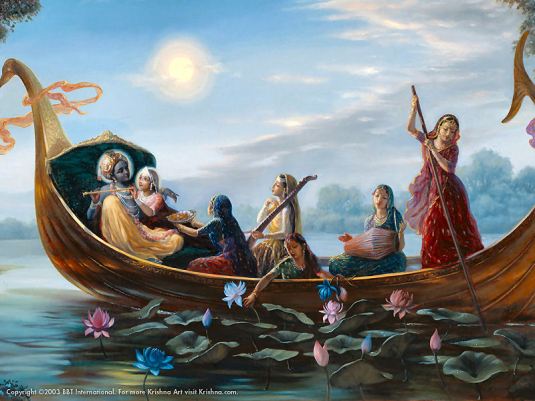
“My dear friends, just see how Śrī Kṛṣṇa is enjoying the season of spring! With the gopīs embracing each of His limbs, He is like amorous love personified. With His transcendental pastimes, He enlivens all the gopīs and the entire creation. With His soft bluish-black arms and legs, which resemble blue lotus flowers, He has created a festival for Cupid.”
Sri Caitanya-caritamrta – 1975 Edition
By His Divine Grace A.C. Bhaktivedanta Swami Prabhupada
Adi-lila 4.224
The Confidential Reasons for Lord Caitanya’s Appearance
viśveṣām anurañjanena janayann ānandam indīvara-
śreṇī-śyāmala-komalair upanayann aṅgair anaṅgotsavam
svacchandaṁ vraja-sundarībhir abhitaḥ praty-aṅgam āliṅgitaḥ
śṛṅgāraḥ sakhi mūrtimān iva madhau mugdho hariḥ krīḍati
viśveṣām—of all the gopīs; anurañjanena—by the act of pleasing; janayan—producing; ānandam—the bliss; indīvara-śreṇī—like a row of blue lotuses; śyāmala—bluish black; komalaiḥ—and soft; upanayan—bringing; aṅgaiḥ—with His limbs; anaṅga-utsavam—a festival for Cupid; svacchandam—without restriction; vraja-sundarībhiḥ—by the young women of Vraja; abhitaḥ—on both sides; prati-aṅgam—each limb; āliṅgitaḥ—embraced; śṛṅgāraḥ—amorous love; śakhi—O friend; mūrtimān—embodied; iva—like; madhau—in the springtime; mugdhaḥ—perplexed; hariḥ—Lord Hari; krīḍati—plays.
“My dear friends, just see how Śrī Kṛṣṇa is enjoying the season of spring! With the gopīs embracing each of His limbs, He is like amorous love personified. With His transcendental pastimes, He enlivens all the gopīs and the entire creation. With His soft bluish-black arms and legs, which resemble blue lotus flowers, He has created a festival for Cupid.”
This is a verse from Jayadeva Gosvāmī’s Gīta-govinda (1.11).
Text Pasted from; Prabhupada Books
19 Mar 2012
by The Hare Krishna Movement
in Devotional Service, Sri Caitanya-Caritamrta, Srimad Bhagavatam
Tags: A.C. Bhaktivedanta Swami Prabhupada, affection, love and affection, Mad. 10. 139, SB 10.11.11, Sri Caitanya-caritamrta, Srimad Bhagavatam, veneration, worship God with love

“Kṛṣṇa, You have come to me to take some fruit in exchange for grains. All the grains have fallen, but still You may take whatever You like.” Thus she filled Kṛṣṇa’s palms with whatever fruits He could carry. In exchange, Kṛṣṇa filled her whole basket with jewels and gold.
Srimad Bhagavatam
By His Divine Grace. A.C. Bhaktivedanta Swami Prabhupada
Canto Ten, Chapter 11, Text 11
phala-vikrayiṇī tasya
cyuta-dhānya-kara-dvayam
phalair apūrayad ratnaiḥ
phala-bhāṇḍam apūri ca
While Kṛṣṇa was going to the fruit vendor very hastily, most of the grains He was holding fell. Nonetheless, the fruit vendor filled Kṛṣṇa’s hands with fruits, and her fruit basket was immediately filled with jewels and gold.
In Bhagavad-gītā (9.26) Kṛṣṇa says:
patraṁ puṣpaṁ phalaṁ toyaṁ
yo me bhaktyā prayacchati
tad ahaṁ bhakty-upahṛtam
aśnāmi prayatātmanaḥ
Kṛṣṇa is so kind that if anyone offers Him a leaf, a fruit, a flower or some water, He will immediately accept it. The only condition is that these things should be offered with bhakti (yo me bhaktyā prayacchati). Otherwise, if one is puffed up with false prestige, thinking, “I have so much opulence, and I am giving something to Kṛṣṇa,” one’s offering will not be accepted by Kṛṣṇa. The fruit vendor, although a woman belonging to the poor aborigine class, dealt with Kṛṣṇa with great affection, saying, “Kṛṣṇa, You have come to me to take some fruit in exchange for grains. All the grains have fallen, but still You may take whatever You like.” Thus she filled Kṛṣṇa’s palms with whatever fruits He could carry. In exchange, Kṛṣṇa filled her whole basket with jewels and gold.
From this incident one should learn that for anything offered to Kṛṣṇa with love and affection, Kṛṣṇa can reciprocate many millions of times over, both materially and spiritually. The basic principle involved is an exchange of love. Therefore Kṛṣṇa teaches in Bhagavad-gītā (9.27):
More
03 Mar 2012
by The Hare Krishna Movement
in Books by Srila Prabhupada, Guru & Disciple, Sri Caitanya-Caritamrta, Srila Prabhupada Lilamrta
Tags: A.C. Bhaktivedanta Swami Prabhupada, Bramananda Swami, Caitanya Caritamrta, disciple, Godbrothers, guru, Guru Maharaja, Krishna, print books, Radhavallabha, Ramesvara, Satsvarupa Dasa Goswami, Srila Prabhupada, Srila Prabhupada Lilamrta, Tamala Krishna Goswami
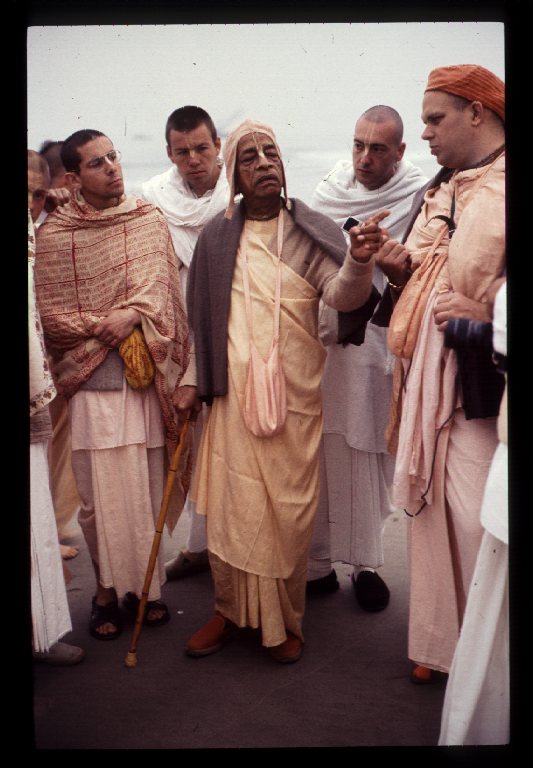
…”I have no personal qualification, but I simply try to satisfy my guru, that’s all. My Guru Maharaja asked me that, ‘If you get some money, you print books.’ So there was a private meeting, talking. Some of my important Godbrothers also were there–it was in Radha-kunda. So Guru Maharaja was speaking to me that, ‘Since we have got this Baghbazar marble temple, there has been so much dissension. And everyone thinking who will occupy this room or that room. I wish therefore to sell this temple and the marble and print some books.’ Yes, so I took up this from his mouth, that he is very fond of books. And he told me personally, ‘If you get some money, print books.’ Therefore I am stressing on this point–Where is book? Where is book? So kindly help me. That is my request. Print as many books as possible in as many languages as possible, and distribute throughout the whole world. Then the Krishna consciousness movement will automatically increase.”
The next morning, while walking on Venice Beach, Srila Prabhupada delivered an extraordinary ultimatum. Surrounded by devotees, he walked along, poking the sand softly with his cane. “These seventeen volumes unpublished,” he began, “are a great problem for our movement.”
“Yes, Prabhupada,” Ramesvara responded, attentive and concerned. The other devotees also nodded, commiserating. Something must be done.
“Yes,” Prabhupada continued, “they must be published immediately.”
“Yes, Prabhupada,” Ramesvara replied obediently.
“So I think they can be printed in two months,” Srila Prabhupada said conclusively.
Ramesvara wasn’t sure he had heard correctly. The Press had only just opened. The artists didn’t even have the lights in their room. Two months was illogical, impossible. Now was the moment to tell Srila Prabhupada the plan for increased production. Ramesvara stepped closer.
“Srila Prabhupada,” he began, “we’ve been meeting about this, and now that the Press is finally here and established, I think we can increase production four times. We think that now we can go from producing one book every four months to producing one of your books every month.” Now both Ramesvara and Radhavallabha were walking together beside Srila Prabhupada, with Tamala Krishna Goswami and Brahmananda Swami walking on his other side.
“One book every month,” Srila Prabhupada said, as if thinking out loud and considering it. “That means over one year. It is not fast enough.” The other devotees looked over at Ramesvara and Radhavallabha, who glanced at each other.
“You have to do all the books in two months’ time,” Srila Prabhupada said again. They had clearly heard it this time, and the two managers were stunned in disbelief.
“Srila Prabhupada,” Ramesvara said, “I think that’s impossible. Maybe we can go faster . . .”
Srila Prabhupada suddenly stopped walking. Planting his cane firmly in the sand, he turned to Ramesvara and said, without anger but very gravely, “Impossible is a word found in the fool’s dictionary.”
Suddenly Ramesvara realized his spiritual life was on the line. To say “impossible” now would mean he had no faith in Krishna’s representative, no faith in the power of God. He must throw away his material estimations and rational common sense.
More
Previous Older Entries Next Newer Entries









 The Hare Krishna Movement