18 Dec 2011
by The Hare Krishna Movement
in Krishna, Krishna Consciousness, Sri Caitanya-Caritamrta
Tags: aguru, camphor, enchanter of Cupid, His Divine Grace A.C. Bhaktivedanta Swami Prabhupada, Krsna's scent, Krsna's transcendental body, Lord Caitanya Mahaprabhu, lotuses, musk, sandalwood, Sri Caitanya-caritamrta
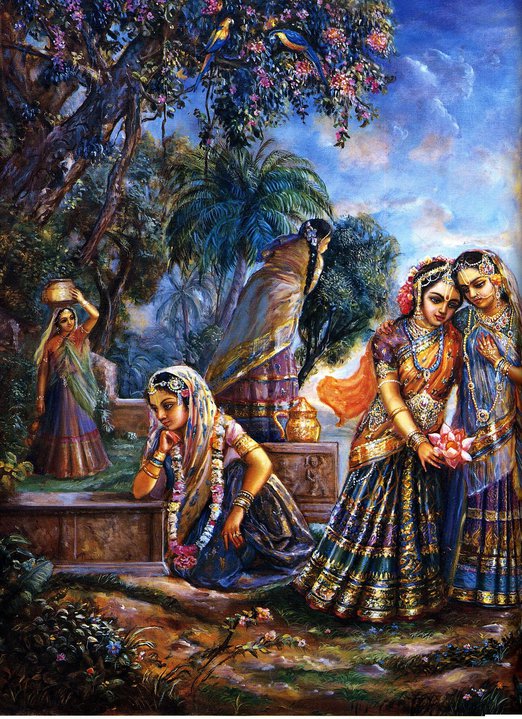
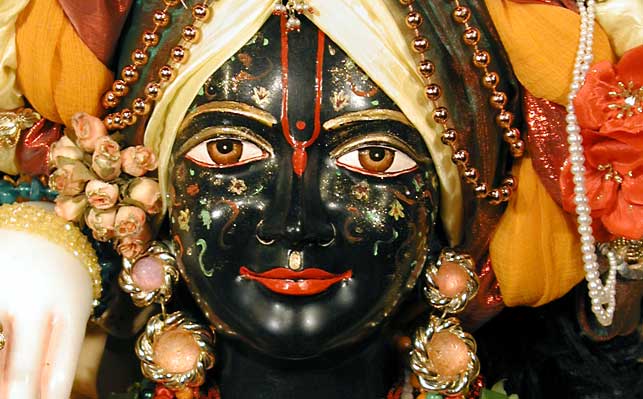
” ‘The scent of Kṛṣṇa’s transcendental body surpasses the aroma of musk and attracts the minds of all women. The eight lotus like parts of His body distribute the fragrance of lotuses mixed with that of camphor. His body is anointed with aromatic substances like musk, camphor, sandalwood and aguru. O My dear friend, that Personality of Godhead, also known as the enchanter of Cupid, always increases the desire of My nostrils.’
Sri-Caitanya-caritamrta 1975 Edition
By His Divine Grace A.C. Bhaktivedanta Swami Prabhupada
Antya 19 Text 88-106
The Inconceivable Behavior of Lord Sri Caitanya Mahaprabhu
The entire garden was filled with the scent of Lord Śrī Kṛṣṇa’s transcendental body. When Srī Caitanya Mahāprabhu smelled it, He fell unconscious at once.
The scent of Kṛṣṇa’s body, however, incessantly entered His nostrils, and the Lord became mad to relish it.
Śrīmatī Rādhārāṇī expressed to Her gopī friends how She hankers for the transcendental scent of Kṛṣṇa’s body. Śrī Caitanya Mahāprabhu recited that same verse and made its meaning clear.
More
07 Dec 2011
by The Hare Krishna Movement
in Back to Godhead, Krishna Consciousness, Satsvarupa das Goswami, Spiritual Life, Spiritual World
Tags: back to Godhead, His Divine Grace A.C. Bhaktivedanta Swami Prabhupada, Krishna, Krsna Book, Lord Krsna, Satsvarupa dasa, Sudama
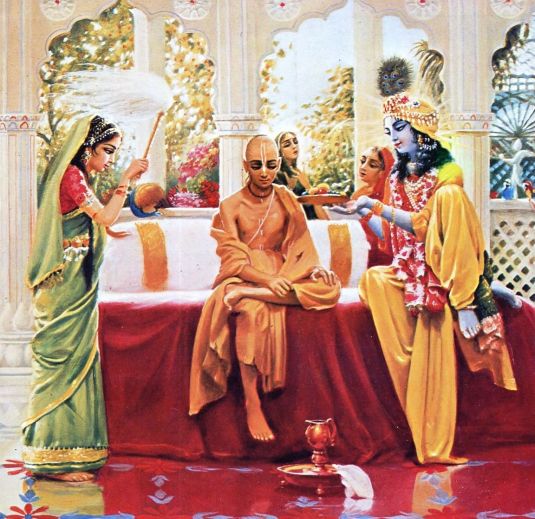
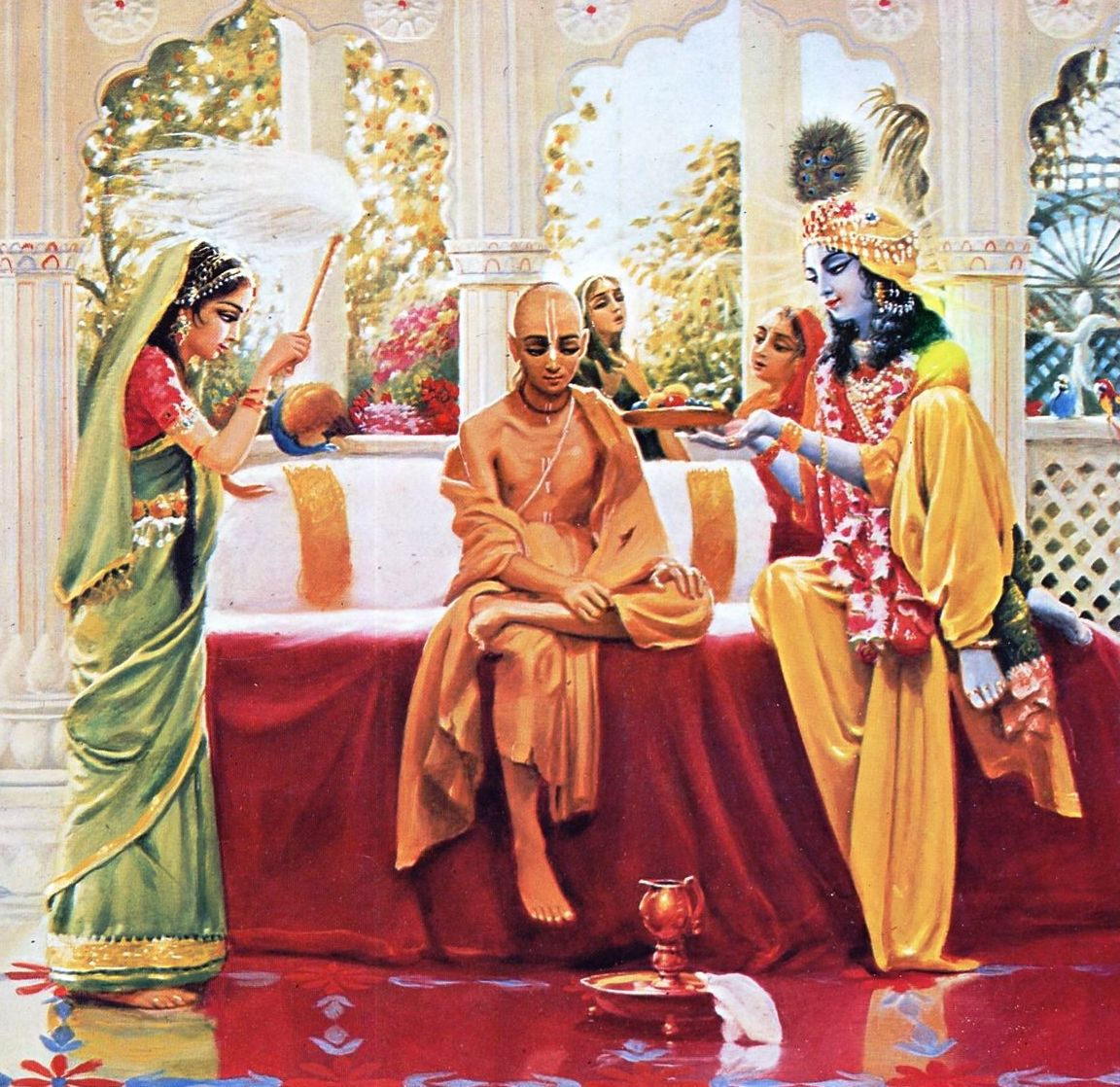
…It is related that by his constant association with the Lord, Sudama had wiped away from his heart whatever contamination was remaining, and he was very shortly transferred to the eternal spiritual kingdom, which is the goal of all saintly persons in the perfectional stage of life. It is stated in the Krsna Book that whoever hears this history will become qualified like Sudama and will be transferred to the spiritual kingdom of Lord Krsna.
Lord Krsna’s Friend Sudama
Published in Back to Godhead Magizine 1971 Vol. 1, Number 49
By Satsvarupa dasa adhikari
The wonderful history of Krsna and His friend Sudama is told in its entirety in the Krsna Book, Volume II, by His Divine Grace A.C. Bhaktivedanta Swami Prabhupada. Srila Prabhupada is kindly presenting to the western world the pastimes of Lord Krsna, which can act as a merciful shower upon the hearts of all of us. It is true that we have forgotten our eternal, blissful and loving relationships as servants of Krsna or God. The remedy to forgetfulness or ignorance of God is to hear about Him from the lips of His pure devotee. This is the view of authorized scriptures.
When Krsna descends from His eternal abode in the spiritual world and appears to this mundane world, as He did 5,000 years ago, He engages with others just as if He were an ordinary human being. Although He is unborn, He appears to have a mother and father. In the village of Vrndavana Krsna plays as a cowherd boy. He enacts these pastimes for His own transcendental pleasure and to attract all the suffering living entities back home, back to Godhead. Sudama was among those devotees who were childhood friends with Krsna, and Sudama was also His intimate school friend.
More
06 Dec 2011
by The Hare Krishna Movement
in Bhagavad-gita, High Thinking, Krishna Consciousness
Tags: Arjuna, Bg. 18.65, bhagavad-gita, Brahma-samhita, His Divine Grace A.C. Bhaktivedanta Swami Prabhupada, Krishna, Krsna meditation, Macmillan 1972 Edition

“…one should concentrate his mind upon Kṛṣṇa-the very form with two hands carrying a flute, the bluish boy with a beautiful face and peacock feathers in His hair. There are descriptions of Kṛṣṇa found in the Brahma-saṁhitā and other literatures. One should fix his mind on this original form of Godhead, Kṛṣṇa. He should not even divert his attention to other forms of the Lord. The Lord has multi-forms, as Viṣṇu, Nārāyaṇa, Rāma, Varāha, etc., but a devotee should concentrate his mind on the form that was present before Arjuna. Concentration of the mind on the form of Kṛṣṇa constitutes the most confidential part of knowledge, and this is disclosed to Arjuna because Arjuna is the most dear friend of Kṛṣṇa’s.”
Bhagavad-gita As It Is – Macmillan 1972 Edition
By His Divine Grace A.C. Bhaktivedanta Swami Prabhupada
Chapter 18, Text 65
man-manā bhava mad-bhakto
mad-yājī māṁ namaskuru
mām evaiṣyasi satyaṁ te
pratijāne priyo ‘si me
man-manāḥ—thinking of Me; bhava—just become; mat-bhaktaḥ—My devotee; mat-yājī—My worshiper; mām—unto Me; namaskuru—offer your obeisances; mām—unto Me; eva—certainly; eṣyasi—come; satyam—truly; te—to you; pratijāne—I promise; prijaḥ—dear; asi—you are; me—My.
Always think of Me and become My devotee. Worship Me and offer your homage unto Me. Thus you will come to Me without fail. I promise you this because you are My very dear friend.
More
08 Nov 2011
by The Hare Krishna Movement
in A.C. Bhaktivedanta Swami Prabhupada, Back to Godhead, Krishna Consciousness
Tags: A.C. Bhaktivedanta Swami Prabhupada, Back to Godhead Magazine, bhagavad-gita, Freedom in Krsna, krsna consciousness, yoga, yogi

Freedom in Krsna
By His Divine Grace A.C. Bhaktivedanta Swami Prabhupada
Re-printed from Back to Godhead Magazine 1973, Vol. 1, No. 48
vande rupa-sanatanau raghuyugau sri-jiva-gopalakau.
We are following in the footsteps of Lord Caitanya Mahaprabhu in order to understand Krsna consciousness. Krsna, the Supreme Personality of Godhead, is said in Sri Isopanisad to be very far away from us yet at the same time to be very near. Isvara, the supreme controller, is situated in everyone’s heart, not only in the hearts of human beings, but also within the beasts, birds, aquatics, and even within the atoms themselves. We simply have not realized Him. Actually anyone, however, can find Krsna within his heart.
The process of finding Krsna is called yoga. There are many types of yoga. In the Western countries people are generally familiar with the process of hatha-yoga. This is an approved method and is described in the Sixth Chapter of Bhagavad-gita. At the present moment, however, people are short-lived, they are not very fortunate, and they are always disturbed by many external affairs, and therefore it is not possible to properly execute this hatha-yoga. Even five thousand years ago when Krsna advised His friend Arjuna to accept the hatha-yoga process, Arjuna said, “Krsna, this practice is impossible.” He further said that to control the mind is as difficult as to control the wind. The mind flickers from one engagement to another and changes so swiftly that it is very difficult to control it in this age. Therefore Arjuna said that for him this process of hatha-yoga was not possible.
More
07 Nov 2011
by The Hare Krishna Movement
in Chanting Hare Krishna, Krishna Consciousness, Sri Caitanya-Caritamrta
Tags: 1975 edition, Caitanya Mahaprabhu His Divine Grace A.C. Bhaktivedanta Swami Prabhupada, chanting Hare Krishna, fruit of Love of Godhead, Maha Mantra, Sri Caitanya-caritamrta

Lord Caitanya Mahaprabhu Chanting and Dancing
Sri Caitanya-caritamrta – 1975 Edition
By His Divine Grace A.C. Bhaktivedanta Swami Prabhupada
Adi-lila 9.48
The Tree of Devotional Service
yei yāhāṅ tāhāṅ dāna kare prema-phala
phalāsvāde matta loka ha-ila sakala
yei—anyone; yāhāṅ—wherever; tāhāṅ—anywhere; dāna—charity; kare—gives in; prema-phala—the fruit of love of Godhead; phala—fruit; āsvāde—by tasting; matta—intoxicated; loka—people; ha-ila—become; sakala—all.
The fruit of love of God is so relishable that wherever a devotee distributes it, those who taste the fruit, anywhere in the world, immediately become intoxicated.
Here the wonderful fruit of love of Godhead distributed by Lord Caitanya Mahāprabhu is described. We have practical experience that anyone who accepts this fruit and sincerely tastes it immediately becomes mad after it and gives up all his bad habits, being intoxicated by Caitanya Mahāprabhu’s gift, the Hare Kṛṣṇa mahā-mantra. The statements of Śrī Caitanya-caritāmṛta are so practical that anyone can test them. As far as we are concerned, we are most confident of the success of the distribution of the great fruit of love of Godhead through the medium of chanting the mahā-mantra-Hare Kṛṣṇa, Hare Kṛṣṇa, Kṛṣṇa Kṛṣṇa, Hare Hare Hare Rāma, Hare Rāma, Rāma Rāma, Hare Hare.
02 Nov 2011
by The Hare Krishna Movement
in Bhagavad-gita, Krishna Consciousness
Tags: Bhagavad-gita As It Is, His Divine Grace A.C. Bhaktivedanta Swami Prabhupada, Krsnaloka, man-mana bhava-bhakto, primal form of Krsna, Supreme Personality of Godhead

There are some who are demonic; they also think of Kṛṣṇa, but enviously, just like King Kaṁsa, Kṛṣṇa’s uncle. He was also thinking of Kṛṣṇa always, but he thought of Kṛṣṇa as his enemy. He was always in anxiety, wondering when Kṛṣṇa would come to kill him. That kind of thinking will not help us. One should be thinking of Kṛṣṇa in devotional love.
One should therefore engage his mind in the eternal form, the primal form of Kṛṣṇa; with conviction in his heart that Kṛṣṇa is the Supreme Personality of Godhead and that His body is not material, but is eternal, blissful knowledge. This will help one transfer into the Kṛṣṇaloka.
Bhagavad-gita As It Is – Macmillan 1972 Edition
By His Divine Grace A.C. Bhaktivedanta Swami Prabhupada
Chapter 9, Text 34
man-manā bhava mad-bhakto
mad-yājī māṁ namaskuru
mām evaiṣyasi yuktvaivam
ātmānaṁ mat-parāyaṇaḥ
mat-manāḥ—always thinking of Me; bhava—become; mat—My; bhaktaḥ—devotee; mat—My; yājī—worshiper; mām—unto Me; namaskuru—offer obeisances; mām—unto Me; eva—completely; eṣyasi—come; yuktvā evam—being absorbed; ātmānam—your soul; mat-parāyaṇaḥ—devoted to Me.
Engage your mind always in thinking of Me, offer obeisances and worship Me. Being completely absorbed in Me, surely you will come to Me.
Purport
In this verse it is clearly indicated that Kṛṣṇa consciousness is the only means of being delivered from the clutches of this contaminated material world. Sometimes unscrupulous commentators distort the meaning of what is clearly stated here: that all devotional service should be offered to the Supreme Personality of Godhead, Kṛṣṇa. Unfortunately, unscrupulous commentators divert the mind of the reader to that which is not at all feasible. Such commentators do not know that there is no difference between Kṛṣṇa’s mind and Kṛṣṇa. Kṛṣṇa is not an ordinary human being; He is Absolute Truth. His body, mind and He Himself are one and absolute. It is stated in the Kūrma Purāṇa. As it is quoted by Bhaktisiddhānta Sarasvatī Gosvāmī in his Anubhāṣya comments on Caitanya-caritāmrta, Fifth Chapter, Ādi-līlā, verses 41-48, “deha-dehi-vibhedo ‘yaṁ neśvare vidyate kvacit,” which means that there is no difference in Kṛṣṇa, the Supreme Lord, between Himself and His body. But, because they do not know this science of Kṛṣṇa, the commentators hide Kṛṣṇa and divide His personality from His mind or from His body. Although this is sheer ignorance of the science of Kṛṣṇa, some men make profit out of misleading the people.
More
31 Oct 2011
by The Hare Krishna Movement
in Krishna Consciousness, KRSNA The Supreme Personality of Godhead
Tags: Autumn, autumn season, Description of Autumn, Hari, His Divine Grace A.C. Bhaktivedanta Swami Prabhupada, krsna consciousness, Krsna The Supreme Personality of Godhead

Because of the appearance of the autumn season, the water of the ocean becomes calm and quiet, just as a person developed in self-realization is no longer disturbed by the three modes of material nature.
When the sky is clear of all clouds, the stars at night shine very beautifully; similarly, when a person is actually situated in Kṛṣṇa consciousness, he is cleared of all dirty things, and he becomes as beautiful as the stars in the autumn sky.
KRSNA, The Supreme Personality of Godhead – 1970 Edition
By His Divine Grace A.C. Bhaktivedanta Swami Prabhupada
Vol. 1 Chapter 20
Description of Autumn
…Everything becomes naturally beautiful with the appearance of the autumn season. Similarly, when a materialistic person takes to Kṛṣṇa consciousness and spiritual life, he also becomes as clear as the sky and water in autumn. The autumn season takes away the rolling of dark clouds in the sky as well as the polluted water. Filthy conditions on the ground also become cleansed. Similarly, a person who takes to Kṛṣṇa consciousness immediately becomes cleansed of all dirty things within and without. Kṛṣṇa is therefore known as Hari. “Hari” means “he who takes away.” Kṛṣṇa immediately takes away all unclean habits from anyone who takes to Kṛṣṇa consciousness. The clouds of autumn are white, for they do not carry any water. Similarly, a retired man, being freed from all responsibility of family affairs (namely, maintaining the home, wife and children) and taking completely to Kṛṣṇa consciousness, becomes freed from all anxieties and looks as white as clouds in autumn. Sometimes in autumn the falls come down from the top of the hill to supply clean water, and sometimes they stop. Similarly, sometimes great saintly persons distribute clear knowledge, and sometimes they are silent. The small ponds which were filled with water because of the rainy season, gradually dry up in autumn. As for the tiny aquatics living in the reservoirs, they cannot understand that their numbers are diminishing day by day, as the materially engrossed persons cannot understand that their duration of life is being reduced day by day.
More
27 Oct 2011
by The Hare Krishna Movement
in Books by Srila Prabhupada, Festivals, Krishna, Krishna Consciousness
Tags: Balarama, Govardhan Hill, His Divine Grace, Indra, Krishna, Krsna The Supreme Personality of Godhead, lifting Govardhana Hill, Mother Yasoda, Nanda Maharaja, Rohini
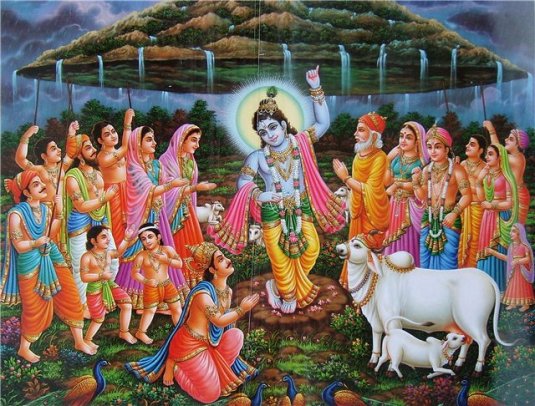
Lifting Govardhana Hill
Today is the celebration of Govardhana-puja, so let us remember the Wonderful activies of Krishna which surpass the activies of all men.
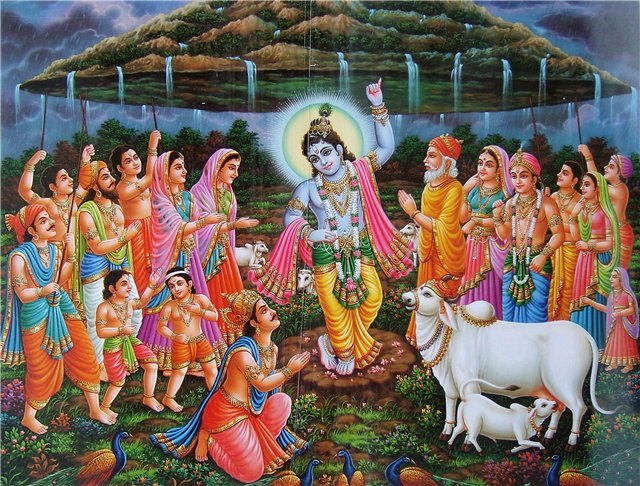
Without understanding the intricacies of Kṛṣṇa, the Supreme Personality of Godhead, and without knowing His uncommon spiritual opulences, the innocent cowherd boys and men of Vṛndāvana began to discuss the wonderful activities of Kṛṣṇa which surpass the activities of all men.
One of them said, “My dear friends, considering His wonderful activities, how is it possible that such an uncommon boy would come and live with us in Vṛndāvana? It is really not possible. Just imagine! He is now only seven years old! How was it possible for Him to lift Govardhana Hill in one hand and hold it up just like the king of elephants holds a lotus flower? To lift a lotus flower is a most insignificant thing for an elephant, and similarly Kṛṣṇa lifted Govardhana Hill without exertion.
KRSNA, The Supreme Personality of Godhead – 1970 Edition
By His Divine Grace A.C. Bhaktivedanta Swami Prabhupada
Vol. 1, Chapter 26
Devastating Rainfall in Vṛndāvana
When Indra understood that the sacrifice offered by the cowherd men in Vṛndāvana was stopped by Kṛṣṇa, he became angry, and he vented his anger upon the inhabitants of Vṛndāvana, who were headed by Nanda Mahārāja, although Indra knew perfectly well that Kṛṣṇa was personally protecting them. As the director of different kinds of clouds, Indra called for the sāṁvartaka. This cloud is invited when there is a need to devastate the whole cosmic manifestation. The sāṁvartaka was ordered by Indra to go over Vṛndāvana and inundate the whole area with an extensive flood. Demonically, Indra thought himself to be the all-powerful supreme personality. When demons become very powerful, they defy the supreme controller, Personality of Godhead. Indra, though not a demon, was puffed up by his material position, and he wanted to challenge the supreme controller. He thought himself, at least for the time being, as powerful as Kṛṣṇa. Indra said, “Just see the impudence of the inhabitants of Vṛndāvana! They are simply inhabitants of the forest, but being infatuated with their friend Kṛṣṇa, who is nothing but an ordinary human being, they have dared to defy the demigods.”
More
20 Oct 2011
by The Hare Krishna Movement
in Krishna, Krishna Consciousness, Meditation, Practicing Krishna Consciousness at Home
Tags: brahma-muhurta, His Divine Grace A.C. Bhaktivedanta Swami Prabhupada, ideal householders, krsna consciousness, Krsna The Supreme Personality of Godhead, meditation, meditation upon Radha-Krishna

Krishna in meditation
Lord Kṛṣṇa used to lie down with His sixteen thousand wives, but also He would rise up from bed very early in the morning, three hours before sunrise. By nature’s arrangement the crowing of the cocks warns of the brāhma-muhūrta hour. There is no need of alarm clocks; as soon as the cocks crow early in the morning, it is to be understood that it is time to rise from bed. Hearing that sound, Kṛṣṇa would get up from bed, but His rising early was not very much to the liking of His wives. The wives of Kṛṣṇa were so much attached to Him that they would lie in bed embracing Him, but as soon as the cocks crowed, Kṛṣṇa’s wives would be very sorry and would immediately condemn the crowing.
After rising from bed, Lord Kṛṣṇa would wash His mouth, hands and feet and would immediately sit down and meditate on Himself. This does not mean, however, that we should also sit down and meditate on ourselves. We have to meditate upon Kṛṣṇa, Rādhā-Kṛṣṇa. That is real meditation, Kṛṣṇa is Kṛṣṇa Himself; therefore He was teaching us that brāhma-muhūrta should be utilized for meditation on Rādhā-Kṛṣṇa. By doing so, Kṛṣṇa would feel very much satisfied, and similarly we will also feel transcendentally pleased and satisfied if we utilize the brāhma-muhūrta period to meditate on Rādhā and Kṛṣṇa and if we think of how Śrī Rukmiṇīdevī and Kṛṣṇa acted as ideal householders to teach the whole human society to rise early in the morning and immediately engage in Kṛṣṇa consciousness.
KRSNA, The Supreme Personality of Godhead – 1970 Edition
By His Divine Grace A.C. Bhaktivedanta Swami Prabhupada
Vol. 2, Chapter 15
Lord Kṛṣṇa’s Daily Activities
From the Vedic mantras we learn that the Supreme Personality of Godhead has nothing to do: na tasya karyaṁ kranaṁ ca vidyate. If the Supreme Lord has nothing to do, then how can we speak of the activities of the Supreme Lord? From the previous chapter it is clear that no one can act in the way that Lord Kṛṣṇa does. We should clearly note this fact: the activities of the Lord should be followed, but they cannot be imitated. For example, Kṛṣṇa’s ideal life as a householder can be followed, but if one wants to imitate Kṛṣṇa by expanding into many forms, that is not possible. We should always remember, therefore, that Lord Kṛṣṇa, although playing the part of a human being, nevertheless simultaneously maintains the position of the Supreme Personality of Godhead. We can follow Lord Kṛṣṇa’s dealing with His wives as an ordinary human being, but His dealing with more than sixteen thousand wives at one time cannot be imitated. The conclusion is that to become ideal householders we should follow in the footsteps of Lord Kṛṣṇa as He displayed His daily activities, but we cannot imitate Him at any stage of our life.
More
15 Oct 2011
by The Hare Krishna Movement
in Book Distribution, Krishna Consciousness, Sriman George Harrison
Tags: Book Distribution, Krishna consciousness, Living in the Material World, Padmapani das, sankirtan, Sriman George Harrison
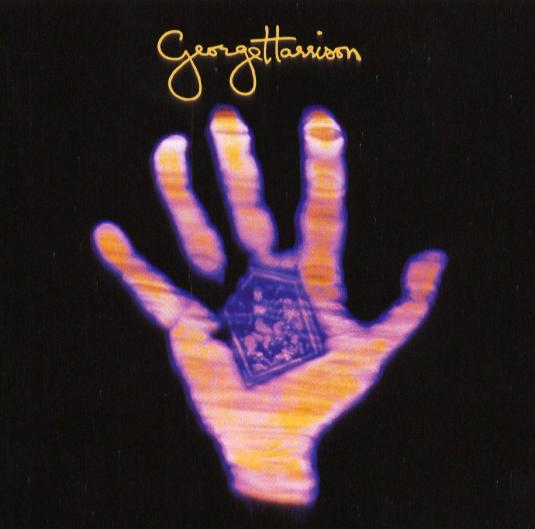
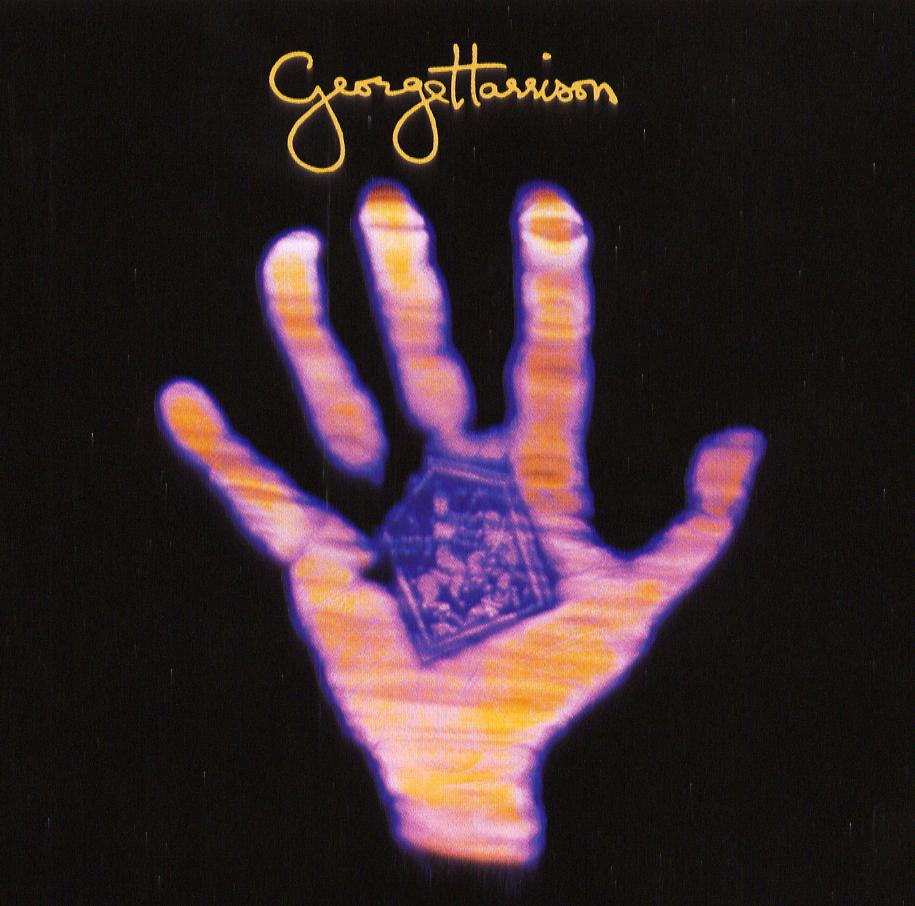
Living in the Material World
Salvation from the Material World
By Sriman Padmapani Prabhu
On November 2nd, 1974, ex-Beatle George Harrison launched his North American tour in Vancouver, Canada. Since George was a follower of Krishna consciousness, the Vancouver devotees were eager to distribute Srila Prabhupada’s books and magazines to local fans attending the concert. George was expected to play a number of hits from his latest record (“Living in the Material World”), which contained many songs of devotion to the Lord:
“I’m living in the material world
Living in the material world
I hope to get out of this place
By the Lord Sri Krishna’s grace
My salvation from the material world.”
As we entered the Pacific Coliseum, Mahesh Prabhu and I headed for the floor, our saffron bags filled with books, magazines and incense. The crowd was obviously excited as we gradually walked to the front of the stage, distributing our spiritual goods along the way. “Hare Krishna” people shouted. Many of George’s fans knew that he had an affinity towards our movement, so they were very friendly and supportive. When the concert began, George appeared onstage wearing a number of buttons containing spiritual pictures and “om” signs. His neck was adorned with tulasi beads.
Mahesh Prabhu pulled out a large hardbound edition of Srila Prabhupada’s Krishna Book, which had been published with the help of a kind donation by George Harrison himself. When Mahesh got to the front row, he held the Krishna Book high in the air so that George could possibly see it from the stage. As he made his way towards Mahesh, George in fact noticed Srila Prabhupada’s book. His eyes lit up and a large smile beamed across his face as he bowed his head in respect. Since Mahesh was a big fan of the Beatles before joining ISKCON, he was thrilled to have this simple transcendental exchange with one of his old heroes. What an auspicious start to George Harrison’s 1974 tour.
More
11 Oct 2011
by The Hare Krishna Movement
in Chanting Hare Krishna, Krishna Consciousness
Tags: chant Hare Krishna, chanting Hare Krishna, Hare Krishna, His Divine Grace A.C. Bhaktivedanta Swami Prabhupada, Kali-yuga, kirtanad eva krsnasya
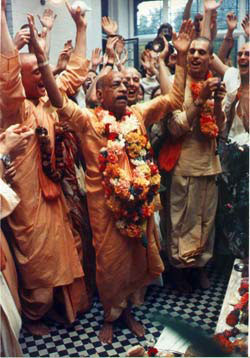
Srila Prabhupada Chanting & Dancing
By His Divine Grace A.C. Bhaktivedanta Swami Prabhupada
Founder-Acarya of the International Society for Krishna Consciousness
“In the sastra it is said this Kali-yuga is full of faults, so many faults. It is the ocean of faults. But there is a very nice thing, asti hy eko mahan gunah, a very great quality. What is that? Kirtanad eva krsnasya mukta-sangah param vrajet [SB 12.3.51]. If you simply chant Hare Krishna mantra, then you become perfect. Is it very difficult? Chant Hare Krishna and you become perfect. But we are so unfortunate, we are not even prepared to chant. This is our position. So you have to make little determination that ‘I shall chant henceforward Hare Krishna mantra.’ Then everything is all right.“
More
10 Oct 2011
by The Hare Krishna Movement
in Krishna Consciousness, Songs of the Vaisnava Acaryas
Tags: Krishna's childhood pastimes, Lord Sri Damodara, month of Damodara, Mother Yasoda, Songs of the Vaisnava Acaryas, Sri Damodarastakam, Sri Satyavrata Muni, Vaikuntha

He ran in retreat in fear of Mother Yasoda bus was ultimately caught, to that Supreme Lord, Sri Damodara, I offer my humble obeisances.
By Sri Satyavrata Muni
From the original 1974 “Songs of the Vaisnava Acaryas” songbook
This eight sloka prayer is sung morning and evening during the month of Damodara.
namāmīśvaraḿ sac-cid-ānanda-rūpaḿ
lasat-kuṇḍalaḿ gokule bhrājamanam
yaśodā-bhiyolūkhalād dhāvamānaḿ
parāmṛṣṭam atyantato drutya gopyā
1) To the supreme controller who possesses an eternal form of blissful knowledge, whose glistening earrings swing to and fro, who manifested Himself in Gokula, who stole the butter that the gopis kept hanging from the rafters of their storerooms and who then quickly jumped up and ran in retreat in fear of Mother Yasoda, but was ultimately caught-to that Supreme Lord, Sri Damodara, I offer my humble obeisances.
rudantaḿ muhur netra-yugmaḿ mṛjantam
karāmbhoja-yugmena sātańka-netram
muhuḥ śvāsa-kampa-trirekhāńka-kaṇṭha-
sthita-graivaḿ dāmodaraḿ bhakti-baddham
2) Upon seeing His mothers whipping stick, He cried and rubbed His eyes again and again with His two lotus hands. His eyes were fearful and His breathing quick, and as Mother Yasoda bound His belly with ropes, He shivered in fright and His pearl necklace shook, To this Supreme Lord, Sri Damodara, who is bound with His devotee’s love, I offer my humble obeisances.
More
30 Sep 2011
by The Hare Krishna Movement
in Krishna Consciousness, Srila Prabhupada Conversations
Tags: bhagavad-gita, bhakti, conversation with Srila Prabhupada, Krishna consciousness, perfection of yoga, remembering Krishna

Remembering Krishna. This is Krishna Consciousness
Bhagavad-gītā 2.1-10 and Talk
by His Divine Grace A. C. Bhaktivedanta Swami Prabhupāda
Los Angeles, November 25, 1968
…It is stated in the Bhagavad-gītā, that we have to try to remember Kṛṣṇa. He’s so beautiful, His instructions are so nice. If we simply remember Kṛṣṇa… That was the perfection approved by Lord Caitanya.
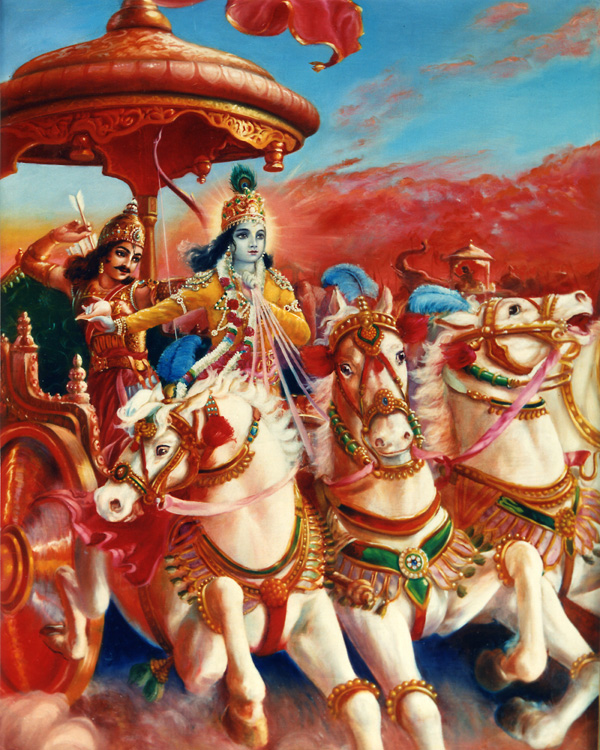
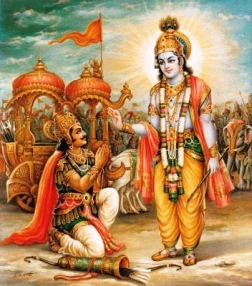
I think I have narrated the story. When Lord Caitanya was traveling in South India in a big temple, Raṅganātha temple, He went to see the Deity, and He saw one brāhmaṇa was reading Bhagavad-gītā. And people were joking him, “Oh, Mr. brāhmaṇa, how you are reading Bhagavad-gītā?” Because they were the neighbors, they knew that this brāhmaṇa was illiterate and he was studying Bhagavad-gītā. So they were joking. But the brāhmaṇa did not about care them. He was taking the book and in his own way he was reading. Caitanya Mahāprabhu saw this incident, He came to the brāhmaṇa. So He asked the brāhmaṇa, “My dear brāhmaṇa, what you are reading?” So he could understand “This persons is not joking with me; He is serious.” So he explained, “My dear sir, I am reading Bhagavad-gītā. Unfortunately, I am illiterate. I do not know even the alphabets.” “Why you are reading Bhagavad-gītā?” So he said that, “My spiritual master knows that I am illiterate, but still, he has asked me to read Bhagavad-gītā. What can I do? Therefore I have taken this book. I am seeing simply. I do not know how to read.” “Oh, that’s all right. You cannot read. But I see that you are crying. How you are crying if you are not reading?” “Yes, I am crying. Of course, there is cause.” “What is that?” “As soon as I take this Bhagavad-gītā, I remember Kṛṣṇa. Kṛṣṇa is sitting as driver and Arjuna is hearing. I have heard the story. I know something of the instruction but cannot read. So as soon as I take this book, this picture comes before me and I simply think, ‘Oh, how Kṛṣṇa is nice that He has become a charioteer of His devotee. He is so great. Still, He has accepted a menial service of His devotee.’ This gives me so much pleasure that I cry.” Caitanya Mahāprabhu embraced him, “Your Bhagavad-gītā reading is perfect. You have taken the essence.” So this is the thing. If you simply remember Kṛṣṇa is teaching Arjuna and Arjuna is hearing, if you simply remember the picture, that is sufficient. Even if you think that you cannot read. Because after all we have to become Kṛṣṇa conscious. We haven’t got to become a learned man to argue with another learned man. If it is possible we can do that, but that does not make any difference if I cannot argue with others or if I cannot teach very nicely Bhagavad-gītā to others. Simply if I remember this picture, that is perfection. Because we have to become Kṛṣṇa conscious. We have to simply think of Kṛṣṇa. You think in any way. That is your perfection. Smartavyaḥ satataṁ viṣṇuḥ. This is the injunction. You have to think of Viṣṇu always. This is samādhi; this is meditation; this is yoga siddhi, perfection of yoga.
More
25 Sep 2011
by The Hare Krishna Movement
in A.C. Bhaktivedanta Swami Prabhupada, Devotional Service, Krishna Consciousness, Yoga
Tags: bhakti yoga, devotional service, His Divine Grace A.C. Bhaktivedanta Swami Prabhupada, krsna consciousness, Krsna's name, master of yoga, Srila Prabhupada, The Topmost Yoga System, yoga, Yoga and the Master of Yoga, yogesvara
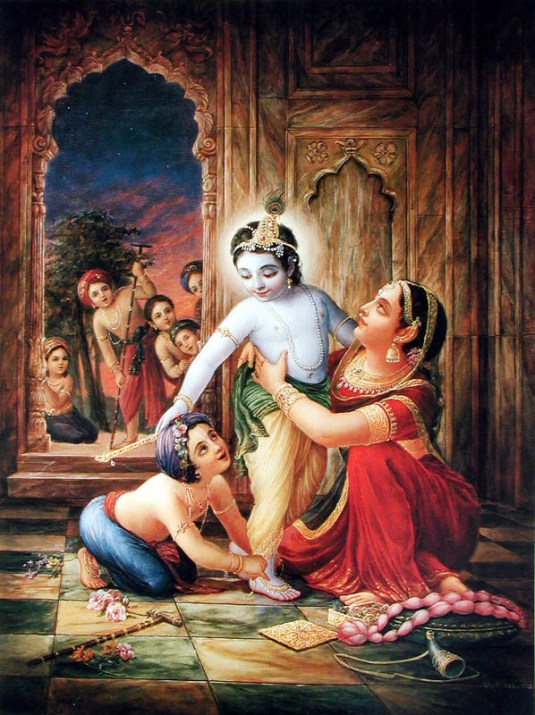
Yogesvara, the ultimate object of yoga
Krsna Consciousness The Topmost Yoga System
By His Divine Grace A. C. Bhaktivedanta Swami Prabhupada
Chapter 2
Yoga and the Master of Yoga
Yoga means the connecting link between the soul and the Supersoul, or the Supreme and the minute living creatures. Lord Śrī Kṛṣṇa is that Supreme, the Personality of Godhead. Being, therefore, the ultimate object of yoga, Kṛṣṇa’s name is yogeśvara, the master of yoga.
At the conclusion of the Bhagavad-gītā, it is said: “Where there is Kṛṣṇa, and where there is Arjuna, the greatest of bowmen, there, undoubtedly, is victory.”
The Bhagavad-gītā is a narrative spoken by Sañjaya, the secretary of Mahārāja Dhṛtarāṣṭra. This is just like airwaves from the radio: the play is going on in the auditorium, but you can hear from your room. So, just as we now have such a mechanical arrangement, at that time there were also certain arrangements, although there was no machine. Anyway, the secretary of Dhṛtarāṣṭra could see what was going on in the battlefield, and he was in the palace, telling this to Mahārāja Dhṛtarāṣṭra, who was blind. Now, the conclusion made by Sañjaya was that Kṛṣṇa is the Supreme Personality of Godhead.
When the yoga performance is described, it is said that Kṛṣṇa’s name is yogeśvara. No one can be a better yogī than the master of yoga, and Kṛṣṇa is the master. There are many different types of yoga. Yoga means the system, and yogi means the person who practices that system. The object of yoga, the ultimate goal, is to understand Kṛṣṇa. Therefore, Kṛṣṇa consciousness means to practice the topmost type of yoga.
This topmost yoga system was described by Kṛṣṇa in the Gītā to His most intimate friend, Arjuna. In the beginning, the Lord said that this system can be practiced only by a person who has developed attachment for it. This Kṛṣṇa conscious yoga system cannot be practiced by an ordinary man who has no attachment for Kṛṣṇa, for it is a different system, and the topmost—bhakti-yoga.
More
22 Sep 2011
by The Hare Krishna Movement
in A.C. Bhaktivedanta Swami Prabhupada, Back to Godhead, Devotional Service, Krishna Consciousness
Tags: Back to Godhead Magazine, devotional service, His Divine Grace A.C. Bhaktivedanta Swami Prabhupada, Krishna, krsna consciousness, materialism, spiritual endeavors, Supreme Personality of Godhead
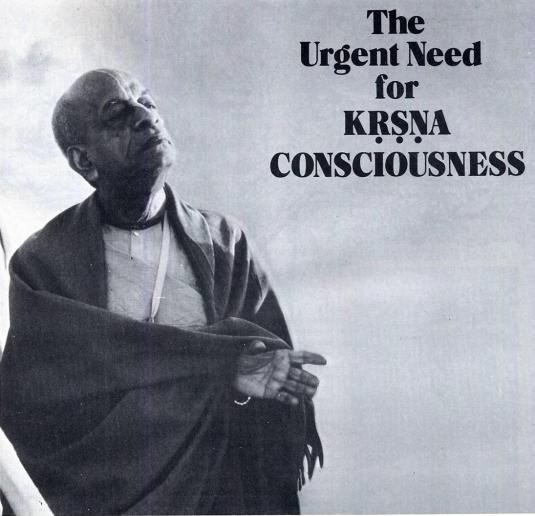
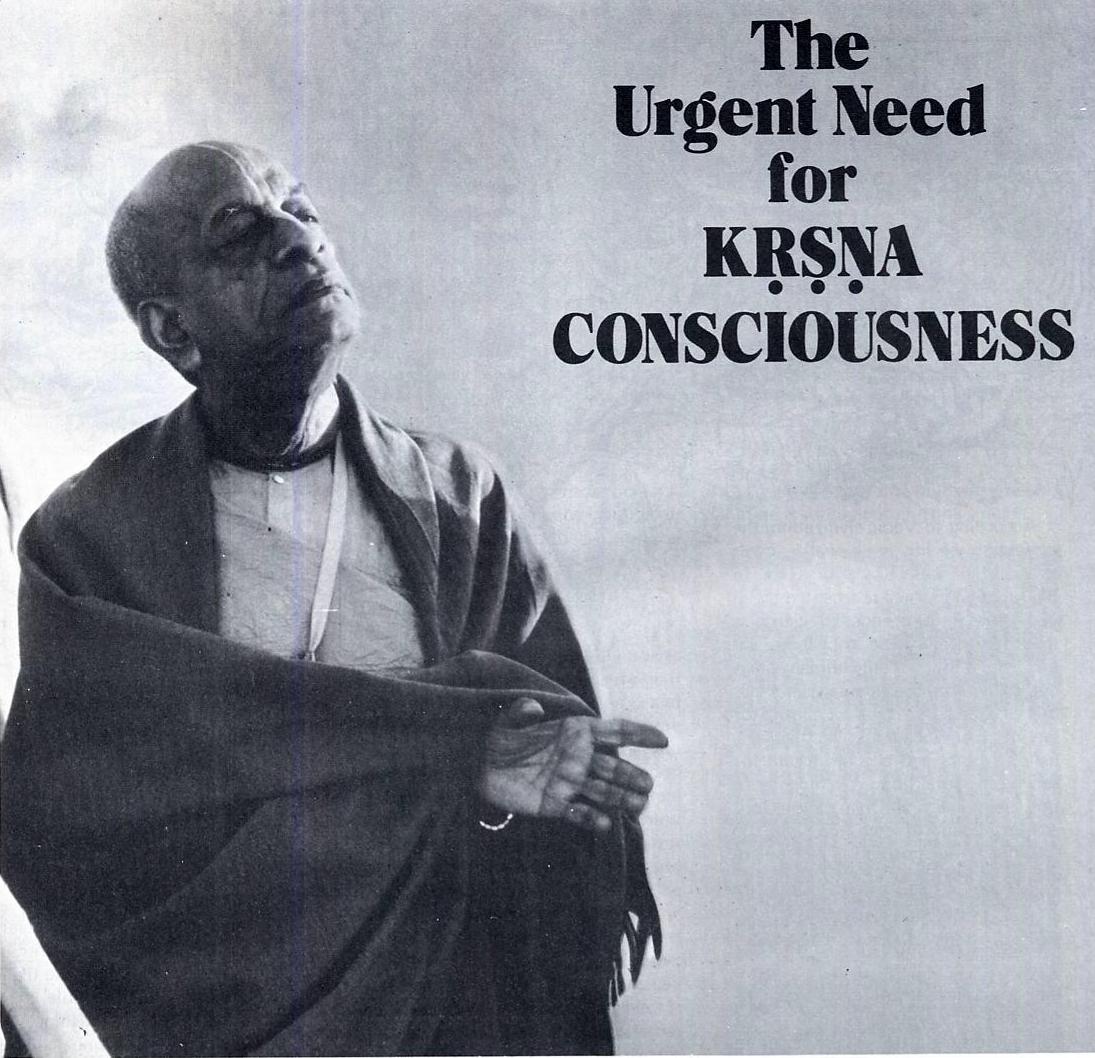
The Urgent Need for Krishna Consciousness
By His Divine Grace A.C. Bhaktivedanta Swami Prabhupada
This very important Krsna consciousness movement is meant to save human society from spiritual death. At present human society is being misled by leaders who are blind, for they do not know the aim and objective of human life, which is self-realization and the reestablishment of our lost relationship with the Supreme Personality of Godhead. That is the missing point. This Krsna consciousness movement is trying to enlighten human society in this important matter.
According to Vedic civilization, the perfection of life is to realize one’s relationship with Krsna or God. In Bhagavad-gita, which is accepted by all authorities in transcendental science as the basis of all Vedic knowledge, we understand that not only human beings but all living entities are parts and parcels of God. The parts are meant for serving the whole, just as the legs, hands, fingers and ears are meant for serving the total body. We living entities, being parts and parcels of God, are duty bound to serve Him.
Actually our position is that we are always rendering service to someone, either to our family, country or society. If we have no one to serve, sometimes we keep a pet cat or dog and render service to it. All these factors prove that we are constitutionally meant to render service, yet in spite of serving to our best capacity, we are no more satisfied. Nor is the person to whom we are rendering that service satisfied. On the material platform, everyone is frustrated. The reason for this is that the service which is being rendered is not properly directed. For example, if we want to render service to a tree, we must water the root. If we pour water on the leaves, branches and twigs, there is little benefit. If the Supreme Personality of Godhead is served, all other parts and parcels will be automatically satisfied. Consequently all welfare activities as well as service to society, family and nation are realized by serving the Supreme Personality of Godhead.
More
20 Sep 2011
by The Hare Krishna Movement
in Krishna Consciousness, Letters by Srila Prabhupada
Tags: Gaudiya Math, Kali-yuga, Kirtanananda Swami, Krsna consciousness movement, Letters by Srila Prabhupada, Lord Caitanya Mahaprabhu

Material nature means dissension and disagreement, especially in this Kali yuga. But, for this Krsna consciousness movement its success will depend on agreement, even though there are varieties of engagements. In the material world there are varieties, but there is no agreement. In the spiritual world there are varieties, but there is agreement. That is the difference. The materialist without being able to adjust the varieties and the disagreements makes everything zero. They cannot come into agreement with varieties, but if we keep Krsna in the center, then there will be agreement in varieties. This is called unity in diversity.
In an October 18, 1973 letter, Srila Prabhupada wrote to Kirtanananda
My Dear Kirtanananda Maharaja:
Please accept my blessings, and I beg to acknowledge receipt of your letter dated October 16, 1973 and I have noted the contents carefully..
Now this displeasing of god brothers has already begun and gives me too much agitation in my mind. Our Gaudiya Math people fought with one another after the demise of Guru Maharaja but my disciples have already begun fighting even in my presence. So I am greatly concerned about it.
Following in the footprints of Lord Caitanya Mahaprabhu:
trnad api su-nicena taror iva sahisnuna
amanina manadena kirtaniya sada harih
“One should chant the holy name of the Lord in a humble state of mind, thinking oneself lower than the straw in the street; one should be more tolerant than a tree, devoid of all sense of false prestige and should be ready to offer all respect to others. In such a state of mind one can chant the holy name of the Lord constantly.”
We must always remember this verse and be as tolerant as the tree, as we execute the Krsna consciousness movement. Without this mentality we cannot be successful.
More
14 Sep 2011
by The Hare Krishna Movement
in A.C. Bhaktivedanta Swami Prabhupada, Krishna Consciousness, Srimad Bhagavatam, Uncategorized, Yoga
Tags: devotee, krsna consciousness, mystic yogi, narayana-para, Srimad Bhagavatam, Surpreme Personality of Godhead, transcendental service of the Lord, yogi

…The real purpose of yogic performances is to control the mind and the senses. In other words, one cannot attain the mercy and benediction of the Supreme Lord until one is able to control the mind and the senses. This is actually possible when one fully engages in Kṛṣṇa consciousness…
Srimad-Bhagavatam
By His Divine Grace A.C. Bhaktivedanta Swami Prabhupada
Canto 3: “The Status Quo”
SB 3.15: Description of the Kingdom of God
There is no defeat in this material world for persons who control the mind and senses by controlling the breathing process and who are therefore experienced, mature mystics. This is because by such perfection in yoga they have attained your mercy.
Purport
The purpose of yogic performances is explained here. It is said that an experienced mystic attains full control of the senses and the mind by controlling the breathing process. Therefore, controlling the breathing process is not the ultimate aim of yoga. The real purpose of yogic performances is to control the mind and the senses. Anyone who has such control is to be understood to be an experienced, mature mystic yogī. It is indicated herein that a yogī who has control over the mind and senses has the actual benediction of the Lord, and he has no fear. In other words, one cannot attain the mercy and benediction of the Supreme Lord until one is able to control the mind and the senses. This is actually possible when one fully engages in Kṛṣṇa consciousness. A person whose senses and mind are always engaged in the transcendental service of the Lord has no possibility of engaging in material activities. The devotees of the Lord are not defeated anywhere in the universe. It is stated, nārāyaṇa-parāḥ sarve: one who is nārāyaṇa-para, or a devotee of the Supreme Personality of Godhead, is not afraid anywhere, whether he is sent to hell or promoted to heaven (Bhāg. 6.17.28).
Pasted from; PrabhupadaBooks.com
01 Sep 2011
by The Hare Krishna Movement
in Books by Srila Prabhupada, Krishna, Krishna Consciousness, Spiritual World
Tags: gopis, Krishna, Krsna The Supreme Personality of Godhead, prabhupada, Radharani

KRSNA, The Supreme Personality of Godhead – 1970 Edition
By His Divine Grace A. C. Bhaktivedanta Swami Prabhupada
The Gopīs Attracted by the Flute
Kṛṣṇa was very pleased with the atmosphere of the forest where flowers bloomed and bees and drones hummed very jubilantly. While the birds, trees and branches were all looking very happy, Kṛṣṇa, tending the cows, accompanied by Śrī Balarāma and the cowherd boys, began to vibrate His transcendental flute. After hearing the vibration of the flute of Kṛṣṇa, the gopīs in Vṛndāvana remembered Him and began to talk amongst themselves about how nicely Kṛṣṇa was playing His flute. When the gopīs were describing the sweet vibration of Kṛṣṇa’s flute, they also remembered their pastimes with Him; thus their minds became disturbed, and they were unable to describe completely the beautiful vibrations. While discussing the transcendental vibration, they remembered also how Kṛṣṇa dressed, decorated with a peacock feather on His head, just like a dancing actor, and with blue flowers pushed over His ear. His garment glowed yellow-gold, and He was garlanded with a vaijayantī necklace. Dressed in such an attractive way, Kṛṣṇa filled up the holes of His flute with the nectar emanating from His lips. So they remembered Him, entering the forest of Vṛndāvana, which is always glorified by the footprints of Kṛṣṇa and His companions.
More
22 Aug 2011
by The Hare Krishna Movement
in Hare Krishna Maha Mantra, Krishna, Krishna Consciousness
Tags: Hare Krishna Maha-mantra, Krishna, Krishna's Flute, Sri Caitanya-caritamrta, Srila Prabhupada, The Opulence and Sweetness of Lord Sri Krsna
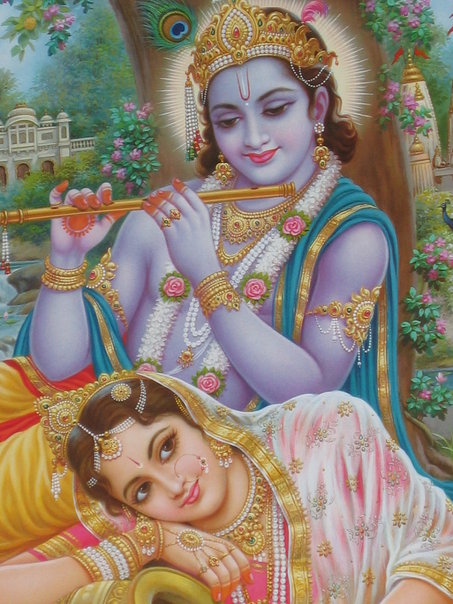
Sri Caitanya-caritamrta – 1975 Edition
By His Divine Grace A.C. Bhaktivedanta Swami Prabhupada
The Opulence and Sweetness of Lord Sri Krsna
Madhya 21.144
“The vibration of His flute is just like a bird that creates a nest within the ears of the gopīs and always remains prominent there, not allowing any other sound to enter their ears. Indeed, the gopīs cannot hear anything else, nor are they able to concentrate on anything else, not even to give a suitable reply. Such are the effects of the vibration of Lord Kṛṣṇa’s flute.”
PURPORT
The vibration of Kṛṣṇa’s flute is always prominent in the ears of the gopīs. Naturally they cannot hear anything else. Constant remembrance of the holy sound of Kṛṣṇa’s flute keeps them enlightened and enlivened, and they do not allow any other sound to enter their ears. Since their attention is fixed on Kṛṣṇa’s flute, they cannot divert their minds to any other subject. In other words, a devotee who has heard the sound of Kṛṣṇa’s flute forgets to talk or hear of any other subject. This vibration of Kṛṣṇa’s flute is represented by the Hare Kṛṣṇa mahā-mantra. A serious devotee of the Lord who chants and hears this transcendental vibration becomes so accustomed to it that he cannot divert his attention to any subject matter not related to Kṛṣṇa’s blissful characteristics and paraphernalia.
Pasted from; PrabhupadaBooks.com
04 Aug 2011
by The Hare Krishna Movement
in Festivals, Krishna Consciousness
Tags: chanting, dancing and eating prasadam, Hare Krishna Movement, Iskcon Times, Rathayatra, Srila Prabhupada, Yashoda Nandan das

The Potency of Ratha-yatra
By: Compiled by Yashoda Nandan Das (USA)
Our Hare Krishna movement is standing on three principal things: chanting, dancing, and eating prasadam.
Excerpts from the teaching of Srila Prabhupada
Srila Prabhupada: Melbourne, Tokyo, and many other places. And India also, in Calcutta also. So this festival, taking part in these festivals means a step forward for our self-realization. Rathe ca vamanamarstva punar janma na vidyate. Simply by seeing the Lord on the chariot, one makes advancement for stopping the repetition of birth and death.
So I am very glad that you have taken so much trouble to come here. Now will you chant Hare Krishna mantra along with the devotees and take part in honoring the prasadam? The prasadam is also one of the programs. Our Hare Krishna movement is standing on three principal things: chanting, dancing, and eating prasadam. It is not very difficult. It is very enjoyable to chant, dance, and take prasadam. And if you like, you can hear a little philosophy of this movement. Or even if you do not understand the philosophy, even you do not read the books, simply if you take part in these three things, chanting, dancing, and taking part in eating the prasadam, your life will gradually progress in spiritual advancement of life. And if you continue this, then some day will come, even in this life it may come, that you will understand what is Krishna. And as soon as you understand Krishna, then after leaving this body you go back to home, back to Godhead, directly (?). This is stated in the Bhagavad-gita. Those who have read Bhagavad-gita… Lord Krishna says,
janma karma me divyam yo janati tattvatah tyaktva deham punar janma naiti mam eti kaunteya [Bg. 4.9]
Simply by understanding Krishna, Krishna’s appearance, Krishna’s disappearance, Krishna’s activities. This Rathayatra is one of the activities of Krishna. Therefore to take part in the Rathayatra festival means to associate with Krishna directly. So in this way, if we associate with Krishna’s name, Krishna’s pastimes, Krishna’s qualities, Krishna’s form, then, gradually, we transcend this material existence Janma karma me divyam yo janati tattvatah. If we simply try to understand about Krishna’s movement, then the result is, Krishna says, tyaktva deham: we have to give up this body. But if we give up this body after being elevated into Krishna consciousness, then Krishna says, tyaktva deham punar janma naiti [Bg. 4.9]. Then, after giving up this body, you haven’t got to accept another material body. Tyaktva deham punar janma naiti [Bg. 4.9]. Then where shall I go? Krishna says, mam eti: “He comes to Me.
More
Previous Older Entries Next Newer Entries












 The Hare Krishna Movement