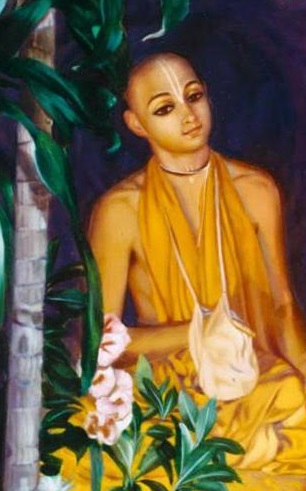
Throughout the ages, many avataras – divinely inspired teachers and incarnations of God – have appeared in the world, but none has ever distributed spiritual love as freely as the Golden Avatar, Sri Caitanya Mahaprabhu. He appeared in Bengal, India, in 1486 and lived for only 48 years, yet began a revolution in spiritual consciousness that has profoundly affected the lives of millions. He taught a practical process that anyone can perform to directly feel the ecstasy of pure love of God.
I ran across this verse and purport while reading from the the Sri Caitanya-caritamrta 1975 Edition Adi-lila Chapter 16, text 15, and it reminded me of the importance of chanting the Hare Krsna Maha-mantra.
The Lord, being satisfied, instructed him about the object of life and the process to attain it. He instructed him that the basic principle of success is to chant the holy name of the Lord [the Hare Krsna maha-mantra].
PURPORT
The Krsna consciousness movement is based upon this instruction of Lord Caitanya Mahaprabhu that one must chant the Hare Krsna maha-mantra regularly and according to the prescribed principles. We simply ask our Western students to chant at least sixteen rounds a day, but sometimes we find that they fail to chant even these sixteen rounds, and instead they bring many austere books and a worshiping method that diverts their attention in so many ways. Śrī Caitanya Mahāprabhu’s cult is based upon the chanting of the Hare Krsna mantra. Lord Caitanya first advised Tapana Misra to fix his mind in this chanting. We, the members of the Krsna consciousness movement, must strictly follow this advice of Caitanya Mahaprabhu.
I was thinking how Srila Prabhupada always referred to the the process of Krishna Consciousness as Joyful. He mentioned this joyful process in his letters, we share some of them with you.
Tridandi Goswami A.C. Bhaktivedanta Swami Founder-Acharya: International Society for Krishna Consciousness CENTER: 1975 So. La Cienega Blvd. Los Angeles, California 90034
DATE: July 15, 1969
My Dear Jadurany,
Please accept my blessings. I am in due receipt of your recent letter, and I have noted the contents. Regarding Festivals in Boston, you may hold as many as possible. If you can hold such festivals daily, that is also nice. Our movement is for ananda, simply bliss, and the method of pushing this movement is chanting, dancing, feasting and philosophizing. So in our almanac there are many festivals in every month. I am enclosing some festivals which were already held in Los Angeles, and if you perform them, I will give you a long list of others. But don’t embarrass yourself at present with greater plans than you can handle. The more you get devotees the more you will be able to perform nice festivals.
I am glad that Boston is improving in so many ways. So far as painting is concerned, you can begin now. I have already advised you this in a note enclosed with Tape #14 of Krishna. So read the Krishna tape transcriptions and draw pictures as many as possible. Each picture should be very much attractive, colorful and nice so that people will appreciate these paintings also. Our standard size will be like TLC, and you can make the pictures accordingly. According to my idea the pictures should be proportionate to 81/2 x 11. The style of the book will be like TLC so far as paper, print and binding are concerned.
Please convey my blessings to Satsvarupa and the others. I hope this will meet you all in good health.
This morning while I was chanting my japa (chanting silently the Hare Krishna mantra) I was thinking of how Google defined mantra meditation. So many people today have heard the words yoga and meditation, but what do they think it means? Some think yoga is just a good form of exercise, and meditation is just a way of shutting out the noise, and thinking of nothing. So I did a Google search:
Mantra meditation involves repeating a sacred sound, word, or phrase to focus the mind and promote relaxation. This technique helps to quiet the mind and allow for deeper states of meditation. The repeated mantra acts as a point of focus, helping to direct the mind and reduce mental chatter.
Mantra meditation is a technique that involves using mantras to relax the mind and help it focus.
Not bad definitions really, but for me, actually Yoga means “Union with God”, and Meditation means “Meditation on God”. So the ultimate goal of Yoga is bhakti-yoga, and the highest form of Mantra-meditation is to focus on God (Krishna).
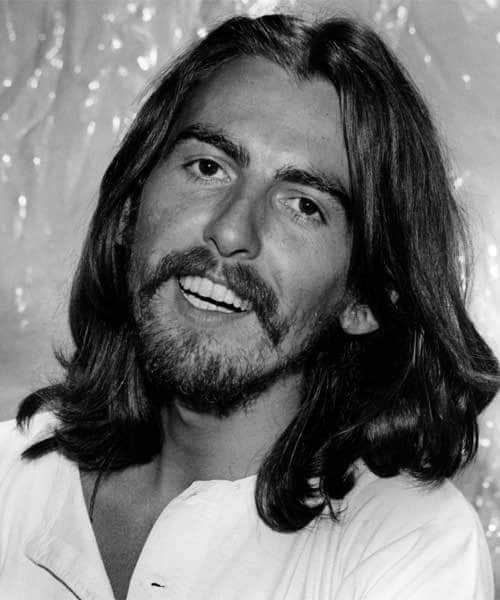
“I liked Prabhupada’s humbleness. I always liked his humility and his simplicity. The servant of the servant of the servant is really what it is, you know. None of us are God—just His servants. He just made me feel so comfortable. I always felt very relaxed with him, and I felt more like a friend. I felt that he was a good friend. Even though he was at the time seventy-nine years old, working practically all through the night, day after day, with very little sleep, he still didn’t come through to me as though he was a very highly educated intellectual being, because he had a sort of childlike simplicity. Which is great, fantastic. Even though he was the greatest Sanskrit scholar and a saint, I appreciated the fact that he never made me feel uncomfortable. In fact, he always went out of his way to make me feel comfortable. I always thought of him as sort of a lovely friend, really, and now he’s still a lovely friend.
“That was the thing about Prabhupada, you see. He didn’t just talk about loving Krishna and getting out of this place, but he was the perfect example. He talked about always chanting, and he was always chanting. I think that that in itself was perhaps the most encouraging thing for me. It was enough to make me try harder, to be just a little bit better. He was a perfect example of everything he preached.
For many of us we struggle to chant our prescribed 16 rounds of japa daily. I know for me it is a daily struggle, if I wake up to late, if I am traveling, if I am sick, or have a headache, or just feeling lazy and unmotivated. But I try.
This morning my japa was pretty good, I felt inspired, and I was knocking of the rounds rather effortlessly, and I was thinking about Haridas Thakur who daily chanted 300,000 names or about 175 rounds. I can’t even imagine. But I felt inspired by thinking about him, and wanted to do a post about him. -V
“Haridāsa Ṭhākura is known as nāmācārya because it is he who preached the glories of chanting hari-nāma, the holy name of God.”
“Haridas Thakur chanted 3 lakhs of names each day, that means 16 names in the mantra, 108×16 or 1,728 names in each round of mala, dividing 300,000 by 1,728 comes to roundabout 175 rounds on beads daily. And for us it is even difficult to chant 16 rounds! That is why Haridas Thakur is namacharya. We find in Chaitanya Charitamrta information that both Lord Chaitanya and Haridas Thakur were constantly absorbed in chanting the Hare Krishna mantra: Hare Krishna, Hare Krishna, Krishna Krishna Hare Hare/ Hare Rama Hare Rama Rama Rama Hare Hare.” (Srila Prabhupada Letter, January 2, 1972)
I remember years ago when I was just a young new devotee, and we were asked to go out and distribute books, we were asked so many questions by people we met. One question I will never forget; “What does the mantra mean?” How to explain this to someone who has never heard of Krishna? So I replied; “O Lord please engage me in Your loving devotional service”. Even as a new devotee I knew there was more I could have said, but I left it at that.
But that basic question always stayed with me.
Hare Krishna, Hare Krishna, Krishna Krishna, Hare Hare, Hare Rama, Hare Rama, Rama Rama, Hare Hare
Another definition I discovered is;
Hare– Srimati Radharini (the divine energy of the Lord)
Krishna– The All Attractive Supreme Personality of Godhead
Rama– Name of Lord Krishna who is the reservoir of pleasure. (as in Radha-Ramana, the giver of pleasure to Srimati Radharani) The name Rama also means Lord Ramacandra, and Lord Balarama.
But for me, I like this verse I discovered in my reading;
“O Srimati Radharani, O All Attractive Reservoir of Pleasure, Lord Sri Krishna, please engage me in your loving devotional service”
This morning I was looking through my bookshelf and I saw a book I didn’t recognize. But when I opened it, I saw my name was written on the first page. I must have purchased it on one of our trips. I had completely forgotten about it, and it was still brand new. I love a new book, so I was overjoyed to discover what was inside. Thousands of quotes from Srila Prabhupada’s many books on the Nectar of the Holy Name. So today I am posting just a few of them that jumped out at me, but I am also including the entire book as a free PDF at bottom of post.
Sri Caitanya Mahaprabhu asked, “What should all living entities constantly remember?” Ramananda Raya replied, “The chief object of remembrance is always the holy name of the Lord, His qualities and pastimes.” (Sri Caitanya−caritamrta Madhya−lila 8.252)
krte yad dhyayato visnum tretayam yajato makhaih dvapare paricaryayam kalau tad dhari−kirtanat [Sukadeva Gosvami to Maharaja Pariksit]:
“Whatever result was obtained in Satya−yuga by meditating on Visnu, in Treta−yuga by performing sacrifices and in Dvapara−yuga by serving the Lord’s lotus feet can also be obtained in Kali−yuga simply by chanting the Hare Krsna maha−mantra.” (Srimad−Bhagavatam 12.3.52)
The Holy Name Is the Universal and Supreme Religion for this Age
harer nama harer nama harer namaiva kevalam kalau nasty eva nasty eva nasty eva gatir anyatha (Sri Caitanya−caritamrta Adi 17.21)
“In this age of Kali there is no alternative, there is no alternative, there is no alternative for spiritual progress than the holy name, the holy name, the holy name of the Lord.”
krsna−varnam tvisakrsnam sangopangastra−parsadam yajnaih sankirtana−prayair yajanti hi su−medhasah
“The pious results derived from chanting the thousand holy names of Visnu three times can be attained by only one repetition of the holy name of Krsna.” ( Sri Caitanya−caritamrta Madhya−lila 9.33)
trnad api sunicena taror api sahisnuna amanina manadena kirtaniyah sada harih
“One should chant the holy name of the Lord in a humble state of mind, thinking oneself lower than the straw in the street. One should be more tolerant than a tree, devoid of all sense of false prestige and ready to offer all respects to others. In such a state of mind one can chant the holy name of the Lord constantly.”
We often say “Chant and be Happy”, but there are offences to be considered. If we want to feel the full ecastscy derived from chanting the Holy names, we need to avoid them.
There are offenses to be considered while chanting the Hare Krishna mantra. Therefore simply by chanting Hare Krsna one does not become ecstatic. ( Cc. Adi-lila 8.24) 1) To blaspheme the devotees who have dedicated their lives for propagating the holy name of the Lord. 2) To consider the names of demigods like Lord Shiva or Lord Brahma to be equal to or independent of the name of the Lord Vishnu. 3) To disobey the orders of the spiritual master. 4) To blaspheme the vedic scriptures or scriptures in pursuance to the vedic version. 5) To consider the glories of chanting Hare Krishna to be an imagination. 6) To give some interpretations to the holy name of the Lord. 7) To commit sinful activities on the strength of the holy name. 8) To consider the chanting of Hare Krishna as one of the auspicious ritualistic activities which are offered in the Vedas as frutive activities (Karma kanda). 9) To instruct a faithless person about the glories of the holy name
10) To not have complete faith in the chanting of the holy name and to maintain material attachments, even after understanding so many instructions on this matter. It is also an offense to be inattentive while chanting.
Every devotee who claims to be Vaishnava must guard against these offenses in order to quickly achieve the desired successKRISHNA PREMA!!!
“The Holy Name is so powerful, that even by chanting with offense, gradually one becomes pure. Therefore we should not give up chanting under any circumstances.” -Srila Prabhupada
“I liked Prabhupada’s humbleness. I always liked his humility and his simplicity. The servant of the servant of the servant is really what it is, you know. None of us are God—just His servants. He just made me feel so comfortable. I always felt very relaxed with him, and I felt more like a friend. I felt that he was a good friend. Even though he was at the time seventy-nine years old, working practically all through the night, day after day, with very little sleep, he still didn’t come through to me as though he was a very highly educated intellectual being, because he had a sort of childlike simplicity. Which is great, fantastic. Even though he was the greatest Sanskrit scholar and a saint, I appreciated the fact that he never made me feel uncomfortable. In fact, he always went out of his way to make me feel comfortable. I always thought of him as sort of a lovely friend, really, and now he’s still a lovely friend.
“That was the thing about Prabhupada, you see. He didn’t just talk about loving Krishna and getting out of this place, but he was the perfect example. He talked about always chanting, and he was always chanting. I think that that in itself was perhaps the most encouraging thing for me. It was enough to make me try harder, to be just a little bit better. He was a perfect example of everything he preached.
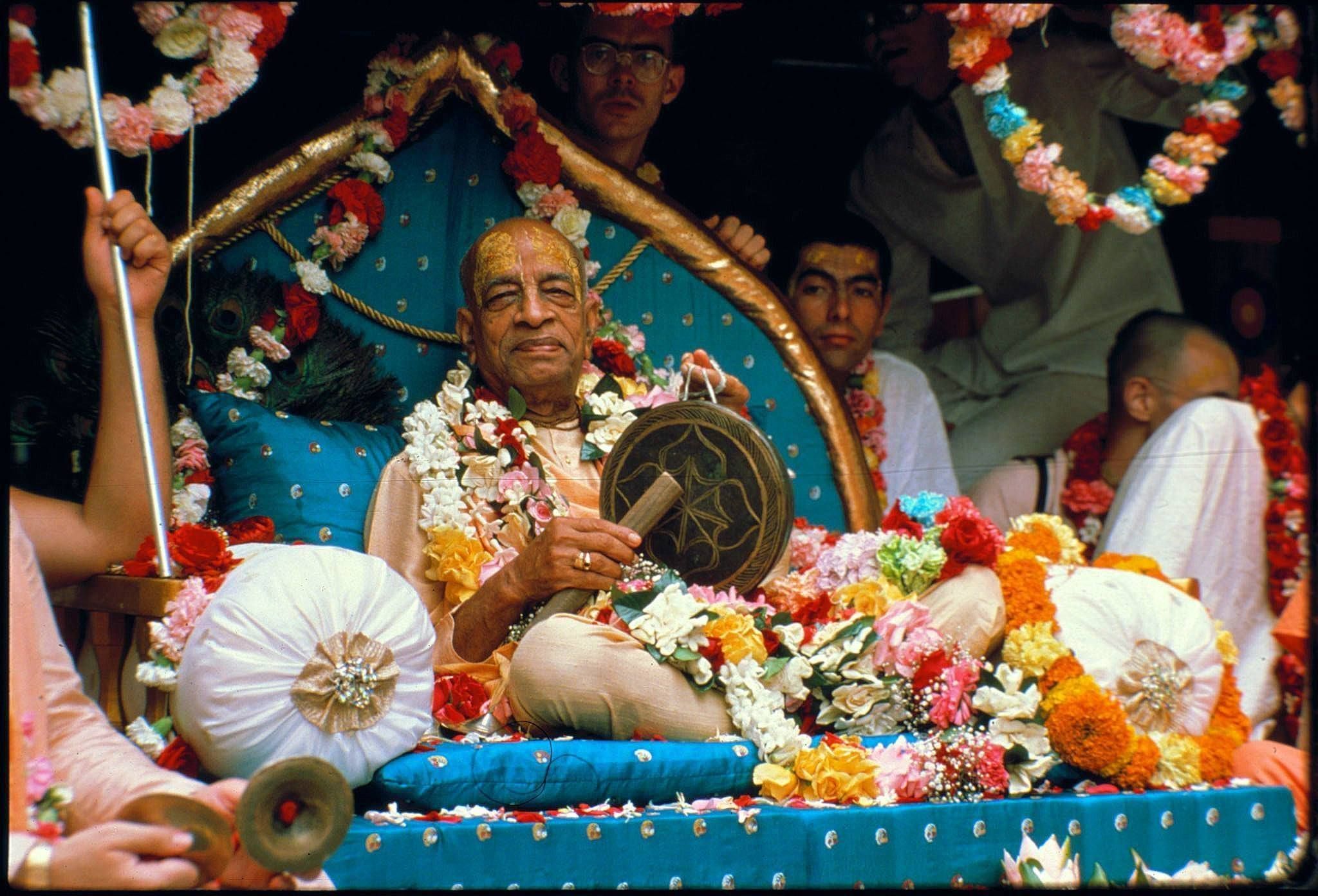
Today we honor the Appearance Day of Srila Haridasa Thakura, an associate of Sri Caitanya Mahaprabhu, Haridāsa Ṭhākura daily chanted 300,000 names of the Lord. Certainly the chanting of 300,000 holy names of the Lord is wonderful. No ordinary person can chant so many names, nor should one artificially imitate Haridāsa Ṭhākura’s behavior. It is essential, however, that everyone fulfill a specific vow to chant the Hare Kṛṣṇa mantra.
Haridāsa Ṭhākura said that liberation and freedom from the reactions of sinful activities are only by-products of chanting the holy name of the Lord. If one chants the holy name of the Lord purely, he attains the platform of loving service to the Supreme Personality of Godhead. (SB 5.24.20)
Nowadays, we find there are so many devotees getting paid to perform bhajana/kirtan like professional singers, I guess that is nice for them, but real Kirtan is explained by Srila Prabhupada in this 1967 letter to Jadurani dd.
Krishna Kirtan is not for earning livelihood. Krishna Kirtana is not meant for entertaining the public for demonstration of arts. It is dynamic service to the Lord. We do not therefore mind so much about the artistic presentation of Krishna Kirtan but we want to see how much a devotee is satisfying the Supreme Will. (Prabhupada letter to Jadurani 12th December, 1967)
The nice thing about mantra meditation or chanting the maha mantra:
Hare Krishna, Hare Krishna, Krishna Krishna, Hare Hare, Hare Rama, Hare Rama , Rama Rama, Hare Hare
is that one can do it anywhere, any time. In a plane, train or automobile, sitting, walking, or standing on one’s head. I find myself chanting when I am working in my shop, cutting the lawn, taking a shower, working in the garden. Chanting always makes me feel better.
“…one should learn the art of chanting the Holy name of Krishna 24 hours a day and that alone is the remedy for all problems of material existence.” (from letter to Susan Beckman August 29th 1973)
Prabhupada: The chanting is a process of purification. Just like we use soap to cleanse the body, this is material, but the chanting is spiritual cleansing. The three stages of cleansing are first
(1) To clean the mirror of the mind. In the Bhagavad Gita it is said:
“The mind is the best friend and the worst enemy, for one who has learned to control the mind it is the best of friends but for one who has failed to do so it is the worst enemy.”
Due to long term association, the mind absorbed in material things has become contaminated, or dirty, the chanting process purifies the mind.
(2) Then the next stage, when the mind is cleansed one becomes free from the symptoms of material existence. Material existence means to be always hankering and lamenting. I must have a new automobile, I must have more money, I must have good wife, I must have this I must have that. Then when I have the thing, I lament, I have lost my wife, I have lost my money, I have lost my car, simply lamenting. So the second stage is to be free from this anxiety.
(3) The third stage is “He never laments nor desires to have anything; he is equally disposed to every living entity. In that state he attains pure devotional service unto me.”
“One who is thus transcendentally situated at once realizes the Supreme Brahman and becomes fully joyful. He never laments or desires to have anything. He is equally disposed toward every living entity. In that state he attains pure devotional service unto Me.”
(from ‘Broadcasting Krsna’s Glories’ by Satsvarupa dasa Gosvami)
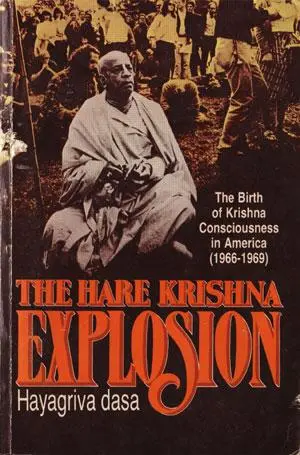
“At the studio, everyone accepted the devotees as a regular music group. One of the rock musicians asked them what the name of their group was, and Hayagriva laughed and replied, “The Hare Krsna Chanters.” Of course most of the devotees weren’t actually musicians, and yet the instruments they brought with them — a tamboura, a large harmonium (loaned by Allen Ginsberg), and rhythm instruments — were ones they had played during kirtanas for months.
So as they entered the studio they felt confident that they could produce their own sound. They just followed their Swami. He knew how to play, and they knew how to follow him. They weren’t just another music group. It was music, but it was also chanting, meditation, worship.
Lecture on Maha-mantra New York, September 8, 1966
By His Divine Grace A.C.Bhaktivedanta Swami Prabhupada
Prabhupada: Now, some of you members have asked me to explain the meaning of this chanting, Hare Krishna, Hare Krsna, Krsna Krsna, Hare Hare. Hare Rama, Hare Rama, Rama Rama, Hare Hare. Now, this sound is transcendental sound, transcendental sound, incarnation, sound incarnation of the Absolute Truth…
So this sound, this Hare Krsna, Hare Krsna, Krsna Krsna, Hare Hare. Hare Rama, Hare Rama, Rama Rama, Hare Hare, is the sound representation of the Supreme Lord. The sarvam khalv idam brahma. The whole thing, either material or spiritual, whatever we have got experience, nothing is separated from the Supreme Absolute Truth. Nothing is separated. Everything has emanated from the Absolute Truth.
Question: When We’re out on Sankirtana, Chanting, What would be the Best Way for Us to Engage the Crowd to Become Participants in the Chant With Us?………
Prabhupada: Best way, you go on chanting. Your business is not to satisfy the crowd. Your business is satisfy Krsna, and then crowd will be automatically satisfied. We are not going to please the crowd. We are going to give them something: Krsna. So you should be very much careful whether you are delivering Krsna in the right way. Then they’ll be satisfied.Your only business should be to satisfy Krsna. Then everything will be satisfied. If Krsna is satisfied, then whole world is satisfied. If you pour water on the root, then it is automatically distributed in every parts of the tree. So Krsna is the root of the big tree, and you take to watering Krsna, chant Hare Krsna and follow the rules and regulation, everything will be all right.
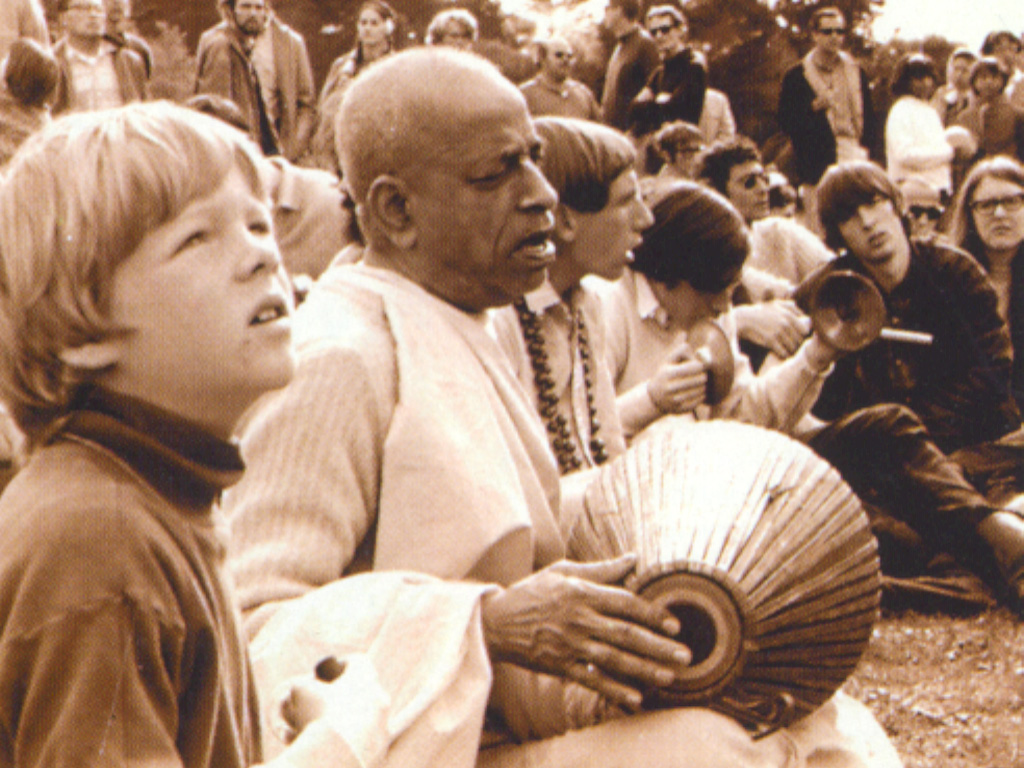
October 1966, Tomkins Sq. Park, Srila Prabhupada begins His Sankirtan Movement, sitting among the ‘hippies’ with no microphone, no harmonium, karatals, and mridungas, only a small ‘bongo’ drum and pure devotion……….
Lecture on Maha-mantra New York, September 8, 1966
By His Divine Grace A.C.Bhaktivedanta Swami Prabhupada
Prabhupada: Now, some of you members have asked me to explain the meaning of this chanting, Hare Krishna, Hare Krsna, Krsna Krsna, Hare Hare. Hare Rama, Hare Rama, Rama Rama, Hare Hare. Now, this sound is transcendental sound, transcendental sound, incarnation, sound incarnation of the Absolute Truth. Just try to understand what is incarnation. Incarnation means…
I ran across this article this morning, and although I don’t know who authored it, I thought it worthy of posting. -V
10 Affirmations for Chanting the Hare Krishna Maha-mantra
Sound has the ability to affect our consciousness to a large extent. The quality of sound vibration that goes into our ears determines the quality of our consciousness. Sound has the highest capturing potency; our ideas, conceptions and visions all come to us from sound. We can transform our lives depending on the sound vibration that we hear. The Yoga texts recommend the Hare Krishna Maha-mantra as the prime sound vibration for this age which is full of anxiety and distress. The Hare Krishna Maha-mantra, Hare Krishna Hare Krishna Krishna Krishna Hare Hare Hare Rama Hare Rama Rama Rama Hare Hare, is a spiritual sound vibration which brings us out of bodily consciousness and attaches our consciousness to the Supreme consciousness.
Chanting of the Hare Krishna Maha-mantra: (1) helps to revive awareness of your spiritual identity; (2) helps to revive awareness of your connection with the Supreme being; and (3) gives awareness of the love Supreme and the dynamics of the reciprocal relationship between your spiritual self and the Supreme spiritual self.
Thus, it is important that we spend time working on our internal attitude and motivation for chanting the Hare Krishna Maha-mantra. In this article, we will explore the practice of affirmations to help improve and increase our presence while chanting. Saying affirmations out loud and meditating on their core meanings before chanting the Hare Krishna Maha-mantra may allow us to further enhance our chanting experience.











 The Hare Krishna Movement
